INTERNACIONAL
NATO ally Poland warns Russia, Belarus pushing illegal migrants toward alliance — and the US

NEWYou can now listen to Fox News articles!
This is part two of a series examining the challenges confronting the NATO alliance.
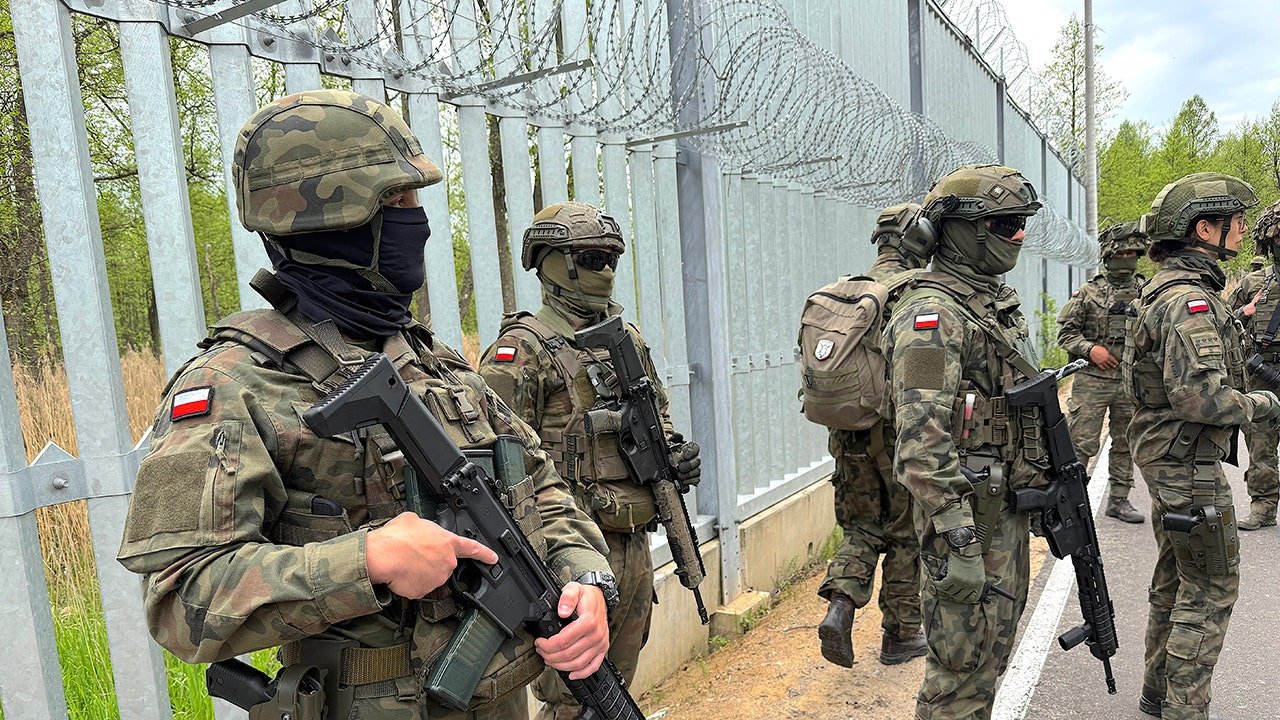
POLAND-BELARUS BORDER — Riding in a military convoy escorted by armored vehicles from Poland’s 18th «Iron Division» along the country’s 521-kilometer border with Belarus, soldiers pointed toward dense forests where they say Europe’s newest form of warfare is unfolding.
Polish officials warn illegal migrants weaponized by Russia and Belarus to destabilize NATO’s eastern flank are also making their way to the United States — part of what Warsaw calls an ongoing war against the Western alliance that has direct implications for American security.
The border was once guarded mainly by Poland’s Border Guard and police. But after years of mounting pressure from illegal crossings, Polish officials say the army was deployed because the situation became too large and too dangerous to handle as a conventional immigration challenge.
TROOPS AT THE BORDER: HOW THE MILITARY’S ROLE IN IMMIGRATION ENFORCEMENT HAS EXPLODED UNDER TRUMP
Soldiers from Poland’s 18th «Iron Division» take part in a military exercise at the Poland-Belarus border amid what Polish officials describe as a Russian and Belarusian campaign to weaponize illegal migration against NATO countries. (Efrat Lachter/Fox News Digital.)
Now, the frontier is guarded in layers: soldiers, border guards and rapid-response forces. A temporary barrier built in 2021 has become an electronic fence backed by surveillance systems and military patrols. Polish officials say migrants trying to cross have come from countries including Syria, Somalia, Afghanistan and India.
They describe the crisis as «artificial migration,» saying the illegals are flown into Belarus from the Middle East, Africa and Asia and then transported toward the Polish border by Belarusian authorities in an effort to pressure and destabilize NATO countries.
Military officials at the border said the peak was in 2021, when there were 39,697 illegal crossing attempts. By 2025, it was 29,869, slightly fewer than in 2024. So far in 2026, they have seen a major drop, they say.
For Warsaw, the numbers tell only part of the story.
Polish officials say the border pressure is not spontaneous illegal migration, but a Russian-backed Belarusian operation designed to destabilize NATO from within.
«We are at war,» Ambassador Krzysztof Olendzki of Poland’s Foreign Ministry told Fox News Digital after the border visit.
«Not only Poland, but also all the countries of the eastern flank of NATO, we are in war,» Olendzki said. «We cannot see it as a classical war with soldiers, with tanks and so on, but the war is exercised by our adversaries, by Belarus and Russia, who are using practically migrants as an asymmetric weapon against NATO countries.»
WHITE HOUSE ROADMAP SAYS EUROPE MAY BE ‘UNRECOGNIZABLE’ IN 20 YEARS AS MIGRATION RAISES DOUBTS ABOUT US ALLIES
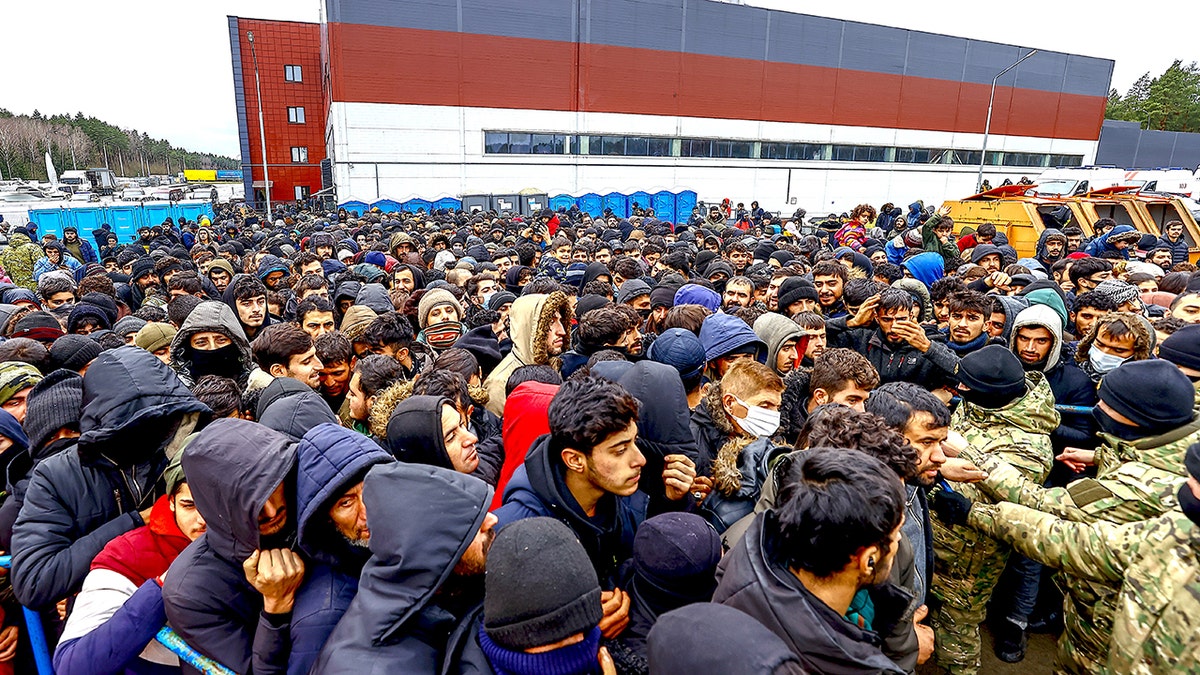
File photo shows mostly male illegal migrants waiting at the closed area prepared by the Belarusian government within the border region after they cleared camps at the Poland-Belarus border, on Nov. 18, 2021, in Grodno region, Belarus. (Sefa Karacan/Anadolu Agency via Getty Images)
The crisis dates back to 2021, when Poland, Lithuania and Latvia accused Belarusian President Alexander Lukashenko’s regime of encouraging migrants from the Middle East, Africa and elsewhere to travel to Belarus and cross illegally into the European Union. Belarus has denied orchestrating the flows, but Poland and the EU have described the campaign as hybrid warfare.
Olendzki said the goal is not only to push people across the border, but to create chaos inside Western societies.
The border visit underscored how far Poland has gone to harden what it views as one of NATO’s most vulnerable frontiers.
Capt. Angelika Korkosz of Poland’s 18th Division described the day-to-day strain on soldiers stationed there.
«Many times soldiers were faced with aggression from illegal groups of immigrants, and they have to act appropriately and calmly in accordance with the law and procedures while protecting themselves,» Korkosz told Fox News Digital.
POLISH GOVERNMENT PLANS MANDATORY MILITARY TRAINING FOR ADULT MEN
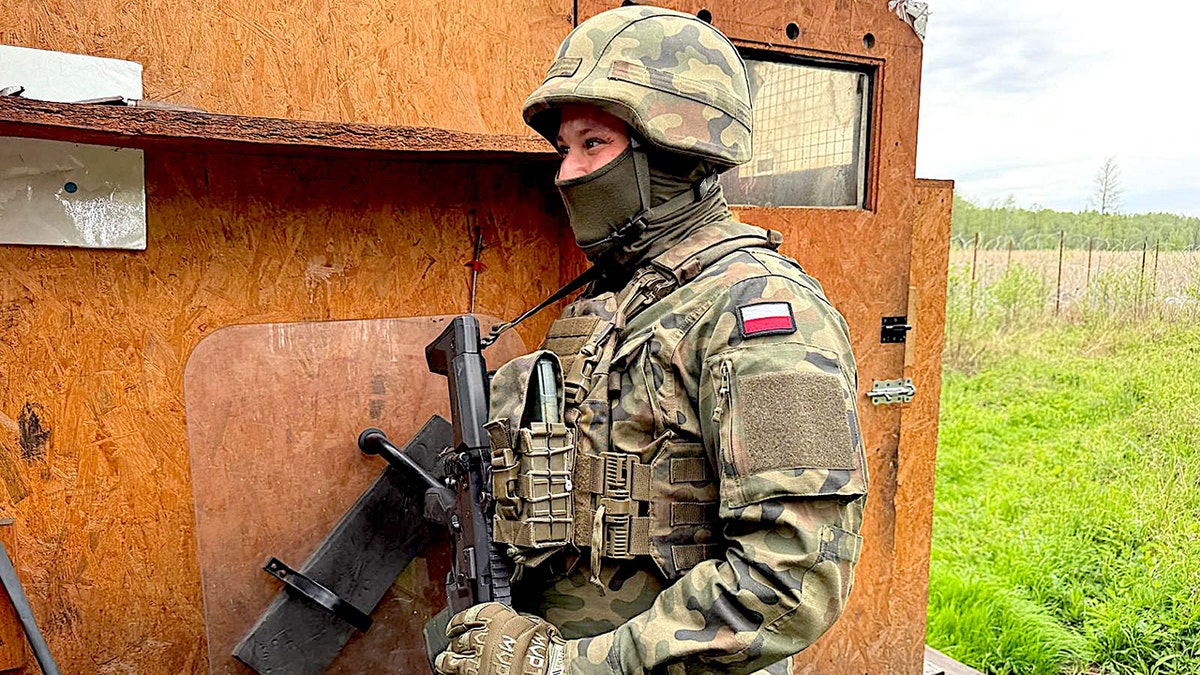
A Polish soldier stands watch near the Belarus border, where officials say migration pressure has evolved into a form of hybrid warfare targeting NATO’s eastern flank on May 16, 2026.
Polish officials said migrants have used Molotov cocktails in at least two incidents, sparking fires near the border. Soldiers also spoke of a Polish serviceman who died after being stabbed by an illegal migrant at the frontier.
Korkosz said the challenge is not only violence, but exhaustion.
«A few months ago, we had minus-20-degree winters, so 12-hour duty during these conditions is really demanding,» she said. «Many soldiers are here for a long time, and it is getting more and more difficult, this long separation from their relatives.»
Still, she said the troops are prepared.
«The training includes decision-making under pressure in an ambiguous operational environment,» Korkosz said. «That’s why when we are here at the border, we are really well-prepared for performing our duties.»
Poland says the border defenses are working. Amb. Olendzki said the lower number of crossings this year reflects the physical barrier, the increased effectiveness of the Border Guard and the military presence. But he warned the threat has not disappeared, only shifted.
NATO WARNS RUSSIA AFTER POLAND SHOOTS DOWN ‘HUGE NUMBER’ OF DRONES THAT VIOLATED ITS AIRSPACE
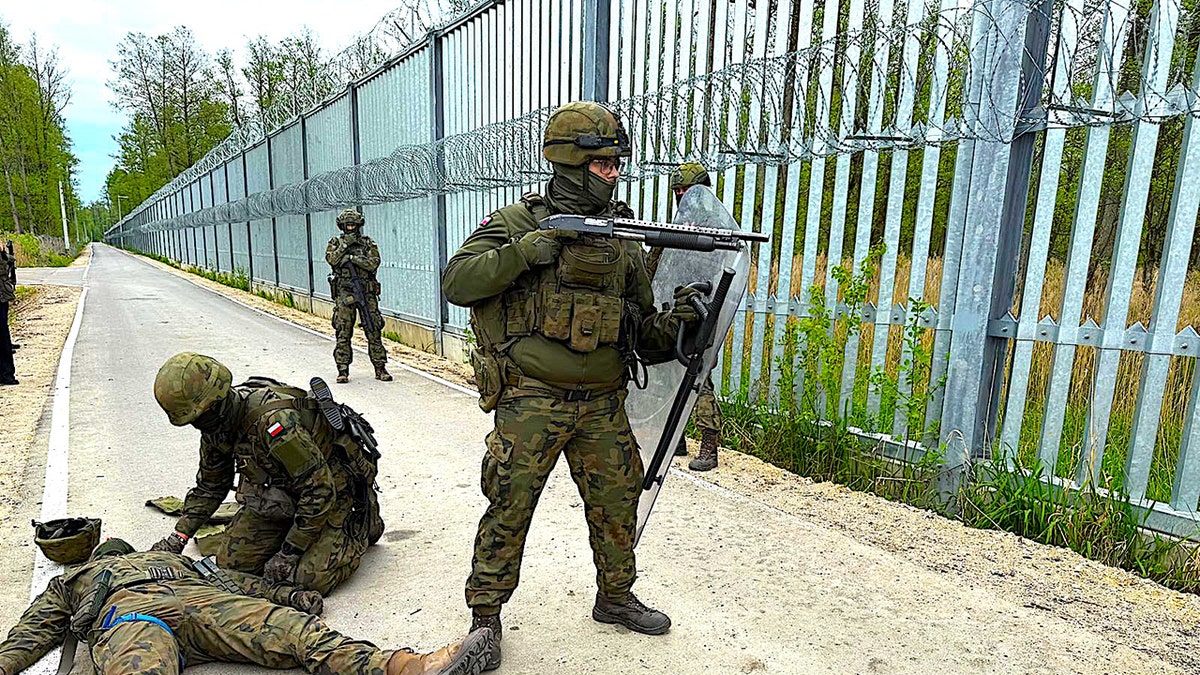
Soldiers from Poland’s 18th Division demonstrate battlefield medical training near the Belarus border after a serviceman from the division was killed in an attack by an illegal migrant. May 16th, 2026. (Efrat Lachter/Fox News)
«Seeing the fact that the Polish-Belarusian border is quite well guarded, our adversaries are just pushing migrants through the borders of our neighboring countries,» he said. «So it hasn’t ended, but it’s changed the direction. The threat still exists, and we must be vigilant.»
That matters to NATO because Poland’s border with Belarus is not only Warsaw’s border. It is also the eastern edge of the European Union and NATO territory.
Belarus is Russia’s closest ally and allowed its territory to be used for Russia’s 2022 invasion of Ukraine. Ukrainian President Volodymyr Zelenskyy warned Russia may be trying to pull Belarus deeper into the war and could use Belarusian territory to threaten Ukraine or even a NATO country.
That fear is central to Poland’s security posture.
During a meeting with reporters in Warsaw, Polish Foreign Minister Radosław Sikorski told Fox News Digital Russia’s war against Ukraine is, for Poland, «a matter of national safety and existence.»
But Sikorski said the threat to NATO countries is already wider than the battlefield in Ukraine.
«We had on NATO countries’ territories assassinations, numerous drone attacks on airports, on critical infrastructure,» Sikorski said. «We had very serious cyberattacks.»
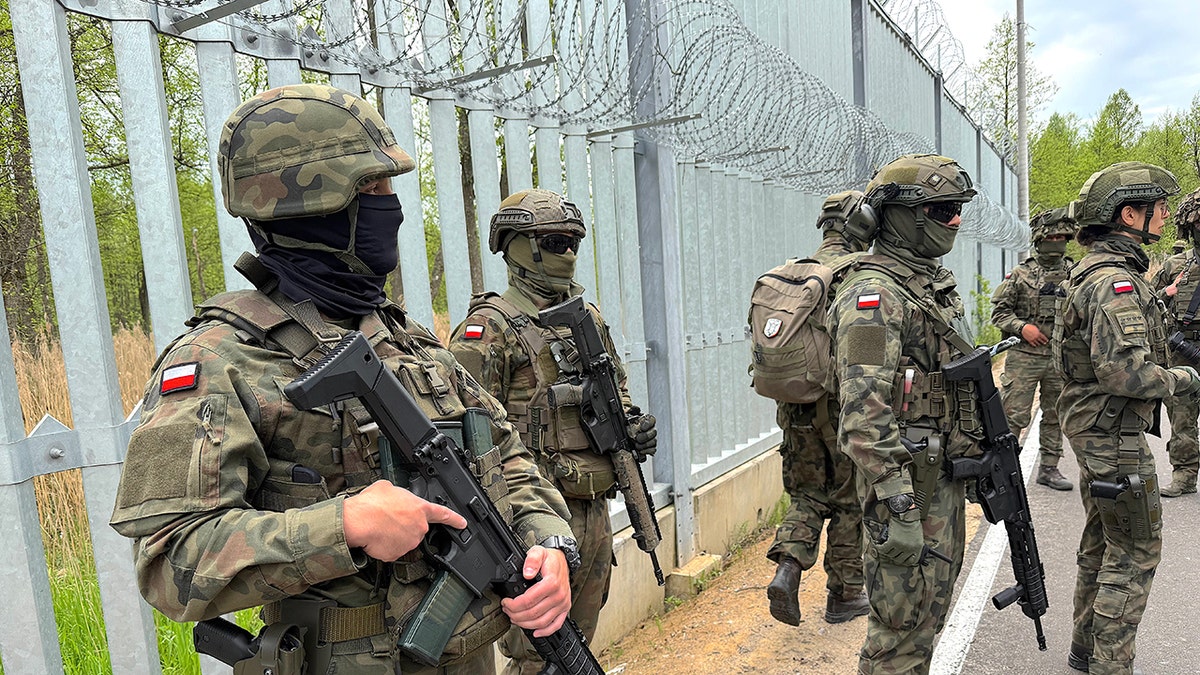
Polish soldiers stand watch near the Belarus border, where officials say migration pressure has evolved into a form of hybrid warfare targeting NATO’s eastern flank. May 16th, 2026. (Efrat Lachter/Fox News Digital)
Sikorski said Poland faced a Russian-instigated cyberattack last December on critical energy infrastructure that Warsaw believes was intended «to black out part of Poland.»
The warning fits a broader pattern of concerns across NATO’s eastern flank. The Associated Press reported earlier this year that balloons from Belarus had crossed into Polish airspace for a third consecutive night, with Polish forces describing the incidents as attempts to test air defense responses.
For Poland, illegal migration, cyberattacks, drones, sabotage and disinformation are not separate problems. They are different pieces of one Russian and Belarusian pressure campaign against NATO.
Olendzki said Poland’s role is to stop the pressure before it moves deeper into Europe or beyond.
«Standing on guard on the eastern flank of NATO, we are providing security not only to Poland, to Lithuania, Latvia, Estonia, Finland, but to entire NATO, also to the United States,» he said.
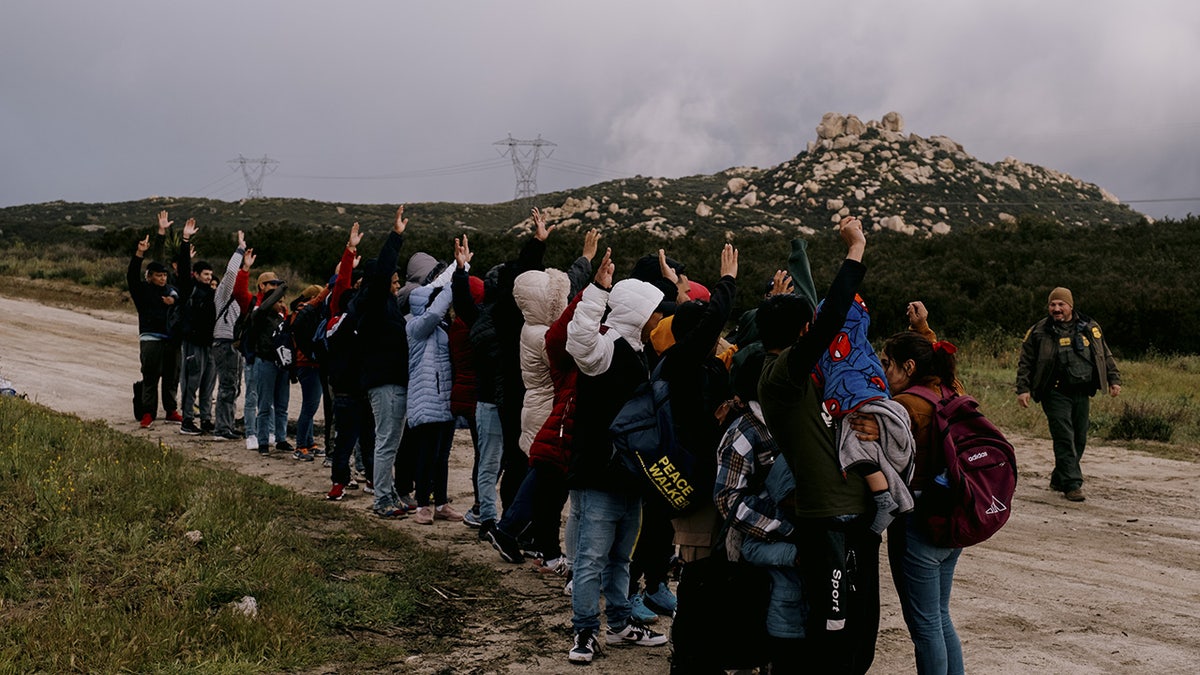
US Border Patrol agents prepare to transport migrants for asylum claim processing at the US-Mexico border in Campo, California, US, on Friday, April 5, 2024. Last week a federal judge sharply questioned the Biden administration’s position that it bears no responsibility for housing and feeding migrant children while they wait in makeshift camps along the US-Mexico border, reported the AP. (Mark Abramson/Bloomberg via Getty Images)
That U.S. connection is a central part of Poland’s message to Washington: The eastern flank is not a distant European problem, but a front line in a broader confrontation with Russia and its allies.
Poland now spends nearly 5% of its GDP on defense, the highest rate in NATO, if based on GPD. Sikorski said Warsaw has long taken defense spending seriously.
«We never went below 2% defense spending,» Sikorski said. «Now we are spending almost 5%. This is real military spending.»
He said the eastern flank has become more influential inside NATO because countries closest to Russia were proven right.
US ALLIES ACCUSE RUSSIA OF ‘ESCALATING HYBRID ACTIVITIES’ AGAINST NATO, EU NATIONS AFTER DATA CABLES SEVERED
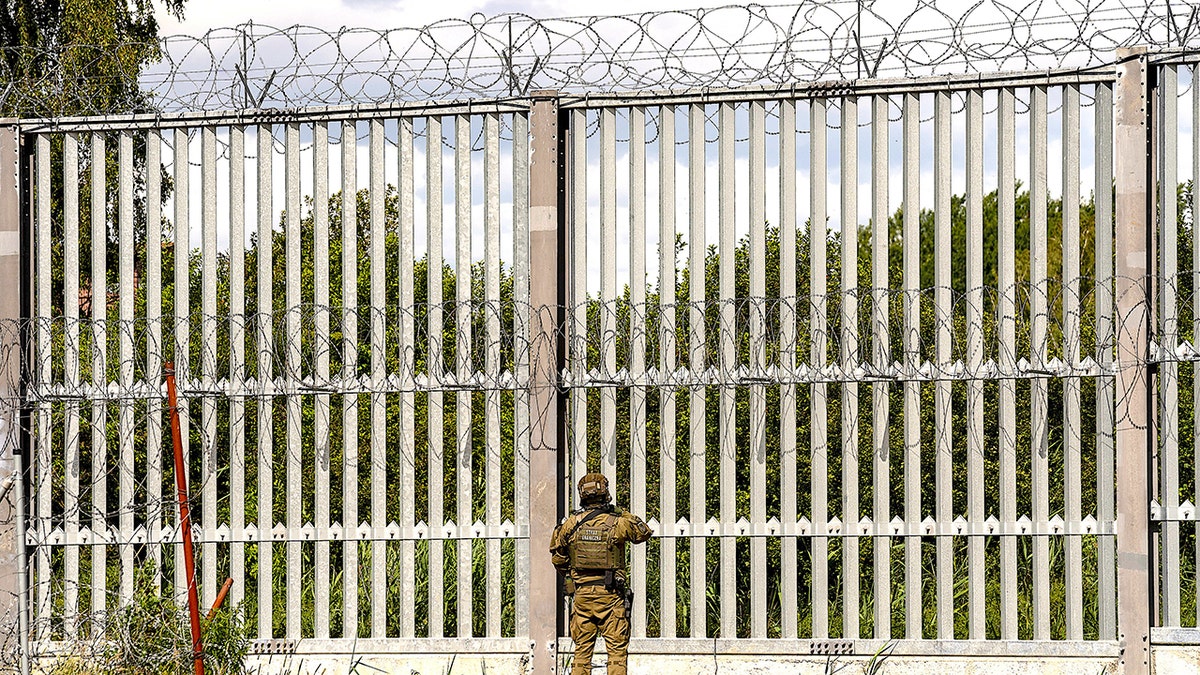
A Polish border guard at the Polish-Belarus border fence near the village of Ozierany Male, Poland, on Friday, Jul. 4, 2025. (Damian Lemanski/Bloomberg via Getty Images)
«The eastern flank is much more powerful than even five years ago,» Sikorski said. «We were right about the nature of Putin’s regime and Russia’s aggressive strategy.»
That view has shaped Poland’s approach to the United States. Warsaw wants American troops to remain in Europe, but Polish officials also acknowledge that Europe must assume more of the defense burden as U.S. attention increasingly shifts toward China and the Indo-Pacific.
Sikorski said Poland understands that «Europe ceased to be angle number one for U.S. foreign policy,» but wants any change in America’s role to be «gradual and well-designed.»
He added that Poland wants the shift in trans-Atlantic security to be «not a divorce, but a new kind of relationship.»
For now, that relationship is being tested along a cold, wooded border where Poland says NATO’s future wars may already be taking shape.
The Polish soldiers patrolling the frontier do not describe their mission in grand geopolitical terms. Korkosz said she joined the military because she wanted to do «something which matters.»
CLICK HERE TO DOWNLOAD THE FOX NEWS APP
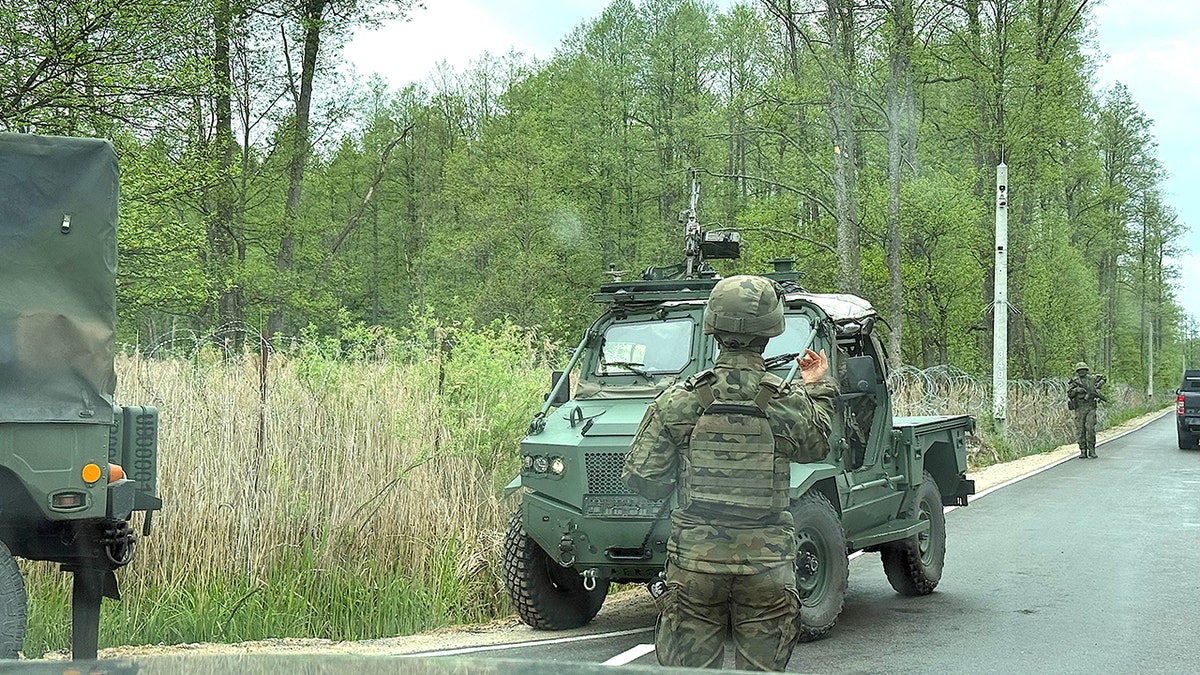
Members of Poland’s 18th «Iron Division» patrol the Belarus border as Warsaw accuses Belarus and Russia of funneling illegal migrants toward NATO territory. May 16, 2026. (Efrat Lachter/Fox News Digital)
But to Polish officials, the mission at the Belarus border is much bigger than immigration enforcement.
It is a warning to the rest of NATO that the alliance’s next war may not begin with tanks crossing a border, but with migrants pushed through forests, cyberattacks on power grids, drones near airports and disinformation campaigns designed to fracture societies from within.
nato, belarus, border security, military, terrorism, russia













INTERNACIONAL
State of play: Dems battle for shot at crucial Arizona House seat amid GOP’s razor thin majority

Socialist surge rocks Arizona Democratic primary
RNC senior advisor Danielle Alvarez highlights the growing influence of Democratic Socialists in primaries, citing the Arizona House 4 race where incumbent Greg Stanton faces Kai Newkirk. Alvarez criticizes Newkirk’s platform, including abolishing ICE, and points to the DSA’s surging membership as a «disaster» for mainstream Democrats and the nation.
NEWYou can now listen to Fox News articles!
Two Democratic candidates remained locked in a battle as of early Wednesday morning to claim their party’s nomination in Arizona’s 1st Congressional District for a chance to face former NFL kicker Jay Feely.
Former television news anchor Marlene Galán-Woods and former state Rep. Amish Shah, the two frontrunners, fell shy of capturing enough of the vote to win the nomination outright by early Wednesday morning.
The winner of the primary will go on to have a rare opportunity to flip a seat in the Canyon State and, more broadly, potentially decide the balance of power in Washington, D.C. Feely, who received President Donald Trump’s «complete and total endorsement» in the final stretch of the race, won his GOP primary late Tuesday night.
TRUMP-BACKED FIREBRAND WINS ARIZONA GOP GOVERNOR PRIMARY, SETTING UP HIGH-STAKES SHOWDOWN
Republican Rep. David Schweikert has repeatedly fended off well-funded Democratic challengers in Arizona’s competitive 1st Congressional District, winning reelection in 2024 (Stefani Reynolds/Bloomberg/Getty Images)
The seat could very well decide whether Republicans hold on to a slim majority in the House of Representatives or whether Democrats break a Republican governing trifecta come the November midterms.
Although the district has favored Republicans since 2020, incumbent Rep. David Schweikert, R-Ariz., has only narrowly hung on to the seat in the past two cycles, beating out Shah in a 51.9% to 48.1% victory in 2024.
Schweikert announced that he would not pursue reelection last year, announcing that he would instead pursue a gubernatorial bid. Trump-backed Rep. Andy Biggs, R-Ariz., won his primary and was ahead of Schweikert by over 50 points early Wednesday.
VULNERABLE REPUBLICAN WINS GOP PRIMARY IN ARIZONA TOSS-UP DISTRICT DEMS AIM TO FLIP BLUE

The 2026 midterms will determine control of the House and Senate, shaping President Donald Trump’s legislative agenda during the final two years of his term. (Al Drago/Getty Images)
«I’ve grown to believe Washington is unsavable. I do believe Arizona is savable,» Schweikert told Axios.
This isn’t the first time Amish Shah and Marlene Galán-Woods have competed against each other for their party’s nomination, having clashed in the Democratic 2024 primary for the district.
At that time, Shah narrowly defeated Galán-Woods before advancing to the 2024 general election, where he lost to Republican Rep. David Schweikert, who has represented the Phoenix-area seat since 2013 despite Democrats investing heavily to flip the district blue.
HOUSE DEMOCRATS’ CAMPAIGN ARM DRAWS PROGRESSIVE FURY FOR TRYING TO ‘TIP THE SCALES’ IN KEY HOUSE PRIMARY
He is seeking a second consecutive nomination after arguing he remains the strongest candidate to challenge Feely in the general election. Galán-Woods, meanwhile, is expected to emphasize her background as a longtime Arizona television journalist and her ability to appeal to independent and suburban voters.

Former Arizona state Rep. Amish Shah, an emergency room physician who was the Democratic nominee in the district in 2024, is seeking another chance to flip the seat after narrowly losing to Republican David Schweikert in the general election. (Patrick T. Fallon/AFP/Getty Images)
CLICK HERE TO DOWNLOAD THE FOX NEWS APP
Galán-Woods is making another bid for the nomination with support from several national Democratic organizations, which view Arizona’s 1st District as one of the party’s best pickup opportunities in 2026.
The winner will go on to the general election on Nov. 3.
politics, arizona, democrats elections
INTERNACIONAL
Guerra en Medio Oriente: el petróleo superó los USD 92 por barril y alcanzó su nivel más alto desde junio

El precio del petróleo volvió a superar los USD 92 por barril este miércoles, impulsado por la escalada militar entre Estados Unidos e Irán, mientras los mercados financieros siguieron de cerca la evolución del conflicto en Medio Oriente.
El Brent del Mar del Norte subió alrededor de un 1,2% hasta USD 92,09 por barril, su nivel intradiario más alto desde el 11 de junio, después de que el presidente de Estados Unidos, Donald Trump, advirtiera que Washington “no terminó” con sus ataques contra Irán. En paralelo, el West Texas Intermediate (WTI) avanzó un 1% y cotizó en USD 85,19.
La suba del petróleo respondió a la persistencia de la incertidumbre sobre el suministro energético mundial. El ejército estadounidense informó que completó una undécima noche consecutiva de bombardeos con el objetivo de “degradar aún más la capacidad de Irán para amenazar el transporte marítimo comercial en el estrecho de Ormuz”, una de las principales rutas para las exportaciones mundiales de crudo.
Trump también elevó el tono contra los rebeldes hutíes de Yemen, aliados de Irán. El mandatario afirmó que “se ocupará de” ese grupo si concreta la amenaza de bloquear los puertos sauditas, un escenario que los inversores consideran un riesgo adicional para el comercio internacional de petróleo.
Los analistas advirtieron que una interrupción efectiva de las rutas marítimas podría provocar un nuevo salto de los precios. Jay Hatfield, de Infrastructure Capital Management, sostuvo que “nuestra visión es que estaremos en un rango de entre 80 y 90 dólares, dependiendo del flujo de noticias”. Sin embargo, agregó que “si realmente tenemos un Mar Rojo cerrado, eso representa una amenaza. Todavía no lo vimos. Eso podría llevarnos por encima de los 100 dólares”.

Mientras el mercado energético permaneció atento a las noticias provenientes de Medio Oriente, las bolsas asiáticas registraron una segunda jornada consecutiva de ganancias impulsadas por el sector tecnológico.
Las acciones tecnológicas recuperaron parte del terreno perdido después de varias semanas de volatilidad vinculada a las expectativas sobre la inteligencia artificial. Los inversores buscaron oportunidades tras las ganancias registradas el martes en el índice Nasdaq de Wall Street.
En Tokio, el índice Nikkei 225 avanzó 1,9% hasta los 67.511,13 puntos, mientras que el mercado de Seúl, con fuerte presencia de empresas de semiconductores, saltó 5,4%. En contraste, el índice Hang Seng de Hong Kong retrocedió 0,9%, mientras que la bolsa de Shanghái ganó 0,4%.
Los operadores también aguardaron los balances trimestrales de algunas de las principales compañías tecnológicas de Estados Unidos. Los resultados de Tesla y de Alphabet, la empresa matriz de Google, se conocieron más tarde, mientras que la próxima semana publicarán sus cuentas Microsoft, Meta, Apple y Amazon.
El comportamiento del sector tecnológico reflejó un cambio parcial en el ánimo de los mercados, después de las dudas sobre las valuaciones de las empresas vinculadas con la inteligencia artificial.

En el mercado cambiario, el yen japonés volvió a debilitarse frente al dólar después de caer por debajo de las 163 unidades por dólar, su nivel más bajo desde 1986. Los operadores atribuyeron parte de esa presión al encarecimiento del petróleo, un factor que afecta especialmente a Japón por su elevada dependencia de las importaciones de energía.
Al mismo tiempo, el euro cotizó en USD 1,1407, la libra esterlina se ubicó en USD 1,3386 y la relación entre ambas monedas permaneció prácticamente sin cambios.
(Con información de AFP)
Asia / Pacific,Corporate Events,Energy Markets
NEWYou can now listen to Fox News articles!
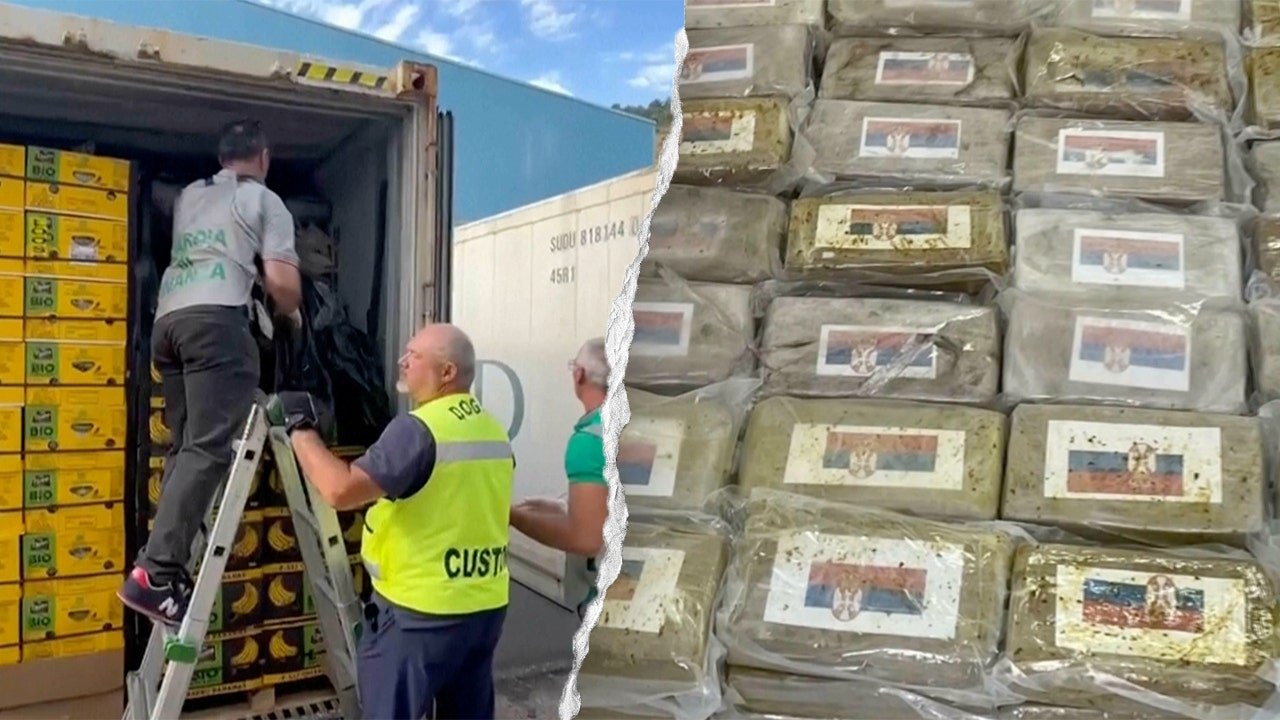
Italian authorities seized roughly 1,700 pounds of cocaine hidden among pallets of bananas at a major port, officials said Tuesday.
The drugs were divided into 650 packages and «skillfully concealed» inside a refrigerated shipping container that arrived at the port of Vado Ligure from one of Ecuador’s main ports, according to Italy’s Guardia di Finanza.
A field test conducted during the inspection determined the substance was «extremely pure cocaine,» officials said.
BORDER OFFICERS CRACK OPEN CABBAGE SHIPMENT HIDING MULTIMILLION-DOLLAR SECRET AT TEXAS BORDER
The drugs were divided into 650 packages and «skillfully concealed» inside a refrigerated shipping container. (Italy Border Police / AP)
Authorities said the bust was one of the largest anti-drug operations carried out at the port in recent years.
The shipment could have generated an estimated 250 million euros, or nearly $290 million, if it had reached the street market.
MASSIVE MEXICO-CALIFORNIA BORDER BUSTS UNCOVER EYE-POPPING AMOUNT OF DRUGS: ‘REMAIN VIGILANT’
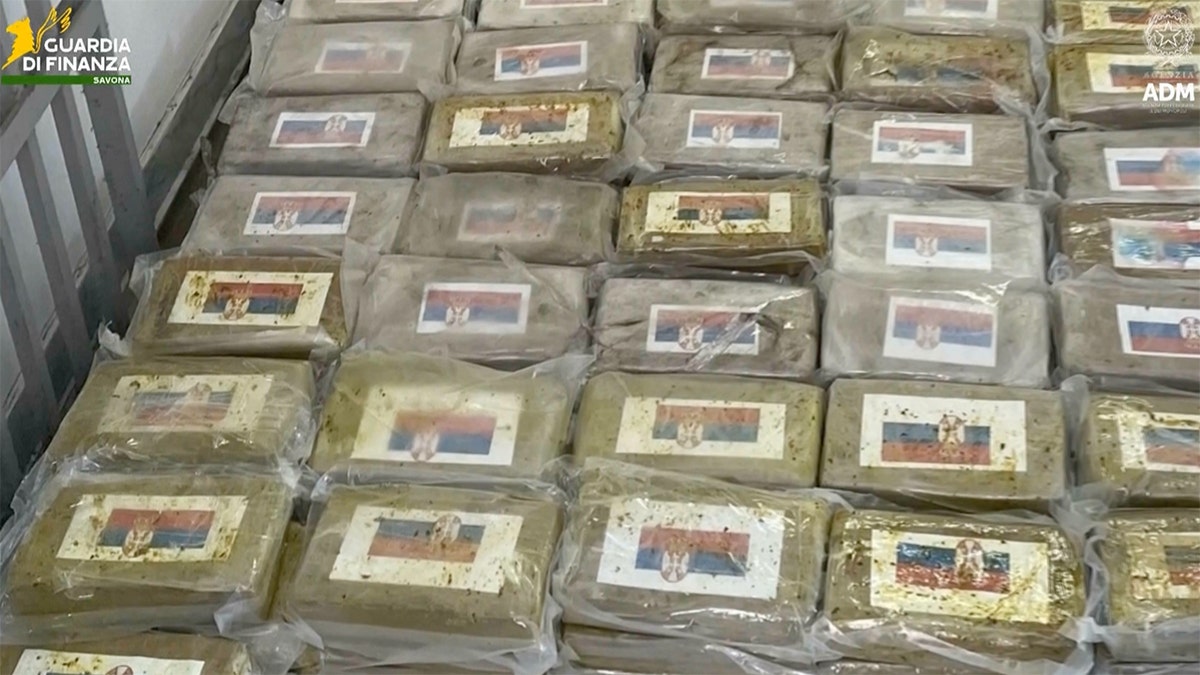
Authorities said the bust was one of the largest anti-drug operations carried out at the port in recent years. (Italy Border Police / AP)
The seizure followed an extensive analysis of commercial shipping routes linking South America with Vado Ligure, an important gateway for goods entering Europe — and an «attractive» target for international drug traffickers, according to officials.
«The operation forms part of an ongoing and targeted effort to combat the international trafficking of narcotics, including efforts to protect the most vulnerable segments of the population, who are often exposed to the harmful effects of this type of criminal activity,» Guardia di Finanza said.
JEANINE PIRRO CALLS OUT ‘DIRTBAGS’ AFTER 14 CHARGED IN ALLEGED COCAINE RING OPERATING FEET FROM A SCHOOLYARD

The shipment could have generated an estimated 250 million euros, or roughly $290 million, if it had reached the street market. (Italy Border Police / AP)
The seizure comes weeks after U.S. Customs and Border Protection (CBP) officers discovered more than 1,100 pounds of cocaine hidden in a commercial tractor-trailer carrying cabbage at the Pharr Port of Entry in Texas.
CLICK HERE TO DOWNLOAD THE FOX NEWS APP
A canine inspection and nonintrusive imaging scan alerted officers to the concealed load, CBP said. A physical search of the trailer uncovered 477 packages containing 1,173 pounds of cocaine with an estimated street value of nearly $10.8 million.
Fox News Digital’s Leo Briceno contributed to this report.
world, italy, drugs, crime

Milei presentará la reforma del BCRA y el Gobierno evalúa hacerlo con una cadena nacional

El Gobierno designó a Guillermo Toranzos Torino como nuevo subsecretario de la Jefatura de Gabinete

Independiente está cerca de cerrar a dos nuevos refuerzos para este mercado de pases

Juli Poggio y Dani Celis en “Lo de Pampita”: “Cuando estamos juntas nos quemamos un poco y es peligroso”

Los hermanos Passaglia preparan su expansión para el 2027 por fuera del PRO y La Libertad Avanza

State of play: Dems battle for shot at crucial Arizona House seat amid GOP’s razor thin majority

Sin la Copa y sin Messi en el avión, vuelve Tapia y deberá enfrentar tres frentes de tormenta tras la pausa del Mundial

Estados Unidos cambia una regla histórica del jugo de naranja vigente desde 1963 y afecta a toda la industria

Un diseño que pasó a la historia: quién fue el creador del trofeo de la Copa del Mundo

Antes de la clasificación, Franco Colapinto afrontará la última práctica libre del GP de Bélgica: hora, TV y todo lo que hay que saber

 POLITICA2 días ago
Sin la Copa y sin Messi en el avión, vuelve Tapia y deberá enfrentar tres frentes de tormenta tras la pausa del Mundial
- POLITICA1 día ago
Le ganan a la inflación: los senadores pasarán a cobrar $12 millones brutos a partir de agosto
- CHIMENTOS1 día ago
Samuel L. Jackson llamó a Argentina “el país más racista del mundo”: la contundente respuesta que le dejó Bárbara Lombardo