INTERNACIONAL
Durante su reunión en Beijing, Xi Jinping le dijo a Donald Trump que Vladimir Putin podría “arrepentirse” la invasión de Ucrania


El líder de China, Xi Jinping, le dijo al mandatario estadounidense, Donald Trump, durante su reunión de la semana pasada en Beijing que el presidente ruso, Vladimir Putin, podría terminar arrepintiéndose de haber invadido Ucrania, según reveló el diario británico Financial Times a partir de fuentes familiarizadas con la evaluación estadounidense de la cumbre.
De acuerdo con el medio, la conversación formó parte de un intercambio más amplio sobre la guerra en Ucrania y otros asuntos internacionales. El medio también sostuvo que Trump planteó durante el encuentro que Estados Unidos, China y Rusia podrían cooperar contra la Corte Penal Internacional (CPI), al considerar que sus intereses están alineados frente al tribunal.
Según Financial Times, los comentarios atribuidos a Xi representaron un tono más crítico hacia Putin que en ocasiones anteriores. Una persona con conocimiento de reuniones previas entre Xi y el entonces presidente estadounidense, Joe Biden, afirmó al diario que ambos líderes mantuvieron conversaciones “francas y directas” sobre Rusia y Ucrania, aunque Xi nunca había expresado antes una evaluación personal sobre Putin y la guerra.
La información trascendió en la antesala de la llegada de Putin a China para una nueva cumbre con Xi. El mandatario ruso arribará este martes a Beijing, apenas cuatro días después del encuentro entre el líder chino y Trump, en la segunda reunión entre ambos desde el regreso del republicano a la Casa Blanca.
Putin lanzó la invasión a Ucrania en febrero de 2022, tres semanas después de viajar a China y anunciar junto a Xi una asociación “sin límites” entre ambos países. La visita de esta semana también coincide con el 25° aniversario del tratado de amistad sino-ruso firmado por el entonces líder chino, Jiang Zemin, y Putin.

Financial Times señaló que la embajada china en Washington no respondió a los pedidos de comentarios sobre las conversaciones entre Xi y Trump. La Casa Blanca tampoco realizó declaraciones oficiales sobre el contenido del diálogo. El gobierno estadounidense publicó el domingo una hoja informativa sobre la cumbre en Beijing, aunque el documento no incluyó referencias a Putin ni a la guerra en Ucrania.
El diario británico también indicó que, durante las conversaciones, Trump propuso que Estados Unidos, China y Rusia coordinen posiciones contra la CPI. Las fuentes consultadas por el medio señalaron que el mandatario estadounidense sostuvo que los tres países comparten intereses frente al tribunal internacional.
La Casa Blanca evitó pronunciarse sobre esa afirmación. Sin embargo, la administración Trump ya manifestó en otras ocasiones su rechazo a la CPI, a la que acusa de “politización”, “abuso de poder”, “desprecio por la soberanía nacional estadounidense” y “extralimitación judicial ilegítima”. Funcionarios estadounidenses también describieron al organismo como un instrumento de “lawfare” contra Estados Unidos.
Las declaraciones de Xi se conocieron en un momento en que la guerra en Ucrania atraviesa una etapa de estancamiento tras cuatro años de conflicto. En paralelo, Ucrania incrementó la eficacia de sus ataques con drones contra objetivos militares rusos.

La administración Biden acusó repetidamente a China de suministrar a Rusia bienes de uso dual que ayudaron a sostener la campaña militar en Ucrania. El gobierno de Trump también expresó preocupación por ese respaldo, aunque con menor frecuencia.
El congresista demócrata estadounidense Brendan Boyle, integrante de la delegación estadounidense ante la asamblea parlamentaria de la OTAN, destacó el impacto de la guerra con drones en el conflicto. “Los valientes ucranianos (…) reinventaron la guerra de la misma manera en que la Primera Guerra Mundial reinventó la guerra para el siglo XXI”, declaró. “La guerra con drones ahora se convirtió en la norma y está revolucionando la forma en que libramos guerras”, agregó.
El domingo, Ucrania lanzó ataques con drones contra objetivos cercanos a Moscú. El presidente ucraniano, Volodimir Zelensky, sostuvo que las operaciones eran “completamente justificadas” después de que Rusia ejecutara la semana pasada el mayor ataque aéreo contra Kiev desde el inicio de la guerra.
Los bombardeos ocurrieron después de una tregua de tres días negociada por Trump, que permitió a Putin celebrar el desfile anual por el Día de la Victoria sin riesgo de ataques ucranianos con drones sobre territorio ruso.
Asia / Pacific













INTERNACIONAL
Vulnerable Democrats flip on women’s sports vote after opposing similar bills as midterms loom
NEWYou can now listen to Fox News articles!
Several vulnerable House Democrats are breaking with their party on men competing in women’s sports as Republicans continue to hammer the issue ahead of November’s midterm elections.
Reps. Shomari Figures and Terri Sewell, D-Ala., joined Republicans in voting for an amendment to the annual defense policy bill Tuesday that would bar biological males from participating in women’s sports in Department of War-run schools.
The vote marked a notable shift for both Alabama Democrats, who opposed similar legislation as recently as last year, and comes as Republicans’ redistricting efforts have scrambled their re-election prospects.
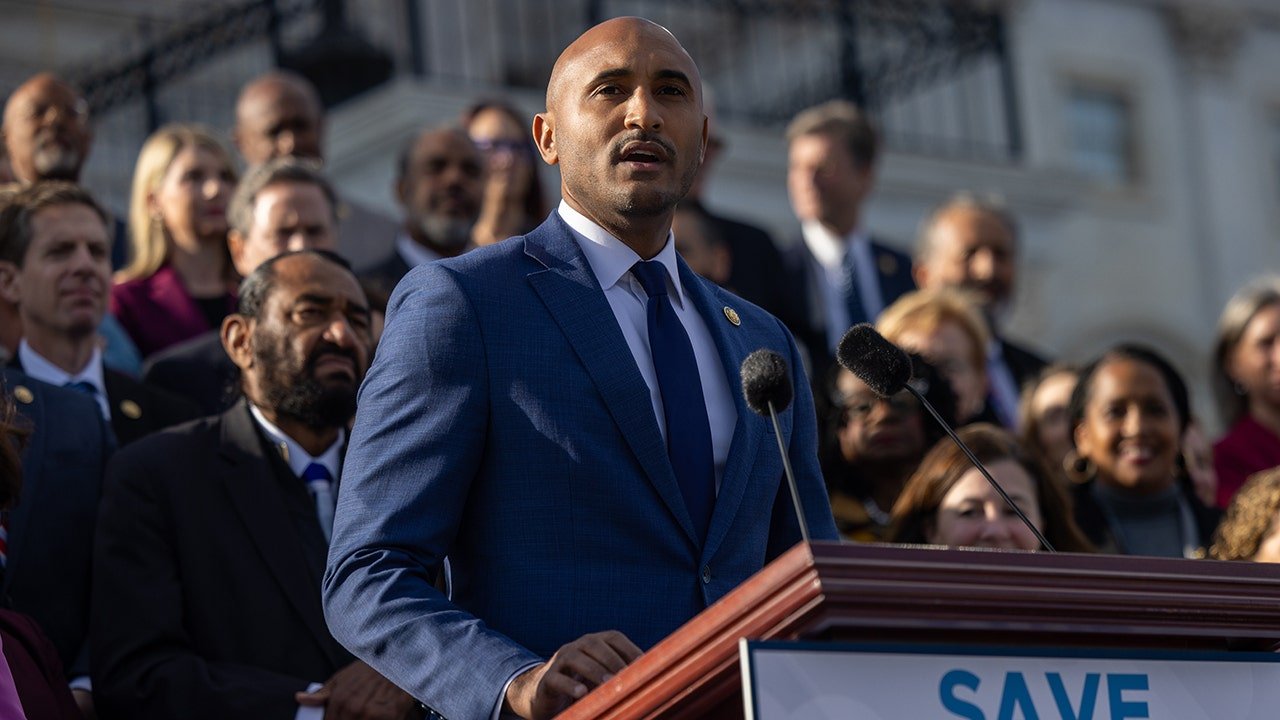
Figures now represents one of the GOP’s top pickup opportunities after Alabama’s newly drawn congressional map added more GOP voters to his district, dramatically increasing the difficulty of his re-election bid. The National Republican Congressional Committee (NRCC), House Republicans’ campaign arm, added the freshman lawmaker to its target list last week.
Congressman Shomari Figures, D-Ala., speaks at a press conference with other members of the House Democratic caucus in front of the U.S. Capitol in Washington, D.C., on Nov. 12, 2025. (Nathan Posner/Anadolu via Getty Images)
BLOCKBUSTER SUPREME COURT VOTING RIGHTS RULING IGNITES REDISTRICTING WAR ACROSS SOUTHERN STATES
Sewell’s Black-majority seat anchored around Birmingham remained largely unchanged, though she also bucked Democratic leadership on the amendment.
House Minority Leader Hakeem Jeffries, D-N.Y., and 202 other Democrats voted against the measure. All Republicans present voted in support.
Both lawmakers voted against the Protection of Women and Girls in Sports Act in 2025, which barred federally funded schools from allowing biological males to participate in girls’ and women’s sports.
The reversal comes as transgender issues continue to divide Democrats, with public polling showing broad opposition to transgender athletes competing in women’s sports.
A New York Times/Ipsos poll conducted in 2025 found that nearly 80% of Americans opposed biological males competing in women’s sports. Roughly seven in ten Democrats or Democrat-leaning respondents agreed, according to the survey.

Protesters against transgender athletes competing in women’s sports gathered outside the Supreme Court in Washington, D.C., on Jan. 13, 2026. (Heather Diehl/Getty Images)
DEMOCRATS STAY QUIET ON NEXT STEPS AFTER SUPREME COURT TRANSGENDER SPORTS RULING
Republicans sharply criticized the Alabama Democrats’ votes, arguing the move reflected political necessity rather than a genuine change in position.
«Out of touch Democrats Shomari Figures and Terri Sewell are desperately trying to hide their far-left views now that it’s politically expedient, but it’s too little too late,» NRCC spokesman Reilly Richardson told Fox News Digital.
«Alabamians know Figures and Sewell support Democrats’ radical agenda of allowing men to compete in women’s sports and will hold them accountable at the ballot box in November,» he continued.
Figures, however, argued his views on transgender participation in women’s sports have been consistent and pointed to a 2025 amendment vote restricting transgender athletes that he supported in a statement to Fox News Digital.
«As I have said before, I do not believe that men should be allowed to participate in women’s sports,» Figures said. «I voted against the Protection of Women and Girls in Sports Act because that bill would have created an open season for pedophiles to conduct sex checks of young girls, with no safeguards.»
Proponents of the measure disputed during floor debate that the legislation would put girls at risk.
Fox News Digital reached out to Sewell for comment.
Reps. Don Davis, D-N.C., and Henry Cuellar and Vicente Gonzalez, D-Texas, also voted with Republicans in favor of the Mace amendment.
The three Democrats, who are all vulnerable to GOP challengers, frequently cross party lines to support Republican-authored bills, though Davis voted «present» on the Protection of Women and Girls in Sports Act.
Rep. Nancy Mace, R-S.C., who sponsored the amendment, argued the measure was intended to protect women’s sports.
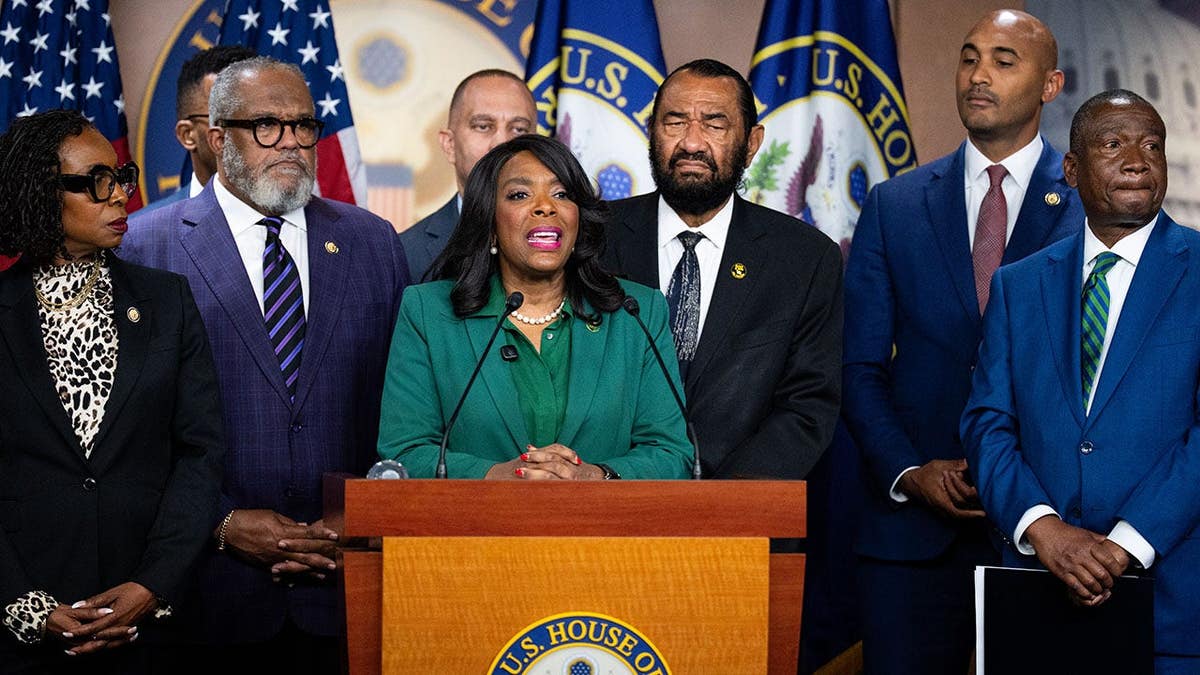
Rep. Terri Sewell, D-Ala., speaks during a Congressional Black Caucus news conference in the U.S. Capitol on the Supreme Court’s ruling in Louisiana v. Callais on Wednesday, April 29, 2026. (CQ-Roll Call, Inc via Getty Images)
CLICK HERE TO DOWNLOAD THE FOX NEWS APP
«Men are not women. Men will never become women. Yet male athletes are stealing medals, invading locker rooms, and putting girls in the hospital, all in the name of gender ideology,» Mace said Tuesday. «Our NDAA amendment would end this nonsense.»
politics, congress, house of representatives, midterm elections, democrats

George Harrison estableció un criterio claro frente al uso de las cajas de ritmos: consideraba que la tecnología dejaba de ser útil cuando la grabación perdía la sensación de músicos tocando juntos en tiempo real, según reflejan sus declaraciones y decisiones de producción.
Esta postura se evidenció durante las sesiones de grabación del segundo álbum de los Traveling Wilburys, el supergrupo integrado por Bob Dylan, Roy Orbison, Tom Petty, Jeff Lynne y el propio Harrison. Según el sitio oficial de la banda, el proceso buscó preservar una identidad de “hermandad” creativa, priorizando el trabajo conjunto por encima de la lógica industrial de la época.
En ese contexto, Harrison expresó una opinión contundente sobre el uso extendido de las cajas de ritmos en los estudios de los años 80 y 90: “Cualquiera que pueda usar esas patéticas cajas de ritmos en la medida en que lo hacen, no nota lo malas que suenan”.
El eje de su argumento fue la defensa del pulso humano, la interacción entre intérpretes y la imperfección como elementos esenciales en el resultado final.
Para Harrison, la caja de ritmos no operó como un simple reemplazo del baterista. Funcionó como un atajo que uniformaba la música y dejaba que se impusiera el “sonido” del dispositivo por encima del carácter del intérprete, según recogió el sitio Something New.
El planteo se ordenó alrededor de una idea de grabación en conjunto. Harrison valoró la convivencia de líneas rítmicas, armónicas y melódicas que se ajustan sobre la marcha, con microvariaciones que no responden a un cálculo matemático, en línea con análisis de medios internacionales especializados.
En esa lógica, el baterista no sostuvo solo el tiempo: definió respiraciones, acentos y climas. La caja de ritmos, en contraste, fijó un patrón y estabilizó lo que, para Harrison, debía conservar margen de imprevisibilidad.
Something New remarcó que el debate no fue nuevo en esas décadas, pero en su caso se volvió más visible por la coexistencia con una trayectoria marcada por la curiosidad instrumental y la incorporación de recursos no convencionales. Su frontera apareció cuando el resultado dejó de sonar a interpretación y empezó a sonar a procedimiento.
La posición de Harrison cobró relevancia por el tipo de banda en la que se expresó. Traveling Wilburys no se presentó como un proyecto de laboratorio digital, sino como una reunión de compositores e intérpretes con identidades reconocibles, según The Beatlefan Blog. De acuerdo con estos análisis, la dinámica del grupo incluyó instancias de creación con guitarras acústicas en un entorno doméstico, con un método que priorizó la espontaneidad.
En ese contexto, la discusión por las cajas de ritmos se abordó como una decisión sobre cómo debía “sentirse” una grabación. Harrison defendió una toma como ejemplo del ideal opuesto al automatismo: “Escucha ‘New Blue Moon’, que fue interpretada en vivo con cuatro guitarras acústicas y un baterista que tocó todo lo que está ahí”, señaló. Y concluyó con una evaluación directa: “¡Suena bien!”.
Esa defensa del “sonido humano” con su percepción de la música popular de fines de los 80, cuando el uso extendido de máquinas y “trucos” de producción podía empujar canciones hacia una estética publicitaria.
“Hasta Prince, que me gusta, está empezando a sonar como esos comerciales de televisión, porque cualquiera puede usar esas cajas de ritmos y cajas de trucos”, sentenció Harrison en entrevistas recogidas por Something New.

La coherencia de esa postura se reflejó en decisiones de producción y en el tipo de instrumentación que Harrison privilegió en su obra. Brainwashed (2002) fue el álbum que dejó en un estado avanzado antes de su muerte y que completaron Dhani Harrison y Jeff Lynne.
El proyecto se presentó en medios internacionales y bases de datos musicales como un trabajo terminado de manera póstuma por su entorno inmediato, respetando la idea general de lo que Harrison había empezado.
En ese marco, la defensa de instrumentos tocados por personas —batería real y guitarras acústicas, según el sitio oficial de la banda— mantuvo la misma convicción que explicó su rechazo a las cajas de ritmos: una grabación debía conservar el rastro del intérprete.
anniversary,band,beatles,editors_choice,galeria_celebs,george harrison,john lennon,musician,paul mccartney,ringo star,the beatles
INTERNACIONAL
Italy shuts down effort linked to Gaza flotilla group to track Jewish, Israeli tourists

NEWYou can now listen to Fox News articles!
Italian authorities shut down an anonymous online effort that asked the public to report the locations of Israeli tourists, Italian Jews and businesses believed to have ties to Zionism, drawing condemnation from senior government officials and Jewish leaders who compared the initiative to fascist-era persecution.
«I think we’re going back to the 1930s, to hunting Jews,» Walker Meghnagi, president of the Jewish Community of Milan, said after the Google form began circulating on social media and messaging platforms.
The questionnaire said it was intended to «map Zionist tourism,» property purchases and what it described as «Zionist neo-colonization» in Italy, according to reports. It asked users to identify Jews, Israelis and people believed to be connected to Zionism at hotels, vacation rentals, businesses and other public places.
ISRAEL, JEWS TARGETED WORLDWIDE AS WELL-FUNDED LEFTIST, ISLAMIST GROUPS JOIN FOR ‘NAKBA 78’ PROTESTS
People take part in a flash mob entitled «In the same boat» to protest the detention and treatment of activists participating in the Global Sumud Flotilla in Milan, northern Italy, on May 21, 2026. (AFP via Getty Images)
«The online mapping of so-called ‘Zionist tourism,’ rightly denounced by the president of the Jewish Community of Milan, Walker Meghnagi, is an aberrant initiative, in direct violation of fundamental human rights and the constitutional principles on which our nation is founded,» Italian Senate President Ignazio La Russa wrote in a statement, as translated to English.
«No form of cataloguing of persons on the basis of their religious belief or their connection with Israel is acceptable or justifiable. Behind all this lies a profound anti-Semitism that must be unanimously, firmly, and determinedly rejected,» he added. «We cannot remain motionless in the face of such serious facts that recall the ghosts of the past. To the Jewish Community all my closeness.»
The form was removed following the intervention of Gen. Pasquale Angelosanto, Italy’s national coordinator for the fight against antisemitism, according to Italian and Israeli media reports.
‘NOT ON OUR WATCH’: GLOBAL LAW ENFORCEMENT LEADERS UNITE IN POLAND AGAINST HATE

A view of participants in a May 21 flash mob demonstration in Milan, northern Italy, with people gathered in public space to show solidarity with detained Global Sumud Flotilla activists. (AFP via Getty Images)
«This form is intended to record cases of Zionist tourism, property purchases, and, more generally, Zionist neo-colonization in Italy,» the questionnaire stated.
It said the information collected would be received by the Global Sumud Movement, an activist network associated with flotilla efforts to reach the Gaza Strip, and would remain confidential. Respondents were asked to provide sources so the reports could be verified and used to coordinate unspecified «initiatives.»
The Global Sumud Movement denied commissioning the form or knowing about it before the controversy erupted, according to The Jerusalem Post.
«Zionism is one of the issues we work on, but we do not hunt Jews, and we know nothing about this questionnaire,» the group told the Italian newspaper La Repubblica. «We did not commission it and had not even seen it before it was taken offline.»
EXILED MUSLIM SCHOLAR WARNS FAR-LEFT–ISLAMIST ALLIANCE BEHIND ANTI-ISRAEL PROTESTS ECHOES IRAN’S RISE

Seen Oct. 2, 2025, in Piazzale Loreto in Milan, Italy, demonstrators participate in a protest supporting the Global Sumud Flotilla after its interception by the Israeli army off the Gaza coast. (Alessandro Bremec/NurPhoto)
The organization said it learned about the questionnaire through news reports and reserved the right to take further action, including issuing a formal statement.
According to La Repubblica, later sections of the form asked respondents to name locations where Jewish or Israeli visitors had been seen and to indicate whether local organizations or activist groups were already «managing the phenomenon.»
Meghnagi warned that collecting and circulating such information could encourage extremists to target Jews and Israelis.
«What is happening today shows that there are unbalanced individuals out there, and if this kind of message spreads widely enough, you are certain to find someone willing to act on it,» he said. «For this reason, mapping where Jews are is extremely serious.»
CLICK HERE TO DOWNLOAD THE FOX NEWS APP
Alessandro Morelli, an Italian deputy secretary of state, ripped the form as «abhorrent» and said those responsible should not go unpunished.
italy, anti semitism, israel, hate crime, religion, world, world politics

Casemiro, nuevo refuerzo del Inter Miami de Messi y De Paul

Marcela Pagano envió una carta a la congresista demócrata que había acusado al país de racista: “Habla de lo que no conoce”

Se avecina un “Súper Niño” con múltiples alertas meteorológicas por 72 horas, fuerte inestabilidad y frío extremo: las zonas afectadas

Vulnerable Democrats flip on women’s sports vote after opposing similar bills as midterms loom

Cómo George Harrison marcó el camino para grabar sin perder la esencia del grupo

AFA: la Justicia de EE.UU. intensifica la investigación sobre movimientos millonarios relacionados con la empresa de Javier Faroni

Sin la Copa y sin Messi en el avión, vuelve Tapia y deberá enfrentar tres frentes de tormenta tras la pausa del Mundial

Escándalo Mundial: Las presiones secretas, la amenaza de la FIFA por Malvinas y la verdad detrás del partido contra España

Samuel L. Jackson llamó a Argentina “el país más racista del mundo”: la contundente respuesta que le dejó Bárbara Lombardo

Le ganan a la inflación: los senadores pasarán a cobrar $12 millones brutos a partir de agosto

 POLITICA2 días ago
Sin la Copa y sin Messi en el avión, vuelve Tapia y deberá enfrentar tres frentes de tormenta tras la pausa del Mundial
- DEPORTE18 horas ago
Escándalo Mundial: Las presiones secretas, la amenaza de la FIFA por Malvinas y la verdad detrás del partido contra España
- CHIMENTOS2 días ago
Samuel L. Jackson llamó a Argentina “el país más racista del mundo”: la contundente respuesta que le dejó Bárbara Lombardo