
INTERNACIONAL
Canada’s Carney pledges action on antisemitism amid backlash over new anti-hate council members

NEWYou can now listen to Fox News articles!
Prime Minister Mark Carney warned this week that Jewish Canadians are being «brutally targeted,» while also announcing a new anti-racism council that reportedly includes two members with troubling views on the Jewish state.
Following Carney’s speech on antisemitism, critics reacted with anger at the makeup of the council and questioned how a body meant to fight hate and antisemitism includes two members who are reportedly hostile to the concerns of the Jewish community.
Omar Alghabra, a former Liberal party cabinet minister and Member of Parliament, has faced criticism for publicly mourning former Palestinian leader Yasser Arafat. The former leader of the PLO was described by the Foundation for Defense of Democracies as «the father of modern terrorism.» In the days following the Oct. 7 Hamas terror attacks on Israel, he declined a request to condemn them, when asked by Canada’s Rebel News.
Alghabra has also faced scrutiny over past comments regarding Israel. In 2005, he criticized Toronto’s police chief for participating in and leading a «Walk with Israel» event, according to The Jerusalem Post. He described the event as «a show of solidarity for a foreign state currently in the midst of an unresolved conflict» and referred to Israel as «a country that is conducting a brutal and the longest contemporary military occupation in the world.»
CANADA’S CARNEY UNDER PRESSURE TO ACT AFTER SYNAGOGUES SHOT AT IN LATEST ANTISEMITIC INCIDENTS
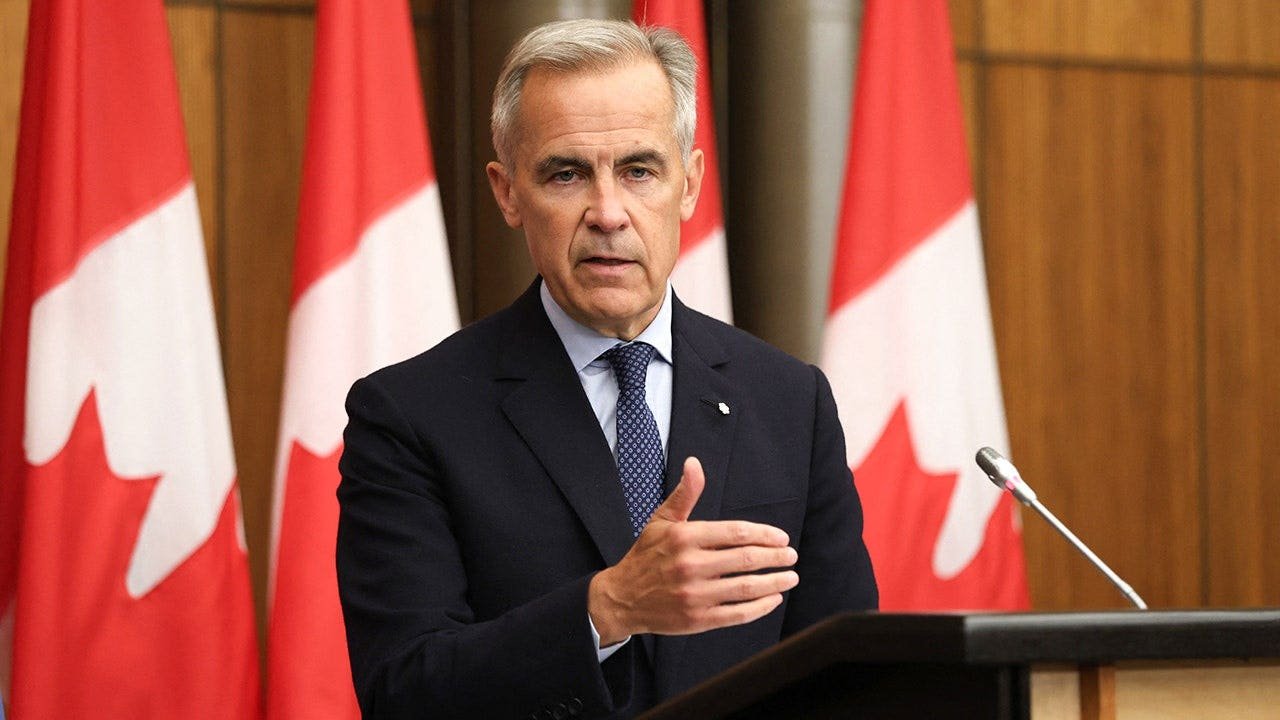
Canadian Prime Minister Mark Carney speaks during a press conference after a Cabinet meeting to discuss both trade negotiations with the U.S. and the situation in the Middle East, at the National Press Theater in Ottawa, Ontario, Canada on July 30, 2025. (DAVE CHAN/AFP via Getty Images)
Canada’s opposition leader, Pierre Poilievre, pointed to a separate encounter with him involving a terrorist organization. «I remember Mr. Alghabra lobbying me before he was in politics to keep Hezbollah legal, so I’m not sure that he’s the right guy to combat antisemitism,» he told reporters.
Howeer, the Jerusalem Post reported that Alghabra had described Hamas as a terrorist organization during a 2016 parliamentary debate.
The other controversial member of the council, Avnish Nanda, represented efforts to keep a pro-Palestinian encampment at the University of Alberta in place. Critics of the encampment argued it created a hostile atmosphere for Jewish students following Hamas’ Oct. 7 terror attack on Israel.

The then Minister of Transport Omar Alghabra speaks with the Toronto Star at an editorial board meeting at the Well building in Toronto. (Lance McMillan/Toronto Star via Getty Images)
In April, B’nai Brith Canada’s League for Human Rights released a report showing that 6,800 antisemitic incidents took place in the country in 2025, representing a 9.4% increase over 2024. On average, this represented 18.6 incidents a day and was the «highest volume» the group has recorded since it began tracking incidents.
«I’m a Canadian-born Jew serving as rabbi of the vibrant Tifereth Beth David Jerusalem community in Montreal, and I was truly shocked to learn that among the people chosen to sit on Prime Minister Carney’s newest council is Omar Alghabra, who publicly mourned the death of Yasser Arafat and remained silent when asked to condemn the attacks of October 7th,» Rabbi Zolly Claman of Montreal’s Tifereth Beth David Jerusalem Congregation told Fox News Digital.
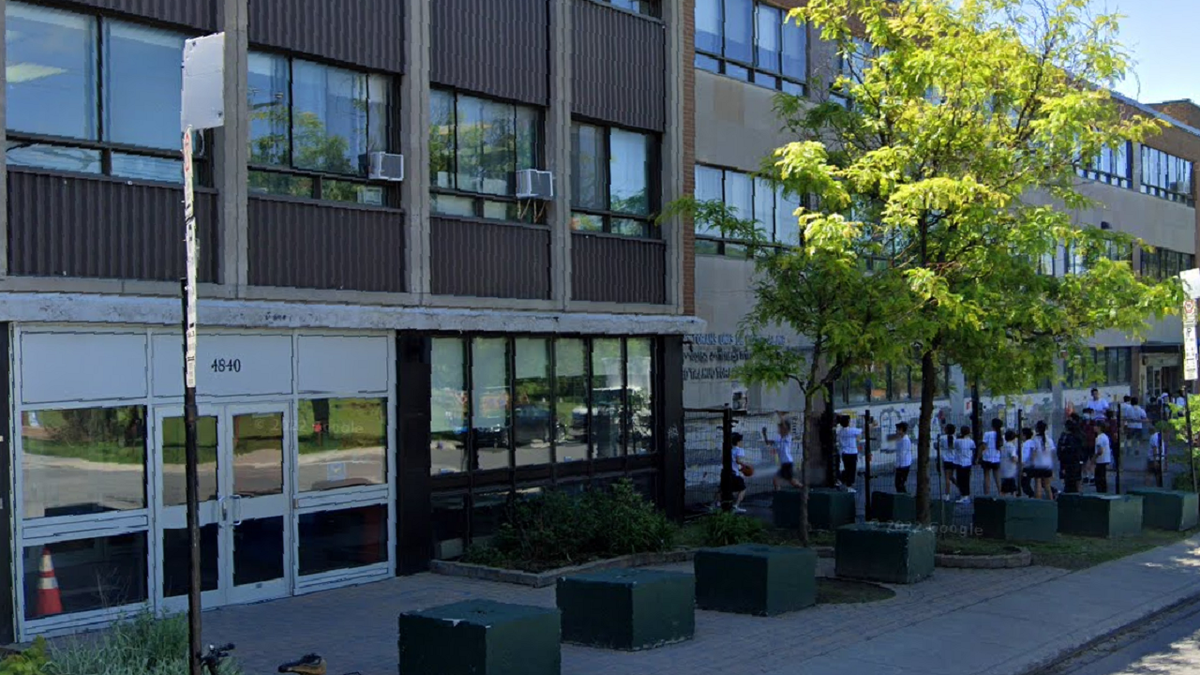
The Talmud Torah Elementary School in Montreal was one of two schools hit with gunfire this week, according to Montreal police. (Google Maps)
«Canadian Jews are struggling to understand how our prime minister believed this would be a constructive appointment,» Claman said.
When announcing the new Council on Rights, Equality and Inclusion, Carney stated, «The council has a clear mission to combat racism and hate in all their forms and to guide the Government of Canada as part of our efforts to build a fairer, more just, more inclusive society,» He also said that, «The crisis of antisemitism in Canada today is specific, it’s severe, and it demands a targeted response. And that is what our government is fully committed to,» Reuters reported.
FROM AUSCHWITZ, HOLOCAUST SURVIVOR ISSUES URGENT WARNING OVER RISING ANTISEMITISM IN CANADA
When asked about Prime Minister Mark Carney’s announcement, B’nai Brith Canada, one of the country’s leading Jewish advocacy organizations said that while it welcomed the prime minister’s acknowledgment of rising antisemitism, it believes additional action is needed to address what it views as a growing crisis facing Canada’s Jewish community.
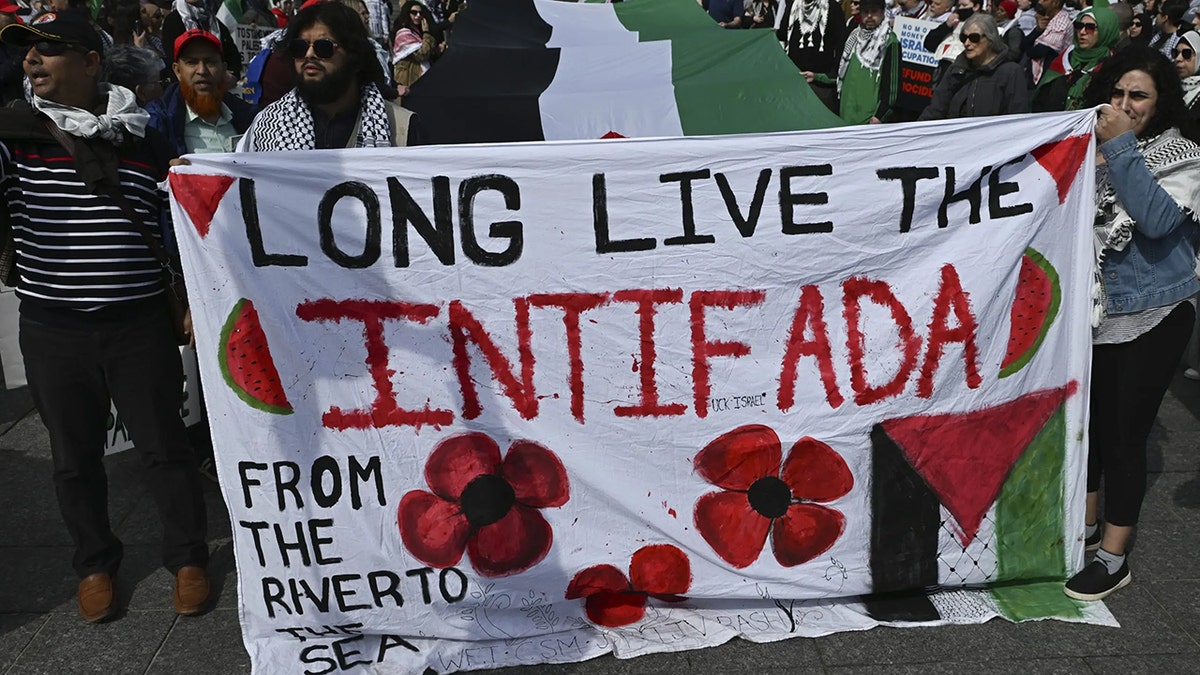
Anti-Israel protesters hold antisemitic posters in Edmonton, Alberta, on April 13, 2025. (Photo by Artur Widak/NurPhoto via AP)
«B’nai Brith Canada acknowledges the Prime Minister’s solidarity with the Jewish community,» Simon Wolle, the organization’s chief executive officer, told Fox News Digital. «He was right to mandate that the Special Advisory Council on Rights, Equality and Inclusion prioritize researching and combating antisemitism.»
At the same time, Wolle questioned whether the newly announced council has the authority and scope necessary to effectively address the problem.
«But we are concerned because the council does not have the power or scale to address this crisis in an appropriate and meaningful manner,» he said. «It is an important aspect of the government’s approach to combating antisemitism, but it is not sufficient.»
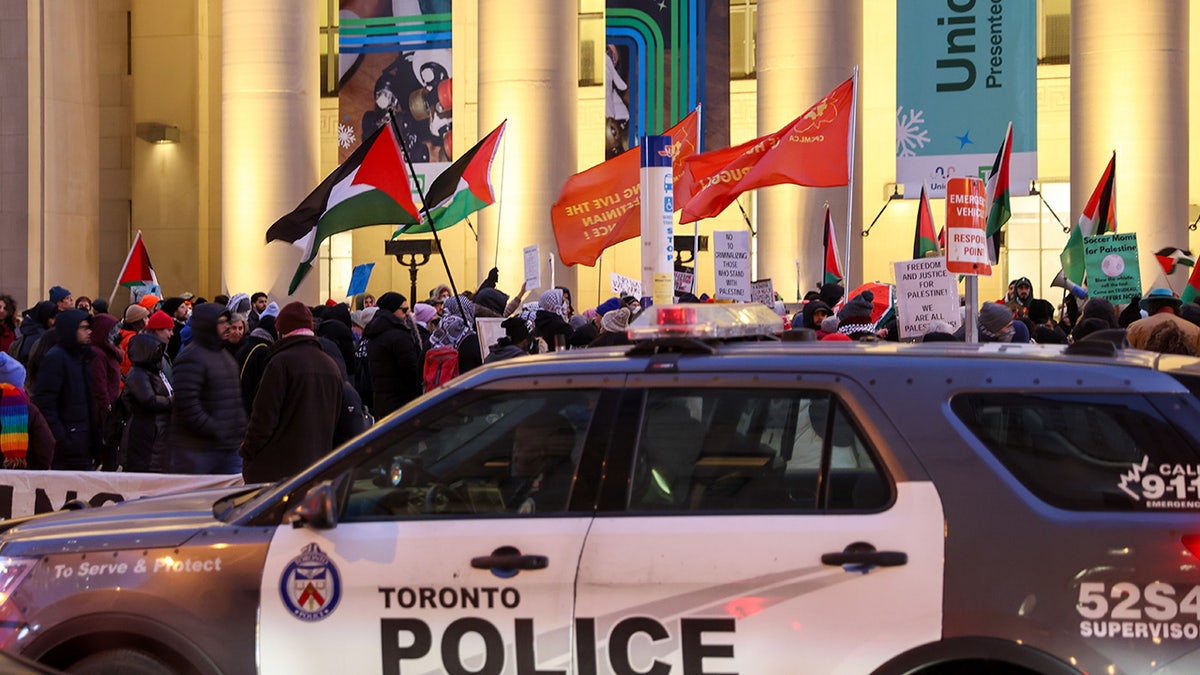
Anti-Israel demonstrators gathered outside Union Station in downtown Toronto during a rally on Jan. 4, 2024, demanding a ceasefire. (Mert Alper Dervis/Anadolu)
Wolle added that B’nai Brith Canada will «continue to call on the government to establish a National Emergency Task Force on Antisemitism, among other initiatives, because the Jewish community needs immediate action, not just words during this time of violence, hate, and threats to our right to exist and participate in Canadian society,» he said. Wolle did not offer comment on either Omar Alghabra and Avnish Nanda appointments.
NON-JEWISH PROFESSOR SAYS HE WAS FIRED FOR CALLING OUT HAMAS SUPPORTERS IN ONLINE POST
Canadian Jewish activist Ariella Kimmel also questioned the effectiveness of the newly announced council.
«The Jewish community makes up just 1.2% of Canada’s population, yet is the target of 75% of hate crimes, which is astoundingly disproportionate. Canada does not have a hate problem; it has a Jew-hatred problem. There is a very specific virus spreading rapidly across this country, and our prime minister is administering a broad catch-all antibiotic that will not help.»
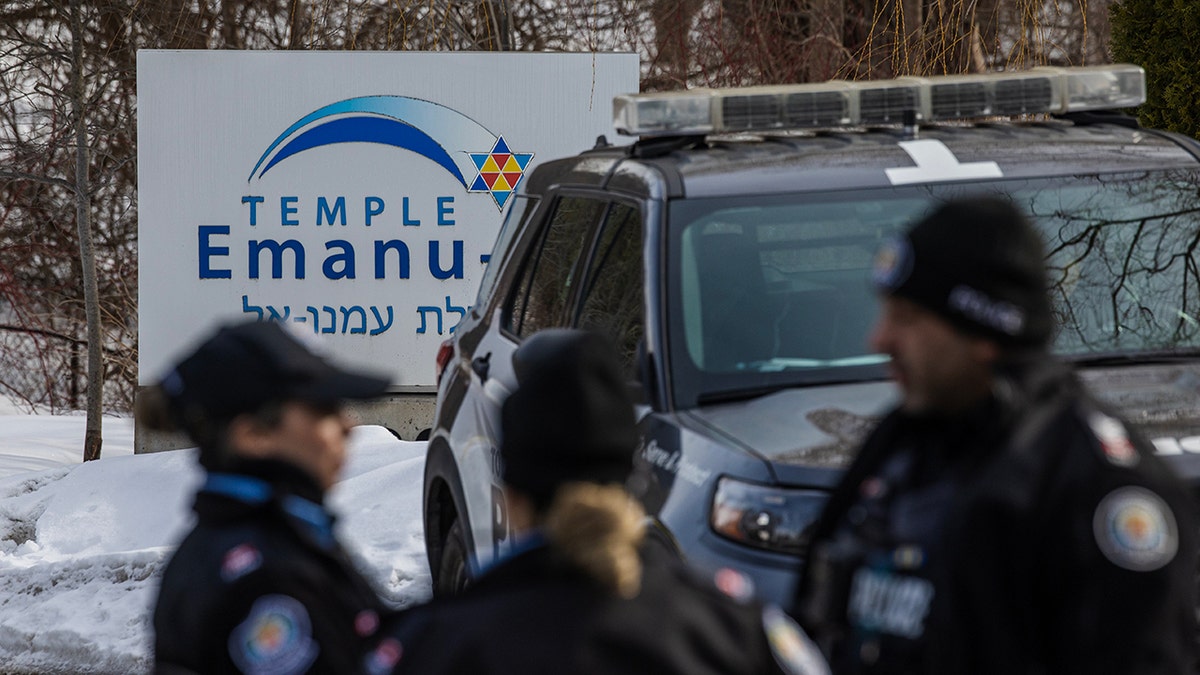
Temple Emanu-El in Toronto was shot at on March 3, 2026. No injuries were reported. (Nick Lachance/Toronto Star via Getty Images)
Kimmel said his speech lacked concrete solutions and failed to address what she described as growing hostility toward Jewish communities.
SIGN UP FOR ANTISEMITISM EXPOSED NEWSLETTER
«There was nothing on the vile chants we hear on the streets, nothing about the mobs that target Jewish neighborhoods, nothing calling for police to enforce the laws that already exist,» she said.
«What Canada doesn’t need is another special council on racism. We need to address the real elephant in the room, the targeting of Jews using ‘Zionism’ as an excusable reason, led by radicalized progressives and Islamist fundamentalists.»
Fox News Digital reached out to Carney’s office and Omar Alghabra and Avnish Nanda for comment.
CLICK HERE TO DOWNLOAD THE FOX NEWS APP
anti semitism, hate crime, mark carney, hamas, canada











INTERNACIONAL
Federal judge acknowledges Supreme Court ruling clearing path for Trump to end Haiti TPS
NEWYou can now listen to Fox News articles!
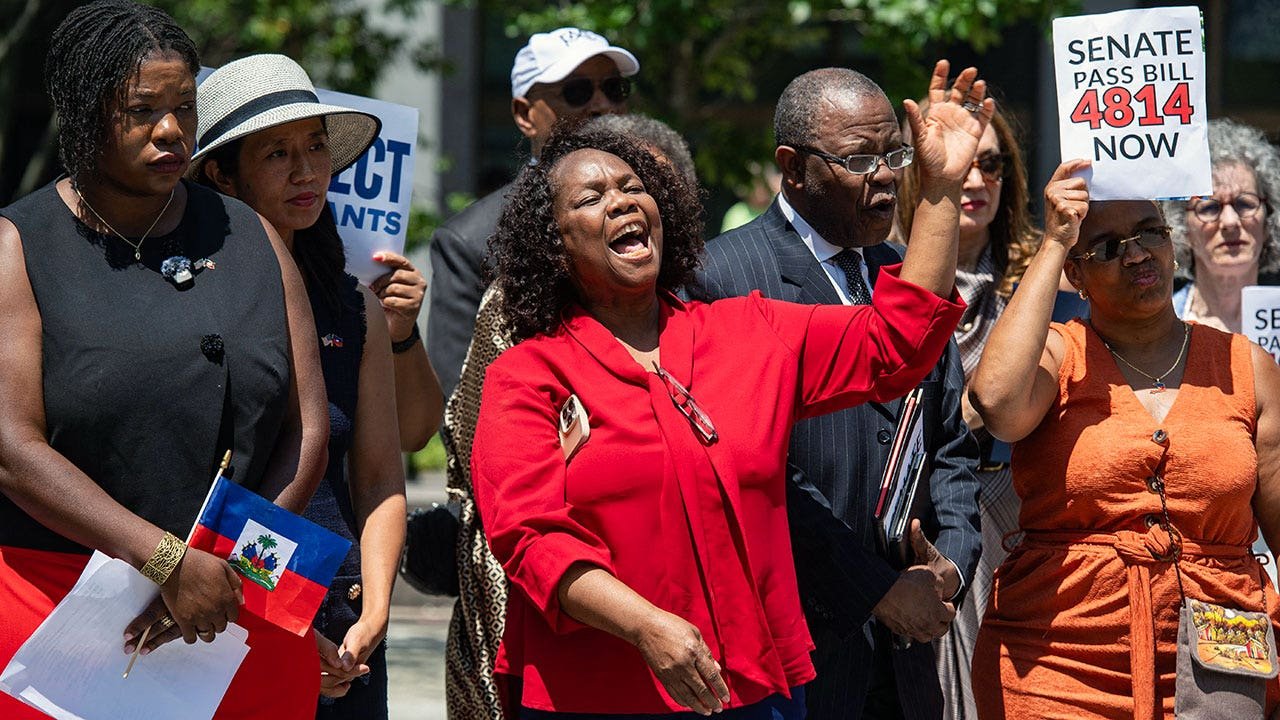
President Donald Trump on Wednesday notched a major immigration victory after a federal judge acknowledged that the court order blocking the administration from ending temporary protected status (TPS) for hundreds of thousands of Haitians is no longer in effect after the Supreme Court’s ruling in Mullin v. Doe.
The ruling marks the culmination of a yearslong legal battle over the Biden administration’s expansion of Haiti’s TPS designation and delivers a significant immigration victory for Trump, who repeatedly campaigned on ending the Biden administration’s expanded TPS protections for Haitians.
The issue became a centerpiece of the 2024 election after Trump and running mate JD Vance blamed the Biden administration’s Haiti TPS policies for the influx of Haitian migrants into Springfield, Ohio, where residents raised concerns about traffic safety, strained public services and cultural clashes.
BLUE STATE LEADERS ERUPT AFTER SUPREME COURT’S DECISION ENDING TPS PROTECTIONS FOR HAITIANS, SYRIANS
A federal judge acknowledged that the court order blocking the Trump administration from ending temporary protected status for hundreds of thousands of Haitians is no longer in effect. (Joseph Prezioso/AFP via Getty Images, File)
The controversy later exploded onto the national stage after Trump referenced residents’ claims that migrants were taking ducks and geese from parks and eating household pets.
The White House did not respond to Fox News Digital’s request for comment by publication time.
U.S. District Judge Ana Reyes wrote Wednesday that her earlier order staying the Department of Homeland Security’s (DHS) termination of Haiti’s TPS designation «is no longer in effect» after the Supreme Court’s decision and the D.C. Circuit’s subsequent mandate.
While the underlying lawsuit will continue, the administration is no longer barred by the injunction from moving forward with ending TPS protections for an estimated 330,000 to 350,000 Haitians living in the U.S.
The remaining litigation centers on whether the administration acted with unconstitutional racial animus in terminating the designation.
LIBERAL COURT STUNS WITH RULING THAT HANDS TRUMP MAJOR IMMIGRATION WIN
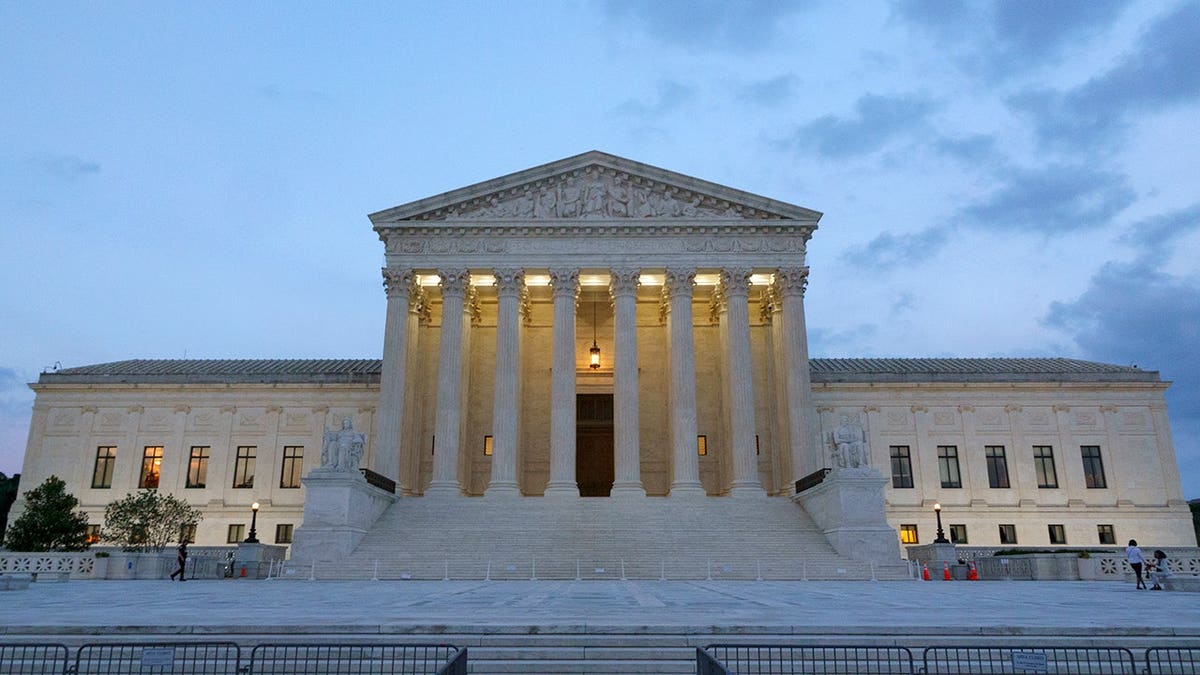
The Supreme Court ruling in Mullin v. Doe ended TPS for Haitian migrants. (Kevin Carter/Getty Images, File)
The Supreme Court ruled in June that the TPS statute bars judicial review of the administration’s non-constitutional decisions to terminate TPS designations and found the plaintiffs’ equal protection challenge was unlikely to succeed. The court reversed the lower courts and remanded the case for further proceedings.
DHS General Counsel James Percival pushed back on reports suggesting Wednesday’s order itself ended Haiti’s TPS designation, arguing the protections effectively expired when the Supreme Court’s mandate was issued July 27 and that Reyes’ order merely acknowledged that legal reality.
«Haiti TPS ended when the Supreme Court mandate issued on July 27,» Percival wrote on X. «I will give Judge Reyes kudos though for taking the L with grace and not doing something bonkers like many of her colleagues.»
Haiti first received TPS after the country’s devastating 2010 earthquake, but the designation remained in place for 16 years through multiple administrations. The Biden administration later expanded and extended protections for hundreds of thousands of Haitians already living in the U.S.
MORE THAN 100 HAITIAN IMMIGRANTS WITH VIOLENT OFFENSE AND SEX CRIME CONVICTIONS DEPORTED: DHS
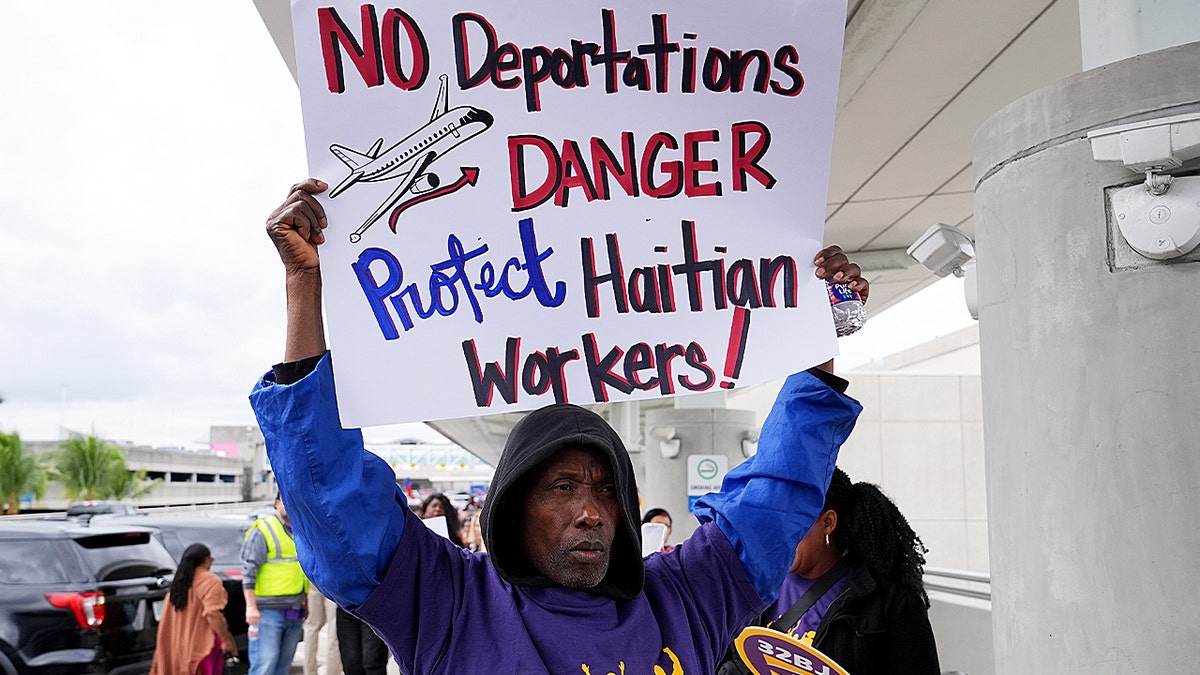
Temporary protected status for Haitian immigrants was lifted late last month. (Lynne Sladky/AP Photo, File)
After reviewing conditions in Haiti, former DHS Secretary Kristi Noem determined the country no longer met the statutory requirements for TPS and announced the administration’s decision to terminate the designation, arguing the humanitarian program had been extended well beyond its intended temporary purpose. The move triggered the legal challenge that ultimately reached the Supreme Court.
After the SCOTUS decision, the DHS announced Haiti’s TPS designation would be terminated, effective July 27, and that employment authorization documents issued under the designation were no longer valid. The department instructed employers to reverify the work authorization of affected employees.
The State Department maintains a Level 4 «Do Not Travel» advisory for Haiti because of widespread gang violence, kidnappings and civil unrest.
Fox News Digital’s Danielle Wallace and Michael Lee contributed to this report.
immigration, donald trump, homeland security, federal judges, federal courts, supreme court, politics
INTERNACIONAL
Rusia y Ucrania luchan ahora por el control del espacio aéreo: el futuro de la guerra se juega en el cielo


INTERNACIONAL
Crowded Russian beach descends into chaos after alleged Ukrainian drone incident kills 7, including 4 children

NEWYou can now listen to Fox News articles!
Vacationers were sent scrambling for safety Monday after a projectile struck a crowded beach in a Russian Black Sea resort town, killing seven people, including four children, and injuring dozens more, officials said.
Video footage captured the incident in the village of Arkhipo-Osipovka near Gelendzhik, where the beach was packed with visitors at the time of the strike.
The Russian Mission in Geneva said in a post on X that the «bloody attack» was carried out by a drone launched by Ukraine, accusing Kyiv of targeting civilians.
UKRAINE LAUNCHES WHAT APPEARS TO BE ONE OF ITS LARGEST DRONE ATTACKS AGAINST RUSSIA: REPORT
A projectile flies overhead near Arkhipo-Osipovka, Russia, on Monday. (Social media via Reuters)
«The attack targeted civilian infrastructure. Emergency and special services are working at the crash site,» regional Gov. Veniamin Kondratyev said in a post on Telegram.
«What happened today is a targeted attack by the Kyiv regime against civilians who have no connection to the military infrastructure. This cynical and inhumane terrorist attack against children cannot be justified.»
UKRAINE UNLEASHES MORE THAN 400 DRONES NEAR MOSCOW IN ONE OF WAR’S BIGGEST ATTACKS

A fiery explosion rocks a Black Sea beach resort in Russia on Monday. (Social media via Reuters)
Andriy Kovalenko, an officer with Ukraine’s Defense Forces, disputed Russia’s account, saying the deaths were directly caused by Russian air defenses that intercepted a drone, sending debris onto the beach.
«Russian air defense shot down a drone over people lying on the beach,» Kovalenko said on Telegram.
In the video, sounds resembling gunfire were heard just seconds before a drone struck the beach, causing a fireball explosion that sent bystanders screaming. As the gunfire was heard, the drone appeared to veer sharply before diving toward the beach.
Preliminary Russian reports also found that several of the deaths were caused by «falling drone debris,» Kondratyev said.
ZELENSKYY SAYS PUTIN ‘LOST THE INITIATIVE’ AS UKRAINE’S TECH INDUSTRY RESHAPES THE WAR
In another Telegram post, Kovalenko indicated that Ukraine uses its weapons against Russian military-industrial infrastructure to affect Moscow’s ability to finance the war.
He further accused Russian President Vladimir Putin of creating an «illusion» that Russia would remain safe from the war by downplaying daily explosions as falling debris, limiting air raid warnings, and positioning air defenses near populated areas such as the Black Sea resort.
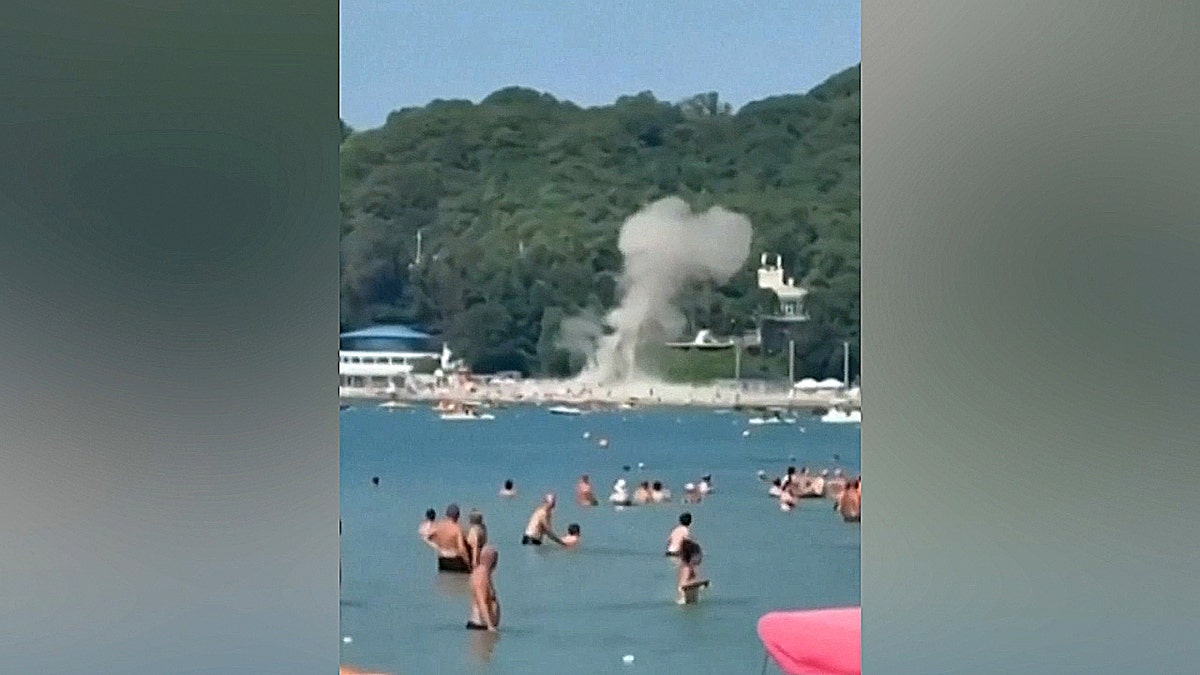
Smoke rises after a deadly blast along a Russian resort beach on Monday. (Social media via Reuters)
«Putin deliberately killed these people. Because if he had not started the war and struck Ukraine, they would be alive,» Kovalenko said.
«It was Putin, his air defense, who killed these Russians. His decisions in response to their decisions launched a chain of death for Russians.»
russia, conflicts, ukraine, wars

Qué participantes quedaron en la placa de nominados en Gran Hermano Generación Dorada: la jugada que lo cambió todo

La Anmat retiró del mercado un producto de una reconocida marca de crema antiinflamatoria tras un robo

YPF vendió dos bloques petroleros en Mendoza por USD 405 millones para financiar su expansión en Vaca Muerta

Los árbitros para la fecha 4 del Torneo Clausura de la Liga Profesional

Federal judge acknowledges Supreme Court ruling clearing path for Trump to end Haiti TPS

Los universitarios reclaman que no se cumplió con el financiamiento y anunciaron un nuevo paro nacional

“Vamos a acelerar con todo”: el objetivo del Gobierno por las reformas y la agenda electoral de cara al 2027

Javier Milei cruzó a Victoria Villarruel y elevó la tensión: “Es una opositora, replica los argumentos kirchneristas”

Reelecciones indefinidas: el oficialismo bonaerense niega que busque ampliar la Legislatura como parte de una reforma política para beneficiar a los intendentes

¡Chau Luck Ra! La salida de soltera de La Joaqui, muy bien acompañada, a días de su separación
-
 POLITICA2 días ago
Javier Milei cruzó a Victoria Villarruel y elevó la tensión: “Es una opositora, replica los argumentos kirchneristas”
-

 ECONOMIA15 horas ago
Dólar hoy en vivo: a cuánto se negocian todas las cotizaciones minuto a minuto este miércoles 5 de agosto
-
 POLITICA3 días ago
Inédito boicot a un decreto para bajar costos portuarios: el Gobierno envió intimaciones con Prefectura