INTERNACIONAL
Inside Tehran: Iranians describe IRGC’s brutal rule, poverty — ask Trump to ‘stay the course’

Iranian regime’s ‘hardline rhetoric’ under fire as US deal nears
President Donald Trump takes a firm stance on Iran’s economic downturn and ongoing nuclear negotiations, emphasizing that U.S. forces are ready if diplomacy fails. John Roberts and Sandra Smith report on the White House cabinet meeting, where Trump discussed Iran’s high inflation and lack of sanctions relief. Dr. Mahsa Tehrani questions the trustworthiness of the Islamic Republic.
NEWYou can now listen to Fox News articles!
A fragile ceasefire that many Iranians say does not feel like a ceasefire has given some people inside Iran the courage to speak out, despite what they describe as enormous personal risk.
The accounts come as President Donald Trump threatened to hit Iran «very hard» if Iran does not accept a U.S.-backed deal, after renewed military escalation threatened to derail already fragile negotiations. The latest round of U.S. strikes followed the downing of a U.S. Apache helicopter near the Strait of Hormuz, which Trump blamed on the Iranian regime. Iran later reportedly retaliated with attacks in the region.
Inside Iran, three young voices described a country where repression is becoming even more visible, the Islamic Revolutionary Guard Corps is expanding its presence on the streets, and ordinary people are struggling to afford basic necessities.
RED CROSS SHARES AUDIO OF IRANIAN CIVILIAN EXPLAINING SITUATION ON THE GROUND IN TEHRAN: ‘NO RESPITE’
A fragile ceasefire that many Iranians say does not feel like a ceasefire has given some people inside Iran the courage to speak out, despite what they describe as enormous personal risk. (Majid Saeedi/Getty Images)
All three spoke to Fox News Digital through written messages because of security concerns and internet restrictions inside Iran. Their names have been changed to protect their identities.
They described a similar reality: checkpoints across major streets, fear of the Basij, the hardline volunteer militia under the Islamic Revolutionary Guard Corps, and the Revolutionary Guards itself, renewed enforcement of hijab rules, mass layoffs, long lines outside bakeries and a growing sense among young Iranians that the future has disappeared.
‘The curtain has been pulled back’
«The influence of the Revolutionary Guards always has been present, and everything has operated within their ideological framework. Now, their interference is more obvious and easier to see,» Hassan said. «Now the curtain has simply been pulled back.»
Milad described a city transformed by security forces.
«The atmosphere in cities and government offices has become much more securitized. Security forces are now visible around almost every major square and intersection, and there are numerous checkpoints throughout the cities,» he said. «Individuals affiliated with the security apparatus or the Basij are increasingly being given positions of authority and influence.»
At the beginning of the war, Milad said, authorities appeared to ease some social restrictions, including enforcement of hijab rules. But he said that pressure has since returned, adding that the regime is not only targeting opponents, but also silencing supporters who cross political red lines.
IRAN REGIME REPORTEDLY ISSUED NATIONWIDE SHOOT-TO-KILL ORDERS AS PROTEST DEATH TOLL SURGES
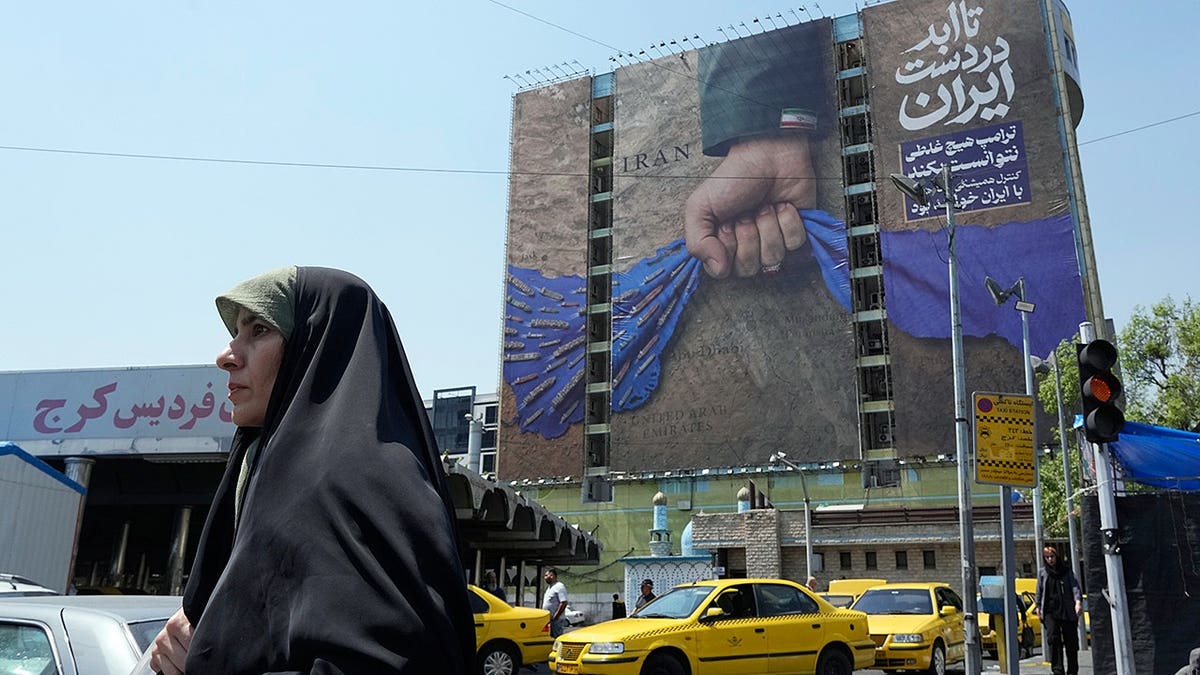
A woman walks past a billboard showing a military hand holding the Strait of Hormuz with Farsi text which reads, «In Iran’s hands forever,» «Trump couldn’t do a damn thing,» «The control of Strait of Hormuz will be Iran’s forever,» in Vanak Square, in northern Tehran, Iran, on April 16, 2026. (Vahid Salemi/AP)
«For example, a group staged a sit-in protest against negotiations with the United States,» Milad said. «Security forces intervened and told them that they were disrupting public security. They were warned that if they did not leave, they would be arrested.»
Ali, a student in Tehran, Iran, said the Islamic Revolutionary Guard Corps control feels more open than ever.
«It can be said that if previously 80% of the country was controlled by the Revolutionary Guard and the rest by the government, now 100% of the country is in the hands of the IRGC,» Ali told Fox News Digital. «When you drive through the streets and reach checkpoints, you don’t even dare look them in the eye because they can do whatever they want.»
«No one dares get into trouble with people who are members of organizations like the Basij, because they can report your name and have you arrested,» he added. «They have become more brutal than ever, and people know that if they take to the streets, the Revolutionary Guards can easily kill them and no one can do anything about it.»
Ali said Basij members who once hid their affiliation now display it openly.
FORMER IRANIAN PRISONERS REVEAL TORTURE HORRORS AS REGIME KILLS PROTESTERS ON SIGHT DURING CRACKDOWN
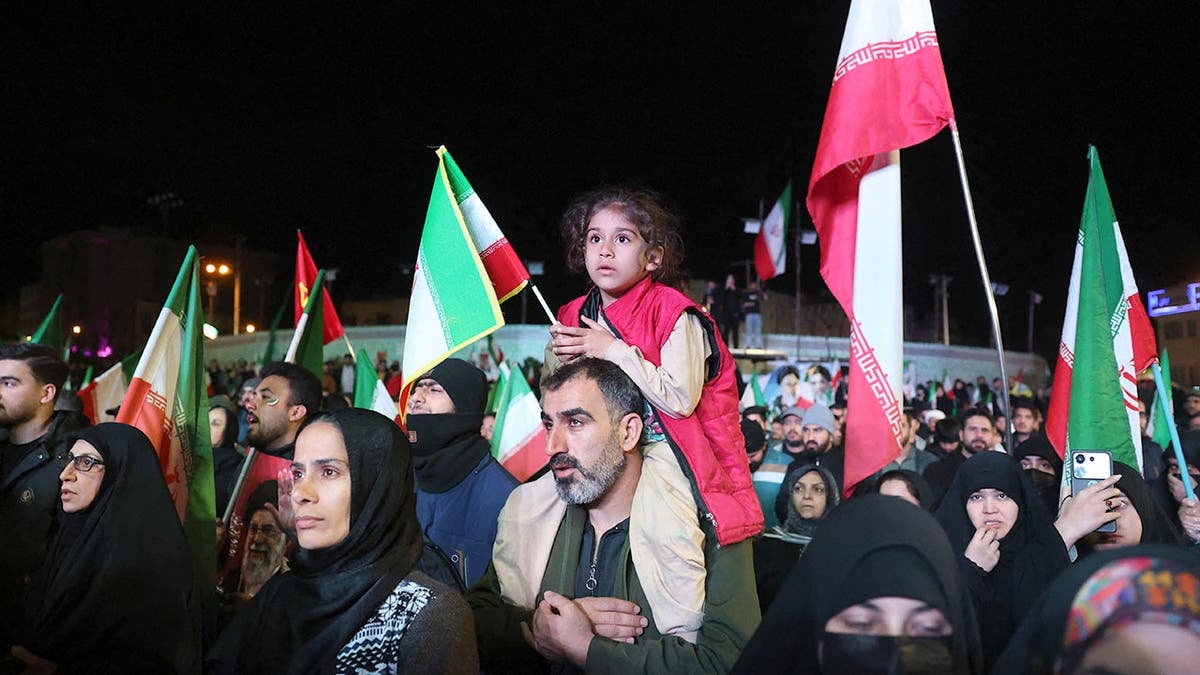
Iranians react after a ceasefire announcement at the Enqelab square, Wednesday, in Tehran. The U.S. and Iran agreed to a two-week ceasefire Tuesday, barely an hour before President Donald Trump’s deadline to obliterate the rival country was set to expire, with Tehran to temporarily reopen the vital Strait of Hormuz. (AFP via Getty Images)
‘We couldn’t even breathe’
The accounts come against the backdrop of Iran’s long history of violent crackdowns on dissent.
Iran International reported that more than 36,500 people were killed during the January crackdown, while Amnesty International described January 2026 as the deadliest period of repression by Iranian authorities in decades and said deaths rose into the thousands.
Milad, who said he witnessed the crackdown, described the impact it had on ordinary Iranians.
«Before the war, we couldn’t even breathe. We couldn’t sleep at night,» he said. «The conditions were very difficult for most people who had seen that massacre. After the war, we were able to sleep more easily at night, and we felt a bit more at ease. Now, even though the war is still ongoing, we continue to worry about the families of the martyrs and those who are in prison, under torture, and facing the executioner.»
The new war and the U.S.-led pressure campaign that began Feb. 28 have raised hopes among some opponents of the regime that the Islamic Republic could be weakened or even collapse. But the Iranians who spoke to Fox News Digital said that, for now, the result on the ground has been a more visible security state.
US ECONOMIC CHOKEHOLD ON IRAN REACHES PEAK LEVERAGE AS COLLAPSE RISKS EMERGE
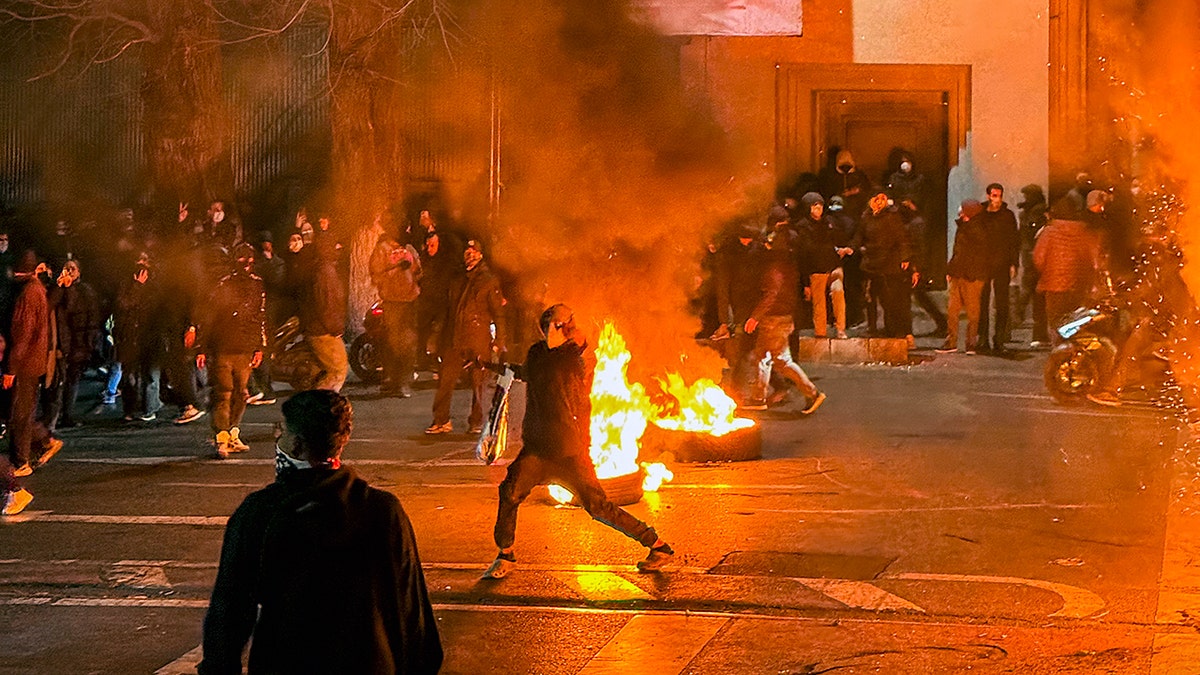
Iranians gather while blocking a street during a protest in Tehran, Iran, on Jan. 9, 2026. (Mahsa/Middle East Images/AFP via Getty Images)
Bread lines and vanishing future
The economic pressure also is being felt across daily life.
Iran already was struggling with inflation, currency collapse, corruption and sanctions before the war.
Since then, growing economic strain has been reported, with businesses crushed by high prices, supply-chain disruptions, internet blackouts and rising unemployment. Iran’s official statistics center reported annual inflation of 53.7% in April, with food inflation above 115%, according to the Associated Press.
Ali said, many young Iranians see almost no path forward.
«The economic situation has become so bad that almost all industries are on the verge of collapse and are simply trying to survive,» he said. «Many companies have laid off workers, including me. Many of my engineering-student friends have also been laid off. Families can no longer financially support their children.»
«I see many more older men and women than before who clearly were not garbage collectors but are now searching through trash,» Ali said.
«Almost all of us young people are convinced that we have no future,» he added. «At best, if there is anything left from what we earn, we can spend it on going to a café. Buying a phone or clothes has become difficult; buying a car is a dream. Prices have become so high that some days we can barely afford our two main meals and nothing else. Snacks, fruit and similar things are no longer part of life.»
Milad described a similar picture, saying layoffs, unpaid salaries and rising utility bills are crushing families.
«The government is trying to collect more money from people through higher taxes. Utility bills for water, electricity and gas have become extremely expensive,» he said.
He said bakeries remain crowded not only because of war fears, but because bread has become one of the only affordable foods left.
«Bread has become the main staple on many family tables,» Milad said. «Medical costs are extremely high, and many people are afraid to visit a doctor because the costs of medication, tests and treatment are so expensive.»
Hassan, however, said the economic pain is bearable only because some Iranians believe it could eventually help bring down the Islamic Republic.
«We believe that with the return of a government that truly represents the people, under the leadership of Crown Prince Reza Pahlavi, economic conditions will improve in the future,» he said.
Reza Pahlavi, the son of Iran’s late shah, has lived in exile for decades and has increasingly presented himself as a unifying figure for Iranians seeking a post-Islamic Republic future. His supporters inside and outside Iran argue that any transition should lead to a referendum and a democratic system.
EXILED IRANIAN PRINCE SAYS REGIME ‘VERY CLOSE TO COLLAPSING’ AMID NATIONWIDE UNREST
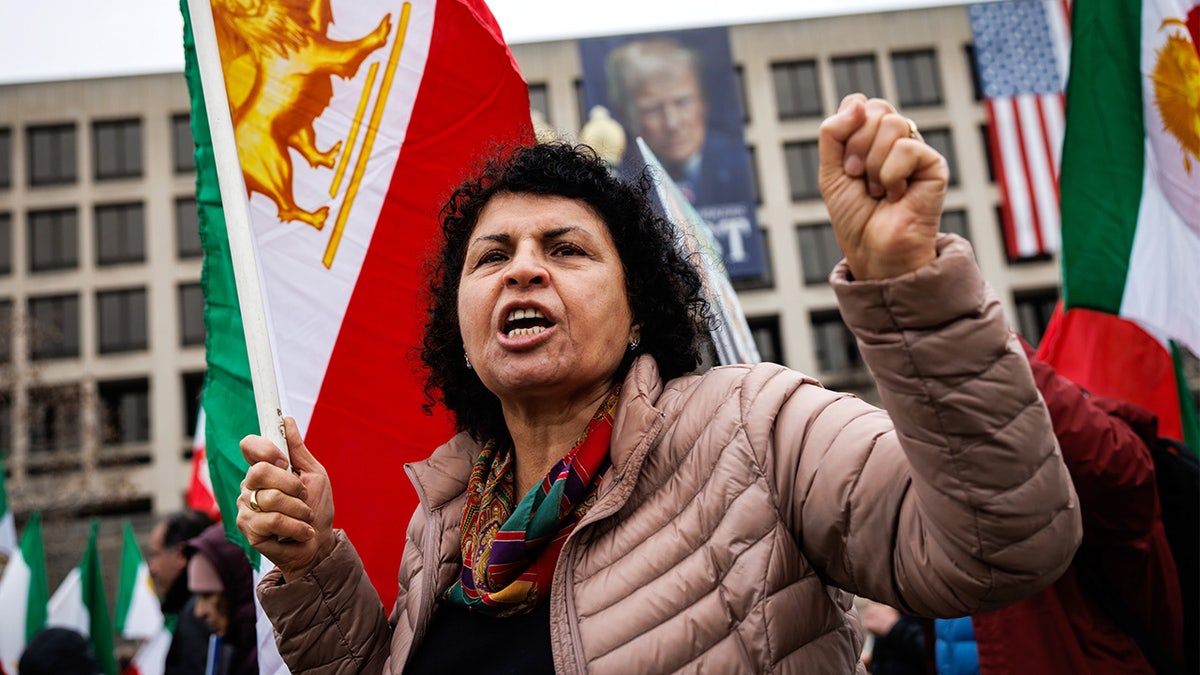
Protesters rally in Washington, D.C., on March 7, 2026, supporting regime change in Iran following U.S. and Israeli strikes that killed Iran’s Supreme Leader Ayatollah Ali Khamenei. (Samuel Corum/Getty Images)
Warning against appeasement
The Iranians who spoke to Fox News Digital warned the Trump administration against negotiating with the regime or easing pressure too soon.
«I would like to tell the Western world that appeasement of the Islamic Republic is futile,» Hassan said. «These are dishonest and deceptive people who, according to their religious beliefs, practice taqiyya in order to deceive others and maneuver their way through difficult situations.»
«These are not people who can be reformed,» he added. «Appeasement of them is harmful to the entire world. It is extremely naive to believe that meaningful negotiations can be conducted with such individuals.»
Ali said he believes the clerical regime would give up uranium if it allowed its leaders to stay in power.
«We only hope that the Islamic Republic falls, whether through war or through an agreement,» Ali said. «The clerics are far too shameless to fight to the death over uranium. They would be willing to hand over the uranium to the United States if it meant staying in power and continuing to plunder Iran. But they are certainly careful to avoid suffering the same fate as Gaddafi.»
His message to Washington was direct.
«The only message I have for the U.S. government is: save the people of Iran from the clerics and free Iran from the Islamic Republic,» Ali said.
CLICK HERE TO DOWNLOAD THE FOX NEWS APP
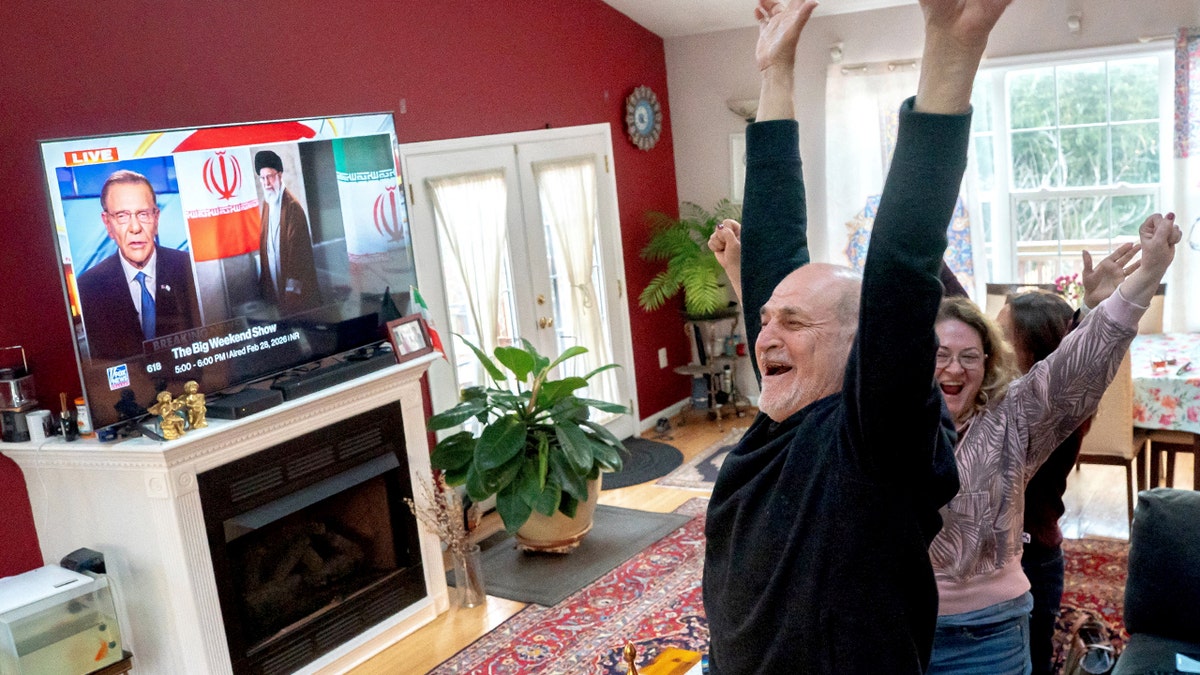
Iranian American community members Sadaf Ebrahimi, Shirin Nariman, and Mehran Ebrahimi watch a TV screen at Nariman’s home in Vienna, Virginia, reacting to news of U.S. President Donald Trump’s announcement that Iran’s Supreme Leader Ayatollah Ali Khamenei was killed in joint U.S. and Israeli strikes on Feb. 28, 2026. (Nathan Howard/Reuters)
Milad said many Iranians are watching Trump closely and fear another moment when the West chooses negotiation over the people in the streets.
«Iranian people have hope that the American administration will be strong and stand on their side,» he said. «We don’t want another Obama situation. Iranian people and their blood are not oil prices.»
«We have one message to the president, and that is to continue,» Milad said. «Here in Iran, we no longer say, ‘Obama, Obama, either with us or with them.’ Now we’re saying: ‘Trump, don’t be Obama. You are with us, not with them. President Trump, stay the course.’»
Fox News Digital reached out to Iran’s mission to the United Nations for comment.
war with iran, world protests, donald trump, iran, sanctions








INTERNACIONAL
Inédito: Suiza vota limitar su población a 10 millones de personas (y prohibir todo tipo de inmigración)
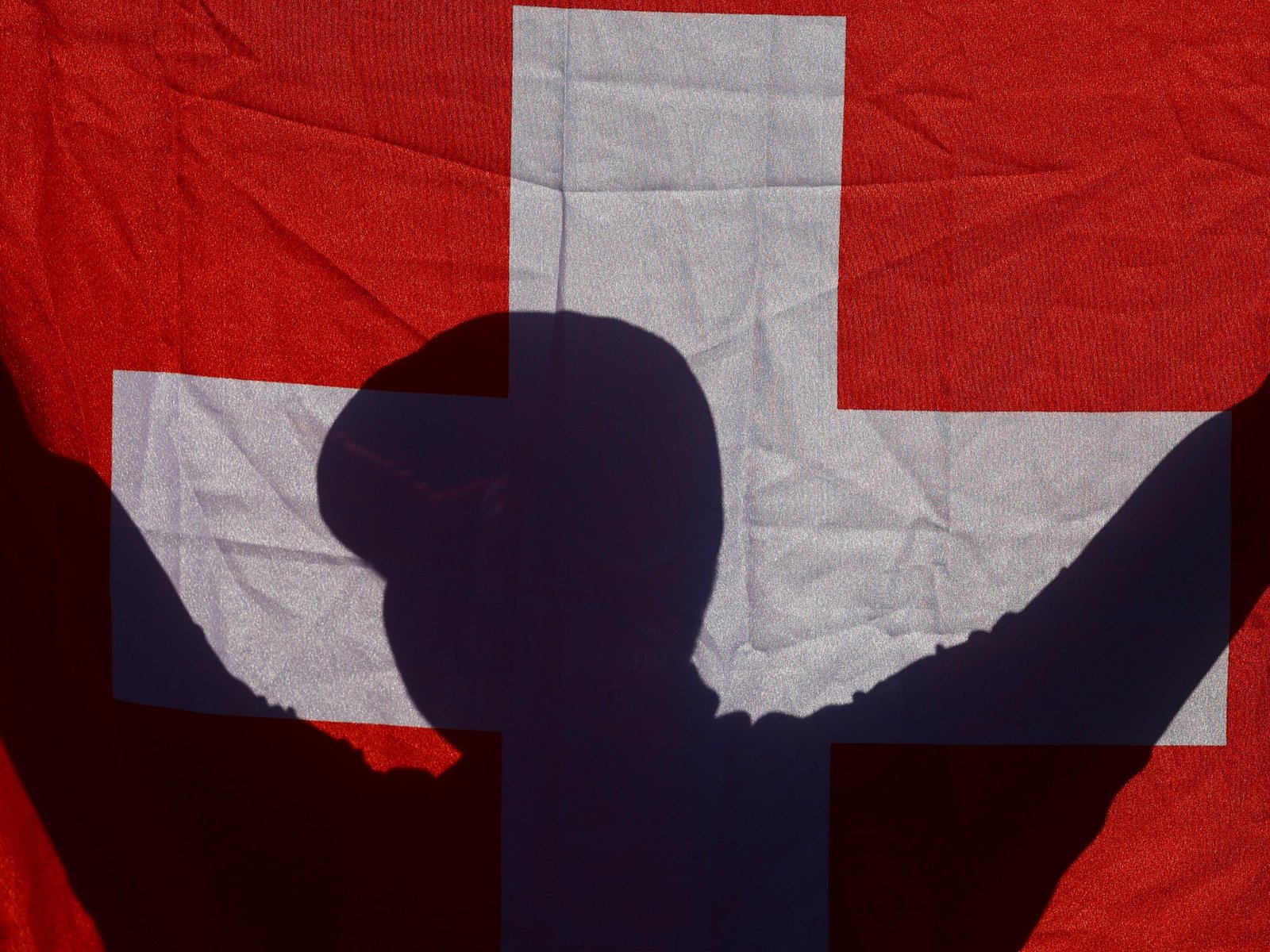
Los ciudadanos suizos podrían cerrar este domingo las puertas de su país. Suiza va a las urnas el domingo en un referéndum, como hace cuatro veces cada año, para votar, entre otras cosas, si el crecimiento de la población del país se limita a 10 millones de personas.
Si el referéndum, para el que los sondeos dan prácticamente un empate técnico, sale adelante, el país tendría una grave crisis con la Unión Europea y podría tener que prohibir todo tipo de inmigración.
La propuesta surgió del Partido Popular Suizo, una formación de extrema derecha xenófoba que podría conseguir un triunfo histórico si los ciudadanos aprueban su iniciativa. El Gobierno suizo rechaza el plan, pero si sale adelante en referéndum tendrá que aplicarlo.
Ningún país en el mundo puso nunca un límite a su población. Suiza tenía a finales de 2025 unos 9,1 millones de personas. La población crece a un ritmo más elevado que la mayor parte de sus vecinos europeos. En la última década creció un 10% y desde principios de siglo un 23%. La mayoría de esos migrantes no son del África subsahariana, Oriente Medio o el Magreb, sino del resto de Europa.
La propuesta tiene su origen en 2023, cuando el Partido Popular Suizo planteó limitar el crecimiento de la población de forma que el país nunca llegara a tener 10 millones de habitantes.
Según la extrema derecha, era necesario para proteger el modo de vida de los suizos y proteger el medio ambiente de una presión excesiva. Porque buena parte de sus argumentos para defender el voto afirmativo en el referéndum no son de limitación de la inmigración sino de protección medioambiental. Alegan que el entorno natural suizo no puede con más presión demográfica.
La propuesta busca un cambio constitucional que permita poner un límite estricto a la llegada de migrantes o solicitantes de asilo, e incluso a su prohibición total.
El plan consiste en alcanzar en 2035 los 9,5 millones de habitantes. Ni uno más. Eso se haría endureciendo la política migratoria y restringiendo el derecho de asilo y la reagrupación familiar. Además, en esa primera fase el Gobierno suizo debería revisar todos sus acuerdos internacionales para hacer que respeten esta medida.
Si ese límite de 10 millones de personas se excede en algún momento, prevé la propuesta, el Gobierno tendría que “tomar todas las medidas disponibles”, incluyendo retirarse de acuerdos internacionales que faciliten la migración hacia Suiza, pero manteniendo el acuerdo con la Unión Europea que prevé la libertad de movimientos y residencia de sus ciudadanos.
Si tomando esas medidas la población no baja de los 10 millones de personas en menos de dos años, entonces sí el Gobierno, asegura la propuesta, debería suspender los acuerdos con sus vecinos europeos. Esos acuerdos permiten a los ciudadanos de los 27 países de la Unión Europea moverse por Suiza -y establecerse en el país- como en el resto del bloque. Funciona así también en países europeos que no son miembros de la Unión Europea, como Noruega o Islandia.
Mantener esa libertad de circulación y establecimiento para los ciudadanos europeos es algo esencial si Suiza quiere seguir manteniendo unas buenas relaciones con sus vecinos. Y si quiere mantener otros acuerdos, como los comerciales y su acceso al mercado común europeo sin cuotas ni aranceles.
De los 9,1 millones de personas residentes en Suiza a finales del año pasado, 1,5 millones son nacionales de países de la Unión Europea. La propuesta de la extrema derecha prevé que, en última instancia y para cumplir ese acuerdo, sus permisos de residencia podrían ponerse en cuestión.
La extrema derecha no vende el referéndum únicamente desde el punto de vista migratorio, sino también como un momento clave para el medio ambiente del país. Asegura que la población actual ya es mucha y pone en peligro la conversación del medio ambiente del país.
La mayor asociación de empresas del país asegura que se trata de una “iniciativa del caos” y que el país debe reconocer que “seguirá dependiendo de mano de obra extranjera en el futuro”. El Gobierno suizo asegura que un sí en el referéndum de este domingo aislará al país.
INTERNACIONAL
FIRST ON FOX: DOJ sues Spanberger’s Virginia over laws kneecapping federal agents as mask war escalates
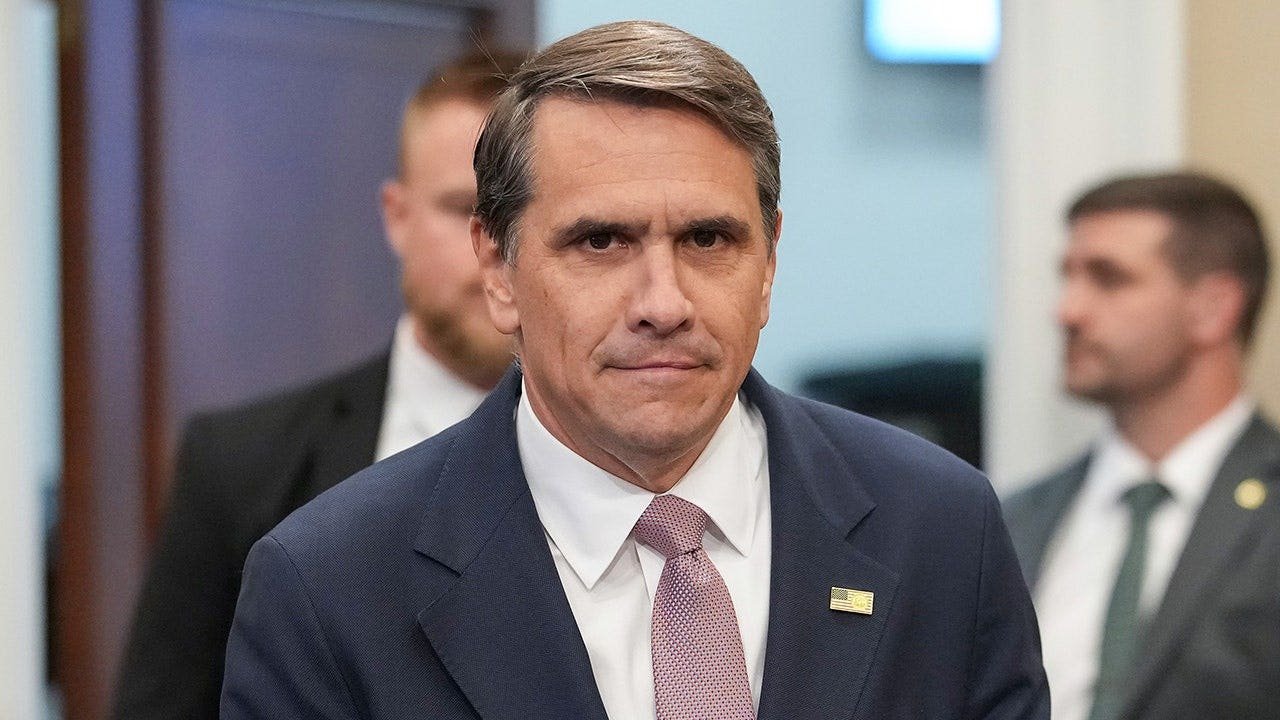
Tom Homan touts Trump admin’s escalated illegal immigration crackdown in New York
Border czar Tom Homan details the escalated crackdown on illegal immigration, criticizing New York City’s anti-ICE policies implemented by Mayor Zohran Mamdani and Governor Kathy Hochul. Homan emphasizes the necessity of federal enforcement, deploring sanctuary city rules he believes endanger communities. He responds to arguments for abolishing ICE, citing successes in removing criminal aliens and combating human trafficking, urging states to cooperate.
NEWYou can now listen to Fox News articles!
FIRST ON FOX: The Justice Department sued The Commonwealth of Virginia on Thursday over two new laws the DOJ says would subject masked federal agents to criminal penalties and threaten local ICE cooperation agreements.
«Law enforcement officers risk their lives every day to keep Americans safe, and they do not deserve to be doxed or harassed simply for carrying out their duties,» said acting Attorney General Todd Blanche in comment provided to Fox News Digital on Thursday. «Virginia’s anti-law enforcement policies regulate the federal government and are designed to create risk for our agents. These laws cannot stand.»
The lawsuit, first shared with Fox News Digital, argues Virginia is violating the Constitution by attempting to dictate how federal officers carry out law enforcement operations — including when they can wear masks, what identifying information they must display and whether local agencies can maintain ICE cooperation agreements unless the federal government accepts state-imposed conditions. The DOJ said the laws threaten officer safety, undermine federal immigration enforcement and violate the Supremacy Clause.
At the heart of the suit, are a pair of laws that Democratic Virginia Gov. Abigail Spanberger signed, which are set to take effect on July, including: one restricting law enforcement officers, including federal officers, from wearing facial coverings while on duty and requiring them to display identifying information, and another imposing state-mandated conditions on federal immigration enforcement agreements.
ICE PRESSURES SPANBERGER AS FAIRFAX MURDER SUSPECTS TRIGGER NEW DETAINERS IN ‘SANCTUARY’ CLASH
The Justice Department sued Virginia over laws that officials say could punish masked federal agents and dismantle local ICE cooperation deals. (Andrew Harnik/Getty Images)
The DOJ said federal officers who violate Virginia’s mask and identification law could face a Class 1 misdemeanor, punishable under Virginia law by up to 12 months in jail, a fine of up to $2,500, or both.
The lawsuit names Virginia Attorney General Jay Jones and left-wing Fairfax County Commonwealth Attorney Steve Descano — who was previously backed by groups connected to George Soros.
The suit claims Virginia’s mask ban is «blatantly unconstitutional» because it attempts to regulate «what federal officers may and may not wear» while carrying out their duties, exposing agents’ identities and increasing risks to them and their families.
«The Department of Justice will steadfastly protect the privacy and safety of law enforcement from unconstitutional state laws like Virginia’s,» said Assistant Attorney General Brett Shumate of the DOJ’s Civil Division in the press release.
FEDERAL JUDGE BLOCKS CALIFORNIA LAW FORCING ICE AGENTS TO REMOVE MASKS DURING OPERATIONS
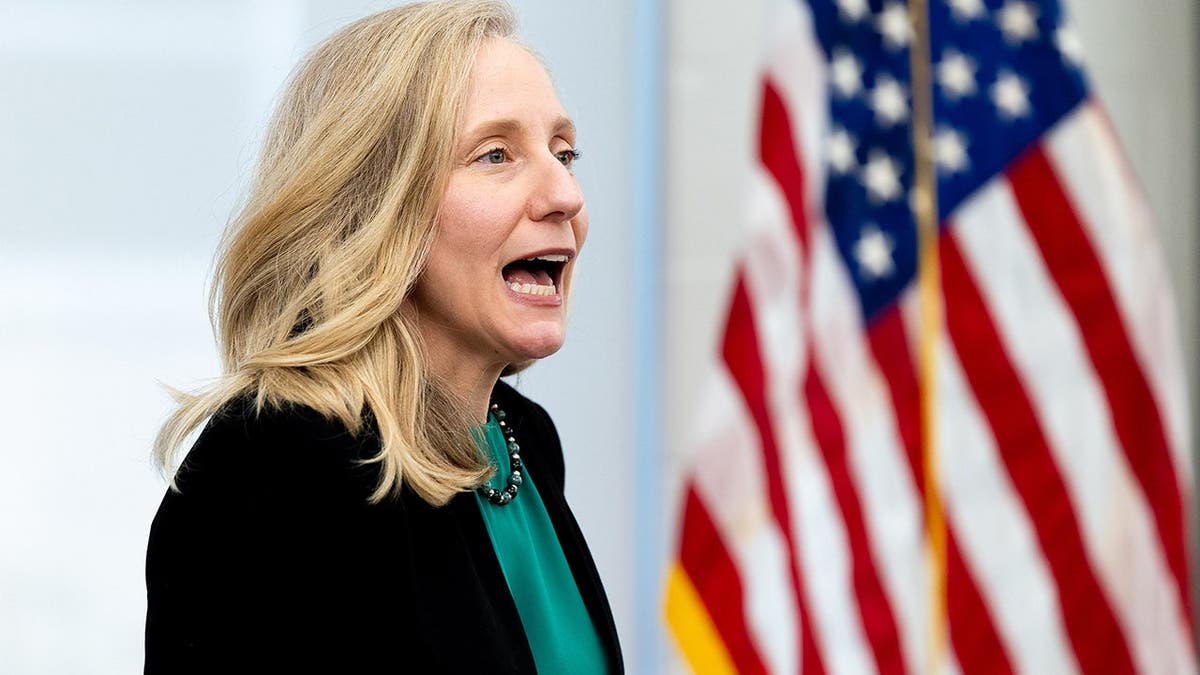
Spanberger restricted ICE agents from operating on state properties and requiring federal agents to wear visible badges and barred law enforcement from wearing facial masks while on duty in May. (Mike Kropf/Richmond Times-Dispatch)
DOJ is seeking a court order to block both laws that begin July 1.
Spanberger, Jones and Descano have all moved to counter the Trump administration’s immigration enforcement agenda in Virginia.
In February, Spanberger issued an executive order that rescinded a Youngkin-era order directing state law enforcement cooperation with federal immigration enforcement efforts.
TOM HOMAN VOWS TO WORK AROUND NEW DEM VA GOV SPANBERGER’S EXECUTIVE ORDER ENDING ICE COOPERATION
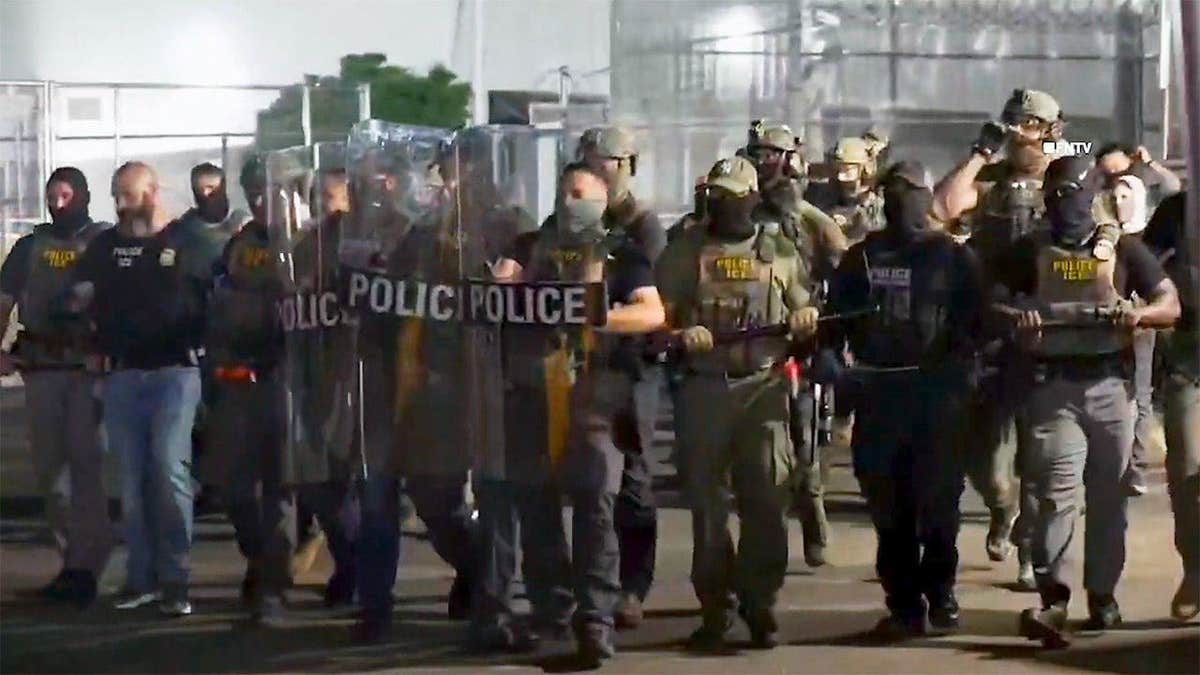
Anti-ICE agitators attempted to block vehicles from leaving the Delaney Hall detention facility in Newark, New Jersey, on Friday night. (FreedomNewsTV)
«The President told us that we are safer because unaccountable, poorly trained ICE agents are arresting mothers and detaining children. Our broken immigration system is something to be fixed — not an excuse to terrorize our communities,» Spanberger posted on X in response to Trump’s State of the Union.
CLICK HERE TO DOWNLOAD THE FOX NEWS APP
The suit comes as there have been ongoing protests outside the Delaney Hall immigration detention center in New Jersey where protesters verbally abused ICE agents, obstructed vehicles, allegedly assaulted officers, and made threats leading to multiple arrests.
«Governor Spanberger cannot tell Federal officers how to do their job,» said Associate Attorney General Stanley Woodward in the press release. «She certainly cannot prohibit them from ensuring their own safety in conducting Federal law enforcement operations. Our suit today stops those unconstitutional efforts.»
Fox News Digital reached out to the offices of Gov. Spanberger and AG Jones for comment.
virginia, justice department, immigration, donald trump
INTERNACIONAL
Starmer in ‘seismic’ crisis, UK defense chief quits before high-stakes Trump NATO summit
NEWYou can now listen to Fox News articles!
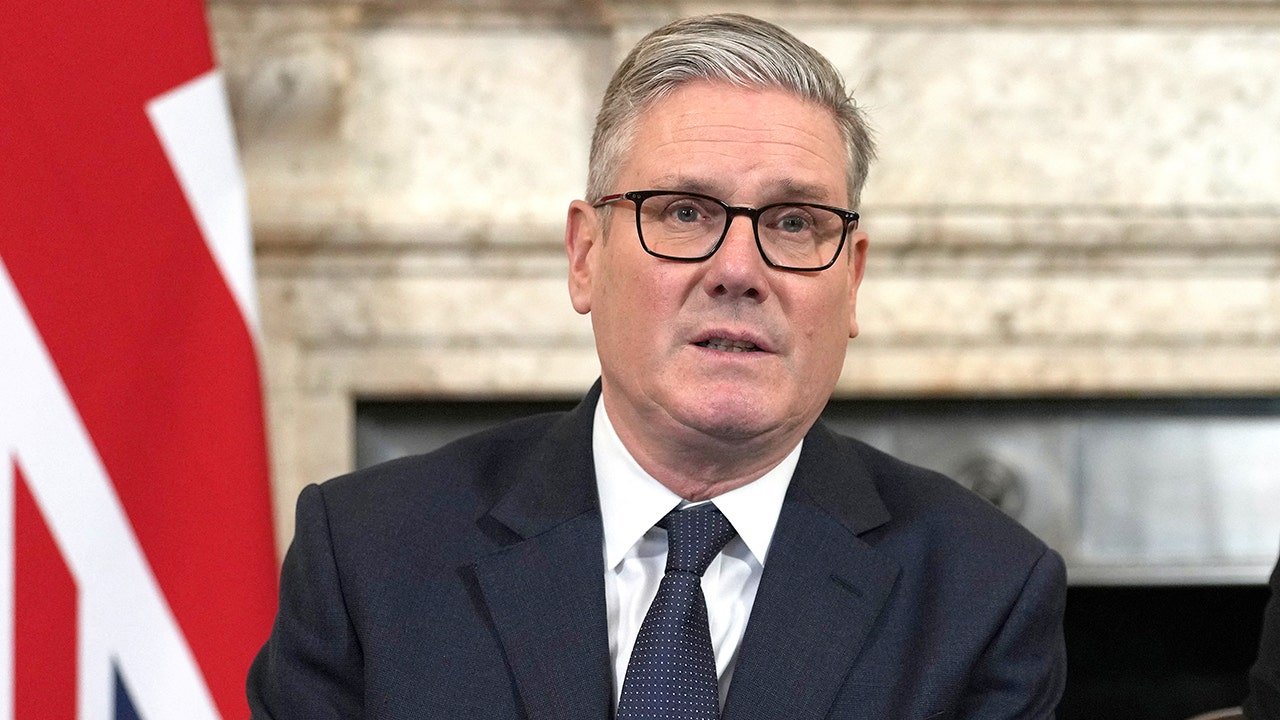
U.K. Defense Secretary John Healey resigned Thursday after clashing with Prime Minister Keir Starmer’s government over military spending, dealing the British leader a setback weeks before a critical NATO summit to include President Donald Trump.
Healey’s departure stemmed from a dispute over the delayed Defense Investment Plan (DIP) — the government’s long-promised roadmap for military investment and readiness — and as NATO allies face renewed pressure from Trump to boost defense spending.
«John Healey’s resignation is a seismic moment for the government and the Ministry of Defense,» Royal United Services Institute (RUSI) Senior Associate Fellow Ed Arnold told Fox News Digital.
«For the government, it creates a sequence of political headaches in terms of a replacement, and trying to get the Defense Investment Plan published.»
BRITISH PM KEIR STARMER MOVES UK MILITARY INTO ‘WAR-FIGHTING READINESS’
Britain’s Defence Secretary John Healey speaks with British and Norwegian naval personnel at the unveiling of the Atlantic Bastion programme in Portsmouth, Britain, on Dec. 4, 2025. (Peter Nicholls/Pool via Reuters)
Healey had been in intense, late-stage negotiations with Starmer and Chancellor of the Exchequer Rachel Reeves over the scale and timelines of the DIP.
Starmer reportedly refused to set out a timeline to reach 3.5% of gross domestic product (GDP) on defense by 2035 — a promise he made to Trump at last year’s NATO summit — and would not commit to a firm date for reaching 3%.
Instead, Starmer offered Healey a deal to spend 2.68% of GDP on defense by 2030, up only marginally from 2.6% next year, Reuters reported.
«You have been unable, and the Treasury has been unwilling, to commit the resources that the nation needs to defend the country,» Healey wrote to Starmer in his resignation letter, warning that the financial constraints would «make the country less safe,» the outlet reported.
NATO CHIEF URGES MEMBERS TO ‘TURBOCHARGE’ DEFENSE PRODUCTION AS HE PAINTS PICTURE OF A WORLD BOUND FOR WAR
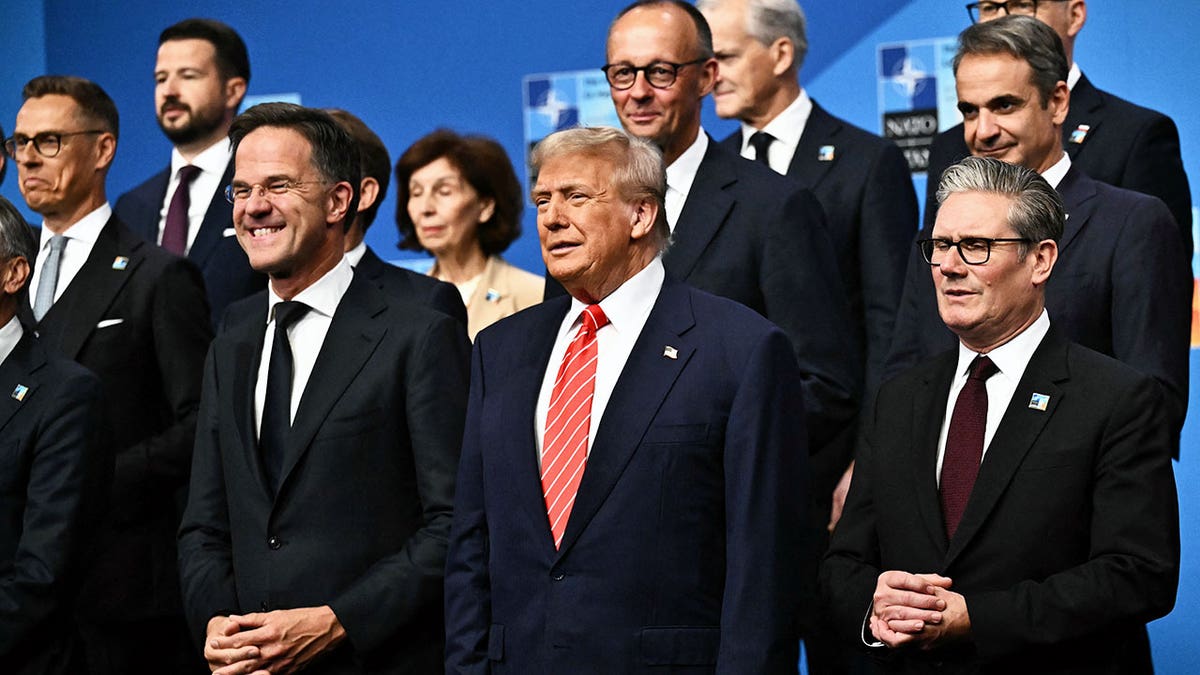
NATO Secretary General Mark Rutte, U.S. President Donald Trump and Britain’s Prime Minister Keir Starmer pose with NATO country leaders during the NATO Heads of State and Government summit in The Hague, Netherlands, on June 25, 2025. (Ben Stansall/Pool via Reuters)
«If the delay to the Defense Investment Plan was already undermining the government’s credibility on defense, John Healey’s resignation has blown a hole in its side,» Professor Kevin Rowlands of the RUSI defense and security think tank told Fox News Digital.
«The immediate consequence is not just political embarrassment for No. 10, but a significant loss of planning certainty at a time when the British Armed Forces, the Ministry of Defense, and industry really need clarity on what will be funded, and when,» he added.
The political fallout is expected to reverberate across the Atlantic, where Washington has increased pressure on European allies to fulfill their defense obligations. Trump has frequently criticized NATO alliance members as «free riders.»
On June 3, Secretary of State Marco Rubio also told the House Foreign Affairs Committee that the upcoming Ankara summit would be the «most important meeting» in NATO’s history because there are some things «that need to be cleared up and fixed.»
He added, «The United States is still in the NATO alliance, and we’ll be there.»
TRUMP EFFECT FORCES GERMANY TO REPRIORITIZE DEFENSE AS NATION PLAYS CATCH-UP IN MILITARY SPENDING
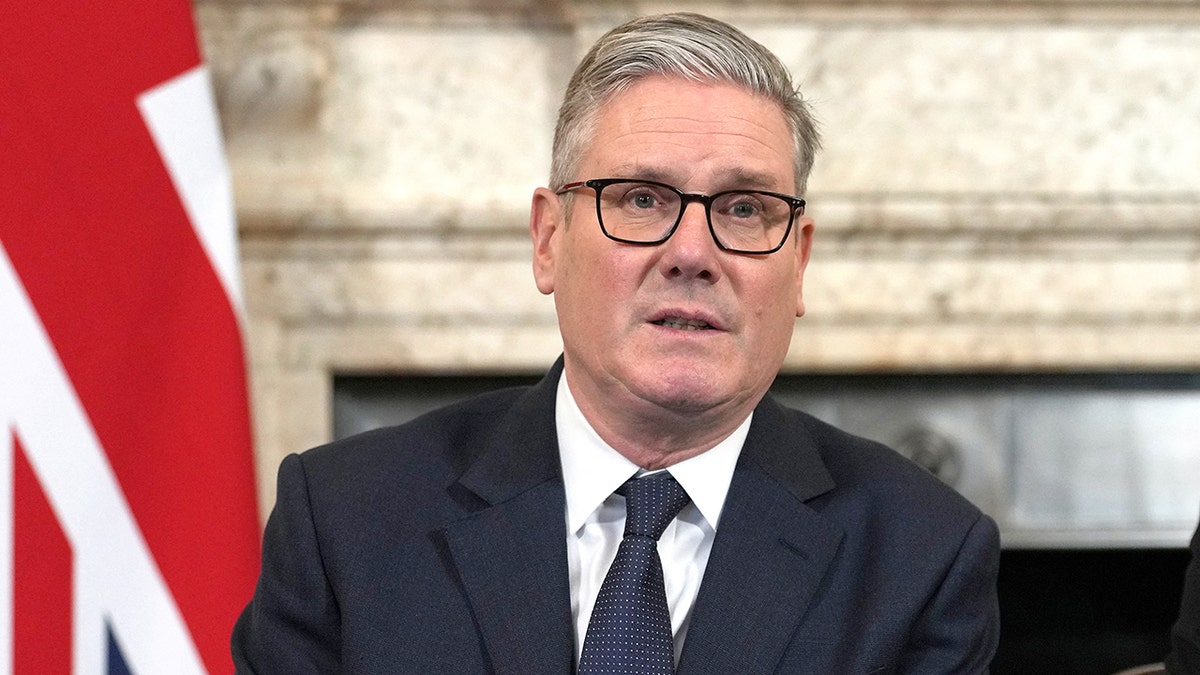
British Prime Minister Keir Starmer increased the military presence in Cyprus following an Iranian drone strike early Monday, Feb. 24, 2026. (Kin Cheung / POOL / AFP via Getty Images))
However, U.S. officials have made it clear that patience is wearing thin.
«Ahead of next month’s NATO summit, POTUS has been clear: Allies must fulfil their commitment to spending 5% of GDP on defense,» U.S. Ambassador to NATO Matthew Whitaker posted on X this week.
Furthermore, a U.S. official noted that a U.K. funding package far lower than 18 billion pounds ($23 billion) would send a highly «negative» signal to Trump ahead of the Ankara meeting, according to The Times.
Starmer has pledged to lift spending to 3% in the next Parliament but Healey’s exit has exposed that the current strategy leaves the U.K. lagging behind key allies. By comparison, Germany plans to spend 3.7% of its GDP on defense by 2030.
CLICK HERE TO DOWNLOAD THE FOX NEWS APP
«Healey knows the threats we face, he knows the capabilities and shortfalls the armed forces have, and if he believes that the financial settlement is not enough to keep the country safe — to the extent that he cannot honorably stay in post — then we are in trouble,» Rowlands added.
«While the impact will mainly be felt on Whitehall, the international implications are severe with a NATO summit just three weeks away,» Arnold noted.
nato, national security, uk politics, united kingdom, spending

Inédito: Suiza vota limitar su población a 10 millones de personas (y prohibir todo tipo de inmigración)

La oposición convocó a una sesión especial en Diputados y busca votos para una moción de censura contra Adorni

Salió el dato de inflación y la City reaccionó: bonos, acciones y CEDEARs elegidos para invertir

La buena noticia que recibió la selección argentina sobre Dibu Martínez a pocos días del debut en el Mundial 2026 ante Argelia

FIRST ON FOX: DOJ sues Spanberger’s Virginia over laws kneecapping federal agents as mask war escalates

El imputado Mariano Perroni declaró en el juicio por Maradona, lloró y afirmó que no formó parte de ningún plan para matarlo

Victoria Villarruel envió una corona de flores al funeral del Indio Solari y buscó diferenciarse del Gobierno

Reforma laboral: qué cambia para los trabajadores con la revisión de más de 100 convenios colectivos vencidos

La advertencia del economista más escuchado por Milei: «Si Argentina tiene éxito, va a ser cara»

Manuel Adorni y su esposa decidieron acogerse al régimen de “inocencia fiscal” aunque aseguran que no declararán dólares

 ECONOMIA2 días ago
La advertencia del economista más escuchado por Milei: «Si Argentina tiene éxito, va a ser cara»
- POLITICA1 día ago
Manuel Adorni y su esposa decidieron acogerse al régimen de “inocencia fiscal” aunque aseguran que no declararán dólares
- ECONOMIA3 días ago
El salario mínimo vale menos que en 2001 y debería triplicarse para recuperar su poder de compra original