INTERNACIONAL
House Republicans move to make Trump’s border policies permanent

NEWYou can now listen to Fox News articles!
A sweeping border security bill aimed at permanently codifying several of President Donald Trump’s executive actions is headed to the House floor after clearing a key committee on Tuesday.
The House Judiciary Committee advanced the Permanent Trump Secure Border Act along party lines during an hours-long markup Tuesday over the fierce objections of Democratic lawmakers.
The legislation, authored by Rep. Chip Roy, R-Texas, would criminalize visa overstays and increase penalties for unlawful entry, would effectively end «catch and release» policies by requiring most illegal migrants to be detained or returned while their cases are pending and tighten asylum eligibility and humanitarian parole, among other provisions.
The measure would also bolster Customs and Border Protection (CBP) by directing the Department of Homeland Security to modernize border facilities, expand staffing and workforce planning and deploy more surveillance technology, including drones, radar systems, biometric screening and DNA collection.
‘AMERICA FIRST’ IMMIGRATION OVERHAUL BILL WOULD CODIFY TRUMP’S CAMPAIGN PROMISES ONCE AND FOR ALL
Rep. Chip Roy, R-Texas, walks up the House steps for a vote in the U.S. Capitol April 16, 2026. (Bill Clark/CQ-Roll Call, Inc. via Getty Images)
House conservatives for months have pressed GOP leaders to permanently codify Trump’s border agenda as illegal border crossings have fallen to historic lows during his second term. Republicans argue that without congressional action, many of the policies could be reversed by a future president.
«We want to make sure that if you ever, God forbid, get another Joe Biden-type president who’s just going to open the border, that makes it much tougher for him to do what he did,» House Judiciary Committee Chairman Jim Jordan, R-Ohio, told Fox News Digital.
Democrats opposed the measure, arguing any border security legislation must also address reforms to Immigration and Customs Enforcement (ICE) and expand pathways for legal immigration.
«We’ve been urging the majority to set aside the demonization of immigrants to pass comprehensive, commonsense immigration reform on a bipartisan basis,» House Judiciary Committee ranking member Jamie Raskin, D-Md., said during debate.
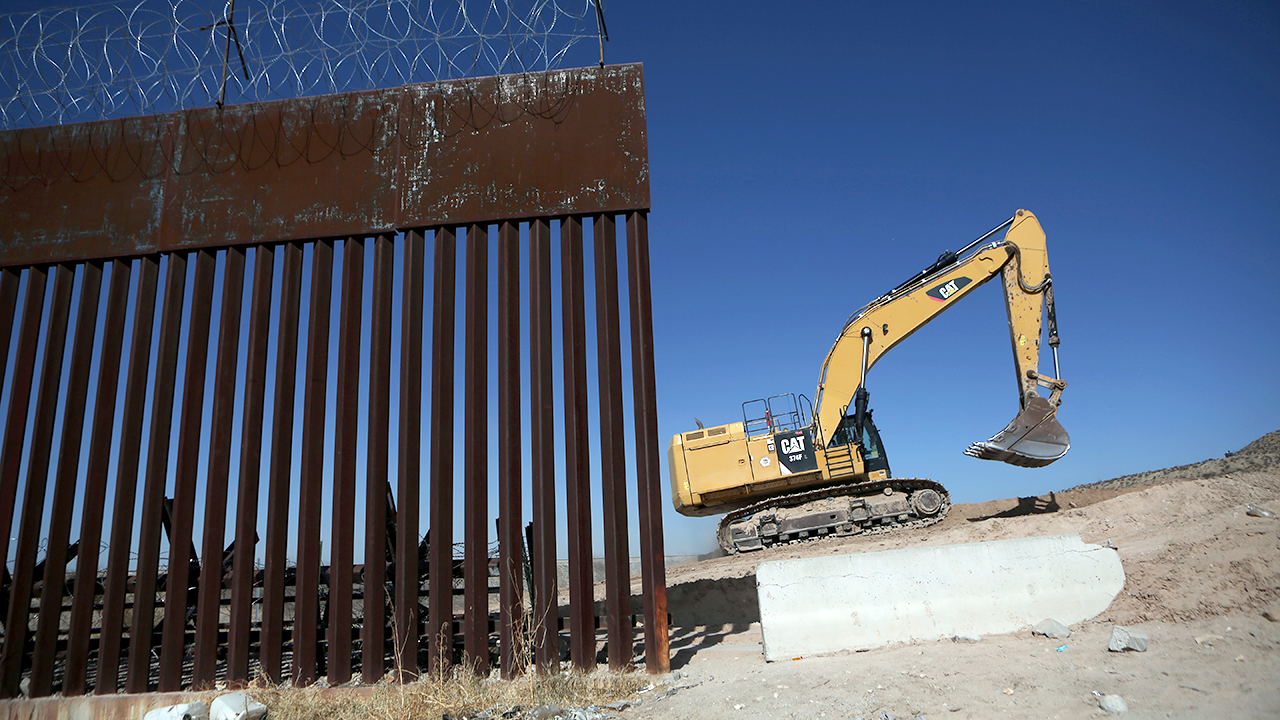
A construction vehicle builds the border wall near Sunland Park, N.M. in 2026. (Christian Torres/Getty Images)
INSIDE UNDERGROUND EL PASO STORM DRAIN SYSTEM BORDER PATROL SAYS CARTELS EXPLOIT TO SMUGGLE ILLEGAL MIGRANTS
Tuesday’s vote comes after House conservatives kept the floor frozen for several weeks in June and July in protest of GOP leaders failing to move border security legislation.
«We need to deliver on codifying border security, deal with the birthright citizenship issue,» Roy told reporters earlier in July.
«These are all issues people that I represent care about intently and that we’ve talked about doing, and we need to deliver,» he said.
Despite clearing committee, the legislation could face resistance on the House floor from some moderate Republicans seeking temporary legal protections for agricultural workers.
The measure closely mirrors H.R. 2, House Republicans’ border security bill passed during the Biden administration, but omits a nationwide E-Verify mandate that has long divided Republicans.
Some GOP lawmakers are also advocating for a floor vote curtailing birthright citizenship after the Supreme Court rejected the Trump administration’s attempts to limit the practice.
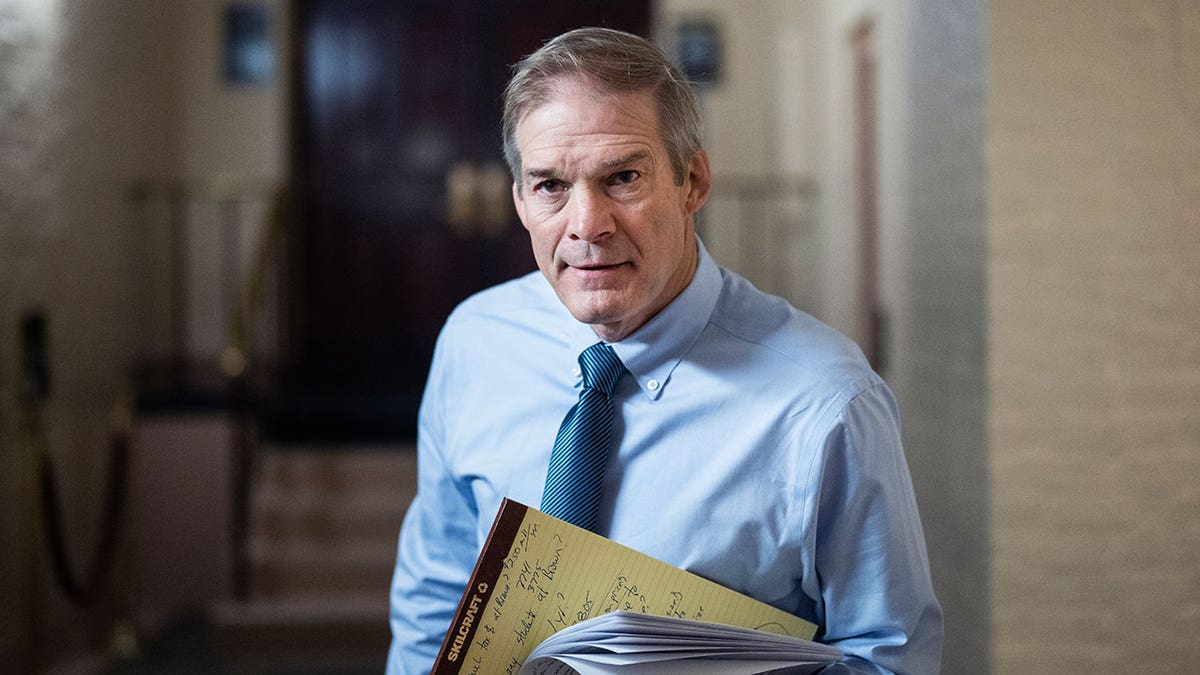
Rep. Jim Jordan, R-Ohio, said the Permanent Trump Secure Border Act is necessary to prevent a future president from undoing Trump’s executive orders. (Tom Williams/CQ-Roll Call, Inc. via Getty Images)
CLICK HERE TO DOWNLOAD THE FOX NEWS APP
In the House, Rep. Andy Ogles, R-Tenn., has also unveiled legislation, the Anchors Away Act, that would restrict birthright citizenship to babies with at least one parent with certain legal status and grant the federal government authority to deny entry to pregnant foreigners.
«I refuse to let these anchor babies colonize our country,» Ogles previously told Fox News Digital.
border security, politics, homeland security, illegal immigrants, republicans











INTERNACIONAL
Estados Unidos ahora pone el foco en Nicaragua y dice que «no se quedará de brazos cruzados» ante la avanzada del régimen de Ortega para eliminar las elecciones
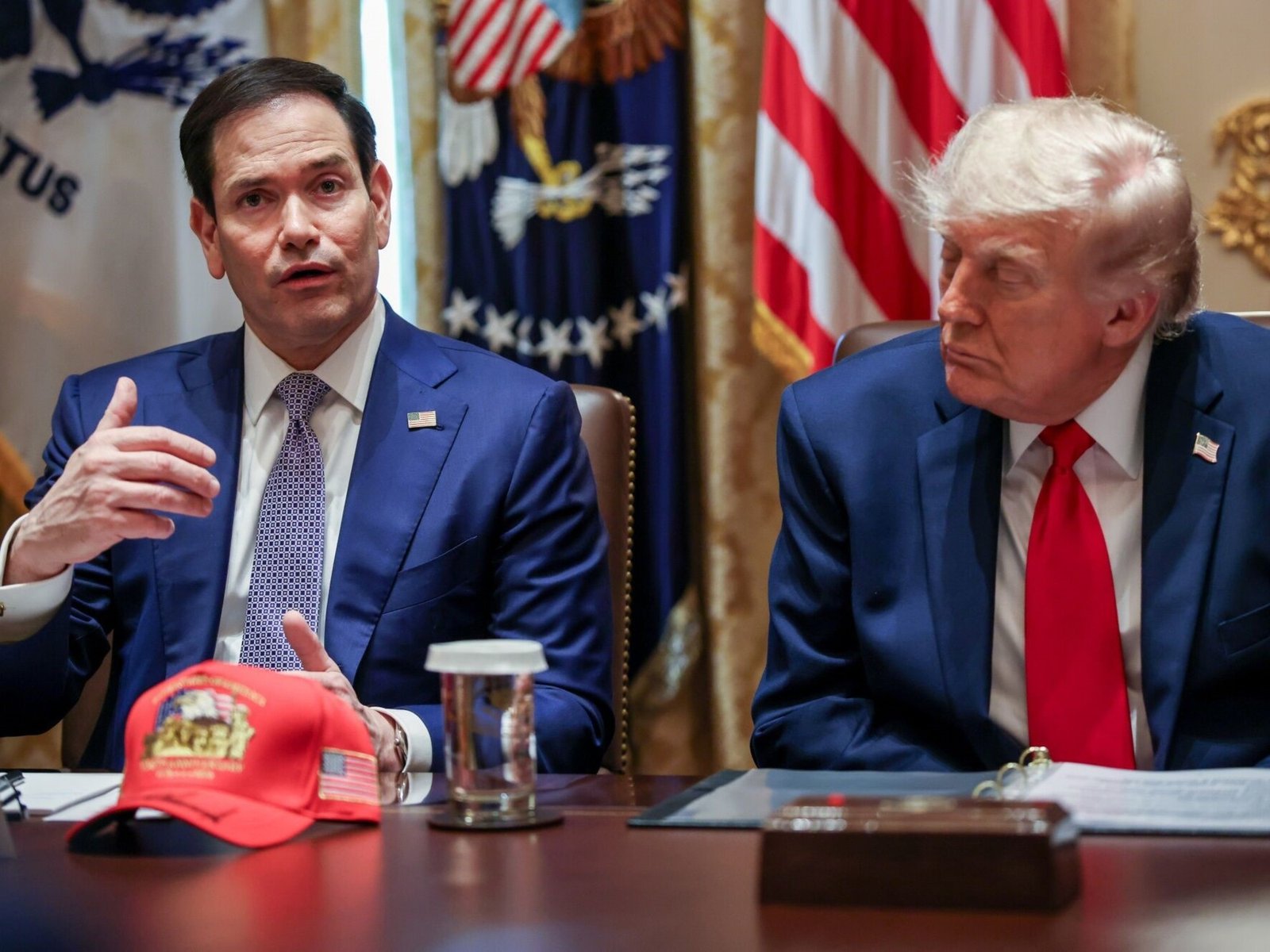
Estados Unidos advirtió este martes que no se quedará «de brazos cruzados» luego del polémico anuncio del presidente Daniel Ortega, que sostuvo que Nicaragua no tendrá más elecciones. La declaración hace temer un avance más del régimen que gobierna hace más de 20 años el país centroamericano hacia una autocracia con modelo de partido único y de allí la reacción internacional.
Fue el secretario de Estado norteamericano, Marco Rubio, quien en una publicación en la red social X, aseguró que la Administración del presidente Donald Trump y la comunidad internacional «no se quedarán de brazos cruzados mientras la dictadura (…) profundiza la represión y fabrica inestabilidad que amenaza la seguridad nacional de Estados Unidos».
«Abolir» las elecciones «demuestra su cobardía y miedo a la voluntad del pueblo nicaragüense», agregó Rubio en el posteo.
The Trump Administration and the international community will not stand by as the Murillo-Ortega dictatorship deepens repression at home and manufactures instability that threatens U.S. national security. Ortega’s pledge to abolish elections in Nicaragua proves his cowardice and…
— Secretary Marco Rubio (@SecRubio) July 21, 2026
El anuncio de Ortega también fue rechazado por el secretario general de la OEA, Albert Ramdin, quien sostuvo que «el régimen abandonó la democracia«, y por el gobierno de Costa Rica, que llamó a consultas a su embajador en Managua.
Ortega, de 80 años, advirtió este último domingo – en el 47° aniversario de la revolución sandinista -, que «en Nicaragua no volverá a haber elecciones» en las que «partidos puestos por los yanquis (Estados Unidos)» puedan tomar el poder.
En tanto, la Asamblea Nacional nicaragüense informó este martes que inició el «análisis» de reformas para cumplir con las «orientaciones presidenciales» anunciadas este domingo, con evidente sesgo antidemocrático.
Ortega y su esposa Rosario Murillo gobiernan con poder absoluto desde hace 30 años, incluido su primer período y 19 en forma consecutiva. Además, aniquilaron a la oposición interna a pesar de las masivas protestas durante el 2018, que dejaron unos 300 muertos, consideradas por ellos un intento de golpe de Estado patrocinado por Estados Unidos.
Washington aplica sanciones al gobierno nicaragüense como la restricción de visado a más de 2.350 funcionarios y sus familiares, pero evitaron ir tan lejos como en Cuba, sometida a una dura presión que tiene su economía al borde del colapso.
Tras una reforma constitucional aprobada a fines de 2024 que amplió el mandato presidencial de cinco a seis años y elevó el rango de Murillo a copresidenta, Nicaragua debería celebrar elecciones generales durante el año que viene.
En los últimos comicios, celebrados en noviembre de 2021 tras el encarcelamiento de opositores con posibilidad de disputar la presidencia, Ortega ganó ampliamente con el Frente Sandinista de Liberación Nacional (FSLN), ex-guerrilla que en julio de 1979 derrocó al dictador Anastasio Somoza.
Con la reforma constitucional, Nicaragua fue definida como un Estado «revolucionario» y «socialista», y elevó a símbolo patrios la bandera rojinegra del FSLN.
Dirigentes opositores consultados por la Agencia de Noticias, AFP coinciden en que el anuncio de Ortega esconde el temor a perder en una elección competitiva, por lo que decidió avanzar hacia un régimen como el de Cuba, donde el Partido Comunista es el único reconocido legalmente y los candidatos son nominados por asambleas vecinales u organizaciones civiles afines al gobierno.
«Ortega confiesa lo que más le inquieta: no ha conseguido neutralizar a la oposición (…), sabe que la voluntad de cambio sigue viva y que aún le disputa el país», declaró Félix Maradiaga, exaspirante presidencial y ex-preso político, despojado de su nacionalidad y exiliado en Estados Unidos.
Por su parte, activistas opositores, intelectuales, periodistas y religiosos partieron al exilio, muchos tras estar en prisión durante años. Unos 450 fueron despojados de su nacionalidad y bienes.
Hace dos semanas, el gobierno eliminó los permisos de trabajo a unos 2.000 abogados, según medios nicaragüenses en el exilio.
Opositores aseguran que Murillo realiza una purga interna, que mantiene en prisión a unos 200 copartidarios, ante un eventual fallecimiento de Ortega, quien sufre lupus (una enfermedad crónica en la que el sistema inmunológico ataca por error los tejidos y órganos sanos) e insuficiencia renal, que ocurre cuando los riñones pierden su capacidad para filtrar adecuadamente los desechos de la sangre..
INTERNACIONAL
House narrowly backs allowing troops, Pentagon workers to carry personal guns on military bases
NEWYou can now listen to Fox News articles!
The House voted 215-214 Tuesday night to make approval the default when qualified service members and Pentagon civilian employees ask commanders for permission to carry personal firearms on military installations.
Three Democrats joined most Republicans to approve the measure, while three Republicans and independent Rep. Kevin Kiley of California opposed it.
The amendment from Rep. Jeff Crank, R-Colo., would not automatically authorize personnel to carry firearms on military property. It would establish a presumption that installation commanders approve requests from qualified service members and civilian employees.
The vote came less than a year after an Army sergeant allegedly used a personal handgun to shoot five fellow soldiers at Fort Stewart, Georgia, in August 2025. Other soldiers tackled and disarmed him, and all five victims survived. Personal firearms were prohibited on post at the time, military officials said.
MAJOR APPEALS COURT DECLARES NEW JERSEY AR-15 BAN UNCONSTITUTIONAL IN LANDMARK SECOND AMENDMENT RULING
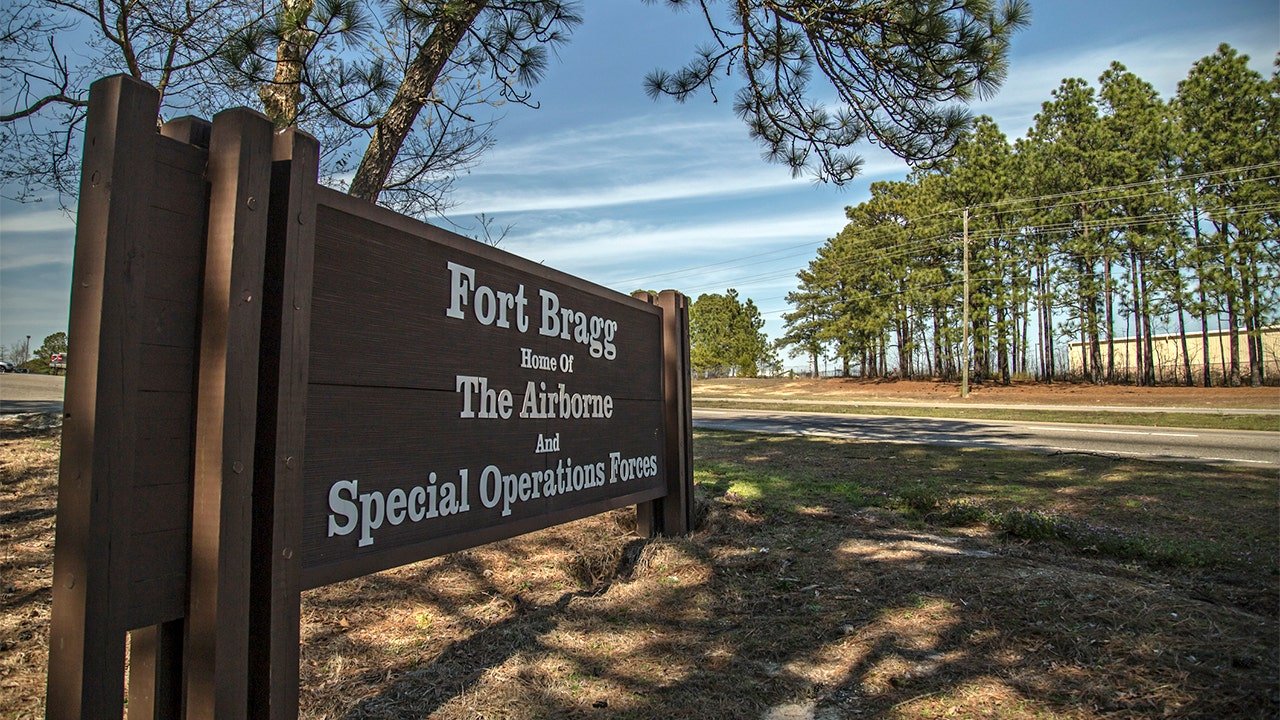
A picture of an entrance to Fort Bragg in North Carolina. (AP Photo/Chris Seward, File)
The National Defense Authorization Act has become law every year for more than six decades and is traditionally one of Congress’ most bipartisan major bills, but the firearms and transgender-policy provisions adopted Tuesday threatened to erode Democratic support, potentially forcing Republican leaders to rely on their narrow majority for final passage and creating new sticking points in eventual negotiations with the Senate.
Lawmakers approved an amendment from Rep. Nancy Mace, R-S.C., prohibiting TRICARE from covering transition-related hormones, puberty blockers and surgeries for service members and military dependents.
The provision passed 219-208, with five Democrats voting yes and one Republican voting no. It would broaden existing Trump administration restrictions and write the prohibition into federal law.
SENATE REPUBLICAN PUSHES MERIT-BASED MILITARY PROMOTIONS, TARGETS BIDEN-ERA DEI POLICIES
The House also voted 221-203 to approve a second Mace amendment barring transgender girls from participating in girls’ sports at Department of Defense Education Activity schools serving military families.
But lawmakers rejected a separate amendment from Rep. Lauren Boebert, R-Colo., that would have codified President Donald Trump’s 2025 executive order barring transgender troops from military service and requiring personnel to serve according to their biological sex.
The amendment failed 217-212, with four Republicans joining all voting Democrats in opposition.
Lawmakers also rejected an effort from Rep. Eli Crane, R-Ariz., to largely eliminate funding for the Pentagon’s Ukraine Security Assistance Initiative. The amendment would have permitted funding only for security at the U.S. Embassy in Kyiv.
Seventy-six Republicans supported the proposal, highlighting continued opposition within the GOP conference to military assistance for Ukraine.
The House rejected another proposal that would have barred foreign nationals from attending U.S. military academies in a 360-61 vote. The amendment would have ended longstanding programs that train officers from allied and partner nations at institutions including West Point, the Naval Academy and the Air Force Academy.
Among other amendments, lawmakers voted to eliminate a proposed pilot program that would have used voice-based risk-assessment technology to identify service members for drug testing.
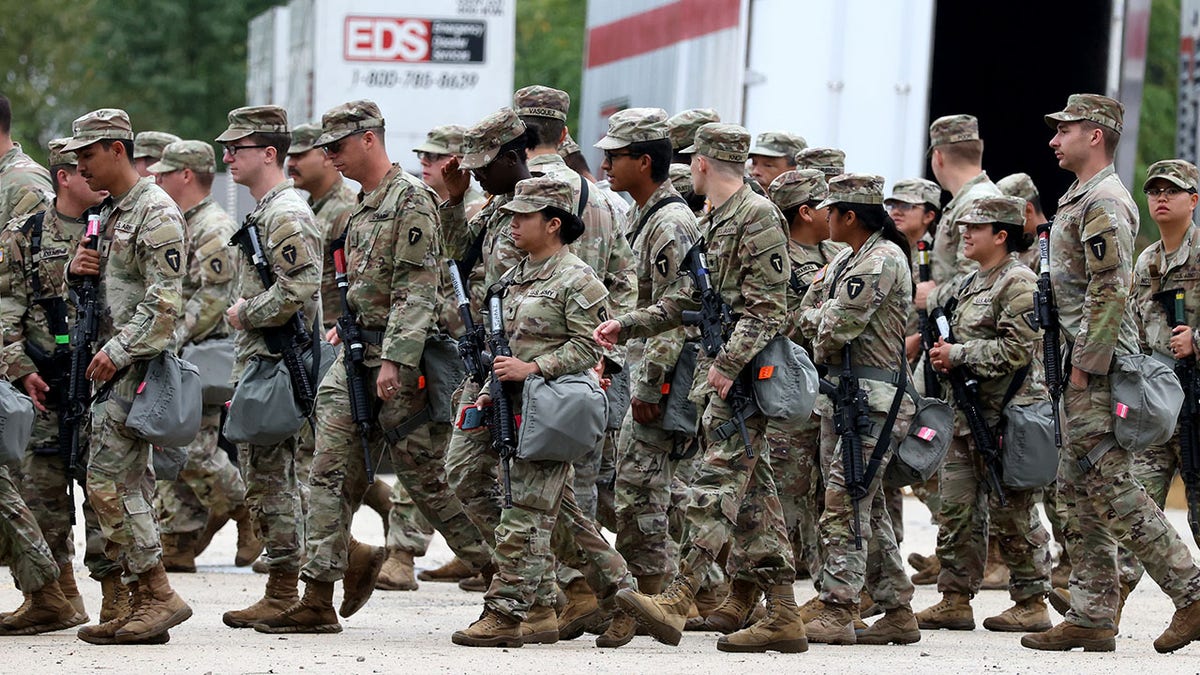
Members of the Texas National Guard assemble in Elwood, Illinois, at the Army Reserve Training Center in the southwest suburb of Chicago, on Oct. 7. 2025. (Getty Images)
The House also narrowly approved language intended to ensure the continued operation of California’s Santa Ynez Pipeline System, which transports crude oil to refineries supplying military installations. That measure passed 215-214.
The votes came as lawmakers began working through amendments to the fiscal year 2027 National Defense Authorization Act. The House made 320 amendments eligible for consideration, eight more than were included in the procedural package that collapsed last month amid a Republican revolt over the SAVE America Act.
Amendment debate is expected to resume Wednesday, with a vote on final passage after lawmakers finish considering the remaining proposals.
The underlying bill would authorize roughly $1.15 trillion for national defense, about $252 billion more than Congress appropriated for defense programs in fiscal year 2026. It would provide pay raises ranging from 5% to 7% for service members, expand weapons and munitions production and accelerate investment in missile defense, autonomous systems, hypersonics and other emerging technologies.
The NDAA sets defense policy and authorizes spending levels, but it does not provide the money itself. Congress must separately pass defense appropriations legislation to fund the programs and priorities included in the bill.
The legislation would also formally change the Department of Defense’s name to the Department of War, deeming references to the defense secretary and department in federal law to mean the secretary and Department of War.
Consideration of the legislation had been delayed for three weeks by a separate Republican fight over the SAVE America Act, Trump’s election legislation requiring documentary proof of citizenship to register to vote and identification to cast a ballot in federal elections.
The House approved the SAVE America Act in February by a 218-213 vote, but the measure stalled in the Senate, where Republicans lacked the 60 votes needed to overcome a filibuster.
Republican leaders initially sought to revive the election legislation by directing the House clerk to merge it with the NDAA after the defense bill passed but before the combined package was sent to the Senate. That approach would transmit the two measures as a single bill without making the SAVE America Act part of the NDAA text debated on the floor.
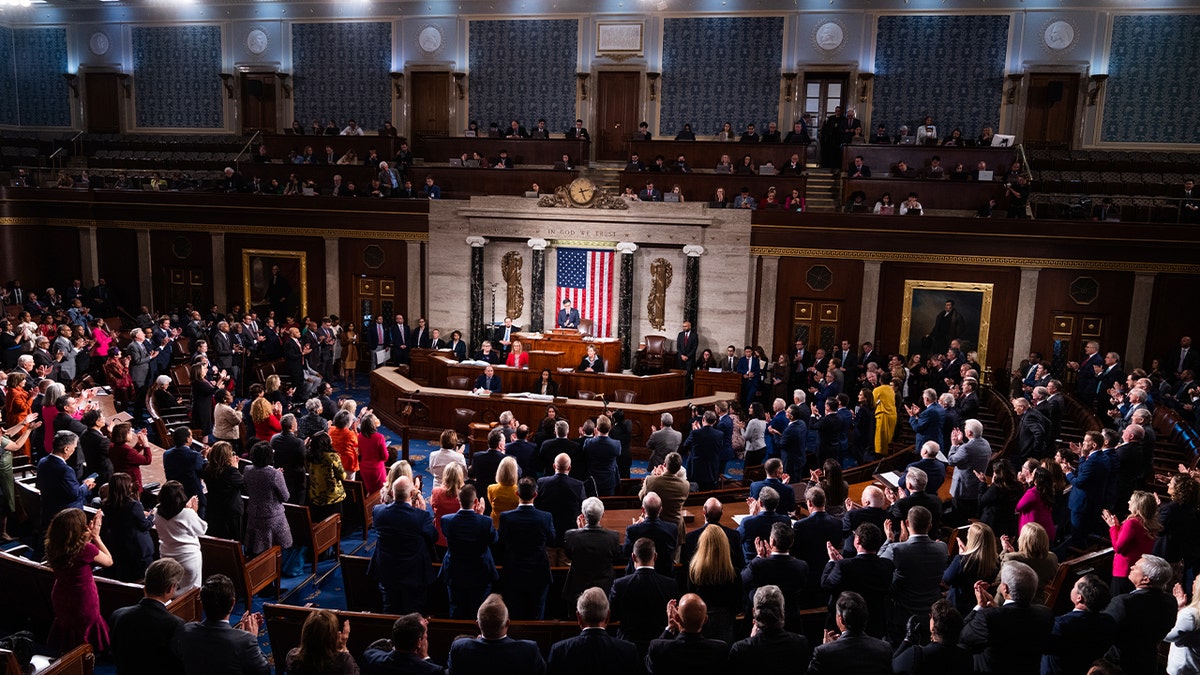
Speaker of the House Mike Johnson, R-La., addresses the House chamber of the U.S. Capitol after winning the speakership on Wednesday, Oct. 25, 2023. (Tom Williams/CQ-Roll Call, Inc via Getty Images)
But the procedural rule authorizing that plan failed 198-224 on June 30, when 13 Republican holdouts joined Democrats in opposition. House Majority Leader Steve Scalise, R-La., also voted against the rule for procedural reasons.
Rep. Anna Paulina Luna, R-Fla., argued that attaching the election measure through the procedural maneuver would make it easier for the Senate to remove and demanded that lawmakers add it directly to the NDAA.
Luna later accepted the original approach after Speaker Mike Johnson committed to attaching the SAVE America Act to appropriations and other must-pass legislation.
The House approved a replacement rule Tuesday that again directed the clerk to merge the election legislation with the NDAA before sending it to the Senate while expanding the number of defense amendments eligible for consideration from 312 to 320.
The SAVE America Act was still expected to face opposition in the Senate and could be removed when lawmakers reconcile the House and Senate versions of the defense bill.
The Senate’s NDAA has faced problems of its own. Senate Democrats blocked consideration of their chamber’s defense bill last week in protest of the Trump administration’s war with Iran, leaving both chambers with work to do before they can negotiate a final package.
CLICK HERE TO DOWNLOAD THE FOX NEWS APP
The debate comes as the Pentagon seeks additional money to cover the Iran war and replenish weapons stockpiles. The White House has requested an $87.6 billion supplemental package, including $67.1 billion for defense needs.
House Republicans are also considering a new reconciliation package that could provide $60 billion through the Armed Services Committee and $13 billion for intelligence programs. Reconciliation would allow the package to bypass a Senate filibuster and pass without Democratic support, but the proposal still faces resistance from GOP fiscal hawks and an uncertain path through Congress.
military, spending, congress, defense
INTERNACIONAL
Canada reportedly scraps joint bridge celebration with US after Trump renews tariff threat

NEWYou can now listen to Fox News articles!
Canada on Tuesday called off a joint celebration with the United States to mark the opening of the Gordie Howe International Bridge, following renewed tariff threats from President Donald Trump.
The bridge — which connects Detroit and Windsor, Ontario — was named after legendary Canadian hockey player Gordie Howe who played for the Detroit Red Wings, symbolizing the longstanding relationship between the two countries.
Trump on Monday announced plans to impose a 50% tariff on certain Canadian imports, citing what officials called trade discrimination against American companies in the dairy, auto and alcohol industries. The White House said Canada’s policies gave foreign competitors an unfair advantage.
«In light of trade action threatened by the United States earlier this week, it would be inappropriate to proceed with a celebratory event between the two countries,» Jenna Ghassabeh, a spokesperson for Canadian Infrastructure Minister Gregor Robertson, told Reuters in a statement.
TRUMP SAYS HE WILL BLOCK US-CANADA BRIDGE UNLESS CANADA NEGOTIATES ON TRADE
President Donald Trump in February threatened to prevent the opening of the Gordie Howe International Bridge unless Canada negotiates with the U.S. over tariffs. (Getty Images)
The bridge was scheduled to open to traffic next Monday, and American and Canadian officials were expected to attend a ribbon-cutting ceremony on Friday, Windsor Mayor Drew Dilkens previously told local media, according to Reuters.
Ghassabeh confirmed to Reuters that the bridge will still open next week, but the celebration will be held only «among Canadians.»
CANADIAN PM CARNEY FIRES BACK AT TRUMP OVER CLAIM THAT ‘CANADA LIVES BECAUSE OF THE UNITED STATES’
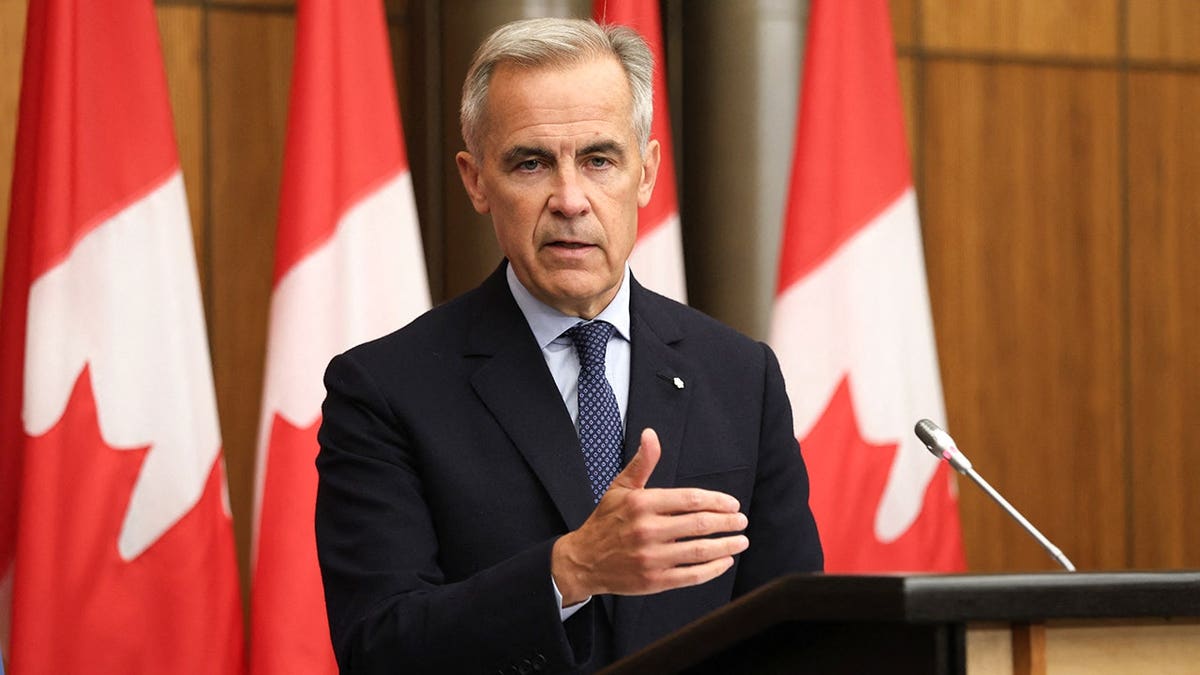
Canadian Prime Minister Mark Carney speaks during a press conference at the National Press Theatre in Ottawa, Ontario, Canada on July 30, 2025. (DAVE CHAN/AFP via Getty Images)
The multibillion-bridge project has faced multiple setbacks amid strained relations between the United States and Canada.
In February, Trump threatened to block the project after accusing Canada of unfair trade practices and criticizing its relationship with China. He cited Ontario’s removal of U.S. alcohol products from its liquor store shelves as an example of what he described as unfair treatment.
The bridge opening was later cleared to proceed after the U.S. and Canada reached a deal on how tolls would be charged to drivers earlier this month.

The Gordie Howe International Bridge, under construction to link Detroit, Michigan, with Windsor, Ontario, as seen in a drone image taken from Windsor, Ontario, Canada, February 10, 2026. (REUTERS/Dax Melmer/File Photo)
CLICK HERE TO DOWNLOAD THE FOX NEWS APP
The new bridge is expected to ease traffic on the privately owned Ambassador Bridge, the largest commercial border crossing between the two countries, which also connects Detroit and Windsor.
The port of entry handled $126 billion in trade carried by commercial trucks in 2023, Reuters reported.
canada, foreign policy, infrastructure across america

La Justicia estadounidense obliga a la Argentina a pagar USD 390 millones por la nacionalización de Aerolíneas

Estados Unidos ahora pone el foco en Nicaragua y dice que «no se quedará de brazos cruzados» ante la avanzada del régimen de Ortega para eliminar las elecciones

Casi una tragedia: los hinchas de Tigre, baleados en Uruguay

House narrowly backs allowing troops, Pentagon workers to carry personal guns on military bases

Uno por uno: quiénes son los explosivos ex Gran Hermano que reingresaron a la casa de Generación Dorada

Robaron una joyería del centro de La Plata, uno de los ladrones escapó en un taxi y cayó tras una intensa persecución

Sin la Copa y sin Messi en el avión, vuelve Tapia y deberá enfrentar tres frentes de tormenta tras la pausa del Mundial

Estados Unidos cambia una regla histórica del jugo de naranja vigente desde 1963 y afecta a toda la industria

Un diseño que pasó a la historia: quién fue el creador del trofeo de la Copa del Mundo

Antes de la clasificación, Franco Colapinto afrontará la última práctica libre del GP de Bélgica: hora, TV y todo lo que hay que saber

 POLITICA2 días ago
Sin la Copa y sin Messi en el avión, vuelve Tapia y deberá enfrentar tres frentes de tormenta tras la pausa del Mundial
- DEPORTE3 días ago
La tabla de títulos de los campeones de la Copa del Mundo y el listado de las selecciones más ganadoras de la historia
- POLITICA1 día ago
Le ganan a la inflación: los senadores pasarán a cobrar $12 millones brutos a partir de agosto