INTERNACIONAL
Republicans target Trump’s crypto empire with new plan, Dems say it falls short

‘FINISH LINE’: Lummis reveals CLARITY Act TIMELINE
Sen. Cynthia Lummis, Senate Digital Assets Subcommittee Chair, confirms the CLARITY Act is set for a Senate floor vote the week of July 20th. This crucial bill, developed over 10 months, aims to bring much-needed stability and regulatory certainty to the US crypto markets. Its passage before the August recess is vital for encouraging onshore business.
NEWYou can now listen to Fox News articles!
Senate Republicans want to rein in President Donald Trump’s income explosion since returning to the White House, but Democrats aren’t sold on how they’re going to do it.
The Senate is on the cusp of moving landmark cryptocurrency legislation known as the Clarity Act that, if passed, proponents say would finally fold the novel currency into the nation’s web of financial regulations.
Tucked away in the over 600-page package are a slate of ethics provisions that target Trump, the vice president and their spouses. The White House signed off on the provisions, and the architects of the bill say that the restrictions reach beyond just Trump and target lawmakers, too.
GOP RIFT GROWS AS THUNE HITS BRAKES ON TRUMP’S ELECTION BILL TO AVERT SHUTDOWN
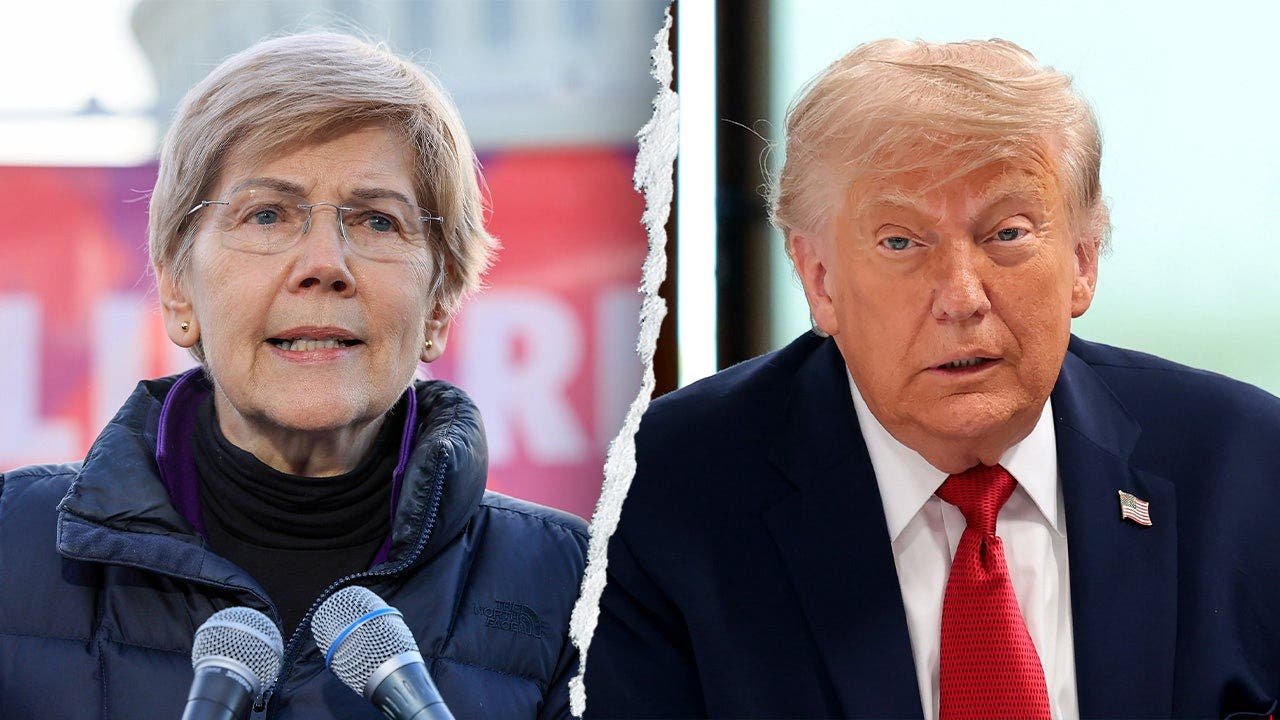
The Senate advanced a massive, Trump-backed housing package geared toward lowering the costs of homes and supercharging the housing supply. Sen. Elizabeth Warren, D-Mass., pitched it as legislation to prevent America from becoming a «nation of renters.» (Jemal Countess/Getty Images for Protect Borrowers ; Anna Moneymaker/Getty Images)
But for now, it’s not enough for Senate Democrats.
«Someone can call it an ethics provision,» Sen. Elizabeth Warren, D-Mass., said. «But if it doesn’t stop the president from profiting off of crypto, and using it as a way to take bribes right out in public. Then it’s not really any expedition.
The list of guardrails included preventing federal officials from creating their own digital currency for profit, promoting or endorsing crypto, creating a divestiture or blind trust requirement one year after enactment, allowing officials to own crypto and a disclosure of crypto sales.
Sen. Cynthia Lummis, R-Wyo., who has led the effort on the Clarity Act, told Fox News’ Maria Bartiromo that the idea isn’t to «plan legislation around one person who holds one office for the next two years, but rather, over time, that will serve the House, the Senate, the judiciary, and the executive branch in a fair way.»
HOUSE GOP VOTES TO PUNT GOVERNMENT SHUTDOWN BATTLE TO AFTER NOVEMBER MIDTERMS
«The struggle is, of course, a lot of Democrats are absolutely focused on one person, and that’s President Trump,» Lummis said. «So since President Trump actually agreed that he would have the choice to either put his assets in a blind trust, or divest of his participation in digital assets and companies that derive revenue from digital assets, somehow, that’s not enough.»
There are other gripes with the package, but the ethics provisions are proving a sharp red line. That’s because Trump’s income between 2024 and 2025 erupted by about 250% — from just over $620 million to about $2.2 billion.
And much of that increase is attributed to his various holdings and ventures in crypto, which are run by his sons, Don Jr. and Eric, according to the president’s financial disclosure forms reviewed by Fox News Digital.
Trump’s income shot up by $1.4 billion during his first year in office thanks to earnings from the $TRUMP memecoin, World Liberty Financial token sales and Stablecoin Holdco, among others.
Sen. Bernie Moreno, R-Ohio, who alongside Sen. Cynthia Lummis, R-Wyo., worked with the White House to draft the ethics provisions, said that the «behavior» that was being targeted was issuance, promotion, and sponsorship of crypto.
«Again, a very different standard than Nancy Pelosi was held to,» Moreno said.
REPUBLICAN SAYS TRUMP’S TOP ELECTION PRIORITY ‘DEAD’ IN SENATE AS GOP FRACTURES AHEAD OF MIDTERMS
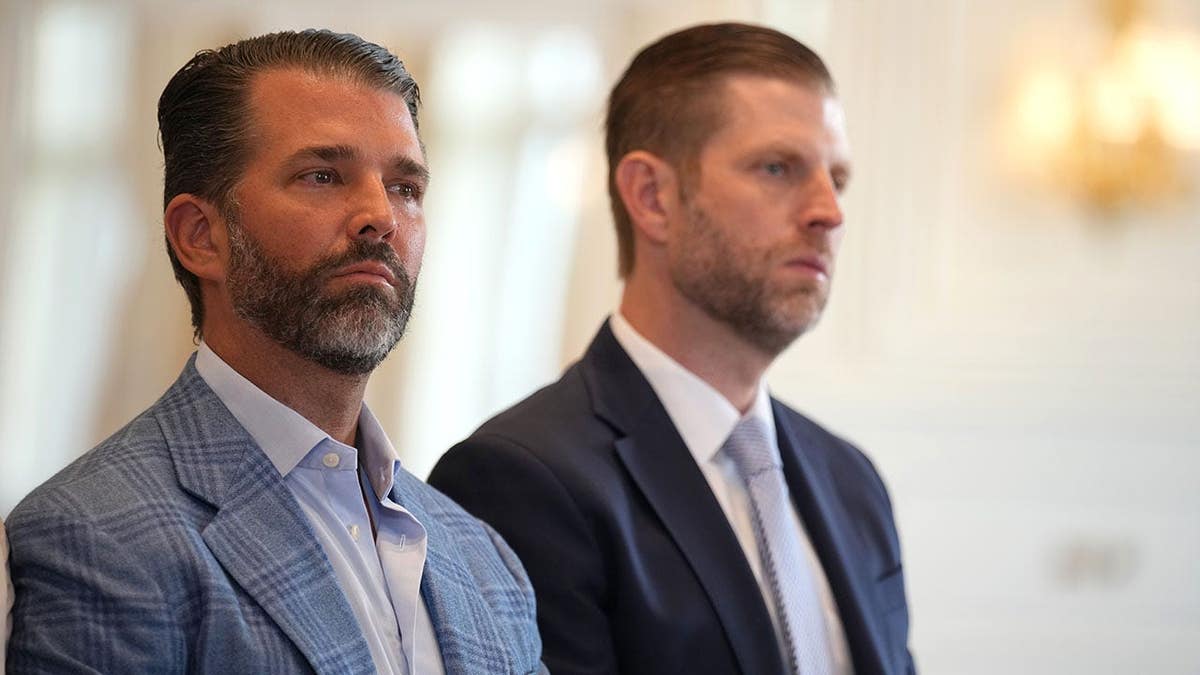
Much of the president’s income increase is attributed to his various holdings and ventures in crypto, which are run by his sons, Don Jr. and Eric, according to the president’s financial disclosure forms reviewed by Fox News Digital. (Andrew Harnik/Getty Images)
When asked about Democrats already raising issues with the provisions, Moreno told Fox News Digital, «They’re always obsessed with putting things into the base bill, just offer an amendment.»
«That’s the way this place was built, you know, let’s put the base bill out there,» he said. «The ethics piece is this much of the bill — Tiny bit — just offer an amendment.»
Democrats have noted that the ethics provisions don’t specifically target his sons, meaning that the Trump family crypto empire, which has heavily benefited from his name and time in office, would be left largely unchecked.
They also put sole enforcement power into the hands of Acting Attorney General Todd Blanche, a close ally of Trump’s, and are set to sunset on Jan. 20, 2029, when Trump will have left office.
Sen. Cory Booker, D-N.J., told Fox News Digital that he still has «a lot of ethics concerns, and there’s still work to do.»
CLICK HERE TO DOWNLOAD THE FOX NEWS APP
«This is the partisan draft. It’s very obviously not going anywhere,» Booker said. «If there’s only one pathway to do this it’s doing (it in) a bipartisan manner. There are enough of us on both sides of the aisle that we should be able to land this. It’s good faith negotiations.»
The objections to the bill, for now, appear to be slowing its roll through the Senate as the upper chamber sprints to a monthlong break in August, and deals with a shrinking window of opportunity to finish legislation before the year is out.
Senate Majority Leader John Thune, R-S.D., had hoped to get the Clarity Act on the floor next week, but acknowledged that might not be possible.
«I don’t think we’ll be able to get it done, but I would like to at least get Clarity started,» he said.
politics, donald trump, elizabeth warren, senate elections, legislation











INTERNACIONAL
Combat vet senator chokes up over fallen friend in fiery floor speech about Iran war: ‘We will finish it’

NEWYou can now listen to Fox News articles!
Sen. Tim Sheehy, R-Mont., choked up on the Senate floor as he pointed to a bracelet honoring a fallen friend he said was «cut in half» by an Iranian bomb, turning a Democratic-led push to rein in President Donald Trump’s war powers into an emotional warning about the cost of failing to confront Tehran.
The Montana Republican and combat veteran delivered the fiery remarks in opposition to an Iran War Powers Resolution that would have forced the removal of U.S. forces from hostilities against Iran unless Congress explicitly authorized the mission. The Senate rejected an effort to advance the measure Thursday in a 47-49 vote, but not before Sheehy accused critics of ignoring decades of Iranian-backed attacks on Americans.
«We didn’t start this war, we did not. But, we will finish it,» Sheehy said from the Senate floor. «And forever wars are not popular with anybody these days. Both sides of [the aisle] love to attack our forever wars. And I can promise you, being someone overseas wearing the uniform, when you’re fighting for your country, you don’t care what party’s in office.»
REPUBLICANS FALL IN LINE WITH TRUMP ON IRAN WAR DESPITE RISING COSTS AND US DEATH TOLL
Sen. Tim Sheehy, R-Mont., was seen during a series of Senate votes at the U.S. Capitol on June 17, 2026, in Washington, D.C. (Tom Williams/CQ-Roll Call, Inc via Getty Images)
Sheehy argued Democrats were right to call the conflict a «war of choice,» but said the choice was made by Iran’s regime decades ago — not by Trump.
«This is a war of choice. The Democrats are correct,» Sheehy said. «It’s a war of choice that was begun by a radical, lunatic band of terrorists that took over a beautiful nation 47 years ago.»
The former Navy SEAL then ticked through decades of attacks he tied to Iran and its proxies, invoking the 1983 Marine barracks bombing, the USS Cole, the Achille Lauro and terrorist groups including Hamas, Hezbollah and the Houthis.
TRUMP THREATENS ‘MAJOR MILITARY PUNISHMENT’ FOR IRAN OVER FUTURE HOUTHI ATTACKS
«This regime that we are fighting does not care about our partisan politics,» Sheehy said. «They don’t care who you voted for, who you pray to, or where you live. They want to kill all of us. And they don’t just say it, they actually do it. And they’ve been doing it for 47 years.»

An armed member of the Islamic Revolutionary Guard Corps (IRGC) monitors the area while mourners participate in the funeral for the late Supreme Leader Ayatollah Ali Khamenei and his family in Tehran, Iran, on July 6, 2026. (Morteza Nikoubazl/NurPhoto via Getty Images)
Sheehy also invoked William Buckley, whom he described as «an American military officer» who was abducted and tortured in the 1980s.
«William Buckley was abducted in 1985,» Sheehy said. «He was skinned alive on camera by the Iranians.»
CLICK HERE TO DOWNLOAD THE FOX NEWS APP
The senator concluded by describing Iran’s ongoing retaliatory attacks as «the flailing’s of a nation in collapse» not strength, citing what he called «an occasional missile strike» on commercial boats and U.S. military members in the Middle East. Meanwhile he encouraged his congressional colleagues to «think about the people who are deployed right now standing on that wall with a loaded weapon who volunteered to defend our country and our way of life» in what Sheehy described as a «just war.»

Sen. Tim Sheehy, R-Mont., showed his solidarity with the people of Iran by hopping on a social media trend in which he used a burning photo of Ayatollah Ali Khamenei to light a cigarette. (Courtesy of Sen. Tim Sheehy’s Office)
«Last time I checked, we wiped these bastards out … because they deserve it,» Sheehy said. «We did not start a war with the Iranian Revolutionary Guard (IRGC), they started it with us 47 years ago and their attacks have gone unanswered for half a century. It is time to fix this problem and make sure another generation of Americans does not have to fight this murderous, savage adversary.»
war with iran, foreign policy, defense, senate elections, politics
INTERNACIONAL
Flávio Bolsonaro pide perdón a la esposa de su padre y llama a la unidad de la derecha en Brasil
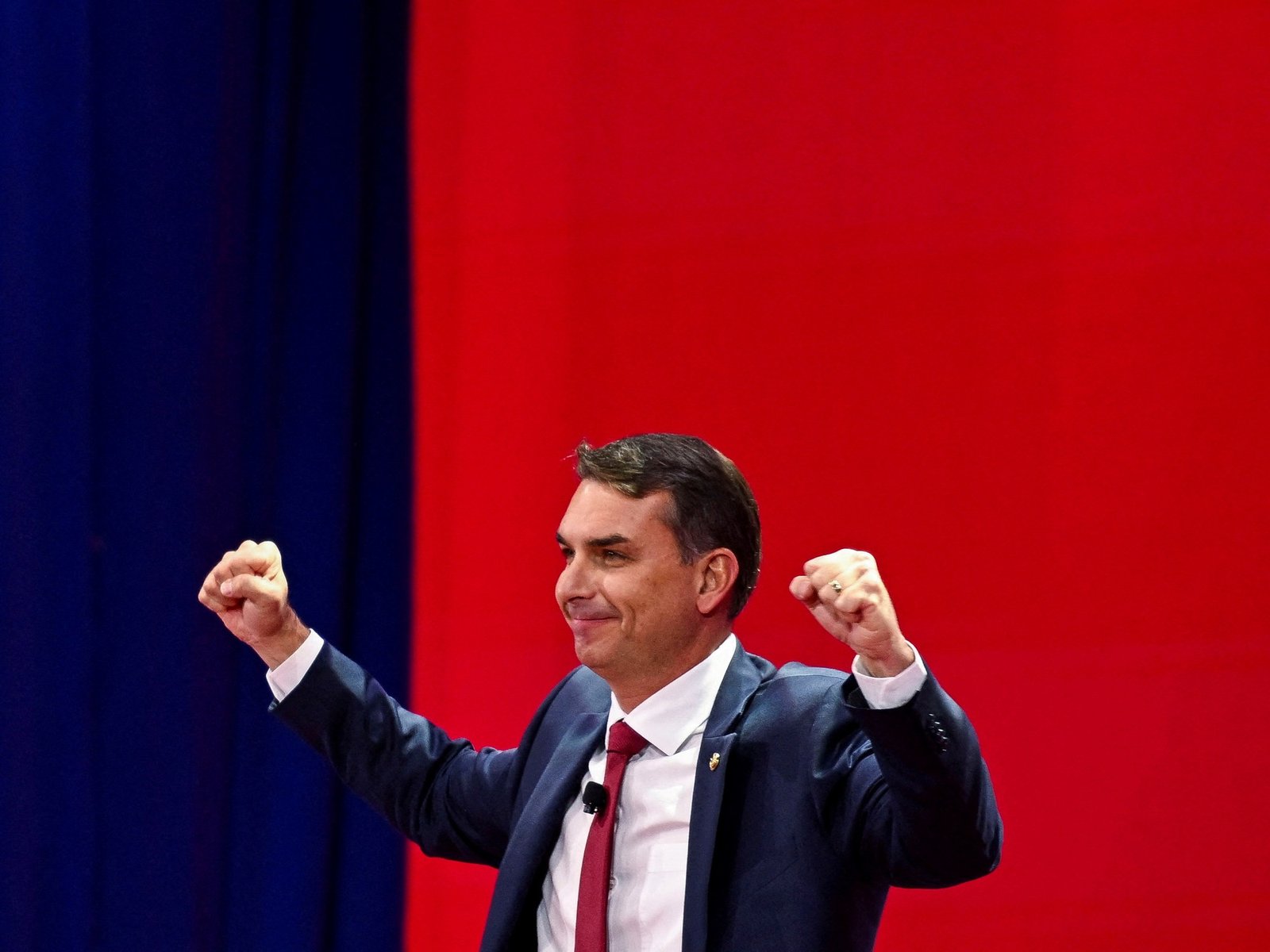
El senador brasileño Flávio Bolsonaro difundió en sus redes sociales un video con un mensaje donde ofreció disculpas a su madrastra, la ex primera dama Michelle Bolsonaro, luego de un enfrentamiento que se coló en la campaña electoral, y lanzó un llamado a la unidad de la militancia conservadora, justo antes de lanzar oficialmente su candidatura a la presidencia de Brasil.
La crisis en la familia Bolsonaro se desató a fines de junio, cuando la esposa del ex presidente Jair Bolsonaro declaró que su hijastro la «humilló» y «maltrató», y deslizó su intención de no apoyarlo en las elecciones.
Flavio perdió el apoyo de parte del electorado femenino evangélico, donde Michelle tiene alta aprobación. El encontronazo entre el senador, de 45 años y su madrastra, de 44, agudizó las divisiones en la derecha brasileña, cuando los sondeos de intención de voto muestran un repunte del presidente Luiz Inácio Lula da Silva, quien buscará su reelección.
En el video publicado el jueves, el hijo mayor del ex presidente Jair Bolsonaro arremetió contra Lula da Silva, que irá tras su cuarto mandato no consecutivo. Aseguró que Brasil «no soporta cuatro años más» de alguien que ya tuvo «tres mandatos para hacer, y no hizo».
Y afirmó que, para «liberar» y «llevar prosperidad» a Brasil, necesita que «todos entren en campo» y lo «ayuden».
En ese sentido, Flávio destacó públicamente la trayectoria de Michelle al frente de la sección femenina del Partido Liberal y valoró su labor en diversas causas sociales.
A la vez, enfatizó el papel crucial de la ex primera dama en el cuidado de Jair Bolsonaro debido a diversos problemas de salud, y quien cumple en prisión domiciliaria su condena a 27 años por intento de golpe de Estado.
«Yo no soy perfecto y una vez más pido disculpas por algunos momentos que causaron incomodidad. Como somos personas públicas, esto acaba siendo explotado por nuestros opositores. Nunca fue mi intención faltarle el respeto a nadie, y menos a la esposa de mi padre», afirmó el senador.
Asimismo, instó a los seguidores del movimiento bolsonarista a dejar de lado los conflictos y concentrarse en el «objetivo principal, que es rescatar a Brasil».
En ese sentido, invitó a Michelle Bolsonaro a trabajar en conjunto para construir un proyecto político orientado hacia un país «más seguro, próspero y lleno de esperanza» y a evitar que los desacuerdos familiares se conviertan en insumos para ataques de los sectores opositores.
La ex primera dama aceptó las disculpas. «Te perdono. Vamos a sentarnos, conversar, ajustar los detalles y, juntos, reunir un gran ejército de personas de bien para rescatar a nuestro Brasil. Hagámoslo por nuestro mayor líder, Jair Bolsonaro», afirmó Michelle en la noche de este jueves.
La esposa del ex presidente señaló que es necesario actuar con el «corazón limpio y libre» para cumplir grandes misiones y «construir nuevas historias, basadas en la verdad, el respeto y la esperanza».
El mes pasado Michelle, una importante líder del movimiento evangélico, acusó a su hijastro de ser agresivo con ella y por ese motivo expresaba su intención de no apoyarlo en su campaña.
La inhabilitación política y el encarcelamiento de Jair Bolsonaro han provocado una profunda fragmentación en la derecha brasileña de cara a las elecciones presidenciales.
Sin la figura unificadora del ex mandatario para imponer un único sucesor, el espectro conservador llega al proceso electoral atomizado en cuatro frentes encabezados por el senador Flávio Bolsonaro, el ex gobernador agrario Ronaldo Caiado, el liberal Romeu Zema y el emergente antisistema Renan Santos.
Mientras la izquierda concentra toda su fuerza en torno a la candidatura de Lula, la primera vuelta presidencial en el país se perfila para la derecha como una contienda interna abierta.
A pesar de que Flávio Bolsonaro encabeza las encuestas del bloque conservador con cerca del 30% de las preferencias, la presencia de estos competidores representa un obstáculo clave para unificar el voto frente al oficialismo.
Candidatos como Caiado, Zema y Santos, cuyos respaldos se sitúan por debajo del 5% pero resultan determinantes para un balotaje, han endurecido sus críticas hacia el hijo mayor del ex presidente.
Esta erosión mutua y los duros cuestionamientos dirigidos a Flávio Bolsonaro por sus presuntos vínculos financieros han agudizado las fracturas internas, alejando la posibilidad de articular un frente derechista sólido de cara a una eventual segunda vuelta.
NEWYou can now listen to Fox News articles!
Rep. Tom Kean Jr. (R-N.J.) and former Senate Majority Leader Mitch McConnell (R-Ky.) have a lot in common.
Both have long spells of absences from Capitol Hill due to health.
Kean was out for months this winter and spring. But until he returned in June, no one knew exactly what was going on. Neither Kean nor his office or family said a word about why the congressman was AWOL.
Upon his return, Kean announced he endured a lengthy hospital stay for depression.
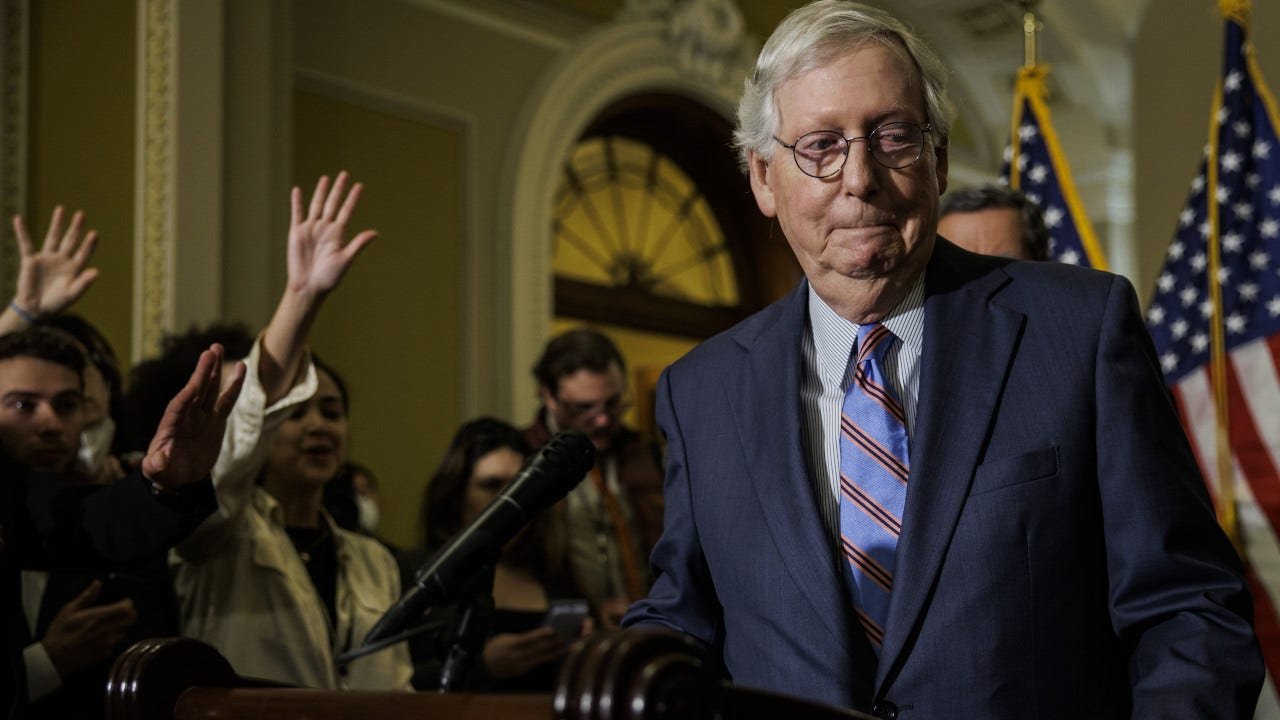
U.S. Senator Mitch McConnell released a statement to his constituents regarding his hospitalization and recovery on July 12, 2026. (Office of Senator Mitch McConnell)
McConnell’s absence is similarly cryptic.
His office simply declared in June that the Kentucky Republican was hospitalized and receiving «excellent care.»
Yet it took weeks to learn that McConnell was hospitalized for a fall and then pneumonia.
The dearth of information fueled conspiracy theories about whether McConnell was even alive. It prompted a letter of inquiry from Kentucky Gov. Andy Beshear (D) as to the senator’s well-being.
He told SiriusXM he hadn’t «heard a thing. Not an email. Not a letter. Not a call.»
But that’s not where the similarities between Kean and McConnell end.
During Kean’s absence, hardly a day went by when someone didn’t ask me about how they could potentially fill his seat. The same has gone on with McConnell for the past month-and-a-half.
There’s conjecture about whether their respective state’s governors, or even the House or Senate could declare their seats vacant since they haven’t shown up «for work.» The American electorate is angry right now.
Prices are up. They’re disenchanted with politics.
At the very least, they want to know that the people they elected are on the job. And if they’re not, voters believe they’re entitled to explanations from those who serve them.
WATCH: LAWMAKERS REVEAL WHERE THEY STAND ON CONGRESSIONAL TERM LIMITS AFTER RECENT HEALTH SCARES
No one received timely clarity from either Kean or McConnell.
Which brings us to why some constituents think there should be a mechanism to remove lawmakers who are infirm or out for prolonged periods of time.
It’s not that easy.
Here are the constitutional qualifications for someone to serve in the House, according to Article I, Section 2: «No person shall be a Representative who shall not have attained to the age of twenty-five years, and been seven Years a Citizen of the United States, and who shall not, when elected, be an Inhabitant of that State in which he shall be chosen.»
The Senate mandates are similar, as dictated by Article I, Section 3 of the Constitution:
«No person shall be a Senator who shall not have attained to the age of thirty years, and been nine years, a Citizen of the United States, and who shall not, when elected, be an Inhabitant of that State for which he shall be chosen.»
Article I, Section 5 of the Constitution declares that «Each House shall be the judge of the elections, returns and qualifications of its own Members.» It goes on to say that «with the Concurrence of two thirds, expel a Member.»
So, the Constitution is clear about the requirements to join the House or Senate.
It also grants both bodies the agility to decline to seat someone and even remove them from office.
But despite granting those authorities to Congress, the Constitution is silent on why the House or Senate might not seat someone. And, the Constitution is vague on reasons to expel a lawmaker.
That’s why we must rely on the standard established in Article I, Section 3 on qualifications of House and Senate members.
It says nothing about health. It says nothing about mental capacity. It says nothing about attendance or dereliction of duty.
It just determines the minimum criteria for people to serve in Congress. And if either the House or Senate decides they don’t want you here, they can either bar you at the door or kick you out.
Besides the House and Senate expelling someone, a governor must declare a seat vacant. And there’s nothing anyone can do to force someone to step aside.
The late Sen. Carter Glass (D-Va.) of Glass-Steagall fame, if you know banking law, fell ill in 1942. He was absent from the Senate for four years before dying. Glass rejected entreaties for him to resign.
The late Sen. Karl Mundt (R-S.D.) suffered a stroke in 1969 and couldn’t speak. Mundt’s wife nixed calls by Senate Republicans, demanding he resign. Mundt remained in office until early 1973, when his term expired.
Other lawmakers have missed swaths of time due to illness over the years prior to Kean and McConnell.
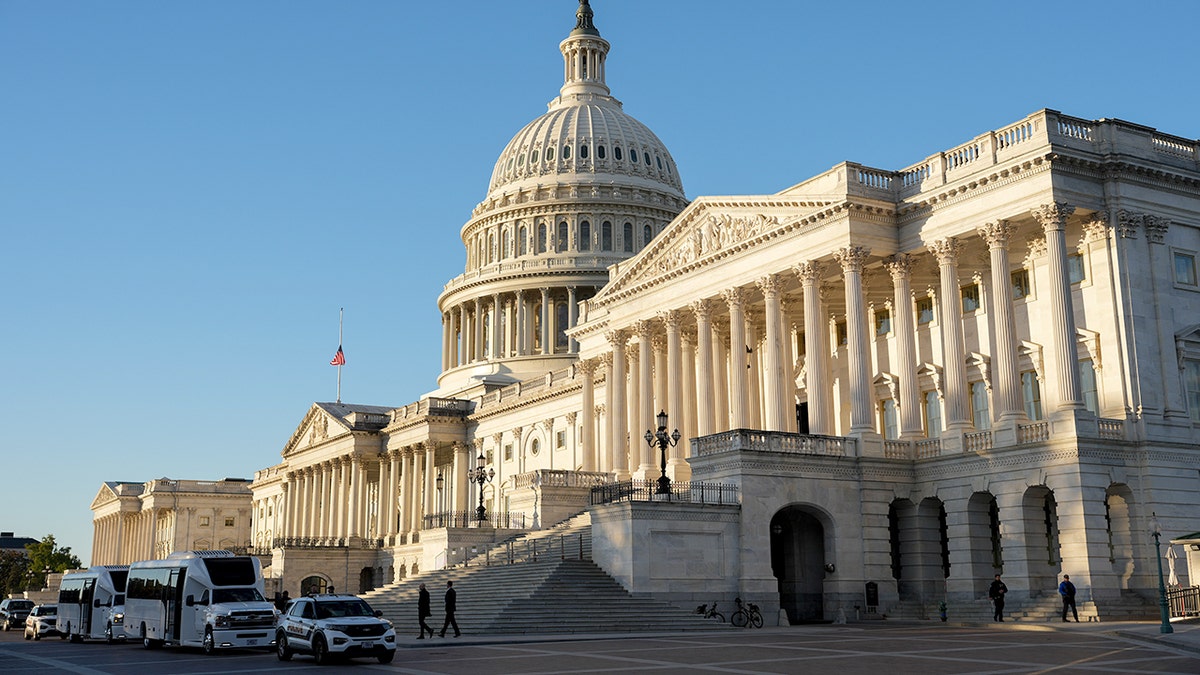
The U.S. Capitol building in Washington, D.C. (Eric Lee/Bloomberg via Getty Images)
The late Rep. Lane Evans (D-Ill.) was absent for extended periods, suffering from Parkinson’s Disease in the 1990s and 2000s.
Former Sen. Mark Kirk (R-Ill.) suffered a stroke in 2012. He missed more than a year before returning to the Senate.
House Majority Leader Steve Scalise (R-La.) missed several months after he was shot in 2017 at the GOP Congressional baseball practice.
Sen. John Fetterman (D-Pa.) was away for a couple of months after battling depression shortly after he joined the Senate in 2023.
These are just a few instances of lawmakers missing chunks of time because of illnesses.
There is only one instance in recent history where the House or Senate took action because of someone’s bad health.
On October 31, 1980, the late Rep. Gladys Noon Spellman (D-Md.) suffered a heart attack.
Voters re-elected Spellman a few days later. But Spellman fell into a coma, and she was unable to take the oath of office when the new Congress convened in January 1981.
Regardless, the House took the extraordinary step of voting to pay her – even though she wasn’t a Member. It was obvious that the Maryland Democrat would never be well enough again to assume office. The House then voted to declare her seat vacant, compelling Maryland to hold a special election.
So, the House didn’t remove Spellman because of her being incapacitated.
She wasn’t a Member at that stage. But, under Article I, Section 5 of the Constitution, the House asserted its authority to «be the judge of the elections, returns and qualifications of its own Members.»
It deemed that Spellman was not qualified.
The former President of the Maryland Senate then ran for the seat and won the special election. That’s how former House Majority Leader Steny Hoyer (D-Md.) came to Congress.
Spellman lived until 1988, never regaining consciousness.
LINDSEY GRAHAM’S FINAL ACT REVERBERATES IN SENATE AS SISTER IS URGED TO ‘KEEP PEDALING’
Just before the Senate swore-in Sen. Darline Graham (R-S.C.) last week, I received a call from someone asking if she was a «full senator.» I answered in the affirmative.
Either you are or you aren’t.
You can vote. You can serve on committees. You can speak on the Senate floor. You have an office in the Capitol complex. It doesn’t matter how you got there. Darline Graham was a senator – via an appointment after the death of her late brother, Sen. Lindsey Graham (R-S.C.)
The Senate granted Graham the same committee assignments as her brother. That’s when someone asked if she could vote on the Judiciary Committee.
Same answer. She is a senator.
South Carolina Gov. Henry McMaster (R) has appointed her to at least serve out the balance of Lindsey’s term, which expires in January.
Darline Graham is now running for the full term which begins in January. But she must first make it through a primary – and potentially a runoff – in order to secure the Republican nomination. Then win the full term in November.
Note that we talked about McMaster appointing Darline Graham to the Senate. All but four states allow the appointment of senators. However, the Constitution bars appointment to the House.
So if a House member dies or resigns, the state must fill the seat via a special election. That’s why some House seats sit vacant for protracted periods.
Lindsey Graham’s seat was vacant barely two days before McMaster tapped the late senator’s sister to step in.
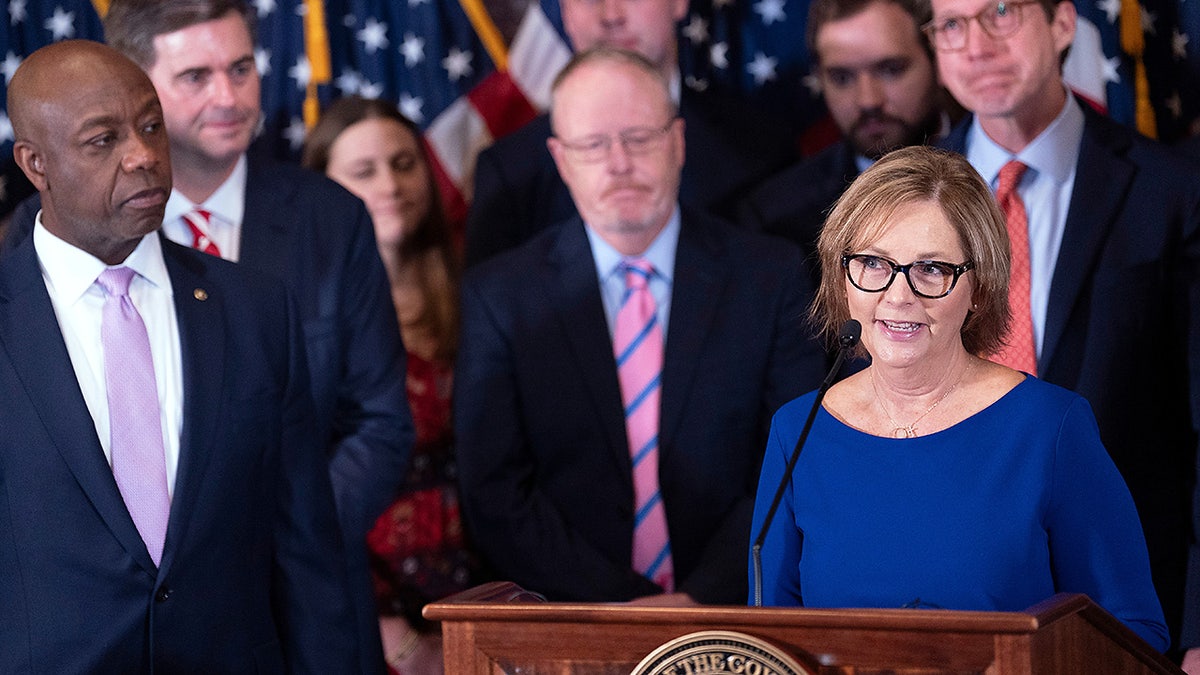
Newly-appointed U.S. interim Senator Darline Graham Nordone, right, with Sen. Tim Scott, R-S.C., left, speaks during a press conference announcing her appointment to fill the vacancy created by the passing of her brother, U.S. Sen. Lindsey Graham, at the statehouse Monday, July 13, 2026, in Columbia, S.C. (Sean Rayford/AP Photo)
This is why Republicans have such a tenuous hold on the House right now.
There are currently 431 members. The breakdown is 218 Republicans, 212 Democrats and one Independent who teams up with the GOP. Extended absences by Kean — and to a lesser degree, Rep. Neal Dunn (R-Fla.) because of a major heart condition — made it hard for the GOP majority to operate.
Resignations or deaths could really alter the balance of power.
But once someone is in a House or Senate seat, they’re in. There’s no succession plan for health.
Average Americans suggest that they would lose their jobs if they didn’t show up for work. Even with a serious health condition.
CLICK HERE TO DOWNLOAD THE FOX NEWS APP
But the same thing happens in Congress. Every two or six years. People vote for the House and Senate.
Those lawmakers may in fact lose their jobs. But it might just take a very long time.
congress, mitch mcconnell, lindsey graham, law

En la Casa Rosada ya hay malestar con Adrián Ravier tras proyectar el precio del dólar

Antes de la visita de Milei a la Rural, LLA y sus aliados esperan una señal de la Casa Rosada para impulsar los proyectos vinculados al campo

Combat vet senator chokes up over fallen friend in fiery floor speech about Iran war: ‘We will finish it’

Desde Vozinha hasta Tim Payne: los jugadores virales que llegaron al fútbol sudamericano

Furia Scaglione y Cristian U renunciaron a un reality español tras ser agredidos: “Los argentinos no valen para nada”

Era buscado en La Plata tras ser acusado de agredir a su pareja y a su bebé de 10 meses: lo detuvieron en Corrientes

Escándalo Mundial: Las presiones secretas, la amenaza de la FIFA por Malvinas y la verdad detrás del partido contra España

Samuel L. Jackson llamó a Argentina “el país más racista del mundo”: la contundente respuesta que le dejó Bárbara Lombardo

Jorge Berredo, general retirado de las FFAA, asumió como Secretario de Seguridad en San Isidro

Sin la anestesia mundialista, aflora la crisis del conurbano y Milei necesita reconectar con lo popular

 DEPORTE3 días ago
Escándalo Mundial: Las presiones secretas, la amenaza de la FIFA por Malvinas y la verdad detrás del partido contra España
- POLITICA2 días ago
Jorge Berredo, general retirado de las FFAA, asumió como Secretario de Seguridad en San Isidro
- POLITICA2 días ago
Sin la anestesia mundialista, aflora la crisis del conurbano y Milei necesita reconectar con lo popular