INTERNACIONAL
Why the House let out early: a matter of debate as Johnson says chamber has ‘done its work’


It’s a matter of debate as to why House Speaker Mike Johnson, R-La., sent the House home a day early this week. This is in addition to the House lopping off two additional weeks from its schedule later this month and into early October.
«We’re going to modify the House schedule by a day. And let me explain to you why. The House has done its work,» said Johnson as House Members fled Capitol Hill early Wednesday night. «House Republicans are going now back to our districts. We’re going to make the case to the American people on what we have delivered on their behalf.»
The House isn’t scheduled to reconvene until November 9, just after the midterms.
But outgoing Rep. Thomas Massie, R-Ky., believes there’s a different reason Johnson cut everyone loose early. The Kentucky Republican introduced eight articles of impeachment for Pentagon chief Pete Hegseth. Because Massie’s push for impeachment is «privileged,» the House had 48 hours max to consider the articles.
THE HITCHHIKER’S GUIDE TO MASSIE SAYING JOHNSON IS SENDING THE HOUSE HOME EARLY TO PREVENT HEGSETH IMPEACHMENT
«I figured out why we canceled tomorrow,» said Massie. «Tomorrow would be the vote on impeaching Secretary of Defense Peter Bryan Hegseth. And it looks like that vote’s not going to happen.»
A senior House Republican leadership source insisted to Fox last week that Members would be on Capitol Hill «for a full week.»
But by Wednesday, the House had synced up with the Senate and passed the Russia sanctions bill. It okayed legislation to protect consumers from high electricity and water bills associated with data centers – foisting the cost on tech companies. Yes, there were calls by bipartisan lawmakers that the House should remain in session to address intensifying concerns about AI. But the House was running out of floor traffic.
Except for Massie’s measure to impeach Hegseth.
REPORTER’S NOTEBOOK: HOUSE CONTROL COULD HINGE ON WHETHER THE OLD POLITICAL RULES STILL APPLY
Now you can determine for yourself why Johnson dismissed lawmakers a day early – to say nothing of the plan for the House to cut town two weeks sooner than originally planned.
But you can imagine what Massie thought.
«Exactly what I predicted,» said Massie on the House floor. «Why did he just cut another day off the calendar?»
I found Massie off the floor after he concluded his speech.
«Do you think they adjourned the House because you have the votes on Hegseth?» asked yours truly.
«Chad, they cut two weeks off of the calendar to keep me from getting to 218 votes on the Epstein discharge petition. And then we came into this week and I introduced eight articles of impeachment against Peter Hegseth and they have 48 hours to vote on that,» replied Massie. «He cut off the day tomorrow to avoid the vote.»
Here are the parliamentary mechanics.
The House was compelled to consider Massie’s impeachment articles if it met this past Thursday. Otherwise, the resolution covering the eight impeachment articles would expire. The 48-hour window associated with such privileged resolutions disappears. Sure. Massie could bring them up when the House next meets in November. But that is seven weeks from now.
But let’s say the House met on Thursday and was forced to bring up Massie’s impeachment articles, Republicans would likely have offered «a motion to table.» This is an effort to kill Massie’s gambit. Thus the vote would not have been on impeaching Hegseth, but whether or not to set aside Massie’s plan.
If the House voted to table Massie’s articles of impeachment, the gig is up. It’s done. The House never even considered the actual impeachment resolutions. The vote was one step removed from a straight, up/down vote on actually impeaching Hegseth.
But let’s say the motion to table were to fail? That means the House immediately skips to the articles of impeachment. The possibility suddenly exists that Hegseth could face eight impeachment votes – even through there’s been no investigation. No committee hearings. No «process.»
Nowhere does it say in the Constitution that Congress is required to wrestle with the usual parliamentary volutions to impeach someone. If a simple majority in the House votes to impeach you, you’re impeached.
Nuff said.
REPORTER’S NOTEBOOK: CONGRESS MEETS AI AS FEARS OF HUMAN EXTINCTION JOLT CAPITOL HILL
This is why Republicans likely would have moved to table Massie’s impeachment articles. A vote to table inoculates Members from having to take a challenging vote on the underlying issue. Keep in mind that there are a number of House Republicans who are aggravated with Hegseth and beside themselves about the war in Iran. This vote would have put them in an interesting position – especially since many if not all Democrats may have voted to impeach.
So I asked Massie the following about the motion to table.
«That would have put (Members) in a tough spot. Or would if they had to vote on that, that would have passed?» I asked.
«A vote on a motion to table — he may not have survived that vote,» declared Massie.
In other words, Massie believes the House could have defeated the motion to table. That would have triggered votes on actually impeaching Hegseth. And, from Massie’s standpoint, that’s why Johnson sent the House home.
You might remember that there was a bipartisan effort last summer by Massie and Rep. Ro Khanna (D-Calif.) to go around Johnson and deposit a measure on the floor forcing release of the Epstein files. Johnson let the House out early for summer break then. Later, Johnson kept the House out of session for most of the 43-day government shutdown as the special effort to bring action on the resolution loomed.
The House voted to re-open the government in mid-November. And one of the first things the House did after that? Voted 427-1 to require a release of the files. The lone nay vote against releasing the files? Rep. Clay Higgins, R-La.
Even though there aren’t votes until early November, Massie is still a Member of the House. He’ll be a Member in the lame duck session through early January. Massie lost his primary to Republican Ed Gallrein — a candidate backed by President Donald Trump. And Hegseth took the unusual step of traveling to northern Kentucky this spring to campaign for Gallrein.
It’s unclear if the Hegseth articles of impeachment will return late this fall or winter. But Massie is back. At least for a little while. And whether Johnson adjourned the House to prevent a vote on the impeachment articles will remain a matter of debate.
congress, house of representatives politics, mike johnson, pete hegseth










INTERNACIONAL
Unsealed FBI interviews reveal Obama, Emanuel’s discussions about Blagojevich Senate seat deal
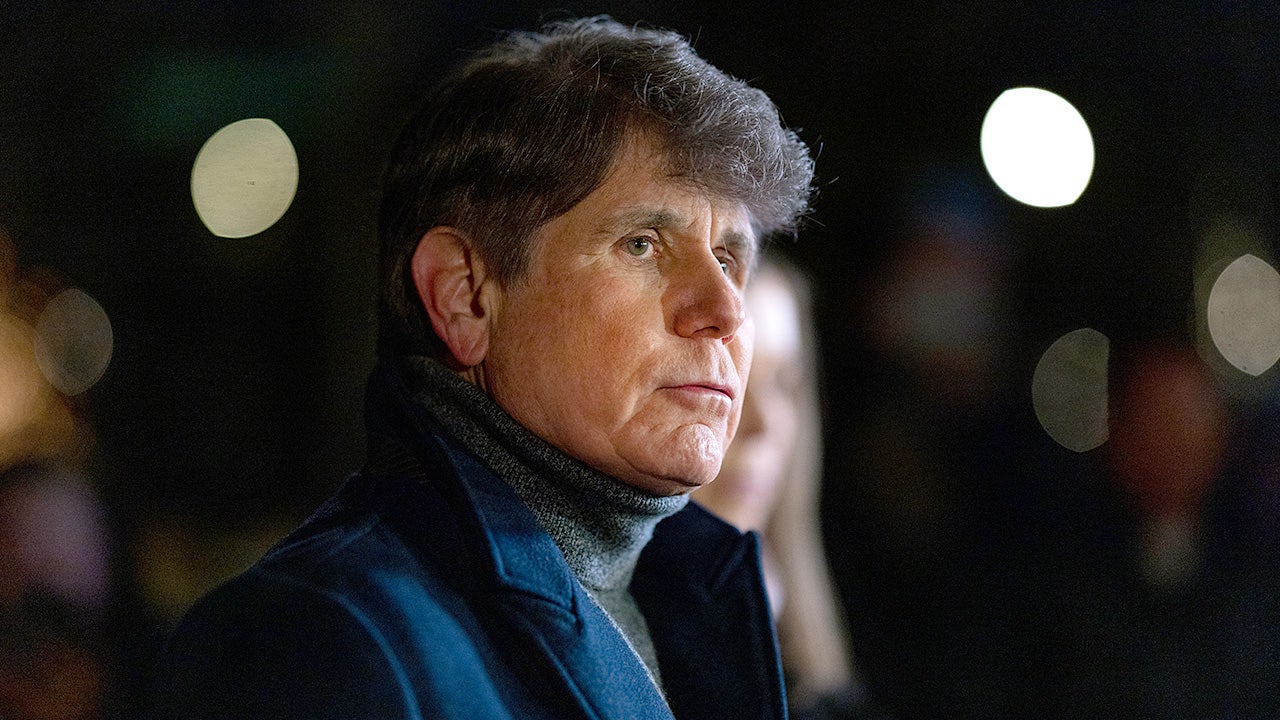
Anyone who has a conversation with former Illinois Gov. Rod Blagojevich is likely to hear his claim that he was never going to sell the U.S. Senate seat vacated by former President Barack Obama in 2008, insisting his innocence in the high-profile case that led to him serving nearly eight years in federal prison.
Blagojevich has repeated for years that he was closing in on a deal to appoint Lisa Madigan to the U.S. Senate.
Hers is a name that has largely dropped out of the public arena. At the time of the scandal, Madigan served as Illinois attorney general. More relevant to this case, she is the daughter of the very powerful and entrenched then-Speaker of the Illinois House Mike Madigan.
RAHM EMANUEL WARNS DSA AGENDA DOESN’T PLAY WELL OUTSIDE ‘UPPER WEST SIDE OF MANHATTAN’
The former speaker has since gone to prison for a separate corruption case. (Welcome to Illinois.) Blagojevich claims he would have appointed Lisa to the Senate in exchange for the father supporting his healthcare package and budget.
Shortly after the arrest of Gov. Blagojevich in December 2009, both President-elect Obama and his incoming chief of staff, Rahm Emanuel, were interviewed by the FBI. Obama was interviewed Dec. 18, nine days after the governor was arrested. Emanuel was interviewed on the 20th. The records of those interviews were kept out of both criminal trials and away from the public, until now. has obtained the partially redacted FBI FD-302s of those interviews.
The Obama interview notes, «Obama was asked whether he was aware of Emanuel having a conversation with the Blagojevich administration regarding Lisa Madigan being considered for the Senate seat in exchange for legislation being passed.
«Emanuel would have been aware that Lisa Madigan was an acceptable candidate to Obama. Emanuel had an open line of conversation with the Blagojevich administration.»
The Emanuel interview notes that, on Dec. 8, 2008, «(David) Axelrod and Emanuel went to see (U.S. Senator Dick) Durbin, D-Ill. In this meeting, they all agreed that Lisa Madigan would be a good candidate.»
«As a result of this conversation, Emanuel contacted (Blagojevich Chief of staff, John) Harris and told him the merits of appointing Lisa Madigan as Senator.»
The next morning, Dec. 9, 2009, just after 6 a.m., Blagojevich was arrested at his home in Chicago.
RAHM EMANUEL WARNS ‘BERNIE BROS’ COULD SINK DEMOCRATS BY SADDLING MODERATES WITH SOCIALIST AGENDA
Then-U.S. Attorney for the Northern District of Illinois Patrick Fitzgerald said, «Governor Blagojevich was arrested in the middle of what we can only describe as a political corruption crime spree. We acted to stop that crime spree.»
«That just proves the Madigan deal was very much front and center. It was something I was about to do,» Blagojevich said in light of the newly unsealed information. «There never was a crime spree that Mr. Fitzgerald, the U.S. attorney, said he was stopping to justify arresting a sitting governor in his home.»
Other interesting notes from the interviews: President Obama initially wanted Valerie Jarrett to succeed him in the Senate. But he reversed his thinking early in the process, deciding «that he would like Jarrett to join him at the White House as a senior advisor.»
However, «Emanuel was still interested in Jarrett taking the Senate seat rather than working in the White House.»
Because, according to the Emanuel interview, «the fact that she is the president-elect’s best friend, having her on the White House staff would be awkward.»
«Rahm’s a crafty, political, crafty, cunning and very effective political operator,» Blagojevich chimed in. «He was interested in being closer to the king.»
Eventually, according to the Emanuel interview, Obama became resolute.
«Obama told Emanuel he made a decision that Jarrett was going to the White House, and he was not going to reconsider this decision.»
After that, a gaggle of familiar names entered the ring for consideration: Tammy Duckworth, and Reps. Jan Schakowsky, D-Ill., and Rep. Jesse Jackson Jr., D-Ill., who also went to prison for a separate case.
MINNESOTA FRAUD SCANDAL WILL HAUNT FLANAGAN IN HIGH-STAKES SENATE RACE, TOP HOUSE REPUBLICAN WARNS
Then Obama, busy with establishing a new administration, stated, «He did not want to put his thumb on the scale.»
Still, he dispatched Emanuel to communicate with the governor’s office that «Obama was interested in someone who he thought would be a good senator for the people of Illinois and who could also hold the seat in the 2010 election.»
Blagojevich ended up appointing Roland Burris to Obama’s vacated seat. Burris did not run for re-election.
Republican Mark Kirk won the seat in 2010 and was defeated by Tammy Duckworth in 2016.
Blagojevich served 7 years, 11 months in prison until President Trump commuted his sentence in 2020. Blagojevich received a full pardon in 2025.
reached out to both former President Obama and Rahm Emanuel. They did not respond.
illinois, barack obama, governors, fbi, corruption
NEWYou can now listen to Fox News articles!
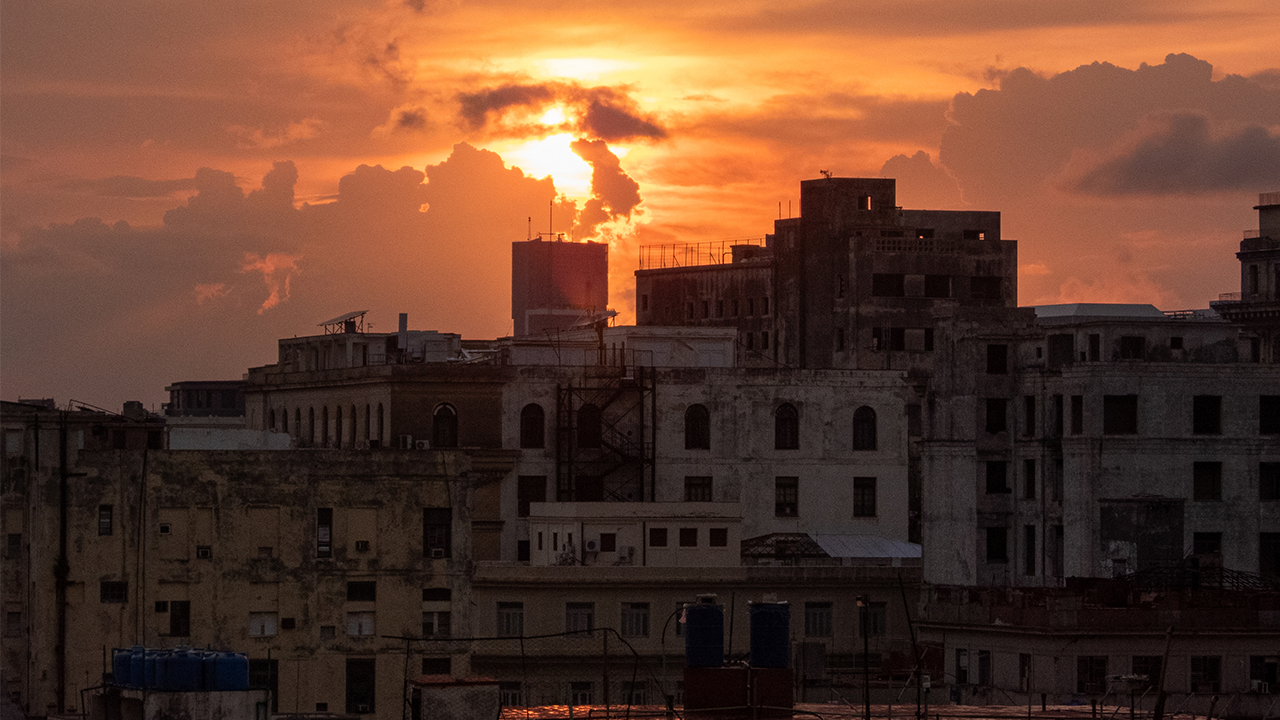
Cuba experienced a total power failure Friday, according to the U.S. Embassy in Havana.
The embassy said the failure was due to the «collapse of Cuba’s electrical grid.»
According to Cuban regime media, the reason for the collapse is under investigation and the timeline to restore power is unknown.»
«All U.S. citizens in Cuba or planning to travel to Cuba should be aware and plan accordingly. There are reports of cellphone and internet outages,» the embassy added, noting that Cuba’s electrical grid is «increasingly unstable,» which has led to «multiple» nationwide power outages in the last few months.
CUBA’S ECONOMIC FREEFALL IS HIDING A NATIONAL SECURITY THREAT JUST MILES FROM FLORIDA: REPORT
The sun sets during a power outage in Havana Friday. (Adalberto Roque/AFP via Getty Images)
The embassy added, «The electrical system remains vulnerable, and additional regular outages have been occurring more frequently and for longer periods. Scheduled power cuts occur daily, and unscheduled outages persist throughout Cuba.»
Cuba’s energy ministry also posted about the power outage on social media.
LEFT-WING INFLUENCER DOWNPLAYS CUBA BLACKOUTS: WORSENING SHORTAGES; ‘PEOPLE ARE PARTYING’
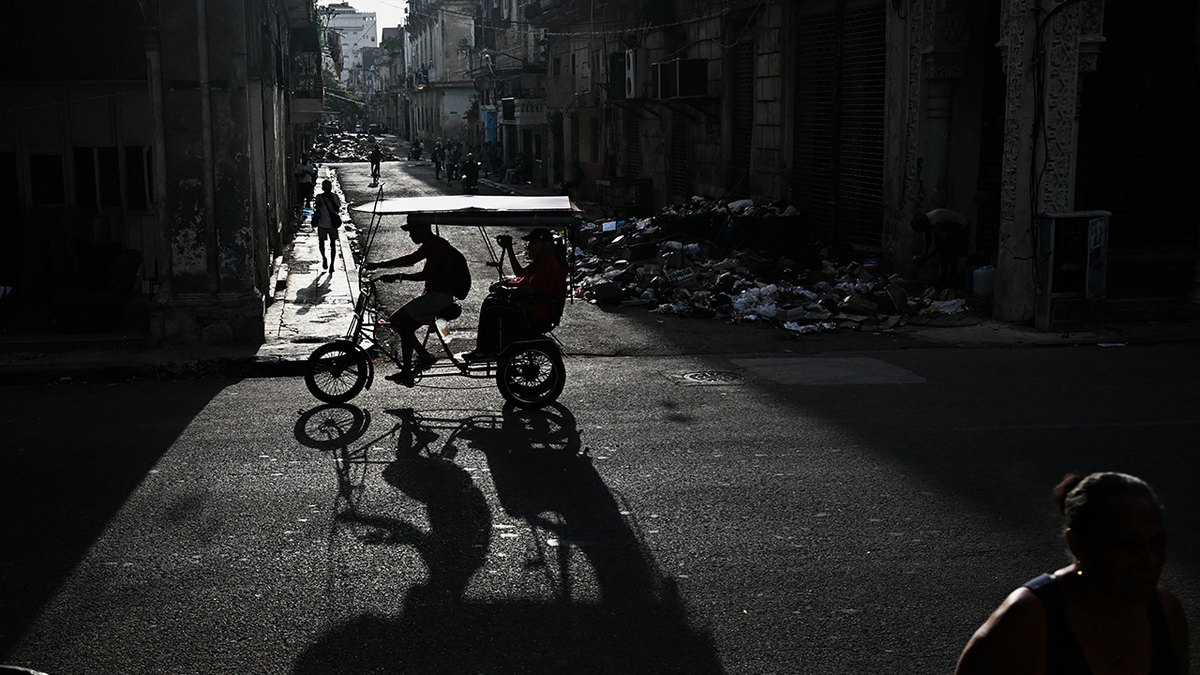
A bicycle taxi travels down a street in Havana during an island-wide power outage Friday. (Yami Lage/AFP via Getty Images)
The country’s power system has been struggling because of fuel shortages, the U.S.-imposed oil blockade and crumbling infrastructure.
CUBA’S DICTATORSHIP HAS LONG BEEN A THREAT TO AMERICA. NOW, IT’S FINALLY TEETERING
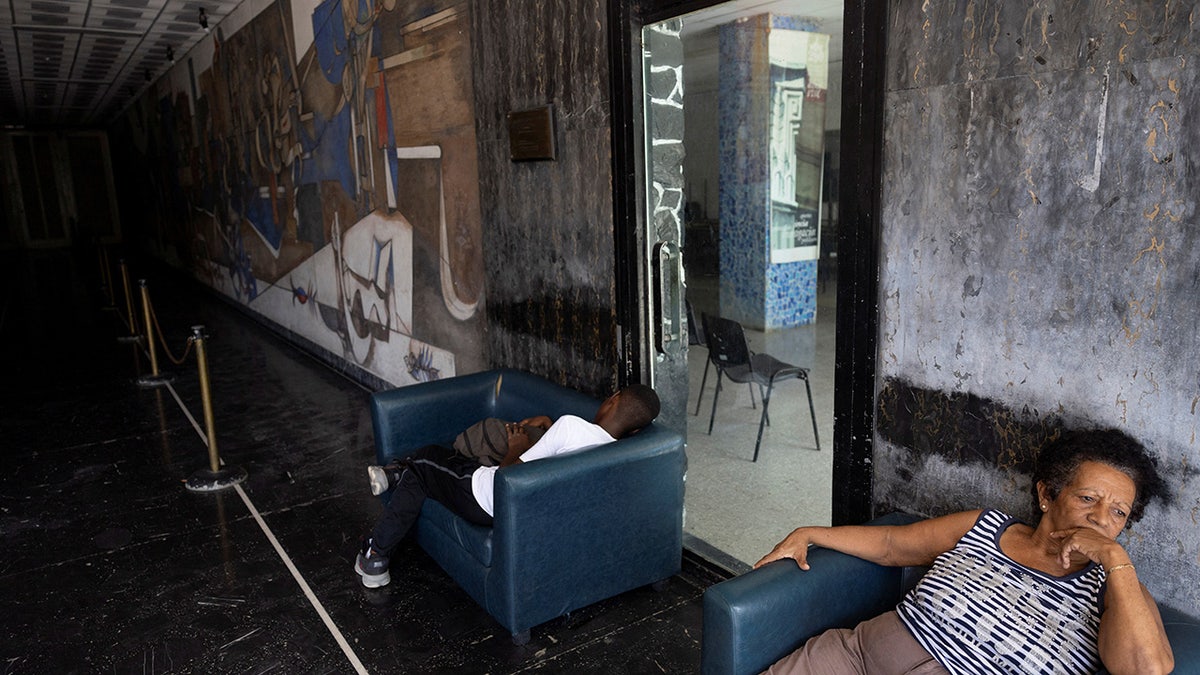
People sit in a darkened building lobby during a power outage in Havana, Cuba, Friday. (Ricardo Arduengo/Reuters)
Even when there isn’t a national outage, the country often endures rolling blackouts that leave millions without power.
The last national outage happened just last month, and Friday’s marks the seventh this year.
cuba, geopolitics, state department, world
INTERNACIONAL
Tensión en Cayos Cochinos: comunidad garífuna de Honduras denuncia intento de desalojo mientras exige cumplir fallo de la Corte IDH
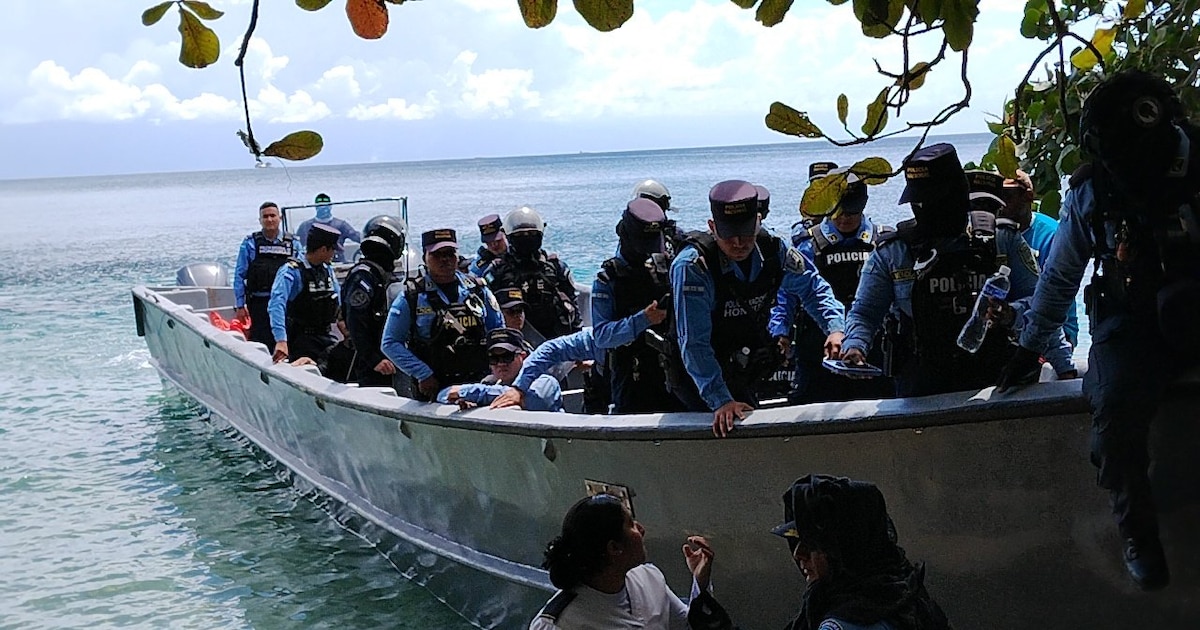
La disputa territorial en Cayos Cochinos volvió a escalar después de que la Organización Fraternal Negra Hondureña (OFRANEH) denunciara una nueva orden judicial de desalojo contra integrantes de la comunidad garífuna que permanecen en el archipiélago.
La organización publicó imágenes de agentes de la Policía Nacional en el sector y aseguró que el operativo estaría relacionado con el conflicto generado por actividades privadas y la filmación de programas televisivos en el área protegida.
Esos señalamientos corresponden a OFRANEH y no implican que las empresas mencionadas hayan ordenado directamente la actuación policial, cuya base formal es una resolución judicial.
Según documentación citada por organizaciones que acompañan a la comunidad, la orden fue emitida por un juzgado con competencia nacional en criminalidad organizada, medio ambiente y corrupción y establecía una diligencia de desalojo para las 7:00 de la mañana del 17 de septiembre en el sector de Playa Uva, Cayos Cochinos. Unas 40 personas mantenían allí un campamento de protesta.
El conflicto excede una orden de desalojo
El punto central de la controversia es que Cayos Cochinos ya fue objeto de una sentencia internacional contra Honduras.
La Corte Interamericana de Derechos Humanos declaró al Estado hondureño responsable por violaciones a los derechos de propiedad colectiva, participación, acceso a la información, identidad cultural, alimentación e integridad personal de la comunidad garífuna.
El fallo, emitido el 20 de noviembre de 2025 y notificado en marzo de 2026, determinó que Honduras no garantizó una consulta previa, libre e informada en decisiones relacionadas con la creación y manejo del área protegida, planes de administración, restricciones pesqueras y autorización de actividades turísticas y televisivas.
La Corte consideró además que esas decisiones afectaron el uso y goce del territorio y del denominado hábitat funcional, concepto que incluye las zonas marinas y recursos tradicionalmente utilizados por la comunidad para su subsistencia.
OFRANEH vincula el conflicto con actividades privadas
En su comunicado del 17 de septiembre, OFRANEH sostuvo que el nuevo intento de desalojo responde a intereses vinculados con la Sociedad de Inversiones Ecológicas (SIEC) y la Fundación Cayos Cochinos.
La organización también cuestionó la realización de producciones televisivas en el archipiélago y denunció que integrantes de la comunidad han enfrentado restricciones, persecución y agresiones por defender lo que consideran su territorio ancestral.
Estas acusaciones deben entenderse como señalamientos de OFRANEH. La organización responsabiliza política e institucionalmente al Estado y a actores privados, pero determinar eventuales responsabilidades jurídicas corresponde a las autoridades competentes.
El documento aportado también señala que la orden judicial hace referencia a inscripciones de propiedad de SIEC sobre varios cayos del archipiélago, mientras representantes garífunas cuestionan el alcance de esos derechos frente al reconocimiento de su territorio colectivo.
La Corte IDH ya había cuestionado los reality shows
El antecedente internacional vuelve especialmente sensible la controversia.
La sentencia no prohibió en términos absolutos las producciones televisivas, pero sí determinó que el Estado debe garantizar la participación y consulta de la comunidad cuando actividades o decisiones puedan afectar directamente sus derechos territoriales y culturales.
La propia Corte señaló que Honduras autorizó históricamente actividades televisivas sin garantizar adecuadamente ese derecho.
OFRANEH sostiene ahora que cualquier nueva filmación debe respetar esa obligación y afirma que la comunidad permanecerá movilizada mientras considere que continúan las afectaciones.
El expediente de Comunidad Garífuna de Cayos Cochinos y sus miembros vs. Honduras continúa oficialmente en etapa de supervisión de cumplimiento ante la Corte Interamericana.
CONADEH también ha reconocido públicamente la sentencia y ha pedido al Estado respetar la propiedad colectiva, la identidad cultural y el derecho a la consulta previa de los pueblos indígenas y afrodescendientes.
Así, lo ocurrido en Cayos Cochinos no representa únicamente una disputa por la permanencia de varias decenas de personas en una playa.
El problema de fondo es más amplio: cómo ejecutar decisiones judiciales internas sin contradecir las obligaciones internacionales que Honduras ya tiene frente a una comunidad cuyo derecho territorial fue reconocido por la Corte IDH.
Corresponsal:Desde Tegucigalpa, Honduras

SEGA muestra el prototipo de Sonic Frontiers en vídeo y algunos fans lo prefieren al juego final – Nintenderos

Una diputada de Unión por la Patria busca declarar tres días no laborables por la visita del papa León XIV a la Argentina

Murió Eugenio Zanetti: la figura del teatro, la ópera y el cine que llevó su arte a Hollywood

Unsealed FBI interviews reveal Obama, Emanuel’s discussions about Blagojevich Senate seat deal

Cuba plunges into total blackout as electrical grid collapses again, US Embassy warns

Tensión en Cayos Cochinos: comunidad garífuna de Honduras denuncia intento de desalojo mientras exige cumplir fallo de la Corte IDH

Autos eléctricos e híbridos: cuánto cuesta cargarlos en casa, cuánto demora y qué se necesita para instalar el equipo

ANSES: quiénes cobran hoy, martes 15 de septiembre de 2026

"Atendiendo a los kukas mentirosos": el presidente Javier Milei opinó sobre las reservas en el oro del Banco Central

A la espera del dato oficial, estiman que en el primer semestre al menos 1,5 millón de argentinos cayeron en la pobreza

 ECONOMIA20 horas ago
"Atendiendo a los kukas mentirosos": el presidente Javier Milei opinó sobre las reservas en el oro del Banco Central
- POLITICA11 horas ago
La Justicia confirmó las fechas de los juicios contra Cristina y Máximo Kirchner por las causas Los Sauces y Hotesur
- POLITICA2 días ago
Cortocircuito y quiebre entre la Casa Rosada y sus diputados por la ley de discapacidad