INTERNACIONAL
Por qué León XIV eligió Uruguay para comenzar su gira por América Latina: la coincidencia religiosa que fue clave


A menos de dos meses de su llegada a Uruguay, los obispos uruguayos viajaron al Vaticano para reunirse con el papa León XIV. El pontífice les preguntó por el país que el próximo 6 de noviembre pisará por primera vez y les contó por qué lo eligió para comenzar su gira por la región.
El papa llegará a América Latina el 6 de noviembre. Ese día encabezará un acto en Montevideo y se reunirá con el presidente Yamandú Orsi. Al día siguiente viajará en avión hasta Paysandú y por la tarde regresará a la capital del país para recorrer obras sociales de la Iglesia Católica y encabezar una misa en el Estadio Centenario. El domingo 8, antes de viajar a Argentina, celebrará en Florida la misa de la Virgen de los Treinta y Tres, la patrona del Uruguay.
En Florida, una ciudad ubicada a 100 kilómetros de Montevideo, se encuentra el Santuario Nacional de la Virgen de los Treinta y Tres.
Este último punto fue clave para que León XIV decida iniciar su gira por América Latina en Uruguay. Así lo contaron asesores de él a los obispos con los que se reunió este viernes, en la mañana de Roma.
El día de la Virgen de los Treinta y Tres es el 8 de noviembre, pero la misa en Florida se celebra el segundo domingo del mes. Este año se da la particularidad de que las fechas coinciden: el 8 de noviembre de 2026 es el segundo domingo del mes.

La coincidencia, entonces, fue clave para León XIV.
“Comentaron sus asesores que él mismo eligió comenzar por Uruguay la visita, también teniendo en cuenta que era la fiesta de la Virgen de los Treinta y Tres. Eso nos alegra mucho a nosotros como país”, dijo el presidente de la Confederación Episcopal del Uruguay, Milton Tróccoli, en declaraciones al noticiero Telemundo de Canal 12.
Los detalles de la conversación
La reunión entre León XIV y los obispos se extendió durante una hora.
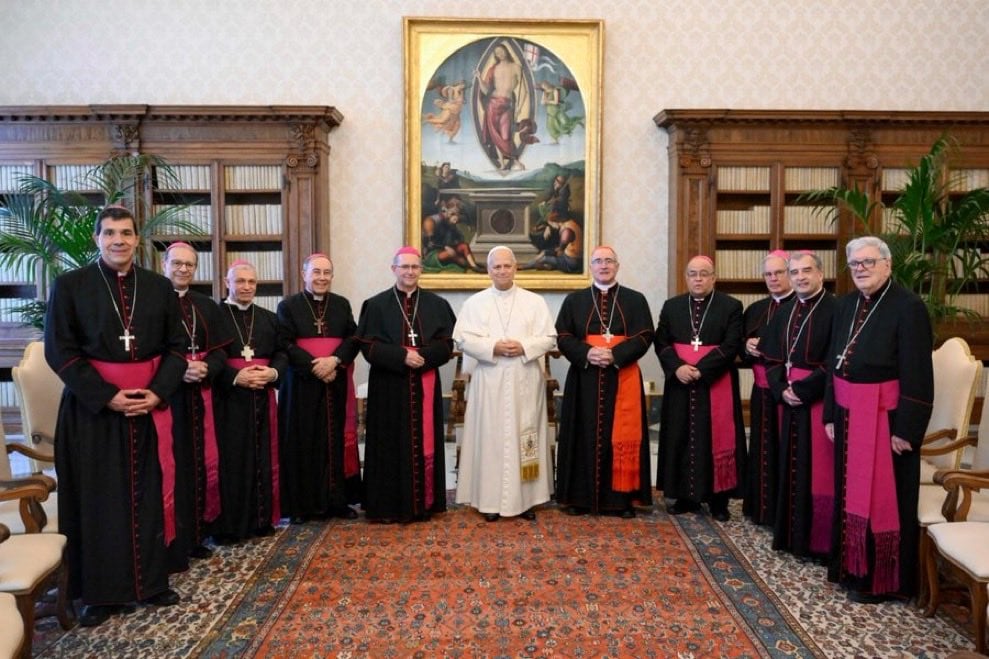
Tróccoli, quien también es obispo de Punta del Este, Maldonado y Minas, fue quien rompió el hielo. De pie, a su lado, expuso el “entusiasmo” que genera la llegada del líder de la Iglesia Católica al país. Luego fue el turno del papa.
“Nos preguntó cómo estaba el país, cómo era la situación social, cómo estaba el tema de la visita, si se lo estaba esperando, qué reacciones hubo”, detalló Tróccoli.
Fue un intercambio amistoso el que mantuvieron.
León XIV nunca estuvo en Uruguay. Sí hubo uruguayos que lo conocieron bajo su nombre de Robert Prevost. Como líder máximo de los agustinos estuvo en Argentina y hasta allí fueron los integrantes de ese orden religioso que vivían del otro lado del charco.
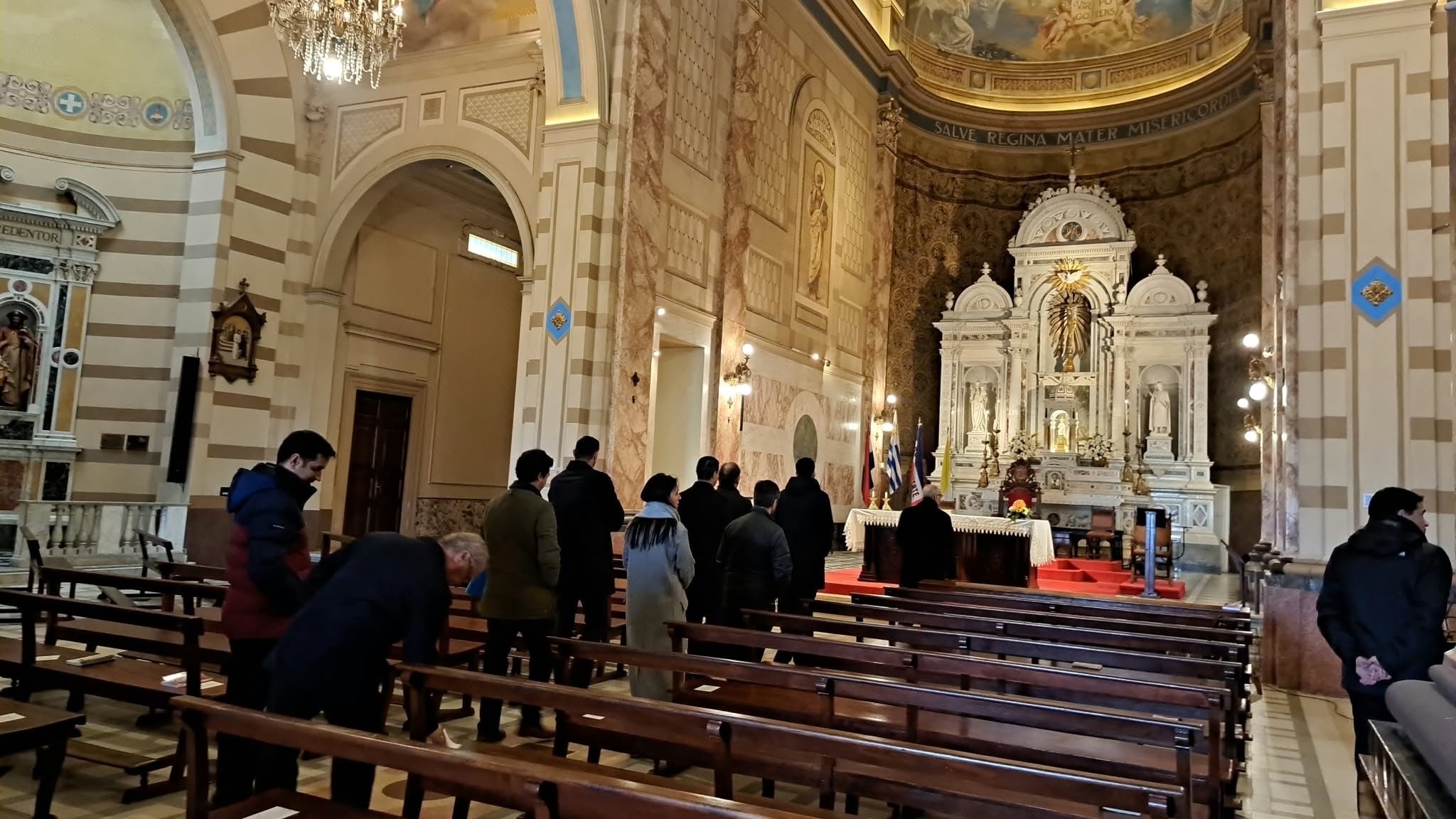
“Él tiene esa curiosidad y ese entusiasmo por venir y conocer nuestro país. Lo conoce, sin dudas, por referencias. Estamos catalogados a nivel de América Latina como el país más laico. Pero esto para él es una instancia muy interesante”, aseguró Tróccoli en la entrevista televisiva.
León XIV insistió en varios momentos de la conversación con que la iglesia tiene que “tender puentes”, agregó el obispo. El pontífice se mostró sereno, prestó atención a los comentarios y realizó preguntas y afirmaciones que Tróccoli consideró “finas”.
Los regalos
Los obispos uruguayos llevaron como regalo dos libros con imágenes de distintas iglesias de Uruguay. También llevaron una recopilación de cartas y dibujos que fueron preparadas por fieles (y también no creyentes).

Fueron en total 900 mensajes que se le entregaron al pontífice, informó la Iglesia de Montevideo. “La voz de Uruguay llegó al papa”, celebró la institución en la red social X.
En los textos entregados se enviaron “las preocupaciones de un país”. En las cartas habían conceptos que se reiteraban: la familia y la transmisión de la fe; la soledad de los adultos mayores, la salud mental y el suicidio; el trabajo y la realidad de los migrantes; las adicciones, el narcotráfico y la violencia; y las heridas y desafíos de la propia iglesia.
La iglesia de Montevideo señaló que también se habló de esperanza.
“Entre preocupaciones y dificultades, las cartas muestran familias que vuelven a empezar, comunidades que acompañan, jóvenes que descubren la fe y personas que eligen permanecer al lado de quienes sufren. León XIV llegará en noviembre conociendo un poco más nuestras heridas, nuestras fortalezas y nuestras esperanzas”, señaló la institución.
Los detalles de la agenda
León XIV llegará a Uruguay sobre la hora 16 del viernes 6 de noviembre y que, al caer la tarde, participará de un acto cívico en la Plaza Independencia, la principal de la capital uruguaya y que da el acceso al casco histórico de Montevideo, la Ciudad Vieja.
Para llegar hasta la Plaza Independencia, el papa recorrerá la rambla hasta conectar con 18 de Julio, la principal avenida de la ciudad. Desde allí se trasladará hasta la Catedral Metropolitana, que está sobre la Plaza Matriz, que queda a unos 450 metros.
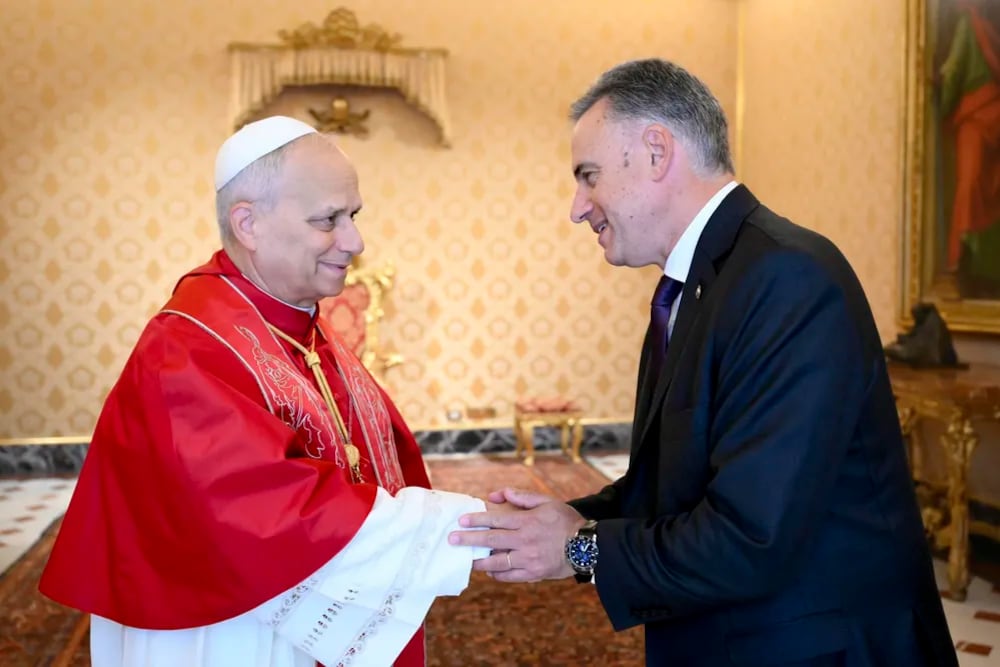
Además, León XIV mantendrá una reunión privada con el presidente de la República, Yamandú Orsi.
Al día siguiente volará a Paysandú, un departamento 375 kilómetros al norte de Montevideo.
El lugar en el que se celebrará la misa allí no está definido. Hay dos opciones sobre la mesa: el parque París Londres y otro terreno ubicado en las afueras de la ciudad.
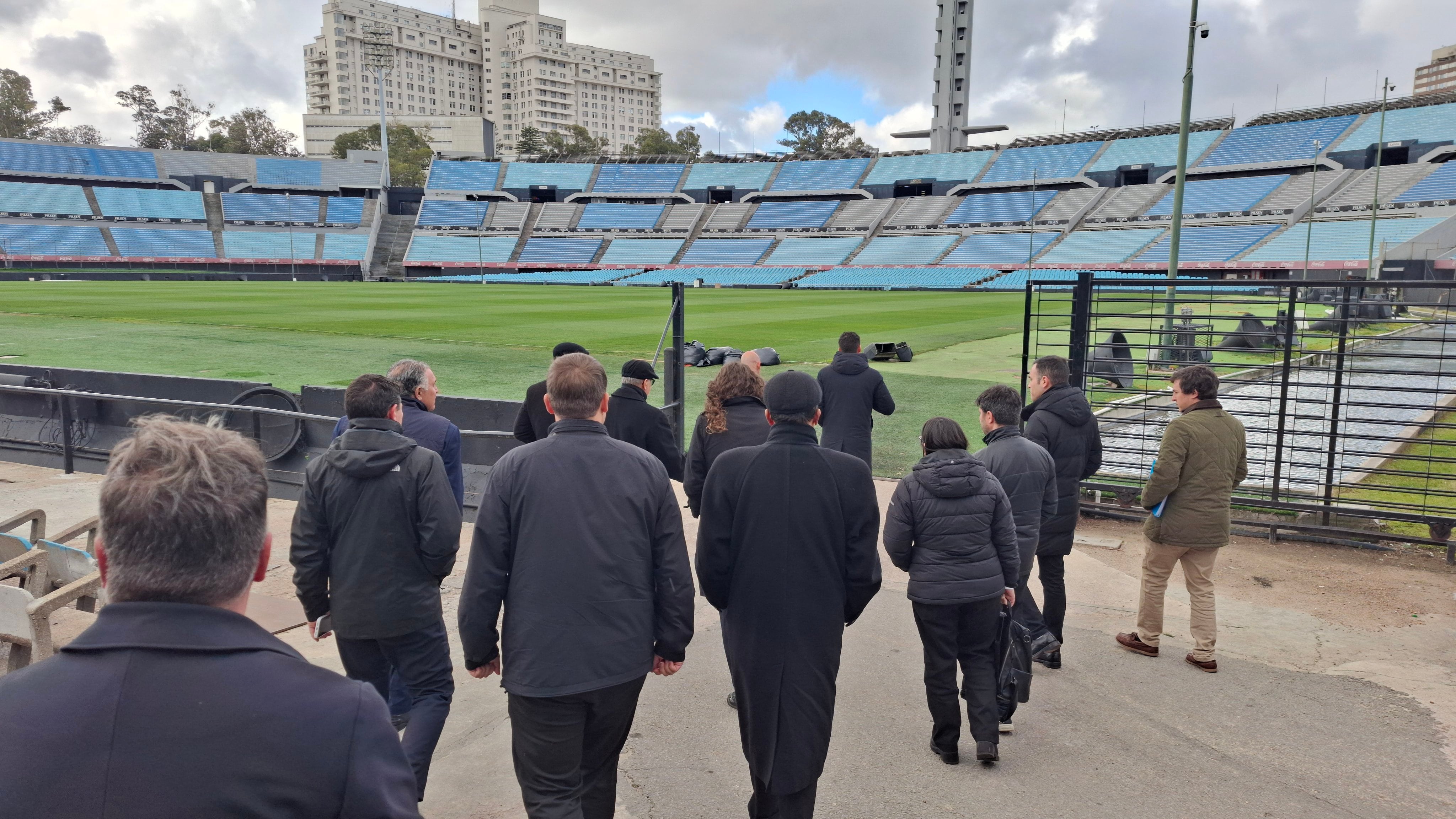
El papa continuará su agenda ese mismo sábado en Montevideo, primero recorriendo obras sociales en el barrio Casavalle, visitando la Universidad Católica del Uruguay, y luego en una celebración masiva que encabezará en el Estadio Centenario.

Al día siguiente León XIV viajará a Florida, una ciudad ubicada a 100 kilómetros de la capital. Allí nuevamente celebrará una misa en el día de la Virgen de los Treinta y Tres, que es la patrona del Uruguay. La misa estaba prevista para el hipódromo de la ciudad, aunque medios locales informaron que esto está descartado por cuestiones de seguridad.
Tróccoli dijo que el Vaticano prefiere que sea frente a la Catedral, en la Plaza Asamblea.
Luego de almorzar, volará hacia Argentina.
corresponsal: Desde Montevideo

INTERNACIONAL
Swing state mayor sued as city’s Muslim holiday displays ignite religious-favoritism fight
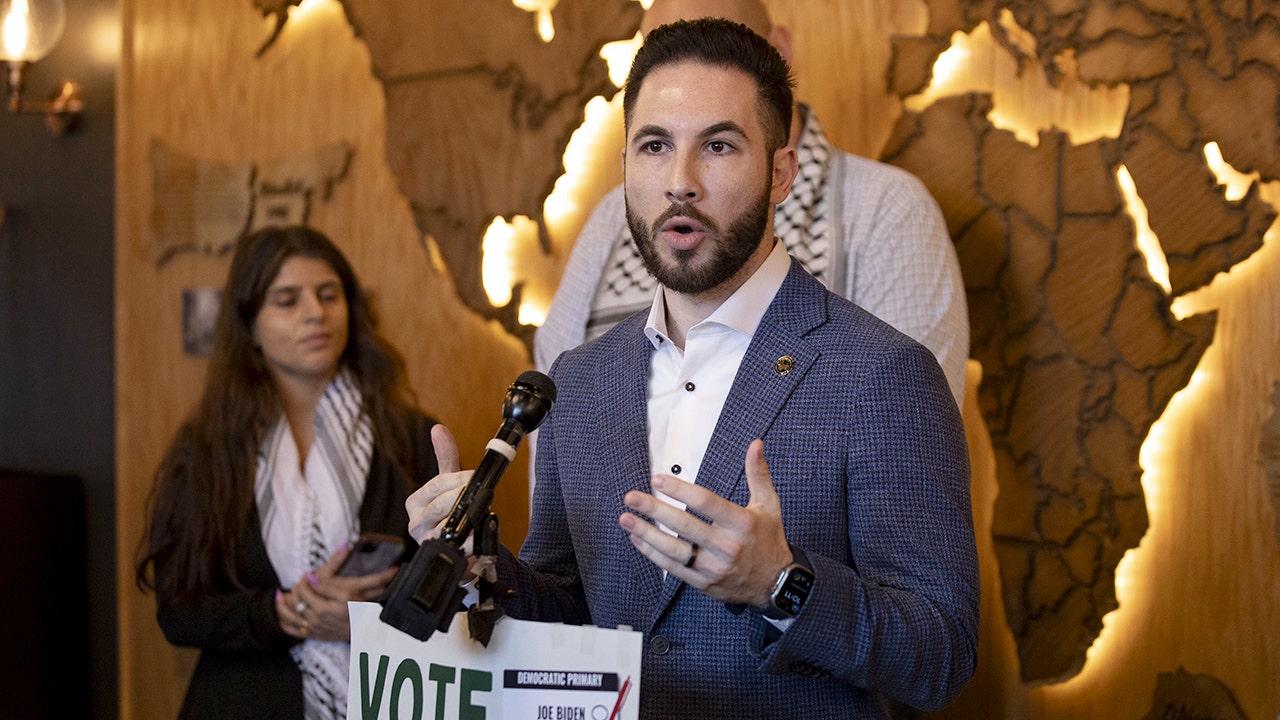
A federal lawsuit filed Thursday alleges the city of Dearborn spent thousands of taxpayer dollars on public displays celebrating Muslim holidays while ignoring a Christian resident’s repeated requests for Easter and Passover recognition.
Margot Cleveland, a journalist with The Federalist, filed a civil rights lawsuit with the American Freedom Law Center (AFLC) against the city of Dearborn and Democratic Mayor Abdullah Hammoud, alleging the city violated her First and Fourteenth Amendment rights, including protections involving religious establishment, free speech and equal protection.
«The City of Dearborn spent taxpayer money to light up its streets and parks for Ramadan while stonewalling a resident who simply asked that Easter, Passover, and other Christian and Jewish holy days be treated the same way,» Robert J. Muise, AFLC co-founder and senior counsel, said in a statement. «That is a straightforward Establishment Clause violation, and the retaliation our client faced for speaking up about it only compounds the constitutional harm.»
PASTOR UNLEASHES ON DEARBORN AS RELIGIOUS TENSIONS ERUPT AT CITY COUNCIL MEETING: ‘ENOUGH IS ENOUGH’
Dearborn is home to one of the largest Arab American communities in the country. The city had 109,976 residents in the 2020 Census, and 54.5% reported Middle Eastern or North African ancestry. Michigan Avenue, the city’s main thoroughfare, is lined with businesses featuring Arabic-script signs and Middle Eastern cuisine. There are ten mosques within the city limits, according to an online directory.
Hammoud was first elected mayor in November 2021, becoming the first Muslim and Arab American to lead the city of Dearborn.
«What makes this case especially troubling is that City officials, up to and including the Mayor, responded to a citizen’s respectful request for equal treatment with silence, stonewalling, and outright hostility — including the Mayor’s own words telling a Christian resident he is ‘not welcome’ in his own city,» David Yerushalmi, an attorney on the case, said. «Our client is simply asking the City to treat Christians and Jews as equal citizens.»
Lawyers for Cleveland pointed to a September exchange between Hammoud and Christian pastor Ted Barham as evidence of what they allege is the city’s hostility toward Christians. Barham had raised concerns during a City Council meeting over the city’s decision to rename a street after Usama Siblani, publisher of The Arab American News, who has made statements expressing support for Hezbollah.
TRUMP INAUGURATION PASTOR SAYS DEARBORN CHRISTIANS ‘AFRAID’ TO SPEAK OUT IN MUSLIM-MAJORITY CITY
In the exchange, Hammoud called Barham a «bigot» and an «Islamophobe.»
«And although you live here, I want you to know as mayor, you are not welcome here,» Hammoud told the Christian pastor. «And the day you move out of the city will be the day that I launch a parade celebrating the fact that you moved out of the city… because you are not somebody who believes in coexistence.»
But Cleveland’s lawsuit alleges that city leaders ignored her requests for the city to also recognize Christian and Jewish holidays after she began seeing «Ramadan Kareem» banners and large crescent moons displayed across the city in spring 2025. A FOIA request revealed that the city had spent $1,500 on Ramadan banners and $5,000 on the crescent-moon display. The Dearborn Police Department was also selling Ramadan-themed T-shirts.
In emails to the city, Cleveland said she did not want the city to stop celebrating Muslim holidays but wanted equal recognition for Christian and Jewish holy days.
«I much prefer to ensure equality of faith traditions, as opposed to a challenge to the display,» Cleveland wrote in an email.
MASSACHUSETTS HIGH COURT BLOCKS CITY FROM DISPLAYING CATHOLIC SAINT STATUES HONORING FIRST RESPONDERS
Not only did the city allegedly ignore Cleveland’s requests, but in February 2026, it expanded its Ramadan displays, commissioning crescent-and-star lights that were displayed on municipal streetlights across the city.
«This initiative reflects who we are as a city,» Hammoud said in a statement.
Tensions between Cleveland and city officials continued in April, when Cleveland alleges she was told she could attend a community meeting as a resident but not as a journalist. The lawsuit also alleges Hammoud made what it describes as a «snide comment» about residents who criticize the city on social media to monetize their posts.
The lawsuit also alleges that in February 2026, the city expanded its Ramadan displays, commissioning crescent-and-star lights for municipal streetlights across the city.
SIGN UP TO GET THE POLITICS NEWSLETTER
Cleveland pushed back, according to the lawsuit, saying she was simply «a concerned resident who was ignored when I asked for the City to treat Christians and Jews equally.»
«Despite the repeated requests, they treated her as if she were an outsider and not a full member of the political community,» Muise told Digital.
The lawsuit comes during Michigan’s closely watched 2026 U.S. Senate race, with Democratic nominee Abdul El-Sayed, who is Muslim and the son of Egyptian immigrants, facing Republican nominee Mike Rogers for the state’s open Senate seat. Religion and antisemitism have become points of dispute in the race, with Republicans and some Democrats criticizing El-Sayed over his association with streamer Hasan Piker, who said the U.S. was worse than al Qaeda «pound for pound, as far as the number of deaths,» while arguing that U.S. military actions that kill civilians can amount to acts of terror.
At the same time, El-Sayed and his supporters have accused opponents of targeting him with anti-Muslim rhetoric.
Digital reached out to Hammoud’s office and Cleveland’s attorneys for comment.
first amendment religion us, controversies, religion, controversies state and local, michigan, local
INTERNACIONAL
How CodePink co-founder Medea Benjamin’s family foundation became a major funder of left-wing activist groups

CodePink co-founder Medea Benjamin’s family foundation became a major financial backer of a network of left-wing activist organizations over more than two decades, providing nearly $3.2 million to CodePink while also bankrolling protest groups, legal advocacy organizations and progressive nonprofits, a Digital investigation found.
The foundation, Arc of Justice, is a $54.6 million private foundation formerly known as The Benjamin Fund. A review of its complete IRS filing history found it made nearly 1,500 grants totaling about $24.6 million to organizations involved in anti-war activism, progressive policy, legal advocacy and campaigns involving immigration enforcement, China, Cuba and the Israel-Hamas war.
Among its largest recipients were CodePink, Global Exchange, the Center for Constitutional Rights, Grassroots International and Social Good Fund, alongside grants to dozens of other organizations involved in anti-war activism, progressive policy, legal advocacy and progressive media.
Arc of Justice provided CodePink more than twice the approximately $1.33 million the group received from the funding network linked to Shanghai-based Marxist tech tycoon Neville Roy Singham. A previous five-part Digital investigation found Singham’s network directed at least $278 million into organizations that promoted pro-China messaging.
LAWMAKERS THROW OUT ‘TROJAN HORSE’ ACTIVISTS THEY SAY ARE ENGAGED IN AMERICAN SUBVERSION
Arc of Justice has come under scrutiny after California revoked its charitable registration following years of financial compliance failures, though the foundation has been working to regain its standing with California regulators.
Benjamin, who co-founded CodePink with Singham’s wife Jodie Evans, has remained one of the group’s most visible public faces, frequently leading protests and interrupting congressional hearings. On Tuesday, she was escorted from a House Foreign Affairs subcommittee hearing on alleged foreign malign influence after protesting during the proceedings.
The Digital investigation also found the foundation itself has undergone sweeping changes in recent months, with Benjamin stepping down from the board, new leadership taking over and the organization saying it intends to chart a different course for its charitable giving.
Arc of Justice began funding CodePink in 2009 and provided grants to the organization in 15 tax years through 2024, totaling $3,195,280.
According to the documents, CodePink was Arc of Justice’s largest activist beneficiary. Since 2009, the foundation and its predecessor, The Benjamin Fund, also directed about $2.05 million to Global Exchange, the anti-war and social justice advocacy group Benjamin co-founded with her former husband, Kevin Danaher, which has long campaigned against U.S. military intervention and economic sanctions.
Arc of Justice also provided about $2.24 million to Grassroots International, which funds grassroots social movements around the world; $1.61 million to Social Good Fund, which provides nonprofit infrastructure and fundraising support for charitable projects; about $1.29 million to the Center for Constitutional Rights, a legal advocacy organization; and about $114,000 to Alliance for Global Justice (AFGJ), an activist nonprofit.
AFGJ has drawn scrutiny over its past fiscal sponsorship of Samidoun, a pro-Palestinian activist group later sanctioned by the U.S. Treasury. Benjamin said Arc’s final grant to Alliance for Global Justice was $10,000 in 2022 and that the foundation «was not aware of any specific groups fiscally sponsored by AFGJ» when it made its grants.
Through attorney David Levitt, the foundation said both CodePink and Alliance for Global Justice were recognized by the IRS as tax-exempt public charities and that Arc was entitled to rely on that status when making its grants.
The grantmaking reached across a much broader activist network. Since 2009, IRS filings reviewed by Digital show Arc of Justice and its predecessor gave about $492,000 to World Beyond War, roughly $255,000 to the Institute for Policy Studies and about $124,000 to Jewish Voice for Peace. It also gave $110,000 to Grassroots Global Justice and about $90,000 to the Center for Popular Democracy.
IRS filings also show Arc of Justice and its predecessor provided about $65,500 to Democracy Now! since 2009, where Benjamin has frequently appeared as a guest over the years.
Founded in 2002 with the aim of preventing the Iraq War, CodePink has grown into one of the country’s most visible anti-war protest groups, repeatedly disrupting congressional hearings and protests involving senior U.S. officials, including then-Secretaries of State John Kerry and Mike Pompeo. The group has also participated in nationwide No Kings protests, opposed ICE enforcement actions, organized anti-Israel rallies and campaigned against U.S. policy toward China, Cuba and Iran. Earlier this year, CodePink led a delegation to Cuba that included Twitch political streamer Hasan Piker.
Asked about Arc’s long-term funding of CodePink and other activist organizations, Matthew Johnson, a senior fellow at the Jamestown Foundation, said sustained financial support can have an impact well beyond the dollar amounts involved.
«Small amounts of money can actually go a long way toward impacting the broader media ecosystem… from the perspective of political organization, they may be having an outsized impact on the kind of information that is available to Americans,» Johnson told Digital.
Johnson, who testified before Congress Tuesday about how foreign adversaries may use nonprofits and other organizations to shape U.S. public opinion and policy, told lawmakers that CodePink launched its «China Is Not Our Enemy» campaign in 2020 following meetings in Beijing and has since pursued China-focused advocacy and organized travel. The campaign argued the United States should pursue cooperation with Beijing rather than confrontation. CodePink and Benjamin have denied taking direction from the Chinese government.
WATCH: Heritage Foundation senior fellow confronts CodePink’s Medea Benjamin before House hearing
Benjamin told Digital the grants were intended to support CodePink’s anti-war work.
«The foundation’s donations to CodePink were made to support its anti-war work,» she said in an email response.
At the House hearing on Tuesday, Benjamin also rejected suggestions that she or CodePink took direction from foreign governments. «I’ve been an anti-war activist from the days of Vietnam,» Benjamin said. «I never had a foreign government tell me what to do.»
Singham and the organizations he has funded, identified in the Digital report, have denied taking direction from the Chinese government, and neither Singham, Benjamin nor the organizations have been charged with wrongdoing.
CHINA EXPERT WARNS BEIJING WANTS AMERICANS — NOT THE CCP — TO SPREAD ITS MESSAGE
Arc of Justice was formerly known as The Benjamin Fund, Inc., with California corporate records showing the foundation formally changed its name in November 2019.
Benjamin’s father, Alvin Benjamin, a prominent Long Island real estate developer who founded The Benjamin Companies in the early 1960s, provided some of the foundation’s earliest documented financial backing.
The Benjamin Fund’s initial 2003 IRS return shows he contributed a partnership interest valued at $683,715 to the foundation, with Medea Susan Benjamin serving as president.
Much larger contributions followed. In 2010, the estate of Benjamin’s mother, Rose Benjamin, contributed $10,863,060, according to the foundation’s IRS filing. Five years later, the Estate of Alvin Benjamin contributed another $15 million, followed by another $8,603,450 in 2019.
Medea Benjamin — identified as Susan Benjamin on the filing — personally contributed $1 million to Arc of Justice in 2022, listing a Miami address.
Arc of Justice’s wealth was largely tied to an investment portfolio that continued to grow while the foundation distributed millions of dollars in grants.
Federal tax returns reviewed by Digital show the foundation’s assets grew from $39.63 million at the end of 2020 to $54.64 million in 2024, as it distributed millions of dollars annually in grants.
Arc of Justice generated much of its annual income from its investment portfolio, collecting dividends from stocks and mutual funds, interest on cash holdings and profits from investments that had increased in value.
In 2023, the foundation reported nearly $2 million in revenue, including $1.11 million in dividends and interest from securities, $166,421 in interest on savings and temporary cash investments and $686,919 in net gains from asset sales.
Its investment holdings also produced substantial gains as the portfolio increased in value. In 2020, Arc of Justice reported $12,344,501 in unrealized gains on securities, helping push its year-end assets to nearly $40 million.
Over more than two decades, IRS filings reviewed by Digital repeatedly reported no compensation for the foundation’s officers and no highly paid employees, while the foundation directed millions of dollars to outside organizations.
After California revoked Arc of Justice’s charitable registration, Digital reported that a new Florida nonprofit using the Arc of Justice name was incorporated at the Miami home of Benjamin’s longtime partner, Tighe Barry, raising questions about the future of the foundation and whether its assets or operations were being moved out of California.
The address is a modest turquoise home largely obscured by trees — an unassuming setting for an organization tied to a private foundation with more than $50 million in assets. Benjamin and Barry have frequently appeared together at CodePink demonstrations over the years.
Levitt later told Digital the Florida corporation had been created as a «placeholder» while the foundation considered relocating its operations from California, but the move was never completed. He said the California corporation was never formally dissolved, no assets were transferred and the Florida entity «holds no assets and has conducted no business.»
The foundation has been attempting to get its registration reinstated after recently filing five years of overdue reports covering 2020 through 2024 and paying $1,800 in filing fees and penalties as part of a petition for reinstatement, documents submitted to California regulators show.
$54M CODEPINK-LINKED FOUNDATION SHUT DOWN IN CALIFORNIA POPS UP AT RAMSHACKLE MIAMI HOME
In the reinstatement petition, Levitt attributed the missed filings to what he described as an administrative misunderstanding over whether the foundation had successfully relocated from California to Florida.
He wrote that, during the tenure of the foundation’s «former president,» who served through the end of 2025, foundation leaders believed Arc was no longer subject to California’s charitable registration requirements because it had moved to Florida.
The petition says the foundation later appointed a «new president,» who discovered the compliance problems in 2026 and began the process of bringing the organization back into compliance. The petition also states that the foundation’s directors and officers personally paid the penalty portion of the overdue filing fees.
The filings identify Maya Danaher, Benjamin’s daughter, as president of the California foundation. Danaher previously served as the foundation’s treasurer before becoming president.
«As previously reported, I have resigned from the foundation’s board, and its new management will set its own funding priorities going forward,» Benjamin said.
LAWMAKERS SAY THEY ARE STANDING AT THE GATES AGAINST ‘TROJAN HORSES’ PROMOTING MALIGN FOREIGN INTERESTS
It is unclear why Benjamin resigned from the board, why the proposed move to Florida was ultimately abandoned or why the foundation’s new leadership decided to shift its grantmaking priorities away from the causes it had supported for more than two decades.
Benjamin was not listed as an officer or director of the Florida corporation, where Barry was listed as secretary and registered agent.
Its stated goal is blunt: «WE ARE HERE TO SUPPORT SOCIAL JUSTICE NON PROFITS,» according to the articles of incorporation.
Levitt said the foundation’s new leadership intends to shift its grantmaking away from the causes it historically supported.
«Going forward, the foundation’s new management intends to focus its grant-making on domestic childhood enrichment programs and organizations that support the well-being of children, families and individuals in need throughout the U.S.,» Levitt said.
WATCH: Cuba expert says CodePink acts like a ‘Trojan horse’ for communist interests inside the US
investigations, charity, politics, us protests, china, cuba, immigration
INTERNACIONAL
Estados Unidos prepara el traslado de la mayoría de sus drones Reaper de África a Sudamérica para operaciones antidrogas

Estados Unidos prepara el traslado hacia Sudamérica de la mayoría de los drones MQ-9 Reaper que actualmente se encuentran desplegados en África, en un movimiento que podría ampliar de manera significativa las capacidades de vigilancia, inteligencia y ataque de Washington en el hemisferio.
En una columna en Infobae al Mediodía, Andrei Serbin Pont vinculó la decisión con el nuevo enfoque que Estados Unidos está impulsando para combatir el narcotráfico y a organizaciones que identifica como terroristas.
“Lo que esto termina indicando es que se viene una escalada por parte de los Estados Unidos en América Latina, con un foco probablemente hacia el norte de América del Sur, Centroamérica y el Caribe”, sostuvo.
Para Serbin Pont, el eventual desplazamiento de los Reaper debe leerse junto con una mayor cooperación militar entre Washington y distintos gobiernos de la región. Ecuador es uno de los principales ejemplos: desde marzo, fuerzas estadounidenses y ecuatorianas realizan operaciones conjuntas contra organizaciones designadas como terroristas por Estados Unidos.
Un dron pensado para vigilar y atacar
El MQ-9 Reaper es una plataforma de gran autonomía diseñada principalmente para tareas de inteligencia, vigilancia y reconocimiento, aunque también puede realizar ataques de precisión. El sistema incorpora cámaras, sensores infrarrojos, designadores láser y radar, y puede utilizar misiles AGM-114 Hellfire y distintas bombas guiadas.
Su principal ventaja está en la posibilidad de permanecer durante largos períodos sobre una misma zona. Eso permite seguir movimientos, obtener imágenes, identificar objetivos y transmitir información a los centros de comando sin necesidad de mantener una aeronave tripulada en el lugar.
“Estas aeronaves al fin y al cabo no solo tienen esa capacidad destructiva por medio del empleo de municiones de precisión, pero son sobre todo plataformas de inteligencia, de monitoreo y de reconocimiento”, explicó Serbin Pont.
El analista destacó además el costo operativo frente a otras aeronaves militares. “Es barato comparado con volar un F-16 o un avión de alerta temprana”, señaló.
Esa combinación de autonomía, sensores y armamento convierte al Reaper en una herramienta especialmente útil para operaciones contra organizaciones que utilizan territorios extensos, zonas fronterizas o áreas de difícil acceso.

El antecedente de Colombia
Serbin Pont también se refirió a Colombia, donde Estados Unidos acordó el préstamo de drones MQ-9A Reaper para reforzar las tareas de vigilancia contra organizaciones vinculadas al narcotráfico.
El analista utilizó ese caso para explicar el efecto que puede generar una flota relativamente reducida cuando las aeronaves se distribuyen en turnos.
“Si vos tenés como Colombia cuatro aeronaves de estas en rotación, significa que va a haber áreas del país que van a poder estar casi bajo monitoreo constante”, planteó.
Más allá de la cantidad definitiva de unidades, la importancia está en la posibilidad de sostener una vigilancia aérea persistente. El Reaper puede observar durante períodos prolongados una determinada zona y aportar información que luego puede ser utilizada por las fuerzas de seguridad o militares.
Para Serbin Pont, esa capacidad puede integrarse a una red regional más amplia. El analista mencionó a Ecuador, Puerto Rico, Panamá y otros puntos del Caribe y Sudamérica como posibles nodos desde los cuales Estados Unidos podría ampliar la cobertura de sus operaciones.

El objetivo no sería solamente detectar embarcaciones o movimientos terrestres. También se trata de producir inteligencia que permita identificar rutas, estructuras logísticas y patrones de actividad de las organizaciones criminales.
El nuevo escenario regional
El eventual despliegue de los Reaper se produce en un contexto en el que Washington aumentó su presencia militar en América Latina y reforzó la cooperación con gobiernos que participan de su estrategia contra el narcotráfico.
La denominada Americas Counter Cartel Coalition, impulsada por Estados Unidos, reúne a países de la región para coordinar acciones contra organizaciones criminales transnacionales. Washington también desarrolló operaciones con Ecuador en el Pacífico oriental y el Caribe.
Serbin Pont considera que los drones pueden convertirse en una pieza central de esa estrategia porque permiten combinar información y capacidad ofensiva en una misma plataforma.
Pero justamente esa característica abre el interrogante más sensible de su análisis: qué ocurre cuando un sistema utilizado para vigilar también puede emplearse para atacar.

La discusión por el uso de la fuerza
El analista puso el foco en la utilización del concepto de “narcoterrorismo” para definir a determinadas organizaciones.
“Todo eso que usamos en África para matar terroristas lo vamos a mandar para América Latina, donde hablamos de narcoterroristas”, resumió al explicar el cambio de enfoque que, a su criterio, se está produciendo en Washington.
La cuestión no es únicamente tecnológica. Un dron puede localizar un objetivo, seguirlo durante horas y aportar información precisa. Pero la decisión de atacarlo depende de un marco jurídico y de reglas de empleo de la fuerza que varían según el país y la operación.
“¿Qué marco jurídico en América Latina te va a permitir decir: ‘Ah, esa persona es un narcoterrorista, por ende yo le puedo lanzar un misil’?”, planteó Serbin Pont.
En ese punto aparece una diferencia fundamental entre la cooperación en materia de inteligencia y una intervención militar directa. Que Estados Unidos aporte información o capacidades de vigilancia no significa necesariamente que pueda utilizar armamento en territorio de otro Estado sin autorización.

Para el analista, América Latina presenta además un escenario mucho más heterogéneo que África o Medio Oriente, con distintos marcos legales, capacidades militares y niveles de cooperación con Washington.
“Hay una asimetría de poder y hay una asimetría en términos de los conceptos que se manejan y una asimetría de los marcos legales que habilitan las acciones”, sostuvo.
El eventual traslado de los MQ-9 Reaper, en ese contexto, no representa solamente un cambio de ubicación de una flota de drones. Para Serbin Pont, es una señal de que Washington prepara una mayor presencia de inteligencia, vigilancia y capacidad de ataque en una región donde la lucha contra el narcotráfico empieza a adoptar una dimensión cada vez más militar.
La pregunta que queda abierta, concluyó, es hasta dónde llegará ese nuevo esquema y bajo qué reglas podrán actuar esas aeronaves.
–
Infobae te acompaña cada día en YouTube con entrevistas, análisis y la información más destacada, en un formato cercano y dinámico.
• De 7 a 9: Infobae al Amanecer: Nacho Giron, Luciana Rubinska y Belén Escobar.
• De 9 a 12: Infobae a las Nueve: Gonzalo Sánchez, Tatiana Schapiro, Ramón Indart y Cecilia Boufflet.
• De 12 a 15: Infobae al Mediodia: Maru Duffard, Andrei Serbin Pont, Fede Mayol y Facundo Kablan.
• De 15 a 18: Infobae a la Tarde: Manu Jove, Maia Jastreblansky y Paula Guardia Bourdin; rotan en la semana Marcos Shaw, Lara López Calvo y Tomás Trapé.
• De 18 a 21: Infobae al Regreso: Gonzalo Aziz, Diego Iglesias, Malena de los Ríos y Matías Barbería; rotan en la semana Gustavo Lazzari, Martín Tetaz y Mica Mendelevich
Seguinos en nuestro canal de YouTube @infobae.
Defence,Defense,South America / Central America

Semana financiera: el riesgo país volvió a máximos de un mes y cayeron las acciones tras una decisión crucial de la Reserva Federal

Las razones del enojo de Bullrich, el hartazgo de Karina Milei y la parada del Papa que preocupa al Presidente

El presente de Romina Gaetani tras los golpes de la vida: “La que está hablando hoy, está volviendo a nacer”

Curiosidades de un mercado cada vez más cambiante: estas son las versiones más elegidas por quienes compran autos 0 Km

Pablo Moyano reapareció en la paritaria de Camioneros después de cuatro años: el trasfondo de la reconciliación con su padre Hugo

Swing state mayor sued as city’s Muslim holiday displays ignite religious-favoritism fight

La Justicia confirmó las fechas de los juicios contra Cristina y Máximo Kirchner por las causas Los Sauces y Hotesur

Autos eléctricos e híbridos: cuánto cuesta cargarlos en casa, cuánto demora y qué se necesita para instalar el equipo

ANSES: quiénes cobran hoy, martes 15 de septiembre de 2026

"Atendiendo a los kukas mentirosos": el presidente Javier Milei opinó sobre las reservas en el oro del Banco Central

 POLITICA18 horas ago
La Justicia confirmó las fechas de los juicios contra Cristina y Máximo Kirchner por las causas Los Sauces y Hotesur
- ECONOMIA1 día ago
"Atendiendo a los kukas mentirosos": el presidente Javier Milei opinó sobre las reservas en el oro del Banco Central
- POLITICA3 días ago
Cortocircuito y quiebre entre la Casa Rosada y sus diputados por la ley de discapacidad