INTERNACIONAL
Beyond killer robots: China’s real AI threat to America is already here, experts warn

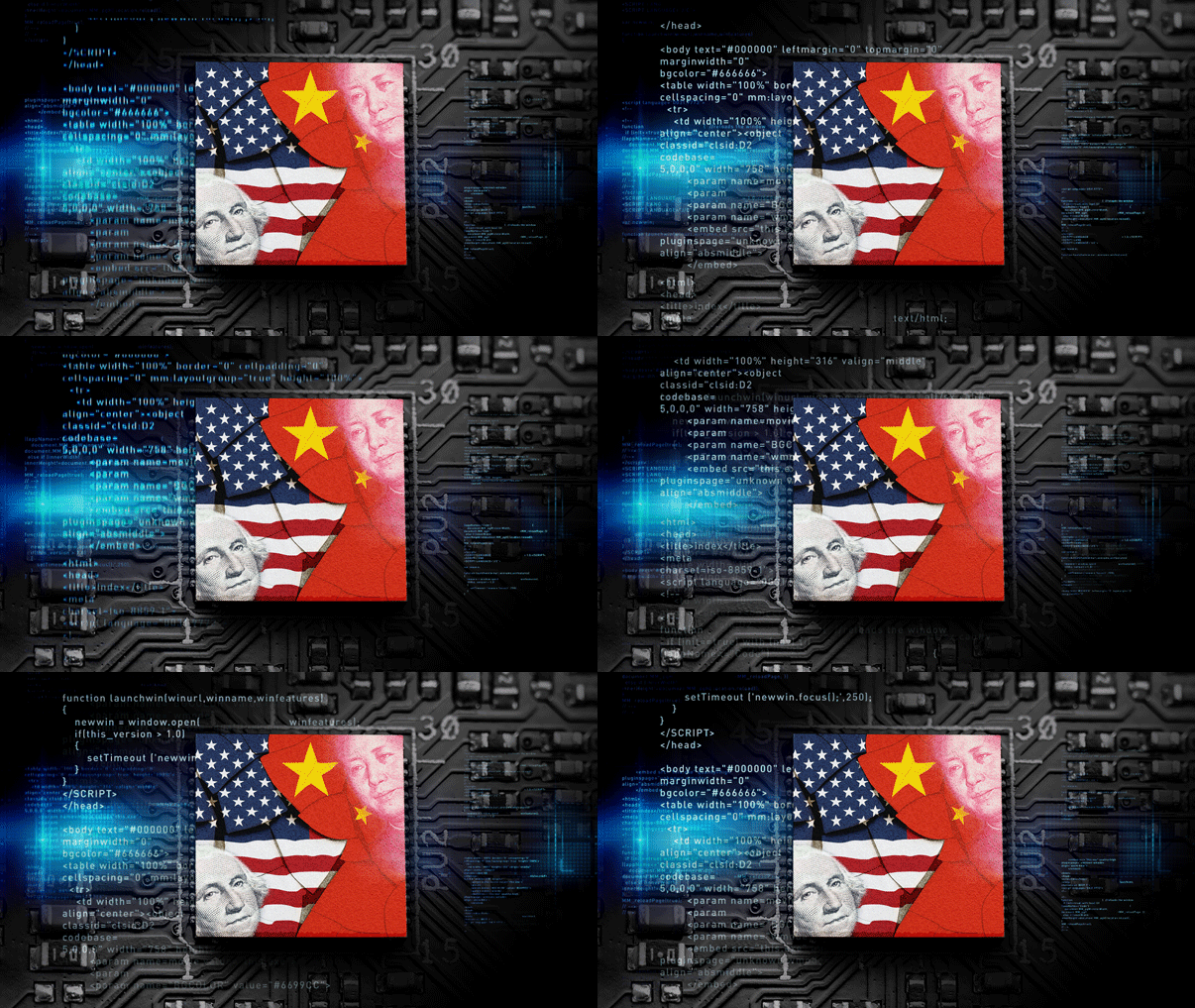
While Americans brace for a futuristic AI war of killer robots and bioweapons, experts warn ahead of President Xi Jinping’s U.S. visit this week that Beijing is already actively undermining America’s global supremacy through AI without ever firing a shot.
Experts who spoke with Digital outlined a stealthy, three-part playbook, which includes extracting the logic of American models, undercutting U.S. developers with free open-source software, and ultimately weaponizing those systems for things like cognitive warfare. They laid out how China bypasses billions of dollars in U.S. research through labs that interrogate cutting-edge American AI and copy its capabilities, while simultaneously flooding the global market with free alternatives.
«I think a ‘race’ is the wrong metaphor for this,» Leah Siskind, an AI research fellow at the Foundation for Defense of Democracies, told Digital. «I think it’s kind of like a multi-front war. And in some places, we’re winning and some places we’re losing.»
XI PREPARES CHINA ‘FOR BATTLE’ AS EXPERT WARNS OF GRAVE DANGER FACING US AHEAD OF DC SUMMIT
While top American tech firms have poured billions into building ultra-expensive, proprietary systems, China has focused heavily on distributing free, open-source models across the globe. Siskind warned that because American tech is costly and the U.S. sector has largely neglected open-source investment, many Fortune 500 companies are making the financial choice to run their operations on Chinese models—unwittingly opening the door to potential CCP censorship, hidden backdoors and, ultimately, global dominance.
«How can you compete with something that’s free when American tech is very, very expensive?» Siskind said. «How can we ensure that a Chinese open-source model would be truly clean, that it’d be truly free of CCP censorship? We can’t be—we just wouldn’t know. And that’s by design. We wouldn’t know what sort of trick backdoors might be implanted and how that could rear its head later on.»
Meanwhile, China expert Gordon Chang warned that Beijing is intentionally using these free models to repeat an economic tactic it previously deployed to corner a different industry.
«This is a tactic that China used with solar panels,» Chang told Digital. «Beijing sees that one day it will drive out the American models on cost and availability, and they will then dominate global AI.»
CHAD WOLF: CONGRESS HAS A CHANCE TO STOP CHINA FROM TURNING YOUR CAR INTO A CHINESE SPY
But to flood the market with free software, Beijing first needs the underlying technology—and a way to bypass America’s massive lead in computing power.
Chang noted that the U.S. possesses a commanding lead in physical infrastructure, boasting over 5,400 data centers compared to China’s roughly 450, along with far superior microchips. To work around the staggering hardware and energy costs required to train artificial intelligence from scratch, Siskind warned that Chinese labs are closing the gap through a process known as «knowledge distillation»—a method where a smaller model essentially interrogates a larger, smarter American model to copy its logic.
«They are able to leapfrog the process by kind of stealing this information,» Siskind said, pointing to the Chinese model DeepSeek as a prime example. «This is how they were able to release models like DeepSeek in 2025, which was seismic news because they were able to show that they were really competing with cutting-edge American models and had invested a fraction of the resources.»
US ADVERSARY TURNS UP THE HEAT ON AMERICA’S AI LEAD WITH AN UNDERESTIMATED EDGE
The threat is not theoretical. Just last week, the Department of Homeland Security issued a joint cybersecurity advisory warning that Chinese companies are conducting «industrial-scale knowledge distillation campaigns» to extract proprietary capabilities from U.S. frontier models.
Beyond economic undercutting and software theft, the experts also warned Beijing is simultaneously deploying artificial intelligence into physical supply chains and public influence campaigns.
Rather than sci-fi «killer robots,» Siskind emphasized that China’s immediate physical priority is «embodied AI»—embedding artificial intelligence into real-world infrastructure like factory automation, commercial drones, and autonomous supply chains. Meanwhile, Chang warned that AI-enhanced propaganda poses a direct threat to American decision-making and democratic sovereignty.
«They’re very good at cognitive warfare, and they can enhance their capabilities with artificial intelligence,» Chang said. «We do not want our elections determined in China. We do not want our critical national security decisions being made in Beijing. And that’s not impossible.»
CHINA EXPERT WARNS BEIJING WANTS AMERICANS — NOT THE CCP — TO SPREAD ITS MESSAGE
As President Xi Jinping arrives in the U.S. this week, the experts who spoke to Digital said the White House must treat these non-cinematic threats with the same urgency as traditional military posturing.
To protect America’s remaining edge, Siskind said Washington must tighten chip export loopholes, blacklist foreign labs engaging in deceptive distillation, and incentivize U.S. open-source development—emphasizing that «it is very important that the most advanced systems are developed under democracy and represent democratic values, as opposed to authoritarian values.»
CHINA-LINKED HACKERS INFILTRATED US GOVERNMENT NETWORKS BEFORE FBI TAKEDOWN
For Chang, the stakes of that technological defense extend far beyond standard economic competition.
«Xi Jinping throughout this century has been pushing the Chinese imperial-era notion of Tianxia, or ‘all under heaven’—that China’s rulers have a right to rule the world,» Chang warned. «That sounds ludicrous to us, but a Chinese regime powered by AI might actually be able to accomplish that. We certainly do not want our decisions being made in the Chinese capital.»
Addressing the United Nations General Assembly on Tuesday, President Donald Trump reiterated Washington’s goal of outpacing China, declaring that U.S. government documents will now refer to AI as «superintelligence.»
«The United States totally rejects any attempt to construct a globalist scheme to control the artificial intelligence being spoken of,» Trump told world leaders. «Whoever wins superintelligence wins. And we’re leading now over China by a lot and everyone else. And we’re going to keep it that way.»
artificial intelligence, national security, xi jinping, technology, china, tech, companies













INTERNACIONAL
El primer ministro del Reino Unido ratificó en la ONU su defensa de la soberanía sobre las Malvinas: “Nos mantendremos firmes”
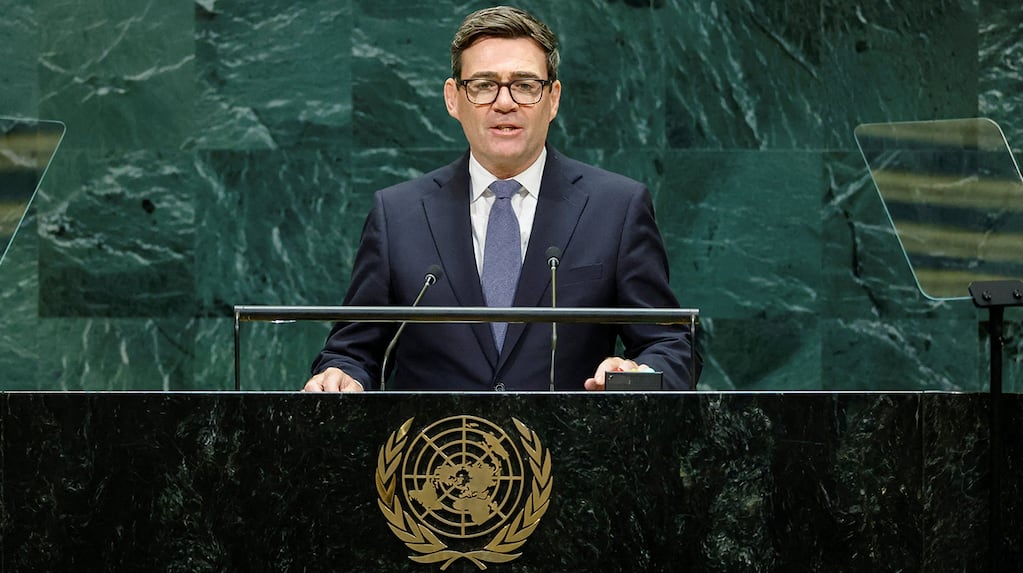
El primer ministro del Reino Unido, Andy Burnham, reafirmó este martes la posición británica sobre las Islas Malvinas durante su discurso ante la Asamblea General de las Naciones Unidas y aseguró que su gobierno defenderá los derechos de los territorios británicos de ultramar frente a cualquier amenaza.
“Nos mantendremos firmes ante cualquier amenaza y desafío a la supremacía de la ley, no solo de Rusia, sino también de otros, incluido donde amenacen los derechos de los territorios británicos a permanecer británicos, como las Islas Falkland”, afirmó Burnham ante los líderes mundiales reunidos en Nueva York.
En otra parte de su discurso, Burnham hizo especial hincapié en los desafíos de seguridad que enfrenta el Reino Unido y sus aliados. En ese contexto, anticipó que su gobierno seguirá destinando recursos a la defensa, aunque aclaró que no busca la confrontación.
Al referirse a la guerra en Ucrania, el primer ministro sostuvo que el Reino Unido continuará fortaleciendo su capacidad de disuasión. “Trabajaremos incesantemente para construir nuestro poder duro, nuestra disuasión, pero no jugaremos el juego de Rusia”, afirmó, y remarcó su respaldo a Kiev.
Burnham insistió en que Londres debe estar preparado frente a posibles amenazas, pero sin abandonar una posición prudente. “A diferencia de Rusia, no buscamos la confrontación, al contrario, estaremos preparados, pero no tendremos miedo, con los ojos abiertos pero la cabeza fría. No flaquearemos en defender a nuestro pueblo y a nuestros aliados”, expresó.
La mención a las Malvinas se produce en el contexto de una creciente tensión diplomática entre Londres y Buenos Aires por la explotación de recursos naturales en el archipiélago y pocas horas después de una reunión entre Burnham y el presidente de Estados Unidos, Donald Trump.
El encuentro entre ambos mandatarios tuvo lugar al margen de la Asamblea General de la ONU. Tras la reunión, Trump aseguró que las relaciones entre Washington y Londres están “mejorando”, mientras que Burnham confirmó que conversaron sobre comercio y sobre cuestiones vinculadas con las Islas Malvinas.
Las declaraciones del jefe de gobierno británico llegan además luego de que la administración de las islas decidiera prorrogar por cinco años todas las licencias vigentes para actividades petroleras offshore, una medida respaldada por el Reino Unido y cuestionada por el Gobierno argentino.
La decisión busca garantizar la continuidad de los proyectos de exploración y explotación de hidrocarburos en las aguas que rodean al archipiélago. Entre ellos se destaca Sea Lion, el emprendimiento liderado por las compañías Navitas Petroleum y Rockhopper Exploration, que prevén iniciar la producción de petróleo en 2028.
La medida fue interpretada en Buenos Aires como una profundización de las acciones unilaterales en un territorio cuya soberanía permanece en disputa. En las últimas semanas, el Gobierno de Javier Milei impulsó denuncias penales y procedimientos administrativos contra empresas vinculadas con la explotación de recursos en las islas sin autorización argentina.
ONU

La transformación digital ya no es una promesa a futuro: es la variable que determina la competitividad de los países, las empresas y los gobiernos en el presente. En México, la expansión de la conectividad, la adopción de la Inteligencia Artificial y el desarrollo de infraestructura tecnológica se han convertido en prioridades estratégicas que definen el rumbo económico y social de la nación.
En ese contexto, los espacios de diálogo entre actores públicos y privados cobran una relevancia sin precedentes, pues son el escenario en el que la innovación puede convertirse en sinónimo de mejoras para la calidad de vida de las personas y el desarrollo de las ciudades.
México Digital Summit 2026 volverá a reunir a los protagonistas de ese debate el 6 y 7 de octubre en Alboa de Plaza Artz, Ciudad de México. El encuentro, convocado por la Asociación Mexicana de la Industria de Tecnologías de la Información (Amiti) y organizado por DPL Group, congregará a líderes empresariales, autoridades, reguladores, operadores de telecomunicaciones, inversionistas y especialistas bajo el concepto “Infraestructura e IA: el motor de la economía”.
Una agenda de alto nivel para definir el futuro digital de México
La edición 2026 del Summit contará con la participación de figuras de primer nivel del ecosistema tecnológico y gubernamental. Entre los confirmados destacan Daniel Hajj, CEO de América Móvil; Mónica Aspe, CEO de AT&T México; Manola Zabalza Aldama, secretaria de Desarrollo Económico de la Ciudad de México; y Zaira Yvette Pérez Salinas, directora general de Altán Redes. También participarán David Guerrero Rubio, director de la Red de Telecomunicaciones y Mexsat, y Susana Harp, senadora de México.

La agenda incorpora además perspectivas internacionales. Ángel García Castillejo, vicepresidente de la Comisión Nacional de los Mercados y la Competencia de España, aportará una visión comparada sobre regulación digital. A ellos se suman Andrea Marván Saltiel, comisionada presidenta de la Comisión Nacional Antimonopolio; Vicente Roqueñí López, director senior de Relaciones con Gobierno y Política Pública para América Latina de DiDi; Adriana Servín, directora de Asuntos Gubernamentales de México, Centroamérica y Caribe de Cisco; y Edgar Rodríguez, director de Políticas Públicas para América Latina de TikTok, entre otros referentes.
Las sesiones abordarán temas estratégicos como regulación digital, espectro radioeléctrico, redes móviles, fibra óptica, satélites, conectividad universal, Centros de Datos, Nube, ciberseguridad, energía, electromovilidad, plataformas digitales y economía digital. El objetivo es identificar oportunidades de inversión, desafíos regulatorios y las condiciones necesarias para una transformación digital sostenible e inclusiva.
Roundtables y espacios privados para la toma de decisiones
Uno de los ejes diferenciadores de esta edición será la realización de roundtables: mesas de conversación entre actores públicos y privados diseñadas para abordar desafíos concretos del sector. La mesa “Gobiernos digitales” analizará cómo los gobiernos estatales y municipales pueden convertirse en motores de innovación y desarrollo económico local a través del uso de datos, Inteligencia Artificial y modernización administrativa. Participarán autoridades, especialistas en innovación gubernamental, responsables de economía y directores de TIC.
El evento también incluirá el Open House del Consejo Ejecutivo de la Economía Digital y Centro-i, un espacio privado dirigido a directivos de empresas tecnológicas. La conversación se centrará en los retos regulatorios y económicos que acompañan el desarrollo de la Inteligencia Artificial, así como en la necesidad de marcos legislativos y políticas públicas que generen condiciones favorables para su adopción. Este tipo de instancias buscan traducir el debate técnico en acuerdos concretos entre tomadores de decisión.

México Digital Summit 2026 cuenta con el respaldo de organizaciones como Centro México, ATIM, Centro-i, ASIET, Fiber Broadband Association, CIAPEM, CEIAP, AMOMVAC y CAPOT, y la participación de empresas como DiDi, Honor, Huawei, Tangerine, Apple, Hughes, SES, Telecom District, TikTok, Ookla, ALAI, Xiaomi, The Campaign Registry, AWS, EFTS Group y Nokia.
El encuentro aspira a consolidarse como un punto de referencia para construir alianzas y definir una visión compartida sobre el papel de la tecnología en la economía mexicana. El registro gratuito y el programa completo están disponibles en
NEWYou can now listen to Fox News articles!
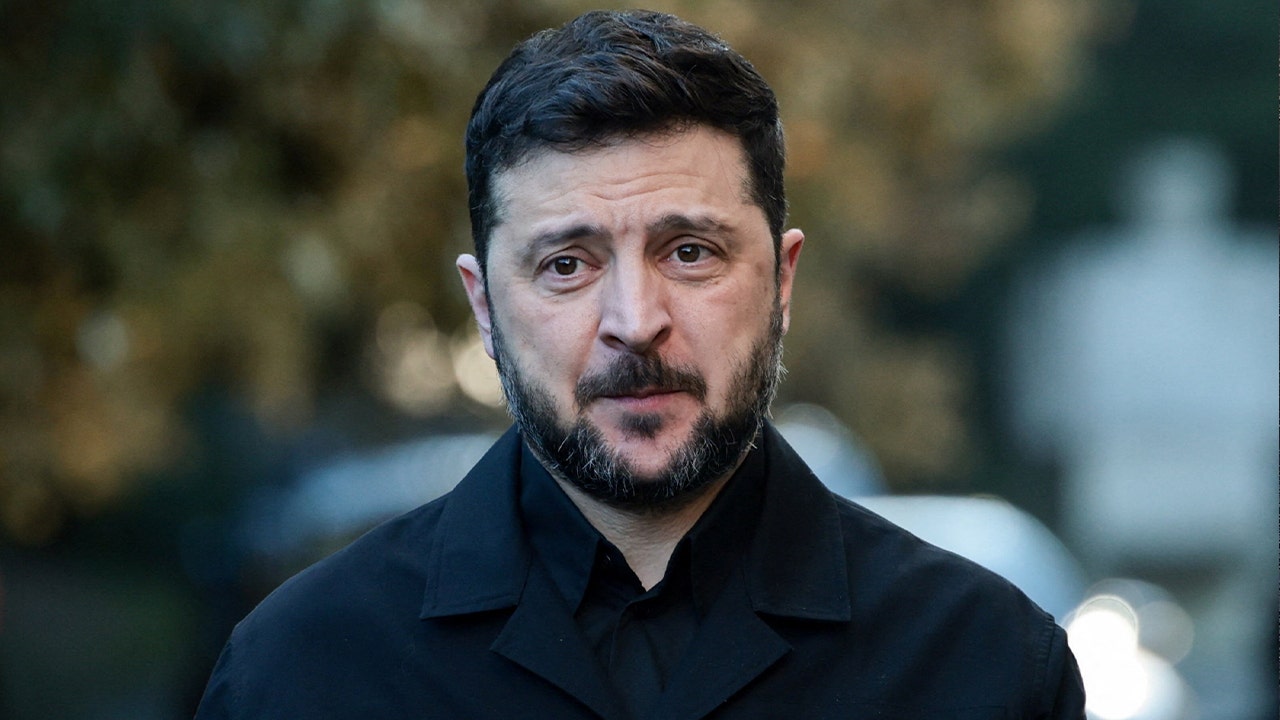
UNITED NATIONS – Ukrainian President Volodymyr Zelenskyy warned Tuesday that Russia could launch attacks against other European countries, telling Fox News Digital that the risk of a new offensive is «very high» as Moscow seeks to undermine European unity and weaken support for Ukraine.
Speaking to reporters following his meeting with President Donald Trump on the sidelines of the United Nations General Assembly in New York, Zelenskyy was asked by Fox News Digital about the possibility that Russia could invade or attack another European country in the near future.
«That’s why the risk of offensive by drones, missiles or land operation is very high against other countries who are bordering Russia or Belarus,» Zelenskyy said.
US INTEL WARNS RUSSIA COULD LAUNCH LIMITED ATTACK ON NATO ALLY IN EFFORT TO FRAGMENT ORGANIZATION: REPORT
U.S. President Donald Trump and Ukraine’s President Volodymyr Zelenskiy shake hands as they meet on the sidelines of the 81st United Nations General Assembly (UNGA) in New York City, US, in this handout released September 22, 2026. (Ukrainian Presidential Press Service/Handout via Reuters)
The Ukrainian leader argued that Russian President Vladimir Putin, unable to achieve his military objectives in Ukraine, could seek to create instability elsewhere in Europe to pressure Western governments into reducing their support for Kyiv.
«How to divide unanimity in Europe? … To attack somebody else. To attack and say, look, I will go further if you will not stop this,» Zelenskyy said.
He pointed to drone incursions and disruptions affecting several European countries, arguing that Moscow is already attempting to intimidate European societies and test their response.
Zelenskyy said Putin’s inability to secure a decisive victory in Ukraine could push him toward additional confrontations, as he faces pressure to justify the war to the Russian public.
FINNISH FOREIGN MINISTRY OFFICIAL DETAILS HOW RUSSIA’S ‘HYBRID WARFARE’ RESHAPED BORDER SECURITY

Ukrainian and German soldiers are seen training on the Patriot air defense missile system at a military training area in Germany in June 2024. (Jens Büttner/picture alliance via Getty Images)
Asked by Fox News Digital what European countries should do in response to the growing threat, Zelenskyy offered a direct answer.
«Respond. Always respond. It’s not about the war. If you don’t respond, Russians, they will go further,» he said.
The warning comes amid heightened concerns about Russian activity in Europe. Zelenskyy’s warning comes amid heightened tensions across Europe following a series of Russian drone incursions and warnings from European leaders about the possibility of further attacks.
German Chancellor Friedrich Merz warned on Sept. 14 that peace in Europe was under threat, urging European countries to take the danger seriously. Speaking at an EU-Arctic Summit in Finland, Merz said Russia’s presence in the region and its hybrid attacks elsewhere in Europe were increasing, calling for a united response from European countries and NATO.
RUSSIA’S STRIKES NEAR MOLDOVA RAISE ALARM OVER PUTIN’S PLANS FOR EUROPE’S EASTERN FLANK
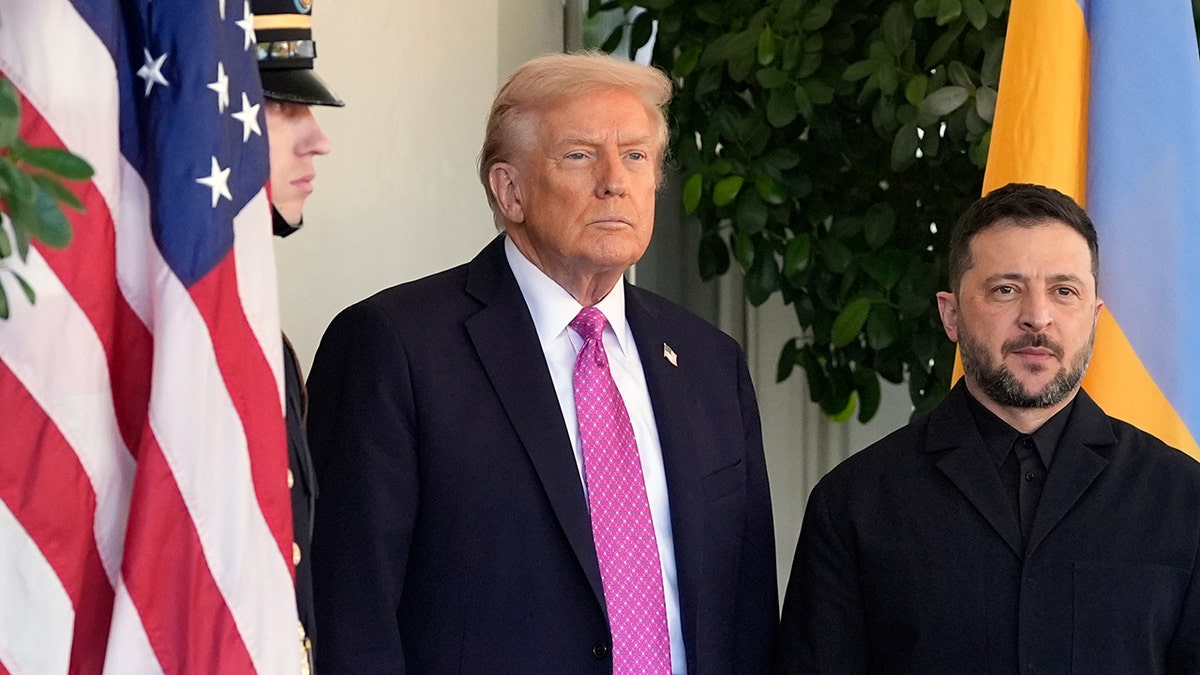
President Donald Trump, left, greets Ukraine’s President Volodymyr Zelenskyy at the White House, Oct. 17, 2025, in Washington. (Alex Brandon/AP)
The German leader’s warning followed an attempted drone attack at Leipzig/Halle Airport on Aug. 4, which German authorities publicly attributed to Russia on Sept. 1.
Polish Prime Minister Donald Tusk issued a separate warning on Sept. 17 that Russia was planning drone or missile attacks against NATO countries supporting Ukraine, including Poland, while potentially portraying the incidents as accidental to weaken the alliance’s response.
The concerns are not limited to hypothetical threats. On Sept. 8, a drone entered Romanian airspace before returning to Moldova and crashing, according to Romania’s Defense Ministry. A week later, Italian fighter jets operating under NATO’s air defense mission shot down a drone that entered Lithuanian airspace from Belarus. Italian officials said the drone most likely came from Russia, although Lithuanian authorities were still investigating its origin.
TRUMP SAYS US WILL LET UKRAINE MAKE PATRIOT MISSILES IN MAJOR POLICY SHIFT

Romanian naval forces destroy two suspected Russian Gerbera drones over the Black Sea, roughly 90 nautical miles off Constanta, according to East2West. (p)
Latvian President Edgars Rinkēvičs also warned in a Sept. 18 interview with The Guardian that European countries and NATO were struggling to keep pace with developments in drone warfare, highlighting gaps in air and missile defenses that could leave European countries vulnerable to Russian attacks.
Zelenskyy’s remarks followed talks with Trump in which the Ukrainian leader said he raised the possibility of a mutual halt to attacks on Russian and Ukrainian energy infrastructure, as well as Ukraine’s need for additional Patriot air defense missiles ahead of winter.
«We are ready,» Zelenskyy said of a potential agreement to halt energy strikes, adding that he was unsure whether Russia was prepared to reciprocate.
Zelenskyy also said Trump had expressed a willingness to help Ukraine obtain additional air defense capabilities, although no concrete commitment on immediate missile deliveries had been made.

A U.S.-made MIM-104 Patriot surface-to-air missile is launched during a live-fire exercise at the Chiupeng missile base in Pingtung County on Aug. 20, 2024. (Sam Yeh/AFP via Getty Images)
The meeting came as Russia and Ukraine intensified aerial attacks, including strikes on energy infrastructure, ahead of the UN General Assembly.
ukraine, russia, volodymyr zelenskyy, united nations, nato

El primer ministro del Reino Unido ratificó en la ONU su defensa de la soberanía sobre las Malvinas: “Nos mantendremos firmes”

Aplausos, guiños y saludos a la distancia: cómo fue el encuentro regional que reunió a Trump y Milei en la misma sala en Nueva York

El oficialismo dio marcha atrás con los recortes en discapacidad y presentó un nuevo proyecto consensuado

Argentina y EEUU firmarán un acuerdo de inversiones para infraestructura: incluye USD 6.000 millones para el proyecto exportador de gas

Sofi Gonet reveló el horror que vivió con su acosador: “Hacía rituales y sacrificios con velas y mis fotos”

Discapacidad: el oficialismo da marcha atrás con lo que presentó en el Presupuesto, a la espera de un último aval de la Casa Rosada

Tras los cruces por Discapacidad, Javier Milei y Patricia Bullrich se reencuentran en la reunión de Gabinete para delinear la agenda legislativa

Alejada de la fama, así vive hoy a los 55 años Ana Paul Dutil con un nuevo trabajo y priorizando su salud mental, tras la polémica con Julieta Prandi y Emanuel Ortega

Curiosidades de un mercado cada vez más cambiante: estas son las versiones más elegidas por quienes compran autos 0 Km

Pablo Moyano reapareció en la paritaria de Camioneros después de cuatro años: el trasfondo de la reconciliación con su padre Hugo

 POLITICA3 días ago
Círculo rojo: conversaciones informales por un acuerdo judicial con los gobernadores y el factor Bullrich
- ECONOMIA3 días ago
Enrique Szewach: “El apretón monetario afecta a la actividad, al salario real y a los márgenes”
- POLITICA23 horas ago
Radiografía del ajuste: Los flancos más criticados de la gestión de Javier Milei entre recortes sociales, crisis previsional y salarios de miseria