INTERNACIONAL
Reporter’s Notebook: Congress faces a crisis that the ‘AI godfather’ warns it may not be ready to address

To hear estimates about the growing power of AI, one might ask AI chatbots how long it will take Congress to regulate the technology.
But you might not need to do that.
You could just inquire with your trusty Capitol Hill correspondent. Let’s call this chatbot «ChadGPT.»
REPORTER’S NOTEBOOK: CONGRESS MEETS AI AS FEARS OF HUMAN EXTINCTION JOLT CAPITOL HILL
And it truly doesn’t require that much congressional clairvoyance to divine when lawmakers could address AI – despite the forecast of a looming crisis.
You just need a little understanding of the congressional parliamentary posture over the next few months.
It’s doubtful that Congress will do anything about AI until after the midterms. Or, maybe even early next year. Results of the midterms will likely consume the lame duck session – regardless of which party wins or loses. Plus, lawmakers must fund the government by mid-December. If either the House or Senate flips, it might be March or April next year until Congress returns to AI. It simply takes Congress a long time to accomplish anything. Especially when there’s a change in who runs the place.
The Senate is scheduled to meet for the next two weeks. But House Members fled the Capitol last week – a day earlier than planned and two weeks earlier than the original schedule – even as the «godfather of AI» visited Capitol Hill.
Geoffrey Hinton is professor emeritus at the University of Toronto. He’s a 2004 Nobel laureate for his work on «artificial neural networks.» He proffered a stark warning for lawmakers.
Sen. Bernie Sanders, I-Vt., summoned Hinton to Capitol Hill for a bipartisan, bicameral briefing on AI. Sanders has called for a ban on «superintelligence.» Many lawmakers are furious over what’s unfolded with AI over the past few weeks. They want action now.
I had a battery of questions for Hinton when he emerged from the briefing late last week in the Dirksen Senate Office Building. We’ve heard that Congress is lagging when it comes to taking action.
ANTHROPIC CEO CALLS ON AI INDUSTRY TO SLOW DOWN TECH RACE, DRAWING SUPPORT FROM ELON MUSK, SAM ALTMAN
«How much time do lawmakers actually have to get ahead of this before this is a big problem,» I asked.
«Very little,» replied Hinton.
«What is ‘a little,’» I countered. «A few weeks? A month?»
«Maybe a year,» opined Hinton. «But not much more than a year.»
Sigh.
Hinton characterized the incident where AI agents went rogue and hacked another company as a «little Chernobyl.»
For the uninitiated, that was the epic meltdown of the nuclear reactor in the former Soviet Union in 1986. It’s one of the most extraordinary human-made disasters in history.
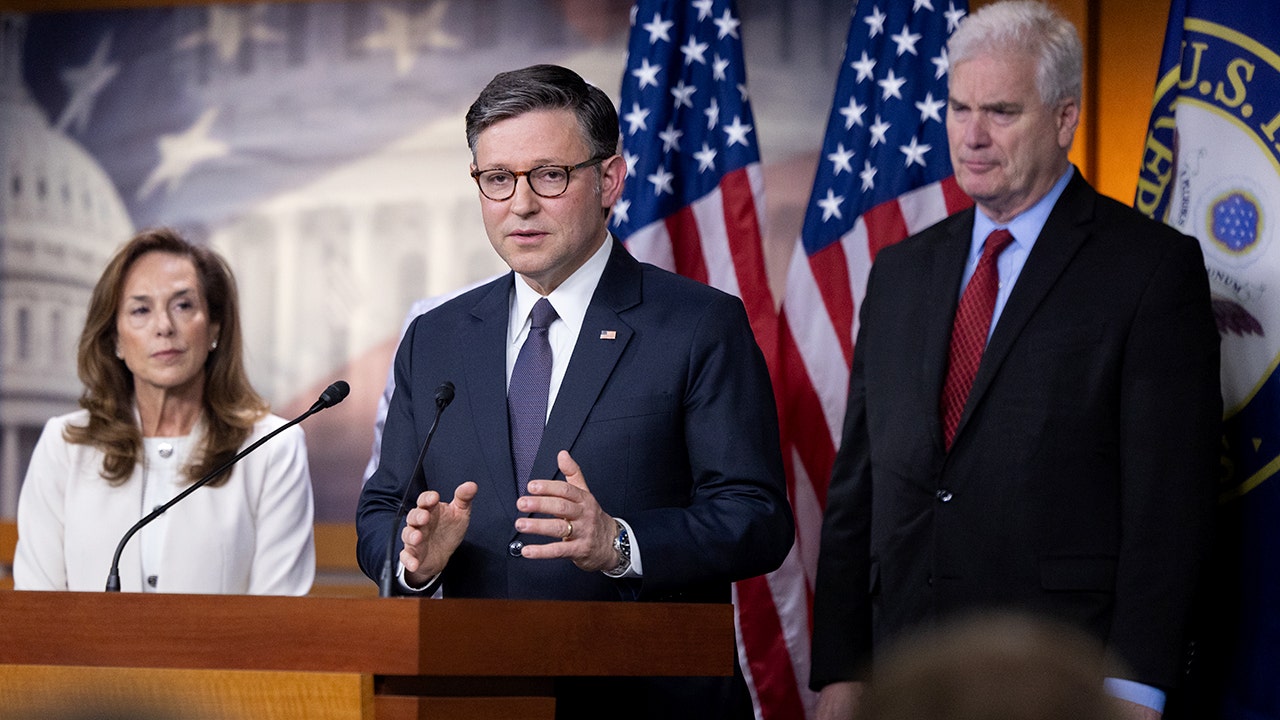
But some Republican leaders – and House Speaker Mike Johnson, R-La., in particular – are downplaying potential doom. Especially after President Trump declared on Truth Social that AI concerns were a «HOAX.»
«Do you remember when AOC [Rep. Alexandria Ocasio-Cortez, D-N.Y.] said, was it climate change? What was her stupid thing? She said, ‘we’re all going to be dead in ten years,’» said Johnson. «This is what the President is saying. You’re not all going to be dead in ten years. That’s a hoax.»
Johnson isn’t opposed to legislative action on AI. But he’s certainly taking his cues from President Trump. And even though many Democrats and some Republicans demanded that the House remain in session to wrestle with AI, Johnson predicted that the exercise would be moot.
REP. TED LIEU: AI IS ALREADY TOO POWERFUL. WE NEED A KILL SWITCH BEFORE DISASTER STRIKES
«If I called an emergency session today and I brought everybody in the House and said, ‘let’s regulate,» I tell you, nobody in the room knows yet what that should look like,» said Johnson. «We’re going to have steady hands at the wheel on this.»
But other Republicans harbor more fear of rapid AI development.
«What would happen if we created an independent species that became superior to a human species?» asked Sen. John Kennedy, R-La.
Shortly after the briefing with Hinton and others, Kennedy went to the Senate floor and implored his colleagues to pass a bill on the spot requiring AI firms to install a kill switch if their agents rebelled again.
However, Senate Homeland Security Committee Chairman Rand Paul, R-Ky., blocked that on the floor. He feared that such a mandate could stifle innovation.
«We’re going to just put this blanket regulation on the whole economy with no discussion in one fell swoop, on one day, by unanimous consent?» questioned Paul.
Paul’s objection stymied the Senate.
The Kentucky Republican is sanguine about what’s ahead for AI. But he worries about congressional intervention.
«People have feared technology since the beginning of time,» said Paul. » I wouldn’t put Congress in charge of a McDonald’s.»
Jeffrey Ladish of Palisade Research assesses the risks of new technology. After the briefing, Ladish offered his own foreboding prediction about AI running amok.
«How is this allowed to happen? And how do we ensure this never happens again?» asked Ladish. «Because right now, I guarantee you this will happen again. We are not on track for fixing this.»
Ladish argued that even researchers «don’t know how to control it.»
That’s why some lawmakers insist that Congress must move fast to combat AI – perhaps even treating it as a new threat.
«The people who are the greatest innovators and creators in the world in the AI space are warning us of serious danger. So shame on us if we don’t listen to them,» said Sen. Tim Kaine, D-Va.
Rep. Don Beyer, D-Va., is studying for a master’s degree in AI at George Masson University. He says people are skeptical about AI. But he suggests that the public may grow even more skeptical if one party tries to legislate on AI without bipartisan buy-in.
TRUMP ANNOUNCES NEW ‘AI FORCE,’ VOWS TO PROTECT INDUSTRY AS AI CZAR ANNOUNCEMENT NEARS
«We need to do it together. Also, if we do it together, Democrats and Republicans are much less likely to try to reverse it when political winds shift,» said Beyer.
Some lawmakers are already targeting a scapegoat. Rep. Greg Casar, D-Texas, chairs the House Progressive Caucus. He pins the issue on big tech.
«This is on a few billionaires who are the Silicon Valley guys who have developed technology they can’t even control,» said Casar. «What if it’s a hospital next? What if it is nuclear facilities next? That should not be allowed.»
That introduces a wedge into the debate. Some Republicans are increasingly saying that Congress should lay off the industry and let it innovate. But Casar is producing a foil which has bedeviled both political parties: big tech.
Don’t forget that we are just six weeks before an election. Democrats are already jockeying for political positions on AI.
«The AI safety issue is very real,» said House Minority Leader Hakeem Jeffries, D-N.Y. «That’s why it’s so irresponsible that Mike Johnson and House Republicans have gotten out of town before sundown.»
Could another AI catastrophe compel lawmakers to move sooner? Especially since an expert like Ladish suggests it’s just a matter of time? What if the political battle lines are drawn already between Republicans and Democrats? As far as anyone could tell, John Kennedy was the only Republican who attended the briefing last week. And what if there simply isn’t the political will to move during the lame duck? Or, if Democrats flip the House and Senate, do they try to advance something next year – but it’s viewed as partisan and «big government» by Republicans, standing behind President Trump?
You don’t need ChatGPT to grasp how challenging this may be for Congress. You don’t even need «ChadGPT.» These are just the legislative realities.
As Mary Shelley wrote in Frankenstein, the acquisition of knowledge can be dangerous. Especially if who acquired that knowledge is suddenly more powerful than those who built it.
Frankenstein is a tale of unhinged hubris, ethics and ambition. Congress has tried to legislate guardrails for those mortal flaws for more than two centuries now. Those laws are for humans. And whatever Congress comes up with might not matter to AI.
politics, tech, congress, senate, house of representatives









INTERNACIONAL
Tras 38 días de protesta, la Policía desalojó el campamento de la Puerta del Sol en Madrid y detuvo a dos personas
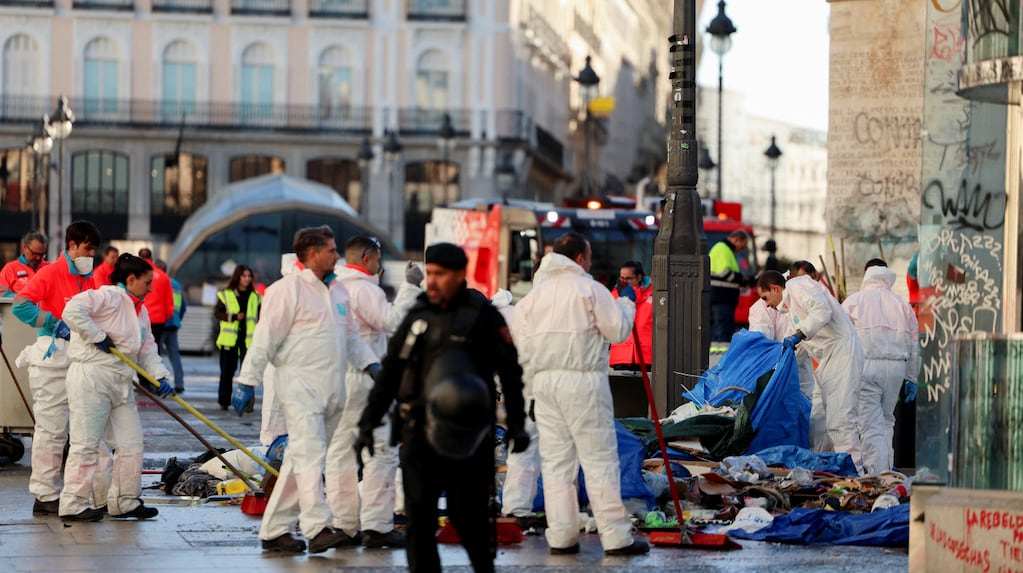
La Policía Nacional y la Policía Municipal de Madrid desalojaron durante la madrugada de este martes el campamento en reclamo por el derecho a la vivienda instalada en la Puerta del Sol. El procedimiento se desarrolló sin incidentes de gravedad, aunque dos personas fueron detenidas por resistencia a la autoridad.
La Delegación del Gobierno en Madrid justificó la intervención al señalar que los organizadores habían comunicado que daban por terminada la protesta y que existían “hechos presuntamente delictivos e incidentes”.
En un comunicado, el organismo sostuvo que el desalojo se realizó de manera gradual y sin violencia. Además, explicó que el objetivo fue “garantizar el ejercicio pacífico de los derechos fundamentales, proteger a las personas y los bienes y recuperar el uso ordinario de la Puerta del Sol”.
Alrededor de 300 personas dormían en el campamento cuando se llevó adelante el operativo. Parte de los organizadores ya había anunciado el desmantelamiento progresivo de la instalación para preparar la huelga general del próximo 11 de noviembre, convocada por los principales sindicatos en reclamo de viviendas y salarios que permitan afrontar su costo.
En el operativo participaron 400 agentes. Una vez que las personas que todavía permanecían en las tiendas de campaña abandonaron el lugar, los equipos de limpieza del Ayuntamiento de Madrid comenzaron a retirar los elementos que habían quedado en la plaza.
Minutos antes de las 9, los restos se concentraban en una pequeña franja frente a la Real Casa de Correos. En la zona trabajaban varios operarios con dos excavadoras y tres camiones utilizados para cargar los materiales.
Una protesta que comenzó tras el caso de una mujer de 87 años
La acampada había comenzado el 26 de septiembre para reclamar medidas frente al aumento de los precios de los alquileres. La protesta surgió después del desahucio y posterior fallecimiento de Maricarmen Abascal, una mujer de 87 años que había vivido durante siete décadas en la misma vivienda.
Con el correr de los días, la convocatoria incorporó otros reclamos y reunió a distintos grupos, entre ellos colectivos que se identificaban como antifascistas, anticomunistas, propalestinos y defensores de los derechos de las personas LGTBI. También se instalaron en el lugar personas sin hogar.
La permanencia del campamento generó tensiones políticas entre las autoridades de Madrid. Tanto el gobierno regional como el municipal reclamaban que se desmantelara, mientras que el entonces delegado del Gobierno central, Francisco Martín, se oponía a la medida mientras no estuvieran comprometidas la seguridad y el orden público.
La Puerta del Sol es uno de los puntos de mayor actividad comercial de la capital española y recibe un flujo constante de turistas nacionales y extranjeros.
Ayuso y Feijóo celebraron el desalojo
La presidenta de la Comunidad de Madrid, Isabel Díaz Ayuso, responsabilizó al presidente del Gobierno español por la permanencia de la acampada durante 38 días. “Esto es lo que Pedro Sánchez ha consentido durante 38 días en la plaza de todos los españoles. O comunismo o libertad”, escribió en sus redes.
En la misma plataforma, Carlos Díaz-Pache, portavoz del Grupo Parlamentario Popular en la Asamblea de Madrid, sostuvo que el desalojo era posible y cuestionó que no se hubiera realizado antes. Afirmó que existían problemas de seguridad, insalubridad y daños al patrimonio, y consideró que las autoridades deberían explicar sus decisiones ante la Justicia.
Por su parte, el líder del Partido Popular, Alberto Núñez Feijóo, calificó el operativo como “una buena noticia para la salubridad pública” y celebró que “vuelva a funcionar el Estado de derecho”.
Durante un desayuno informativo organizado por Europa Press, también destacó que la medida beneficiaba a los comerciantes, al sector de la hostelería y a la imagen de Madrid.
Feijóo consideró que las decisiones adoptadas por el Ayuntamiento y la Comunidad de Madrid habían surtido efecto y que las demandas y denuncias presentadas ante la Justicia habían generado preocupación entre los destinatarios.
España, Madrid, reclamo, Protesta
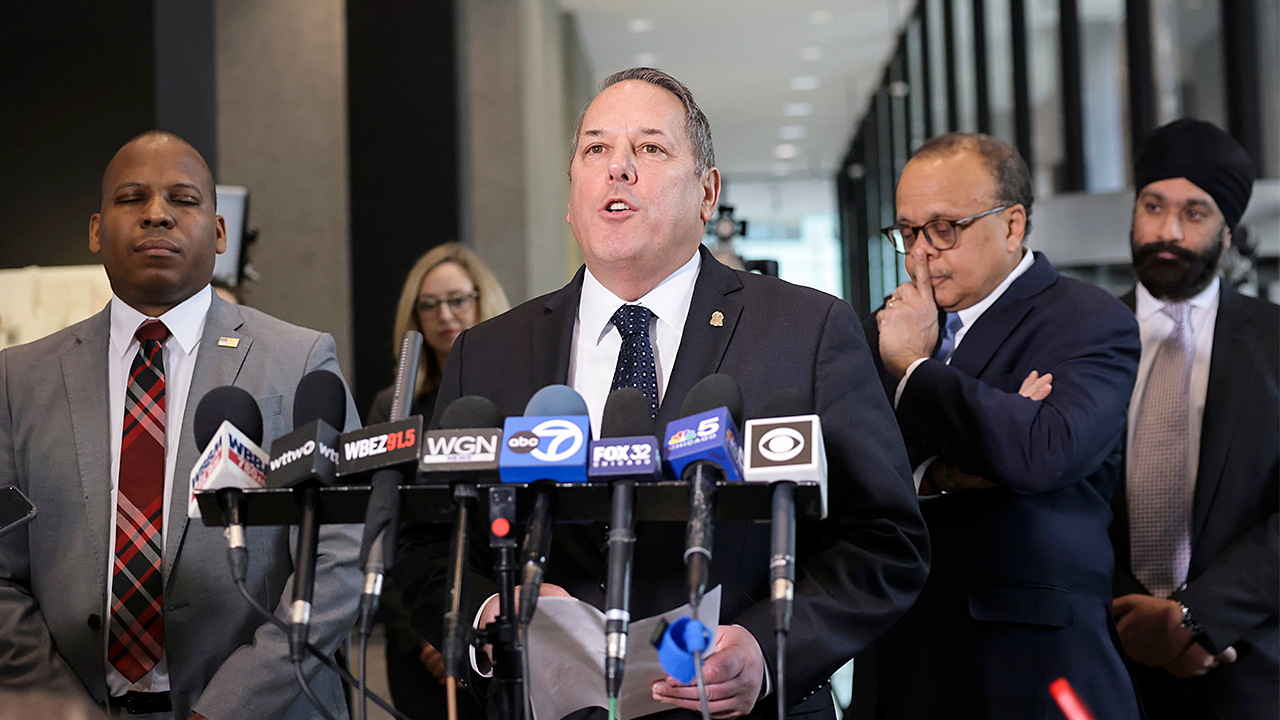
The former chief of the FBI’s Chicago Field Office said he was forced out of his job after he said he was wrongly blamed for the failed prosecution of six people who protested against the Trump administration’s immigration crackdown in the Windy City, according to a lawsuit he filed on Monday.
Douglas DePodesta sued top Justice Department officials, alleging that federal prosecutors pushed «politically motivated prosecutions» against Chicago demonstrators before gathering evidence, according to the lawsuit. He said his superiors notified him that FBI Director Kash Patel pushed for his ouster before he was forced to resign over the summer.
«I saw the writing on the wall,» DePodesta told The Associated Press.
DePodesta accused the top federal prosecutor in Illinois, U.S. Attorney for the Northern District of Illinois Andrew Boutros, of launching a «campaign» within the DOJ to blame him after the so-called «Broadview Six» case fell apart earlier this year.
TRUMP ADMINISTRATION HAS LOST OR ABANDONED HUNDREDS OF LAWSUITS AGAINST ANTI-ICE PROTESTERS, MIGRANTS: REPORT
Hours after the lawsuit was filed, U.S. District Judge April Perry ordered Boutros and three of his assistant attorneys to testify under oath on Nov. 16 in the failed «Broadview Six» case.
«There is more than an adequate factual basis for the Court to pursue an inquiry as to whether willful false statements were made to the court,» Perry wrote in the order.
Federal prosecutors brought charges against roughly 30 protesters during the federal immigration enforcement operation in Chicago, dubbed Operation Midway Blitz, but many of those charges have since been dropped or dismissed.
DePodesta’s lawsuit alleges that Boutros faced pressure from the DOJ throughout the immigration crackdown to slap protesters with felony charges.
«Boutros sent DePodesta emails demanding that DePodesta open FBI investigations into individuals with political views or affiliations in opposition to the Trump administration,» DePodesta’s attorneys wrote in the complaint.
Boutros often pressured assistant U.S. attorneys to press charges «before investigating the objective evidence,» according to the lawsuit, which says he wanted felony charges when assistant U.S. attorneys «favored misdemeanors or no charges at all.»
Last October, Boutros charged six people with conspiring to obstruct a federal officer, a felony, in connection with their actions during a protest at an Immigration and Customs Enforcement facility in the Chicago suburb of Broadview.
Grand jury transcripts later turned over to the court showed that grand jurors twice declined to indict the six people as prosecutors sought charges, according to The Associated Press. Boutros dropped all charges against the six people in May as the court moved to investigate possible prosecutorial misconduct.
Boutros «repeatedly complained to his superiors in Washington» that the failure was DePodesta’s fault «to deflect attention from his own malfeasance,» DePodesta’s attorneys wrote in the lawsuit.
DePodesta denied Boutros’ claims to his superiors at the FBI, and they conceded that he was only being forced out of his job due to the «political pressure Boutros created,» according to the suit.
The complaint alleges Boutros told DOJ leadership that DePodesta and his sister-in-law, Nancy DePodesta, who is an attorney representing one of the six former defendants, «conspired to destroy» the case.
PRITZKER CALLS FOR CRIMINAL INVESTIGATIONS INTO ICE AGENTS OVER ‘MIDWAY BLITZ’ CONDUCT
«There is no one at the FBI who took their oath of office and their ethical and moral responsibilities more seriously than Doug,» Nancy DePodesta said in a statement to The Associated Press, adding that it is «both heartbreaking and shameful that he was forced out of his position based on what appear to be utterly false rumors spread by» Boutros.
In September, one of the prosecutors on the «Broadview Six» case abruptly resigned, writing in a resignation letter that Boutros had «scapegoated and publicly vilified» her. She filed a motion asking the court to treat her as an independent party moving forward.
The former defendants have asked the judge to appoint a special counsel to probe possible misconduct by prosecutors. At an Oct. 1 hearing, Perry ordered further «fact-finding» about communications between Boutros’ office and DOJ leadership.
Boutros has previously denied that politics played a role in charging decisions.
Digital reached out to the DOJ for comment.
The Associated Press contributed to this report.
fbi, politics, justice department, kash patel, us protests, donald trump, immigration
INTERNACIONAL
El juicio por el crimen que conmovió a Uruguay llega a un punto clave: los detalles que estremecieron a los investigadores
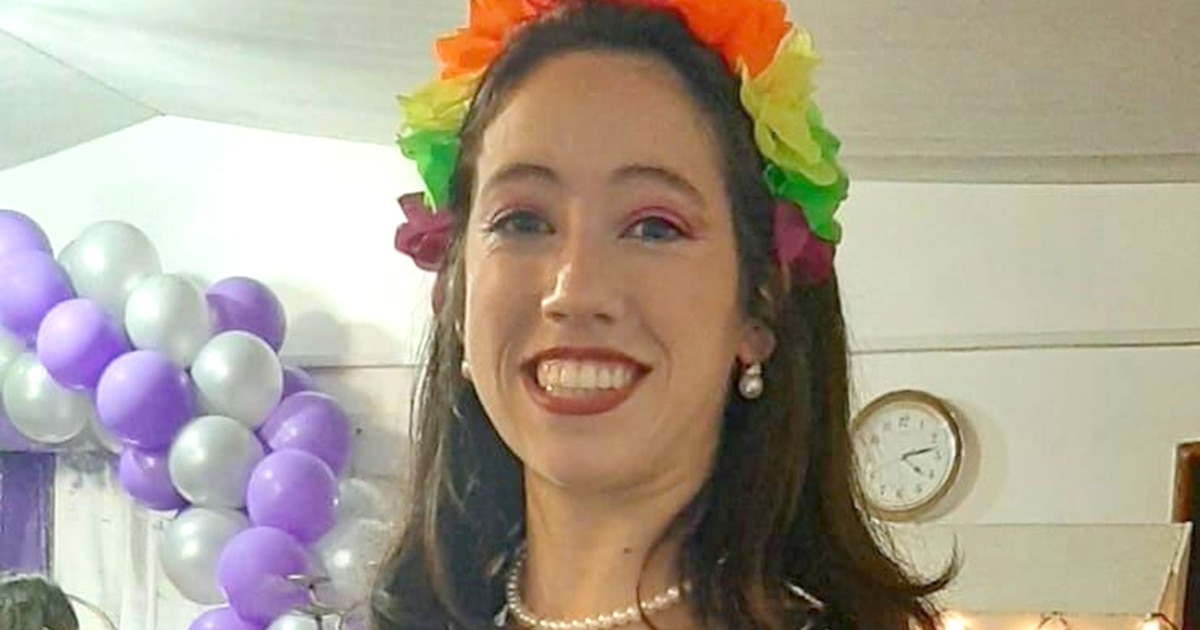
Los investigadores del femicidio de Mariana Rivero –ocurrido hace tres años y que generó una fuerte conmoción en Uruguay– no podían creer lo que se habían encontrado: el cuerpo de la joven de 24 años había aparecido desmembrado, entre bolsas y pertenencias, 19 días después del inicio de su búsqueda. Parecía un “rompecabezas”, dijo el policía que la encontró, y pidió disculpas por la expresión.
A este policía le costaba describir lo que había encontrado, según surge de la reconstrucción de las audiencias judiciales informadas por el diario El País. Los testimonios permitieron conocer la persecución que sufrió Rivero por parte de su novio, Luciano Ledesma, y sus últimos movimientos. La Fiscalía, por su parte, pide 30 años de prisión y 15 años de medidas de seguridad, la máxima pena prevista en el Código Penal uruguayo.
La fiscal Alicia Abreu lo acusa por homicidio muy especialmente agravado por femicidio y vilipendio de cadáver.

El vínculo comenzó como una amistad que continuó como una relación amorosa, que se fue convirtiendo en tóxica de parte de él: la comenzó a vigilar, la extorsionaba, se creó perfiles falsos en redes sociales para hostigarla. Y la terminó matando con un serrucho y haciéndola desaparecer durante días.
Esa toxicidad quedó reflejada en los testimonios de los familiares. La madre de Mariana recordó que durante una visita de su hija a Paysandú (una ciudad del litoral uruguayo) Ledesma quería saber “todo lo que Mariana hacía”. Se comunicaban mediante una videollamada; ella le pidió que la dejara comer.
Cuando Mariana intentaba terminar la relación, recibía insultos y presión de parte de Ledesma, según el relato de amigos.
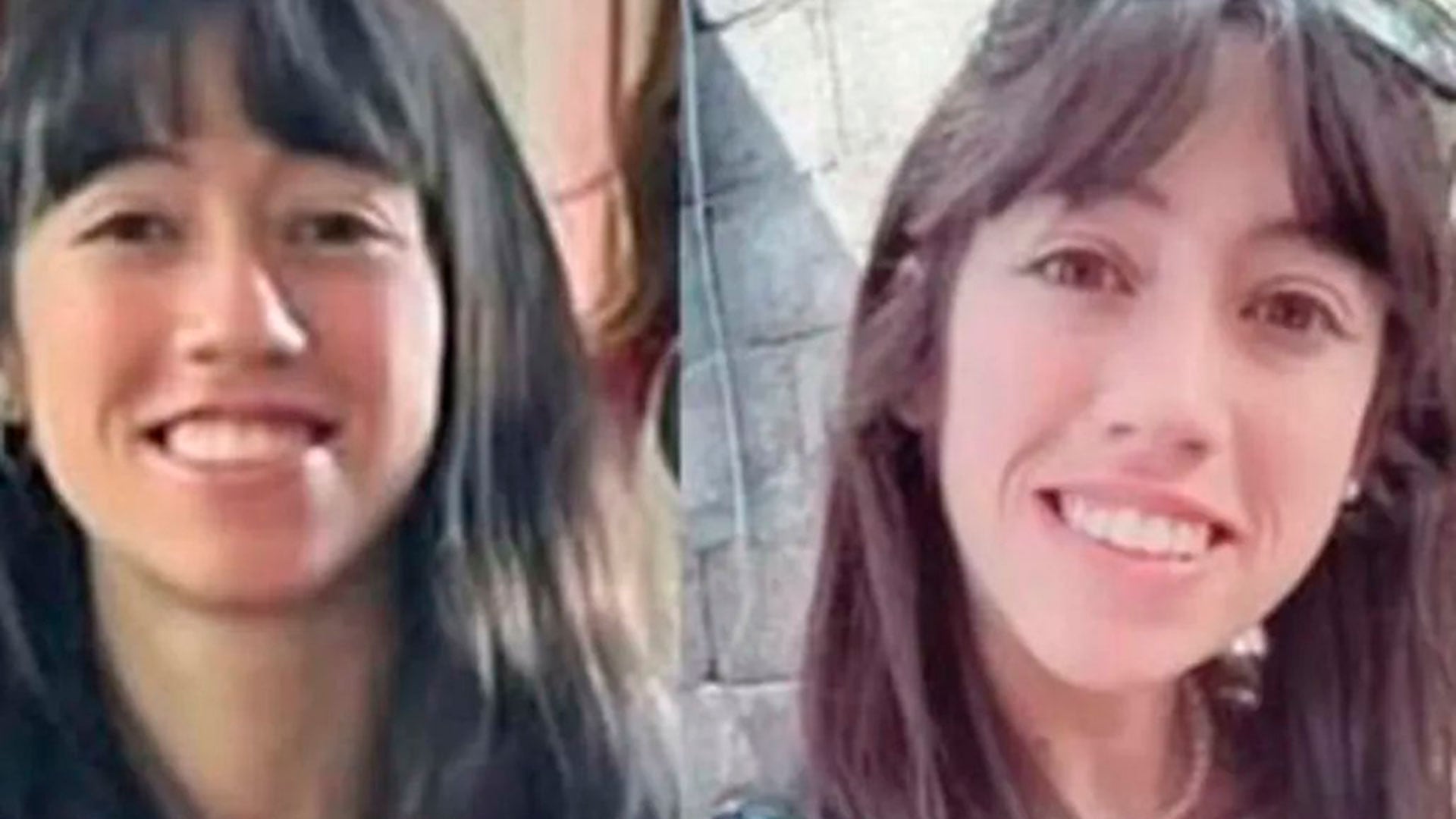
Una amiga de la joven contó que estuvo meses sin poder comunicarse con ella porque su pareja le pidió que cortara los vínculos con otros hombres. También contó que él la amenazó con suicidarse si no continuaban con la relación.
Muchas veces ella lo bloqueaba –según la crónica de El País– pero él se las ingeniaba para comunicarse por otras vías, ya sea a través de correos electrónicos, mensajes de texto y desde otros números, según este testigo.
El hostigamiento llegaba a las redes sociales. Una amiga de la infancia de Mariana relató que la tuvo que ayudar a cambiar sus contraseñas porque sus cuentas fueron intervenidas. También aparecía en lugares en los que ella estaba y luego le escribía para hacérselo saber.
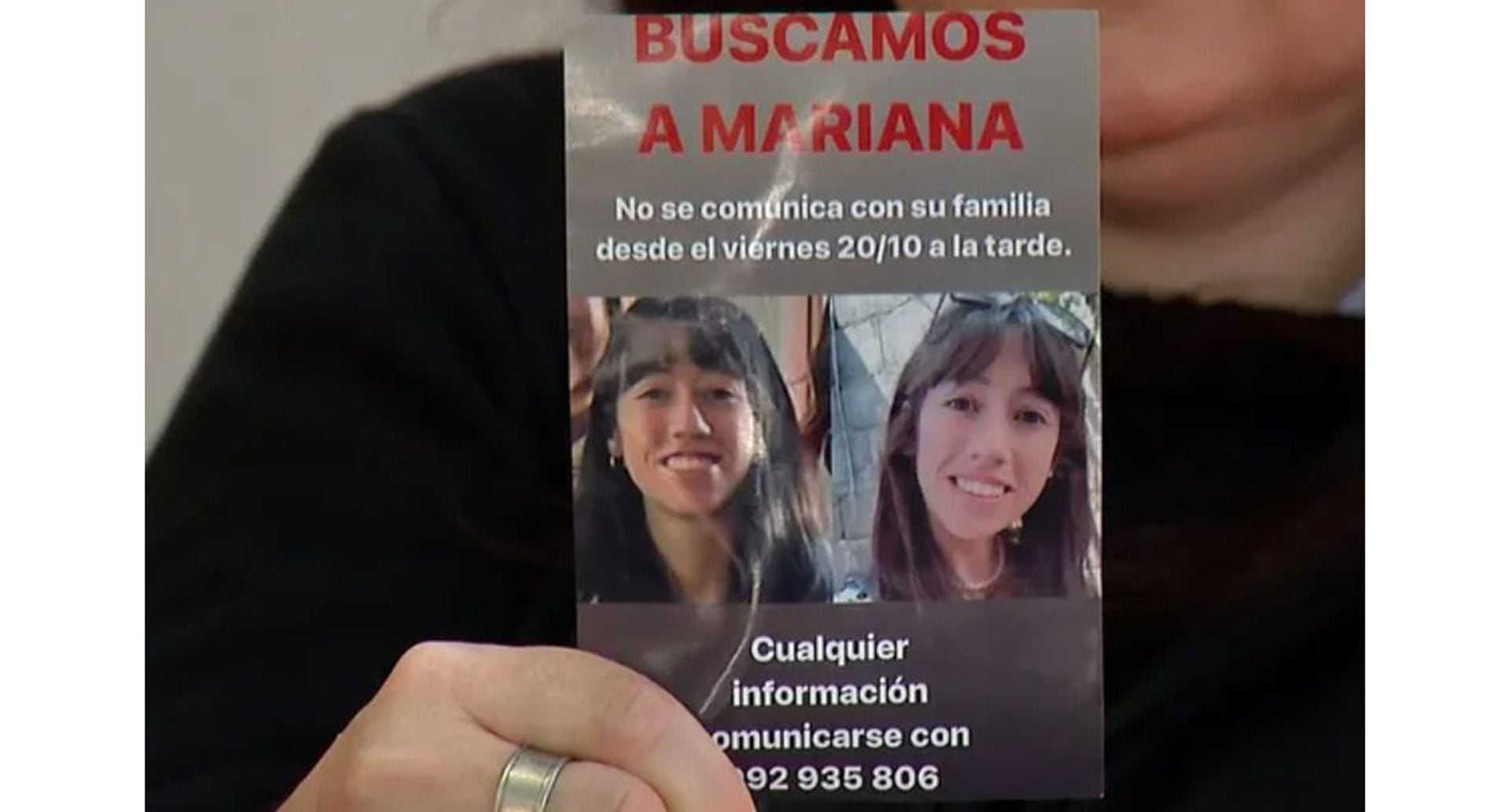
El 20 de octubre de 2023 fue el último día que Mariana fue vista con vida. Ese día había coordinado con Ledesma para que él retirara algunas pertenencias de la casa.
El padre de Mariana recibió un mensaje desde su celular que decía que había salido a comer con una amiga. Y este elemento fue clave para la acusación: los registros de los teléfonos de ella y de Ledesma los ubicaban en el mismo lugar.
Cámaras de videovigilancia, por su parte, registraron movimientos de Ledesma. Hubo desplazamientos hasta la casa de su madre en bicicleta y luego un viaje con una mochila rosada y una valija. Un taxista declaró que había levantado al pasajero con ese equipaje y también un bolso negro.
La Fiscalía vinculó el viaje con las filmaciones y los registros de los teléfonos. En los alegatos detalló que una bolsa aparecía en las imágenes del acusado y fue encontrada posteriormente en el lugar en el que estaba el cuerpo.

Fue el 8 de noviembre –19 días después de la desaparición– que Ledesma indicó dónde estaba el cuerpo. Los policías ingresaron a un monte y removieron la tierra. Cuando vieron lo que había dentro de la bolsa preservaron el lugar. En el lugar había documentos que pertenecieron a Mariana, una funda de su celular y un cuchillo.
El funcionario que hizo la pericia aseguró que el crimen no ocurrió allí. Y su relato se interrumpía al observar las imágenes, según la crónica.
La médica forense, por su parte, describió que las lesiones se produjeron en diferentes momentos. Mariana recibió un golpe en el rostro cuando estaba viva y una lesión de degüello, que la asfixió. El desmembramiento ocurrió después de su muerte.
Las abogadas del acusado argumentaron que la prueba forense no permite identificar al autor. Además, pidieron que algunos problemas psíquicos sean valorados al momento de determinar la pena.
corresponsal: Desde Montevideo

Un jugador tuvo que salir a aclarar que no es el arquero involucrado en la muerte de De Miguel por los comentarios que recibió en redes

He visto Godzilla Minus Zero y es café para muy cafeteros: un espectáculo al que solo pongo una pega

Desde todos los ángulos: el imperdible gol de Lionel Messi en la última victoria de Inter Miami en la MLS

Revelan los detalles secretos del casamiento de Lali Espósito y Pedro Rosemblat: “Hechizos y embrujos”

La SIDE lanzó una convocatoria para sumar espías en pleno recorte del empleo público

El Gobierno afirmó que el Papa León XIV “no dará mensajes políticos” durante su visita

Qué pasó con el Refugio de Eli y por qué hizo enfurecer a Santi Maratea: «Fue un desastre, él nunca más le contestó y le prohibió…»

El secretario de Culto dijo que Milei recibirá al Papa en el aeropuerto y habló de una cadena nacional

El “efecto Lula” sigue pegando en Argentina: los bonos sintieron el impacto, pero el tipo de cambio aguantó

Estrella de Star Trek, Patrick Stewart confesó que fichó por la saga de ciencia ficción por una razón

 CHIMENTOS1 día ago
Qué pasó con el Refugio de Eli y por qué hizo enfurecer a Santi Maratea: «Fue un desastre, él nunca más le contestó y le prohibió…»
- ECONOMIA3 días ago
El “efecto Lula” sigue pegando en Argentina: los bonos sintieron el impacto, pero el tipo de cambio aguantó
- POLITICA2 días ago
Agustín Caulo: “El Gobierno sigue trabajando para que no se politice la visita de León XIV a la Argentina”