INTERNACIONAL
Michigan student confronts El-Sayed over Iran stance in tense exchange: ‘Do you stand with us?’

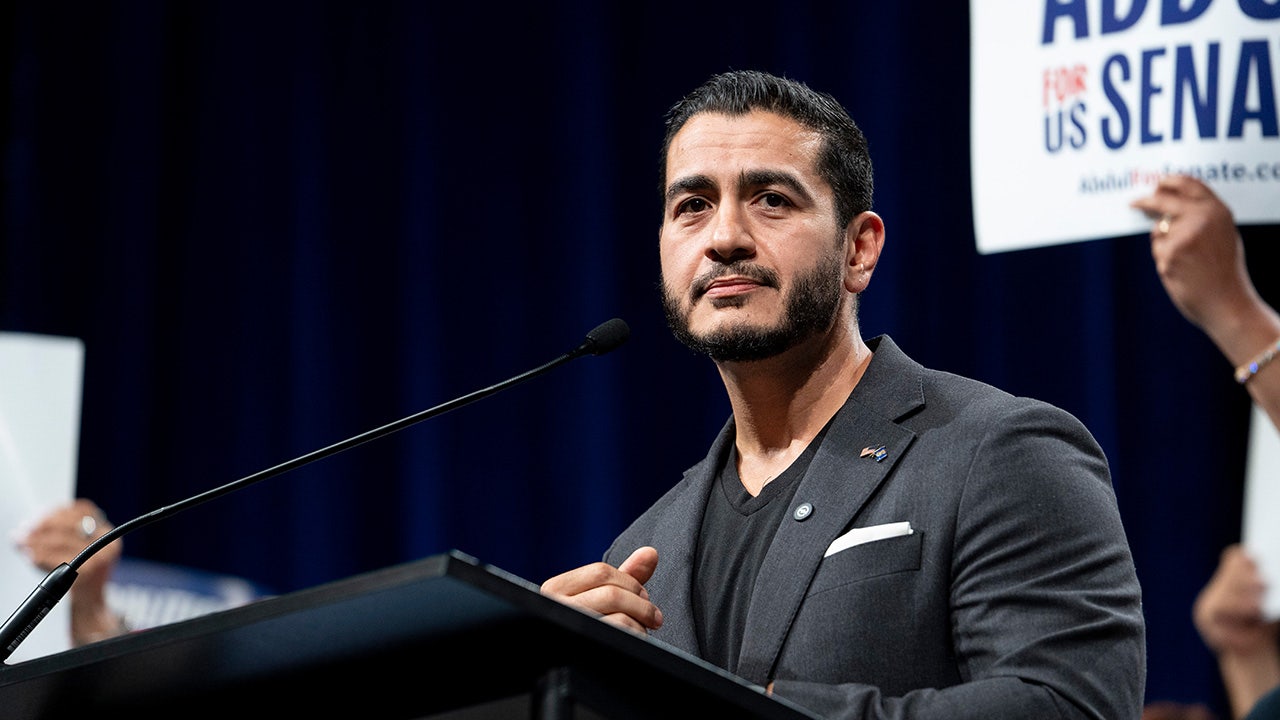
A Michigan student confronted Democratic U.S. Senate candidate Abdul El-Sayed about his position on Iran during a town hall Wednesday, invoking his family’s stated persecution by the Iranian regime before repeatedly pressing the candidate on whether he stood with Iranians opposing the government.
Iman Dashti, who identified himself as Persian, told El-Sayed during a town hall at the University of Michigan that members of his family had suffered under Iran’s government.
«My cousin was hunted in the streets of Iran by the IRGC because her hijab wasn’t on right,» Dashti said. He also alleged that her uncle was sentenced to death and received 50 lashes under the Iranian government.
ABDUL EL-SAYED PROTESTED AGAINST ‘EX-TERRORISTS’ WHO CONVERTED TO CHRISTIANITY, UNEARTHED REPORT REVEALS
Dashti then confronted El-Sayed over leaked audio from earlier this year in which he said he did not want to comment on the death of former Iranian Supreme Leader Ayatollah Ali Khamenei because «there are a lot of people in Dearborn who are sad today.»
«That silence had a gaping hole in our community,» Dashti told El-Sayed Wednesday.
Dashti asked El-Sayed whether he regretted that silence, whether he would renounce people who held vigils supporting Khamenei and whether he stood «unequivocally against the IRGC» and the Islamic Republic of Iran.
El-Sayed responded by arguing that the United States has too often acted as «the world’s policeman» while saying he supported movements for democracy and freedom abroad.
AFTER 6 MONTHS OF WAR, US MUST PREPARE FOR A FUTURE AFTER IRAN’S GOVERNMENT FALLS
«One can disagree with the governance of a foreign country. One can stand in solidarity with freedom and democracy movements,» El-Sayed said.
He went on to reject U.S.-led regime change in Iran.
«I will always stand for and with democratic movements always,» El-Sayed said. «But I also don’t believe that we were in the right to go to war to topple the government of Iran. It was not our responsibility to do. It is the responsibility of the people of Iran to decide what their leadership should look like.»
Dashti pressed him again.
«You stand with us?» he asked.
«I will always stand with movements for freedom and democracy,» El-Sayed responded, before again warning against U.S. involvement in regime change.
«We should not be in the business of regime change,» he said.
El-Sayed added moments later, «I want freedom and democracy for the people of Iran, no question. But I want that to be done by the people of Iran, coming together as a community to decide how to create democratic change in their society.»
Digital reached out to El-Sayed’s campaign for additional comment on the exchange and attempted to reach Dashti through Instagram.
El-Sayed, who won Michigan’s Democratic Senate primary in August, is running against Republican former Rep. Mike Rogers for the seat being vacated by retiring Democratic Sen. Gary Peters. The contest has drawn substantial national attention and spending.
The Iran confrontation was one of several notable exchanges during Wednesday’s «Students vs. Billionaires» town hall at El-Sayed’s alma mater.
KAMALA HARRIS BACKS MAJOR CHANGES TO THE SUPREME COURT, ELECTORAL COLLEGE AHEAD OF POSSIBLE 2028 CAMPAIGN
While discussing public health infrastructure, El-Sayed appeared to make a prediction about the party and the gender that will win the White House in 2028.
«I’m looking forward to working with the next Democratic president when she takes office in 2029,» El-Sayed said, adding that he hoped to work with that administration to modernize the nation’s public health infrastructure.
El-Sayed did not identify whom he had in mind.
His remarks came as former Vice President Kamala Harris, the 2024 Democrat presidential nominee, returned to Michigan to campaign with El-Sayed. Harris has not announced a 2028 presidential campaign.
El-Sayed also criticized President Donald Trump and Vice President JD Vance during the event.
«Donald Trump and JD Vance can’t seem to keep my name out their mouth,» El-Sayed said. «They don’t really know how to say it, though, which is fine, because I believe in teaching opportunities.»
Trump and other national Republicans have repeatedly targeted El-Sayed during the midterm campaign, while El-Sayed has responded by criticizing the president.
«As he noted in his response, Abdul will always stand with movements for freedom and democracy, and he condemns government anti-free speech violence,» Roxie Richner, El-Sayed’s campaign spokesperson, said in a statement to Digital.
«Abdul has also been clear that the United States should not be in the business of spending our tax dollars abroad on regime change wars that take our service members’ lives, waste our tax dollars and raise our prices. He believes American taxpayer dollars are best spent here at home to invest in infrastructure, education and healthcare.»
abdul el sayed, politics, jd vance, kamala harris, ali khamenei, iran








INTERNACIONAL
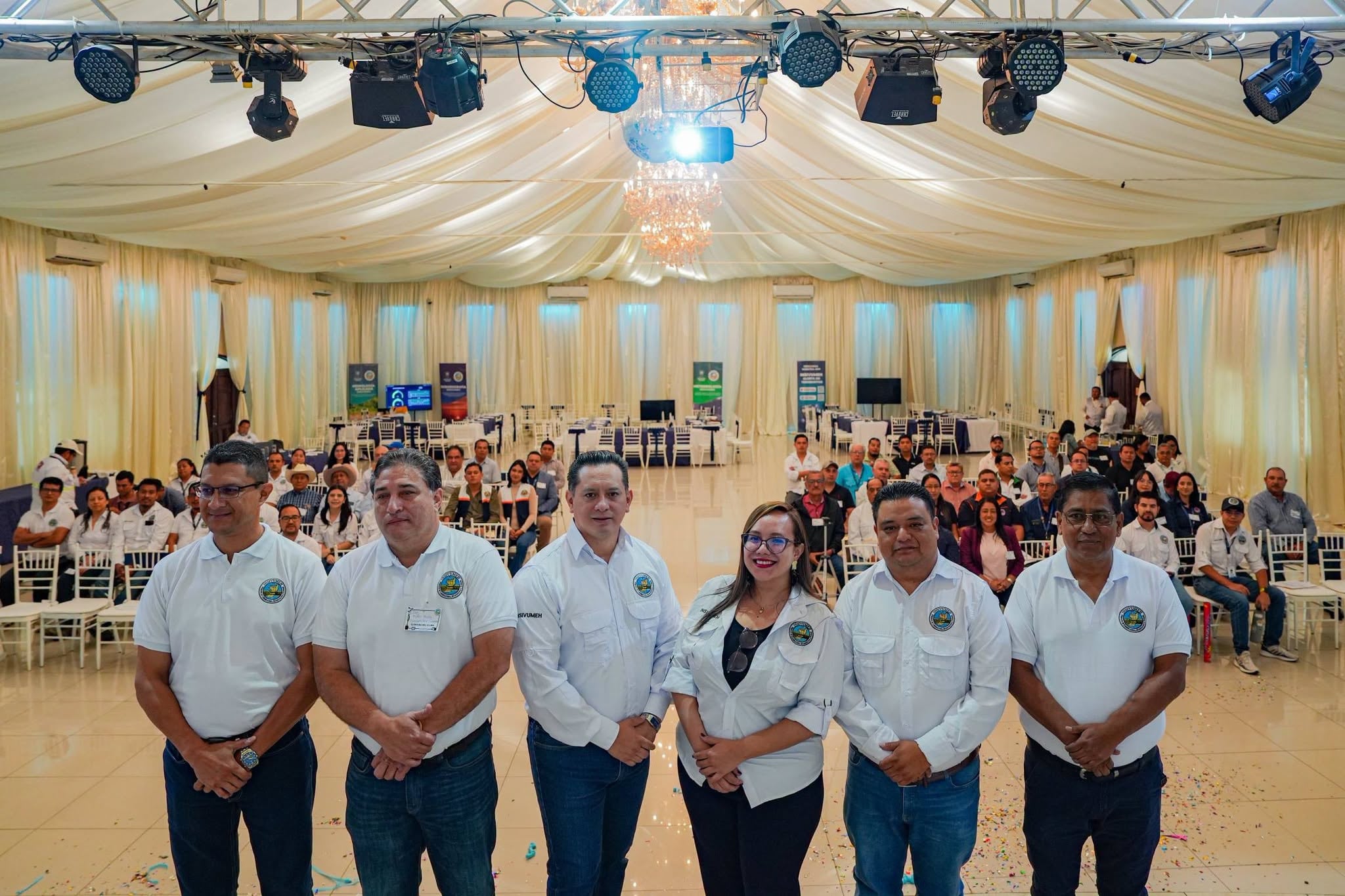
Gobierno de Guatemala a través del Insivumeh lanza en Jutiapa las Clínicas del Clima para enfrentar la sequía prevista hacia 2027
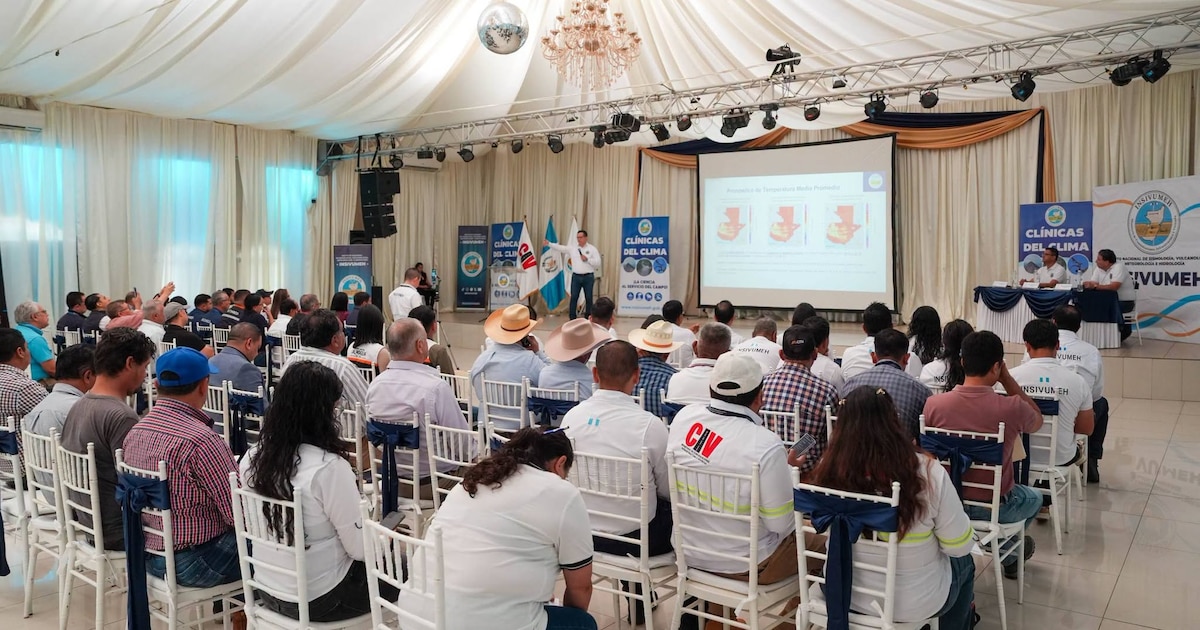
El Instituto Nacional de Sismología, Vulcanología, Meteorología e Hidrología (Insivumeh) lanzó en el departamento de Jutiapa, el programa Clínicas del Clima, una iniciativa para adaptar la información científica a las necesidades de los municipios afectados por la sequía y preparar a sus comunidades ante períodos de menor lluvia y temperaturas más altas previstos hacia 2027.
Cuatro municipios jutiapanecos —Agua Blanca, Asunción Mita, Atescatempa y Santa Catarina Mita— permanecen bajo alerta roja por la sequía. Forman parte de los 15 municipios de la Región Trifinio alcanzados por ese nivel de alerta ante el evento agroclimático.
El programa fue presentado bajo el lema “La ciencia al servicio del campo” y está dirigido a productores agrícolas y ganaderos, autoridades locales, instituciones gubernamentales, universidades, empresas y familias de la región.
Su implementación será gradual en los departamentos que presenten condiciones de alerta, en especial aquellos que puedan pasar de alerta anaranjada a roja.
Jutiapa, el primer territorio de las Clínicas del Clima
La iniciativa se organiza en tres etapas: diagnóstico, laboratorio, y análisis y resultados. El propósito es identificar las demandas de cada territorio, desarrollar productos climáticos específicos y entregarlos a quienes deben tomar decisiones frente a las amenazas naturales.
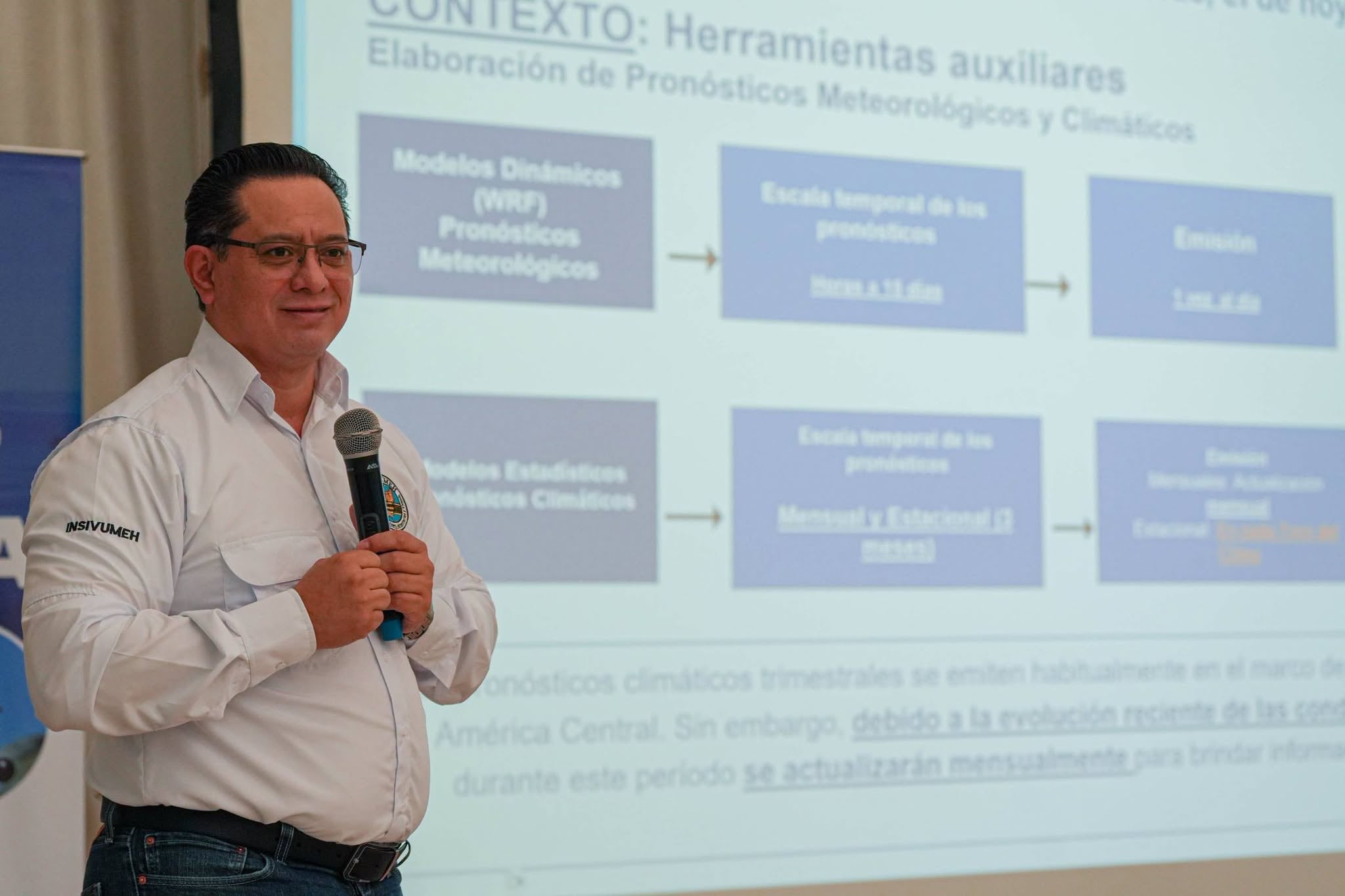
El director general del Insivumeh, Edwin Rojas, explicó que los departamentos no enfrentan los mismos riesgos ni necesitan los mismos datos. La propuesta apunta a reemplazar la información general por instrumentos ajustados a las condiciones de cada región.
“Insivumeh viene al departamento de Jutiapa para diseñar herramientas que permitan afrontar las condiciones de clima que vienen y también poder diseñar estrategias que permitan, a largo plazo, colaborar con el desarrollo de los diferentes sectores”, afirmó Rojas durante la presentación.
La elección de Jutiapa respondió al incremento de su nivel de alerta dentro del sistema escalonado de la Coordinadora Nacional para la Reducción de Desastres, CONRED. El departamento pasó de una advertencia anaranjada a una roja por los efectos de la falta de precipitaciones.
Los equipos técnicos de Geofísica, Hidrología y Meteorología presentaron los productos que ya dispone la institución: el bot Nubis, sistemas de alerta temprana para inundaciones, monitoreo sísmico y volcánico, pronósticos meteorológicos y vigilancia de deslizamientos. Cada recurso podrá adaptarse a las características de los municipios jutiapanecos.
Pozos, calidad del aire y estaciones meteorológicas
Las primeras jornadas de trabajo reunieron a representantes de asociaciones ganaderas, productores, autoridades municipales, equipos técnicos, entidades gubernamentales y universidades. La actividad incluyó tres mesas dedicadas a hidrología, meteorología y sistemas de alerta.
El monitoreo de pozos de agua subterránea fue una de las principales necesidades planteadas ante la escasez de lluvias. Los participantes también solicitaron reforzar el análisis de la calidad del aire por los incendios forestales y los basureros, además de vigilar la calidad del agua en ríos y pozos.
La instalación de estaciones meteorológicas en puntos estratégicos de Jutiapa surgió como otra demanda para obtener registros más precisos sobre las condiciones locales. También se propuso agilizar la difusión de los pronósticos y avisos mediante la radio, para facilitar el acceso de las comunidades a esa información.
En la mesa de geofísica se trataron las amenazas de sismos, volcanes, deslizamientos y tsunamis. Los asistentes manifestaron interés en conocer con mayor detalle el riesgo sísmico del departamento y en utilizar aplicaciones de alerta de terremotos.
El subdirector del Insivumeh, Mario Mejía, señaló que la metodología se basa en un diálogo entre especialistas en hidrología, geología, agronomía, meteorología y sismología con la población. A partir de esos intercambios, los equipos científicos elaborarán recursos que luego presentarán a las autoridades y responsables de la gestión local.
“Construir participativamente esas herramientas basadas en las necesidades de la población” permitirá dar una atención temprana ante los fenómenos climáticos que atraviesa la región suroriental, indicó Mejía.
Los especialistas realizarán además visitas de campo para instalar equipos que fortalezcan el monitoreo y los sistemas de alerta temprana en el departamento. Estas acciones buscarán mejorar la respuesta ante eventos que puedan afectar la actividad agropecuaria y a las familias guatemaltecas.
INSIVUMEH,Clínicas del Clima,Guatemala
INTERNACIONAL
Trump likely ‘smirked’ as ‘crass’ Iranian president lashed out at US in UN speech: expert
NEWYou can now listen to Fox News articles!
Iranian President Masoud Pezeshkian’s sharp rebuke of Washington at the United Nations would have drawn little more than a «smirk» from President Donald Trump, who knows he «holds the cards,» a foreign policy expert told Fox News Digital Wednesday.
The assessment came after Pezeshkian and Trump addressed the U.N. General Assembly in New York from the same podium within 24 hours of one another, trading sharp rhetoric as tensions between Washington and Tehran continue to mount.
«Trump understands he holds the cards, and he may not even have paid much attention to what the Iranian president was saying,» Behnam Ben Taleblu, a senior fellow at the Foundation for Defense of Democracies (FDD), told Fox News Digital.
Pezeshkian accused the United States and Israel of attacking Iran while portraying his country as the victim of aggression.
THE TOP MOMENTS FROM IRAN PRESIDENT’S TENSE VISIT TO US SOIL AS WAR RAGES
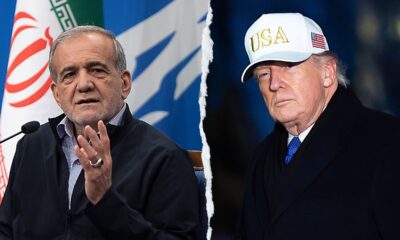
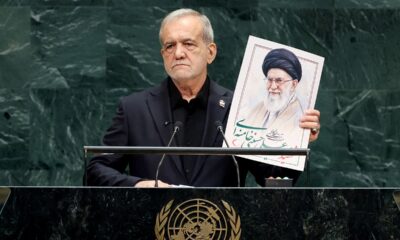
Iranian President Masoud Pezeshkian holds a picture, which he says is from the Minab school that was hit by an airstrike, as he addresses the 81st session of the United Nations General Assembly at U.N. headquarters Sept. 23, 2026, in New York City. (Spencer Platt/Getty Images)
«We have only defended ourselves. We are not terrorists,» Pezeshkian claimed.
«Our innocent people have been the targets of cowardly attacks and aggressions imposed upon our country. America and Israel attacked us.»
«I’m sure that would have drawn a smirk or a smile or a chuckle from the president’s face, seeing that crassness,» Taleblu said, pointing to what he described as a sharp contrast between Pezeshkian’s rhetoric and the Iranian government’s track record.
Pezeshkian’s address came after Trump used the same U.N. stage to defend the U.S. conflict with Iran and warn that Tehran faces a stark choice between reaching a deal and facing further destruction.
«Or do I annihilate the Islamic Republic, and do it quickly, never giving them a chance to kill and destroy people and countries again?» Trump said on Tuesday.
While the rhetoric from both leaders was pointed, Taleblu said their broader diplomatic positions remain largely predictable.
TRUMP TO ZERO-IN ON IRAN NUCLEAR THREAT, GAZA PLAN AND UN OVERHAUL IN WORLD STAGE SPEECH
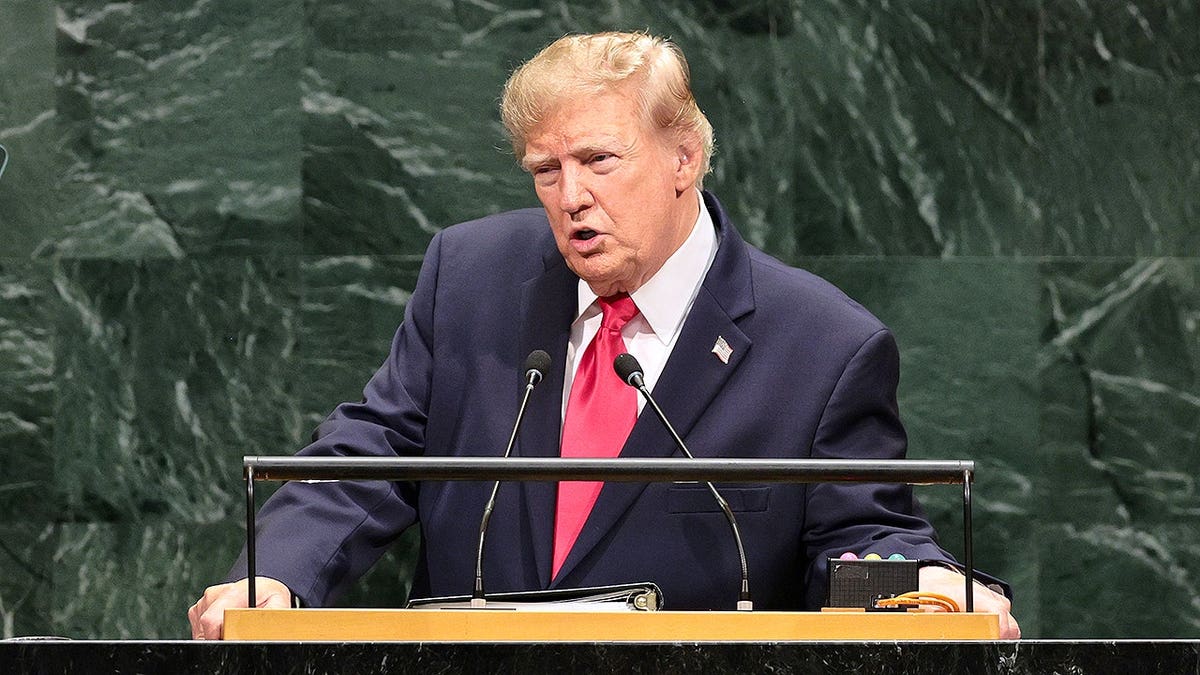
President Donald Trump addresses the UNGA in New York City. (Michael Santiago/Getty Images)
«To a certain degree, both President Trump and President Pezeshkian’s speeches before the U.N. General Assembly’s 81st session were predictable,» Taleblu said.
«Predictable because the status of both countries and their foreign policy toward the other are in a fairly predictable pattern right now.»
Despite the threats and recriminations, the two adversaries also appear to be still testing a diplomatic path behind the scenes.
Trump said Tuesday that U.S. special envoy Steve Witkoff and Jared Kushner spoke with Iranian officials for roughly three hours on the sidelines of the General Assembly and characterized the discussions as productive.
Witkoff later said the talks were conducted through mediators who shuttled between the U.S. and Iranian delegations.
Iranian Foreign Minister Abbas Araghchi also represented Tehran in the discussions, according to reports.
KUSHNER TOUTS UNPRECEDENTED IRAN CONTACTS AS TEHRAN DENIES TRUMP BACKCHANNEL
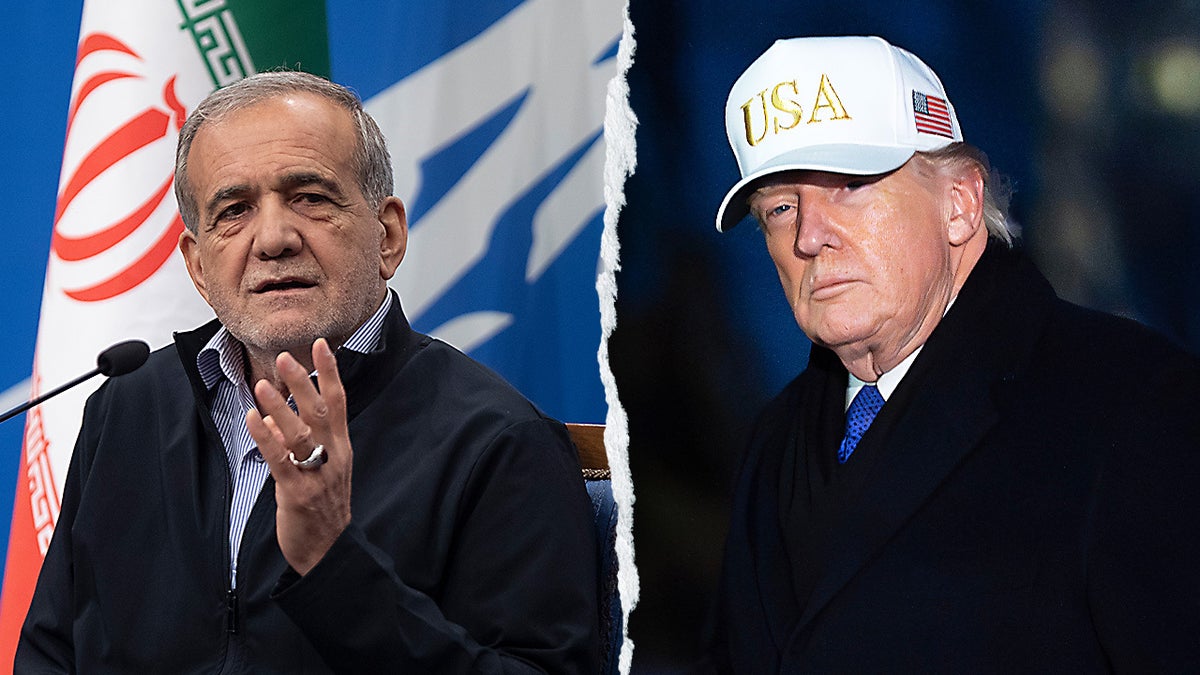
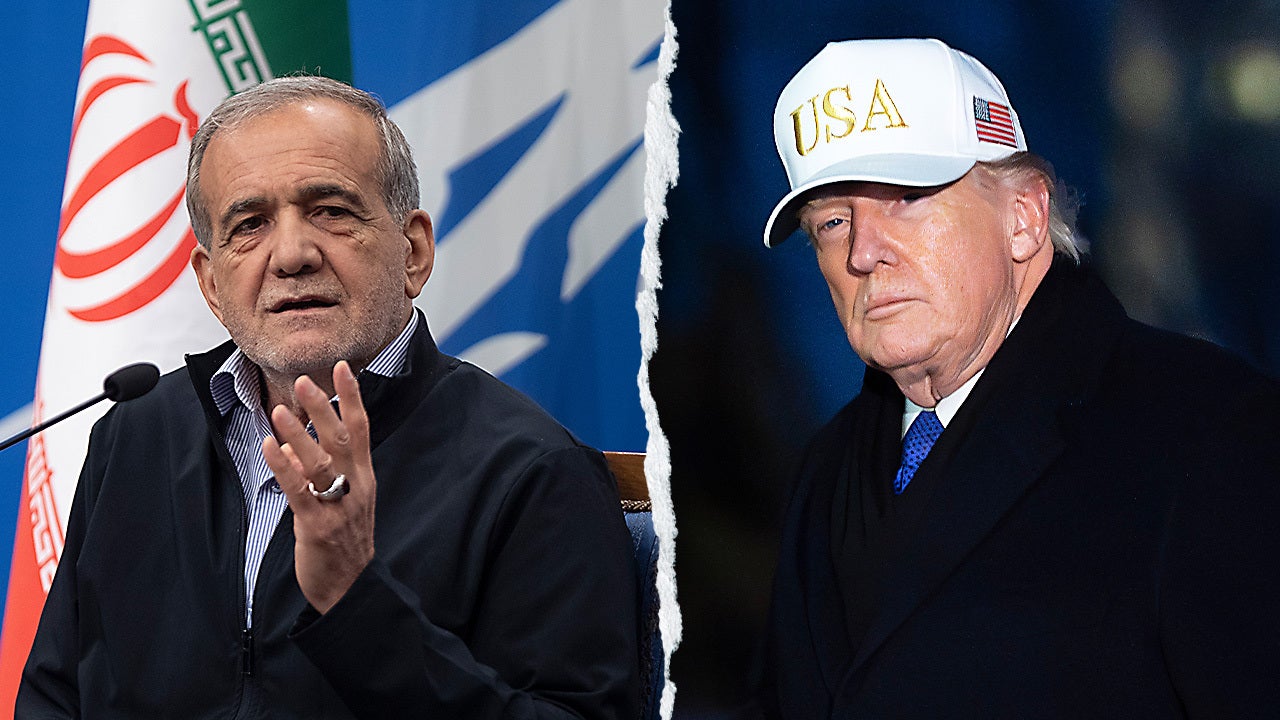
Iranian President Masoud Pezeshkian and President Donald Trump (Majid Saeedi/Getty Images; Jose Luis Magana/AP)
Both sides, Taleblu said, are attempting «to make time a weapon on their side» and «to put the burden of choosing between escalation and engagement on the other.»
But Taleblu went on to characterize Pezeshkian’s broader message as an attempt to cast Iran as a victim through an anti-American, anti-Israel and anti-imperialist framework.
«It seemed to be more of a global South, anti-American, anti-Israeli, kind of anti-colonial, anti-imperialist message that he was looking to kind of paint the Islamic Republic as the victim,» Taleblu said.
«In reality, the long-serving victim in this entire crisis is the Iranian people because of the policies of the Islamic Republic.»
The competing messages — confrontation from the U.N. podium and diplomacy behind the scenes — highlighted the unresolved tensions between Washington and Tehran as officials explore whether negotiations can produce an off-ramp from the conflict.
TRUMP KEEPS FORECASTING AN IRAN DEAL — WHY THE WHITE HOUSE STILL THINKS IT CAN HAPPEN
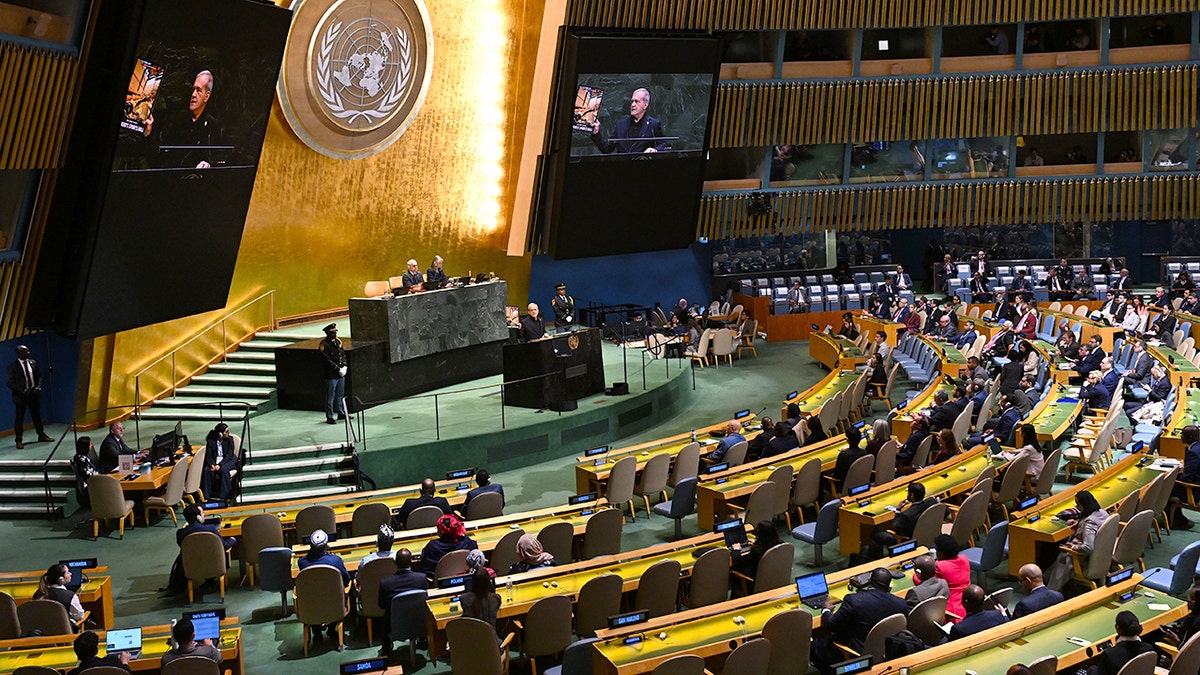
Iranian President Masoud Pezeshkian addresses the 81st session of the United Nations General Assembly at U.N. Headquarters Sept. 23, 2026, in New York City. (Alexi J. Rosenfeld/Getty Images)
«Despite the tough talk at the podium, both sides still feel like they need to signal an interest in talks, even though they’re both trying to use talks to shape an outcome that is more conducive to their interests,» Taleblu said.
Pezeshkian also told the General Assembly that Tehran would not surrender to military pressure while signaling that Iran remained open to diplomacy.
«I think the Iranians are trying to signal an interest in talks, but they may run into a brick wall quite soon if they foot-drag or delay or don’t meaningfully provide any kind of substantive change in their policy,» Taleblu said, citing Iran’s positions on the Persian Gulf, the Strait of Hormuz and its nuclear program.
«Ultimately, if the positions remain the same, the fact that they’re oscillating between shooting and talking doesn’t mean much because the red lines haven’t actually moved.
«Of course, the Trump administration is looking for a political win here.»
world, donald trump, iran, united nations, foreign affairs, geopolitics, middle east
INTERNACIONAL
Costa Rica recibió 171,602 turistas por vía aérea en agosto, un 5.9% menos que hace un año
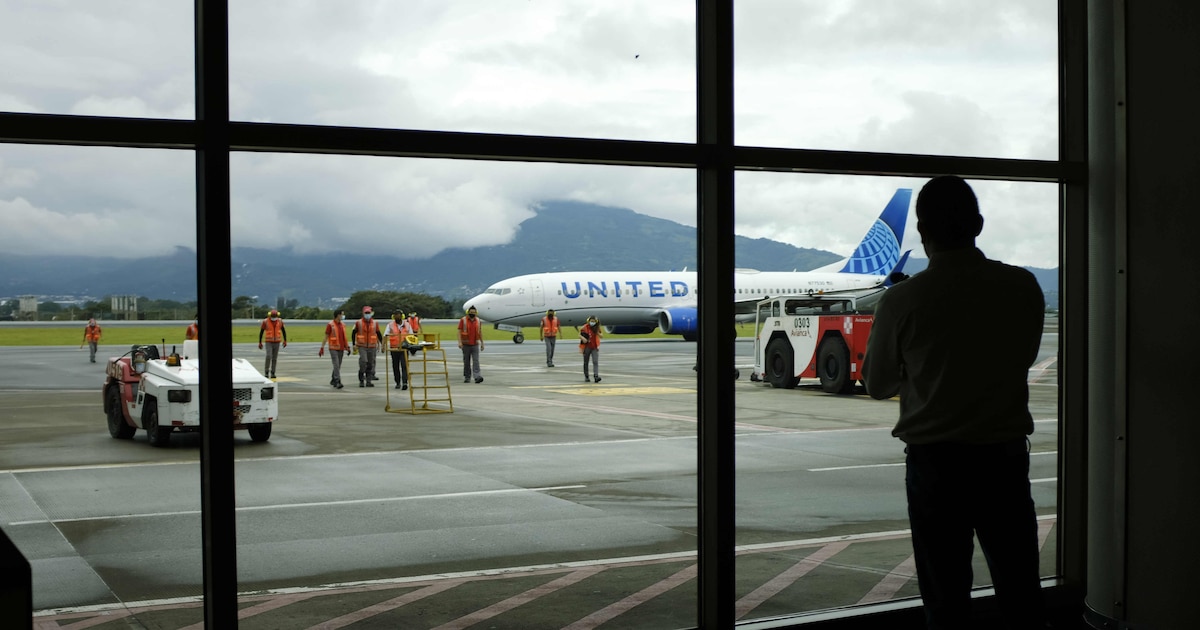
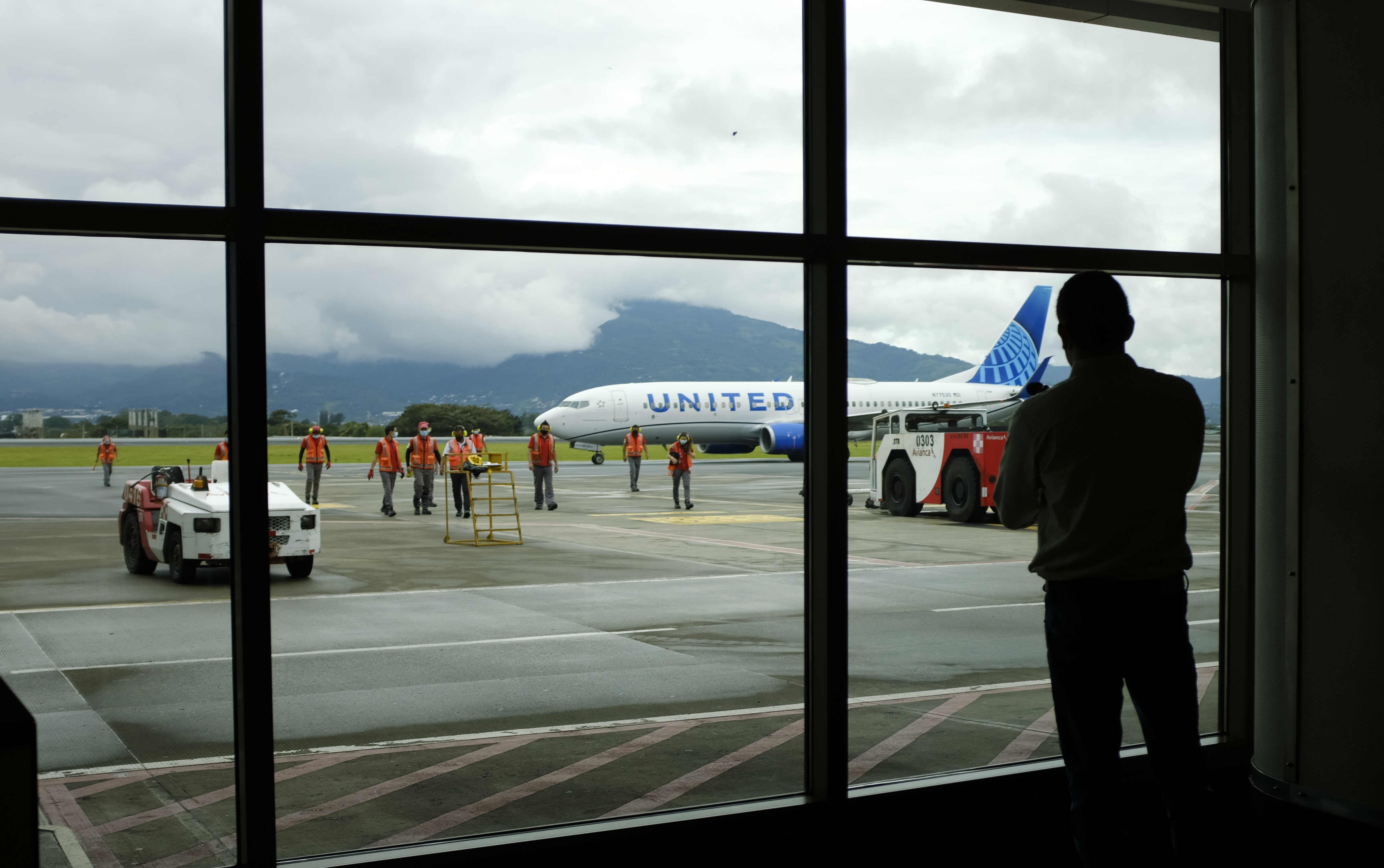
En agosto, Costa Rica recibió 171,602 turistas por vía aérea, una cifra 5.9% inferior a la registrada en el mismo mes de 2025, cuando los arribos superaron los 182,000 visitantes.
La variación coincidió con una disminución de los viajeros procedentes de Estados Unidos, el principal mercado emisor para el país, según los datos del Instituto Costarricense de Turismo (ICT) recogidos por El Observador.
El resultado de agosto fue el segundo descenso interanual dentro del último trimestre. Las llegadas aéreas habían bajado 1.2% en junio, luego crecieron 2.3% en julio y volvieron a registrar una variación negativa al mes siguiente.
El mercado estadounidense aportó 88,198 turistas durante agosto, 13.9% menos que un año antes.
La diferencia representó alrededor de 14,200 visitantes menos en comparación con el mismo mes de 2025 y coincidió con la reducción de los arribos procedentes de América del Norte.
Costa Rica recibió 109,836 turistas desde esa región durante agosto, un descenso de 9.4% interanual. Ocho de cada diez de esos viajeros llegaron desde Estados Unidos, mientras que Canadá y México registraron aumentos en el número de visitantes enviados al país.
Estados Unidos acumuló cuatro meses sin aumentos superiores a 1%
El comportamiento del mercado estadounidense había mostrado variaciones acotadas en los meses anteriores. Las llegadas crecieron 0.2% en mayo y 0.4% en julio, mientras que en junio habían disminuido 3%, una secuencia que antecedió al descenso registrado en agosto.
Pese a los resultados recientes, Estados Unidos mantuvo una variación positiva en el acumulado de los primeros ocho meses del año. Entre enero y agosto, aportó 1,209,160 turistas, un aumento de 2.7% frente al mismo período de 2025.
El ICT indicó que seguirá la evolución de los factores que pueden incidir en los mercados emisores. Entre las variables mencionadas figuran los conflictos geopolíticos, las condiciones económicas de algunos países, las decisiones comerciales de las aerolíneas y un posible efecto posterior al Mundial de Fútbol sobre la planificación de viajes hacia el final del año.
El organismo no definió esos elementos como causas concluyentes del descenso de agosto. La referencia se vinculó con el seguimiento de condiciones que podrían influir en la demanda turística durante los próximos meses.

Canadá y México registraron aumentos, aunque América del Norte cayó 9.4%
Canadá aportó 11,628 visitantes en agosto, un incremento de 19.4% respecto del mismo mes del año anterior. México envió 10,010 turistas, con una suba de 9.8%, de acuerdo con las cifras del ICT.
Los dos mercados también mostraron resultados positivos en el acumulado anual. Las llegadas desde Canadá crecieron 24.8% entre enero y agosto, mientras que los visitantes procedentes de México aumentaron 8.3% durante ese período de acuerdo a datos de El Observador.
Los incrementos de Canadá y México se produjeron en un contexto de caída para el conjunto de América del Norte. El resultado regional estuvo asociado a la disminución observada en Estados Unidos, que concentró la mayor parte de los arribos desde esa zona.
Durante 2025, las llegadas de turistas internacionales por vía aérea a Costa Rica habían crecido 1% frente a 2024, según cifras divulgadas por la Cámara Nacional de Turismo. Ese antecedente se sumó a las variaciones mensuales observadas en lo que va de 2026.

Europa mantuvo un crecimiento de 2.7% y el acumulado anual llegó a 2,025,032 turistas
Las llegadas desde Europa alcanzaron 37,498 viajeros durante agosto, un aumento de 2.7% interanual. La región mantuvo una trayectoria positiva, aunque el ritmo fue menor que el registrado en junio, cuando el crecimiento fue de 12.9%, y en julio, cuando llegó a 9.5%.
Entre enero y agosto, Europa acumuló una expansión de 8.8%. España fue el principal mercado emisor europeo, con 9,665 turistas, seguida por Alemania, con 5,784; Francia, con 5,307; y el Reino Unido, con 4,510 visitantes.
Las variaciones en los cuatro mercados europeos de mayor volumen fueron moderadas. España creció 1.1%, el Reino Unido aumentó 1%, Francia avanzó 0.5% y Alemania registró una suba de 0.1%.
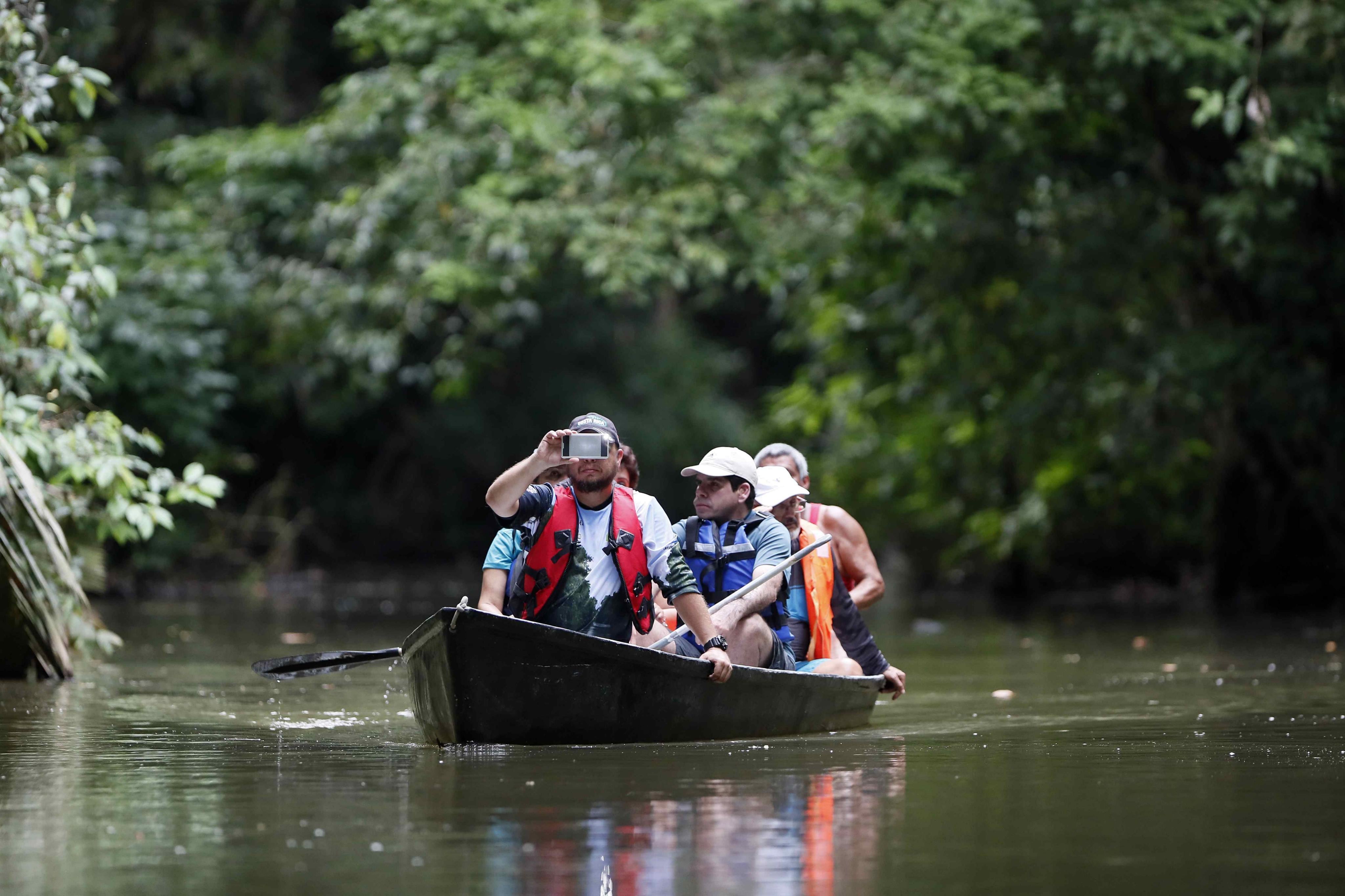
Portugal mostró un incremento de 41.1%, Italia aumentó 20.5% y la República Checa registró una variación positiva de 25.6%. Esos mercados tuvieron cantidades de visitantes inferiores a las registradas por España, Alemania, Francia y el Reino Unido.
Entre enero y agosto, Costa Rica recibió 2,025,032 turistas por vía aérea, una cifra 5.8% superior a la del mismo período de 2025. El resultado acumulado mantuvo una variación positiva a pesar de los descensos interanuales registrados en junio y agosto, con el impulso del primer semestre como parte del desempeño observado.
aeropuerto,aviones,gente,pasajeros,turismo

Detuvieron a un falso mentalista en Santa Fe: le dijo a una mujer que su familia tenía un “maleficio” y la estafó por miles de dólares

Gobierno de Guatemala a través del Insivumeh lanza en Jutiapa las Clínicas del Clima para enfrentar la sequía prevista hacia 2027

Yanina Latorre confirmó el futbolista mega famoso que sale con Viviana Canosa y es una bomba: «Está casado»

El Gobierno ubica a la economía en el centro de la reelección, pero mantiene diferencias sobre el programa

Caso “Chocolate” Rigau: la Legislatura bonaerense archivó en secreto los expedientes y no revelará a la Justicia quiénes designaron a los “ñoquis”

En modo candidato, Hernán Lacunza publicó una foto con su equipo: uno a uno, quiénes lo acompañan

Enrique Szewach: “El apretón monetario afecta a la actividad, al salario real y a los márgenes”

Círculo rojo: conversaciones informales por un acuerdo judicial con los gobernadores y el factor Bullrich

Milei camina por la cornisa: entre el desorden político y el ajuste permanente

La DEA advirtió sobre el avance de la mafia albanesa: la Policía uruguaya vigila el ingreso de ciudadanos de los Balcanes

 POLITICA2 días ago
Radiografía del ajuste: Los flancos más criticados de la gestión de Javier Milei entre recortes sociales, crisis previsional y salarios de miseria
- ECONOMIA2 días ago
El mercado ya detectó cuál es el bono estrella para posicionarse de cara a las elecciones
- ECONOMIA3 días ago
Dólar hoy: a cuánto operan todas las cotizaciones minuto a minuto este lunes 21 de septiembre