INTERNACIONAL
At least 40 rescued, 2 dead as boat capsizes after machete fight near Puerto Rico


NEWYou can now listen to Fox News articles!
At least 40 people were rescued in open waters by the U.S. Coast Guard and two people died after their boat capsized several miles from a tiny, uninhabited island west of Puerto Rico following a fight that involved a machete, officials said on Monday.
Survivors said there was an estimated 60 people aboard, according to the Coast Guard.
The Coast Guard said the makeshift boat capsized late Sunday after a fight in which some people were severely injured by a machete, forcing the group to jump into the water despite not wearing life vests.
Survivors had spent more than 12 hours in the water when someone on a boat passing near Mona Island noticed them at around noon on Monday.
CBP, COAST GUARD INTERCEPT MIGRANT VESSEL HEADING FOR PUERTO RICO; 40 APPREHENDED INCLUDING UZBEK NATIONAL
People sitting on and gathered in the water besides a capsized vessel off Mona Island, Puerto Rico, on September 28, 2026. (U.S. Coast Guard Sector San Juan/Handout via REUTERS)
The person alerted authorities and helped rescue four people at that moment.
Rescue efforts were still ongoing as of Monday evening.
The Coast Guard said it was not immediately known where the people who were on the capsized boat were from.
Migrants fleeing poverty and violence have long traveled from Hispaniola, the island shared by Haiti and the Dominican Republic, to Puerto Rico and other islands, moving through the Mona Passage.

The U.S. Coast Guard and other agencies responding to the capsized vessel off Mona Island, Puerto Rico, on September 28, 2026. (U.S. Coast Guard Sector San Juan/Handout via REUTERS)
Many of these migrants navigate the passage on makeshift boats that can capsize in treacherous waters.
This incident marked only the latest deadly voyage.
In June 2022, 11 Haitian women and girls were buried in Puerto Rico after their grossly overloaded boat capsized in open waters northwest of the U.S. territory.
COAST GUARD OPENS FIRE ON BOAT SMUGGLING 25 CHINESE NATIONALS NEAR FLORIDA AFTER IT REFUSED TO STOP

Survivors said there was an estimated 60 people aboard. (iStock)
Last week, police in the Turks and Caicos Islands detained a makeshift vessel carrying 60 Haitian migrants.
In June, 240 Haitian migrants were detained near the the Turks and Caicos Islands.
Gang violence has displaced a record 1.5 million people across Haiti, where more than 3,000 people were reportedly killed between January and June, according to U.N. data.
Armed men control an estimated 70% of Port-au-Prince and portions of land in Haiti’s central region and beyond.
The Associated Press contributed to this report.
world, us puerto rico, americas, coast guard, us










INTERNACIONAL
Could Trump revoke Ilhan Omar’s citizenship for alleged brother marriage? Ex federal prosecutor breaks it down
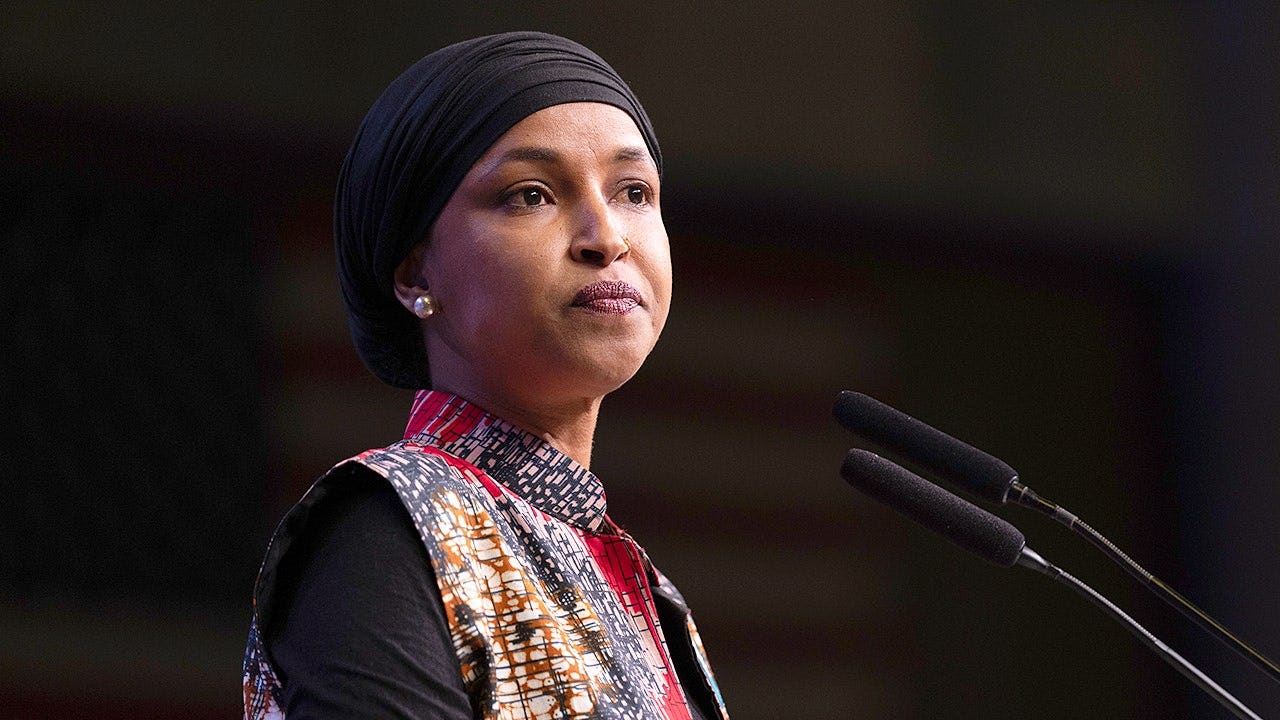
The Trump administration’s recent effort to bring the law down on Rep. Ilhan Omar could go as far as seeking to strip the Minnesota congresswoman of her citizenship for alleged immigration fraud. But a criminal investigation is unlikely to yield results the president wants, according to a former federal prosecutor.
Michael Wildes, an immigration attorney, told Digital that investigators face a «very high bar» to build a case against Omar after White House border czar Tom Homan confirmed the Department of Homeland Security (DHS) is conducting a «criminal» investigation against the progressive squad member.
It all stems from claims that Omar married her brother to gain U.S. citizenship, which she has repeatedly denied.
President Donald Trump has a longstanding feud with Omar going back to when she was first elected in the middle of his first term, and quickly became one of his most vocal critics in Congress. Trump has repeatedly called for Omar to be sent back to Somalia because of her alleged fraudulent activity.
The Trump administration continues to ramp up efforts to denaturalize and deport individuals accused of immigration fraud. And Vice President JD Vance claimed earlier this year that the Department of Justice is investigating Omar for alleged fraud and immigration violations.
But questions remain over what a potential prosecution and denaturalization case against the Somali-born lawmaker would require.
Wildes said that investigators would need to prove beyond reasonable doubt that Omar knowingly entered her marriage — to a man critics allege is her brother — for the sole purpose of evading U.S. immigration laws.
DOJ MOVES TO STRIP CITIZENSHIP FROM 17 PEOPLE ACCUSED OF HIDING DISTURBING CRIMES
«In order to establish a successful marriage fraud case, the government would have to prove beyond a reasonable doubt… that the defendant knowingly entered into a marriage with the primary purpose to evade immigration laws and get a benefit,» Wildes said.
Wildes noted that even if Omar and her husband, Ahmed Nur Said Elmi, decided after getting married that their partnership could be a scheme for Elmi to fast pass America’s immigration process, this would not be considered marriage fraud in court.
He continued, «Those are very high bars and thresholds that they would have to surmount. The immigration benefit cannot be a byproduct, or secondary consideration. This is not deemed to be illegal.»
If evidence was presented to prove Omar and Elmi committed marriage fraud, the Minnesota Democrat could face up to five years in jail, a maximum fine of $250,000, or both.
Wildes also pointed out that there are statutes of limitation that could hinder a potential prosecution and make it more difficult to prosecute Omar for marriage fraud, as that marriage was in 2009. But there is still a pathway for Omar to be denaturalized, which Homan described as a «very serious process» while discussing the investigation into the congresswoman.
«The question is: Do they have it factually, and is it the right thing to do?» Wildes said.
«The question is whether or not inadvertences were made not purposefully and whether or not it’s over the top to then denaturalize somebody,» he said. «We’re talking about taking away a benefit and then banishing them from the United States.»
FORMER USCIS OFFICIAL, ACCOMPLICE CHARGED IN ALLEGED $960K CITIZENSHIP BRIBERY SCHEME
For Omar to be denaturalized, the process would have to be related to allegations that she falsified information when obtaining her own citizenship in 2000. Omar claims she was granted automatic citizenship because she was a minor when her father was naturalized.
Congressional records state Omar became a citizen at age 17, but speculation that she was older at the time of her naturalization began after former Minnesota congressional candidate AJ Kern accused Omar’s birth year of being revised on the Minnesota Legislative Reference Library website.
This caused allegations to circulate on social media that she was not a minor at the time, which if ever proven true, could lead to her denaturalization. Even if her father lied in his citizenship paperwork, this could also potentially lead to Omar being stripped of her citizenship.
Wildes also explained that the government makes a «case-by-case» decision when it comes to pursuing denaturalization cases. He also pointed out the relevancy of an intentional lie as opposed to a mistake.
«If the government were to prosecute for document fraud, we would also want to know whether or not she was represented by counsel, and if there were simple mistakes on her application or inadvertences that may be deemed to be fraudulent,» Wildes said.
«Whether or not [these] things are truthful, hypothesized, or can be backed up in fact, will play heavily in that prosecution.»
Homan didn’t answer whether the federal government has evidence that Omar committed either marriage or immigration fraud, while also declining to go into detail into what particularly DHS is investigating Omar for.
Omar told Digital just last week that she has not been contacted by DHS or made aware of any ongoing investigation into her marriage or immigration status, saying she isn’t worried about it because «the right wing always had this s — going.»
‘SQUAD’ DEM DISMISSES FRAUD PROBE SPECULATION AFTER $29M NET-WORTH DROP
But Wildes said her being unaware that she is being investigated is not unusual and doesn’t invalidate Homan’s confirmation of a «criminal» investigation against her.
«The Congresswoman’s not being aware doesn’t change anything,» Wildes said. «There is no obligation for the government to show their hand and they’re going to want to make sure that they have a good prosecution and they don’t give anything up in the interim because of the politics that this presents as well.»
«I haven’t seen anything that I think is worthy of a prosecution,» Wildes said. «This is a member of Congress. It may not be your politics, but we have to also make sure that we engage in prosecutions properly and not frivolously. «
Neither Omar nor DHS responded to requests for comment.
ilhan omar, politics, homeland security, immigration, investigations, tom homan, naturalization
INTERNACIONAL
Elecciones en Brasil: por qué el voto de las mujeres puede ser clave para Lula en un eventual balotaje
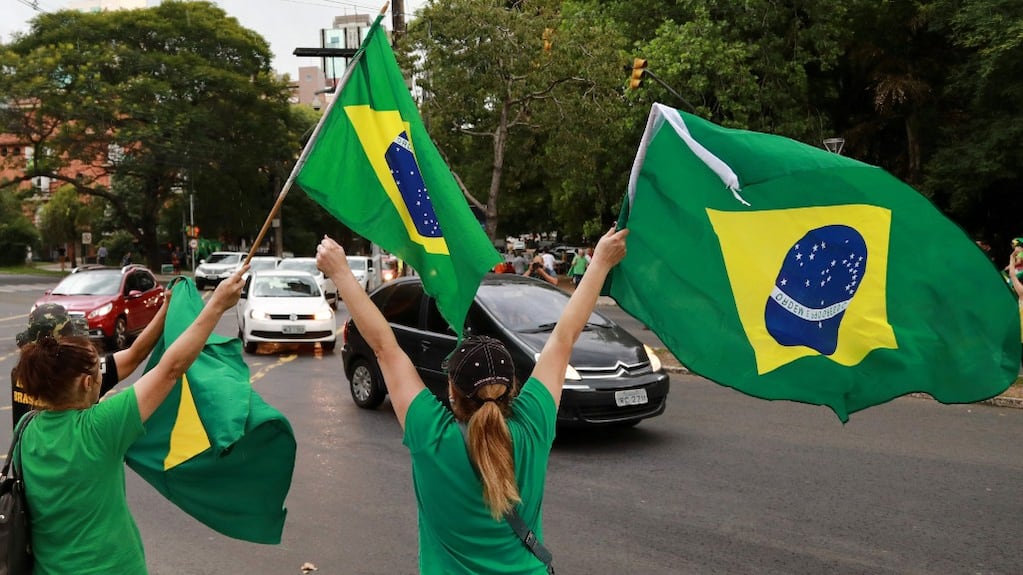
A cinco días de las reñidas y polarizadas elecciones presidenciales en Brasil, el presidente Luiz Lula da Silva tiene un motivo para sonreir: por primera vez en mucho tiempo tomó una ventaja de nueve puntos sobre su principal rival, el ultraderechista Flávio Bolsonaro, en el vital voto femenino.
Se trata de un segmento fundamental a la hora de la elección. No solo son más en número que los hombres (alrededor de nueve milones). También son las que menos se abstienen.
Según el último sondeo de la encuestadora Quaest, Lula le lleva hoy cinco puntos a Bolsonaro (39% a 34%) de cara a las presidenciales del domingo, pero ambos están empatados en 42% con vistas a un eventual balotaje previsto para el 25 de octubre si ninguno de los dos postulantes alcanza el 50% más uno de los votos.
El resto de candidatos no supera el 4% de respaldo para la primera vuelta, mientras que los indecisos bajaron al 5%. La abstención rondaría un 10%.
En ese escenario, el voto de la mujer empieza a tener un peso fundamental para la segunda vuelta.
“El voto femenino puede decidir la elección. En una disputa tan apretada, una diferencia persistente entre las mujeres puede compensar ventajas del adversario en otros grupos. La cuestión decisiva ahora es saber si Lula conseguirá mantener esa preferencia hasta las urnas y si Flávio conseguirá reducir el rechazo que genera” en ese segmento de la población, dijo a TN la analista política brasileña Deysi Cioccari, profesora del Instituto Brasileño de Mercados de Capitales (Ibmec) de San Pablo.
Por qué Lula seduce más al electorado femenino
El último sondeo mostró una aceleración de Lula en el voto femenino. Pasó de un empate técnico a una ventaja de nueve puntos sobre el senador e hijo del expresidente Jair Bolsonaro, condenado a 27 años de prisión por golpismo y que cumple arresto domiciliario.
Hoy Lula recoge el 46% de las intenciones de voto entre las mujeres contra el 37% de Bolsonaro, en un hipotético balotaje, según la encuesta de Quaest. El postulante de la derecha dura empareja la ecuación con el voto masculino, el electorado religioso y las Fuerzas Armadas y de seguridad.
“La ventaja de Lula entre las mujeres puede ser leída por dos caminos. El primero es la evaluación de cuestiones concretas, como renta, costo de vida, cuidado de la familia y seguridad. Lula no entregó lo que prometió. La percepción del Estado no es positiva”, dijo Ciocarri.
En ese marco, la reciente prohibición gubernamental a las apuestas online generó una fuerte adhesión entre las madres brasileñas cuyos hijos adolescentes han sido víctimas del juego. Son muchísimos los casos de jóvenes endeudados por su adicción a las apuestas en internet, como sucede también en la Argentina.
Este lunes, Lula sancionó una ley que busca impulsar la profesionalización del fútbol femenino e incentivar la igualdad entre mujeres y hombres en este deporte. No fue casualidad.
En la vereda de enfrente, Flávio Bolsonaro genera un mayor desaprobación entre las mujeres.
Silva
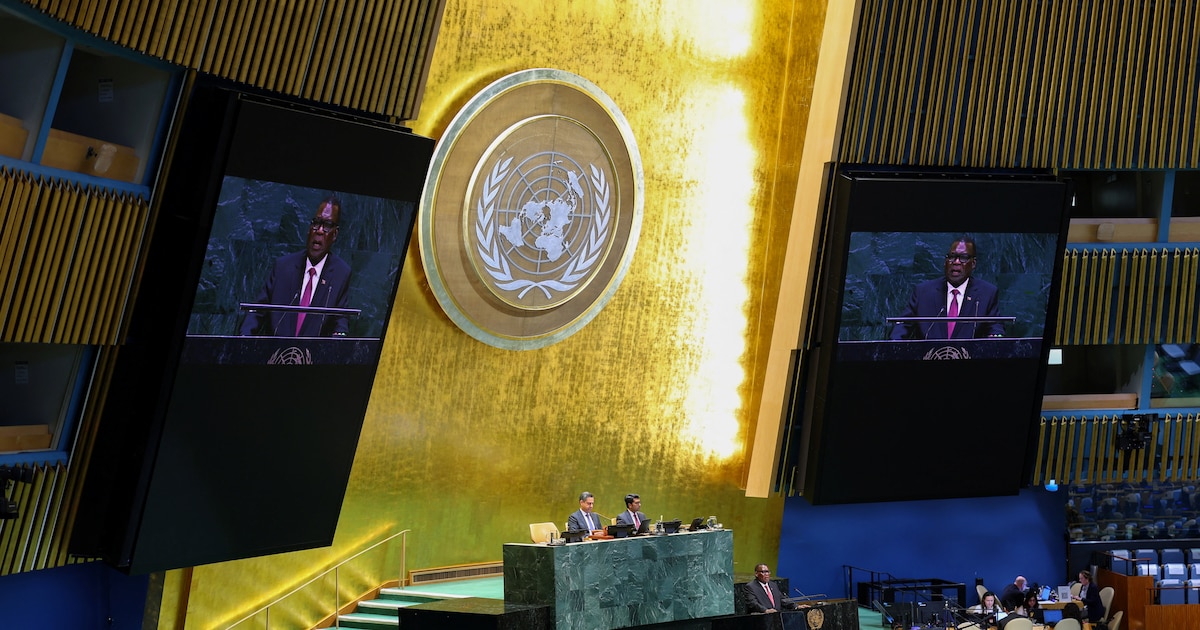
Entre el 20 y el 24 de septiembre pasado se llevó a cabo la 81.ª Asamblea General de las Naciones Unidas, una semana intensa de reuniones, discursos y manifiestos que, como cada año, convirtió a Nueva York en el epicentro de la diplomacia mundial. Es la llamada semana de la UNGA, y deja una pregunta que merece ser formulada: ¿subirse al podio hoy es suficiente?
¿Un discurso de quince minutos puede resolver, o siquiera transformar, los problemas de fondo de los países miembros? Escuchamos intervenciones interesantes, elaboradas y cuidadosamente estructuradas, pronunciadas en ocasiones ante un hemiciclo prácticamente vacío, mientras en distintas regiones del planeta continúan conflictos, guerras y crisis que siguen esperando soluciones concretas.
Entre los participantes estuvo Luiz Inácio Lula da Silva, quien sostuvo que Brasil “no cabe en el patio trasero de nadie”, una frase que resume su crítica a determinadas formas de la diplomacia tradicional y a la manera en que las grandes potencias han entendido históricamente sus relaciones con América Latina.
Luego llegó el turno del presidente de Estados Unidos, Donald Trump, cuyo discurso giró alrededor de la idea de que “América está de vuelta” y de la reafirmación del liderazgo estadounidense en la lucha contra el crimen organizado transnacional, a través del denominado “Shields of America” o Escudo de las Américas.
Sin embargo, me atrevería a decir que una de las reuniones de mayor impacto para nuestra región ocurrió precisamente en paralelo a la UNGA. No fue simplemente otro discurso bien elaborado frente al conocido podio de fondo verde. Fueron 14 países, junto con Estados Unidos como anfitrión, los que ampliaron el denominado Escudo de las Américas, incorporando nuevos actores con una visión alineada y un compromiso que da continuidad a lo discutido en marzo pasado.
Allí se pusieron sobre la mesa compromisos relacionados con seguridad económica, cooperación contra el crimen organizado y coordinación integral entre las naciones. Este tipo de alianzas bilaterales o multilaterales específicas —ese “one-to-one” que permite pasar rápidamente de las palabras a la acción— puede terminar teniendo mayor incidencia práctica que las tradicionales alocuciones en las que se expone un diagnóstico, se formulan buenas intenciones y se presentan resultados parciales, sin que necesariamente exista un mecanismo inmediato para convertirlos en resultados tangibles.
Javier Milei tampoco sorprendió demasiado. Mantuvo su conocido discurso crítico de la izquierda y defendió las correcciones y transformaciones implementadas durante su gobierno, presentándolas como parte de un nuevo enfoque para Argentina y para la región.
Por su parte, Keiko Fujimori, en su primera Asamblea en calidad de presidenta del Perú, aprovechó el escenario para proyectar a su país como un destino amigable para la inversión y transmitir un mensaje dirigido especialmente a quienes buscan oportunidades económicas en América Latina.
Capítulo aparte merece Delcy Rodríguez, presidenta encargada de Venezuela. Su presencia permitió observar una transformación particularmente llamativa en el discurso político venezolano. Rodríguez ya había ocupado ese mismo escenario en 2019, desde una posición ideológica muy diferente. Siete años después, su intervención reflejó el nuevo escenario político venezolano y, además, tuvo un elemento adicional de alto simbolismo: su encuentro presencial con el presidente Trump, una imagen inédita que recorrió rápidamente los medios y las redes sociales, acompañada incluso por un gesto de victoria.
El caso de Xi Jinping, presidente de China, merece una lectura diferente. Su ausencia de Nueva York coincidió con una agenda diplomática desarrollada en Washington, evitando así el congestionado escenario neoyorquino y priorizando el contacto directo con su homólogo estadounidense.
Y así transcurrieron los cinco días de la 81.ª UNGA. Una edición que, en muchos aspectos, guardó sorprendentes similitudes con las ochenta anteriores, a pesar de que el mundo actual es sustancialmente diferente: más globalizado, más interdependiente y, al mismo tiempo, más fragmentado en términos geopolíticos.
Pero esta Asamblea tuvo un ingrediente adicional que se respiró especialmente en los pasillos: la próxima elección del secretario general de las Naciones Unidas. Algunos aspirantes han desistido ante la falta de apoyos; otros continúan buscando respaldos, mientras algunos posibles candidatos podrían intentar aparecer como outsiders en el último momento.
Para las Américas, quizá el verdadero desafío de esta edición no consistía en determinar quién lograba convocar más asistentes o quién pronunciaba el discurso más elaborado frente al famoso podio verde. La pregunta fundamental era otra: ¿quién se sentaría en la mesa del Escudo de las Américas y quién quedaría afuera?
Porque la diplomacia del siglo XXI parece exigir algo más que discursos. Exige acuerdos, coordinación, compromisos verificables y resultados.
Ahora habrá que esperar hasta la UNGA número 82 para comprobar cuánto de lo anunciado durante esta semana se convirtió en realidad. Será entonces cuando podamos determinar si las grandes declaraciones produjeron resultados tangibles, o si volveremos a escuchar los mismos diagnósticos, quizá con otras palabras y, probablemente, con otros protagonistas.
“Al final, la historia no suele recordar cuánto duró un discurso. Recuerda lo que ocurrió después de que terminó”.
* El autor es empresario y comentarista político ecuatoriano. Fue presidente de BanEcuador.
International,Relations,Diplomacy / Foreign Policy,North America

Could Trump revoke Ilhan Omar’s citizenship for alleged brother marriage? Ex federal prosecutor breaks it down

¿De quién estaba divorciado el Indio Solari? El inesperado dato que apareció en la sucesión y abre una incógnita millonaria sobre su pareja de más de 40 años

Escala el riesgo país y en la City están atentos a un posible contagio al dólar

Visita de León XIV a la Argentina: los movimientos sociales participarán "de forma masiva" en los actos programados

Comenzó MasterChef Celebrity: así Wanda Nara presentó a las 24 figuras de esta temporada

Diputados comienza a debatir los proyectos para aliviar el endeudamiento familiar: La Libertad Avanza busca imponer su propuesta

El secretario de Defensa británico dijo que el Reino Unido está preparado para defender militarmente las Malvinas

Trump’s Greenland deal shadows Xi visit after years of Beijing eyeing Arctic influence

El gobierno porteño y el colectivo LGBTIQ+ llegaron a un acuerdo y confirmaron la fecha de la Marcha del Orgullo

El viento de frente internacional no pone freno al apetito por riesgo argentino

 INTERNACIONAL3 días ago
El secretario de Defensa británico dijo que el Reino Unido está preparado para defender militarmente las Malvinas
- INTERNACIONAL3 días ago
Trump’s Greenland deal shadows Xi visit after years of Beijing eyeing Arctic influence
- POLITICA3 días ago
El conflicto por discapacidad lesionó el vínculo del Gobierno con el PRO y se dilatan los planes electorales