INTERNACIONAL
A look inside the Somali mall where Omar reappeared after DC raid raises more failed assimilation concerns

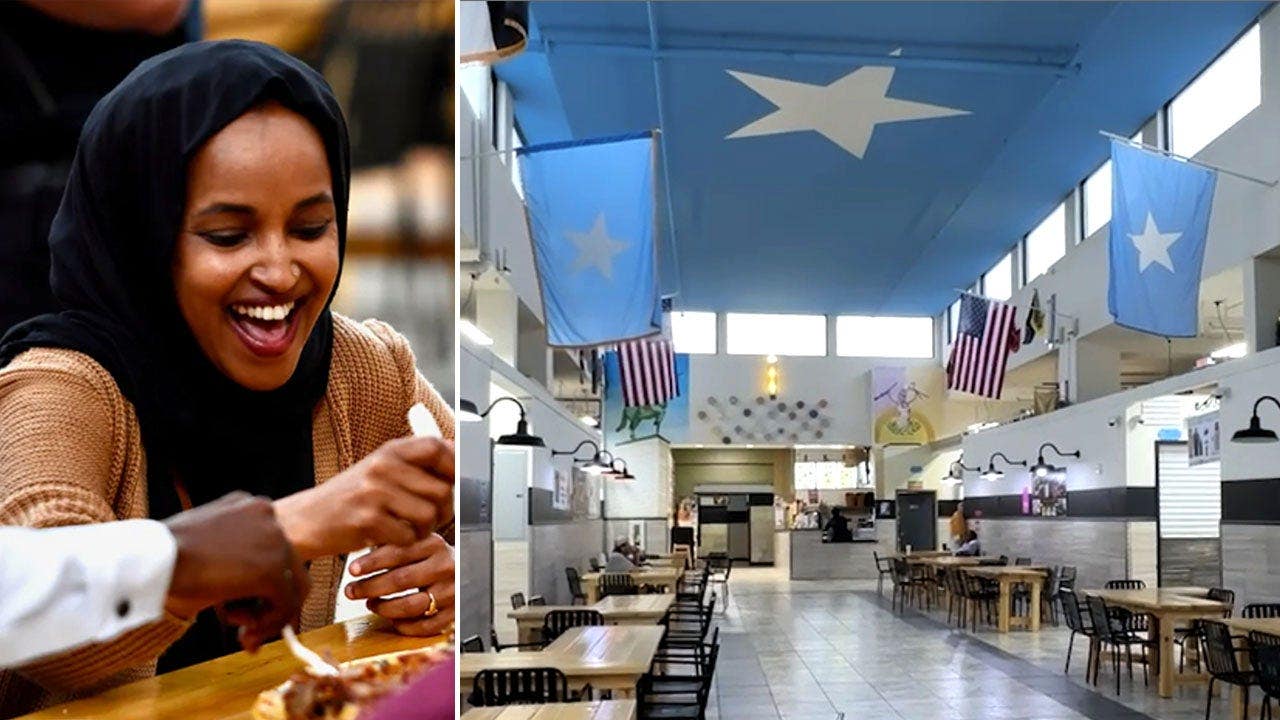
MINNEAPOLIS — The day after Rep. Ilhan Omar’s first public appearance since the raid on her home, Digital was given a tour of the mall where she reemerged in her home state.
The footage provides a glimpse inside an enclave within America that is dominated by Somalis and Somali culture, and a gives a peak into the community that Omar represents in the U.S. House of Representatives.
The mall isn’t just a place for people to buy clothing, food and receive services, but is a «community hub» of mostly women entrepreneurs, as described by a female shop owner.
«We’re here today are Karmel Mall with brother Basim, to kind of browse through this amazing community, corridor that is full of amazing women,» she told Digital, referring the Karmel Mall of Somalia’s owner, Basim Sabri, who provided the tour.
‘RADICAL LEFT LUNATIC’ JUDGE TRUMP WANTED IMPEACHED TAKES UP ILHAN OMAR WARRANT FIGHT
Sabri, a Gaza-born immigrant, came to the United States to study in Minneapolis. During that time, he became a real-estate investor and steadily grew his business in the years to come. Now, he’s a local titan of industry and owns a vast real estate empire, which includes the mall and several apartment complexes in the area that house Somalis. He has political ties at all levels of local and state politics, and is friends with Omar. He also knew the Somali-born congresswoman’s father.
Digital interviewed him separately, days before the official tour of the mall.
For most inside, English is the mall’s second language. It’s packed with stores offering electronic SIM cards to call overseas, foreign money exchanges and travel agencies arranging trips to the Middle East and East Africa. Vendors also sell gold, fragrances and traditional Somali fashion items, mostly for women.
There are Somali barber shops, cafes, traditional Somali food vendors and henna tattoo shops. Sabri gave conflicting figures on the exact number of stores, once saying 900, and later 750.
SOMALIS IN MINNESOTA UNLEASH FURY ON TRUMP AFTER FEDS RAID ILHAN OMAR’S DC HOME
It sports a food court with a giant Somali flag painted on the ceiling, as well as Somali, Palestinian and American flags hanging from the walls. Many politicians use that space for press conferences, Sabri explained.
It’s also where Omar ate lunch with friends, supporters and state Attorney General Keith Ellison during Digital’s foray into the mall when the lawmaker reemerged after casting an early ballot in her own reelection.
Karmel Mall also has an Islamic weekend school for children, where they’re taught the Quran and engage in recreational activities.
While the mall isn’t strictly for Somalis, few outside the Somali community were present when Digital toured. Digital was initially bucked by security upon attempting to enter and film inside the mall without Sabri’s permission.
The owner once banned Democratic Minneapolis Mayor Jacob Frey from the premises in February 2024 after he vetoed an Israel-Gaza ceasefire resolution passed by the City Council.
OMAR’S MIDTERM RIVAL EXPOSES ‘VICIOUS’ SOMALI GANGS AMID IMMIGRATION PROBE INTO EMBATTLED REP
«It is kind of an incubator setting where many businesses start in here, and then many succeed and grow and move somewhere else, to a bigger space,» Sabri explained to Digital.
He claims that the mall is a space where Somalis learn to integrate into the community.
«You can see [the] Somalis not only integrating in the community, but also prospering,» he said. «Somalis are very smart business individuals.»
But the mall’s very name — the Karmel Mall of Somalia — along with the overwhelmingly Somali culture inside, raise questions about whether the group is actually assimilating into American society.
WORKING-CLASS AMERICANS SAY THEIR TOWN IS THE NEXT DEARBORN — AND THEY’VE HAD ENOUGH
Steven Camerota is the director for research at the Center for Immigration Studies (CIS). He pointed Digital to a CIS report published in December of last year that describes Somalis as a «struggling group.»
The report shows that more than half of children who live in the homes of Somali-born immigrants in Minnesota live in poverty, compared to only 8% of children living in homes of native-born Minnesotans. Among Somali-born immigrants who have lived in the United States for more than a decade, half cannot speak English «very well.» The report says that 89% of Somali households receive some form of welfare, and 39% don’t have high school diplomas, compared to only 8% of the native population.
Camerota argued that across America, assimilation among various foreign-born groups, including Somalis, has dropped, though today’s immigration numbers are about the same they were during America’s first great wave of immigration.
In the late 19th- and early 20th-centuries, immigrations from across the world flooded the United States. During that time, immigrants comprised about 15% of America’s population, on par with todays numbers. After World War I, restrictive immigration policies that lasted until the 1960s took effect. In more recent history, immigration has ramped up to the tune of one million legal immigrants per year entering the United States, Camerota said.
MINNESOTA SENATE HOPEFUL WARNS THREAT LEVEL RISING AMID RASH OF SOMALI GANG CRIME, TERROR PLOT
«So, there are three big things about modern immigration that you can argue greatly hinder assimilation, and it has much less to do with the immigrants, and a lot more to do with just modern conditions,» he told Digital. «The first is technology. You can fly home and visit home for the holidays if you want. In a way that just wouldn’t have been possible in 1900, and in terms of costs.»
Camerota noted that the internet allows people access to constant news from home, and the constant ability to stay connected with family and friends via phone and video calls.
«So this technology, travel and communications is fundamentally different today than in the past. And that likely means that the connection with the home country doesn’t become as attenuated as quickly as it would have,» he said.
The attitudes of those who Camerota characterizes as «elites,» in academia, government, media and other institutions has also changed. He said there are now dueling theories about the what exactly America is that could be contributing to a lack of assimilation.
FORMER MN STATE TROOPER TEARS INTO DEMS AS SOMALI GANG VIOLENCE TERRORIZES MINNESOTA: ‘WHERE IS ILHAN OMAR?’
«So is America essentially a magnificent historical project of democracy and equality and republican government, or is it essentially — most of that’s a sham and it’s really a racist, sexist, homophobic [and] classist society?» he said. «The immigrants are arriving in a country in many ways that received both those messages, and so this elite attitude which permeates down is just so different than the world of the last great wave of immigration and almost certainly matters a great deal.»
Essentially, Camerota argued, if immigrants adopt the narrative that America is a fundamentally flawed nation, there is little reason for them to assimilate.
«The word assimilation itself is seen as a bad word in many circles. The idea that immigrants are supposed to shed their their old culture and become American is now seen as a kind of for some — I don’t want to say universally for all — but some fraction of it at least, as an undesirable Anglo conformity,» he continued.
«We are living in a country that can’t really agree itself about its own history, let alone agree on what it wants from the immigrants.»
The third important fact to assimilation in Camerota’s mind is the sheer number of immigrants coming to the United States.
ALARMING FRAUD TREND PUTS SMALL-TOWN MOSQUE WITH INDUSTRY AND FOREIGN GOVT TIES IN FOCUS: ‘OUR MOTHERLAND NOW’
«The last point is numbers,» he said. «So, we’re at a record high now, right? 15% of the population is foreign born. It’s matched the levels of between 1890 and 1910 … during the last peak of the last great wave. But the one question then has to be asked, what happened then?»
He said the immigration restriction of the mid 20th-century necessarily resulted in assimilation, as immigrants could not endlessly build enclaves for more and more foreign-born residents, as is happening today.
«I think it’s pretty clear it likely played a very big role in facilitating the assimilation of the immigrants,» he said, suggesting that a similar immigration restriction could have the same effect if implemented now.
Sabri has faced troubles of his own.
In 2005, he was sentenced to 33 months in federal prison for bribing a local Minneapolis public official. He told Digital in the first interview about his time in prison, which included a brief stay at the infamous Federal Correctional Institution, Leavenworth in Kansas, in colorful detail.
In that interview, he also insisted that the mall is for everyone.
«But my experience is that Somalis are very, very intelligent and extremely hard-working people,» he said.
«So, I would invite anybody to come into the mall, and know that there are many people doing a great job and making a good living, and learning the American dream, and doing business, and opening businesses that eventually tend to be very successful for them.»
politics, somali immigrant community, ilhan omar, minneapolis st paul, minnesota, islam










INTERNACIONAL
Mató a sus dos hijos y a su suegra, filmó los crímenes y mandó un escalofriante mensaje a su esposa: qué revelaron las autopsias
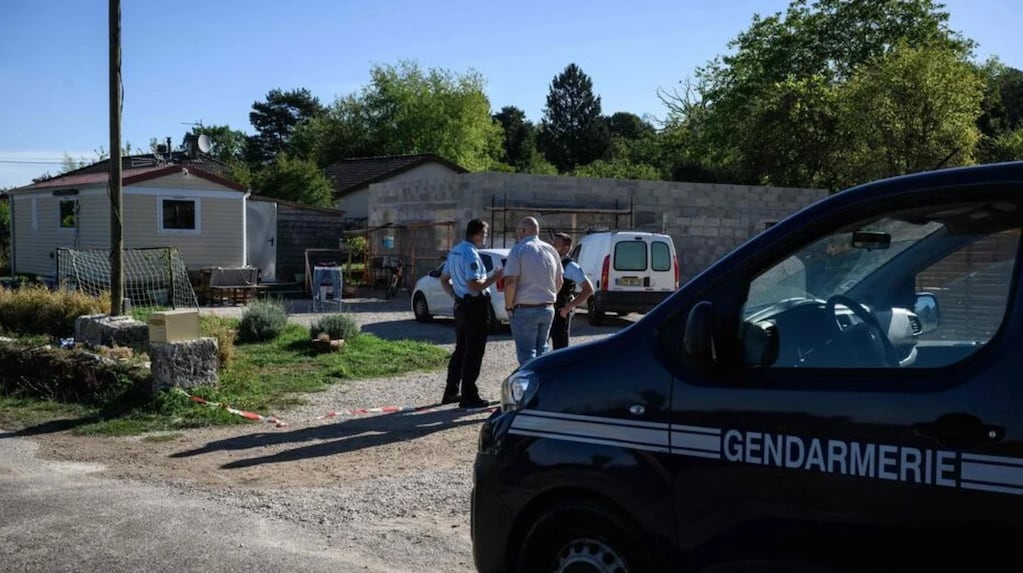
Un brutal crimen familiar conmocionó a una pequeña localidad de Francia, donde un hombre de 42 años habría asesinado a sus dos hijos, de 6 y 10 años, y a su suegra de 74, antes de quitarse la vida.
El caso ocurrió el 2 de septiembre en Gy, una localidad del departamento de Haute-Saône, en el este del país. La investigación reveló detalles estremecedores sobre cómo murieron las víctimas y un mensaje que el presunto asesino le habría enviado a su esposa después de filmar la escena.
“Esto es lo que te merecés”, fue la frase que, según el relato de un primo del hombre, acompañó las imágenes que recibió la mujer, de quien se estaba separando.
Los resultados de las autopsias, difundidos por la Fiscalía de Vesoul y publicados por medios franceses como Le Parisien y TF1, permitieron reconstruir las lesiones que sufrieron las víctimas.
Qué revelaron las autopsias de los dos chicos y su abuela
El fiscal Arnaud Grécourt informó que los dos nenes, identficados como Eden y Nino Monnot, murieron por un disparo cada uno, recibido en la parte posterior del torso.
De acuerdo con los peritos forenses, las características de las heridas permiten considerar que los disparos fueron efectuados a corta distancia. Los médicos no encontraron otras lesiones sospechosas en los cuerpos de los menores.
La autopsia de la abuela, de 74 años, reveló una secuencia de violencia todavía mayor.
La mujer murió por una hemorragia masiva provocada por tres puñaladas en el tórax y el abdomen. Los especialistas determinaron que las heridas habían sido causadas con gran violencia.
Además, encontraron hematomas en la cara, los brazos y el pecho, compatibles con golpes o maniobras de sujeción. También detectaron lesiones en el cuello que sugerían un posible estrangulamiento manual.
En cuanto al padre de los chicos, la autopsia estableció que murió por un único disparo debajo del mentón.
La principal hipótesis de los investigadores es que el hombre asesinó a sus familiares y después se suicidó.
El video del crimen y el mensaje que recibió su esposa
Uno de los detalles más impactantes del caso surgió del testimonio de Charles Martino-Herter, primo del presunto asesino, quien habló con la prensa francesa después de la tragedia.
Según contó, el hombre habría filmado los asesinatos y enviado las imágenes a su esposa, con quien atravesaba una separación.
“Esto es lo que te merecés”, habría sido el mensaje que acompañó el video.
El familiar también aseguró, en declaraciones a TF1, que el hombre llamó a otros integrantes de su familia y se quitó la vida mientras ellos presenciaban la comunicación.
La Fiscalía informó que los investigadores estaban analizando los dispositivos electrónicos secuestrados y las comunicaciones que pudieron haberse producido antes y durante los crímenes.
Por lo tanto, el relato sobre el video y el mensaje todavía debía ser corroborado mediante la investigación judicial.
Cómo encontraron los cuerpos y qué contaron los vecinos
Los investigadores encontraron los cuerpos de los dos nenes dentro de un vehículo utilitario, mientras que los del padre y la abuela estaban en una vivienda prefabricada ubicada junto a la casa que la familia estaba construyendo.
El hombre, identificado por la prensa francesa como Jean-Paul M., vivía allí mientras avanzaban las obras de su futura casa.
Su esposa, que trabajaba como auxiliar de enfermería, no se encontraba en el lugar cuando ocurrió la tragedia.
Autopsia
NEWYou can now listen to Fox News articles!
President Abelardo de la Espriella means business when it comes to his war against the cartels. Colombia’s new president, known by the nickname of ‘El Tigre’, was voted in on a law and order ticket and so far his actions in fighting the cartels are seemingly paying dividends — not just in Colombia but in Washington too.
Recently, he arrived at the Barranquilla police command around the early hours of the morning as 587 police officers and soldiers raided 50 locations across the Caribbean port city and its suburbs in Operation Blindaje 360. A few days earlier, domestic Colombian news outlets had widely publicized a recording intercepted by Colombian police of «Keko», the alleged leader of a gang called «Los del Freseo» boasting that de la Espirella had nothing on him.
«The Tiger’s got nothing. Let him come out, and we’ll put lead in him,» Keko allegedly said on the recording.
Then, before dawn, Colombia’s president had tracked him down and was face to face with him, all caught on tape.
According to a video released by his presidential office, El Tigre told Keko the gang leader was «a tough guy on the phone… but the look of the fear on his face matched that of his many victims». The sweep ended with 72 arrests.
ANTI-CARTEL HARDLINER CHANNELS TRUMP IN BID TO END COLOMBIA’S LEFTIST ERA IN PIVOTAL ELECTION
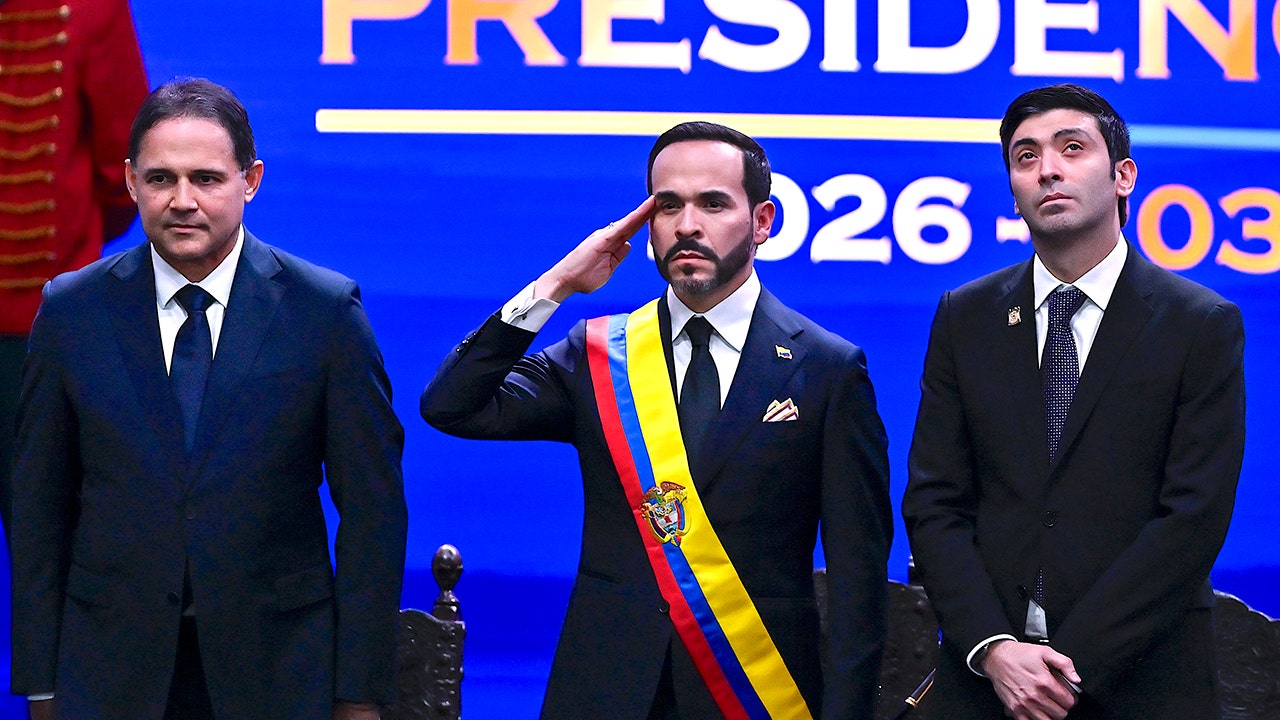
Colombia’s President Abelardo de la Espriella delivers a speech during the change of command ceremony at the Jose Maria Cordova Military School in Bogota on August 26, 2026. Colombia’s new hard-right government announced on August 25, 2026, plans to classify guerrilla fighters, drug traffickers and other criminal groups as «terrorists.» (Raul ARBOLEDA / AFP via Getty Images)
The theatrics played to a large audience who long argued that former leftist Gustavo Petros’s policy of pursuing engagement with drug traffickers and through conversation and peace talks had left Colombia more vulnerable to organized crime and further articulation between Colombian and Venezuelan cartels that had been dominating the space left by the power vacuum which emerged from effective law-enforcement control.
His government is also seeking to reverse former President Gustavo Petro’s «total peace» policy, which pursued negotiations with several armed organizations. Before taking office, de la Espriella announced that he would dismantle key elements of the policy and reactivate arrest warrants against members of illegal armed groups.
Nearly three months into his term, the 48-year-old lawyer has scrapped his leftist predecessor’s «total peace» talks, ordered every armed group treated as a terrorist organization and claims more than 32,000 arrests. He is doing it arm in arm with Washington.

Colombia’s President Abelardo de la Espriella personally showing up in the aftermath of the raid in Barranquilla to confront Keko face-to-face on Oct. 16 2026. (Abelardo De La Espriella @ABELAESPRIELLA)
A dual U.S.-Colombian citizen who lived in Miami before running for president, he has brought Colombia into President Donald Trump’s anti-cartel coalition. Last month, he personally handed a guerrilla boss accused of supplying Mexico’s Sinaloa Cartel to DEA agents with his hands and feet shackled.
The prisoner, Geovany Andrés Rojas, alias «Araña,» is alleged to have led the «Comandos de la Frontera» dissidents and now faces narco-terrorism charges in Southern California.
«The option of dialogue is completely exhausted,» de la Espriella told troops after his Aug. 7 inauguration. In an Oct. 12 address, he put the tally at 32,503 arrests, 33 ringleaders taken out of action and 679 drug-production sites destroyed or disabled. He has signed more than 100 extradition orders, including five for former armed-group peace negotiators wanted in the U.S. whose handovers the previous government had frozen.
‘DONROE’ DOCTRINE AND CONSERVATIVE VICTORIES SQUEEZE CARTELS IN LATIN AMERICA
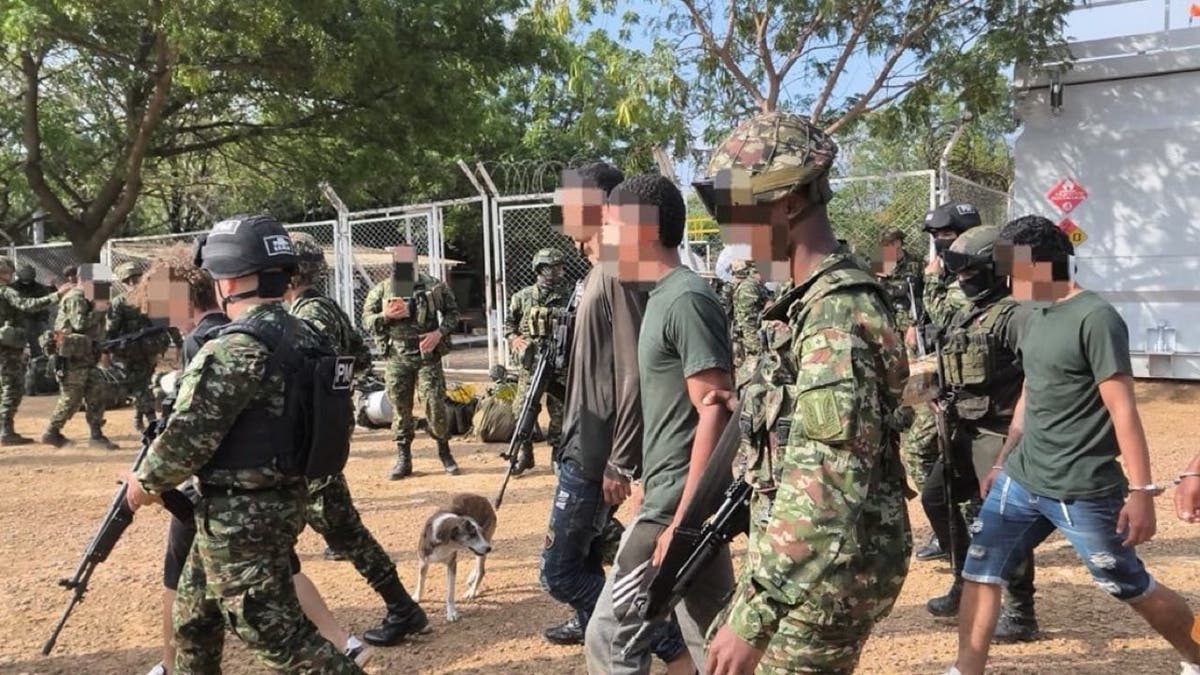
Army operation in La Gabarra, Tibú, resulting in the detention of five FARC dissidents and the seizure of weapons and communications equipment on Oct. 6, 2026. (Abelardo De La Espriella @ABELAESPRIELLA)
The offensive reaches deep into the countryside, where conflict monitor ACLED counted August as the deadliest month for clashes between security forces and armed groups since it began tracking Colombia in 2018.
In late August he warned FARC dissident chief Iván Mordisco: «When you least expect it, a bomb is going to fall on you.» Two days later, he walked among the bagged bodies of 23 suspected dissidents at an army base in Guaviare, and troops killed the top commander of a paramilitary-rooted trafficking group in La Guajira.
Colombia became the 19th member of Trump’s Shield of the Americas coalition in August, and War Secretary Pete Hegseth said Bogotá had authorized «joint military operations to destroy terrorists and terror networks domestically.» The administration has pledged $1 billion in security aid, pending congressional approval, and Marine Gen. Francis Donovan, head of U.S. Southern Command, has toured Colombian bases.
However, speaking on-camera to Fox News Digital, Colombian Vice President José Manuel Restrepo said while his country is embracing President Donald Trump’s push for a new security alliance across the Western Hemisphere, he drew a clear line on the role American forces would play inside Colombia, saying Colombian troops — not U.S. forces — will carry out operations against the country’s armed groups.
PENTAGON SENDS HUNDREDS OF ARMY TROOPS TO LATIN AMERICA FOR TRAINING AS DRUG-TRAFFICKING CAMPAIGN EXPANDS

US President Donald Trump and US Defense Secretary Pete Hegseth (L) look on during the «Shield of the Americas» Summit at Trump National Doral in Miami, Florida, March 7, 2026. (SAUL LOEB / AFP via Getty Images)
According to Benjamin Gedan, a senior fellow and director of the Latin America Program at the Stimson Center in Washington who previously served as a South America Director in the White House, the last few years were an outlier:
«For decades, the United States and Colombia closely cooperated to fight guerrillas and organized crime. Plan Colombia was celebrated by both Republicans and Democrats. The Colombian military is well-trained and battle-tested. Renewed close cooperation between Bogotá and Washington is a cornerstone of the renewed U.S. focus on security in Latin America,» he said.
«Still, flashy military strikes on criminal targets will not answer the mail. These groups are well-armed, well-funded, and thrive in regions with little state presence. Images of criminals in body bags may give the impression of forward progress after the failed strategy of Colombia’s last leader, much as videos of exploding speedboats have become the calling card of the Shield of the Americas. In both cases, a more sophisticated strategy is needed to deal lasting blows to criminal groups,» Gedan argued.
CRIME, KIDNAPPINGS AND DRONE ATTACKS FLAGGED IN US WARNING FOR BORDER REGION

Americans are urged not to travel within five miles of the Colombia-Venezuela border due to crime, kidnapping and armed conflict. (Schneyder Mendoza / AFP via Getty Images)
Oscar Palma, a professor of Security Studies at the University of Rosario in Bogotá, said it is still a little too early to assess the change in policies and affirm they will be fruitful within the Colombian context. «Beyond the policing acts themselves, there is the subjective feeling of security with debates within Colombian society on whether this open war strategy brings more or less security to the population. Many argue that the gangs are acting now more forcefully to defend their territories and business deals, while others believe that a strong police presence will eventually lead to less organized crime.»
Palma said there is a false dichotomy between having to choose all-out war or dialogue in order to achieve peace with groups such as the FARC and other gang leaders: «It is a fiction that you will come to zero combatants simply pursuing one strategy or the other—all-out war will never zero down those combating in the FARC and organized crime just as peace talks, especially if carried out in a misguided policy such as the one led by [Gustavo] Petros, will achieve real results.»
He said, «A better example is the strategy carried out by President [Juán Manuel] Santos during the dealings with the FARC, which led to a much safer Colombia: there were talks, but those were part of a bigger strategy of also fighting these groups with arms and bringing them to justice,» he added.
«There is a wave of freedom, a wave of democracy, a wave of free market… There is a new momentum for the region and we have to take advantage of that momentum. That’s what I said to President Trump,» Restrepo told Fox News Digital. «If we want to keep and preserve democracy in the region, the Shield of the Americas is going to be the best opportunity to do it.»
world, colombia, narco terror, donald trump
INTERNACIONAL
Los nombres detrás de la guerra narco en Uruguay: uno a uno, los líderes criminales que la Policía logró capturar
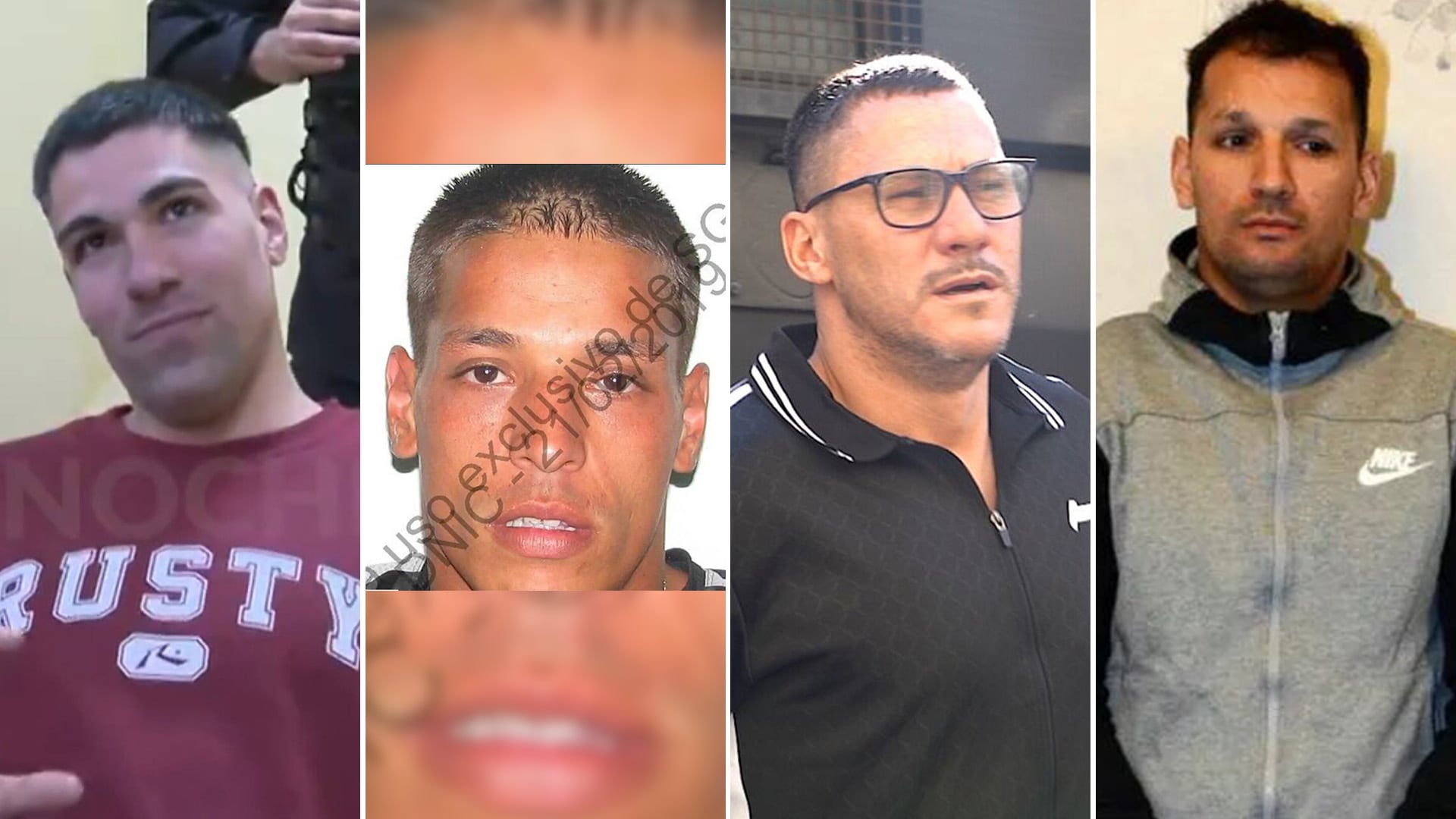
Seis de cada 10 homicidios que ocurren en Uruguay tienen su origen en conflictos entre grupos criminales, según datos oficiales. Son personas que se matan por represalias, por disputas entre grupos o porque acumulan años –y hasta décadas– de violencia. Conocer las historias detrás de estos asesinatos es clave, para el Ministerio del Interior del país, para intentar prevenir una próxima agresión.
El ministro del Interior, Carlos Negro, se basó en este dato para explicar por qué los homicidios crecieron un 14% en el primer semestre del año y para defender en el Parlamento la estrategia de su cartera.
Los asesinatos por disputas criminales se han duplicado en los últimos 12 años al tiempo que otras patologías disminuyeron. Por ejemplo, los crímenes ocurridos por conflictos interpersonales y altercados espontáneos bajaron un 5%; por violencia doméstica, un 10%; por rapiñas, un 21%; por otros motivos o causas desconocidas, un 1%.
Las víctimas con antecedentes penales, en tanto, se han duplicado en los últimos 12 años.
“La violencia letal sufrió un aumento en los últimos meses, concentrándose la mayoría de los homicidios en la zona metropolitana”, detalló Negro ante los legisladores.
La estrategia del gobierno uruguayo para hacer frente a esta realidad son las intervenciones policiales a través de distintos operativos, que hasta ahora ha derivado en “afectar capacidades operativas” de 22 estructuras criminales uruguayas, informó Negro. Fueron un total de 1.800 los allanamientos realizados.
Los narcos que cayeron
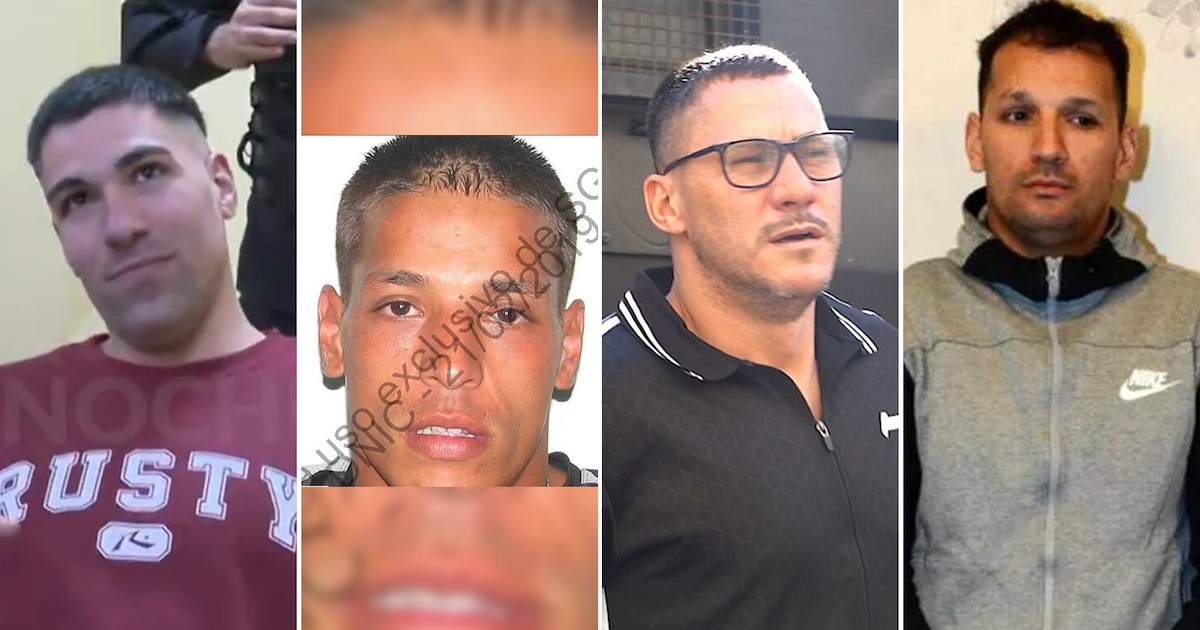
Las organizaciones criminales en Uruguay tienen tres “flancos más sensibles”, según el ministro del Interior uruguayo. Son sus líderes, las drogas y el dinero. Es por eso que las intervenciones de la Policía apuntan a capturas, incautaciones y lavado de activos. Pero, ¿quiénes son los líderes criminales que fueron capturados en Uruguay? El ministro Carlos Negro mencionó sus nombres en el Parlamento.
Luis Fernando Fernández Albín fue uno de los mencionados por Negro. El narcotraficante fue detenido en argentina y está preso en Uruguay, condenado por tráfico de drogas y lavado.

Luis Alberto Betito Suárez fue recientemente condenado a tres años y ocho meses por tenencia de estupefacientes. Es considerado uno de los delincuentes más peligrosos del país y, si bien decía estar retirado del mundo delictivo, la Policía nunca dejó de prestarle atención.

Loly Suárez Correa fue la tercera líder criminal mencionada por Negro ante los legisladores. Es la hermana del Betito y fue a fines de 2025 por varios delitos relacionados a las drogas.
Rodrigo Lescano era un socio de Betito y también fue condenado.
Ricardo Cáceres Correa, conocido como Ricardito, fue condenado en julio de 2026. Este conocido delincuente dirigió torturas desde la cárcel por videollamada y estuvo vinculado a un triple crimen.
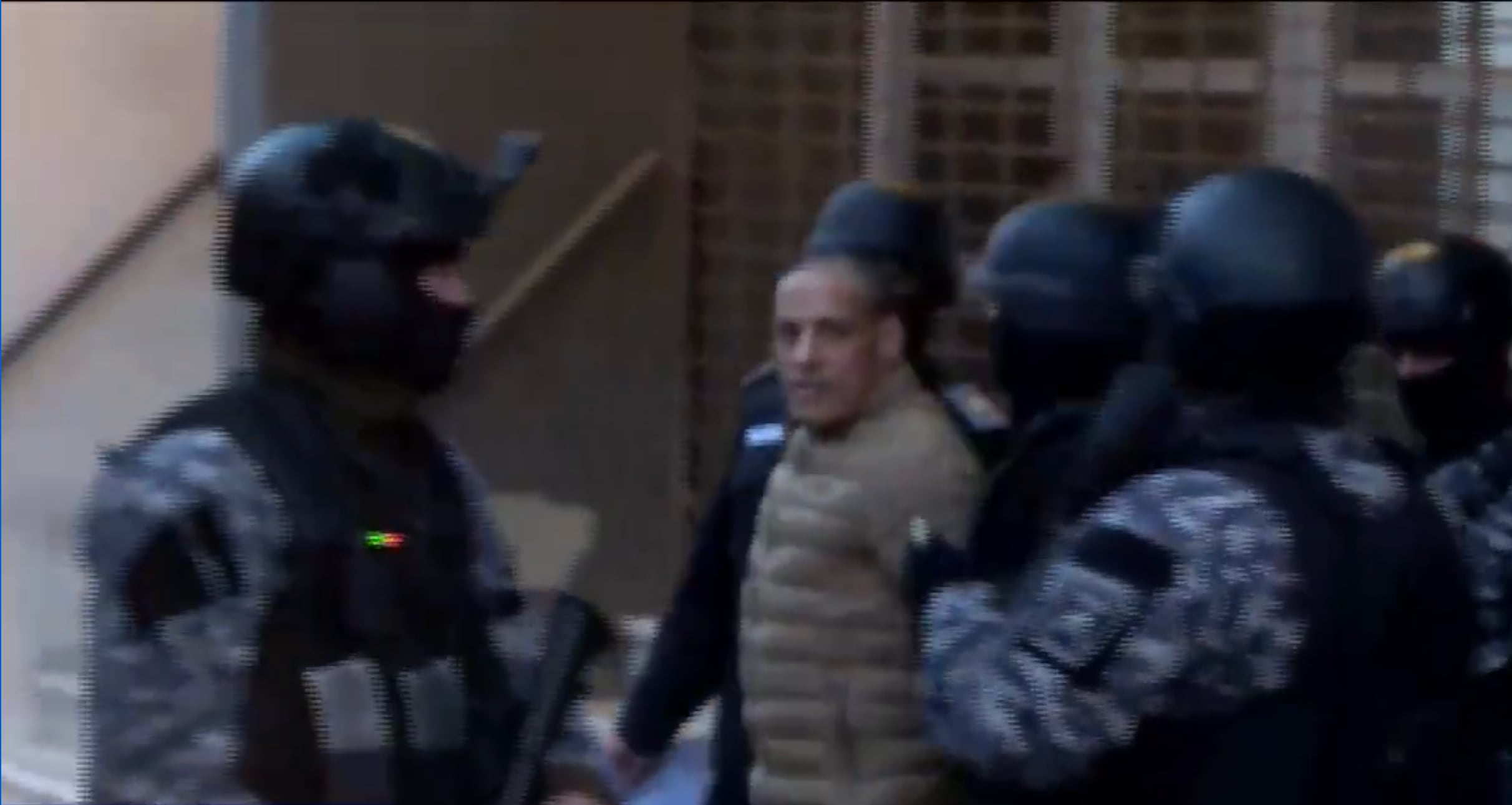
José Carlos Machado, el Pelón, fue condenado a la pena máxima en septiembre. El fiscal que investigó el caso lo definió como el asesino serial “más prolífico”. Había matado desde adolescente.
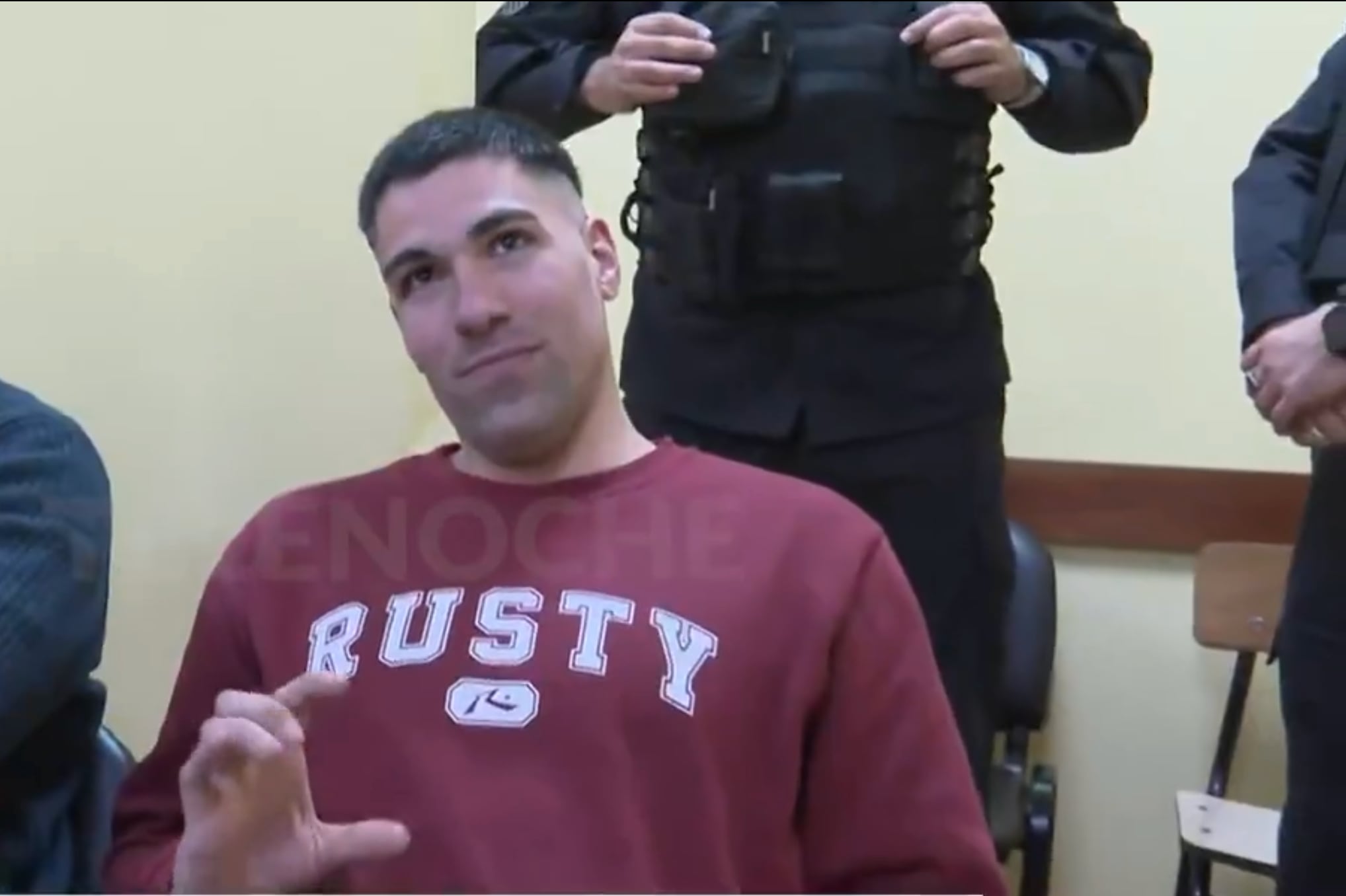
Axel Joel Mattos, el líder de Los Colorados, un grupo criminal que disputa el mercado tradicional de venta de drogas. Él esta guerra personalmente. En octubre de 2024 fue asesinado su hijo, un bebé de un año, sobre un pasillo angosto de Cerro Norte. El ataque iba dirigido hacia él.
Eduardo Félix Farías y Raimundo de Souza, dos integrantes del Primer Comando Capital (PCC) y de la banda que planificó el “robo del siglo”, como se conoció al intento de ingresar a una sucursal de BBVA del casco histórico de Montevideo.

La lista de “líderes narcos” mencionada por Negro se completaba por: Fiorella Albín; Carlos Damián Araújo; Matías Suárez Barbero –de la banda Los Calidad, de Casabó–; Andrés Díaz –perteneciente a los Puglia–; Santiago Nicolás Rosa, el Dibu –de la zona metropolitana de San José–, Gustavo Edgardo Casari, Piolín –detenido recientemente–, Gabriel Jiménez Mattos –también de los Colos–; Kevin Moroto –conocido por varios episodios y delitos de homicidio, Emanuel Pintos, Manu; Agustín Cuello –perteneciente a los Fraga, de La Cruz de Carrasco–, Diego Ezequiel Carballo –de los Priti–; Marcelo Surraco; y Ruben Darío Goncalves, alias el Sapo, de la zona del Marconi.
“Estos son solo algunos nombres de las personas que fueron detenidas en este período. Cada una de ellas ocupa importantes lugares en las estructuras criminales atacadas”, describió Negro después de mencionar a cada uno de ellos.
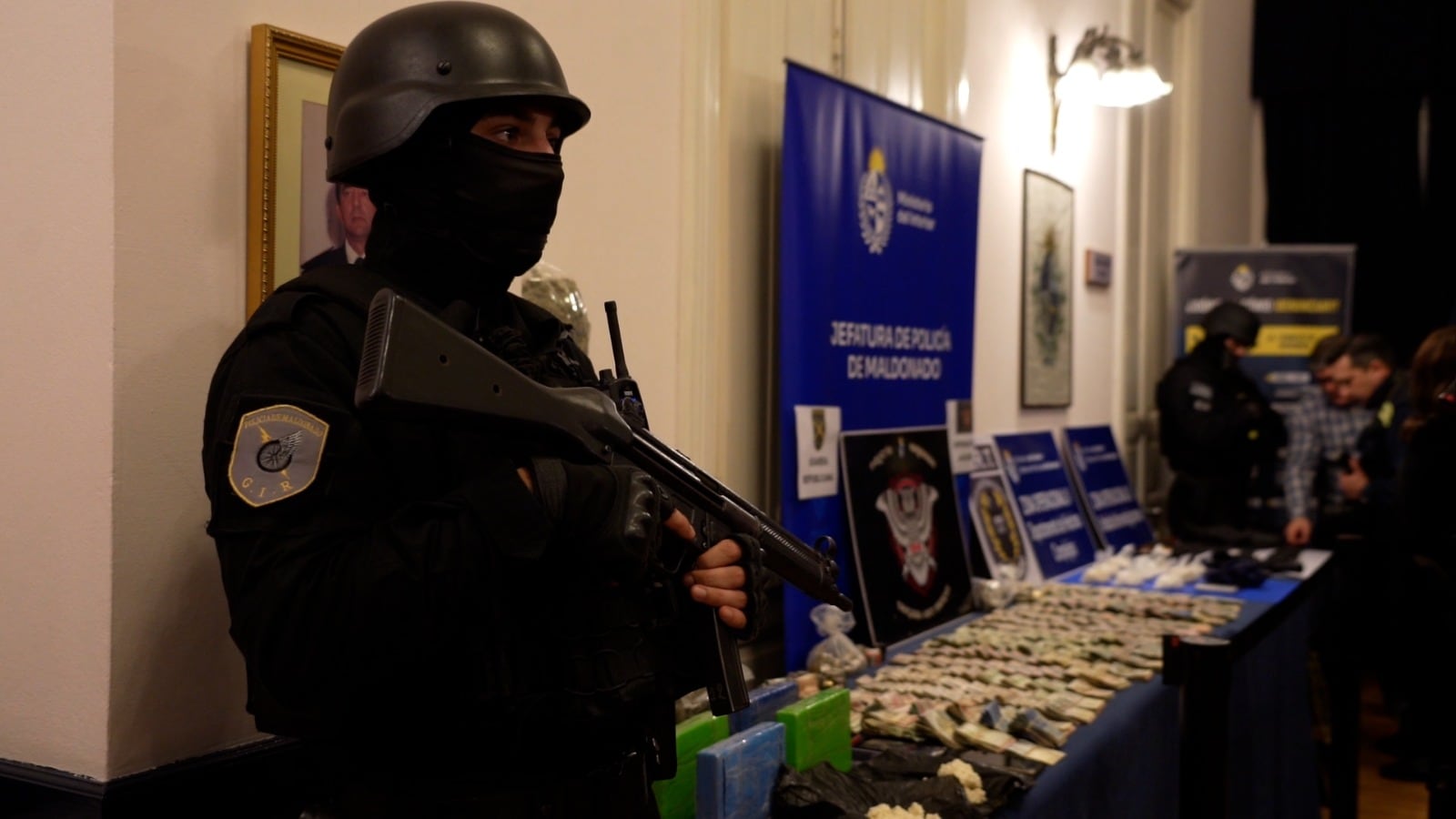
El ministro del Interior mencionó también varios líderes que fueron capturados en el interior del país.
En Maldonado, por ejemplo, fueron apresados los principales líderes de las organizaciones de la zona, como Nicolás Montelongo Porley, líder de la organización, vinculado a los Patas Blancas. Se estima que decenas de bocas de venta de droga en todo el departamento eran abastecidas por esta organización.
El Tonga, como se conoce a Mario Gastón Fernández Pascal, era uno de los principales líderes del Primer Comando de la Frontera, que operaba en los departamentos de Treinta y Tres, Lavalleja y Canelones.
Tras mencionar estos –y otros nombres–, el ministro insistió con la explicación de que muchos homicidios ocurren “en contextos vinculados al crimen organizado y al narcotráfico”. “Muchas de las personas asesinadas tenían importantes antecedentes delictivos”, expresó.

“En este punto quiero ser muy claro: el ‘¡Que se maten entre ellos!’ no puede ser una respuesta del Estado. No podemos aceptar que haya muertes que nos importen menos por quienes son sus víctimas o por las circunstancias en las que ocurren. Cada homicidio nos interpela como Estado y como sociedad, y frente a cada uno tenemos la misma responsabilidad: investigar, esclarecer y trabajar para evitar que vuelva a ocurrir un hecho similar. Ninguna vida puede quedar fuera de la responsabilidad del Estado”, expresó el ministro.
Negro dijo que el objetivo del gobierno es “perseguir a los autores” de los homicidios y seguir la ruta del dinero, “la causa definitiva del tráfico y de las muertes”.
Los operativos realizados
Uno de los operativos que puso en marcha el Ministerio del Interior para capturar a estos delincuentes se denominó Atenea. Negro explicó que está orientado a “la presencia policial, el patrullaje y la investigación en zonas de alta exposición de violencia letal”. En los cuadrantes donde se aplica esta intervención, los homicidios se redujeron un 42% y las personas heridas por arma de fuego un 27%, según las cifras oficiales.
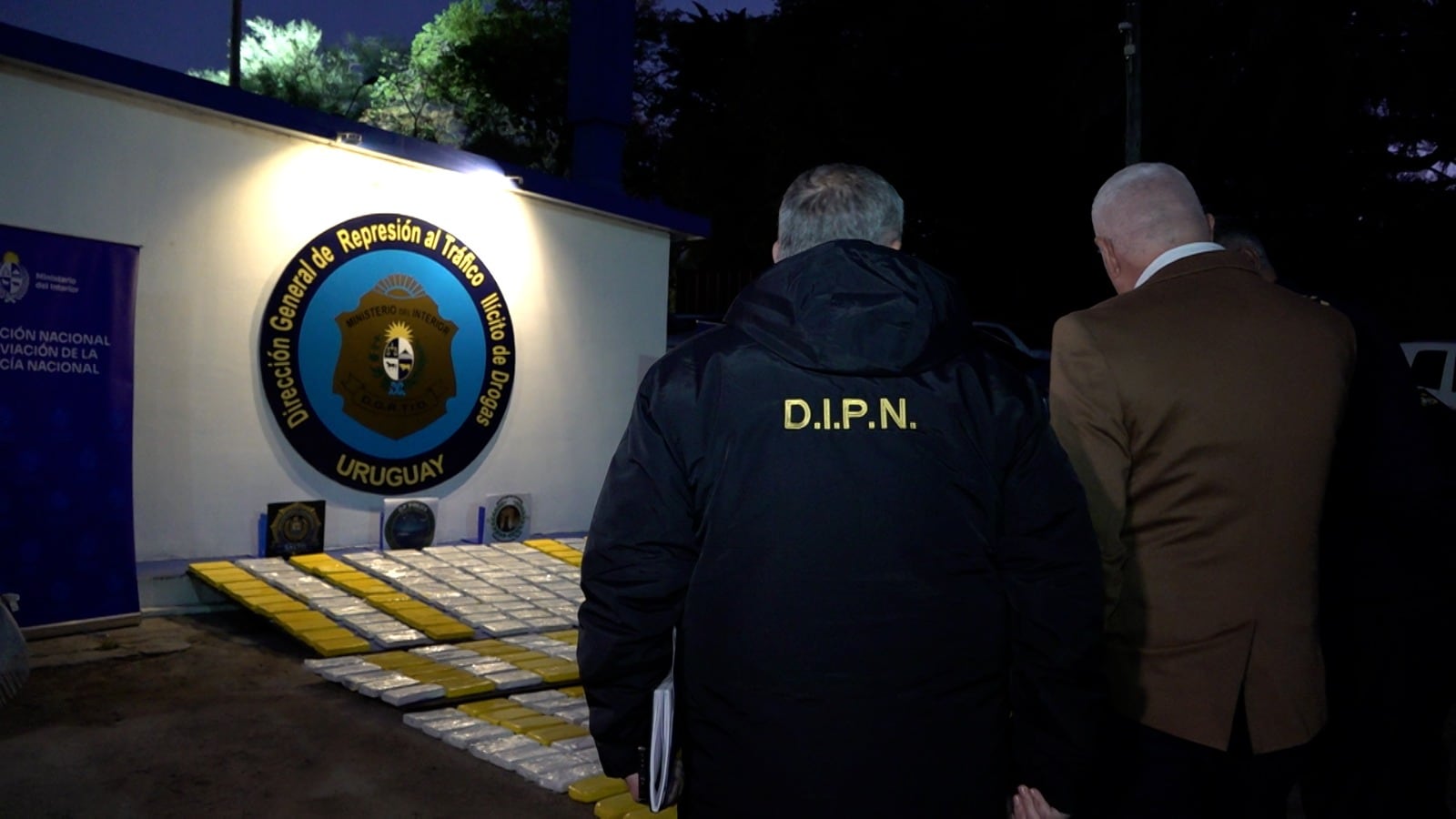
El operativo Argos, en tanto, está pensado como un complemento de este trabajo en áreas con homicidios recientes, personas heridas y balaceras. Un tercer operativo es el Dominó que “aporta una respuesta inmediata en territorios en conflicto luego de hechos de violencia armada”.
Negro informó que en Maldonado se han realizado 130 allanamientos tras los cuales hubo 140 imputados o condenados por la Justicia. Varias de las bocas de drogas allanadas fueron tapiadas o demolidas y se incautaron 90 armas de fuego, más de 85 kilos de cocaína y pasta base y más de 30 kilos de marihuana.
corresponsal: Desde Montevideo

Mató a sus dos hijos y a su suegra, filmó los crímenes y mandó un escalofriante mensaje a su esposa: qué revelaron las autopsias

🟠 Hay alerta naranja y amarilla por tormentas en Buenos Aires y otras ocho provincias para hoy

¿Cuándo se juega la final de la Primera Nacional entre Godoy Cruz y Tristán Suárez?

Paritaria para empleados de concesionarias de autos: cómo quedó la escala salarial

Patricia Bullrich y el plan B de Milei: cómo retener al votante que dice “sí, pero”

El terrible ataque de Mauro Icardi al novio de Wanda Nara tras verlo cerca de sus hijas: “No quiere que vuelva a publicar ninguna imagen de sus hijas”

El “efecto Lula” sigue pegando en Argentina: los bonos sintieron el impacto, pero el tipo de cambio aguantó

Europa entre Escila y Caribdis

La reflexión de Gabriel Rolón sobre la felicidad: “Es ese momento de eternidad donde lo que fuiste, querés ser, te atormenta y temés coexisten”

Goleada en contra y apenas 22 minutos para el Chango Zeballos en Monza

 ECONOMIA14 horas ago
El “efecto Lula” sigue pegando en Argentina: los bonos sintieron el impacto, pero el tipo de cambio aguantó
- CHIMENTOS2 días ago
Darío Barassi reveló el nombre que había elegido en caso de tener un hijo varón: «Tiene personalidad»
- ECONOMIA2 días ago
BCRA asegura que ya no hay freno monetario para la economía pero la reactivación no llega