INTERNACIONAL
Vance courting disgruntled Trump voters to form ‘new right’ alliance after Republican bloodbath, sources say

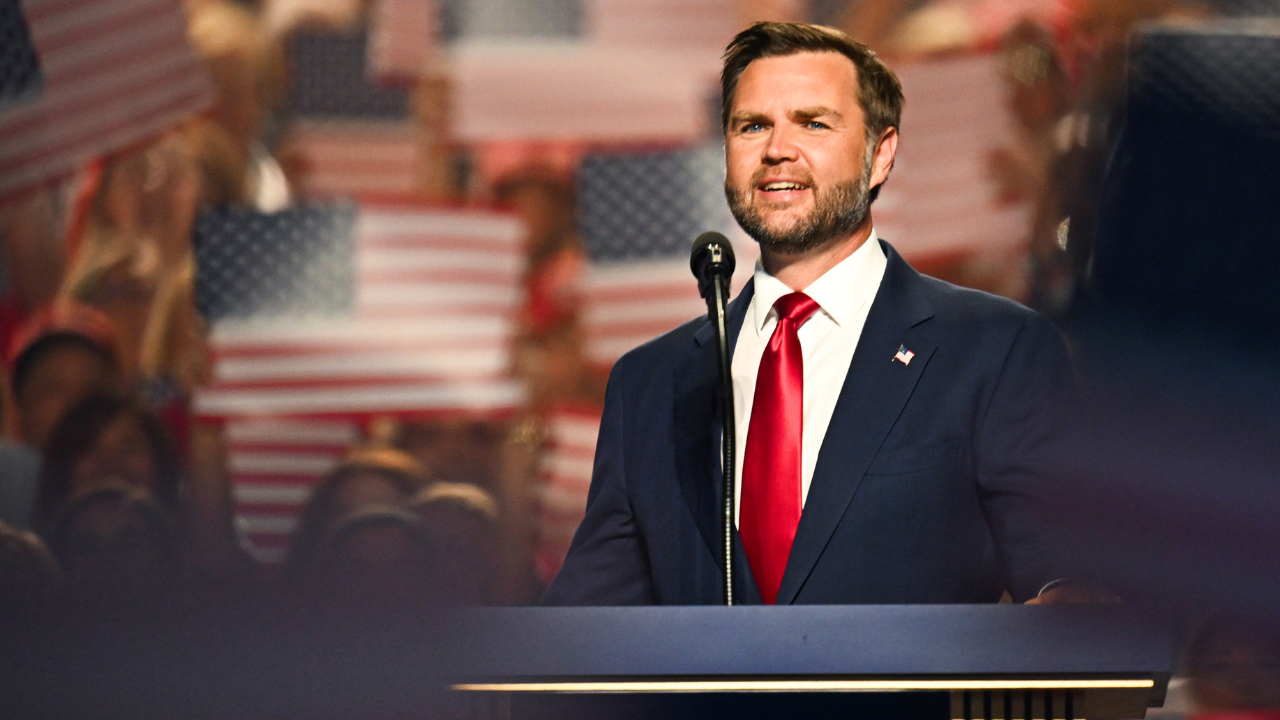
EXCLUSIVE: Vice President JD Vance is seeking to forge new alliance with disaffected Trump voters ahead of the 2028 election cycle, Digital has learned.
Vance took control of his own messaging Wednesday morning in the wake of a brutal Republican midterm beatdown, breaking with President Donald Trump on foreign policy and America’s relationship with Israel.
A source familiar with post-election happenings told Digital that there was a White House meeting Wednesday morning aimed at aligning the entire administration officials on post-midterm messaging.
After that huddle, the vice president posted a lengthy admonishment to X where he squarely blamed the Iran war for the Republican Party’s losses in the 2026 midterms. Trump made a similar claim after calling into during Tuesday night’s election coverage, saying the upsets were «partly» due to the Iran war.
VANCE’S SCATHING IRAN WAR POSTMORTEM PUTS POTENTIAL 2028 GOP SHOWDOWN IN FOCUS: ‘EVERYONE KNOWS WHY’
«The reason we lost is the war,» Vance’s post said. «The president himself said so last night.»
«If you’d like to argue it was worth it, that losing the Senate for the next 6 years was worth it, then do so. Argue it was a worthwhile cost to pay. Agree or disagree, that’s at least honest,» he went on.
«But everyone knows why we lost. And any honest conversation about where we go from here must start there.»
In the post, Vance, said a pollster and «one of the smartest people I know in politics» laid out four tasks that would bring voters back to the GOP — end the war in Iran, focus on the cost of living and inflation, put America first, and «change our relationship with Israel.»
JD VANCE DECLINES TO ENDORSE NETANYAHU DESPITE TRUMP’S STRONG BACKING
A Trump administration official who spoke with Digital said that the four tasks are Vance’s rallying cry to the «new right,» broadly defined as a coalition of Republicans that aligns with the president’s original «America First» movement — staying out of foreign conflicts, making America an affordable place for Americans to raise families, and closing the borders.
But those voters, they said, also believe that Trump is too aligned with Israel on foreign policy matters.
Among some on the political right, the war in Iran is intrinsically tied to Israel’s influence in the Middle East, and Trump’s relationship with Israeli Prime Minister Benjamin Netanyahu.
TRUMP TOLD DONORS ‘WE NEED TO ELECT JD,’ SOURCE CONFIRMS, AS HE WEIGHS VANCE OR RUBIO IN 2028
The official made it clear that Vance’s message is not a separation from Trump, à la former Vice President Mike Pence who denounced Trump after the Jan. 6, 2021, riot at the capitol. Rather, they said, he is aiming to send a clear message to Republicans who support Trump and disagree with or feel betrayed by his foreign policy.
And that message is: «Vance is our guy.»
The White House did not return Digital’s request for comment at time of publication on the meeting or Vance’s post-election messaging.
The vice president has not strayed much from Trump and the White House’s preferred messaging for the past two years — thought he has been one of the few voicing expressing concern over the ongoing war in Iran.
Despite his friendship with Secretary of War Pete Hegseth, reports and comments from the vice president himself have expressed how his stance on the Iran conflict differs.
Trump acknowledged earlier this year that Vance was «maybe less enthusiastic» about attacking Iran from the jump.
TRUMP ‘COULDN’T TRANSFER THE LOVE’ OF HIS SUPPORTERS TO OTHER REPUBLICANS AMID HISTORIC MIDTERM LOSS
Vance is widely considered a top GOP presidential candidate in 2028 — along with Trump’s Secretary of State Marco Rubio.
So far, Democrats stand at 54 Senate seats to Republicans’ 44, after sweeping wins in typically red Texas, ruby-red Kansas and other Republican strongholds like South Carolina.
DEMS SEIZE THE SENATE AS BLUE TIDAL WAVE CRASHES DEEP INTO TRUMP COUNTRY, TOPPLES GOP STRONGHOLDS
Votes are still being counted into Wednesday in a tight race in Alaska, that could see Democrats winning yet another seat in the Senate and widening their majority over the GOP.
The outcome of the midterms could have massive implications for the 2028 election, and Republicans are grappling now with how to face one of their biggest-ever challenges in trying to flip back the upper chamber despite a widened gap throwing them deep into a minority in January.
Needing only 218 to control the House, Democrats on Wednesday afternoon had won 237 seats, with more projected to filter in as ballots are counted and races are called.
politics, jd vance, midterm elections, white house, donald trump








INTERNACIONAL
Trump dares Iran to breach US port blockade as Tehran reportedly readies 14 oil tankers
NEWYou can now listen to Fox News articles!
Reports that Iran plans to send more than a dozen tankers through the U.S. blockade of its ports raised fears of a wider conflict Sunday, as a maritime security expert warned of a risky confrontation and President Donald Trump dared Tehran to test American forces deployed across the Gulf.
«I hope they do, they’ll all be at the bottom of the sea like the rest of the navy,» Trump told Fox News chief foreign correspondent Trey Yingst when asked whether Iran would attempt to breach the blockade, first imposed in April.
The warning came as reports indicated Iran was preparing a convoy of tankers to breach the blockade from Kharg Island, a critical oil export hub.
TRUMP DETAILS SWEEPING ‘ALL OR NOTHING’ BLOCKADE OF STRAIT OF HORMUZ AFTER FAILED IRAN TALKS
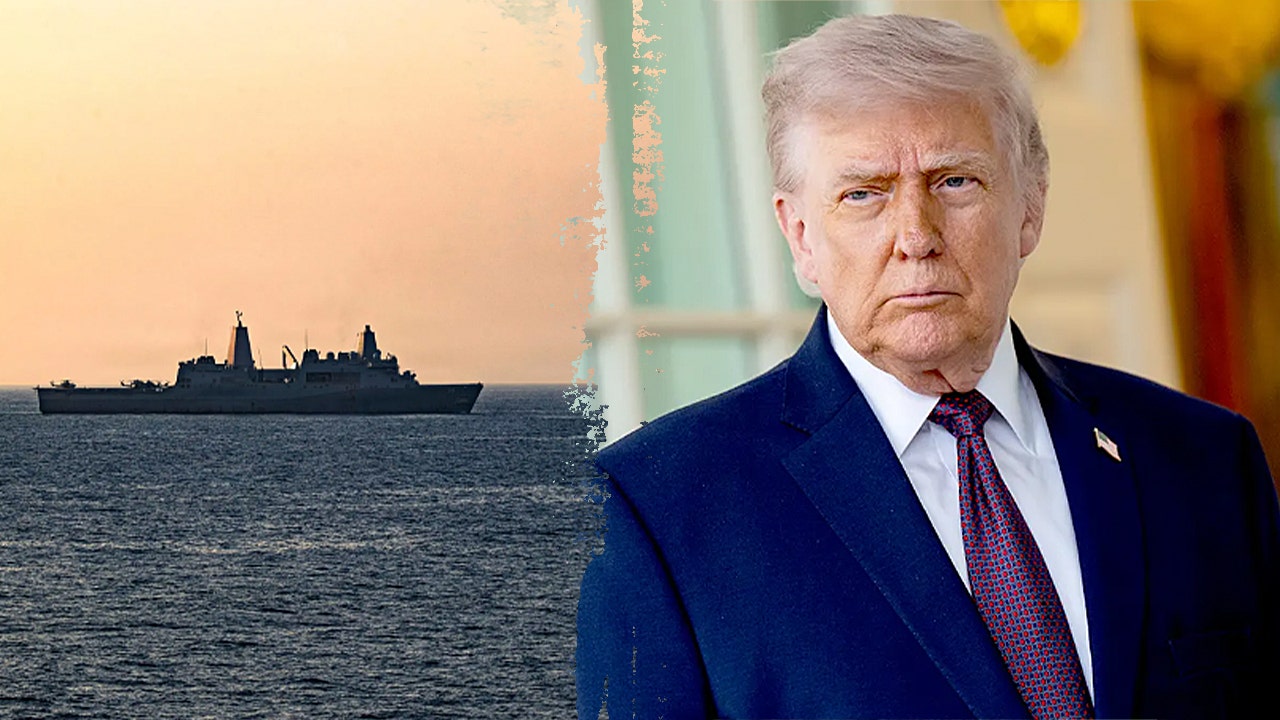
U.S. Marines aboard USS New Orleans (LPD 18) stand watch in the Arabian Sea during naval blockade operations against Iran. (U.S. Central Command)
Maritime security experts warned the vessels could face U.S. naval forces right across the Indian Ocean, while the Institute for the Study of War cautioned that an attempted breakout could perhaps trigger a wider war.
The reported operation would involve tankers sailing from Kharg Island, which handles most of Iran’s crude oil exports, toward the Gulf of Oman and with crews reportedly assigned to the vessels and Iranian flags raised ahead of a possible attempt to breach the blockade.
Charlie Brown, a senior adviser to United Against Nuclear Iran (UANI) and maritime sanctions enforcement expert, dismissed the reported operation as «propaganda» and said the plan was unlikely to succeed if ever attempted.
«This supposed plan by the Iranians to suddenly deploy 14 vessels to try to breach the blockade in a convoy — it’s farcical,» Brown told Fox News Digital on Sunday.
«The blockade is enforced not merely as a line that is crossed, but the ability of the United States Navy to enforce this blockade extends across the entire Indian Ocean and beyond.»
BLOCKADE 101: AMERICAN SEA POWER ON DISPLAY AS TRUMP CORNERS IRAN AND WARNS OFF CHINA
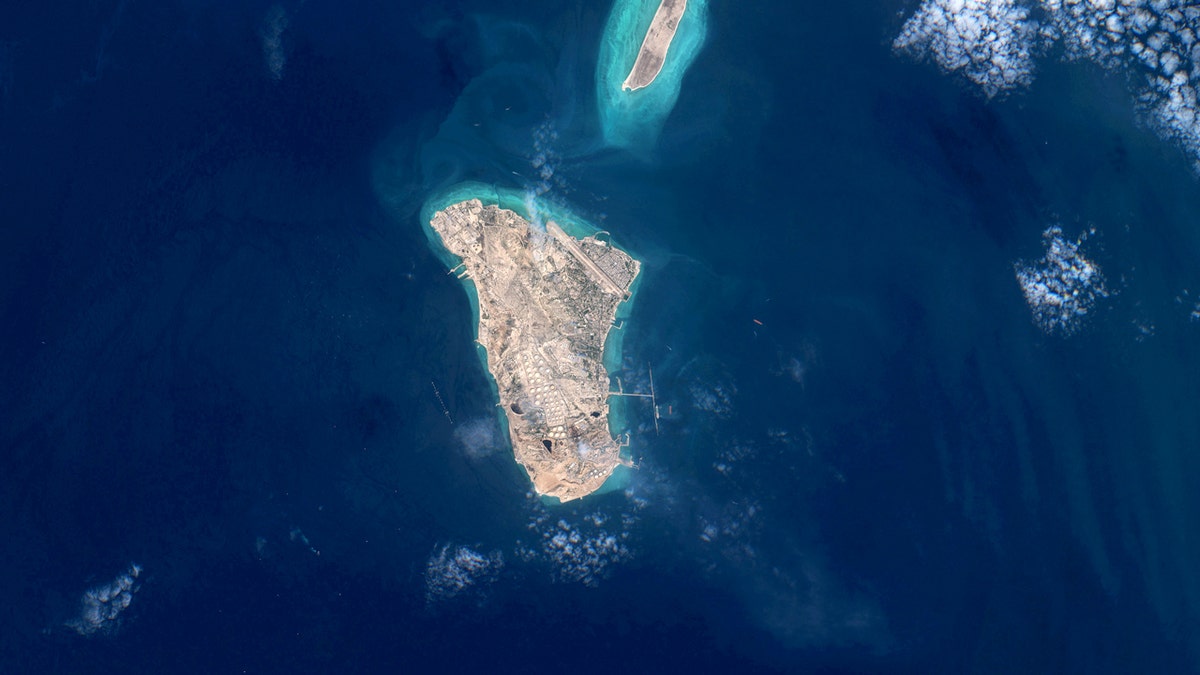
Satellite view of Kharg Island, located in the Persian Gulf off the coast of Iran. (Gallo Images/Orbital Horizon/Copernicus Sentinel Data 2024)
«If ships try to get out of the area that is managed by the U.S. Navy’s 5th Fleet, the U.S. Navy’s 7th Fleet is the next area command that has responsibility over the Indian Ocean,» he said.
«And they have ships and aircraft that are there right now, and they’ll just take up the mission.»
The potential confrontation comes amid rising maritime tensions. The United Kingdom Maritime Trade Operations (UKMTO) reported Sunday that a tanker was involved in an incident with military forces in the Gulf of Oman but did not identify the vessel or connect it to the reported Iranian convoy.
«UKMTO has received a report of an incident involving a tanker and military forces in the Gulf of Oman,» the agency said in an advisory.
«Vessels are advised to consider the latest maritime security information and maintain awareness of the evolving operational environment.»
The Institute for the Study of War (ISW) also warned Iran could attempt to break the blockade within days as mounting economic pressure leaves Tehran with few options.
«Iran’s deteriorating economic situation is increasingly dire, which is forcing Iranian officials to reckon with the necessity of breaking the US blockade,» the institute said in an update.
The assessment followed a Nov. 20 report by Hamshahri, a Tehran municipality-affiliated outlet, claiming Iran had positioned 14 tankers at Kharg Island to breach the blockade.
TRUMP BLOCKADE SQUEEZING IRAN SO HARD REGIME MAY BE DUMPING OIL INTO GULF, EXPERTS SAY
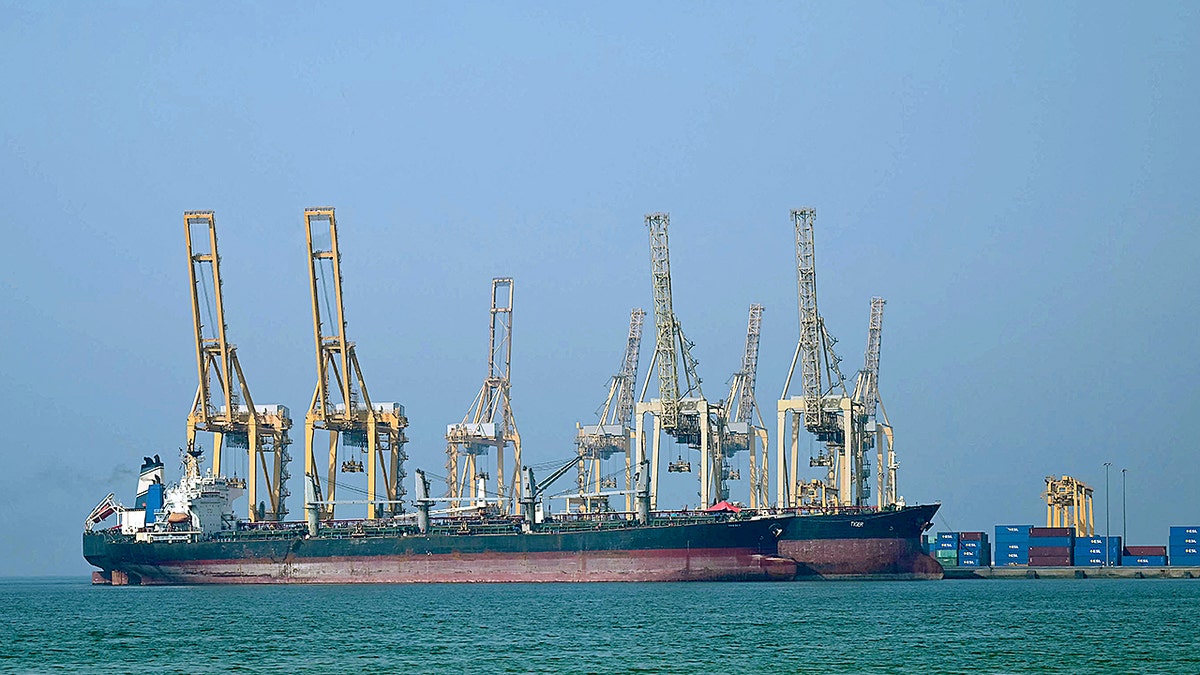
Iran seized two foreign oil tankers in the Persian Gulf on Thursday, allegedly carrying 1 million liters of smuggled fuel. (GIUSEPPE CACACE/AFP via Getty Images)
«Attempting to run the blockade would expose Iran to significant risk that ranges from the destruction of a tanker fleet at minimum to possibly resuming a larger-scale conflict with the United States, or both,» the institute said.
«Iran’s willingness to accept these risks demonstrates the degree to which the regime views the current economic situation as both dire and unsustainable.»
Brown, however, questioned whether Tehran would send the tankers, suggesting the reported operation was an attempt to project defiance rather than a viable strategy.
«This supposed run of the blockade by several Iranian ships that’s discussed is most likely propaganda — another one of a series of similar propaganda statements that don’t turn out to be true and are easily debunked,» he said.
Brown also disputed reports that the tankers were loaded and preparing to depart, citing satellite monitoring of Kharg Island.
«We carefully watched Kharg Island loading by satellite imagery, and there’s really no indication that there’s been any significant loading there in quite some time.»
Brown said coordinating a 14-vessel convoy would also pose major logistical challenges, requiring lead and trailing ships, coordinated communications and procedures for responding to U.S. military orders.
Civilian crews could face significant danger if they refused orders to stop, he warned.
TRUMP WARNS OF NEW STRIKES AGAINST IRAN AFTER NEW YEAR, CALLS NEGOTIATORS ‘PROFESSIONAL TAP DANCERS’
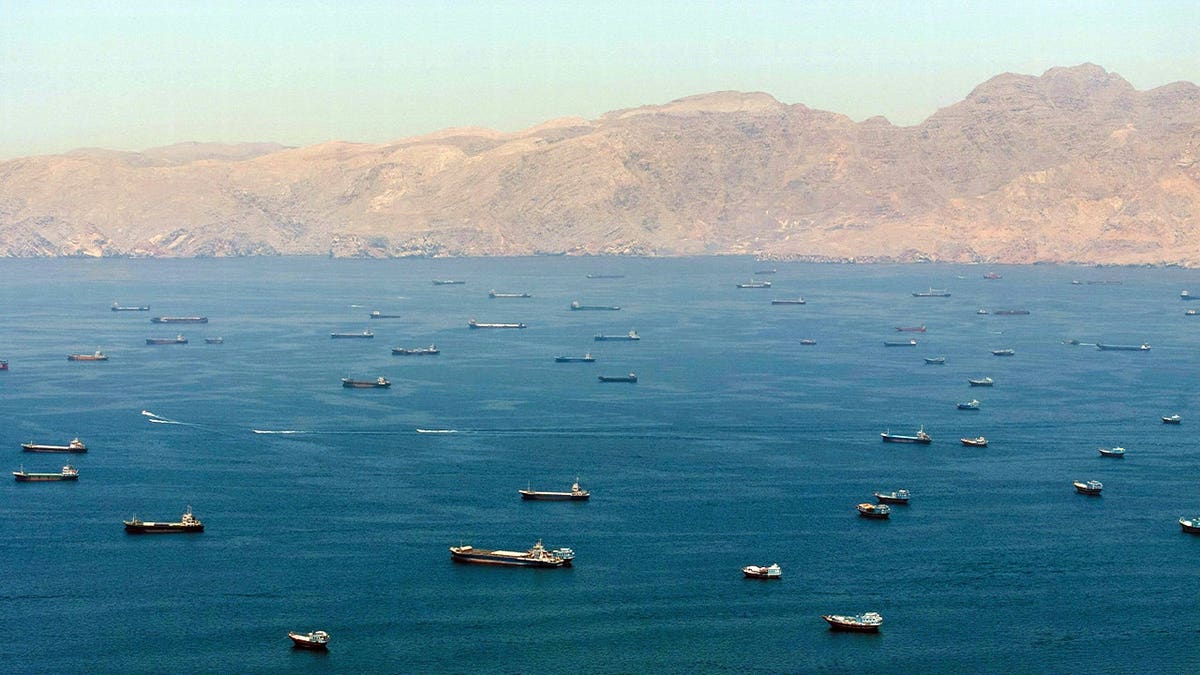
A drone view shows vessels anchored in the Strait of Hormuz, as seen from Musandam, Oman, May 25, 2026. (Stringer TPX IMAGES OF THE DAY via Reuters)
«They would obviously be going into an area of great risk, and they would have to decide whether to comply with the instructions to stop or face action,» Brown said.
In a Nov. 18 advisory, U.S. Central Command (CENTCOM) warned that ships receiving Iranian cargo through ship-to-ship transfers could face interception or seizure, extending the blockade beyond vessels departing Iranian ports, Reuters reported.
Brown said U.S. forces would likely contact the tankers by radio from Navy ships or aircraft and order them to stop. Refusal could trigger an escalated military response.
He said the Navy could transfer responsibility between regional commands, making it difficult for Iranian tankers to escape by sailing farther into the Indian Ocean.
«There’s an administrative boundary, a geographic boundary between the 5th Fleet and the 7th Fleet, between CENTCOM and INDOPACOM,» Brown said.
«But the U.S. Navy is a global Navy, and they’re able to handle these transfers of responsibility when a target or ship of interest crosses that boundary.»
Brown said U.S. forces have the ships, aircraft and procedures to intercept multiple vessels at once, while the open waters of the Indian Ocean offer more room to maneuver than the narrow Strait of Hormuz.
«It’s a mission of the United States, not merely a mission in CENTCOM,» Brown said. «So they have the forces in place.»
«So if they do try to make an attempt with multiple ships, I’m quite confident all or most — probably all — would be interdicted,» he added.
world, iran, war with iran, us navy, national security, foreign policy, geopolitics, military
INTERNACIONAL
La belleza de la semana: el legado de Plautilla Bricci, la pintora y arquitecta que desafió el Renacimiento

Plautilla Bricci (1616-1705) fue una pintora y arquitecta romana cuya carrera transcurrió en un ámbito profesional reservado casi por completo a los hombres. Formada en el taller de su padre, obtuvo encargos de instituciones religiosas y mecenas de alto rango, diseñó la capilla de San Luis IX en San Luigi dei Francesi y dirigió la construcción de Villa Benedetta, conocida como Il Vascello. Su trayectoria la sitúa entre las primeras mujeres que ejercieron la arquitectura de manera profesional en Italia.
La atención sobre su obra se renovó a partir de estudios recientes y de una restauración prevista para su lienzo Nacimiento de la Virgen, conservado en Santa Maria in Campo Marzio. El proyecto busca recuperar la lectura de la pintura y aportar datos técnicos que ayuden a precisar las condiciones de su encargo y su autoría.
Bricci nació el 13 de agosto de 1616 en Roma, hija de Giovanni Bricci y Chiara Recupita. Su padre era pintor, músico y dramaturgo; en ese entorno familiar recibió su primera formación. Los registros parroquiales documentan que tuvo siete hermanos, aunque solo tres alcanzaron la edad adulta. Entre ellos estuvo Basilio Bricci, pintor y arquitecto que colaboró con ella en distintos trabajos.

Giovanni Bricci facilitó la inserción de su hija en los círculos artísticos romanos y, según la reconstrucción de los especialistas, pudo haberle permitido asistir a la academia de Cavalier d’Arpino, amigo suyo. También existen referencias a una posible relación formativa con la carmelita y pintora Eufrasia Benedetti della Croce.
La primera obra conocida de Plautilla Bricci es una Madonna con el Niño, fechada hacia 1630 y conservada en la iglesia de Santa Maria in Montesanto. Una tradición posterior atribuyó la conclusión del rostro de la Virgen a un hecho milagroso, relato que ayudó a consolidar el carácter devocional de la imagen. En 1659 recibió una corona de oro del Capítulo de San Pedro, distinción reservada a representaciones marianas vinculadas con milagros.
Antes de consolidarse como arquitecta, Bricci desarrolló una actividad sostenida como pintora. Los libros de cuentas del cardenal Francesco Barberini registran en 1644 un pago de 30 escudos por dos obras: San Francisco y un ángel y una naturaleza muerta floral. Otros inventarios de la época mencionan puertas decoradas con armas heráldicas realizadas por la artista.

En 1655 figura como pittrice en la Accademia di San Luca, institución romana que admitía mujeres desde principios del siglo XVII. Su nombre volvió a aparecer en los registros de 1671. La participación en la academia le dio presencia en uno de los principales espacios de formación, intercambio y legitimación artística de la ciudad.
Su trayectoria avanzó además mediante la relación con el abad Elpidio Benedetti, agente en Roma del cardenal Jules Mazarino. Benedetti se convirtió en su principal mecenas y le abrió la puerta a encargos de pintura, decoración y arquitectura. Esa protección resultó decisiva para que Bricci accediera a obras de una escala inusual para una mujer de su tiempo.
Hacia 1660, Bricci pintó Nacimiento de la Virgen para una capilla lateral de la iglesia de Santa Maria in Campo Marzio. La obra presenta a la Virgen recién nacida junto a una partera, mientras santa Ana permanece al fondo. La abadesa del templo era Anna Maria Mazzarino, sobrina del cardenal Mazarino, por lo que los investigadores consideran posible que haya intervenido en el encargo.
Entre 1663 y 1668, Bricci estuvo a cargo del proyecto de Villa Benedetta, residencia de Elpidio Benedetti en las afueras de Roma. El edificio fue conocido como Il Vascello por una configuración exterior que evocaba la forma de una embarcación. De la construcción sobreviven planos y grabados, ya que gran parte fue destruida durante el asedio francés de Roma de 1849.
La documentación vinculada con la villa atribuye a la artista tareas de diseño y dirección de obra. Benedetti publicó en 1677 una guía del edificio bajo el seudónimo de Matteo Mayer, aunque en ese texto el proyecto se vinculó públicamente con Basilio Bricci. Los contratos, pagos y dibujos que estudiaron los historiadores sostienen la participación central de Plautilla Bricci en la concepción del conjunto.
La villa combinaba áreas residenciales, decoración escultórica, jardines y una gruta artificial en el acceso. El proyecto permitió que Bricci reuniera las disciplinas que había practicado durante su carrera: pintura, diseño ornamental y arquitectura. Los dibujos conservados muestran la distribución de los interiores y las soluciones previstas para distintos niveles del edificio.

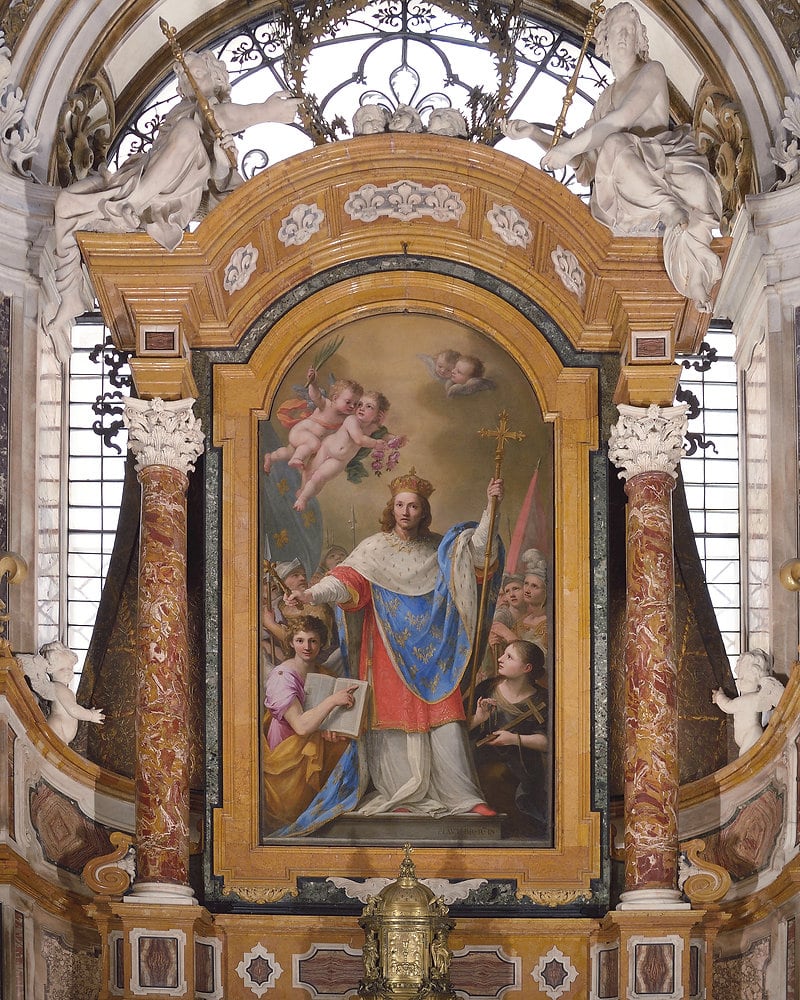
La intervención arquitectónica más accesible de Bricci se encuentra en la iglesia de San Luigi dei Francesi, en Roma. Allí proyectó la capilla de San Luis IX, cuya construcción comenzó en 1670 y concluyó hacia 1680. Además de diseñar el espacio, realizó el retablo San Luis entre la Historia y la Fe.
El lienzo está firmado en el borde inferior derecho con la inscripción “Plautilla Bricci Romana Invenit”. La documentación sobre el encargo es incompleta porque los archivos de la capilla se perdieron en un incendio a comienzos del siglo XIX. La obra quedó ubicada cerca de las pinturas de Caravaggio, que concentran buena parte de las visitas al templo.
La artista recibió otros encargos religiosos en sus últimos años de actividad. En 1675, los canónigos de San Juan de Letrán le encomendaron una gran pintura curva sobre la Presentación del Sagrado Corazón de Jesús. Ese mismo año elaboró un estandarte procesional con escenas del nacimiento y la decapitación de san Juan Bautista para el Oratorio de San Juan Bautista de Poggio Mirteto, por el que recibió 100 escudos.

Bricci presentó una pintura en una muestra celebrada en San Salvatore in Lauro en 1686. Tras la muerte de Basilio, en 1692, se trasladó al monasterio de Santa Margherita, en Trastévere. Murió el 13 de diciembre de 1705 y fue enterrada junto a su hermano en la basílica de Santa Maria in Trastévere.
La historiadora del arte Consuelo Lollobrigida publicó en 2017 una monografía dedicada a la artista. Dos años más tarde, la escritora Melania G. Mazzucco editó la novela histórica L’architettrice, inspirada en su vida.
Entre 2021 y 2022, el Palazzo Corsini de Roma presentó la exposición Una rivoluzione silenziosa, Plautilla Bricci, pittrice e architettrice, centrada en su producción y en los documentos que permitieron reconstruir su carrera.
INTERNACIONAL
Rescataron a Falcon, una ballena jorobada enredada en 30 metros de cuerda: el tercer intento la liberó antes del anochecer
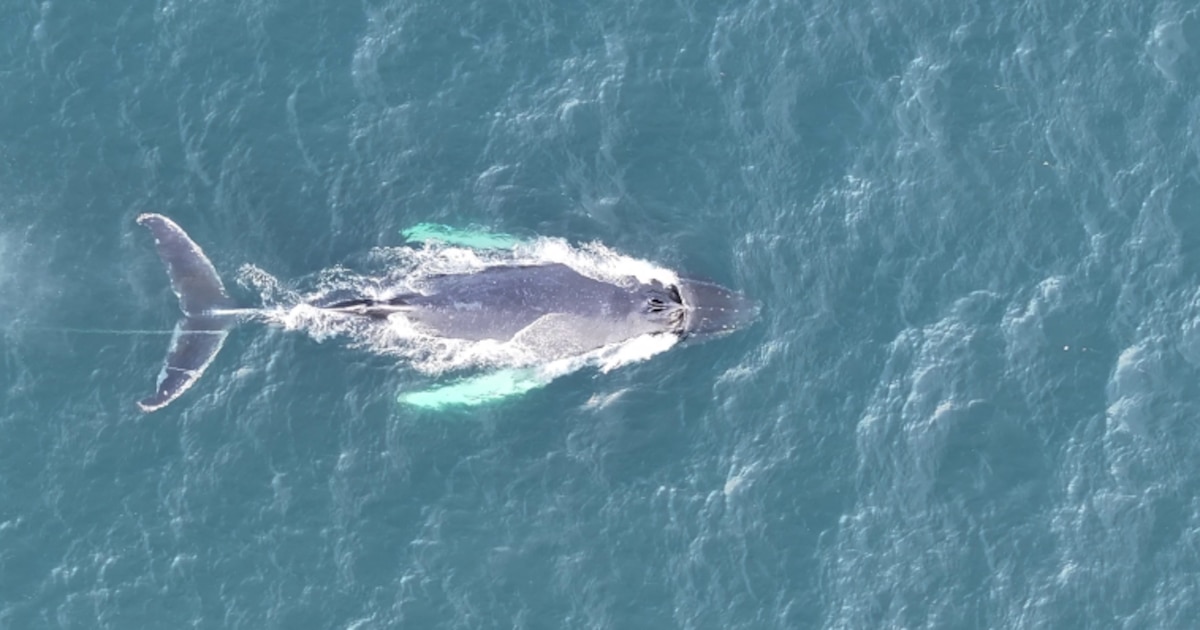
Cuando el sol ya dejaba poca luz sobre el agua, Falcon volvió a salir a la superficie. Estaba a unos 90 metros de la embarcación de rescate y arrastraba una cuerda de pesca que llevaba enredada en la cola. Habían fallado dos intentos. Quedaban cerca de 20 minutos antes de que anocheciera. El tercero alcanzó la línea sumergida y, tras unos segundos de tensión e incertidumbre, la ballena jorobada quedó libre de los casi 30 metros de cuerda de pesca que limitaban sus movimientos.
Falcon, identificada por los investigadores como CRC-13514, pudo continuar su nado luego de una operación realizada el 11 de noviembre. El rescate reunió a naturalistas, científicos, tripulaciones de avistamiento y equipos autorizados para intervenir ante el enmallamiento de grandes cetáceos.
Durante semanas, la ballena había sido una presencia conocida en esas aguas. Quienes salían a observar cetáceos la habían visto cerca de Tacoma, Gig Harbor y Carr Inlet. Su silueta, el soplido al emerger y el movimiento de su cola formaban parte de las jornadas de varias embarcaciones. Hasta que una tripulación advirtió algo distinto: una cuerda rodeaba su aleta caudal.
El aviso que activó el rescate de la ballena jorobada
La tarde de ese miércoles, la tripulación de Puget Sound Express, integrante de la Pacific Whale Watch Association, encontró a Falcon al norte de Seattle. Tomaron fotografías, documentaron el enredo y alertaron de inmediato a la línea de emergencia de la Administración Nacional Oceánica y Atmosférica de Estados Unidos (NOAA).
La señal de alarma movilizó al Cascadia Research Collective (CRC) y a SeaLife Response, Rehabilitation, and Research (SR3), dos organizaciones con personal entrenado y autorizado para responder ante este tipo de situaciones.
El tiempo era el principal obstáculo. Los equipos de rescate se encontraban a más de una hora de navegación. La luz comenzaba a caer y la cuerda que seguía a la ballena estaba bajo el agua, fuera de la vista de quienes navegaban hacia ella.
Mientras tanto, científicos del Center for Whale Research (CWR) y del Orca Behavior Institute (OBI) realizaban estudios sobre orcas en el área. Dejaron de lado esa tarea y se sumaron al operativo. Lograron ubicar nuevamente a Falcon, tomaron imágenes con un dron y siguieron sus desplazamientos para guiar a quienes iban en camino.
Las imágenes confirmaron el problema: una cuerda estaba enrollada en el lado derecho de la cola y se extendía unos 30 metros detrás del animal. La aleta caudal es la parte del cuerpo que permite a las ballenas avanzar y ganar velocidad en el agua. Una línea adherida allí puede rozar la piel, provocar cortes, dificultar el desplazamiento y apretarse cada vez más.
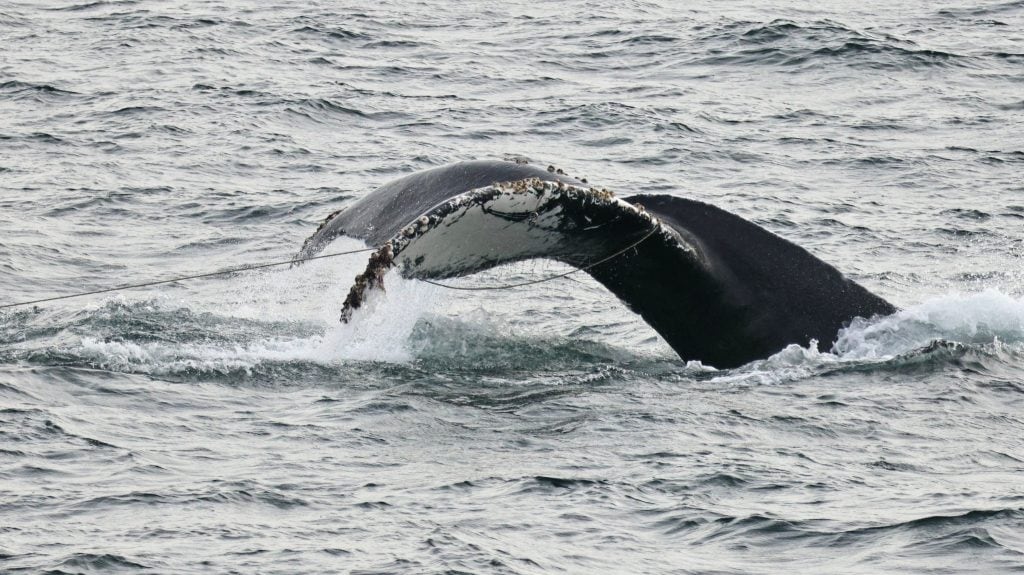
Falcon avanzaba mientras el día se apagaba
La ballena se desplazaba hacia el sur. Ese movimiento, que podía haber alejado al animal de los rescatistas, terminó por acercarlo a las embarcaciones que iban en su búsqueda. Personal de SR3 llegó primero y asumió la vigilancia. Poco después arribó el barco del CRC, con dos rescatistas de SR3 a bordo.
La primera meta no era retirar de inmediato todo el aparejo. El plan consistía en enganchar la cuerda que Falcon arrastraba y sujetarle una boya de telemetría. Esa boya sirve para rastrear al animal si la intervención debe detenerse y continuar al día siguiente con luz natural.
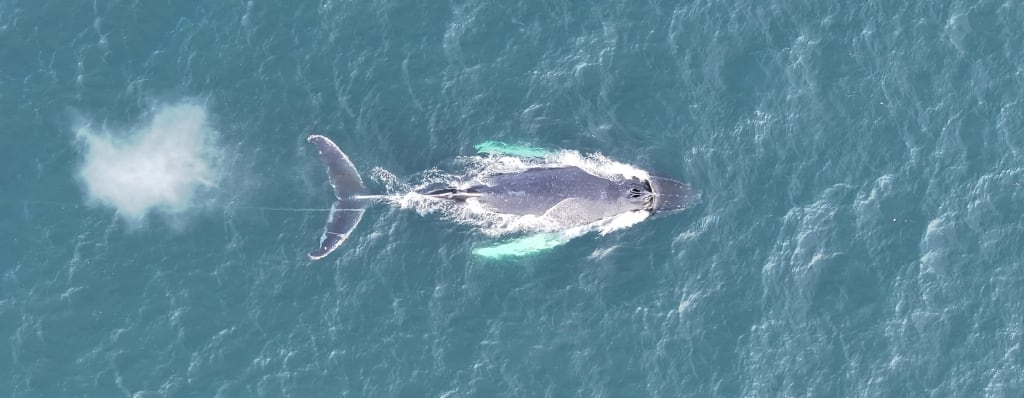
Doug Sandilands, rescatista principal del CRC, explicó que el trabajo comienza mucho antes del contacto con una ballena. “Un desenmalle exitoso suele comenzar mucho antes de que los rescatistas lleguen a la ballena”, afirmó.
El especialista señaló que mantener contacto visual con el animal, registrar el tipo de aparejo y comunicar sus movimientos puede definir el resultado de un operativo. “En el caso de Falcon, la disposición del CWR y del OBI para detener sus propias actividades de investigación y ayudar cambió todo, sobre todo porque se terminaba la luz”, agregó.
La primera maniobra falló. El gancho no logró tomar la cuerda que permanecía debajo de la superficie. El equipo volvió a acercarse. Por un instante, surgió la posibilidad de que el aparejo se hubiera desprendido solo.
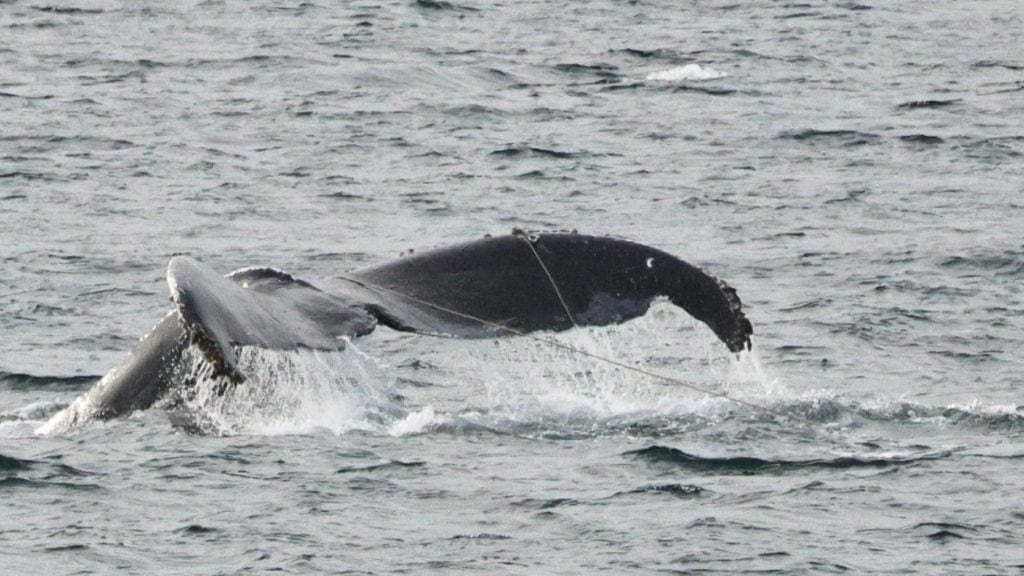
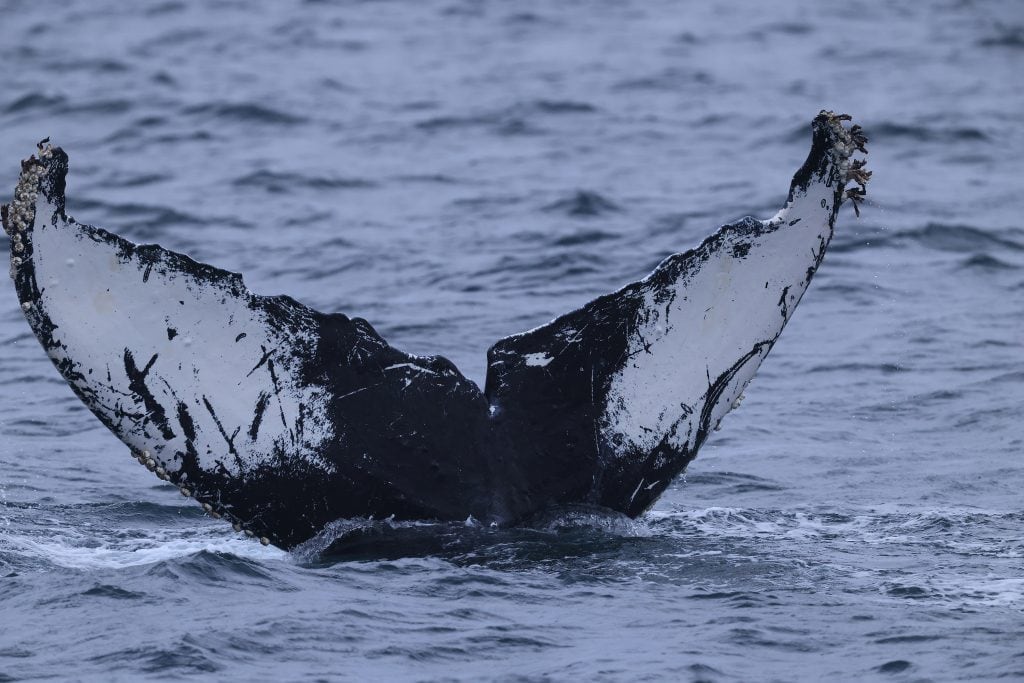
Pero Falcon levantó la cola por encima del agua. La cuerda seguía allí, ajustada en la aleta caudal derecha.
El segundo intento tampoco funcionó. La noche estaba cada vez más cerca y los rescatistas debían decidir si suspendían el operativo hasta el día siguiente. Hicieron un último intento.
El tercer lanzamiento liberó los 30 metros de cuerda de pesca
Falcon emergió de nuevo, a unos 90 metros del barco. Desde la embarcación lanzaron el gancho por tercera vez. Esta vez, el dispositivo tomó la línea sumergida.
La ballena reaccionó al peso adicional y aceleró. Arrastró la cuerda de control y la boya de telemetría. Durante unos segundos, los rescatistas no supieron si el gancho había retirado el aparejo completo o si había cortado la línea y dejado un tramo alrededor de su cola.
Recuperaron la boya, revisaron las cuerdas y encontraron la respuesta: habían extraído todo el material que mantenía atrapada a Falcon.
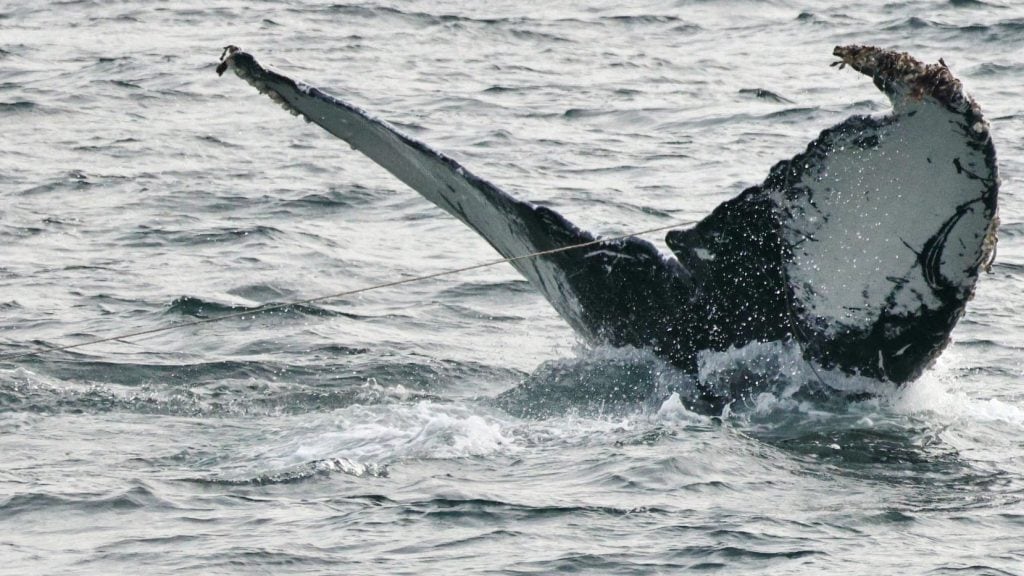
Poco después, la ballena salió a respirar y volvió a elevar la cola. Ya no había una cuerda alrededor de la aleta. La confirmación llegó antes de que el día terminara.
KC Scofield, rescatista de SR3, destacó que la coordinación permitió una intervención rápida. “Lo llamativo fue la colaboración y la comunicación de todos los grupos para reunir los recursos necesarios y conseguir un desenmalle tan rápido”, afirmó.
El equipo permaneció cerca del cetáceo durante varios momentos de respiración para comprobar que no quedaran restos de aparejos. Falcon seguía su recorrido sin la línea que, horas antes, se extendía detrás de su cuerpo.
La nueva observación que confirmó que Falcon estaba libre
Dos días más tarde, la tripulación de Puget Sound Express localizó otra vez a Falcon frente a Edmonds. Esta vez pudieron observarla con luz de día. Según el CRC, no tenía cuerdas adheridas ni presentaba heridas de gravedad.
La ballena jorobada quedó en condiciones de continuar el recorrido que la lleva desde las aguas del estado de Washington hacia Hawái, donde estos animales se desplazan durante la temporada de reproducción.
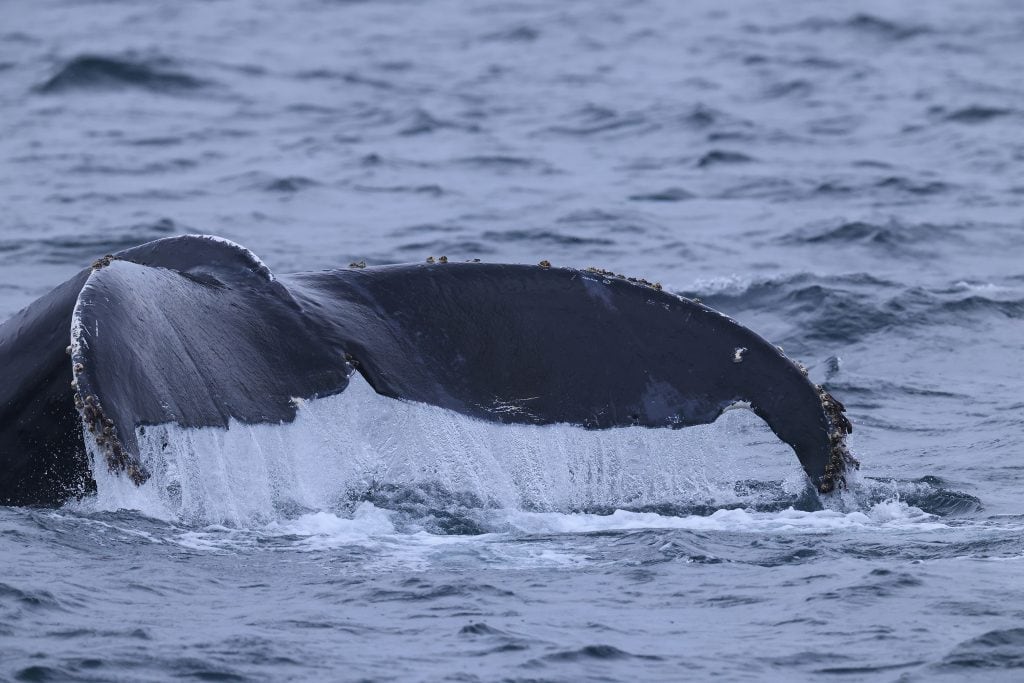
El operativo integró la Red de Respuesta ante Enmallamientos de la Costa Oeste, que reúne a organizaciones y autoridades dedicadas a asistir a grandes ballenas atrapadas en artes de pesca, documentar los incidentes y buscar medidas de prevención.
La intervención se realizó bajo el permiso número 24359 de NOAA. Los protocolos impiden que personas sin entrenamiento intenten liberar por su cuenta a una ballena enredada. Las cuerdas tensionadas, el tamaño de los animales y sus reacciones imprevisibles convierten esas maniobras en un riesgo para todos.
Por eso, ante el avistamiento de un cetáceo atrapado, la recomendación es mantener distancia, tomar fotografías o videos si es posible y dar aviso a los equipos especializados. En el caso de Falcon, una llamada a tiempo, la vigilancia de quienes estaban en el agua y un último lanzamiento antes del anochecer fueron suficientes para que la ballena volviera a nadar libre.

El horóscopo de hoy: lunes 23 de noviembre

Simeone récord en España: DT con más victorias y la etiqueta de «defensivo» :: Olé

Tras los triunfos de River Plate, Rosario Central e Instituto, así quedó el cuadro de cuartos de final del Torneo Clausura

Tensión con el dólar: crece la brecha cambiaria y se estancan las reservas

Trump dares Iran to breach US port blockade as Tehran reportedly readies 14 oil tankers

Patricia Bullrich se reunió con el diputado que dejó el bloque de LLA y la respaldó para una eventual candidatura presidencial

Javier Milei y sus medidas, en vivo: “Hoy discutimos si crecemos un punto más o menos”, dijo el Presidente

Javier Milei destacó el desembarco de Tesla en el país y aseguró: “Esto también es devolverle la libertad a los argentinos”

El brote de ébola está fuera de control en la República Democrática del Congo y crece el temor a una epidemia continental

El burbujeante ping pong de Colapinto con un actor argentino: de la puja entre Senna y Riquelme a la comida que le falta a la Fórmula 1

 POLITICA2 días ago
Javier Milei destacó el desembarco de Tesla en el país y aseguró: “Esto también es devolverle la libertad a los argentinos”
- CHIMENTOS17 horas ago
Agustín “Rada” Aristarán se despide de Chanta: “Con esta obra dejé de ser un impostor”
- INTERNACIONAL17 horas ago
NYC college put on notice after Jewish campus group shunned by student government: ‘rude awakening’