INTERNACIONAL
A tres años del ataque del 7 de octubre, Israel homenajeó a las víctimas de Hamas en plena campaña electoral


Israel homenajeó este miércoles a las víctimas del brutal ataque lanzado hace tres años por el movimiento islamista palestino Hamas, en medio de una fuerte crispación política a tres semanas de las elecciones y por nuevos bombardeos en la Franja de Gaza.
En Reim, donde ese 7 de octubre se celebraba el festival de música electrónica Nova, asaltado por milicianos islamistas, los allegados de las víctimas observaron un minuto de silencio a las 06:29 locales, la hora exacta en que comenzó el ataque desde Gaza, en la jornada más sangrienta desde la creación del Estado de Israel.
“Fue el minuto en que nuestras vidas cambiaron para siempre”, dijo Katia Zohar, la madre de Bar, asesinada con 23 años junto a otras 360 personas en ese festival a pocos kilómetros de la Franja de Gaza.
“Me acuerdo de todo. El momento en que me llamó para que viniera a buscarla, porque había misiles volando (…) y luego cuando llamó desde la carretera, gritando que le estaban disparando”, contó.
Anna Davitashvili, de 53 años, recordó a su hijo mayor Shaun, asesinado a los 25 años, junto a sus amigos en el festival Nova. “Lo extraño”, dijo.
Minuto de silencio en el kibutz Kfar Aza
También se observó un momento de silencio en el kibutz Kfar Aza, cerca de la frontera con Gaza, donde 64 personas fueron asesinadas y 18 secuestradas durante el ataque.
Las conmemoraciones se llevaron a cabo este año en plena campaña electoral, antes de las elecciones del 27 de octubre, que se anuncian muy reñidas.
El primer ministro, Benjamin Netanyahu, declaró en un comunicado que este es un día en el que “el pueblo se une en el recuerdo”.
“Completaremos la misión: estamos aquí y haremos rendir cuentas a todos los asesinos”, afirmó.
gaza













INTERNACIONAL
Holocaust educator says Mamdani could learn from UK’s targeted approach to antisemitism in schools

New York City Mayor Zohran Mamdani speaks about Israeli Prime Minister Benjamin Netanyahu in a still image taken from handout video released on July 21, 2026. (Reuters)
NEWYou can now listen to Fox News articles!
The British government’s decision to embrace sweeping measures addressing antisemitism in schools is drawing a sharp contrast with New York City Mayor Zohran Mamdani’s recently unveiled strategy, raising questions about why Britain’s plan appears more specific than the one proposed in America’s most Jewish city.
The U.K. government accepted all 27 recommendations from an independent review into antisemitism in schools and colleges in England. The measures include encouraging adoption of the International Holocaust Remembrance Alliance working definition of antisemitism, specialized training for educators, strengthened reporting procedures and independent oversight.
Mamdani’s 33-page strategy — while not only focused on education — by comparison, does not adopt a single definition of antisemitism, explicitly address the relationship between anti-Zionism and antisemitism or establish numerical benchmarks for measuring whether its initiatives succeed.
British Jewish author and Holocaust educator Dov Forman, who recently graduated from university, said Mamdani could learn from Britain’s targeted approach to addressing antisemitism in schools.
MAMDANI PLEDGES MILLIONS TO COMBAT ANTISEMITISM WHILE LEAVING KEY QUESTION UNRESOLVED
The British review followed a BBC report from Yavneh College, a Jewish secondary school near London, where students described how antisemitism has affected their daily lives. Their accounts offered a window into the urgency behind the government’s recommendations.
Education provides one of the clearest points of comparison between the two strategies. Mamdani’s plan calls for expanding Holocaust education, including opportunities for students to visit the Museum of Jewish Heritage, while also addressing how public schools respond to antisemitic discrimination. The U.K. government’s recommendations address many of those same concerns, placing greater emphasis on how educators recognize antisemitism, how schools respond when incidents occur and what protections are in place for Jewish students.
The review, led by former senior education official Sir David Bell, found that nearly three in five Jewish people between the ages of 16 and 19 had experienced or witnessed antisemitism. It concluded that antisemitism is a distinct form of racism requiring a specific response and called for clearer guidance to distinguish legitimate political debate from harassment, intimidation and antisemitic rhetoric.
British Jewish author and Holocaust educator Dov Forman, who recently graduated from university, called the recommendations «the bare minimum,» while acknowledging that the government is attempting to confront the problem directly.
«The least [Mamdani] could do is look at what has happened in the U.K. and adopt similar measures, such as adopting the IHRA definition, which is the agreed definition across the world and where there is a consensus of what antisemitism actually is,» Forman told Fox News Digital.
«The basic way to solve antisemitism is to actually agree on what it is and to understand that targeting a Jew deliberately because of what is going on in Israel, for example, is antisemitic, as the IHRA definition says,» he added.

Former Conservative cabinet minister Michael Gove, Reform UK Deputy Leader Richard Tice and Chief Rabbi Ephraim Mirvis lead a ‘march against antisemitism’ demonstration in central London, on September 7, 2025. (Carlos Jasso/AFP via Getty Images)
Forman cautioned that the British recommendations remain largely optional and that their effectiveness will depend on whether institutions act.
«I do think some of them will be enforced and listened to. I do worry, though, that the government says things and does not actually take it seriously enough.»
Education Secretary Lucy Powell said the government would establish an implementation group, while Bell was commissioned to conduct an independent assessment of its progress after one year.
Ambassador Rabbi Yehuda Kaploun, the U.S. special envoy to monitor and combat antisemitism, welcomed Britain’s decision while emphasizing that adopting recommendations is only the beginning.

JEWISH EDUCATORS FACE RAMPANT ANTISEMITISM IN TEACHERS UNIONS, NEW REPORT FINDS
«I welcome the U.K.’s announcement that it has accepted all 27 recommendations,» Kaploun wrote on X. «Now, the challenge lies in implementation and enforcement.»
Forman also said that British officials must examine whether their rhetoric about Israel contradicts their stated commitment to protecting Jewish communities.
«It is very rich of the government to say that schools should adopt the IHRA definition of antisemitism and that Jews should not be demonized for what is going on in the Middle East, and then for them to get up in the dispatch box in the House of Commons every week and blame Israel,» he said.
«Stop talking and start acting,» Forman added, calling on the government to confront Islamist extremism and the Muslim Brotherhood and identify more directly where antisemitism is originating.

Antisemitic hate on display at an anti-Israel protest in London. Antisemitism in the UK is hitting record levels since the Hamas terror attacks on Oct. 7 (Campaign Against Antisemitism on X)
The U.K. has faced criticism for being slow in combating antisemitism. Jewish residents have faced physical attacks, threats and harassment, making the specificity of its new plan and its contrast with New York City’s approach particularly notable.
Rabbi Chaim Steinmetz, senior rabbi of Congregation Kehilath Jeshurun on Manhattan’s Upper East Side, called Mamdani’s strategy a «paper tiger,» arguing that its announced $36 million price tag obscures how little would go directly toward physical security.
«It’s a million dollars in security in a city with a million Jews. It’s a dollar a Jew,» Steinmetz told Fox News Digital.
The strategy includes $1 million to support physical security for vulnerable nonprofit organizations, including synagogues and other houses of worship, and $6.4 million for grants through the city’s Partners Against the Hate initiative.
Steinmetz claimed that much of the money would support cultural centers and broadly defined community initiatives rather than immediate security needs.

Students at Columbia University participate in an anti-Israel protest. (Spencer Platt/Getty Images)
SIGN UP FOR ANTISEMITISM EXPOSED NEWSLETTER
UJA-Federation of New York, the Jewish Community Relations Council of New York, the American Jewish Committee’s New York office and the New York Board of Rabbis issued a joint statement warning that Mamdani’s plan fails to address a central source of contemporary antisemitism.
The organizations said rhetoric demonizing or delegitimizing Israel contributes to Jewish New Yorkers being treated as suspect, excluded or unsafe, and argued that any serious strategy must acknowledge that connection.
«How can you have a strategy to keep New York Jews safe when you can’t even name what the danger is?» Steinmetz asked.
One of Mamdani’s early actions as mayor was to revoke an executive order issued by former Mayor Eric Adams adopting the IHRA definition for city agencies. The definition provides examples of when criticism of Israel may cross into antisemitism while making clear that criticism comparable to that directed at any other country is not inherently antisemitic.

Britain’s main opposition Conservative Party leader Kemi Badenoch delivers a speech during a rally organized by the Campaign Against Antisemitism, opposite Downing Street in central London on May 10, 2026. (Justin Tallis/AFP via Getty Images)
Fox News Digital asked Mamdani’s office why the city’s strategy omits the IHRA definition and measurable benchmarks, and whether the administration would consider safeguards similar to those adopted by Britain. The mayor’s office did not respond by the time of publication.
Britain’s measures have also only recently been accepted, and their impact remains untested.
Britain has defined the problem, outlined specific recommendations and established a process for reviewing its progress. New York City’s Jewish leaders are still asking whether City Hall has accurately identified the threat it claims it intends to confront.
anti semitism, united kingdom, zohran mamdani, uk politics, holocaust
INTERNACIONAL
GOP senator takes aim at blue-city mayor for move promoting foreign workers in key industry: ‘Lit on fire’

FIRST ON FOX: Sen. Bernie Moreno (R-OH) is taking aim at the Democratic mayor of Columbus, Ohio, over a memorandum of understanding (MOU) that was signed with the African nation of Ghana promoting a joint nursing program.
«Instead of investing in Ohio’s domestic workforce, you and the Columbus City Council chose to direct $225,000 in public dollars towards recruiting nurses from overseas,» Moreno wrote to Mayor Andrew Ginther on Wednesday morning, expressing «disappointment» over the MOU in Columbus, the state capital of Ohio.
«But this figure is only a fraction of the approximately $8.3 million in taxpayer dollars you have lit on fire to benefit noncitizens and foreign governments since you were elected as mayor.»
Moreno’s criticism comes after the city and Ghanaian officials signed a memorandum of understanding in September establishing the Ghana-Columbus Nursing Partnership Programme. The agreement is intended to strengthen nursing education, expand workforce development, and create legal pathways for qualified Ghanaian nurses to enter Ohio’s health care workforce.
RED-STATE SENATOR DROPS HAMMER ON DEM MAYOR OVER NEW ‘WOKE’ DEI ORDINANCE WHILE VIOLENT CRIME SURGES
Moreno argued that the agreement could result in American nurses being replaced by lower-cost foreign labor and said public funds should instead be used to expand enrollment and training capacity at Ohio colleges and universities.
«You were elected to serve the citizens of Columbus, not the citizens of Ghana,» Moreno wrote. «Increasing publicly subsidized foreign nursing recruitment programs will likely negatively impact American nurses’ wages. These funds should be invested directly in Ohio nursing students and utilized to expand Ohio’s universities and colleges nursing programs’ capacity. I recommend you implement policies that invest public funds in American nurses.»
AMERICA’S BROKEN LEGAL IMMIGRATION SYSTEM IS REPLACING US WORKERS BY DESIGN
The partnership between Ghana and Columbus has been widely blasted by conservatives on social media in recent weeks, with many arguing that American citizens should fill those jobs.
«Why aren’t our tax dollars funding nursing scholarships and careers for Ohioans instead?» Attorney and GOP strategist Mehek Cooke posted on X in response to reporting from journalist Natalie Winters. «Stop sidelining Americans with OUR money.»
«It’s worth noting that earlier this year a homecare nurse from Ghana named Roberta Achampong fled the country back to Ghana after allegedly stealing millions from Medicaid and buying a swanky house and a Porsche,» policy analyst Parker Thayer posted on X. «And now the mayor of Columbus wants more nurses from Ghana.’
The $225,000 referenced in Moreno’s letter was approved by Columbus City Council as a 2026 general fund grant to Greater Columbus Sister Cities International. The ordinance says the money is intended to support business, government, cultural, educational, and environmental exchanges among Columbus’ 10 sister cities, including Accra, Ghana, as well as the organization’s staffing and administrative costs.
Digital reached out to Ginther’s office for comment.
«Ghana has made significant investment in training nursing professionals who can migrate legally to enter a ready market in Columbus,» Ginther said during the signing ceremony, according to a press release from the government of Ghana.
The press release added that Ghanaian officials «emphasized that the agreement extends far beyond simple labor migration and stated that the MoU serves as a strategic platform for: mutual skills transfer between medical professionals, institutional strengthening for healthcare facilities, joint research collaborations and health innovations and global improvement of patient health outcomes.»
Moreno wrote that he hopes the mayor will «reallocate public dollars toward expanding enrollment and training capacity at area colleges and universities, which would generate additional high-earning job opportunities for younger generations in our community and improve patient care.»
politics, state and local, ohio, health, public sector
INTERNACIONAL
Universidad peruana lleva agentes de IA a sus cursos: 850 docentes ya están certificados y busca llegar a 4.000

La Universidad César Vallejo (UCV) ha certificado a 850 docentes para desarrollar y utilizar agentes de inteligencia artificial (IA) en sus cursos y prevé elevar esa cifra a 4.000 el próximo año. Jorge Peralta Nelson, director de Innovación Tecnológica de la institución, vinculó esa expansión con el objetivo de llevar estos recursos a cerca del 50 % de la malla curricular.
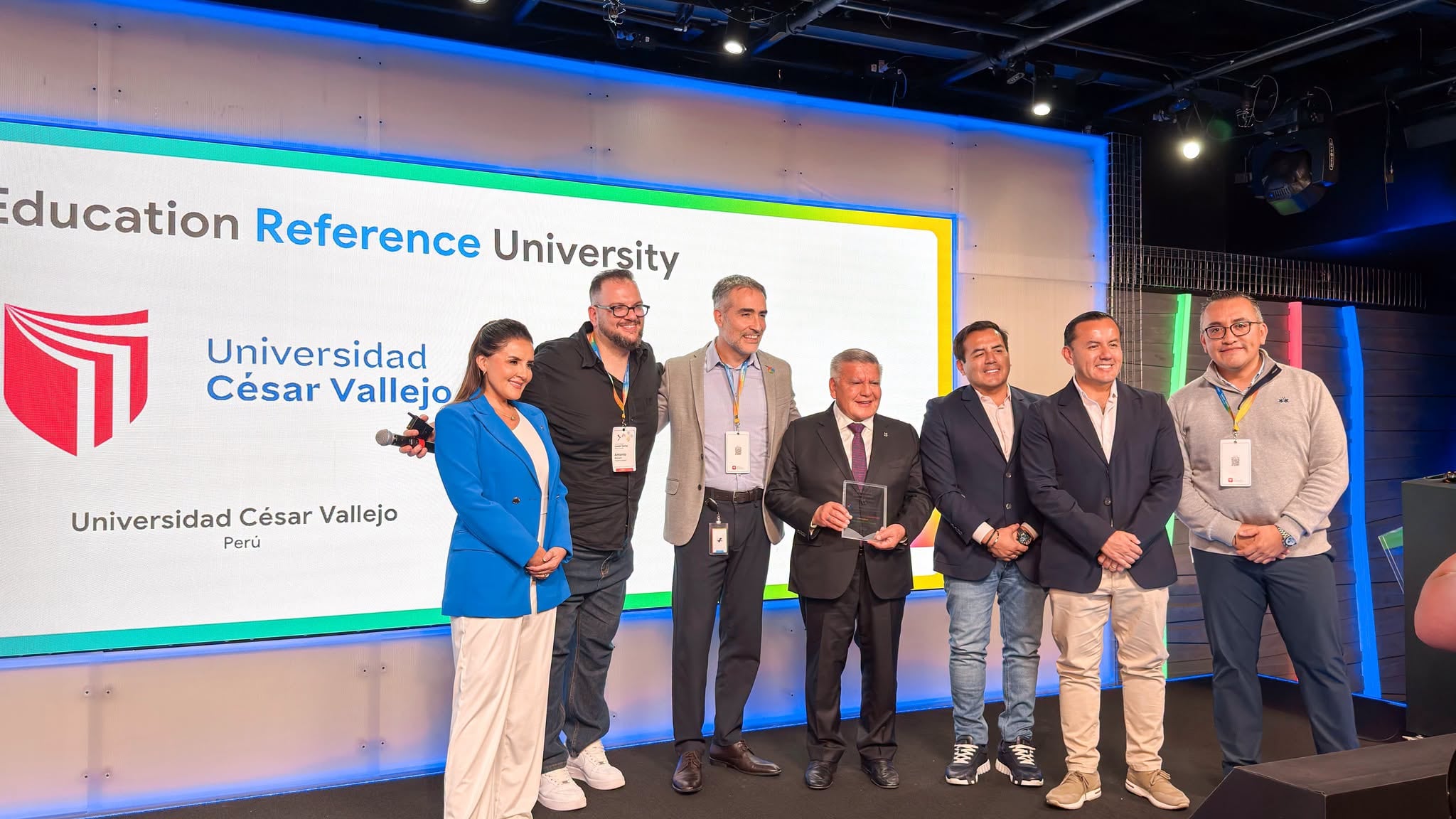
El despliegue forma parte del proceso por el que la universidad recibió un reconocimiento de Google como institución de referencia en el uso educativo de Gemini. Peralta explicó que no se trató de un concurso, sino de una selección realizada por la compañía tecnológica entre universidades que cumplían determinadas condiciones de adopción de inteligencia artificial.
Entre los indicadores mencionados por el directivo figuran cerca de 70.000 usuarios de Gemini en un periodo de seis meses y 75.000 estudiantes capacitados en inteligencia artificial, cloud y herramientas de Google. La alianza entre ambas instituciones comenzó hace dos años con un programa orientado al desarrollo de competencias digitales entre los estudiantes y posteriormente avanzó hacia la incorporación de IA en los procesos de enseñanza.
“Ochocientos cincuenta han sido certificados justamente en eso. Ahora vamos a pasar el próximo año a cuatro mil”, señaló Peralta sobre la capacitación de profesores para generar sus propios agentes.
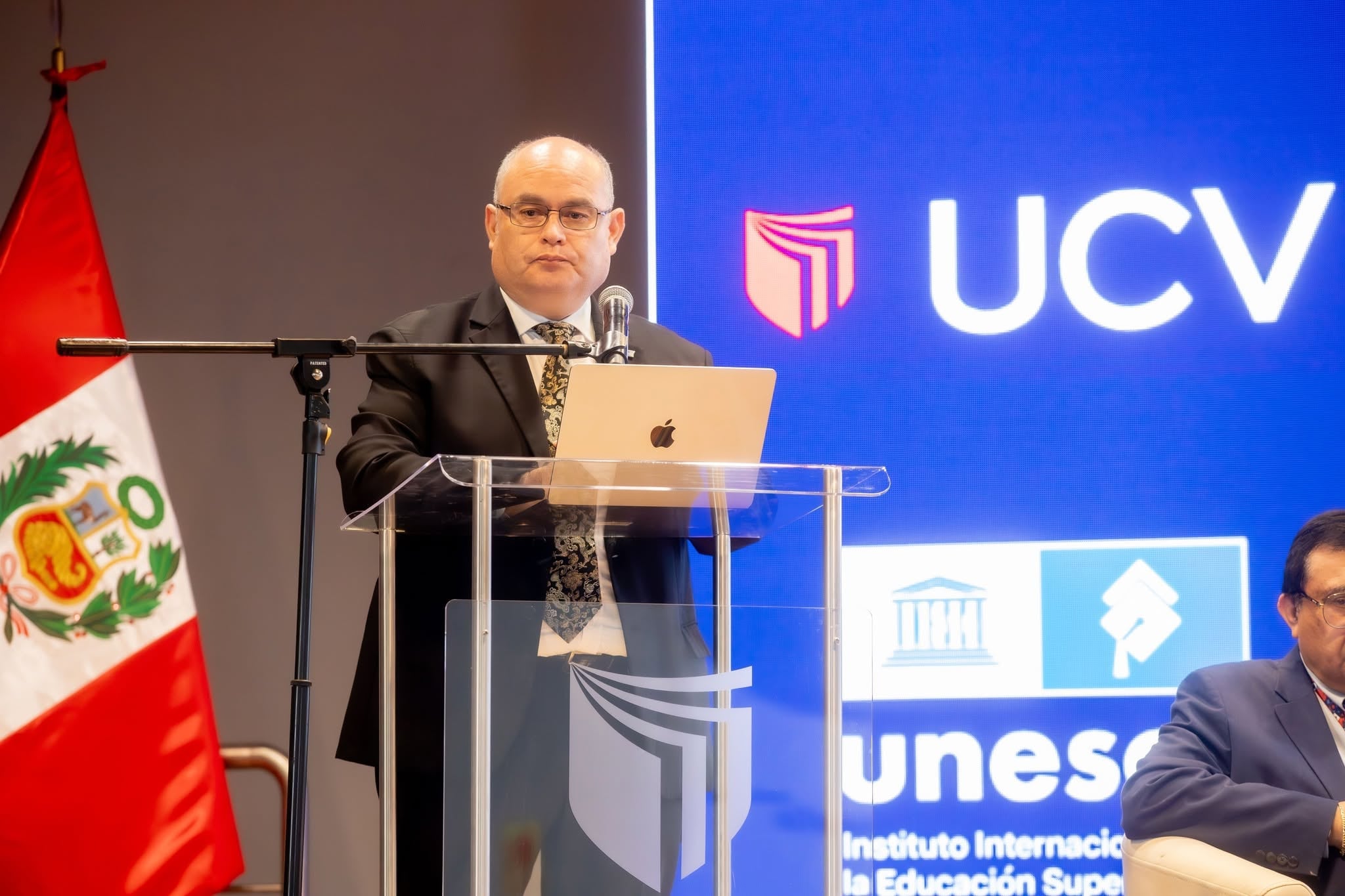
El uso de inteligencia artificial, sin embargo, no se limita a los agentes desarrollados por los profesores. Heraclio Campana Añasco, vicerrector académico de la UCV, señaló que la universidad también ha trabajado con IA en sílabos, contenidos y diseños instruccionales, mientras prepara una nueva actualización curricular para responder, entre otros cambios, a nuevas necesidades profesionales asociadas con el avance de esta tecnología.

Agentes de IA para evaluación y reforzamiento
Los profesores pueden crear agentes mediante instrucciones o prompts, sin necesidad de programarlos, y configurarlos con los contenidos de cada curso para realizar tareas específicas. Entre los casos de uso mencionados por Peralta figuran tutores de reforzamiento, simuladores de exámenes y ejercicios de role play.
Los agentes también pueden generar pruebas o ejercicios adaptados al nivel de cada estudiante, una aplicación que la universidad plantea como un recurso para personalizar determinadas actividades de aprendizaje.
“Lo que proponemos con los agentes es que cada profesor pueda personalizar para cada curso un recurso de aprendizaje a la medida”, afirmó Peralta.
Uno de los casos destacados por el directivo es la evaluación. Según sus estimaciones, un profesor puede revisar alrededor de 500 pruebas durante un ciclo, mientras que los agentes desarrollados para esa tarea permiten realizar en minutos procesos que anteriormente podían demandar días.
Peralta sostuvo que la finalidad es reducir el tiempo destinado a determinadas labores operativas para que el profesor pueda dedicarlo a otras actividades, como la preparación de materiales y recursos para sus clases.
De la evaluación al papel del docente
Mientras Peralta sitúa uno de los principales usos de los agentes en el proceso de evaluación, Campana aborda el cambio desde el modelo académico. Según explicó, la universidad busca que los estudiantes desarrollen un producto y posteriormente lo sustenten mediante distintos mecanismos, entre ellos una exposición oral, un video, un resumen o una aplicación.
De esta manera, la evaluación apunta a comprobar lo que el estudiante es capaz de desarrollar y sustentar, en lugar de limitarse a mecanismos tradicionales de evaluación.
La capacitación de los primeros 850 profesores también se ha concentrado en el uso ético de la IA y su aplicación en los procesos docentes. Peralta señaló que uno de los desafíos es definir el lugar de estas herramientas dentro del aprendizaje y evitar que su utilización se limite a copiar o resolver tareas.

Según explicó, la universidad busca orientar las evaluaciones hacia competencias y emplear la IA para crear situaciones en las que los estudiantes puedan entrenarse y demostrar lo aprendido.
La incorporación de agentes, sostuvo Peralta, no está planteada como un reemplazo de los profesores, sino como una forma de extender determinadas capacidades docentes, incluida la posibilidad de ofrecer recursos de apoyo a los estudiantes fuera del horario habitual de clases.
“La capacidad de enseñar hoy es humana y seguirá siendo humana, en mi entender”, afirmó.
Campana situó el papel del profesor en el desarrollo de capacidades como pensamiento crítico y analítico, resolución de problemas, comunicación efectiva y trabajo en equipo. Añadió que acceder a información mediante inteligencia artificial no equivale por sí solo a generar conocimiento, sino que el estudiante debe procesarla, sistematizarla e integrarla.
Currículo e impacto en el aprendizaje
La incorporación de inteligencia artificial también forma parte de los cambios que la universidad proyecta en su formación académica. Campana informó que la UCV trabaja en una nueva actualización curricular y que ha encargado estudios para responder a nuevas necesidades del mercado laboral.
Entre esos cambios mencionó la aparición de empleos vinculados con la aplicación de inteligencia artificial para los que, según indicó, todavía existe necesidad de profesionales preparados. El vicerrector sostuvo que la formación universitaria debe anticiparse a las transformaciones tecnológicas y del conocimiento que puedan producirse en los próximos años.
La estrategia incluye además herramientas destinadas directamente a los estudiantes. A través de sus cuentas institucionales pueden acceder a recursos como Gemini y NotebookLM. Según Peralta, este último permite trabajar con materiales académicos para generar resúmenes, videos, infografías, presentaciones y traducciones.
La UCV prevé habilitar licencias de Gemini Pro para sus estudiantes matriculados. Peralta indicó que las licencias educativas disponibles actualmente tienen determinadas capacidades restringidas y que la versión Pro está prevista para las cuentas institucionales correspondientes a la matrícula 27/1.
El impacto de este despliegue sobre los resultados educativos, sin embargo, todavía deberá ser evaluado. Peralta señaló que la universidad se encuentra actualmente en una etapa de implementación de estas herramientas y que el siguiente paso será medir sus efectos sobre el aprendizaje.

Holocaust educator says Mamdani could learn from UK’s targeted approach to antisemitism in schools

GOP senator takes aim at blue-city mayor for move promoting foreign workers in key industry: ‘Lit on fire’

Accidente de trenes en España: duro reclamo de Llorente, Courtois y Carvajal al ministro de Transporte

La ONU descartó una resolución inmediata sobre el pedido de revisión de la condena a Cristina Kirchner: “Podría llevar años”

El Gobierno defiende la “legalidad” de la salida de Bolsonaro y un funcionario admitió la colaboración oficial

Adrián Pallares habló del final de su dupla con Rodrigo Lussich: “Él prefiere seguir un camino individual”

CFK, Axel Kicillof, Sergio Massa y otros referentes del PJ celebraron el triunfo electoral de Lula da Silva

Medios brasileños afirman que Flávio Bolsonaro escapó del país y está en vuelo a Estados Unidos

El gobierno de Milei apuesta al triunfo de Bolsonaro y el peronismo, a la “resurrección” de Lula da Silva

Julián Álvarez le dio el triunfo al Atlético Madrid y terminó con otra extensa racha negativa: el gesto de los fanáticos

 POLITICA3 días ago
CFK, Axel Kicillof, Sergio Massa y otros referentes del PJ celebraron el triunfo electoral de Lula da Silva
- INTERNACIONAL22 horas ago
Medios brasileños afirman que Flávio Bolsonaro escapó del país y está en vuelo a Estados Unidos
- SOCIEDAD3 días ago
Edgerunners 2 ha vuelto a poner a David Martinez en el centro de la conversación. Su showrunner tiene algo que aclarar sobre su destino