
INTERNACIONAL
Amenazas anónimas, un acosador misterioso y un asesinato que sigue sin resolverse: el caso de Grégory Villemin

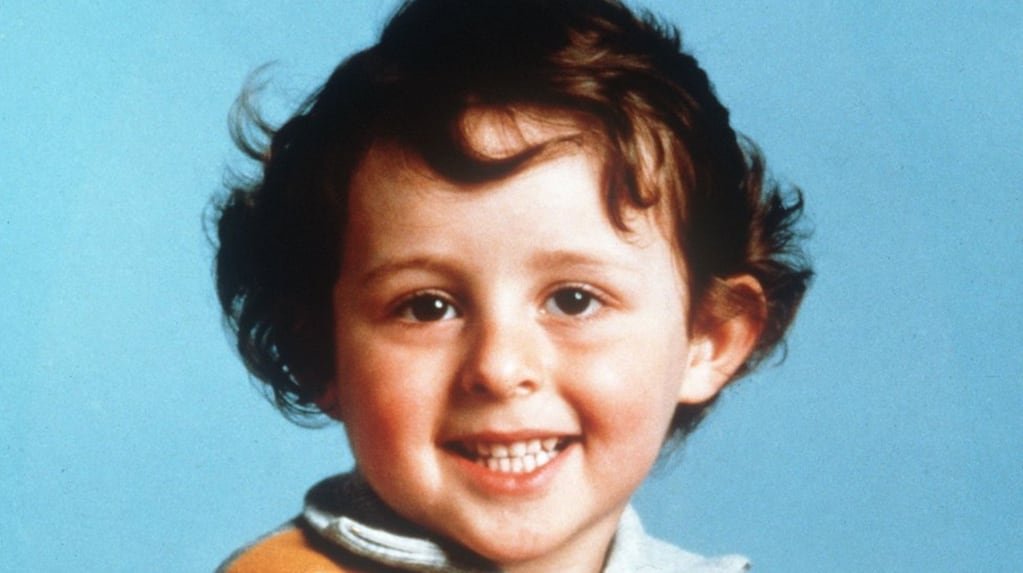
La tarde del 16 de octubre de 1984 parecía como cualquier otra en el pueblo de Lépanges-sur-Vologne, en el noroeste de Francia. Christine Villemin acababa de volver de trabajar y pasó a buscar a su hijo Grégory, de cuatro años, por la casa de la niñera. El nene quería quedarse jugando afuera y ella aceptó. Luego de entrar unos minutos para hacer tareas domésticas, la mujer volvió a salir y se dio cuenta de que el chico ya no estaba.
Lo buscó por los alrededores, preguntó a los vecinos y recorrió desesperada la calles de la pequeña localidad. Nadie lo había visto. Poco después de las 17:00, denunció la desaparición ante la policía. Treinta minutos más tarde, llegó un llamado que paralizó a toda la familia.
Del otro lado de la línea estaba el hombre que desde hacía años los acosaba con amenazas anónimas. “Me vengué. Tiré al chico al río”, dijo la voz antes de cortar.
Horas después, el cuerpo de Grégory Villemin apareció en las aguas heladas del río Vologne, a unos seis kilómetros de su casa. Tenía las manos y los pies atados con cuerdas y un gorro cubriéndole parcialmente la cara.
El asesinato del nene conmocionó a Francia y dio origen a uno de los crímenes más enigmáticos de Europa.
Amenazas anónimas y un acosador misterioso
Antes del asesinato ya existía un clima de tensión alrededor de la familia Villemin. Desde 1981, Jean-Marie Villemin -padre de Grégory- y otros familiares recibían llamadas telefónicas y cartas anónimas cargadas de amenazas. El autor se hacía llamar “Le Corbeau” (“El Cuevo”), un apodo inspirado en una famosa película francesa sobre mensajes anónimos.
El acosador parecía conocer cada detalle íntimo de la familia. Sabía movimientos, conversaciones y hasta datos privados que muy pocas personas podían conocer. En esus mensajes repetía que “el jefe tenía que pagar”, en referencia a Jean-Marie, quien había ascendido en su trabajo y comenzaba a destacarse económicamente dentro de un entorno humilde.
Christine y Jean-Marie Villemin, los padres del nene de cuatro años asesinado. (Foto: The Guardian)
Según la investigación, el progreso de los Villemin había despertado tensiones dentro de la propia familia. Jean-Marie había logrado una mejor posición laboral y podía darse ciertos lujos poco comunes para la época: dos autos, muebles nuevos y una vida más cómoda. Algunos agentes que trabajaron en el caso plantearon que ese resentimiento pudo haber sido el motor detrás del hostigamiento.
Las amenazas se volvieron cada vez más frecuentes. La policía recomendó grabar las llamadas, pero el acosador no se intimidó. Por el contrario, parecía disfrutar del miedo que generaba.
El día del crimen, todo ocurrió en cuestión de minutos. Tras desaparecer del patio de su casa, Grégory fue secuestrado y llevado hasta el río Vologne. La autopsia determinó que el chico murió poco después de entrar en contacto con el agua por un fenómeno conocido como hidrocución, una especie de shock térmico que provoca un paro cardíaco.

«Los atraparé, familia Villemin», dice una de las cartas anónimas que el acosador envió a la familia Villemin. (Foto: The Guardian)
Sin embargo, un detalle llamó la atención de los investigadores: el cuerpo no tenía marcas profundas de las cuerdas. Eso reforzó la hipótesis de que el nene pudo haber sido atado después de morir o que jamás intentó resistirse porque conocía a quien se lo llevó.
Al día siguiente del hallazgo, los padres de Grégory recibieron otra carta anónima. “Me he vengado”, decía el mensaje.
Los sospechosos
Tras la brutalidad del caso, los medios de Francia siguieron la investigación minuto a minuto y la policía quedó bajo una enorme presión para encontrar rápidamente al asesino.
En un principio, todas las miradas apuntaron hacia un hombre llamado Bernard Laroche, primo de Jean-Marie Villemin. Los peritos caligráficos encontraron similitudes entre su escritura y las cartas de “Le Corbeau”. Además, una declaración parecía comprometerlo de manera definitiva.
Murielle Bolle, cuñada de Laroche y entonces una adolescente, aseguró inicialmente que él la había pasado a buscar por la escuela el día del crimen y que Grégory estaba dentro del auto. Su testimonio permitió que la Justicia ordenara la detención de Laroche en noviembre de 1984.
El misterio del asesinato de Grégory Villemin continúa sin resolverse después de más de 40 años. (Foto: Le Nouvel Obs)

Pero el caso volvió a dar un giro inesperado cuando, después de 36 horas de interrogatorio, Murielle se retractó y dijo que la policía la había presionado para incriminar al hombre detenido. Sin pruebas concluyentes, el principal sospechoso fue liberado meses más tarde.
Esta decisión enfureció a Jean-Marie Villemin, ya que estaba convencido de que Laroche había asesinado a su hijo. Luego de ello, juró públicamente que se vengaría por ello.
El 29 de marzo de 1985 cumplió su amenaza. Esperó a su primo cuando salía a trabajar y le disparó con un rifle. Lo mató frente a su casa. Por eso, el padre de Grégory fue detenido y luego condenado por homicidio. Pasó dos años y medio en prisión antes de recuperar la libertad.
Jean-Marie Villemin, el padre de Grégory, fue detenido luego de asesinar a su primo, Bernard Laroche, uno de los principales sospechosos en el crimen de su hijo. (Foto: The Guardian)

En otro giro impactante, expertos en caligrafía señalaron a Christine Villemin -la madre de Grégory- como posible autora de las cartas anónimas. La hipótesis sostenía que ella misma podía haber creado la campaña de amenazas que atormentó a la familia.
En julio de 1985, fue acusada formalmente por el asesinato de su hijo. En ese momento, estaba embarazada, por lo que inició una huelga de hambre para defender su inocencia.
Sin embargo, la acusación comenzó a derrumbarse rápidamente. Los jueces consideraron que las pruebas no eran contundentes y que no existía un motivo claro que explicara el crimen. Finalmente, Christine fue absuelta en 1993.
Las hipótesis que todavía persiguen al caso
Más de cuatro décadas después, el asesinato de Grégory Villemin sigue sin resolverse. La causa fue reabierta varias veces y se realizaron nuevas pruebas de ADN sobre las cuerdas, las cartas y la ropa del nene, pero ninguna logró identificar al culpable.
Entre las hipótesis que surgieron a lo largo de los años, la principal apunta a Bernard Laroche, ya que para muchos investigadores sigue siendo el sospechoso más fuerte. Las dudas sobre él se apoyan en la declaración inicial de Murielle Bolle, los análisis caligráficos y ciertos resentimientos familiares que había manifestado antes del crimen.
Según esa teoría, Laroche habría actuado movido por odio hacia Jean-Marie Villemin. Algunos familiares señalaron que se sentía excluido y humillado por el éxito de su primo.
Bernard Laroche, tío de Grégory, fue uno de los principales sospechosos de la causa. (Foto: Le Monde)

Otra línea sostiene que el crimen fue cometido por más de una persona y que varios integrantes de la familia ocultaron información durante años. El nivel de conocimiento que tenía “Le Corbeau” sobre la intimidad familiar reforzó la idea de que el asesino pertenecía al círculo cercano.
En 2017, la Justicia volvió a involucrarse en el caso con nuevas detenciones. En esta ocasión, fueron arrestados una tía y un tío abuelo de Grégory -Marcel y Jaqcueline Jacob-, además de Murielle Bolle. Los investigadores creían haber encontrado inconsistencias y posibles encubrimientos dentro de la familia. Sin embargo, los detenidos quedaron en libertad y la causa volvió a estancarse.
Ese mismo año ocurrió otro episodio dramático: Jean-Michel Lambert, el juez que había estado a cargo de la primera investigación en los años 80, se quitó la vida. En una carta que dejó mencionó la presión insoportable que sufría desde la reapertura del expediente.
Por su parte, Murielle Bolle publicó un libro años después en el que volvió a defender la inocencia de Bernard Laroche y denunció que fue manipulada por la policía cuando era adolescente.
En octubre del año pasado, la Justicia francesa volvió a imputar a Jacqueline Jacob, la tía abuela de 81 años del nene asesinado, por “asociación de malhechores”. Esto quiere decir que no fue acusada por homicidio, sino porque se cree que es la persona que amenazó a los Villemin durante años a través de cartas y llamados anónimos.
Leé también: El caso de Shanda Sharer: la nena de 12 años que fue torturada, quemada y asesinada por cuatro adolescentes
El caso que investiga el asesinato de Grégory Villemin sigue abierto hasta hoy y forma parte de los crímenes más perturbadores de Europa que siguen sin resolverse.
Francia, Asesinato, nene, misterio











INTERNACIONAL
Unearthed clip of El-Sayed revealing his ‘hate’ for iconic Michigan town sparks online firestorm: ‘Dark heart’
NEWYou can now listen to Fox News articles!
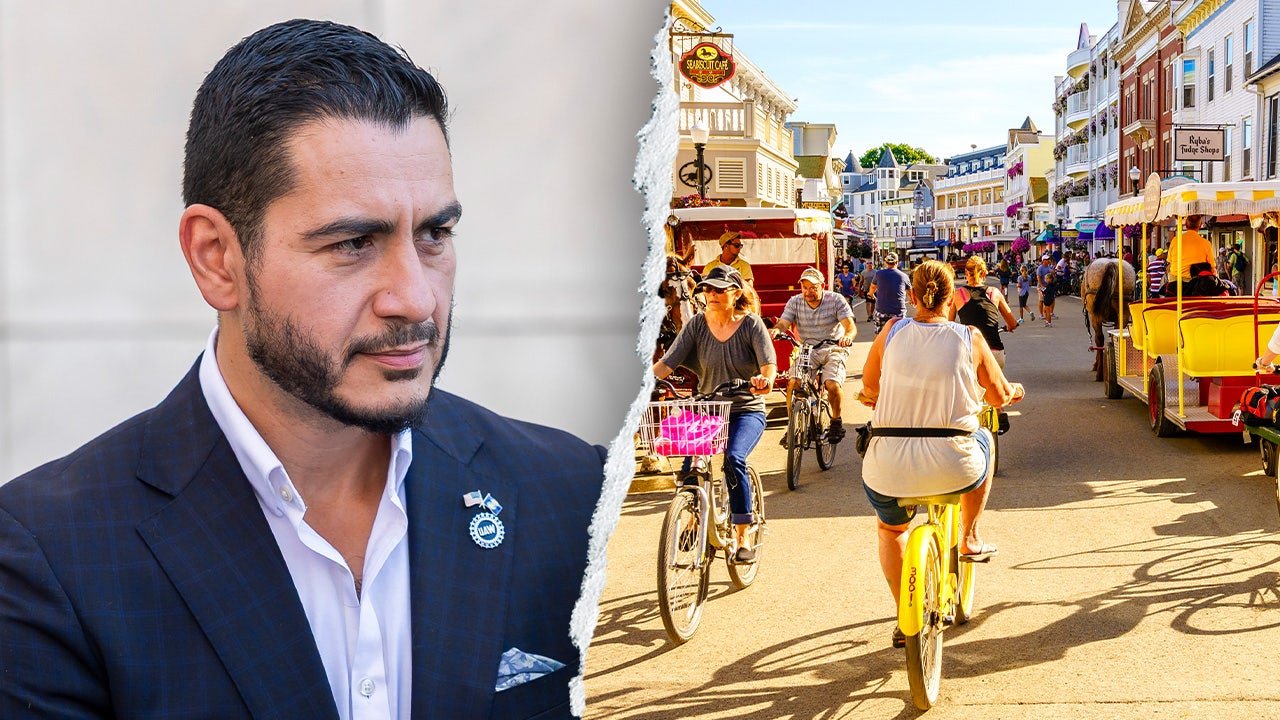
Michigan Democratic Senate nominee Abdul El-Sayed is facing pushback online over a resurfaced clip in which he says he «hates» arguably the most treasured location in the state.
In the documentary clip from 2020, which resurfaced in a story by The Midwesterner Friday, El-Sayed walks through Michigan’s Mackinac Island during his failed run for governor.
«I hate Mackinac so much,» El-Sayed said of one of the state’s most recognizable vacation spots, which sits on an island in Lake Huron between Michigan’s Upper and Lower peninsula’s.
«It’s funny cause, like, if we win, this is gonna be, like, the summer home,» El-Sayed added, referencing the governor’s summer residence on the island.
DEM SENATE HOPEFUL ABDUL EL-SAYED RECOUNTS SMASHING VODKA BOTTLE AFTER BEARD CRITICISM
The Michigan Democratic Senate nominee is facing criticism online over a resurfaced clip of him saying he hates one of the state’s most cherished locations. (Getty Images)
«I’m just gonna be like every time I’ve ever come here. I’ve hated it. Why am I here?»
The clip went viral on social media Thursday with conservatives blasting El-Sayed for looking down on the quaint village town.
MICHIGAN SENATE RACE: EL-SAYED’S TIES TO EXTREMIST FUEL ANTISEMITISM CONCERNS AMONG JEWISH VOTERS
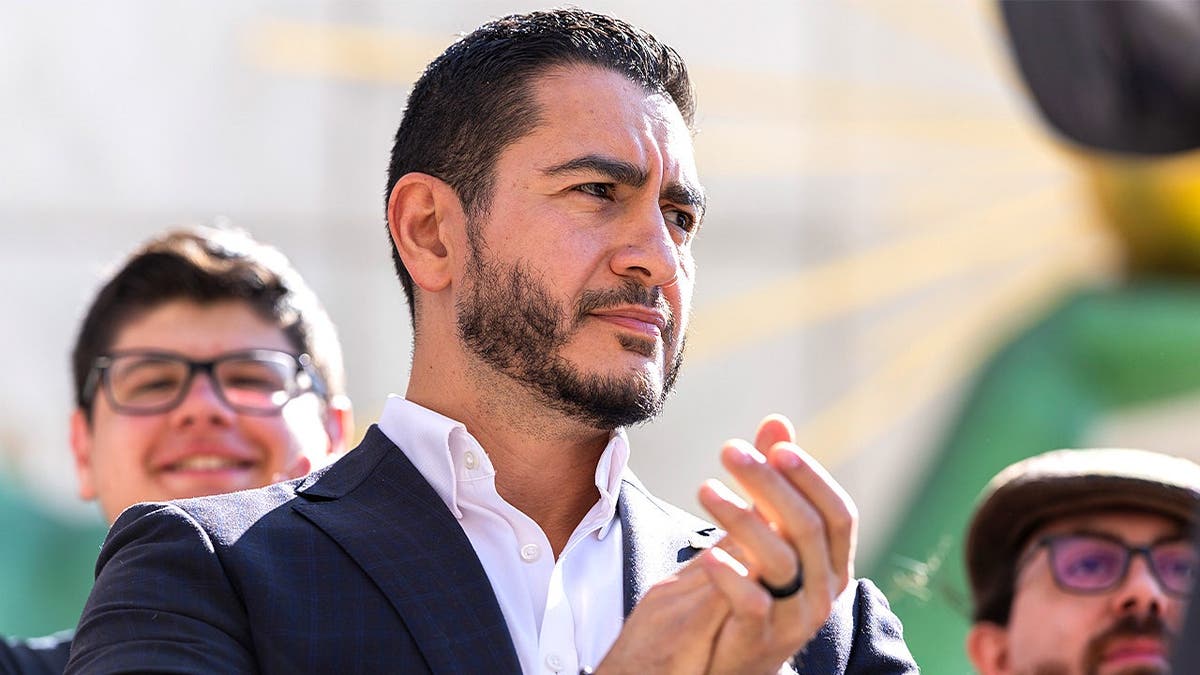
Michigan Democratic Senate nominee Abdul El-Sayed claps during a news conference in front of the Spirit of Detroit statue Aug. 5, 2026, in Detroit. (Finn Gomez/Getty Images)
«The rising stars of the Democrat Party loathe America and seek to destroy it,» Federalist editor-in-chief Mollie Hemingway posted on X. «And unlike their spiritual forebears, they see less of a reason to hide it for political gain. «
«I got engaged on this island,» Outkick founder Clay Travis posted on X. «It’s an awesome place. Honestly, I don’t understand how anyone could hate northern Michigan in summer, absolutely beautiful, most underrated spot in the country.»
«Wow hating Mackinac!» former Trump advisor Steve Cortes posted on X. «A place that is so iconic to Michigan, to America. Abdul has a dark heart.»
«Abdul el-Sayed is a repellent terror-loving anti-Semite–and that’s not even the worst thing about him,» Commentary Magazine editor John Podhoretz posted on X. «He hates Mackinac Island, one of the most wonderful places on earth. A person who hates Mackinac Island has had his soul ripped from his body.»
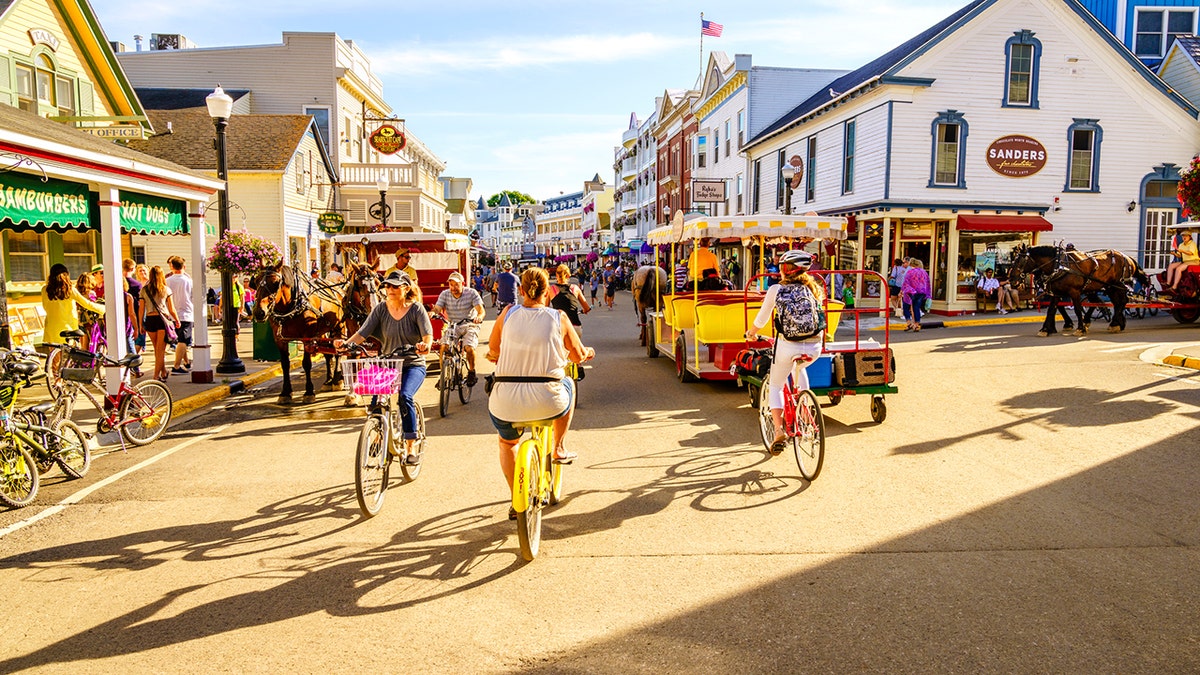
Visitors can also take in the sights on Market Street by bike. There are no cars allowed on Mackinac Island. (Getty Images)
«He would rather summer at his property in Dubai,» National Republican Senatorial Committee (NRSC) spokesperson Sarah Gallagher posted on X.
«Bro has no soul,» On Brand Strategies communications associate Carly Moran posted on X. «It’s literally Heaven on Earth.»
«Abdul speaks fondly of his Egyptian summers yet he shows utter disdain for one of Michigan’s most beautiful summer destinations,» former Michigan GOP gubernatorial candidate Tudor Dixon told Fox News Digital. «He wants his history to be respected but belittles Michigander’s favorite memories. He doesn’t respect us, and, therefore, he cannot represent us.»
«Abdul El-Sayed hot mic: ‘I hate Mackinac so much,’» conservative influencer account End Wokeness posted on X. «This is the most American place in MI.»
Some, including journalist Brad LaPlante, defended El-Sayed’s comments as being taken «out of context.»
«El-Sayed was talking about the Mackinac Policy Conference, an annual gathering of policy pros and insiders that he argues brings together well-connected and powerful people and shuts most voters out of politics,» LaPlante wrote.
Others weren’t so sure, including Michigan Young Republicans board member James Asher, who responded in a post on X, «Brad, are you dizzy from the way you’re spinning this?»
Mackinac Island is beloved in large part because it has retained a character increasingly rare in American tourist destinations. Motor vehicles have been largely prohibited since the 1890s, leaving visitors to travel by foot, bicycle or the island’s famous horse-drawn carriages.
The island has Victorian homes, historic hotels, waterfront streets, natural scenery and celebrated fudge shops which draw more than a million visitors from around the world each summer, while landmarks such as the Grand Hotel and Fort Mackinac have helped make the island an enduring symbol of Michigan history and culture.
Fox News Digital reached out to El-Sayed’s campaign for comment but did not receive a response.
El-Sayed responded to the post from End Wokeness on Friday afternoon saying, «Not sure about ‘End Wokeness,’ but I don’t think the most ‘American place in MI’ can be a place that…bans cars.»
michigan, politics, midterm elections, elections, travel
INTERNACIONAL
DNPA decomisa 103 paquetes de supuesta marihuana ocultos en un vehículo durante operativo en Colón
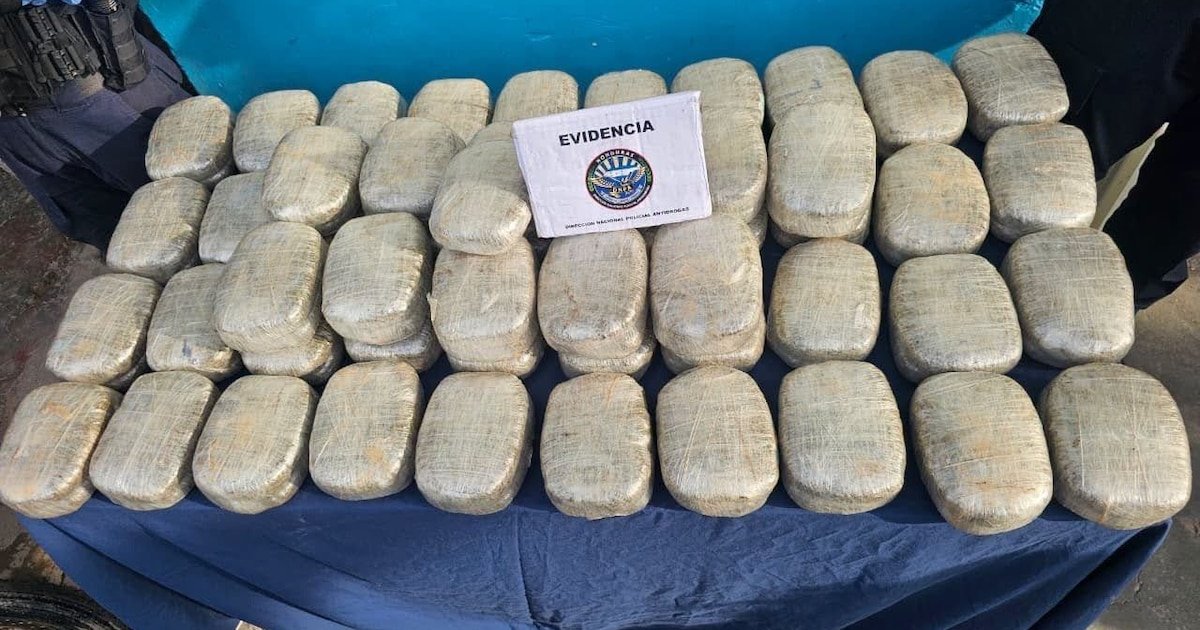
Agentes de la Dirección Nacional Policial Antidrogas (DNPA) decomisaron 103 paquetes de supuesta marihuana ocultos en un compartimiento secreto de un vehículo durante un operativo realizado en el municipio de Sabá, departamento de Colón, como parte de las acciones para combatir el tráfico de drogas en la zona.
El decomiso fue ejecutado por equipos de la DNPA, con apoyo de la Dirección Nacional de Prevención y Seguridad Comunitaria (DNPSC), luego de desarrollar labores de vigilancia e inteligencia que permitieron ubicar un vehículo presuntamente utilizado para el transporte de sustancias ilícitas.
Durante la operación, los agentes realizaron una inspección minuciosa al automotor, detectando un compartimiento oculto en la parte inferior de la cabina, donde se encontraba la presunta droga.
De acuerdo con el informe policial, la revisión permitió descubrir un espacio acondicionado para ocultar la carga y dificultar su detección durante controles de seguridad.
En el interior del compartimiento fueron encontrados 103 paquetes de supuesta marihuana, distribuidos en 51 paquetes dobles y un paquete sencillo.
Las autoridades detallaron que todos los envoltorios estaban cubiertos con plástico transparente, una modalidad utilizada para proteger la sustancia y facilitar su transporte.
El hallazgo fue documentado por los agentes antidrogas como parte de las diligencias investigativas correspondientes.
Tras el decomiso de la presunta droga, las autoridades también aseguraron el vehículo utilizado para su transporte.
El automotor quedó bajo custodia de la Dirección Nacional Policial Antidrogas, mientras continúan las investigaciones para determinar la procedencia de la carga y establecer quiénes estarían involucrados en el caso.
La evidencia será incorporada al expediente que será remitido al Ministerio Público, encargado de continuar con el proceso legal correspondiente.

La DNPA informó que este tipo de acciones forman parte de la estrategia permanente que ejecuta la institución para combatir el tráfico ilícito de drogas en diferentes sectores del país.
Las autoridades señalaron que el departamento de Colón continúa siendo una de las zonas donde se desarrollan operativos constantes de vigilancia, inspección y seguimiento para detectar rutas utilizadas por organizaciones dedicadas al narcotráfico.
Asimismo, indicaron que los controles en carreteras y puntos estratégicos seguirán fortaleciéndose como parte de los esfuerzos para impedir el traslado de sustancias ilícitas.
La Policía Nacional confirmó que las investigaciones continúan con el objetivo de identificar a las personas responsables del transporte de la supuesta droga y determinar si existen vínculos con estructuras criminales dedicadas al narcotráfico.
Las autoridades no brindaron detalles sobre capturas relacionadas con este caso, pero señalaron que las diligencias continúan en coordinación con las instancias competentes.
La DNPA reiteró que mantendrá los operativos antidrogas en diferentes regiones del país como parte de las acciones para reducir el tráfico de estupefacientes y fortalecer la seguridad.
El decomiso realizado en Sabá se suma a otras operaciones ejecutadas recientemente por la institución en el marco de la estrategia nacional contra el crimen organizado.

La Dirección Nacional Policial Antidrogas (DNPA) indicó que los paquetes decomisados serán remitidos a las autoridades competentes para realizar los análisis correspondientes y confirmar oficialmente el tipo y la cantidad de la sustancia incautada.
Asimismo, toda la evidencia será puesta a disposición del Ministerio Público, que continuará con el proceso investigativo y las acciones legales derivadas del caso.
Las autoridades reiteraron que este tipo de operativos forman parte de la estrategia permanente para combatir el tráfico ilícito de drogas y desarticular las rutas utilizadas por organizaciones criminales para movilizar estupefacientes dentro del territorio nacional.
La DNPA aseguró que continuará fortaleciendo los controles en carreteras y puntos estratégicos del país para impedir el transporte de sustancias ilegales y llevar ante la justicia a los responsables.
Corresponsal:Desde Tegucigalpa, Honduras
NEWYou can now listen to Fox News articles!
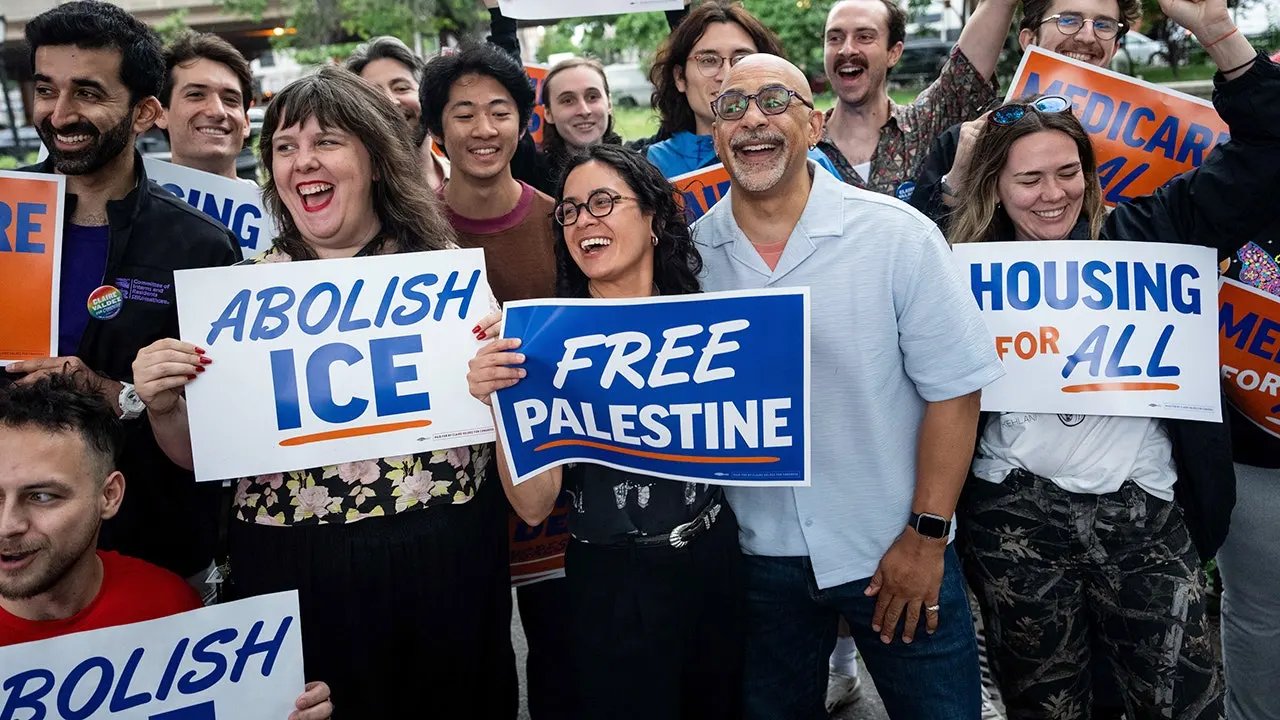
The socialist Democrat poised to represent most of Philadelphia in Congress questioned the premise of «illegal immigrants» and claimed «99%» of police work does not involve pursuing criminals.
Pennsylvania State Rep. Chris Rabb, D-West Oak Lane, made a name for himself in Harrisburg by championing progressive proposals such as abolishing the death penalty and transitioning Pennsylvania to 100% renewable energy by 2050. In 2019, Rabb introduced a «carbon pricing» bill to tax greenhouse-gas emissions above a certain cap, saying the revenue would be reinvested to help low-income consumers and support workers «displaced» from a shrunken fossil fuel industry. He also claims the «Nakba» (Palestinian displacement during the 1948 Arab-Israeli War) has «never ended.»
«Raab’s platform is comprised of pretty far-left, radical positions,» said Fox News host Sean Hannity on «Hannity.»
SOCIALIST VICTORIES SHOW DEMS’ DESCENT DOWN ‘DEADLY PATH OF COMMUNISM,’ JOHNSON WARNS
Pennsylvania State Rep. Christopher Rabb, D-Northwest Philadelphia, stumps for Michigan’s Abdulrahman El-Sayed. (Sarah Rice/Getty Images)
«Among them, he advocates for Medicare for All, universal basic income, federal jobs guarantees — the government does so well educating your kids — guaranteed housing, universal childcare, government grocery stores [and] replacement of [GDP] with a so-called ‘genuine progress indicator’…,» Hannity listed.
«In other words, what he is saying is he would not just reshape our institutions, he would tear them down, fundamentally transform them in what I believe would be a very dangerous way.»
Rabb pushed back on some of the characterizations, telling Hannity in the case of the DSA’s effort to abolish the Senate, «that’s not what I’m running on.»
When Hannity asked whether Rabb — who boasts of running in the «bluest district in America» — truly supports «amnesty for illegals» and abolishing national borders, the lawmaker replied: «What are illegals?»
DEMOCRAT COMPARES ICE TO ‘DOMESTIC TERRORISTS’ AS 111 HOUSE DEMS DEMAND TEXAS DETENTION CENTER CLOSE
Hannity responded, «Illegal immigrants: people that didn’t respect our laws, borders, and sovereignty; entered the country without permission.»
Rabb said he didn’t accept the «premise» of the question.
«There are folks who have documentation. But these are not criminal acts,» he said, adding that he «absolutely» wants to abolish ICE and «dismantle immigrant concentration camps.»
«I want to end all deportations. We want to make sure that there’s an immigration system that is fair, just, and efficient, and we don’t have that system,» Rabb added. He went on to cite an immigration reform package led by Sen. James Lankford, R-Okla., and former Sen. Kyrsten Sinema, D-Ariz., that he lamented «your president» successfully killed.
TOP WISCONSIN DEMOCRATIC SOCIALIST CANDIDATE CONFRONTED ON PAST ‘DEFUND POLICE’ RHETORIC
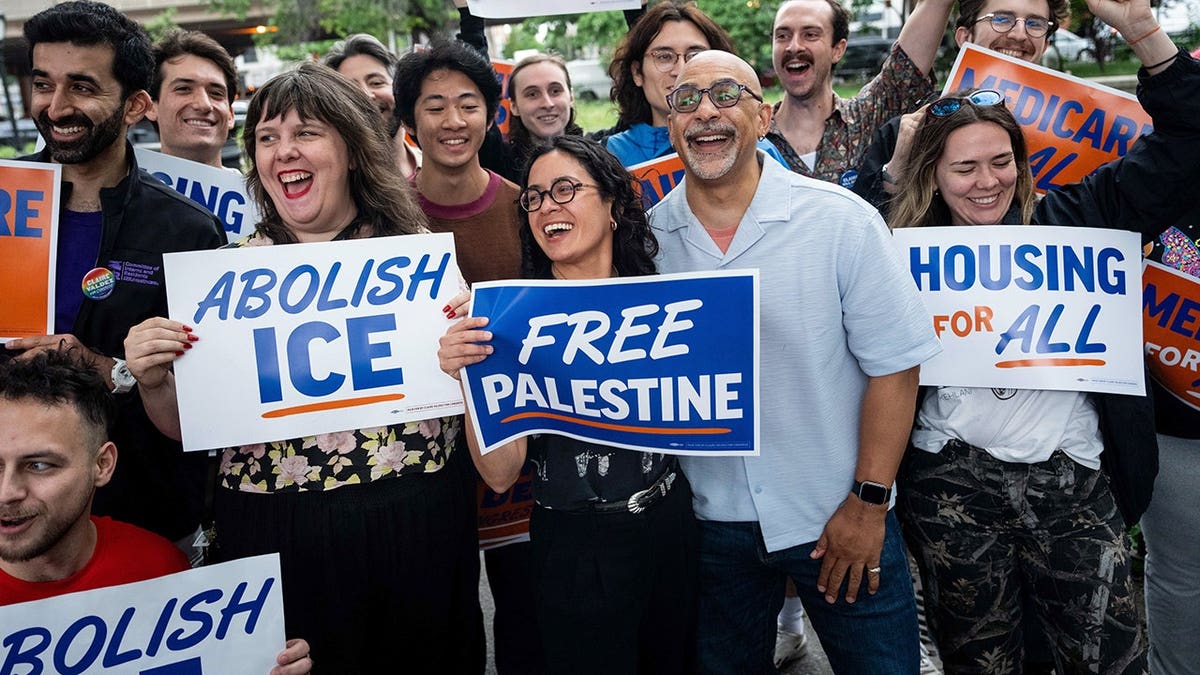
PA State Rep. Christopher Rabb, D-West Oak Lane, stumps with New York progressives in New York City. (Adam Gray/Getty Images)
When asked about abolishing police as an institution — in line with socialist doctrine — Rabb said the statement was «interesting» because there were few or no organized police departments in early America.
«Long before there was any notion of policing, we had Founders that did not even understand that term. Policing is something that’s evolved over time,» Rabb said.
«Ultimately, what we want is to have communities that are safe, and 99% of what police do are not going after the bad guys,» he said.
Philadelphia did not organize the PPD as a centralized municipal force until 1854. Before that, local elected constables and civilian watchmen patrolled their neighborhoods for crime. The PPD formed after a series of riots, when what is now Philadelphia was divided between the City of Philadelphia and Philadelphia County, which are now coterminous.
173 HOUSE DEMOCRATS VOTE AGAINST RESOLUTION HONORING POLICE AMID RISING ATTACKS
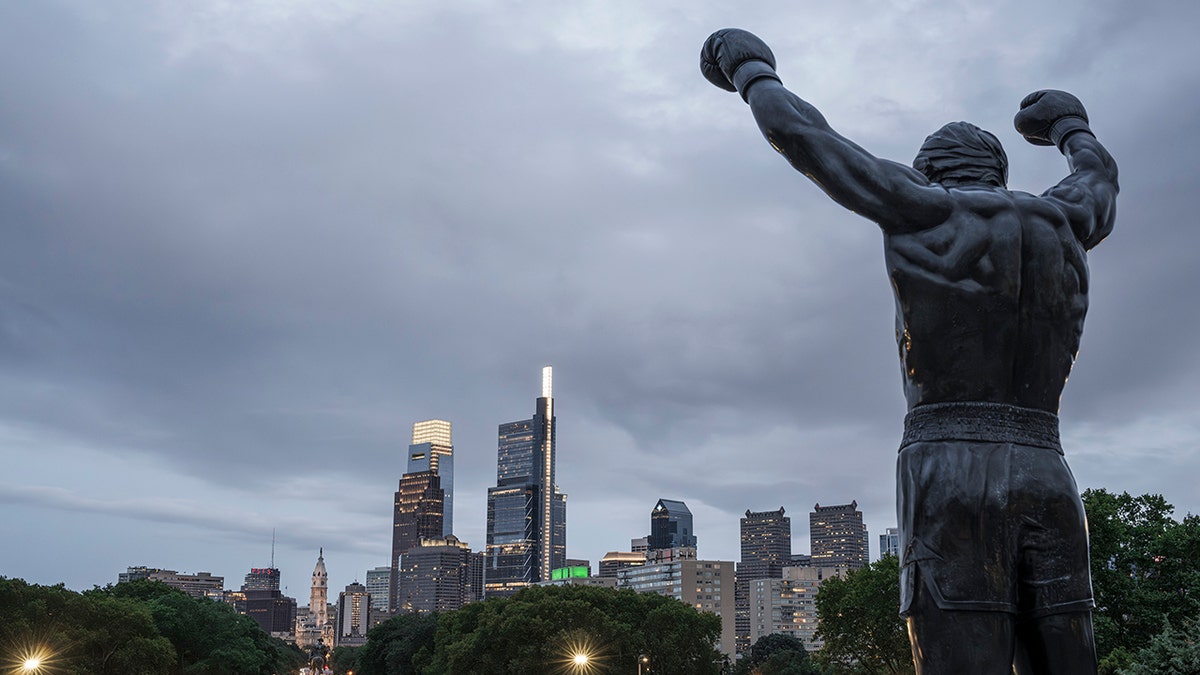
A general view shows the skyline of Philadelphia from the top of the Rocky Steps with the bronze Rocky Statue visible on foreground. (Nicolò Campo/LightRocket via Getty Images)
SIGN UP TO GET THE POLITICS NEWSLETTER
«We need to keep our communities safe and there were ways of doing that before the term ‘police’ ever existed,» Rabb said.
On disarming police, a policy some socialists support, Rabb said he believes in «arming oneself,» arguing that, as someone with Southern ancestry, the only way his family could protect themselves was through self-defense.
«We couldn’t trust the police because they were largely part of the [Ku Klux] Klan,» Rabb said. His paternal family roots trace to Columbus, Miss.
Rabb upset the Democratic establishment in his May primary, defeating state Sen. Sharif Street, D-North Philadelphia — the son of popular former Mayor John Street — who also had the backing of incumbent Mayor Cherelle Parker and former Gov. Edward Rendell.
No Republicans vied for the nomination, leaving Rabb reportedly facing only independent Dennis Mahoney in November.
Fox News Digital reached out to Rabb for comment.
midterm elections, illegal immigrants, sanctuary cities, democratic party, house of representatives, philadelphia, pennsylvania

Unearthed clip of El-Sayed revealing his ‘hate’ for iconic Michigan town sparks online firestorm: ‘Dark heart’

Marcelo Tinelli y Milett Figueroa hablaron de su relación: “¿Por qué hay que ponerle un título?»

Revolución del arbitraje en Francia: la tercera división elimina el VAR y da entrada al Football Video Support

La Corte revocó un fallo de la Cámara Laboral que, por su cuenta, había multiplicado una indemnización

Pablo Moyano se refirió al episodio de su hermano Facundo con Candela Arizaga: “Hace rato que no hablo”

Caso Fentanilo. Las dos exfuncionarias de Salud acusadas fueron liberadas bajo cauciones de $75 millones

Javier Milei cruzó a Victoria Villarruel y elevó la tensión: “Es una opositora, replica los argumentos kirchneristas”

Dólar hoy en vivo: a cuánto se negocian todas las cotizaciones minuto a minuto este miércoles 5 de agosto

La oposición cuestionó a Benegas Lynch por su empresa para vender campos a extranjeros y el senador libertario se defendió

Brasil retira a su embajador en la Argentina: qué consecuencias tiene la medida diplomática
-
 ECONOMIA2 días ago
Dólar hoy en vivo: a cuánto se negocian todas las cotizaciones minuto a minuto este miércoles 5 de agosto
-
 POLITICA23 horas ago
La oposición cuestionó a Benegas Lynch por su empresa para vender campos a extranjeros y el senador libertario se defendió
-
 POLITICA2 días ago
Brasil retira a su embajador en la Argentina: qué consecuencias tiene la medida diplomática