
INTERNACIONAL
The red-state winners in the climb to become America’s next economic powerhouse


NEWYou can now listen to Fox News articles!
A corporate exodus is reshaping America’s business landscape — and deep-blue states are paying the price.
The stakes go far beyond bragging rights. Corporate headquarters bring high-paying jobs, investment and tax revenue; they also boost local economies and political influence.
According to a report by CBRE, one of the nation’s largest commercial real estate brokerage firms, 725 companies relocated their headquarters between 2018 and 2025. And the trend was clear — businesses increasingly left high-tax, heavily regulated Democrat-led states like California and New York for Republican states offering lower costs, lighter regulation and faster growth, like Texas and Florida.
AMERICANS KEEP MOVING TO TEXAS AND FLORIDA — BUT ONE OTHER RED STATE IS GROWING EVEN FASTER
Dallas recorded the highest number of corporate headquarters relocations in the country. (Beata Zawrzel/NurPhoto/Getty Images)
And as companies increasingly relocate to Republican-led states, politicians in blue states are facing growing scrutiny over whether progressive tax-and-regulation policies are driving employers away, weakening growth and eroding the tax bases of some of America’s longtime economic powerhouses.
The frequency of relocations accelerated in 2025, outpacing 2024 levels as companies looked beyond traditional coastal hubs for expansion opportunities. CBRE found the number of firms citing «growth opportunity» as the primary reason for relocating jumped nearly 47% from a year earlier.
Texas emerged as the biggest winner in the battle for corporate America.
Executives continue to reassess operating costs, tax burdens and workforce growth prospects while deciding where to invest for the future — and many landed on cities throughout the Lone Star State.
Dallas-Fort Worth captured more than any metro area in the country with 111 headquarters relocations between 2018 and 2025. Austin secured another 88 and Houston added 31 in that same seven-year span.
GOV. ABBOTT EXTENDS OFF-RAMP FOR NY BILLIONAIRES FLEEING MAMDANI’S POLICIES
Taken together, those three Texas markets accounted for more headquarters gains than many states in their entirety.
Florida, especially Miami, has also emerged as a major beneficiary of the corporate relocation wave. Over the past year, six companies moved operations to Miami from high-cost hubs including Los Angeles, the Bay Area and Boston, drawn by Florida’s lower taxes, growing tech scene and access to East Coast markets.
Companies told CBRE that Miami’s fast-growing startup culture and expanding pool of finance and tech talent make it an increasingly attractive destination, while international firms are also flocking to South Florida for its strong travel, tourism and beauty industries.
Meanwhile, deep blue California experienced the steepest losses.
CALIFORNIA’S LOOMING CAPITAL FLIGHT PROBLEM COULD RESHAPE STATE IN 3 KEY AREAS
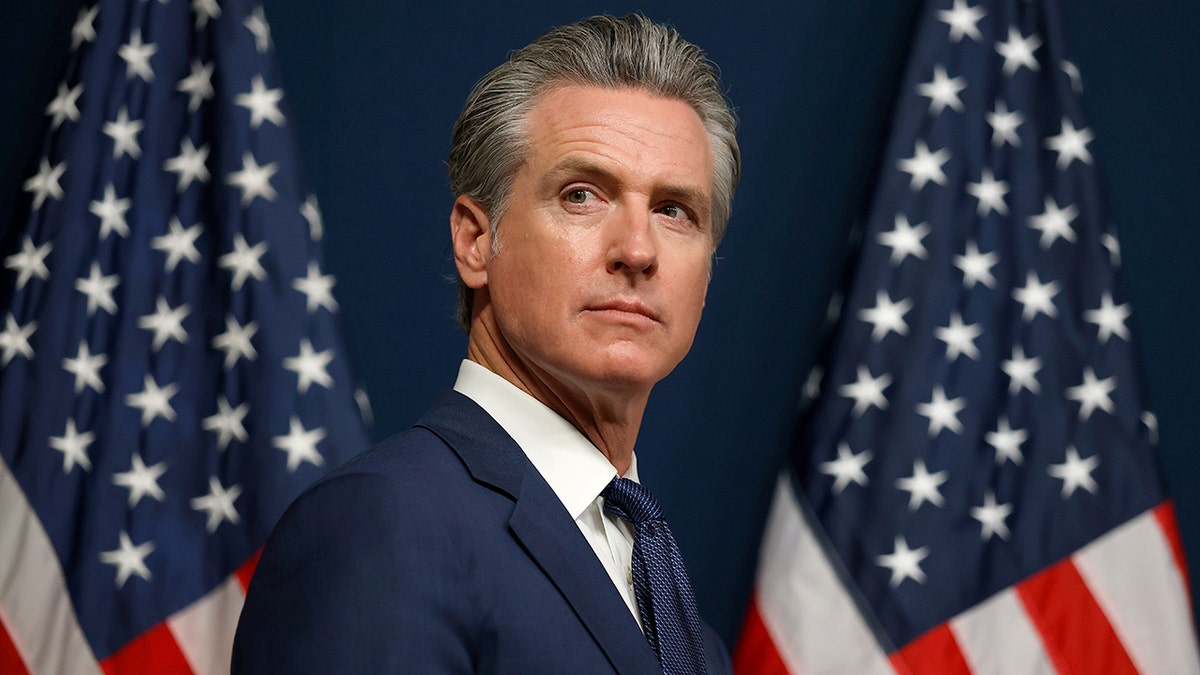
California Gov. Gavin Newsom has previously said that he does not support the «billionaire tax» measure. The measure would levy a one-time 5% wealth tax on residents with more than $1 billion in assets, including unrealized gains. (Justin Sullivan/Getty Images)
The San Francisco Bay Area posted a net loss of 163 headquarters over the same period Texas saw its gains, according to the report.
CBRE said companies leaving California metros frequently cited high taxes, labor regulations and rising cost-of-living pressures as key reasons for relocating elsewhere.
MAMDANI’S RISE IN NYC MIRRORS ECONOMIC FLIGHT TO THE SOUTH, STUDY SHOWS
While traditional business powerhouses like New York and Chicago remain deeply entrenched in corporate America, there’s a broader debate over whether legacy cities can continue holding onto top employers and investment.
The New York City metro-area, which includes Newark and Jersey City, saw the second-highest number of departures with nine headquarters leaving for other states from 2024 to 2025. And the debate over increasingly progressive policies in the city has led to threats of more departures.
Citadel founder Ken Griffin, who relocated his hedge fund from Chicago to Miami in 2022, has repeatedly warned that rising taxes, crime and anti-business policies could drive more companies away from cities like Chicago and New York.
New York remains the nation’s largest corporate hub, home to 114 Fortune 1000 headquarters. The recent moves represent only a small slice of the region’s business base and resulted in a loss of about 5,200 jobs.
CHICAGO KNOWS WHAT HAPPENS WHEN KEN GRIFFIN TURNS ON A CITY — NOW MAMDANI MAY FIND OUT
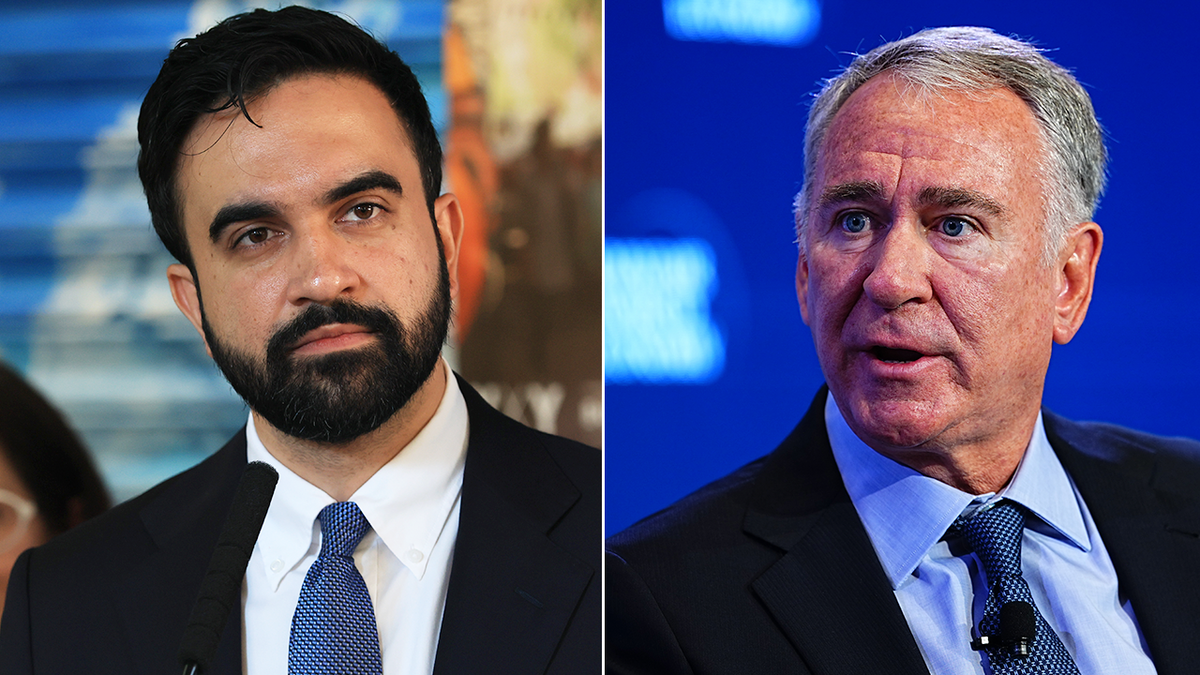
The Citadel founder is clashing with New York City Mayor Zohran Mamdani over taxes targeting the ultra-wealthy and intensifying crime, reviving the same tensions that drove him to pull his business and billions out of Chicago. (Spencer Platt/Aaron Schwartz/Bloomberg/Getty Images / Getty Images)
The migration patterns are becoming increasingly politically significant.
Economic performance frequently shapes midterm messaging, and corporate relocations are poised to feature prominently in debates over tax competitiveness, regulation and the broader business climate.
The issue is drawing even more attention as Democrats in several blue states push billionaire taxes and other progressive policies that critics warn could drive more companies and wealthy residents out.
CLICK HERE TO DOWNLOAD THE FOX NEWS APP
Whether the trend endures remains uncertain.
But for now, the corporate migration is reinforcing a broader reality: Taxes, regulation and cost of living are no longer secondary political issues. They are increasingly determining where businesses invest, where jobs move and which states gain — or lose — economic power.
economy, politics, texas, california, republicans elections, taxes, companies









INTERNACIONAL
Rogers opens door to Democratic voters after El-Sayed’s primary victory: ‘There is still hope’
NEWYou can now listen to Fox News articles!
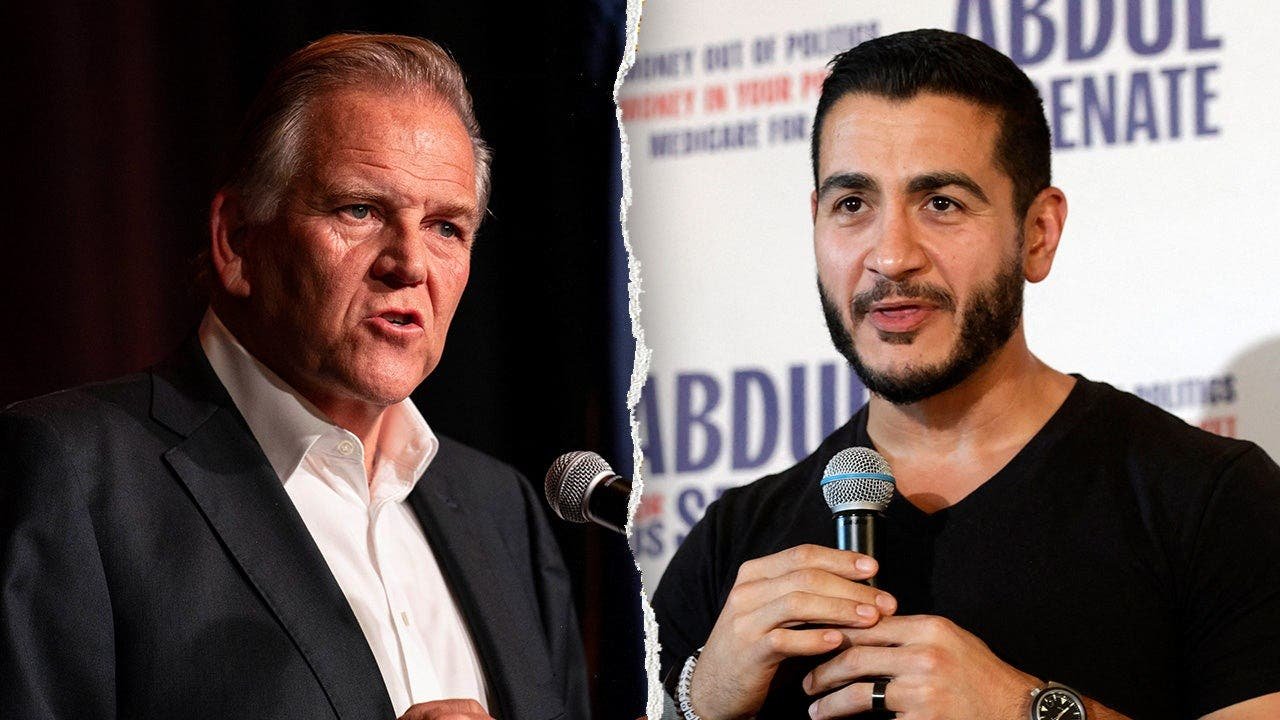
Republican Senate nominee Mike Rogers opened the door to Michigan Democrats on Friday after far-left progressive Abdul El-Sayed’s primary victory, assuring them «there is still hope,» adding they have a «home» with his campaign.
«If you’re among the majority of Democratic voters that woke up on Wednesday feeling, well, hopeless, because the person who won does not represent your values, well, just know, there is still hope,» Rogers said in a video posted on X Friday.
«Michigan deserves a senator who is ready to sit with you, hear from you and represent you.»
El-Sayed narrowly defeated Rep. Haley Stevens, D-Mich., in one of the nation’s most closely watched Democratic primaries, setting up a November showdown with Rogers, who ran uncontested.
2026 MIDTERMS STATE OF PLAY: KEY RACES UNFOLD AS STEVENS, EL-SAYED BATTLE IN MICHIGAN
Republican Senate nominee Mike Rogers is making a direct pitch to Michigan Democrats following Abdul El-Sayed’s primary victory. (Sarah Rice/Getty Images ; Jeff Kowalsky/AFP via Getty Images)
Rogers addressed Democratic voters directly, casting his campaign as a home for those who feel their values are not reflected in El-Sayed’s candidacy as he tries to court the hundreds of thousands of Democrats who voted for Stevens but may not feel comfortable voting for El-Sayed.
«The parents across Michigan who want an education system that sets up their kids for success, you have a home with us,» he said. «To grandparents across Michigan who are heartbroken from watching their kids and grandkids leave the state, you have a home with us.
«To young people who are looking for real solutions to solve our housing affordability crisis, you have a home with us. To working families who don’t want higher taxes and lower paychecks, well, you have a home with us.»
Rogers also accused El-Sayed’s campaign of promoting «anger, divisiveness, calls for violence» and views he said are out of step with Michigan voters.
«And to the vast majority of people across Michigan who do not want to throw their support behind a campaign filled with anger, divisiveness, calls for violence and the views that are out of touch with your values, well, you have a home with us,» he said.
EL-SAYED’S THREAT AGAINST GOP RIVAL BACKFIRES AS CONSERVATIVES BRING RECEIPTS: ‘IS DUBAI IN FLORIDA?’
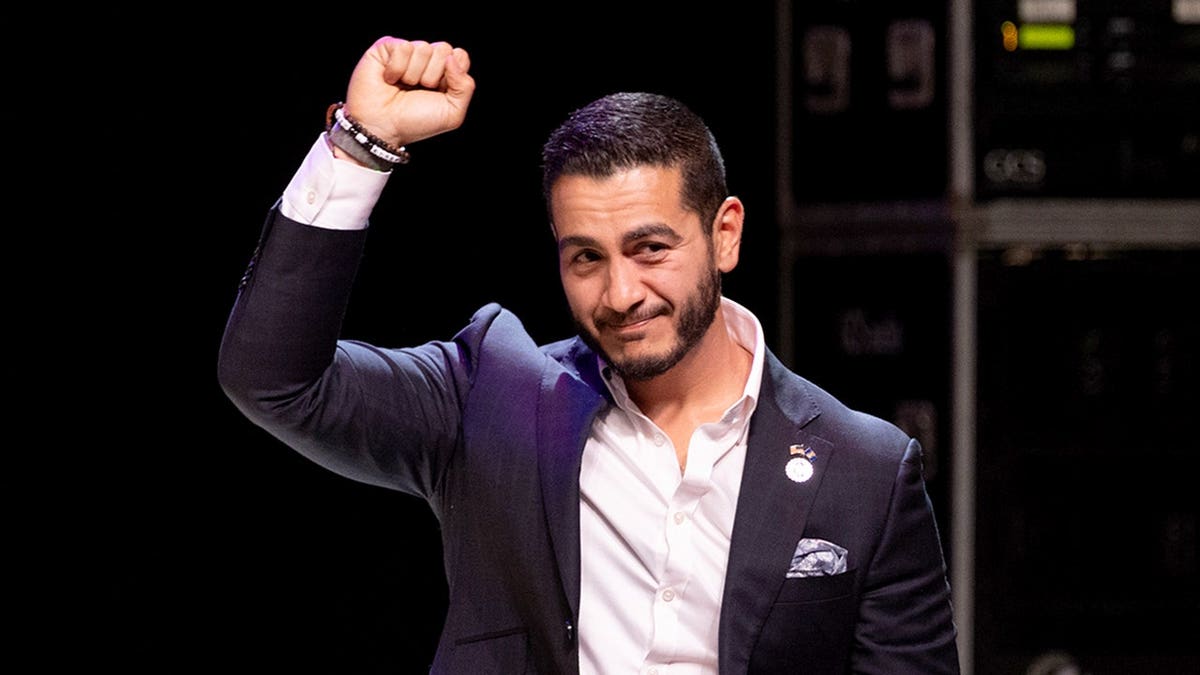
Democratic candidate for U.S. Senate Abdul El-Sayed speaks to supporters at an election night rally at the Majestic Theatre Aug. 4, 2026, in Detroit. (Scott Olson/Getty Images)
If Rogers wins in November, Republicans would flip the seat held by retiring Democratic Sen. Gary Peters and help protect their control of the Senate.
«Over the next 90 days, I’m going to work hard to earn your trust, to earn your support and earn your vote,» Rogers said. «We have a state to save, Michigan. Let’s get to work.»
Rogers’ outreach to Democrats was praised by some conservatives and pundits on social media.
In a post on X, former DSA member Jake Altman wrote, «I voted for Biden. I voted for Harris. I will vote for Mike Rogers. I just donated to the campaign. This is not a time to sit on your hands. Stand up for the man who fights terrorists, not the one who sympathizes with them.»
«Mike Rogers directly asks for Democrats to support him in Michigan. The majority of Michigan Democrats voted against Abdul El-Sayed. This is well done,» OutKick founder Clay Travis posted on X.
In another post on X, Democrats for Mike Rogers wrote, «Mike Rogers is meeting the moment. We’re putting country over party and voting for Mike Rogers in November. It’s never been more important. We must unite and defeat the extremism of Abdul El-Sayed and his allies.»
El-Sayed, an epidemiologist and former Wayne County health director who unsuccessfully ran for governor in 2018, has campaigned on Medicare-for-all and abolishing Immigration and customs enforcement. He has also been a vocal critic of Israel during its war with Hamas and has called Israel’s actions in Gaza «genocide.»
REPORTER’S NOTEBOOK: THE REPUBLICAN-LED VOTE THAT REVEALED DEMOCRATS’ NEW DIVIDE ON ISRAEL
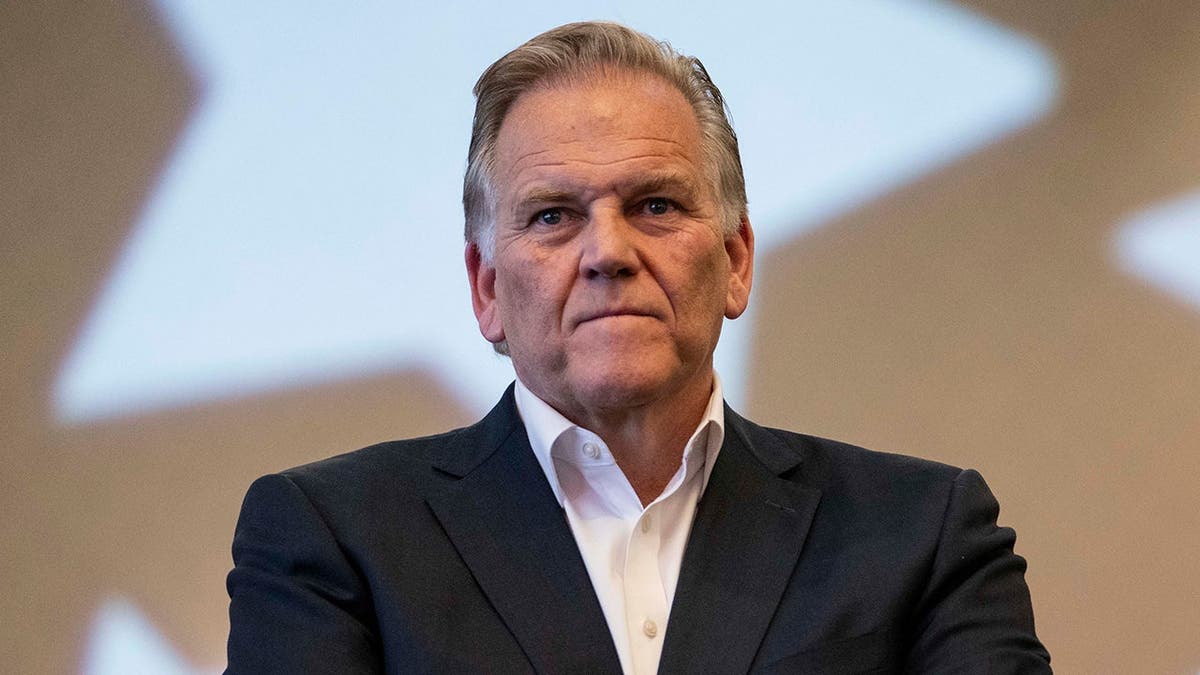
Republican U.S. Senate candidate Mike Rogers waits to go onstage at his election watch party with the Michigan GOP Nov. 5, 2024, in Novi, Michigan. Rogers and Democrat Elissa Slotkin are competing for the seat vacated by the retiring Debbie Stabenow. (Sarah Rice/Getty Images)
He would become the nation’s first Muslim senator if elected.
As some Democrats grapple with the direction of their party following El-Sayed’s nomination, Rogers said the «fight is far greater than just left versus right.»
«The fight is for the very soul of our nation,» he said.
Fox News Digital reached out to El Sayed’s campaign for comment.
politics, michigan, midterm elections, senate, democratic party
INTERNACIONAL
Después de 16 años, el gobierno venezolano liberó a una jueza que estaba presa por «corrupción espiritual»
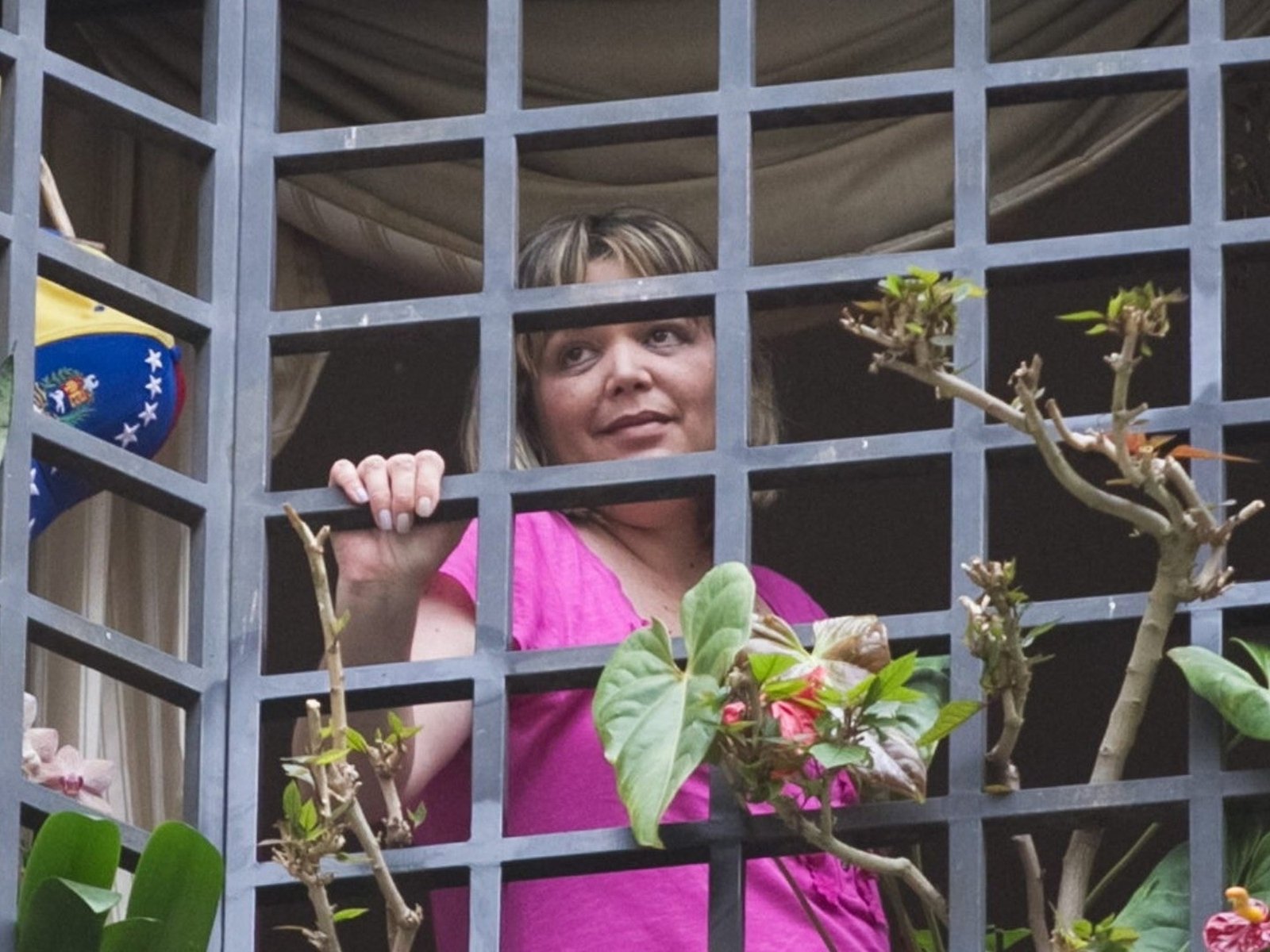
La justicia venezolana cerró de manera definitiva el caso de la jueza María Lourdes Afiuni, considerada una presa política del fallecido presidente Hugo Chávez, y le otorgó la libertad plena, informó este viernes su familia.
En un comunicado, el hermano de la jueza, Nelson Afiuni y la representante legal de la familia, Thelma Fernández, afirmaron que la decisión «pone fin de manera definitiva al proceso seguido en su contra y restituye plenamente su libertad, cerrando formalmente un caso que nunca debió existir».
La jueza fue detenida en diciembre de 2009 tras otorgar libertad bajo fianza a Eligio Cedeño, un banquero acusado de efectuar operaciones cambiarias ilegales. En televisión, Chávez la llamó «bandida» y pidió que se le impusiera la condena máxima de 30 años de cárcel por supuestamente haber facilitado la fuga del empresario, quien salió del país.
Estuvo en prisión hasta 2011, cuando pasó a arresto domiciliario, y en 2013 obtuvo libertad condicional.
En 2019, fue condenada a cinco años por «corrupción espiritual», es decir, la misma fiscalía reconoció que no tuvo ningún beneficio económico.
Hasta hoy, Afiuni tenía una libertad condicional que incluía, según la familia, prohibición de salir de la ciudad, hablar a la prensa o en redes sociales y votar. Tampoco tenía derecho a un pasaporte y estaba inhabilitada políticamente.
En el comunicado, el hermano y la abogada aseguraron que el cierre del caso y su libertad representan «el final de un largo y doloroso capítulo marcado por graves violaciones a los derechos humanos y al debido proceso».
«Durante años, la jueza Afiuni y su familia soportaron las consecuencias de una persecución que trascendió el ámbito personal y se convirtió en un símbolo inequívoco del deterioro de la independencia judicial en Venezuela», expresaron ambos, quienes agradecieron a todos los que «acompañaron esta causa con firmeza y constancia».
Sin embargo, señalaron que el cierre definitivo del expediente «no borra el sufrimiento vivido ni repara, por sí solo, los daños ocasionados».
Afirmaron que el caso «permanece como una advertencia para toda la región sobre las consecuencias de utilizar el sistema de justicia como instrumento de represalia contra quienes ejercen sus funciones con independencia e imparcialidad».
COMUNICADO CASO DE LA JUEZA @mariafiuni pic.twitter.com/IwX6ZFgPT8
— Nelson Afiuni (@nelsonafiuni) August 7, 2026
«Ningún juez debe volver a enfrentar prisión, persecución, humillación o amenazas por cumplir con su deber, aplicar la ley o dar cumplimiento a decisiones y estándares del derecho internacional de los derechos humanos. Una justicia independiente solo puede existir cuando sus jueces pueden decidir libres de intimidación, presiones o represalias», aseveraron.
La abogada familiar y el hermano de la jueza expresaron su confianza en que la decisión «marque también el inicio de una reflexión indispensable sobre la necesidad de reconstruir la independencia judicial en Venezuela y de garantizar que hechos como los ocurridos en este caso jamás vuelvan a repetirse».
Durante el fin de semana, Afiuni había recibido atención médica de urgencia, tras presentar un cuadro de mareos, vómitos e hipertensión. Allí se detectó que la exjueza tiene tres lesiones tumorales en distintas partes del cuerpo, según señala el comunicado.
«En este momento, cuando su estado de salud requiere atención especializada y decisiones médicas oportunas, resulta indispensable que las autoridades adopten una solución definitiva que ponga fin a un caso que debió haber sido cerrado hace muchos años», informó la familia este jueves.
«El respeto al derecho a la salud de la jueza Afiuni requiere eliminar las restricciones que le impiden acceder plenamente a la atención médica que necesita y reunirse con su única hija en este momento de especial vulnerabilidad», agrega el documento publicado.
Los familiares consideran que la enfermedad de la jueza es consecuencia «de un prolongado proceso de persecución, de su injusta privación de libertad, de las condiciones de reclusión que soportó y de la falta de atención médica oportuna».
Meses atrás, la familia había pedido que Afiuni fuera favorecida por la ley de amnistía impulsada por la presidenta encargada Delcy Rodríguez. Este año, cientos de presos políticos han sido excarcelados y a miles de personas se les han levantado las restricciones a su libertad, luego de la captura de Nicolás Maduro por parte de Estados Unidos.
INTERNACIONAL
Trump urges Jeanine Pirro to revisit dropped Lincoln Memorial Reflecting Pool vandalism case
NEWYou can now listen to Fox News articles!
President Donald Trump on Friday urged U.S. Attorney Jeanine Pirro to take a second look at the recently dropped charges over vandalism at the Lincoln Memorial Reflecting Pool.
«Now that people are able to see it up close, they are reporting pure VANDALISM at The Reflecting Pool,» Trump wrote on Truth Social, sharing photos from a freelance photographer that allegedly showed vandalism.
The president claimed that «People were on their knees with their hands in the water at the exact location of the ‘slashes.’ Additionally, there were witnesses to the VANDALISM, and the flexible areas of the material were cut with a knife.
TRUMP SAYS HE ‘DISAGREES 100%’ WITH U.S. ATTORNEY JEANINE PIRRO OVER REFLECTING POOL CASE
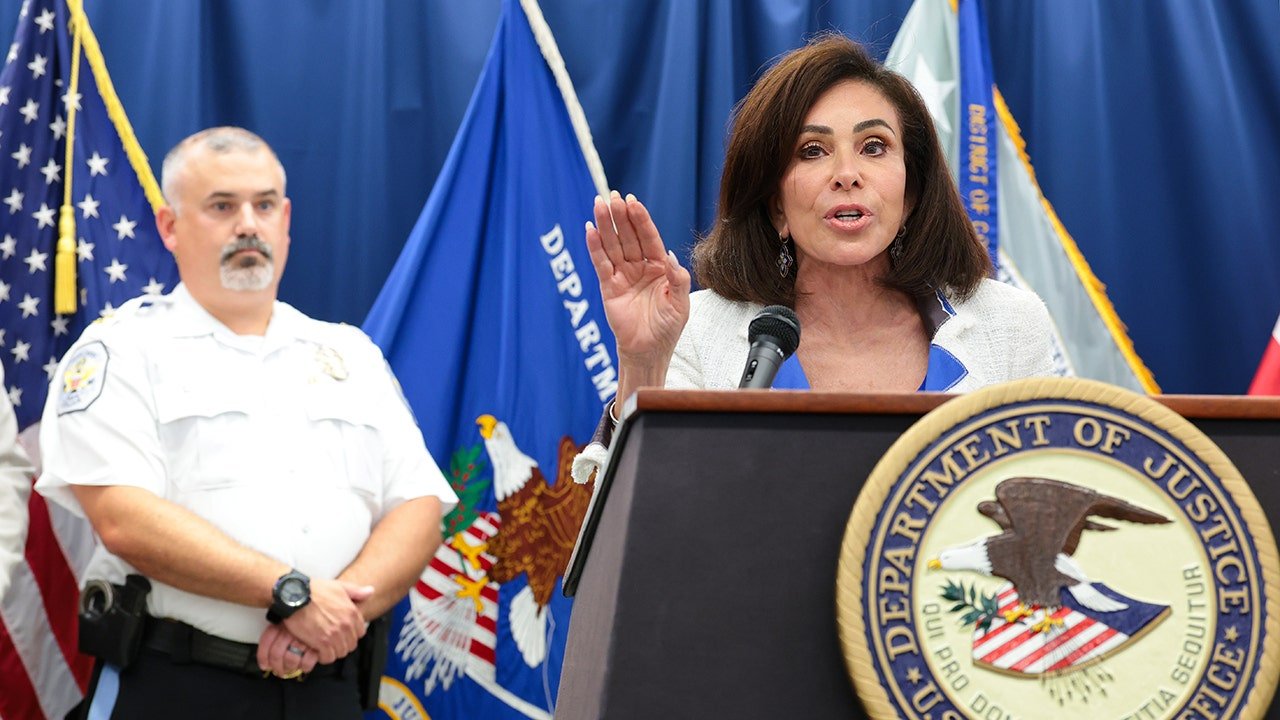
President Donald Trump on Friday urged U.S. Attorney Jeanine Pirro to take a second look at the recently dropped charges over vandalism at the Lincoln Memorial Reflecting Pool. (Getty Images)
«U.S. Attorney Jeanine Pirro should re-visit her hastily made decision, especially since it turned out that the ‘gentleman’ involved is a big player in ActBlue, a disgraceful fundraising SCAM, and is represented by a TRUMP DERANGED SLEAZEBAG, Political Hack Lawyer, Norm Eisen, and CREW, a group that uses ‘charity’ for political purposes which is, to the best of my knowledge, ILLEGAL!»
Trump has been highly critical of Pirro’s decision to drop the felony vandalism case against former Olympian David Hearn last Friday.
Earlier this week, Trump claimed Pirro «choked» under pressure from a judge regarding the case and «folded like an umbrella.»
A day after the case was dropped, Trump wrote on Truth Social «I disagree 100% with Jeanine Pirro, the U.S. Attorney for the District of Columbia, on the Reflecting Pool. I don’t know what she was thinking?»
FORMER US OLYMPIAN DAVID HEARN INDICTED IN ALLEGED REFLECTING POOL VANDALISM
Hearn was indicted on July 2 on one count of felony destruction of property. U.S. Park Police alleged Hearn grabbed and tugged at a loose section of the pool’s coating on June 19, continuing after a National Park Service employee told him to stop. Officials initially claimed he caused more than $1,000 in damage.
However, Pirro’s office said the Department of the Interior initially provided prosecutors with «barebones» reports and failed to disclose records documenting extensive problems with the coating’s installation.

The Lincoln Memorial and the Reflecting Pool are seen from the Washington Monument on Wednesday, July 15, 2026, in Washington. Rahmat Gul/AP (Rahmat Gul/AP)
«Had DOI been forthcoming with the information clearly in its possession, the government would not have sought a grand jury indictment,» prosecutors wrote.
«It was not until after the return of the indictment, that the DOI provided additional documents to the USAO-DC indicating that damage to the Lincoln Memorial Reflecting Pool in June 2026 was the result of flawed installation by the contractor, Atlantic Industrial Coatings (‘AIC’), and the rush to complete the project prior to events associated with the America 250 celebration in the weeks surrounding Independence Day 2026.»
OLYMPIAN CHARGED IN REFLECTING POOL VANDALISM DONATED THROUGH DEM FUNDRAISING GIANT

David Hearn of the United States competes in the men’s C1 whitewater canoeing final of the 2000 Summer Olympics at the Penrith Whitewater Stadium. Penrith, Australia, on Sept. 18, 2000. (David Madison/Getty Images)
The DOJ said the new evidence made it difficult to prove beyond a reasonable doubt that Hearn caused the damage. Prosecutors asked the court to dismiss the indictment without prejudice, which would leave open the possibility of bringing the charge again.
«The Trump administration’s case against Davey Hearn should never have been brought,» Hearn’s attorneys Norm Eisen, Mary Dohrmann and Steve Levin in a statement last Friday, according to the New York Post. «Its dismissal today does not erase the abuse of government power in arresting and charging a patriotic American who did nothing wrong. The government’s approach was ready, fire, aim. The administration owes Mr. Hearn an apology.»
Fox News’ Jackson Thompson and Reuters contributed to this report.
justice department, donald trump, politics

El balón de la ‘Mano de Dios’ de Maradona puede valer unos 12 millones de euros

Dólar: los argentinos ya compraron más de USD 40.000 millones tras la salida del cepo

Dragon Ball Legends desata el poder Ultra con un evento de verano en 2026 – Nintenderos

Rogers opens door to Democratic voters after El-Sayed’s primary victory: ‘There is still hope’

La Corte Suprema de Santa Fe declaró inconstitucional el tope a las jubilaciones de privilegio

Reelecciones indefinidas: Kicillof choca con la interna del PJ y busca una salida en el Senado

Dólar hoy en vivo: a cuánto se negocian todas las cotizaciones minuto a minuto este miércoles 5 de agosto

La oposición cuestionó a Benegas Lynch por su empresa para vender campos a extranjeros y el senador libertario se defendió

Brasil retira a su embajador en la Argentina: qué consecuencias tiene la medida diplomática

Las centrales obreras y los movimientos sociales anunciaron dos días de conflicto callejero
-
 ECONOMIA3 días ago
Dólar hoy en vivo: a cuánto se negocian todas las cotizaciones minuto a minuto este miércoles 5 de agosto
-
 POLITICA1 día ago
La oposición cuestionó a Benegas Lynch por su empresa para vender campos a extranjeros y el senador libertario se defendió
-
 POLITICA3 días ago
Brasil retira a su embajador en la Argentina: qué consecuencias tiene la medida diplomática