INTERNACIONAL
Reporter’s Notebook: Democrats say they can still flip the House despite GOP redistricting gains in the South

NEWYou can now listen to Fox News articles!
Redistricting and race.
Democrats are beside themselves, watching what Republicans are doing on redistricting — especially in the South.
«What we’re seeing is an attack on legitimate opportunities for Black candidates to have representation here in Congress,» said Rep. Shomari Figures, D-Ala., who is on track to lose his district in Mobile.
Democrats say they know what Republicans are up to.
«They’ve also been trying to eliminate teaching America’s history, right? Whitewashing America’s history,» said former Vice President Kamala Harris.
BLOCKBUSTER SUPREME COURT VOTING RIGHTS RULING IGNITES REDISTRICTING WAR ACROSS SOUTHERN STATES
Former Vice President Kamala Harris speaks during a fireside chat at MEET Las Vegas in Las Vegas, Nev., on May 7, 2026. (Ian Maule/Getty Images)
States like Texas, Louisiana, Tennessee, Alabama – and now Georgia and South Carolina are redrawing district maps for House Members. That’s after Missouri revamped its maps. Many of these new districts are squeezing out members of the Congressional Black Caucus.
In essence, Democrats see this as a «Southern Strategy» by the GOP, stamping out Black lawmakers.
«It’s about race,» said Rep. Bennie Thompson, D-Miss., the top Democrat on the Homeland Security Committee.
«I feel like I’ve been assaulted,» said Rep. Emanuel Cleaver, D-Mo.
«We’ve seen this before,» said Rep. Greg Meeks, D-N.Y., the top Democrat on the Foreign Affairs Committee.
«We’re looking at losing possibly 19 members of the Congressional Black Caucus because of this frankly racist redistricting efforts targeted towards disenfranchising Black voters across the country,» said Rep. Alexandria Ocasio-Cortez, D-N.Y.
Republicans say turnabout is fair play. They note that you can’t find a Republican anywhere in the six states which comprise New England.
«It’s out of whack. It’s out of balance. And I think Republicans are finally waking up given the legal landscape changes and going, ‘Well, maybe we need to reconsider the way that we do things in our state,’» said Rep. Russell Fry, R-S.C.
South Carolina initially balked at drawing new maps. But the Palmetto State reversed course after President Trump demanded the state «get it done.» He instructed South Carolina Republicans to be «bold and courageous.»
Don’t forget that GOP Indiana state senators faced the President’s ire after the Hoosier State rejected his entreaties for redistricting there. The Trump White House waged an internecine campaign. President Trump’s allies toppled five Republican state senators who crossed him.
So South Carolina snapped to attention.
«The people of South Carolina are very supportive of President Donald Trump,» said Rep. Joe Wilson (R-SC). «They understand perfectly that we’re in a conflict. A nationwide conflict.»
New maps in South Carolina could mean no Democrats in the state delegation. That could eliminate the district of former House Majority Whip and Rep. Jim Clyburn, D-S.C. Clyburn first came to Capitol Hill in 1993. He’s widely regarded for salvaging the 2020 campaign of former President Biden, helping him ride to victory in the South Carolina primary.
Still, Democrats believe they can seize the House, even as Republicans try to squeeze the map through redistricting.
«There are 45 districts in play that we’ve identified as opportunities to flip in this upcoming midterm election,» said House Minority Leader Hakeem Jeffries, D-N.Y.
Democrats believe they’ll run up the scoreboard in California. Pluck off a couple of Republicans in Arizona and Colorado. Maybe one in Utah. Take a few in Texas after redistricting there. Make a play for a seat in Montana. Win a seat or two in Pennsylvania. Claim two seats in Virginia – despite the Virginia Supreme Court ruling there. Pick up a couple of seats in New Jersey and New York.
Remember that Democrats just need a net gain of three seats to secure the House majority.
However, that «blue wall» might not hold in all of New England this time around.
Rep. Jared Golden, D-Maine, is retiring. He’s one of the most moderate Democrats in Congress. Vice President JD Vance just traveled to Bangor, Maine, recently to talk about fraud – and boost the campaign prospects of former Republican Maine Gov. Paul LePage.
LePage is running to succeed Golden. Republicans are bullish about their chances in northern Maine.
REPUBLICAN ‘WAKE-UP CALL’: SPECIAL ELECTION SHOCKER HIGHLIGHTS GOP TURNOUT AND MIDTERM RISKS
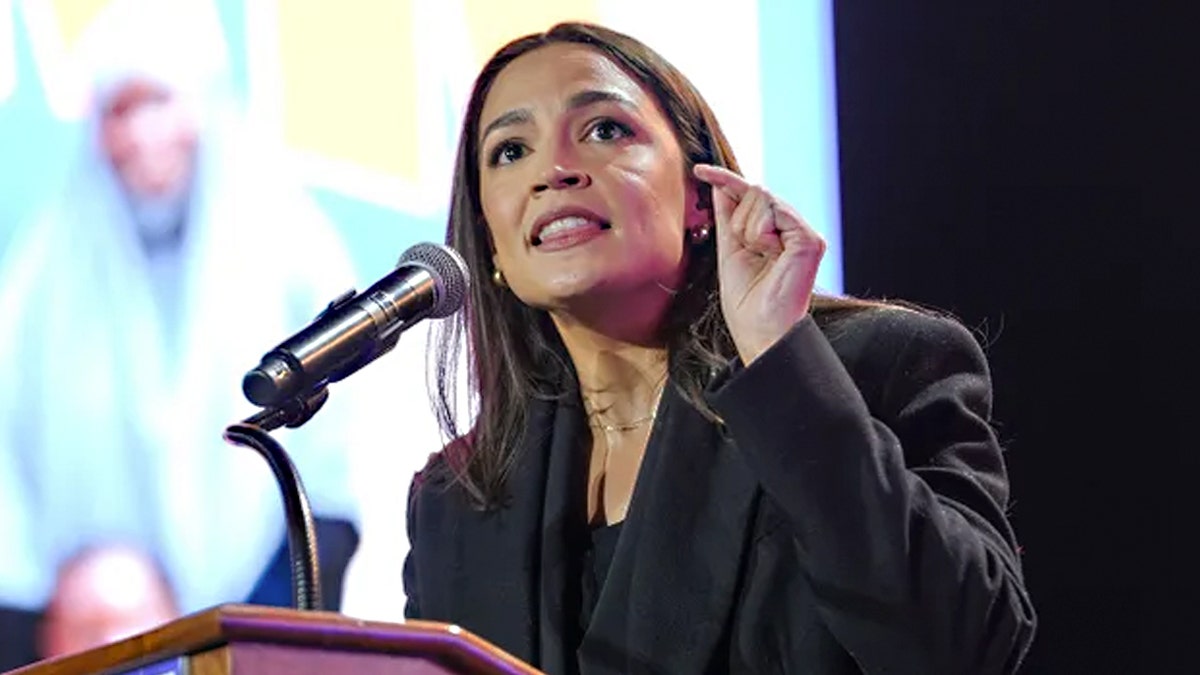
Rep. Alexandria Ocasio-Cortez, D-N.Y., speaks during a «New York is Not For Sale» rally at Forest Hills Stadium on Oct. 26, 2025. (Stephani Spindel/VIEWpress via Getty Images)
LePage will be 78 if he wins – the oldest freshman in congressional history. However, this is ironic. Maine’s Democrat Gov. Janet Mills was running for Senate – but bowed out. Some Democrats believed she was too old. Mills would have been 79 as a freshman senator had she stayed in the race and prevailed.
But back to what faces the Democrats.
Democrats are trying to find their footing after the double whammy of the Supreme Court Voting Rights Act decision and the Virginia Supreme Court rejecting the statewide redistricting referendum. House Democrats huddled to discuss their battle plan.
«I’m more energized now than ever to make sure that we’re in the field, that we’re doing the work and whatever it has to take to win,» said Meeks.
«We’re going to win,» said Rep. Suzan DelBene, D-Wash., who chairs the Democratic Congressional Campaign Committee (DCCC). That’s the House Democrats’ political arm.
«Democrats are prepared to use whatever levers we can to influence the outcome of the election,» said Thompson.
Some of this sounded a little like political pablum with no real direction.
Yours truly pressed Thompson.
«Respectfully, this all sounds kind of vague. You guys have a five-alarm fire now after those two court decisions, and I’m not hearing any specifics,» I countered Thompson.
«Well, you just stay tuned,» countered Thompson.
«How does that convince the voters, though?» your trusty reporter queried.
«Look,» said Thompson. «We are two weeks away from a crazy Supreme Court decision. You can’t expect anyone to come with a strategy right now.»
Two weeks after the decision which could hamstring Democrats’ chances to win the House? Never mind that the Supreme Court agreed to hear the case last year and oral arguments were in the fall. Democrats understood the gravity of this case and how it could chew into any plan to flip the House in the midterms.
Democrats are banking on Republicans overplaying their redistricting hands. But how Democrats energize their base wasn’t immediately clear after their conclave on the subject.
«The American public gets to make this decision. That’s a great thing about American democracy. And we’re working,» said Rep. Joe Morelle, D-N.Y., the top Democrat on the House Administration Committee.
REDISTRICTING BATTLES BREWING ACROSS THE COUNTRY AS PARTIES COMPETE FOR POWER AHEAD OF 2026 MIDTERMS
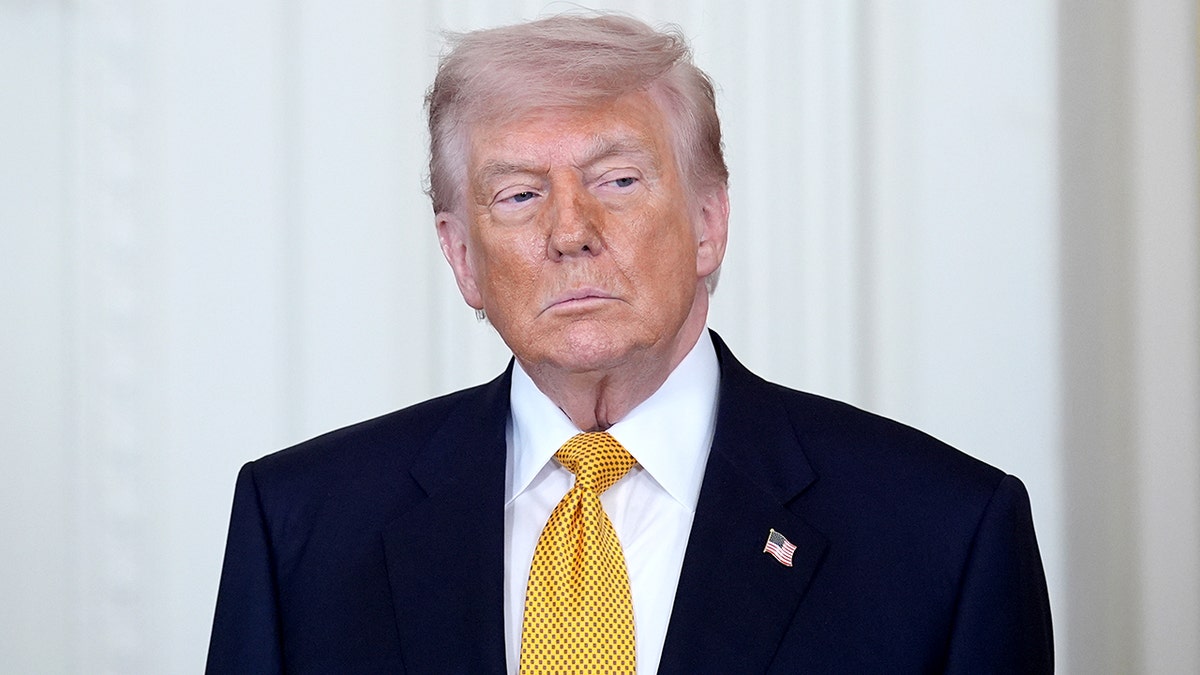
President Donald Trump speaks during a military Mother’s Day event in the East Room of the White House in Washington, D.C., on May 6, 2026. (Yuri Gripas/Abaca/Bloomberg via Getty Images)
But «working» doesn’t necessarily garner votes. It would be «news» if the Democrats weren’t working on the issue.
«That doesn’t sound like much of a concrete plan, though, Mr. Morelle?» yours truly interjected.
«I am not going to share my concrete plan with you,» replied Morelle.
A group of northern Democrats – ranging from Ocasio-Cortez to Sen. Cory Booker, D-N.J., headed to Montgomery, Ala., over the weekend to make the case against the GOP’s redistricting ploys.
«We shall overcome,» intoned Booker.
Rep. Jonathan Jackson, D-Ill., son of the late Rev. Jesse Jackson, is now imploring Black student-athletes who attend school in the South to enter the transfer portal and play instead in the North.
Yet another way to pit the Big Ten against the SEC.
Rallying in the South may rile up Black voters. But it won’t help Democrats take back the House if all they’re doing is driving up voter participation in districts Democrats can’t win – thanks to the redrawing of the boundaries.
However, if Democrats do succeed in getting people to the polls – yet the playing field is tilted against them – we could be in for an econometric anomaly this fall.
It was a presidential election year in 2012. Democrats failed to win control of the House after losing it in a 2010 midterm shellacking. With President Obama on the ballot, Democrats secured nearly 1.6 million more votes than Republicans in House races nationwide in 2012. Yet Democrats failed to win the House.
Republicans won control of the House from the Democrats in 1994 for the first time in four decades. But with President Clinton handily riding to a second term in 1996, Democrats still struggled to win back the House. Democrats outpaced Republicans in the popular vote for the House that year by nearly 300,000 votes nationally.
Democrats have redrawn lines in their favor in California. But Republicans appear to have superseded that with their lines in the South. It’s a distinct possibility that Democrats could command more popular votes for House seats nationwide – and not get back the House. This statistical phenomenon is even more glaring that the party with the most popular votes fails to control the House in a midterm – not a presidential election year when a sitting executive is returned to the White House in the cases of Presidents Clinton and Obama.
That’s why some Democrats believe they should have been even more aggressive with redistricting.
Maryland is a case study. The Democratically-controlled state took a pass.
«I believe that we had an opportunity to do that. I supported it, and I still believe that would have been the right course for us to take,» said Sen. Angela Alsobrooks, D-Md. «These are extraordinary times And I think we should take extraordinary measures to protect the opportunity to have those votes counted.»
Maryland would have made the entire state blue, drawing out of his seat Rep. Andy Harris, R-Md., chair of the House Freedom Caucus.
CLICK HERE TO DOWNLOAD THE FOX NEWS APP
Democrats see the GOP tactics as an existential political threat. President Trump commanded about one-fifth of Black male voters in 2024. And that’s why Democrats are framing this fight around civil rights.
It’s a race about redistricting. But Democrats also see this as a race – about race.
midterm elections, politics, republicans, democrats, house of representatives, the squad











The high court’s very big year
Paul Gigot and John Yoo break down the Supreme Court’s consequential term, which ended with major decisions on birthright citizenship and executive power. Yoo argues the court’s conservative majority is focused on containing the administrative state and restoring constitutional originalism, including the Bill of Rights and federalism, despite criticism from the left.
NEWYou can now listen to Fox News articles!
A Hawaii Supreme Court justice used a ruling overturning a decades-old criminal conviction to deliver a blistering rebuke of Chief Justice John Roberts’ Supreme Court, accusing the nation’s highest court of weakening constitutional rights, damaging democracy and advancing a political agenda.
Justice Todd Eddins authored the 91-page majority opinion Wednesday in State v. Granillo , a case involving a man convicted in 1990 of kidnapping and sexually assaulting a woman on Maui. The court ordered a new trial after concluding that hair and fiber evidence presented by an FBI expert relied on forensic science that has since been discredited.
But in roughly eight pages of the opinion, Eddins argued Hawaii’s courts should not look to the Roberts Court when interpreting the state constitution, using the case to deliver an unusually sharp critique of the nation’s highest court.
LAWYER WHO BEAT HAWAII GUN LAW CALLS STATE’S RELIANCE ON BLACK CODE ‘DISGRACEFUL’
«When six justices walk away from those they are supposed to protect, state constitutions hold the line,» Eddins wrote, referring to the court’s six conservative justices. «That is not defiance. That is the design.»
Eddins argued that Hawaii’s Constitution provides stronger protections than the federal Constitution as currently interpreted by the U.S. Supreme Court, and said the Court has abandoned landmark civil rights principles.
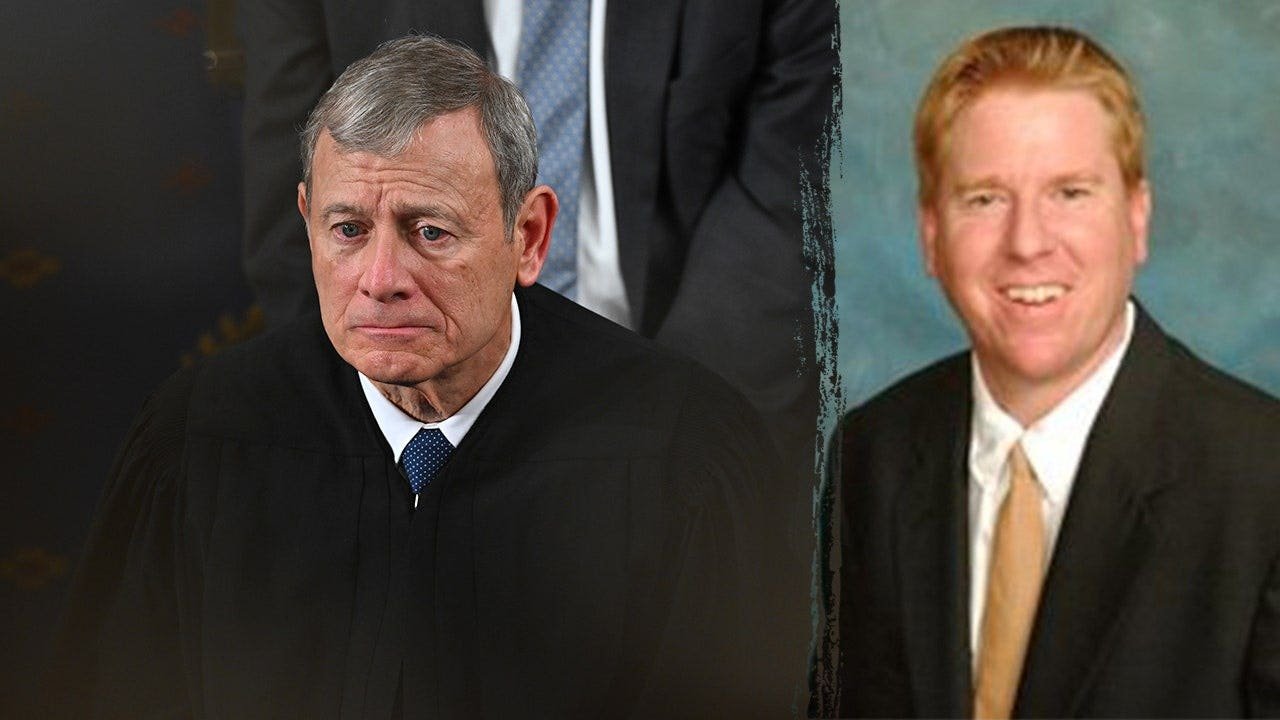
Hawaii Supreme Court Justice issued a scathing review of the Supreme Court’s most recent rulings, arguing that the High Court has weakened constitutional protections for citizens. (Graeme Sloan/Bloomberg via Getty Images/ Ballotpedia)
«The Court that now defines federal due process does not honor the work of 1954,» Eddins wrote. «It revives the work of 1857. The work of 1896.»
Eddins was referring to Brown v. Board of Education, ruled in 1954, which ended racial segregation in public schools, as well as Dred Scott v. Sandford, the infamous 1857 decision denying citizenship to Black Americans and Plessy v. Ferguson, the 1896 ruling that upheld racial segregation.
Eddins argued that the Roberts Court no longer reflects the constitutional principles established in Brown v. Board of Education, but instead, he argued the Court’s originalist approach relies on the same type of constitutional interpretation in the discredited Dred Scott and Plessy decisions.
«Today’s hubristic originalists use the same method to control modern life,» Eddins wrote.
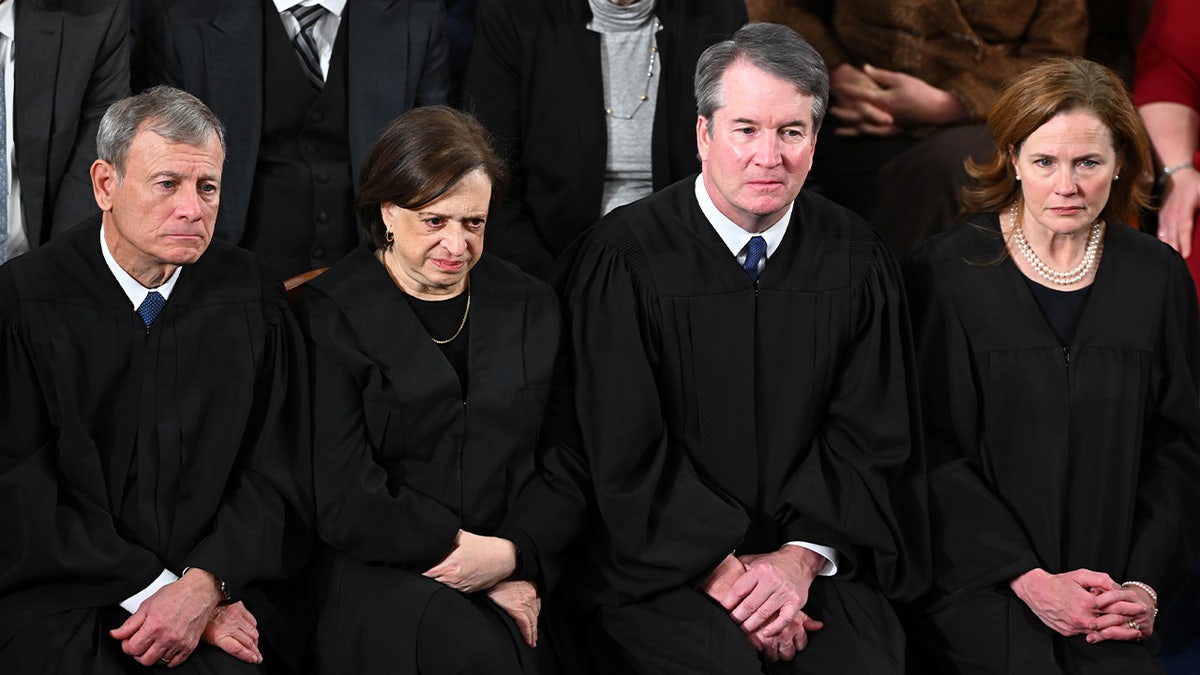
John Roberts, chief justice of the US Supreme Court, from left, Elena Kagan, associate justice of the US Supreme Court, Brett Kavanaugh, associate justice of the US Supreme Court, and Amy Coney Barrett, associate justice of the US Supreme Court, during a State of the Union address in the House Chamber of the US Capitol in Washington, DC, US, on Tuesday, Feb. 24, 2026. (Graeme Sloan/Bloomberg via Getty Images)
SUPREME COURT STRIKES DOWN LIMIT ON PARTY CAMPAIGN SPENDING IN COORDINATION WITH CANDIDATES
«The Court overrides what Congress passed,» Eddins continued. «It overrides what the people chose. All to serve its own ends. What this Court has done to constitutional rights, democratic institutions, and the rule of law explains why Hawaiʻi’s Constitution takes no instruction from it.»
Throughout the opinion, Eddins pointed to many of the Roberts Court’s most consequential decisions as evidence that constitutional protections have been weakened, including Dobbs v. Jackson Women’s Health Organization, which overturned the federal constitutional right to abortion; Citizens United v. FEC on campaign finance; Rucho v. Common Cause on partisan gerrymandering; Trump v. United States on presidential immunity; and New York State Rifle & Pistol Association v. Bruen, which expanded Second Amendment protections.
Eddins accused the Roberts Court of adopting a «colorblind» approach to the Equal Protection Clause that, in his view, ignores the amendment’s original purpose of protecting formerly enslaved Black Americans.
«The Roberts Court sees only white,» he wrote. «It refuses to acknowledge who the Equal Protection Clause was written to protect.»
He also suggested that recent Supreme Court decisions have repeatedly expanded the power of government officials and wealthy interests while reducing protections for individual rights.
«A court that systematically dismantles democratic safeguards, steamrolls constitutional liberties, and tramples human dignity does not chart the course for the Hawaiʻi Constitution,» he wrote.
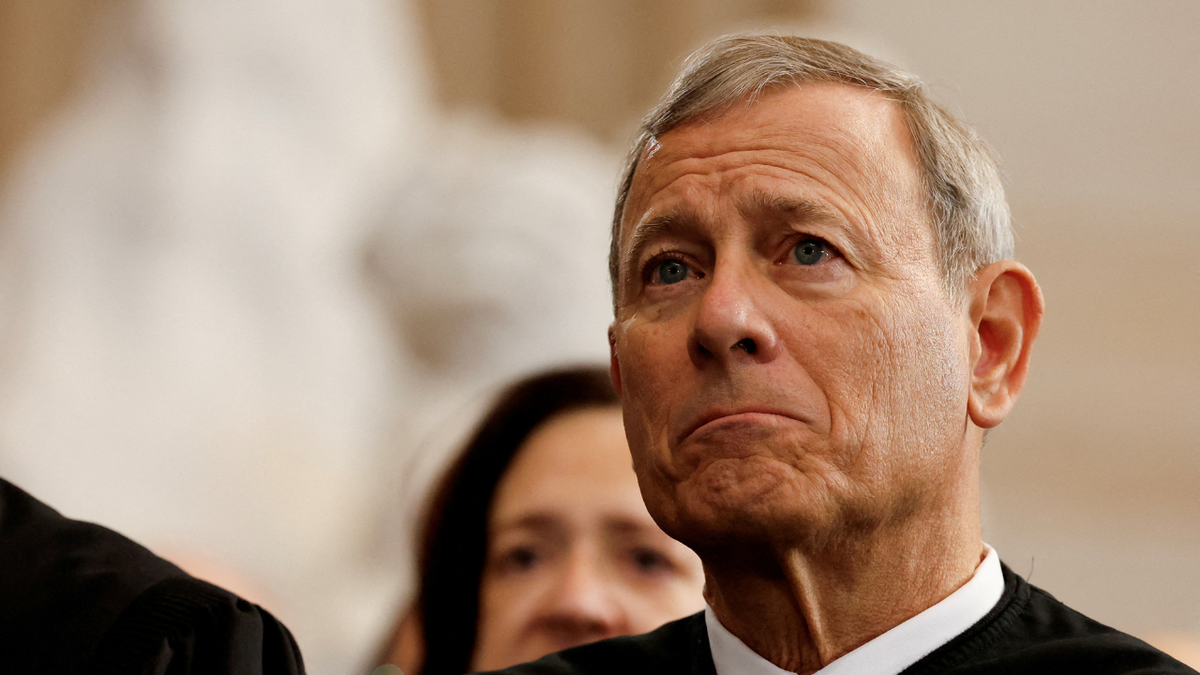
U.S. Supreme Court Chief Justice John Roberts attends inauguration ceremonies in the Rotunda of the U.S. Capitol on January 20, 2025 in Washington, DC. Chip Somodevilla/Pool via REUTERS/File Photo (Reuters)
THOMAS LEAVES NOTHING LEFT UNSAID ON RACIAL GERRYMANDERING DECISION: ‘GO FURTHER’
The opinion quickly drew criticism from legal observers, who said it was highly unusual for a state supreme court opinion to devote so much space to criticizing the U.S. Supreme Court.
«The Court issues an unhinged attack on the legitimacy of the Supreme Court,» Iowa Solicitor General Eric Wessan wrote on X. «I haven’t ever seen something like this. And it’s not good.»
George Washington University law professor Jonathan Turley similarly described the opinion as «devoid of judicial restraint and decorum.»
«The Hawaii Supreme Court just issued a truly shocking opinion that unleashed a torrent of rage and recrimination against the majority of the United States Supreme Court, including suggesting that they are de facto racists,» Turley wrote on X.
CLICK HERE TO DOWNLOAD THE FOX NEWS APP
The opinion comes just weeks after the U.S. Supreme Court handed Hawaii a major loss in Wolford v. Lopez, striking down the state’s so-called «vampire rule.» In a 6-3 decision, the court ruled Hawaii could not require gun owners to get a property owner’s permission before carrying a firearm into businesses and other private property open to the public.
Eddins has served on the Hawaii Supreme Court since 2020 after being appointed by then-Democratic Gov. David Ige.
hawaii, judiciary, supreme court, opinion, law
INTERNACIONAL
Diputado oficialista solicita investigar uso de los recursos en universidades públicas de Costa Rica
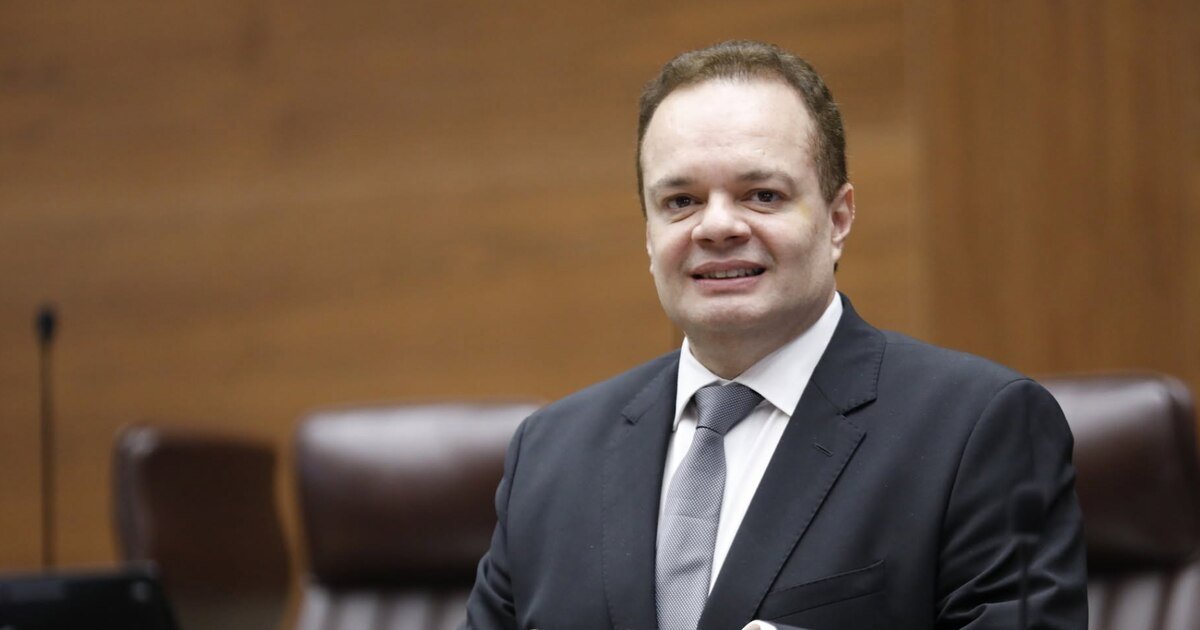
La posibilidad de que la Asamblea Legislativa investigue el uso de los recursos del Fondo Especial para la Educación Superior (FEES) abrió un nuevo capítulo en el debate sobre el financiamiento de las universidades públicas. El presidente de la Comisión de Control de Ingreso y Gasto Público, Gonzalo Ramírez Zamora, presentó una moción para que ese órgano legislativo analice durante un plazo de hasta dos años la administración de los fondos que reciben las cinco casas de enseñanza superior estatales, con especial énfasis en los recursos provenientes del FEES.
La iniciativa fue respaldada por los diputados del Partido Pueblo Soberano (PPSO), Kathia Calvo Cruz y Stephan Brunner Neibig, y podría ser discutida en una de las próximas sesiones de la comisión. Según el legislador, la investigación busca responder a las dudas que surgieron tras la publicación de diversos reportajes sobre gastos realizados por autoridades universitarias en alimentación, restaurantes y actividades de representación financiadas con recursos públicos.
Al presentar la moción, Ramírez sostuvo que el objetivo no es cuestionar la importancia de la educación superior pública, sino garantizar que el dinero aportado por los contribuyentes sea utilizado de manera eficiente y transparente. “Los recursos públicos no pueden ser usados como una piñata y menos en nuestras universidades”, afirmó el congresista, quien insistió en que la ciudadanía tiene derecho a conocer cómo se administran los fondos destinados al sistema universitario estatal.
De aprobarse la propuesta, la investigación abarcaría aspectos como la composición del gasto administrativo y del gasto sustantivo de cada universidad, la ejecución de los recursos provenientes del FEES, los mecanismos de control interno para autorizar y supervisar el uso de los fondos públicos, así como la razonabilidad y necesidad de gastos relacionados con representación, alimentación, actividades protocolarias, viáticos, viajes oficiales, cooperación internacional y capacitaciones.

Además, la comisión pretende determinar si la normativa interna que regula este tipo de gastos resulta suficiente para garantizar el cumplimiento de principios como la legalidad, la eficiencia, la economía, la austeridad, la transparencia y la rendición de cuentas. El objetivo final sería establecer si existe la necesidad de impulsar reformas legales, reglamentarias o administrativas que fortalezcan el uso responsable de los recursos públicos destinados a la educación superior.
Como parte del proceso, la moción contempla convocar a comparecer a las cinco personas rectoras de las universidades estatales, así como a representantes de las auditorías internas, direcciones financieras y a la contralora general de la República, Marta Acosta Zúñiga, con el fin de conocer de primera mano los mecanismos de fiscalización y administración de los recursos.
Tras conocerse la iniciativa, el Consejo Nacional de Rectores (Conare) reaccionó mediante un comunicado en el que manifestó su respeto por las competencias constitucionales de la Asamblea Legislativa y por el ejercicio del control político. No obstante, recordó que dicho control debe desarrollarse respetando plenamente la autonomía universitaria consagrada en la Constitución Política.
El presidente de Conare y rector de la Universidad Nacional (UNA), Jorge Herrera Murillo, aseguró que las universidades públicas mantienen un compromiso permanente con la legalidad, la transparencia, la eficiencia en el uso de los recursos públicos y la rendición de cuentas. Asimismo, destacó que las instituciones son objeto de fiscalización constante por parte de la Contraloría General de la República y de sus respectivas auditorías internas.

En su pronunciamiento, el Consejo de Rectores también hizo un llamado para que el debate sobre el FEES se desarrolle con base en evidencia técnica y no únicamente en percepciones. Según Conare, el ordenamiento jurídico costarricense ya contempla mecanismos robustos de control y supervisión sobre la ejecución de los recursos públicos administrados por las universidades.
La discusión ocurre en un contexto en el que el financiamiento de la educación superior se encuentra bajo revisión por parte del Gobierno. La administración de la presidenta Laura Fernández ha reiterado que la disciplina fiscal será uno de los pilares de su gestión, por lo que ha advertido que los incrementos al FEES dependerán de una eventual redistribución de los recursos hacia carreras con mayor demanda en el mercado laboral.
corresponsal:Desde San José, Costa Rica
NEWYou can now listen to Fox News articles!
As smoke from Canadian wildfires continues to drift across parts of the United States, forestry experts say Canada could reduce the severity of some fires through more aggressive forest management.
The issue reached the White House Friday, with President Donald Trump accusing Canada of failing to properly manage its forests and threatening to factor the economic cost of the smoke into tariffs on Canadian imports.
«We are holding Canada responsible for the fact that they are not properly maintaining their Forests, and Brush therein, and the United States is being unnecessarily invaded by filthy, polluted, and unhealthy air,» Trump wrote on Truth Social. He said he planned to call Canadian Prime Minister Mark Carney and accused Canada of refusing to engage in «basic Forest Management and Debris Removal,» calling it «Willful Negligence.»
TRUMP SHOULD EXPAND HIS BORDER CRACKDOWN. TIMING IS PERFECT TO REIN IN CANADA AND MEXICO
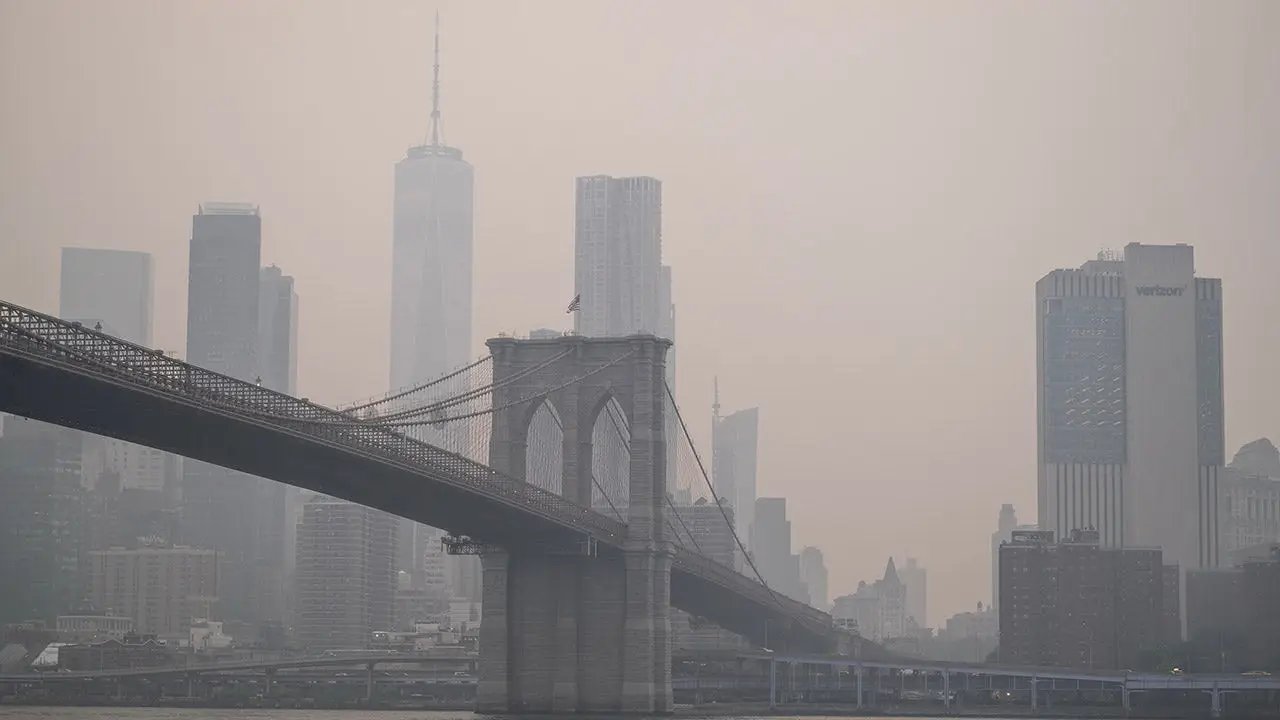
NEW YORK CITY, UNITED STATES – JULY 16: Smoke from massive wildfires in Canada engulfed the New York City skyline, reducing visibility and casting an orange haze over the New York City, United States on July 16, 2026. The smoky conditions reduced visibility across the skyline, while authorities continued monitoring air quality as the wildfire smoke spread across the northeastern United States. (Photo by Selcuk Acar/Anadolu via Getty Images) (Getty Images)
Andrew Hale, a Canadian fellow at Advancing American Freedom, argued that Canada’s wildfire policies have failed to prioritize forest management.
«Canada has a policy of not keeping reservoirs. They also will not cut firebreaks and will not thin their forests,» Hale told Fox News Digital. «This is the result of the undue influence of environmental groups who are firmly politically motivated and have divorced themselves from science and good stewardship. Canada and the rest of North America is suffering as a result,» he said.
Earlier this week, four Republican members of Michigan’s congressional delegation — Reps. Jack Bergman, John James, Lisa McClain and John Moolenaar — sent a letter to Carney saying residents in their state were once again experiencing unhealthy air because of smoke drifting south from Canadian wildfires.
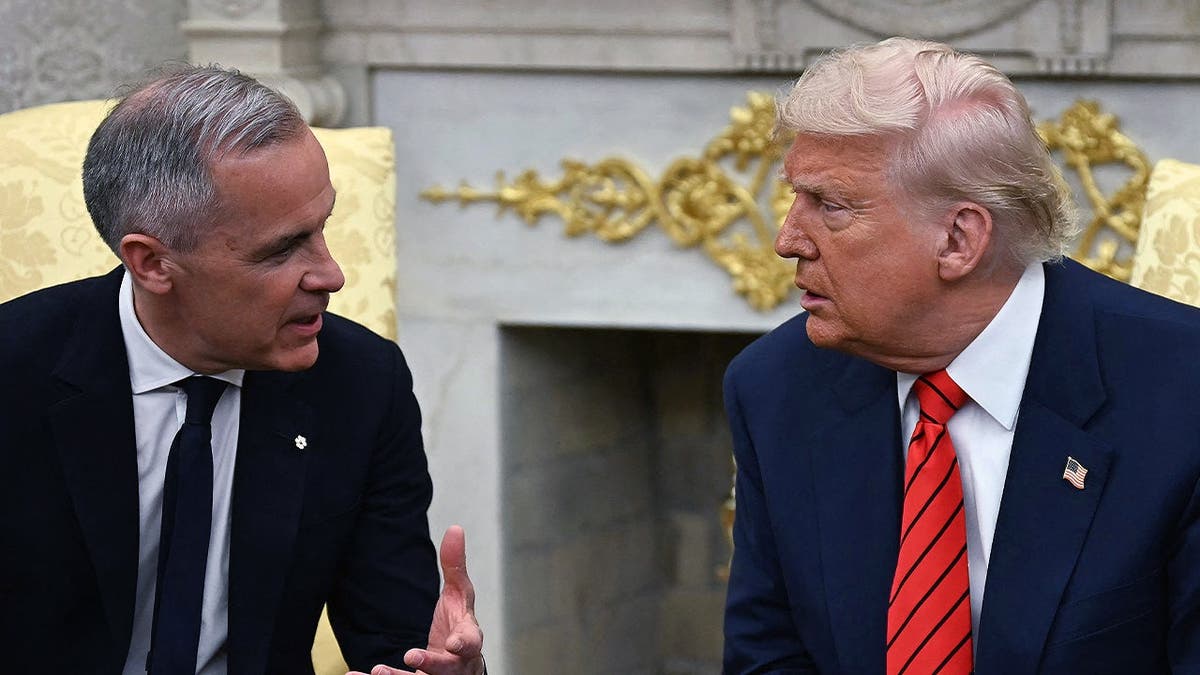
During a speech at the Toronto International Film Festival, Canadian Prime Minister Mark Carney hinted at President Donald Trump threatening Canadian sovereignty in recent months. (Jim Watson/Getty Images)
«We are done accepting apologies in place of action,» the lawmakers wrote, accusing Canada of underinvesting in forest thinning, fuel reduction and prescribed burns while calling for measurable plans to reduce future wildfire smoke crossing the border.
The criticism comes as Canada’s own Senate has reached a similar conclusion on one point: while it says climate change is making wildfire seasons longer and more severe, the country also needs to do substantially more to prepare its forests before fires ignite.
FOX WEATHER CORRESPONDENT BOB VAN DILLEN WEIGHS IN ON EFFECT OF CANADIAN WILDFIRES ON
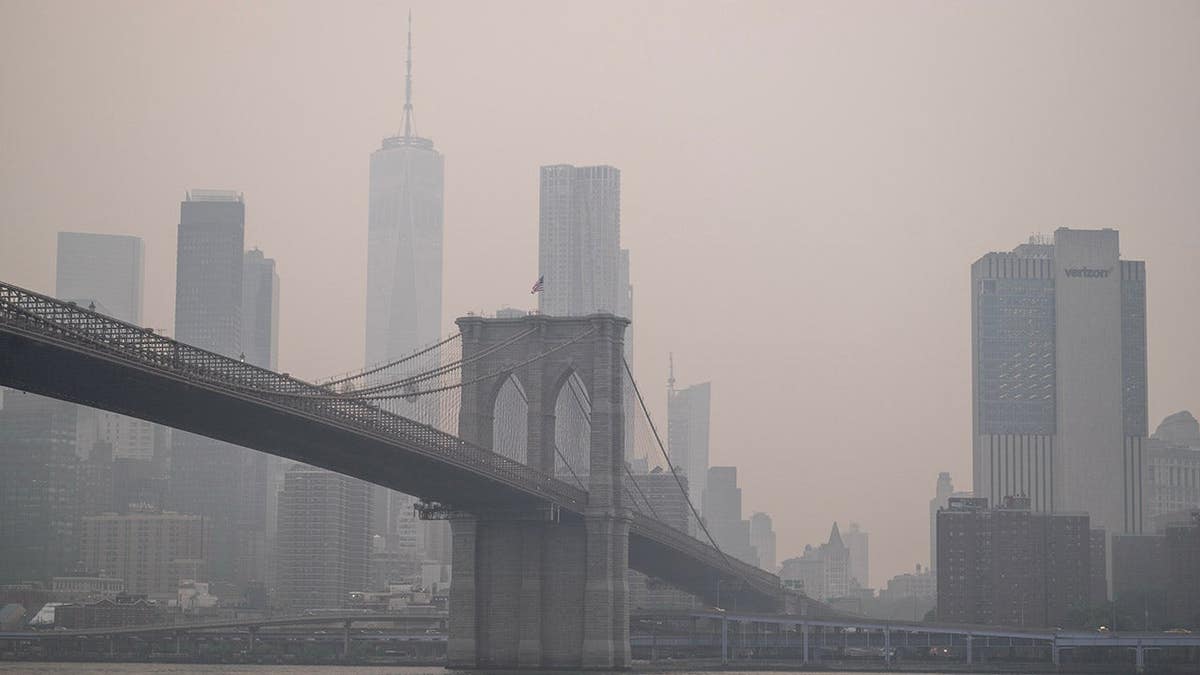
Smoke from wildfires in Canada shrouds the Manhattan skyline in Brooklyn, New York, on Thursday, July 16, 2026. (Victor J. Blue/Bloomberg via Getty Images)
The Senate Committee on Agriculture and Forestry released a report in June titled Canada on Fire: The Catastrophic and Escalating Effects of Wildfires on Lives and Communities after holding 17 meetings, hearing testimony from 79 witnesses and receiving 23 written briefs from scientists, government officials, Indigenous leaders and industry experts.
The committee concluded that Canada’s three most recent wildfire seasons demonstrated that climate change was accelerating fire behavior «beyond the capacity of existing systems.» At the same time, it found that prevention efforts have not kept pace with the growing threat.
Much of the report focuses on what experts call «fuel management» — reducing the amount of dry grass, dead trees, fallen branches and other vegetation that allows small fires to become large, destructive wildfires.
«Several witnesses agreed that prescribed fire is the most important risk-reduction tool for helping to manage or slow wildfire on the landscape and restoring ecological integrity,» the report said.
METS AND PHILLIES STARS SHOW CONCERNS ABOUT PLAYING IN UNHEALTHY AIR QUALITY: ‘NOT THE GREATEST IDEA’
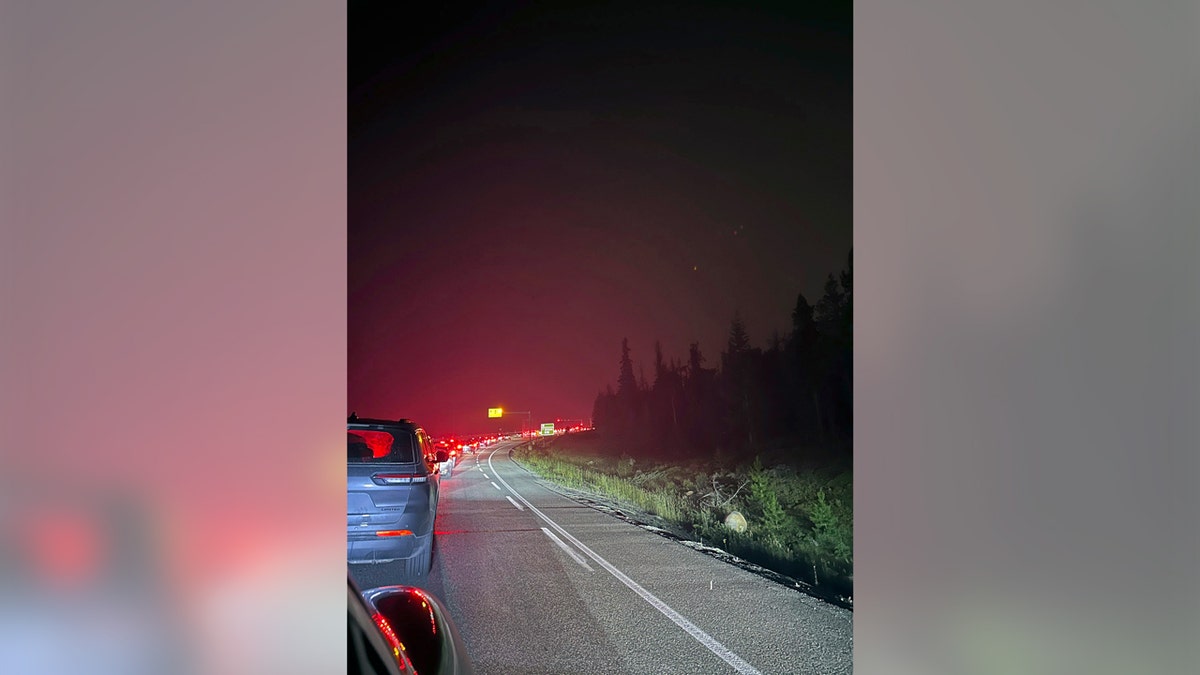
Cars sit in intense traffic as people evacuate because of wildfires early on July 23, 2024, in Jasper, Alberta. Multiple wildfires in Canada’s Jasper National Park have flared up, forcing all park visitors along with the 4,700 residents of Jasper to flee. (Carolyn Campbell/The Canadian Press via AP))
One witness, Paul Hessburg, a professor at the University of Washington’s School of Environmental and Forest Sciences, said that climate change is making wildfire conditions worse but does not eliminate the value of proactive forest management.
«The punchline is, with climate change, these conditions will intensify with less snowpack, more fires, bigger fires, hotter fires,» Hessburg told the committee. «The question is: Can we restore resilience? We can. We can bring back these elements and put the governors back into the landscape that historically regulated the flow of fire.»
Jason Hayes, a senior research fellow in energy and environmental policy at the Heritage Foundation, said the practical solution is to spend more time managing forests before fires begin rather than relying primarily on emergency response after they start.
«The best thing to do is get out, space and thin, do prescribed burns and recognize that these are renewable resources,» Hayes told Fox News Digital. «If we did that, then we would have much less intense wildfires.»
Hayes acknowledged that carrying out those recommendations across Canada would be far more difficult than simply identifying them. He said many fires burn in remote areas of northern Ontario and other parts of Canada that are difficult to reach because they are far from roads and population centers.
«You have to fly in, and it’s just difficult to do,» Hayes said.
CLICK HERE TO DOWNLOAD THE FOX NEWS APP
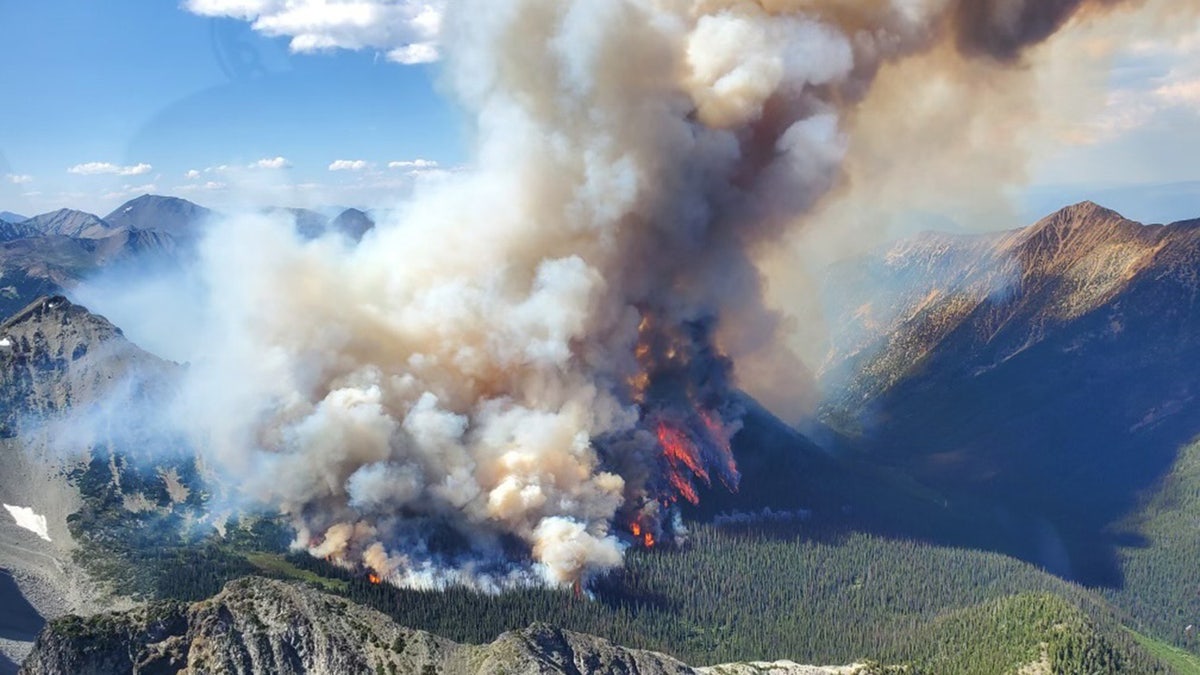
BRITISH COLUMBIA, CANADA – JULY 10: (—-EDITORIAL USE ONLY «MANDATORY CREDIT – BC WILDFIRE SERVICE» – NO MARKETING NO ADVERTISING CAMPAIGNS – DISTRIBUTED AS A SERVICE TO CLIENTS—-) An aerial view of wildfire of Tatkin Lake in British Columbia, Canada on July 10, 2023. (BC Wildfire Service/Anadolu Agency via Getty Images)
Witnesses to the Canadian Senate committee also warned that Canada faces practical challenges beyond forest management, including shortages of wildfire-management expertise and an aging fleet of firefighting aircraft. The report cited testimony that provincial fleets still include 22 older CL-215 aircraft and that at least 20 aircraft require immediate replacement.
Fox News Digital has reached out to the Office of Prime Minister Mark Carney but did not receive a comment in time for publication.
wildfire, environmental disasters, canada, mark carney, donald trump

La protesta policial continúa en Santa Cruz pese al aumento salarial y complica al gobierno de Claudio Vidal

Mundial 2026, en VIVO: últimas noticias de hoy, 18 de julio, el minuto a minuto de la jornada y cómo sigue la preparación de los finalistas

Liberal circuit judge blasts SCOTUS conservatives, says Hawaii will defy high court

Los que encanutaron dólares bajo el colchón por 10 años perdieron casi 30% de poder de compra

Diputado oficialista solicita investigar uso de los recursos en universidades públicas de Costa Rica

La CGT volverá a las calles tras el Mundial: encabezará una marcha con jubilados, las dos CTA y la UTEP

El machete del arquero inglés en una botella que sorprendió a Messi tras el triunfo: el dardo de un ayudante de Scaloni a Inglaterra

El fuerte cruce público entre Victoria Villarruel y Patricia Bullrich tras los chats filtrados antes de la sesión del Senado

Vaca Muerta promete renta anual del 15% y desata una fiebre inmobiliaria sin precedentes

Adrián Ravier, vocero de Milei: “No coincidimos en el Gobierno con esto de que la gente no llega a fin de mes”

 DEPORTE3 días ago
El machete del arquero inglés en una botella que sorprendió a Messi tras el triunfo: el dardo de un ayudante de Scaloni a Inglaterra
- POLITICA2 días ago
El fuerte cruce público entre Victoria Villarruel y Patricia Bullrich tras los chats filtrados antes de la sesión del Senado
- POLITICA2 días ago
Adrián Ravier, vocero de Milei: “No coincidimos en el Gobierno con esto de que la gente no llega a fin de mes”