INTERNACIONAL
California immigration judge sues DOJ, alleging she was fired for being a registered Democrat, a woman over 40


NEWYou can now listen to Fox News articles!
A California immigration judge who was terminated by the Trump administration is alleging in a lawsuit against the Department of Justice (DOJ) that she was fired because she is a registered Democrat and because of her affiliations with immigrant-rights groups.
The 14-page lawsuit, filed by Kyra Lilien, names the DOJ and acting U.S. Attorney General Todd Blanche as defendants.
Lilien claims she was not retained past her probationary period due to a number of factors, including being a woman over the age of 40, being fluent in Spanish and her associations with the Hispanic community.
JUDGE BLOCKS TRUMP ADMINISTRATION’S MASS DISMISSALS OF PROBATIONARY FEDERAL EMPLOYEES
Kevin Owen of Gilbert Employment Law in Maryland, one of Lilien’s attorneys, told FOX San Francisco she didn’t fit their mold and that the actions taken against her were impermissible and unlawful.
The lawsuit alleges that her termination violated Lilien’s civil and First Amendment rights.
Asylum seekers, left, walk toward the southern border in Tijuana, Mexico, next to an image of a courtroom in the Concord Immigration Court in California. Kyra Lilien, an immigration judge, is suing the Trump administration over her termination, alleging she was fired because of her political affiliations. (Getty Images; Concord Immigration Court)
Lilien was initially appointed to serve at the San Francisco Immigration Court on July 23, 2023, before being transferred to the Concord Immigration Court in February 2024. In total, she served nearly two years, which is the standard probationary period immigration judges serve under Justice Department policy before their appointments are typically converted to permanent roles.
The lawsuit names nearly 30 other immigration judges from around the country who were either fired or not converted from probationary periods, including 14 from the Concord and San Francisco immigration courts.
The filing states that immigration judges who were not converted or were terminated around the same time as the plaintiff were overwhelmingly female. Fox News Digital has reached out to Lilien’s attorney, the DOJ and the DOJ’s Executive Office for Immigration Review (EOIR).
GROUP OF DEI WORKERS SUE TO STOP TRUMP EXECUTIVE ORDERS

Lilien was initially appointed to serve at the San Francisco Immigration Court July 23, 2023, before being transferred to the Concord Immigration Court in California in February 2024. (iStock)
Throughout her employment and during her probationary period, Lilien met or exceeded all performance standards, according to the lawsuit.
She received satisfactory assessments — the highest possible rating — in her probationary period reports for fiscal years 2024 and 2025. As a judge, Lilien denied 34% of asylum claims brought before her, according to data from TRAC Immigration.
On July 11, 2025, Lilien received a notice that her probationary period would not be converted permanently, and the message said the attorney general had decided not to extend her term or convert it to a permanent appointment pursuant to Article II of the Constitution.
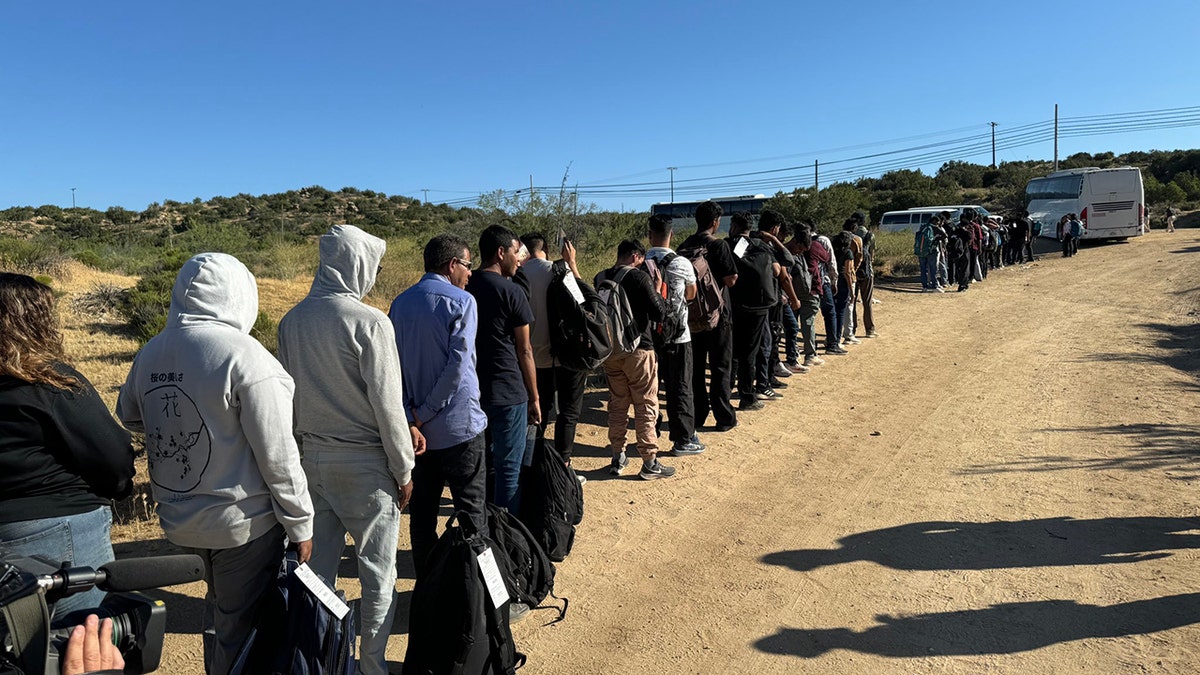
Migrants line up at the southern border in San Diego in 2024. (Fox News)
The suit also alleges that Sirce Owen, who was serving as the acting EOIR director at the time, issued controversial memoranda in early 2025 that demonstrated hostility toward immigrant advocacy groups and certain hiring practices.
Owen allegedly characterized these groups in a memo as «extremist leftist organizations» that promote illegal immigration and attempt to undermine immigration courts.
CLICK HERE TO DOWNLOAD THE FOX NEWS APP
He also issued another memo criticizing the appointment practices under the Biden administration.
Lilien’s suit states that these memoranda together laid bare management’s hostility toward hiring individuals with immigrants’ rights backgrounds, women, ethnic minorities and others who may be considered «DEI» hires.
justice department, federal judges, immigration, attorney general, judiciary, donald trump, politics












INTERNACIONAL
Trump makes stunning first-of-its-kind cash promise in bid to rally GOP voters at Dallas midterm convention

NEWYou can now listen to Fox News articles!
DALLAS — President Donald Trump delivered the keynote speech on day one of the GOP’s inaugural midterm convention, alternating between touting his successes in office and rallying thousands of supporters for Republican candidates ahead of November’s general election before making a promise to American voters.
n a stunning move, Trump made a promise unheard of in the history of American politics — offering a cash prize should Republicans keep control of Congress.
«I can make this promise to you, and here is my promise,» he said. «If the Republicans win the House of Representatives and the United States Senate, both of them, because of our economic — tremendous economic success like in history, we’ve never had anything like what’s happening. but because of our tremendous strength and success economically — I will issue a dividend to every adult citizen in the United States of America for $5,000. Very much like a successful company will do a cash distribution to its shareholders.»
TRUMP’S UNUSUAL ROLE AT MIDTERM CONVENTION REVEALED AS SCHEDULE GOES PUBLIC
President Donald Trump speaks on stage on the first day of the 2026 Republican National Convention at the American Airlines Center in Dallas, Texas, on Sept. 9, 2026. (Justin Sullivan/Getty Images)
«It will be called the ‘Trump dividend,’» he added.
Trump opened the speech by grading his own performance since taking office for a second time in January 2025, saying he’s «doing a great job.» He quickly shifted to addressing the historical challenge that incumbent parties rarely retain control of Congress in midterm elections.
JOHNSON DOWNPLAYS GOP’S MIDTERM WOES AS DEMOCRATS EYE HOUSE TAKEOVER: ‘I AM VERY BULLISH’
«But I say, why is it that no matter how well you’re doing, we see not a president — Democrat or Republican — almost never wins the midterms?’ said Trump. «We’ve got to change that because we have something going that’s so good we can’t let that string be broken. So I’m asking you to pretend that I’m on the ballot. I’m on the ballot, just one more time.»
During his effort to rally GOP voters to help Republicans hang onto the House and Senate, Trump made sure to give credit to Republicans on Capitol Hill for their work in passing his agenda.
MILLIONS TAP TRUMP TAX CUTS THIS FILING SEASON AS REFUNDS TOP $3,400
«Our Republican Congress puts thousands of dollars into the pockets of working families with the largest tax cuts in the history of our country,» he said. «So we had the largest in history. We gave you no tax on tips, no tax on overtime and no tax on Social Security for our great seniors.»
He said his administration’s efforts on critical issues will be crushed if the GOP loses majorities in either or both chambers of Congress.
TRUMP ADMIN MARKS 15 STRAIGHT MONTHS WITH ZERO BORDER RELEASES AS APPREHENSIONS PLUNGE 94%
«Because if we lose, you’re going to lose your border,» he said. «You’re going to lose your tax cuts. You’re going to lose your safety and security. You’re going to lose your wealth.»

President Donald Trump greets attendees as he walks on stage on the first day of the Republican National Convention at the American Airlines Center in Dallas, Texas, on Sept. 9, 2026. Trump headlined the Republican National Committee’s first-ever midterm convention as he aimed to highlight his administration’s achievements and rally support for GOP candidates ahead of the November elections. (Justin Sullivan/Getty Images)
Fox News polling shows Trump is underwater with voters on the economy, cost of living and inflation. Sixty-five percent of voters disapprove of his handling of the economy. The president also defended the military conflict in Iran, saying he has received criticism over rising gas prices tied to the conflict but arguing that «I’m right,» because Iran was one month away from securing a nuclear weapon. Inflation has risen from 2.4% to 3.4% since the war began in February, while gas prices have also increased.
RECORD GAS PRICES SQUEEZE AMERICANS AS SUMMER TRAVEL SEASON ENDS, MIDTERMS LOOM AND IRAN WAR WAGES ON
Republicans who spoke to Fox News Digital on day one of the convention weren’t concerned with Trump’s economic policies.
«I believe that Trump is doing the right thing,» one RNC attendee told Fox News Digital. «The tariffs are bringing a lot of money back, you know, correcting the national debt. And that’s gonna improve everything across the board.»
«I feel like as soon as we bring this conflict in Iran to a close, we’ll start seeing the full effects of President Trump and the greatness that he’s done as far as the economy, the great thing of tariffs, and some of the products of the Trump economy in the golden age,» said Jacquez Jones of Texas.
Later, Trump shifted his sights to Texas’ high profile U.S. Senate race between Republican state Attorney General Ken Paxton and Democrat state Rep. James Talarico.
«We have to elect Ken Paxton,» he said, segueing into border security, a top issue under both Trump administrations. «Together, we’re going to continue to have — we have the strongest borders now in the history of our country.»
‘FAKE’ MODERATE TALARICO’S TEXAS SURGE TESTS PAXTON IN FIGHT TO HOLD CRUCIAL GOP SENATE SEAT

HOUSTON, TEXAS – JUNE 12: Texas Attorney General Ken Paxton is shown during the Texas GOP convention in the George R. Brown Convention Center in Houston Friday, June 12, 2026. (Melissa Phillip/Houston Chronicle via Getty Images) ((Melissa Phillip/Houston Chronicle via Getty Images))
«We have the lowest level of illegal immigration ever recorded in our country,» he said, adding that zero illegal immigrants have entered the country through Texas in 16 months.
«And therefore zero have been admitted into Texas where they used to be running around, running rampant, killing people, destroying many houses and farms, and ruining property values and creating havoc all over the state of Texas,» he said.
During the speech, he also took aim at Democratic Senate candidates Abdul El-Sayed in Michigan and former Gov. Roy Cooper in North Carolina.
LONGTIME GOP AIDE DEFECTS TO DEM RISING STAR AS TEXAS SENATE BATTLE FOR CORNYN’S SEAT HEATS UP
He also touted what he described as foreign policy wins. After the arrest of former Venezuelan President Nicolas Maduro, Trump boasted about «the biggest oil deal» ever, which he said might be «the biggest deal in the history of our country.»
«65 billion barrels are ours,» Trump said. «And you know what they say it is lifetime 500 years.»
Later, Trump transitioned to slamming the GOP’s far-left opponents.
«In this election, the Democrats have nominated the most extreme and dangerous group of candidates for the House and Senate ever to seek office,» he said. «These people are radical left communists. Many of them. Not all of them, but many of them in state after state. The Democrat establishment has been overthrown and replaced by crazed lunatics and radicals. They call themselves Democrat socialists. But actually they’re communists. They’re not socialists. They’re long beyond socialists.»

Members of the Democratic Socialists of America gather outside a Trump-owned building on May Day, May 1, 2019, in New York City. (Getty Images)
He noted the DSA has proposed abolishing prisons, ICE, Border Patrol, the U.S. Senate and the presidency.
That message was one Alex Stone of Kansas City, Missouri, hoped for earlier in the day.
«Tell the truth about who they are, what they believe and what they plan on doing,» he told Fox News Digital when asked what Trump’s message to Americans should be. «Democratic Socialists of America with El-Sayed in Michigan, in particular, these people want to destroy people like myself. They want to destory people like President Trump and many of the other people here. If they get into power, what is going to happen to us?»
SIGN UP TO GET THE POLITICS NEWSLETTER
The president said he’s prepared for stiff opposition from those opponents.
«The pundits, the fake news media and the radical left communists will say anything they can to try and stop us. But in this election, all that matters is that we are united, we are together, and what we say counts.»
politics, republicans elections, midterm elections, donald trump, congress
INTERNACIONAL
La revolución de la longevidad: cómo la ciencia y la sociedad están en plena redefinición de la la vejez en el siglo XXI

“No dejas de reír porque envejeces. Envejeces porque dejas de reír.” Con esa frase arranca La nueva gerontolescencia, el ensayo en el que Nora Bär examina una de las transformaciones demográficas más profundas del siglo XXI: la revolución de la longevidad.
La obra abre con la historia de Ides Kihlen, pintora argentina que a los 108 años se mantuvo en actividad, preparaba un libro sobre su obra reciente y exhibía en muestras de alcance internacional.
Kihlen trabajó durante décadas en la intimidad, sin buscar reconocimiento público, y realizó su primera muestra individual a los 85 años. Su trayectoria ilustra uno de los ejes del ensayo: la vejez puede ser una segunda oportunidad de realización, ya sin el peso de criar hijos ni sostener una familia.

Bär construye su argumento desde la divulgación científica, el periodismo de datos y el testimonio directo. A lo largo del libro reúne historias de figuras como Ágnes Keleti, la gimnasta húngara que ganó su primera medalla de oro olímpica a los 31 años, cosechó cuatro oros y dos platas en los Juegos de Melbourne 1956 a los 35, sobrevivió al Holocausto con documentos falsos y falleció en enero de 2025 a los 103 años.
También aparecen Fortunato Benaím, referente en medicina del quemado, lúcido y activo a los 103 años, y Mario Bunge, físico y filósofo, quien escribió una autobiografía de casi 400 páginas a los 96. Con ejemplos de distintos países y disciplinas, la autora muestra cómo el concepto mismo de vejez se transforma.
Las cifras que recorre el ensayo son elocuentes. En la Argentina, la esperanza de vida pasó de poco más de 61 años en los años cincuenta a más de 71 en 2021. La autora señala que, por primera vez en la historia, la generación “plateada” tiene un peso social inédito, lo que obliga a repensar políticas públicas, roles familiares y el sentido del envejecimiento. “Hoy es posible llegar a edades avanzadas sintiéndonos tan jóvenes como sea posible”, escribe Bär.
El libro dedica un capítulo central al cerebro y a la longevidad intelectual. A través de entrevistas con neurocientíficos como Agustín Ibáñez y Adolfo García, la autora presenta los últimos hallazgos sobre la plasticidad cerebral y la “reserva cognitiva”. Aunque la velocidad de procesamiento disminuye con los años, muchas funciones intelectuales y lingüísticas pueden mantenerse o mejorar. “Si mantenemos nuestro cerebro activo, todos podemos ser atletas de la mente”, afirma García, quien destaca la lectura sostenida, el multilingüismo y la vida social como factores neuroprotectores.
En el plano de la biología, Bär presenta los aportes de investigadores como Leonard Hayflick, quien descubrió el límite de divisiones celulares, y expone la relevancia de los telómeros y el “reloj epigenético” para comprender por qué y cómo envejecemos. Discute también las hipótesis de Jay Olshansky, quien plantea que la longevidad extrema podría estar condicionada más por efectos secundarios de los programas genéticos que por una “obsolescencia programada”, y describe las investigaciones sobre rejuvenecimiento celular a partir de los genes de Yamanaka y el “reloj epigenético” de Steve Horvath.
La dimensión social del envejecimiento ocupa una parte sustancial del ensayo. Bär cita estudios regionales que demuestran que, en América Latina, el principal factor de riesgo para un envejecimiento no saludable es la situación socioeconómica, por encima de la edad o el sexo. El texto analiza la influencia de la calidad del aire, la contaminación y los microplásticos, y revisa datos sobre la expectativa de vida de poblaciones vulnerables, entre ellas el colectivo trans en la Argentina.

En la segunda mitad del libro, Bär describe cómo la nueva longevidad desafía las representaciones tradicionales: aparecen nuevos modelos de convivencia, redes de amistad, formas renovadas de sexualidad en la adultez mayor y modalidades distintas de participación social. La escritora Cecilia Absatz, quien a los 83 años publica un newsletter semanal en el que reivindica la vejez como “un arte”, es uno de los casos que recorre el texto.
El ensayo también aborda la transformación demográfica que subyace a todos estos cambios. La reducción de la mortalidad infantil y los avances en salud pública, antibióticos y vacunas explican el aumento extraordinario de la vida media. El descenso global de la tasa de fecundidad añade otro desafío: una población que crece menos, envejece a mayor velocidad y demanda nuevos sistemas de cuidado.
El libro cierra con la anécdota de Jacobo Fiterman, ingeniero y fundador de arteba, quien a los 96 años sigue organizando reuniones familiares y de amigos. “Lo más importante a esta edad es tener un lugar donde ir, algo que te espera”, dice Fiterman.
◆ Nora Lía Bär (Banfield, 1951) es una de las pioneras del periodismo científico en la Argentina. Integró la Red Argentina de Periodismo Científico, fue editora de la sección Ciencia/Salud del diario La Nación y dirigió la colección ¿Qué es? de Editorial Paidós. Ha sido jurado de premios nacionales e internacionales en periodismo científico, conduce el programa radial El arcón. Ciencia, salud y tecnología y desde 2021 escribe en El Destape. En 2023 fue columnista en Médico de familia por Canal 9.
INTERNACIONAL
“Por si me matan”: el video de Dereck McNeil que vuelve a poner bajo presión la investigación del caso Angie Peña

Un nuevo video atribuido a Dereck Isaac McNeil, testigo vinculado a investigaciones relacionadas con la desaparición de Angie Peña y asesinado posteriormente en Roatán, volvió a colocar bajo escrutinio la actuación de agentes de la Agencia Técnica de Investigación Criminal (Atic).
La grabación, que McNeil fecha verbalmente el 28 de octubre de 2025, comienza con una advertencia que hoy adquiere un peso particular: “Por si me matan”.
En el video, el fallecido menciona a varios agentes y funcionarios, a quienes atribuye supuestas irregularidades en investigaciones relacionadas con Angie Peña, los llamados Delta Teams y otros procesos criminales.
Pero existe una diferencia fundamental entre una acusación grabada y una prueba judicial.
Hasta ahora, las afirmaciones difundidas corresponden a la versión de McNeil y no demuestran por sí solas que los agentes señalados hayan manipulado evidencia, protegido estructuras criminales o cometido otros delitos.

Los nombres aparecen, pero falta saber qué fue investigado
McNeil menciona a Fernando Miguel Carvajal Nolasco, Rafael Enrique Ardón Rodríguez, Hansel Armando Castellón Irías, Edgar Andrés Jiménez Flores y Arturo Josué Claros Cortés.
Sobre algunos formula acusaciones directas, incluida una supuesta manipulación de información obtenida de teléfonos.
Esas declaraciones son graves precisamente porque afectan a funcionarios vinculados con tareas de investigación criminal.
La pregunta central ahora no es únicamente qué dijo McNeil frente a una cámara, sino si hizo esos mismos señalamientos formalmente ante fiscales o jueces, qué evidencia presentó y si las instituciones abrieron alguna investigación para comprobarlos o descartarlos.
El video no sustituye el testimonio judicial
McNeil aseguró también que personas vinculadas con los Delta Teams le habían ofrecido dinero para que no declarara y sostuvo que su intención era que “las cosas se esclarezcan”.
Ese señalamiento deberá diferenciarse de cualquier declaración anticipada que haya quedado incorporada formalmente dentro de una causa.
Si McNeil rindió testimonio anticipado ante autoridad competente, ese acto puede conservar valor procesal después de su muerte.
El video difundido públicamente es otra cosa.
Su existencia puede aportar una línea de investigación o revelar preocupaciones que tenía el testigo, pero su contenido no se transforma automáticamente en evidencia probada por haber sido grabado antes de su asesinato.
Angie Peña y los Delta Teams no son el mismo proceso
Otro punto importante es evitar mezclar expedientes.
La desaparición de Angie Peña, ocurrida el 1 de enero de 2022 en Roatán, continúa sin una respuesta definitiva sobre su paradero.
Los procesos contra personas vinculadas con los denominados Delta Teams involucran investigaciones por otros delitos y no equivalen, por sí solos, a un juicio que determine directamente qué ocurrió con Angie.
McNeil relacionó ambos asuntos dentro de sus declaraciones, pero esa conexión también necesita respaldo probatorio.

El hecho de que McNeil fuera asesinado después de dejar grabaciones aumenta inevitablemente el interés sobre sus advertencias.
Sin embargo, la secuencia temporal tampoco demuestra que lo hayan matado por lo que sabía del caso Angie Peña.
Ese vínculo debe ser establecido por una investigación criminal independiente.
Lo mismo ocurre con sus afirmaciones sobre otros testigos muertos o desaparecidos: señalar una posible conexión no equivale a demostrarla.
La pregunta que queda para el Estado
El video deja ahora varias interrogantes difíciles de ignorar.
¿Las autoridades conocían estas acusaciones antes de la muerte de McNeil? ¿Fueron investigadas? ¿Existía evidencia que respaldara alguno de sus señalamientos? ¿Qué parte de la información que entregó quedó preservada dentro de expedientes judiciales?

Después de su asesinato, McNeil ya no puede ser interrogado sobre esas afirmaciones.
Por eso, el verdadero peso de sus grabaciones dependerá menos de lo impactante de sus palabras y más de cuánto de lo que dijo pueda ser corroborado con documentos, testimonios, peritajes y evidencia independiente.
Corresponsal:Desde Tegucigalpa, Honduras

Habló Costa desde la clínica tras su paso por terapia intensiva: “Agradezco a los que rezan por mí”

La Municipalidad de José C. Paz exigió a Kicillof que refuerce la seguridad tras el crimen de Ojeda Vázquez

Giro sorpresivo en la carrera de Mauro Icardi: el nuevo destino europeo y los tres equipos que pujan por su ficha

Trump makes stunning first-of-its-kind cash promise in bid to rally GOP voters at Dallas midterm convention

El ex River Oscar Ahumada renunció a La Libertad Avanza: “Zárate necesita planificación y transparencia”

La revolución de la longevidad: cómo la ciencia y la sociedad están en plena redefinición de la la vejez en el siglo XXI

1000 días de Milei: los logros, las crisis que lo marcaron y los déficits de su gestión

Martín Menem dijo que Milei será el primer no peronista en ser reelecto y llamó a invertir más

Franco Colapinto largará en el puesto 7 con su Alpine el Gran Premio de Italia de la Fórmula 1: hora, TV y todo lo que hay que saber

Multas millonarias, arrestos y trabajo comunitario: cómo se prepara una provincia para enfrentar el Súper Niño

 SOCIEDAD2 días ago
Femicidio brutal en Merlo: un jubilado de 64 discutió con su esposa y la asesinó a puñaladas
- POLITICA2 días ago
El gobierno de Kicillof retendrá un 2% en los premios de las apuestas online
- DEPORTE2 días ago
El rotundo cambio de Julián Álvarez en una foto presentación del Atlético de Madrid tras quedarse en el club