
INTERNACIONAL
California leaders mum on $1B high-speed rail detour aimed at preserving disgraced labor leader’s memorial


NEWYou can now listen to Fox News articles!
California taxpayers may be on the hook for a roughly $1 billion detour project as part of the state’s new high-speed rail construction meant to prevent disruption of a monument honoring the disgraced labor leader Cesar Chavez.
Despite tearing down and vacating memorials for Chavez, top California lawmakers did not immediately respond when asked if taxpayers in their state should still be on the hook for a roughly billion-dollar detour project meant to prevent the state’s new high-speed rail from coming near the monument nestled in the mountains. The detour, according to 2020 estimates from the California High Speed Rail Authority, would cost taxpayers close to $1 billion when accounting for inflation.
California leaders, universities and beyond immediately began stripping honors they had bestowed on the late labor leader after news of him sexually abusing and grooming minors and adults, including one girl who was as young as 13 at the time of the abuse and another who became pregnant twice following their encounters.
CALIFORNIA TO CHANGE CESAR CHAVEZ DAY TO FARMWORKERS DAY AFTER SEXUAL ABUSE SCANDAL
Cesar Chavez, head of the United Farm Workers, makes a point in a press conference in Sacramento. (Getty Images)
The Chavez-founded labor union, United Farm Workers, called the allegations «profoundly shocking» and decided earlier this year to cancel its upcoming annual celebrations honoring him. Meanwhile, the César Chavez Foundation opted to do the same, describing the allegations as «disturbing» and noting they were «deeply shocked and saddened.»
The Chavez Foundation, according to the San Francisco Chronicle, successfully lobbied for the roughly $1 billion detour known as the «Refined César E. Chávez National Monument Design Option,» which moved the high-speed rail track roughly three-quarters of a mile from the Chavez monument’s boundary. The monument, part of the National Park Service, is a sprawling 187 acres and includes Chavez’s and his wife’s burial spots. It is also reportedly the location where Chavez founded his labor movement.
The monument already sits along a key transportation corridor with a single track looping around the site that carries dozens of freight trains a day. According to the San Francisco Chronicle, the train creates a constant rumble for those walking around the site.
DEMS FACE RECKONING AFTER PUTTING DECEASED LABOR LEADER ON PEDESTAL AS SEXUAL ABUSE ALLEGATIONS EMERGE

Then-President Barack Obama and Cesar Chavez’s late wife walk from Chavez’s grave site during a tour of a memorial garden at the Chavez National Monument October 8, 2012, in Keene, California. (BRENDAN SMIALOWSKI/AFP/Getty Images)
«I have been to the monument,» Adriana Rizzo, a member of Californians for Electric Rail, told the San Francisco Chronicle. She noted it «is right next to a freight corridor» leading her to question «why this quieter, less-polluting train would have to be invisible.»
«This is a billion dollars we don’t have. There are a lot of other things we need. If there is a better route, we’re always open,» California High Speed Rail Authority board director, Ernest Camacho, said, according to the San Francisco Chronicle. Martha Escutia, another board director, reportedly said she is «always willing to reopen current commitments to ensure we get the best savings for taxpayers.»
Estimates for the high-speed rail project have been north of $200 billion, but the rail authority has challenged those estimates, telling CBS47 and KSEE24 the estimate is closer to $125 billion.

A rendering shows a high-speed rail train as it enters a station during an informational open house by the California High Speed Rail Authority at the Hilton DoubleTree in downtown Fresno, California, on Wednesday, May 1, 2024. (Craig Kohlruss/The Fresno Bee/Tribune News Service via Getty Images)
CLICK HERE TO DOWNLOAD THE FOX NEWS APP
Fox News Digital reached out to top California leaders, including Gov. Gavin Newsom’s office, to inquire whether there should even be a debate over whether to get rid of the detour plans, particularly when many of them have taken actions to strip honors and memorials to the disgraced labor leader. However, none of them replied in time for publication.
california, taxes, transportation, politics, gavin newsom













NEWYou can now listen to Fox News articles!
Federal investigators say a fatal New Mexico air ambulance crash unfolded after the crew lost GPS navigation while the U.S. military was conducting a scheduled jamming exercise — a chain of events that is raising new questions about whether civilian aviation is prepared for an era of electronic warfare.
The National Transportation Safety Board’s preliminary report found the Beech King Air crew reported losing GPS capability minutes after departing Roswell, New Mexico, May 14 as the military conducted a planned GPS-denial exercise. Air traffic controllers twice asked officials to halt the jamming while assisting the flight, though investigators have not determined whether the interference caused or contributed to the crash.
The crew took off from Roswell, New Mexico, shortly before midnight on an air ambulance flight to Ruidoso, New Mexico, according to the preliminary report. Before the flight, the Federal Aviation Administration (FAA) had issued a notice to airmen warning that a scheduled military GPS jamming exercise could disrupt satellite navigation across a radius of hundreds of miles around White Sands Missile Range.
Minutes after departure, the pilots reported losing GPS capability and requested assistance from air traffic controllers, who twice asked the military to suspend the jamming exercise. Three other aircraft in the area also reported GPS outages.
Federal investigators are examining the causes of recent close calls between airliners and other safety issues. (Michael Dwyer, File/The Associated Press )
The crew later reported the airport in sight and requested a visual approach. After the military resumed the exercise, the aircraft descended toward the runway but struck the Capitan Mountains, killing both pilots and two flight nurses. The National Transportation Safety Board has not determined whether the GPS interference contributed to the crash.
The crash comes as aviation authorities worldwide warn that GPS interference is becoming a growing operational hazard. The FAA now advises pilots to be prepared to fly without GPS because intentional jamming is «of greater and growing concern,» while the U.N.’s aviation agency has warned that interference can affect aircraft far beyond conflict zones.
In its 2026 guidance, the agency said the hazards associated with GPS jamming and spoofing have «rapidly spread» in recent years and cited industry data showing reports of GPS loss increased 65% in the first half of 2024 compared with the previous year. The agency warned that interference can cause pilots to deviate from assigned flight paths, misreport their position, lose situational awareness and struggle to transition safely to backup navigation.
Todd Humphreys, director of the University of Texas’ Radionavigation Laboratory, said the crash also raises questions about whether the navigation technology used in many civilian aircraft has kept pace with evolving GPS jamming threats.
Humphreys said many FAA-certified cockpit GPS receivers rely on older technology that is more susceptible to jamming than newer commercially available systems.
«The iPhone that the pilot carried was almost certainly a better GPS receiver inside than the FAA-certified receiver providing navigation guidance to the aircraft,» Humphreys told Fox News Digital.
Unlike illegal consumer GPS jammers, military electronic warfare systems are designed to deny satellite navigation across large operational areas so troops can train in conditions resembling combat. In the New Mexico exercise, the FAA warned GPS disruptions could extend hundreds of miles from White Sands Missile Range.
INSIDE AMERICA’S LASER REVOLUTION AS THE MILITARY NEARS BIG BATTLEFIELD BREAKTHROUGH
Humphreys argued that while newer GPS technology has become more resilient to interference, aviation certification has moved too slowly to keep pace with the evolving threat from jamming and spoofing.
Humphreys’ concerns echo warnings from international aviation regulators. In March 2025, the International Civil Aviation Organization, along with the International Telecommunication Union and International Maritime Organization, warned of increasing GPS jamming and spoofing incidents that can affect aircraft «far beyond the immediate affected area,» creating safety risks across multiple flight regions.
Paul Deres, vice president of operations at the Aircraft Owners and Pilots Association Air Safety Institute, said the focus should remain on pilot preparation and proficiency, noting that today’s general aviation fleet includes a wide range of older and newer avionics designed to improve situational awareness.
«Technology can always fail, and it does,» Deres said.
European regulators have repeatedly updated guidance for pilots and air traffic controllers in response to growing GPS interference, most recently in July after analyzing additional jamming and spoofing incidents.
The FAA declined to comment on the ongoing investigation, but said it issues notices alerting pilots to planned GPS disruptions and maintains backup navigation systems to help aircraft navigate during satellite outages.
Asked about Humphreys’ criticism that FAA-certified GPS receivers have not kept pace with newer technology, the agency did not directly address the claim.
GPS interference has become a growing challenge for commercial aviation in parts of Europe and the Middle East, where airlines routinely encounter jamming and spoofing linked to regional conflicts.
«There are some in the community who believe that we have passed the point of peak safety in aviation, maybe four years ago,» Humphreys said, pointing to the rise of GPS jamming, spoofing and other forms of hybrid warfare that can disrupt aircraft navigation.
But it remains relatively uncommon in U.S. airspace outside of military testing.
In March 2025, multiple commercial airliners approaching Ronald Reagan Washington National Airport near the nation’s capital received false collision alerts that forced several crews to perform go-arounds. Congressional testimony later revealed the alerts were triggered by Secret Service and U.S. Navy counter-drone testing.
Regardless of whether investigators ultimately link the GPS outage to the crash, the report documents how quickly a routine medical flight became a complex navigation emergency after the crew reported losing satellite guidance. The National Transportation Safety Board preliminary report describes a chain of events in which the crew lost GPS shortly after departure, requested assistance from air traffic control, and later opted to continue visually toward the airport before striking terrain.
As drones become more prevalent, GPS jamming as a form of counter-drone operations only will become more common.
«Nation states have woken up to the fact that this is one of the ways they can protect themselves from drones,» he said. «We’ve got to move more quickly on the aviation side to build better systems, better receivers, better antennas to deal with this so that flights can be safer again.»
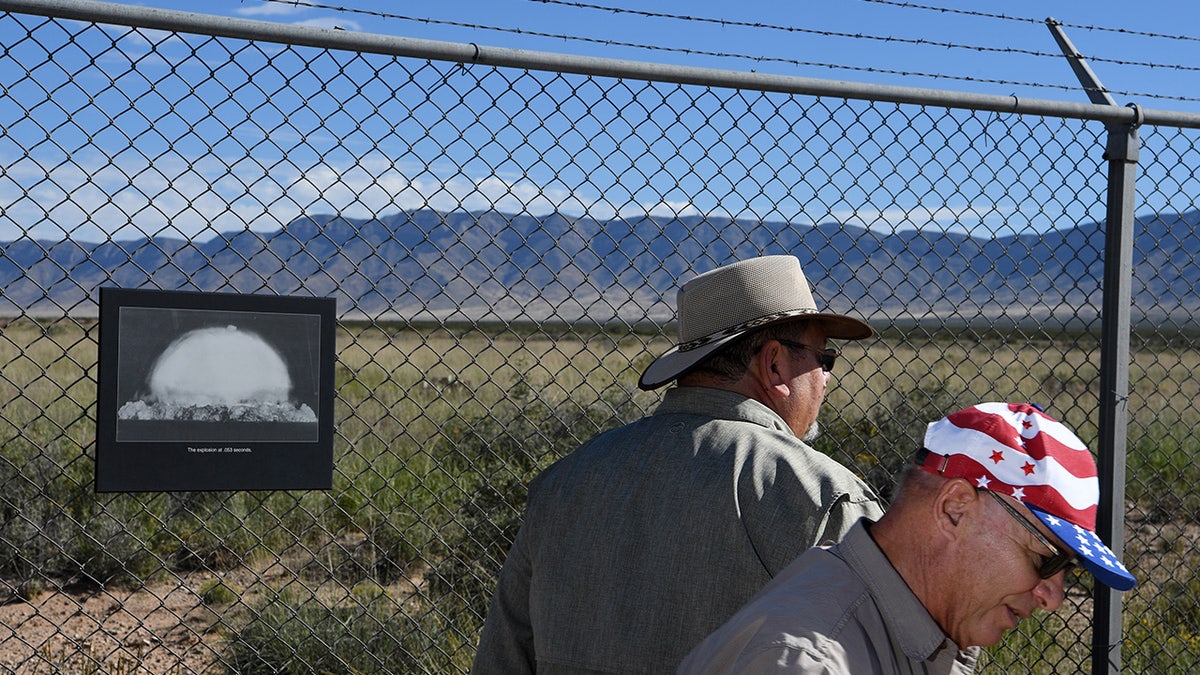
A photograph hangs on a fence at the Trinity Site during an open house in 2022 in White Sands Missile Range, New Mexico. (Matt McClain/The Washington Post via Getty Images)
JASON CHAFFETZ: AMERICA NEEDS A DRONE DEFENSE PLAN BEFORE DISASTER STRIKES
Humphreys said the United States has so far avoided the level of disruption seen in Europe, but argued regulators need to modernize aviation technology before GPS interference becomes a more routine operational challenge.
«The FAA, I think they’ve just got to move faster. They’ve got to wake up and recognize that sticking to their old rules about you know, certification that takes years and millions and millions of dollars to get through is not at the service of safety anymore, because the environment has changed. «
military, air and space, military tech, gps, airlines
INTERNACIONAL
Abelardo De la Espriella asume la presidencia de Colombia en una ceremonia inédita y ante la «desobediencia civil» que lidera Gustavo Petro
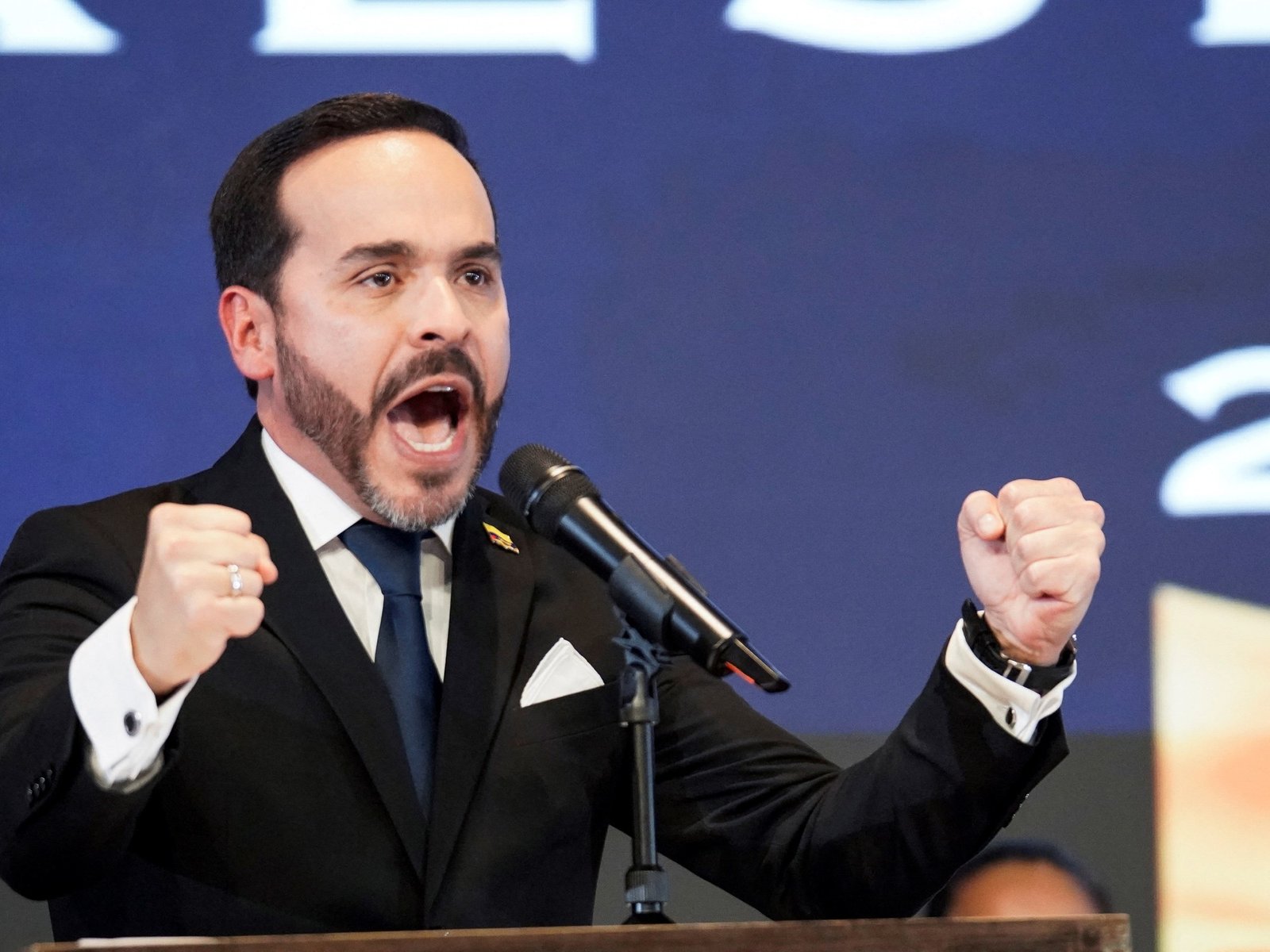
El libertario Abelardo de la Espriella asumirá este viernes en Cali la presidencia de Colombia para el periodo 2026-2030, en una ceremonia atípica que se celebrará por primera vez fuera de Bogotá y a la que asistirán el rey Felipe VI de España y al menos ocho presidentes latinoamericanos.
«Mi posesión será mucho más que una ceremonia. Será la primera demostración de que la descentralización deja de ser un discurso para convertirse en una realidad», expresó De la Espriella en X, donde destacó que su proyecto de gobierno «se construye desde las regiones, porque cuando las regiones prosperan, prospera Colombia».
Cali, capital del departamento Valle del Cauca y blindada para la ocasión, fue la opción escogida por el presidente electo después de que su idea de hacerlo en una guarnición militar en Popayán, capital del vecino Cauca, para homenajear a «los verdaderos héroes de la patria» en una zona marcada por el conflicto armado, fuera descartada.
Mi posesión será mucho más que una ceremonia. Será la primera demostración de que la descentralización deja de ser un discurso para convertirse en una realidad.
La Patria Milagro se construye desde las regiones, porque cuando las regiones prosperan, prospera Colombia.
El… pic.twitter.com/ZNpcZVzUqh
— Abelardo De La Espriella (@ABDELAESPRIELLA) August 5, 2026
Esa opción se descartó por el riesgo de una erupción del cercano volcán Puracé, actualmente en alerta naranja.
De la Espriella sucederá en el cargo al presidente Gustavo Petro, quien no reconoce su triunfo y promete liderar la oposición y la «desobediencia civil» contra el gobierno del abogado y empresario de ultraderecha.
A la ceremonia de este viernes no asistirá ningún congresista del Pacto Histórico, el partido de izquierda del que hace parte Petro, que convocó a plantones pacíficos en Bogotá, la ciudad caribeña de Barranquilla y Cali como parte de la oposición que ejercerá al próximo Gobierno.
Al nuevo mandatario colombiano le impondrá la banda presidencial el presidente del Congreso, el senador uribista Honorio Henríquez, en una sesión del Legislativo que se llevará a cabo en la Arena USC de la Universidad Santiago de Cali.
Este es un moderno complejo multipropósito con capacidad para más de 2.300 personas que cuenta con más de 800 plazas de estacionamiento, helipuerto, sistemas de sonido e iluminación de última generación y pantallas LED de alta definición.
«Mi posesión, queridos compatriotas, para que estén tranquilos, será una ceremonia austera y será la primera demostración de que la descentralización deja de ser un discurso para convertirse en una realidad», manifestó el presidente electo el domingo en sus redes sociales.
En ese sentido, De la Espriella destacó que el impacto económico de llevar la ceremonia de investidura a Cali será de 10.000 millones de pesos (unos 3,1 millones de dólares) «gracias al dinamismo que experimentarán los sectores hotelero, gastronómico, turístico, logístico, comercial y de servicios».
Para garantizar la seguridad del acto, hay «11.000 uniformados cuidando la ciudad» y «dispositivos tecnológicos cuidando el espacio aéreo», informó a EFE el alcalde de Cali, Alejandro Eder.
Sin embargo, hasta el momento no hay detalles de cómo será la ceremonia y cuál será la agenda de De la Espriella antes y después de ser investido.
La ceremonia de este viernes contará con la asistencia del rey Felipe VI, de España, y los presidentes de Argentina, Javier Milei; Ecuador, Daniel Noboa; Paraguay, Santiago Peña; Costa Rica, Laura Fernández; Panamá, José Raúl Mulino; República Dominicana, Luis Abinader; Chile, José Antonio Kast, y Honduras, Nasry Asfura.
El Salvador estará representado por el vicepresidente, Félix Ulloa, quien fue el primer invitado en llegar a Cali el miércoles y fue recibido por el alcalde de la ciudad y por la gobernadora del Valle del Cauca, Dilian Francisca Toro.
El delegado de Guatemala será la vicepresidenta Karin Herrera y también estarán el primer ministro de Curazao, Gilmar Pisa, en representación del Reino de los Países Bajos; los cancilleres de Brasil, Mauro Vieira, y de Israel, Gideon Saar, y una amplia delegación de Estados Unidos encabezada por el fiscal general interino, Todd Blanche.
El alcalde de Cali no confirmó ni negó la asistencia del presidente de la FIFA, Gianni Infantino, quien, según algunos medios locales, está entre los invitados a la investidura de De la Espriella.
Fuentes de la Federación Colombiana de Fútbol (FCF) que fueron consultadas por EFE sobre la presencia del directivo manifestaron no tener tampoco información al respecto.
INTERNACIONAL
EXCLUSIVE: Oversight Project sues to block Maryland Democrats’ redistricting measure backed by Gov Moore
NEWYou can now listen to Fox News articles!
EXCLUSIVE: A new lawsuit set to be filed in Maryland seeks to block a redistricting amendment backed by Democrat Gov. Wes Moore from appearing on the November ballot, arguing state officials advanced the measure after the state’s own legislative analysts concluded the statutory deadline for certifying ballot questions had already passed.
The complaint, filed Thursday night in Anne Arundel County Circuit Court by the conservative watchdog group Oversight Project and reviewed by Fox News Digital, argues HB 2100 could not lawfully reach voters because Maryland’s July 1 deadline for certifying statewide ballot questions expired more than a month before lawmakers convened a special session to approve the proposal.
The Oversight Project, which filed the lawsuit with Republican lawmakers, argues approval of the amendment could pave the way for an 8-0 Democratic congressional delegation.
SUPREME COURT DEALS BLOW TO VIRGINIA DEMOCRATS IN FIGHT OVER STATE COURT ELECTION MAP RULING
HB 2100 would ask voters to amend the Maryland Constitution so state constitutional standards governing compactness and boundaries would no longer apply to congressional districts.
The Oversight Project describes itself as working «to expose and root out corruption in government, among elected officials, and in our most influential organizations to ensure power resides with the American People.»
The complaint alleges Democratic sponsors characterized the amendment as merely «technical» in the Maryland House. (Getty, File)
Its filing points to a Department of Legislative Services fiscal note stating that «the new statutory deadline of July 1 for certification of ballot questions» had already passed. The fiscal note also states that election officials were required to publicly post the full text of a proposed constitutional amendment at least 90 days before Election Day.
According to the complaint, lawmakers then added the phrase «notwithstanding any other provision of law» to HB 2100 less than an hour before the joint committee hearing began. The plaintiffs argue the language was intended to override Maryland’s certification, notice and public comment requirements after those deadlines had already elapsed.
The complaint further alleges Democratic sponsors characterized the amendment as merely «technical» in the House, while Senate debate reflected that lawmakers understood the statutory timeline could no longer be met.
The filing cites remarks by Democratic state Sen. Cheryl Kagan during floor debate.
VIRGINIA DEMS ACCUSED OF ILLEGALLY ‘STEAMROLLING’ STATE LAW THAT COULD UPEND REDISTRICTING CRUSADE
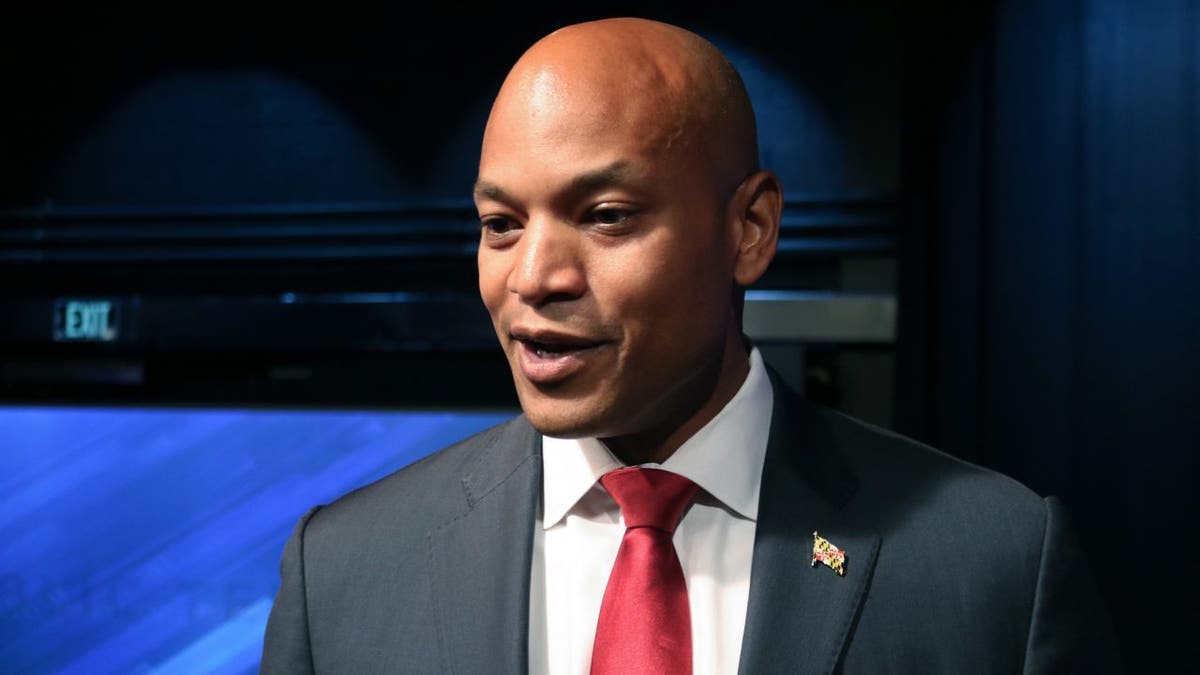
A new lawsuit in Maryland seeks to block a redistricting amendment backed by Democrat Gov. Wes Moore. (Brian Witte/AP Photo, File)
«There is no time to comply with the plain language of the law with our new law because July 1st is in the rearview mirror,» Kagan said, according to the complaint. «There’s no time to have the Secretary of State draft language, to have it published, to have a comment period, to have it modified. It’s just not an option.»
Maryland GOP Delegate Matt Morgan, one of the plaintiffs, told Fox News Digital the disputed language was introduced at 11:08 a.m. for a noon committee hearing.
«They have the law. They’re supposed to follow it. They didn’t,» Morgan said. «And now we’re going to take it to court and see what the judges have to say about it.»
DEMS CIRCLE THE WAGONS BY BLAMING GOP FOR THEIR GERRYMANDERING RESPONSE AHEAD OF MIDTERMS: ‘VERY DESPERATE’
The complaint argues that HB 2100 could not lawfully reach voters because Maryland’s July 1 deadline for certifying statewide ballot questions expired more than a month before lawmakers convened a special session to approve the proposal. (Kyle Grillot/Bloomberg via Getty Images, File)
Morgan said Democratic leadership later described the amendment as «technical» on the House floor.
«The truth is that that was their way of trying to get around them missing all these statutory deadlines,» he said.
Republican Delegate Kathy Szeliga, another plaintiff, said legislators had only hours to review the revised language while the public had no opportunity to comment.
«The public got absolutely no time to look and weigh in on the amended language,» Szeliga told Fox News Digital. «So, it just reeks of a naked political, partisan power grab on the Democrats’ behalf.»
According to the complaint, the proposal is intended to overturn the practical effect of a 2022 state court ruling holding that those constitutional standards applied to congressional redistricting. Democrats hold seven of Maryland’s eight U.S. House seats.
REDISTRICTING WAR INTENSIFIES AS GOP SUFFERS SETBACKS IN TWO STATES
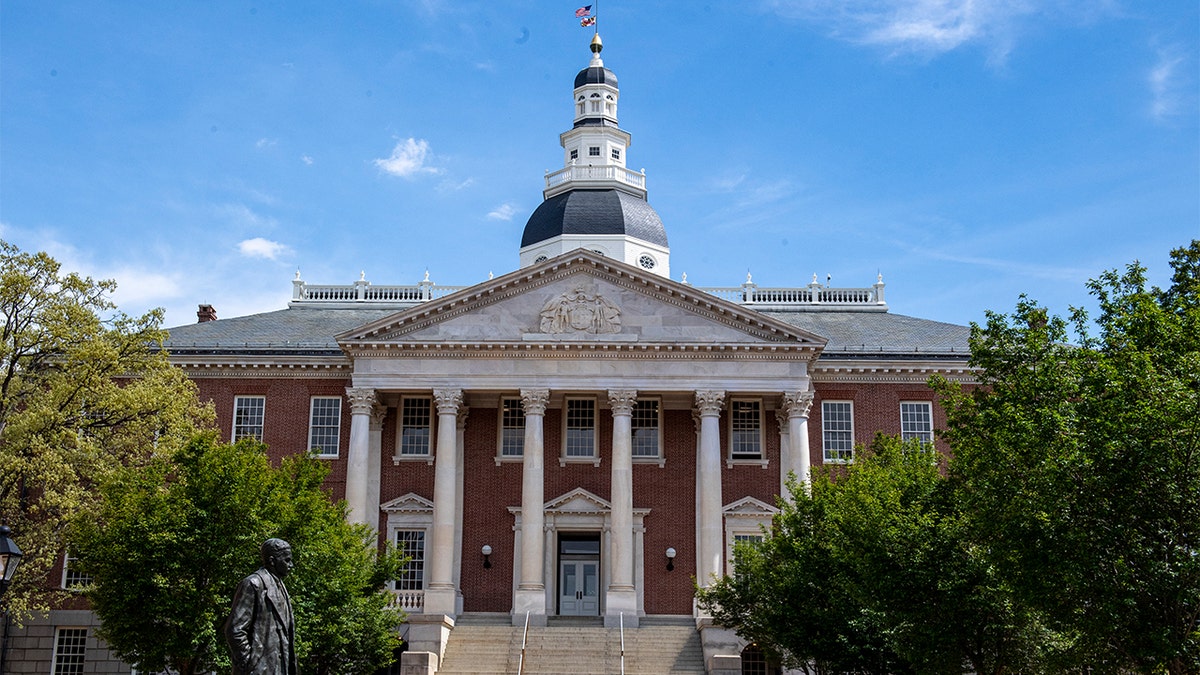
Democratic leadership described the amendment as «technical» on the state House floor. (Jonathan Newton/For The Washington Post via Getty Images, File)
Moore has publicly defended the amendment as a response to Republican-led redistricting efforts in other states, saying it would ensure «Marylanders — and no one else — have the final say over their representation.»
The lawsuit asks the court to bar state officials from certifying, printing, distributing, tabulating or canvassing votes on the amendment and requests expedited review because of the approaching election calendar.
Moore’s office, the Maryland Attorney General’s Office and the Maryland State Board of Elections did not immediately respond to Fox News Digital’s request for comment.
maryland, legislation, elections state and local, democratic party, midterm elections, congress, republicans elections

Con miras al 2027, La Libertad Avanza idea acuerdos para ganar cerca de 70 intendencias en Buenos Aires

Fatal air ambulance crash exposes growing GPS danger facing US flights

Pepe Ochoa enfureció con La Joaqui por contar cómo la dejó Luck Ra: “Nos está tomando de boludos”

El conflicto en Medio Oriente reactiva la volatilidad del mercado y complica a los activos argentinos

Federico García Lorca, a los 22 años: “La vida es amable, tiene pocos días y tan solo ahora la podemos gozar”

Lamine Yamal revolucionó Colombia: posó con la camiseta y cantó una canción viral con los hinchas

Javier Milei cruzó a Victoria Villarruel y elevó la tensión: “Es una opositora, replica los argumentos kirchneristas”

Dólar hoy en vivo: a cuánto se negocian todas las cotizaciones minuto a minuto este miércoles 5 de agosto

La oposición cuestionó a Benegas Lynch por su empresa para vender campos a extranjeros y el senador libertario se defendió

Top Trump ally warns super PAC bankrolled by Dem billionaire is meddling in his GOP primary
-
 ECONOMIA2 días ago
Dólar hoy en vivo: a cuánto se negocian todas las cotizaciones minuto a minuto este miércoles 5 de agosto
-
 POLITICA13 horas ago
La oposición cuestionó a Benegas Lynch por su empresa para vender campos a extranjeros y el senador libertario se defendió
-

 POLITICA2 días ago
Brasil retira a su embajador en la Argentina: qué consecuencias tiene la medida diplomática