
INTERNACIONAL
El papa León XIV confirmó que visitará la Argentina del 8 al 11 de noviembre

El papa León XIV confirmó que visitará la Argentina del 8 al 11 de noviembre, en una histórica gira. La noticia la anunció la Santa Sede, que la difundió luego de una fuerte expectativa tras el anuncio de su viaje a Perú, del 11 al 17 de noviembre.
León XIV realizará un Viaje Apostólico a Uruguay, Argentina y Perú del 6 al 17 de noviembre. El jefe de la Iglesia Católica aceptó la invitación de los respectivos Jefes de Estado y de las Autoridades eclesiásticas de esos países.
El papa visitará Montevideo, Paysandú y Florida del 6 al 8 de noviembre; Buenos Aires, Córdoba y Luján del 8 al 11 de noviembre; y Lima, Chiclayo, Cuzco y Pucallpa del 11 al 17 de noviembre. Todavía se mantiene en reserva el programa del viaje, que desde la Iglesia aclararon que “se dará a conocer a su debido tiempo”.
El Gobierno celebró la confirmación de la visita del papa León XIV a la Argentina
El canciller Pablo Quirno celebró en su cuenta de X la confirmación de la visita del papa León XIV a la Argentina: “Hace algunos meses tuve el honor de entregar personalmente al Santo Padre la invitación del Presidente de la Nación para visitar la Argentina. Hoy recibimos con enorme alegría la confirmación de esa Visita Apostólica. El Papa León visitará Argentina del 8 al 11 de Noviembre. Continuaremos trabajando junto a la Santa Sede para que sea una visita histórica para todos los argentinos”.
El viaje a Perú
Días atrás el presidente interino de Perú, José María Balcázar, había anunciado que León XIV, que tiene nacionalidad peruana, llegaría al país en la primera quincena de noviembre en una visita que duraría al menos ocho días.
“En la primera quincena de noviembre estará en Perú, llega a Lima” y luego irá a otras ciudades entre las que figura Chiclayo, donde el papa ejerció como obispo, declaró el presidente peruano a la radio RPP.
La visita del sumo pontífice está en preparación “y se está hablando de ocho a diez días de duración”, agregó el gobernante.
El papa León XIV nació en Chicago, Estados Unidos, pero se nacionalizó peruano en 2015. Robert Francis Prevost trabajó durante más de 20 años en ese país como misionero y obispo de Chiclayo.
Perú, con 34 millones de habitantes, es uno de los países más católicos de la región. Más del 80% de su población practica esa religión. Ha sido visitado por los papas Juan Pablo II (1985 y 1988) y Francisco (2018).
Entusiasmo de Milei por el viaje del papá
El presidente Javier Milei se venía mostrando muy entusiasmado con la posibilidad de que el papa León XIV visite el país, algo que no lograron ni Cristina Kirchner, ni Mauricio Macri, ni Alberto Fernández con el papa Francisco.
En perfecta sintonía con su jefe, el canciller Pablo Quirno le entregó en mano al pontífice hace un par de meses la carta de invitación de rigor, trámite que bien podría haber cumplido el embajador ante la Santa Sede. Hasta escribió días pasados un insólito tuit en el que “anticipa”, simpáticamente, la supuesta concreción de la visita antes de fin de año, causando perplejidad en la Secretaría de Estado del Vaticano, que es la que anuncia los viajes papales.
Tanto entusiasmo no se corresponde con la enorme brecha de muchas de las posturas que enarbola el presidente con las del catolicismo en general y de los últimos papas en particular. Con solo mencionar sus diferencias con la Doctrina Social de la Iglesia —como buen libertario— alcanza, comenzando por su rechazo al concepto de justicia social (aunque tiene una coincidencia no menor en la condena al aborto). Diferencias que fueron más manifiestas durante el papado de Francisco por el perfil del argentino, que lo llevaron a calificarlo de “comunista”.
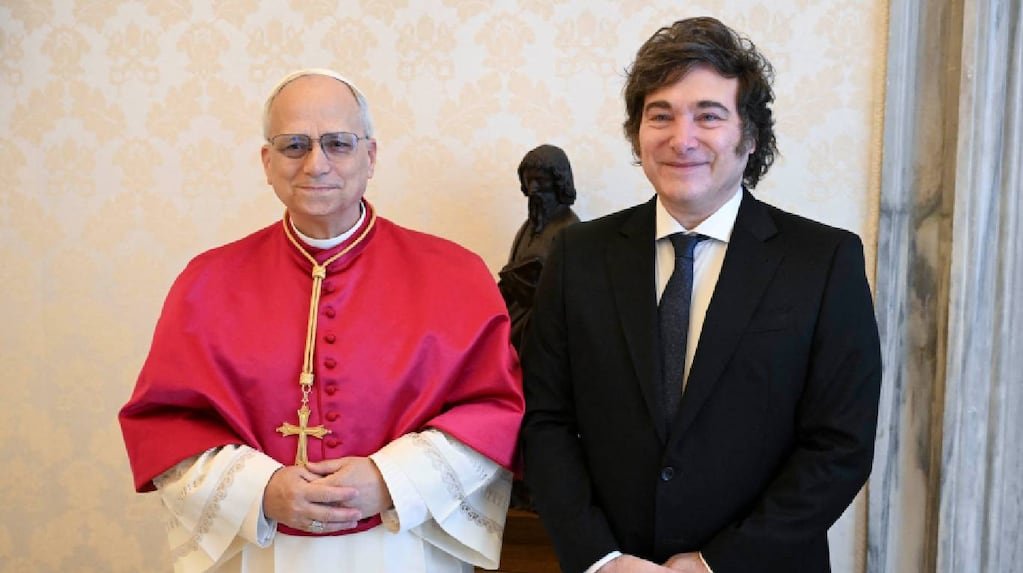
El presidente Javier Milei y el papa León XIV. (Fotos: Reuters / AP)
En los últimos meses, Milei sumó otra diferencia no menor: su posición respecto de la utilización de la inteligencia artificial (IA). Sobre todo, su oposición a la regulación de la IA, como lo expuso en un reciente artículo en el diario británico Financial Times, al expresar su deseo de que el país se convierta en un polo de innovación tecnológica con mínima intervención estatal. Allí manifiesta su “compromiso” de no regularla “para que pueda desarrollarse libremente, sin la mano mortal de una regulación prematura y mal comprendida”.
Su toma de posición —previsible— se produjo poco después de que el papa León XIV difundiera su primera encíclica, Magnifica Humanitas (Magnifica Humanidad), en la que ya en los primeros párrafos aboga por una regulación de la inteligencia artificial. “Es necesario adoptar instrumentos normativos adecuados, capaces de salvaguardar la justicia y de contener los efectos distorsionados del poder tecnológico”, afirma. No obstante, aclara que “la cuestión no se limita a la regulación”, sino a otros aspectos como la educación.
León XIV es claro en cuanto a los beneficios y los riesgos tecnológicos. “La tecnología puede curar, conectar, educar, cuidar la Casa Común, pero también puede dividir, descartar, generar nuevas injusticias. En abstracto, en sí misma, no es una solución a los problemas de la humanidad, como tampoco es en sí misma un mal, pero no es neutral, porque toma el rostro de quien la concibe, la financia, la regula, la utiliza”. En definitiva, celebra los avances, pero alerta ante el peligro de la deshumanización.
papa León XIV, Argentina, Javier Milei











INTERNACIONAL
WATCH: Smithsonian director admits she sees history as ‘tool’ of ‘social justice’ after explosive hearing
NEWYou can now listen to Fox News articles!
After an explosive series of congressional hearings on alleged woke «ideological capture» at the Smithsonian, a resurfaced video of a presentation by National Museum of American History Director Anthea Hartig shows her calling «history as a practice» a «prime tool of social justice.»
In a series of July hearings on Capitol Hill, Hartig defended the Smithsonian’s record of objectivity and nonpartisanship. However, in a resurfaced presentation to University of California, Los Angeles students in February 2025, Hartig described «a number of ways in which your National Museum of American History is taking an equity-based, justice forward, community driven and necessarily humble approach to public history and to service.»
Later in her presentation, Hartig asserted that the «United States’ long and violent racial history continues to be present in our reckoning, if you will.»
She said that «redress in the form of reparation, of course, goes beyond acknowledgement of wrongdoing; it should leverage responsibility, it should think about the act of correction, as we pursue restorative justice and, for us [on the call], restorative justice through history.»
TRUMP V. SMITHSONIAN: A TIMELINE OF HOW THE WHITE HOUSE FIGHT OVER ‘WOKE’ HISTORY UNFOLDED
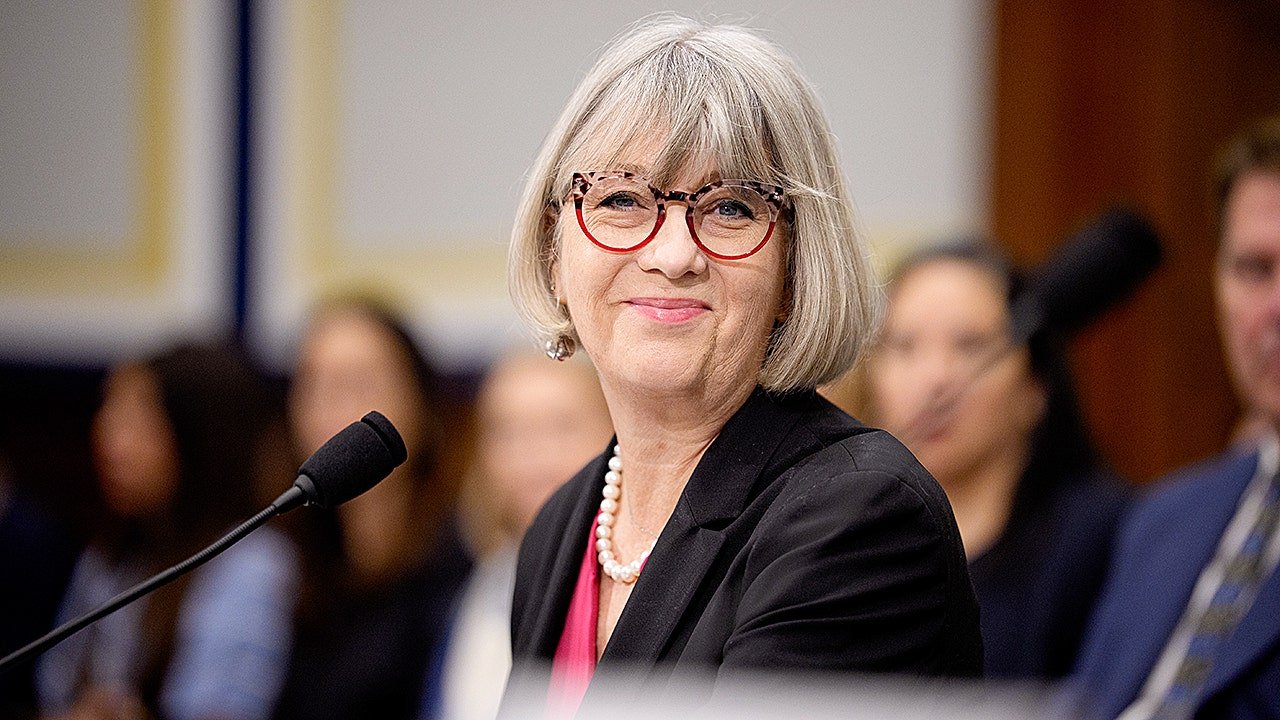
From left, Anthea Hartig, director of the Smithsonian Institute’s National Museum of American History, Mike Gonzalez, Angeles T. Arredondo E Pluribus Unum Senior Fellow, The Heritage Foundation, and Matthew Spalding, professor in constitutional government and dean of Hillsdale College’s Van Andel Graduate School of Government, testify during the House Oversight and Government Reform Delivering on Government Efficiency Subcommittee hearing titled «Rewriting American History: Examining the Smithsonian’s Efforts to Reshape the Past,» in Rayburn building on Tuesday, July 21, 2026. (Tom Williams/CQ-Roll Call, Inc via Getty Images)
During her testimony on Capitol Hill last month, Hartig stated: «Our work is governed by the Smithsonian standards of scholarship, accuracy, independence and nonpartisanship.» She said, «the museum does not take sides in America’s political debates,» but instead, «We preserve and document the evidence of American life in all of its breadth, so that the public can encounter the past and draw their own conclusions.»
However, in her presentation to UCLA, she asserted that «history as a practice … is for me a prime tool of social justice.»
Hartig began her talk with a land acknowledgement and a slide showing a picture of an American flag defaced with words that appeared to read «Defund the Police.» Her caption said the photo was from a Black Lives Matter protest in Washington, D.C., in 2020. Another photo Hartig showed later in the presentation depicted a protester holding a sign that read, «America loving you is complicated.»
She remarked that the museum opened in 1964 as «this kind of Cold War, you know, ‘We’re going to be the best and most technologically advanced country in the nation and we’re going to show everyone how we did that’ … We clearly have moved away from that.»
TRUMP ORDERS SIGNS OUTSIDE SMITHSONIAN MUSEUM AMID ROW OVER ITS DEPICTION OF AMERICAN HISTORY
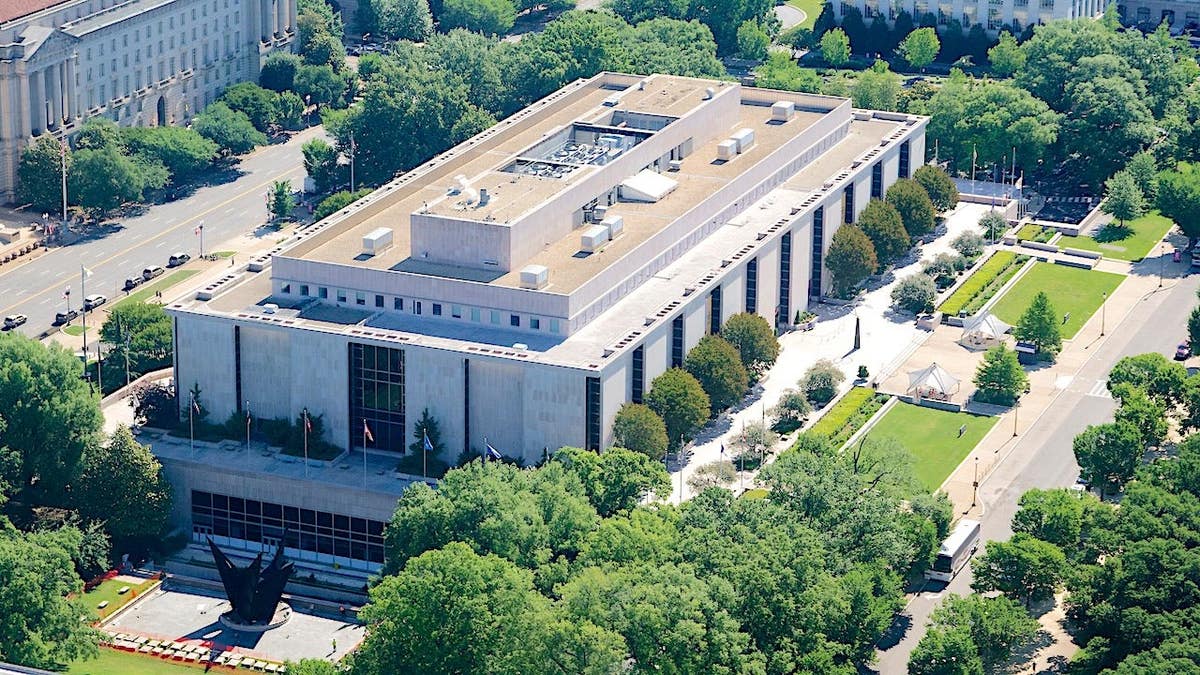
The Smithsonian’s National Museum of American History is being called out for being ‘ideologically captured’ and presenting woke revisionist history on the weekend of America’s 250th birthday. (Kevin Carter)
Instead, Hartig highlighted what she called the museum’s «bold new vision» to become the «most accessible, inclusive, relevant, and sustainable public history institution in the country.» This, the vision states, will allow the museum to «serve an audience that reflects the full racial, class, gender, ethnic, and geographic demographics of the United States.»
To this end, Hartig said the museum «joined a very collaborative Smithsonian-wide collecting effort around Black Lives Matter … to document and preserve and share objects focused on Black Lives Matter to show the history of the movement starting in 2012.»
She shared a picture of protest signs outside the White House from the summer of 2020 and spoke highly of «these phenomenal, ephemeral statements, signs … expressing that kind of very heartfelt and incredibly poignant [message].»
Hartig also praised an anti-ICE organization called «Tsuru for Solidarity» as a «truly remarkable group,» highlighting its collaboration with the Black Lives Matter movement.
According to its website, Tsuru for Solidarity is a «nonviolent, direct action project of Japanese American social justice advocates and allies working to end detention sites and support directly impacted immigrant and refugee communities that are being targeted by racist, inhumane immigration policies.» Its website also states, «We stand on the moral authority of Japanese Americans who suffered the atrocities and legacy of U.S. concentration camps during WWII and we say, ‘Stop Repeating History!’»
FORMER DEMOCRATIC STAFFERS, DEI LEADERS SHAPE SMITHSONIAN LEADERSHIP AMID POLITICAL FIRESTORM

Activists burns a U.S. flag at Black Lives Matter Plaza near the White House July 4, 2020 in Washington, DC. (Alex Wong/Getty Images)
Besides the Black Lives Matter initiative, Hartig said the museum is pursuing a «proactive multilingual strategy to support language justice.»
She explained that «the idea, of course, [is] that everyone has the right to communicate in the language in which they feel most comfortable to be understood and to understand.»
To this end, she said that since the fall of 2019, «all exhibitions and signage and digital projects will be at least bilingual in English and Spanish and a number of them in more languages depending on the project and communities of origin.»
Hartig asserted, «We’re under attack for speaking complicated truths» and urged students to «raise your voices and speak them together.»
She said, «It continues to grow resolute in my mind, [history] is the key that unlocks the mysteries of humanity, of meaning, of place, of conquest, of love, power, authority and self.»
SIGN UP TO GET THE POLITICS NEWSLETTER
«We are tellers of stories and seekers of truths, hopefully embracers of nuance, ambassadors of empathy and defenders of inalienable rights,» she said.
Fox News Digital reached out to the National Museum of American History, the Smithsonian Institution, Black Lives Matter and Tsuru for Solidarity for comment.
smithsonian, woke, history, museums exhibits, us protests
INTERNACIONAL
El ejército de Israel destruyó una red de túneles y un depósito de armas de Hezbollah en el sur del Líbano

Las Fuerzas de Defensa de Israel (FDI) informaron este miércoles que la División 91 continúa con operaciones dirigidas a destruir medios de combate e infraestructura de Hezbollah en el espacio de seguridad del sur de Líbano.
En una acción focalizada en la zona de Sarbin, efectivos de la Brigada 300 y la unidad Yahalom destruyeron un trazado subterráneo de decenas de metros de longitud, utilizado por la organización Hezbollah para planificar y ejecutar ataques contra fuerzas israelíes.
Según el reporte publicado por las FDI en la red X, durante los últimos días la Brigada Kfir realizó operaciones en el sur de Líbano y localizó un almacén con lanzadores y cohetes pertenecientes a Hezbollah. Por su parte, la Brigada 4 identificó decenas de medios de combate, entre ellos armas tipo Kalashnikov, cohetes antitanque y diverso equipamiento militar. Las fuerzas israelíes señalaron que estas acciones buscan eliminar amenazas contra la ciudadanía del Estado de Israel en la zona fronteriza.
En el video difundido por las FDI vía X se logra visualizar una gran explosión que también se desencadena a lo largo de los túneles.
En paralelo, Israel y Líbano celebraron el martes en Roma una nueva ronda de conversaciones, bajo auspicio de Estados Unidos, para avanzar en la implementación del acuerdo marco firmado en junio y concretar la retirada de las tropas israelíes del sur libanés, donde se prevé el despliegue del Ejército nacional
El primer ministro de Líbano, Nawaf Salam, respondió a las críticas de Hezbollah por la participación de su Gobierno en una las conversaciones con Israel, y afirmó que las “inútiles aventuras bélicas” del grupo chiíta han dado al Estado judío los “pretextos” para atacar el país.
“Lo cierto es que la mayor ayuda a Israel provino de aquel que escogió al Líbano para inútiles aventuras bélicas de ‘apoyo’ y le dio pretextos para atacar nuestro país, pisotear su soberanía, destruir sus ciudades y pueblos, matar a su gente y desplazar a cientos de miles”, expresó Salam en su cuenta de X.
La reacción del primer ministro surgió tras el discurso del líder de Hezbollah, Naim Qassem, quien volvió a rechazar las negociaciones de paz entre Líbano e Israel que se reanudan en Roma, y solicitó la suspensión del diálogo, argumentando que solo ha traído “vergüenza” al país.

Desde el 2 de marzo, Líbano ha sido escenario de una ofensiva israelí desencadenada por ataques de Hizbulá en apoyo a la guerra lanzada por Washington y Tel Aviv contra Irán, aliado del grupo armado. El conflicto ha dejado más de 4.300 muertos y superado el millón de desplazados.
Ni el Estado ni el Ejército libanés intervinieron en la guerra, por lo que Salam reprochó —sin mencionar directamente a Hezbollah— la decisión unilateral de ir al conflicto, ignorando “los intereses de su entorno y de los libaneses”. “El Líbano no tiene soberanía salvo la que le confiere una única decisión independiente en un Estado con un solo Ejército, que extiende su autoridad sobre todo su territorio exclusivamente a través de sus propias fuerzas”, añadió el primer ministro.

Una funcionaria del Departamento de Estado de Estados Unidos advirtió que los diálogos de esta semana “incluirán la expansión del proceso de zonas piloto, la resolución de todos los asuntos fronterizos pendientes y el trabajo hacia un acuerdo de paz y seguridad integral”.
La embajadora de Estados Unidos en Líbano, Michel Issa, alertó que “avanzar demasiado rápido pone en riesgo a los civiles que este proceso pretende proteger”. Issa añadió que es preferible “tomar el tiempo necesario para hacerlo bien la primera vez”, lo que permitirá que las siguientes zonas piloto progresen con mayor eficiencia.
Hezbollah rechaza el acuerdo con Israel y su líder, Naim Qassem, sostiene que las negociaciones directas implicarán concesiones para Líbano. Desde el inicio del conflicto en marzo, los bombardeos y la invasión terrestre israelí han provocado más de 4.300 muertes en Líbano, según cifras de las autoridades locales. Aunque la violencia disminuyó tras el acuerdo marco y el preacuerdo entre Estados Unidos e Irán firmado en junio, se siguen reportando ataques esporádicos, explosiones y demoliciones en distintas localidades del sur libanés.
(Con información de EFE)
Government / Politics
NEWYou can now listen to Fox News articles!
DETROIT — The Democratic Party’s progressive wing was aiming to notch its biggest victory yet Tuesday and deliver a high-profile blow to the center-left establishment in an intensifying ideological battle.
But the anticipated triumph in battleground Michigan’s Democratic Senate primary will have to wait.
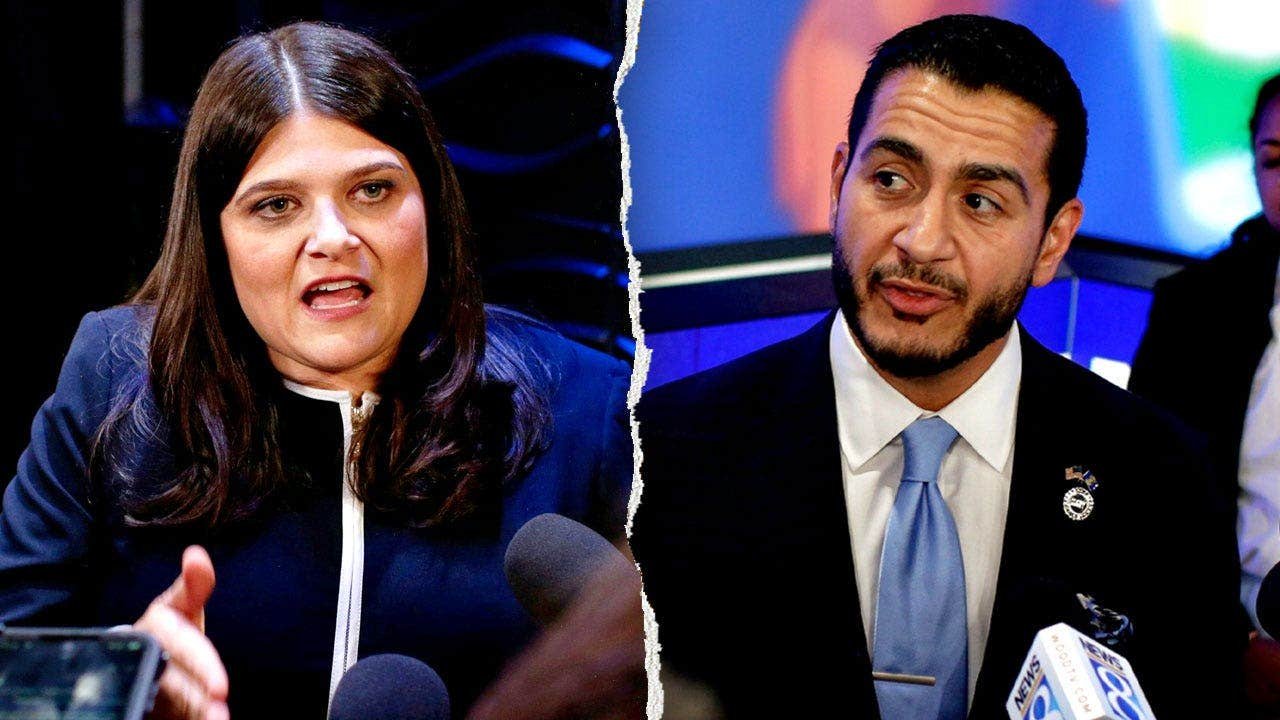
The race between progressive candidate Abdul El-Sayed, a former Wayne County health director, and Rep. Haley Stevens, a more moderate contender, remained too close to call early Wednesday.
THE MIDTERM SENATE RACES THAT COULD FLIP THE BALANCE OF POWER IN CONGRESS
Abdul El-Sayed, a progressive candidate in the Democratic primary for U.S. Senate in Michigan, speaks during a primary election night event Wednesday, Aug. 5, 2026, at the Majestic Theatre in Detroit. (Julia Demaree Nikhinson/AP Photo)
While the night’s biggest prize remained undecided as five states held primary elections, Democratic establishment candidates scored several victories. Those included Rep. Wesley Bell of Missouri defeating Democratic Socialists of America-backed challenger and former Rep. Cori Bush, a onetime «Squad» member, in a rematch of their 2024 showdown.
Meanwhile, President Donald Trump’s powerful sway over the Republican Party was reaffirmed as two Trump-backed candidates won gubernatorial nominations in Michigan and Kansas.
Here are the top takeaways from a busy primary night across the country.
Verdict still out in high-stakes showdown
«We’re going to have to wait a little longer to see the outcome of this race,» El-Sayed told supporters at a primary night event in Detroit early Wednesday morning.
El-Sayed, who was backed by prominent progressive leaders including Sen. Bernie Sanders of Vermont and Rep. Alexandria Ocasio-Cortez of New York, held a razor-thin lead over Stevens as votes continued to be counted. Stevens was supported by establishment figures including Sen. Chuck Schumer of New York, the longtime Senate Democratic leader.
«I know it’s been a long night because that’s the Michigan way. But I want to give you all an update. We knew that this was going to be a close race, and that’s exactly what we’ve got. A close race,» Stevens said.
MIKE ROGERS ARGUES ABDUL EL-SAYED IS ‘A SPECIAL SAUCE OF CRAZY’
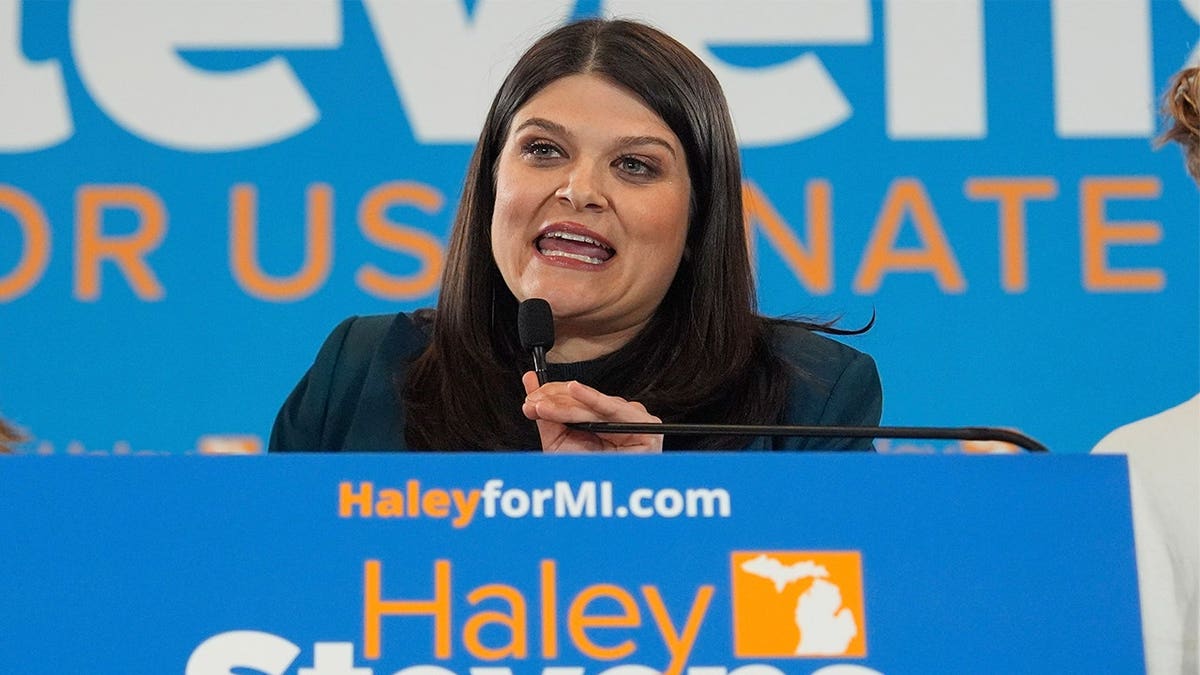
Rep. Haley Stevens, D-Mich., a candidate in the Democratic primary for U.S. Senate in Michigan speaks to supporters election night Tuesday, Aug. 4, 2026, in Detroit. (Paul Sancya/AP Photo)
The race to succeed retiring Democratic Sen. Gary Peters, who backed Stevens, is a must-win contest for Democrats and one of roughly a dozen Senate races expected to determine whether Republicans retain their narrow majority.
Boosted by a string of victories this spring in predominantly Democratic congressional districts, the party’s progressive wing brought its ideological battle with the establishment to the Great Lakes battleground. The combustible and expensive contest became the biggest stage yet in the intraparty fight.
El-Sayed, an epidemiologist who unsuccessfully ran for governor as an insurgent candidate in 2018, would become the nation’s first Muslim senator if elected. He has made support for «Medicare for All» a major component of his campaign.
He has also called for abolishing Immigration and Customs Enforcement and has been a vocal critic of Israel during its war against Hamas, characterizing Israel’s actions in Gaza as «genocide» against Palestinians.
Schumer and other establishment Democrats view Stevens, who flipped a Republican-held district during her first election to Congress in 2018, as more electable than El-Sayed, whose past comments have drawn controversy.
More than $80 million was spent on the primary, making it the most expensive Democratic Senate nomination contest in history. Much of the money came from outside groups supporting Stevens or opposing El-Sayed. The largest spender was United Democracy Project, a political action committee aligned with the American Israel Public Affairs Committee.
«We all knew that we’re going to spend their money. We didn’t know they were going to spend $70 million of their money. We didn’t know that they were going to outspend us $11 to $1. And yet we’re still standing,» El-Sayed highlighted in his speech.
El-Sayed urged party unity and took aim at former Rep. Mike Rogers, the Republican Senate nominee.
Stevens also targeted Rogers during her primary night speech.
DEMOCRACY ’26: STAY UP TO DATE WITH THE FOX NEWS ELECTION HUB

Republican Senate candidate former Rep. Mike Rogers of Michigan stands for a Fox News Digital interview, on August 2, 2026, in Farmington Hills, Michigan (Paul Steinhauser/Fox News)
«Whoever wins is going to go and take on Mike Rogers. Republicans are going to do everything they can to throw all the dirt, all the mud, the kitchen sink at us because they want to keep the U.S. Senate red, so Mike Rogers can keep rubber-stamping Donald Trump’s ridiculous agenda,» she argued.
The progressive-versus-establishment battle also played out in Michigan’s 7th Congressional District, a Republican-controlled swing seat that is among roughly two dozen races expected to help determine control of the House.
William Lawrence, a co-founder of the Sunrise Movement climate advocacy group, edged out two more moderate Democrats. Lawrence was backed by Sanders and El-Sayed, as well as several prominent progressive groups. He will face Republican Rep. Tom Barrett in the general election.
The party’s internal battle was also on display in Michigan’s heavily Democratic 13th Congressional District, where the Associated Press had not projected a winner early Wednesday.
Rep. Shri Thanedar, who is supported by top House Democratic leaders, was being challenged by state Rep. Donovan McKinney. McKinney was backed by Sanders, El-Sayed and «Squad» members Reps. Ilhan Omar of Minnesota, Ayanna Pressley of Massachusetts and Summer Lee of Pennsylvania.
Wins for centrists to cheer
The party’s ideological warfare was front and center in Missouri’s St. Louis-based, heavily Democratic 1st Congressional District.
Bell, who was backed by House Democratic Leader Hakeem Jeffries of New York and other establishment figures, defeated Bush, the former two-term representative whom Bell ousted in the 2024 primary.
DEMOCRACY ’26: STAY UP TO DATE WITH THE FOX NEWS ELECTION HUB
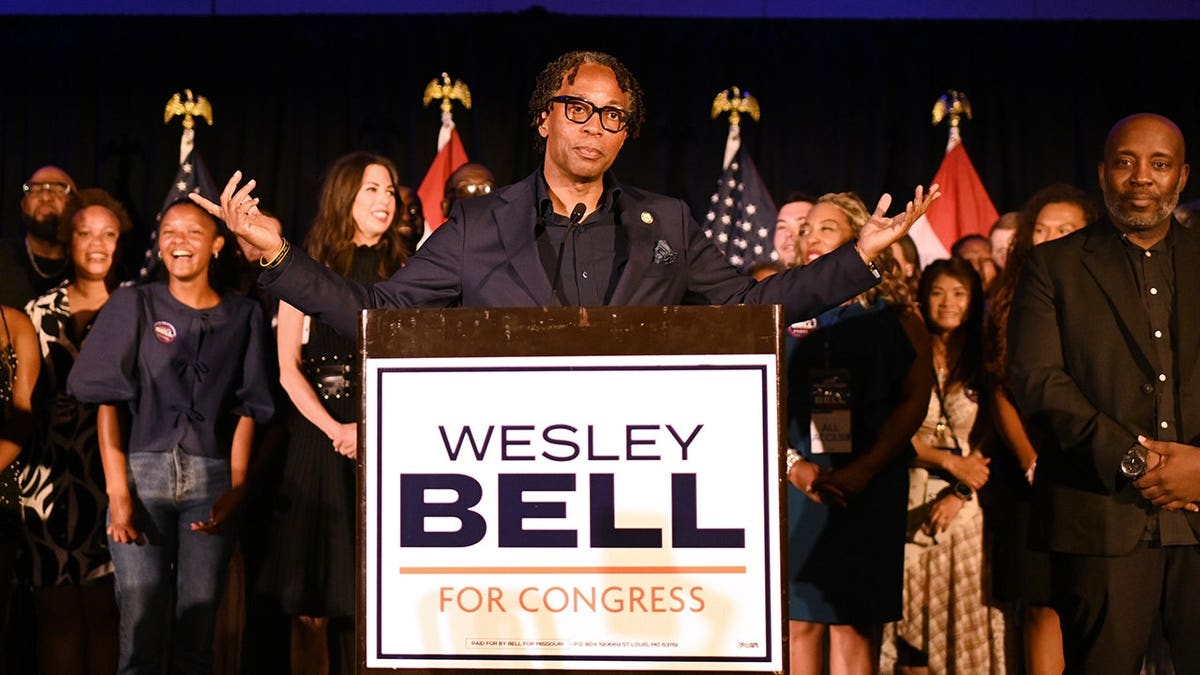
Democratic Rep. Wesley Bell speaks at his Democratic primary victory celebration, on August 4, 2026 in St. Louis, Missouri (Michael Thomas/AP Photo)
Bell was again boosted by a major infusion of outside money, allowing him to substantially outspend Bush and her allies. Much of the funding and advertising targeting Bush came from United Democracy Project, the super PAC aligned with AIPAC.
Bush was among the first House Democrats to accuse Israel of committing genocide against Palestinians during its war against Hamas in Gaza.
«Two years ago, St. Louis voted for better and more accountable representation. We have kept that promise, whether it’s bringing federal resources home to our neighborhoods, standing with working folks when they needed someone in their corner, or helping families cut through red tape,» Bell said following his victory. «That work does not stop tonight.»
Bush, however, lashed out at Bell, criticizing him for skipping candidate forums and claiming he was controlled by billionaires.
«It pisses me off that for the next two years, this community will be represented by someone that didn’t deem you valuable enough to show up to one candidate forum where there were audience comments, even though I showed up to every one,» Bush emphasized.
MEET THE FAR LEFT INSURGENTS WAGING WAR ON THE DEMOCRATIC PARTY IN THE 2026 MIDTERMS

Former Rep. Cori Bush speaks after losing the Democratic Congressional primary in Missouri’s 1st District, on August 4, 2026, in St. Louis, Missouri (Matthew Donnell/Fox News)
Back in Michigan, two candidates who are far from left-wingers captured Democratic nominations in statewide contests. Michigan Secretary of State Jocelyn Benson won the Democratic gubernatorial primary in the race to succeed term-limited Gov. Gretchen Whitmer and Attorney General Dana Nessel was renominated.
«It’s not all that clear that the party has shifted that far to the left,» Matt Bennett, one of the leaders at the Third Way, a leading center-left Democratic organization, told Fox News Digital.
Pointing to increasingly intense Democratic opposition to Trump, Bennett said the Michigan Senate result may reflect «a unique situation where candidates matter.»
«And in this moment, Democratic voters everywhere are very very angry at Trump and they’re flipping over the tables and taking it out on the establishment and Haley, for better or worse, has run as the establishment.»
Trump flexes political muscle
Trump’s clout within the GOP and the power of his endorsements in Republican primaries were tested again Tuesday, and the president’s preferred candidates prevailed in two gubernatorial contests.
Trump-backed Rep. John James of Michigan, a West Point graduate and two-time Republican Senate nominee, defeated multimillionaire businessman Perry Johnson, a former gubernatorial and presidential candidate, to capture the party’s gubernatorial nomination.
James will face Benson in the race to succeed term-limited Democratic Gov. Gretchen Whitmer.

Republican gubernatorial candidate in Michigan, Rep. John James, R-Mich., speaks during a breakfast at Fireside Grill & Patio on Aug. 3, 2026 in Novi, Michigan. (Finn Gomez/Getty Images)
In Kansas, Trump-endorsed state Senate President Ty Masterson prevailed in a crowded field of Republican gubernatorial contenders.
Democratic Gov. Laura Kelly is term-limited, making the race to succeed her a leading pickup opportunity for Republicans.
Fox News’ Matthew Donnell and Luke Trevisan contributed to this report.
state and local primaries, midterm elections, elections, democrats elections, republicans, donald trump, michigan

Torneo Clausura: Se confirmaron los días y horarios de las fechas 4, 5, 6 y 7 del campeonato

El Gobierno celebró la confirmación de la visita del Papa León XIV a la Argentina: “Enorme alegría”

Alerta por una nueva estafa virtual: cómo es el engaño que usa la imagen del Banco Central para robar ahorros

Las tiernas fotos de Tini Stoessel en París junto a Fifi, su perra rescatada

La reacción del Gobierno al anuncio de la visita del papa León XIV a la Argentina

Leagues Cup: así es el formato del torneo en el que debutará el Inter Miami de Lionel Messi

“Vamos a acelerar con todo”: el objetivo del Gobierno por las reformas y la agenda electoral de cara al 2027

Javier Milei cruzó a Victoria Villarruel y elevó la tensión: “Es una opositora, replica los argumentos kirchneristas”

Reelecciones indefinidas: el oficialismo bonaerense niega que busque ampliar la Legislatura como parte de una reforma política para beneficiar a los intendentes

¡Chau Luck Ra! La salida de soltera de La Joaqui, muy bien acompañada, a días de su separación
-
 POLITICA3 días ago
“Vamos a acelerar con todo”: el objetivo del Gobierno por las reformas y la agenda electoral de cara al 2027
-
 POLITICA2 días ago
Javier Milei cruzó a Victoria Villarruel y elevó la tensión: “Es una opositora, replica los argumentos kirchneristas”
-
 POLITICA3 días ago
Reelecciones indefinidas: el oficialismo bonaerense niega que busque ampliar la Legislatura como parte de una reforma política para beneficiar a los intendentes