
INTERNACIONAL
FBI reveals why Trump White House UFC event went ahead despite alleged terror plot

NEWYou can now listen to Fox News articles!
EXCLUSIVE: As federal agents raced to dismantle an alleged plot targeting President Donald Trump’s UFC Freedom 250 event, investigators were simultaneously making another critical determination: whether the White House event itself could safely go forward.
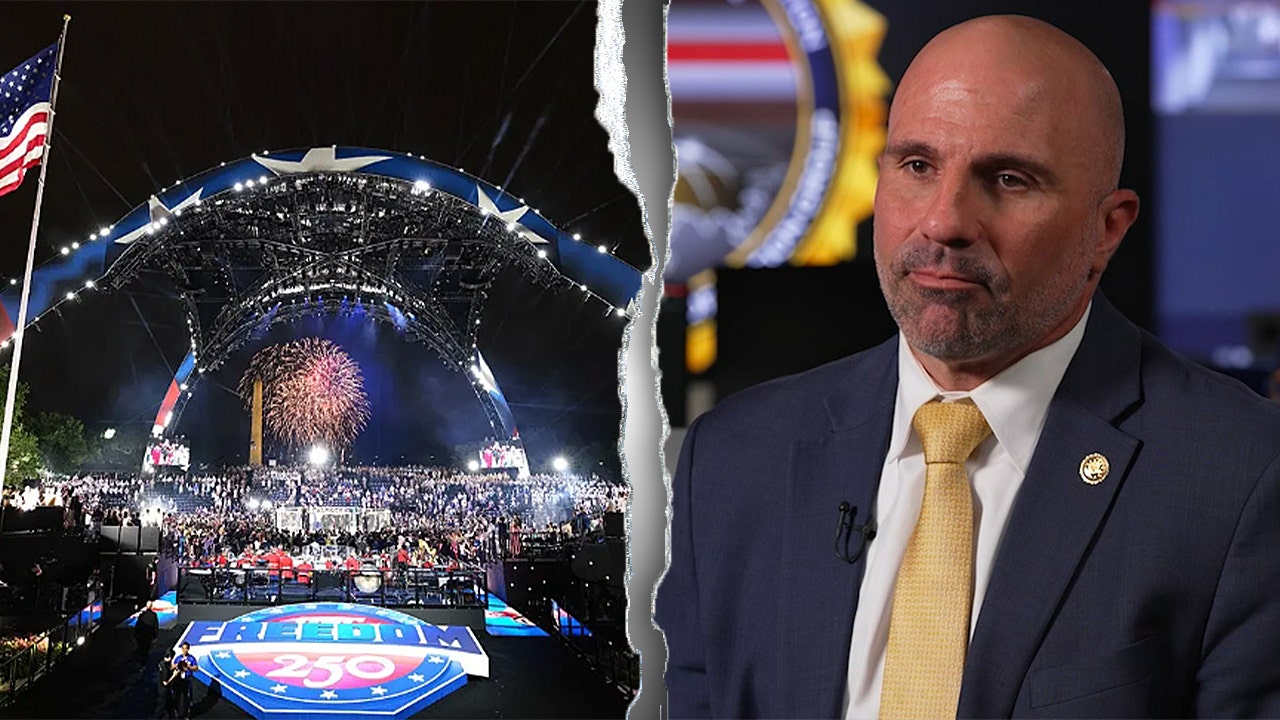
In a Monday interview with Fox News Digital, FBI Deputy Director Chris Raia said investigators believed they had sufficiently disrupted the alleged conspiracy before the event took place, arguing that agents were monitoring suspects and knew none were in the Washington area when the UFC event was held.
«We absolutely felt very comfortable moving (the UFC event) forward,» Raia said. «We were confident that we had disrupted that main plot.»
The FBI initially arrested five people accused of participating in the plot to kill lawmakers and attendees at the June 14 event. Since then, prosecutors have publicly identified two additional defendants, raising questions about why the event was allowed to proceed while investigators continued pursuing other alleged participants.
5 CHILLING DETAILS FROM THE ALLEGED WHITE HOUSE ATTACK PLOT TIED TO UFC EVENT
Raia said the additional defendants were «followers» rather than leaders of the conspiracy.
«We were confident that we had the leaders, the main plotters of that, so the rest of the folks were more of the followers that you’re seeing now.»
«There was a lot of security there,» Vice President JD Vance said during a June 16 appearance on Fox News’ «The Five.» «And it turns out the plot was like, not that advanced. They weren’t in town.»
The five suspects charged in an alleged plot targeting President Donald Trump and other officials during the UFC Freedom 250 event at the White House. From left: Daniel K. Eskridge, Abraham Hermosillo Alvarez, Bryan Omar Roa, Michael Alan Thomas and Tycen C. Proper. (Jacquelyn Martin- Pool/Getty Images)
The issue reportedly sparked tensions between federal agencies.
Two senior U.S. officials previously told Fox News that Secret Service leadership wanted to delay publicly disclosing the investigation until additional arrests could be made, fearing that revealing the probe could alert other subjects and complicate the ongoing case.
Raia said the FBI did not share those concerns, arguing that investigators were already monitoring both the alleged ringleaders and other suspected participants.
FBI NAMES SIXTH SUSPECT IN ALLEGED PLOT TO USE DRONES AND SNIPERS TO TARGET UFC FREEDOM 250 EVENT
«We had that contained or what I would call mitigated very early on even though we didn’t do the arrests,» he said. «We were watching the folks that were planning it. We had them under surveillance. And so we knew that nobody was even close to the DC area at the time that was happening.»
Despite reported disagreements over when to publicly disclose the investigation, Raia emphasized that the FBI and Secret Service worked closely throughout the case.
«That was a joint case with us and the Secret Service,» Raia said.
The agencies jointly assessed the threat before deciding the event could proceed, according to Raia.
«We all talked about that as a group and made that decision to move forward with the UFC 250 event,» he told Fox News Digital.
Deputy Secret Service Director Matthew Quinn, responding to questions about the case at an unrelated event, emphasized that the Secret Service had «led that investigation from the beginning» and suggested investigators intentionally avoided public disclosure while the case remained active.
«In order to maintain the integrity of the investigation and the security plan we chose not to leak it,» Quinn said during a June 16 press conference.
Raia, a career FBI agent and former head of the bureau’s New York Field Office, was appointed FBI co-deputy director in January after the departure of former Deputy Director Dan Bongino. Before leading the New York office, Raia served as one of the FBI’s top counterterrorism officials and has been with the bureau since 2003.
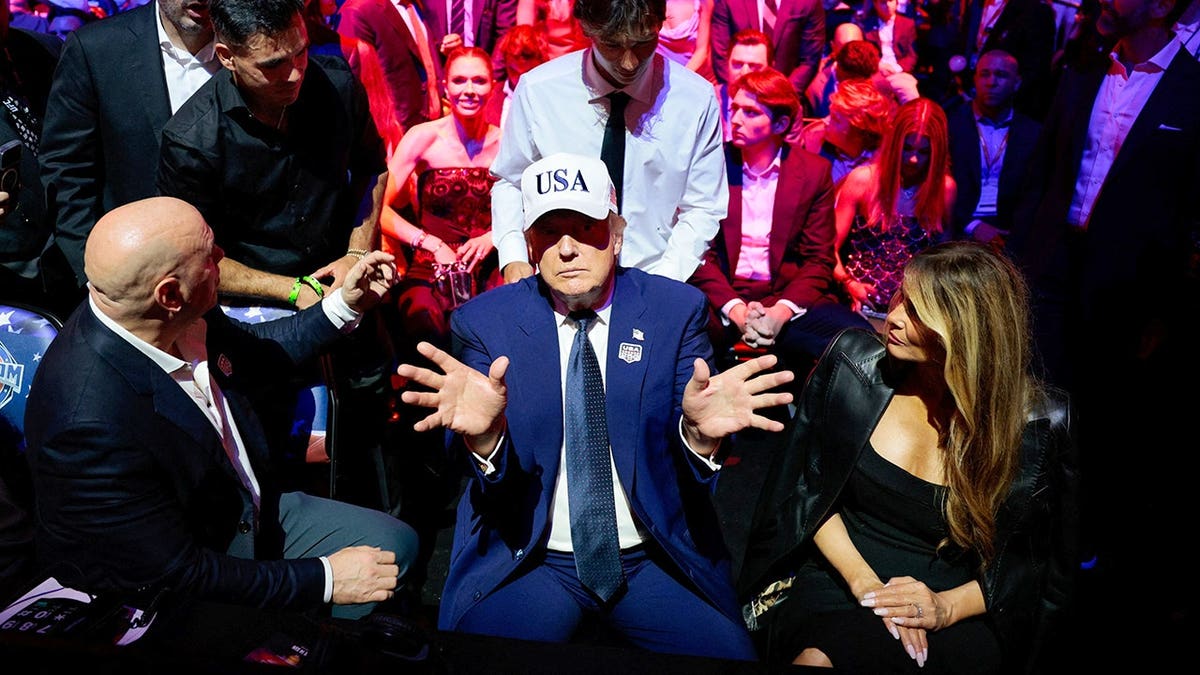
President Donald Trump seated between Dana White and the First Lady. (Evan Vucci/Reuters)
According to court records, the alleged conspirators first connected through a TikTok community known as «Vanguard of the Old» before moving their discussions to encrypted messaging platforms including Signal, Telegram and SimpleX. Investigators say members organized themselves into tiered roles that included frontline operators, drone operators, recruiters, logistics personnel and technical support.
Court records indicate the network extended well beyond the suspects initially charged. After obtaining a warrant for the phone of Ohio defendant Tycen Proper, investigators allegedly discovered a primary Signal chat containing approximately 19 participants, along with smaller operational chats organized by role and location.
Raia said the case is far from closed: 14 to 15 FBI field offices are assisting in the investigation.
«We’re going to continue to work that case aggressively,» he said. «You uncover one layer, and you see four more layers.»
The case also underscored one of the FBI’s biggest investigative challenges: encrypted communications platforms.
«That is a gap for us in encrypted communications platforms,» Raia said.
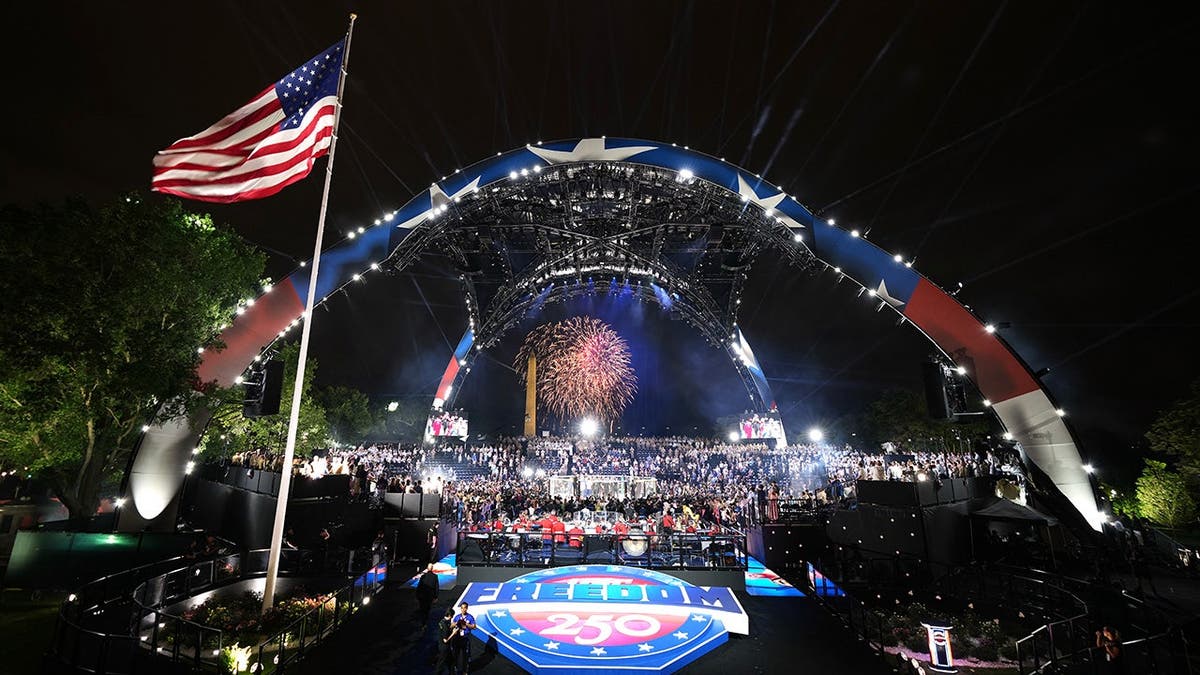
UFC Freedom 250 takes place on the South Lawn of the White House in Washington on Mon. June 15, 2026. (Jacquelyn Martin/AP)
Raia said investigators attempt to penetrate those networks through confidential human sources, undercover employees and other lawful investigative techniques.
«We try to infiltrate, obviously, with CHSs, UCEs, again, inside the bounds of the Constitution,» he said, referring to «confidential human sources» and «undercover employees.»
But Raia acknowledged the FBI does not have visibility into every encrypted chat where criminal activity may be occurring.
In the UFC case, he pointed to Proper’s mother as the catalyst who helped investigators uncover the alleged conspiracy before it could advance further.
«We had a concerned parent that really launched this entire UFC 250 case off,» Raia said. «Concerned parent called in on her son.»
The tip ultimately led investigators to Proper’s phone and the alleged network of encrypted chats that prosecutors say contained discussions about drones, sniper positions, escape routes and attack planning. Without that initial call, Raia suggested, the alleged plot may have remained hidden inside encrypted platforms that continue to challenge law enforcement visibility.
The UFC case also reflects what FBI officials say is a broader shift in the threat landscape. Rather than large, hierarchical terrorist organizations, investigators are increasingly concerned about lone actors and small groups that can organize online, acquire commercially available technology and develop attack plans with little outside support.
«I’m less concerned about a mass 9/11 style attack than I am a lone single person, a single attacker,» he said.
While discussing security preparations for the FIFA World Cup, he described drone-based attacks as one of the FBI’s top concerns and warned that tactics seen on battlefields overseas could eventually migrate to the United States.
Investigators say they saw signs that the alleged network may have been considering targets beyond the White House UFC event.
In a newly unsealed court filing, an FBI agent said he believed messages exchanged among alleged conspirators referenced a potential attack on a FIFA World Cup match scheduled for July 3 in Kansas City, Missouri.
CLICK HERE TO DOWNLOAD THE FOX NEWS APP
«I think that is a threat that is emerging,» Raia said. «We have seen that overseas, and it’s only a matter of time for somebody brings that type of attack, that threat vector here to the United States.»
The alleged UFC plot illustrates many of those concerns. Prosecutors say the group allegedly used encrypted communications, divided members into specialized roles, discussed drone operations and coordinated activity across multiple states without relying on a traditional terrorist organization or foreign network.
This story is part of Fox News Digital’s exclusive interview with FBI Deputy Director Chris Raia. Additional reporting from the interview will be published in the coming days.
Fox News’ Mike Ruiz contributed to this report.
fbi, counter terrorism, conspiracies plots, ufc, white house








INTERNACIONAL
Dems in the hot seat for skipping crucial hearing on radical group hiding in US: ‘Embarrassment’
NEWYou can now listen to Fox News articles!
Democratic lawmakers were missing during Wednesday’s Senate Judiciary subcommittee hearing as they skipped a hearing on the Muslim Brotherhood’s alleged network inside the United States, drawing a blistering rebuke from Sen. Ted Cruz, R-Texas.
«You may notice that there are empty chairs on the Democrat side of the dais,» Cruz said as he opened the hearing by pointing out that every Democratic member of the subcommittee refused to attend. «The American people should ask themselves why not a single member of the minority decided that a hearing on terrorism was worth their time? It is an embarrassment.»
Cruz tied the Democrats’ boycott to Abdul El-Sayed’s primary victory, arguing that the timing helped explain why no Democratic members attended. Cruz accused the party of embracing a candidate who had campaigned alongside left-wing streamer Hasan Piker.
Cruz cited Piker’s past statement that «America deserved 9/11» and asked the witnesses what El-Sayed’s rise said about the direction of the Democratic Party.
HASAN PIKER UNLOADS ON ‘ISLAMOPHOBIC PIECES OF S—‘ DEMOCRATS AS EL-SAYED FACES PARTY UNITY TEST
«Abdul El-Sayed, the son-in-law of a leading member of several Brotherhood groups, won Michigan’s Democrat primary for U.S. Senate. Perfect timing for this hearing, probably explains why no Democrats are here and none intend to attend,» Cruz said. «Because their campaign is now openly embracing terrorist organizations waging war on America.»
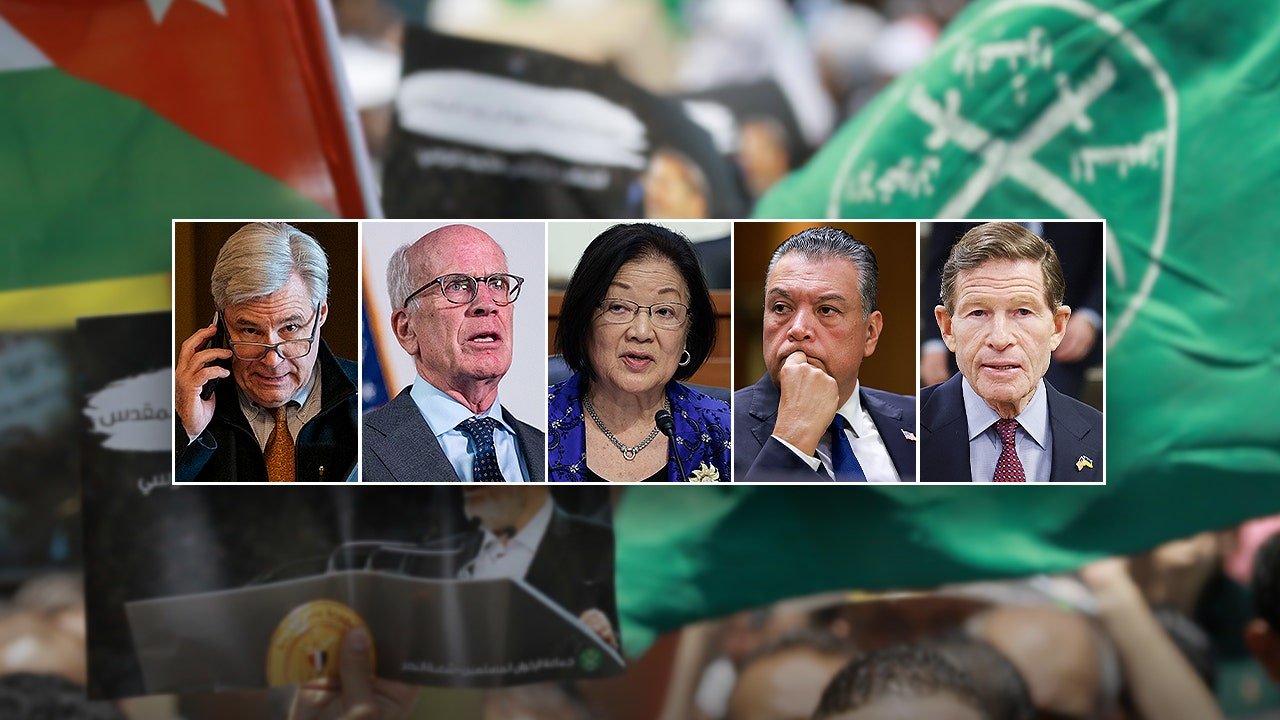
(From left to right) Democratic Party Sens. Sheldon Whitehouse of Rhode Island, Peter Welch of Vermont, Mazie Hirono of Hawaii, Alex Padilla of California and Richard Blumenthal of Connecticut. Muslim Brotherhood supporters near the Jordanian border with the West Bank from 2021 can be seen in the background. (Getty Images)
The five Democratic members of the subcommittee — Sens. Sheldon Whitehouse of Rhode Island, Richard Blumenthal of Connecticut, Mazie Hirono of Hawaii, Alex Padilla of California and Peter Welch of Vermont — announced beforehand that they would not attend. In a joint statement, the senators accused Cruz of staging a «political creepshow» that scapegoated Muslim Americans.
«Scapegoating Muslims may be a Texas Republican strategist’s idea of ‘solid gold’ to whip up their voters, but Democrats have no intention of indulging this political creepshow, particularly after the recent violence targeting places of faith,» they said. «Our focus is the costs families face thanks to rampant, non-stop Trump corruption.»
Blumenthal separately told reporters Wednesday that Democrats refused to attend because the hearing «could well be used as an anti-Muslim, Islamophobia kind of show trial.»
MICHIGAN SENATE RACE: EL-SAYED’S TIES TO EXTREMIST FUEL ANTISEMITISM CONCERNS AMONG JEWISH VOTERS
The Connecticut Democrat added that he planned to meet with members of the Muslim community who shared concerns about the Muslim Brotherhood, «which appears to be a terrorist organization,» while advocating for «tolerance and inclusion.»
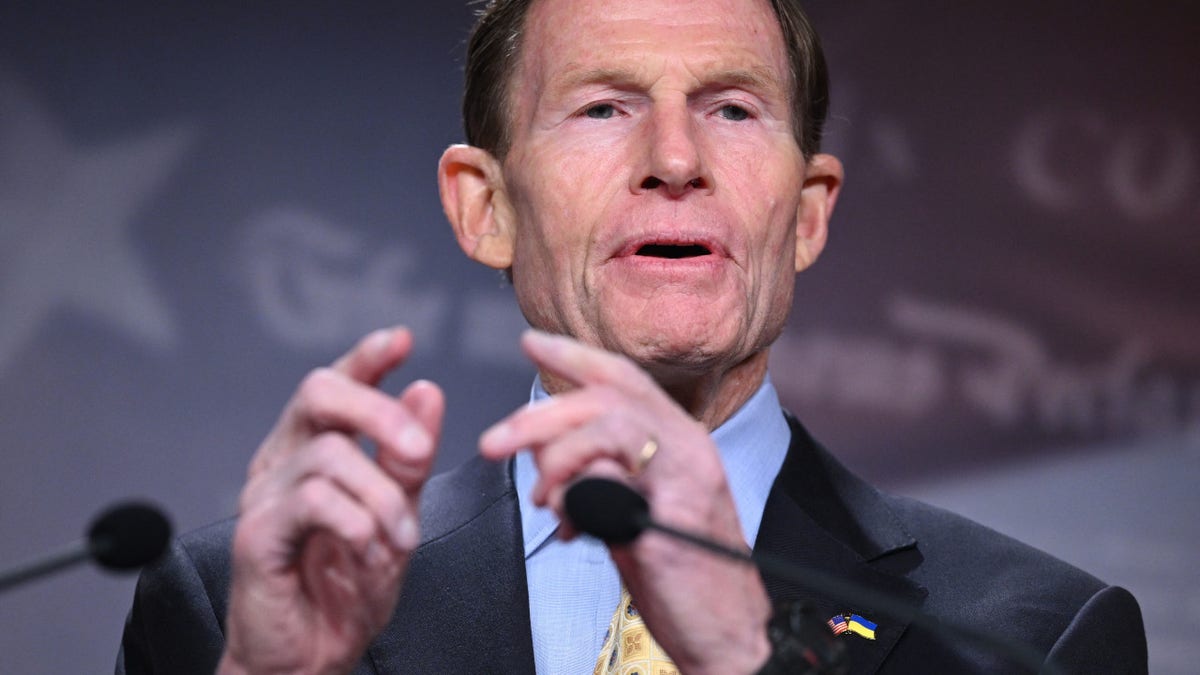
US Senator Richard Blumenthal (D-CT) speaks during a press conference at the US Capitol in Washington, DC, on January 24, 2023. (MANDEL NGAN/AFP via Getty Images)
The offices of Whitehouse and Welch referred Fox News Digital to the joint statement when asked why the senators chose to boycott rather than attend and challenge the witnesses directly. The offices of Hirono and Padilla had not responded by publication time.
Cruz and the hearing’s witnesses rejected the Democrats’ characterization of the proceeding as an attack on Muslims generally.
Lara Burns, a retired FBI special agent who helped lead a terrorism-financing investigation against what was once the largest Muslim charity in the United States, the Holy Land Foundation, warned that Americans should not disregard evidence because it is politically controversial.
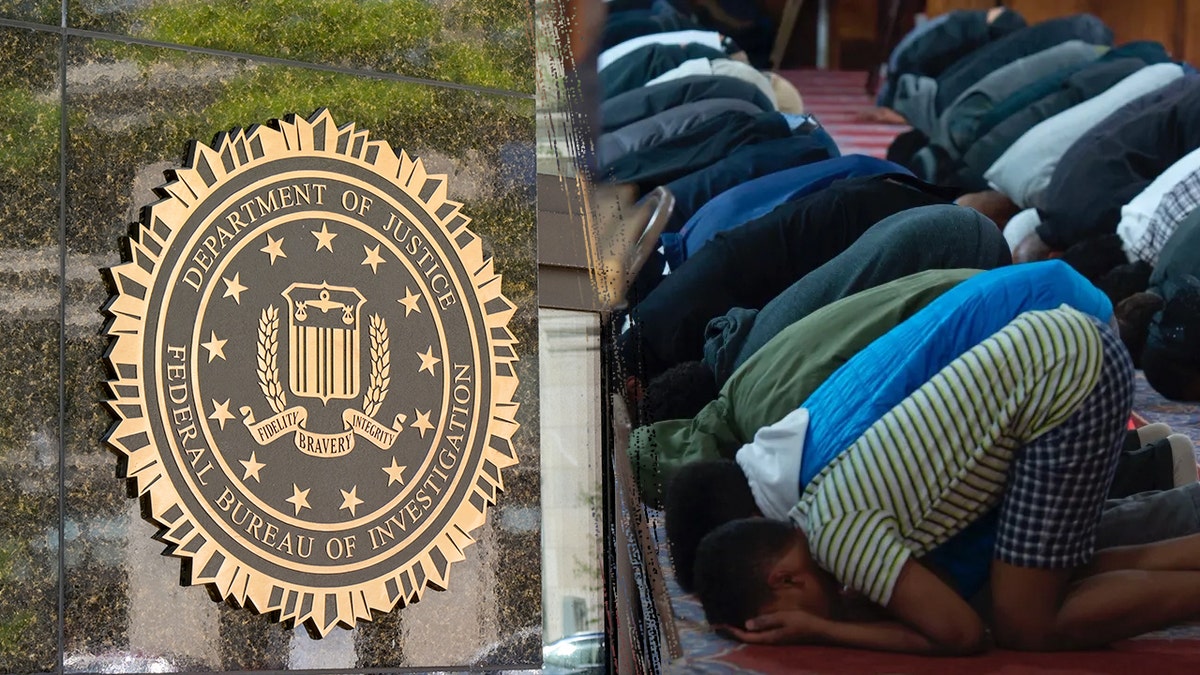
A surfaced OIG report shows FBI agents were urged to avoid communications with CAIR, the Council on American-Islamic Relations. (Getty Images)
«For decades, narratives have been intentionally seeded into public discourse that portray terrorist organizations as resistance movements,» Burns testified before arguing Americans cannot «ignore evidence introduced in federal court simply because that evidence is politically uncomfortable.»
«The history of this network is not in question,» she added. «It was made public decades ago, but few paid attention. Now is the time to pay attention and understand the facts.»
hearings, democrats senate, ted cruz, national security, politics
INTERNACIONAL
El caso Epstein sigue siendo un dolor de cabeza para la Familia Real: ahora el gobierno británico analiza si abre una investigación independiente
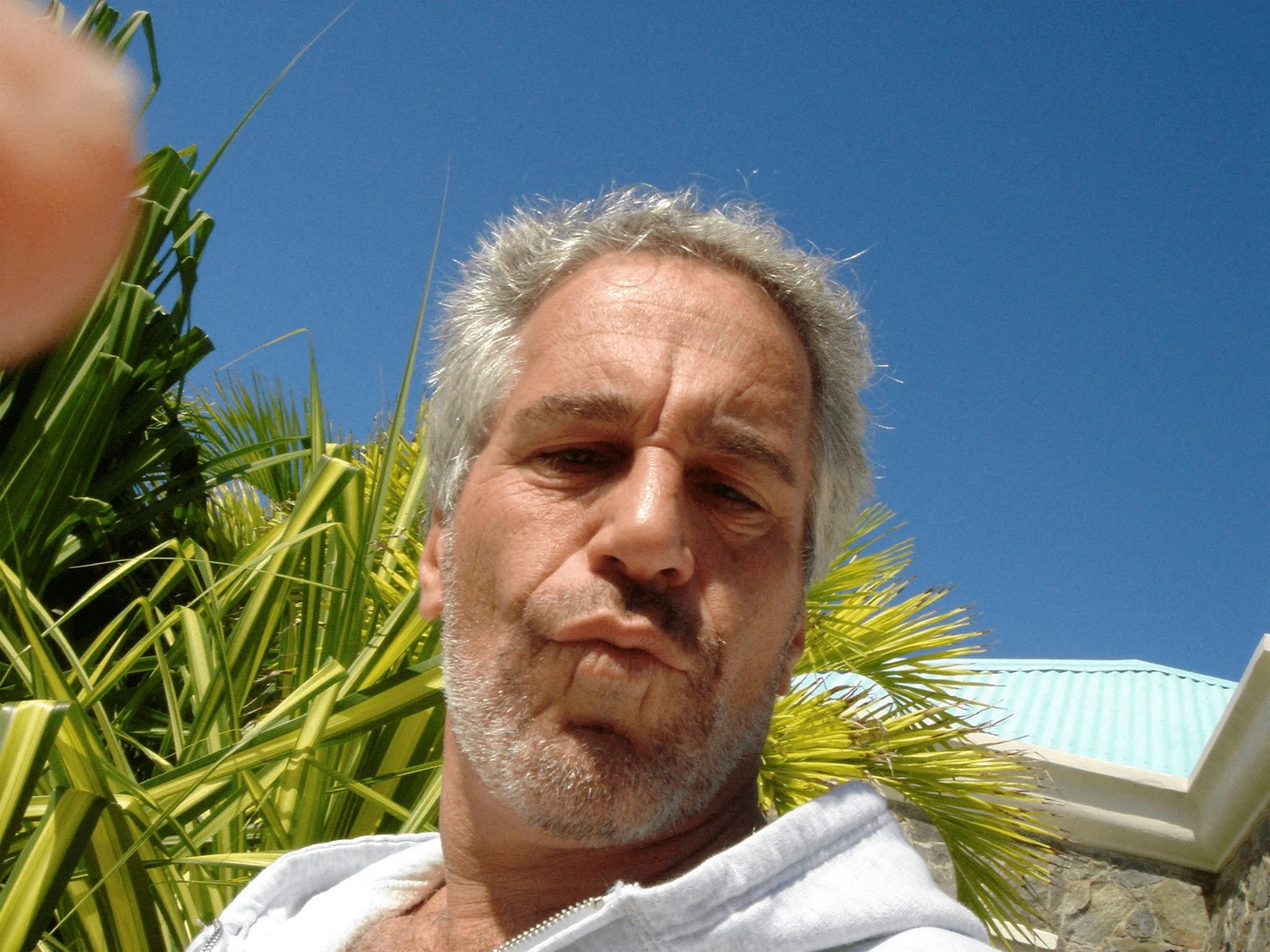
El caso Epstein sigue siendo un dolor de cabeza para el gobierno británico y su Familia Real. Cuando en Estados Unidos prácticamente el caso judicial no existe, en Gran Bretaña el ex príncipe Andrés ha sido excluido de la Casa de Windsor, de sus títulos y honores reales y militares, y su ex esposa Fergie no solo ha perdido el rango de duquesa, sino que es una virtual desaparecida.
Ahora le toca al gobierno laborista. ¿Habrá o no una investigación independiente sobre Jeffrey Epstein y Ghislaine Maxwell, ex novia del principito, que fueron alojados en el palacio de Balmoral, en Sandringham, para sus fiestas sexuales y en Windsor por invitación del ahora ex príncipe Andrés?
El nuevo primer ministro laborista, Andy Burnham, se debate. No es un tema fácil. Hoy no contempla una investigación sobre el caso Epstein, a pesar de las declaraciones de una ministra y sus promesas. Convocar a una investigación independiente consiste en llamar a testigos, que darían testimonios inmensamente incómodos para los actuales royals, no solo Andrés Mountbatten-Windsor.
Alex Davies-Jones había afirmado que el nuevo primer ministro estaba «evaluando las posibilidades», tras señalar que Keir Starmer no había «tomado en serio» a las agresoras y al agresor sexual.
Jeffrey Epstein murió en su celda en 2019 en Nueva York tras ser detenido por cargos de tráfico sexual. Visitó Londres 80 veces y traficó jovencitas en el aeropuerto de Stansted, que venían de Letonia, Lituania o Rusia hacia su isla en el Caribe o a Nueva York, sin visas de tránsito. Alguien lo ayudó en el reino. Al tráfico lo descubrió el ex primer ministro laborista Gordon Brown investigando los documentos judiciales revelados en Estados Unidos.
Alex Davies-Jones, la ministra, declaró que el primer ministro había accedido a reunirse con las víctimas del desacreditado financiero, quienes, según ella, no habían sido tomadas en serio por Sir Keir Starmer.
Al preguntársele si era posible realizar una investigación, declaró a BBC Newsnight: «Estamos estudiando el asunto, evaluando qué es posible. Lo mismo ocurre con las sobrevivientes del caso Harrods», que también son víctimas del tráfico sexual.
Sin embargo, fuentes de Downing Street aseguran que Burnham «no contempla una investigación pública». El papelón sería aún mayor porque involucraría directamente a la Familia Real, el pago de una indemnización a Virginia Giuffre (supuesta víctima sexual de Andrés que se ha suicidado, y quién la pagó), el rol de la reina Isabel y del actual rey Carlos, y los testimonios de pilotos, choferes, mucamos y mayordomos de los royals, que han firmado actos de confidencialidad ante la corona.
Davies-Jones dimitió del gobierno de Starmer en mayo, acusando al primer ministro de no escuchar a las sobrevivientes de Epstein en relación con la decisión de nombrar a Lord Mandelson embajador del Reino Unido en Washington. Dijo a los diputados que se había visto «obligada a luchar con uñas y dientes» para que se escuchara la voz de las víctimas.
Al preguntársele qué garantías había recibido antes de retomar el cargo bajo la dirección de Burnham, afirmó que el primer ministro «me ha asegurado que se reunirá con ellas ahora, que ocupa el cargo, y que trabajará con nosotros para impulsar cambios sistémicos en beneficio de todas las víctimas».
Jake Richards, ministro de Justicia, también había indicado el miércoles por la mañana que era posible realizar una investigación. En declaraciones a la emisora LBC, señaló que Davies-Jones había «hablado con el primer ministro y, sin duda, están considerando y analizando todas las opciones disponibles».
En Sky News, afirmó: «Es correcto que examinemos qué podemos hacer. No debemos dejar piedra por remover al considerar estos crímenes atroces que parecen haberse producido a gran escala. El primer ministro estudiará el asunto. Sin duda, se tomará su tiempo para reflexionar sobre la mejor vía para las víctimas. Pero también —y esto es crucial— para garantizar que se extraigan lecciones y asegurar que este tipo de cosas no vuelvan a ocurrir jamás», dijo.
Anouska de Georgiou, sobreviviente de los abusos de Epstein, declaró: «Celebro las noticias de que el primer ministro Andy Burnham está considerando abrir investigaciones públicas sobre los casos de Epstein y Maxwell, Harrods/Mohamed Al Fayed y David Sullivan».
«Las sobrevivientes ya han escuchado promesas anteriormente. Lo que importa ahora son los hechos, no los titulares», dijo la víctima.
En Francia también se abrirá una investigación sobre el caso Epstein y sus vínculos con ciudadanos franceses. Él pasaba al menos dos meses por año viviendo en el 22 de la avenida Foch, en el mismo edificio de la vieja residencia del embajador argentino en París, con un mayordomo brasileño y las chicas que recogían sus reclutadores de modelos. Hay más de 20 casos de chicas abusadas por Epstein en París.
INTERNACIONAL
Terrifying ‘human safaris’ on display in shocking video that reveals depths of Russia’s deadly campaign
NEWYou can now listen to Fox News articles!
Ukrainian President Volodymyr Zelenskyy accused Russia of going «mad» following the release of a video showing a Ukrainian vegetable vendor being stalked by a Russian military drone before the drone exploded near him.
The incident occurred on Aug. 4 at a Kherson market located in Southern Ukraine. Footage released by the Kherson Regional Military Administration shows a drone hovering near a man standing beside a minibus before following him as he moves behind the bus. Moments later the drone dives toward the minibus and explodes near its front, detonating close to where the man is standing.
«A Russian drone deliberately hunted down a man selling vegetables and detonated right next to him,» Zelenskyy wrote on X in a post including the video. «The Russians even admitted to the crime, showing zero regret and openly boasting about tormenting people. The man was wounded in the blast. Every single day, ordinary people in Kherson face these Russian «safaris.»
MOSCOW BOMBING EXPOSES POTENTIAL SECURITY GAPS AROUND PUTIN’S MILITARY ELITE, EXPERT SAYS
Zelenskyy sat down with Fox News for a wide-ranging interview, outlining how Ukraine’s war-time innovations are now shaping global defense partnerships. (Fox News)
The street vendor, identified as 52-year-old Yuriy, survived the near-fatal encounter, which Ukrainian authorities describe as part of a pattern of Russian drone attacks that track and target civilians — a practice they have dubbed «human safaris.»
Speaking from a hospital bed, Yuriy told BBC that he and his wife were setting up their stall when he heard the drone buzzing nearby. His wife had run away, and the drone zeroed in on Yuriy, who pulled out vegetables to show that he did not have a weapon.
«It could see that I had tomatoes out, some cucumbers and eggplants laid out on the floor,» Yuriy told BBC. «It even ducked under the umbrella when I was running away round the other side.»
Ukraine’s Foreign Minister Andrii Sybiha called the attack a «barbaric war crime,» demanding international intervention.
WHY TRUMP IS DOWNPLAYING REPORTS RUSSIA AND CHINA ARE HELPING IRAN
Zelenskyy argued that everyone should see the video to make clear what Russia is capable of, arguing that President Vladimir Putin won’t stop with Ukraine.
«This is not just about Ukraine,» Zelenskyy wrote. «Russia’s campaign against human life must be stopped here in Ukraine before it spreads further. Finland and Kazakhstan, the Baltic states and Poland, the countries of the South Caucasus, Romania, and Moldova — all should work together to ensure real security guarantees and bring Russia’s war to an end.»
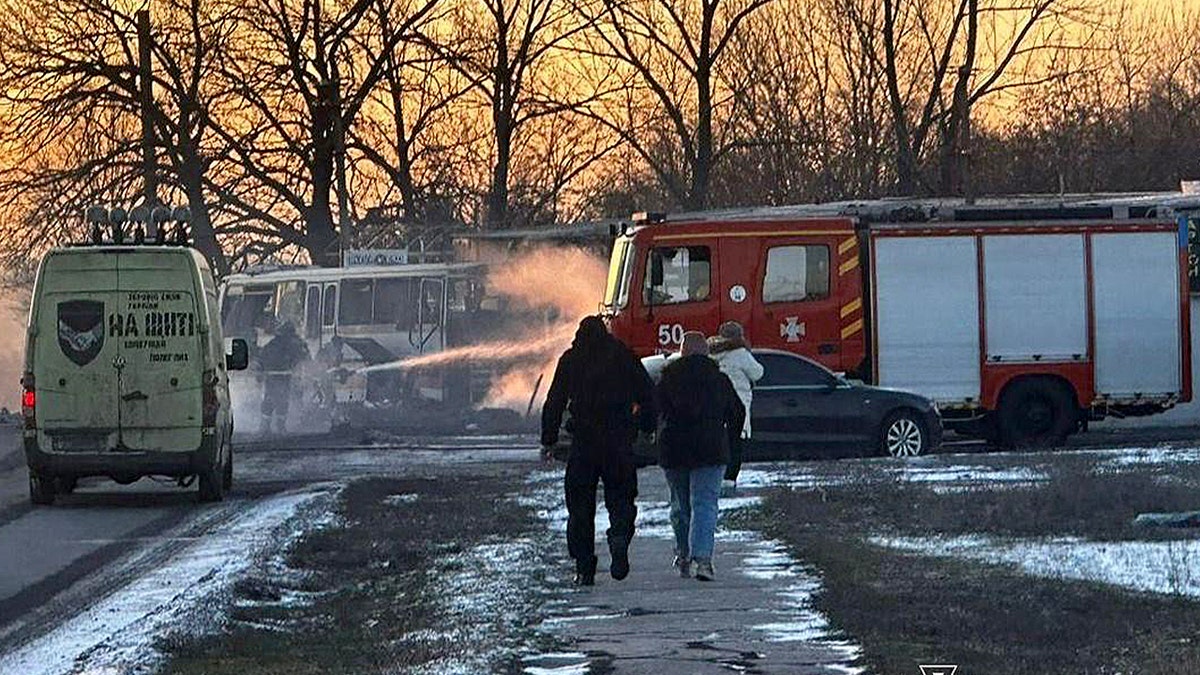
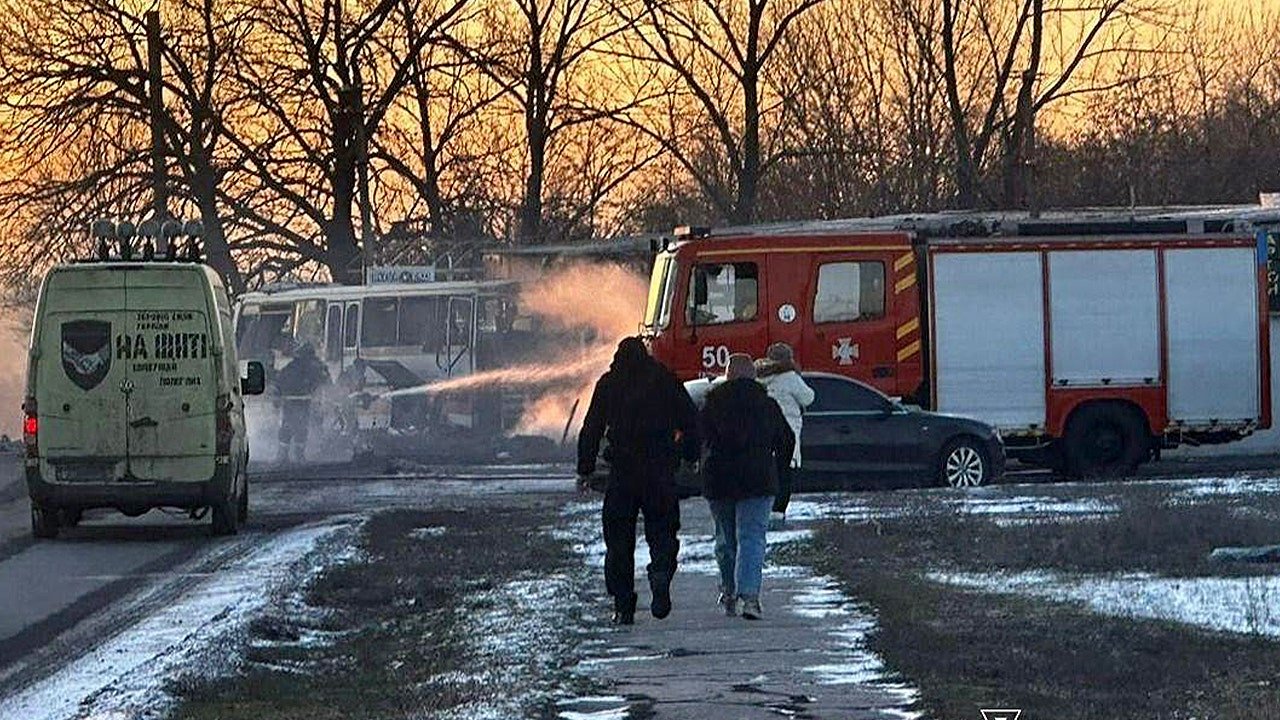
Russian drone strike killed at least 12 Ukrainian coal miners and injured seven others when it hit a civilian bus in Dnipropetrovsk region. (State Emergency Service of Ukraine, Dnipropetrovsk region)
«Peace is needed, which requires cooperation among everyone in the world who truly values peace,» Zelenskyy wrote.
Ukraine’s Prosecutor General’s Office says authorities have opened 5,303 criminal cases into drone attacks on civilian targets in the Kherson region. The office says the attacks have killed 287 civilians and wounded 2,549 others, including 41 children.
UKRAINE SEEKS MORE U.S. PATRIOT INTERCEPTORS AS BOMB SHELTER PROBE DEEPENS
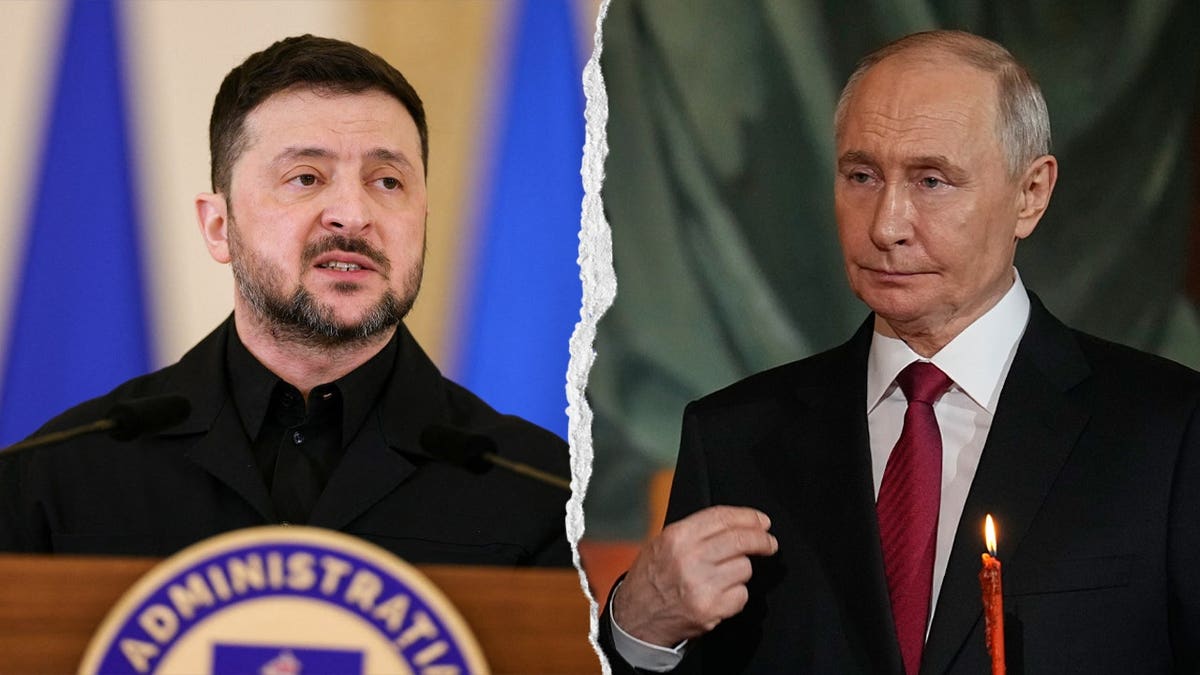
Ukrainian President Volodymyr Zelenskyy speaks at a podium split with an image of Russian President Vladimir Putin crossing himself at Orthodox Easter service. (Inquam Photos/Octav Ganea via Reuters; AP Photo/Alexander Zemlianichenko, Pool)
SIGN UP TO GET THE POLITICS NEWSLETTER
Prosecutors said the attacks appeared to be part of a systematic campaign, with FPV drones repeatedly striking civilians in public places, homes, transport hubs and civilian vehicles, and in some cases launching follow-up attacks after emergency crews arrived.
The release of the chilling video comes a year after a one-year-old boy was killed by a Russian drone in the Kherson region while playing in his playpen in his grandmother’s backyard.
ukraine, volodymyr zelenskyy, russia, world, viral videos, drones

Detuvieron a un hombre acusado de amenazar de muerte a Javier Milei en sus redes sociales

La manifestación de figuras públicas en contra de la extranjerización de tierras complicó al Gobierno en el Congreso

Boca Juniors iguala con Estudiantes de La Plata en la cancha de Huracán por el Torneo Clausura

Dems in the hot seat for skipping crucial hearing on radical group hiding in US: ‘Embarrassment’

553.000 millones de dólares: la cifra del Gobierno para explicar por qué quiere reformar la Carta Orgánica del BCRA

Quién era Pepe Habichuela, el guitarrista que despidió Rosalía

“Vamos a acelerar con todo”: el objetivo del Gobierno por las reformas y la agenda electoral de cara al 2027

Javier Milei cruzó a Victoria Villarruel y elevó la tensión: “Es una opositora, replica los argumentos kirchneristas”

Reelecciones indefinidas: el oficialismo bonaerense niega que busque ampliar la Legislatura como parte de una reforma política para beneficiar a los intendentes

¡Chau Luck Ra! La salida de soltera de La Joaqui, muy bien acompañada, a días de su separación
-
 POLITICA2 días ago
Javier Milei cruzó a Victoria Villarruel y elevó la tensión: “Es una opositora, replica los argumentos kirchneristas”
-
 POLITICA3 días ago
Reelecciones indefinidas: el oficialismo bonaerense niega que busque ampliar la Legislatura como parte de una reforma política para beneficiar a los intendentes
-
 INTERNACIONAL3 días ago
Ohio GOP family feud explodes as Sen Bernie Moreno calls on Rep Max Miller to resign