INTERNACIONAL
How a Rhodes Scholar with ties to Cuba’s president organized the convoy that brought Hasan Piker to Havana


NEWYou can now listen to Fox News articles!
This article is the third installment in a three-part Fox News Digital investigative series examining allegations that the Communist Party of Cuba built and cultivated transnational influence networks inside through nonprofits, activist organizations, solidarity campaigns, labor unions, educational exchanges and political delegations.
When President Donald Trump intensified sanctions pressure on Cuba’s communist government earlier this year, Twitch streamer Hasan Piker said he turned to a friend for advice.
«I hit my friend up, David Adler, and I was like, ‘What do we do?’» Piker recalled in an online interview. «And he’s like, ‘I’m already working on it.’»
What followed, according to Piker’s own account, was the assembly of a transnational convoy that brought hundreds of activists, politicians, journalists and organizers from dozens of countries to Cuba, delivering an estimated 40 tons of supplies as part of a campaign branded «Nuestra América Convoy,» or «Our America Convoy.»
Progressive International’s general coordinator David Adler speaks during an event at the Cuban Institute for Friendship with the Peoples in Havana on March 21, 2026. (Ernesto Mastrascusa/AFP)
The remarks offer one of the clearest public disclosures to date of how the popular streamer became involved in a trip that is now drawing scrutiny from federal investigators. Fox News Digital exclusively reported a week ago that Treasury Department’s Office of Foreign Assets Control recently issued administrative subpoenas to Piker and CodePink co-founder Medea Benjamin, seeking records related to their Cuba travel, communications and financial activity connected to the convoy, according to sources familiar with the investigation. The requests sought travel records, communications and financial records related to Cuba activities, including possible contacts with Cuban government personnel or entities.
Public attention surrounding the trip has largely focused appropriately on CodePink, Piker, Shanghai-based American Marxist tech tycoon Neville Roy Singham, and Singham’s wife, Jodie Evans, who posted a selfie photo with Piker in Havana. On Monday, Piker raised the attention of even U.S. officials when he said he believes the «real goal» of the Treasury Department investigation is Singham, because he funds «political operations» in the U.S.
But an analysis of hundreds of hours of Piker’s livestreams and interviews compiled by computer engineer Jennica Pounds, a data scientist known online as «Data Republican,» repeatedly points to a lesser-known organization that played a central role in planning the mission: Progressive International, run by Piker’s friend, Adler.
«What makes Progressive International so dangerous is that, by co-opting progressive values, it provides political legitimacy to authoritarian regimes with longstanding records of repression and gross human rights violations, and whose purpose is to destroy the United States,» said Gelet Martinez Fragela, a Cuban American journalist based in Boca Raton, Fla.
«That is precisely the propaganda strategy of the Cuban regime, which has historically used solidarity groups and activist networks as cover to build alliances, raise funds and maintain power while continuing to embed itself within illicit and anti-democratic networks around the world,» she told Fox News Digital.
Born in Cuba, Martinez Fragela has been investigating the government of Cuba’s influence in the Western Hemisphere for years, mapping the network it builds activists, nonprofits and governments to activate support for the Communist Party of Cuba. Her website, ADNCuba.com, is blocked on the island.
HASAN PIKER NAMES PRO-CCP TYCOON SINGHAM AS FINANCIER OF ‘POLITICAL MOVEMENTS’ DESPITE NONPROFIT VENEER
Progressive International is one of the most important of the 145 nonprofits, labor groups, advocacy organizations and activist collectives that Fox News Digital identified as part of a network, mobilizing in support of the Cuban government and the Communist Party of Cuba. Together, the organizations report about $1 billion in combined annual revenue. They are rallying this week to run to the streets in support of Cuba if the U.S. wages military action on the country.
Founded in 2020, Progressive International emerged from a political initiative launched by Democratic Sen. Bernie Sanders, a member of the increasingly powerful Democratic Socialists of America, and former Greek Finance Minister Yanis Varoufakis, a far-left politician, after a gathering of activists in Burlington, Vt., from Nov. 29 through Dec. 1, 2018, where organizers called for a new «international progressive movement.» Adler was at the meeting.
Today Adler leads a 501(c)(3) nonprofit called Progressive International Exchange Inc., based in Calabasas, Calif., with EIN 93-3021918. Its most recent IRS Form 990 reported only $261,039 in annual revenue and $215,772 in net assets. It isn’t clear if the U.S. nonprofit is related to the «Progressive International» coalition, which is based in Athens, Greece, coordinating massive mobilizations, like the Cuba convoy, conferences and public actions. Progressive International and Adler didn’t respond to a request for comment.
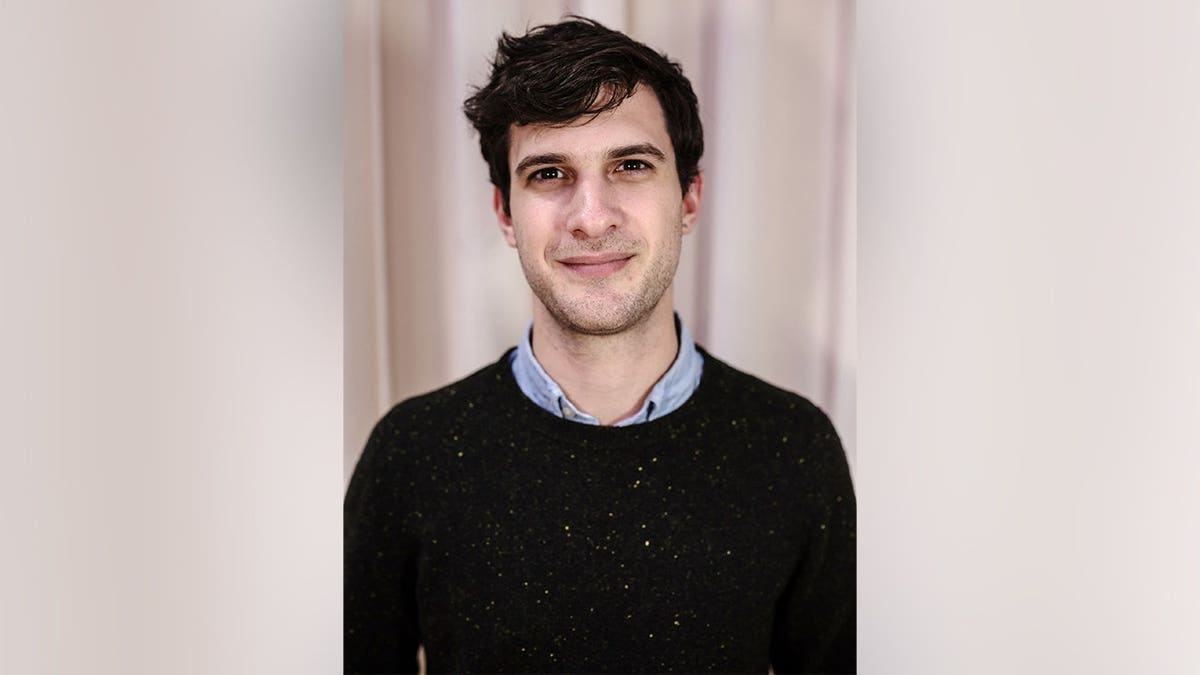
Portrait of David Adler, member of DiEM25´s Coordinating Collective and coordinator of the Progressive International movement before a panel discussion of DiEM25 on January 24, 2019 in Berlin, Germany. (Till Rimmele/Getty Images)
At the center of the organization is Adler, who was born in Encino, Calif., graduated from Brown University, where he was a Rhodes Scholar, and trained at Oxford University as a political economist. He previously directed policy for Varoufakis’ «Democracy in Europe Movement,» known as «DiEM25,» and served on Sanders’ foreign policy advisory team before becoming Progressive International’s general coordinator.
In 2024, Germany actually barred Varoufakis for leading polarizing anti-Israel protests with local Palestinians. Varoufakis wrote that the decision reflected Germany’s «turn to repression.»
According to the public record, Adler occupies an unusual position inside the Cuba solidarity movement, with close ties with the Communist Party of Cuba. Last year, Cuban President Miguel Díaz-Canel publicly intervened on Adler’s behalf when Israeli authorities detained him when he joined a flotilla to Israel, supposedly carrying «aid» to Palestinians in Gaza. A Jewish American, Adler shared a video of himself from the boat awkwardly calling his parents to tell them that he was on the flotilla to Gaza.
Qatar’s state-funded anti-Israel TV network, Al Jazeera, shared the video on social media with childhood photos of Adler and its own propaganda spin, writing, «David Adler called his parents from the deck of a flotilla boat to tell them he had joined the mission to Gaza. He is one of many Jewish activists who say they can no longer stay on the sidelines.»
In much the same way, the convoy to Cuba was blasted to the world from Havana with an anti-U.S. propaganda theme, criticizing America’s «imperialism.»
During the convoy’s visit to Cuba in March, Adler could be seen in a VIP seat beside Díaz-Canel, as the president listened politely to Adler and later pumped his fist in the air during an event sponsored by the Cuban Institute of Friendship with the Peoples, known as ICAP.
As reported, generations of activists traveled to Cuba through labor brigades, educational exchanges, solidarity delegations and political tours organized through institutions connected to the Cuban state, including the Cuban Institute of Friendship with the Peoples, or ICAP, and the Venceremos Brigade, now a fiscally-sponsored project of the People’s Forum in the Singham network. It’s led today by Fernando González Llort, one of the «Cuban Five» intelligence officers convicted in the United States on espionage-related charges.
A spokesperson from the Embassy of Cuba told Fox News Digital that it isn’t engaged in any operations of malign foreign influence and is simply trying to protect the state’s sovereignty.
LAWMAKERS RAISE ALARM OVER NEVILLE ROY SINGHAM’S $278M NETWORK SPREADING CCP PROPAGANDA IN THE U.S.
An advisory council of Progressive International includes Mariela Castro Espín, a member of Cuba’s National Assembly and the daughter of former Cuban leader Raúl Castro, indicted earlier this month by the U.S. for murder.
«That fact that Mariela Castro has a position of power with Progressive International is not insignificant,» said Martinez Fragela, the Cuban American journalist. «In plain terms, it means that a member of the Castro family, a senior figure within the Cuban Communist Party, a member of Cuba’s National Assembly of People’s Power, and part of the broader Cuban political apparatus is involved in guiding the direction of the organization.»
In one interview, Piker described himself as «good friends» with Progressive International organizers. In another, he identified Adler and Varoufakis by name when discussing the organization. Adler later appeared on Piker’s livestream, where Piker described him as «someone who I have the honor of calling a comrade.»
Adler replied, «Thanks, brother. It’s a pleasure to be here.»
The organization’s role in the March convoy was extensive.
The Nuestra América Convoy wasn’t a spontaneous jaunt. Progressive International described it as an international operation involving approximately 650 delegates from 33 countries and 120 organizations. The mission combined charter flights, maritime flotillas and aid shipments carrying food, medicine, medical supplies and solar panels to Cuba.
Piker documented part of the operation himself and part of his defense against scrutiny for making the trip to Cuba is that he went as «a journalist.»
PROGRESSIVE STREAMER BACKING MAMDANI SAYS CUBANS ARE ‘PARTYING IN THE F—— STREETS’ AMID ENERGY CRISIS

Hasan Piker and Jodie Evans and Neville Roy Singham (Getty Images)
In his Cuba documentary, he showed himself boarding what he described as a «special plane» departing from Miami. It was the same plane that CodePink’s Benjamin filmed as the one CodePink’s delegation was flying to Cuba. In the film, Piker credited Progressive International, CodePink and the ANSWER Coalition for organizing the effort.
«Shout out Code Pink, Answer Coalition, Progressive International,» Piker said. «They set up a flight with medical aid, solar panels, food, numerous things that the Cuban population desperately needs.»
The participants included former British Labour leader Jeremy Corbyn, CodePink activists, labor organizers, international delegates and public figures from multiple countries. Before traveling, Piker said he consulted Ben Rhodes, former deputy national security adviser to President Barack Obama and a central figure in the administration’s Cuba normalization effort.
«I had talked to Ben Rhodes prior to going,» Piker said. «And he said to me like, ‘You’re going to be very sad when you see it.’» Piker repeated the story in multiple interviews and public appearances after returning from Havana.
After arriving in Havana, Piker said he largely embedded with «Belly of the Beast,» a media organization named for a term that is used by communists and far-leftists to describe operating inside the U.S., the so-called «beast» in their propaganda.
REVOLUTIONARY TOURISM:: INSIDE THE $600M MARRIAGE OF DARK MONEY AND FAR-LEFT AGITPROP
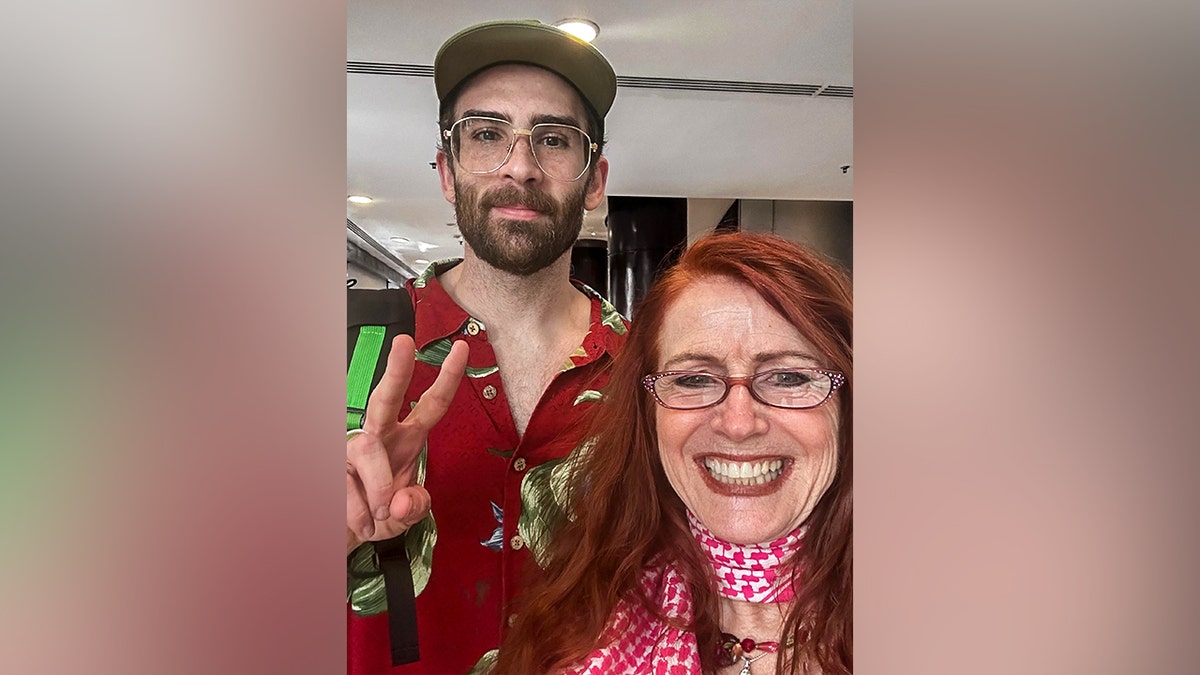
Hasan Piker, a Democratic Socialists of America member, and CodePink co-founder Jodie Evans meet in Havana, Cuba, as part of a «United Front» supporting the communist regime. (CodePink via Storyful)
«I locked in with Belly of the Beast,» he later said. A 501(c)(3) nonprofit, Center for American Documentary Inc., based in Newton, Mass., serves as the fiscal sponsor for Belly of the Beast Films LLC, based in Ketchum, Idaho, according to public records. Tax filings show that Center for American Documentary gave Belly of the Beast $188,043 in 2024 for «film production services.»
Piker’s resulting propaganda documentary from Cuba features interviews with several senior Cuban officials and institutional leaders, including Carlos Fernández de Cossío, Cuba’s vice minister of foreign affairs, one of the country’s highest-ranking diplomats, representing the Communist Party of Cuba. Piker also interviewed officials connected to Cuba’s international medical missions as well as researchers working in the country’s health-care and energy sectors.
The convoy itself reflected a model that has existed inside the Cuba solidarity movement for decades.
Investigators examining the modern Cuba solidarity movement increasingly view the Nuestra América Convoy as the latest evolution of that infrastructure, using the cover of «humanitarian aid» for political advocacy, propaganda generation and distribution and activist networking in a single international operation.
The trip to Cuba was only one part of Progressive International’s activities.
In October 2025, when Adler participated in the Global Sumud Flotilla to Gaza, he was detained by Israeli authorities after vessels attempted to challenge Israel’s blockade. Following his release, Adler appeared on Piker’s livestream and described another Progressive International initiative known as the Hague Group.
«One of the things that we do at the Progressive International is help to coordinate a group that’s called the Hague Group,» Adler told Piker’s audience. He described it as a coalition of countries committed to taking action on behalf of international law and the Palestinian cause.
By March 2026, the Hague Group had grown into a coalition of approximately 40 countries coordinated through Progressive International’s organizational infrastructure.
WHO IS HASAN PIKER? MEET THE FAR-LEFT STREAMER WHO IS STIRRING UP CONTROVERSY ONLINE AND DIVIDING DEMOCRATS
The overlap illustrates how the same organization that helped bring Piker to Cuba also operates across a broader network of international campaigns involving Cuba, Gaza and anti-sanctions activism.
Federal investigators aren’t examining protected political speech. Across thousands of transcripts, Piker consistently described the Cuba trip as a «humanitarian» mission and repeatedly stated that participants traveled under procedures authorized by Treasury. He has publicly maintained that he signed OFAC paperwork and complied with federal requirements.
Instead, investigators are examining communications, financial records, travel logistics and possible contacts with Cuban government personnel or entities connected to the convoy, according to sources familiar with the inquiry.
For investigators, the significance of the convoy extends beyond a single influencer’s trip to Havana.
The same organizations that organized the March mission — Progressive International, People’s Forum, CodePink and the ANSWER Coalition — repeatedly appear throughout the broader Cuba «solidarity» infrastructure. What began decades ago through organizations such as ICAP and the Venceremos Brigade now operates through a modern network of nonprofits, media projects, international delegations, activist campaigns and political organizations.
The March convoy that brought Piker to Cuba represents one of the most visible examples of that system in action, say Cuban Americans challenging the regime.
And, to them, Piker’s «comrade,» Adler, represents a critical part of the network trying to keep communism alive in Cuba.
CLICK HERE TO DOWNLOAD THE FOX NEWS APP
Fox News Digital’s Tessa Hoyos contributed to this report.
cuba, caribbean, fox news investigates, travel, globalism












INTERNACIONAL
Un fósil del tamaño de un ratón hallado en Mongolia podría cambiar lo que se cree sobre el origen de los mamíferos
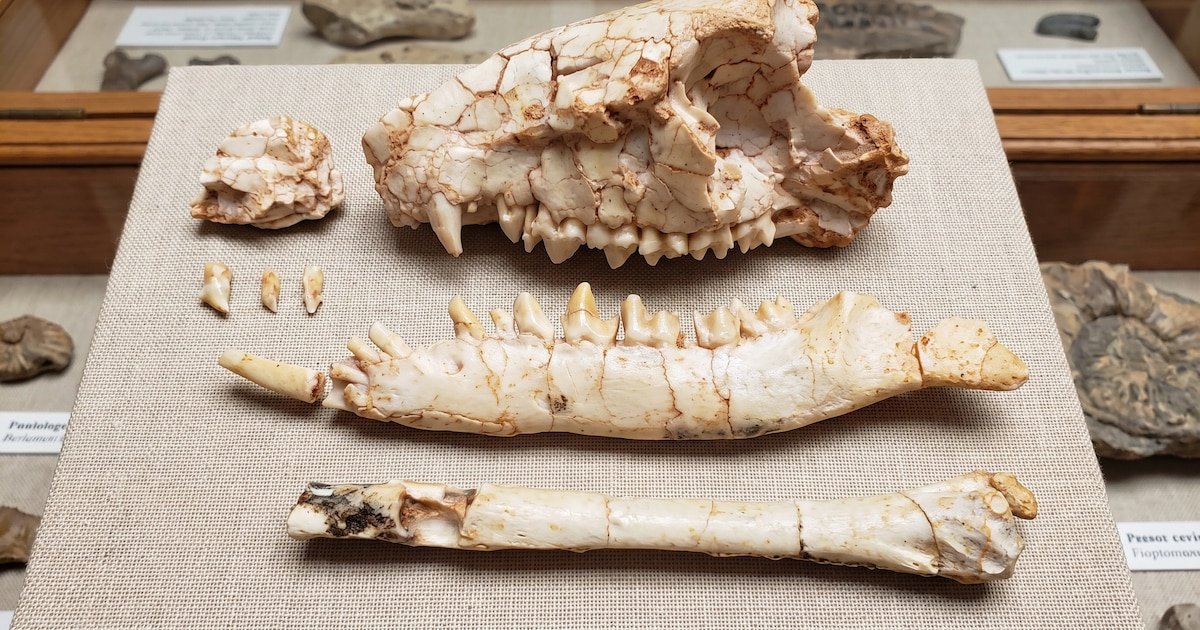
Un fósil hallado en el desierto del Gobi oriental de Mongolia y descrito en Nature identificó a Tamirkhan balcarceli y cambió una idea aceptada durante décadas sobre la evolución de este grupo de vertebrados. El hallazgo mostró que los llamados “Conejos del Cretácico” no pertenecían al linaje de los mamíferos placentarios, sino a los zalambdalestoideos, un grupo distinto de formas tempranas.
Según Phys.org, el espécimen apareció en 2004 durante una expedición patrocinada por el American Museum of Natural History, y su estudio reunió a científicos de esa institución, Stony Brook University, la University of Arizona y Arcadia University.
Andres Giallombardo, autor principal del estudio, dijo a Phys.org que el hallazgo demuestra por qué el trabajo de campo sigue siendo indispensable para reconstruir la historia de la vida. También lo definió como el momento más emocionante de su carrera, porque se trató de una especie nueva conservada de forma tan completa que además resolvió un problema científico de larga data.

Tamirkhan balcarceli, hallado en el Gobi oriental de Mongolia, medía entre 15 y 18 centímetros de la cabeza a la cola. Tenía patas traseras alargadas que le daban un aspecto parecido al de un conejo, una comparación informal que los paleontólogos han usado para referirse a estos animales.
El fósil conservó dientes bajos y redondeados, característicos de los zheléstidos, y también incisivos largos de crecimiento continuo. Sumó además varios rasgos del cráneo propios de los zalambdalestoideos, un grupo de pequeños mamíferos insectívoros parecidos a musarañas.
Shawn Zack, paleontólogo de la University of Arizona, afirmó a Phys.org que las patas traseras y los tobillos de Tamirkhan corresponden de forma inequívoca a los zalambdalestoideos. A partir de ese conjunto anatómico, los autores concluyeron que los zheléstidos no eran mamíferos placentarios ni especialmente parecidos a ellos.

Los zheléstidos se conocían desde hacía casi 40 años por dientes aislados y restos fragmentarios. Esas piezas, más especializadas para comer plantas que los dientes afilados de muchos mamíferos del Cretácico, llevaron a proponer que formaban un grupo desconocido.
Durante años se discutió si eran ejemplos de mamíferos placentarios del Cretácico o una línea separada que había adquirido rasgos parecidos por evolución independiente. La hipótesis de placentarios en ese período contaba con apoyo de modelos de reloj molecular, pero el nuevo fósil aportó pruebas en sentido contrario.
Paul Velazco, biólogo comparativo de Arcadia University, señaló a Phys.org que los modelos moleculares construidos a partir de animales vivos pueden anticipar el pasado, mientras los fósiles permiten comprobar esas predicciones.
Maureen O’Leary, paleontóloga de Stony Brook University e investigadora asociada del museo, subrayó en el mismo medio que un diente sigue siendo un fósil muy informativo, aunque no siempre alcanza para reconstruir al animal entero.

El espécimen también reforzó el valor científico del Gobi, uno de los pocos lugares donde se preservan zheléstidos junto con yacimientos de Kazajistán, Kirguistán y Uzbekistán.
Michael Novacek, curador de la División de Paleontología del museo, dijo a Phys.org que esa región es una de las escasas zonas donde aparecen con regularidad mamíferos del Cretácico tan completos.
Las conclusiones evolutivas del estudio también se apoyaron en MorphoBank, una plataforma filogenética publicada por primera vez en 2013. Esa base de datos se amplió durante más de una década con un número creciente de especies fósiles y sirvió como marco para analizar relaciones entre mamíferos tempranos.
El caso de Tamirkhan dejó una advertencia metodológica. Un diente puede orientar una clasificación, pero no basta por sí solo para fijar el retrato completo de un animal extinguido.
fósil,cráneo,mandíbula,paleontología,museo,exhibición
NEWYou can now listen to Fox News articles!
FIRST ON FOX: As the White House touts «collapsing» violent crime rates in the U.S., the Department of Homeland Security is pointing to the deportation of violent criminal illegal immigrants as the «common sense» reason.
A new analysis by the Council on Criminal Justice (CCJ) released this month reported that homicides will «likely» reach a «new historic low» in the U.S. as most crime rates continue to decline mid-year. CCJ reported that homicides in a sample group of large U.S. cities are down 18% from the previous year, which is on pace for the lowest level since 1900. Additionally, carjackings are down 47%; motor vehicle thefts are down 20%; robberies are down 17% and residential burglaries are down 13%.
The White House touted the report as evidencing «extraordinary progress» in «delivering on one of President Trump’s core promises to restore law and order.»
Assistant DHS Secretary Lauren Bis told Fox News Digital, «It is common sense. When you remove criminals from the country, crime rates fall.»
ICE LODGES DETAINER FOR ILLEGAL IMMIGRANT ACCUSED OF TRYING TO DISARM VIRGINIA POLICE OFFICER
President Donald Trump announces the Freedom Haulers initiative on West Executive Avenue in Washington, D.C., on July 30, 2026. The program will allow military veterans to get expedited commercial driver’s licenses for trucking careers. The nation faces a shortage of truckers after licenses were stripped from immigrants who failed English language tests. (Andrew Harnik/Getty Images)
The agency shared exclusively with Fox News Digital some of the «worst of the worst» criminal illegal immigrants who have been deported just in the last few weeks. Recent deportees include foreign nationals convicted of homicide, drug trafficking, aggravated assault, carjacking and other crimes, in addition to multiple with illegal re-entries into the country.
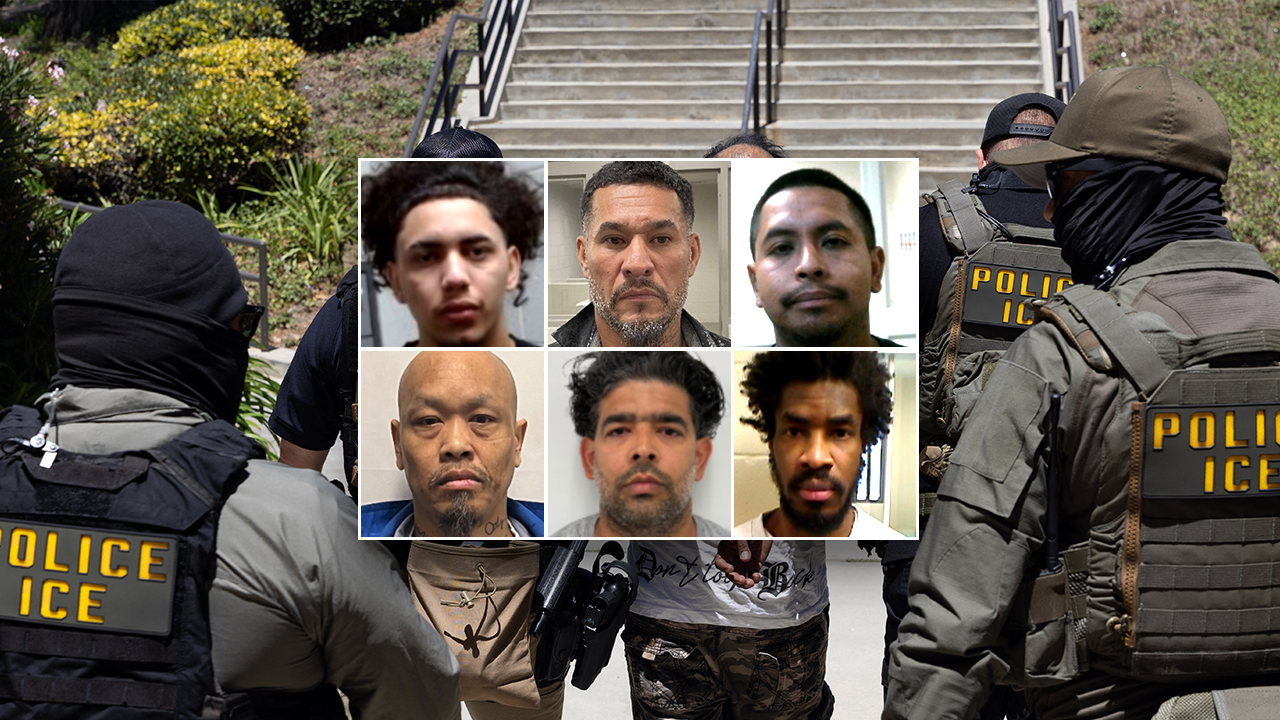
Among those deported was a member of the foreign terrorist organization Tren de Aragua, a Honduran national named Jared Adonay Cruz-Rivera, according to DHS. He was deported on July 18 following a previous conviction for robbery and an arrest on charges of drug possession.
DHS said that one deportee, Olegario Ramirez, a Mexican national and Paisas gang member, has a criminal history including convictions for homicide and illegal re-entry into the U.S. He was deported on July 27.
Another Mexican national deported the same day was Bulmaro Rendon-Ramos, a Surenos gang member, who had convictions for robbery, burglary and four counts of driving under the influence of liquor.
ICE ARRESTS ILLEGAL IMMIGRANT ILLINOIS TEACHER LINKED TO TREN DE ARAGUA MASS SHOOTING

Mugshots, left to right from top: Jared Adonay Cruz-Rivera, Olegario Ramirez, Bulmaro Rendon-Ramos, Nammoun Khampanya, Omar Loaces Gonzalez, Marc James Guerrier Pinard. (Blake Fagan / AFP via Getty Images; DHS)
Nammoun Khampanya, a Crips gang member from Laos, was deported on July 28 following convictions for cocaine possession, possession of a weapon, obstructing police and fraud.
A Cuban national, Omar Loaces Gonzalez, was deported on July 17. His criminal history includes convictions for vehicle theft and wire fraud.
Additionally, Haitian national Marc James Guerrier Pinard was deported on July 16 following his convictions for three counts of armed carjacking and an arrest on charges of burglary.
NEW YORK TIMES TORCHED FOR ‘FALSE’ REPORTING ON ICE INVESTIGATIONS, OUTLET FIRES BACK

Federal agents are seen walking in uniform. A report from The New York Times said the Trump administration has lost or abandoned hundreds of cases in which it accused anti-ICE protesters and migrants of assaulting federal immigration agents. (John Moore/Getty Images)
Commenting on the deportations, Bis told Fox News Digital that «President Trump promised to make America safe again, and he has done just that.»
«Crime has fallen to record lows under the Trump administration, including murders on pace to drop to the lowest level in 126 years. It’s no surprise that this drop in crime coincides with deportations of dangerous criminal illegal aliens,» she said.
deportation, illegal immigrants, immigration, enforcement, homeland security, donald trump, migrant crime
INTERNACIONAL
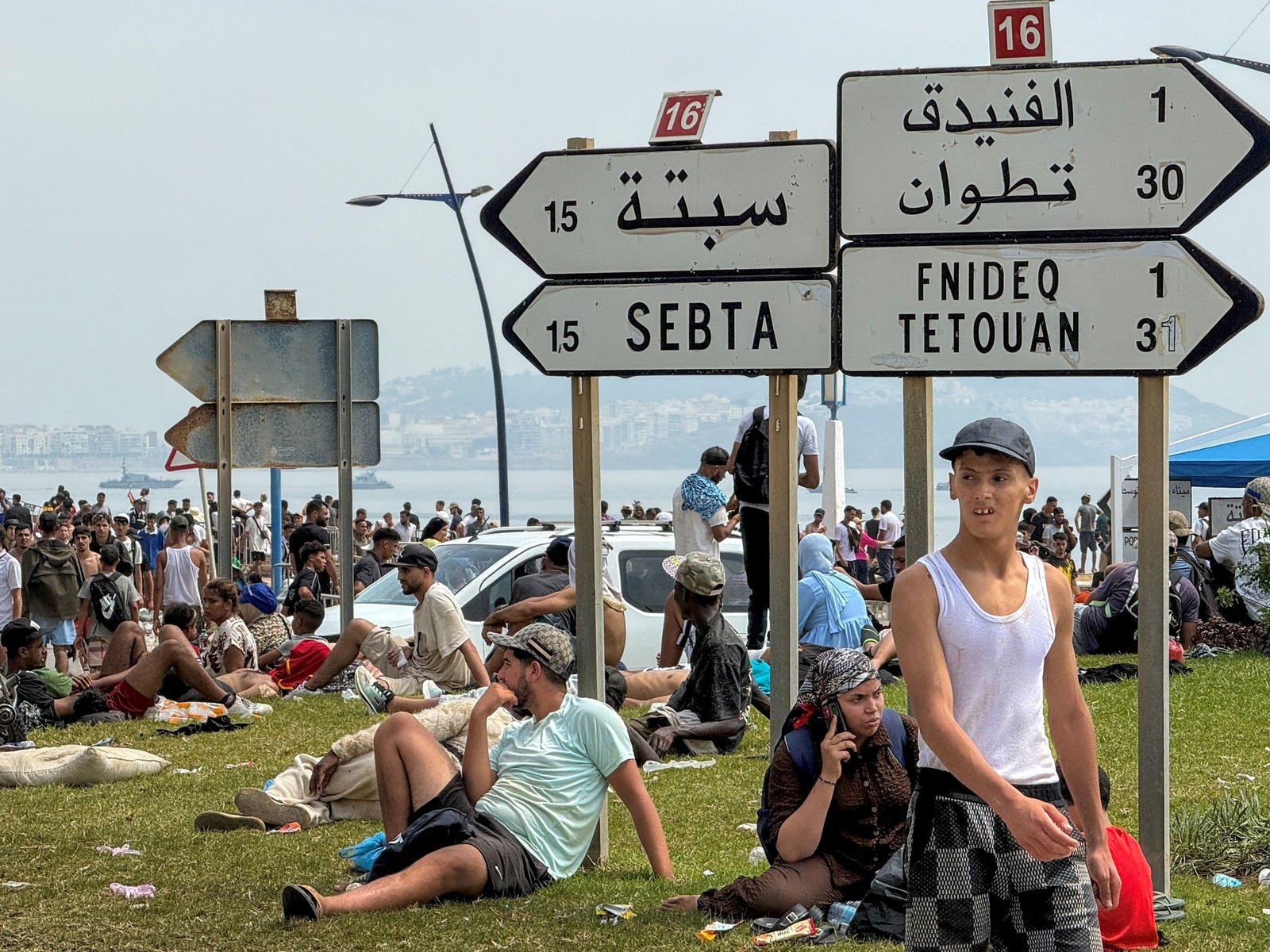
Crisis migratoria en España: dudas y un opaco trasfondo político detrás del aluvión de marroquíes en Ceuta


Un fósil del tamaño de un ratón hallado en Mongolia podría cambiar lo que se cree sobre el origen de los mamíferos

Salvaje crimen en Mendoza: un chico de 15 años fue asesinado por vecinos con un machete, cuchillos y una bomba molotov

Julián Domínguez, exministro de Agricultura: “La reforma de la Ley de Tierras pone en riesgo la soberanía nacional”

Thiago Medina respondió a la denuncia por abuso sexual de su prima: “Niego de manera categórica los hechos”

Dos argentinos en semifinales en San Marino y Bonn: Díaz Acosta quedó a un triunfo del Top 100 y Federico Gómez continúa su remontada

El subsecretario de Deportes renunció por sus diferencias con Daniel Scioli

La pelea con Lula y el verdadero desafío que enfrenta Milei

Cómo manejar en el hielo y la nieve: técnicas y precauciones para usar el auto en la montaña en vacaciones de invierno

El BCRA cortó la racha de compra y en el mercado vuelan rumores de maniobras para frenar al dólar

World-famous Catholic shrine torched, ‘Devil in a skirt’ scrawled on Virgin Mary statue

 INTERNACIONAL3 días ago
World-famous Catholic shrine torched, ‘Devil in a skirt’ scrawled on Virgin Mary statue
- ECONOMIA3 días ago
El Banco Central no compró dólares este martes y rompió una racha de 135 días consecutivos en los que había sumado reservas
- ECONOMIA3 días ago
FMI pidió acelerar reformas y dejó en claro que no hay margen para bajar retenciones