INTERNACIONAL
Inside the protest playbook to vilify Israel on ‘global day of action’

NEWYou can now listen to Fox News articles!
WASHINGTON, D.C. – As demonstrators, including the headline-grabbing CodePink agitators, descend on the nation’s capital late Saturday afternoon for a «coordinated global day of action» against Israel, they will join a worldwide wave of marches and planned disruptions that may appear to be unfolding independently.
In Kuala Lumpur, Malaysia, on Friday, anti-Israel demonstrators carried signs deploying emotionally charged language against Israel, including one featuring a Palestinian flag and a bloodied hand with the message, «STOP GENOCIDE.» Nearby, two women carrying mock machine guns flanked a cardboard image of a handcuffed Israeli Prime Minister Benjamin Netanyahu with a noose around his neck.
Anti-Israel demonstrators carry a cutout depicting Israeli Prime Minister Benjamin Netanyahu alongside mock cardboard weapons and placards during a rally on Oct. 09, 2026 in Kuala Lumpur, Malaysia. People gathered in Kuala Lumpur in solidarity with Palestinians in Gaza as part of a «global day of action.» (Annice Lyn/Getty Images)
But a Fox News Digital investigation has found that, long before the first demonstrators gathered, the messages for the protest’s «communications framing» and transnational action plan had already been written, the banners designed, the tactics circulated and the media strategy laid out to «turn public outrage into collective leverage.»
The campaign documents reveal that coalition organizers instructed participating groups to direct protesters to «shut down city squares,» «encircle government buildings» and «blockade complicit corporate hubs.»
The document declares, «This is not a symbolic march and not a routine protest.»
Fox News Digital identified 179 organizations in the coalition, while an interactive Google Map published by the network lists 322 events scheduled across three days through Sunday. They include a rally on an «Intifada Trail» in Saint John, New Brunswick, Canada, a protest in Bangladesh by the «Bangladesh Intifada Youth Collection» and actions in South Africa by «Social Intifada.» All three use «intifada,» a term associated with Palestinian uprisings against Israel, including periods marked by deadly terrorist attacks. Activists describe the term as a call for resistance.
The global coordination illustrates how contemporary protest movements combine international leadership, local activist networks, standardized visual branding, emotionally charged messaging and traditional news outreach into a single mobilization infrastructure in which professional political organizing amplifies the sincerely held convictions of individual demonstrators.
LAWMAKERS THROW OUT ‘TROJAN HORSE’ ACTIVISTS THEY SAY ARE ENGAGED IN AMERICAN SUBVERSION
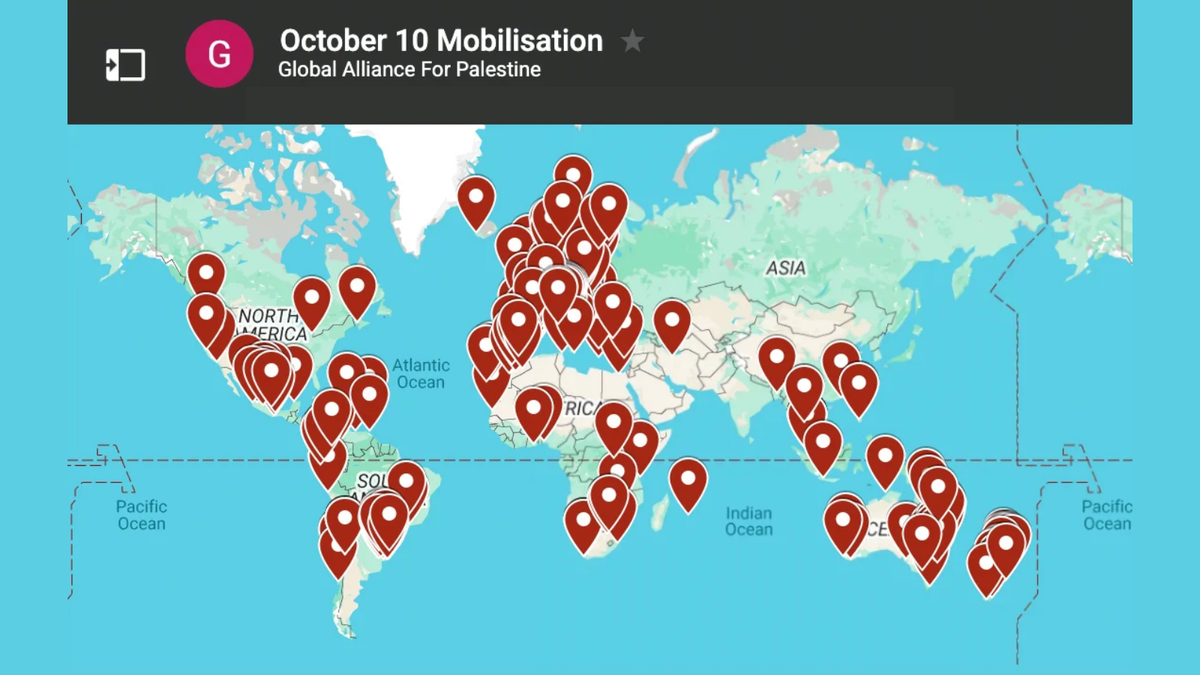
Organizers from a coalition, Global Action for Palestine, share a map «Global Day of Action» events for 2026. (Global Alliance for Palestine)
Among the participating organizations is CodePink, a 501(c)(3) nonprofit that has received $1.33 million from Neville Roy Singham, a Shanghai-based tech tycoon who has funneled $278 million into a network of nonprofits under scrutiny by the House Ways and Means Committee and its chairman, Rep. Jason Smith, over allegations that some operate as «Trojan horses» and proxies for the Chinese Communist Party and other malign foreign interests. CodePink and other organizations under scrutiny have denied wrongdoing.
Two days ago, CodePink co-founder Medea Benjamin and D.C. coordinator Olivia DiNucci dispatched a letter to members, directing them to join the «Feminist Contingent» at the Library of Congress for the «global day of action.»
«And don’t forget to WEAR PINK!» they noted.
The network’s connections were also visible last week, when CodePink co-founder Jodie Evans, who married Singham in 2017, joined an anti-Israel protest in New York City, marching behind a band of activists from Revolutionary Communists of America as they chanted, «Long live the intifada.»
Evans told Fox News Digital Singham supports CodePink’s efforts and the «amazing work» nonprofits are doing to «stand up when violent things are happening.»
Taken together, the documents reveal a coordinated protest and influence campaign spanning continents, combining accusations of Israeli «genocide,» attacks on the news media, workplace and university walkouts, blockades, political lobbying and carefully orchestrated publicity.
A review of the planning documents for the global protests reveals the machinery behind the wave of anti-Israel demonstrations across continents as not only a protest campaign but a psychological operation: a common playbook combining strategic accusations of Israeli «genocide,» attacks on the news media, workplace and university walkouts, blockades, political lobbying and coordinated publicity.
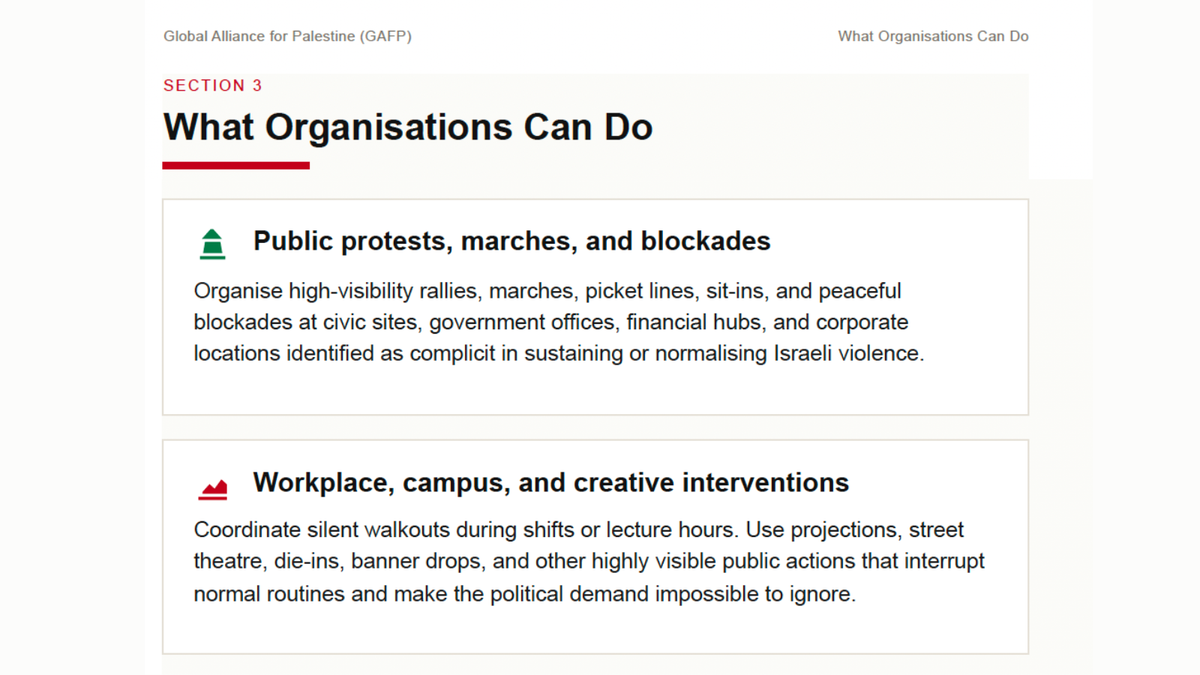
In a document, leaders of the «Global Alliance for Palestine» spell out «What Organisations Can Do» to oppose the state of Israel and support a «global day of action» on Oct. 7, 2026. (Global Alliance for Palestine)
At the center of the international mobilization are three organizations identified in the campaign documents: the «Global Alliance for the Palestinian territories,» launched in July 2025 in London as a «truly international popular front for Palestinian liberation»; the «Anti-Apartheid Movement for Palestine»; and the «Global Coalition to End the Occupation of Palestine.»
An online directory displays 179 organizational logos from participating groups worldwide. Fox News Digital extracted the names from the logos and built a database of the coalition.
The same pattern of coordinated organizing has emerged in another international protest movement: the so-called «student protests» rolling through France.
A separate Fox News Digital investigation identified a network of 50 organizations coordinating and amplifying those demonstrations. Only 15 were classified as youth- or student-led groups, while the remaining 35 included communist organizations, labor groups, political organizations and professional protest coordinators.
Organizers supplied participating groups with campaign materials, coordination and strategic support to «turn public outrage into collective leverage.»
In an August «Launch Statement,» the alliance laid out a strategy to synchronize student demonstrations, workplace actions, rallies and civil disobedience across Asia, the Americas, Europe, Africa and the Middle East.
The stated objective wasn’t simply to organize demonstrations, but to add Israel’s war in Gaza to the international media agenda, turning separate protests into a coordinated communications effort intended to shape what audiences around the world see, hear and think about the conflict.
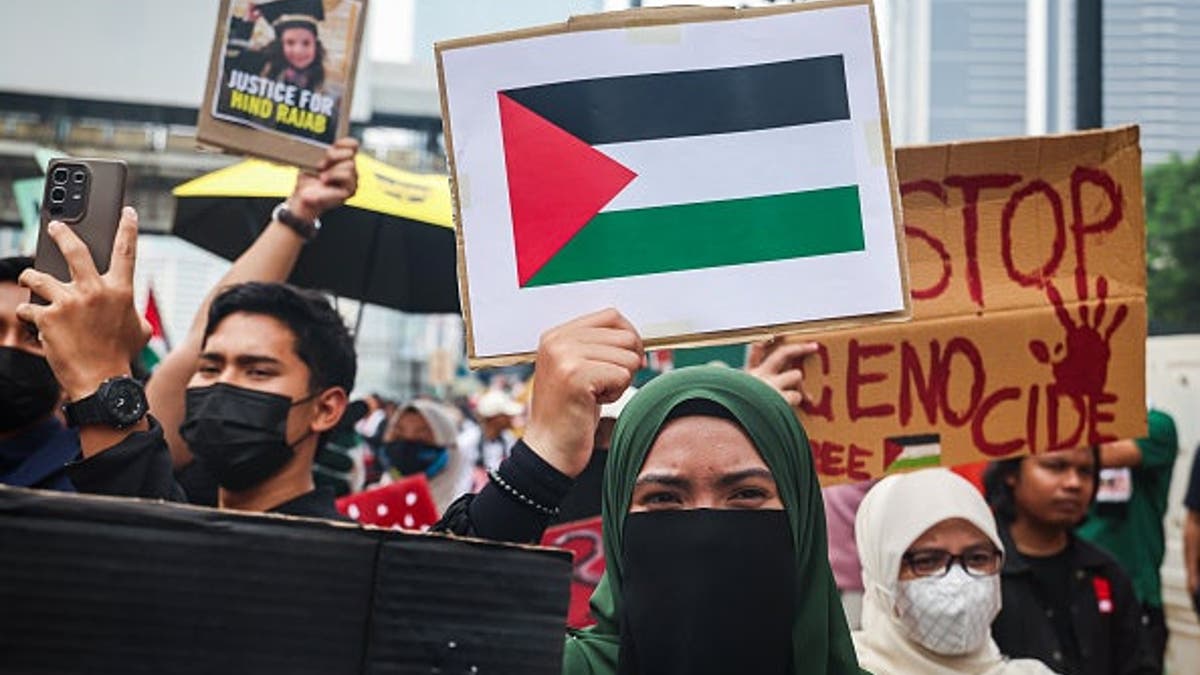
Anti-Israel demonstrators holds a Palestinian flag and signage during a rally on Oct. 09, 2026 in Kuala Lumpur, Malaysia, as part of a «global day of action» against Israel. (Photo by Annice Lyn/Getty Images) (Annice Lyn/Getty Images)
But the most revealing aspect of the operation may be its stated objective: shaping what the world sees, hears and thinks about the Israeli-Palestinian conflict.
In a «Launch Statement» in August, the alliance declared that the demonstrations are intended to return Israel’s military campaign against Palestinians to the international media agenda.
The campaign materials describe a strategy of synchronizing protests across continents, connecting student demonstrations, workplace actions, rallies and civil disobedience from Asia to the Americas, Europe, Africa and the Middle East.
The result is a coordinated communications campaign designed to transform demonstrations organized by separate groups into the political impact of a single international mobilization.
ISRAEL, JEWS TARGETED WORLDWIDE AS WELL-FUNDED LEFTIST, ISLAMIST GROUPS JOIN FOR ‘NAKBA 78’ PROTESTS
Weeks before the demonstrations, the alliance had already prepared a collection of campaign posters in seven languages – English, Arabic, Turkish, Finnish, French, Portuguese and Spanish. They supplied graphics for a large street banner carrying carefully selected slogans, along with protest-sign designs from folders marked «HANDHELD PLACARDS» and «STREET DEMANDS.»
One of the downloadable images is a poster with the message «GAZA GENOCIDE» next to graphics of barbed wire and watermelon, both symbols of Palestinian «resistance» against Israel.
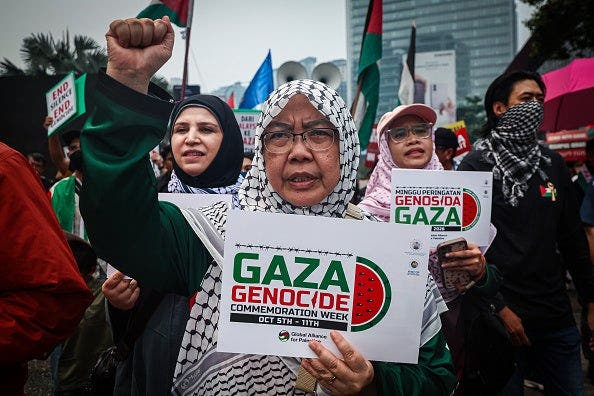
In Malaysia, a woman wearing a black-and-white Palestinian keffiyeh raised her fist while holding a printed version of the watermelon-and-barbed-wire placard], with the organizers’ branding in smaller letters on her sign: «GLOBAL ALLIANCE FOR PALESTINE.»
Behind her, other women carried the same sign and other signs featuring additional graphics from the same campaign materials.
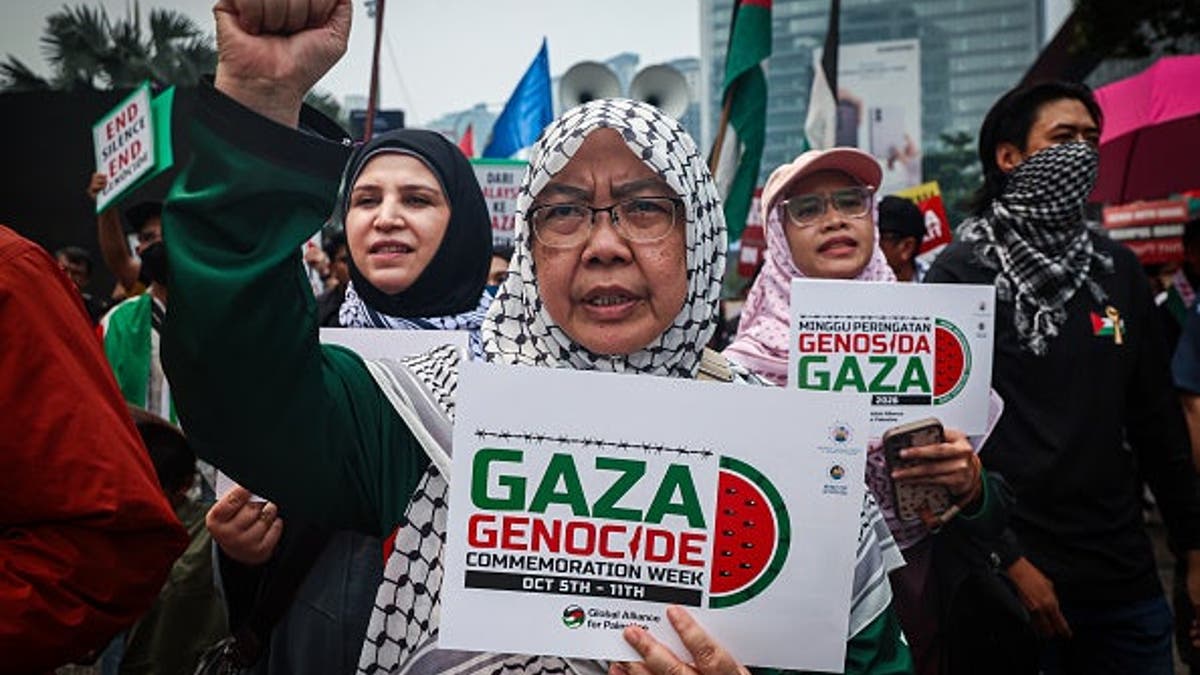
A woman covers her hairs with a Palestinian keffiyeh scarf and raises her fist while holding a placard reading «Gaza Genocide» during an anti-Israel rally on Oct. 09, 2026 in Kuala Lumpur, Malaysia. The sign is part of a series of downloadable pre-made graphics created by organizers of the global protest. (Annice Lyn/Getty Images)
Other placards held by protesters in Malaysia yesterday, read, «HUMANITY IS NOT A CRIME» and «STOP THE GENOCIDE WAR!»
Another downloadable sign, carried in Malaysia, reads: «LET GAZA LIVE!»
The campaign’s «Communications Framing» employs familiar techniques of political persuasion: repetition, emotional imagery, collective identity, moral urgency and the portrayal of inaction as complicity.
The materials offer a window into the battle for public attention that increasingly accompanies international conflicts.
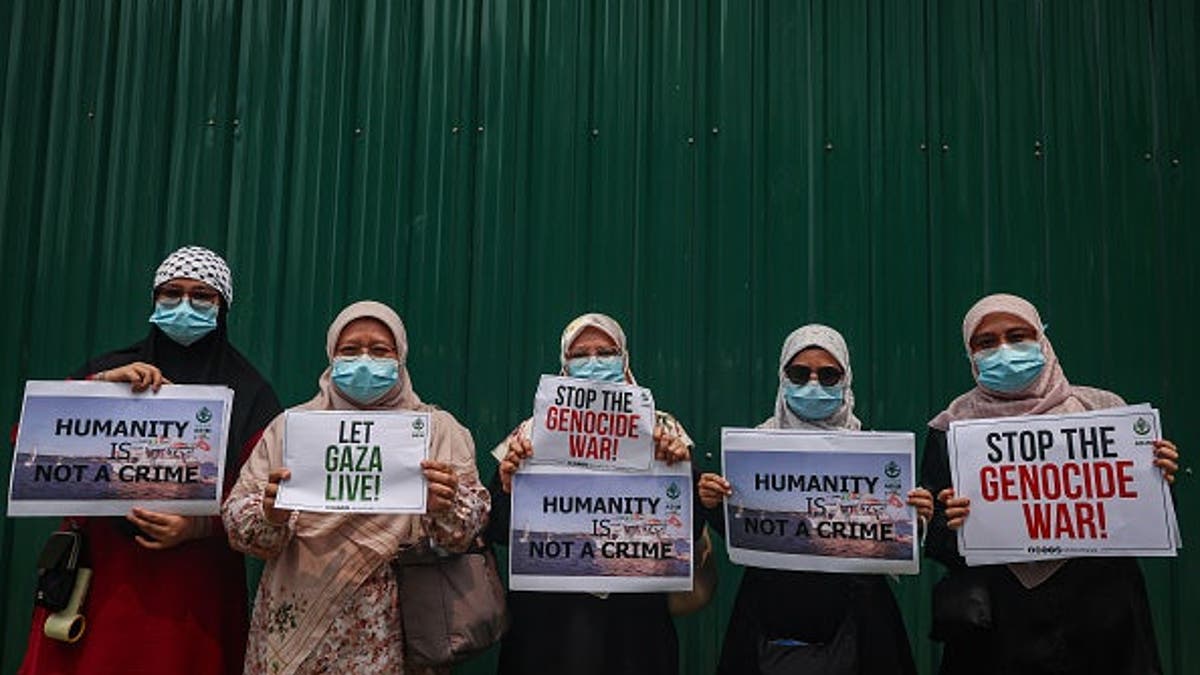
Women at an anti-Israel rally on Oct. 9, 2026, in Kuala Lumpur, Malaysia, hold placards reading messages created by the leaders of the Global Alliance for Palestine for protests around the country. The messages read «Humanity Is Not a Crime,» «Let Gaza Live» and «Stop the Genocide War.» (Annice Lyn/Getty Images)
One poster declares, «You cannot erase a homeland.»
Another commands, «End the genocide. Defend the land.»
A third combines an image of a child with the message, «Defend the land. Protect its children.»
Another repeats the words «Silence normalises» across the background before presenting the word «genocide» in oversized red lettering.
But the campaign’s internal messaging guidance goes further, prescribing accusations against Israel and the news media in a section called «Slogans & Hashtags,» with «Call to Action & Core Street Demands.»
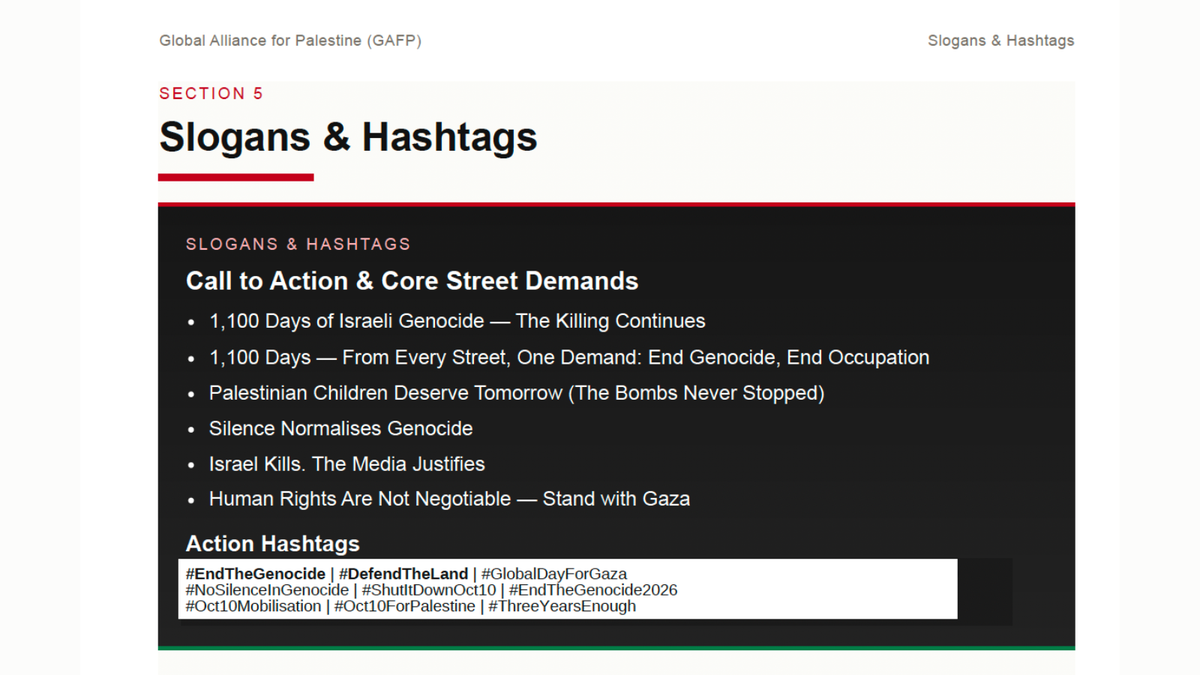
In a «Concept Paper» for the «Global Alliance for Palestine,» organizers share guidelines for «Slogans & Hashtags» that carry explicit negative messages about Israel. (Global Alliance for Palestine)
Among its recommended slogans is the blunt declaration: «Israel Kills. The Media Justifies.»
Another declares, «1,100 Days of Israeli Genocide — The Killing Continues.»
Yet another calls for action under the message, «1,100 Days — From Every Street, One Demand: End Genocide, End Occupation.»
Together, the slogans strategically combine accusations of «genocide» with demands for political action, while claiming the media «justifies» Israel’s conduct.
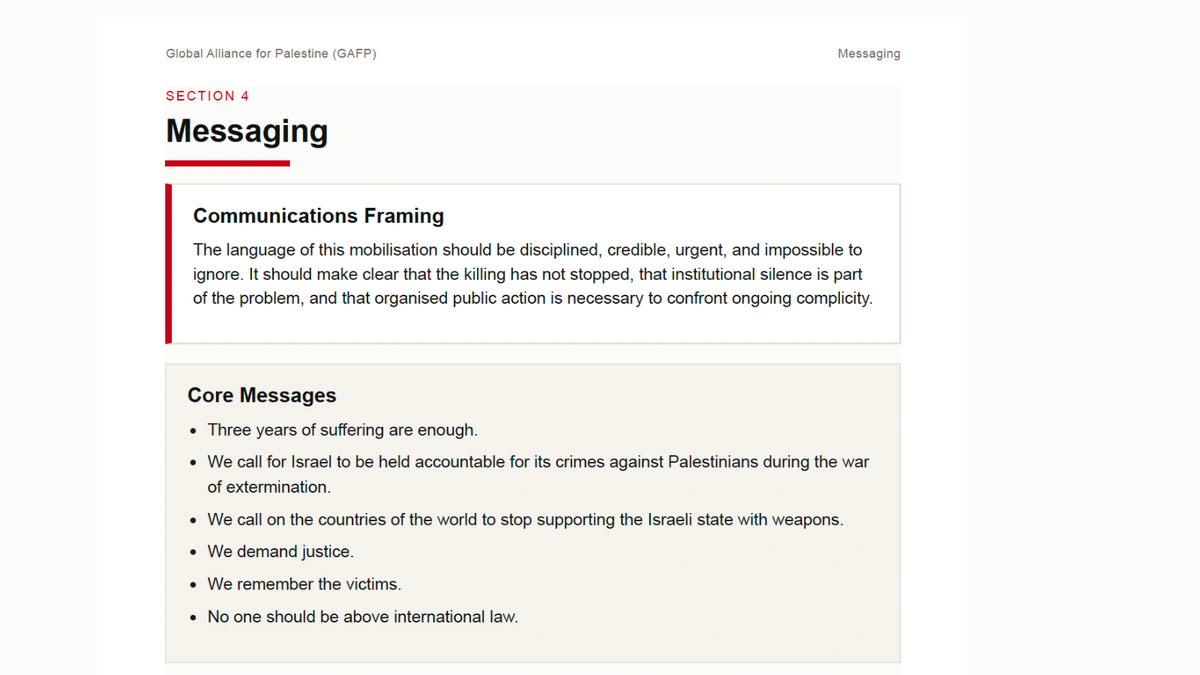
In a «Concept Paper» for the «Global Alliance for Palestine,» organizers share guidelines for «Communications Framing,» including «Core Messages» that intentionally describe Israel negatively. (Global Alliance for Palestine)
In its «Concept Paper,» the alliance describes Israel’s actions as a «war of extermination» and calls for countries to stop providing weapons to the Israeli state.
The same document instructs participating organizations in its «Communications Framing» to use language that is «disciplined, credible, urgent and impossible to ignore.»
It also directs organizers to portray «institutional silence» as part of the problem and public mobilization as necessary to confront what the alliance calls continuing complicity.
The objective isn’t simply to communicate a political position, but to encourage audiences to emotionally identify with a movement and participate in its activities.
The campaign presents its allegations of «genocide» and other violations of international law as established claims.
On Friday, South African human rights lawyer Navi Pillay received the 2026 Nobel Peace Prize for her work, which included arguing that Israel has committed a «genocide» against Palestinians. Israel disputes the «genocide» accusation.
ANTI-ISRAEL GROUPS RALLY ACROSS US ON OCTOBER 7 ANNIVERSARY, CHANTING ‘LONG LIVE THE INTIFADA’
The organizing documents go beyond encouraging supporters to attend demonstrations.
Instead, organizers describe a campaign intended to «interrupt business-as-usual» and organize «high-visibility rallies, marches, picket lines, sit-ins and peaceful blockades» at «civic sites, government offices, financial hubs and corporate locations» that its organizers have «identified as complicit in sustaining or normalising Israeli violence.»
They also recommend synchronized «workplace, campus and creative interruptions,» including «silent walkouts,» banner drops, nighttime projections, street theater, «die-ins» and «other highly visible public actions that interrupt normal routines and make the political demand impossible to ignore.»
A detailed logistical plan urges organizations to «allocate funds,» arrange transportation and establish «legal, stewarding, and participant support.»
ISRAELI PM NETANYAHU ARGUES PUBLIC OPINION SHIFT ON ISRAEL ‘CORRELATES ALMOST 100%’ TO SOCIAL MEDIA
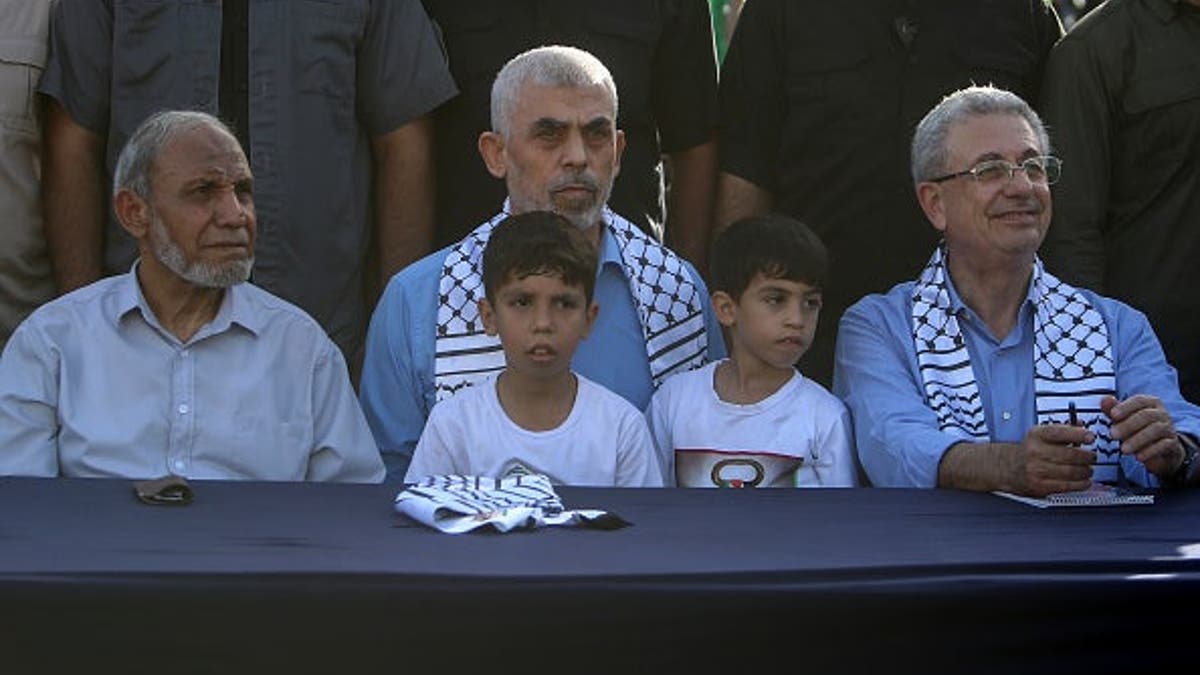
Yahya Sinwar (C), Hamas leader in Gaza, Mahmoud al-Zahar (R), senior Hamas leader, and Mustafa Barghouti (L), Secretary General of the National Initiative and supporters of the Palestinian Hamas movement gather during a rally in solidarity with al-Aqsa mosque on Oct. 1, 2022 in Gaza City, Gaza. The Al-Aqsa mosque has been a major flashpoint for Israeli-Palestinian violence for decades. Protests are being held over recent Israeli settler intrusions at the Al-Aqsa mosque. (Mohammed Dahman/Getty Image)
The organizing documents go beyond encouraging supporters to attend demonstrations.
The campaign’s organizational structure brings together prominent political figures with longstanding backgrounds in international politics and anti-Israel activism in Europe, the Middle East, Africa and Asia.
A press release for the protests identifies seven members of the international steering committee, including: former British Labour Party leader Jeremy Corbyn, who joined a coalition supporting the Communist Party of Cuba; pro-communist former Greek finance minister Yanis Varoufakis; former Sinn Féin leader Gerry Adams; Palestinian political leader Mustafa Barghouti; former South African government minister Ronnie Kasrils; Indian activist Varsha Gandikota-Nellutla; and Italian politician Angelo Bonelli.
Anas Altikriti serves as secretary-general.
Jessica Breakey, the campaign’s public relations officer, didn’t respond to a request for comment.
Beyond the streets, the alliance’s strategy documents lay out a plan to convert the demonstrations’ visibility into «sustained political pressure» on lawmakers and government institutions.
In a separate advocacy document, organizers urge participating groups to mobilize protesters to write lawmakers, submit coordinated institutional letters and arrange meetings with elected representatives.
The campaign calls for «immediate, total arms embargoes» and «comprehensive state sanctions» against Israel for alleged violations of international law.
It also urges governments to suspend preferential trade agreements and institutional partnerships associated with Israeli policies.
The alliance demands an end to what it calls Israel’s «genocide and occupation,» without specifying whether its reference to occupation encompasses Gaza, the West Bank or the entire State of Israel. The distinction takes on particular significance amid chants of «from the river to the sea» at anti-Israel demonstrations.
Organizers encourage participating groups to use «targeted, template-driven letters» and «digital briefing toolkits» to support «localised political campaigning,» adapting them to their national political systems.
The documents provide direct instructions that participating organizations issue local press releases, distribute «ready-made social-media toolkits,» share «graphics across digital channels» and hold briefing sessions to «ensure clear, aligned messaging ahead of the weekend.»
fox news investigates











INTERNACIONAL
Fallas en los sistemas de Estados Unidos: cuando las actualizaciones tecnológicas salen mal

Los aviones aterrizaron. La actividad en las oficinas se paralizó por completo.
Los últimos días nos han servido como un claro recordatorio de nuestra profunda, y en gran medida irreflexiva, dependencia de la tecnología. Es poderosa, omnipresente y, sin embargo, a veces puede resultar alarmantemente frágil.
Tanto la tecnología antigua como la nueva fueron las culpables. A partir del jueves, el software de correo electrónico, ofimática y reuniones de Microsoft –que opera a través de Internet– dejó de funcionar para millones de usuarios en todo el mundo. Dichos servicios en la nube se restablecieron el sábado.
El viernes, la Administración Federal de Aviación ordenó dejar en tierra todos los vuelos después de que fallara parte de su antiguo equipo de procesamiento de datos y generara posibles riesgos de seguridad. La orden se levantó el viernes por la noche, pero cientos de miles de pasajeros quedaron varados durante el fin de semana.
Resulta una ironía reveladora que ambas fallas las causaran intentos de “actualización” que salieron mal: nuevos cables en el caso de la FAA y un aumento previsto en la capacidad de cómputo en el de Microsoft.
data-cc-nyt
INTERNACIONAL
State Department presses Egypt to respect religious freedom as Christian convert faces possible execution
NEWYou can now listen to Fox News articles!
The State Department has intensified its efforts to compel the majority Muslim state of Egypt to honor the religious liberty protections for an Egyptian who converted to Christianity and is facing either the death penalty or a lengthy prison term.
The prosecution of Said Mansour Rezk Abdelrazek has catapulted his case and has attracted publicity within the U.S., Britain and across the global Christian community. Egypt receives $1.3 billion in annual funding from the U.S.
In July, Fox News Digital reported on Abdelrazek’s trial for his embrace of Christianity in 2016.
TRUMP DOJ EXPANDS RELIGIOUS LIBERTY PROTECTIONS AFTER MAJOR SUPREME COURT RULINGS
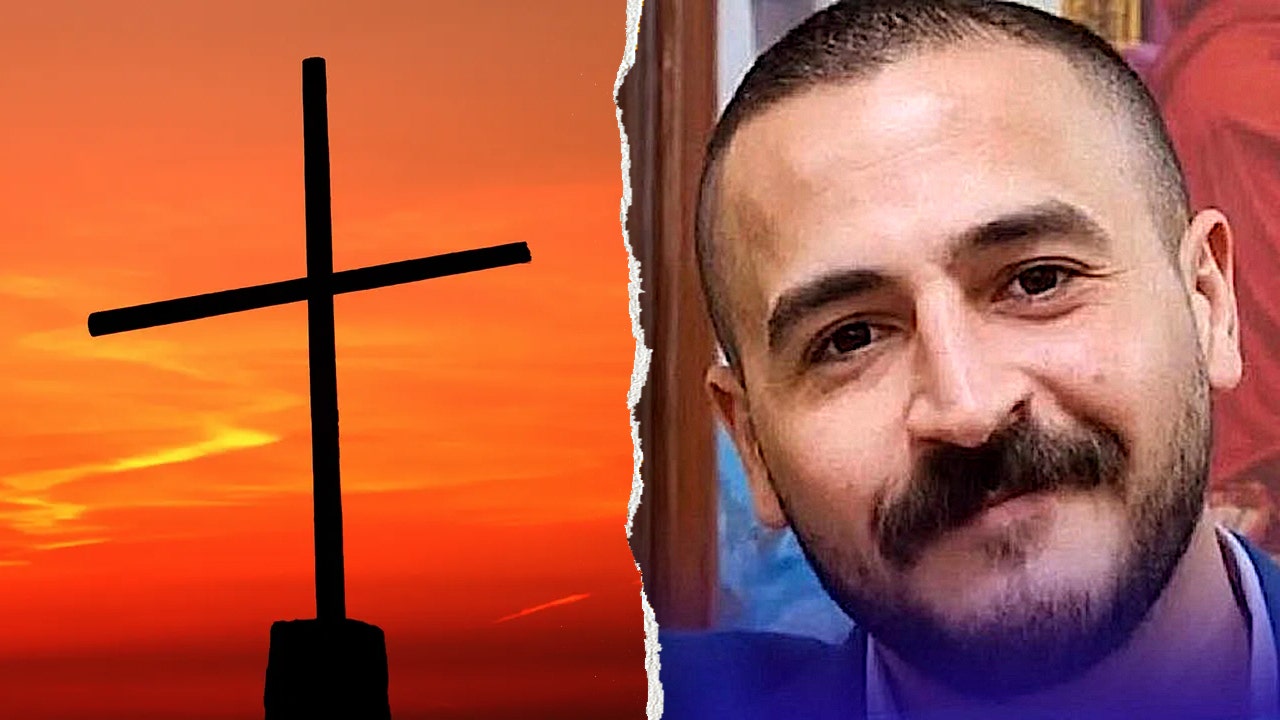
Said Mansour Rezk Abdelrazek could face a death sentence or some twenty years in jail. (Fox News)
A State Department spokesperson told Fox News Digital that, «We are monitoring his trial closely. Religious freedom is a fundamental human value and we encourage the Egyptian government to protect the religious freedom rights of all its citizens.»
The situation for Abdelrazek has become dire, according to his attorney and human rights advocates for Coptic Christians in Egypt. He faces execution or a 25-year prison sentence for his conversion to Christianity, according to the office of his lawyer, Said Fayez.
Fayez’s office said that in early November the «Public Prosecution presented its closing arguments and requested that the maximum penalty prescribed by law be imposed upon him.»
PAKISTAN’S TOP COURT UPHOLDS CHRISTIAN MAN’S DEATH SENTENCE FOR BLASPHEMY
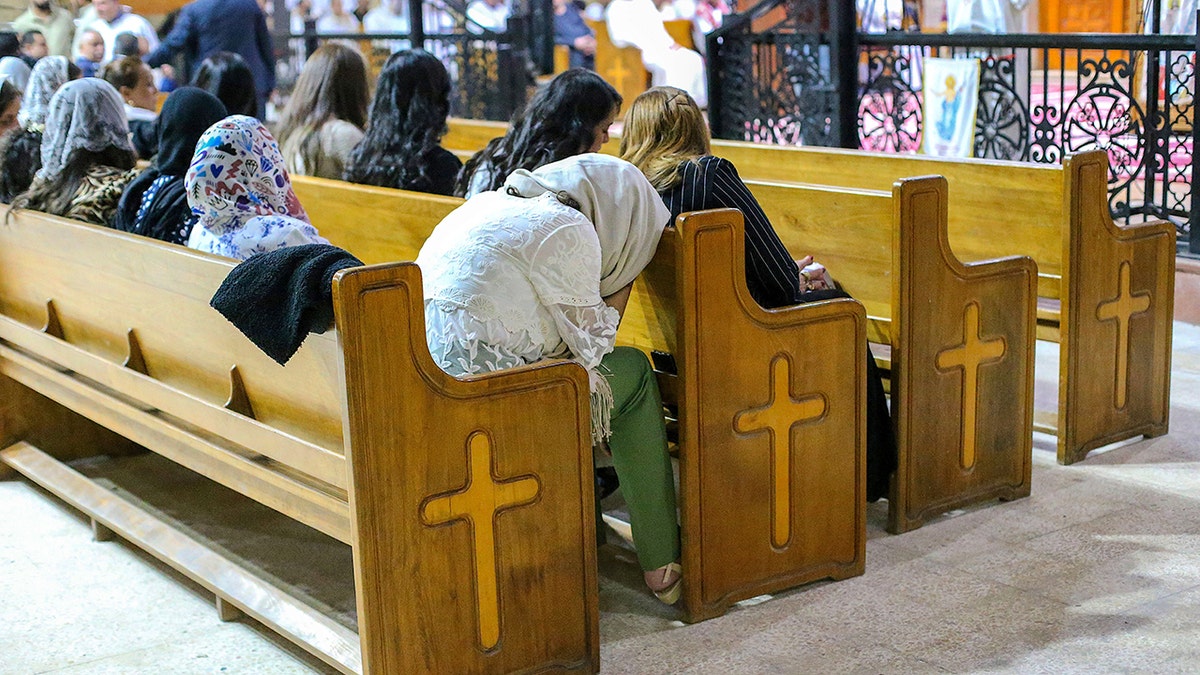
File picture showing Egyptian Coptic Christians attending the Resurrection Mass at the Monastery of Saint Simon Al-Kharaz during Holy Saturday services on April 19, 2025 in Cairo, Egypt. (Ahmad Hasaballah/Getty Images)
Fox News Digital reached out multiple times to Egypt’s Embassy in Washington D.C. and its Foreign Ministry for a comment. According to Amnesty International, in «July 2025, security officers arrested Egyptian national and Christian convert Said Abdelrazek from his home in Cairo. After nine months of arbitrary pretrial detention, Said Abdelrazek was referred to trial before the Terrorism Circuit of the First Criminal Court in Badr on charges stemming from his conversion and religious beliefs.»
Coptic Solidarity reported he faces charges that include contempt for Islam, and inciting unrest and spreading false information.
Abdelrazek’s fiancée Sophia, an Australian-Egyptian citizen, has been energetically campaigning to secure his freedom. She told Fox News Digital that she is «pleading for them to release him.» She declined to use her last name because of «some extreme threats» against her.
Lindsay Rodriguez, a spokeswoman for Coptic Solidarity, told Fox News Digital that «Coptic Solidarity is deeply concerned that Egyptian prosecutors are seeking the maximum penalty against Said Abdelrazek, a Christian convert whose case has become an important test of religious freedom and judicial impartiality in Egypt.»
She continued that he «has been detained since July 2025 and is being prosecuted before a terrorism court, primarily on an allegation of joining a banned terrorist organization, as well as charges of contempt for Islam, inciting unrest and spreading false information. These remain prosecution allegations, not findings of guilt. His defense will present its closing arguments on Dec. 8. Reported religious remarks attributed to the judge during the Nov. 3 hearing further heighten concerns about whether a Christian convert can receive a genuinely impartial hearing.»
His supporters say the prosecution has yet to name the terrorist organization in question while noting there is no known terrorist group associated with Christians listed in Egypt.

This picture taken on Nov. 1, 2022 shows a view of the United Kingdom embassy headquarters (L) and the United States embassy (R background) headquarters in the Garden City district of Egypt’s capital Cairo. (Amir Makar / AFP via Getty Images.)
Rodriguez added that «Peaceful religious conversion and expression must not be treated as terrorism or national-security offenses. The United States, European Union and Australia should use the Dec. 8 hearing as a clear test of Egypt’s willingness to uphold basic religious-freedom and fair-trial standards.»
Rodriguez said, «The U.S. Embassy in Cairo, EU Delegation, and Member State embassies should seek access to monitor the hearing and raise Said’s case directly with Egyptian authorities. Members of Congress and the European Parliament should publicly demonstrate that they are following the case. Australia also has a particular responsibility: Said’s fiancée is an Australian citizen, and DFAT [ Department of Foreign Affairs and Trade] should press his case while Home Affairs ensures a viable humanitarian pathway for reunification upon his release.»
The Egyptian Christian community makes up an estimated 10% of the nation’s 120 million people.
state department, faith, persecutions, middle east, christianity religion
INTERNACIONAL
¿Problemas para concentrarse? Un estudio encontró una pista relacionada con la serotonina

Una investigación con ratones aporta una precisión a las preguntas sobre concentración y serotonina. Cambios breves en la actividad de este neurotransmisor modificaron la intensidad de la atención visual en ratones sin alterar el lugar hacia el que se dirigía.
El resultado describe un mecanismo cerebral observado en condiciones de laboratorio, no una forma de mejorar la concentración en personas.
La atención comprende, al menos, dos procesos distintos. Uno determina el foco, es decir, el lugar o la característica visual que el cerebro prioriza. El otro define cuántos recursos destina a esa señal frente a otros estímulos que intentan captar la atención.
Una investigación de la Universidad McGill, publicada en 2026 en la revista científica Nature Communications, analizó qué ocurre con esos dos componentes cuando varía la señal de serotonina en el cerebro de ratones.

El experimento diferenció la fuerza de la atención y el lugar donde se concentra
La investigación fue codirigida por Arjun Krishnaswamy y Erik P. Cook, profesores asociados del Departamento de Fisiología de la Universidad McGill. Jonas Lehnert fue el primer autor del estudio y Kuwook Cha participó como coautor.
El equipo entrenó a ratones para detectar un patrón de tres barras verticales que aparecía entre imágenes con ruido visual en una de dos pantallas.
Antes de cada prueba, una señal indicaba en cuál de las pantallas aparecería el patrón. Esto permitió medir si los animales daban prioridad a esa ubicación y con qué intensidad lo hacían.

Según el índice de atención calculado por los autores, los ratones ponderaban alrededor de un 60 % más la información visual de la pantalla anticipada que la de la otra pantalla.
Para examinar la relación entre ese comportamiento y la serotonina, el equipo registró la actividad de neuronas serotoninérgicas, que son células nerviosas que producen o liberan esa sustancia.
Las mediciones se hicieron en el núcleo dorsal del rafe, una región cerebral desde la que estas neuronas se conectan con distintas áreas de la corteza, y en la corteza visual primaria, que interviene en el procesamiento inicial de lo que se ve.
La comparación mostró que, cuando la actividad de estas neuronas era menor poco antes de que apareciera el patrón, los animales distinguían mejor las señales visuales débiles.
El cambio no modificaba el lugar donde concentraban la atención, sino la prioridad que daban a la información que aparecía allí.

La intervención sobre las neuronas modificó el desempeño de los animales
La investigación no se limitó a observar la relación entre las señales cerebrales y el rendimiento. Los autores recurrieron a la optogenética, una técnica que utiliza luz para activar o inhibir grupos específicos de células nerviosas.
Así evaluaron qué ocurría al modificar directamente la actividad de las neuronas que liberan serotonina en el núcleo dorsal del rafe. Cuando el equipo activó esas neuronas, los ratones tuvieron más dificultad para detectar las barras entre el ruido y prestaron menos atención al lugar anticipado.
Cuando las inhibió durante un breve período, ocurrió lo contrario: los animales identificaron mejor el patrón y dieron mayor prioridad al estímulo previsto.
Según los autores en Nature Communications, estos cambios no alteraron el tiempo de respuesta, la tendencia de los animales a responder de determinada manera ni la frecuencia general de los lamidos empleados para registrar sus decisiones.
Esa observación respalda la idea de que el efecto se vinculó con la intensidad de la atención visual y no con cambios generales de motivación, impulsividad o estado de alerta.

El mismo resultado apareció al medir la liberación de serotonina en la corteza visual primaria. En las pruebas con menor señal de esa sustancia antes de que apareciera el estímulo, los ratones lograron más aciertos y mostraron un nivel de atención cerca de un 40 % mayor.
Esa medida indica cuánto predominaba la información procedente del lugar previsto sobre la de la otra pantalla.
El estudio no permite trasladar el resultado a la concentración humana
El resultado no demuestra que reducir la serotonina mejore la concentración de las personas ni respalda el uso de medicamentos, suplementos o hábitos con ese propósito.
El experimento se realizó con ratones, en una tarea visual concreta, dentro de un entorno controlado y con intervenciones directas sobre circuitos cerebrales.
El estudio menciona investigaciones previas sobre serotonina y atención en seres humanos. Sin embargo, el trabajo de la Universidad McGill no incluyó personas ni evaluó tratamientos o intervenciones de bienestar.

Por eso, sus resultados ayudan a entender el funcionamiento de un circuito cerebral en ratones, pero no constituyen una recomendación práctica.
Los autores propusieron una posible explicación para el mecanismo observado. Según esa hipótesis, la serotonina podría intervenir en la forma en que la corteza cerebral limita la competencia entre distintas señales visuales.
Con una menor señal de serotonina, el estímulo indicado podría imponerse con más fuerza frente a la información que distrae. Es una explicación teórica que necesita más estudios.
La investigación deja abierta otra pregunta: qué otros sistemas cerebrales intervienen en la intensidad de la atención.
El equipo mencionó a la noradrenalina y la acetilcolina, dos sustancias que participan en la comunicación entre neuronas, como posibles factores para futuros experimentos. Por ahora, el dato comprobado es acotado: en ratones, cambios rápidos en la serotonina influyeron en cuánta atención recibía una señal visual, mientras el foco se mantuvo estable.
aula,mariposa,estudiante,pupitre,ilustración

Sofía Jujuy repasó su historia de amor y contó más detalles de su embarazo: “Pasó todo muy rápido”

El FMI ubicó a la Argentina entre los 8 países con mayor inflación proyectada para 2026

Contundente crítica contra Xavi Hernández: ‘Es el responsable de una humillación sin precedentes en la selección neerlandesa’

Inside Deutsche Bank: una filtración de 15 millones de archivos secretos y sacude a un gigante financiero mundial

El papa León XIV reveló qué le pidió a Javier Milei en su encuentro: todos los detalles de la charla – Nexofin

Cuánto vale tu auto usado: todos los precios actualizados de noviembre, modelo por modelo

La inflación de octubre: el dato que sorprendió a casi todos y la distancia que persiste con los parámetros internacionales

U2 vuelve con 12 nuevas canciones y una pregunta incómoda sobre si el rock todavía puede decir algo nuevo

Reforma laboral: el Gobierno asegura que el incentivo a la formalización creó 82.000 empleos en blanco en cuatro meses

Kicillof retoma su agenda rumbo a 2027 tras la visita del Papa: recorridas, Presupuesto y reelecciones indefinidas

 ECONOMIA2 días ago
La inflación de octubre: el dato que sorprendió a casi todos y la distancia que persiste con los parámetros internacionales
- INTERNACIONAL2 días ago
U2 vuelve con 12 nuevas canciones y una pregunta incómoda sobre si el rock todavía puede decir algo nuevo
- POLITICA3 días ago
El plan electoral de Kicillof tras la visita del Papa, la apuesta presidencial de Massa y la propuesta de Bullrich a Milei