INTERNACIONAL
Iran secures UN role with backing from UK, France, Canada, Australia as US stands alone


NEWYou can now listen to Fox News articles!
Western democracies, including the UK, France, Canada and Australia, are facing backlash after allowing Iran and other authoritarian regimes to secure seats on influential United Nations (U.N.) bodies, with the United States standing alone in opposition.
The controversy stems from decisions by the United Nations Economic and Social Council (ECOSOC), a 54-member body that plays a central role in shaping U.N. policy and staffing key committees.
Critics warn the outcome could allow governments accused of human rights abuses to influence global policy and control which civil society groups are granted access to the United Nations.
TERROR SPONSOR IRAN GETS UN LEADERSHIP OVERSEEING CHARTER PRINCIPLES
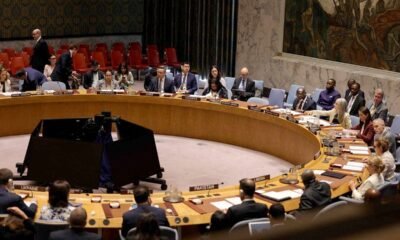
Members of the United Nations Security Council vote on a resolution to unblock the Strait of Hormuz during a meeting on Iran and the Middle East at U.N. headquarters in New York on April 7, 2026. (Timothy A. Clary/AFP via Getty Images)
ECOSOC nominated the Islamic Republic of Iran to the U.N.’s Committee for Program and Coordination Wednesday, a body that helps shape policy on human rights, women’s rights, disarmament and counterterrorism.
The nomination is widely expected to be finalized, as the United Nations General Assembly typically approves such recommendations without a vote.
At the same session, ECOSOC elected China, Cuba, Nicaragua, Saudi Arabia and Sudan to the Committee on Non-Governmental Organizations, which oversees accreditation and access for thousands of NGOs operating within the U.N. system.
The United States was the only member state to formally break from consensus.
MIKE WALTZ TURNS TABLES ON IRANIAN ENVOY AT HEATED UN MEETING

U.S. Ambassador to the United Nations Mike Waltz speaks during a United Nations Security Council meeting, after the U.S. and Israel launched strikes on Iran, at U.N. headquarters in New York City, Feb. 28, 2026. (Heather Khalifa/Reuters)
In remarks delivered April 8, U.S. Representative to ECOSOC Ambassador Dan Negrea said the U.S. «disassociates from consensus» on both decisions, calling several of the countries involved unfit for such roles.
«The regime threatens its neighbors and has, for decades, infringed on the Iranian people’s ability to exercise their basic human rights,» Negrea said, adding that «we believe Iran is unfit to serve» on the committee.
The decision drew sharp criticism from UN Watch, a Geneva-based watchdog group.
Hillel Neuer told Fox News Digital: «By their cynical actions at the UN, major Western states have betrayed their own human rights principles, severely undermining the rules-based international order that they claim to support.»
«We note that the EU states clearly had another option. They did take action in recent years to stop Russia from getting elected to similar bodies, and so we deeply regret that they failed to do the same now to stop the election of serial violators such as Iran, China, China, Cuba, Nicaragua, Saudi Arabia and Sudan.»
«We salute the United States for their moral clarity and leadership in objecting to the election of the Islamic Republic of Iran and other brutal regimes.»
Neuer warned the composition of the NGO committee could allow authoritarian governments to influence which organizations are accredited, potentially sidelining independent human rights groups.
«This means dictatorships will have a majority on the committee in order to deny United Nations accreditation to independent organizations that call out their human rights violations, and to accredit more fake front groups created by the regimes,» he said.
Israel’s mission to the United Nations also pointed to political tensions surrounding the vote, saying Iran attempted to challenge Israel’s candidacy during the same ECOSOC session.
AMBASSADOR MIKE WALTZ LAYS OUT ‘AMERICA FIRST’ VISION FOR US LEADERSHIP AT THE UN
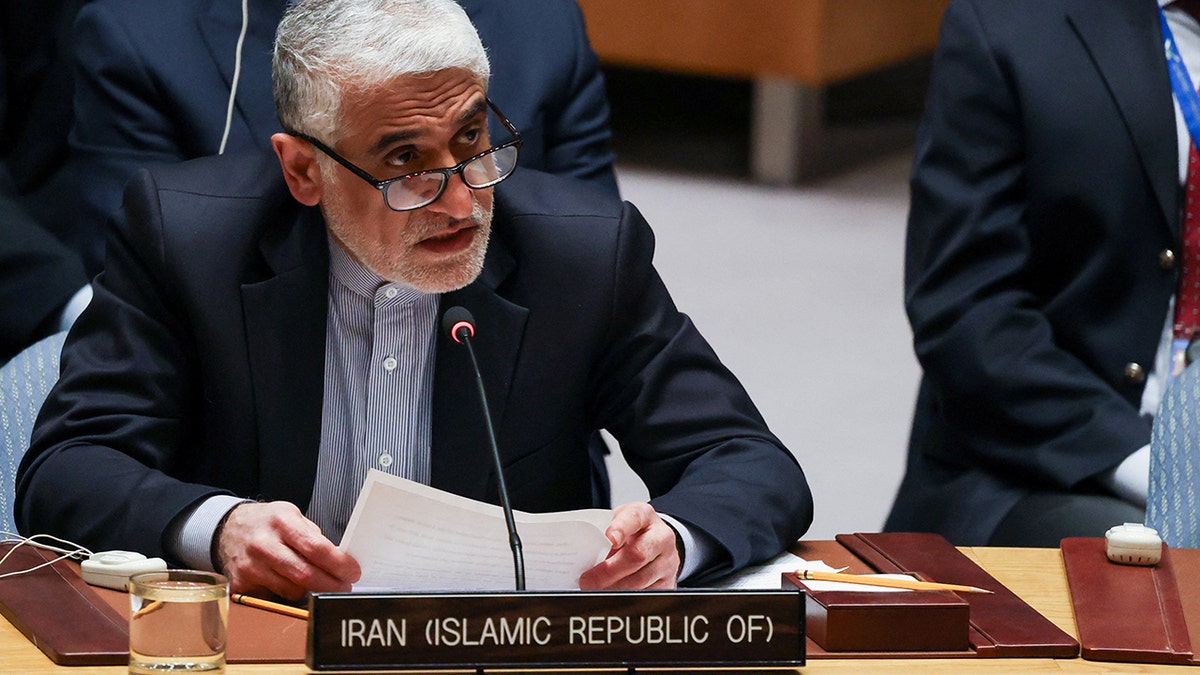
Iran’s Ambassador to the United Nations, Amir-Saeid Iravani attends a United Nations Security Council meeting, after the U.S. and Israel launched strikes on Iran, at U.N. headquarters in New York City, U.S. Feb. 28, 2026. (Heather Khalifa/Reuters)
Israel was elected to several U.N. bodies, according to the Permanent Mission of Israel to the United Nations, including the Commission on the Status of Women and the NGO Committee, despite opposition.
«Iran also tried to turn the elections at the UN into an arena for incitement against Israel and failed,» Israeli Ambassador Danny Danon said. «Those who oppress women and trample on human rights in their own country will not teach us what women’s rights are.»
Ahead of the vote, around 70 civil society groups warned that countries with poor human rights records could secure seats on key oversight bodies, but the elections proceeded without a formal vote, a process known as approval «by acclamation.»
Critics argue that this procedure allows controversial candidates to secure influential roles with limited transparency or accountability.
The developments are likely to intensify scrutiny over how U.N. bodies are staffed and whether political considerations are outweighing human rights concerns.
CLICK HERE TO DOWNLOAD THE FOX NEWS APP
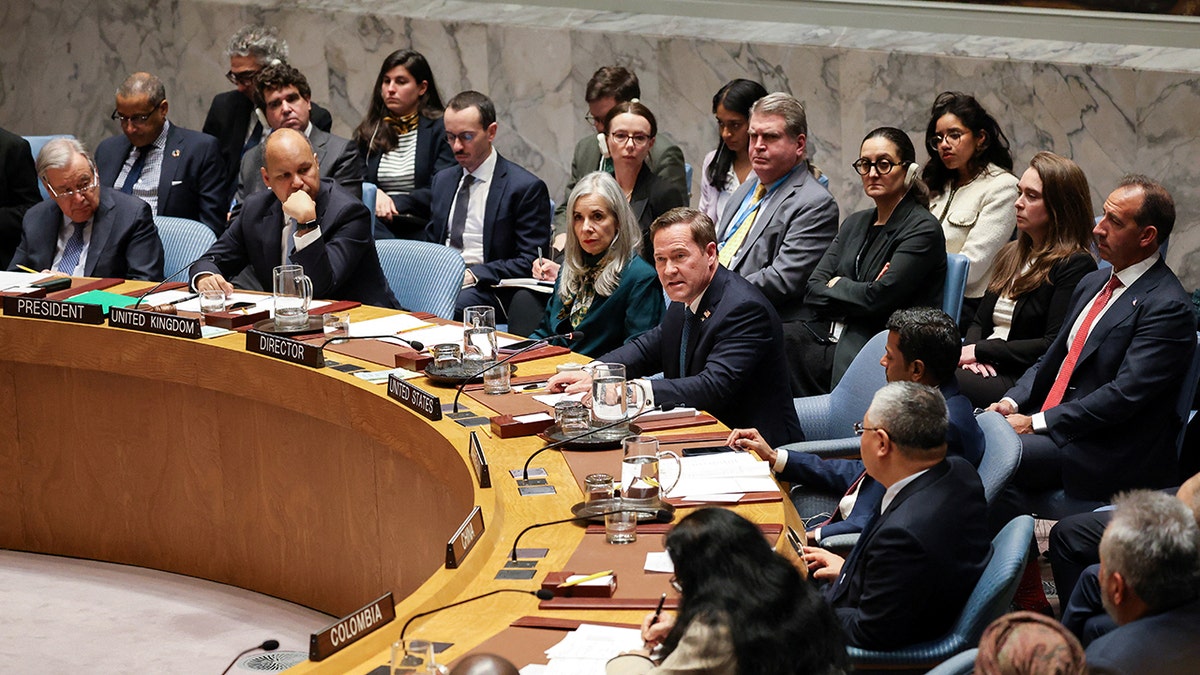
U.S. Ambassador to the United Nations Mike Waltz speaks during a United Nations Security Council meeting, after the U.S. and Israel launched strikes on Iran, at U.N. headquarters in New York City, U.S. Feb. 28, 2026. (Heather Khalifa/Reuters)
Fox News Digital reached out to the UK, France, Canada, Australia and U.S. mission for comment but did not receive responses in time for publication.
The Iranian mission to the United Nations declined to comment.
united nations, france, war with iran, human rights united nations, iran, united kingdom








INTERNACIONAL
Creadores de contenido arriesgan su seguridad y libertad al ingresar a la casa donde cayó alias “Diablo”, advierten autoridades costarricenses
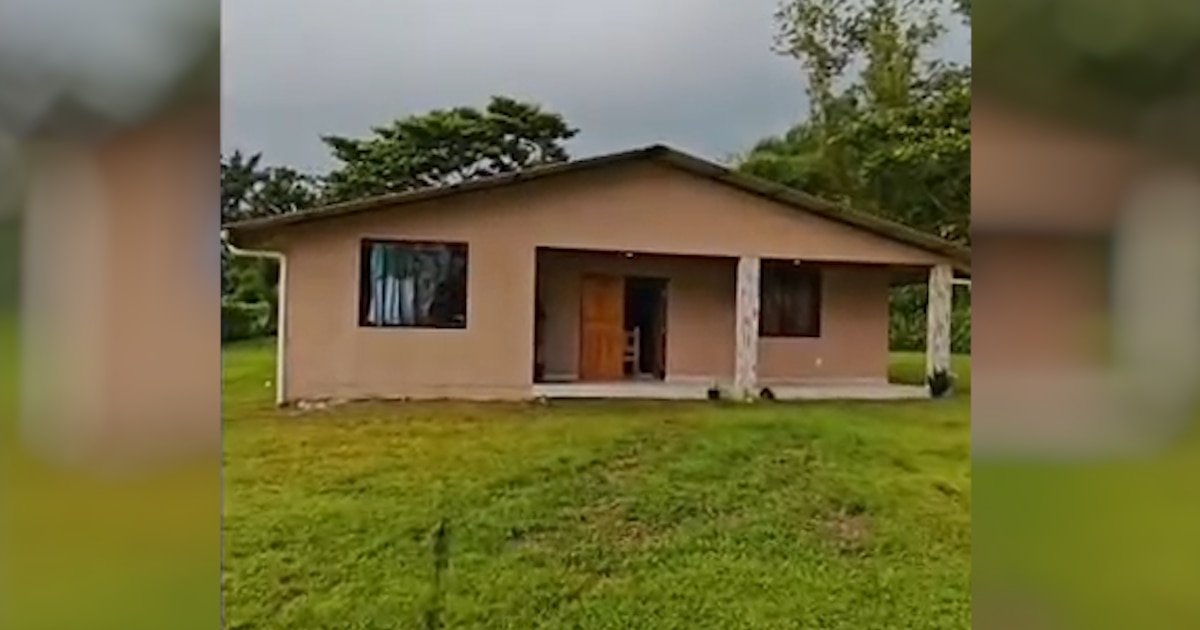
Las visitas de creadores de contenido a la vivienda donde se realizó la Operación Némesis, en la que fue detenido Alejandro Arias Monge, alias “Diablo”, han encendido alertas entre las autoridades de Costa Rica.
El Organismo de Investigación Judicial (OIJ) advirtió que quienes ingresan a la casa ubicada en San Bernardino de Sarapiquí, Heredia, y difunden videos en redes sociales, pueden enfrentarse a consecuencias legales y riesgos contra su integridad.
La advertencia la realizó el director interino del OIJ, Michael Soto, tras la circulación en Internet de imágenes del interior del inmueble, escenario de un violento enfrentamiento armado.
Según informó Teletica, los creadores de contenido han publicado grabaciones donde muestran los daños causados por los disparos y las pertenencias que aún se encuentran dentro de la propiedad.
Las imágenes evidencian los rastros de la operación que llevó a la captura de Arias Monge y de Jonathan Pérez Méndez, alias “Tan”. El operativo, ejecutado el viernes 24 de julio por el Servicio Especial de Respuesta Táctica (SERT) y agentes contra el crimen organizado, culminó con la muerte de una persona identificada como “Coco Guácimo” y dejó agentes heridos.
Este video fue elaborado por un creador de contenido de Costa Rica, identificado como Ricky Molina, quien muestra imágenes de la vivienda donde fue arrestado Alejandro Arias Monge, conocido como «Diablo», quien es acusado por varios delitos, entre ellos, narcotráfico; por lo que era considerado como el hombre más buscado en este país./ (TikTok de Ricky Molina)
La publicación de estos recorridos ha provocado la reacción del OIJ. Michael Soto calificó la acción como “irresponsable” y solicitó máxima prudencia a quienes buscan contenido viral en este tipo de escenarios.
“Irresponsable desde dos puntos de vista: estamos hablando de que ya no es una casa de interés policial, pero que tiene propietario y que podría acusarlo de violación de domicilio y, segundo, que esta estructura criminal es una de las más peligrosas que hay en el país y todavía hay personas de este grupo libres, están en procesos de investigación y que, tal vez, no les guste el video y puedan hacer algo contra esta persona”, declaró Soto, según Teletica.
El titular del OIJ subrayó que el inmueble ya fue inspeccionado por los agentes, quienes recolectaron todas las pruebas necesarias posterior al enfrentamiento a balazos. Tras las diligencias, la vivienda “ya no reviste interés policial”, pero permanece bajo la titularidad de un particular. Soto explicó que, de acuerdo con la investigación, la casa no pertenece ni a Arias Monge ni a los demás integrantes del grupo criminal.
“Ellos se movían constantemente de una casa a otra, cambiaban de casa cada semana, cierta cantidad de días, a veces 15 días,” afirmó Soto, citado por Teletica. Agregó que la propiedad fue alquilada por un tercero, quien aparentemente se dedica a gestionar viviendas para el grupo.

La incursión de creadores de contenido en este tipo de espacios puede derivar en denuncias por violación de domicilio, ya que el propietario podría presentar cargos aunque no tenga relación con los involucrados en la operación. Además, el riesgo personal se extiende al ámbito criminal, dado que existen miembros de la organización aún prófugos o bajo investigación.
“Debe tener mucha prudencia porque estamos hablando de algo muy serio y muy delicado, y por ganarse unos ‘likes’, puede poner en riesgo su libertad, desde el punto de vista legal, y su integridad, desde el punto de vista de la estructura criminal”, indicó Soto, según recogió Teletica.
El impacto de la Operación Némesis y la posterior viralización de imágenes del sitio han puesto en el centro del debate la responsabilidad de quienes generan contenido digital a costa de su seguridad y de las normas legales. El OIJ reiteró que las inspecciones policiales concluyeron y que cualquier acceso posterior al inmueble no cuenta con aval de la institución. Hasta el momento, no se ha reportado la presencia del propietario durante el operativo ni en las horas siguientes.
La vivienda, situada en una zona rural de Heredia, fue uno de los puntos clave del operativo dirigido a desarticular una de las estructuras criminales consideradas más peligrosas de Costa Rica. El OIJ recomendó a la población abstenerse de intentar ingresar o grabar material en lugares que han sido escenario de hechos violentos o investigaciones policiales, tanto por motivos legales como de seguridad personal.
NEWYou can now listen to Fox News articles!
As multiple international crises grip the world, from Iran to Russia’s war in Ukraine, Sudan quietly remains one of the largest humanitarian and displacement disasters in the world.
Since the outbreak of hostilities in 2023, over 14 million people have been displaced and nearly 34 million people are in desperate need of humanitarian support, accounting for 10% of global needs, according to the International Rescue Committee.
«The war in Sudan has caused the world’s largest humanitarian crisis and has escalated into a regional war involving all of its neighbors as well as numerous Middle Eastern powers,» Alan Boswell, Project Director for the Horn of Africa at International Crisis Group, told Fox News Digital.
«Despite this, world leaders continue to ignore the conflict, leaving it to subordinates. That approach continues to fail,» Boswell added.
COULD THIS AFRICAN NATION BECOME TRUMP’S NEXT TERROR TARGET AS JIHADISTS CLOSE IN ON POWER?
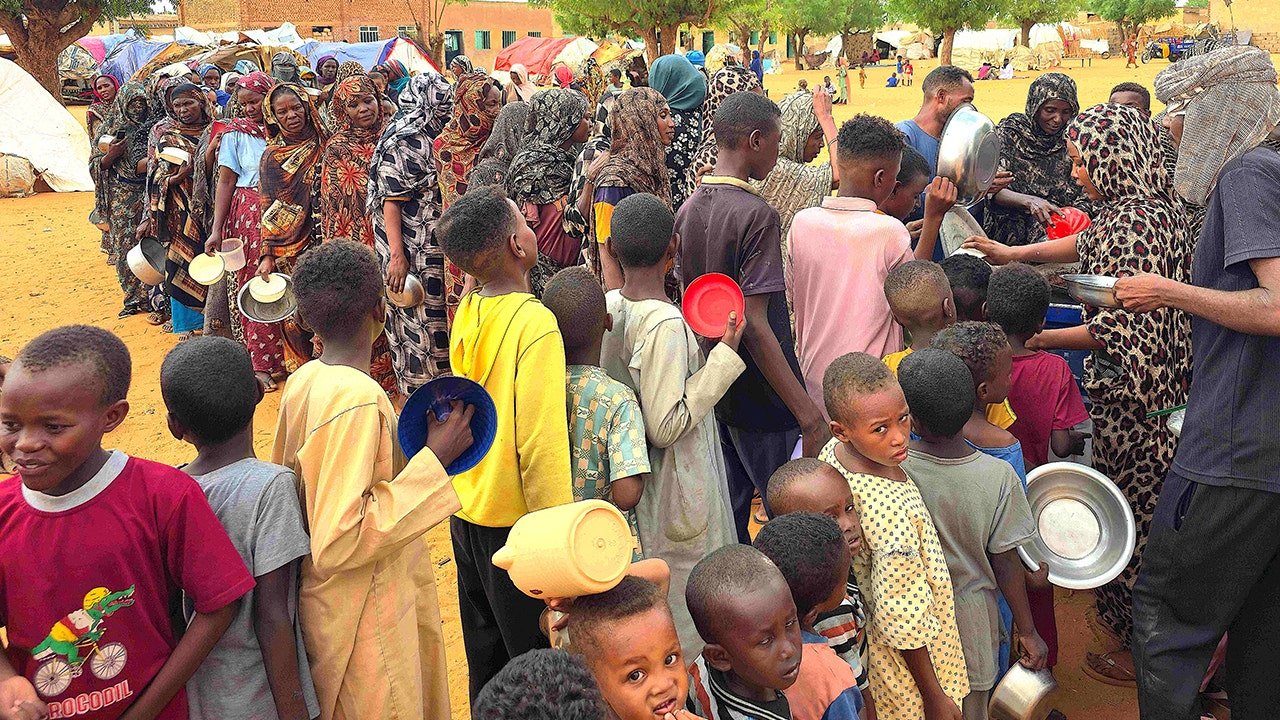
Women and children queue to receive free food being distributed in al-Mohayra camp for displaced people, near the city of El-Obeid in the southern Kordofan region, on June 29, 2026. (AFP via Getty Images)
The United Nations says that some 19.5 million people are experiencing acute hunger, and 4.5 million people have fled the country.
The U.S. also recently imposed an additional round of sanctions against the Sudanese Armed Forces for allegedly using chemical weapons in 2024 in violations of the Chemical Weapons Convention.
The Sudanese government denied the allegations.
The Trump administration has made significant efforts in trying to mediate between Russia and Ukraine, as well as bring Israel’s war against Gaza to an end. The administration is also trying to uphold a shaky ceasefire that was agreed with Iran to halt the war that began on February 28.
«For three years, we have warned that Sudan was on the brink of catastrophe, and those warnings have gone unanswered,» said International Rescue Committee Country Director Richard Data.
Sudan’s recent outbreak of civil war, following years of coups and credible accusations of ethnic cleansing and genocide, persists under the radar.
TRUMP ADMINISTRATION TOUTS MORE THAN $1B IN UN BUDGET CUTS AS REFORM PUSH GAINS MOMENTUM
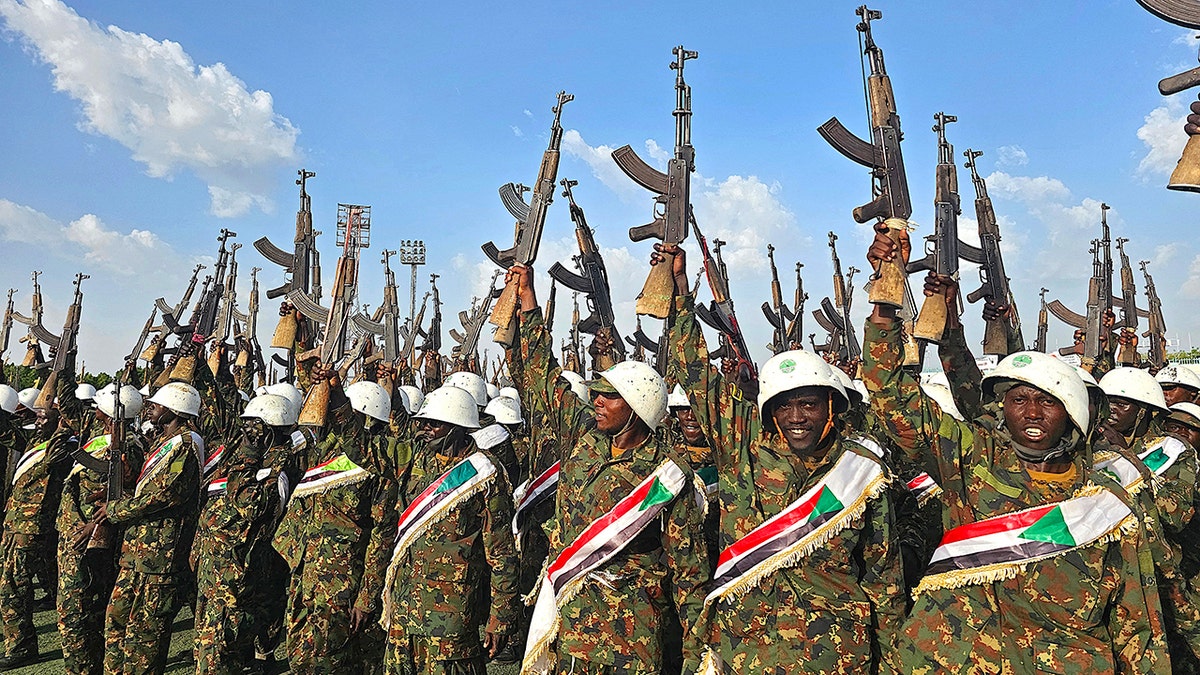
Members of Sudanese Armed Popular Resistance Force take part in a military parade for fresh graduates, in Al-Qadarif state, in eastern Sudan on May 20, 2026. (AFP via Getty Images)
The civil war broke out in April 2023 between the Sudanese Armed Forces led by Gen. Abdel Fattah al-Burhan and Gen. Mohamed Hamdan Dagalo, widely known as «Hemedti,» leader of the paramilitary Rapid Support Forces (RSF).
The two had been in an uneasy alliance ruling the country following the 2019 overthrow of Sudan’s longtime dictator, Omar al-Bashir, who had been in power since 1989. Together, the generals staged another coup in 2021, toppling the interim civilian government that had been in power after the fall of Bashir.
While both the Sudanese Armed Forces and RSF are accused of committing atrocities, recent reports have highlighted the brutality of the RSF.
A major focus of the deteriorating conditions has been in El-Obeid in North Kordofan state, where an escalating hunger crisis is plaguing over 100,000 displaced people in camps throughout the city.
«What we need to do is really now to plan for the scale-up beyond the 100,000 people that we have been supporting,» said World Food Programme Sudan Country Director, Abdallah Alwardat.
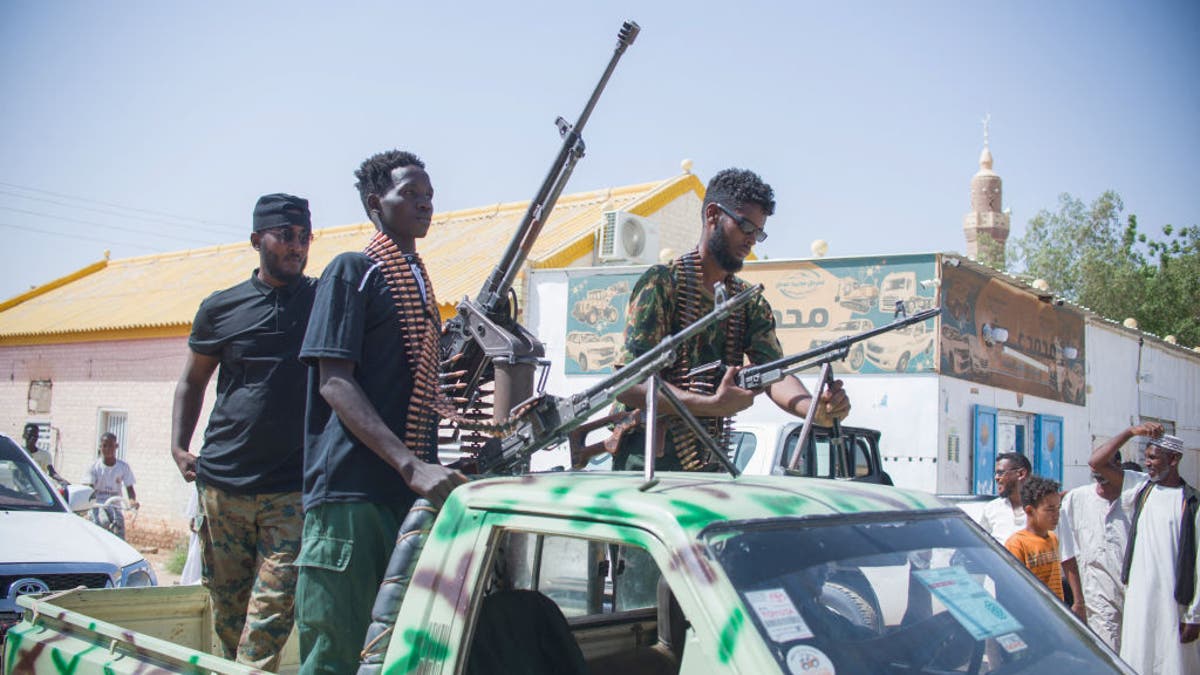
Members of the Sudanese army’s Special Mission Forces batallion in the Northern State hold a parade in Karima city on May 19, 2024. Sudan has been in the throes of conflict for over a year between the regular army led by de facto ruler Abdel Fattah al-Burhan and the RSF led by his former deputy Mohamed Hamdan Daglo. (AFP via Getty Images)
El Fasher in the Darfur region is another major flashpoint, where the RSF took control in October 2025 and killed more than 6,000 people in the initial siege of the city.
A recent July report from the United Nations High Commissioner for Human Rights revealed widespread acts of sexual violence against women and girls, some as young as 12, including reports of mass and gang rapes committed by the RSF.
The RSF is also accused of abduction, with survivors describing incidents of girls and women being beaten, having their hands tied behind their backs, and being driven away in a Land cruiser.
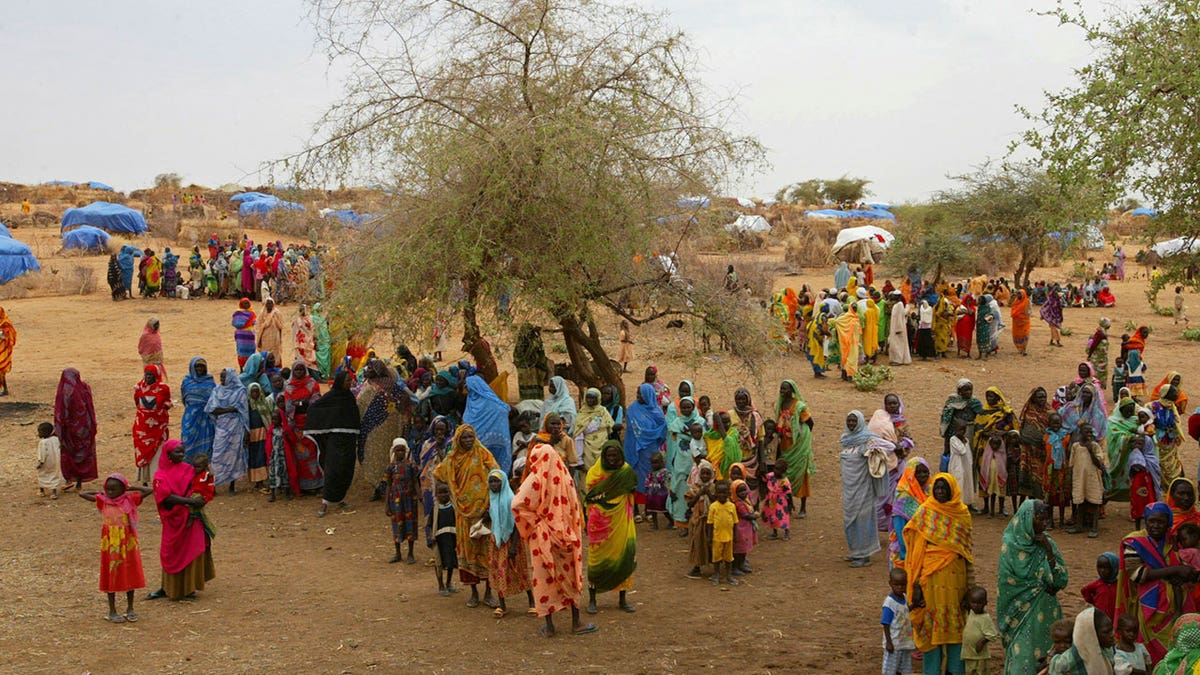
Sudanese displaced people gather at the Zam Zam refugee camp outside the town of El-Fashir in the Darfour region of Sudan, during a visit by U.N. officials, on July 1, 2004. The U.N. humanitarian aid and refugee agencies appealed Wednesday, Feb. 7, 2024, for $4.1 billion in international support for embattled civilians in Sudan amid signs that some may be dying of starvation after nearly a year of war there between the forces of rival generals. (AP Photo/Karel Prinsloo, File)
CLICK HERE TO DOWNLOAD THE FOX NEWS APP
The United Nations and other human rights groups have accused the RSF of perpetrating ethnically targeted attacks and concluded that at least three components of genocide have been overwhelmingly met, including deliberately inflicting conditions of life intended to destroy a group in whole or in part.
A U.N. report from September 2025 found that the Sudanese Armed Forces have also committed war crimes and attacked civilian populations and infrastructure. Both the Sudanese Armed Forces, and the RSF, targeted civilians with perceived affiliations to the enemy, with executions, torture and rape commonplace.
africa, refugees, wars, conflicts, terrorism
INTERNACIONAL
Rusia pide la captura de Pavel Durov, dueño de Telegram: ¿Enemigo o agente al servicio de Vladimir Putin?
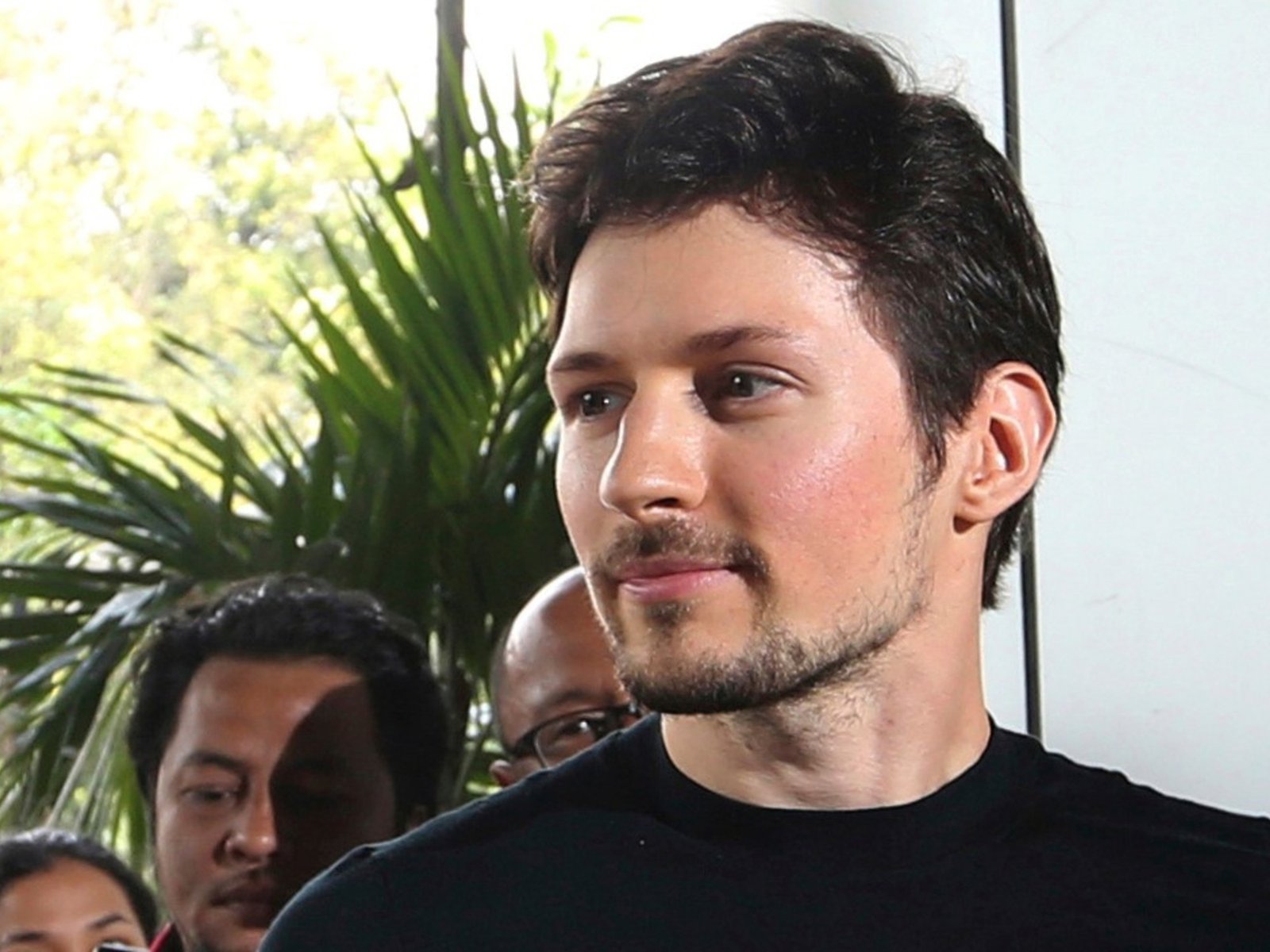
La vida política de Pavel Durov, fundador y propietario de Telegram, icono libertario, dio muchos tumbos en los últimos años. Cuando la Justicia francesa ordenó su detención y procesamiento en 2024, el caso se presentó como un debate sobre la libertad de expresión, la privacidad y la soberanía digital. En ese debate Durov era el libertario acosado por la censura y el control del Estado francés.
Rusia decidió este miércoles aumentar la presión sobre el servicio de mensajería Telegram, utilizado profusamente por jóvenes, empresarios y militares, al declarar en busca y captura a Dúrov, residente en el extranjero.
Pero el pasado de Durov tiene muchas más capas. Durante los últimos años hasta su procesamiento en Francia, Telegram fue derivando hasta convertirse en una herramienta al servicio de la estrategia europea del Kremlin, funcionando como correa de transmisión de cualquier partido político o grupúsculo que atacara a las democracias europeas y potenciara a las derechas más extremas.
La detención de Durov en Francia (fue procesado pero liberado en pocos días) produjo una alianza extraña. En su defensa salieron tanto opositores rusos, exiliados, enemigos de Putin, que lo veían como el icono libertario que había sido, hasta los propagandistas del Kremlin, en Europa y en Rusia, que venían su función actual como muy útil para sus intereses.
La propaganda rusa decía que Durov no era más que un descarriado, alguien que se había dejado engañar al creer que las democracias liberales occidentales eran mejores que el régimen ruso.
Para los libertarios, el Estado es el enemigo y Telegram una de sus últimas trincheras para defender la libertad frente a ese enemigo. Pero los hechos relacionados con Durov y Telegram muestran que ese cuento no es cierto.
Es cierto que Durov tuvo choques con las autoridades rusas hasta 2020. En 2018, por ejemplo, el Kremlin ordenó a sus telefónicas bloquear Telegram por negarse a entregar las claves que permitían desencriptar mensajes.
A partir de ahí algo empezó a cambiar. En 2020 esa prohibición se levantó sin causa aparente y la relación entre Durov y el Kremlin empezó a normalizarse. A partir de ahí Telegram fue el niño bueno del poder ruso. No sólo aceptó sus peticiones, sino que ese año empezó a colaborar activamente con la represión del Kremlin.
En 2021 Telegram bloqueó el bot de “voto inteligente” que había desarrollado el entorno de Alexei Navalny, el principal opositor que tuvo el presidente Vladimir Putin en la última década y que murió asesinado en una prisión rusa en febrero de 2024. Europa acusó a Putin de haber ordenado su asesinato.
Durov también cambió parte de su discurso en 2020. Desde ese año concentró sus críticas en Apple y Google, y dejó de hablar de la censura y la falta de democracia en Rusia. En una entrevista con el todavía muy trumpiano y a la vez propagandista ruso en Estados Unidos Tucker Carlson, insistió en esa línea. El Estado autoritario ruso ya no era su enemigo, sino las grandes plataformas estadounidenses.
A partir de la invasión rusa de Ucrania en febrero de 2022, mientras las grandes plataformas estadounidenses (Meta, Google) limitaban en lo posible la propaganda estatal rusa, Telegram mantuvo un sistema de moderación inútil y los agentes del Kremlin, en Rusia y fuera de Rusia, siguieron usando esa plataforma como correa de transmisión de su propaganda. La diplomacia europea considera que la plataforma tuvo usos militares a favor de Rusia y en contra de Ucrania. Además, Rusia ayudó a Telegram bloqueando otras redes en su territorio, como X.
El Durov que fue procesado en Francia aseguró que se trataba de “persecución política”, pero desde 2020 no es el libertario y rebelde antisistema que se vanagloria de ser, sino un actor importante de la estrategia de propaganda del Kremlin.
Además, desde entonces ayuda a la extrema derecha europea y ataca a los gobiernos que intentan poner orden en la ley de la selva que ha sido hasta hace poco la falta de regulación de la actividad de las plataformas.
Durov vuelve a los medios por una orden de detención rusa. Sólo falta saber si ha vuelto a cambiar y ahora se enfrenta al Kremlin.

Creadores de contenido arriesgan su seguridad y libertad al ingresar a la casa donde cayó alias “Diablo”, advierten autoridades costarricenses

El intendente de Valle Fértil dio detalles del momento en que el helicoptero se estrelló en San Juan: “Había neblina y el lugar no era accesible”

Si comprás en el súper con promociones, otros consumidores financian tu ahorro sin darse cuenta

Canales para ver el Instituto vs Platense por el Torneo Clausura

Lucía y Joaquín Galán celebraron los 30 años del Hogar Pimpinela: “El verdadero festejo será cuando no sea necesario”

El mensaje del gobernador de San Juan, Marcelo Orrego, tras la muerte de los siete tripulantes del helicóptero

Crisis entre Milei y Lula: la trama política, personal y geopolítica detrás del mayor choque diplomático entre Argentina y Brasil

Cuentapropismo emocional en lo profundo del conurbano

San Isidro: la ballena que quedó varada en un banco de arena murió pese al operativo de rescate

Cómo manejar en el hielo y la nieve: técnicas y precauciones para usar el auto en la montaña en vacaciones de invierno

 POLITICA2 días ago
Crisis entre Milei y Lula: la trama política, personal y geopolítica detrás del mayor choque diplomático entre Argentina y Brasil
- SOCIEDAD3 días ago
San Isidro: la ballena que quedó varada en un banco de arena murió pese al operativo de rescate
- ECONOMIA1 día ago
Cómo manejar en el hielo y la nieve: técnicas y precauciones para usar el auto en la montaña en vacaciones de invierno