
INTERNACIONAL
It never ends: GOP moves to fund border, Democrats blast Trump spending


NEWYou can now listen to Fox News articles!
This story never ends.
The government is still not fully funded for the rest of the fiscal year – meaning September 30.
Yes. The House and Senate approved a bipartisan bill funding most of the Department of Homeland Security in late April. It’s similar to what the Senate approved unilaterally in late March. But the House never took it up until just before a recent Congressional recess.
Now the GOP is trying to go around Democrats and pass a three-year bill to fund ICE and the Border Patrol. Democrats never secured reforms at ICE. So they aren’t willing to help out. That’s why Republicans are using a special process called budget reconciliation to bypass Democrats.
President Trump holds a design of a proposed presidential ballroom at the White House. (Aaron Schwartz/CNP/Bloomberg)
The only hitch is that it takes a while. The goal is to pass this bill by June 1.
House GOP pushes back on Senate’s ‘skinny’ plan to end record-breaking DHS shutdown
Republican Congressional leaders initially wanted to make this bill rather spare, just funding ICE and Border Patrol. But they expanded that measure to include $1 billion for President Trump’s ballroom security after the recent assassination attempt at the White House Correspondents’ Dinner.
So Democrats are launching a blitz about the ballroom.
RELATED: REPUBLICANS QUESTION TRUMP BALLROOM FUNDING IN DHS BILL
«Republicans say let them eat cake and demand American taxpayers build Trump a palace while they’re at it,» said Senate Minority Leader Chuck Schumer (D-N.Y.) «These ‘ballroom Republicans’ have a constituency of one: Donald Trump’s ego.»
«The president just plowed down the East Wing of the White House. And it sits there as a gaping hole waiting to be filled. It was going to be his billionaire buddies filling it. Now it’s the American taxpayers,» complained Senate Minority Whip Dick Durbin (D-Ill.)
Senate Republican leaders initially insisted that the latest funding bill only stick to funding Border Patrol and ICE.
«While my personal preference is to put as much as you possibly can in this reconciliation vehicle, there may only be an appetite for Border Patrol or ICE,» said Rep. Russell Fry (R-S.C.)
But the decision by GOP leaders to shove $1 billion into the bill opens the floor for other Republicans to stuff additional priorities into this budget reconciliation measure.
«I’d love to see the SAVE Act in some form or fashion,» said Rep. Pat Fallon (R-Texas) on Fox, referring to the bill which requires proof of citizenship to vote.
«There are a lot of good conservative wins that we can put forth for the American people,» said Rep. Greg Murphy (R-N.C.) on Fox Business.
Some pro-life Republicans are pushing an extension of a ban on money for Planned Parenthood. The prohibition expires later this year.
«It’s been a very thorny issue. It’s all under negotiation right now,» said President Trump.
Meantime, Republicans accuse Democrats of returning to their mantra to defund the police as they fight Border Patrol and ICE funding. Democrats remain opposed because they never secured the safeguards they wanted for ICE after what happened this winter in Minnesota.
«My Democrat colleagues refused to provide a single dollar for the men and women who protect our borders,» said Senate Majority Leader John Thune (R-SD).
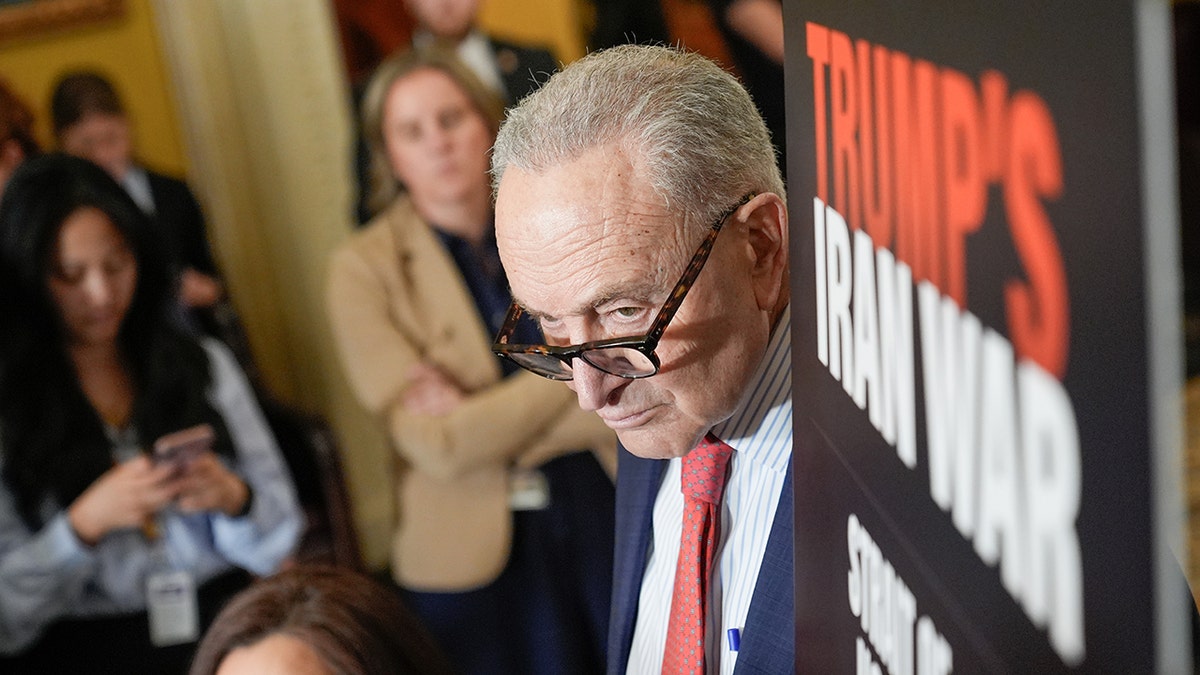
Senate Minority Leader Chuck Schumer (D-NY) as Democrats criticize a DHS funding proposal. (Mariam Zuhaib/AP Photo)
Efforts to fully fund the Department of Homeland Security emerged as a flashpoint in recent years. There are too many controversial policy areas fused together under one federal roof. That’s why there’s now a bipartisan plan to permanently split up DHS.
«It’s just become too big. It’s become too bureaucratic,» said Rep. Jared Moskowitz (D-Fla.), one of the chief sponsors of the bill.
The legislation would make the Federal Emergency Management Agency (FEMA) its own cabinet-level department. The Secret Service would report directly to the President. And the Transportation Security Agency (TSA) would head to the Department of Transportation.
Consider the consternation by travelers with the government not paying TSA during the 43-day comprehensive government shutdown. The same thing happened over the winter and into the spring as DHS remained unfunded.
Moskowitz believes his legislation would curb some government shutdowns. And, it would shield tourists from fiscal fallout.
«The American people’s travel cannot be held up in the political dysfunction of Washington,» said Moskowitz.
But that debate is for another day. The immediate question is if the Republican-led House and Senate can advance the package to finish off funding for ICE and CBP.
Secret Service Director Sean Curran met with Senate Republicans over lunch Tuesday to defend the $1 billion request.
Sen. Lisa Murkowski (R-Alaska) was skeptical after she emerged from the meeting, noting that the Administration needed to provide «justifications» and «details,» not «just toplines.»
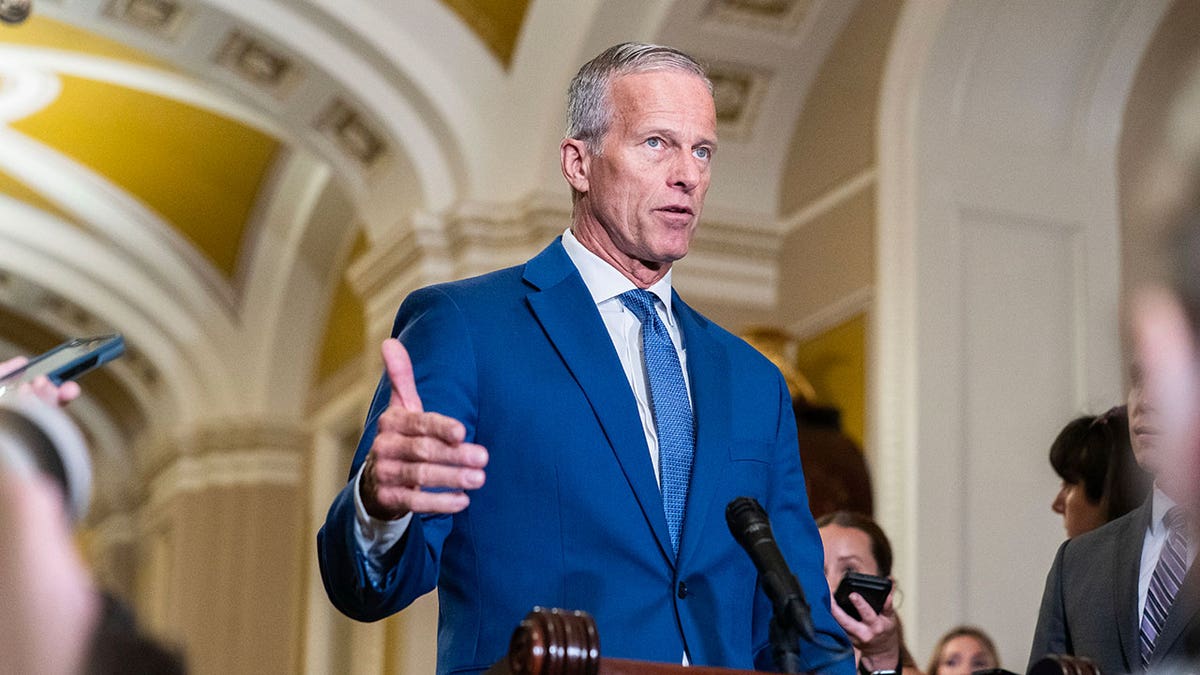
Senate Majority Leader John Thune (R-SD) as he defends a DHS funding proposal on Capitol Hill. (Maxine Wallace/The Washington Post via Getty Images)
Senate Majority Leader John Thune (R-S.D.) defended the spending request.
«You’ve got a President with three assassination attempts just in the last two years. And obviously the money that’s in there is about securing the building. And the Secret Service has a job to protect the president. We need to make sure they have the tools to do it,» said Thune.
After the meeting, Thune said Curran «did a very good job of laying it out and developing the case for why these resources need to be used.»
Other lawmakers need to hear more.
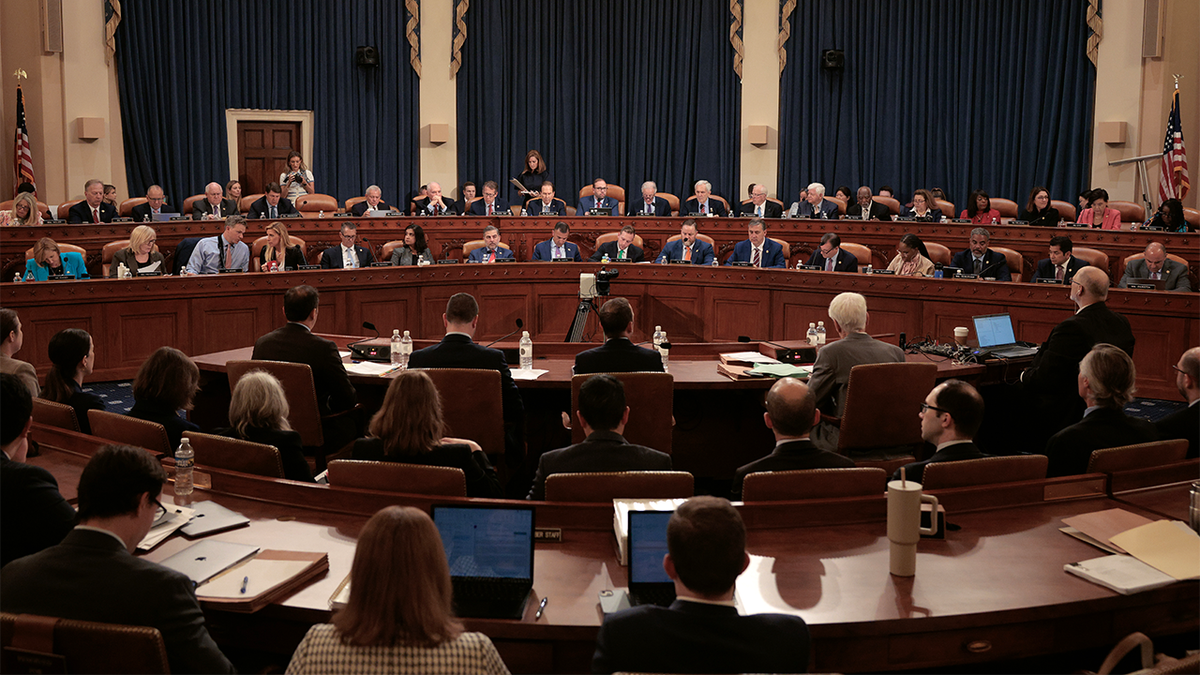
House lawmakers sit in the chamber on Capitol Hill. (Chip Somodevilla/Getty Images)
«I don’t know if they’re talking about infrastructure dollars or other kind of technology,» said Rep. Dave Taylor (R-Ohio). «I need to see the details before I pass judgment on whether or not the request is reasonable.»
Remember that Republicans want to support the President. But they also don’t want anything attached which will hold up ICE and Border Patrol funding. Especially this late in the game.
«Members are diving in a little bit. They want to understand how much of this is really related to security,» said Rep. Dusty Johnson (R-S.D.) «Obviously, we have to keep the President and his guests safe. But when you’re talking about $1 billion, members are going to ask a lot of questions. They’re digging into details. I don’t think we know exactly how this shakes out yet.»
CLICK HERE TO DOWNLOAD THE FOX NEWS APP
Here’s what we do know: The Senate Budget Committee won’t meet until late next week to prep its version of the bill – regardless of what’s in or out of it.
The Senate must then conduct a «vote-a-rama» which goes around the clock to adopt the measure. Then whatever the Senate adopts goes to the House.
This won’t play out until the final days of next week, just before the Memorial Day recess. President Trump established June 1 as a deadline for finishing this bill.
The House just adjusted its schedule for next week. The House won’t meet for votes until next Wednesday, May 20. That means there’s a chance the House may need to hang around Washington for part of Memorial Day weekend to pass the bill. The House and Senate are both scheduled to be out of session for Memorial Day week itself.
If lawmakers pass this bill, the fight over all government funding for Fiscal Year 2026 will finally conclude. That’s sixteen months after House and Senate committees were hearing testimony from cabinet departments and agencies about what they needed for last fall.
RELATED: SENATE TAKES MAJOR FIRST STEP TO PREVENT FUTURE SHUTDOWNS WITH PAINFUL ACCOUNTABILITY PLAY
And yet this story continues.
Even if they pass this final tranche of funding for DHS, lawmakers have to start again on the spending hamster wheel for this fall. Otherwise, there’s another government shutdown on October 1.
congress, budget house of representatives politics, government shutdown, donald trump, homeland security












INTERNACIONAL
Un atentado con explosivos destruye un peaje en Colombia en el primer día del gobierno de Abelardo De la Espriella y tras el anuncio de mano dura



INTERNACIONAL
Hawaii voters hit the polls as Gov. Josh Green dominates, progressive takes aim at Dem congressman
NEWYou can now listen to Fox News articles!
Hawaii voters will decide Saturday who advances to the November general election, with key contests including the race for governor and the battle to represent the state’s 1st Congressional District.
Gov. Josh Green, who was first elected in 2022, is heavily favored to win the Democratic primary, where he faces three little-known competitors. His challengers include George «Teva» Lucas-Tadeo, a Democratic socialist who has promised on social media to open a government-run grocery store and legalize recreational marijuana.
David «Duke» Bourgoin is mounting his second primary challenge against Green after losing to him in 2022, when he captured only 590 votes against Green’s 158,161. He also lost two bids for Honolulu mayor, in 2022 and 2024.
JOHNSON’S STRATEGY TO BYPASS DEMOCRATS’ SAVE ACT BLOCKADE SURVIVES KEY VOTE, HANDING GOP BIG WIN
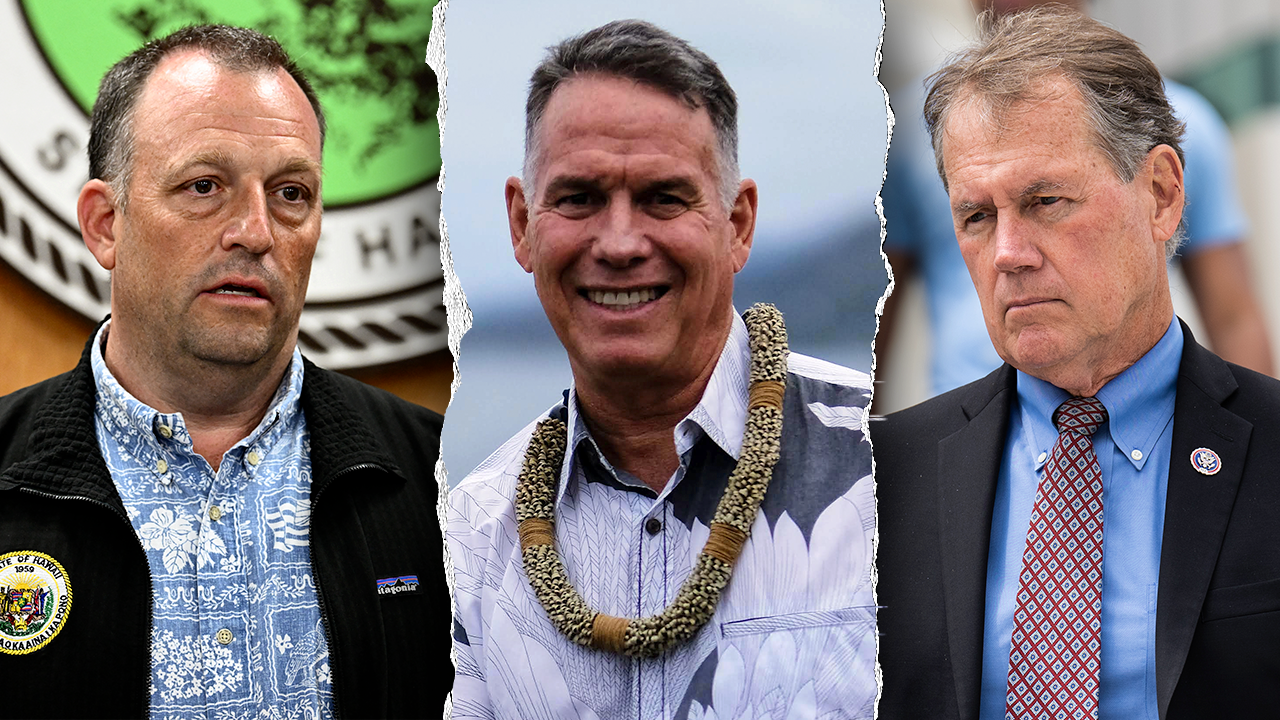
A three-way split image of Democratic Hawaii Gov. Josh Green, GOP candidates Gary Cordeery and Rep. Ed Case (D-Hawaii) ( (Photo by Patrick T. Fallon / AFP via Getty Images) (Bill Clark/CQ-Roll Call, Inc via Getty Images))
Lauren Kapoliahiʻiaka Shim is also seeking the Democratic nomination. She is the CEO and founder of Aloha AI Incorporated, according to her LinkedIn profile.
Neither Lucas-Tadeo nor Shim had campaign websites, and none of Green’s three challengers had raised any money in the race as of June 30, according to Honolulu Civil Beat. Meanwhile, Green has raised approximately $3.5 million, far outpacing Republican Gary Cordery, the race’s second-highest fundraiser, who has raised about $313,000, according to Honolulu Civil Beat.
Cordery, owner of the contracting company Kingdom Builders, and Ken Fujiyama, an entrepreneur and investor, are competing for the Republican nomination and a chance to end nearly two decades of Democratic control of the governor’s mansion. The last Republican to serve as Hawaii governor was Linda Lingle, who held the office from 2002 to 2010.
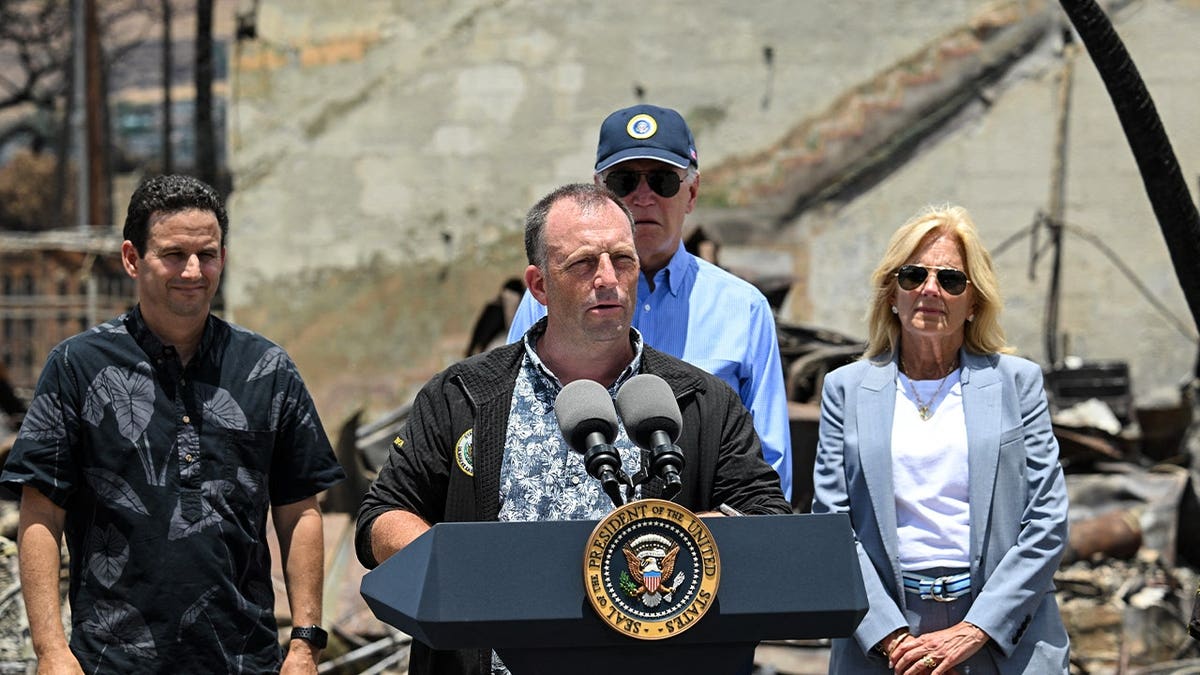
Hawaii Gov. Josh Green, center, delivers remarks as U.S. President Joe Biden listens during a visit to an area devastated by wildfires in Lahaina, Hawaii, on Aug. 21, 2023. (Mandel NGAN / AFP via Getty Images)
Cordery has campaigned on lowering Hawaii’s high cost of living, expanding housing and cracking down on government waste and corruption. He has proposed adding 15,000 homes for working families, using state-owned land for housing and eliminating the state’s general excise tax on food and medicine. Fujiyama has also proposed a plan to tackle the housing affordability crisis by developing 100,000 residential lots and partnering with large landowners to spur growth.
MICHIGAN’S TOP ELECTION OFFICIAL WINS DEMOCRATIC PRIMARY FOR GOVERNOR, ADVANCES TO BATTLEGROUND RACE
Whoever emerges from the Republican primary will face an uphill battle to unseat Green if he secures the Democratic nomination. Green holds a 56% approval rating, while the Cook Political Report rates the race «Likely Democrat» and gives Democrats a 13-point advantage.
Meanwhile, eyes outside of Hawaii will be locked on the Democratic primary in the 1st Congressional District, where state Sen. Jarrett Keohokalole is challenging Rep. Ed Case, D-Hawaii.
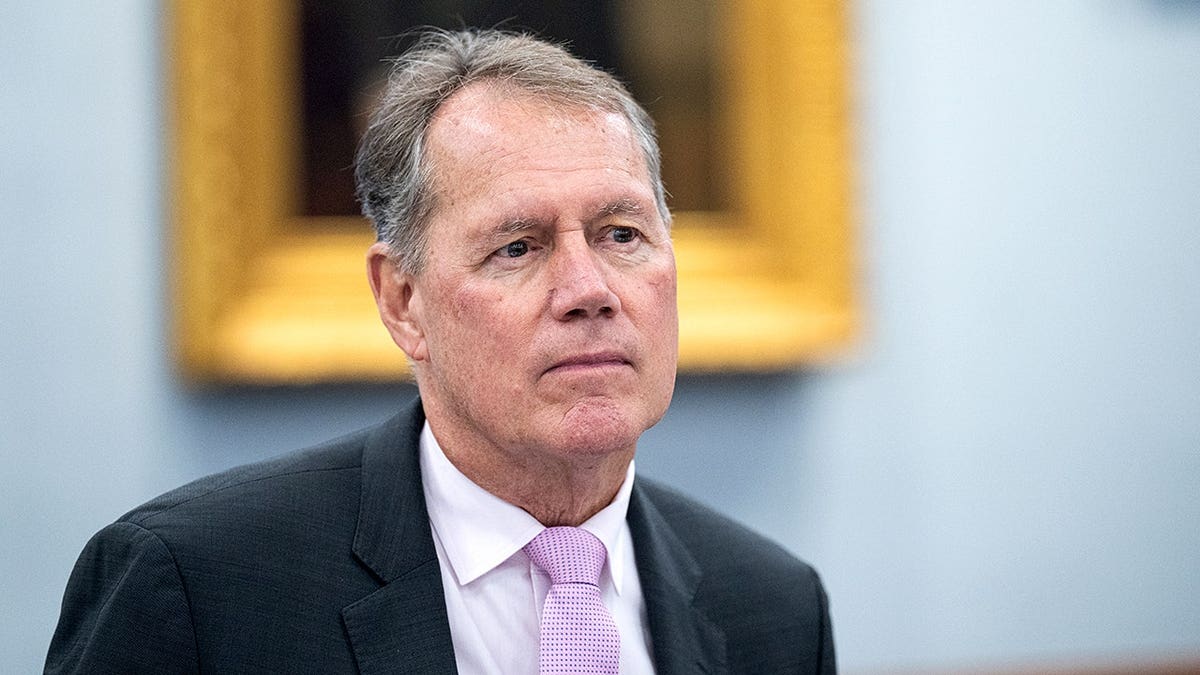
Rep. Ed Case, D-Hawaii, arrives for a House Appropriations Committee markup of several appropriations bills in the Rayburn House Office Building in Washington on July 10, 2024. (Bill Clark/CQ-Roll Call, Inc via Getty Images)
SIGN UP TO GET THE POLITICS NEWSLETTER
Case, who is seeking a seventh term, has represented the district since 2019 and argues that his seniority and position on the Appropriations Committee give Hawaii greater influence in Washington. Meanwhile, Keohokalole, who is endorsed by Sen. Bernie Sanders’ group Our Revolution, is running on a progressive platform that includes Medicare for All and opposition to ICE and President Donald Trump’s tariffs.
Keohokalole is seeking to portray Case as out of touch with Democratic voters, pointing to the congressman’s vote with House Republicans to pass Trump’s SAVE America Act, which would require voters to show proof of citizenship when registering to vote.
Given the district’s strong Democratic lean, whoever wins the party’s primary will likely be favored to win the seat in November.
Polls close at 7pm local time.
hawaii, gubernatorial, state and local primaries, elections, elections state and local, politics
INTERNACIONAL
Dos personas buscadas por un esquema de lavado de dinero de USD 50 millones fueron arrestadas en Colombia, informó el FBI de Miami

El FBI Miami anunció la captura y extradición de dos ciudadanos colombianos acusados de dirigir un esquema internacional de lavado de dinero por 50 millones de dólares, en una operación que involucra a organizaciones criminales de alto perfil y afecta a múltiples estados de Estados Unidos. Los detenidos, Santiago Orrego Gomez y Daniel Mauricio Gomez Garcia, fueron arrestados en Colombia por la Policía Nacional el 6 de agosto de 2026 y entregados a agentes federales en Medellín. El caso es relevante para la lucha global contra el lavado de activos y crimen organizado, abriendo nuevas investigaciones en ambos países, según reportó el FBI.
En un comunicado oficial, el FBI Miami detalló que la entrega de los sospechosos fue posible gracias a la cooperación con la Policía Nacional de Colombia, Homeland Security Investigations y la Fiscalía del Distrito Sur de Florida. Los cargos incluyen conspiración para lavado de activos, fraude y colaboración con el cartel Clan del Golfo. La operación, denominada “Operation Count It Up”, permitió identificar movimientos financieros internacionales, el uso de criptomonedas y el desvío de fondos provenientes de fraudes a personas mayores. Las autoridades subrayan el valor de esta redada por el volumen de dinero involucrado y su impacto en la economía estadounidense.
Según antecedentes verificados por NBC Miami y confirmados por las agencias oficiales, la investigación se centró en la estructura financiera de los detenidos, quienes presuntamente operaban como enlaces del Clan del Golfo, una organización criminal activa en Colombia y vinculada al narcotráfico internacional. El operativo involucró la colaboración de fuerzas de seguridad de ambos países, allanamientos coordinados y la incautación de activos relacionados con la red de lavado de dinero.
Santiago Orrego Gomez y Daniel Mauricio Gomez Garcia son ciudadanos colombianos identificados por el FBI como presuntos operadores financieros de una red internacional de lavado de dinero asociada al Clan del Golfo. Según el comunicado institucional, ambos enfrentan cargos federales por:
- Conspiración para lavado de activos.
- Fraude electrónico y bancario.
- Participación en una organización criminal dedicada al ocultamiento de fondos ilícitos.
La investigación “Operation Count It Up” reveló que los acusados canalizaban fondos provenientes de actividades ilícitas, principalmente narcotráfico y fraudes a personas mayores, hacia Estados Unidos. El flujo de dinero superó los 50 millones de dólares, según el FBI, utilizando mecanismos como transferencias electrónicas, depósitos en cajeros automáticos y conversiones a criptomonedas.

El operativo policial se desarrolló en coordinación entre la Policía Nacional de Colombia y el FBI Miami. De acuerdo con el reporte oficial publicado el 7 de agosto de 2026, agentes federales se trasladaron a Medellín, donde recibieron a los acusados, quienes fueron escoltados bajo estrictas medidas de seguridad hasta Miami para comparecer ante la justicia federal. La extradición se realizó conforme a los tratados de cooperación judicial entre Colombia y Estados Unidos, permitiendo la rápida transferencia de los sospechosos.
El FBI Miami agradeció el apoyo de la Policía Nacional de Colombia y de Homeland Security Investigations, destacando la importancia de la colaboración internacional en la lucha contra el crimen organizado y el lavado de activos. “Este caso es un ejemplo de la determinación de las autoridades para desmantelar organizaciones de lavado de dinero vinculadas al narcotráfico”, afirmó la oficina del FBI en su actualización oficial.
La operación “Count It Up” es una investigación dirigida por el FBI Miami para identificar y desarticular redes internacionales de lavado de dinero. De acuerdo con los informes institucionales, la red operaba mediante:
- Transferencias bancarias entre múltiples cuentas en diferentes estados de EE.UU.
- Depósitos en efectivo en cajeros automáticos.
- Conversión de fondos a criptomonedas para dificultar el rastreo.
- Recepción y ocultamiento de dinero proveniente de fraudes a personas mayores.
La combinación de estos métodos permitía a la organización eludir los controles del sistema bancario estadounidense y ocultar el origen ilícito de los fondos. El FBI señaló que parte del dinero provenía del tráfico de drogas operado por el Clan del Golfo y que la estructura financiera tenía ramificaciones en otros países de América Latina.

En declaraciones institucionales recogidas en su canal oficial, el FBI Miami afirmó: “Este caso es otro ejemplo de la firmeza del FBI para llevar ante la justicia a los responsables de lavado de dinero y desarticular organizaciones criminales”. La agencia subrayó el papel clave de la cooperación internacional y la importancia de los acuerdos bilaterales con Colombia para permitir la extradición rápida de los sospechosos.
La Fiscalía del Distrito Sur de Florida también confirmó la presentación de cargos y la apertura de un proceso judicial contra los acusados. De acuerdo con los documentos oficiales, la investigación continúa en busca de otros posibles implicados y la recuperación de activos vinculados al esquema criminal.
El Clan del Golfo es una organización criminal con base en Colombia, señalada por las autoridades estadounidenses como uno de los principales carteles de narcotráfico del continente. Según el FBI, Santiago Orrego Gomez y Daniel Mauricio Gomez Garcia actuaban como operadores financieros de esta organización, facilitando el movimiento y blanqueo de grandes sumas de dinero derivadas de actividades ilícitas.
El reporte del FBI Miami establece que la red de lavado detectada utilizaba conexiones en varias ciudades de Estados Unidos y América Latina, lo que permitió canalizar fondos ilegales a través de una compleja estructura de cuentas y empresas pantalla. La vinculación con el Clan del Golfo agrava los cargos federales y amplía el alcance de la investigación a otros miembros de la organización.

Los acusados fueron puestos a disposición de la Corte Federal del Distrito Sur de Florida, donde enfrentan cargos de conspiración para lavado de activos, fraude y pertenencia a organización criminal. Las penas para estos delitos en Estados Unidos pueden superar los 20 años de prisión, además del decomiso de bienes y la obligación de reparar el daño económico causado.
La justicia federal estadounidense ha iniciado el proceso judicial, que incluye audiencias preliminares, presentación de pruebas y posibles acuerdos de cooperación para identificar a otros implicados en la red de lavado. Según el FBI, el caso se mantiene abierto y no se descartan nuevas detenciones en el corto plazo.
La detención y extradición de Santiago Orrego Gomez y Daniel Mauricio Gomez Garcia representa un avance en la cooperación bilateral entre Colombia y Estados Unidos para combatir el lavado de dinero y el crimen organizado transnacional. El operativo “Operation Count It Up” refuerza la capacidad de las autoridades para utilizar herramientas tecnológicas, intercambio de información y acciones judiciales coordinadas.
De acuerdo con el FBI Miami, la investigación abierta permitirá fortalecer los controles sobre transferencias financieras y detectar esquemas similares en el futuro. Para la comunidad internacional, este caso evidencia la complejidad de las redes de lavado de activos y la necesidad de sistemas de control financiero más robustos y colaboración entre países.

El FBI Miami y la Fiscalía del Distrito Sur de Florida han anunciado que el caso sigue en desarrollo y se prevén nuevas acciones para:
- Identificar y detener a otros miembros de la organización.
- Recuperar activos y fondos involucrados en el esquema criminal.
- Reforzar la cooperación con agencias internacionales y bancos para mejorar los sistemas de detección de lavado de dinero.
Las autoridades colombianas también analizan la información recabada para desmantelar células restantes del Clan del Golfo y proteger a víctimas de fraudes financieros. El caso servirá de precedente para futuras investigaciones conjuntas y para fortalecer la legislación sobre delitos financieros en la región.
investigación criminal,agentes federales,dólares,evidencia financiera,documentos bancarios,Estados Unidos

Stephanie Demner reveló la fuerte discusión que tuvo con su suegra: “Son nuestras reglas”

Sergi Roberto se va a la MLS: compartirá vestuario en LA Galaxy con Riqui Puig

Milei pide a México que compren más alimentos argentinos para reabrir el mercado de autos

Ofensiva de LLA en el bastión K: Karina Milei convoca a legisladores bonaerenses y busca blindar el armado para 2027

Un atentado con explosivos destruye un peaje en Colombia en el primer día del gobierno de Abelardo De la Espriella y tras el anuncio de mano dura

Verónica Skotnes tiene 28 años y vive en un velero en el Ártico: “Vivir de forma tan sencilla y con tan poco hace que uno valore mucho sus cosas”

La oposición cuestionó a Benegas Lynch por su empresa para vender campos a extranjeros y el senador libertario se defendió

Dólar hoy en vivo: a cuánto se negocian todas las cotizaciones minuto a minuto este miércoles 5 de agosto

Brasil retira a su embajador en la Argentina: qué consecuencias tiene la medida diplomática

Las centrales obreras y los movimientos sociales anunciaron dos días de conflicto callejero
-
 POLITICA2 días ago
La oposición cuestionó a Benegas Lynch por su empresa para vender campos a extranjeros y el senador libertario se defendió
-

 DEPORTE5 horas ago
Murió Jorge Messi, en vivo: la resolución de la AFA para los partidos de todas las categorías del fútbol argentino
-

 POLITICA3 días ago
Javier Milei se reunirá con Daniel Noboa en Ecuador y con Abelardo de la Espriella en Colombia