INTERNACIONAL
Los asesinos seriales que marcaron a Ecuador: del “Niño del Terror” al matricidio que estremeció al país

En Ecuador, los asesinos seriales no han sido un fenómeno masivo, pero sí profundamente perturbador. A diferencia de países donde estos casos forman parte de un patrón criminológico más frecuente, en el país andino su aparición ha sido esporádica, casi siempre rodeada de conmoción social, cobertura intensa y preguntas incómodas sobre el sistema de justicia, la salud mental y las condiciones sociales que rodean estos crímenes.
El reciente caso de Andreína Lamota, una mujer condenada por el asesinato de su madre y vinculada a otro crimen previo, reabrió una discusión que parecía dormida: la existencia de homicidas con patrones repetitivos en el país y la dificultad para detectarlos a tiempo.
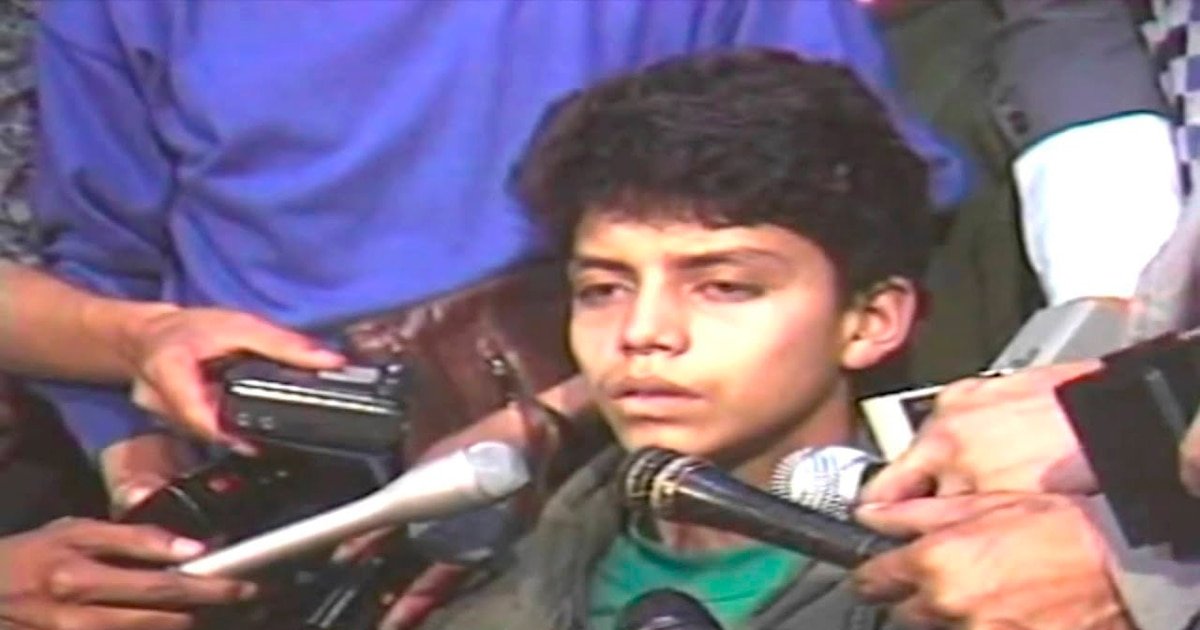
El nombre que inevitablemente aparece en cualquier recuento es el de Juan Fernando Hermosa. A inicios de la década de 1990, cuando Quito aún no dimensionaba la magnitud de lo que ocurría, Hermosa, un adolescente de apenas 15 años, asesinó a múltiples personas en una cadena de crímenes que generó pánico colectivo.
Sus víctimas incluían taxistas y conductores, y su forma de operar combinaba violencia directa con una frialdad que desconcertó incluso a investigadores experimentados. La prensa lo bautizó como el “Niño del Terror”, un apelativo que reflejaba tanto su edad como la crudeza de sus actos. Su caso marcó un antes y un después en la percepción de la violencia criminal en Ecuador.

Una década más tarde, otro nombre sacudiría no solo al país, sino también a Europa: Gilberto Chamba. Su historia expuso una grieta institucional difícil de ignorar. Tras haber sido condenado en Ecuador por el asesinato de varias mujeres, Chamba recuperó la libertad en medio de decisiones judiciales controvertidas. Migró a España, donde volvió a matar. Fue finalmente condenado a una larga pena de prisión.
Pero no todos los casos están tan documentados o han tenido la misma cobertura internacional. En registros policiales y estudios criminológicos aparecen nombres como William Cumbajín, Luis Taipe o Mario Bermello, asociados a homicidios múltiples con patrones que, aunque menos mediáticos, cumplen con los criterios de criminalidad serial.
En estos casos, las víctimas solían pertenecer a entornos vulnerables, lo que contribuyó a que los crímenes permanecieran más tiempo fuera del radar público.

También hay hechos que, aunque no corresponden a ciudadanos ecuatorianos, dejaron una huella profunda en el país. Uno de ellos es el de Daniel Camargo, quien en la década de 1980 confesó decenas de asesinatos de niñas y adolescentes en varios países, incluido Ecuador. Su presencia generó alarma regional y obligó a repensar la cooperación internacional en materia de investigación criminal. Durante meses, su nombre estuvo asociado al miedo en distintas ciudades, en una época donde los sistemas de información y coordinación eran limitados.
El caso más reciente, el de Andreína Lamota, introduce un elemento poco común en la historia criminal del país: el de una mujer con un posible patrón serial. Según las investigaciones, Lamota no solo fue responsable del asesinato de su madre -a quien mató, descuartizó y escondió en una lavadora–, sino que también estaría vinculada a la muerte de una amiga años antes.

Aunque cada uno de estos casos tiene particularidades propias, existen elementos comunes: la baja frecuencia del fenómeno en Ecuador no implica menor gravedad. Cada caso ha tenido un impacto desproporcionado en la opinión pública, precisamente por su carácter inusual. Además, varios de estos episodios evidencian debilidades institucionales, ya sea en la detección temprana, en el seguimiento de antecedentes o en la coordinación entre entidades.
Asimismo, la evolución de los perfiles sugiere que estos crímenes ya no responden únicamente a contextos de marginalidad extrema, sino también a dinámicas más complejas que incluyen planificación, ocultamiento y, en algunos casos, integración social aparente.
El interés que despiertan estos casos no es nuevo, pero sí revela algo más profundo: la inquietud social frente a formas de violencia que rompen con lo esperado. Un homicidio puede ser interpretado como un hecho aislado dentro de un contexto de inseguridad generalizada. Pero cuando se identifican patrones, cuando el crimen se repite con cierta lógica interna, la percepción cambia.
Aparece la idea de una amenaza persistente, difícil de anticipar, que desafía tanto a las instituciones como a la comprensión colectiva de la violencia.
corresponsal:Desde Quito










NEWYou can now listen to Fox News articles!
John Byrnes was swimming in a pool beneath Hunter College in Manhattan on the morning of Sept. 11, 2001, when he stepped outside for coffee and heard sirens blaring down Lexington Avenue.
He learned that a plane had hit the World Trade Center. Minutes later, he saw the North Tower collapse on a campus television and immediately headed toward his National Guard armory.
Byrnes spent the next two weeks helping secure Ground Zero. And spent the following years in both Iraq and Afghanistan.
Each of the five veterans who spoke with Fox News Digital ahead of the 25th anniversary of 9/11 remembers where they were when they learned the nation had been attacked — and how Sept. 11 changed the trajectory of their life and service.
Some were already in uniform. Others, including a successful businessman and a teenager who watched the attacks unfold on television at his school, felt compelled to enlist.
Looking back 25 years later, Byrnes draws a sharp distinction between the wars, including the decision to respond to the terrorist attacks and the choices that followed to continue the war on terror.
«The decision to go to Afghanistan, that was absolutely necessary,» Byrnes, who is now a strategic director at Concerned Veterans for America, told Fox News Digital. «The decision to go to Iraq, which was not necessary.»
«The decision to stay in Afghanistan for so long was unfortunate, but it all came down to that day.»
ARMY VET LAWMAKER MARKS ABBEY GATE ANNIVERSARY WITH BLISTERING MESSAGE FOR BIDEN-HARRIS: ‘ABJECT FAILURE’
«The decisions that didn’t seem wrong at the time were just pebble after pebble into an avalanche,» he said.
Veterans who spoke to Fox News Digital all went to war believing they were protecting Americans by keeping the fight «over there.» Twenty-five years later, they remain proud that they answered that call. Their harder questions are about what came afterward: how the mission expanded, what two decades of war accomplished and whether the country ultimately made good on the sacrifices it asked of them — and the people of Afghanistan.
Chris Hoff was working for the state Department of Corrections while studying to become a special education teacher in his post-military service life. For him, the decision to return to service came as he watched the towers fall from the New Jersey shoreline.

Michael Matthews was already serving in the Army when the attacks happened that fateful day in 2001. He deployed to Iraq in 2003 with one of the first divisions to cross the border from Kuwait. His team was later hit by an IED. (Michael Matthews)
«When September 11 happened, I knew right then and there that I was going back in the military,» Hoff told Fox News Digital.
He returned to the reserves and deployed to Afghanistan twice. During his second deployment, he suffered multiple concussions and was ultimately forced to end his military career.
«For 20 years, all I knew was prison and war,» Hoff said. «And I was good at both of them.»
When he could no longer continue in either career, Hoff said he felt as though he had failed. But he credits connecting with the Wounded Warrior Project and beginning equine therapy for ultimately saving his life.
Hoff now shares his story in hopes other veterans will seek help sooner.
«If I can help just one soldier… get help,» he said, «it’s okay to get help. It truly is. I’m glad I did.»
If you or someone you know is having thoughts of suicide, please contact the National Suicide Prevention Lifeline at 1-800-273-TALK (8255).

John Byrnes was swimming in a pool beneath Hunter College in Manhattan on the morning of Sept. 11, 2001, when he stepped outside for coffee and heard sirens blaring down Lexington Avenue. He learned that a plane had hit the World Trade Center. Minutes later, he saw the North Tower collapse on a campus television and immediately headed toward his National Guard armory. (John Byrnes)
Rep. Troy Downing, R-Mont., now serving his first term in Congress, was moose hunting in remote Alaska when he first learned that the World Trade Center had been attacked.
He had been dropped in the bush with only an aviation radio, and no planes had flown overhead for days. When a pilot finally reached the hunting party, Downing learned that both towers had fallen.
«This country has been good to me,» Downing recalled thinking at the time when learning about the attack on U.S. soil. «What have I ever done to deserve it? We’re being attacked right now. Everything that this country stands for is being attacked. And I’ve never done anything to deserve this.»
Downing, the son of a single teenage mom, grew up poor. He went on to teach at New York University and help build a technology startup that became Yahoo.
He was 34, with no prior military service, when he returned home and walked into a recruiter’s office the next day. Downing joined the Air National Guard and served in combat search and rescue, including during two deployments to Afghanistan.
The way the war ended did not change Downing’s view of the decision to serve. But it did shape how he viewed what the country ultimately did with that service.
Downing called the withdrawal under former President Joe Biden «a blemish» that «squandered everything that we gained there.» He urged veterans not to conclude that their own sacrifices had been in vain.
«I just want to make sure that my brothers and sisters in arms, the folks that have served this mission, understand that they served this country and they served honorably,» Downing told Fox News Digital. «And not think just because of that one misstep that it was in vain because you stepped up to the dotted line when your country asked you to.»
MAMDANI TO RELEASE DOCUMENTS ON 9/11 HEALTH IMPACTS BEFORE 25TH ANNIVERSARY
Brandon Newberry has wrestled directly with that question.
Just 16 years old when he walked out of gym class and saw news coverage of the World Trade Center falling on a TV in his Spanish classroom, Newberry said: «I just felt lost and hopeless.»
«I wanted to do something,» he went on. «I wanted to help. I knew there were people suffering, people dying, and it hurt me really bad.»
Newberry joined the Marine Corps in 2006 because he believed the branch would put him closest to the fight. He deployed to Iraq in 2007 and later served two tours in Afghanistan.
«My whole philosophy behind it was take the fight to them,» Newberry told Fox News Digital. «As long as I kept it in their backyard, they couldn’t put it in our backyard.»

«For 20 years, all I knew was prison and war,» Hoff said. «And I was good at both of them.» (Chris Hoff)
Newberry said he spent roughly seven years in Afghanistan, including time as a government contractor after leaving the Marines. The years there gave him a close view of the Afghan people and the changes he believed had taken place while U.S. forces were in the country.
«At the time, women were allowed to go to school. We had women doctors,» he said. «They didn’t have that fear of the unknown, as long as we were there trying to help them out.»
Newberry said the U.S. «fumbled the ball» and could have done more to establish a lasting government and security force before leaving.
«It could have definitely been done better,» he said.
He also felt the conclusion of the two-decade war was a tragedy. «The withdrawal hurt us military guys. I lost a lot of good friends, and it hurts.»
The ending, Newberry said, raised a more personal question about the years he had spent there: «I almost feel like everything that I did was almost for nothing because, again, I feel like at this point I failed the Afghan people.»
Michael Matthews was already serving in the Army when the attacks happened that fateful day in 2001. He deployed to Iraq in 2003 with one of the first divisions to cross the border from Kuwait. His team was later hit by an IED.
Matthews suffered injuries to his face, neck, head, back, arms and legs, spent three and a half weeks in a coma and remained hospitalized for nearly nine months.
He had hoped to make a career of military service, but the injuries forced him onto a different path.
«It just ultimately changed the trajectory of what my goal was, which was to, of course, do this amazing life in the military and make a huge career out of it,» Matthews told Fox News Digital.
Instead, Matthews said the experience also gave him a new purpose: «Helping veterans and helping the community.»

Michael Matthews was already serving in the Army when the attacks happened that fateful day in 2001. He deployed to Iraq in 2003 with one of the first divisions to cross the border from Kuwait. His team was later hit by an IED. (Michael Matthews)
For the men who served, questions about the wars do not necessarily translate into regret over their own decision to fight.
Byrnes said one of the central lessons of the post-9/11 wars is that military and political leaders must look beyond the immediate objective — and be willing to acknowledge when a strategy is not working.
«You can never admit failure,» Byrnes said. «You always want to, no matter how bad things were, set the positive note. You tell the boss you’re winning until somebody else comes to take your place so you can get promoted without saying that you’re not winning.»
But 25 years after the attacks, the veterans’ reflections resist a simple judgment on the wars that followed.
They describe pride in having served despite the physical and psychological wounds, expressed frustration over the decisions that prolonged or expanded the wars, and issued sharply different conclusions about what the United States ultimately accomplished in its 20-year endeavor in the Middle East.
Matthews put that tension simply.
«We’re proud of what we did,» he said. «Even though we may not have fully understood what we were doing or why we were doing it.»
september 11, us marines, national guard, patriotism, veterans, us army, politics, tunnel to towers steel across america
INTERNACIONAL
AOC’s ‘modern-day lynchings’ claim torn to shreds online as Black hanging case findings tell a different story
‘Not exactly Alexandria from the Bronx’: ‘The Five’ ridicules AOC’s fake southern accent
The Five panel criticizes Alexandria Ocasio-Cortez’s use of a «fake Southern accent» at a Memphis rally for Justin Pearson, sparking debate about her political authenticity and policy prowess. Commentators question her ability to handle unscripted debates, highlighting past instances where her policy proposals lacked substance, like the Amazon HQ2 controversy in Long Island City.
NEWYou can now listen to Fox News articles!
This story discusses suicide. If you or someone you know is having thoughts of suicide, please contact the National Suicide Prevention Lifeline at 988 or 1-800-273-TALK (8255).
Rep. Alexandria Ocasio-Cortez, D-N.Y., warned Friday of «racial terror» and «widespread modern-day lynchings» in the U.S. as she joined dozens of Democrats demanding that the DOJ and FBI investigate hanging deaths of Black Americans.
Multiple official findings in several recent cases show that law enforcement or medical examiners ruled the deaths suicides, while at least one very recent death remains under a homicide investigation.
AOC alleges there is systemic racial bias at the agencies, while fellow progressive lawmaker Rep. Ayanna Pressley, D-Mass., called the hangings a «national crisis» in a letter to the agencies that she spearheaded.
MS RACHEL SPEAKS OUT ON BLACK HANGING CASES AS RALEIGH DEATH IS DECLARED SUICIDE
«This year, there have already been 10 reported hangings of Black people in the U.S. I’m proud to have signed onto Rep. Pressley’s letter to address these widespread modern-day lynchings and put a stop to this racial terror,» Ocasio-Cortez wrote on X in support of the call.
Pressley warned in her letter that «Black folks are being found hanged in America» and insisted: «We cannot stand by while strange fruit hangs from trees across the country.»
The letter, addressed to Attorney General Todd Blanche and FBI Director Kash Patel, was signed by Pressley, Ocasio-Cortez and about 50 Democrats. They demanded a «thorough, transparent, and comprehensive federal investigation into every hanging death of a Black individual across the United States,» arguing that federal agencies have failed for decades to adequately investigate such deaths.
FAMILY IDENTIFIES YOUNG WOMAN FOUND FATALLY SHOT IN HOME OWNED BY REP AYANNA PRESSLEY’S HUSBAND
One 2026 case involved the death of a 21-year-old Atlanta man who had gone missing. He was later found hanging from a tree in a Cobb County park, where officials ruled out foul play and deemed the death a suicide, according to Atlanta’s NBC affiliate.
Another 2026 case involved Delta State University student Demartravion Reed in Mississippi. Officials «determined the cause of death to be a hanging and the manner of death as suicide.»
At the time, the case reopened old memories of the murder of Emmett Till, according to reports. Till was a Black teen kidnapped and murdered by White men not far from the site after he was falsely accused of flirting with a White woman in 1955.
15-YEAR-OLD BLACK TEEN’S MURDER REVEALS THE UGLY TRUTH ABOUT WHITE GUILT IN AMERICA
A Grio report on Pressley’s letter also referenced the hanging deaths of a 58-year-old man in Albany, N.Y., and a 39-year-old man in Brookfield, Wisconsin.
The Albany Police Department said Earl Smith’s death was «ruled a suicide» and investigators found «no evidence» of criminal activity.
«The Albany Police Department is aware of concerns posted on social media suggesting that criminal activity was involved with this incident, which has understandably caused public concern,» the department said.
A preliminary investigation of the Wisconsin man’s death also indicated suicide, according to Brookfield’s police chief cited by the Waukesha County Freeman.
At least one case remains under homicide investigation, according to reports.
Tasia Fortune was found hanging outside an abandoned house in Jackson, Mississippi, CNN reported Thursday. Authorities later questioned Terence Bernard Anderson, the father of one of her children, and arrested him on unrelated weapons charges, according to several reports.
AOC SLAMS ‘OPPRESSED’ TRUMP STATES WHILE TOUTING NYC SERVICES DESPITE $5B DEFICIT AND TRANSIT CRIME SPIKE
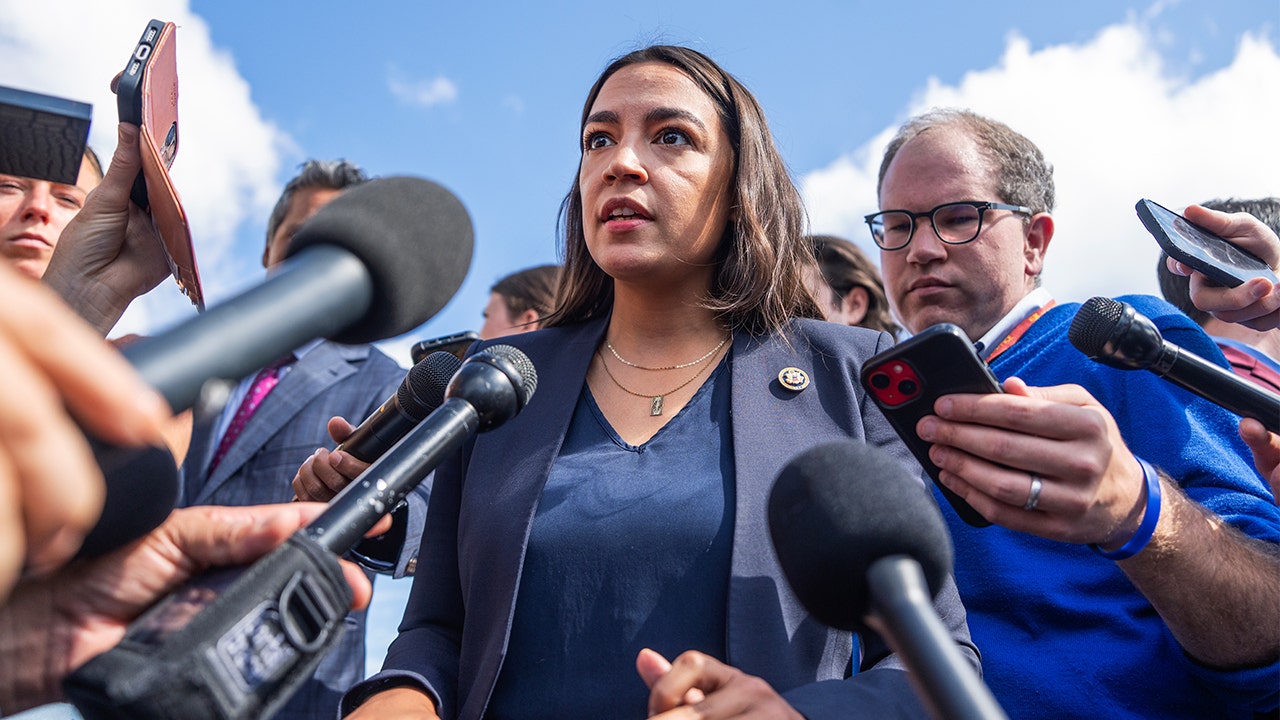
Rep. Alexandria Ocasio-Cortez, D-N.Y., talks with reporters outside the U.S. Capitol on Sept. 11, 2025. (Tom Williams/CQ-Roll Call, Inc via Getty Images)
The lawmakers’ characterization also drew criticism on social media.
«Those community notes are stacking up,» one critic said, as X’s crowdsourced correction indicator included several wire reports and media links disputing Ocasio-Cortez’ claims.
«There should be some sort of penalty for willfully lying on social media, especially for a politician,» another claimed.
Former Energy Department official Matt Van Swol posted to X, «In the last ‘lynching’ of a Black woman, the media conveniently left out the prime suspect in the case was her Black boyfriend. Zero White people are lynching Black people in America today.»
WATCH: SQUAD DEMOCRAT SPEAKS OUT AFTER TEEN FOUND SHOT DEAD AT HUSBAND’S BOSTON PROPERTY
Former Senate staffer Matt Whitlock added that «every death is a tragedy, but what do you think ‘widespread’ means if only one of these was actually a homicide. Not sure you’ve landed the point about ‘racial terror’ with this.»
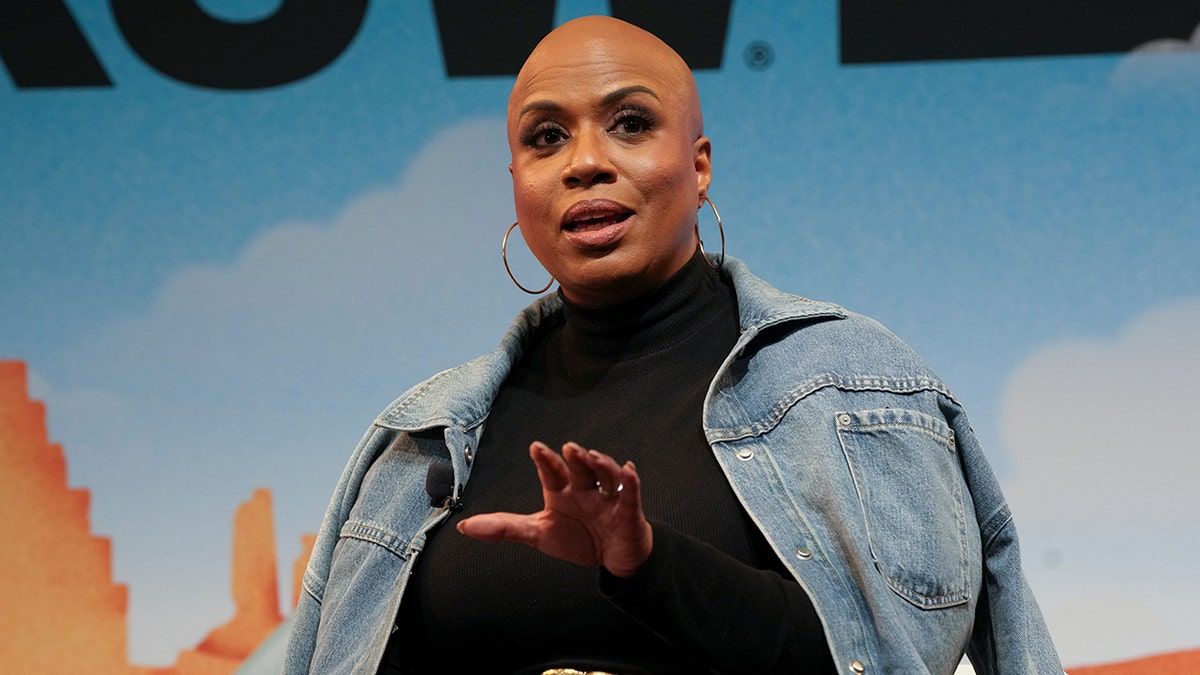
Ayanna Pressley at the Featured Session «Repro Revolution: A Conversation with Rep. Ayanna Pressley» during the SXSW Conference & Festivals held at the Austin Convention Center on March 9, 2025, in Austin, Texas. (Amy E. Price/SXSW Conference & Festivals via Getty Images)
X’s crowdsourced Community Notes feature also pointed readers to law-enforcement and medical-examiner findings in several of the cases, stating that most high-profile hanging deaths it identified in 2025 and 2026 had been ruled suicides and that one remained under homicide investigation.
When reached for comment, Pressley spokesperson Ricardo Sanchez directed Fox News Digital back to the lawmakers’ letter to Blanche and Patel, specifically a line reminding them that «Congress enacted the Emmett Till Antilynching Act in 2022 to ensure the DOJ and FBI are empowered to fully investigate suspicious deaths and hold individuals accountable.»
Fox News Digital reached out to Ocasio-Cortez, the DOJ and the FBI for comment.
alexandria ocasio cortez, hate crime, homicide, controversies state and local, politics, the squad, democrats
INTERNACIONAL
Guatemala declara alerta roja en el Trifinio por crisis de sequía: vicepresidenta Karin Herrera ordena medidas urgentes
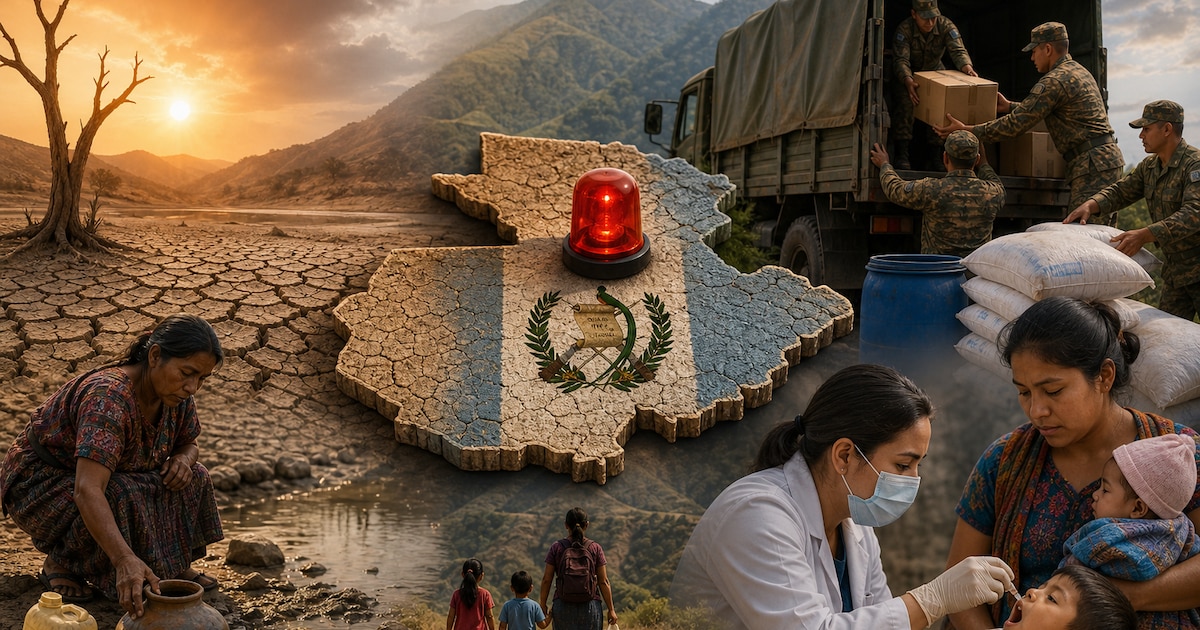
Guatemala declaró alerta roja en la región del Trifinio por los efectos agroclimáticos de El Niño, mientras la vicepresidenta Karin Herrera ordenó medidas urgentes para contener la escasez de agua y alimentos en municipios de Chiquimula y Jutiapa. La decisión, tomada el 11 de septiembre de 2026, busca reforzar la atención sanitaria, sostener el abastecimiento alimentario y proteger a las familias expuestas a la sequía en el corredor seco ampliado.
La alerta roja se activó después de que el Consejo Nacional de Seguridad Alimentaria y Nutricional declarara alerta naranja en todo el país ante el riesgo de afectaciones en la disponibilidad de agua y alimentos. La medida nacional antecedió a la elevación de la emergencia en la zona fronteriza del Trifinio.
La instrucción fue dirigida a la Coordinadora Nacional para la Reducción de Desastres durante dos reuniones extraordinarias encabezadas por Herrera. La Vicepresidencia informó que los encuentros buscaron coordinar a las instituciones responsables de atender las consecuencias de la sequía.
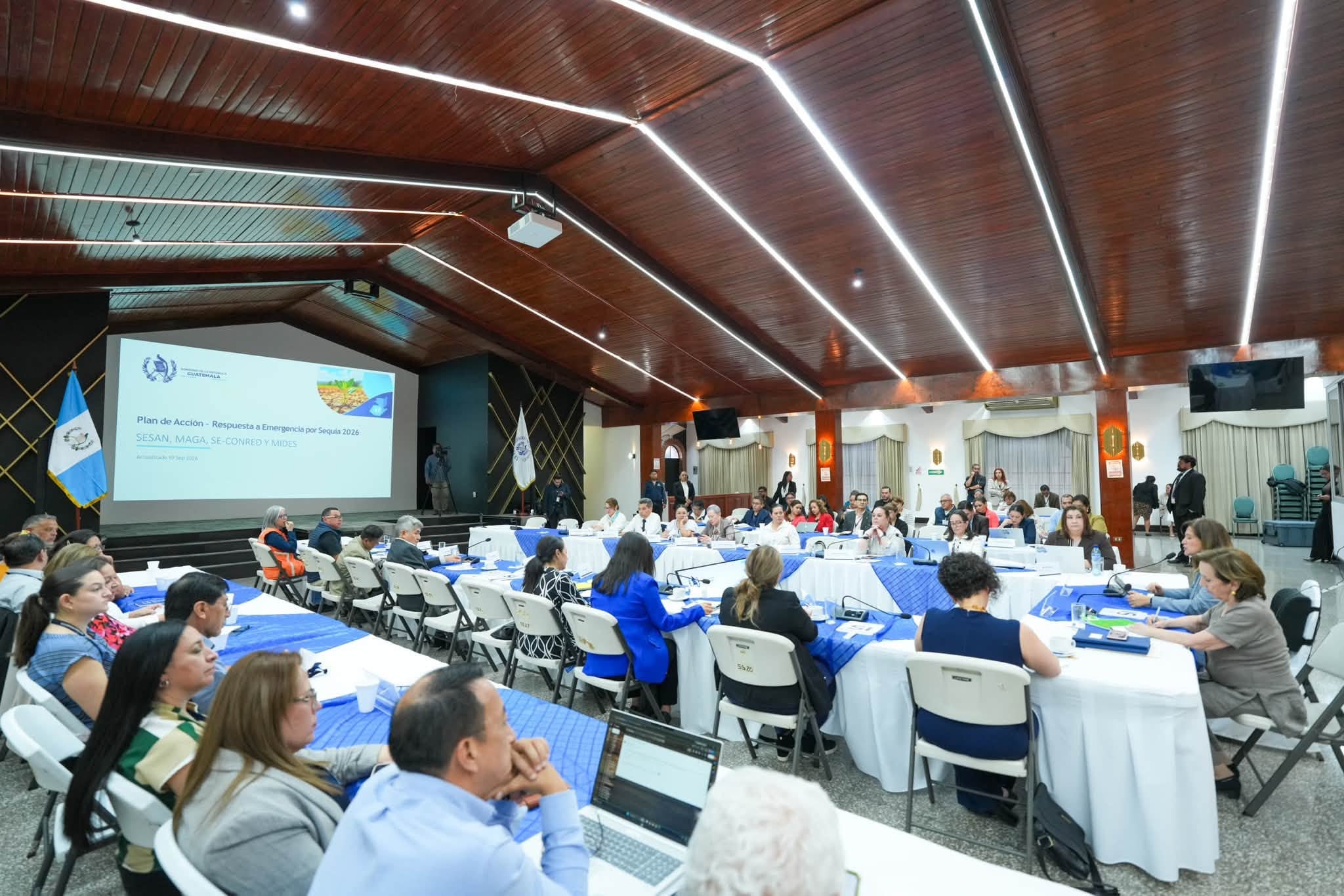
Un plan para el Trifinio y el corredor seco ampliado
La primera reunión correspondió al Gabinete Específico de Desarrollo Social, que revisó los acuerdos alcanzados con el Gabinete Específico de Desarrollo Económico. Allí se presentó el Plan de Acción–Respuesta a Emergencia por Sequía 2026, diseñado para la Región Trifinio y el corredor seco ampliado, donde se concentra una parte de la vulnerabilidad alimentaria guatemalteca.
Cinco ministerios recibieron tareas específicas. El Ministerio de Economía deberá fijar precios de referencia y actuar frente a aumentos injustificados en productos de la canasta básica y combustibles.
El Ministerio de Salud Pública y Asistencia Social deberá sumar medidas de vigilancia y respuesta ante enfermedades relacionadas con la falta de agua o su mala calidad. También deberá incorporar al Consejo Nacional de la Juventud en las brigadas sanitarias.
El plan dispone el despliegue de 124 brigadas de salud y nutrición con equipos multidisciplinarios. Su labor incluirá suplementación, desparasitación y vacunación de niñas, niños y mujeres embarazadas, además del monitoreo comunitario de la calidad del agua, de acuerdo con el Consejo Nacional de Seguridad Alimentaria y Nutricional.
El Ministerio de Desarrollo Social tendrá que asegurar que los bonos conserven su carácter condicionado y alcancen a todos los beneficiarios prioritarios. A su vez, el Ministerio de Finanzas Públicas deberá identificar recursos disponibles y analizar medidas legislativas que permitan acelerar la ejecución presupuestaria.
Las autoridades asignaron al Ministerio de Agricultura, Ganadería y Alimentación la reducción de los plazos de entrega de alimentos. La cartera también deberá definir acciones para asegurar agua y alimentación al ganado afectado por la ausencia de pastos.
Reservas de alimentos, pozos y asistencia para productores
La emergencia contempla reservas estratégicas de alimentos y la activación del seguro agrícola como compensación ante la pérdida de cosechas. También prevé reservorios artesanales para captar agua de lluvia, raciones destinadas a la ganadería y la rehabilitación de pozos comunitarios.
Los productores rurales podrán acceder a crédito con tasas nulas mediante inversión de capital en cajas rurales. La medida busca evitar que los campesinos abandonen sus tierras por la pérdida de cultivos y la falta de recursos para sostener su actividad.
La Secretaría de Seguridad Alimentaria y Nutricional, Sesan, deberá mantener el seguimiento de las familias que atraviesan inseguridad alimentaria y actualizar la estimación de población afectada. Desde el Conasan también continuará la verificación del estado nutricional de la niñez y de la evolución de la crisis en los hogares más expuestos.
Herrera convocó a alcaldes y gobernadores del Trifinio y del corredor seco ampliado para que eleven las alertas necesarias ante los Coordinadores de Emergencia municipales y departamentales. El objetivo es garantizar el acceso al agua y la asistencia para las familias alcanzadas por la sequía.
Los gobiernos locales deberán utilizar recursos de los Consejos de Desarrollo en cocinas escolares y centros de recuperación nutricional, conforme a la tipología de seguridad alimentaria aprobada por el Consejo Nacional de Desarrollo Urbano y Rural. La instrucción busca dirigir fondos hacia los espacios donde se atiende a población con mayor riesgo nutricional.
“Cada día cuenta; tenemos que proteger la salud y la vida de la población guatemalteca”, afirmó Herrera durante la reunión del Gabinete Específico de Desarrollo Social. La vicepresidenta sostuvo que la respuesta debe situarse por encima de las banderas políticas y concentrarse en las familias vulnerables.
La producción nacional de granos resulta insuficiente, por lo que Guatemala deberá recurrir a importaciones para garantizar el abastecimiento oportuno. Herrera ordenó anticipar y agilizar esos procedimientos, además de fortalecer el monitoreo de caudales, embalses y generación hidroeléctrica con escenarios que permitan activar medidas preventivas.
“Es indispensable garantizar transparencia y trazabilidad en la entrega de la asistencia, verificando que llegue efectivamente a las familias que la necesitan”, señaló la vicepresidenta, según la Vicepresidencia. Las instituciones convocadas deberán presentar en 15 días calendario un informe escrito sobre los avances en la aplicación de las medidas.
Guatemala,reunión gubernamental,ministerios

El impacto laboral de la IA. La revolución más profunda golpea a las puertas de la Argentina

Mariano Navone tras vencer a Novak Djokovic y ante una nueva chance en la Copa Davis: “Hoy el tenis me está sonriendo”

La desaprobación de Milei alcanza el 58% y crece el malestar por empleo y corrupción

¡Sorpresa total! Julián Weich se casó en secreto con su novia mexicana de 42 años que es una bomba

Misterio por el hallazgo de un cuerpo en un parque industrial de Neuquén: presentaba signos de haber sido calcinado

Tucumán activó el Registro Público Provincial de Ficha Limpia

El día que Owen Wilson se emocionó por el abrazo que le dio Lionel Messi tras un partido

Berni se diferenció de Kicillof en la aplicación de la baja de la edad de imputabilidad

Cuánto cuesta comprar una pick up en la Argentina y cuáles son los modelos más baratos en septiembre

La desafiante aventura de Carolina Baldini en moto por Europa: desde Edinburgo a Liverpool en dos ruedas

 POLITICA2 días ago
“¿Dónde está Kicillof?”: Patricia Bullrich cruzó al gobernador por la inseguridad en la Provincia
- ECONOMIA3 días ago
Así es la primera pickup compacta nacional: diseño, cuándo empezará a venderse y el novedoso sistema híbrido que tendrá
- DEPORTE3 días ago
Alarmante frase de Pierre Gasly antes del estreno del circuito de Fórmula 1 en Madrid