INTERNACIONAL
Inside the Kentucky Derby: What fans don’t see at Churchill Downs on race day


NEWYou can now listen to Fox News articles!
LOUISVILLE, Ky. — On Saturday, more than 150,000 spectators are expected to descend on the famed Churchill Downs for the Kentucky Derby, but the story of race day begins long before the crowd arrives.
For those behind the scenes, Derby Day on May 2 isn’t about crisp mint juleps and eye-catching hats. It’s the culmination of years of training, millions in investment and the final hours when it all comes together.
And spectators willing to spend a pretty penny for the elite experience could dole out approximately $16,800 for a seat at a table above the track, while costs listed on the website for private turf suites start at $280,000.
«It’s a once-in-a-lifetime opportunity for these horses,» Stan Bowling, lead tour guide at the Kentucky Derby Museum, told Fox News Digital. And some fans feel the same way.
KENTUCKY DERBY MINT JULEP: MISTAKES TO AVOID WHEN MAKING THIS ICONIC COCKTAIL
The Kentucky Derby at Churchill Downs is referred to as the «fastest two minutes in sports.» This year the race falls on Saturday, May 2, 2026. (Michael Reaves/Getty Images)
Only 3-year-old thoroughbreds can qualify for the race, with training that begins early and intensifies in the years leading up to the Kentucky Derby, affectionately called the «fastest two minutes in sports.»
«A lot is riding on that two minutes and a little bit of change for all these owners, trainers and jockeys,» said Bowling, a Kentucky native who has attended the race 28 times. «There are no do-overs on this track.»
While the race itself is quick, the road to Churchill Downs is anything but. Along the way, horses earn points through qualifying races, while trainers manage every detail to ensure the thoroughbreds peak at precisely the right moment.
Qualifying horses arrive in early March to adjust to the track and settle into life at Churchill Downs, which hosts roughly 750 races each year. But no other race on that track carries the same weight of the Kentucky Derby, the 12th in a 14-race lineup that anchors the day’s events.
«Every morning, from mid-March through the end of the year, the horses are going to be out on the track training between 5:30 and 10 a.m.,» Bowling said as he steered a golf cart beneath the famed track toward what’s known as the backside.
He noted that, by mid-March, approximately 1,400 horses arrive at the stalls.

A qualifying horse during an early morning training session on the track at Churchill Downs. (Michael Reaves/Getty Images)
It’s here, beyond the grandstands and away from the pageantry, that Churchill Downs takes on a different identity. The backside operates like a small, self-contained community, with 47 barns housing the horses and as many as 600 workers living and working on site.
The grounds include a chapel and even a small school, part of a self-contained world that runs parallel to the spectacle just steps away.
KENTUCKY DERBY NO LONGER GUARANTEED BOOM FOR LEXINGTON AS VACANT HOTEL ROOMS REPLACE SELLOUTS
The backside stretches across rows of mostly nondescript stalls, punctuated by a few bearing the names of famed horses and their jockeys.
«Want to take a guess how much it costs to rent one of these stalls at the most famous racetrack in the world?» Bowling asked.
«$7.50.»

About 1,400 horses fill the stables across the sprawling grounds of Churchill Downs. (Amanda Macias/Fox News Digital)
That modest fee is just a starting point, a small figure compared to the millions that can go into preparing a single horse over the course of its training and care.
That level of investment is mirrored in the fan experience, where attending the Derby comes at a steep price.
«It’s an expensive ticket, I will grant you that, but, for most people, coming to see the Kentucky Derby is a bucket list event,» Bowling said.
2026 KENTUCKY DERBY: POST POSITION DRAW, OPENING MORNING-LINE ODDS
Tickets range from about $160 for access to the 26-acre grassy infield, where the race is watched on large screens, to about $800 for one of the cheapest seats in the grandstand.
For grandstand ticket holders, food, alcohol and non-alcoholic drinks are included in the price, along with entry to races held on both Friday and Saturday.
«Among the 60,000 grandstand seats, those closer to the track and farther from the finish line tend to be the least expensive,» he added.
At the higher end, prices climb steeply.
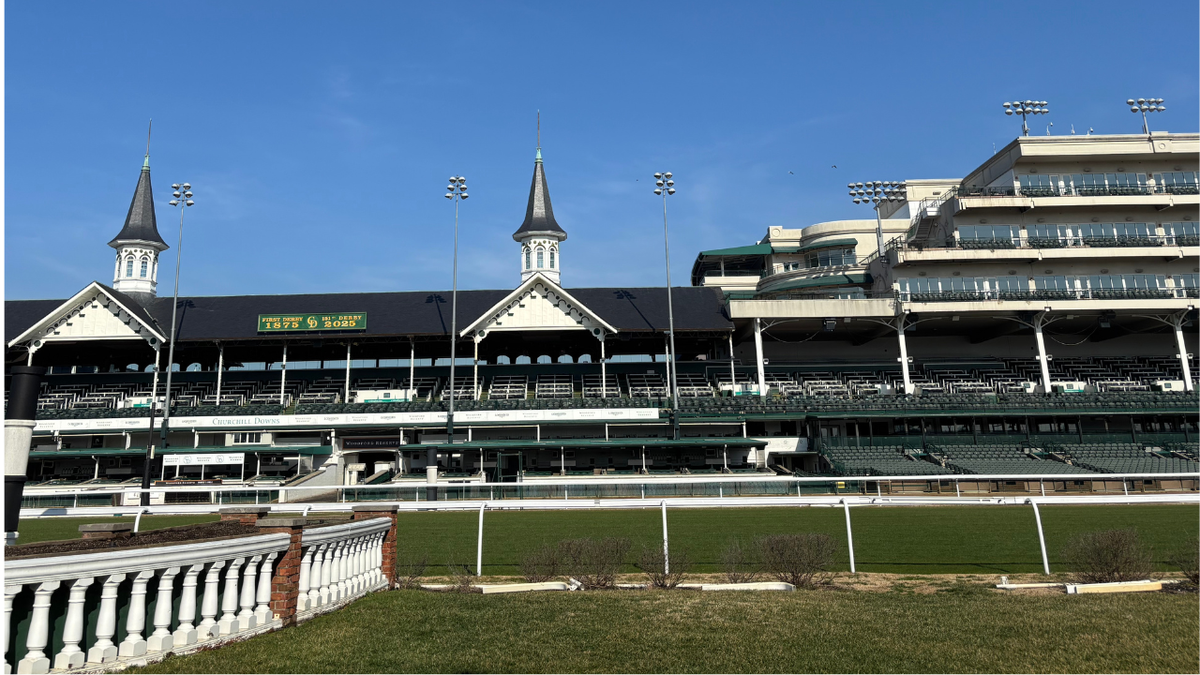
A view of the Kentucky Derby grandstand at Churchill Downs, where seats can range from $1,000 to more than $16,000. (Amanda Macias/Fox News Digital)
«If you want to be in the Woodford Reserve Paddock Club for a very unique, elite experience, a table on the glass for six would cost you $16,800 a seat,» Darren Rogers of Churchill Downs told Fox News Digital.
«We have a number of different levels of packages to suit the experience guests are looking for, especially out-of-towners and bucket-list visitors.»
CLICK HERE TO DOWNLOAD THE FOX NEWS APP
Meanwhile, tickets on a typical non-Kentucky Derby race day can cost as little as $10.
But, for many, the lofty price is worth paying for a fleeting moment — two minutes that carry years of work, millions of dollars and a lifetime of ambition.
events, museums exhibits, sports, horse racing, kentucky











INTERNACIONAL
Científicas panameñas advierten sobre clínicas que ofrecen tratamientos de células madre no probadas
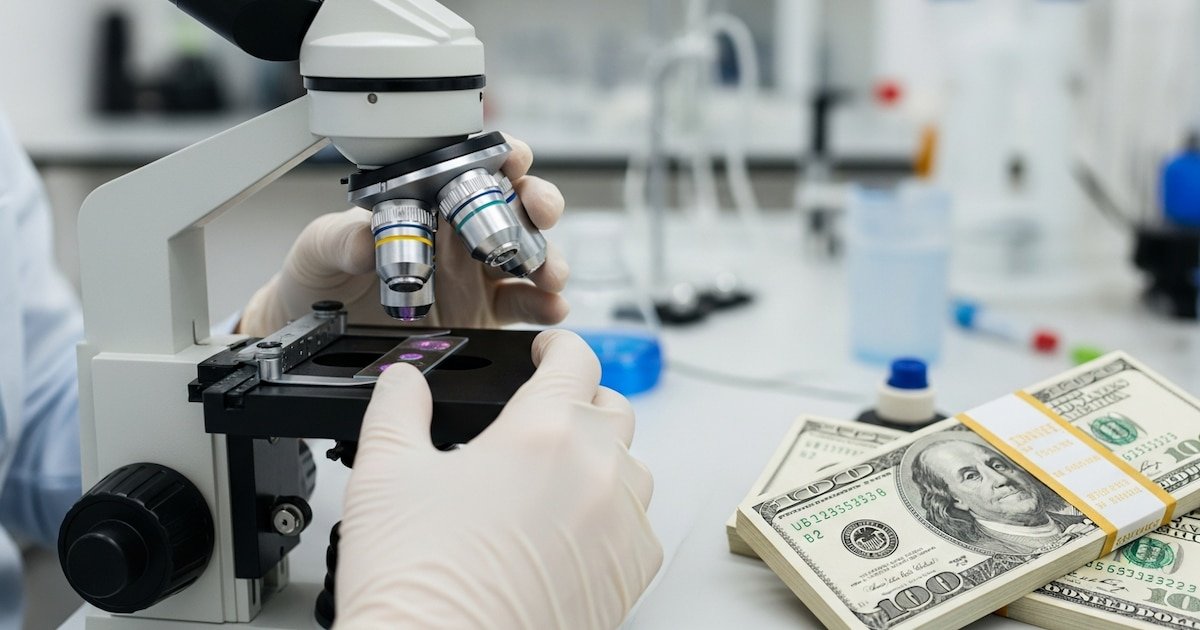
Científicas panameñas advierten que las clínicas que ofrecen terapias con células madre no probadas en Panamá ofrecen supuestas curas para enfermedades crónicas y degenerativas, sin el respaldo probatorio de seguridad y eficacia.
Una terapia experimental no puede presentarse como un tratamiento, señalan las profesionales, adscritas al Instituto Conmemorativo Gorgas de Estudios de la Salud y del Comité Nacional de Bioética de la Investigación.
Indican que para que una intervención sea incorporada a la práctica médica, debe demostrar seguridad y eficacia mediante estudios clínicos controlados.
La comercialización de intervenciones basadas en células madre no probadas plantea desafíos de salud pública, ética y regulatoria.
Un artículo en la revista especializada Stem Cell Reports examina el marketing online en Panamá, identifica nuevos negocios y sostiene que la falta de aplicación regulatoria ha contribuido a su expansión.

Durante más de una década, clínicas de todo el mundo se han establecido en América Latina para ofrecer intervenciones basadas en células madre no probadas para una amplia gama de enfermedades y afecciones, a pesar de carecer de evidencia sólida de seguridad y eficacia.
Los pacientes viajan a países con regulaciones flexibles para estos tratamientos, un fenómeno conocido como “turismo de células madre”, a pesar del posible daño.
La publicación indica que se han reportado extensamente eventos adversos graves tras células madre no probado, incluyendo tromboembolismo, fibrosis, tumores, pérdida de visión severa y muerte.
Varios estudios han identificado empresas en distintos países que ofrecen células madre no probado.
En Panamá, la revista revela que el primer negocio fue identificado en 2013, cuando se estableció el Instituto de Medicina Celular, anteriormente ubicado en India, México y Costa Rica.
Durante ese periodo, se publicaron numerosos anuncios en periódicos locales, revistas de viajes y en redes sociales, utilizando testimonios de celebridades sobre los “tratamientos” recibidos.

La grave brecha regulatoria, junto con el aumento de la comercialización de tratamientos no probado, puso de manifiesto la necesidad de un nuevo marco regulatorio, lo que llevó a la adopción del Decreto 179 por el Ministerio de Salud de Panamá.
En octubre de 2025 se descubrió que seis empresas comercializaban tratamientos no probados en Panamá, cinco de las que se habían reportado anteriormente.
Cada empresa, según la publicación, anunciaba entre seis y diez células madre no probados para una variedad de afecciones, incluyendo lesión medular, autoinmunidad, enfermedades cardiovasculares, autismo, esclerosis múltiple, fertilidad, neurológica, pulmonar, ortopédica, relacionada con la edad, dolor y parálisis cerebral.
Todas estas empresas comercializaban en sus sitios web el uso de células madre mesenquimales derivadas de sangre o tejido del cordón umbilical; dos empresas también declararon el uso de células madre derivado del adiposo; y células madres derivado de médula ósea. El método de administración fue intravenoso (83%), intratecal o intraarticular (33%) y intramuscular o perilinfático para un centro.
Los precios oscilaban entre $5.000 a $50.000 y las plataformas de redes sociales estaban integradas en sus sitios web, incluyendo Instagram o YouTube (67%), Facebook, LinkedIn o X/Twitter (33%).

Todas las empresas ofrecían paquetes de turismo médico, combinando “tratamiento” con servicios adicionales, como vuelos, alojamiento y visitas locales. Se identificaron más de 200 testimonios de pacientes, que van desde 13 hasta más de 170 por empresa.
Los posibles riesgos para la salud pública asociados a una célula madre no probada exigen acciones rápidas para reforzar el marco regulatorio nacional que garantice la protección de la salud pública.
A pesar de los avances en la regulación de la investigación con células madre y su aplicación clínica en Panamá, la publicación manifiesta que el creciente número de empresas que comercializan células madre no probado es preocupante. Los organismos reguladores deberían priorizar la estricta aplicación de cartas de advertencia o sanciones contra empresas que comercializan terapias no probadas.
La información precisa y científica sobre la validez y los riesgos de las aplicaciones de células madre es crucial para proteger al público, informar a los profesionales médicos y proteger los avances legítimos en investigación frente a afirmaciones infundadas, se comenta.
Los efectos positivos de las acciones regulatorias adoptadas por otros países en esta área son evidentes, por lo que la revista especializada dice que este enfoque podría adoptarse para mitigar la comercialización local de células madre no probadas y promover la seguridad del paciente, al tiempo que fomenta la investigación ética y científicamente fundamentada en células madre que abrirá nuevas posibilidades en este prometedor campo. No duda en afirmar que “es hora de que los organismos reguladores en Panamá tomen medidas”.
rejuvenecimiento celular,células madre,fibras musculares,regeneración,biología,microscopía,ciencia,salud,investigación,medicina
INTERNACIONAL
100 day sprint to the midterms kicks off as Republicans and Democrats clash for control across the country
GOP look to tie Dems to DSA in midterm strategy, panel debates influence
Evan Power and Morgan Harper discuss the impact of Democratic Socialists of America (DSA) on midterm elections. Power argues that linking Democrats to DSA’s radical agenda will benefit Republicans, especially in states like Florida. Harper contends that the Democratic base prioritizes winning candidates, such as Troy Jackson, who champion strong economic populist agendas.
NEWYou can now listen to Fox News articles!
The 2026 midterm elections are 100 days away as Republicans and Democrats will battle in Congress and statehouses across the country for control over the future of the country in what is expected to be a contentious and expensive campaign season.
Republicans currently hold narrow majorities in both chambers of Congress, controlling the House with a razor-thin 218-212 edge, with one independent and four vacancies, and the Senate with a 53-47 advantage, including two independents who caucus with Democrats.
With every House seat and 35 Senate seats on the ballot, Democrats need a net gain of just six House seats to reclaim the speaker’s gavel and four Senate seats to win back the upper chamber, making even a handful of competitive races capable of reshaping the balance of power in Washington.
The latest Fox News Power Rankings suggest a tough road ahead for Republicans as they go up against the historical headwind of the party not in power usually performing well in midterm elections, but the GOP will be bolstered in the House by redistricting wins in states like Florida and Texas.
FOX NEWS POLL: VOTERS WANT MAJOR CHANGE AMID ECONOMIC AND POLITICAL DISCONTENT
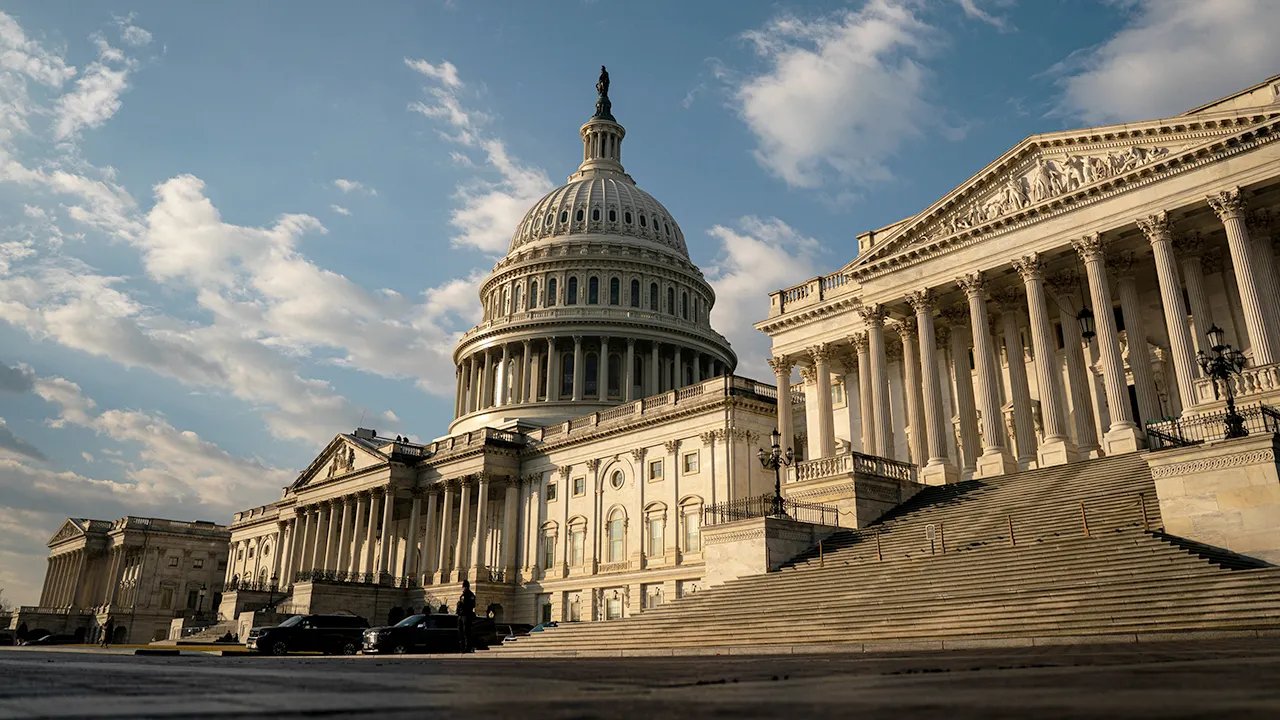
The U.S. Capitol in Washington, D.C., on Jan. 7, 2026. (Al Drago/Bloomberg via Getty Images)
«We are in a prime position to win it in November,» Republican National Committee (RNC) Chair Joe Gruters told Fox News this week. «Under Biden we had some of the highest inflation ever. Gas prices were high. And this president has gone to bat for average Americans every single day, starting with ‘Working Family Tax Cuts,’ no tax on tips, overtime, social security. The fact that he’s been going to bat for the American worker, bringing record setting investments. The fact that he closed the border down.»
The Democratic Congressional Campaign Committee (DCCC), has been focusing on the economy and affordability in its messaging over the last few days as they promote Democrats in House races.
«From groceries to gas to health care, House Republicans have bled Americans’ wallets dry with their cost-raising agenda,» DCCC spokesperson Nebeyatt Betre said in a press release. «Voters are exhausted by all the bad news vulnerable House Republicans have created, and the DCCC is working to make sure voters know they can hold Republicans accountable on Election Day.»
If the election were today, 53% of voters would back the Democratic candidate in their House district and 46% the Republican,» a Fox News poll released this week showed. That 7-point edge is just outside the poll’s margin of error.
Democrats were up by 5 points in April. Notably, 53% is the highest percentage either party has received on the generic House ballot in Fox News polling since 1996.
But helping the GOP in the battle for the House majority: the mid-decade redistricting fight over the past year between the two parties, which handed Republicans a net gain of roughly 10 additional right-leaning congressional districts.
DSA MEMBER LEADS DEM PRIMARY IN MIDWEST BATTLEGROUND BUT TRAILS LIKELY GOP NOMINEE: POLL
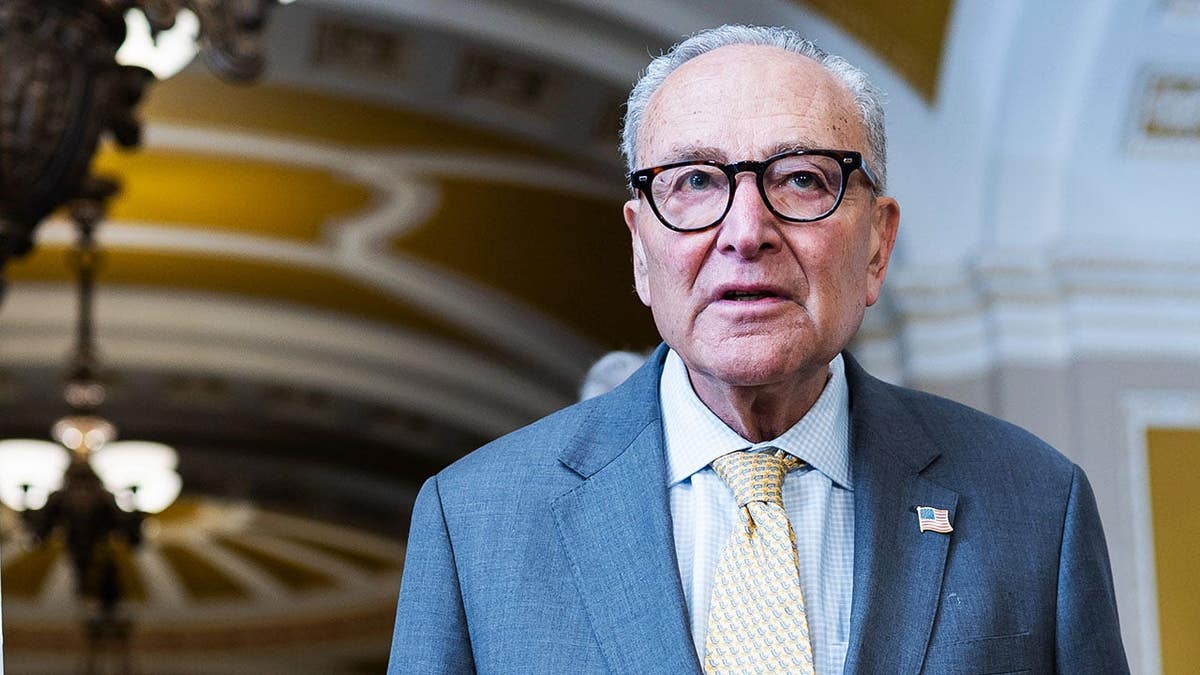
Senate Minority Leader Chuck Schumer, D-N.Y., prepares to speak during a press conference at the U.S. Capitol on July 21, 2026, in Washington, D.C. (Getty Images)
In the Senate, Republicans are looking to hold on to seats in Alaska, North Carolina, Ohio, and Maine with record amounts of spending already pouring into those states as Democrats hope to capitalize on the historic, economic, foreign policy and anti-incumbent mood among voters.
The upcoming November clash comes as the Democratic Party deals with a socialist wave of candidates taking more and more control and winning primary races across the country, causing headaches for establishment Democratic leaders like Sen. Chuck Schumer and Rep. Hakeem Jeffries, the top two Democrats in Congress.
Just 50% of voters have a positive view of capitalism, down from a high of 57% in 2019, Fox News polling shows. For socialism, it’s 30% favorable, up from 27% last year but below the 32% who said the same in 2021. The Democratic Socialists of America are viewed positively by 31%.
By an 11-point margin, more Democrats have a favorable opinion of socialism (52%) than capitalism (41%), while by a 50-point margin, more Republicans have a positive view of capitalism (61%) than socialism (11%).
GOP RIFT GROWS AS THUNE HITS BRAKES ON TRUMP’S ELECTION BILL TO AVERT SHUTDOWN

House Speaker Mike Johnson, Republican of Louisiana, speaks to members of the media after a meeting with House Republicans at the U.S. Capitol in Washington, D.C. on July 15, 2026. (Graeme Sloan/Bloomberg via Getty Images)
Republicans are hoping to capitalize on the socialist rise within the Democratic Party, particularly after the socialist victories in New York City that rocked the political landscape in recent months.
«Democrats want to export New York’s ‘commie corridor’ to a state near you, bringing crippling tax hikes, dismantled law enforcement, and bloated government spending with it,» NRSC national press decretary Bernadette Breslin said in a statement to Fox News Digital. «Americans will reject Democrats’ socialist spending spree this November and elect Republicans committed to advancing an affordability agenda that keeps the American Dream within reach.»
NRCC spokesman Mike Marinella told Fox News Digital that Republicans have the «momentum» and over the next 100 days, House Democrats will «spend every day trying to explain away their radical socialist record and why they opposed tax relief for working families, stronger border security, voter ID, and countless common-sense policies Americans overwhelmingly support.»
The RNC enters the final 100 days before the 2026 midterms with a significant financial advantage over its Democratic counterpart. According to the latest Federal Election Commission filings, the RNC has roughly $125.5 million in cash on hand, compared to about $14.9 million for the Democratic National Committee, which is also carrying approximately $18 million in debt.
While Democrats remain competitive through their congressional campaign committees and strong fundraising by individual candidates, the national party apparatus currently favors Republicans by a wide margin.
«So why does the DNC have less cash on hand than some expect?» DNC Chair Ken Martin wrote in a memo this week. «Because we made a conscious decision to invest money in the work required to win in 2025, 2026 and beyond. We are converting the cash we raise into electoral assets: more people, earlier organizing, better technology, and stronger state parties.»
Martin continued, «That answer may be unsatisfying to people who believe the purpose of a political party is to accumulate the largest possible bank balance until the final days before an election. But a party is not a savings account. Its purpose is to build power.»
Beyond Capitol Hill, control of governors’ mansions is also up for grabs as Republicans currently hold 26 governorships to Democrats’ 24, with 36 states electing governors this November, including a number of battlegrounds that will shape redistricting, election administration and state policy for years to come.
The results will help determine whether President Donald Trump enters the second half of his term with a Republican governing trifecta or faces a divided government that could dramatically alter the trajectory of his legislative agenda.
«We are nearly 100 days until Election Day, and the stakes for governor’s races across the country have never been higher,» Democratic Governors Association (DGA) Chair and Kentucky Gov. Andy Beshear said in a press release this week.
CLICK HERE TO DOWNLOAD THE FOX NEWS APP
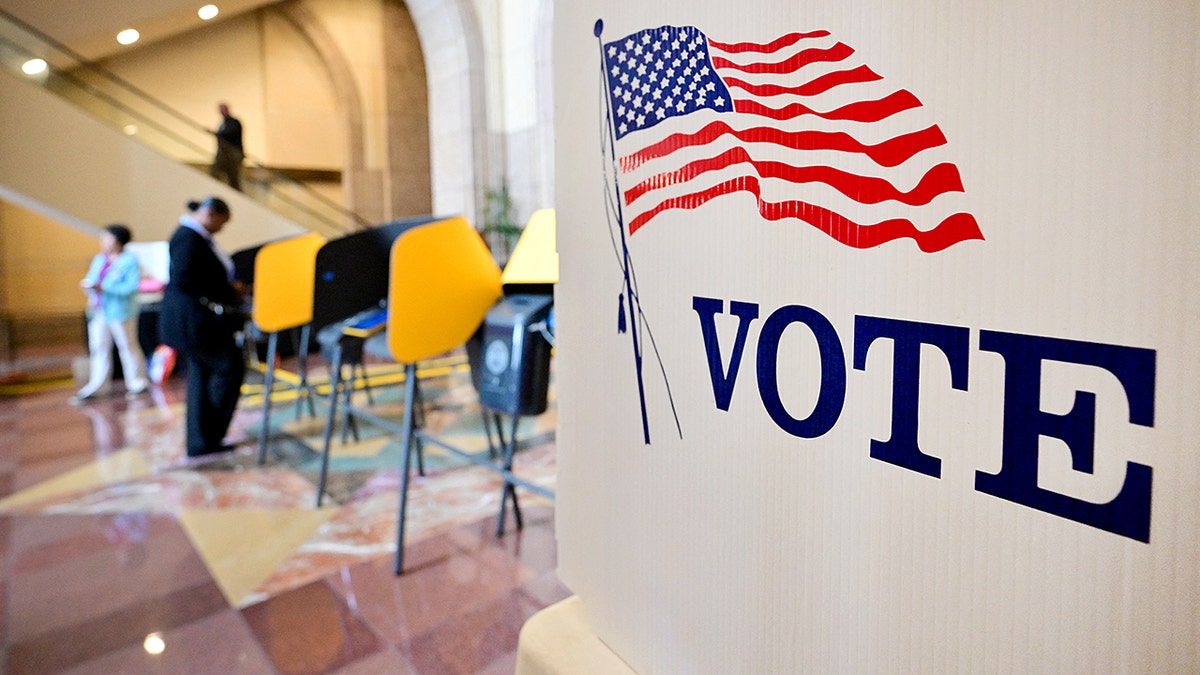
Democrats need a net gain of just six House seats to reclaim the majority gavel and four seats to win back the Senate. (Adam Gray/Bloomberg via Getty Images)
«Donald Trump and Republican candidates for governor have a harmful, cost-raising agenda that is making life harder at every turn – and doing everything in their power to restrict our fundamental freedoms. But Democratic governors know how to fight back, and the DGA has the record to prove it.»
Republican Governors Association (RGA) spokesperson Kollin Crompton said in a statement to Fox News Digital that «the contrast couldn’t be clearer» between the two parties 100 days out from the midterms.
«Republican governors are leading the nation in jobs, wage growth, affordability, safety, and opportunity. Democrat governors are leading in higher taxes, higher costs, rising crime, and families fleeing their states,» Krompton said. «It’s common sense versus crazy. Results versus excuses. And we’ll spend every day until Election Day reminding voters which party is delivering.»
Several findings in the latest Fox News Poll show voters are unhappy and want major change, which bodes well for Democrats in November: Trump’s job approval remains near a record low, more Democrats are motivated to vote, Republicans join Democrats and independents in rating the economy negatively, and 4 in 10 voters want «dramatic» or «revolutionary» change. Plus, more view the GOP as tied to elites than the Democratic Party.
Voters say Democrats can better handle income inequality (+22 points), healthcare (+21), inflation (+10), the economy (+9), and foreign policy (+7). Republicans hold the advantage on crime (+7 points), while government spending (Democrats +3) and national security (R +2) are more evenly divided. On immigration, the GOP had an 8-point edge in April. Now, Democrats are preferred by one point.
More Democrats (68%) say they are extremely motivated to vote in November than Republicans (57%) by an 11-point margin. By a 25-point spread, more MAGA Republicans (66%) are extremely motivated than non-MAGA Republicans (41%).
Fox News’s Dana Blanton and Remy Numa contributed to this report.
elections, midterm elections, politics, house of representatives politics, senate
INTERNACIONAL
Hamas taps ‘ultimate institutional survivor’ as terror chief, sending message to Israel: expert

Gazans react to the killings of Hamas terror leaders
Ex-political prisoner and activists says people are frustrated with Hamas leadership after Israel’s killing of senior commanders, as many residents say civilians — not Hamas leaders — have paid the price of the war (Credit: Jusoor News)
NEWYou can now listen to Fox News articles!
An old hand very familiar to Israel has emerged as the new political leader of Hamas following a secret insider election that took months to unfold, and one regional expert said the development signals the terrorist group will not be charting a new course.
Khalil al-Hayya, who has been a key negotiator for Hamas and who has survived multiple alleged assassination attempts, will now lead the group’s political bureau. But Middle East Institute Senior Fellow Jaser AbuMousa told Fox News Digital his election is not exactly a passing of the torch.
«Expect more of the same, deliberately,» AbuMousa said. «Al-Hayya is Hamas’s chief negotiator and its ultimate institutional survivor, so you’ll see continued engagement at the negotiating table, ceasefire talks, prisoner exchanges, but do not mistake that for moderation.»
HAMAS SAYS IT WILL DISSOLVE GAZA GOVERNMENT, BUT ISRAEL WARNS GROUP STILL SEEKS HEZBOLLAH-STYLE CONTROL
Al-Hayya, Hamas’ longtime chief negotiator in indirect ceasefire and hostage talks with Israel, will now lead its political bureau. (Louai Beshara/AFP via Getty Images)
«Al-Hayya’s victory is best understood as an act of institutional self-preservation: a battered organization reaching for the most familiar hand available,» AbuMousa warned. «He is an experienced operator, and his elevation signals that Hamas, after the destruction of Gaza and the losses since Oct. 7, 2023, has prioritized organizational cohesion, armed continuity, and the preservation of its Iranian relationship over a genuine political reassessment.»
Several members of al-Hayya’s family, including four sons and other relatives, have also been killed in Israeli operations, according to reports.
In September 2025, Israel reportedly sought to kill al-Hayya in Qatar, striking a building where the Hamas delegation was staying.
«This is the paradox of Hamas leadership right now: the top job is essentially a death sentence, which is part of why the chair sat empty for nearly two years after Sinwar was killed,» the expert said.
ISRAEL’S MILITARY ELIMINATES HAMAS TERRORIST WHO HELPED ABDUCT AMERICAN-ISRAELI HOSTAGE, 3 OTHERS

Analysts say Al-Hayya’s elevation signals that Hamas, after the destruction of Gaza and the losses since Oct. 7, 2023, has prioritized organizational cohesion, armed continuity, and the preservation of its Iranian relationship. (Iranian Leader Press Office / Handout/Anadolu via Getty Images)
«Al-Hayya himself also survived the Israeli strike in Doha last September. For an ordinary executive, that would be disqualifying,» he noted. «Inside Hamas it’s the opposite — surviving assassination is a credential.»
«Expect him to lead the way his predecessors did: rarely in public, moving between Doha and mediating capitals, communicating through statements and negotiators rather than appearances, with the real command decentralized so no single strike decapitates the movement,» AbuMousa continued. «An organization that rewards who has suffered most, rather than who has led best, has no real mechanism to correct course after a catastrophe like this one. That’s what should make anyone nervous.»
«Al-Hayya lost his four sons, which is a real and profound loss for any father. But two things can be true at once,» he noted. «His personal grief is genuine, and inside Hamas that sacrifice also functions as political capital that lifts him above criticism.»
IDF CLAIMS TO HAVE TAKEN OUT HAMAS COMMANDER WHO PARTICIPATED IN OCT 7

Al-Hayya replaced Yahya Sinwar, who was killed by Israeli forces in late 2024. (Fatemeh Bahrami/Anadolu via Getty Images)
While Al-Hayya replaced Yahya Sinwar, who was killed by Israeli forces in October 2024, his rise to power followed a secret election that stretched over months.
«After the near-total destruction of Gaza and staggering losses since Oct. 7, Hamas had a moment to reassess, and it chose continuity instead,» AbuMousa said. «It elevated a loyal survivor tied to Iran and the military wing rather than someone offering a different path.»
«The real story,» according to AbuMousa, «is that Hamas decided its safest bet was to remain exactly what it was: armed, aligned with Tehran, and unwilling to reckon with where its own decisions led Gaza.»
He also cautioned against viewing the leadership vote as a mandate from Gazans.
CLICK HERE TO DOWNLOAD THE FOX NEWS APP
«This was a closed vote by a leadership council, not an election by the roughly 2 million Gazans whose lives Hamas claims to represent and who haven’t voted since 2006. Many of them blame Hamas for exposing them to this catastrophe,» he said.
«And watch the likely governance model: not a return to running Gaza openly, but a Hezbollah-style arrangement where Hamas sheds visible responsibility while keeping its weapons, its security structures, and a veto over any political deal,» he added.
middle east, israel, hamas, terrorism, conflicts

Video: el insólito penal de Kannemann para el primer gol de Hulk en Fluminense

Qué dice el comunicado con el que Brasil repudió los dichos de Milei contra Lula

El conflicto en Medio Oriente y el desplome de las tecnológicas sacudieron a los mercados y golpearon a los activos argentinos

Denuncian nuevos casos de perros envenenados en Bolívar: convulsionaron y murieron en pocos minutos

El horóscopo de hoy: lunes 27 de julio

“Es un gran arquero y estamos interesados”: el técnico de un gigante de Europa confirmó que quiere a Dibu Martínez

Sin la anestesia mundialista, aflora la crisis del conurbano y Milei necesita reconectar con lo popular

Senado: Bullrich y Sturzenegger cierran filas para tratar de avanzar con la extranjerización de tierras
Marc Stanley destacó el potencial de Vaca Muerta para “estabilizar la economía” y evitó hablar de política interna

Mujeres libertarias: se declaran antifeministas, defienden con pasión las ideas de Milei y buscan pisar más fuerte

 ECONOMIA2 días ago
Vocero de Milei dijo que un dólar a $1.800 es «posible» y la City alerta por fin de la paz cambiaria
- ECONOMIA3 días ago
Polémica por el proyecto que busca desregular los planes de ahorro de autos 0 km: qué podría cambiar
- INTERNACIONAL3 días ago
Panorama internacional: Brasil, una batalla electoral no solo de los brasileños