
INTERNACIONAL
Mother recounts horrors of brutal Chinese detention camp where infant son died


NEWYou can now listen to Fox News articles!
At first, Mihrigul Tursun speaks with remarkable control.
Sitting in Washington in a neatly pressed blue suit, the 35-year-old Uyghur mother answers questions softly, almost cautiously. But once the memories begin, they arrive all at once, in vivid and painful detail, as though the years separating her from China’s detention system no longer exist.
The story pours out of her in relentless detail, one memory collapsing into another: the underground cells, the interrogations, the women screaming at night, the smell of overcrowded prison rooms, the body of her infant son lying motionless in her arms as she desperately tried to warm him back to life.
For Tursun, the horror is not something she remembers. It is something she says she continues to live with every day.
WOMAN WHO SPENT 7 YEARS IN CHINESE PRISON DESCRIBES TORTURE, SURVEILLANCE AND LOSS OF HER HUSBAND
Mihrigul Tursun, a Uyghur woman who testified publicly about her detention and alleged torture inside China’s detention system, during an interview with Fox News Digital in Washington, D.C. (Fox News)
And always, there is fear.
Not fear for herself, exactly. That, she suggests, stopped mattering long ago.
The fear is for the family members she believes remain vulnerable inside China because she chose to publicly describe what happened to her, only because of her faith.
Her story unfolds as President Donald Trump visits China this week for meetings with Chinese leader Xi Jinping, with trade, security and regional tensions dominating headlines. But for Tursun, China is not an abstract geopolitical rival. It is the country she says destroyed her family, shattered her health and left psychological wounds she still struggles to survive every day.
She says she speaks publicly because too few people who survived China’s detention system are able, or willing, to tell the world what they saw.
«People think this only happened in history,» she said. «But it is still happening.»
ELITE US COLLEGES LINKED TO CHINESE SURVEILLANCE LABS DRIVING UYGHUR ‘GENOCIDE,’ STUDY WARNS
Tursun was born in Xinjiang, the far western region China officially calls the Xinjiang Uyghur Autonomous Region, home to millions of Uyghurs, a predominantly Muslim ethnic minority with their own language and culture. For years, human rights groups, researchers and former detainees have accused Beijing of carrying out mass detention, forced labor, political indoctrination and severe religious repression against Uyghurs and other Muslim minorities.
China denies the allegations, describing the facilities as vocational training centers aimed at combating extremism and terrorism.
Tursun says her own relationship with the Chinese state began long before the camps.
SURVIVOR OF CHINA’S CULTURAL REVOLUTION WARNS AGAINST LETTING 600,000 CHINESE STUDENTS STUDY AT US COLLEGES
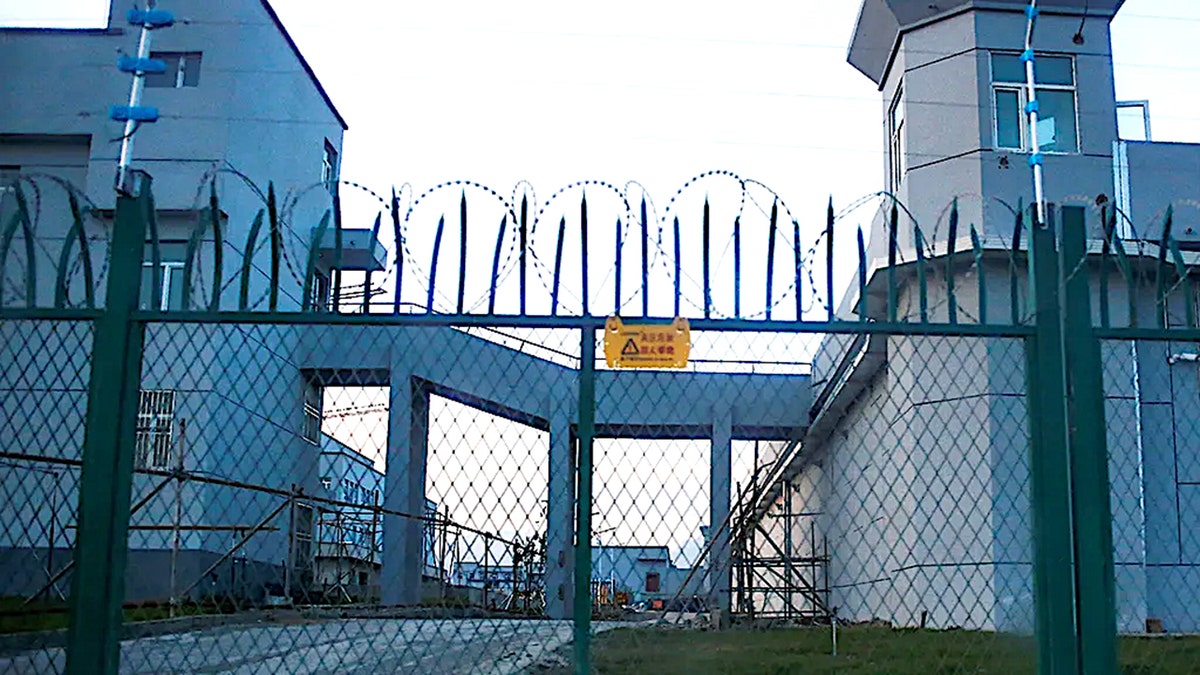
A perimeter fence is constructed around what is officially known as a vocational skills education center in Dabancheng in Xinjiang Uighur Autonomous Region, China Sept. 4, 2018. (Thomas Peter/Reuters)
At age 10, she said, she was sent by the government to study inside China in Mandarin-language schools designed to assimilate Uyghur children into mainstream Chinese society.
«They educate us as Chinese mind,» she said.
Years later, she moved to Egypt to study business administration. There, she married an Egyptian man and gave birth to triplets in 2015: two boys and a girl.
The children were only two months old when her parents urged her to return to China so they could meet their grandchildren and help care for them.
Tursun resisted at first. The babies were too young to travel, she told them. But her mother insisted it was urgent.
On May 12, 2015, she boarded a flight to China carrying the newborns.
She says the nightmare began almost immediately after landing in Beijing.
At the airport, two people approached and offered to help carry the babies through border control. Moments later, she said, they identified themselves as police officers.
«They say, ‘Keep silent. Follow us,’» she recalled.
TRUMP PLEDGES TO RAISE DETAINED PASTOR’S CASE WITH XI JINPING DURING BEIJING VISIT AS FAMILY PLEADS FOR HELP
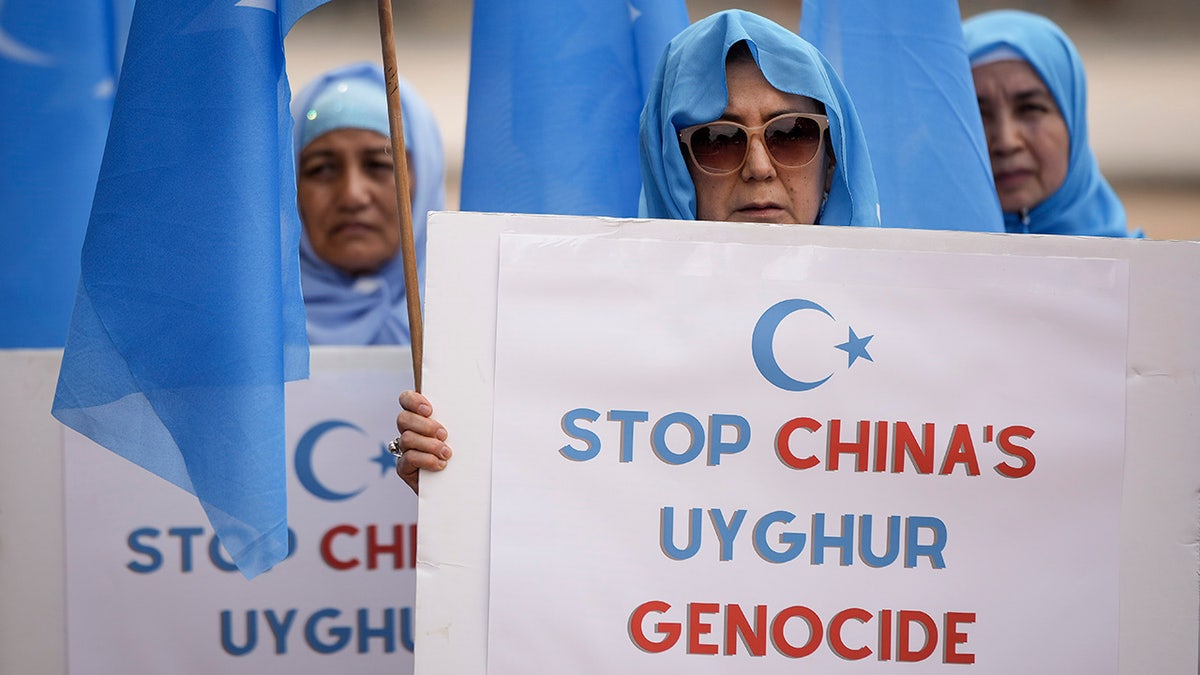
Supporters of the East Turkistan National Awakening Movement rally in front of the White House in Washington, D.C., on July 5, 2022, to mark the 13th anniversary of the Urumqi Massacre and call for recognition of East Turkistan as an occupied country. (Drew Angerer/Getty Images)
Tursun said officers separated her from the children and interrogated her for hours about her time in Egypt, asking whether she had participated in political activities or anti-Chinese events. She repeatedly asked to see her babies, explaining they needed to be breastfed.
Instead, she says officers placed a black hood over her head, handcuffed her and transferred her to detention in Xinjiang.
There, she says, interrogations and torture began.
Weeks later, authorities temporarily released her after informing her that one of her children was sick. Escorted by police to a hospital in Urumqi, she found her surviving son and daughter separated on different floors, connected to oxygen tubes.
The next day, doctors handed her paperwork to sign.
At the top, she said, were the words: «Death certification.»
The document bore the name of her infant son. «They say, ‘This is your son,’» she recalled softly.
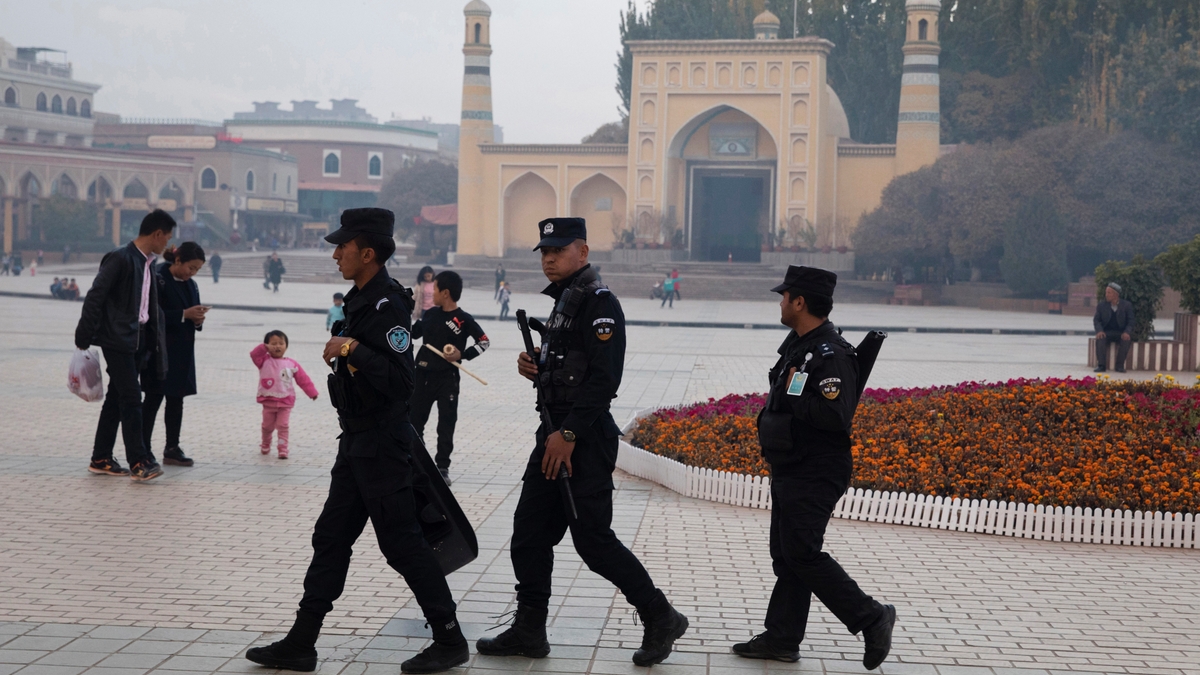
FILE – In this Nov. 4, 2017 file photo, Uighur security personnel patrol near the Id Kah Mosque in Kashgar in western China’s Xinjiang region. China’s northwestern region of Xinjiang has revised legislation to allow the detention of suspected extremists in «education and training centers.» The revisions come amid rising international concern over a harsh crackdown in Xinjiang that has led to as many as 1 million of China’s Uyghurs and other Muslim minorities being held in internment camps. (Ng Han Guan/AP Photo)
Doctors refused to explain what had happened, she said. Because she was considered a political suspect, she says no one would answer her questions.
For three days, she kept her son’s body with her at her parents’ home under constant police surveillance.
As Muslims, the family wanted to bring the child to a mosque and bury him according to religious tradition, she said, but authorities would not allow anyone to see the body.
«The body stayed with me three days,» she said. «I try to give him warmth. I try to let him wake up.»
He never opened his eyes again, she says as tears filled her eyes.
Following her son’s burial, she says authorities expelled her family from their home and detained her again. Between 2015 and 2018, she was transferred between multiple prisons and detention facilities where she endured psychological abuse, interrogations and torture.
REPORT DETAILS RISING PRESSURE ON UNDERGROUND CATHOLICS AS CHINA DENIES CRACKDOWN
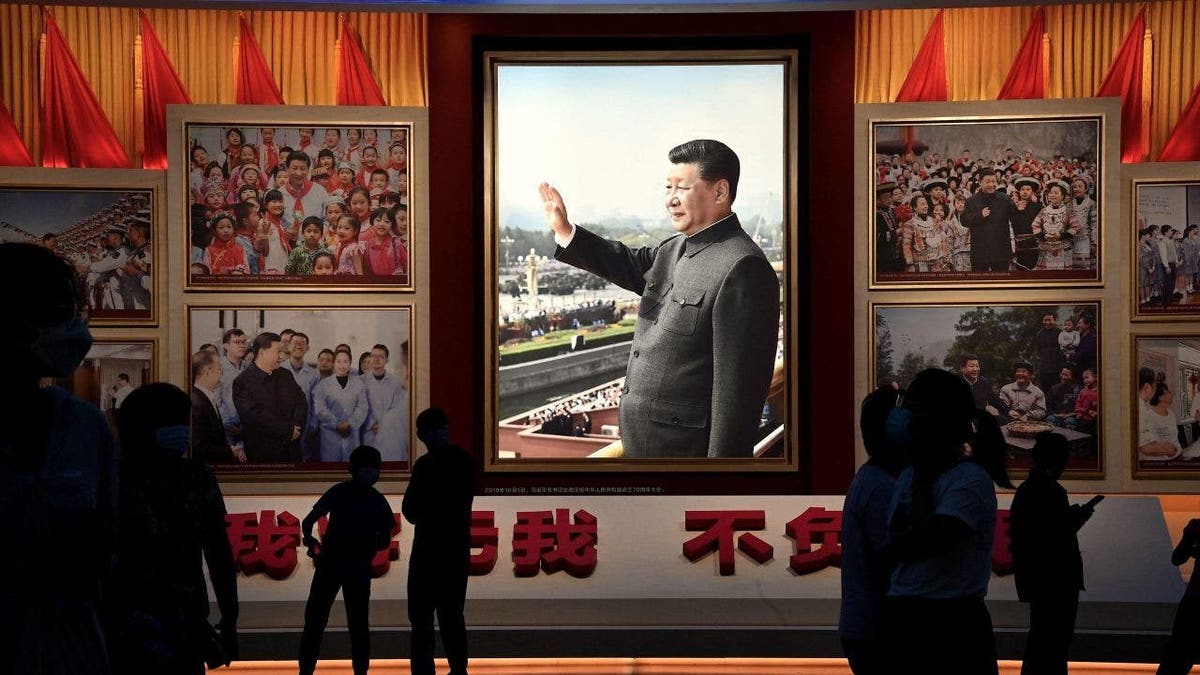
People stand in front of images of Chinese President Xi Jinping at the Museum of the Communist Party of China in Beijing on Sept. 4, 2022. (Noel Celis/AFP)
One memory still haunts her more than any other.
During an interrogation, she says officers mocked her faith after she told them God would punish them for what they were doing.
«Chinese Communist Party is God,» she recalled them saying. «Xi Jinping is God.»
Then, she said, officers shaved her hair and applied electric shocks to her head until she lost consciousness.
Tursun also described what she says were systematic medical examinations performed on detainees, including blood tests and organ screenings. Similar allegations from former detainees have fueled longstanding accusations by activists and researchers that Chinese authorities harvested organs from prisoners of conscience, claims Beijing has repeatedly denied.
Inside one detention facility, she says more than 60 women were packed into a small cell under constant surveillance. Some had not seen sunlight for more than a year, she claimed.
CHINESE UNDERGROUND CHURCH PASTOR, FATHER OF US CITIZENS, DETAINED BY AUTHORITIES, FAMILY SAYS
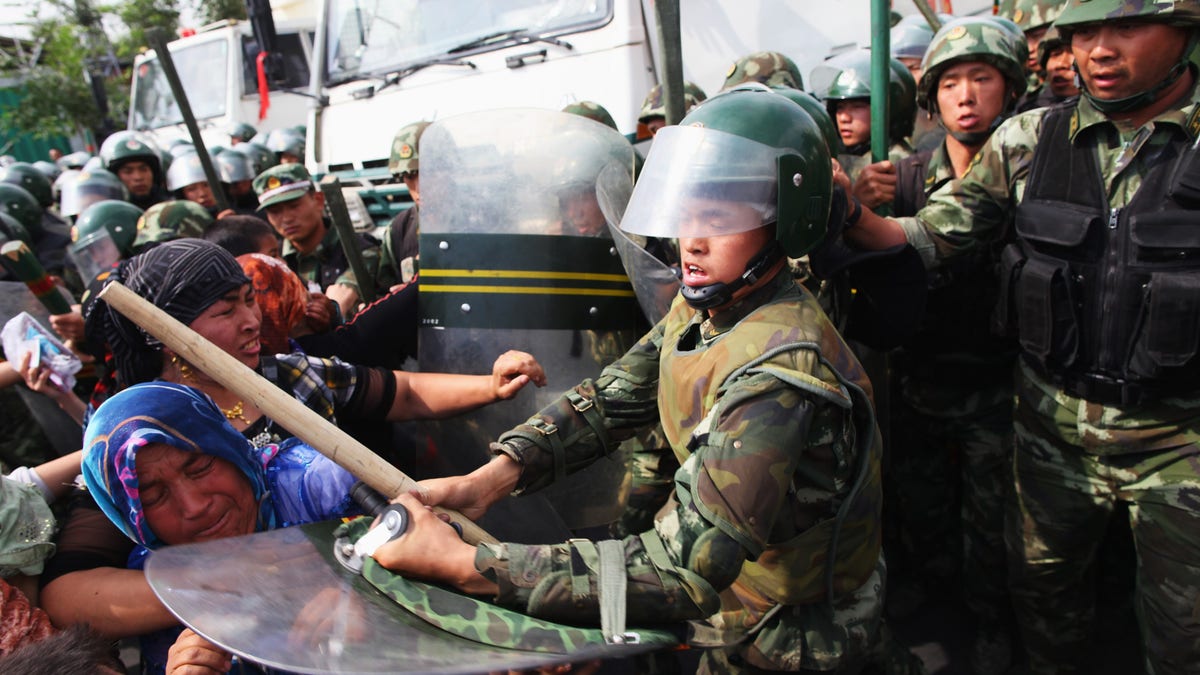
Chinese policemen push Uighur women protesting on a street in Urumqi, the capital of Xinjiang Uighur autonomous region, on July 7, 2009. Hundreds of Uighur people protested after relatives were detained following ethnic riots that killed 156 people in the region.
Many of the women were educated professionals: teachers, doctors, neighbors she recognized from outside prison.
Others were barely more than children.
She recalled one 17-year-old Uyghur girl from a remote village who had never traveled outside her hometown and asked basic questions about the outside world, like how people can fit inside airplanes.
Weeks later, Tursun says, guards took the teenager away. When she returned, she appeared bloodied and severely traumatized. She was sexually attacked.
Two months later, the girl died. Tursun broke into tears. «No one care about that.»
She says guards dragged the girl’s body away «like trash.»
Eventually, her husband was able to locate her and the children, and after the Egyptian authorities intervened, she was allowed to leave China — after both of them signed to never talk about their experience.
Today, Tursun lives in the United States with her surviving children after eventually receiving refuge following congressional testimony in 2018 about her experiences in China.
In many ways, she is among the fortunate few.
Her children are alive. They are safe. They are growing up in America rather than under constant state surveillance in Xinjiang.
But survival, she says, is not the same thing as healing.
Her physical health remains fragile. So does her mental health. She says trauma follows her constantly, affecting her sleep, her memory and even ordinary daily routines.
«There is no one hour I forget,» she said.
CHINA FORMALLY ARRESTS 18 LEADERS OF UNDERGROUND ZION CHURCH AMID RELIGIOUS CRACKDOWN
Sometimes, she admitted quietly, she no longer wants to continue living.
It is her children, she says, who keep her going. And the obligation she feels toward the women she left behind.
The women whose faces she still remembers. The women she watched deteriorate inside the camps. The women she says died there. That obligation, she says, is stronger than fear.
Former Ambassador-at-Large for International Religious Freedom Sam Brownback, who interviewed Tursun for his recent book on religious persecution in China, believes stories like hers expose what he describes as the Chinese Communist Party’s deepest insecurity.
«This is the issue they fear the most: religious freedom,» Brownback said during an interview in Washington as Trump arrived in Beijing.
«President Trump, you’re the president that’s done more on religious freedom than any modern president… You need to take this message to President Xi Jinping and his crushing of religion in China.»
«Our fight is not with the Chinese people,» he added. «It’s with the party.»
In a statement to Fox News Digital, Chinese Embassy spokesperson Liu Pengyu said the Chinese government protects «freedom of religious belief in accordance with the law» and argued that people of all ethnic groups in China enjoy religious freedom. Liu pointed to official figures showing nearly 200 million religious believers in China, along with more than 380,000 clerical personnel, approximately 5,500 religious groups and more than 140,000 registered places of worship.
Liu said Beijing regulates religious affairs involving «national interests and the public interest» while opposing what it describes as illegal or criminal activities carried out under the guise of religion. He also accused foreign countries and media outlets of interfering in China’s internal affairs under the pretext of religious freedom and urged journalists to «respect the facts» and stop what he described as «attacking and smearing» China’s religious policies and religious freedom record.
As the interview ended, Tursun gathered herself slowly before stepping back out into the streets of Washington.
CLICK HERE TO DOWNLOAD THE FOX NEWS APP
To strangers passing by, she looked like any other young mother moving through the city.
Only she carries memories most people cannot imagine.
china, persecutions, religion us, xi jinping, islam, refugees










INTERNACIONAL
El Salvador recibe de la ONU equipo para detectar documentos fraudulentos en controles fronterizos
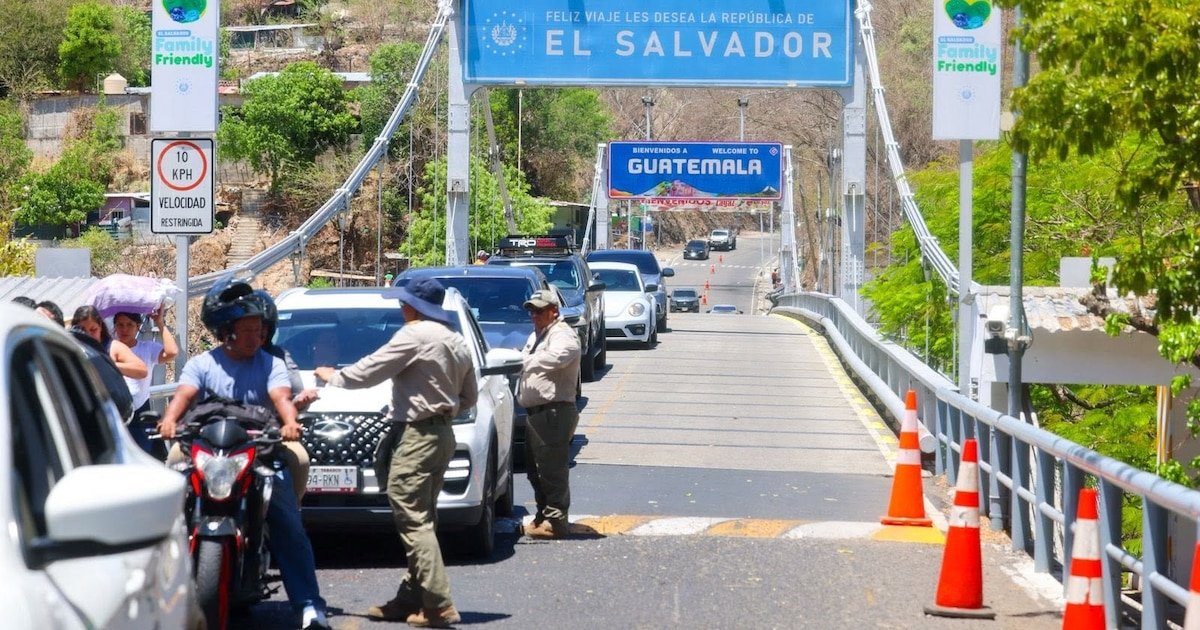
El Salvador incorporó un nuevo dispositivo de verificación documental entregado por la Oficina de las Naciones Unidas contra la Droga y el Delito (UNODC) para reforzar los mecanismos nacionales de identificación de documentos de viaje e identidad fraudulentos. La entrega se realizó en el marco de un proyecto de cooperación internacional, informó el Ministerio de Relaciones Exteriores este viernes.
La ceremonia oficial tuvo lugar en Viena, Austria, y fue organizada por el Laboratorio y Servicios Científicos (LSS) de la UNODC como parte del proyecto “Fortalecimiento de las capacidades para la investigación de la escena del crimen y el examen de documentos de seguridad en América Latina y el Caribe”, financiado por el Gobierno de Canadá. El evento reunió a especialistas en análisis documental y gestión fronteriza de 16 países de América Latina y el Caribe.
De entre los participantes hay otros países centroamericanos: Guatemala, Costa Ria, Honduras, Panamá y República Dominicana. Cada uno de los países participantes recibió un equipo de verificación documental para mejorar la detección y el reconocimiento de documentos fraudulentos en los puntos de control fronterizo y en otras instancias de verificación de identidad, según el Ministerio de Relaciones Exteriores.
“El objetivo del evento fue fortalecer las capacidades nacionales para la detección y el examen de documentos de viaje e identidad fraudulentos, mediante una capacitación especializada en técnicas avanzadas de verificación documental y el uso operativo de dispositivos de verificación de nivel intermedio”, expone la Cancillería salvadoreña.

Durante el evento, se ofreció una capacitación especializada en técnicas avanzadas de verificación documental, enfocada en el uso operativo de dispositivos de nivel intermedio. Representantes de la Policía Nacional Civil (PNC) de El Salvador participaron en el entrenamiento técnico impartido por la UNODC en Viena, donde completaron el proceso de formación y recibieron el equipo correspondiente.
En abril de 2026, La Dirección General de Migración y Extranjería (DGME) informó que en aras del fortalecimiento de la infraestructura limítrofe, El Salvador amplió sus opciones de control migratorio con la apertura de un nuevo punto fronterizo en el cantón El Coco, situado en el distrito de Chalchuapa, departamento de Santa Ana.
Desde el viernes 13 de marzo de 2026, quedó establecido este punto de control que conecta de manera directa con el municipio de Jerez, en el departamento de Jutiapa, Guatemala, lo que permite el tránsito debidamente regulado de personas entre ambas naciones hermanas.

Además, el país lleva dos años desde que la DGME, junto con el respaldo del gobierno de los Estados Unidos, inauguró el Centro Nacional de Análisis de Pasajeros (CENAP). Esta unidad especializada en inteligencia migratoria y perfilamiento de pasajeros facilitó el ingreso seguro al país en vuelos internacionales a través de una sede operativa conjunta.
El CENAP nació como una iniciativa conjunta entre la Dirección de Migración y la Oficina de Aduanas y Protección Fronteriza de Estados Unidos (CBP) para agilizar el ingreso al territorio de forma segura mediante herramientas tecnológicas sofisticadas y equipos de alto nivel.
Esto permitió perfilar y rastrear información de ciudadanos nacionales y extranjeros con destino a El Salvador, examinar ciclos migratorios de perfiles sospechosos, detectar posibles amenazas a la seguridad nacional, identificar personas de riesgo, combatir redes criminales de tráfico de personas, gestionar alertas internacionales y recopilar estadísticas, entre otras acciones.
corresponsal:Desde San Salvador, El Salvador
INTERNACIONAL
Trump’s White House ballroom foes face ‘very tough argument’ at Supreme Court, legal experts say
NEWYou can now listen to Fox News articles!
President Donald Trump could win the legal fight over his planned White House ballroom, say two legal experts who believe the U.S. the Supreme Court could end the case without weighing in on the underlying constitutional issue.
In a lengthy social media post Friday, Trump vowed to take the fight over his White House ballroom to the Supreme Court after the D.C. Circuit upheld a lower court order blocking above-ground construction. In a 2-1 decision, the appeals court ruled that the project cannot move forward without Congressional approval.
Trump pointed to the dissent written by Judge Neomi Rao, appointed by Trump in his first term, as grounds for appealing the decision to Supreme Court. Rao argued that the plantiffs, the National Trust for Historic Preservation, lack legal standing in the case.
The National Trust for Historic Preservation built its case for legal standing around Alison Hoagland, a member who lives near the White House and regularly visits President’s Park. Hoagland said she visits the area about once a month and argued that the proposed ballroom’s size and design would diminish her enjoyment of the area by overshadowing the White House and weakening its aesthetic.
TRUMP SAYS WHITE HOUSE BALLROOM RULING JEOPARDIZES LIVES OF FUTURE PRESIDENTS, VOWS SUPREME COURT APPEAL
President Donald Trump has overseen ongoing construction of the underground military fortress that is going to be below the $400 million privately funded East Wing ballroom. (Chip Somodevilla/Getty Images)
But according to Rao, the National Trust did not establish the kind of injury necessary to invoke the courts’ authority to block the project.
«The district court elevated the aesthetic displeasure of a single passerby over the government’s security interests in the ballroom and the security risks of leaving an open construction site at the President’s home and office,» Rao wrote.
Former Justice Department attorney Abhishek Kambli agreed, telling Fox News Digital the National Trust could face a particularly difficult hurdle on standing at the Supreme Court. He noted that, while Congress created the National Trust, the group still must show that its lawsuit is germaine to its interests.
«While they do have ownership of some properties, the President’s Park, where the White House East Ballroom is, is not one of them,» Kambli said. «And I think that’s going to be a very tough argument to sustain, especially with the Supreme Court, that’s more likely to agree with Rao than they are the [circuit court] majority, given the makeup of the Supreme Court, and the fact that the Supreme Court is very strict on standing.»
OBAMA JUDGE RULES ON EFFORT TO BLOCK AMERICA 250 EVENTS AT WH AND LINCOLN MEMORIAL
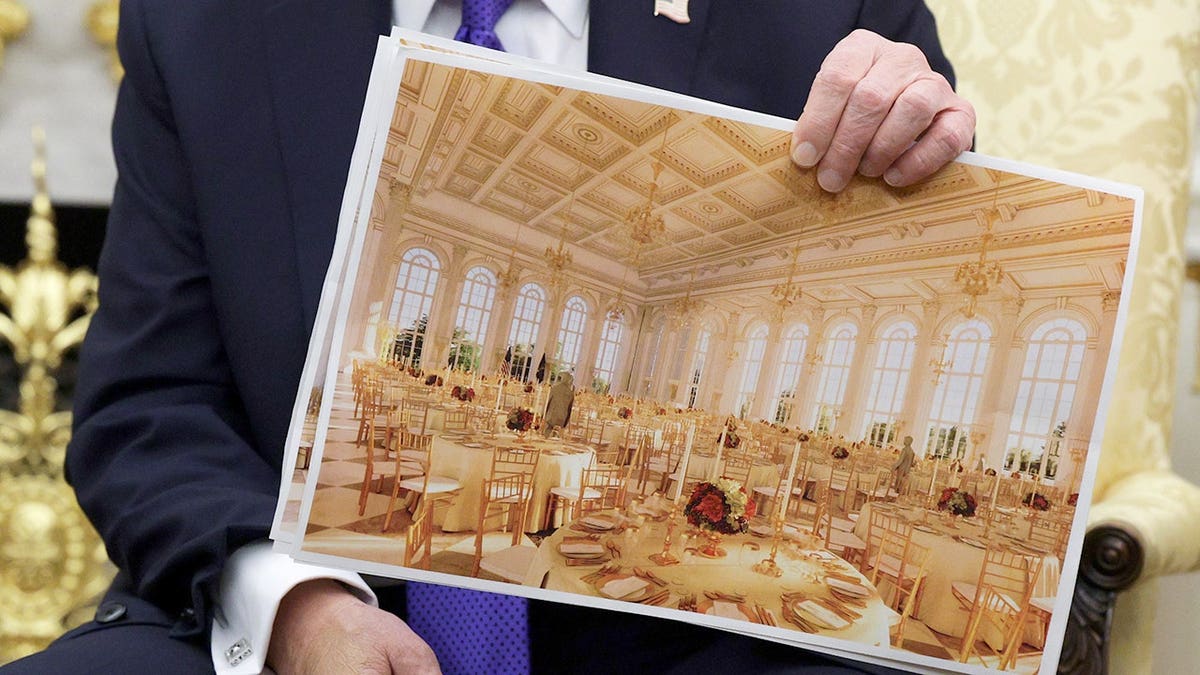
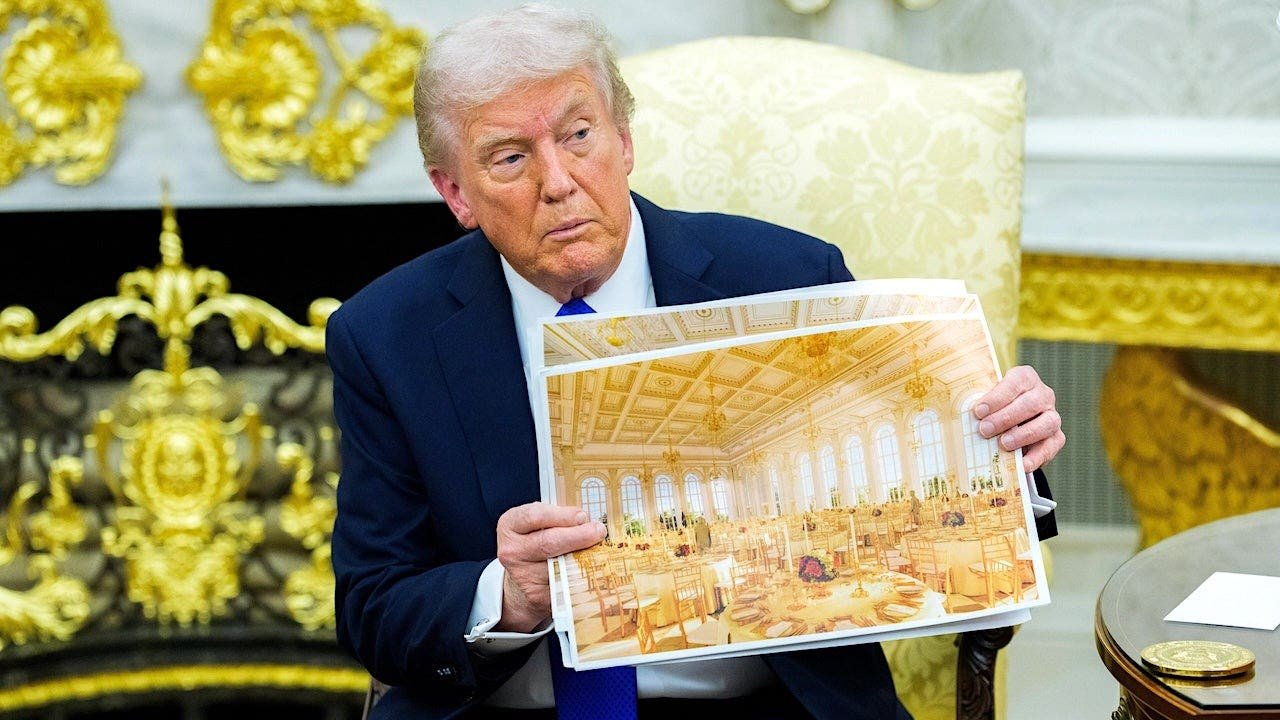
President Donald Trump displays a rendering of his proposed $250 million White House ballroom as he meets with NATO Secretary General Mark Rutte in the Oval Office of the White House in Washington, D.C., on Oct. 22, 2025. (Alex Wong/Getty Images)
Kambli also suggested that the National Trust faces a strong hurdle in proving it has standing based on aesthetic injury because it would have to prove it actually uses the space where the ballroom is being built
.
.
.
«Normally, aesthetic standing requires that you intend to use it,» Kambli said. «So, for instance, if you’re planning to be visiting the East Ballroom — and even this is kind of a stretch — that’s one thing, but if you’re someone on the outside that just passes it by, that’s a little tougher.»
A similar standing issue surfaced earlier in July when U.S. District Judge Amit Mehta, an Obama-appointed judge, rejected a lawsuit seeking to block the America 250 UFC event at the White House. He ruled that the plaintiffs had not met the standard of aesthetic harm to establish standing.
Hans von Spakovsky, a senior legal fellow at Advancing American Freedom, said he expects Trump to prevail on appeal as well, based on the standing issue.
«Under Supreme Court precedent, you cannot bring a claim, you cannot bring a lawsuit, until and unless you can demonstrate a concrete, actual injury,» Spakovsky told Fox News Digital. «The idea that a passerby, who claims she will be aesthetically injured because of what she sees at the White House, has an actual injury is absurd, and obviously, and clearly defies that precedent.»
If the Supreme Court takes the case, it could resolve it without deciding whether the administration had the legal authority to build the ballroom in the first place.
TRUMP WARNS JUDGE AGAINST SACRIFICING NATIONAL SECURITY BY BLOCKING WHITE HOUSE BALLROOM, DRONE BASE
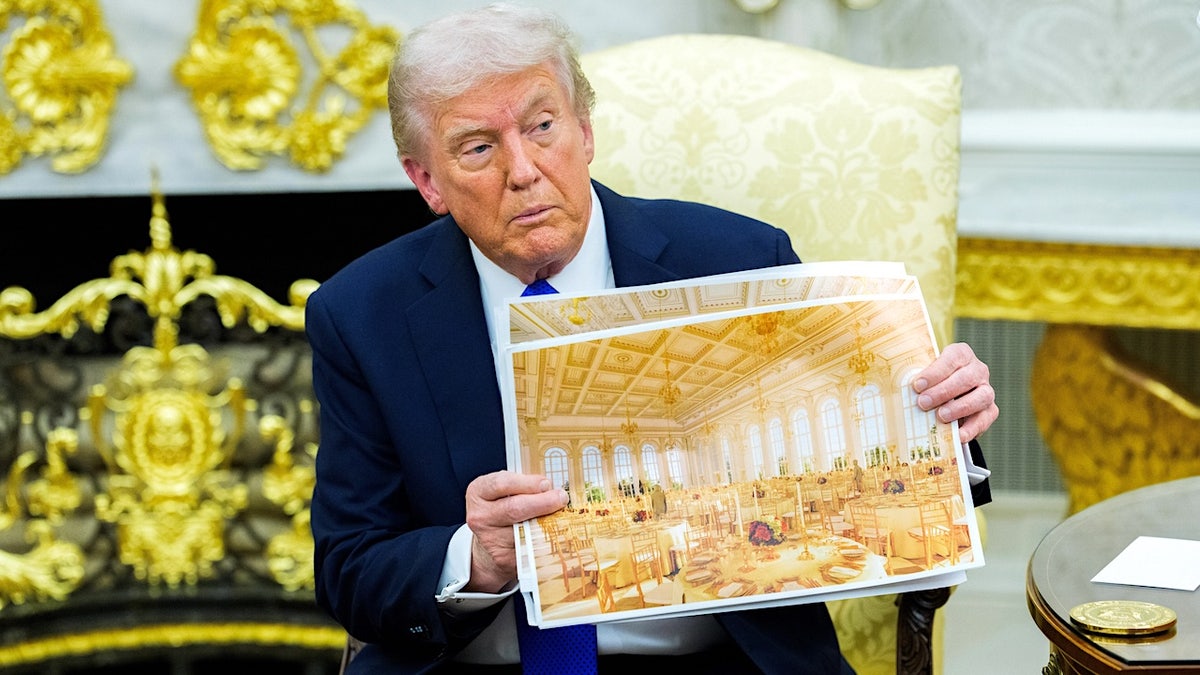
President Donald Trump holds design for a proposed White House ballroom while speaking to reporters. (Aaron Schwartz/CNP/Bloomberg)
«The Supreme Court won’t rule on the substantive issue if it can dismiss the case based on a lack of standing by the plaintiffs,» von Spakovsky said. «I also don’t know of anyone else who could establish standing to bring a lawsuit. Perhaps Congress could collectively, but the chances of that happening are very slim given the partisan divides in both the House and Senate.»
The National Trust argued in its lawsuit that federal law requires Congress to approve new construction on federal property in Washington, D.C., while the administration says existing law already gives the president authority to make alterations and improvements to federal property, including the White House.
Abhishek agreed with Rao’s reasoning that the terms «alteration» and «improvement» should be understood in their ordinary real-property sense.
«For instance, if I have an extension to my house, it doesn’t become a new house,» Abhishek said. «It’s the same house, but that’s an improvement done on the house. Or if I tear down some walls and then just create an open living space in my like between my living room and my kitchen, that’s also not a new house at that point.
«It’s the same house, but there was an alteration or an improvement done, so if you’re using real property terms, then it’s pretty clear how how the statutory authority would make sense,» Abhishek continued.
white house, judiciary, supreme court, donald trump, federal courts, law, politics
INTERNACIONAL
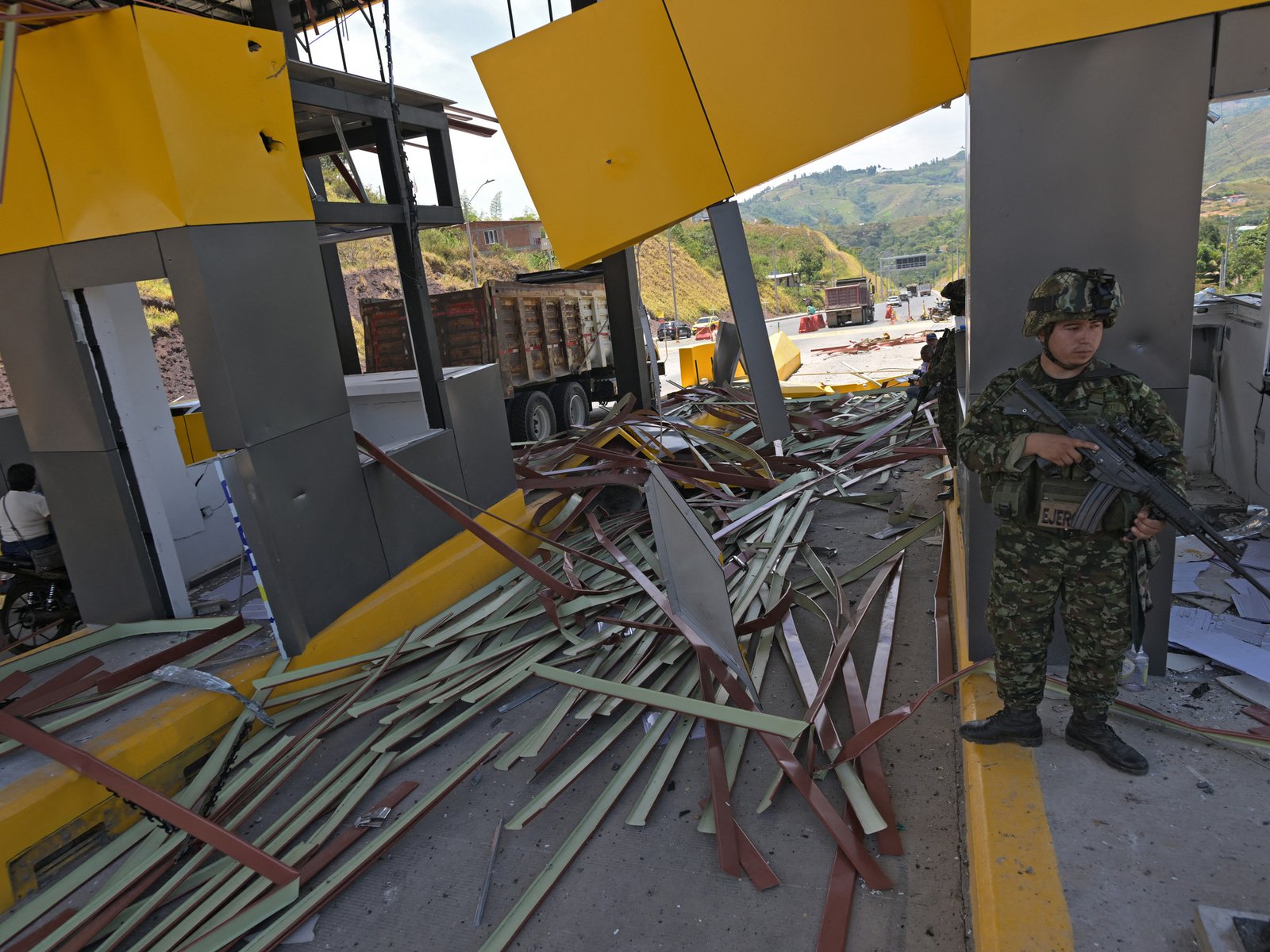
Un atentado con explosivos destruye un peaje en Colombia en el primer día del gobierno de Abelardo De la Espriella y tras el anuncio de mano dura


La China Suárez mostró el gesto que Mauro Icardi tuvo con Rufina Cabré

Diputados: el oficialismo buscará debatir las reformas del Banco Central y la Ley de Inocencia Fiscal antes de fin de mes

Detuvieron en un boliche a un policía, un cadete y otros tres sospechosos por el crimen en una distribuidora de La Matanza

El Salvador recibe de la ONU equipo para detectar documentos fraudulentos en controles fronterizos

Insólito video: una pelota se fue a la ruta en el fútbol uruguayo y ¡provocó un choque!

El Financial Times destacó la finca en Mendoza en la que CEOs de empresas tecnológicas planean enfrentar un posible “apocalipsis”

La oposición cuestionó a Benegas Lynch por su empresa para vender campos a extranjeros y el senador libertario se defendió

Dólar hoy en vivo: a cuánto se negocian todas las cotizaciones minuto a minuto este miércoles 5 de agosto

Brasil retira a su embajador en la Argentina: qué consecuencias tiene la medida diplomática

Las centrales obreras y los movimientos sociales anunciaron dos días de conflicto callejero
-
 POLITICA2 días ago
La oposición cuestionó a Benegas Lynch por su empresa para vender campos a extranjeros y el senador libertario se defendió
-
 DEPORTE6 horas ago
Murió Jorge Messi, en vivo: la resolución de la AFA para los partidos de todas las categorías del fútbol argentino
-
 POLITICA3 días ago
Javier Milei se reunirá con Daniel Noboa en Ecuador y con Abelardo de la Espriella en Colombia