INTERNACIONAL
New poll reveals where Americans stand after Trump agreement with Iran

NEWYou can now listen to Fox News articles!
FIRST ON FOX: Americans are nearly evenly split between favoring Iranian regime change and a negotiated U.S. settlement with Iran, according to a new survey.
Some 39% of respondents favor a negotiated settlement where Iran’s current government remains in place, with verifiable limits on its nuclear and missile programs, according to the findings of the Reagan Institute Summer Survey, while 36% favor replacing Iran’s current government with one more favorable to the U.S.
Another 16% favor a weakened regime where the current government stays in place but is significantly diminished militarily and economically, and 8% responded that they don’t know.
The findings underscore the political challenge facing President Donald Trump as his administration pursues a newly signed memorandum of understanding with Iran. While the agreement seeks to curb Iran’s nuclear ambitions through negotiations, Americans remain divided over the ultimate objective of U.S. policy toward the Islamic Republic.
Americans are nearly evenly split between favoring Iranian regime change and a negotiated U.S. settlement with Iran, according to a new survey. (Mandel NGAN / AFP via Getty Images)
AMERICANS AGREE WITH TRUMP THAT IRAN POSES THREAT TO UNITED STATES: POLL
Republicans who responded to the survey favored replacing Iran’s government by a 2-to-1 margin over a diplomatic deal.
Republicans were far more likely than Democrats to favor a more aggressive outcome in Iran. Half of Republican respondents said they would prefer to see Iran’s current government replaced with one more favorable to the United States, compared to 25% who said they would favor a negotiated settlement that leaves the regime in place in exchange for verifiable limits on its nuclear and missile programs.
The findings were nearly identical among self-identified MAGA Republicans, 51% of whom favored regime change while 25% backed a negotiated settlement.
SHARP PARTISAN DIVIDE EMERGES OVER IRAN STRIKE, TRUMP’S STRATEGY: POLLS
Democrats, meanwhile, largely favored diplomacy. A majority, 52%, said they would prefer a negotiated settlement with Iran’s current government, while 25% favored regime change. Another 14% favored leaving the regime in place but significantly weakened militarily and economically.
The Reagan Institute Summer Survey was conducted May 26 through June 3 among 1,555 respondents nationwide and carries a margin of error of plus or minus 2.5 percentage points. The survey used a mixed-mode methodology that included live telephone interviews, an online panel and text-to-web responses.
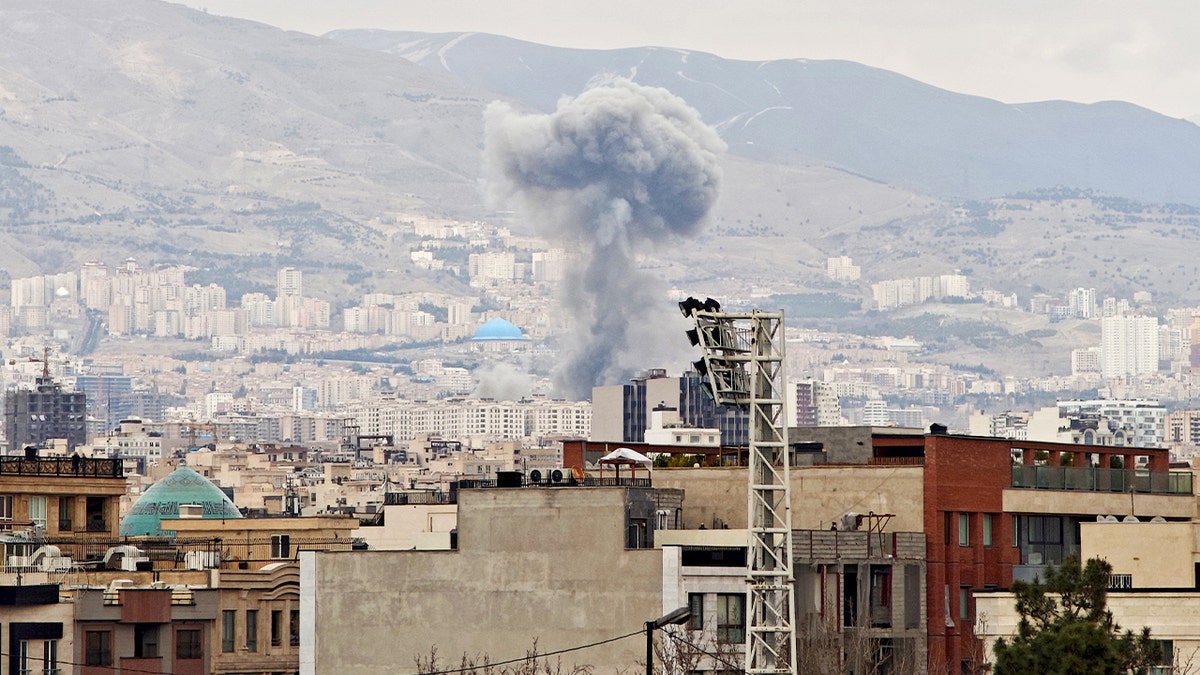
Smoke rises over Tehran following an explosion amid ongoing U.S. and Israeli military strikes on Iranian targets on March 2, 2026. (Majid Saeedi/Getty Images)
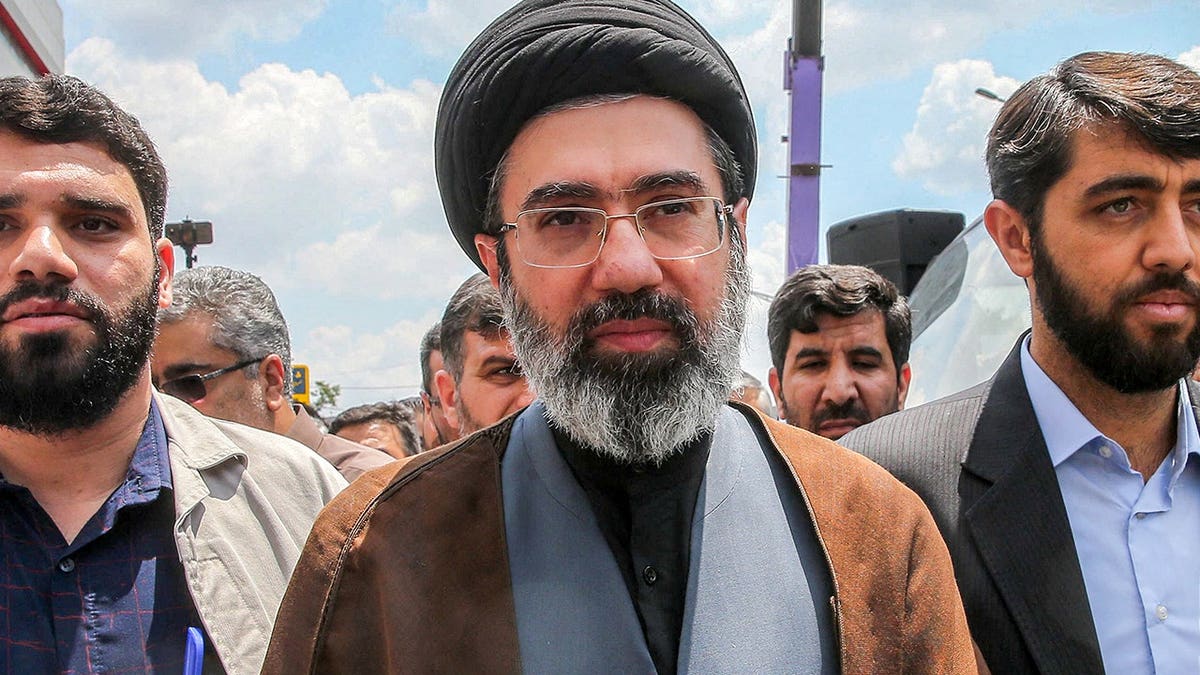
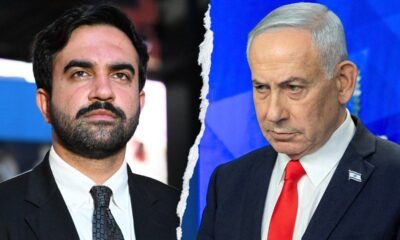
The findings underscore the political challenge facing President Donald Trump as his administration pursues a newly signed memorandum of understanding with Iran. (Hamid FOROUTAN / ISNA / AFP via Getty Images)
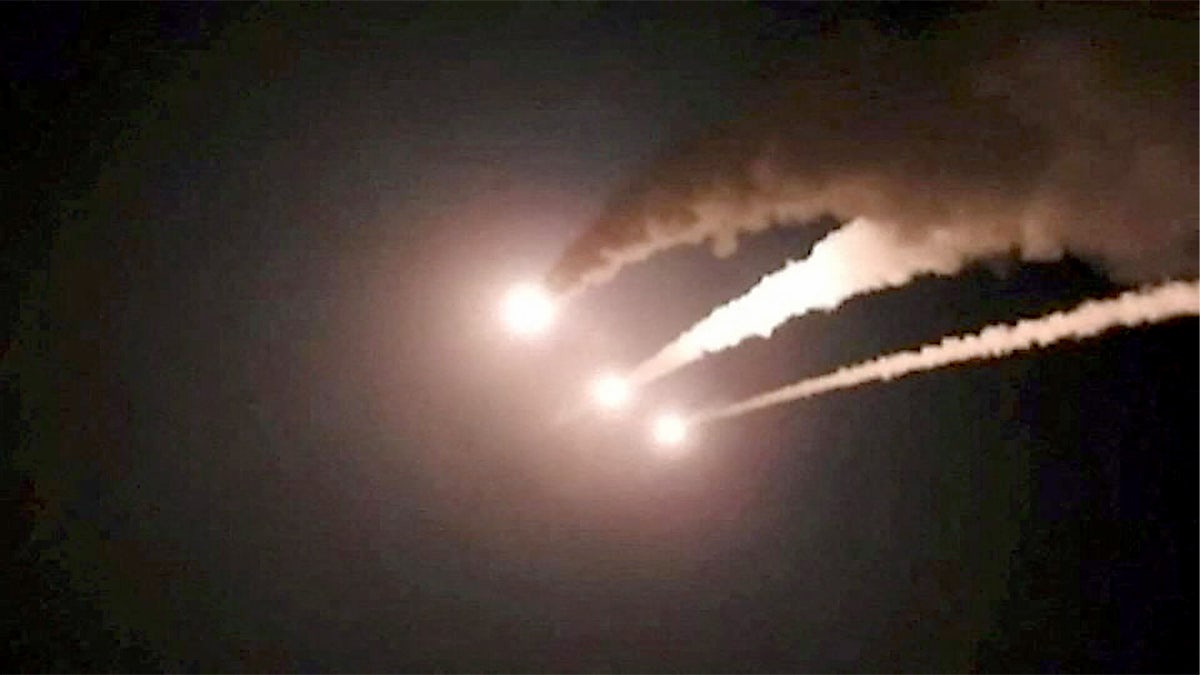
Republicans were far more likely than Democrats to favor a more aggressive outcome in Iran. (Pool via WANA/Reuters)
To better reflect the U.S. population, the results were weighted using demographic benchmarks from the U.S. Census Bureau’s 2023 American Community Survey, including age, gender, race, region and education levels. The poll also included an oversample of 331 MAGA Republicans under age 30, a group with a margin of error of plus or minus 5 percentage points.
The Reagan Institute is a Washington-based policy organization that advocates the Reagan foreign-policy tradition of «peace through strength» and sustained American leadership abroad.
The findings come as Trump has defended a newly signed memorandum of understanding with Iran as a way to reduce tensions and create a pathway toward a broader agreement addressing Tehran’s nuclear program.
The memorandum establishes a 60-day negotiating period during which the United States and Iran will attempt to reach a more comprehensive deal. The agreement also includes provisions aimed at restoring commercial shipping through the Strait of Hormuz and provides limited sanctions waivers tied to continued negotiations. Several of the most contentious issues, including the long-term future of Iran’s nuclear program, are expected to be addressed in subsequent talks.
Trump has described the arrangement as a means of avoiding a wider conflict while pursuing what he called a «great settlement» with Tehran. He has also argued that the agreement could help stabilize energy markets by reopening the Strait of Hormuz, a critical global shipping route, while creating an opportunity to negotiate additional restrictions on Iran’s nuclear activities.
CLICK HERE TO DOWNLOAD THE FOX NEWS APP
The president added that he agreed to a settlement to avoid «economic catastrophe.»
«I didn’t want to see economic catastrophe. If you kept this going, that could have happened,» he told reporters at the G7 Summit in France.
war with iran, iran, treaties, polls, republicans, democrats










INTERNACIONAL
“Por si me matan”: el video de Dereck McNeil que vuelve a poner bajo presión la investigación del caso Angie Peña

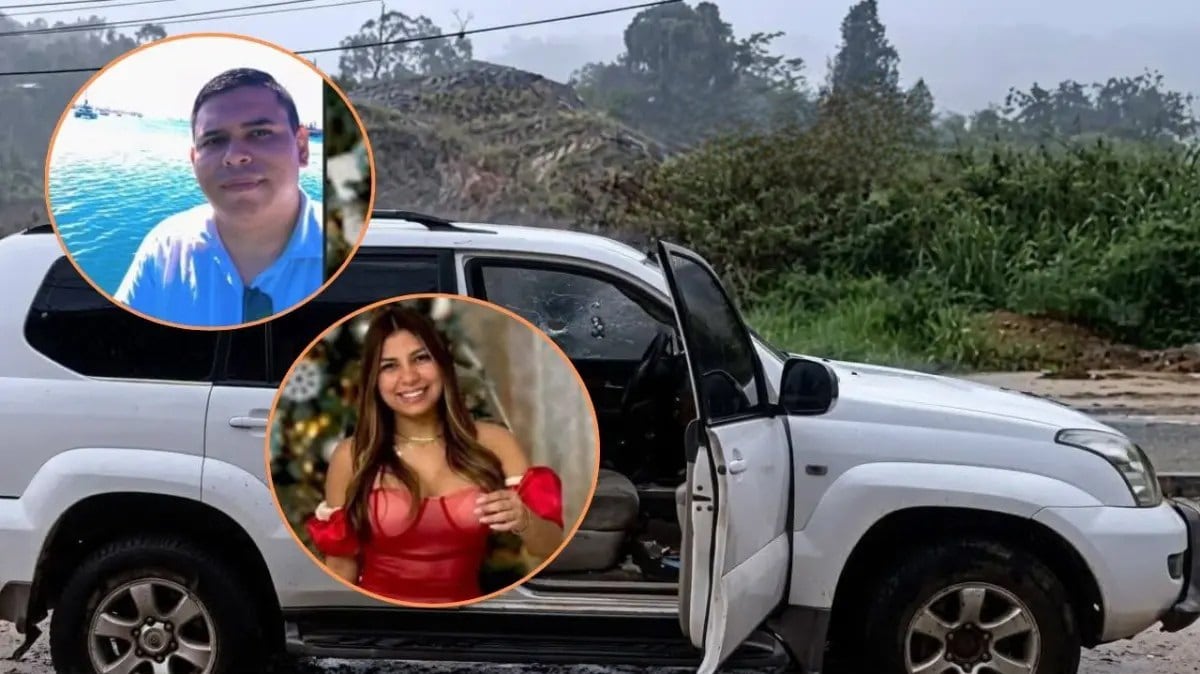
Un nuevo video atribuido a Dereck Isaac McNeil, testigo vinculado a investigaciones relacionadas con la desaparición de Angie Peña y asesinado posteriormente en Roatán, volvió a colocar bajo escrutinio la actuación de agentes de la Agencia Técnica de Investigación Criminal (Atic).
La grabación, que McNeil fecha verbalmente el 28 de octubre de 2025, comienza con una advertencia que hoy adquiere un peso particular: “Por si me matan”.
En el video, el fallecido menciona a varios agentes y funcionarios, a quienes atribuye supuestas irregularidades en investigaciones relacionadas con Angie Peña, los llamados Delta Teams y otros procesos criminales.
Pero existe una diferencia fundamental entre una acusación grabada y una prueba judicial.
Hasta ahora, las afirmaciones difundidas corresponden a la versión de McNeil y no demuestran por sí solas que los agentes señalados hayan manipulado evidencia, protegido estructuras criminales o cometido otros delitos.
Los nombres aparecen, pero falta saber qué fue investigado
McNeil menciona a Fernando Miguel Carvajal Nolasco, Rafael Enrique Ardón Rodríguez, Hansel Armando Castellón Irías, Edgar Andrés Jiménez Flores y Arturo Josué Claros Cortés.
Sobre algunos formula acusaciones directas, incluida una supuesta manipulación de información obtenida de teléfonos.
Esas declaraciones son graves precisamente porque afectan a funcionarios vinculados con tareas de investigación criminal.
La pregunta central ahora no es únicamente qué dijo McNeil frente a una cámara, sino si hizo esos mismos señalamientos formalmente ante fiscales o jueces, qué evidencia presentó y si las instituciones abrieron alguna investigación para comprobarlos o descartarlos.
El video no sustituye el testimonio judicial
McNeil aseguró también que personas vinculadas con los Delta Teams le habían ofrecido dinero para que no declarara y sostuvo que su intención era que “las cosas se esclarezcan”.
Ese señalamiento deberá diferenciarse de cualquier declaración anticipada que haya quedado incorporada formalmente dentro de una causa.
Si McNeil rindió testimonio anticipado ante autoridad competente, ese acto puede conservar valor procesal después de su muerte.
El video difundido públicamente es otra cosa.
Su existencia puede aportar una línea de investigación o revelar preocupaciones que tenía el testigo, pero su contenido no se transforma automáticamente en evidencia probada por haber sido grabado antes de su asesinato.
Angie Peña y los Delta Teams no son el mismo proceso
Otro punto importante es evitar mezclar expedientes.
La desaparición de Angie Peña, ocurrida el 1 de enero de 2022 en Roatán, continúa sin una respuesta definitiva sobre su paradero.
Los procesos contra personas vinculadas con los denominados Delta Teams involucran investigaciones por otros delitos y no equivalen, por sí solos, a un juicio que determine directamente qué ocurrió con Angie.
McNeil relacionó ambos asuntos dentro de sus declaraciones, pero esa conexión también necesita respaldo probatorio.

El hecho de que McNeil fuera asesinado después de dejar grabaciones aumenta inevitablemente el interés sobre sus advertencias.
Sin embargo, la secuencia temporal tampoco demuestra que lo hayan matado por lo que sabía del caso Angie Peña.
Ese vínculo debe ser establecido por una investigación criminal independiente.
Lo mismo ocurre con sus afirmaciones sobre otros testigos muertos o desaparecidos: señalar una posible conexión no equivale a demostrarla.
La pregunta que queda para el Estado
El video deja ahora varias interrogantes difíciles de ignorar.
¿Las autoridades conocían estas acusaciones antes de la muerte de McNeil? ¿Fueron investigadas? ¿Existía evidencia que respaldara alguno de sus señalamientos? ¿Qué parte de la información que entregó quedó preservada dentro de expedientes judiciales?

Después de su asesinato, McNeil ya no puede ser interrogado sobre esas afirmaciones.
Por eso, el verdadero peso de sus grabaciones dependerá menos de lo impactante de sus palabras y más de cuánto de lo que dijo pueda ser corroborado con documentos, testimonios, peritajes y evidencia independiente.
Corresponsal:Desde Tegucigalpa, Honduras
NEWYou can now listen to Fox News articles!
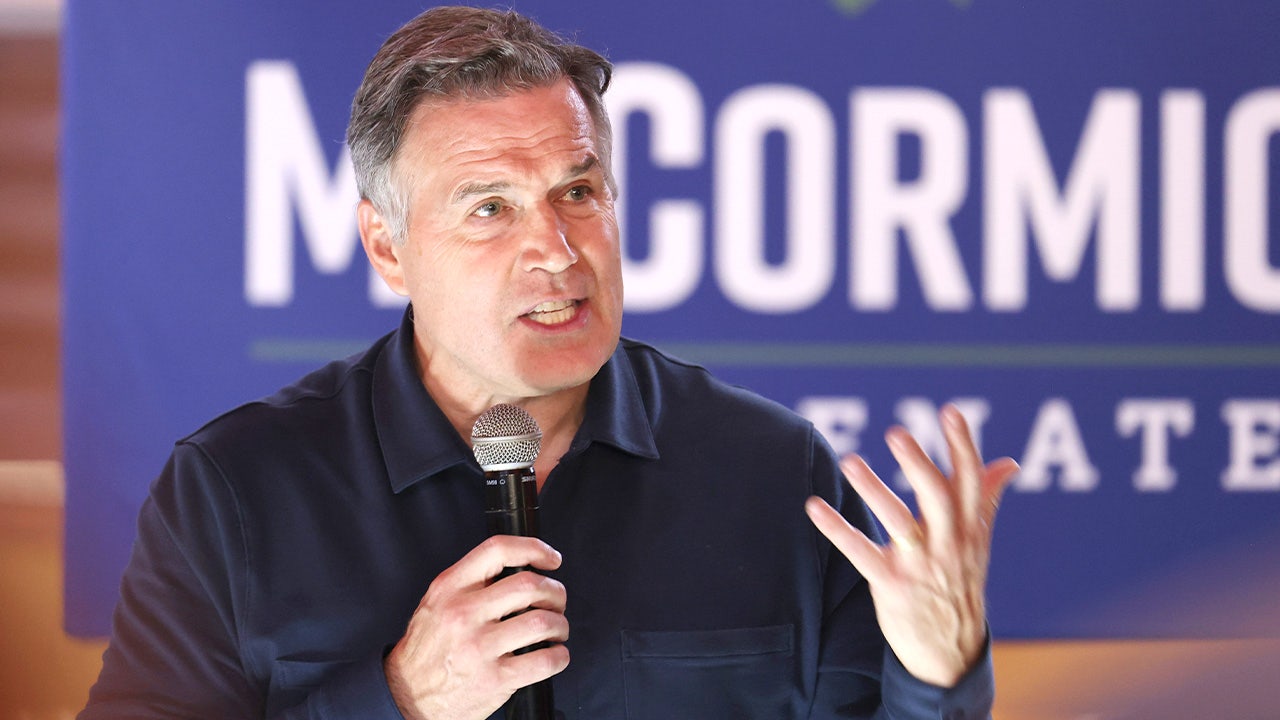
Sen. John Fetterman, D-Pa., delivered a surprise video message at the GOP midterm convention Wednesday night, praising President Donald Trump and Republican Sen. Dave McCormick while rejecting what he described as the Democratic Party’s «extremes and socialism.»
«I’m a commonsense Democrat. I’m always going to stand with America,» Fetterman said. «I’m always going to reject the extremes and socialism and that anti-American way of life.»
Fetterman introduced McCormick, who is seeking re-election to the Senate, as «the kind of senator that gets the job done» and someone who will «fight for Pennsylvania.»
FETTERMAN LEANS ON UNLIKELY GOP ALLY AS DEMS SHARPEN THEIR KNIVES OVER EXPLOSIVE REPORT
Sen. John Fetterman, D-Pa., has increasingly broken with Democratic leaders while embracing bipartisan ties with Republicans. (Kevin Dietsch/Getty Images)
Standing in front of an iconic U.S. steel mill, Fetterman said he was proud to work with McCormick and Trump to defend Pennsylvania’s steel industry, which remains a central part of the state’s economic and political identity.
«That’s exactly the kind of thing that we will work together and will work with President Trump to fight and defend the steel way of life right here in the Steel Valley,» Fetterman said.
The message was notable because Fetterman is a sitting Democratic senator appearing at the Republican Party’s first midterm convention, where Trump is expected to rally GOP voters ahead of the Nov. 3 elections.
His appearance also highlighted his increasingly strained relationship with Democratic leaders and the party’s left wing. Fetterman has repeatedly broken with Democrats on issues including Israel, immigration and Trump’s military actions against Iran.
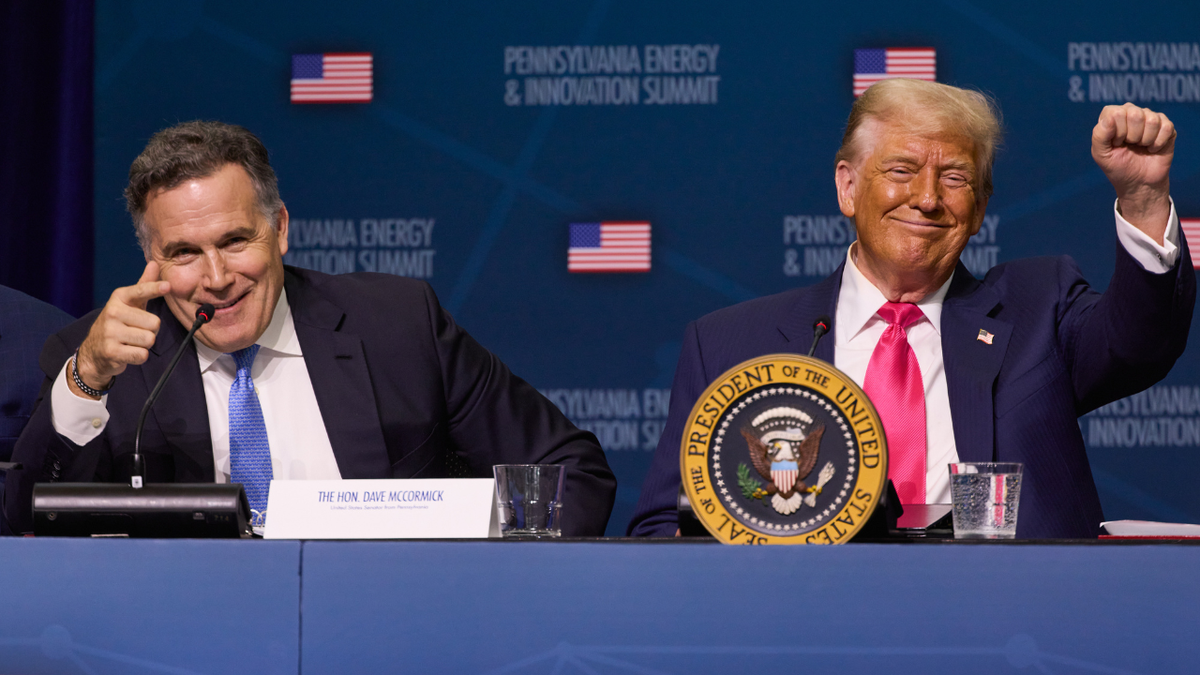
Senator Dave McCormick, a Republican from Pennsylvania, left, and U.S. President Donald Trump during the inaugural Pennsylvania Energy and Innovation Summit at Carnegie Mellon University in Pittsburgh, Pennsylvania on Tuesday, July 15, 2025. (Brian Kaiser/Bloomberg/Getty Images)
He has remained one of the most outspoken Democratic supporters of Israel in the Senate and has criticized members of his party who have sought to limit U.S. support for the country. Fetterman has also backed tougher immigration enforcement and supported some Trump administration nominees, positions that have drawn criticism from Democrats.
Fetterman has said he would consider leaving the Democratic Party if it became «the anti-Israel party,» though he has not indicated that he plans to switch parties.
The senator’s relationship with McCormick has also fueled speculation about his political future. The two Pennsylvania senators previously faced one another in the 2022 Senate race, when Fetterman defeated Republican nominee Mehmet Oz and McCormick lost the GOP primary.
CAN THE ‘BEST SHOWMAN IN POLITICS’ DELIVER AGAIN? GOP BETS ON TRUMP AT HISTORIC MIDTERM CONVENTION
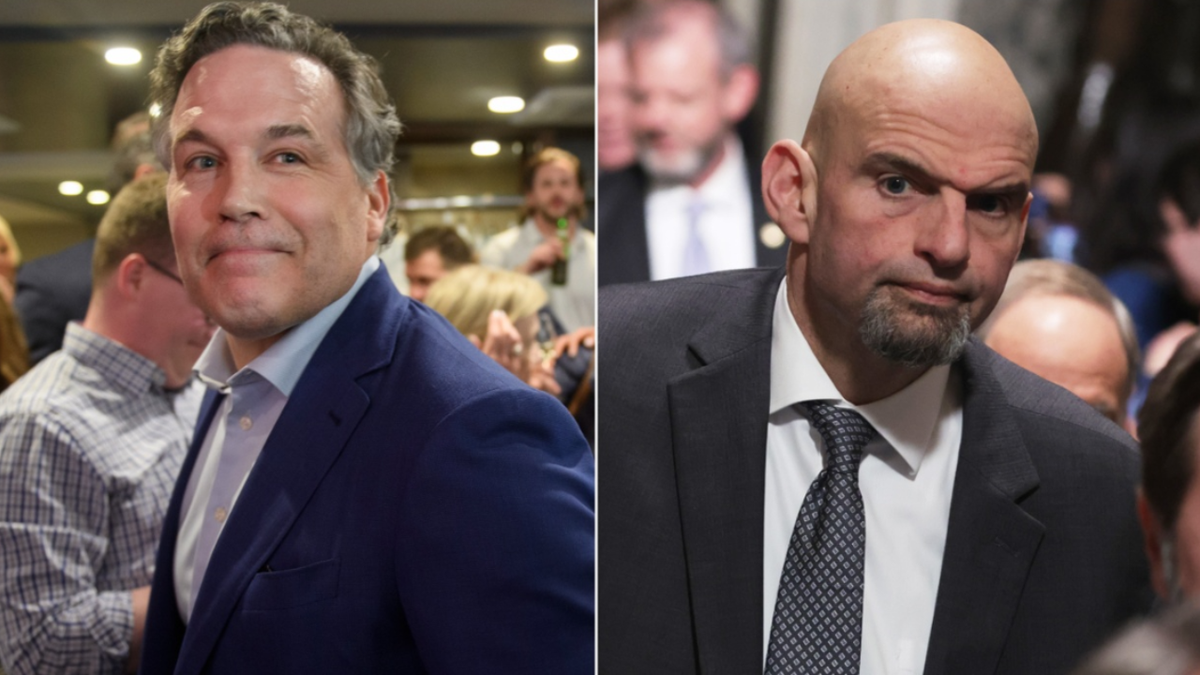
Fetterman and McCormick have forged an unusually close bipartisan alliance, despite representing opposing parties and previously facing off in Pennsylvania’s 2022 Senate race. (Getty)
Since then, Fetterman and McCormick have developed an unusually close relationship. Their campaigns formed a bipartisan joint fundraising committee in July, an arrangement that drew attention because the two senators belong to opposing parties.
McCormick has also sought to emphasize his ties to Pennsylvania’s industrial base and his support for the state’s steel workers. Fetterman’s video allowed him to reinforce that message while presenting McCormick as a senator willing to work across party lines.
The appearance does not mean Fetterman is switching parties, but it is likely to intensify questions about whether he can maintain support from Democratic voters as he continues to align himself with Trump and Republican priorities.
It also gives Republicans a high-profile Democratic voice to showcase as they argue that the party’s coalition is expanding beyond traditional GOP voters.
«A different party,» Fetterman said of McCormick. «But I’m proud to count him as my great friend.»
republicans elections, john fetterman, politics, republican convention, donald trump
INTERNACIONAL
Drone nearly strikes Zelenskyy’s plane before takeoff for Norwegian king’s funeral, PM says
NEWYou can now listen to Fox News articles!
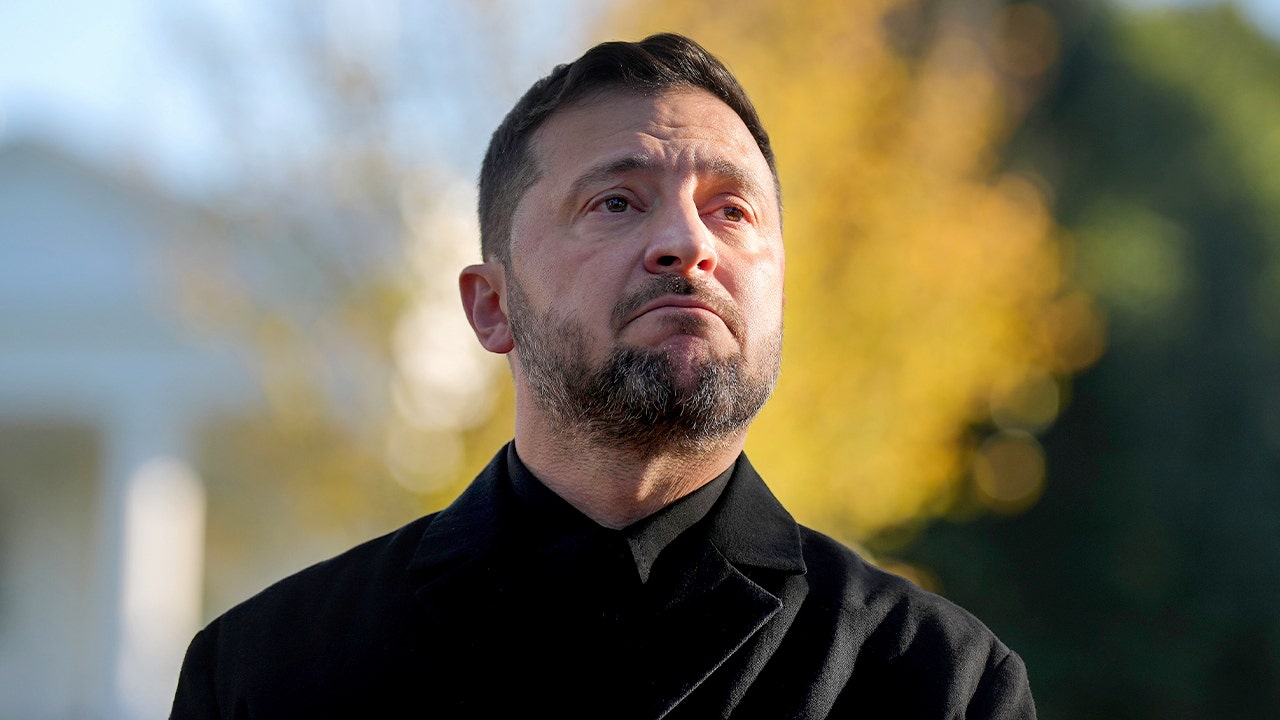
A plane carrying Ukrainian President Volodymyr Zelenskyy to Norway for the king’s state funeral was «almost hit» by a drone as it prepared to take off from Moldova on Tuesday, according to Reuters.
Norwegian Prime Minister Jonas Gahr Støre told public broadcaster NRK about the incident Wednesday, the outlet said, after Zelenskyy’s aircraft arrived safely in Oslo Tuesday evening.
«His plane was almost hit by a drone as it was about to take off from Moldova. That is the reality he is facing,» Støre said, without specifying how close the drone came to the Ukrainian leader’s aircraft.
GERMANY BLAMES RUSSIA AFTER EXPLOSIVE-LADEN DRONE FOUND NEAR UKRAINIAN CARGO PLANES AT MAJOR AIRPORT
Ukraine President Volodymyr Zelenskyy gestures during his meeting with Britain’s prime minister on the sideline of the G7 summit in Evian, eastern France, June 16, 2026. (Isabel Infantes Pool/AFP via Getty Images)
Later Wednesday, a Moldovan government spokesperson said two Russian drones were involved in the incident, with Zelenskyy’s departure to Oslo delayed after authorities closed the country’s airspace.
His aircraft was then cleared for takeoff once officials determined that one Russian drone had landed on Moldovan territory, a spokesperson told Reuters.
REPORT WARNS RUSSIA USING SHADOW FLEET TO PROBE NATO DRONE DEFENSES
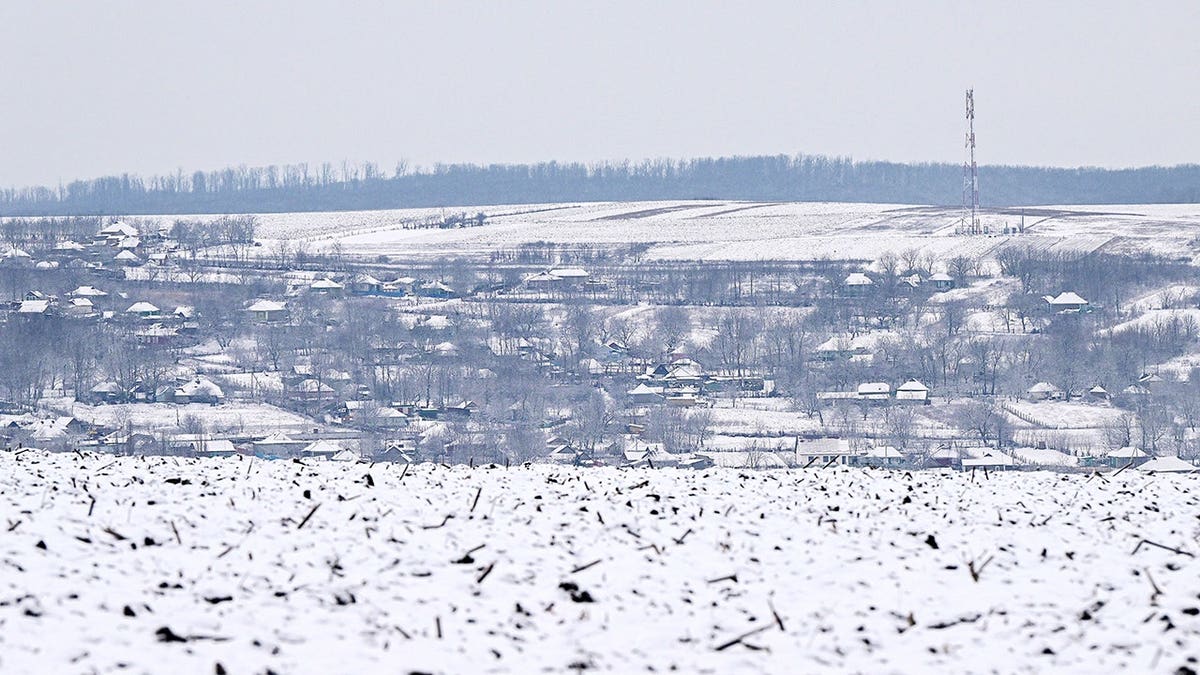
This photograph taken Jan. 5, 2026, shows a partial view of the village of Cuhurestii de Jos, Northern Moldova, close to the Ukrainian border. (Daniel Mihailescu/AFP via Getty Images)
One landed in a field north of the capital, sparking a fire, while the other continued into Romanian airspace.
The incursions forced Chișinău International Airport to temporarily suspend arrivals and departures Tuesday, sending incoming flights into holding patterns or diverting them to neighboring countries, according to tracking data.
RUSSIA’S SHADOW WAR IS PUTTING EUROPE ON EDGE AS GERMANY CONFRONTS A GROWING THREAT
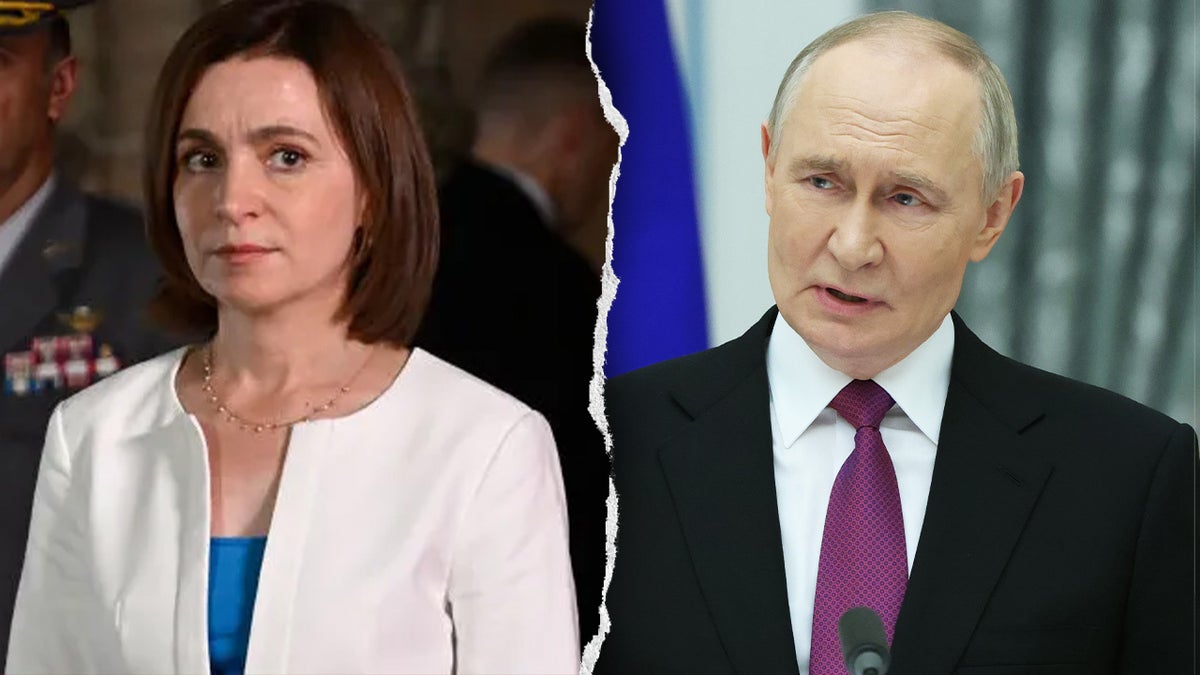
Moldova’s President Maia Sandu and Russian President Vladimir Putin (Horacio Villalobos Corbis/Corbis via Getty Images; Contributor/Getty Images)
Moldovan President Maia Sandu denounced the incursions as a «serious threat to people’s lives» and separately condemned a Russian drone strike on a border crossing with Ukraine that killed two people.
Zelenskyy arrived in Oslo Tuesday evening, where he discussed military aid, including air defense support and civilian assistance with Foreign Minister Espen Barth Eide and Finance Minister Jens Stoltenberg, according to Deutsche Welle.
The Institute for the Study of War also said a Russian Shahed drone flew through Moldovan and Romanian airspace for about an hour Tuesday before crashing in Moldova.
drones, volodymyr zelenskyy, world, russia, news events, ukraine, national security

Fin de la ilusión argentina en el US Open: Horacio Zeballos y Guido Andreozzi se despidieron en cuartos de final

El oficialismo no consiguió el apoyo de los aliados para avanzar este jueves con la sesión de Biocombustibles en el Senado

Femicidio en Ituzaingó: detuvieron al principal acusado y a otros dos hombres por encubrimiento

Internada de urgencia, Costa habló en medio de su delicado estado de salud: «Gracias a la gente que reza por mi»

Malvinas: la Justicia federal se declaró competente para intervenir en una causa contra las empresas petroleras

“Esto también va a pasar”: un encuentro de jóvenes empresarios celebró la fortaleza de la industria

1000 días de Milei: los logros, las crisis que lo marcaron y los déficits de su gestión

Martín Menem dijo que Milei será el primer no peronista en ser reelecto y llamó a invertir más

Franco Colapinto largará en el puesto 7 con su Alpine el Gran Premio de Italia de la Fórmula 1: hora, TV y todo lo que hay que saber

Multas millonarias, arrestos y trabajo comunitario: cómo se prepara una provincia para enfrentar el Súper Niño

 SOCIEDAD2 días ago
Femicidio brutal en Merlo: un jubilado de 64 discutió con su esposa y la asesinó a puñaladas
- POLITICA2 días ago
El gobierno de Kicillof retendrá un 2% en los premios de las apuestas online
- DEPORTE2 días ago
El rotundo cambio de Julián Álvarez en una foto presentación del Atlético de Madrid tras quedarse en el club