INTERNACIONAL
Pope Leo draws staggering 800,000 faithful to heart of Paris for massive outdoor Mass

NEWYou can now listen to Fox News articles!
Pope Leo XIV drew an estimated 800,000 people into the heart of Paris on Saturday for a massive open-air Mass, filling one of the French republic’s most storied public squares as he urged Catholics to openly share their faith in an «increasingly secularized society.»
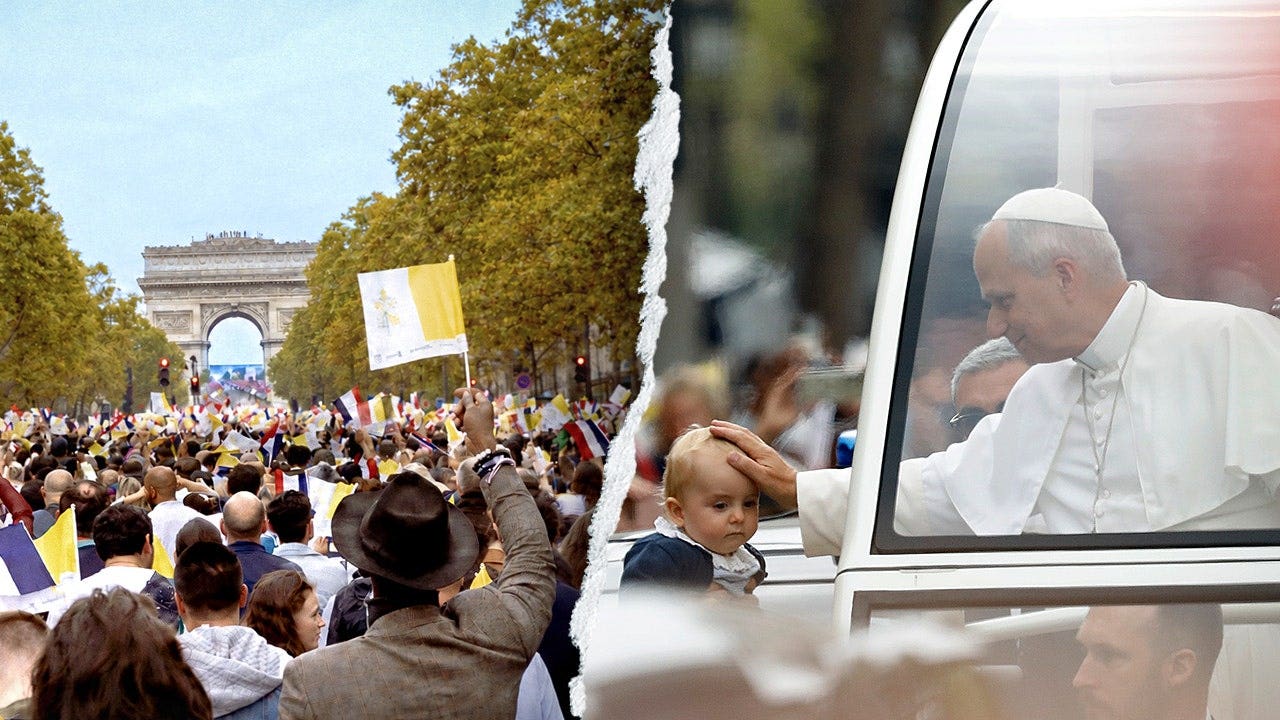
Flag-waving crowds packed the Champs-Élysées and Place de la Concorde as the American pope traveled roughly 1.2 miles through central Paris in the popemobile before celebrating Mass.
The Vatican estimated attendance at 800,000, roughly 200,000 more people than had registered in advance.
People of faith gathered in the streets, with families lifting babies and young children toward the popemobile as Leo made his way through the French capital.
POPE LEO XIV RECEIVES ‘SYMBOLIC’ SPHERE IN CHARITY’S PUSH FOR AI TO ‘PROTECT HUMAN DIGNITY’
Pope Leo XIV blesses a child and waves to the crowd from the popemobile as he rides down the Champs-Élysées Avenue on his way to the Place de la Concorde on Saturday in Paris. (Corbis via Getty Images)
«Seeing you gathered here,» Leo told worshippers, he was looking upon the «heirs of France’s long and beautiful history of faith,» according to Vatican News.
The pope called on French Catholics not to keep that rich inheritance to themselves.
FROM DISNEY MAGIC TO ANCIENT FAITH: DAVID HENRIE ON WHY GEN Z IS FLOCKING TO CHURCH

Pope Leo XIV waves to the faithful as he arrives at Place de la Concorde to preside over Mass during his apostolic journey to France Saturday. (Getty Images)
«Let it overflow, so that those you meet may be refreshed and their thirst satisfied,» Leo said. «From this beautiful city of Paris, I pray fervently that the living water of the Holy Spirit may flow throughout France.»
The setting carried particular resonance in a country known for its strict tradition of secularism.
AMERICAN BISHOP ROBERT BARRON CALLS OUT ST. PAUL’S CATHEDRAL IN UK OVER NIGHTCLUB PARTNERSHIP
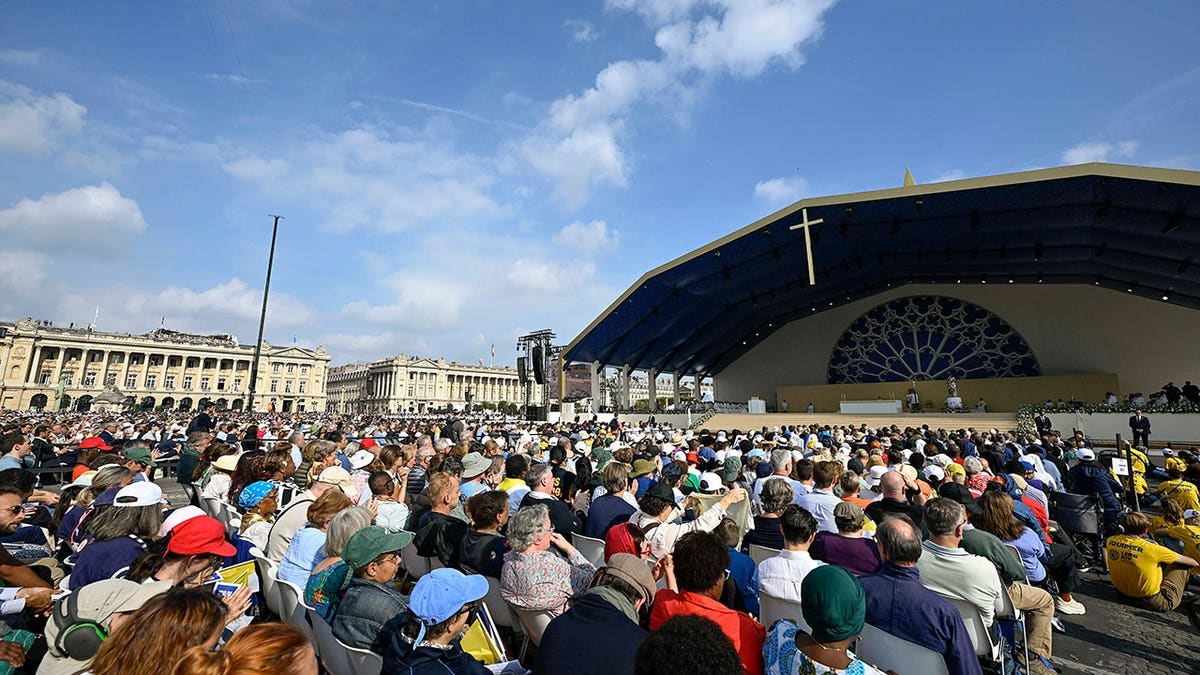
Pope Leo XIV presides over a Mass at Place de la Concorde on Saturday, during the second day of his apostolic journey to France. (Getty Images)
It is notable that the Place de la Concorde was an execution ground during the French Revolution, where devoutly Catholic King Louis XVI and Queen Marie Antoinette were guillotined. Today, the square is closely associated with the French republic and regularly hosts Bastille Day celebrations.
The decision to celebrate a papal Mass there drew criticism from supporters of France’s strict separation of church and state, who argued another site would have been more appropriate.
The images also offered a striking contrast with another massive Paris spectacle just two years earlier.
The 2024 Summer Olympics opening ceremony drew worldwide controversy over a tableau featuring drag performers that Christian leaders and other critics said mocked Christianity.
POLL FINDS SHARP RISE IN YOUNG MEN CALLING RELIGION ‘VERY IMPORTANT’
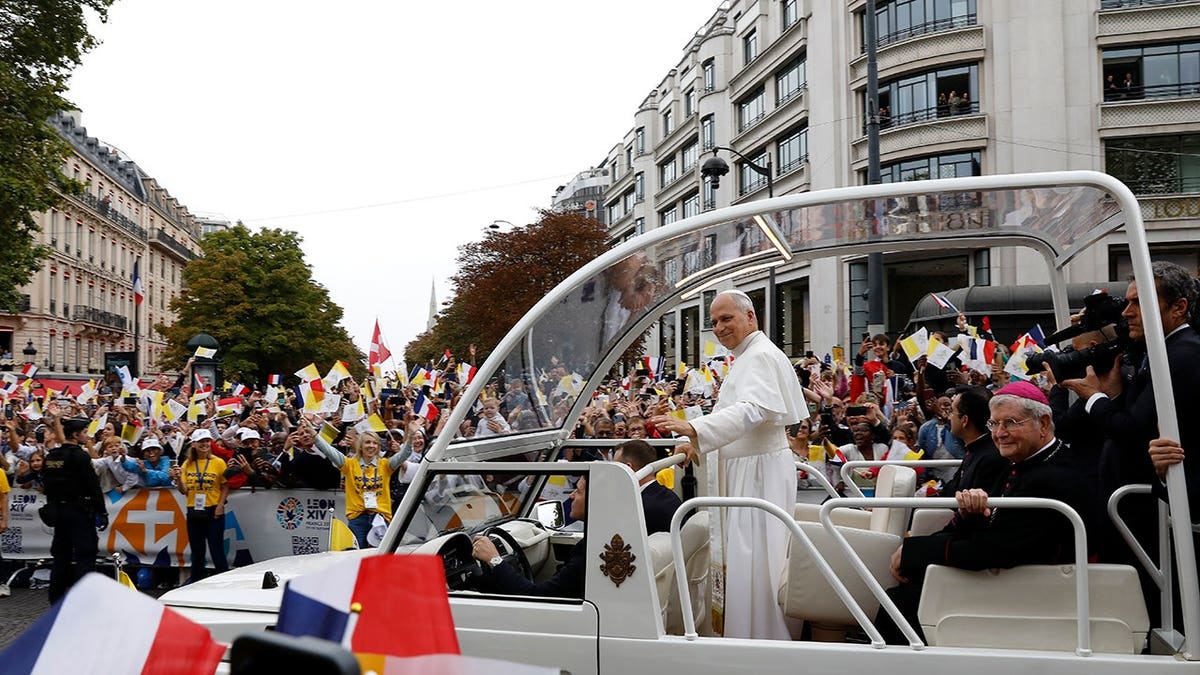
Pope Leo XIV waves to the crowd from the papamobile as he rides down the Champs-Élysées Avenue on his way to Place de la Concorde to celebrate a solemn outdoor Mass on Sept. 26, 2026, in Paris, France. The pontiff is making his first official visit to France from Sept. 25-28 with stops in Paris, Lourdes, and Metz. While in Paris, his agenda includes a meeting with French President Emmanuel Macron, a prayer service at Notre-Dame Cathedral, and the open-air Mass along the Champs-Élysées. The trip marks the first papal visit to the European country since Benedict XVI visited in 2008. (Corbis via Getty Images)
The French Bishops’ Conference said at the time that the ceremony «included scenes of mockery and derision of Christianity,» adding that Christians around the world had been «hurt by the outrageousness and provocation of certain scenes.»
The tableau was widely interpreted by critics as a parody of Leonardo da Vinci’s «The Last Supper,» though Olympics organizers disputed that interpretation.
Leo’s visit comes as France experiences a notable increase in adult conversions even as the country continues a decades-long decline in overall Catholic participation.
Annual adult baptisms in France have tripled since 2016, reaching 13,000 this year, according to The Associated Press. Overall baptisms, however, have fallen sharply over the longer term, from 513,000 in 1980 to 186,000 in 2024.
YOUNG MEN ARE RETURNING TO CHURCH — AND IT COULD RESHAPE AMERICA’S FUTURE

A large crowd gathers on Avenue de la Grande Armee and watches Pope Leo XIV arrive on a giant screen with the Arc de Triomphe in the background in Paris, France, on Sept. 26, 2026. French and Vatican flags wave during the gathering organized for the papal visit to Paris. (Hans Lucas/AFP via Getty Images)
Leo thanked French families, young people, catechumens and new Christians for bearing witness to their faith in what he described as an «increasingly secularized society,» according to Vatican News.
The scale of the pope’s reception was already apparent the night before the Mass as some 80,000 young people packed France’s national stadium Friday for a vigil featuring fireworks and a theatrical retelling of the country’s Catholic history.
«Thank you for your courage! Thank you for your presence,» Leo told them in French. «Thank you for your faith. You are the saints of France!»

Worshippers gather on the Champs-Élysées in Paris as Pope Leo XIV celebrates an outdoor mass at Place de la Concorde on Sept. 26, 2026. Pope Leo XIV is making his first official visit to France from Sept. 25-28 with stops in Paris, Lourdes, and Metz. (Corbis via Getty Images)
At Saturday’s Mass, Leo invoked France’s Catholic heritage and drew on the biblical image of «living water,» telling worshippers that Jesus Christ could satisfy humanity’s desire for «life, truth, unity, peace, communion, and happiness.»
He also invoked French Catholic saints including Irenaeus, Martin and Francis de Sales while praising those who continue to work for «life, the family, truth, peace, fraternity and justice.»
The sea of people rivaled some of the largest public celebrations to fill the Champs-Élysées in recent decades, including France’s World Cup victories in 1998 and 2018, according to the AP.
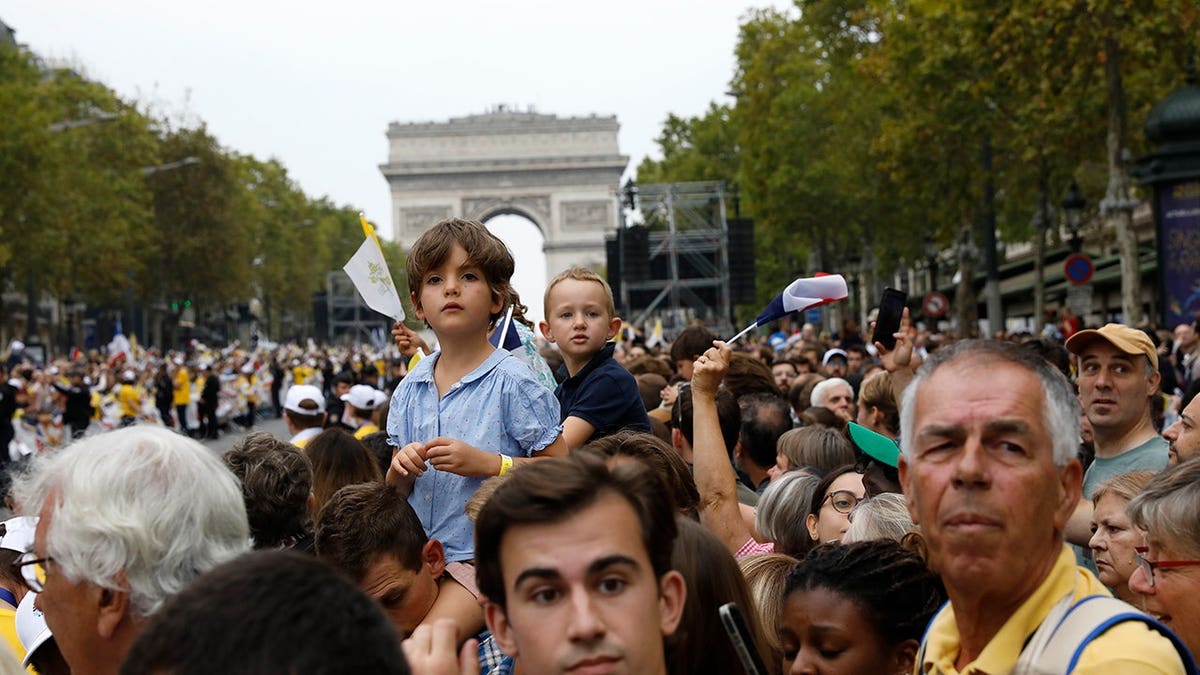
Worshippers gather on the Champs-Élysées in Paris for an outdoor mass celebrated by Pope Leo XIV on Sept. 26, 2026. The pontiff said it was possible to «live together in dignity and peace» during the service, which drew hundreds of thousands of believers. The mass is part of Pope Leo XIV’s first official visit to France from Sept. 25-28, with stops in Paris, Lourdes, and Metz. While in Paris, the pontiff’s agenda includes a meeting with French President Emmanuel Macron, a prayer service at Notre-Dame Cathedral, and other engagements. The trip marks the first papal visit to the European country since Benedict XVI visited in 2008. (Corbis via Getty Images)
Leo’s four-day trip to France began Friday with a visit to the restored Notre Dame Cathedral, the first by a pope since the devastating 2019 fire.
He traveled Saturday night to Lourdes, one of the Catholic Church’s most visited pilgrimage sites.
pope leo xiv, roman catholic, france, europe, religion, christianity religion, world










En gran parte del mundo, la búsqueda de formas de evitar los precios volátiles de los combustibles —sujetos a los vaivenes de la geopolítica— está impulsando un auge en las ventas de vehículos eléctricos. Pero los fabricantes de automóviles están buscando atraer con una nueva gama de vehículos eléctricos a clientes que no se preocupan por los precios de la gasolina y que suelen tener sus garajes llenos de autos con motores potentes que consumen mucho combustible.
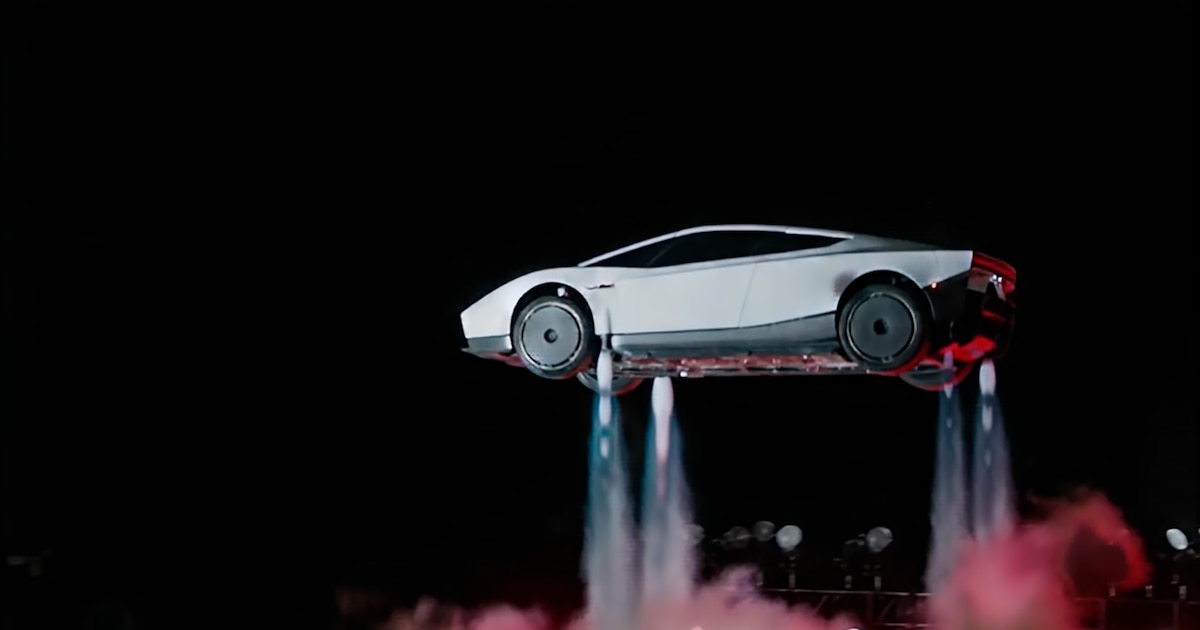
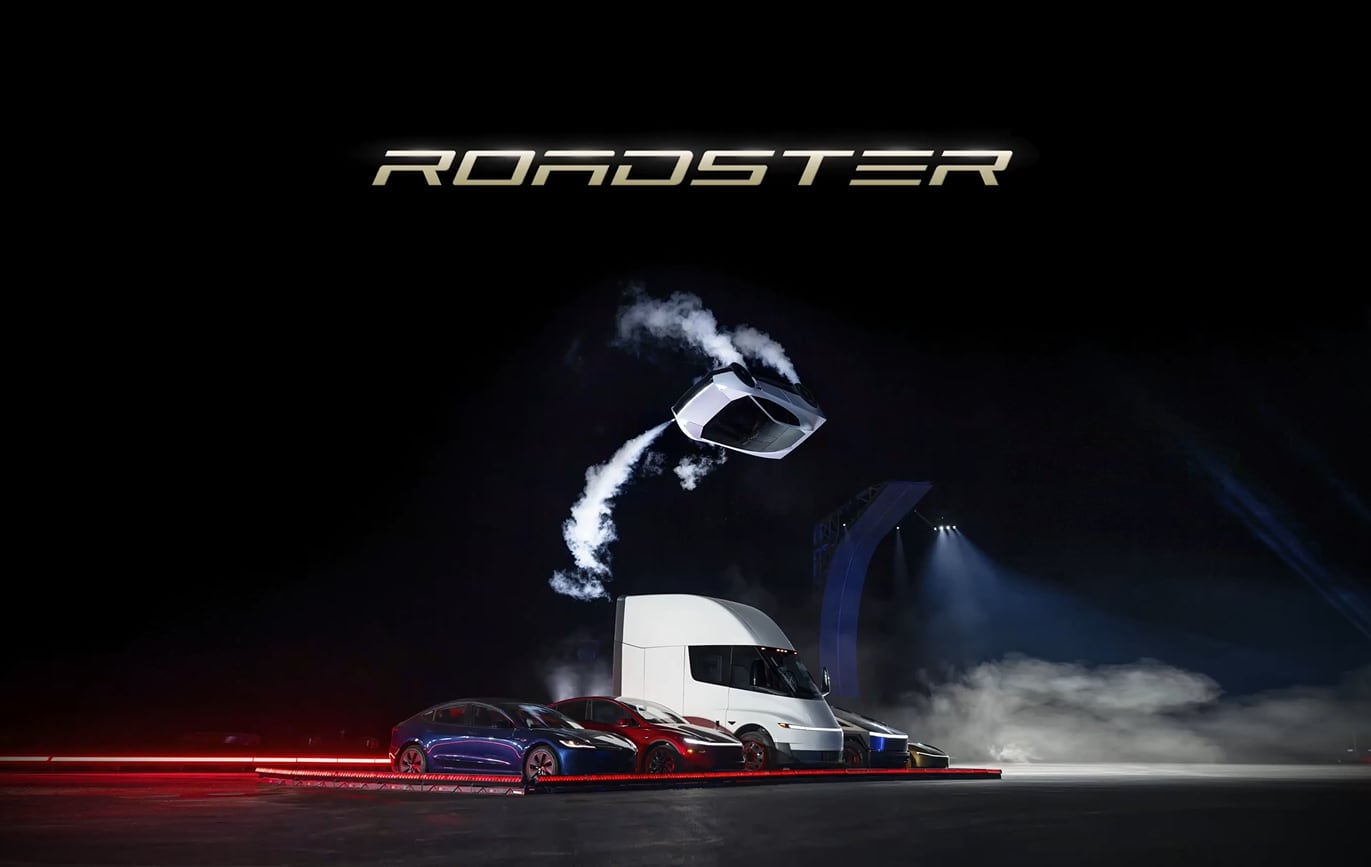
En un evento realizado el jueves en Texas, Tesla presentó el Roadster, una encarnación del primer auto de la compañía, pero esta vez equipado con propulsores que le permiten acelerar de cero a 100 kilómetros por hora en menos de un segundo y separarse del suelo en distancias cortas.
“No estoy seguro de que sea legal en todas las jurisdicciones”, bromeó Elon Musk, director ejecutivo de Tesla, luego de que el auto usara sus propulsores para saltar por encima de una fila de otros vehículos de Tesla, ejecutando un giro mientras lo hacía.
No habló del precio, pero el Roadster sin duda costará cientos de miles de dólares cuando salga a la venta en 2028.

El debut del Roadster se llevó a cabo una semana después de que Jaguar, que alguna vez fuera famosa por sus potentes motores de 12 cilindros, mostrara un bólido eléctrico de 1000 caballos de fuerza al que llama Type 01, cuyo precio inicial es de USD 130.000. El vehículo es el primer modelo nuevo de la marca británica de lujo, propiedad de Tata Motors, desde que decidió enfocarse exclusivamente en los vehículos eléctricos.
Con el Type 01 y el Roadster se apuesta a que los aficionados adinerados comprarán vehículos eléctricos por su aceleración rápida y silenciosa y su maniobrabilidad, más que por el ahorro de gasolina.
Los motores eléctricos y las baterías usan la energía de manera más eficiente que los motores de combustión interna. Aceleran más rápido, requieren menos mantenimiento y vibran menos. Las baterías pesadas dan a los autos un centro de gravedad bajo y mejoran el manejo.
Cuando Jaguar decidió buscar una forma de reinventar la marca, la decisión de volverse eléctrica fue “obvia”, dijo Rawdon Glover, director general de la empresa, la semana pasada en una entrevista con The New York Times.
El Type 01 será el primero de varios modelos nuevos, incluidos algunos que serán más asequibles.

“Un Jaguar debe ser rápido, debe ser cómodo, debe ser lujoso, y en ese contexto el vehículo eléctrico es la mejor mezcla de esos elementos”, dijo Glover.
Los nuevos modelos de gama alta de Jaguar, Tesla y otros son parte de un esfuerzo de los fabricantes de automóviles occidentales para distinguirse de las empresas chinas que dominan el mercado de autos eléctricos asequibles en gran parte del mundo, excepto en Estados Unidos.
Pero es una estrategia arriesgada. Los compradores de vehículos de ultralujo y deportivos son algunos de los más apasionados por los grandes motores de combustión, sus vibraciones y su sonido. Algunos han rechazado los autos eléctricos porque, dicen, conducirlos es tan emocionante como usar un electrodoméstico.
Varios vehículos eléctricos de precio elevado han fracasado. Las ventas mundiales del Taycan eléctrico de Porsche, cuyo precio inicial es de USD 112.000, cayeron 31% en los primeros nueve meses del año, informó la empresa este mes. Porsche ha reducido sus planes para los vehículos eléctricos y este mes anunció que se enfocaría más en autos deportivos de mayor precio, de los que la mayoría funcionan con gasolina.
Lucid, que fabrica sedanes eléctricos y vehículos utilitarios deportivos que tienen un precio inicial de USD 70.000 pero pueden alcanzar los USD 250.000, reportó una caída del 7% en sus ventas durante el tercer trimestre.
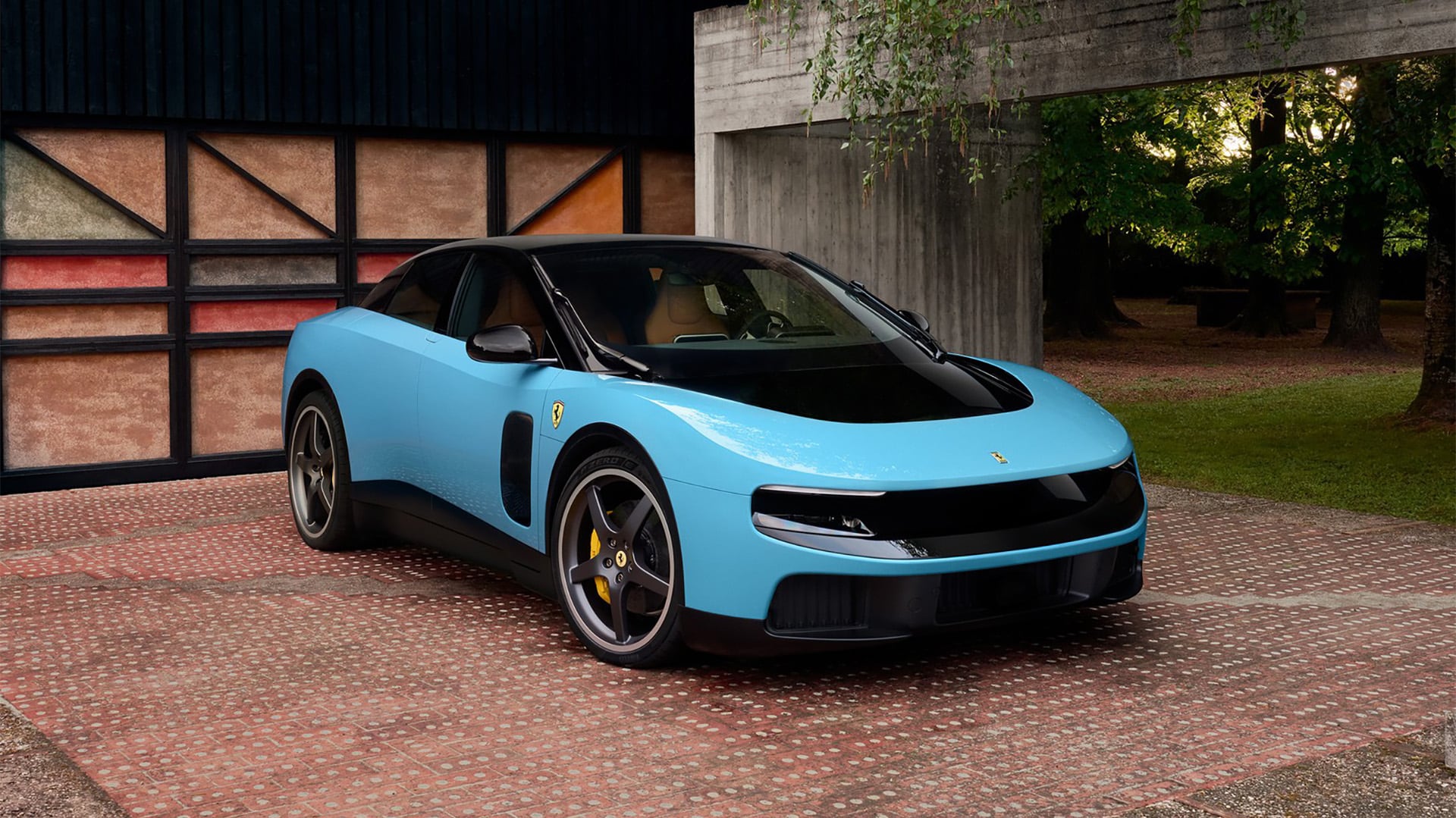
El Luce eléctrico de Ferrari, cuyo precio inicial supera los USD 600.000, indignó a muchos de los fanáticos de la compañía italiana cuando se presentó en mayo, aunque se informa que el modelo se ha vendido bien. El archirrival de Ferrari, Lamborghini, ha pospuesto sus planes para un auto eléctrico.
El año próximo, Bentley, una unidad de Volkswagen, planea comenzar a vender el Torcal, un vehículo utilitario deportivo eléctrico, con un precio inicial de alrededor de USD 220.000. Incluso Rolls-Royce, una unidad de BMW, vende un vehículo eléctrico, el Spectre II de USD 400.000.
Musk ha reconocido que es poco probable que el Roadster genere muchos ingresos. La cantidad de personas que cuentan con más de USD 200.000 para gastar en un auto es muy pequeña. Para reservar un Roadster, los compradores deben hacer un depósito de USD 50.000.
Algunos analistas se han preguntado por qué Tesla destinó recursos a un proyecto costoso mientras caen las ventas de sus modelos principales, el Model Y y el Model 3. Otros expertos sostienen que el vehículo permite a Tesla reforzar su imagen de líder tecnológico en el sector de los autos eléctricos.
“Creo que Tesla quiere que la gente sepa que puede fabricar el vehículo eléctrico de mayor rendimiento y competir con esas marcas, para que no la vean solo como una empresa de autos para el mercado masivo”, dijo Ben Rose, presidente de Battle Road Research, firma que analiza a Tesla.
El Roadster, con capacidad para dos personas, ofrece características que no tienen otros deportivos de gama alta, asumiendo que Tesla pueda producirlo en cantidades significativas. Unos ventiladores de succión bajo el auto lo mantienen pegado al suelo durante maniobras acrobáticas, como cuando el jueves recorrió boca abajo una rampa parabólica durante el evento.
Los propulsores instalados debajo del auto y en la parte trasera se desarrollaron en colaboración con SpaceX, explicó Musk, lo que refuerza las especulaciones de que planea fusionar la compañía de cohetes con Tesla. Él controla ambas.
La primera generación de vehículos eléctricos de lujo fue bastante sosa, dijo Glover. Para evitar eso, los ingenieros de Jaguar condujeron Jaguars clásicos para encontrar la manera de darle al Type 01 la misma sensación de conducción y manejo de esos modelos anteriores. El Type 01 podrá acelerar de cero a 100 en 3,1 segundos.
La silueta del Type 01 evoca modelos clásicos de Jaguar, como el XKE, con un capó alargado y una voluptuosa “cadera” en la parte trasera. Los diseñadores trasladaron algunas celdas de batería de debajo de los asientos, donde suelen colocarse en la mayoría de los autos eléctricos, a la parte delantera. Esto permitió darle un perfil más bajo.
La propulsión eléctrica permite incorporar algunas funciones que son casi imposibles con los autos de gasolina. Las ruedas del Jaguar, propulsadas por tres motores eléctricos, se pueden ajustar para que giren a velocidades ligeramente diferentes con el fin de mejorar el control del manejo.
Como era de esperar, en internet la reacción entre los fanáticos de Jaguar estuvo polarizada. Algunos dijeron que el auto era hermoso; otros, que era “amenazador y malvado”.
“Va a haber un grupo que diga que no tiene la voluptuosidad de los antiguos”, dijo Mark Mayuga, presidente de Jaguar Clubs of North America. “Mi respuesta es: ‘Hay que hacer algo nuevo, algo fresco’”.
© The New York Times 2026.
Tesla Roadster,automóvil eléctrico,propulsores verticales,inteligencia artificial
INTERNACIONAL
Illegal alien busted allegedly hauling enough fentanyl to potentially kill state’s entire population — twice

An illegal immigrant pulled over for speeding in Nevada allegedly had enough fentanyl in his truck to kill millions, federal prosecutors say.
Francisco Joel Garcia Farias, 26, now faces federal drug-trafficking charges after a Lincoln County sheriff’s deputy stopped his pickup on a rural highway and a narcotics detection dog alerted to the vehicle, according to the U.S. Attorney’s Office for the District of Nevada.
Inside, authorities say they found 13 large storage totes packed with approximately 30 pounds of suspected fentanyl and 677 pounds of suspected methamphetamine, a combined haul of more than 700 pounds.
CALIFORNIA K-9 OTIS HELPS POLICE SEIZE 440 POUNDS OF COCAINE DURING ALHAMBRA TRAFFIC STOP
«The massive scale of this seizure underscores the staggering volume of illicit narcotics flowing into our communities from transnational criminal organizations,» said First Assistant U.S. Attorney Sigal Chattah for the District of Nevada.
«Fourteen kilograms of fentanyl alone represents approximately seven million potentially lethal two-milligram doses — enough to kill more than twice the population of Nevada — and, when combined with over 650 pounds of methamphetamine, represents an estimated street value of approximately $2 million,» Chattah said.
AS A US ATTORNEY, I SEE FENTANYL’S HORRIFYING TOLL UP CLOSE. CONGRESS MUST ACT NOW
Based on that lethal-dose estimate, the fentanyl could potentially kill nearly twice the population of Los Angeles, everyone in Indiana or roughly the entire population of Paraguay.
«These staggering quantities reflect a blatant disregard for human life, driven purely by profit,» Chattah said.
ILLEGAL IMMIGRANT ACCUSED OF FENTANYL DEALING LINKED TO VIRGINIA HIGH SCHOOL OVERDOSES
The Justice Department identified Garcia Farias as an illegal immigrant in its announcement of the charges.
The bust began Oct. 13 on U.S. Highway 93 near Ash Springs, Nevada, where a deputy saw the pickup traveling above the posted speed limit, according to prosecutors’ account of the criminal complaint.
HERO K-9 SNIFFS OUT HIDDEN $6M COCAINE SHIPMENT ALONG US-CANADA BORDER
After the dog alerted, deputies searched the truck and uncovered numerous vacuum-sealed packages inside the totes.
Authorities recovered approximately 187 packages of a white crystalline substance weighing about 307.22 kilograms, along with 13 brick-shaped packages weighing approximately 14 kilograms. Field tests of selected samples were positive for methamphetamine and fentanyl, respectively, prosecutors said.
DOJ ANNOUNCES 81 ALLEGED GANG MEMBERS INDICTED AFTER PUERTO RICO DRUG TRAFFICKING TAKEDOWN
U.S. Attorney General Todd Blanche said the seizure kept a potentially deadly drug supply off American streets.
«Anyone who plans to release a deadly drug like fentanyl onto American streets will be prosecuted,» Blanche said. «Thanks to the diligent work of federal and local law enforcement, the lethal drugs allegedly possessed by this illegal alien are no longer endangering the lives of countless Americans.»
CBP OFFICERS SEIZE $67 MILLION IN ILLEGAL DRUGS AT SAN DIEGO BORDER PORTS, DHS SAYS
The investigation involved Homeland Security Investigations (HSI), the Lincoln County Sheriff’s Office and Homeland Security Task Force partners.
«The suspected fentanyl and methamphetamine seized in this case represent an extraordinary threat to public safety,» said John A. Condon, executive associate director of HSI.
«Through close coordination with the Lincoln County Sheriff’s Office, the U.S. Attorney’s Office and our Homeland Security Task Force partners, HSI will continue to identify, investigate and hold accountable those who profit from poisoning Americans and endangering our communities,» Condon said.
Lincoln County Sheriff Derek Foremaster credited his deputies’ traffic enforcement and the trained dog with uncovering the suspected narcotics.
DOJ TOUTS HUNDREDS OF GUN, DRUG ARRESTS AS ST LOUIS SURGE OPERATION ENDS: ‘VIOLENCE IS NOT INEVITABLE’
«The allegations in this case underscore the serious threat illicit narcotics pose to rural communities and the traveling public,» Foremaster said.
«I am proud of the vigilance and professionalism demonstrated by our deputies, whose proactive traffic enforcement and trained K-9 deployment led to the identification of suspected narcotics and a coordinated response with Homeland Security Investigations.»
Garcia Farias is charged with possession with intent to distribute 400 grams or more of a mixture containing fentanyl and possession with intent to distribute 500 grams or more of a mixture containing methamphetamine.
If convicted, he faces a mandatory minimum of 10 years in prison and a maximum of life on each count, followed by five years of supervised release, according to prosecutors.
migrant crime, crime world, drugs, illegal immigrants, nevada, homeland security, justice department, politics
INTERNACIONAL
Científicos del CONICET identificaron un mecanismo que podría favorecer la resistencia del cáncer de páncreas
El cáncer de páncreas no crece en un entorno favorable. Dentro del tumor escasean el oxígeno y los nutrientes, y los vasos sanguíneos no alcanzan para sostener con facilidad a las células malignas. Aun así, logran mantenerse vivas.
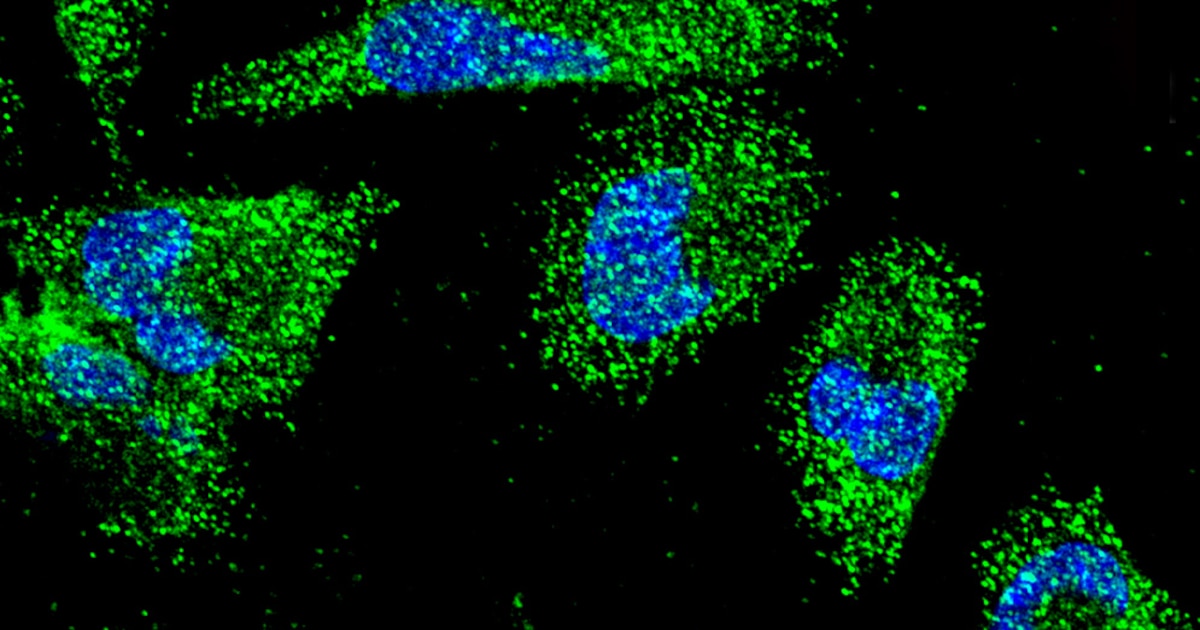
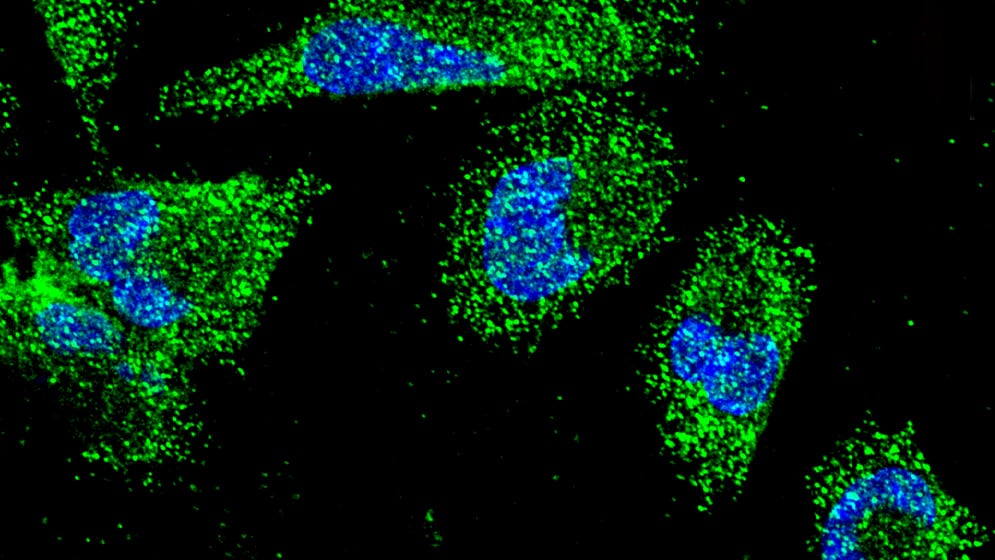
Un trabajo liderado por investigadores del CONICET identificó una de las estrategias que permite esa resistencia: las células del adenocarcinoma ductal pancreático liberan vesículas que alertan a otras células y activan la autofagia, un sistema celular que recicla componentes propios para obtener energía y materiales.
El hallazgo se publicó en la revista Scientific Reports y aporta información sobre la biología del adenocarcinoma ductal pancreático (ACDP), el subtipo más frecuente de cáncer de páncreas. El estudio no propone todavía un tratamiento, pero delimita un mecanismo que podría servir para pensar blancos terapéuticos más selectivos contra un tumor con pocas opciones efectivas y diagnóstico tardío.
El ACDP representa más del 90% de los tumores pancreáticos. Su pronóstico continúa entre los más complejos de la oncología: la expectativa de vida a cinco años alcanza, en promedio, al 12% de los pacientes. Las proyecciones internacionales anticipan que hacia 2040 este tipo de cáncer ocupará el segundo lugar entre las causas de muerte oncológica a nivel mundial.
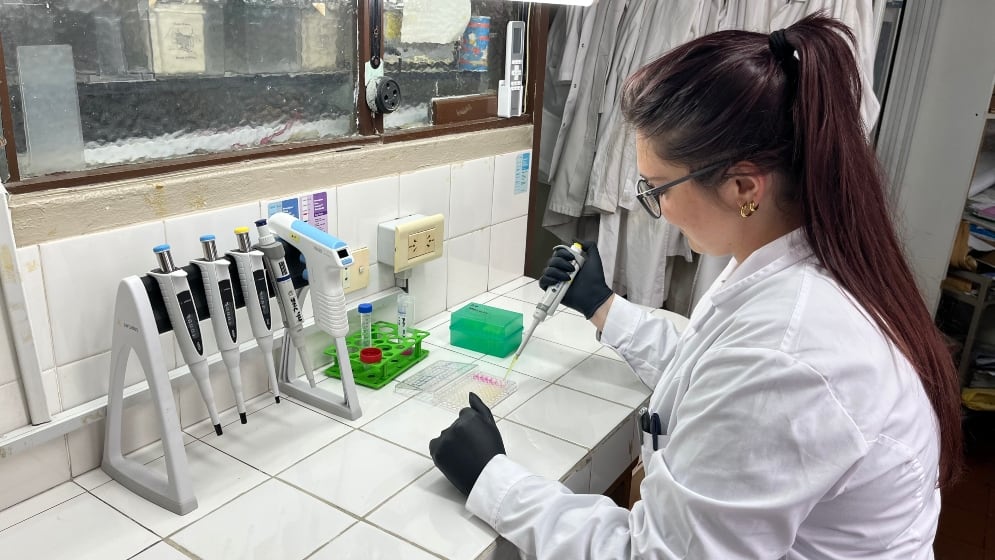
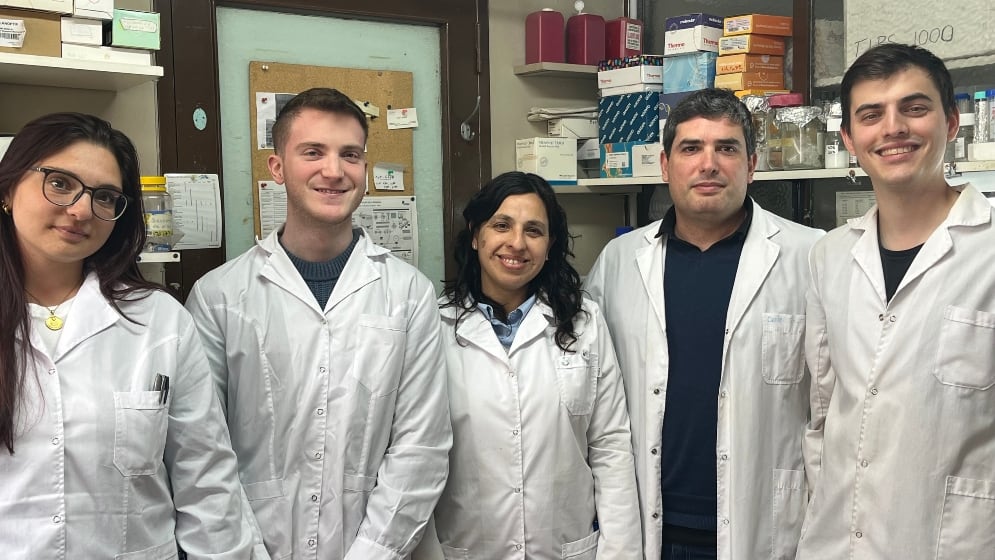
La investigación reunió a equipos del Instituto de Estudios de la Inmunidad Humoral (IDEHU), dependiente del CONICET y de la Universidad de Buenos Aires, junto con integrantes de otras instituciones científicas. El foco estuvo puesto en un aspecto menos visible de la enfermedad: la relación entre las células tumorales y su entorno inmediato, conocido como microambiente tumoral.
“Con este trabajo buscamos comprender la biología del microambiente tumoral y saber más sobre la resistencia y adaptación de las células tumorales de ACDP a las condiciones adversas del tumor, como la falta de oxígeno y nutrientes. Y también a cómo la quimioterapia y otros fármacos les cuesta llegar a ese lugar”, explicó a Infobae la doctora María Noé García, directora del estudio e investigadora del CONICET.
El tumor convierte la escasez de nutrientes en una señal de supervivencia
La característica más distintiva del ACDP es un microambiente denso, con abundante tejido fibroso y pocos vasos sanguíneos. Según la experta, esa condición, denominada desmoplasia e hipovascularización, limita el ingreso de oxígeno, nutrientes y fármacos.
“Para una célula sana, una carencia prolongada de recursos puede derivar en daño o muerte. Para muchas células tumorales pancreáticas, en cambio, ese desafío activa respuestas que favorecen su permanencia”, afirmó García.
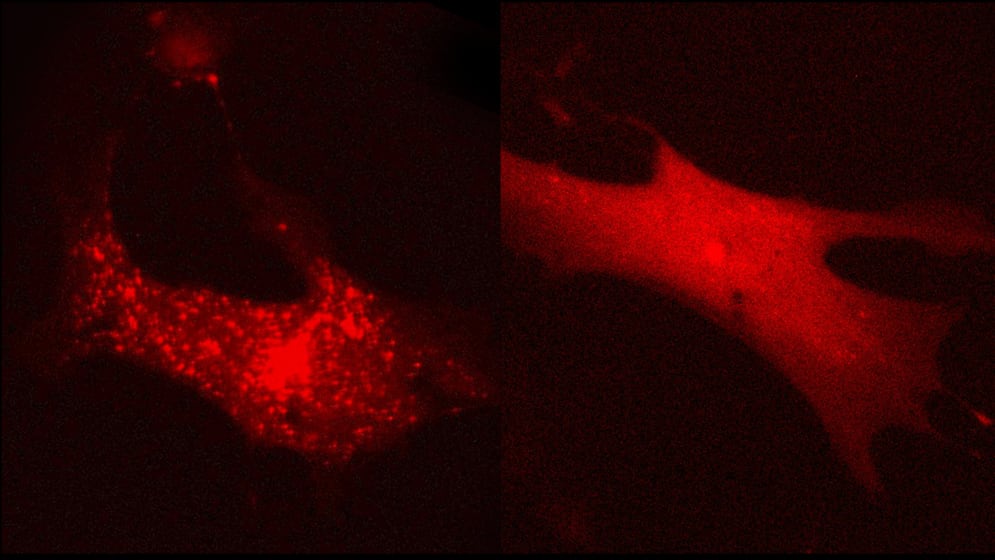
Entre ellas aparece la autofagia, un proceso natural presente en las células. El término proviene del griego y alude a la idea de “comerse a sí mismo”. A través de este mecanismo, la célula identifica partes de su propia estructura, las degrada y reutiliza sus componentes. Así consigue energía y materia prima en momentos de escasez o elimina elementos que podrían dañarla.
La autofagia cumple funciones necesarias en numerosos tejidos. Por eso, bloquearla de manera general puede producir efectos no deseados. Sin embargo, las células cancerosas pueden aprovecharla para tolerar condiciones que limitarían el crecimiento de otros tipos celulares, entre ellas la privación de nutrientes, la baja disponibilidad de oxígeno y la exposición a agentes de quimioterapia.
“Una célula tumoral es capaz de beneficiarse de este proceso para hacer frente a situaciones de estrés, incluyendo a los agentes quimioterapéuticos, o como en este caso, a un contexto limitante de oxígeno y nutrientes característico del microambiente tumoral pancreático”, señaló Daniel Grasso, primer autor del trabajo e investigador del IDEHU.
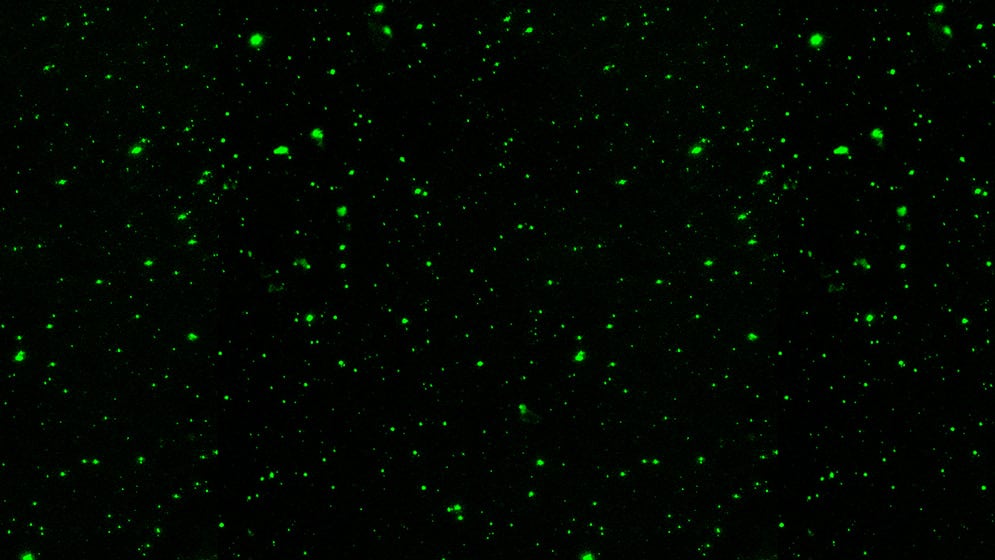
La novedad del estudio consiste en que esa respuesta no queda limitada a la célula que atraviesa la escasez. Los experimentos con líneas celulares de ACDP mostraron que las células sometidas a falta de nutrientes liberan vesículas extracelulares pequeñas. Se trata de partículas rodeadas por membranas que transportan sustancias y señales hacia otras células.
En este caso, las vesículas funcionaron como mensajeros. Cuando llegaron a células vecinas que contaban con un medio rico en nutrientes, también indujeron la autofagia. Es decir, una célula que aún no enfrentaba la carencia recibió una advertencia molecular y activó por anticipado un programa de adaptación.
Los investigadores observaron que la capacidad de inducir autofagia no correspondía a cualquier vesícula. El efecto apareció en una subpoblación marcada por la presencia conjunta de las proteínas CD63 y CD81 en su membrana. El trabajo también identificó la participación de CD9 durante la reorganización inicial de estas estructuras dentro de la célula sometida a inanición.
La diferencia resulta relevante porque las células tumorales secretan vesículas en forma constante. El estudio indica que, ante la falta de nutrientes, no solo cambia la cantidad de partículas liberadas: cambia sobre todo su composición y su capacidad de transmitir una respuesta biológica concreta. Después de una hora de recuperación nutricional, la liberación de vesículas volvió a niveles basales, aunque las vesículas producidas durante el período de carencia conservaron el poder de activar la autofagia.
Ese dato sugiere una separación entre número y función. Una célula puede volver a producir una cantidad habitual de vesículas, pero aquellas generadas bajo estrés mantienen una “carga” que afecta el comportamiento de las células receptoras. La comunicación intercelular, por lo tanto, aporta una dimensión adicional a la adaptación tumoral.
La proteína FOXO3a y KRAS aparecen como piezas centrales del mecanismo
Una vez que las vesículas llegan a las células vecinas, se activa una proteína llamada FOXO3a. Esta molécula actúa dentro de la célula y puede llegar al núcleo, donde regula genes vinculados con la autofagia. El estudio mostró que la vía de FOXO3a participa, al menos en parte, en la respuesta provocada por las vesículas liberadas durante la inanición.
El alcance de la señal tampoco quedó restringido a las células malignas. Las vesículas CD63/CD81 positivas indujeron autofagia en células pancreáticas no tumorales. Esa observación permite pensar que el tumor puede modificar el comportamiento de tejidos cercanos y establecer una red de adaptación que excede a las células cancerosas consideradas de forma aislada.
La investigación puso atención, además, en el oncogén KRAS, una de las alteraciones genéticas más frecuentes del cáncer de páncreas. Más del 90% de los procesos de formación de estos tumores se asocia con mutaciones en ese gen. Los autores compararon vesículas de líneas celulares con KRAS alterado frente a otras sin esa modificación.
“En nuestro trabajo comprobamos que las vesículas extracelulares de las líneas de células del tumor estudiado con el oncogen KRAS, inducen la autofagia a otras células del tumor y del tejido pancreático no tumoral, pero esto mismo no ocurre con las vesículas provenientes de líneas celulares de cáncer pancreáticas que no poseen alteración en este gen”, indicó García.
La relación entre KRAS y las vesículas abre preguntas sobre el origen del mecanismo. Si la mutación influye en la producción de señales que permiten tolerar el estrés metabólico, podría intervenir desde etapas tempranas del desarrollo tumoral y sostener la enfermedad una vez establecida. También plantea la necesidad de estudiar si otros oncogenes pueden activar vías de comunicación comparables en otros tipos de cáncer.
Los resultados no habilitan aún la aplicación clínica de un inhibidor de autofagia o de vesículas extracelulares en pacientes con cáncer de páncreas. La cautela tiene una razón precisa: la autofagia resulta indispensable para el funcionamiento de células y tejidos sanos. Una intervención que la bloquee sin discriminación podría producir consecuencias contrarias a las buscadas.
“Aún estamos lejos de considerar la inhibición de la autofagia como opción terapéutica para debilitar al tumor. Si bien la modulación de la autofagia en otras patologías como tratamiento adyuvante ha mostrado algunos resultados positivos, la autofagia posee papeles fundamentales para la vida celular de la mayoría de los tejidos, pudiendo resultar incluso en efectos opuestos a lo esperado”, sostuvo Grasso.
Por ese motivo, el trabajo dirige la atención hacia la selectividad. La identificación de vesículas con las marcas CD63 y CD81 podría ofrecer una oportunidad para estudiar intervenciones dirigidas a la comunicación entre las células tumorales, sin bloquear de forma amplia el sistema de reciclaje celular en todo el organismo.
“Se necesita una nueva generación de fármacos moduladores de la autofagia con selectividad y especificidad aumentada. Sin embargo, desde otro punto de vista, es posible pensar la modulación de la comunicación intercelular mediada por las vesículas extracelulares, convirtiéndose éstas en potenciales nuevos blancos terapéuticos”, puntualizó García.
El equipo incluyó a Maximiliano A. Díaz, Laura Sobrado, Valentín Yzetta, Marcela A. Cucher, María L. Cerutti, Daniela L. Papademetrio y Elida Álvarez. También participaron integrantes del Grupo Argentino de Vesículas Extracelulares, el Centro Franco-Argentino de Investigación en Cáncer de Páncreas, la Universidad Nacional de San Martín y otras áreas de la Universidad de Buenos Aires.
La continuidad de esta línea de investigación con material humano en los próximos meses, buscará precisar qué componentes transportan estas vesículas y de qué manera pueden interferirse sus señales sin afectar las funciones esenciales de las células sanas.
terapia oncolítica,adenovirus,cáncer de páncreas,tumor,inmunología,viroterapia,células cancerosas,biomedicina,páncreas,salud

La selección argentina femenina Sub 17 tendrá su debut histórico en el Mundial ante Alemania: todo lo que hay que saber

El desafío opositor tras la fallida sesión: construir mayorías en un Congreso moldeado por los gobernadores

Schmeichel aclaró la explosiva entrevista de Lisandro Martínez que generó polémica en Inglaterra

Dalila le pidió a El Polaco que se separe de Barby Silenzi porque es ‘fea’ y apareció la explosiva respuesta: “Yo no tengo adicciones, ni soy una…”

Más de 400 personas abandonaron sus hogares en Corrientes tras la crecida de los ríos Paraná y Uruguay

Crecimiento entre tensiones: la economía mundial en 2026 y el lugar de América Latina

Más de 2.000 islas sin hospitales: así funciona la red de clínicas flotantes de India

La angelita de LAM que reveló la peor infidelidad que sufrió en un matrimonio: «Encontré mensajes con otras mujeres y…»

Autos chinos en Argentina: el caso de Noruega reaviva las alertas por espionaje y riesgos para la seguridad nacional

El Índice de Incertidumbre Económica de septiembre alcanzó el nivel más alto de 2026, según la UCA

 POLITICA3 días ago
Autos chinos en Argentina: el caso de Noruega reaviva las alertas por espionaje y riesgos para la seguridad nacional
- ECONOMIA3 días ago
El Índice de Incertidumbre Económica de septiembre alcanzó el nivel más alto de 2026, según la UCA
- POLITICA2 días ago
Milei tildó a Lula de comunista, ratificó su alineamiento con Trump y pidió “defender el legado de occidente”