
INTERNACIONAL
Rusia lanzó un nuevo ataque masivo con 656 drones y 73 misiles contra Ucrania: al menos 11 muertos y decenas de heridos

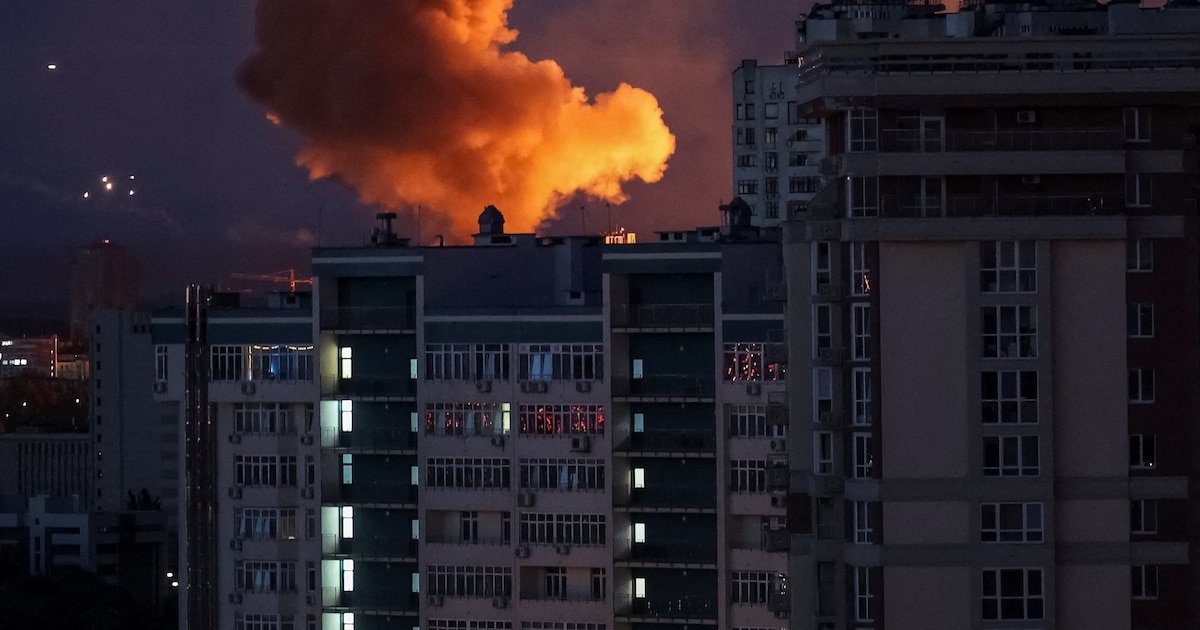
Al menos 11 personas murieron y decenas resultaron heridas durante una nueva ola de ataques rusos contra distintas regiones de Ucrania en la madrugada de este martes, según informaron autoridades ucranianas. La ofensiva incluyó el lanzamiento de 73 misiles y 656 drones contra varios puntos del país, con Kiev, Dnipró, Poltava, Kharkiv y Zaporizhia entre los principales objetivos.
La Fuerza Aérea de Ucrania indicó que las defensas antiaéreas destruyeron o neutralizaron 40 misiles y 602 drones. Sin embargo, las autoridades reportaron impactos de 30 misiles balísticos, tres misiles de crucero y 33 drones en al menos 38 ubicaciones. Además, restos de drones interceptados cayeron en otras 15 zonas.
La capital ucraniana concentró parte de los ataques más severos. El jefe de la administración militar de Kiev, Timor Tkatchenko, confirmó que “se confirmó la muerte de cuatro personas en Kiev” y señaló que al menos 29 personas resultaron heridas, entre ellas dos niños. Horas antes, había advertido a la población que “el enemigo está atacando con misiles balísticos”.
El Servicio Estatal de Emergencias de Ucrania elevó posteriormente el balance de la capital a 58 heridos, incluidos tres menores. Los bombardeos causaron daños en edificios residenciales y otras infraestructuras civiles en ocho distritos de la ciudad.
Uno de los episodios más graves ocurrió en el distrito de Podil, donde un edificio residencial sufrió un colapso parcial tras un ataque ruso. El alcalde de Kiev, Vitali Klitschko, afirmó que el inmueble fue alcanzado por un ataque de tipo “doble golpe”, una táctica que consiste en lanzar un segundo proyectil contra el mismo objetivo poco después del primero.
Tkatchenko advirtió que los equipos de rescate buscaban posibles sobrevivientes entre los escombros. “Los informes preliminares indican que hay personas atrapadas bajo los escombros”, escribió en Telegram.

En el distrito de Podilskyi, un edificio de nueve plantas sufrió daños en sus pisos superiores y varias personas quedaron atrapadas bajo los restos de la estructura. Las tareas de rescate continuaban durante la madrugada mientras la alerta aérea seguía vigente. En Solomianskyi, los daños alcanzaron edificios residenciales de 20 y 24 plantas.
Las autoridades también informaron que un presunto impacto de misil provocó un incendio en un edificio residencial de 24 pisos en el distrito de Shevchenkivskyi. Otro fuego afectó a un inmueble de nueve plantas en Podil tras la caída de restos de proyectiles sobre el techo.
Además de los edificios residenciales, los ataques alcanzaron una clínica médica y provocaron la caída de escombros dentro del predio de un jardín de infantes. También se registraron cortes de energía en tres distritos de la capital.

En la región central de Dnipropetrovsk, las autoridades reportaron al menos seis muertos y 36 heridos después de los ataques contra la ciudad de Dnipró. Según el Servicio Estatal de Emergencias, un segundo bombardeo impactó cuando los rescatistas llegaban al lugar de una explosión previa, lo que provocó la muerte de un integrante de los equipos de emergencia.
El jefe de la administración militar regional, Oleksandr Ganja, señaló que “el balance del ataque ruso contra Dnipró sigue aumentando” mientras continuaban las tareas de evaluación de daños.
En Kharkiv, otra de las principales ciudades del este ucraniano, al menos 14 personas resultaron heridas. Las autoridades reportaron daños en viviendas, garajes y vehículos. Un edificio residencial de dos plantas y parte de un bloque de apartamentos de cuatro pisos sufrieron destrucción, mientras varias personas quedaron atrapadas bajo los escombros.

El alcalde de la ciudad, Igor Terekhov, informó que Kharkiv fue “atacada por 15 drones y dos misiles”, según un mensaje difundido a través de Telegram.
Las explosiones se extendieron durante gran parte de la noche. Días antes, el presidente ucraniano, Volodímir Zelensky, había advertido sobre la posibilidad de una nueva ofensiva rusa de gran escala. En un mensaje dirigido a la población el lunes por la noche, sostuvo que “las advertencias de inteligencia sobre ataques rusos siguen vigentes. Es posible un ataque masivo; lo han preparado”.
La nueva ofensiva se produjo en medio de una escalada de operaciones entre ambos países. Según Zelensky, las fuerzas ucranianas atacaron 15 refinerías rusas entre enero y mayo, acciones que, de acuerdo con el mandatario, afectaron el 40% de la principal capacidad de refinación de petróleo de Rusia.
Por su parte, autoridades rusas informaron un incendio en la refinería de Ilski, ubicada en la región de Krasnodar, en el sur del país. El cuartel general operativo regional indicó que el fuego comenzó después de un ataque con aeronaves no tripuladas.
(Con información de AFP y AP)
War,Europe,Military Conflicts













NEWYou can now listen to Fox News articles!
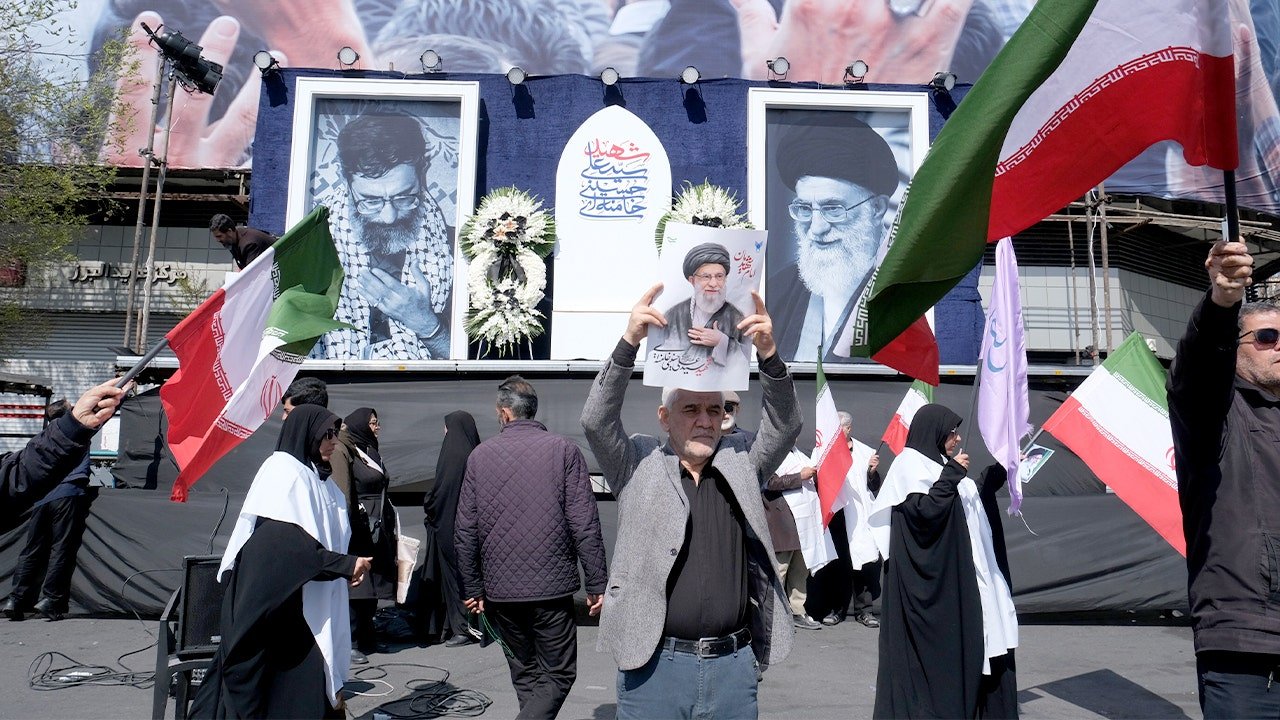
Iran’s rival political factions are increasingly invoking the authority of Supreme Leader Mojtaba Khamenei to attack their opponents and protect their own positions, even as questions persist over whether he is actively governing the country, according to an Iran expert.
The internal struggle surfaced in two reports published by Iran International concerning Iranian President Masoud Pezeshkian’s relationship with the new supreme leader.
In the first report, senior cleric Mohammad-Bagher Kharrazi, a relative of the Khamenei family by marriage, claimed Pezeshkian had repeatedly threatened to resign and was warned that his next resignation would be accepted.
IRAN EXPERT BRANDS ISLAMIC CENTER OF ENGLAND IRAN’S ‘UK OFFICE,’ URGES IMMEDIATE CLOSURE
Iranian President Masoud Pezeshkian speaks with Fox News Channel’s Martha MacCallum during an interview on Sept. 25, 2025, in New York City. (John Lamparski/Getty Images)
«If he resigns one more time, I will approve it,» Kharrazi quoted Khamenei as saying.
Pezeshkian’s office strongly denied the account. Mehdi Tabatabaei, the president’s deputy for communications and information, called the allegation «baseless and an outright lie,» while another presidential advisor said Kharrazi had no contact with the supreme leader and was known for telling «strange stories.»
Hours later, Iran International published a second report alleging Pezeshkian had met Mojtaba Khamenei only once, inside a vehicle with tinted windows at an undisclosed location in Tehran.
According to the outlet’s unnamed sources, the encounter lasted several minutes, the two men could not see each other and Pezeshkian was not permitted to shake Khamenei’s hand. The report alleged that the president later questioned whether the voice he heard had actually belonged to the supreme leader.
IRAN’S GOOD COP, BAD COP GAME IMPLODES AS EXPERTS WARN REGIME VIEWS US AS ‘EVIL’
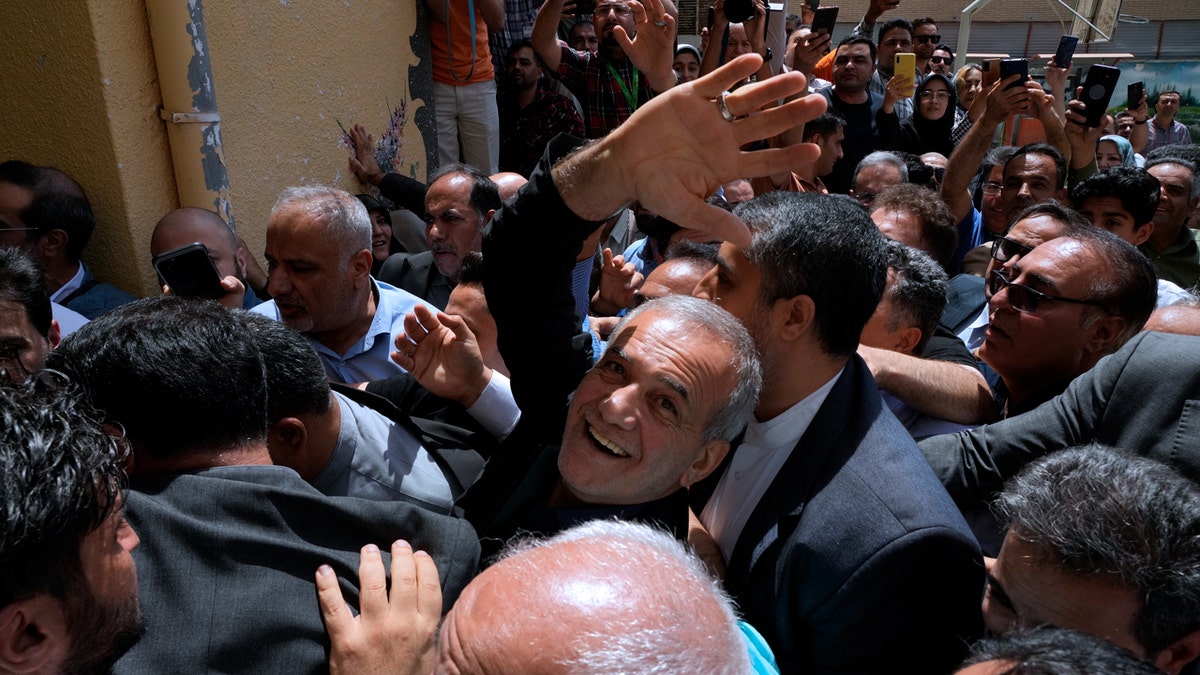
Masoud Pezeshkian, then a presidential candidate, waves as he arrives to vote at a polling station in Shahr-e-Qods near Tehran, Iran, on July 5, 2024. (AP Photo/Vahid Salemi)
The claims have not been independently verified. Pezeshkian previously described a substantially different encounter, saying publicly that he had spent approximately two and a half hours with Khamenei in a cordial atmosphere.
Kasra Aarabi, director of IRGC research at United Against Nuclear Iran, said the competing claims surrounding Pezeshkian and Mojtaba Khamenei reflected a deeper struggle inside what he described as an «Islamist oligarchic mafia system.»
Under Ali Khamenei, Aarabi said, the supreme leader functioned as the system’s «godfather,» arbitrating among rival Islamist factions and guaranteeing their access to power and money. His removal created a vacuum that Mojtaba Khamenei’s appointment was intended to fill, but the new supreme leader’s prolonged public absence has left rival factions uncertain about who is actually in charge.
«The very essence of this mafia system is built on a godfather,» Aarabi said. «If the godfather is absent, whether because he is severely incapacitated or nonexistent, that vacuum… re-emerges between the various Islamist oligarchic clans.»
Aarabi said those factions are not primarily divided by ideology.
«They’re not competing over ideology,» he said. «They’re competing over raw power and economic interests.»
In that environment, Aarabi said, Mojtaba Khamenei’s name has become a political instrument that competing factions can invoke to legitimize themselves, constrain their rivals or justify decisions whose true source remains unclear.
WHO IS AHMAD VAHIDI? IRAN’S NEW IRGC CHIEF TIED TO GLOBAL ATTACKS AND ‘DEATH TO AMERICA’ IDEOLOGY
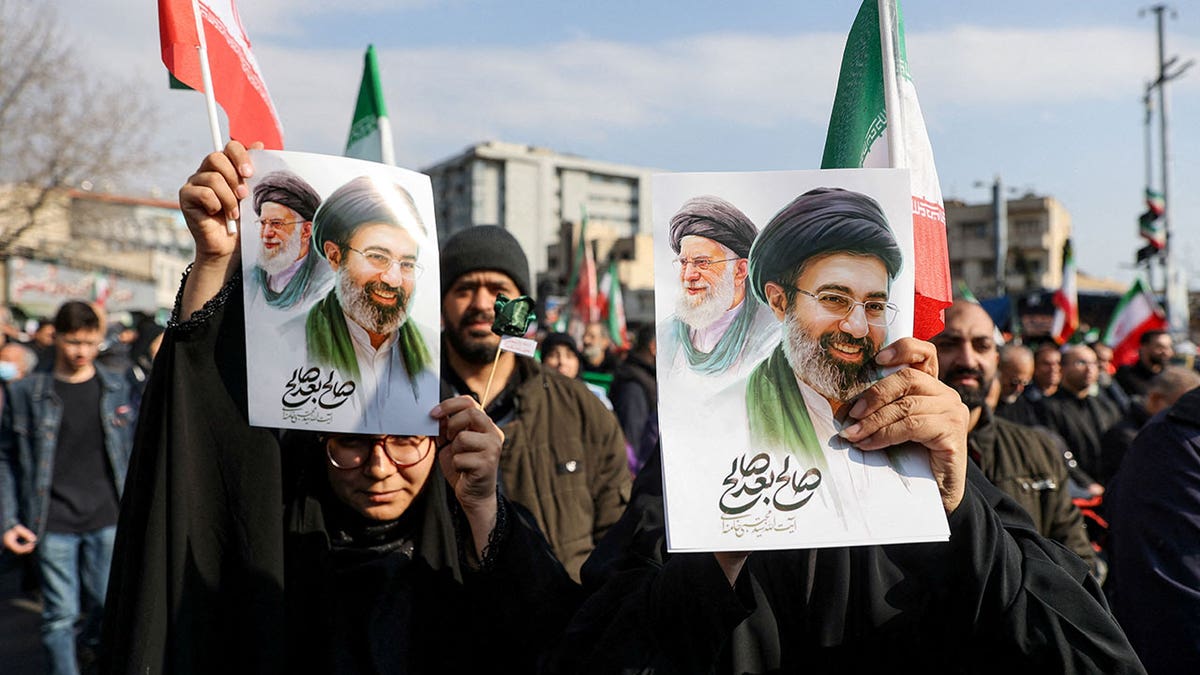
People hold placards with an image of Iran’s new supreme leader, Mojtaba Khamenei, and the late Ayatollah Ali Khamenei, during a rally in Tehran, Iran, March 9, 2026. (Majid Asgaripour/WANA (West Asia News Agency) Via Reuters)
«Mojtaba’s name is the glue that’s holding the system together right now,» Aarabi said. «Each of these clans invokes his name to justify its existence, legitimize its position, and consolidate its place within this fragile system.»
Exiled Iranian journalist Mehdi Ghadimi described the resignation claims as part of a recurring political strategy used by reformist administrations.
«This is a familiar cycle,» Ghadimi said. «Whenever they feel that their usefulness to the supreme leader has come to an end, they start circulating these resignation rumors in an effort to build public sympathy and improve their image before being pushed aside.»
Ghadimi said similar rumors surrounded former presidents Mohammad Khatami and Hassan Rouhani during the final years of their administrations. He argued that reformist-aligned media channels often continue circulating resignation claims even after a president’s office formally denies them, allowing officials later to portray themselves as having challenged the supreme leader.
On Mojtaba Khamenei’s status, Ghadimi went further than Aarabi, saying he did not believe there was «a functioning person by that name who is capable of thinking, making decisions or speaking.»
«Either he is dead, or he is being kept alive in an extremely unstable and severely deteriorated condition,» Ghadimi said.
Aarabi said the two reports illustrate that dynamic. A cleric opposed to or unaligned with Pezeshkian invoked Mojtaba Khamenei’s authority to weaken the president by claiming his next resignation would be accepted, while figures around Pezeshkian pushed back with an account portraying the president as having met directly with the supreme leader.
Mojtaba Khamenei has not appeared in any publicly released video or audio recording since succeeding his father, according to Iran International. Iranian officials have offered conflicting accounts about how often senior government figures have met him.
Aarabi cautioned that using Khamenei’s name as a source of authority will become increasingly difficult if his public absence continues.
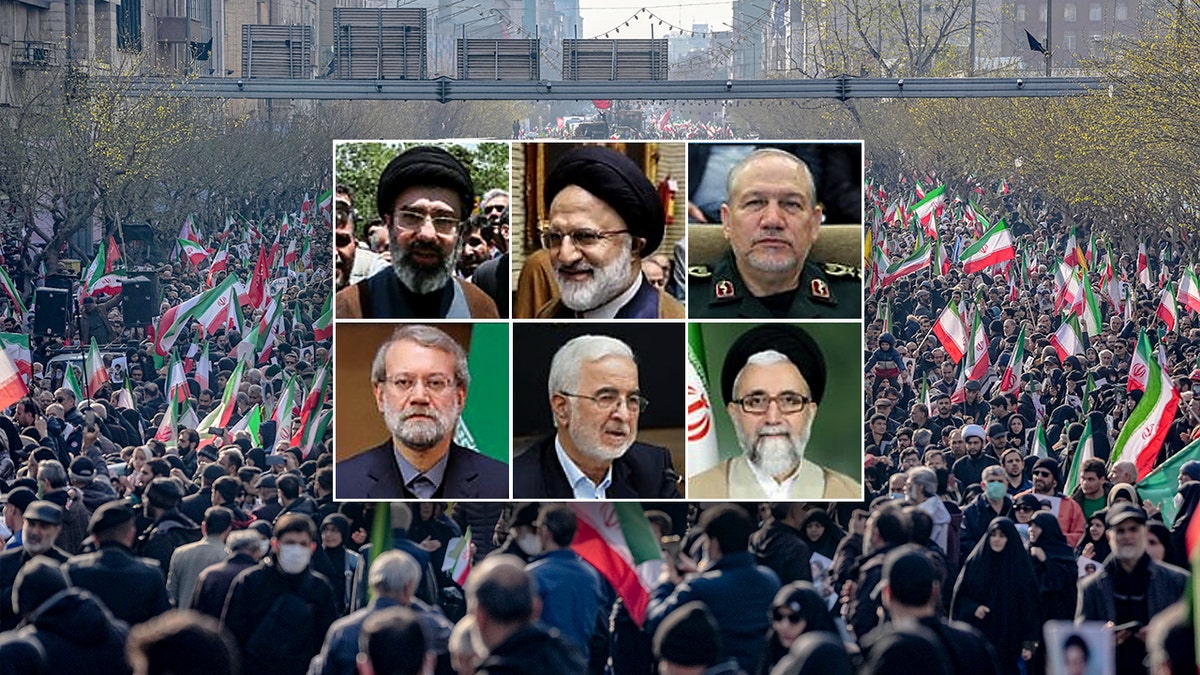
A composite image shows several Iranian leaders named in the State Department’s Rewards for Justice program offering up to $10 million for information on key figures tied to Iran’s Islamic Revolutionary Guard Corps (IRGC), including Mojtaba Khamenei, top left. (State Department/Rewards for Justice; Khoshiran/Middle East Images/AFP via Getty Images)
«There’s only so many times you can use someone’s name without any proof of life that they actually exist,» Aarabi said. «The longer Mojtaba is absent, the more questions develop over whether he is alive or able. And as soon as that doubt increases, you will see this infighting increase.»
war with iran, iran, mojtaba khamenei, ali khamenei, world
NEWYou can now listen to Fox News articles!
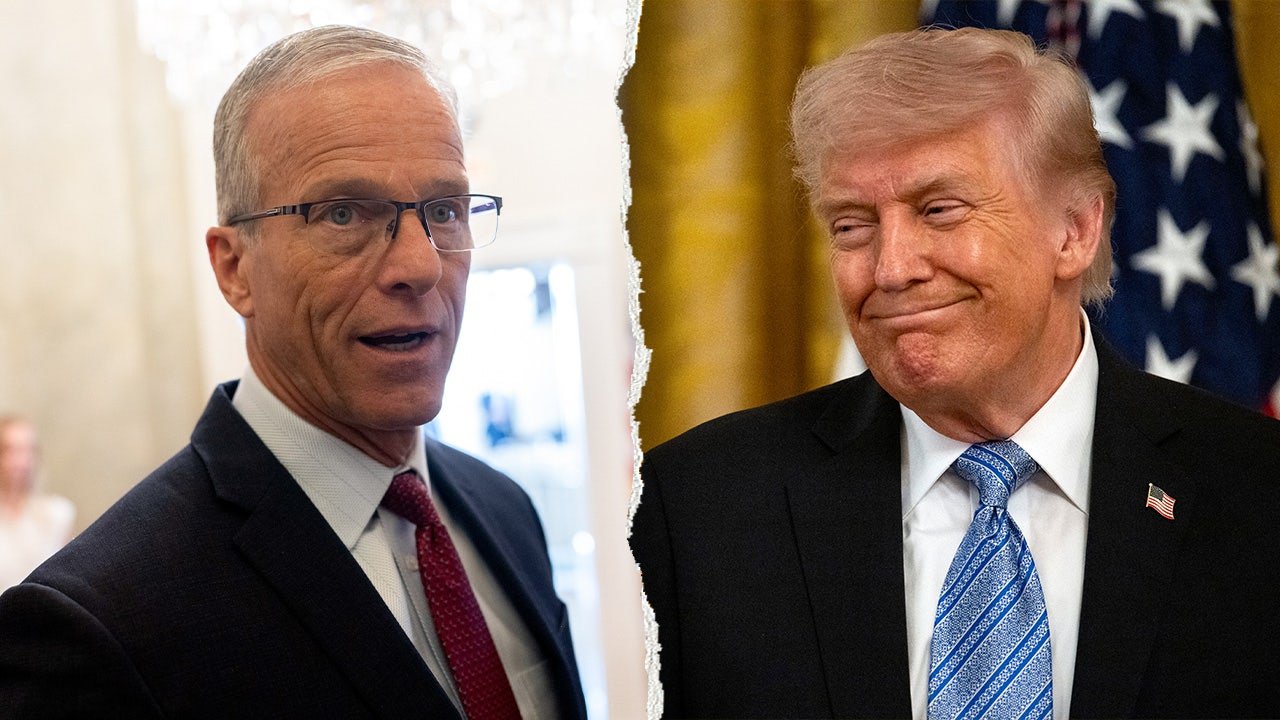
FIRST ON FOX: The reports of President Donald Trump and Senate Majority Leader John Thune’s dead working relationship have been greatly exaggerated, the South Dakota Republican leader told Fox News Digital.
«I’ve heard from him twice this morning already. He called me over the weekend, and so there, you know, we talk, I don’t bother him, I’m not calling him every day,» Thune said in an interview.
Last week, Trump said, «We’re going to find out,» whether Thune was the man for the job to lead Senate Republicans, casting doubt on a critical relationship between him and the Senate’s top Republican.
TRUMP QUESTIONS THUNE’S LEADERSHIP AS SAVE AMERICA ACT STALLS
Reports of Senate Majority Leader John Thune and President Donald Trump’s relationship deteriorating are greatly exaggerated, Thune told Fox News Digital. In fact, they have spoken several times over the last few days since Trump’s «we’ll see» comment about his future as Republican leader. (Aaron Schwartz/Bloomberg via Getty Images 😉
The tension stems from the SAVE America Act floundering in the Senate, and Trump’s desire to see the election integrity package passed by any means necessary.
Thune doesn’t see Trump’s comment as a personal slight, however. Both he and the president «want to get to the same place. We have, sometimes, disagreements about how best to get there.»
«Most of mine are constrained by what’s achievable in an institution like the Senate that has procedural roadblocks to do almost anything,» Thune said.
«We have those candid conversations, but I’m not worried about that relationship,» he continued. «I know he’s going to push as hard as he can. That’s his business model, is to just keep pushing, pushing, pushing to get people to go as far as they can go.»
SENATE FACES ‘COME-TO-JESUS’ MOMENT ON TRUMP’S ELECTION PRIORITY UNDER GOP’S NEW PLAN
There is a voracious appetite among Trump, Senate Republicans and their base to see the SAVE America Act passed. One that Thune hears every day, either online or within his own conference.
It’s dominated the oxygen inside the Capitol and beyond its walls, and the pressure comes as the Senate is sprinting to finish work on key items, like preventing a government shutdown and confirming dozens of Trump’s nominees.
«There are good days and bad days,» Thune said. «And around here, probably lately more bad days than good days, but you know you just kind of, like I said, keep your head down, do the work.»
But passing the SAVE America Act is the most elusive item for Republicans, given the current make up of the Senate.
While there are a cohort of Republicans who are voting against it, Thune made the point that every single Senate Democrat has shut it down each of the five times that it’s been brought to the floor in a variety of configurations.
And Thune is one of the Republicans that wants the bill passed — he’s an original co-sponsor of the SAVE Act, the precursor to the current version of the SAVE America Act. The avenue of cutting Democrats out of the equation and ramming through aspects of the bill through budget reconciliation exists, which Thune is interested in pursuing.
But then comes the problem of generating 50 votes to support that, and keeping those votes together to shut down «crazy democratic amendments.»
GOP RIFT GROWS AS THUNE HITS BRAKES ON TRUMP’S ELECTION BILL TO AVERT SHUTDOWN
Thune’s job helming the Senate majority is to do the math on what can be accomplished in an institution that’s «designed» to be difficult. And the votes still aren’t adding up.
«I keep asking the question, am I the only one in this town that can count to 50? Because it seems like these questions recur and there are a lot of people out there who haven’t seemed to internalize the fact that there aren’t Democrats that are going to flip and vote for this,» Thune said.
«And there aren’t 50 Republicans that are going to vote to nuke the filibuster. Those are two facts that are indisputable and unchangeable.»
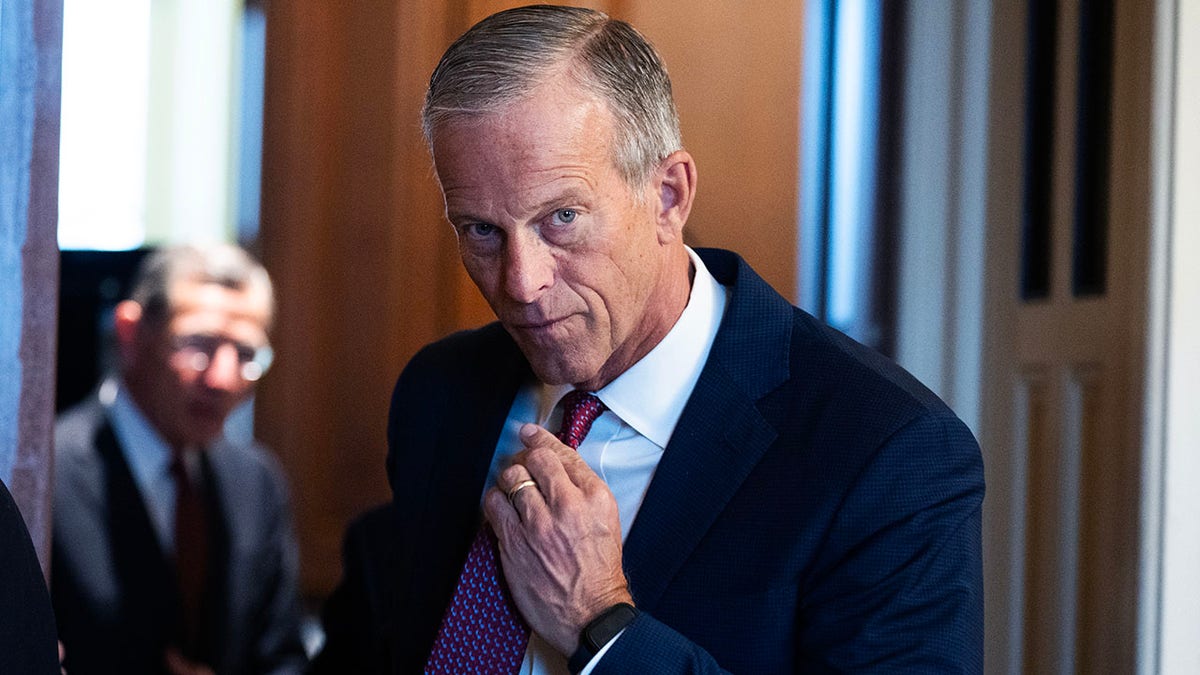
Senate Majority Leader John Thune, R-S.D., argued that Democrats were continuing their push to keep DHS closed because it was «politically advantageous.» (Tom Williams/CQ-Roll Call, Inc via Getty Images)
Thune’s position is, by extension, an embodiment of the Senate in many ways.
Unlike the House, legislation and agendas can’t be rammed through without a bipartisan agreement to blast through the filibuster. And senators’ concerns and desires encompass an entire state, not just a sliver of a state’s population.
Through several interviews with Fox News Digital, he’s instilled that part of his job is to listen and take consensus on what does and doesn’t work, deliberating on the best path for a deliverable outcome.
«This place was supposed to be difficult, so that no dictator could master it, and I think that’s kind of the role of the Senate in our system and our democracy,» Thune said.
«It’s important to keep that in perspective, but it’s frustrating as heck when you’re somebody who likes to get things done, likes to get results, and you’ve got procedural roadblocks holding things up as we try to wind down and get some things done,» he continued.
politics, john thune, donald trump, senate, republicans elections

Como consecuencia del Brexit, miles de enfermeras filipinas, camilleros, ambulancieros y médicos partieron a sus países de origen para no regresar porque no consiguieron ser residentes tras la salida de Gran Bretaña de la Unión Europea. El servicio de salud británico tuvo un serio déficit de personal, especialmente en el Covid. Debió reclutar en otros países, incluidos los africanos y asiáticos. Hoy se enfrenta con el racismo de sus pacientes frente a los que los cuidan, los curan y los atienden.
Pacientes británicos se niegan a ser atendidos “por personal no blanco “mientras el NHS informa de “un aumento alarmante del racismo”.
Paul Awah, técnico en radiodiagnóstico de Bedfordshire y originario de Nigeria, declaró: «Definitivamente ha empeorado; la gente se expresa más abiertamente».
Una encuesta ha revelado que miembros del personal del NHS han sido llamados «extranjeros sucios» y «monos» , en medio de un aumento «notable» e «inaceptable» de actitudes racistas por parte de los pacientes.
La Sociedad de Radiólogos (SoR) afirmó que esta tendencia, observada en los últimos 18 meses, refleja negativamente a la sociedad y calificó dicho comportamiento de «inadmisible».
Un sondeo realizado entre sus miembros reveló que algunos pacientes incluso se han negado a ser atendidos «por personal no blanco”.
Una ecografista de origen asiático, que trabaja en la región de las Midlands, relató que varios pacientes le han dicho: «Este país ya no es el mismo con toda esa gente que viene aquí y nos quita el trabajo».
Señaló que estos incidentes se han vuelto «más frecuentes» . Atribuyó la situación a «los medios de comunicación y a ciertos partidos políticos», donde la gente «expresa abiertamente» tales opiniones.
Paul Awah, dijo: «Lo que antes era algo que la gente no decía… ahora el discurso ha cambiado».
Awah también afirmó haber tenido pacientes que le decían que no podían entenderle, a pesar de que el inglés es el único idioma que habla.
Otros incidentes mencionados en la encuesta de la SoR (Society of Radiographers) incluyen:
– «Algunos pacientes siempre se quejan del color de piel de las personas que los atienden«, dijo un trabajador.
-Un técnico en radiodiagnóstico habló de «pacientes que describían al personal sanitario como extranjeros sucios».
-Otro comentó: «He sido testigo de cómo un paciente llamaba ‘mono’ a un compañero».
-Un hombre blanco supuestamente se negó a permitir que un ecografista examinara a su esposa embarazada, diciendo al personal: «No quiero que nadie de ningún origen étnico toque a mi mujer».
-Y otro paciente se negó a dejar que un técnico en radiodiagnóstico negro le hiciera una radiografía de tórax, alegando que «la gente negra me da miedo».
Estas conclusiones se producen después de que la última encuesta al personal del NHS mostrara que el porcentaje de empleados que han sufrido algún tipo de discriminación en los últimos 12 meses ha alcanzado su nivel más alto en cinco años.
El informe, publicado en marzo, reveló que el 9,26% de los trabajadores había sufrido discriminación personalmente en 2025.
Thomas Simons, director de recursos humanos y desarrollo organizativo del NHS de Inglaterra, declaró: «Los abusos racistas contra el personal del NHS son totalmente inaceptables y no tienen cabida en nuestro servicio de salud». «Nuestras nuevas normas nacionales para el personal dejan claro que las organizaciones del NHS deben tomar medidas significativas para prevenir el racismo y responder ante él, apoyar al personal afectado y garantizar que existan consecuencias claras para los pacientes que profieran insultos racistas o discriminen al personal del NHS, incluida la opción de denegar la atención en situaciones que no sean de emergencia.
Los medios Sky News, The Independent y The Guardian denunciaron unánimemente el racismo en el servicio de salud británico.
Diversos expertos, incluida la Society of Radiographers (SoR), han informado de un aumento «notable» en los comentarios xenófobos y racistas dirigidos al personal del NHS durante los últimos 18 meses.
Una encuesta realizada a los miembros de la SoR reveló que algunos empleados se sienten obligados a tolerar comentarios racistas, lo que ha llevado a la organización a exigir un mejor registro y seguimiento de estos incidentes.
La última encuesta al personal del NHS refleja “el nivel más alto de discriminación por parte de los pacientes en los últimos cinco años”, ya que el 9,26% de los trabajadores notificó haber sufrido incidentes de este tipo en los últimos 12 meses.
El NHS de Inglaterra ha condenado estos abusos . Ha declarado que las organizaciones deben tomar medidas para prevenir el racismo y responder ante él, incluida la posibilidad de denegar la atención a pacientes que incurran en conductas abusivas en situaciones que no sean de emergencia.

Iran’s unseen supreme leader becomes weapon in escalating power struggle, experts say

Causa ANDIS: la Justicia fijó una nueva fecha para peritar los audios de Diego Spagnuolo

El escalofriante grito de Candela delante de la policía mientras Facundo Moyano la seguía: «Ayúdenme…»

Más fondos para Frigerio: el gobernador de Entre Ríos firmó con Nación un acuerdo por $120.000 millones

El Banco Central volvió a comprar dólares y las reservas alcanzaron su mayor nivel en casi siete años

Sofía Clerici pidió ser sobreseída porque el peritaje probó que no recibió dinero de Martín Insaurralde

“Vamos a acelerar con todo”: el objetivo del Gobierno por las reformas y la agenda electoral de cara al 2027

Reelecciones indefinidas: el oficialismo bonaerense niega que busque ampliar la Legislatura como parte de una reforma política para beneficiar a los intendentes

Javier Milei cruzó a Victoria Villarruel y elevó la tensión: “Es una opositora, replica los argumentos kirchneristas”

¡Chau Luck Ra! La salida de soltera de La Joaqui, muy bien acompañada, a días de su separación
-
 POLITICA2 días ago
“Vamos a acelerar con todo”: el objetivo del Gobierno por las reformas y la agenda electoral de cara al 2027
-
 POLITICA2 días ago
Reelecciones indefinidas: el oficialismo bonaerense niega que busque ampliar la Legislatura como parte de una reforma política para beneficiar a los intendentes
-
 POLITICA22 horas ago
Javier Milei cruzó a Victoria Villarruel y elevó la tensión: “Es una opositora, replica los argumentos kirchneristas”