INTERNACIONAL
Supreme Court to hear Missouri redistricting case for third time

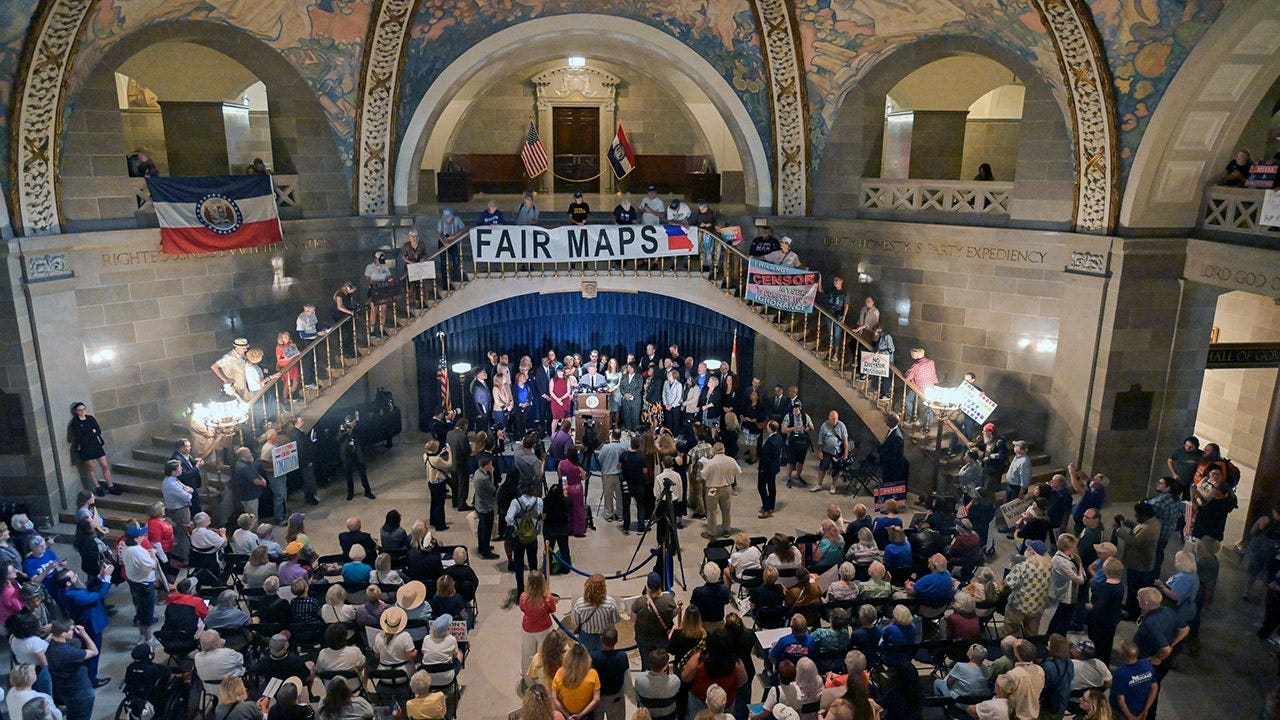
The U.S. Supreme Court will hear arguments in a Missouri redistricting case for a third time after Justice Brett Kavanaugh accepted a request to intervene in the case once again Tuesday night.
The divisive redistricting map drawn in 2025 would grant Republicans an additional seat in the House of Representatives if it is put in place ahead of the 2026 elections. A federal judge in Missouri ruled in favor of the 2025 map last month, but the Supreme Court put a stay on that ruling just two weeks ago.
Opponents of the map issued an emergency appeal to the Supreme Court late Tuesday night after the St. Louis-based Eighth U.S. Circuit Court of Appeals ruled in favor of the new map on Monday.
FEDERAL APPEALS COURT ORDERS MISSOURI TO USE CONGRESSIONAL MAP REJECTED TWICE BY SUPREME COURT
Kavanaugh handles emergency requests for the state of Missouri and directed supporters of the new map to respond to the appeal by Wednesday at 2 p.m. ET.
The development is the latest in a roller-coaster ride of legal decisions that have seen the new map fly up and down between federal and state courts, the Supreme Court and the Missouri Supreme Court.
ELECTION CHAOS IN THIS RED STATE JUST GOT EVEN STRANGER FOR REPUBLICANS AFTER SUPREME COURT RULING
The case began when Missouri Secretary of State Denny Hoskins rejected a petition for the 2025 map to be placed on the ballot for a vote in 2026. Instead, the new map was used to determine congressional districts for the state’s primary elections.
The Democratic group behind the petition, People Not Politicians, asked a state court to intervene, saying the group’s petition of 300,000 signatures should have triggered a referendum on the new map under Missouri’s constitution. The Missouri Supreme Court agreed, writing that the 2025 map cannot go into effect «unless and until approved by the voters at the November 2026 general election.»
MISSOURI HIGH COURT BLOCKS GOP-BACKED CONGRESSIONAL MAPS AHEAD OF MIDTERMS; TRUMP BLASTS ‘RIDICULOUS’ RULING
Hoskins then appealed the case to the Supreme Court, but Kavanaugh declined to hear his request on Sept. 4.
Meanwhile, Republican candidates who won primary elections based on the 2025 maps brought up a separate case in federal court, arguing that if the general election takes place under the 2022 map their districts would be very different from the primary maps. Many general election voters, they noted, would also be presented with options they had no role in voting for during the primaries.
SUPREME COURT AGAIN BLOCKS MISSOURI FROM USING TRUMP-BACKED CONGRESSIONAL MAPS
Eighth Circuit Judge Stephen R. Clark ruled in favor of those candidates and issued an order requiring that the 2025 maps be used in this year’s elections, effectively contradicting the state Supreme Court.
This time, People Not Politicians asked the U.S. Supreme Court to intervene, and Kavanaugh agreed. The court issued an unsigned order blocking Clark’s order until the Eighth Circuit issued a formal ruling in the case. The Eighth Circuit then fast-tracked the case and ruled in favor of the 2025 map.
MISSOURI SUPREME COURT THREATENS SECRETARY OF STATE WITH CONTEMPT AMID INTENSIFYING REDISTRICTING BATTLE
People Not Politicians filed their latest request for an intervention on Tuesday night, arguing that the court’s ruling against the new map was still in effect, and pointing to statements from Missouri election officials saying it is too late to change what maps are used in the upcoming elections.
The Missouri Association of County Clerks and Election Authorities already announced it will not be using the 2025 map for November, arguing in an appeal filing that the state does not have enough time to provide new ballots.
«Ballots have been printed, and Missourians have already voted. Thousands more will vote before this order seeks to take effect. Officials should stop wasting taxpayers’ money on pointless legal action and instead focus on administering our elections,» People Not Politicians director Richard von Glahn said in a statement.
The Associated Press contributed to this report.
elections state and local, missouri, politics, federal courts, elections








INTERNACIONAL
ASRA NOMANI: Muslim reformers reject ‘fire will rise’ warning if El-Sayed loses as ‘Jihad First’
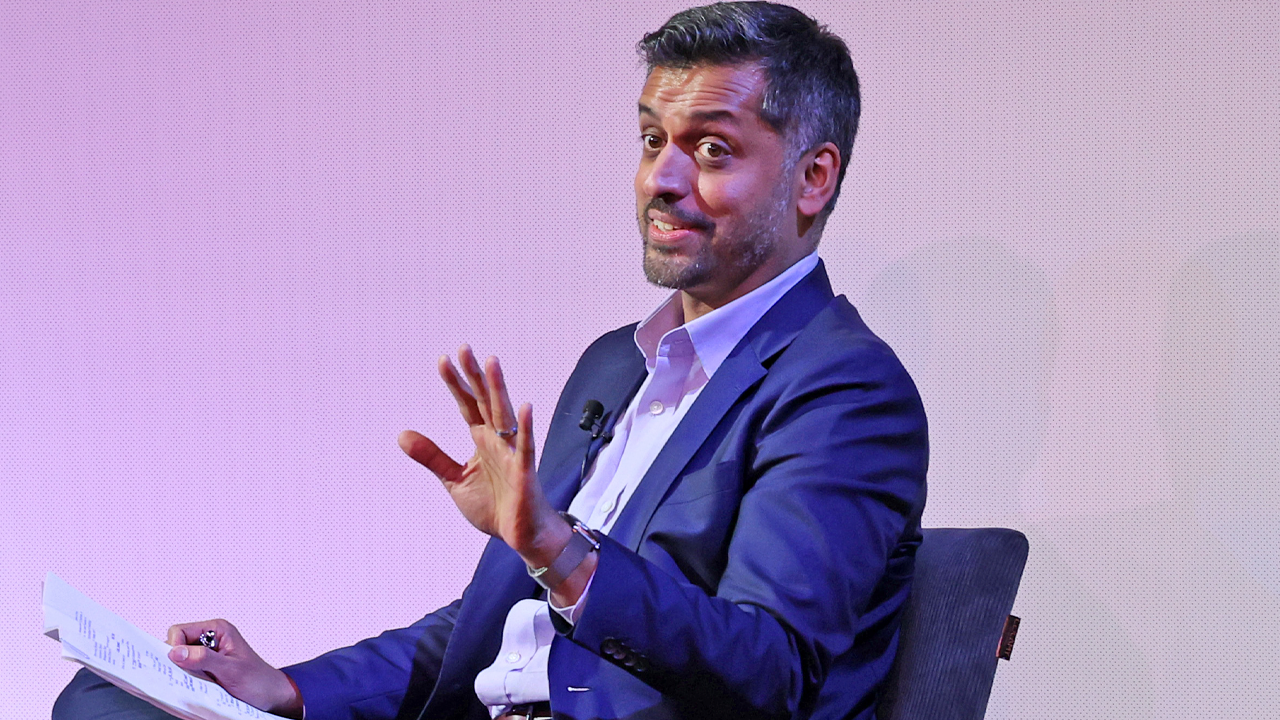
American Muslim reformers are torching political commentator Wajahat Ali after he warned that «the fire will rise» and people will be «radicalized» if Democratic candidate Abdul El-Sayed loses his Michigan Senate bid, saying his language echoes a «Jihad First» intimidation rhetoric used by religious tyrants before elections in the Middle East.
On Monday, Ali drew fire on X when he wrote: «If, God forbid, Abdul loses, this will be a watershed moment in Democratic politics. The fire will rise. It’s over. People will be radicalized against corporate, pro-Israel Dems. There will be a reckoning. If, when, he wins, it will be a watershed moment. And that reckoning will still come.»
After facing backlash, Ali posted another message Tuesday morning, expressing no regrets and instead scolding critics for alleged bigotry. «Ah, that Islamophobia and anti-Arab bigotry are so pure and naked,» Ali wrote. «People are just coming out in the open about how they’ve always felt. Great. Please, be honest. Just share the ugliness with the world so we can all see.»
Ali didn’t respond to a request for comment from Digital.
Reform-minded Muslim leaders aren’t buying Ali’s rhetoric.
The divide with Muslim reformers reflects a broader fissure within American Muslim politics: between establishment organizations and leaders who accept political Islam, or Islamism — the idea that religion should shape government and political life — and reform-minded critics who challenge orthodoxy, reject anti-Israel and anti-Western rhetoric and support secularism, including the separation of mosque and state.
«What Wajahat Ali said on the eve of elections is actually the language we’ve seen Islamists use before elections in countries in the Middle East, including Egypt,» Dalia Ziada, an Egyptian Muslim reformer and critic of political Islamism, told Digital.
«The threat is usually: If you don’t choose us, this will lead to radicalization, and this will lead to violence,» added Ziada, who is Washington, D.C., director at the Institute for the Study of Global Antisemitism and Policy. «Maybe we need to expect troubles coming up.»
EL-SAYED’S PAST MUSLIM BROTHERHOOD COMMENTS RAISE RED FLAGS AS HE EYES POWERFUL ROLE
Soraya Deen, a Muslim reform activist, attorney and co-founder of the Los Angeles Women’s Multifaith Alliance, said Ali’s language shouldn’t be treated as a routine social-media outburst.
«His words are deeply troubling,» Deen told Digital. «His warning that ‘the fire will rise,’ that people will be ‘radicalized,’ and that a ‘reckoning’ is coming deserves serious scrutiny.»
«Losing an election is not a license for radicalization,» added Deen, . «We must reject intimidation, political extremism and the politics of perpetual grievance.»
EX-DSA MEMBER RIPS ABDUL EL-SAYED AND WARNS FAR-LEFT ADOPTING POLITICS OF FOREIGN TERROR ORG
Dr. Zuhdi Jasser, a Muslim reformer and founder of the American Islamic Forum for Democracy, said Ali’s comments reflect what he describes as a «Jihad First» lens for viewing political conflict.
«Wajahat Ali, like Abdul El-Sayed, proves yet again their decades of anti-American Islamist obsession and the ‘Jihad First’ lens through which they view every cultural, social, military and political conflict,» said Jasser, who is running for Congress as a Republican candidate in Arizona’s 4th Congressional District.
Jasser’s comments were directed at what he described as the political rhetoric surrounding El-Sayed’s campaign. The reformers didn’t accuse Ali of belonging to an Islamist organization. Their criticism focused on language they said resembles tactics used to pressure voters by warning that rejecting a candidate could produce violence or radicalization.
EL-SAYED TRIES TO MAKE PEACE WITH JEWISH DEMOCRATS BUT DRAWS LINE AT DUMPING HASAN PIKER
Ali’s comments came as El-Sayed’s campaign draws support from a wide network of Muslim advocacy groups, Palestinian activist organizations, progressive groups, labor organizations and political influencers.
A Digital review of campaign endorsements, public statements and voter-mobilization efforts identified 70 Muslim groups and influencers supporting El-Sayed’s political orbit one way or another. The records include formal endorsements, campaign-listed support, voter mobilization and public amplification. Not every organization has the same relationship with the campaign.
They include CAIR Action, Americans for Justice in Palestine Action, Bangladeshi Americans for Political Progress, Emgage Action and the US Campaign for Palestinian Rights. El-Sayed’s official website includes endorsements from «Muslims for Abdul,» the Yemeni American Michigan Democratic Caucus, the Michigan Bangladeshi American Democratic Caucus and Palestinian American political operative Linda Sarsour’s MPower Action, among others.
ABDUL EL-SAYED REPORTEDLY CALLED HASAN PIKER WARNING HIS RHETORIC WAS ‘COSTING’ VOTES
The broader coalition supporting El-Sayed includes Democratic Party organizations and Democratic Socialists of America chapters, as well as online commentators and political figures including Hasan Piker, Linda Sarsour, Rep. Ilhan Omar and Rep. Rashida Tlaib.
The organizations and individuals have overlapping priorities, including opposition to U.S. support for Israel, demands for an arms embargo or cease-fire, support for Palestinian activism, criticism of Democratic moderates and efforts to mobilize Muslim and progressive voters.
The coalition’s critics have described it as a «red-green» alliance involving «red» left-wing political organizations and «green» Muslim advocacy groups.
«Their red-green ‘Jihad First’ filter — threatening fire and radicalization — is simply an unmooring of their own dreams to live the jihad of Islamism and destroy the American dream and everything for which it stands,» Jasser said. «Patriotism is not in their vocabulary.»
TRUMP SAYS ISRAEL WILL STOP RECEIVING $4B IN US AID BY YEAR’S END, CAN STILL BUY WEAPONS
For Ziada, the significance of Ali’s post lies in the suggestion that an election loss could trigger radicalization.
«Muslims like Wajahat Ali are just using the political movement backing Abdul El-Sayed as a staircase to bring them to the power of a chair they want to claim,» Ziada said. «Once they get there, they don’t care what they may have promised. And if they don’t get there, they will turn it into fire.»
Ziada also criticized El-Sayed’s campaign rhetoric about Israel, comparing what she described as repeated attacks on Israel to political tactics used by leaders in the Middle East. Tuesday morning, President Donald Trump announced that he would cut off $4 billion of aid to Israel, one of the network’s demands, designed to isolate the nation.
«The demonization of Israel that we saw very prominently in the campaign of El-Sayed is a tactic that we saw Middle Eastern dictators resorting to every now and then,» Ziada said.
«Whenever they are stuck with economic issues or politics, they just bring up the ‘Israel is bad’ card,» she added. «Again, he is just copying dictators in the Middle East.»
Jasser said the episode should prompt Muslim voters and Democratic leaders to examine the language used by political influencers who claim to speak for Muslim communities.
«Any honest Muslim who reads that post will see ‘Jihad First’ and everyone else be damned, including patriotic Muslims,» Jasser said.
Ali has emerged as a prominent media figure over more than two decades, writing for and appearing on outlets including The Daily Beast, The New York Times, CNN and The Guardian. He also hosted programming for Al Jazeera America.
His political activism began after the Sept. 11, 2001, terrorist attacks, when he became involved in campus protests at the University of California, Berkeley. He later worked with Democratic operative Faiz Shakir, who became campaign manager for Sen. Bernie Sanders’ 2020 presidential campaign, at the Center for American Progress, a nonprofit established by former Clinton administration chief of staff John Podesta.
Ali has continued to weigh in on Israel, Democratic Party strategy and Muslim political activism, regularly drawing fire. Earlier this year, in a broadcast with former MSNBC host Joy Reid, the two decried «weak White mean» in a heated anti-Trump rant.
Most recently, Ali hosted a speaker who criticized Democratic House Speaker Hakeem Jeffries for receiving political contributions from the American Israel Public Affairs Committee, calling him an «AIPAC monkey.» The smear drew cries of racism against Jeffries, who is Black.
Now, Muslim reformers are scolding Ali for making comments that seem to threaten voters with «fire,» a «reckoning» and a «radicalized» citizenry if his preferred candidate loses.
Deen said the response to an election should be political disagreement, not warnings of unrest.
«Losing an election is not a license for radicalization,» Deen said. «We must reject intimidation, political extremism and the politics of perpetual grievance.»
politics, elections, white house, congress, democratic party, republicans
INTERNACIONAL
Panamá inició la importación de arbolitos de pino procedentes de Canadá y Estados Unidos para la temporada navideña
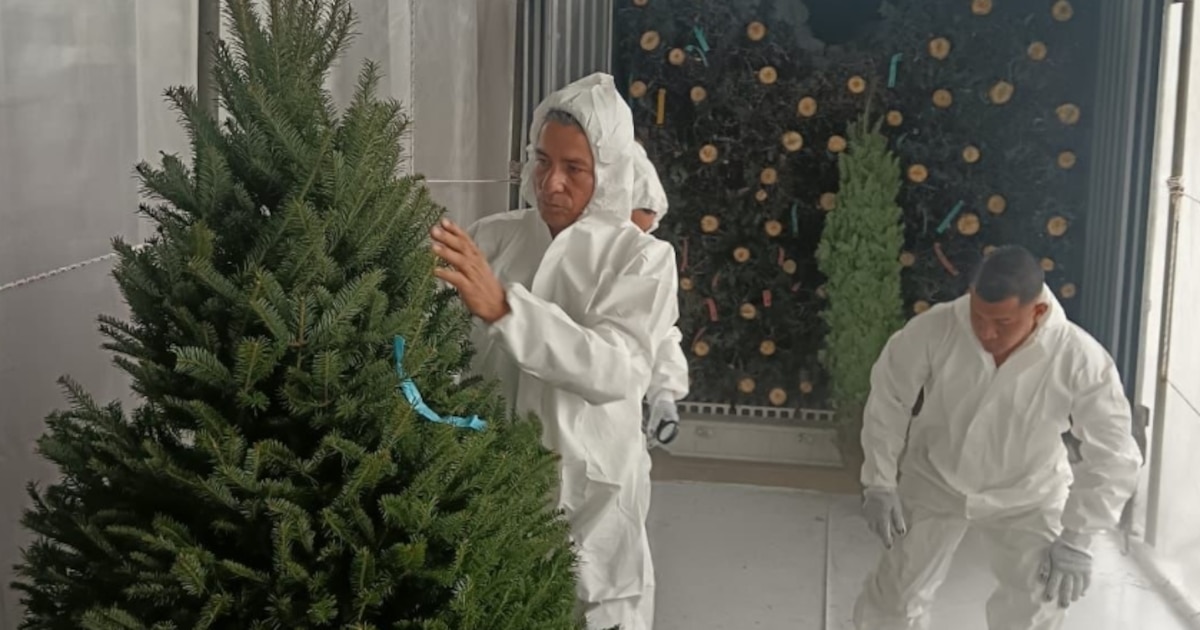
Panamá no cultiva pinos ni abetos aptos para uso navideño a escala comercial, por lo que toda la oferta de árboles naturales que llega a los hogares depende de embarques importados desde Canadá y Estados Unidos.
Para la temporada 2026, el Ministerio de Desarrollo Agropecuario (MIDA) proyecta el ingreso de 45 contenedores canadienses, cuatro más que los 41 recibidos en 2025, a los que se sumarán otros 25 procedentes de Oregón.
Los primeros cuatro contenedores canadienses ya se encuentran bajo revisión fitosanitaria en suelo panameño.
La vigilancia arrancó a inicios de octubre, mientras que el grueso de los envíos de Oregón se concentrará a mediados y finales de noviembre.
La Dirección Ejecutiva de Cuarentena Agropecuaria del MIDA mantiene un esquema de doble control sobre cada embarque. El primer filtro ocurre en los países de origen, antes de que los árboles sean cargados hacia Panamá.

El segundo control se aplica en los puertos nacionales, con verificaciones documentales y físicas sobre cada contenedor.
El objetivo es que los pinos lleguen libres de plagas y enfermedades, y que cuenten con las certificaciones fitosanitarias correspondientes antes de su distribución comercial.
Panamá importa árboles de Navidad porque sus condiciones agroecológicas no permiten el cultivo comercial de las especies que domina el mercado ornamental norteamericano, como Abies fraseri o Abies balsamea.
Esas variedades requieren climas templados con regímenes de frío invernal de los que el país carece, lo que obliga a abastecer la demanda interna mediante corredores comerciales con Canadá y Estados Unidos.
El país cuenta con bosques y plantaciones forestales de uso tropical, pero la infraestructura productiva orientada específicamente a árboles de Navidad es inexistente o marginal.
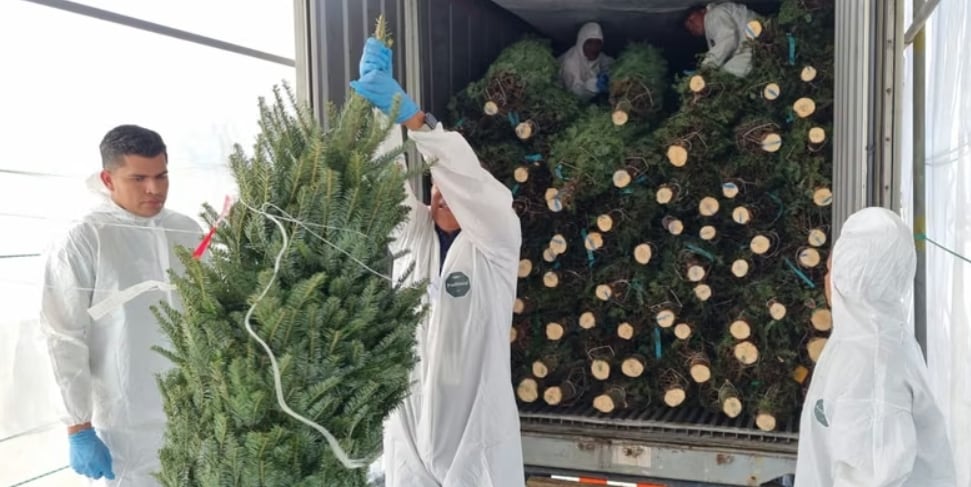
Esa ausencia estructural explica por qué los contenedores llegan principalmente al puerto de Manzanillo, en la provincia de Colón, con Canadá como origen mayoritario en las temporadas más recientes.
Esta dependencia de mercados externos expone al mercado panameño a una vulnerabilidad concreta.
Cualquier alteración en la oferta canadiense o estadounidense, ya sea por factores climáticos, plagas locales, cambios regulatorios o variaciones en costos logísticos, puede afectar de manera directa el acceso de los consumidores a árboles naturales en diciembre.
Los registros de la temporada anterior permiten dimensionar el peso de la operación actual.
En comunicados de 2025, el MIDA había reportado la llegada de los primeros 32 contenedores, 25 desde Canadá y siete desde Oregón, con una estimación de 17.000 pinos naturales y una proyección total de 60 contenedores.

Ese volumen terminó por ampliarse. Hacia finales de noviembre de 2025, el MIDA ya había recibido 47 contenedores, equivalentes a aproximadamente 38.000 unidades, con previsiones de alcanzar entre 60 y 65 contenedores según avanzara el muestreo y las autorizaciones.
Las cifras muestran que una proporción considerable del abastecimiento navideño se define en apenas unas semanas.
El riesgo de retrasos portuarios, inconvenientes en origen o cambios de último momento puede reducir la disponibilidad de árboles en el mercado local justo en la temporada de mayor demanda.
La información institucional del MIDA vincula de forma directa el arribo de cada embarque con el inicio simbólico de la temporada festiva en los hogares panameños.
Cada vez que el organismo anuncia la llegada de nuevos contenedores, presenta ese momento como el arranque oficial de una de las costumbres más arraigadas del país.

Esa asociación entre logística portuaria e imaginario navideño no es menor en un contexto donde no existe producción doméstica.
A diferencia de países con plantaciones propias, donde los árboles se cortan y compran en el mismo territorio, en Panamá la tradición del pino natural se activa materialmente cuando el cargamento desembarca y supera los controles de cuarentena.
Las cifras preliminares de la temporada 2026, con 45 contenedores proyectados desde Canadá y 25 desde Oregón, están sujetas todavía a ajustes.
El propio proceso de planificación sigue dependiendo de decisiones logísticas que se toman del lado de los proveedores norteamericanos, al igual que ocurrió en el ciclo anterior.
Navidad,Panamá,árbol de Navidad,decoración
INTERNACIONAL
EE. UU. destacó la cooperación con El Salvador tras reducirse un 96% las detenciones fronterizas en lo que va de 2026
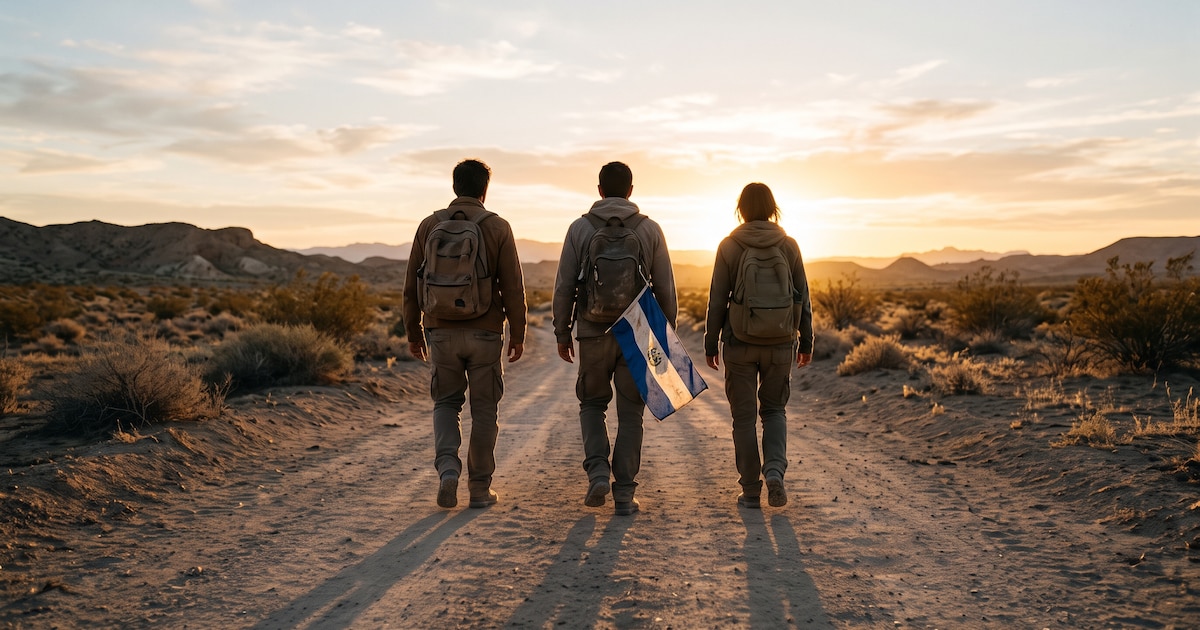
Los registros oficiales de las autoridades migratorias evidenciaron un cambio notable en los flujos procedentes de Centroamérica. Durante el año fiscal 2026, las detenciones de ciudadanos salvadoreños en la frontera sur de Estados Unidos cayeron un 96.1% en comparación con 2023, una cifra que refleja el descenso más marcado de los últimos años en las interceptaciones de personas indocumentadas procedentes de ese país.
El balance de la Patrulla Fronteriza marca un punto de inflexión en las dinámicas de movilidad de El Salvador. La disminución de cruces coincide con la intensificación de las medidas de control y disuasión implementadas tanto en el terreno como en el plano preventivo, donde las representaciones consulares y los cuerpos de seguridad reforzaron la vigilancia en los corredores habituales de tránsito hacia el norte del continente.
El trabajo articulado entre la administración salvadoreña y Washington constituye uno de los factores determinantes detrás de este descenso estadístico. Ambos gobiernos sostienen convenios operativos continuos que abarcan el intercambio de:
- Inteligencia en tiempo real
- La desarticulación de estructuras dedicadas al tráfico ilícito de personas
- Mayor fiscalización en pasos no habilitados.
Este esquema de colaboración busca neutralizar las operaciones de los grupos criminales que lucran con el traslado clandestino de migrantes y contener los focos delictivos en las comunidades locales.
Al valorar esta relación estratégica, el vocero de la embajada de Estados Unidos en El Salvador, Timothy Brown, destacó el compromiso del Ejecutivo salvadoreño en las metas de contención y orden público territorial.
“El gobierno salvadoreño ha sido un socio excelente en la seguridad de muchas maneras, incluso contra el narcotráfico, contra la migración ilegal”, afirmó el funcionario, tras remarcar que la coordinación entre ambos Estados resulta indispensable para resguardar la estabilidad de toda la región centroamericana.
Además, el portavoz abogó que la estrategia conjunta no se limita al despliegue policial y a la persecución penal de las bandas de traficantes. Las dos administraciones ejecutan programas de comunicación pública orientados a advertir a la población sobre:
- Los peligros extremos de la ruta migratoria
- Las inclemencias del desierto
- Los abusos de los denominados coyotes, quienes cobran altas sumas de dinero por traslados que ponen en riesgo la vida de las personas.
Las sanciones migratorias impiden regularizaciones futuras y visados de trabajo
Junto con el balance operativo, la delegación diplomática estadounidense insiste en que los límites territoriales permanecen cerrados a cualquier ingreso que carezca de autorización previa. Las autoridades recalcaron que cruzar de manera clandestina acarrea penalizaciones jurídicas inmediatas y de largo alcance.
Es decir quienes resultan expulsados quedan sujetos a sanciones que les impiden solicitar visas de turismo o permisos laborales durante varios años, lo que anula cualquier opción de regularización futura.
El portavoz norteamericano explicó que la ciudadanía en El Salvador y en el resto de la región comprende con mayor claridad los riesgos físicos y las trabas legales que enfrentan quienes desafían la normativa vigente.
En ese sentido, Brown enfatizó la necesidad de recurrir únicamente a los canales institucionales: “Existen todavía rutas legítimas para entrar a los Estados Unidos de manera legal, con visa, con permisos de trabajo. Pero no pueden entrar de manera ilegal, no pueden buscar documentos falsos, no pueden cruzar caminando la frontera”.

La insistencia en las vías regulares responde a la disponibilidad de mecanismos legales administrados por las vías consulares, entre ellos permisos de empleo temporal y programas específicos de reunificación. Las delegaciones de ambos países mantendrán activas las mesas técnicas de trabajo para supervisar las estadísticas en la zona limítrofe y consolidar las medidas preventivas frente a la migración irregular.
México,Estados Unidos,valla fronteriza,patrulla fronteriza,migración

Patricia Bullrich reunió a su tropa para reforzar el pedido de cambios a Javier Milei y su gobierno

Messi lidera por cuarto año consecutivo la venta de camisetas de la MLS

El riesgo país trepó a un máximo desde las elecciones de 2025 y el dólar anotó una nueva suba

Senado: piden votar una ley de prevención de violencia infantil antes de que finalice el período ordinario

En el peor momento de Juana Viale revelaron las verdades más polémicas: “No sabe nada de nadie, pregunta mal,no sabe hablar y es…”

Milei parte nuevamente a España y en el gobierno dicen que no bajará el tono de sus críticas a Pedro Sánchez

Qué pasó con el Refugio de Eli y por qué hizo enfurecer a Santi Maratea: «Fue un desastre, él nunca más le contestó y le prohibió…»

El “efecto Lula” sigue pegando en Argentina: los bonos sintieron el impacto, pero el tipo de cambio aguantó

Durante la visita a la Argentina, León XIV expondrá su mirada sobre la pobreza, el desarrollo y la educación, que cuestiona los planes de ajuste

Milei visita Neuquén para inaugurar una iglesia evangélica: tensiones internas y señales de cara a las elecciones 2027

 CHIMENTOS2 días ago
Qué pasó con el Refugio de Eli y por qué hizo enfurecer a Santi Maratea: «Fue un desastre, él nunca más le contestó y le prohibió…»
- ECONOMIA3 días ago
El “efecto Lula” sigue pegando en Argentina: los bonos sintieron el impacto, pero el tipo de cambio aguantó
- POLITICA2 días ago
Agustín Caulo: “El Gobierno sigue trabajando para que no se politice la visita de León XIV a la Argentina”