INTERNACIONAL
‘The Office’ star blasts political ‘hypocrisy,’ explains why sitcom couldn’t be made today


WATCH: Rainn Wilson says ‘The Office’ couldn’t be made today
‘The Office’ star says cancel culture and political division have made it harder for modern-day comedies to thrive, shares frustration with partisan double standards and growing political division. (Credit: Nicholas Ballasy for Fox News Digital)
NEWYou can now listen to Fox News articles!
Rainn Wilson, best known for playing Dwight Schrute on hit sitcom «The Office,» says partisan hypocrisy on both sides of the political aisle is fueling America’s divisions, while arguing that cancel culture has stifled modern-day comedy.
Wilson told Fox News Digital that cancel culture, a result of growing political divisions, has damaged the ability for a comedy in a show like «The Office» to thrive and be acceptable in today’s society.
«I do feel like you couldn’t make The Office today,» Wilson said. «I think that would be too hard to be as politically incorrect as the show was. And I do, I do kind of miss that.»
He explained how, despite that both his character and actor Steve Carell’s role as Michael Scott, were purposely portrayed as lacking «self-awareness» and «a boob,» the humor still would not fly or be viewed as socially acceptable in today’s society.
DAVID MARCUS: 20 YEARS AFTER ‘THE OFFICE,’ ‘THE PAPER’ TACKLES THE POST ME-TOO WORKPLACE
John Krasinski as Jim Halpert, Rainn Wilson as Dwight Schrute, Jenna Fischer as Pam Beesly, and Steve Carell as Michael Scott appear in a scene from the pilot episode of «The Office.» (Chris Haston/NBCU Photo Bank)
«We milked that for a lot of great, really inappropriate stuff,» Wilson said. «But even with the fact that painting that character as just an idiot, I don’t think you could get away with it today.»
Aside from comedy, Wilson said one of the biggest drivers of America’s political dysfunction is what he described as partisan hypocrisy, with both Republicans and Democrats quick to condemn misconduct of the opposing party while overlooking similar behavior on their own side.
Wilson used the response to Maine Democratic Senate nominee Graham Platner’s list of growing scandals throughout his campaign as an example, specifically citing the reaction to his Nazi tattoo as racist or religious discrimination.
WHITNEY CUMMINGS CALLS OUT LIBERAL HYPOCRISY ON CLIMATE CHANGE AND VACCINE MANDATES DURING PODCAST APPEARANCE

Graham Platner, a Democratic candidate for U.S. Senate in Maine, points to a covered tattoo that was previously recognized as a Nazi symbol during an interview in Portland, Maine, on Oct. 22, 2025. (WGME via AP)
«The political right is all up in arms about that ‘Oh, he’s a racist, see,’» Wilson explained. «But they won’t look at their own side when people show racist tendencies or say racist things. And it’s the same on the left. They’re willing to overlook the Platner Nazi tattoo, but if it was someone from the other side that had a tattoo that was questionable, they would be all over MSNBC about it.»
«It’s the hypocrisy that gets me the most. It’s the hypocrisy of like, both sides need to have, kind of, equal standards of behavior.»
Despite his concerns about political division, Wilson argued that faith and spirituality remain one of the country’s most overlooked sources of common ground.
«There’s not any topic that has more commonality and mutuality than spiritual ideas,» Wilson said.
«The ideas around spirituality have kind of been weaponized in terms of the national discussion, but actually the two sides have more in common than you would think.»
PRIEST, PASTOR, RABBI ADDRESS ‘CRISIS’ OF DECLINING FAITH POPULATION IN DIVIDED AMERICA: IT’S AN ‘OPPORTUNITY’
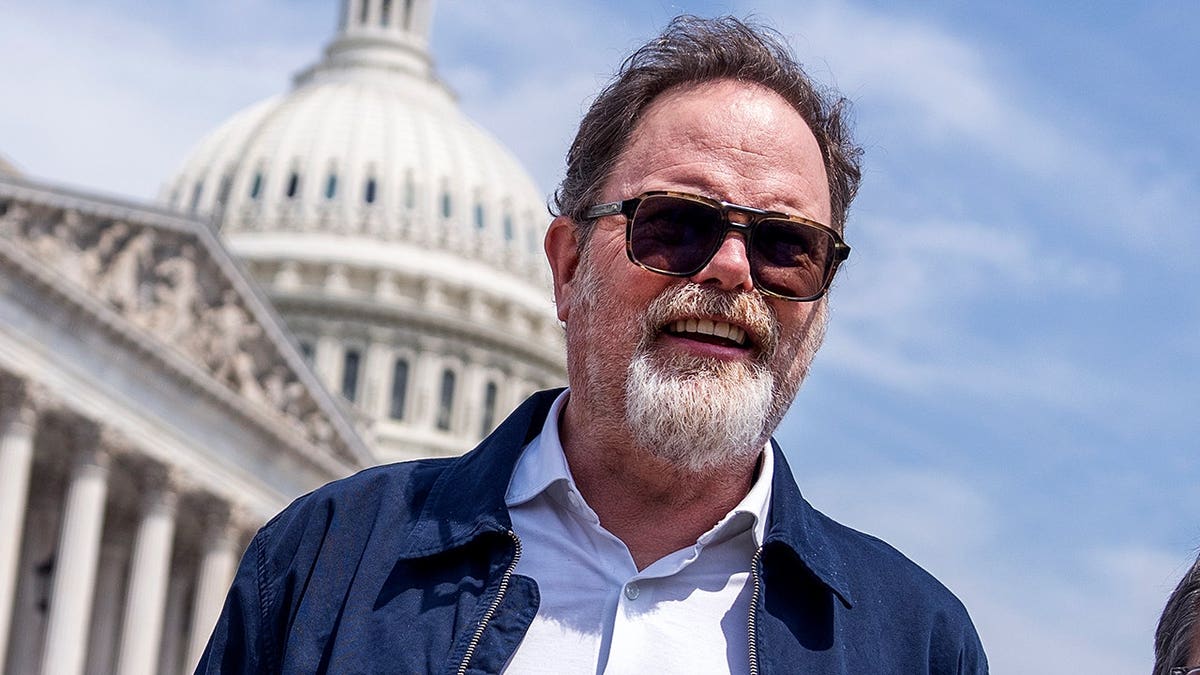
Rainn Wilson addresses a Capitol Hill press conference in Washington, D.C., as part of an effort promoting dialogue across political and ideological divides. (Tom Williams/CQ-Roll Call, Inc via Getty Images)
Wilson made the remarks while appearing on Capitol Hill alongside Reps. Brendan Boyle, D-Pa., and Gus Bilirakis, R-Fla., and religious leaders for the public release of A Common Endeavor: Realizing the Promise of America, a five-part letter backed by leaders of the Baha’i faith that works to bridge political polarization and focus on shared American values.
CLICK HERE TO DOWNLOAD THE FOX NEWS APP
«The partisan divide and toxic partisanship, and corruption in partisanship, is something that the American people are very passionate about,» Wilson said.
«The people want this fixed. There is an outcry from people. They want it fixed.»
sitcom, graham platner, issues, cancel culture, republicans












INTERNACIONAL
La inteligencia artificial dificulta el acceso al primer empleo de miles de jóvenes en EE. UU. con filtros automáticos

Miles de graduados y postulantes a empleos de nivel inicial en Estados Unidos encuentran obstáculos en los procesos de selección a causa de herramientas automáticas de cribado basadas en inteligencia artificial. La adopción masiva de estos sistemas por parte de las empresas durante los últimos dos años ha repercutido en las tasas de contratación juvenil, en un contexto donde la eficiencia y el volumen de postulaciones impulsan la digitalización del reclutamiento.
Según un informe publicado en 2026 por la firma estadounidense Greenhouse, solo el 21% de los responsables de recursos humanos en el país confía plenamente en que los sistemas automáticos evitan rechazar postulantes calificados. Una encuesta paralela realizada por la consultora Gallup muestra que la desconfianza de los jóvenes hacia la inteligencia artificial en el empleo aumentó de 22% a 31% en un año, mientras que la proporción de quienes consideran que la tecnología reduce habilidades y oportunidades profesionales supera el 60%.
El uso de algoritmos de selección y sistemas de seguimiento de candidatos (ATS) se consolidó en los procesos de incorporación laboral durante la segunda mitad de la década, una tendencia reforzada por el crecimiento del volumen de postulaciones y la necesidad de optimizar recursos en las compañías. De acuerdo con la American Staffing Association, alrededor del 49% de los buscadores de empleo percibe que la inteligencia artificial aplicada a la selección es más sesgada que la revisión humana, lo que alimenta el debate sobre equidad y acceso a oportunidades.
Los sistemas de filtrado automático, conocidos como Applicant Tracking Systems (ATS), son plataformas tecnológicas que utilizan inteligencia artificial para gestionar y organizar grandes volúmenes de solicitudes laborales. Estas herramientas identifican palabras clave en los currículos y cartas de presentación, seleccionando los perfiles que mejor coinciden con los requerimientos de la vacante. Según datos de Greenhouse, en la mayoría de los casos el primer análisis lo realiza un algoritmo, sin intervención directa de un reclutador humano.
El avance de estos sistemas ha permitido a las empresas reducir tiempos y costos, pero también ha generado riesgos de exclusión para postulantes cuyos perfiles no se ajustan exactamente a los parámetros definidos. Investigadores de Stanford University, Chapman University y Northeastern University analizaron 4 millones de aplicaciones laborales y concluyeron que los algoritmos producen desigualdades, especialmente cuando los candidatos aplican repetidas veces a vacantes gestionadas por el mismo proveedor tecnológico. Esta situación puede derivar en rechazos sistemáticos y reducción de oportunidades para ciertos grupos, según el estudio.

La reducción de oportunidades para jóvenes y recién graduados es una de las principales consecuencias de la automatización en la selección de personal. El informe de Ambition Search indica que los programas de ingreso para graduados y los puestos de nivel inicial cayeron un 33% en 2025, situándose en el nivel más bajo desde 2018. En marzo de 2026, el número de jóvenes fuera de la educación, el empleo o la formación alcanzó los 1,012,000, de acuerdo con datos oficiales procesados por la consultora.
La encuesta de Gallup revela que el 62% de los estadounidenses entre 14 y 29 años considera que la inteligencia artificial dificulta el desarrollo de habilidades y el acceso a un empleo que permita el crecimiento profesional. Además, el mismo estudio detectó una disminución del 5,5% en la contratación de personas de entre 22 y 25 años en sectores expuestos a la automatización, mientras que los trabajadores mayores no experimentaron variaciones significativas.
La American Staffing Association señala que el 49% de los candidatos percibe sesgos negativos en los sistemas automáticos, lo que afecta la diversidad y la equidad en el acceso laboral. “La principal vía de ajuste ha sido la caída en nuevas contrataciones, más que el despido de empleados actuales”, señala el informe de Gallup.
La automatización en la selección de personal presenta desafíos para la diversidad y la equidad, según especialistas y entidades laborales. Ambition Search advierte que, si los algoritmos se entrenan para seleccionar perfiles que coinciden con patrones históricos, las empresas pueden perder variedad y restringir la incorporación de talentos con experiencias diferentes. El informe de Greenhouse subraya que los sistemas automáticos afectan especialmente a quienes envían solicitudes a varias compañías que utilizan el mismo proveedor tecnológico, ya que el algoritmo tiende a rechazar sistemáticamente los perfiles que no superaron filtros previos.
En la práctica, esto reduce las oportunidades de quienes buscan empleo en sectores con alta demanda y competencia. La American Staffing Association recomienda a las empresas revisar periódicamente los criterios de los algoritmos y ofrecer alternativas para quienes no avanzan en la primera fase automática, con el fin de evitar la exclusión involuntaria.

Algunas grandes organizaciones de Estados Unidos han anunciado iniciativas para asegurar el acceso de jóvenes al mercado laboral. Bank of America informó a medios estadounidenses que mantiene su compromiso de contratar anualmente a miles de graduados, revisando sus procesos internos para garantizar la equidad. El director ejecutivo, Brian Moynihan, declaró en entrevistas difundidas por Fox Business que la entidad financiera promueve programas específicos de incorporación, pese a la tendencia general de reducción de vacantes de nivel inicial.
La American Staffing Association y la Harris Poll publicaron en 2026 un informe en el que recomiendan mayor transparencia en el empleo de inteligencia artificial y la adopción de mejores prácticas para limitar los sesgos. Entre las propuestas figura la formación de equipos de recursos humanos en el desarrollo y la supervisión de los sistemas automatizados.
Expertos consultados por Ambition Search y Greenhouse sugieren que los jóvenes adapten sus currículos y cartas de presentación a los formatos digitales, utilizando palabras clave relevantes para los sistemas automáticos y familiarizándose con los procesos de selección de cada empresa. También recomiendan consultar recursos institucionales y guías de orientadores laborales para mejorar las posibilidades de superar los filtros iniciales.
El debate actual gira en torno a la regulación y supervisión de la inteligencia artificial en la selección de personal, una cuestión que sigue abierta en el ámbito académico y en organismos públicos. Las universidades y centros de investigación continúan monitoreando los efectos de la automatización en el acceso laboral y la movilidad social, según los informes de Greenhouse y Gallup.

El despliegue de sistemas automáticos de selección repercute en la estructura del empleo juvenil y en la capacidad de las empresas para atraer talento diverso. La optimización de recursos y la reducción de tiempos en la gestión de postulaciones contrastan con los riesgos de exclusión y la posible homogeneización de los perfiles contratados. El desarrollo de soluciones que permitan una evaluación más justa y transparente es un objetivo identificado por consultoras, asociaciones y responsables de recursos humanos.
El seguimiento de estas tendencias y la incorporación de mecanismos de control, revisión periódica y participación humana en las etapas críticas del proceso de selección serán determinantes para el futuro del mercado laboral estadounidense. El acceso al primer empleo y la diversidad de talento figuran entre las prioridades de las políticas laborales y educativas en el corto y mediano plazo.
búsqueda de empleo,profesional,computadora portátil,teletrabajo,incertidumbre
INTERNACIONAL
Letitia James faces scrutiny after New York City spends $81,700 per homeless person amid shelter scandals

NEWYou can now listen to Fox News articles!
New York Attorney General candidate Saritha Komatireddy is accusing Letitia James of failing to hold New York’s nonprofit homeless shelter providers accountable despite years of audits, investigations and scandals involving billions of taxpayer dollars.
The criticism comes as a New York State Comptroller report in March found New York City spent roughly $81,700 per unsheltered homeless person in fiscal year 2025, with spending on street homelessness more than tripling since 2019 as the city’s homeless population climbed 78%.
Komatireddy described the situation as a crisis, arguing that government spending has surged while outcomes have deteriorated.
NY AG HOPEFUL BLASTS LETITIA JAMES AS MEDICAID FRAUD RECOVERIES COLLAPSE: ‘SHE’S NOT DOING THE JOB’
A view of a homeless encampment near the Intrepid Museum in New York, N.Y., on July 15, 2026. (John M. Taggart/Fox News Digital)
«So there really are questions about what has happened to that money and why that’s happening,» Komatireddy told Fox News Digital. «The person who should be asking those questions, the person who should be investigating, is the attorney general. But Letitia James has totally failed New Yorkers when it comes to holding homeless shelter nonprofits accountable so that they actually help the homeless.»
Her criticism follows years of investigations by the New York City Department of Investigation, the New York State Comptroller and federal prosecutors that uncovered allegations of fraud, self-dealing, kickbacks, conflicts of interest, excessive executive compensation and weak financial oversight at organizations operating city-funded homeless shelters.
Among the highest-profile cases was that of Bronx Parent Housing Network CEO Victor Rivera, who was accused by at least 10 women in a 2021 New York Times investigation of sexual assault or unwanted sexual conduct while they lived in shelters operated by his nonprofit.
Weeks later, Rivera was federally indicted on conspiracy, wire fraud and money laundering charges tied to an alleged kickback scheme. He pleaded not guilty.
SPLC INDICTMENT BUILDS MOMENTUM FOR BESSENT’S TREASURY TO PROBE PARTISAN NONPROFITS
A 2024 Department of Investigation review found nepotism, lack of competitive bidding and exorbitant salaries were issues among 51 city-funded shelter providers, including executives earning salaries approaching or exceeding $1 million. The report specifically noted that the attorney general has authority under New York law to challenge improper transactions involving nonprofit organizations.
State Comptroller audits also identified millions of dollars in unsupported or improper costs at several nonprofit shelter providers, including CAMBA, Westhab, the Institute for Community Living and Samaritan Daytop Village, with follow-up audits finding that many recommendations remained unimplemented.
Komatireddy argued those repeated findings should have prompted broader action by the attorney general’s Charities Bureau, which is responsible for overseeing nonprofit organizations in New York.
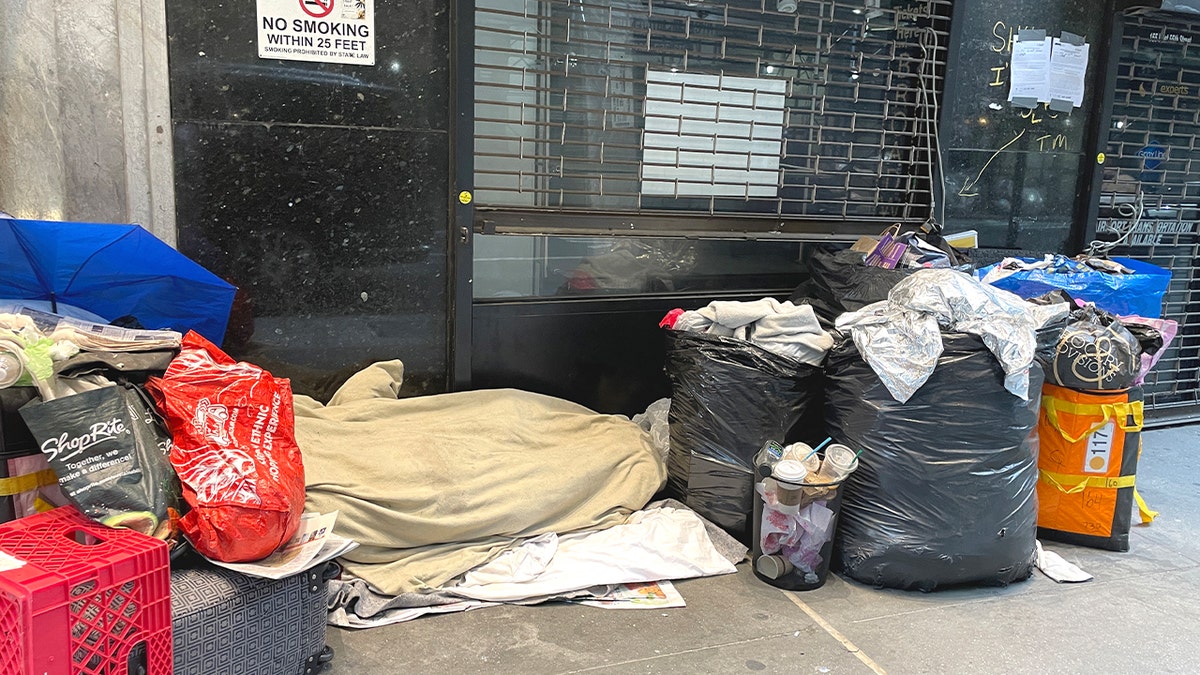
A homeless man sleeps on a New York City street alongside his possessions. The AG’s office has publicly announced only a handful of enforcement actions involving nonprofit homeless shelter providers. (Deb Cohn-Orbach/UCG/Universal Images Group via Getty Images)
«The amount of money that’s being spent is really shocking,» she said. «We know that at least one homeless shelter CEO received a million dollars in compensation. Meanwhile, New Yorkers are sleeping on the streets.»
«It’s the attorney general’s job to audit and investigate the homeless shelter nonprofits,» she continued. «We have a Charities Bureau in the attorney general’s office whose responsibility is to oversee and supervise all nonprofits in the state, but Letitia James has not been doing that job.»
James’ office has publicly announced only a handful of enforcement actions involving nonprofit homeless shelter providers during her tenure.
Among them were a 2022 settlement with HELP USA requiring governance reforms following a Charities Bureau investigation into conflict-of-interest issues involving former CEO Alan Altheide and a 2023 lawsuit seeking to dissolve Housing Bridge Inc., alleging its executives diverted charitable assets for personal benefit.
JACOB FREY PRAISES SOMALI COMMUNITY AS MINNESOTA FACES RENEWED SCRUTINY OVER FRAUD INVESTIGATIONS
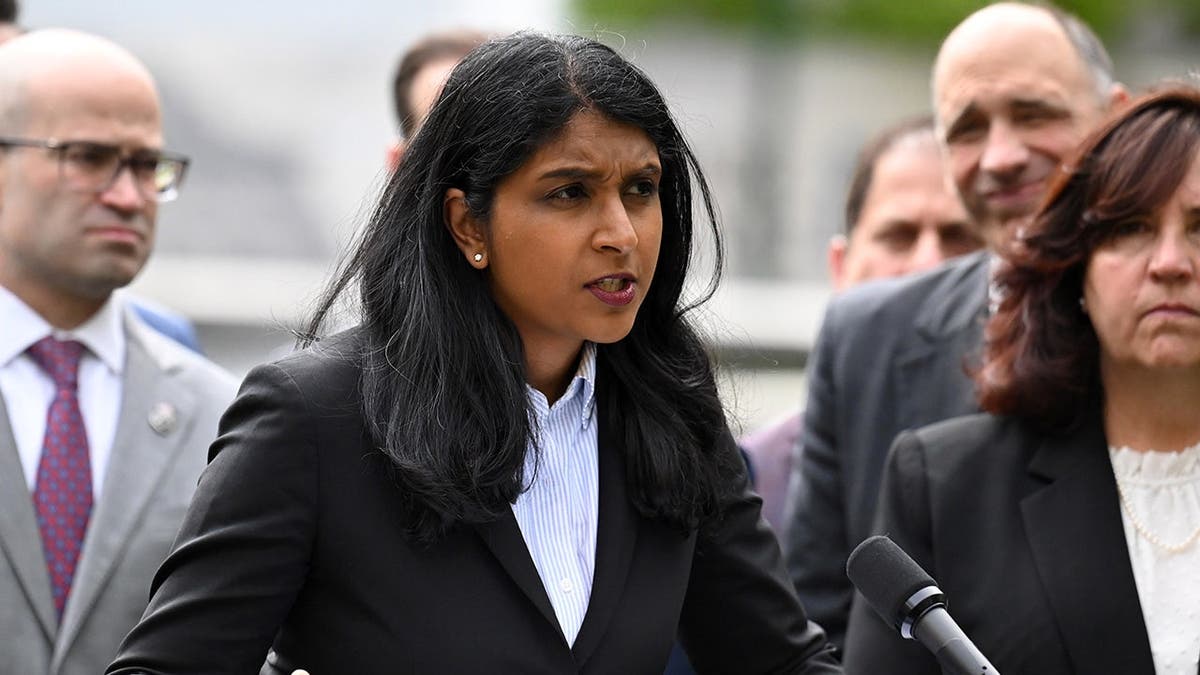
FILE – Republican candidate for New York Attorney General Saritha Komatireddy called for audits of every homeless shelter nonprofit that receives taxpayer funding. (Will Waldron/Albany Times Union via Getty Images))
Komatireddy called for audits of every homeless shelter nonprofit that receives taxpayer funding.
«We need to audit and investigate every homeless shelter nonprofit in New York,» she said. «Make sure the people who are doing a good job are supported, the people doing a bad job are cut off from taxpayer money, and the people committing crimes are prosecuted and put in jail.»
The homeless shelter criticism is the latest in a broader campaign argument from Komatireddy that James has failed to aggressively police taxpayer-funded fraud.
Earlier this year, Komatireddy criticized James’ oversight of New York’s Medicaid Fraud Control Unit after federal officials suspended its funding, alleging the attorney general had adopted «a deliberate leadership choice» to pursue fewer criminal fraud cases and allow investigations to languish.
CLICK HERE TO DOWNLOAD THE FOX NEWS APP
James’ campaign rejected the criticism.
«Saritha Komatireddy’s latest line of attack is as hollow as her record of public service,» a campaign spokesperson said. «While Saritha is busy playing politics, New York Attorney General Letitia James has spent over two decades working hand-in-hand with government partners across New York City and state to protect homeless New Yorkers and hold bad actors accountable.»
state and local, charity, state and local, homeless crisis, controversies state and local, new york
INTERNACIONAL
Avanza a toda velocidad el fuego en Francia: se acerca a la capital mundial del vino y hay 200 mil evacuados



Canales para ver el Estudiantes (RC) vs. Tigre por el Torneo Clausura

La provocación de Mauro Icardi con la China Suárez de paseo por Milán: “¿Algún juez me lo va a impedir?»

La inteligencia artificial dificulta el acceso al primer empleo de miles de jóvenes en EE. UU. con filtros automáticos

Aumento del precio del petróleo: por ahora, domina el efecto favorable para la Argentina

El Como de Nico Paz anunció nuevas reglas para prevenir «impactos evitables en la cabeza» en Infantiles

La NASA mostró una imagen inédita de la Tierra que representa el geoide

Escándalo Mundial: Las presiones secretas, la amenaza de la FIFA por Malvinas y la verdad detrás del partido contra España

Jorge Berredo, general retirado de las FFAA, asumió como Secretario de Seguridad en San Isidro

Sin la anestesia mundialista, aflora la crisis del conurbano y Milei necesita reconectar con lo popular
Marc Stanley destacó el potencial de Vaca Muerta para “estabilizar la economía” y evitó hablar de política interna

 POLITICA3 días ago
Jorge Berredo, general retirado de las FFAA, asumió como Secretario de Seguridad en San Isidro
- POLITICA2 días ago
Sin la anestesia mundialista, aflora la crisis del conurbano y Milei necesita reconectar con lo popular
- POLITICA2 días ago
Marc Stanley destacó el potencial de Vaca Muerta para “estabilizar la economía” y evitó hablar de política interna