INTERNACIONAL
These 11 upcoming Supreme Court decisions could make or break Trump’s second term agenda

NEWYou can now listen to Fox News articles!
As the Supreme Court enters the final stretch of its term, a flood of closely watched decisions could determine not only the fate of several of President Donald Trump’s key policy priorities but also the scope of presidential authority for years to come.
Around the marbled halls and chambers, the final weeks of June are often known as «flood season,» the annual rush to complete opinions before the justices leave Washington for their summer recess. The nine justices and their law clerks are on tight, self-imposed deadlines to write and circulate final drafts of opinions in cases big and small.
This year, 23 cases remain unresolved after the court heard arguments in nearly 60 disputes during the term. Among them are four appeals involving executive actions by Trump, two election-related disputes and separate questions involving gun rights and transgender rights.
Several of the remaining disputes share a common thread: how much power a president can exercise over federal policy and the executive branch. The rulings could significantly affect Trump’s ability to advance his second-term agenda, particularly on immigration and government oversight, while further defining the boundaries between the White House, Congress and the courts.
TRUMP’S PRESIDENCY FACES CRUCIAL TESTS AS SUPREME COURT BEGINS PIVOTAL TERM
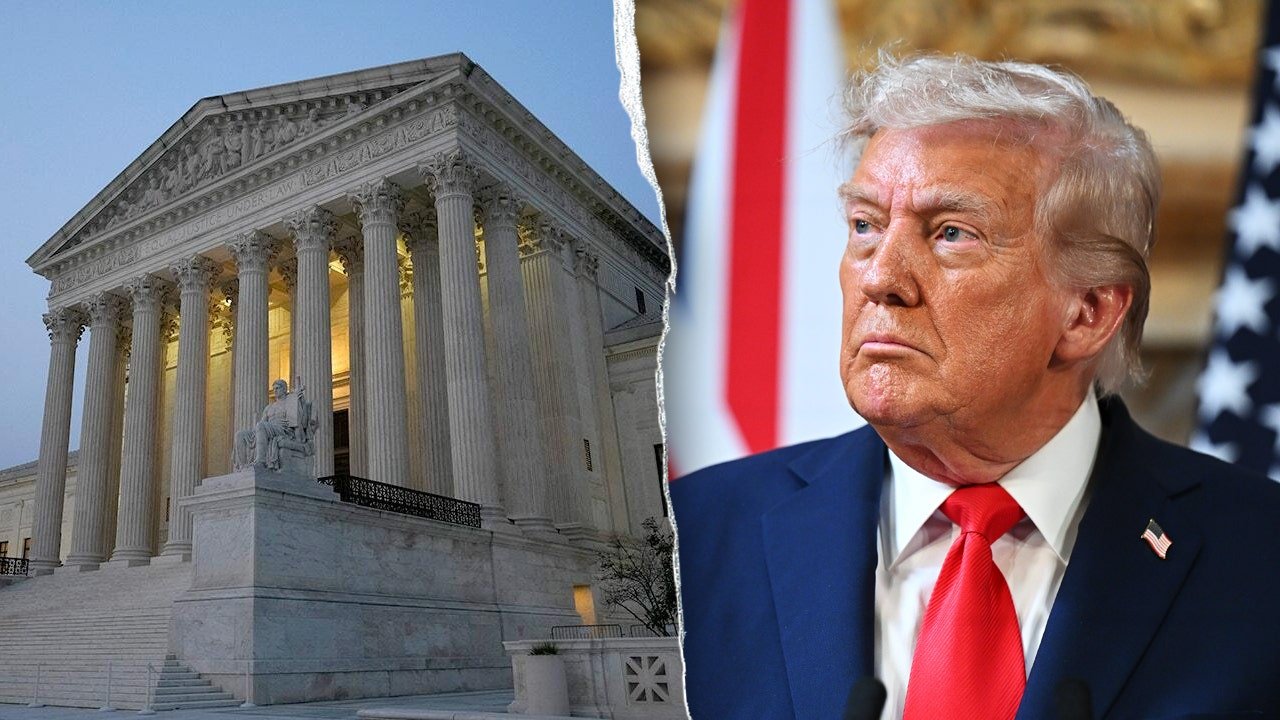
The Supreme Court is set to hear arguments over President Donald Trump’s tariff authority. (Leon Neal/Getty Images and Drew Angerer/Getty Images)
The court’s last day before its traditional summer recess is still unknown, even to its nine members, but they hope to finish up by month’s end. However, given the divided court’s compressed workload, that is no guarantee.
Here are 11 remaining opinions that we are closely watching.
Trump v. Barbara
Arguably the most closely watched Supreme Court case remaining to be decided, this challenge centers on President Trump’s Executive Order 14160, an effort to limit automatic citizenship for children born to parents who entered the country illegally.
The case could define the limits of presidential power by determining whether a president can change a longstanding interpretation of citizenship law without Congress.
Trump made history by personally attending oral arguments in March, becoming the first sitting president to do so — but that did not seem to matter.
The Supreme Court openly pushed back against the administration’s sweeping efforts to restrict who can be called an American, expressing varying levels of skepticism about the claim a citizenship «privilege» has been historically abused and wrongly granted to those whose parents were in the country illegally or temporarily.
A ruling against Trump would affirm the longstanding legal, political and social consensus supporting the idea of granting automatic citizenship to all babies born in the country, regardless of their parents’ immigration or temporary visitor status.
INSIDE SUPREME COURT: HOW TRUMP HEARD BIRTHRIGHT CITIZENSHIP ARGUMENTS
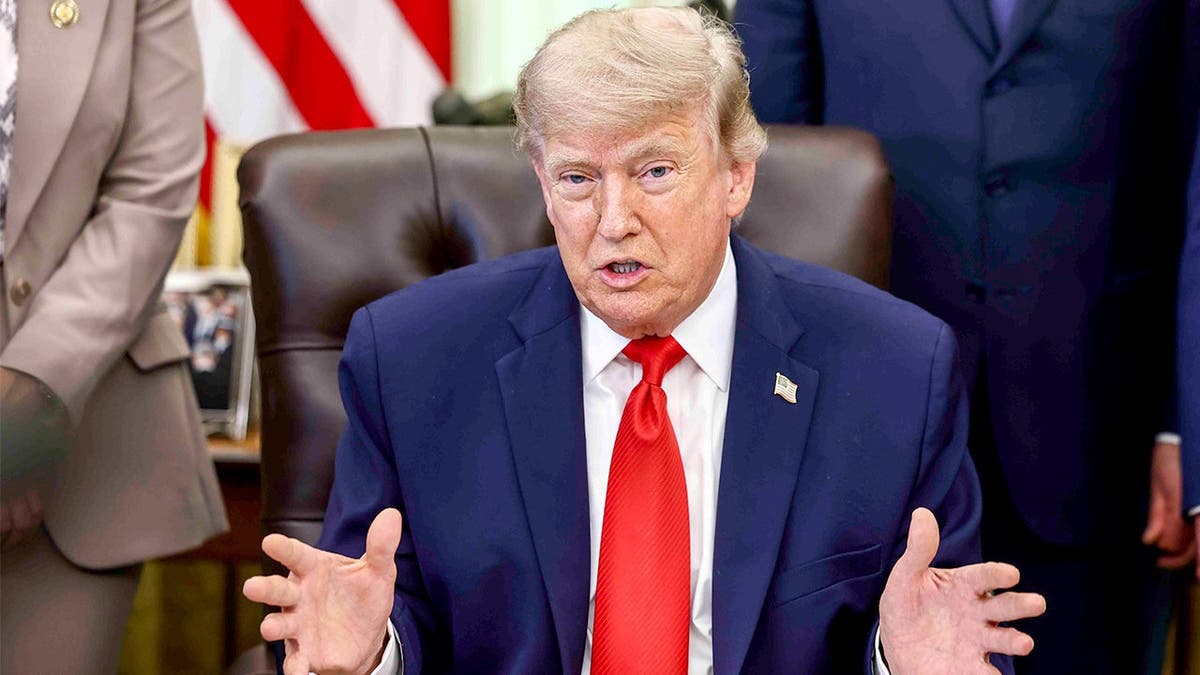
President Donald Trump spoke during a proclamation signing in the Oval Office of the White House on June 11, 2026, in Washington, D.C. The remarks came after Trump pulled back threatened military strikes against Iran following escalating tensions between the two countries. (Jim Lo Scalzo/EPA/Bloomberg via Getty Images)
Mullin v. Doe, Dahlia; Trump v. Miot
Immigration-related executive power is also at the center of Mullin v. Doe, Dahlia and Trump v. Miot, cases involving the administration’s effort to terminate Temporary Protected Status (TPS) protections from certain Haitian and Syrian migrants living in the U.S.
The TPS program currently covers roughly 1.3 million people fleeing war and natural disasters from 17 countries and allows them to live and work in the country for a limited time.
CHECKS AND BALANCES: TRUMP, SUPPORTERS SEEK TO PUSH BACK AGAINST ‘ACTIVIST’ JUDGES
The administration argues the Department of Homeland Security has broad discretion to end some Temporary Protected Status protections for migrants from certain countries, arguing protections are intended to be temporary. Migrant advocates counter that federal law requires specific procedures and allows courts to review those decisions.
The conservative court majority has signaled its support for the Homeland Security secretary’s discretionary power to revoke deportation protections for 13 countries on the TPS list.
SUPREME COURT PREPARES FOR MAJOR TEST OF PRESIDENTIAL POWER IN TRUMP EFFORTS TO FIRE FEDERAL RESERVE GOVERNOR
Trump v. Cook; Trump v. Slaughter
In Trump v. Cook, the justices are weighing whether Trump can dismiss Federal Reserve Governor Lisa Cook.
Based on January’s oral arguments, the court appears ready to give President Trump one of his biggest legal setbacks in office, offering strong support for Federal Reserve Governor Lisa Cook remaining in her leadership position — at least for now.
The questions of presidential power deal with whether Trump has broad unilateral executive authority to fire someone from the central bank, despite its special status as a stand-alone federal agency.
In arguments, most on the court seemed skeptical of Trump’s actions.
«That’s your position that there’s no judicial review, no process required, no remedy available?» Justice Brett Kavanaugh told the Justice Department’s Solicitor General D. John Sauer. «Very low bar for ‘cause’ that the president alone determines? I mean, that would weaken, if not shatter, the independence of the Federal Reserve.»
But a separate case involving presidential firing authority, Trump v. Slaughter, could have even broader implications. Former Federal Trade Commission Commissioner Rebecca Slaughter is challenging her removal from the agency, setting up a direct test of a 1935 Supreme Court precedent set in Humphrey’s Executor v. United States that limits a president’s ability to fire members of independent regulatory commissions except only for «cause.»
A ruling favoring the administration could strengthen presidential control over agencies that regulate everything from communications and consumer safety to labor policy and financial markets, and a ruling in Slaughter’s favor could greatly restrict the president’s powers.
SUPREME COURT SHOWDOWN: TRUMP’S STRATEGY TO TEST LIMITS OF HIS POWER COULD SPELL DOOM FOR ADMINISTRATIVE STATE
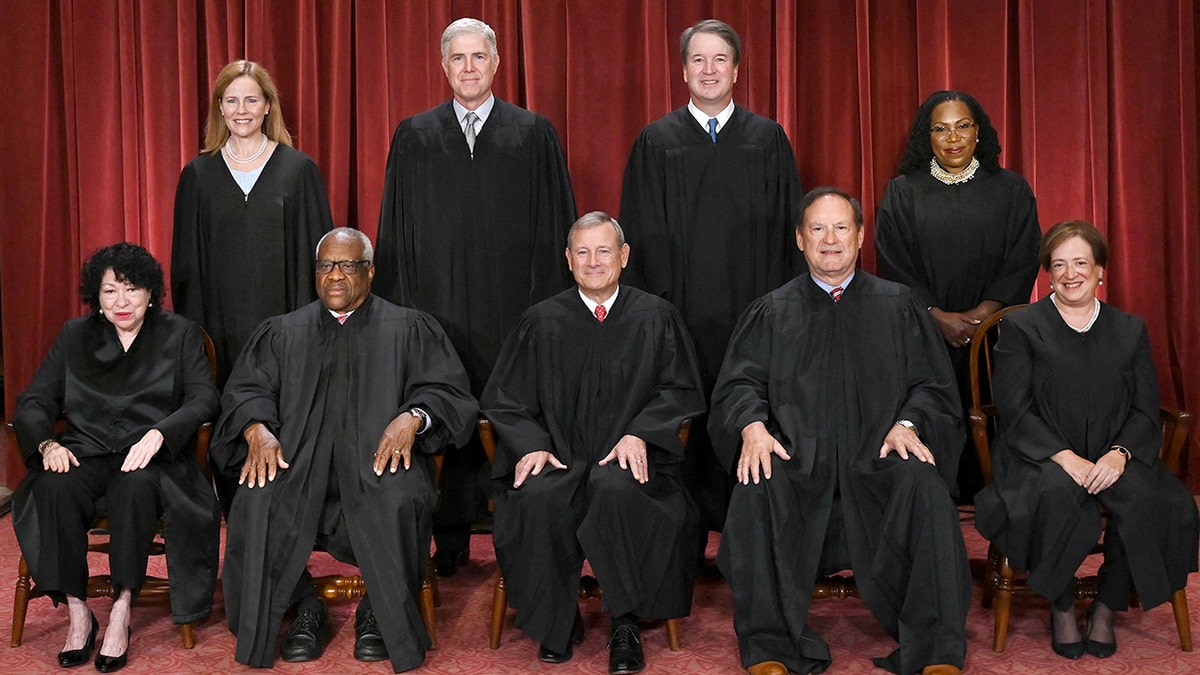
Justices of the US Supreme Court pose for their official photo at the Supreme Court in Washington, DC on October 7, 2022. (OLIVIER DOULIERY/AFP via Getty Images)
The stakes could be enormous for how the federal government is run. Independent regulatory agencies and boards help manage almost every aspect of American life — from transportation safety, labor relations and the environment to Social Security and finance. Agencies include the Consumer Product Safety Commission, the Federal Communications Commission and the Federal Reserve.
National Republican Senatorial Committee v. Federal Election Commission
At issue is a federal law that caps coordinated spending between political parties and candidates running for Congress and the White House.
The high court in recent years, led by Chief Justice John Roberts, has tossed aside congressionally enacted federal campaign spending limits.
THE BIGGEST SUPREME COURT DECISIONS OF 2024: FROM PRESIDENTIAL IMMUNITY TO OVERTURNING THE CHEVRON DOCTRINE
And the six conservative justices appear ready to do so again, and could upend a nearly quarter-century opinion limiting how the major political parties spend tens of millions of dollars, much of it going to television advertising.
The dispute underscores a divide over whether campaign spending restrictions intended to prevent corruption improperly infringe on free speech rights guaranteed by the First Amendment.
Watson v. Republican National Committee
At issue is a Mississippi law allowing election officials to count mail-in ballots received after Election Day, provided they were mailed on time.
SCOTUS CONSERVATIVES SIGNAL READINESS TO CURB LATE-ARRIVING MAIL BALLOTS
Mississippi is one of about 14 states, the District of Columbia and three territories that permit a grace period ranging from one day to several weeks during which regular ballots can be counted, so long as those ballots are postmarked on or before Election Day.
That is currently the case in California, where final results from the June 2 election may not be known for another couple of weeks or more.
The justices are deciding whether federal Election Day statutes preempt various state laws and may clarify exactly what «the election» means when it comes to the casting and receipt of ballots.
The outcome could rest with Roberts and Justice Amy Coney Barrett, who could cast the deciding votes.
Little v. Hecox and West Virginia v. B.P.J.
The court is also considering a pair of cases involving transgender athletes and school sports. In Little v. Hecox and West Virginia v. B.P.J., the justices are weighing whether state laws that restrict transgender girls and women from competing on female athletic teams violate the Constitution’s Equal Protection Clause or federal protections under Title IX.
Almost 30 states have laws limiting participation for transgender females who were designated male at birth, in both public school and college athletics, and officials say their restrictions are a matter of ensuring a level playing field and student safety.
SUPREME COURT TO REVIEW STATE BANS ON TRANSGENDER ATHLETES’ PARTICIPATION IN SCHOOL SPORTS
But lawyers for a high school sophomore and a college senior counter those prohibitions are clearly discriminatory, and that the issues should be about equality and dignity for every student, free from politics and misinformation.
The high court is examining whether the laws unconstitutionally discriminate on the basis of sex.
Wolford v. Lopez
The challenge targets a Hawaii law that prohibits individuals, including concealed-carry permit holders, from bringing firearms onto private property open to the public unless the owner has expressly granted permission.
This case could come down to whether property rights trump gun rights, and how those rights interact.
GUN RIGHTS ON PRIVATE PROPERTY DEBATED AT SUPREME COURT
A group of gun owners in Maui are challenging those default permission rules, arguing the law improperly makes it a crime to bear arms even where the owner of property accessible to the public is merely silent. They refer to these laws as «vampire rules,» a nod to the legend of Dracula, who could not enter a room without being invited.
But Hawaii officials told the high court the restrictions balance gun and property rights, citing a long tradition in the Aloha State of limiting all kinds of dangerous weapons, dating back to when it was a monarchy.
United States v. Hemani
A separate Second Amendment case still unresolved deals with the federal government’s law banning people with a «habitual» use of marijuana from legally keeping a firearm.
CLICK HERE TO DOWNLOAD THE FOX NEWS APP
The «guns and ganja» dispute centers on whether the widespread use of cannabis in recent decades — legal in some form in 40 states — makes criminalizing «mere possession» contingent on firearm ownership.
The same law was applied to former President Joe Biden’s son Hunter, who was convicted under Section 922(g)(3), which bars any «unlawful user of or addicted to any controlled substance» from possessing a firearm.
supreme court, presidential, immigration, executive policy, executive, politics










INTERNACIONAL
El sandinismo adopta el modelo de partido único: ¿por qué Trump apuntó contra Cuba y Venezuela y minimizó a Nicaragua?

Nicaragua no tiene petróleo ni riquezas naturales como Venezuela. Tampoco un evidente peso electoral en estados clave de los Estados Unidos como Cuba.
El país centroamericano no es un botín económico como Caracas ni tampoco geopolítico como La Habana. Ni siquiera suma como consumo interno para el humor político de los estadounidenses en un año electoral.
Nicaragua vivió el primer año y medio del segundo mandato de Donald Trump esperando el golpe de Washington, pero la estrategia norteamericana se basó principalmente en restricciones de visados y sanciones económicas contra dirigentes y empresas a las que atribuye nexos con el poder sandinista encarnado por los co-presidentes y esposos Daniel Ortega y Rosario Murillo.
Pero nada comparable a una acción militar como la que acabó con el gobierno de Nicolás Maduro en Venezuela el 3 de enero o la asfixiante presión que sufre Cuba con un bloqueo petrolero total que se agrega al embargo estadounidense vigente desde hace más de 65 años contra la isla.
La vara nunca fue la misma para tres países gobernados bajo la misma ideología política y económica y con los mismos cercenamientos de derechos, represión sistemática de la oposición y similares denuncias de violaciones a los derechos humanos.
Ahora, recién después de que Ortega anunció una reforma para impedir a la oposición participar de las elecciones, la Casa Blanca volvió su mirada hacia Managua.
El gobierno de Trump, empantanado aún en una guerra en Medio Oriente de la que no se vislumbra un final, advirtió al sandinismo con una fuerte represalia.
El presidente y la comunidad internacional “no se quedarán de brazos cruzados mientras la dictadura (…) profundiza la represión y fabrica inestabilidad que amenaza la seguridad nacional” de Estados Unidos, alertó en X el secretario de Estado Marco Rubio. Además, afirmó: “Abolir” las elecciones “demuestra su cobardía y miedo a la voluntad del pueblo nicaragüense”.
Trump, que suele mencionar sistemáticamente a Cuba y Venezuela en sus discursos, no habló sobre Nicaragua en los últimos días. Tampoco lo había hecho en los últimos meses. Está enfrascado hoy en la campaña para las elecciones de medio término del 3 de noviembre, en las que pondrá en juego el segundo tramo de su gobierno bajo la sombra de la guerra en Irán. Nicaragua está fuera de agenda.
Por qué Nicaragua no es Cuba ni Venezuela
La nicaraguense Elvira Cuadra, directora de la ONG Centro de Estudios Transdisciplinarios de Centroamérica (Cetcam), con sede en Costa Rica, dijo a TN que esta diferencia de criterios se ha mantenido desde la asunción de Trump el 20 de enero de 2025.
“En realidad, la administración Trump ha mantenido una política de presión hacia el régimen de los Ortega Murillo, pero en efecto no con el mismo nivel que la que ha manejado hacia Cuba o Venezuela porque Nicaragua no tiene el mismo peso político, económico y simbólico que los otros dos países», indicó.
Fotografía de archivo fechada el 19 de julio de 2018 que muestra al presidente Daniel Ortega durante la conmemoración del 38 aniversario de la revolución popular sandinista, en Managua (EFE/Jorge Torres)
Víctor Aguilar, analista para América Latina de la ONG internacional Crisis Group, coincidió: “Una de las principales razones por las que Nicaragua recibe menos atención que otros países es que, para la administración Trump, resulta más difícil presentarlo como un ´triunfo´ apetecible ante la base republicana que casos como Venezuela o Cuba».
En diálogo con TN, el analista dijo que la ecuación cambia con Caracas y La Habana.
Leé también: Flávio Bolsonaro enfrenta una inesperada interna familiar y una lucha de poder en la heterogénea derecha brasileña
“Hay importantes sectores entre los votantes estadounidenses que ven con buenos ojos que Estados Unidos haga una demostración de poder, ya sea por su importancia geopolítica, por sus recursos, por motivos ideológicos y también por los estrechos vínculos que existen entre Washington y la oposición en ambos países”, indicó.
Para Aguilar, en el caso de Nicaragua, “esos incentivos son menos evidentes y además, en este momento, Estados Unidos tiene otras prioridades a nivel internacional. Sin embargo, tampoco se puede descartar que, en un futuro, gire su mirada hacia Nicaragua como parte de su intento de reafirmar su dominio en el hemisferio».
Cuál es el plan de Daniel Ortega que causó tanto ruido en Washington
Desde San José, Cuadra dijo que “las declaraciones de Ortega han incrementado las alarmas en Washington, principalmente, como se puede ver en los mensajes emitidos desde cuentas oficiales”, como las de Rubio.
Pero, ¿qué dijo Ortega y cuál es al alcance de sus declaraciones?
Nicaragua debía celebrar elecciones presidenciales a fines de este año, pero una cuestionada reforma constitucional aplazó los comicios hasta 2027.
El gobernante sandinista, de 80 años, está en el poder desde 2007 de manera ininterrumpida y hace un año impuso como co-presidenta a su esposa y hasta entonces vice, Rosaro Murillo, de 75 años.
El líder sandinista enfrenta problemas de salud. Analistas estiman que la movida política buscó preparar una “sucesión dinástica” en caso de fallecimiento. Desde entonces, Murillo realizó una purga interna en las filas del Frente Sandinista de Liberación Nacional (FSLN), encarcelando a dirigentes históricos del partido y rodeándose de su propio equipo de “leales”.
Leé también: Nayib Bukele lidera las encuestas y lanzó su candidatura a la reelección en El Salvador: quiere gobernar hasta 2033
Así, busca crear el “murillismo” dentro del movimiento sandinista para alejar cualquier posibilidad de golpe palaciego tras la muerte de su esposo.
En ese escenario, Ortega prendió una mecha que estalló en Washington, más preocupado por otros países de más rédito político y económico que Nicaragua.
“Que se olviden, aquí no volverá a haber elecciones para que por ahí intenten ellos atrapar el gobierno y atrapar el poder”, dijo el histórico comandante sandinista en un acto político en Managua.

El discurso del presidente nicaragüense Daniel Ortega contra la oposición (Video: X/(@RoryBranker)
No fue una declaración improvisada. De hecho, busca replicar el modelo de partido único vigente en Cuba, China o Corea del Norte. Pocos días después, el Congreso nicaragüense, controlado por el gobierno, anunció que a inicios de agosto votará una reforma para impedir a cualquier partido opositor participar en elecciones.
Los diputados y la autoridad electoral definirán los “elementos para no dejar ni un resquicio” a la oposición y que no se “pueda meter la manipulación terrible de los imperios y de sus lacayos” en los comicios, anunció el titular del Congreso, Gustavo Porras. Daniel Ortega y Rosario Murillo en un acto en Managua (Foto de archivo: REUTERS/Oswaldo Rivas)
Cuadra dijo que “las declaraciones que hizo públicas Ortega (…) afirmando que nunca más habrá elecciones en Nicaragua, tienen repercusiones sumamente graves para el futuro del país porque es el reconocimiento de facto de que su gobierno es una dictadura, que está al márgen de la ley y que ha hecho a un lado los principios y fundamentos de la democracia”.
“Cierra las puertas, una vez, a una salida cívica y democrática para la prolongada crisis sociopolítica y de derechos humanos que vive Nicaragua desde 2018. Desde otra perspectiva, muestra una gran debilidad y temor porque sabe que, en una competencia electoral medianamente transparente, cualquier partido político, incluso los colaboracionistas, podrían ganarle considerando el amplio descontento que prevalece entre la sociedad nicaraguense”, indicó.
La oposición interna fue diezmada tras la represión de las protestas estudiantiles de 2018 que causó más de 300 muertos, según Naciones Unidas. Desde entonces, numerosos dirigentes opositores, periodistas y religiosos fueron encarcelados o forzados al exilio y hasta despojados de su nacionalidad. Casi una decena de candidatos fueron vetados para participar en las últimas elecciones presidenciales celebradas en 2021, entre ellas la gran favorita Cristiana Chamorro Barrios, hija de la expresidenta Violeta Chamorro (1990/97).
Leé también: Alemania: a dos meses de las elecciones regionales, la ultraderecha está cerca de gobernar por primera vez un estado federado
En un escrito enviado a TN, el periodista nicaragüense Carlos Fernando Chamorro, director del sitio Confidencial editado desde el exilio y hermano de Cristiana Chamorro, dijo que “la dictadura anuló las elecciones competitivas por las vías de hecho desde hace 10 años. La novedad es que ahora Ortega pretende eliminarlas por la vía legal, con lo cual reconoce su fracaso político porque nunca ha podido aplastar a la oposición que ha perseguido y desterrado”.
Para el periodista, “la provocación a la comunidad internacional, al proclamar su régimen de partido único, apunta a llamar la atención para intentar abrir un diálogo y negociación que legitime y normalice la sucesión de Murillo, bajo estado policial y sin democracia”.
“Sin embargo, puede ser un grave error de cálculo político. Dependerá de la reacción de la oposición, clandestina en Nicaragua y en el exilio; de las fisuras internas y la propia crisis del régimen; y de las aciones que adopten los países de Centroamérica (nucleados en el Sistema de la Integración Centroamericana/SICA), Estados Unidos (en el marco del Tratado de Libre Comercio entre República Dominicana, Centroamérica y Estados Unidos/CAFTA) y la Unión Europea (con la que mantiene un acuerdo de asociación), añadió.
Según afirmó, “Ortega ha colocado a Nicaragua en la cuenta regresiva del 2027, en un momento de máxima debilidad política”.
Nicaragua, Daniel Ortega, Donald Trump
INTERNACIONAL
After Platner implosion, Maine Democrats rush toward new Senate nominee despite fresh warning signs
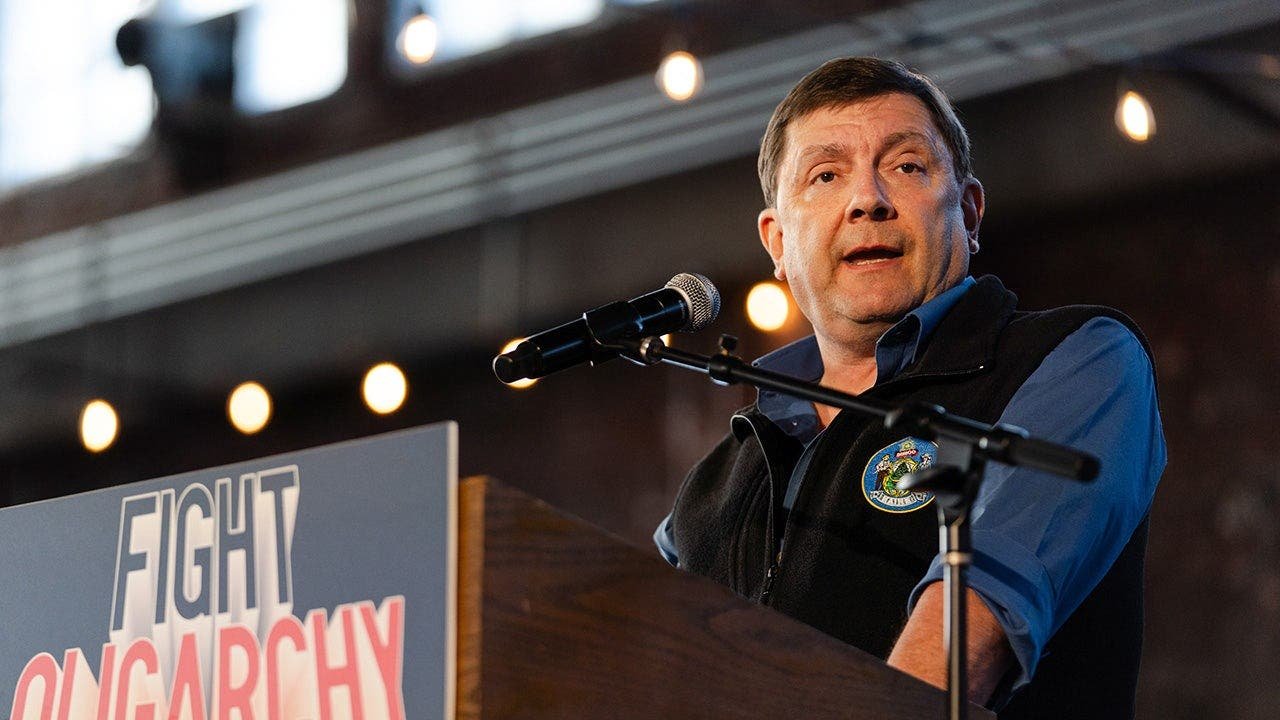
Maine Democrats rally around Troy Jackson for Senate bid
Fox News’ Bryan Llenas reports on Maine Democrats strongly supporting Troy Jackson, who is set to become the Senate nominee after Graham Platner’s primary victory ended due to rape allegations. The Maine Republican Party criticizes this nomination process, calling it a ‘sham.’
NEWYou can now listen to Fox News articles!
BANGOR, Maine – The sprint to replace ex-candidate Graham Platner will come to an end on Saturday as Maine Democrats are expected to quickly elevate Troy Jackson as their party’s nominee in the high-stakes Senate showdown with longtime Republican Sen. Susan Collins.
Jackson, a former state Senate president, is on a glide path to replace Platner at the Maine Democratic Party nominating convention in Bangor, after winning the vast majority of the voting delegates chosen last weekend by Democrats in the northern New England state’s 16 counties. And Jackson’s top rivals in the race to replace Platner backed him after dropping out of the race the past few days, leaving only one long-shot candidate for delegates to also consider at the convention.
The Senate race in Maine, where Collins is the only GOP incumbent running for re-election in a state President Donald Trump lost in the 2024 election, is one of roughly a dozen midterm showdowns across the country that will determine if Republicans hold onto their slim majority or if the Democrats win back control of the chamber.
«Let’s get to work to defeat Susan Collins and create the Maine that working people deserve,» Jackson, a fifth-generation logger from the remote northern tip of Maine and a one-time conservative Republican who became a Democrat over two decades ago, said in a social media post ahead of the convention.
WHO’S UP AND WHO’S DOWN: CHECK OUT THE FOX NEWS POWER RANKINGS ON THE MIDTERM ELECTIONS
Former Maine Senate President Troy Jackson delivers a speech at the state Democratic Party’s Senate nominating convention, on July 25, 2026, in Bangor, Maine. (Paul Steinhauser/Fox News )
While Jackson quickly raised over $1 million for his burgeoning Senate campaign and coalesced party support, there are some potential warning signs.
Following reports this past week digging into Jackson’s alleged temper and workplace conduct, reported claims of mortgage improprieties as well as other potential liabilities including his past strict anti-abortion stance, there are concerns by some in the party that following the Platner implosion, Democrats have landed another unvetted nominee.
«This is a bit of a rocket vetting process,» a Democratic strategist who works on Senate races, who asked to remain anonymous to speak more freely, told Fox News Digital. «Maine Democrats have seemingly made their choice and they’re just going to have to ride with it.»
A veteran Democratic consultant who also asked for anonymity said that «it’s very clear that Democrats should not be looking to Maine to flip the Senate»
«The good news is that we have upset opportunities in places like Texas, Iowa, and Alaska,» added the consultant, who works with centrist Democratic Senate candidates.
Platner, a military combat veteran and oyster farmer who was backed progressive champion and Independent Sen. Bernie Sanders of Vermont soon after he launched his bid last August, saw his campaign quickly catch fire. Two-term Democratic Gov. Janet Mills, who was heavily recruited by longtime Democratic Senate leader Sen. Chuck Schumer to run for the Senate, suspended her campaign this spring after trailing Platner in fundraising and in the polls.
FIVE THINGS TO KNOW ABOUT TROY JACKSON, WHO’S ABOUT TO REPLACE GRAHAM PLATNER AS THE DEMOCRATS’ SENATE NOMINEE
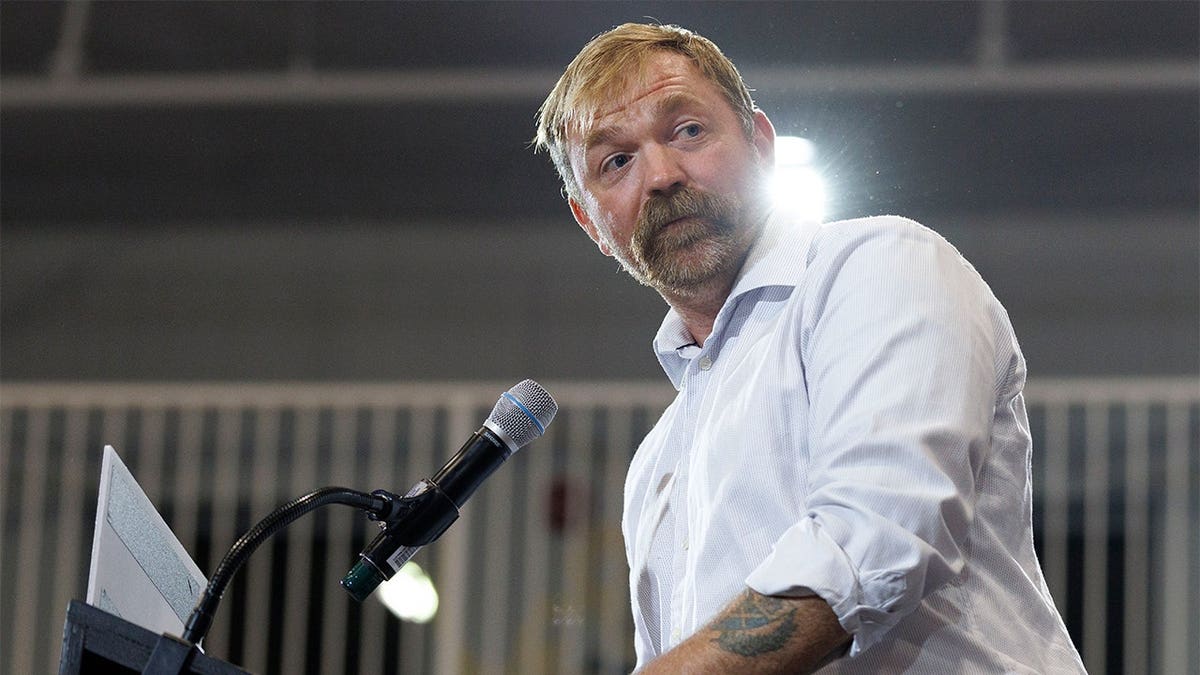
Graham Platner speaks at his Primary Election event on June 9, 2026 in Blue Hill, Maine. (CJ Gunther/Getty Images)
But even as Platner steamrolled the Democratic establishment and crushed the competition last month in Maine’s primary to capture the nomination, he had already been forced on defense in the wake of a slew of scandals.
Platner dropped out earlier this month, amid calls from top Democrats in Maine and across the country to immediately exit the race following an explosive report containing an allegation of rape from a woman he previously dated. Platner denied the report but stepped aside.
Jackson, who unsuccessfully ran for the Democratic gubernatorial nomination, campaigned alongside Platner during the primary. And he quickly made the case that he was the best equipped candidate to grab the mantle of the progressive and populist movement that had backed Platner.
Similar to Platner, Jackson is running on a platform aimed at working-class voters. He backs raising taxes on billionaires, the universal healthcare system known as «Medicare-for-all,» abolishing U.S. Immigration and Customs Enforcement (ICE), and he opposes military aid to Israel at a time that Democrats are increasingly divided on support for America’s longtime Middle East ally.
DEMOCRACY ’26: STAY UP TO DATE WITH THE FOX NEWS ELECTION HUB
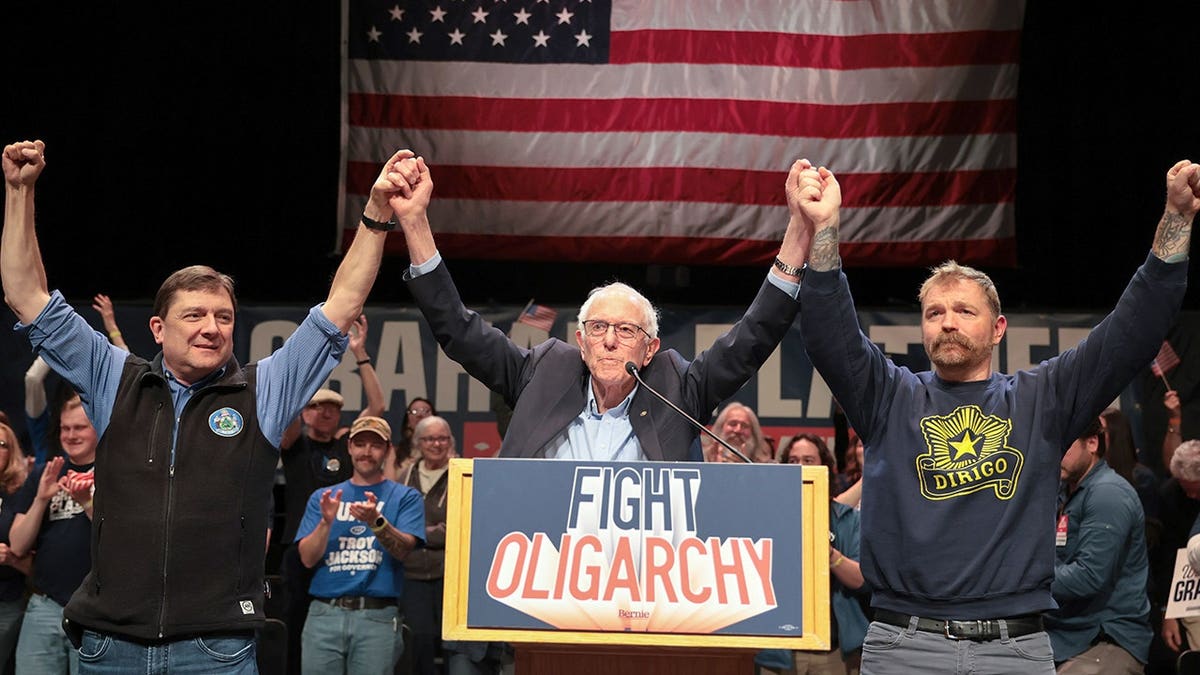
ORONO, MAINE – MAY 24: Sen. Bernie Sanders (I-VT) stands with Troy Jackson (L), who is running for Governor of Maine, and Democratic U.S. Senate candidate Graham Platner during a «Fighting Oligarchy» tour stop at the Collins Center for the Arts on the University of Maine campus on May 24, 2026 in Orono, Maine. Platner is the presumptive Democratic nominee and will face incumbent Sen. Susan Collins (R-ME) for Maine’s U.S. Senate seat in the general election. (Joe Raedle / Getty Images)
Jackson, who also had Sanders’ support as he ran governor, is currently backed in his Senate campaign by Our Revolution, the group born in 2016 out of Sanders’ first presidential campaign.
Rep. Ro Khanna of California, a leading progressive in the House and a potential 2028 Democratic presidential contender, was a top Platner backer. Khanna quickly moved his support to Jackson in this month’s sprint to succeed Platner.
And Jackson enjoys strong support from labor unions in Maine. The labor backing, along with support from Platner’s former allies, helped Jackson capture the overwhelming majority of county-selected delegates last weekend.
The 500 delegates chosen last weekend, along with 101 selected by the state party, will vote for the nominee at the convention. While the delegates on Jackson’s slate are not required to support him at the convention, he is considered all but certain to secure the nomination.
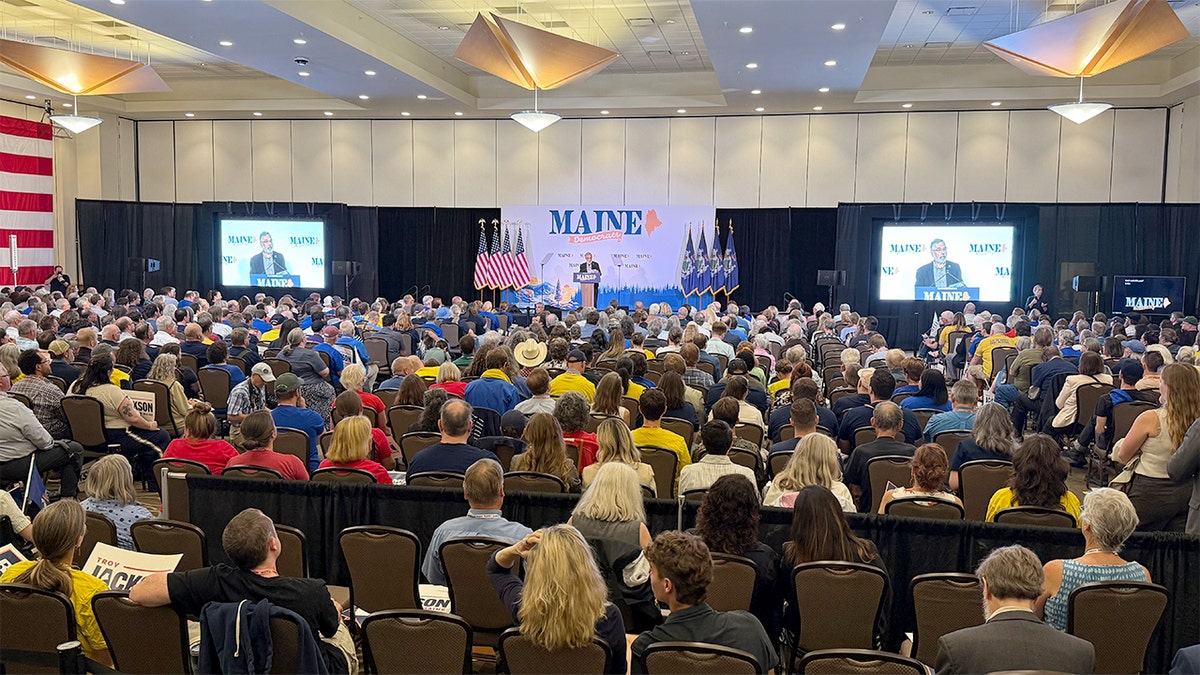
The Maine Democratic Party holds a Senate nominating convention, in Bangor Maine, on July 25, 2026 (Paul Steinhauser/Fox Nes )
Republicans are arguing that Democrats stacked the deck to back Jackson as Platner’s replacement.
«Maine voters have been shut out by the Democrat establishment with a rigged nominating process to crown Platner 2.0 without a single vote being cast,» Republican National Committee spokesperson Kristen Cianci charged in a statement to Fox News Digital.
Collins, as she runs for a sixth six-year term in the Senate, is facing a rough political climate for Republicans, amid GOP President Donald Trump’s underwater approval ratings, persistent inflation and what polls indicate is an unpopular war with Iran.
SIGN UP TO GET THE POLITICS NEWSLETTER

Republican Sen. Susan Collins of Maine tours a food bank in Harrison, Maine, on May 5, 2026. The food bank was able to expand thanks to federal funding that the senator helped obtain. (Paul Steinhauser/Fox News)
The senator, known as a moderate Republican who at times has voted against Trump, last month received bipartisan praise after reaching a milestone by casting her 10,000th consecutive Senate vote.
But Democrats are taking aim at Collins over her comments that she didn’t regret her 2018 vote to confirm Supreme Court Justice Brett Kavanaugh, despite his crucial vote four years later to overturn the landmark Roe v. Wade abortion ruling.
And following the fatal shooting in Maine earlier this month involving federal immigration agents, Democrats heavily criticized the Senate Appropriations Committee chair for her support for ICE funding.
But Collins has a history of defeating the Democrats’ efforts to oust her from the Senate.
Six years ago, she trailed Democratic challenger Sara Gideon, the then-Maine House speaker, but the senator ended up winning re-election by nearly 9 points.
The Senate showdown in Maine is expected to be competitive, combustible, and expensive, with outside groups on both sides spending big bucks to run ads.
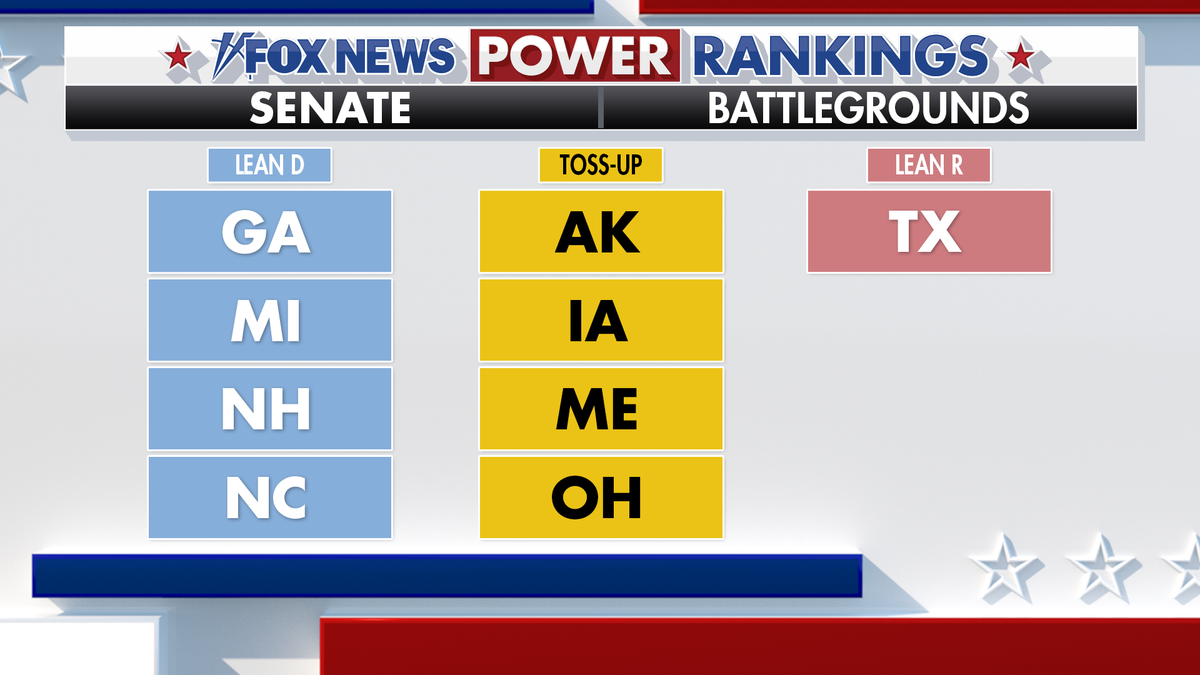
Fox News released its first Power Rankings of the 2026 midterm elections on July 21, 2026. (Fox News)
The first Fox News Power Rankings of the 2026 midterms, which gauge the competitiveness of elections using data, reporting and analysis, were released this week. And they rank the showdown in Maine as a toss-up.
CLICK HERE TO DOWNLOAD THE FOX NEWS APP
Meanwhile, a Pine Tree Poll conducted in recent days by the University of New Hampshire Survey Center indicated Jackson with a slight three-point edge over Collins, right at the edge of the margin of error, among likely general election voters in Maine.
graham platner, chuck schumer, power rankings, bernie sanders, democrats elections, midterm elections, maine
INTERNACIONAL
Guerra en Medio Oriente en VIVO | Irán amenazó con extender la guerra hacia otros países en Medio Oriente si Estados Unidos reanuda su ofensiva
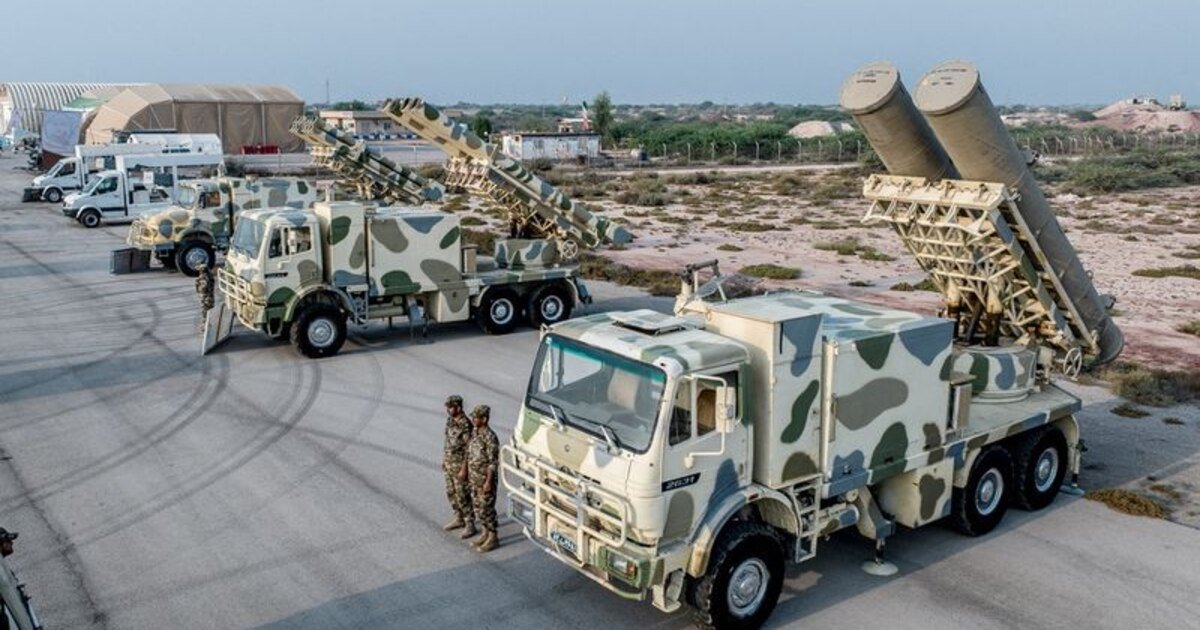
El territorio iraní pasó la madrugada de este domingo sin registrar bombardeos aéreos estadounidenses, mientras en Washington la administración del presidente Donald Trump mantiene en pausa una guerra que se aproxima a su quinto mes. En medio de la incertidumbre, Trump renovó las expectativas sobre el reinicio de las negociaciones con Teherán, tras casi dos semanas de bombardeos nocturnos consecutivos por parte del Comando Central de EEUU (CENTCOM).
La Guardia Revolucionaria de Irán declaró el domingo que forzó la detención de seis embarcaciones en el estrecho de Ormuz luego de emitir lo que calificaron como “firmes advertencias”. El cuerpo militar mantiene de facto un bloqueo en la vía marítima desde la reanudación de las hostilidades.
Además, el Teherán informó que se registraron avances en las conversaciones con Omán sobre mecanismos para garantizar la navegación segura en el estrecho de Ormuz, sin que se hayan producido cambios en el tráfico marítimo a través de la zona.
El Ejército de la república islámica también amenazó con que la guerra en Medio Oriente se extenderá si Estados Unidos decide seguir adelante con los ataques contra territorio iraní.
A continuación, la cobertura minuto a minuto:
El Ejército iraní amenazó con extender la guerra hacia otros países si Estados Unidos reanuda sus ataques en Medio Oriente
El ejército de Irán advirtió el domingo que la guerra en Oriente Medio se ampliará si Estados Unidos decide continuar con los ataques contra la república islámica, en vísperas de la visita del primer ministro israelí Benjamin Netanyahu a Washington.
“Creo que si los estadounidenses vuelven a caer en el engaño de los sionistas, o se alinean con ellos e insisten en continuar la guerra, particularmente mediante ataques aéreos, geográficamente esta se expandirá aún más”, declaró el portavoz del ejército, Mohammad Akraminia, en la televisión estatal.
Según Akraminia, el conflicto ya se extendió al estrecho de Bab el Mandeb, en la entrada del Mar Rojo, en alusión al incremento de las hostilidades entre los rebeldes hutíes de Yemen, apoyados por Irán, y Arabia Saudita. “El alcance de nuestras operaciones ahora abarca toda la región, desde las bases estadounidenses en Jordania hasta los países a lo largo del Golfo Pérsico”, afirmó.
El vocero militar describió la situación en Oriente Medio para Estados Unidos como “difícil e inestable”, y consideró que Washington ahora busca “una nueva estrategia”. “Estamos preparados para cada una de las opciones y escenarios que parecen probables”, agregó Akraminia.
Estados Unidos e Irán buscan retomar el alto el fuego mientras se discute un acuerdo sobre el estrecho de Ormuz
El director de comunicaciones la Casa Blanca, Steven Cheung, sostuvo que el presidente estadounidense Donald Trump mantiene “todas las opciones sobre la mesa” en relación a la guerra. Por su parte, Irán anunció avances en las conversaciones con Omán sobre la navegación por la estratégica vía marítima

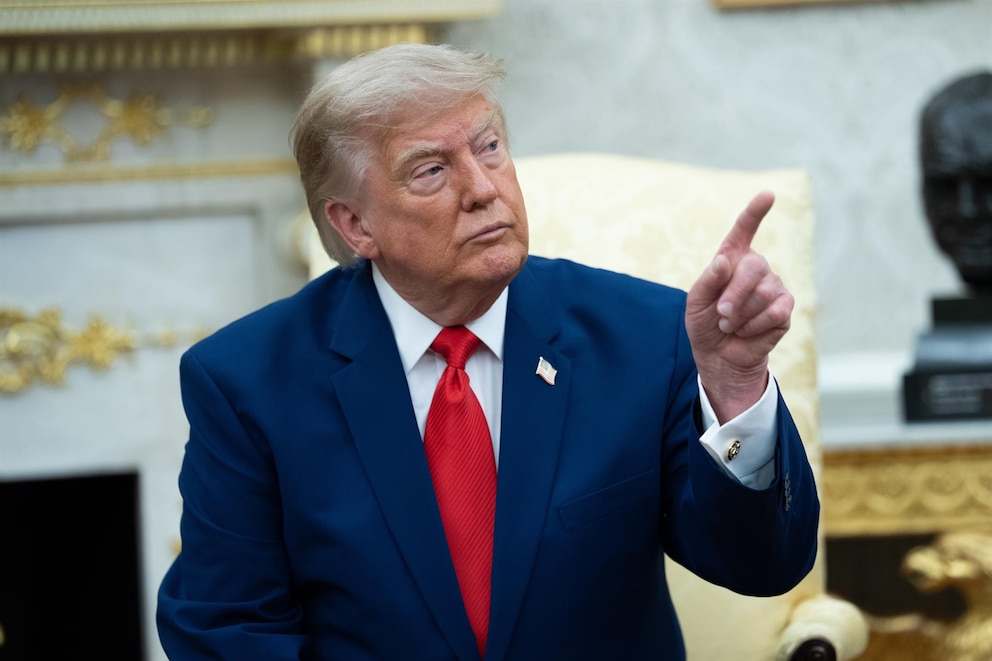
La Casa Blanca afirmó el sábado que el presidente de Estados Unidos, Donald Trump, mantiene “todas las opciones sobre la mesa” en relación a la guerra contra el régimen de Irán, luego de los informes de medios estadounidenses sobre un aplazamiento de los planes del mandatario respecto a la intensificación de las operaciones militares del Comando Central de EEUU (CENTCOM) en Medio Oriente.
La Guardia Revolucionaria iraní detuvo a seis embarcaciones en el estrecho de Ormuz

La Guardia Revolucionaria de Irán declaró el domingo que forzó la detención de seis embarcaciones en el estrecho de Ormuz luego de emitir lo que calificaron como “firmes advertencias”. Según la Armada del cuerpo militar, se estableció un “control total” sobre la estratégica vía marítima.
De acuerdo con el comunicado, los buques que violaron las instrucciones recibieron la orden de fondear tras desatender las advertencias iniciales. La autoridad iraní no precisó la nacionalidad de las embarcaciones ni los detalles del incidente, mientras mantiene la vigilancia sobre el tránsito en el estrecho.
Irán afirmó que avanzan las conversaciones con Omán sobre transporte marítimo en Ormuz
El régimen iraní informó este domingo que se registraron avances en las conversaciones con Omán sobre mecanismos para garantizar la navegación segura en el estrecho de Ormuz, sin que se hayan producido cambios en el tráfico marítimo a través de la zona.
El portavoz del Ministerio de Asuntos Exteriores iraní, Esmaeil Baghaei, comunicó que el viernes y el sábado se celebraron varias rondas de reuniones en Teherán entre los viceministros de Asuntos Exteriores de Irán y Omán. “Ambas partes intercambiaron puntos de vista sobre principios comunes y mecanismos operativos para gestionar el paso seguro de los buques en el estrecho de Ormuz, respetando al mismo tiempo los derechos soberanos de los dos estados ribereños”, declaró Baghaei.
El portavoz señaló que “las conversaciones fueron útiles y se lograron avances”, y precisó que la delegación omaní abandonó la capital iraní el sábado por la tarde, aunque “las consultas técnicas y políticas entre ambas partes continuarán”. Baghaei añadió que “por el momento, no ha habido ningún cambio en la situación del transporte marítimo a través del estrecho de Ormuz”.
Estados Unidos condenó las ejecuciones en Irán e instó al régimen a liberar a los presos políticos
El subsecretario de la Oficina de Democracia, Derechos Humanos y Trabajo estadounidense definió a los condenados con la pena máxima como “jóvenes iraníes valientes que se atrevieron a alzar la voz” contra las autoridades de Teherán y pidió por la excarcelación de los detenidos

El subsecretario de Estado de Estados Unidos para la Democracia, los Derechos Humanos y el Trabajo, Riley Barnes, condenó el sábado las ejecuciones de ciudadanos iraníes que participaron en protestas contra el régimen islámico y exigió la liberación de los presos políticos en ese país.
Kuwait negó su participación en los ataques estadounidenses contra Irán
El embajador de Kuwait en Estados Unidos desmintió un informes que afirmaban que el estado del Golfo Pérsico había enviado aviones de combate para atacar a Irán. Según la agencia oficial de noticias de Kuwait, la embajadora Sheikha Al-Zain Al-Sabah desestimó la noticia, calificándola de “totalmente infundada”.
“Afirmó que Kuwait no ha participado en ninguna operación militar contra Irán y no ha permitido el uso de su territorio, espacio aéreo o aguas territoriales para lanzar operaciones ofensivas”, decía el comunicado.
Kuwait firmó un acuerdo de 16.000 millones de dólares para la construcción de un oleoducto

La petrolera estatal de Kuwait, Kuwait Petroleum Corporation (KPC), firmó un acuerdo de infraestructura de oleoductos valorado en 16.000 millones de dólares con los fondos internacionales de capital privado Blackstone, KKR y Brookfield. La operación, anunciada el sábado, contempla un contrato de arrendamiento con opción de recompra sobre toda la red de oleoductos nacionales y de exportación de la compañía.
La inversión se produce en un contexto en el que las naciones del Golfo Pérsico, principales exportadoras de hidrocarburos, buscan incrementar su producción tras los recientes ataques iraníes y el cierre temporal del estrecho de Ormuz, una ruta clave para el comercio global de energía.

Créditos hipotecarios UVA: banco por banco, qué cuota inicial cobra cada uno por un préstamo de USD 75.000

La argentinidad expuesta al escarnio de las redes globales

Franco Colapinto largará 13° en el Gran Premio de Hungría: hora, tv y todo lo que hay que saber

La Justicia de EE.UU. da un paso clave en la investigación sobre la AFA, que podría demorar meses antes de presentar cargos

Juli Poggio confesó su fanatismo por los hoteles alojamiento y explicó por qué le hierve la sangre cuando va a uno

El sandinismo adopta el modelo de partido único: ¿por qué Trump apuntó contra Cuba y Venezuela y minimizó a Nicaragua?

Jorge Berredo, general retirado de las FFAA, asumió como Secretario de Seguridad en San Isidro

Sin la anestesia mundialista, aflora la crisis del conurbano y Milei necesita reconectar con lo popular
Marc Stanley destacó el potencial de Vaca Muerta para “estabilizar la economía” y evitó hablar de política interna

Senado: Bullrich y Sturzenegger cierran filas para tratar de avanzar con la extranjerización de tierras

 POLITICA3 días ago
Sin la anestesia mundialista, aflora la crisis del conurbano y Milei necesita reconectar con lo popular
- POLITICA3 días ago
Marc Stanley destacó el potencial de Vaca Muerta para “estabilizar la economía” y evitó hablar de política interna
- POLITICA3 días ago
Senado: Bullrich y Sturzenegger cierran filas para tratar de avanzar con la extranjerización de tierras