INTERNACIONAL
Trump pushed NATO to spend big — now comes the harder question: Can Europe actually fight?

NEWYou can now listen to Fox News articles!
By NATO’s traditional metrics, the alliance appears transformed.
After years of pressure from President Donald Trump and growing alarm over Russia’s war in Ukraine, NATO allies are spending more on defense than at any point since the Cold War. NATO leaders have agreed to move toward a new framework approaching 5% of GDP by 2035.
For years, Trump accused NATO allies of relying too heavily on U.S. military protection while underinvesting in their own defense. His repeated threats to reconsider U.S. commitments to allies that failed to meet spending targets transformed what had once been an obscure alliance benchmark into one of NATO’s central political metrics.
«What really woke everyone up were two things,» Jim Townsend, a former deputy assistant secretary of defense for Europe and NATO policy now at CNAS, told Fox News Digital. «One was the 2022 invasion by Putin … and the second was Trump, who came in and whether he scared them or he shamed them or whatever he did, that certainly added fuel to the fire as well.»
NATO leaders participate in a summit in The Hague, Netherlands, on June 25, 2025, where they pledged to increase defense spending to 5% of GDP by 2035 as requested by President Donald Trump. (Handout/Latin America News Agency)
TRUMP PRAISED FOR GETTING NATO ALLIES TO BOLSTER DEFENSE SPENDING: ‘REALLY STAGGERING’
Countries closest to Russia moved fastest.
Poland now spends a larger share of its economy on defense than any other NATO member. Estonia, Latvia and Lithuania all have sharply increased military budgets since 2022.
Germany, long viewed as a symbol of Europe’s post-Cold War military decline, launched a major rearmament push and created a 100 billion euro special fund aimed at rebuilding the Bundeswehr.
On paper, the numbers look like a historic turnaround.
European allies and Canada increased defense spending by 20% in 2025 compared with the previous year, according to NATO’s latest annual report. The alliance says European members and Canada have added hundreds of billions of dollars in defense spending since 2014.
UK, GERMAN DEFENSE OFFICIALS DEFEND MILITARY BUILDUP UNDER RUSSIAN THREATS
Across Europe, governments are buying tanks, air defenses, fighter jets and artillery systems while racing to replenish stockpiles depleted by the war in Ukraine.
But the spending surge also has exposed the limits of the ledger.
«You have to start off with spending more, and you’re not going to see the capability results for a while,» Townsend said.
EXAMINING NATO: INSIDE THE ‘COMMITMENT GAP’ AS US CARRIES ALLIANCE DETERRENCE
Ukraine exposed how quickly a major war can drain ammunition stockpiles, strain production lines and overwhelm peacetime defense industries.
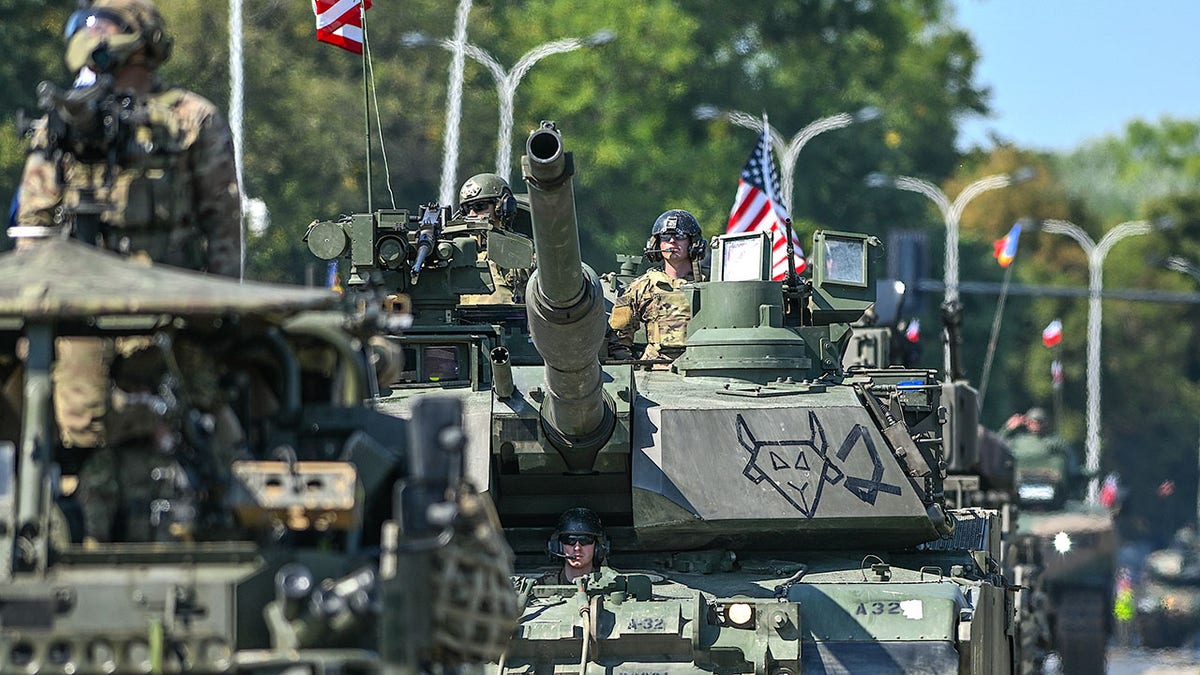
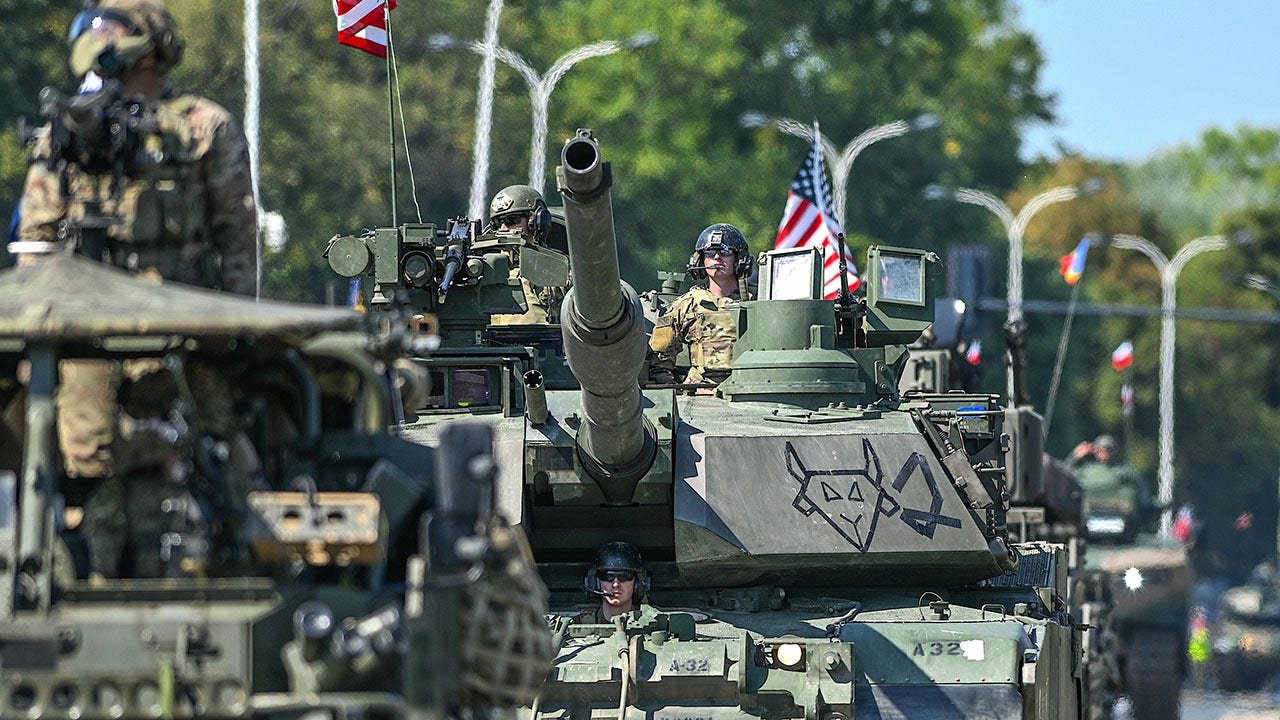
U.S. Army M1 Abrams tanks take part in the Armed Forces Day parade in Warsaw, Poland, on Aug. 15, 2025, commemorating Poland’s 1920 victory over the Soviet Red Army and marking the 105th anniversary of the Battle of Warsaw. (Artur Widak/NurPhoto)
A defense budget can show political commitment. It does not show how many brigades are ready to deploy, how much ammunition is on hand, how quickly weapons can be produced or whether a country can sustain combat once a war begins.
That is the gap now facing NATO.
For years, the alliance measured burden-sharing largely through the 2% benchmark. It was simple, public and easy to compare. Countries that hit it could claim they were doing their part. Countries that missed it became targets for U.S. criticism.
But Ukraine showed that a higher defense budget is only the first step.
A country can meet the benchmark while still lacking enough deployable forces. Another can announce a major weapons purchase that will not arrive for years. A third can spend heavily on personnel, pensions or infrastructure without immediately adding battlefield power.
Even NATO leaders increasingly acknowledge the distinction.
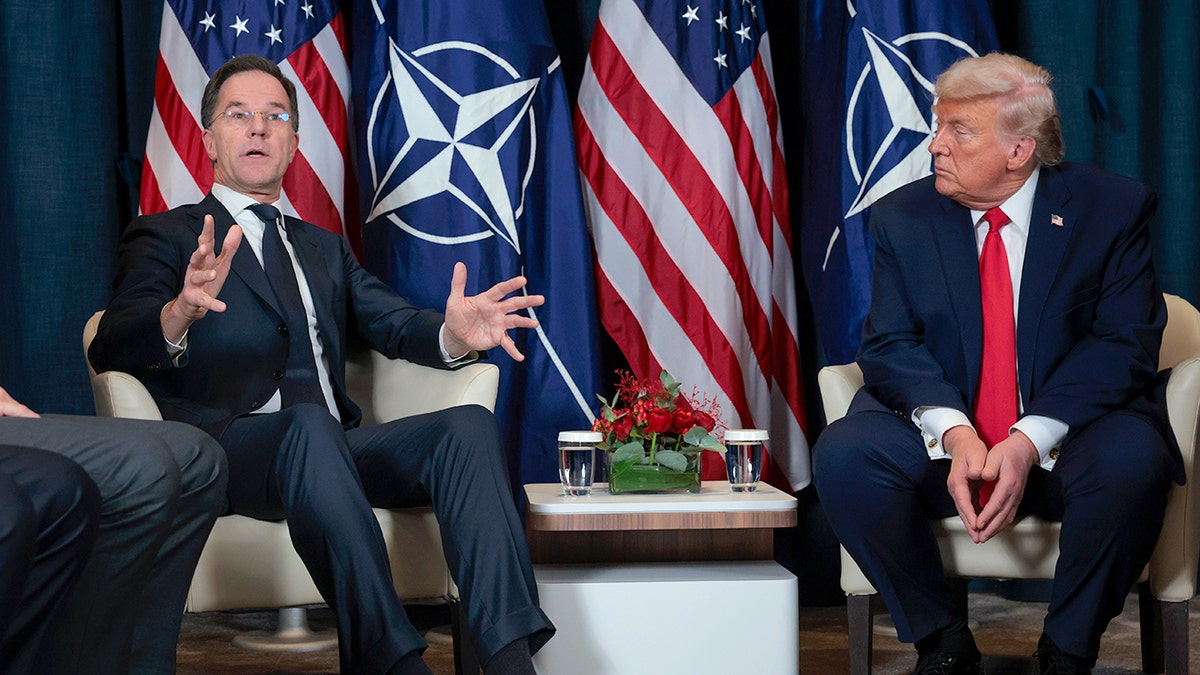
NATO Secretary General Mark Rutte speaks as U.S. President Donald Trump listens during a bilateral meeting at the World Economic Forum Annual Meeting in Davos, Switzerland, Jan. 21, 2026. (Chip Somodevilla/Getty Images)
«This is not just about more spending,» NATO Secretary-General Mark Rutte said earlier in 2026, calling for «smarter investment in the right capabilities.»
Rutte has also warned that rising defense budgets must be matched by expanded production capacity as the alliance scrambles to replenish stockpiles and prepare for long-term competition with Russia.
Townsend said both Europe’s and America’s defense industries shrank after decades of lower military spending following the Cold War.
«The defense industrial capability in Europe and the United States has atrophied,» he said. «They lost the scale to be able to surge a lot more production.»
Now, he said, governments are running into the reality that factories cannot instantly produce the weapons NATO says it needs.
«While the money is there and the orders are coming in, the producers are struggling to meet the requirements,» Townsend said.
The war in Ukraine exposed how quickly modern industrial warfare can overwhelm peacetime production systems. European governments that announced major procurement plans after 2022 have frequently encountered long delivery timelines, strained supply chains and shortages in key sectors ranging from artillery ammunition to air defense interceptors.
A recent McKinsey analysis warned that «structural constraints could slow the path from spending to military capabilities,» pointing to fragmented procurement systems, industrial bottlenecks and long production timelines across Europe’s defense sector.
Those delays have also highlighted how heavily Europe still depends on American military technology and production capacity.
NATO CHIEF WARNS EUROPE CAN’T DEFEND ITSELF WITHOUT US AS TENSIONS RISE OVER GREENLAND
«Europe right now is dependent on the United States and U.S. industry to provide a lot of the capabilities they know they need,» Townsend said.
Among the most difficult capabilities for Europe to rebuild quickly, he said, are air defense systems, long-range strike weapons, logistics networks, intelligence capabilities and deep ammunition stockpiles.
«Air defense is what they need and they need long-range fires,» Townsend said, pointing to systems such as Patriot missiles and High Mobility Artillery Rocket System launchers that European governments are scrambling to acquire.
But as demand for those systems surged following Russia’s invasion of Ukraine, production timelines stretched longer.
That already has pushed some NATO countries to look elsewhere. Poland, for example, turned to South Korea for major weapons purchases as governments searched for faster delivery timelines.
At the same time, European governments are trying to expand domestic production capacity to reduce dependence on U.S. suppliers. Germany has ramped up ammunition production, while some civilian industrial firms have begun shifting portions of their operations toward defense manufacturing.
Still, Townsend said, rebuilding Europe’s military capacity will take years.
CLICK HERE TO DOWNLOAD THE FOX NEWS APP
The larger question, he said, is whether NATO can close the gap quickly enough.
«Will the Russians take advantage of this gap?» Townsend said.
nato, ukraine, vladimir putin, spending, geopolitics











Trump doubles down on Iran nuclear weapons pledge with Pickaxe Mountain threat
President Donald Trump vows to ensure Iran never acquires a nuclear weapon, prompting a discussion with Mark Wallace, CEO of United Against Nuclear Iran. Wallace highlights the threat posed by Iran’s hidden ‘Pickaxe Mountain’ nuclear facility, which may contain centrifuges and enriched uranium. He emphasizes the need to neutralize this site and discusses the Iranian regime’s use of nuclear ambitions as leverage against the West.
NEWYou can now listen to Fox News articles!
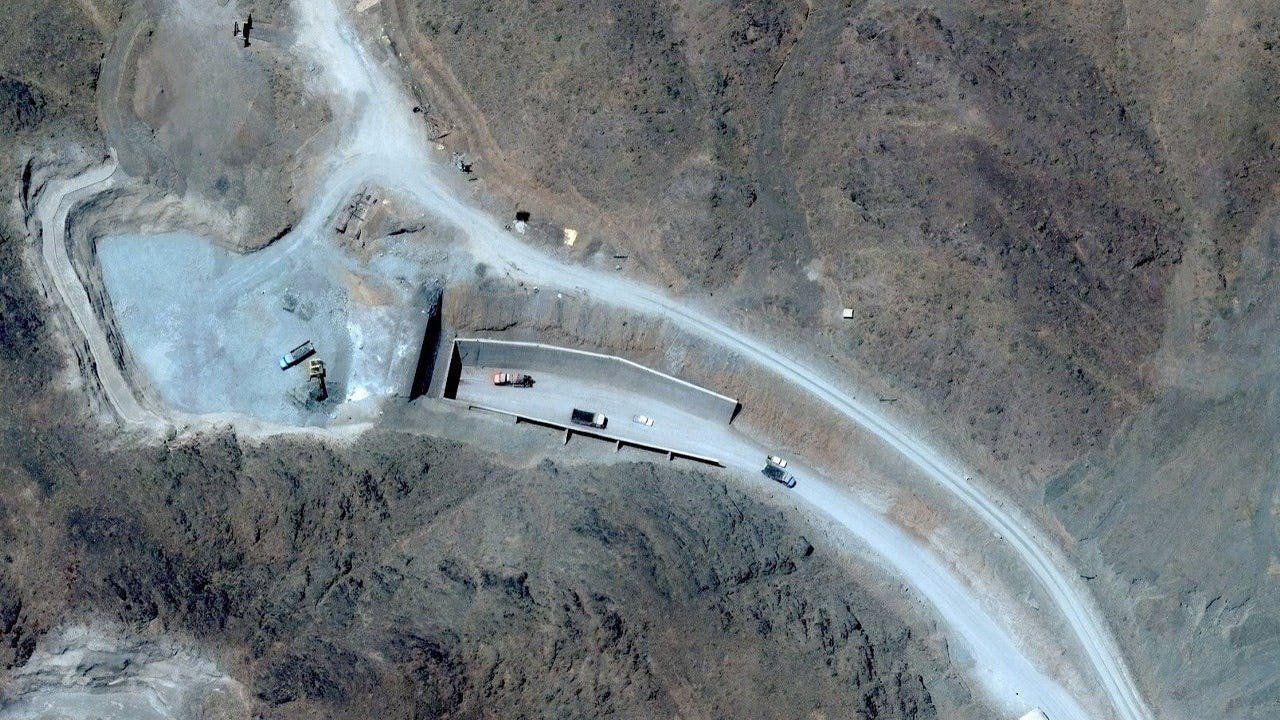
President Donald Trump is threatening to strike Iran’s deeply buried Pickaxe Mountain nuclear facility — a site the United States previously left untouched while bombing the country’s other major nuclear sites, raising new questions about what may have changed.
Estimated to lie beneath at least 100 meters of rock near Iran’s damaged Natanz nuclear enrichment complex, Pickaxe was designed to replace an above-ground plant capable of assembling roughly 6,000 advanced centrifuges each year before it was destroyed in 2020.
Iran said the replacement would be larger, more modern and built «in the heart of the mountain.» Analysts believe the tunnels could eventually hold a centrifuge assembly line, an enrichment plant or equipment used in certain nuclear weaponization activities.
Satellite image Pickaxe Mountain (Vantor/Handout via Reuters)
I’VE STUDIED MILITARY STRATEGY. TRUMP NOW FACES IRAN’S OLDEST BATTLEFIELD TRICK
Yet the administration has not said whether it has confirmed that centrifuges were moved inside — or why a site left untouched during earlier attacks now warrants a strike. Military experts also disagree over whether airstrikes could destroy Pickaxe’s interior or merely seal its entrances temporarily.
The same depth that could protect Iran’s nuclear infrastructure may place Pickaxe’s main chambers beyond the reliable destructive reach of America’s most powerful conventional bunker-busting weapon. Bombing its exposed entrances could deny Iran access without destroying the facility or anything stored inside.
Trump said Tuesday that the United States would probably strike the area «pretty soon» and «very heavily.»
TRUMP THREATENS ‘MAJOR MILITARY PUNISHMENT’ FOR IRAN OVER FUTURE HOUTHI ATTACKS
His warning came after The Wall Street Journal reported that Israeli intelligence believes Iran moved thousands of centrifuges into Pickaxe last fall. Trump said the transfer «may have» occurred but added that the United States did not have it «on record.»
«Maybe this one they have right,» Trump said. «But it’s okay. It doesn’t mean anything unless they have the material.»
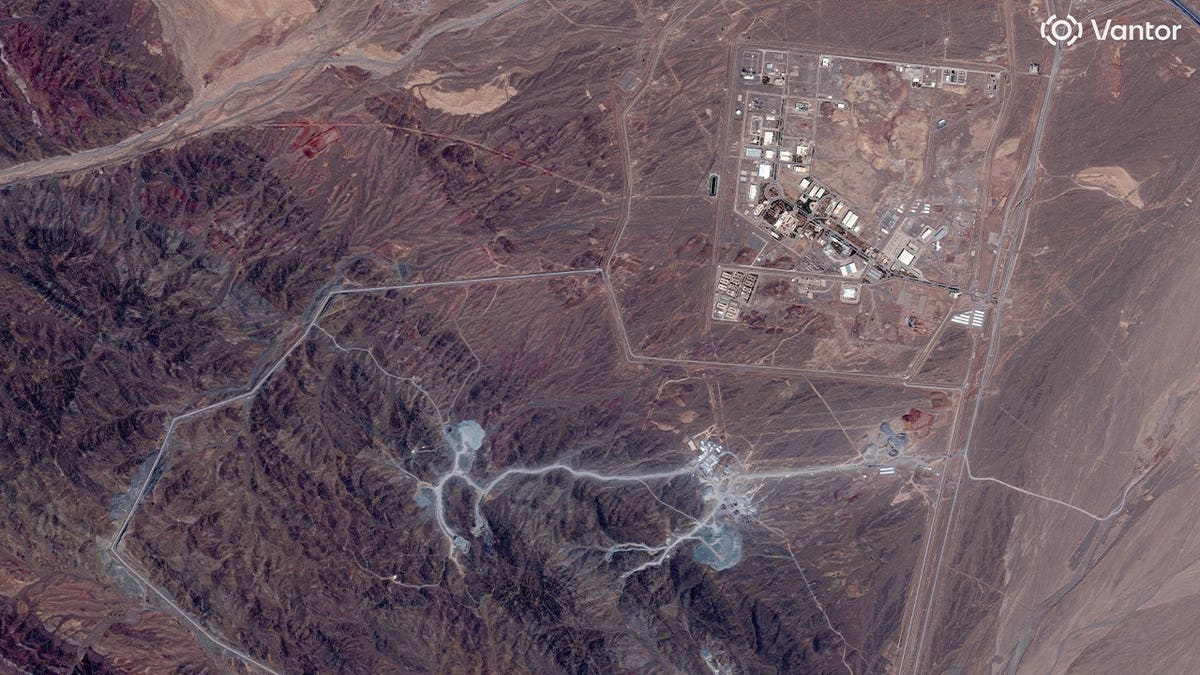
A satellite view shows an overview of the Natanz nuclear facility and Pickaxe Mountain, near Natanz, Iran, June 30, 2026 (Vantor/Handout via Reuters)
«We follow the material,» he added.
TRUMP SEEKS $672M TO STOP IRANIAN NUKES AS NEGOTIATORS WEIGH FATE OF URANIUM STOCKPILE
By «the material,» Trump was referring to Iran’s enriched uranium, including uranium gas that centrifuges can further enrich to weapons-grade levels.
Before the June 2025 attacks, the International Atomic Energy Agency had verified that Iran possessed 440.9 kilograms of uranium enriched to 60%, enough, if further enriched, for approximately 10 nuclear weapons under the agency’s standard measurement.
Most of the stockpile was believed to have been held at Isfahan, with additional material at Natanz and Fordow. Inspectors have since been unable to verify its amount, condition or present location.
The Institute for Science and International Security assesses that the material remains trapped at those three sites and does not believe enriched uranium has entered Pickaxe.
The administration has not said whether the United States independently corroborated the reported Israeli assessment, whether centrifuges are being stored or installed inside Pickaxe or whether nuclear material has entered the facility.
Storing centrifuges would not make Pickaxe an operational enrichment plant. The machines would have to be installed in connected cascades, linked to electrical, ventilation and piping systems and fed uranium gas.
Satellite imagery shows continued construction but no indication that Pickaxe is operational, according to the Washington-based institute. Images from February showed Iran adding concrete, rock and reinforced structures over tunnel portals in an apparent effort to harden them against airstrikes.
Analysts also observed smaller closed-roof vehicles near the entrances that could indicate Iran was outfitting the interior. The imagery could not establish what the vehicles carried.
Spencer Faragasso, a senior research fellow at the Institute for Science and International Security, said earlier U.S. and Israeli attacks prioritized Iran’s operating enrichment program. Based on what was understood about Pickaxe at the time, he said, there was «nothing of priority» inside that warranted expending valuable deep-penetrating weapons.
«The facility is still under construction, and it’s unlikely that a centrifuge plant is operating inside there,» Faragasso told Fox News Digital.
But Faragasso said centrifuges could have entered aboard covered trucks without being detected in commercial imagery, making the reported Israeli intelligence plausible but impossible for outside analysts to confirm.
The reported transfer could help explain Trump’s recent focus on Pickaxe, he said. The facility is also one of the last nuclear-related sites of its size that has not been struck.
Trump did not publicly name Pickaxe during the opening months of Operation Epic Fury. It entered his public rhetoric July 13, when conservative radio host Hugh Hewitt raised the facility during an interview.
Trump said American surveillance had detected no activity there but called Pickaxe a possible target for a «nice big fat shot right into the front door.»
At the end of the interview, Hewitt urged Trump to «go get Pickaxe Mountain.»
«We’re going to take out Pickaxe Mountain,» Trump replied. «Tell the Iranians to be ready.»
The White House could not be reached for comment for this story.
The administration has not explained whether the recent threats reflect new intelligence, an effort to deter Iran from activating the facility or a shift from destroying existing enrichment capacity to preventing Iran from rebuilding.
Whether the United States could destroy Pickaxe from the air remains disputed.
Nicole Grajewski, an assistant professor at Sciences Po and nonresident scholar in the Carnegie Endowment for International Peace’s Nuclear Policy Program, said it would be «very close to impossible» to destroy the facility through an air campaign like the one the United States carried out against Fordow.
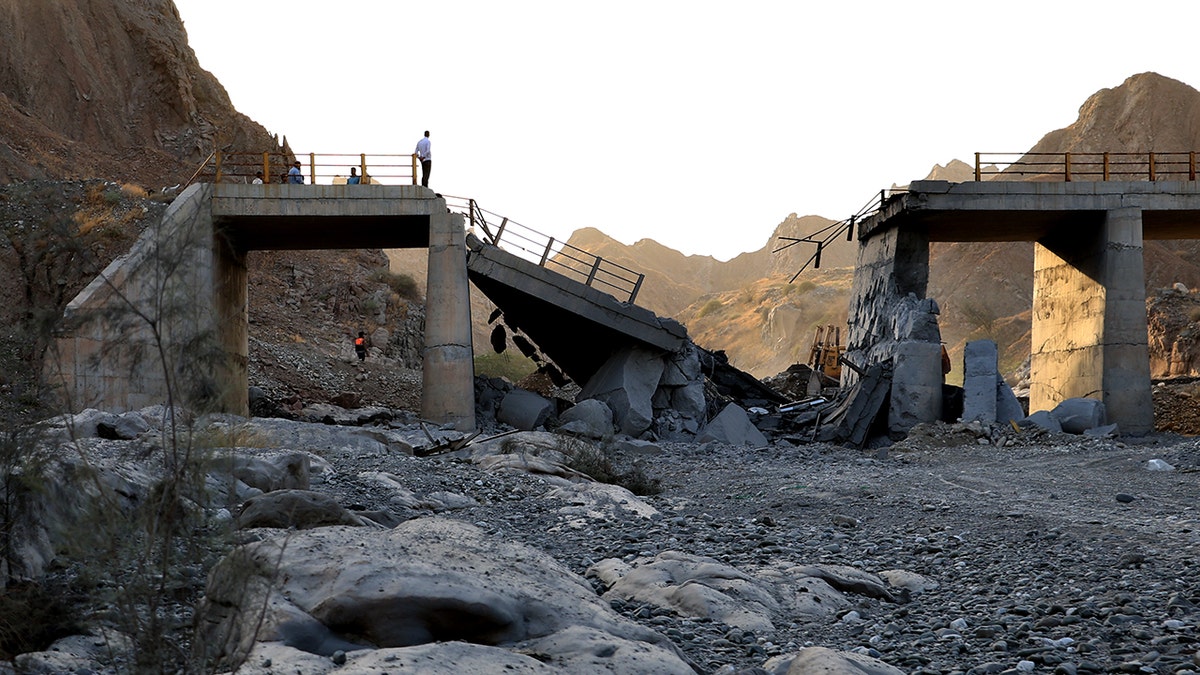
People stand on a bridge destroyed after a strike in Hormozgan province, southern Iran, Saturday, July 18, 2026. (Amirhosein Khorgooi/Iranian Students’ News Agency via AP)
Pickaxe is deeper and more heavily fortified, she said, and does not have a publicly confirmed structural weakness comparable to those exploited there.
Retired Air Force Brig. Gen. Robert Spalding, a former B-2 operations commander, said planners would first determine whether the mission required destroying Pickaxe’s interior or merely preventing Iran from using it.
«You assess what the goals are, and then you assess the costs associated with making something not fit for use — or destruction,» Spalding said.
If destroying the facility proved infeasible, he said, the U.S. could instead deny access and prevent Iran from bringing in the personnel and equipment needed to operate it.
The institute has identified two possible ventilation-shaft locations through satellite imagery, including one it considers probable. Without internal schematics, however, analysts cannot confirm their purpose or connection to the main chambers.
Faragasso said the shafts could provide weak points for deep-penetrating weapons, although the results of an attack might remain unclear.
«The facility is not invulnerable,» he said. «There are options.»
«At the minimum, the tunnel entrances can be collapsed,» Faragasso added, saying a strike could also send damaging shock waves into the facility.
Grajewski said collapsing the portals would prevent Iran from moving personnel or equipment in or out without first undertaking an excavation visible to American and Israeli surveillance. Any effort to reopen Pickaxe could trigger another strike.
But Iran has previously excavated entrances to missile tunnels after they were attacked, meaning keeping Pickaxe closed could require continued surveillance and repeated military action.
CLICK HERE TO DOWNLOAD THE FOX NEWS APP
Grajewski said a strike could provide the U.S. with a «symbolic win» against one of Iran’s most prominent remaining nuclear-related facilities but would not eliminate the broader program.
«It is a very high-value facility,» she said. «But it’s not the entirety of the Iranian nuclear program.»
war with iran, nuclear proliferation, middle east, national security, politics
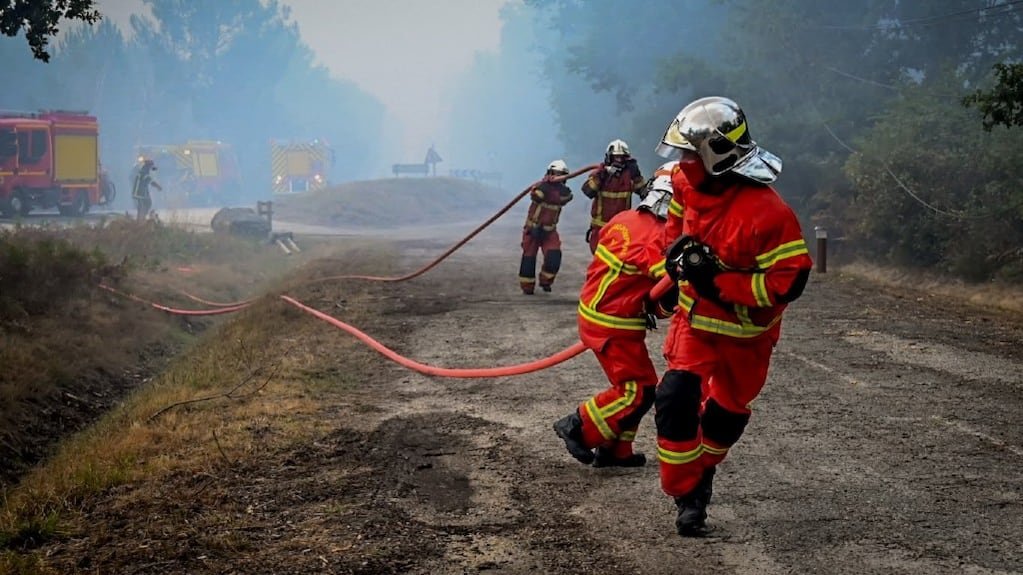
Parte de Europa sigue combatiendo este lunes una intensa ola de incendios forestales. España mantiene varios focos activos que ya afectan a miles de personas, mientras que Francia consiguió estabilizar durante la noche el megaincendio de Burdeos, aunque más de 200.000 evacuados aún no pueden regresar a sus hogares.
Mientras España arde con diferentes focos que afectan a más de 170.000 personas entre confinados y desalojados, Francia avanzó en la gestión de su megaincendio forestal del departamento de Gironda, en las proximidades de Burdeos, suroeste del país.
Francia: estabilizado el fuego en Burdeos con 220.000 evacuados
El fuego en Burdeos está “estabilizado”, informaron las autoridades francesas, porque desde la noche del domingo al lunes no avanzó. Sin embargo, el Gobierno puntualizó que la situación se mantiene “desfavorable”.
No constataron un avance de las llamas más allá de las 42.000 hectáreas que el fuego ya había calcinado hasta el domingo, mientras continúan los esfuerzos de extinción de 2500 bomberos, 1700 gendarmes y policías y 1500 militares, además de asociaciones de voluntarios y agricultores que están colaborando en segunda línea. Bomberos combaten las llamas en la zona de Le Porge, en Gironda, en Francia. (Foto: Reuters).
Están movilizadas un total de 18 aeronaves de distinto tipo para lanzar tanto agua como líquido retardante sobre la zona en llamas.
El número de evacuados se mantiene en 220.000 y no está previsto que puedan regresar a sus casas a corto plazo, hasta que el incendio no quede circunscrito, algo que se podría ver complicado por el repunte de las temperaturas que se espera a partir de mañana con una cuarta ola de calor del año para Francia, con temperaturas en el suroeste de hasta 40 grados.
Leé también: Tiroteo en un festival de Seattle: tres personas murieron y otras cuatro fueron heridas, entre ellas un nene de 2 años
Como colaboración, el Ejército alemán envió este lunes helicópteros y material de apagado de incendios.
El presidente francés, Emmanuel Macron, en tanto, visitaba la zona.
España, ante el fuego más devastador de su historia
Varios fuegos azotan en las últimas horas a España, aunque con especial fuerza lo hace el incendio declarado el pasado miércoles en Burgohondo (Ávila, centro), el más devastador en España desde que se tienen registros.
Cumplió este lunes cinco días con 40.000 personas desalojadas en dieciséis municipios, un perímetro de 160 kilómetros y una situación de leve mejoría.
Son ya cerca de 91.000 personas las afectadas, evacuadas o confinadas, por los incendios forestales que afectan a tres provincias del centro peninsular -Madrid, Ávila y Toledo-, según la última actualización facilitada por el Ministerio español del Interior.
Leé también: Tiroteo en un festival de Seattle: tres personas murieron y otras cuatro fueron heridas, entre ellas un nene de 2 años
En este sentido, la Comunidad de Madrid, donde hay 13 localidades evacuadas y 4 confinadas, es la región más castigada, con un total de 31.865 personas evacuadas y 19.062 confinadas.
Otro de los grandes fuegos que afectan al país es el de Vall d’Uixó (Castellón, este), en su tercer día activo, aunque ya no está fuera de la capacidad de extinción.
El fuego en Castellón arrasó 7.500 hectáreas y en los trabajos de extinción participan más de 400 efectivos terrestres y 25 aéreos.
Hasta la medianoche se mantendrán en esta región los desalojos de las 16.000 personas evacuadas de 18 localidades y urbanizaciones y el confinamiento de cerca de 64.000.
El total de afectados por el fuego en España, por tanto, asciende a más de 170.000 personas.
Qué está pasando en Portugal
Portugal combate combate este lunes seis incendios, uno de ellos en la zona de Bragança, en el norte del país y fronterizo con España, cerca de la provincia noroccidental de Zamora.
Una fuente de la Autoridad Nacional de Emergencias y Protección Civil (ANEPC) confirmó que existe la posibilidad de que el fuego se propague a España.
De hecho, las autoridades portuguesas trabajan ya con las españolas para controlar las llamas, a las que combaten 108 bomberos, 34 medios terrestres y siete aéreos, entre ellos algunos españoles.
Los otros dos incendios que más preocupan a las autoridades lusas se ubican en la región de Guarda, donde hay movilizados más de 230 bomberos, 63 medios terrestres y 7 aéreos, y en Santarém, con casi 200 bomberos, 55 medios terrestres y cuatro aéreos, ambas en el centro del país.
Los fuegos que llevan más tiempo activos se desarrollan en zonas montañosas, por lo que no hay acceso a los medios terrestres.
Con información de EFE.
Incendio, Europa
INTERNACIONAL
German officials want to know why Berlin attack suspect was free despite alleged ISIS support
NEWYou can now listen to Fox News articles!
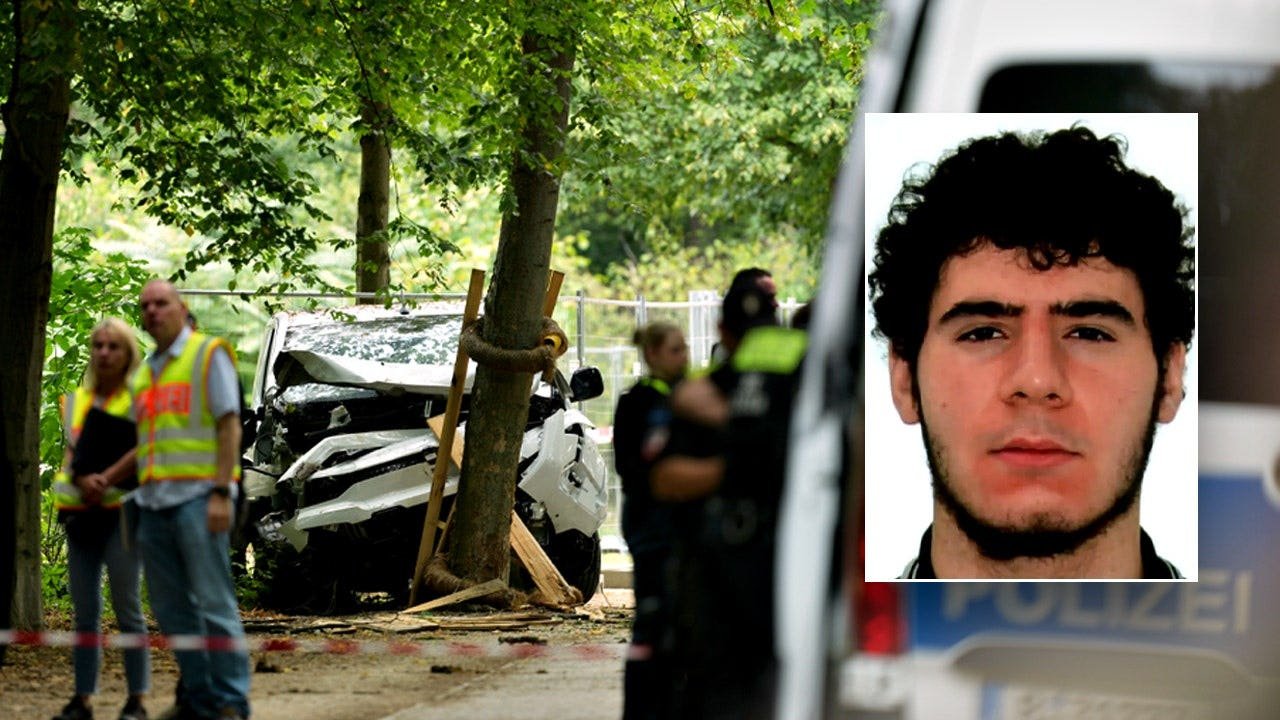
In the wake of the recent violent attack in Berlin near a pride festival, German officials are left to contend with the questions surrounding why suspect Abdul Ballout was free to perpetrate the assault despite his recent conviction related to supporting ISIS.
German Chancellor Friedrich Merz on Monday wished to know how the violent assault could have been prevented.
«We must do everything to protect people in Germany as best possible from such criminals, from dangerous people who for whatever reason can’t be taken into custody,» Merz said, according to The Associated Press.
German Interior Minister Alexander Dobrindt told public broadcaster ZDF during an interview that in light of the 21-year=old suspect’s conviction and record of backing the Islamic State, it did not make sense that the man was roaming free.
«You can assume that it certainly would have made sense to put this person in custody,» he noted, according to the report.
BERLIN PRIDE ATTACK SUSPECT KILLED IN POLICE CONFRONTATION: AP
A suspect with alleged ties to Germany’s Islamist scene is on the run after authorities say he plowed a van into a crowd near Berlin’s Pride festival before attacking others with a machete in what officials believe was an Islamic terror attack that left one person dead and at least 29 others injured. (AP Photo/Markus Schreiber; Berlin Police)
Berlin Mayor Kai Wegner told regional broadcaster RBB in an interview that while he did not wish to question the independence of the court system, when it comes to the matter of this attack, «words fail me.»
The suspect in the recent Berlin attack went to Lebanon last year with the goal of traveling to Syria to join ISIS, according to an English translation of a joint release from the Berlin Public Prosecutor’s Office and the Berlin Court of Appeal, which noted that the man «was born and raised in Berlin and is a German citizen.»
The attack on Saturday night left one dead and 29 injured, according to the AP, which reported that 21-year-old Abdul Ballout is suspected of plowing a van into people near a pride festival prior to apparently slashing people with a machete in what authorities think was a terror attack.
The suspect was killed by authorities on Sunday.
«According to current information, the 21-year-old allegedly attacked the special forces officers with a bladed weapon, whereupon they used their firearms,» an English translation of a July 26 joint press release from the Berlin Police and public prosecutor’s office noted. «The man suffered fatal injuries and died at the scene. The investigation is ongoing.»
ISIS POISED TO EXPLOIT HISTORIC US IRAQ EXIT, TERROR GROUP ‘ACTIVELY WAITING IN THE GAPS,’ EXPERT WARNS
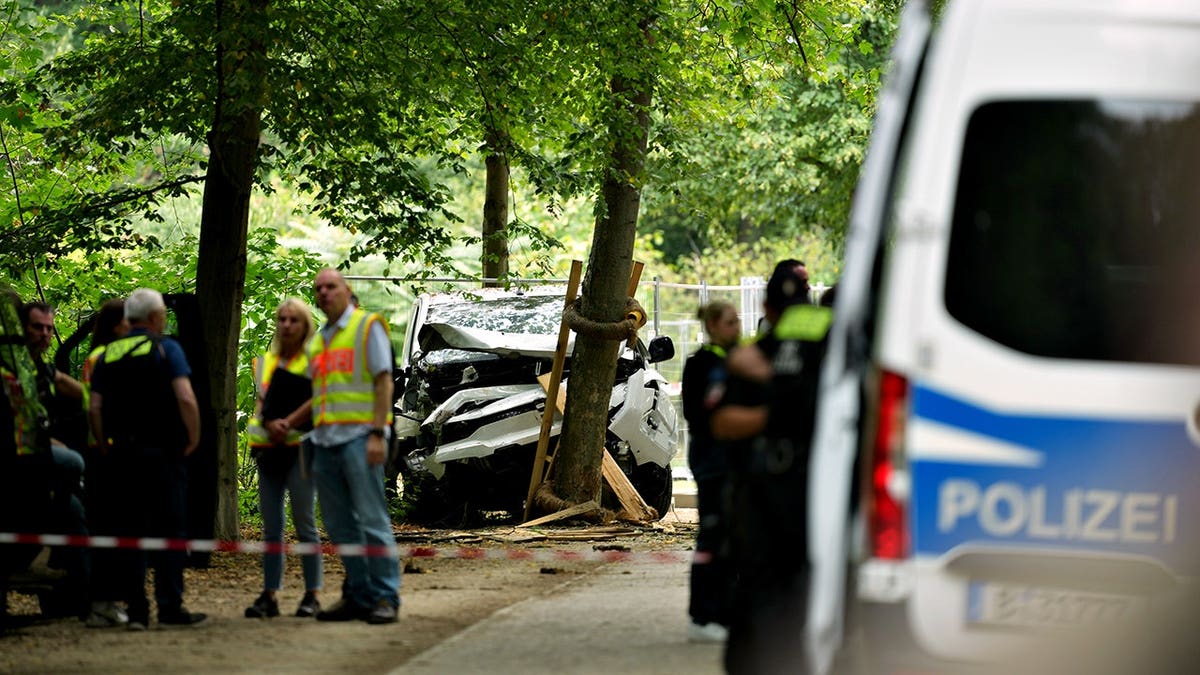
Police officers stand near a vehicle crashed into a tree after driving into a crowd near Berlin’s annual Pride event, in Berlin, Germany, Sunday, July 26, 2026. (AP Photo/Markus Schreiber)
Earlier this year, a Berlin juvenile court convicted Ballout of preparing a serious act of violence endangering the state, and publishing propaganda supporting ISIS.
A news release from the Berlin Public Prosecutor’s Office and Berlin Court of Appeal said the court sentenced Ballout to one year and 10 months in youth custody before prosecutors appealed.
Officials have stated that the man was granted a suspended sentence, but the news release states: «The decision regarding the suspension of this sentence on probation was deferred for six months pursuant to Section 57 in conjunction with Section 61 Paragraph 1 of the Juvenile Courts Act. The court also imposed various conditions on Abdul B., including placing him under the supervision of a probation officer. The court lifted the existing arrest warrant, as pretrial detention primarily serves to secure the criminal proceedings and does not constitute a prejudicial punishment.»
FBI ARRESTS 3 MEN WHO ALLEGEDLY PLEDGED ALLEGIANCE TO ISIS, FUNDED DRONE ATTACKS TARGETING US TROOPS OVERSEAS
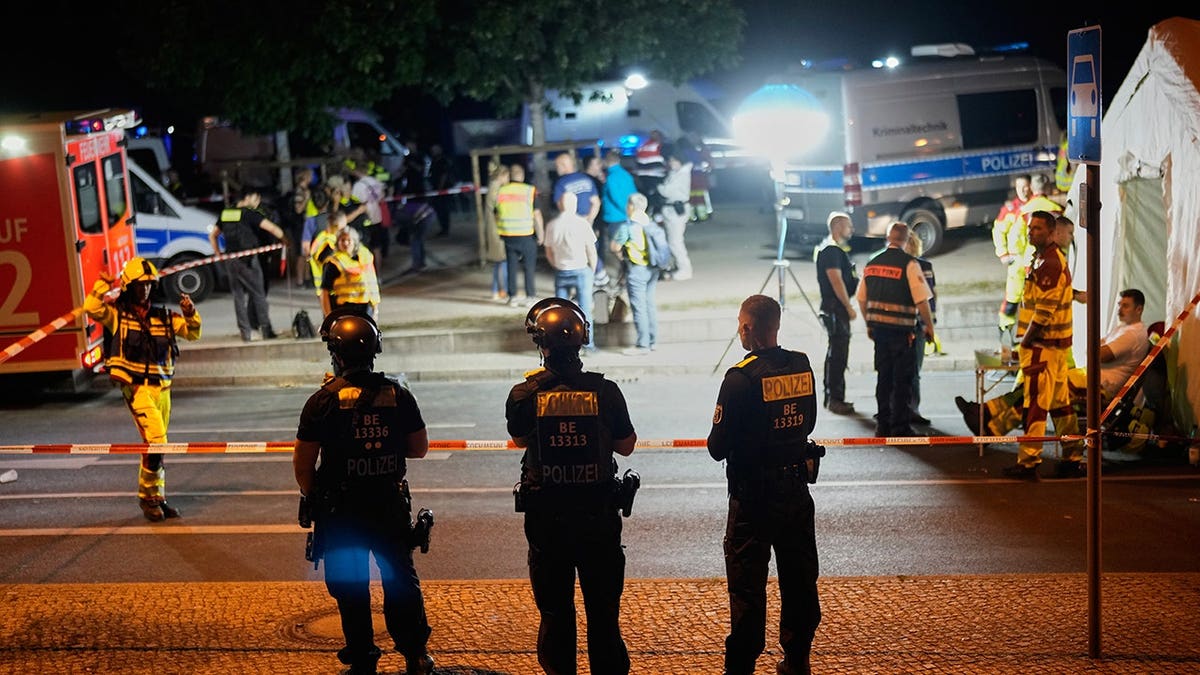
Emergency personnel and police gather in Berlin, early Sunday, July 26, 2026, following the cancellation of Christopher Street Day festivities. (AP Photo/Ebrahim Noroozi)
CLICK HERE TO DOWNLOAD THE FOX NEWS APP
The news release noted that the case was not over, given that the appeals process had yet to play out.
«This conviction is not yet legally binding, as the Berlin Public Prosecutor’s Office has filed an appeal. The Public Prosecutor’s Office had requested a longer, non-probationary sentence for a juvenile and the continuation of the arrest warrant,» the release noted.
world, terrorism, germany, crime world, isis

Why Trump is suddenly threatening Iran’s last untouched nuclear site

Incendios forestales en Europa: hay miles de evacuados en Francia, España y Portugal

Kristalina Georgieva se reunió con Javier Milei en la Casa Rosada y participó de una reunión de Gabinete ampliado

¿Cuándo volverá a jugar Lionel Messi con la camiseta de Inter Miami?

El canciller de Lula recibió al embajador argentino en Brasilia y le transmitió el “repudio” de su gobierno

El presidente Javier Milei recibió a la titular del FMI en Casa Rosada

Senado: Bullrich y Sturzenegger cierran filas para tratar de avanzar con la extranjerización de tierras

Mientras espera la vuelta de Macri, el PRO ya activó contactos con LLA: cómo sería la estrategia electoral en la Provincia

Río Negro: Alberto Weretilneck anunció un proyecto para eximir de Ingresos Brutos a los turistas extranjeros

Dem’s stunning ideal standard for immigration detention conditions resurfaces amid Texas senate bid

 ECONOMIA3 días ago
Vocero de Milei dijo que un dólar a $1.800 es «posible» y la City alerta por fin de la paz cambiaria
- POLITICA3 días ago
Convivencia pacífica o tensión administrada: el PRO define cómo pararse frente al gobierno de Milei rumbo a 2027
- POLITICA2 días ago
Cuentapropismo emocional en lo profundo del conurbano