INTERNACIONAL
Trump revives Supreme Court immigration showdown after Hochul pardon torpedoed first case

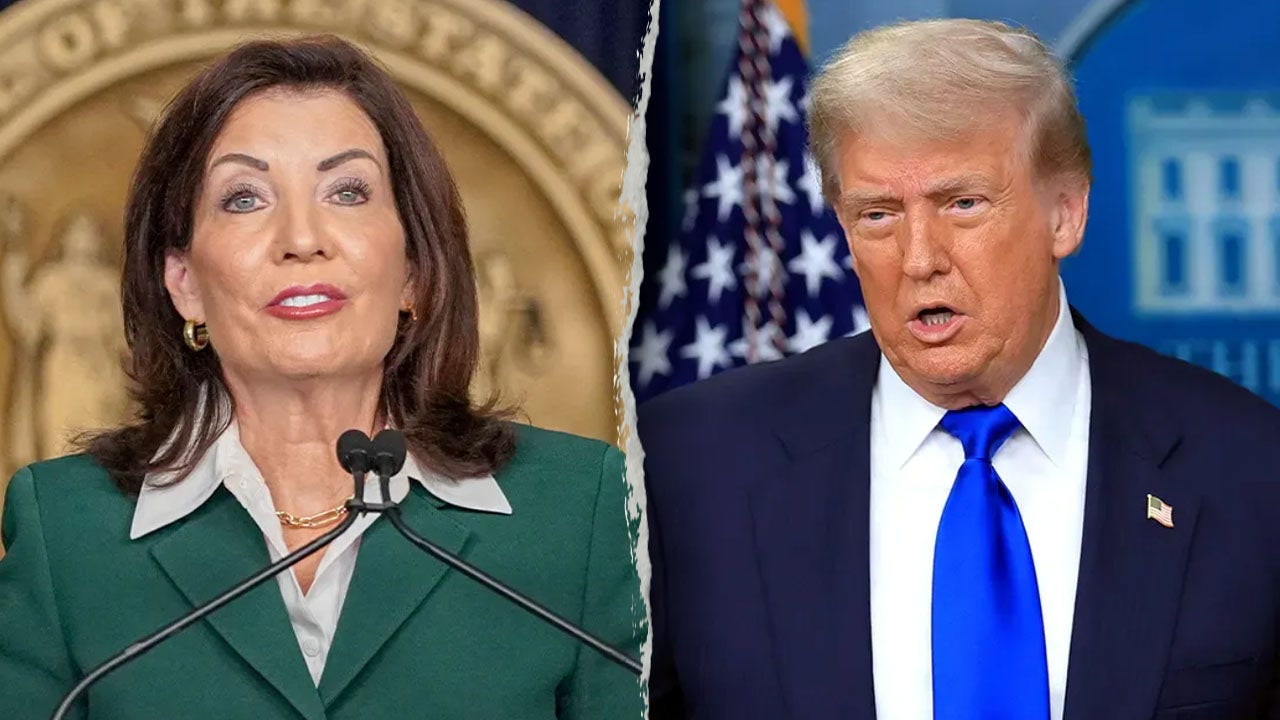
The Trump administration is asking the Supreme Court to revive a major immigration fight over whether criminal aliens can be held without bond throughout removal proceedings or are entitled to a hearing when their detention drags on.
Solicitor General John Sauer asked the Supreme Court on Monday to take up Genalo v. D.C., reviving a constitutional fight the justices had been set to hear this term in Genalo v. Black before New York Democratic Gov. Kathy Hochul’s pardon rendered that case moot.
At the center of the dispute is D.C., a Dominican national who is facing removal after a criminal history that includes drug trafficking and domestic violence charges. He had previously been removed from the United States on six occasions, according to ICE.
Federal law requires certain criminal aliens to remain in custody while their deportation cases play out. But the Second Circuit has ruled that if they are detained for too long, they are entitled to a bond hearing at which the government must make the case for keeping them in custody.
BLUE STATE GOVERNOR’S PARDON OF CONVICTED FELON TORPEDOS A MAJOR SUPREME COURT IMMIGRATION FIGHT
Other appeals courts have taken different approaches, leaving the Supreme Court with a nationwide split over what constitutional protections apply.
«So the rights of these criminal aliens who were being detained, whether or not they’re entitled to a bond hearing as of right now depends on which jurisdiction they happen to fall in,» Michael Morley, a Florida State University law professor, told Digital. «And so the government is asking the Supreme Court to set one uniform interpretation for the entire country.»
The Trump administration’s petition is procedurally unusual because Genalo v. D.C. is still pending before the Second Circuit. Sauer is asking the Supreme Court to intervene before the appeals court issues its decision.
«Rather than making the court go through those motions, you just hear this case now, hear this case directly, even before the Second Circuit has had the opportunity to rule,» Morley told Digital.
The legal dispute could also determine who carries the burden when a bond hearing is required.
Under the Second Circuit’s approach, the government must show that a detainee poses a flight risk or danger to the community. The administration argued that if the Constitution requires such hearings, the burden should instead fall on the detainee seeking release.
Lawyers supporting the administration argue that some detainees could delay their removal cases, then use the length of their detention to seek release on bond.
«The biggest issue that happens here is gamemanship,» Chad Mizelle, chair of litigation at the America First Policy Institute and a former acting associate attorney general, told Digital.
«A lot of times these aliens will file multiple applications for asylum, withholding removal. They’ll get new attorneys, switch out attorneys, ask for continuances, ask for delays,» Mizelle said. «So all of a sudden they’ve been in detention now, six, seven, eight months, completely of their own making.»
FEDERAL APPEALS COURT DEALS BLOW TO TRUMP DEPORTATION AGENDA
Mizelle argued that if prolonged detention eventually gives a detainee the right to seek bond, it could create an incentive to stretch proceedings long enough to reach that point.
«They would switch out attorneys. They would make frivolous filings regarding asylum, regarding withholding of removal. They would ask for delays and continuances upon delays and continuances,» Mizelle said. «They’ll do everything they can to try to stretch this out, six months, seven months, eight months, file a habeas petition, say that they’re entitled to a bond hearing, and then if they are released, abscond.»
Carrie Severino, president of the Judicial Crisis Network, similarly described the additional litigation as «a foot dragging, sand in the gears exercise.»
«This is attempting to stall, attempting to run out the clock or just, you know, the question is whether there even is a clock,» Severino told Digital.
She pointed to cases such as Demore v. Kim, in which detainees themselves sought additional time during proceedings before later challenging the length of their detention.
OBAMA, BIDEN JUDGES DRAW FRESH FIRE AS TRUMP’S IMMIGRATION COURT CLASHES HEAT UP: ‘ALMOST IMPOSSIBLE’
SIGN UP TO GET THE POLITICS NEWSLETTER
«So, it’s often a situation where people are playing both sides of it,» Severino said. «But they’re asking for more time on different things, but then at the same time complaining that the whole process is taking too long.»
However, Severino cautioned that she could not speak to the motivations of every detainee.
The Supreme Court has previously upheld mandatory detention during removal proceedings, but Morley said the high court has left open the constitutional question now at the center of the administration’s petition.
«This is a question that the [Supreme Court] itself went out of its way, you can say, to leave open for adjudication in a future case,» Morley said.
The administration is now asking the justices not to wait for another one.
«You wanted to resolve this case. Here’s another case that presents the same exact question that lets you resolve the circuit split this term,» Morley said. «So basically, substitute this case for the moot case.»
Digital reached out to the Justice Department for comment.
supreme court, deportation, immigrant rights, federal courts, law, judiciary, appeals, justice department











INTERNACIONAL
La opositora venezolana María Corina Machado calificó de corrupto al nuevo socio petrolero de Trump

La líder opositora venezolana en el exilio, María Corina Machado, dijo en una extensa entrevista esta semana que el nuevo socio petrolero de Washington en Venezuela, Alejandro Betancourt, era responsable de una “corrupción obscena” y no lo consideraría un socio comercial viable si ella asumiera el poder.
Fue la primera vez que Machado opinó de manera pública sobre Betancourt, quien hace poco concretó un lucrativo acuerdo con el gobierno de Donald Trump para controlar alrededor de una quinta parte de las reservas de petróleo de Venezuela.
El acuerdo puso a Betancourt, un adinerado empresario objeto de investigaciones de corrupción, en el centro de la estrategia de Washington para Venezuela y a la transformación del país en un Estado vasallo de facto por parte del gobierno de Trump.
La conversación con Machado tuvo lugar después de meses en los que el gobierno de Estados Unidos la ha mantenido a cierta distancia, pasándola por alto al favorecer en enero a una líder autocrática, Delcy Rodríguez, como dirigente del país y concretando acuerdos a puerta cerrada con figuras controvertidas como Betancourt.
Betancourt hizo una fortuna gracias a contratos sin licitación para plantas eléctricas, los cuales implicaban sobrefacturar a entidades estatales, según un auditor de energía independiente de Venezuela.
A Machado, una excongresista que ha liderado la oposición durante los últimos tres años, no se le ha permitido volver a su país, ni siquiera con el enorme control que Washington ejerce ahora sobre Venezuela y a pesar de las repetidas declaraciones del secretario de Estado, Marco Rubio, de que el objetivo final es una transición democrática.
En la entrevista, realizada en Panamá, donde la líder se hospeda por ahora, Machado dijo que Estados Unidos no la había incluido en las negociaciones actuales entre el gobierno venezolano y otra facción de la oposición, mismas que se están llevando a cabo esta semana en Caracas, la capital.
Trump
INTERNACIONAL
‘Buck’ stops at Walz: Flanagan ducks Minnesota fraud blame as GOP rival exposes glaring contradiction
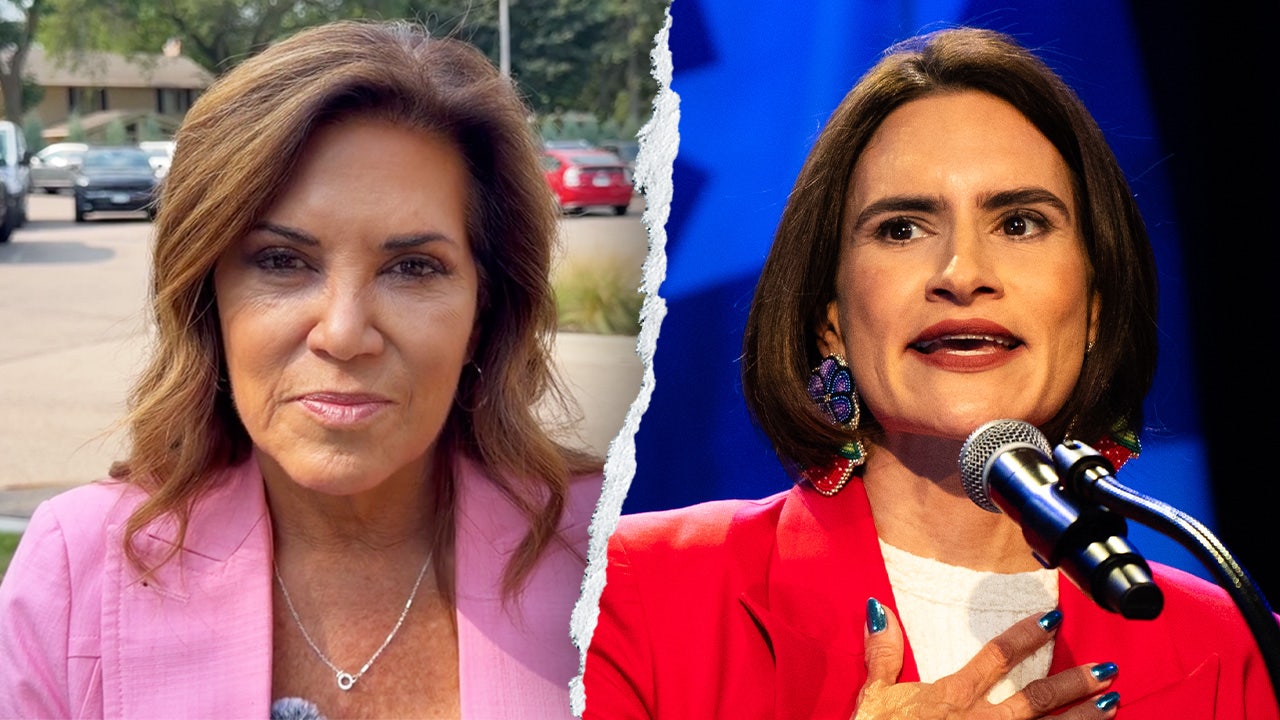
Michele Tafoya, the Republican nominee for U.S. Senate in Minnesota and a former broadcaster, aggressively sought to put her opponent, Democratic Lt. Gov. Peggy Flanagan, on the defensive during a Friday afternoon debate over the billion-dollar fraud schemes that drew national attention to the state earlier this year.
Early in the debate, Tafoya pressed Flanagan on her qualifications for federal office, pointing to her record as lieutenant governor.
«My opponent has been second in command in this state for eight years, drawing a taxpayer-funded paycheck. And what do we have to show for that? We have massive fraud, historic fraud. We have test scores down. We have crime spiking. We have a massive surplus turned into a deficit,» Tafoya said.
TAFOYA MAKES ‘COMMON SENSE’ PITCH TO DISAFFECTED DEMOCRATS AS SHE VOWS TO FIGHT MINNESOTA’S ‘SOCIALIST LURCH’
«This election is about Peggy Flanagan.»
Local and federal investigators have uncovered myriad fraud schemes involving daycare centers, food programs, health clinics and other operations accused of defrauding the state of up to $9 billion. Investigators say fraudsters either inflated the number of people they allegedly helped or fabricated their services altogether — all while receiving government dollars.
When the issue resurfaced later in the debate, the moderator asked Flanagan directly whether, in her view, she had «any ownership over the fraud.»
Flanagan sought to distance herself from the issue, pointing to Walz’s acknowledgment that responsibility for oversight rested with him.
«The governor has been very clear that the buck stops with him,» Flanagan said.
«He was the one who had oversight here. I’ve led on issues like paid family and medical leave, nation-leading child tax credit, making sure that kids get breakfast and lunch at school. Those are the things and those are the areas where I took the lead.»
When Flanagan then redirected the conversation to criticism of President Donald Trump, Tafoya went on the attack.
DAVID MARCUS: PEGGY FLANAGAN’S DEI RECORD AND FRAUD SCANDAL PUT MINNESOTA SENATE RACE IN THE SPOTLIGHT
«Peggy, Donald Trump isn’t on the ballot. You and I are on the ballot, and only one of us let $9 billion walk out the door to fraud to suggest that we that she somehow is going to be a fraud czar all of a sudden,» Tafoya said.
«My goodness, she was second in charge in this state, and she’s just going to point her finger at Gov. Tim Walz when she demanded to be in the room where everything happened. But suddenly she has nothing to do with this. Again, sell it to someone else,» she added.
Flanagan has served as Minnesota’s lieutenant governor for nearly eight years, taking office in 2019. By the time Walz announced that he would not run for re-election as governor amid political scrutiny for the fraud, Flanagan had already announced her bid for U.S. Senate.
Responding to Tafoya, Flanagan doubled down on her criticism of Trump, noting that the president had recently endorsed Tafoya.
«Donald Trump doesn’t just endorse anybody. In fact, he endorses against people in his own party if they dare to take him on. Michele Tafoya passed his litmus test with flying colors,» Flanagan said.
Tafoya then laid out her own proposals for combating fraud, including tougher consequences for noncitizens who defraud Americans.
«Number one, if you’re a guest of this country and you defraud Americans, you must leave. You must leave, and you should have no pathway back,» she said.
FRAUD EXPERT EXPOSES HOW HIDDEN NETWORKS DROVE MINNESOTA FRAUD, OTHER MAJOR SCAMS: ‘CRIMINAL ENTERPRISE’
SIGN UP TO GET THE POLITICS NEWSLETTER
«Number two, if you’re an American and you defraud your fellow Americans, we should be talking about mandatory prison minimums. Tough sentences, not an easygoing slap on the wrist. And number three, if you’re a state like Minnesota who cannot keep your financial house in order, why would the federal government release billions and billions of dollars to you, only to see it go to fraud?» Tafoya said.
After securing their respective parties’ nominations earlier this year, Flanagan and Tafoya will face off in the state’s Nov. 3 general election.
midterm elections, minnesota fraud exposed, politics, tim walz, senate
INTERNACIONAL
Guatemala despliega 700 efectivos para retomar el control en Tajumulco e Ixchiguán ante presiones del narcotráfico para retirar a militares
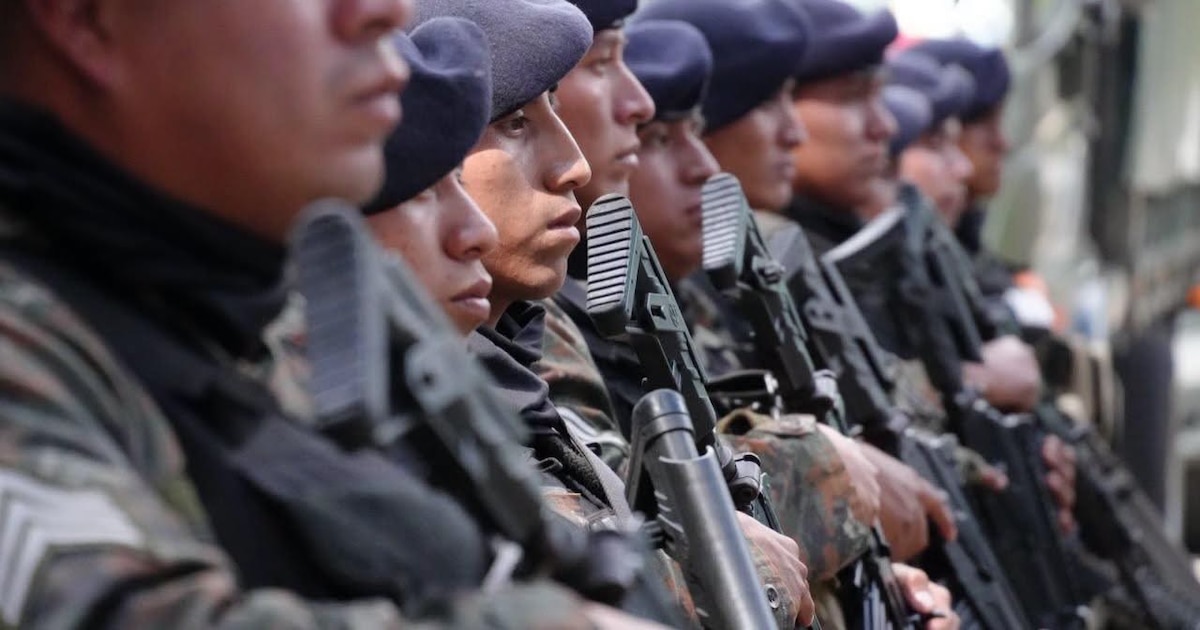
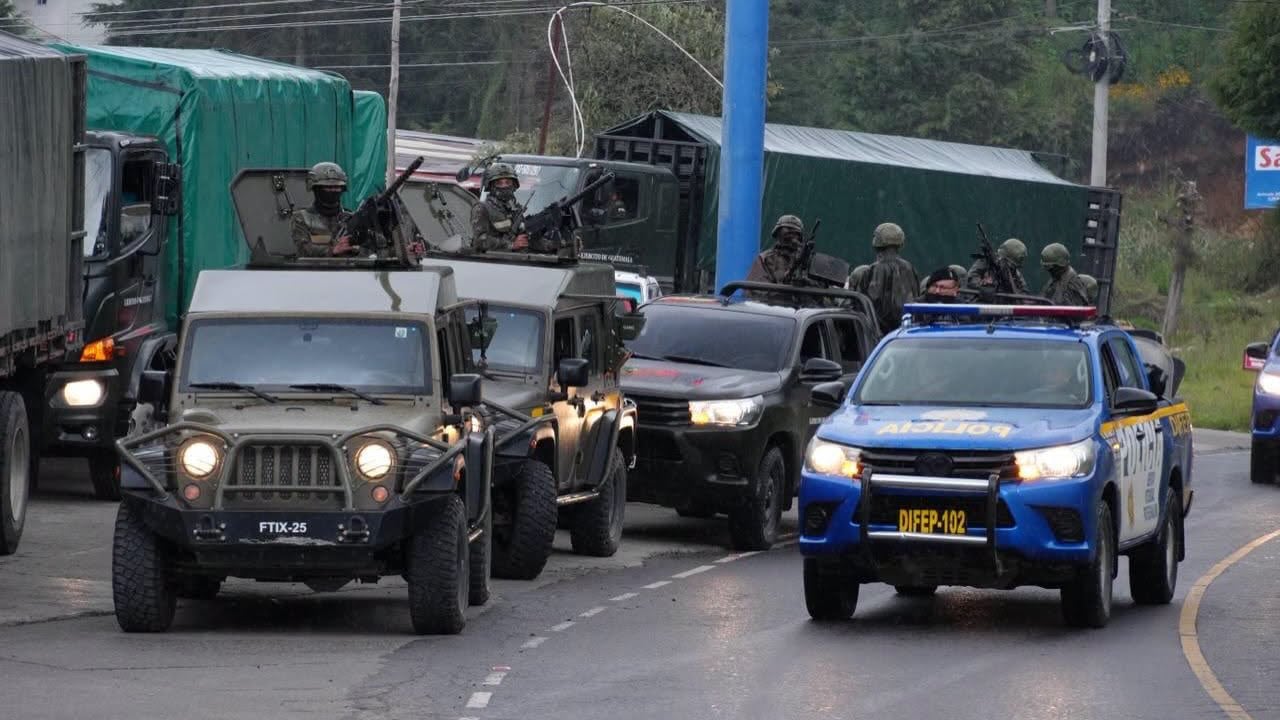
El Ejército de Guatemala y la PNC desplegaron 700 efectivos desde el jueves 15 de octubre en Tajumulco e Ixchiguán, municipios de San Marcos ubicados en la frontera con México, para recuperar el control territorial ante la presión de estructuras del crimen organizado que buscan el retiro de posiciones militares estratégicas.
La operación podría extenderse entre 15 y 20 días, según evolucione el conflicto armado que afectó a comunidades de ambos municipios. El despliegue se produjo después de ataques con armas de fuego que interrumpieron la actividad escolar y dejaron a un soldado muerto, de acuerdo con información oficial.
Más de 400 militares y cerca de 300 agentes ingresaron a la zona pasado el mediodía del 15 de octubre. El subdirector general de Operaciones de la Policía Nacional Civil, Esvin Jacinto Quiché, explicó que el contingente instaló puestos de control, realiza patrullajes a pie y motorizados y cuenta con equipos de investigación criminal. Según reporte de medios locales.
Las pesquisas buscan determinar si organizaciones delictivas guatemaltecas o mexicanas participaron en los ataques contra pobladores y fuerzas de seguridad. También apuntan a identificar a quienes emplean fusiles de alto poder y rifles con miras de precisión para disparar desde posiciones distantes contra comunidades rivales y personal militar.
Los ataques armados y la muerte de un soldado
La violencia obligó el 13 de octubre a suspender las clases presenciales en establecimientos situados en el cantón Las Brisas y el caserío Villa Linda, ambos en la aldea Tuichán. Videos registrados durante los enfrentamientos mostraron a niños y niñas resguardados bajo sus pupitres mientras se oían ráfagas de disparos en las cercanías.
El Ministerio de Educación dispuso que las escuelas afectadas continuaran con clases a distancia mediante guías de trabajo y el acompañamiento de supervisores educativos, docentes y familias. La Dirección Departamental de Educación de San Marcos mantiene el seguimiento junto con autoridades locales hasta que existan condiciones para el retorno a las aulas.
La escalada había cobrado una víctima mortal cinco días antes. El soldado Isaías Valentín Ramírez Salvador recibió un disparo en la cabeza el 8 de octubre mientras resguardaba una posición militar en la elevación conocida como “tres mil”, en el municipio de El Tumbador.
De acuerdo con reportes de medios de comunicación en Guatemala, el ministro de la Defensa Nacional, Henry Sáenz, atribuyó el ataque a un francotirador que disparó desde una ubicación lejana. El Ministerio Público inició diligencias para establecer de dónde procedió el tiro y quiénes fueron los responsables.
El Ministerio de la Defensa sostiene que grupos criminales pretenden que sea retirado un búnker construido junto con el Ministerio de Gobernación en un punto limítrofe entre Guatemala y México. Informes de inteligencia militar vinculan esas presiones con organizaciones relacionadas con el Cartel de Sinaloa, que buscan la salida de los soldados destinados en Tajumulco e Ixchiguán.

Una disputa territorial abierta desde 1933
El conflicto entre ambos municipios comenzó en 1933, cuando Ixchiguán fue elevado a la categoría de municipio sin una delimitación precisa de sus fronteras con Tajumulco. La falta de una resolución oficial derivó durante décadas en desplazamientos de familias y enfrentamientos esporádicos por tierras y nacimientos de agua.
La fertilidad de los terrenos, aptos para el cultivo de amapola y marihuana, y la proximidad con México transformaron la zona en una ruta para el trasiego de drogas. La disputa histórica entre las comunidades se entrelazó así con los intereses de organizaciones dedicadas al narcotráfico.
El enfrentamiento del 13 de octubre ocurrió cuando pobladores de la aldea Villa Real, en Tajumulco, intentaban destruir búnkeres situados en la aldea Tuichán, en Ixchiguán, de acuerdo con la Comisión Presidencial de Atención a la Conflictividad. El organismo señaló que el crimen organizado habría aprovechado la disputa para reclutar habitantes destinados al microtráfico de drogas entre ambos países.
La comisión advirtió que los choques armados funcionan como “un distractor” para las operaciones de narcotráfico en la frontera. También consideró agotadas las posibilidades de diálogo directo entre las comunidades y propuso trasladar el caso al Consejo Nacional de Seguridad.
La propuesta contempla la participación del Organismo Judicial para gestionar allanamientos y evaluar una eventual declaratoria de Estado de Sitio. La Gobernación Departamental de San Marcos indicó que la presencia conjunta de militares y policías busca “garantizar el orden y la tranquilidad de las familias marquenses” y generar condiciones para retomar el diálogo y la gobernabilidad.
Sáenz afirmó que las operaciones militares afectaron el traslado de estupefacientes en la región, aunque reconoció que aún no han debilitado de manera sustancial a las estructuras criminales. “Reconfiguración no ha habido, lo que ha habido es diferentes niveles de permanencia u operación en el territorio”, sostuvo.
El ministro señaló que el Gobierno buscará actuar de forma más directa contra esos grupos, además de impedir el traslado de droga hacia territorio mexicano. El Ministerio de la Defensa informó en la red social X que mantiene patrullajes y puestos de control conjuntos con la PNC en San Marcos para reducir la capacidad de acción de las organizaciones criminales.
soldados,fuerzas armadas,uniforme militar,Paul W. S. Anderson,Soldier

La opositora venezolana María Corina Machado calificó de corrupto al nuevo socio petrolero de Trump

Gianinna Maradona reveló los chats donde el psicólogo Carlos Díaz sugería que no visitaran a Diego dos días antes de su muerte

Río Negro: imputaron a un intendente libertario por corrupción y deberá afrontar un referéndum

Con el cierre de farmacias y centros médicos se extiende la crisis de la obra social de los militares

El Gobierno logró un nuevo superávit y en el acumulado del año llega al 1,2% del PBI

Huelga en el Barcelona a una semana del clásico contra el Madrid: ¿se juega?

Más de 2.000 islas sin hospitales: así funciona la red de clínicas flotantes de India

La angelita de LAM que reveló la peor infidelidad que sufrió en un matrimonio: «Encontré mensajes con otras mujeres y…»

Autos chinos en Argentina: el caso de Noruega reaviva las alertas por espionaje y riesgos para la seguridad nacional

Milei tildó a Lula de comunista, ratificó su alineamiento con Trump y pidió “defender el legado de occidente”

 CHIMENTOS3 días ago
La angelita de LAM que reveló la peor infidelidad que sufrió en un matrimonio: «Encontré mensajes con otras mujeres y…»
- POLITICA2 días ago
Autos chinos en Argentina: el caso de Noruega reaviva las alertas por espionaje y riesgos para la seguridad nacional
- POLITICA2 días ago
Milei tildó a Lula de comunista, ratificó su alineamiento con Trump y pidió “defender el legado de occidente”