INTERNACIONAL
Trump sidelines sweeping Russia sanctions as GOP allies warn pressure on Putin is slipping

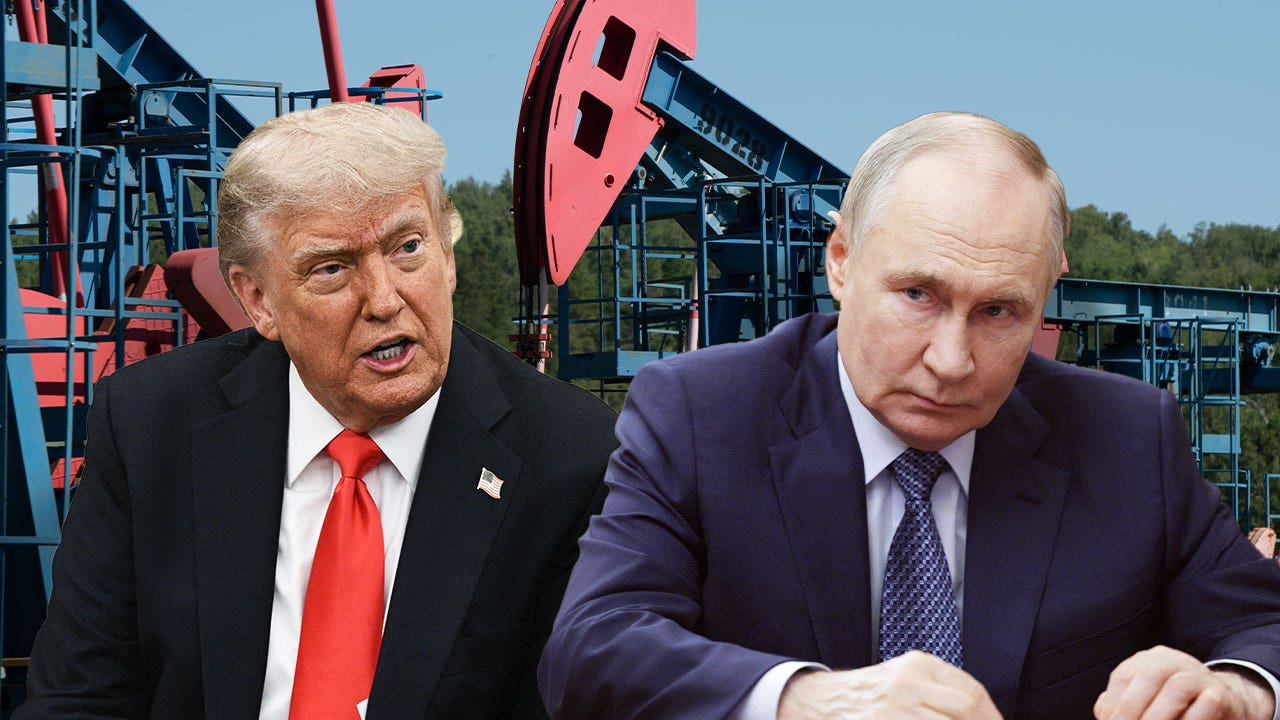
President Donald Trump is holding back on sweeping new economic penalties Congress handed him to squeeze Russia.
He is betting that keeping those sanctions in reserve will help bring Vladimir Putin to the negotiating table, a strategy drawing criticism from Republican allies amid questions about whether Moscow believes he will ever use them.
Over roughly a week, the administration waived most of the new Russia sanctions and tariffs enacted last month while separately easing restrictions on Russian diesel exports, moves one foreign policy expert described as Trump’s most significant effort yet to unwind economic pressure on Moscow.
«It’s probably the biggest effort that the Trump administration has made to start unwinding the U.S. sanctions architecture that’s been in place against Russia since 2022 or even earlier in some cases,» Hal Brands, a senior fellow at the American Enterprise Institute and professor at the Johns Hopkins School of Advanced International Studies, told Digital.
TRUMP TRIES DIFFERENT APPROACH WITH RUSSIA TO BRING AMERICANS RELIEF AMID ONGOING WAR WITH UKRAINE
Trump argues that imposing the new penalties could drive Russia away from peace negotiations. But Brands said repeatedly holding back economic punishment risks convincing Putin that Washington is unwilling to follow through on its threats.
«The threat of imposition may lose some credibility if over a period of time you’ve demonstrated that you would prefer not to impose those penalties in the first place,» Brands said.
REPUBLICAN LAWMAKERS BREAK WITH TRUMP ON DIESEL DEAL WITH RUSSIA
The decision has drawn criticism from Republicans who helped advance the Lindsey O. Graham Sanctioning Russia and Iran Act, including Trump allies who worked with his White House to pass it.
Sen. Katie Britt, R-Ala., who played a leading role in passing the legislation and joined Trump in the Oval Office when he signed it last month, said Tuesday the administration should be turning up economic pressure on Moscow.
«It is my belief that we need to use economic firepower to help drive Putin to the table,» Britt told Semafor. «I believe that Russia is at the darkest point that they’ve been at in this entire war, and now is the time for us to turn up the pressure.»
Sen. Shelley Moore Capito, R-W.Va., said Congress had coordinated the legislation’s timing with the White House, making Trump’s decision to waive most of its new penalties particularly surprising.
«This was an act of Congress that we had worked with the White House on,» Capito said. «We had timed this to when the president and the White House felt it was a good time to move forward with this, where it could be effective.»
Other Republicans were more blunt in their criticism.
«Beyond irresponsible,» Sen. Thom Tillis, R-N.C., wrote on X. «What part of enforcing a law passed 86-11 by the Senate does the President and his advisors not understand?»
«It’s unconscionable that this administration is capitulating to a Russian dictator who illegally invaded Ukraine and butchers innocent civilians every single day,» he added.
Sen. Darline Graham, R-S.C., the lead sponsor of the legislation named for her late brother and a Trump-endorsed candidate, said she would «choose to keep the pressure on Russia» because «I don’t trust Putin and I don’t trust Russia.»
The Graham Act, signed into law in September, provided for steep tariffs targeting Russia and major purchasers of Russian energy, along with sanctions on Russian financial institutions and foreign entities doing significant business with them.
Congress also included presidential waiver authority, which Trump invoked to put most of the law’s new Russia penalties on hold.
Brands said including a waiver was not necessarily a mistake, even if it ultimately allowed Trump to avoid imposing the penalties lawmakers had sought.
«It’s really tough to craft a sanctions or tariffs bill that forces the president to do something, and typically you don’t want to do that because there are always circumstances one can imagine in which you might want to be able to waive sanctions,» he said.
Trump has defended his decision as necessary to keep Putin at the negotiating table.
«My decision on Russia is a very simple one. I am in the process of negotiating Peace in the war between Russia and Ukraine, and don’t want to do anything that will drive, foolishly, Russia away from the bargaining table,» Trump wrote Sunday.
In his formal certification to Congress, Trump said imposing the Graham Act penalties now «would impede ongoing U.S. efforts to negotiate a durable and comprehensive peace.» He left open the possibility of imposing them later to «incentivize resolution» of the war.
Brands acknowledged that holding sanctions in reserve can give a president bargaining power, but questioned whether Putin believes Trump is prepared to follow through.
«The challenge is that it’s been clear for about 18 months now, since Lindsey Graham started pushing this bill in the first place in the early parts of 2025, that the president simply doesn’t have much appetite for squeezing the Russian energy export system to the degree that people like the late Senator Graham envisioned and desired,» Brands said.
The administration has separately eased existing restrictions to allow more Russian diesel onto the market, a move intended to relieve pressure on global fuel prices.
Trump has criticized Ukrainian strikes on Russian refineries, arguing they are straining diesel markets. Energy Secretary Chris Wright has described sanctions relief as a «carrot» that could encourage Russia to de-escalate.
Brands said the immediate financial benefit to Moscow from diesel relief is probably «fairly marginal.» The more consequential decision, he argued, was Trump’s refusal to activate the broader sanctions and tariffs Congress authorized.
«There’s a potential for pretty serious pressure to be exerted if he had used both the sanctions authorities and essentially the secondary tariff authorities to go after purchasers of Russian energy products overseas,» Brands said.
Such measures could «put a fairly significant squeeze on the Russian war economy» while discouraging other countries from doing business with Moscow, he added.
Brands acknowledged that squeezing Russian energy exports could further strain global energy markets when Trump is focused on lowering fuel prices at home.
But he argued that the larger risk lies in what Putin concludes about Washington’s willingness to sustain economic pressure.
«Putin’s theory of victory in Ukraine for a long time has been that at some point the West, particularly the United States, will get tired of the costs of confrontation with Russia and support for Ukraine,» Brands said.
The concern, he explained, is less about the immediate revenue Moscow gains from additional diesel exports than the possibility that easing restrictions reinforces Putin’s belief that Washington is growing tired of confronting Russia.
«The risk you run here has less to do with the precise dollar or ruble amount that Russia will gain by being allowed to export some additional diesel than with the strategic signal you’re sending that, in fact, the U.S. is getting tired of applying economic pressure against Russia and that the U.S.-Ukraine relationship is entering another period of conflict and divergence,» Brands said.
Brands sees little prospect for a negotiated settlement in the immediate future and argued that changing Putin’s calculation would require convincing him that the costs of continuing the war outweigh the potential gains.
«I think the only way you get there is by continuing to support Ukraine so it can take an increasing toll on Russia on the battlefield and by finding ways of ramping up rather than ramping down the economic pressure on Russia,» Brands said.
Trump’s waiver does not eliminate sanctions against Russia that predated the Graham Act, and the administration can revisit the new penalties.
The dispute now centers on whether keeping those penalties in reserve strengthens Trump’s hand with Putin — or diminishes their value if Moscow doubts he is willing to use them.
donald trump, vladimir putin, sanctions, politics, russia, congress, economy, foreign affairs







INTERNACIONAL
Blue wave meets ballot box surprises as voters split on abortion, voter ID and billionaire taxes
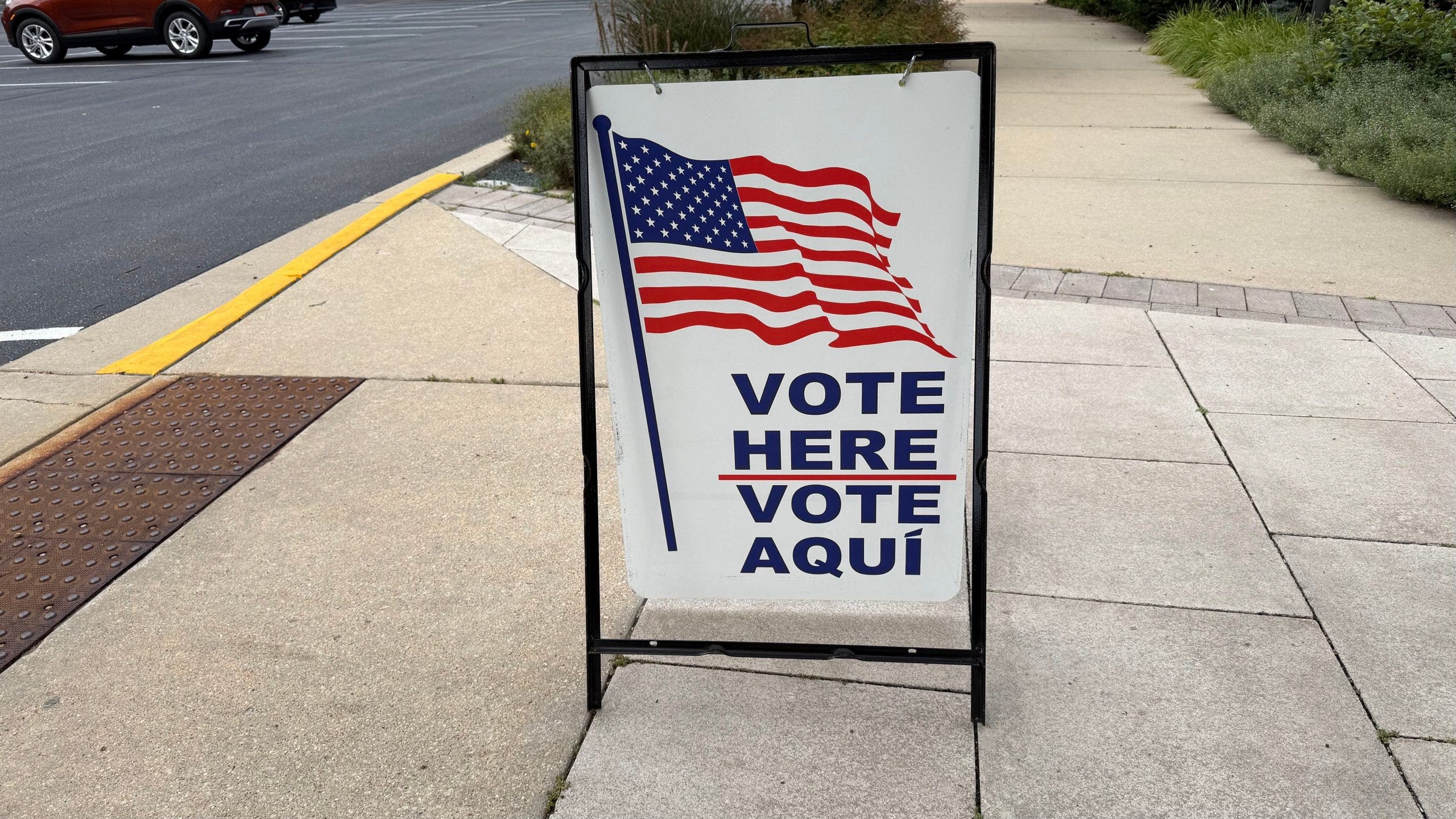
While Democrats’ midterm sweep dominated election night, voters in several states delivered consequential — and sometimes crosscutting — verdicts on voter ID, abortion access, taxes and English-language laws.
But the down-ballot decisions largely unfolded beneath the shadow of the GOP’s crushing losses, offering a separate look at the policy priorities voters chose to elevate in their states.
Read on to learn more about some of the most significant ballot measure results that will be shaping the lives of thousands of Americans.
DEMOCRATS ‘DIVORCED FROM VOTERS’ AS 5 STATES BACK CITIZEN-ONLY VOTING, BOLSTERING GOP PUSH
Voters in Nevada, North Carolina and Ohio all voted to pass voter ID requirements, even as talks among federal lawmakers have stalled on the issue, showcasing that the issue remains a point of public interest.
In North Carolina, the state has required photo ID for in-person voting since 2018. But with the adoption of a constitutional amendment in a 59.6% to 40.3% vote, the Tar Heel State expanded the requirement to all forms of voting.
Similarly, in Ohio, voters passed Issue 3 by a 65.3% to 34.6% vote. Although Ohio already had preexisting in-person voter ID laws, Issue 3 codified the requirement in the state’s constitution, making it harder to overturn later.
Finally, in Nevada, Question 7 passed by a 62.1% to 37.8% vote, establishing a constitutional amendment to enact the state’s first voter ID requirement. It compels voters to show ID when voting in person and, for mail and absentee ballots, asks voters to provide the last four digits of their driver’s license or Social Security number.
EVERYTHING TO KNOW ABOUT HOUSE AND SENATE CONTROL, BALLOT MEASURES AND 2026 ELECTION DAY POLL CLOSING
In Idaho, voters approved HJR6 in a 63.1% to 36.8% outcome, a measure that makes English the official language of the state, codifying it for use in public proceedings with a constitutional amendment.
English had already been made Idaho’s official language through statute since 2007.
State Rep. Dale Hawkins, one of the champions behind HJR6, called it reflective of efforts by the Trump administration to make English the official language of the United States through executive order.
«Our current administration signed an executive order doing this for the entire United States, so we are just in line with what’s going on,» Hawkins said in public remarks.
In an interview with local media, Hawkins also cited a concern that many newcomers to the U.S. had, in his view, overlooked the country’s linguistic identity.
«One of the things that unites us all as a culture, as a country, as a state, is language. And what used to be the desired effect, which was assimilation — learn the language, learn the culture, learn the history — those things have slipped away. And we don’t see assimilation anymore. And I believe that if we have a common language, then our culture will survive,» Hawkins told the Idaho Capital Sun.
DEM GOV MAURA HEALEY SIGNS SWEEPING MASSACHUSETTS BILL ALLOWING ABORTIONS UP TO BIRTH
Alongside their English language constitutional amendment, voters in Idaho rejected Proposition 1, which would have created a right to abortion up to the point of fetal viability, except in cases of medical emergency.
In the words of the proposition, it «would support creating a right to abortion before fetal viability — defined as a fetus’ ability to survive without extraordinary medical measures — and after fetal viability in cases of medical emergency; providing protections against professional discipline and civil and criminal liability for healthcare providers; and codifying a statutory reproductive right to freedom and privacy.»
Proposition 1 failed with a 55.9% to 44.0% outcome.
Had it been successful, the measure would have greatly reduced the state’s current limits on abortion except to save the life of a pregnant woman or in cases of rape or incest.
To onlookers like Marjorie Dannenfelser, president of Susan B. Anthony Pro-Life America, the outcome demonstrates that protecting life in the womb remains a priority and an ongoing contest at the state level.
«We are incredibly grateful for Stop Prop 1 and all who stood up to defend the unborn. This is a hard-fought win and an example to pro-life voters, candidates and elected officials across the country. … Voters were not fooled because pro-life leaders spoke up boldly to expose this initiative,» Dannenfelser said in a statement.
STATE OF PLAY: BLUE WAVE SWEEPS DEMOCRATS INTO POWER, WITH KEY RACES STILL HANGING IN BALANCE
In California, voters rejected the implementation of a 5% billionaire tax that carried the backing of the Democratic Socialists of America (DSA). The measure, Proposition 40, failed by a vote of 52.4% to 47.5%.
The proposition would have applied a 5% tax on assets like businesses, securities, art, collectibles and intellectual property while excluding select pensions, real estate and retirement accounts.
To prevent billionaires from simply leaving the state, Proposition 40 was designed to retroactively apply to billionaires who were residents of California on Jan. 1, 2026.
The DSA framed the measure as a way to distribute wealth and as a kind of scaled-up version of a progressive tax, a tax that scales relative to income.
«We have the money in California to pay for the quality schools and healthcare that we need. It just needs to be transferred from the wrong pockets to the right ones. We can do that by taxing the rich,» according to a slide presentation.
Notably, Democratic Gov. Gavin Newsom opposed Proposition 40, arguing it would lessen California’s competitiveness relative to other states.
Voters in California also rejected Proposition 39, a proposed constitutional amendment that would have required ID for in-person voting and checks for the state’s voter registration lists.
Like Nevada’s Question 7, it also would have asked absentee voters to provide the last four digits of a unique government-issued ID number before securing a mail-in ballot.
The measure failed in a 60.5% to 39.4% vote.
Ahead of Election Day, Gov. Newsom characterized Proposition 39 as an extension of efforts to restrict access to voting rights.
«Trump and his MAGA allies tried to rig our elections once, and California voters shut them down with Prop 50. Prop 39 is just their latest attempt to silence us, because they know they can’t win in California in a fair fight. It’s voter suppression, full stop, and Californians will vote it down in November,» Newsom said in a statement.
california, midterm elections, state and local
INTERNACIONAL
Guatemala refuerza la seguridad portuaria con un convenio contra el crimen organizado transnacional

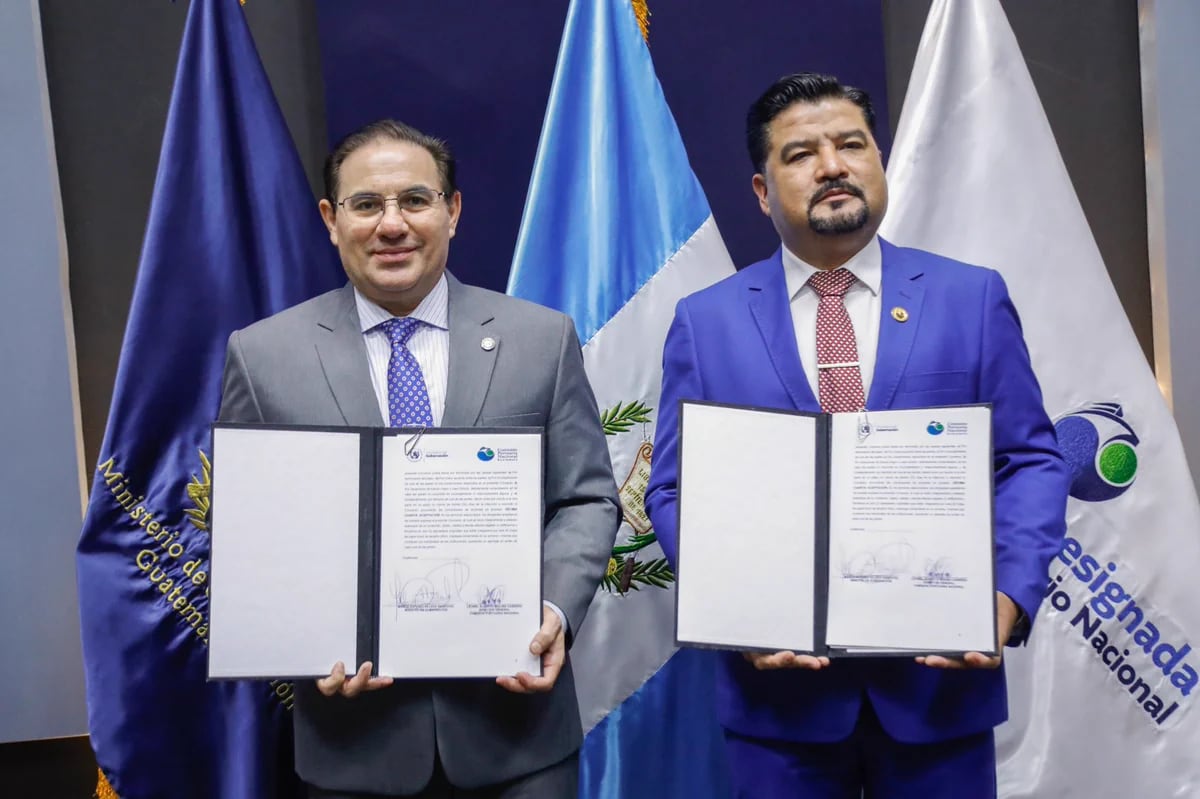
El Ministerio de Gobernación de Guatemala y la Comisión Portuaria Nacional (CPN) suscribieron un convenio marco de cooperación interinstitucional para robustecer los controles y las medidas de seguridad en las terminales portuarias frente a las operaciones del crimen organizado transnacional.
El acuerdo prevé mecanismos de coordinación, asistencia e intercambio de información entre ambas entidades. La meta es fortalecer la identificación de riesgos, anticipar amenazas y mejorar la respuesta estatal ante posibles actividades ilícitas que utilicen la infraestructura logística y comercial del país.
Guatemala tiene una ubicación estratégica para el comercio internacional y para su conexión con los mercados globales. El movimiento de mercancías a través de los puertos sostiene actividades productivas y comerciales, aunque también expone a las terminales a intentos de infiltración de estructuras dedicadas al narcotráfico, el contrabando y otros delitos transnacionales.
El ministro de Gobernación, Marco Antonio Villeda Sandoval, afirmó que el convenio permitirá ampliar las capacidades de análisis institucional y mejorar la actuación conjunta. “La seguridad portuaria y el desarrollo económico no son objetivos separados, sino responsabilidades que se complementan”, señaló durante el acto de firma.
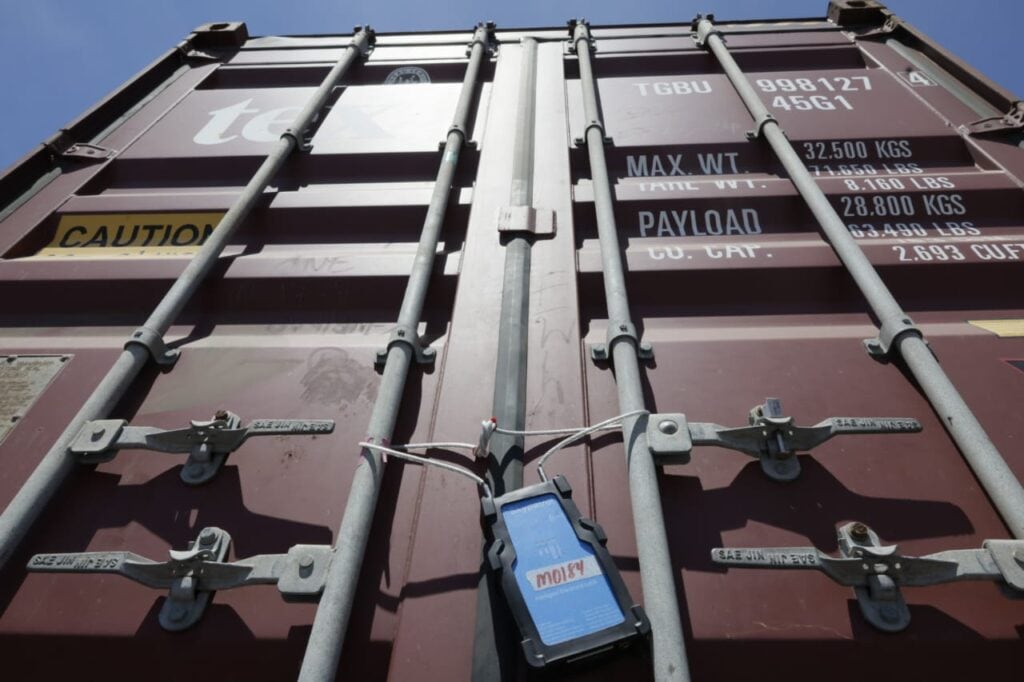
El convenio busca mejorar la trazabilidad de cargas e información
El titular de Gobernación sostuvo que el intercambio de datos, dentro de las competencias legales de cada institución, puede dar al Estado mayores herramientas para anticiparse a hechos delictivos.
A su criterio, un sistema de protección adecuado en los puertos resguarda las operaciones comerciales legítimas y fortalece la confianza de los actores de la cadena logística.
“Cuando las instituciones comparten información relevante, dentro del marco de sus competencias y con pleno respeto a la ley, el Estado adquiere una mayor capacidad para anticiparse”, expresó Villeda Sandoval.
El director general de la Comisión Portuaria Nacional, Leonel Molina, destacó la necesidad de consolidar la coordinación entre el sector público y el privado para reforzar los controles en las instalaciones portuarias. Según indicó, el instrumento se integra a la visión de seguridad fronteriza que impulsa el Ministerio de Gobernación.
Para Molina, la cooperación permitirá “fortalecer y generar esa coordinación público-privada” que se requiere para elevar los estándares de protección en las terminales. El acuerdo abarca tanto a empresas portuarias nacionales como a terminales privadas.
El viceministro de Antinarcóticos, Víctor Cruz Reynoso, sostuvo que el documento aportará respaldo legal y valor estratégico al intercambio de información. También remarcó que facilitará la trazabilidad de datos sobre las cargas y sobre todo aquello que ingrese a las instalaciones bajo control portuario.
Capacitación y equipos multisectoriales formarán parte de la estrategia
El convenio contempla el uso de mecanismos tecnológicos para compartir información, el desarrollo de programas de capacitación especializada y la conformación de equipos multisectoriales. Las instituciones también prevén la elaboración de estrategias conjuntas para reforzar la seguridad en las zonas portuarias del territorio guatemalteco.
La iniciativa se alinea con las disposiciones del Código Internacional para la Protección de los Buques y de las Instalaciones Portuarias (PBIP), que fija estándares para la protección de puertos y embarcaciones frente a amenazas a la seguridad.
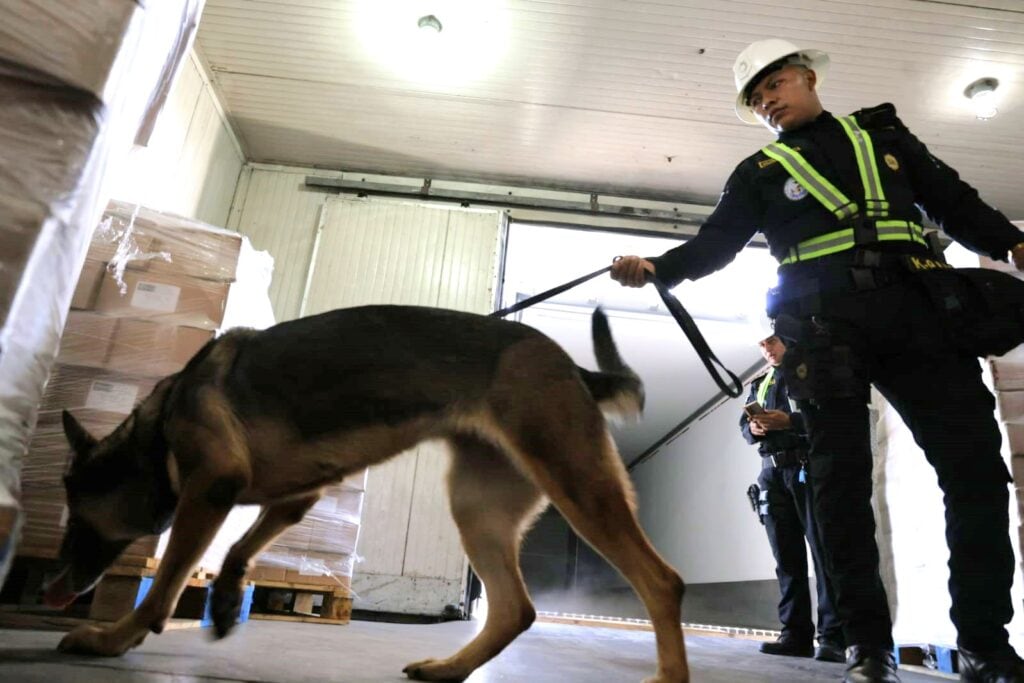
La firma del acuerdo coincide con un proceso de profesionalización de 20 agentes de la División de Puertos, Aeropuertos y Puestos Fronterizos, la Subdirección General de Análisis de Información Antinarcótica y la Subdirección General de Investigación Criminal de la Policía Nacional Civil (PNC).

Los policías participaron en el Programa de Formación contra el Contrabando, Seguridad Fronteriza y Antinarcóticos. La capacitación incluyó visitas a la Empresa Portuaria Quetzal, en Escuintla, y al Aeropuerto Internacional La Aurora, en la capital, donde conocieron procedimientos de inspección, controles multisectoriales y medidas para prevenir el ingreso de ilícitos.
Cruz Reynoso indicó que el personal especializado deberá transformar la información obtenida en inteligencia para reforzar la protección de puertos, aeropuertos y puestos fronterizos ante el crimen organizado transnacional.
Guatemala,Seguridad marítima,Crimen Organizado,Seguridad portuaria,Gobierno de Guatemala,Bernardo Arévalo,Marco Antonio Villeda,Ministerio de Gobernación
KENTON COUNTY, Ky. — Rep. Thomas Massie’s push to impeach War Secretary Pete Hegseth over the Iran war drew sharply different reactions from northern Kentucky residents interviewed by Digital.
The residents offered competing assessments of the outgoing Republican congressman and whether his latest confrontation with the Trump administration reflects principle or political payback.
Digital visited Covington, the population center of Massie’s district, along with Newport, Erlanger and other communities across the river from Cincinnati, to ask residents about their outgoing congressman and his efforts to impeach the Pentagon chief.
TRUMP DEFENDS PENTAGON CHIEF AS MASSIE TARGETS HIM: ‘HEGSETH SHOULD BE PRAISED, NOT IMPEACHED’
Richard Hassebrock, a Covington resident who said he has not always agreed with Massie, welcomed the impeachment effort.
«I’m not always a huge fan of Thomas Massie, but on this point I am,» Hassebrock told Digital.
Craig Cuskey, who works in the Covington area but lives just outside the bounds of Massie’s district in Louisville, described the impeachment push as «pure spite» and «petty,» saying his opinion of the congressman had deteriorated.
The contrasting reactions came after House Republicans voted to refer Massie’s impeachment effort against Hegseth to committee, adding another confrontation to the Kentucky Republican’s long-running disagreements with President Donald Trump and his party’s leadership.
Democrats poised to take the gavel in January, however, signaled they will likely take up Massie’s mantle and seek the Pentagon chief’s impeachment.
Hassebrock said he was disappointed by Massie’s electoral defeat and praised the congressman’s independence.
«He stands up for himself. He stands up to what he believes in. He’s got principles unlike 99% of the other congresspeople out there,» he said.
Rilla, a Fort Wright resident who provided only her first name, offered a more complicated assessment.
«I think he’s just trying to get back at Trump,» she said, adding she had been proud of Massie for standing up to the president and was disappointed by his defeat.
7 REPUBLICANS REBEL AGAINST TRUMP, VOTE WITH DEMS TO REIN IN IRAN WAR POWERS
Rilla said she opposed the Iran war, particularly the prospect of military action without congressional involvement.
«I don’t think anyone should just go in and declare war without Congress being a part of it,» she said.
Phil Wiseman, an Independence resident, said he doubted the impeachment effort would accomplish much, even as he questioned the administration’s military strategy.
«I don’t see a definable outcome,» Wiseman said. «And if you’re going to fight a war, there needs to be a definable outcome.»
Wiseman said he identifies as a «RINO,» a term often used derisively by conservatives for «Republican in name only,» and voted for an independent instead of supporting Rep.-elect Ed Gallrein, the Trump-endorsed Republican who defeated Massie in Kentucky’s primary earlier this year.
He said his family has discussed Hegseth, noting that his father was a 27-year military veteran and his son served in the Marine Corps.
«We all had the same discussion,» he said. «Who is advising him? Because this [war] is very ill-thought-out and not well-planned.»
Wiseman compared that aspect of the Iran conflict to how the U.S. previously became mired in Afghanistan.
«So, I seriously question the military advisors that are giving them this advice, or maybe they gave them contrary advice, and it was ignored,» he said.
Anthony Tuemler of Covington supported impeachment and accused Hegseth of violating the Constitution through his conduct of the war.
Tuemler’s assessment of Massie was similarly mixed. Although he said he was glad the congressman was leaving office, he credited Massie with speaking up when he believed it was necessary.
«I’m glad he’s gone,» Tuemler said of Massie. «But the only thing I’m distressed about or sorry about is, like, when it came time to say the right things, Massie was the one who did it.»
SIGN UP TO GET THE POLITICS NEWSLETTER
Randall Thompson of Newport, dressed in a military uniform for Veterans Day as he walked with his children near Covington’s Mainstrasse Village corridor, said he supports the defense secretary and pointed to their shared military experience in the Middle East.
«I support the troops and Pete Hegseth,» Thompson said, adding off-camera that he was in the same area of Iraq as the former host when they were both deployed.
Cuskey also defended Hegseth, saying he had initially been skeptical of his nomination but had grown more impressed with his performance.
«I think, for his background, he’s done a remarkable job,» Cuskey said, arguing that Hegseth was carrying out directives from the commander in chief.
House Minority Leader Hakeem Jeffries, D-N.Y., has voiced support for impeaching the Pentagon chief, while other Democrats have signaled plans to revisit his conduct when they take control of Congress in January.
Some lawmakers are also eyeing investigations and potential impeachment proceedings involving other senior Trump administration officials, including Secretary of State Marco Rubio, Commerce Secretary Howard Lutnick, White House chief of staff Stephen Miller and border czar Tom Homan, setting the stage for a broader confrontation between congressional Democrats and the White House.
pete hegseth, secretary of defense, defense, kentucky, house of representatives, politics, midterm elections

Los Pumas homenajearon a Diego Maradona con una camiseta especial ante Italia

El kirchnerismo y el PRO cuestionan la suspensión de las PASO y ponen en duda su aprobación en el Congreso

Araceli González recordó cómo su pelo corto le abrió las puertas del mundo de la actuación: «Me quería matar»

Blue wave meets ballot box surprises as voters split on abortion, voter ID and billionaire taxes

Robaron a punta de pistola en Mataderos y los atraparon: el insólito detalle que permitió identificarlos

León XIV visitó la cárcel de Devoto y llamó a los presos a refugiarse en Dios: “Es momento de reiniciar sus vidas”

Escándalo íntimo en el cumpleaños de Emilia Mernes: un número uno, el mejor amigo, la novia del mejor amigo y una confesión que hizo estallar todo: «Me tocó y…»

Banco Santander anunció aumento de precio en sus paquetes y esto valdrá desde enero

El Gobierno cree que la visita del Papa logró desactivar las tensiones internas y se prepara para una semana clave en el Congreso

La Justicia investiga los viajes de Abel Furlán y la “vecina” de Cristina Kirchner, y apunta a las coincidencias

 ECONOMIA3 días ago
Banco Santander anunció aumento de precio en sus paquetes y esto valdrá desde enero
- DEPORTE3 días ago
Así está el mano a mano entre Estudiantes de La Plata e Independiente Rivadavia
- POLITICA3 días ago
Karina Milei y Diego Santilli aprovecharon la visita a Corrientes para tratar la eliminación de las PASO con el gobernador