
INTERNACIONAL
Where Trump, GOP vs Democrats redistricting battle heads next in wake of key court rulings

NEWYou can now listen to Fox News articles!
President Donald Trump and Republicans are hailing the blockbuster ruling by the Virginia Supreme Court to strike down the state’s congressional redistricting ballot measure, which was a major setback for Democrats in the battle for the U.S. House majority.
«Huge win for the Republican Party,» the president proclaimed in a social media post on Friday minutes after Virginia’s highest court struck down the referendum passed by voters last month.
The new map drawn by the Virginia legislature would have given Democrats four more left-leaning House districts in the Commonwealth ahead of this year’s midterm elections, when Republicans will be defending their razor-thin majority in the chamber.
The Virginia ruling, along with the recent opinion by the conservative majority on the Supreme Court to slash a key Voting Rights Act protection, is giving Trump and the GOP a major boost in their ongoing political fight with Democrats to redraw congressional district maps ahead of the midterms. At stake in this nationwide redistricting showdown is which party will control the House during the final two years of Trump’s second term in the White House.
BLOCKBUSTER RULING: VIRGINIA SUPREME COURT STRIKES DOWN DEMOCRAT-BACKED CONGRESSIONAL MAP
The Virginia redistricting map that was approved narrowly by voters in a special election last month was struck down on Friday by the Virginia Supreme Court (Virginia Legislative Information System)
In Virginia, the decision means the map used in the 2024 elections will stay in place for the 2026 ballot box showdowns. Democrats currently control the state’s U.S. House delegation by a 6-5 margin. The now overturned map could have resulted in a 10-1 advantage for Democrats in the blue-leaning but competitive state.
In the wake of their latest legal setback, House Democratic Leader Rep. Hakeem Jeffries of New York said, «We are exploring all options to overturn this shocking decision.»
And the House minority leader vowed, «No matter what it takes, House Democrats will win in November so we can help rescue this nation from the extremism being unleashed by Donald Trump and Republicans.»
But the 2026 redistricting wars are far from over, and the political landscape may get even rougher for Democrats going forward.
Here’s where things stand.
Louisiana
The Supreme Court’s decision reshaped the landmark 1965 Voting Rights Act by ruling that race should not dictate the redrawing of legislative district maps. And the opinion specifically ruled that Louisiana’s congressional district map was unconstitutional.
Last week, the Supreme Court said that its decision declaring Louisiana’s map unconstitutional should go into effect immediately, breaking with its usual procedure of waiting roughly a month before its opinions become official.
That cleared the way for the GOP-controlled state legislature to begin the process of redrawing the map, and hearings got underway on Friday.
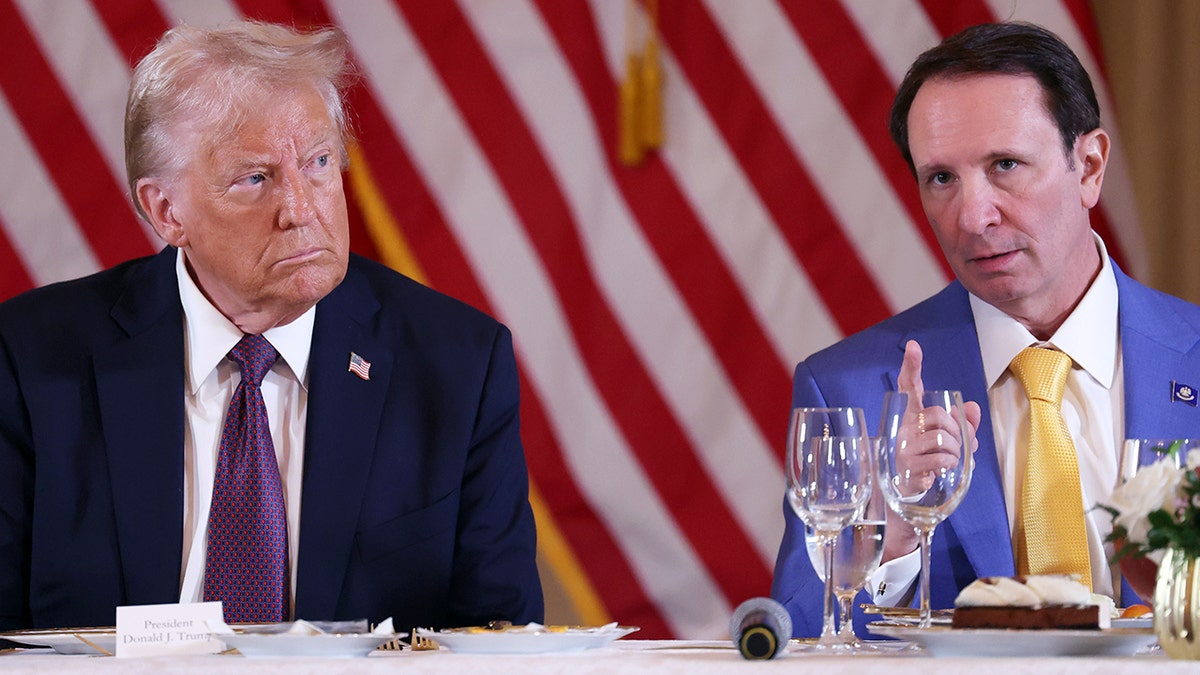
Republican Gov. Jeff Landry of Louisiana, right, a major ally of President Donald Trump, delayed his state’s U.S. House primaries as the GOP-dominated legislature redraws Louisiana’s congressional district map (Scott Olson/Getty Images)
Republican Gov. Jeff Landry, a top Trump ally, took swift action in the immediate aftermath of the high court’s ruling, when he delayed the May 16 U.S. House primary elections in Louisiana.
Louisiana Republicans are aiming to erase one or both of the two Black-majority House seats, which are represented by Democrats.
Tennessee
Republicans in Tennessee moved even faster.
The GOP-dominated Tennessee legislature on Thursday quickly adopted a new map that would eliminate the only Democrat-controlled congressional district in the state, and would likely give Republicans control of all nine districts.
TENN GOV LEE CALLS SPECIAL SESSION TO REDRAW HOUSE MAP IN GOP’S FAVOR 9-0
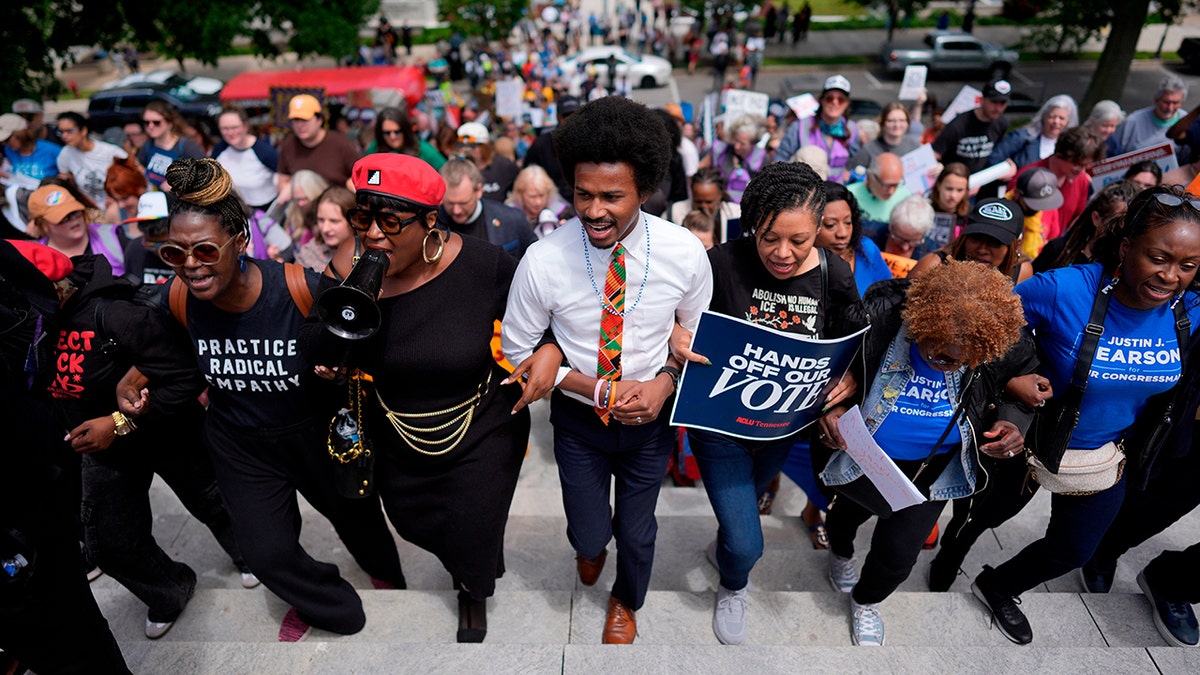
Rep. Justin J. Pearson, D-Memphis, center, marches with protesters before a special session of the state legislature to redraw U.S. Congressional voting maps, in Nashville, Tenn., Tuesday, May 5, 2026. (George Walker IV/AP Photo)
GOP Gov. Bill Lee quickly signed the new maps into law.
Democratic Rep. Steve Cohen, who represents the majority Black district that’s being carved up, vowed legal action.
«Trump knows he HAS TO rig the game to keep his majority in November. And the TN GOP was willing to go along with it. It’s shameful,» Cohen wrote on social media. «Next stop is the courts.»
Alabama
Lawmakers in the Alabama legislature, where the GOP holds a supermajority in both chambers, are advancing legislation as they met this past week in a special session focused on redistricting. The new maps may result in eliminating one or both of the state’s two blue-leaning U.S. House districts.
The special session was called by Republican Gov. Kay Ivey.
But any new map passed by Alabama lawmakers will need to be greenlit by the Supreme Court. That’s because Alabama is currently prohibited by the high court from redistricting until 2030. It’s unclear if the court will lift its injunction.
Protests rocked both the Alabama and Tennessee legislatures as Republican lawmakers pushed forward the new maps.
South Carolina
In South Carolina, the GOP-controlled legislature returns in special session on Monday, as Republican lawmakers consider a new map that could put longtime Rep. Jim Clyburn, the only Democrat in the state’s seven-person House delegation, out of a job.
Georgia
Republicans in Georgia are divided over GOP Gov. Brian Kemp of Georgia’s decision not to call state lawmakers back into a special session on redistricting.
The state’s primary is on May 19 and early voting is already underway in Georgia.
Florida
Meanwhile, Republican Gov. Ron DeSantis on Monday signed a bill passed last week by the GOP-dominated state legislature that redraws the red-leaning state’s congressional districts, adding four more right-leaning seats by eliminating districts currently controlled by Democrats.
Republicans currently control Florida’s U.S. House delegation by a 20-8 margin.
How we got here
The battle over the maps ignited last spring when Trump, aiming to prevent what happened during his first term in the White House when Democrats reclaimed the House majority in the 2018 midterms, first floated the idea of rare, but not unheard of, mid-decade congressional redistricting.
The mission was simple: redraw congressional district maps in red states to pad the GOP’s fragile House majority to keep control of the chamber in the midterms, when the party in power traditionally faces political headwinds and loses seats.
When asked by reporters last summer about his plan to add Republican-leaning House seats across the country, the president said, «Texas will be the biggest one. And that’ll be five.»
Republican Gov. Greg Abbott of Texas called a special session of the GOP-dominated state legislature to pass the new map.
But Democratic state lawmakers, who broke quorum for two weeks as they fled Texas in a bid to delay the passage of the redistricting bill, energized Democrats across the country. Among those leading the fight against Trump’s redistricting was Democratic Gov. Gavin Newsom of California.
California voters in November overwhelmingly passed Proposition 50, a ballot initiative that temporarily sidetracked the left-leaning state’s nonpartisan redistricting commission and returned the power to draw the congressional maps to the Democratic-dominated legislature.
That led to five more Democratic-leaning congressional districts in California, which aimed to counter the move by Texas to redraw their maps.

California Gov. Gavin Newsom speaks during an election night press conference at a California Democratic Party office in Sacramento on Nov. 4, 2025. (Godofredo A. Vásquez/AP Photo)
But the fight quickly spread beyond Texas and California.
Republican-controlled Missouri and Ohio and swing state North Carolina, where the GOP dominates the legislature, drew new maps as part of the president’s push.
CLICK HERE TO DOWNLOAD THE FOX NEWS APP
But in blows to Republicans, a Utah district judge late last year rejected a congressional district map drawn by the state’s GOP-dominated legislature and instead approved an alternate that will create a Democratic-leaning district ahead of the midterms.
And Republicans in Indiana’s Senate in December defied Trump, shooting down a redistricting bill that had passed the state House.
Facing the president’s wrath, five of those Republican state senators in Indiana were ousted by Trump-backed challengers in last week’s GOP primary.
midterm elections, congress, republicans elections, democrats, house of representatives, donald trump, elections









INTERNACIONAL
El Partido Liberal de Brasil postuló a la ex primera dama Michelle Bolsonaro como candidata al Senado por el Distrito Federal

El Partido Liberal (PL) de Brasil nominó el domingo a la ex primera dama Michelle Bolsonaro como candidata al Senado por el Distrito Federal, pese a la disputa pública que mantuvo en las últimas semanas con su hijastro Flávio Bolsonaro, candidato presidencial de la fuerza para las elecciones de octubre. La decisión llegó después de que ambos protagonizaran un enfrentamiento por el liderazgo del espacio conservador y tras una disculpa pública del senador.
Michelle Bolsonaro no asistió al acto partidario celebrado en Brasilia porque permaneció hospitalizada desde el sábado por un fuerte dolor de cabeza. El centro médico informó que recibió el alta cuando comenzaba el evento. En su lugar habló su hermano, Diego Torres, quien leyó el discurso que la ex primera dama tenía previsto pronunciar.
“Acepto este desafío”, expresó Torres en nombre de Michelle Bolsonaro.
Durante el mismo acto, Flávio Bolsonaro se refirió a la ex primera dama al destacar la necesidad de mantener la unidad del espacio político. “Vamos a rescatar la democracia, junto con Michelle Bolsonaro”, afirmó el senador.
La nominación se produjo después de un conflicto familiar y político que se hizo público a fines de junio. Michelle Bolsonaro acusó entonces a su hijastro de haberle faltado el respeto durante una conversación telefónica sobre las alianzas electorales del partido.
En un video difundido en sus redes sociales, la ex primera dama sostuvo que recibió “una puñalada” y relató el episodio. “Fue muy grosero, irrespetuoso y me trató mal por teléfono. Y yo no le había hecho nada”, afirmó. Michelle también sostuvo que Flávio Bolsonaro le manifestó que ella “no entendía nada de política”, un episodio que profundizó las diferencias entre ambos.

La disputa representó un obstáculo para la estrategia electoral del Partido Liberal debido a la influencia política de Michelle Bolsonaro entre el electorado femenino y los sectores evangélicos.
Antes de recibir formalmente la candidatura presidencial del PL, Flávio Bolsonaro ofreció una disculpa pública a su madrastra. Michelle aceptó ese gesto, lo que abrió paso a una nueva etapa en la relación entre ambos dirigentes.
En su momento, el conflicto había derivado en cambios dentro de la estructura partidaria. El 9 de julio, Michelle Bolsonaro anunció la creación del movimiento político “Imparables MB”, pocos días después de dejar la presidencia del ala femenina del Partido Liberal en medio del enfrentamiento con Flávio Bolsonaro.
La ex primera dama comunicó la decisión a través de las redes sociales del PL Mujer. “En razón del cierre de los trabajos y la consiguiente desmantelación del gabinete de la presidencia nacional del PL Mujer, a partir de la próxima semana este perfil pasará a ser administrado por otro equipo, con metodología y agenda propias”, publicó.
De acuerdo con el diario Correio Braziliense, personas cercanas a Michelle Bolsonaro manifestaron su malestar por la forma en que Flávio Bolsonaro concentró las decisiones estratégicas del partido sin alinearlas con otros integrantes del entorno del ex presidente Jair Bolsonaro. Esos colaboradores interpretaron la creación de “Imparables MB” como una herramienta para preservar el capital político de la ex primera dama y mantener una estructura de movilización propia dentro del espacio conservador.

La disputa interna coincidió con un momento de reorganización del bolsonarismo. Jair Bolsonaro permanece bajo arresto domiciliario por su presunta participación en un intento de golpe de Estado tras el final de su mandato entre 2019 y 2022. En ese contexto, Michelle Bolsonaro y Flávio Bolsonaro disputaron espacios de influencia dentro del movimiento conservador.
Flávio Bolsonaro enfrentará en octubre al presidente Luiz Inácio Lula da Silva, quien buscará un cuarto mandato no consecutivo y llega a la campaña con un crecimiento en las últimas semanas.
Según la última encuesta de Datafolha, Lula reúne el 41% de la intención de voto para la primera vuelta, frente al 31% de Flávio Bolsonaro. En un eventual balotaje, el sondeo otorga 47% al actual mandatario y 43% al senador.
(Con información de AFP)
South America / Central America,Government / Politics,Civil Unrest
INTERNACIONAL
El Secretario de Estado del Vaticano, cardenal Pietro Parolin, llama en Guatemala a combatir la desigualdad y la corrupción

El secretario de Estado del Vaticano, cardenal Pietro Parolin, llamó este domingo Guatemala a combatir las injusticias causadas por las desigualdades y la corrupción durante una misa en la Catedral Metropolitana.
Parolin acudió a Guatemala durante una visita marcada por la conmemoración de los 90 años de relaciones diplomáticas entre el Vaticano y la República de Guatemala.
Su presencia en el país inició con una Santa Misa oficiada en la Catedral Metropolitana, donde estuvieron presentes el presidente guatemalteco Bernardo Arévalo, la vicepresidenta Karin Herrera y otros funcionarios del Estado.
Al inicio de su mensaje, el secretario de Estado dijo que llevaba “el afectuoso saludo” del Papa León XIV y su “paternal bendición” para el pueblo guatemalteco.
Parolin centró su reflexión en la obligación cristiana de responder al sufrimiento ajeno. Dijo que el mandato evangélico “Denles ustedes de comer” sigue vigente frente a la pobreza, la soledad, la injusticia y el sufrimiento, que a menudo son consecuencia de la corrupción.
“Esta realidad humana es donde la Iglesia encuentra su verdadera vocación: Llevar el pan de la palabra y el pan de la Eucaristía a los hombres y mujeres de todos los tiempos y lugares, siguiendo el mandato: ‘Denles ustedes de comer’… La invitación exigente de Dios nos apremia a no permanecer indiferentes ante las necesidades de nuestros semejantes… Frente a las necesidades del mundo: la pobreza, la soledad, la injusticia, el sufrimiento, a menudo consecuencia de la corrupción… Jesús nos invita a hacer lo que podemos”, manifestó durante su mensaje eclesiástico.
A partir de esa idea, afirmó que incluso lo poco que una persona puede ofrecer —su tiempo, sus capacidades, su generosidad o sus limitaciones— puede multiplicarse en beneficio de muchos. “Es necesario combatir la desigualdad”, subrayó.
El cardenal explicó que su presencia en el país responde a dos conmemoraciones: los 90 años del establecimiento de relaciones diplomáticas entre la Santa Sede y Guatemala y los 400 años del nacimiento del hermano Pedro. Añadió que esos vínculos nacen de una diplomacia que el Papa entiende no como un acto político, sino como una expresión de la catolicidad de la Iglesia al servicio de la humanidad.
“Se podría decir que el amor de Dios está también en el origen de las relaciones diplomáticas que la Santa Sede teje entre los pueblos, así como sucedió entre la Santa Sede y Guatemala hace ahora 90 años”, expresó Parolin. En la misma línea, afirmó que la misión de la Iglesia no busca privilegios, sino intensificar su acción evangélica y pastoral.

El viaje comenzó el sábado 1 de agosto, cuando Parolin fue recibido en el Aeropuerto Internacional La Aurora por la vicecanciller María Luisa Ramírez, en representación del Ministerio de Relaciones Exteriores.
La visita incluye además preparativos para la beatificación del fraile franciscano Augusto Rafael Ramírez Monasterio, informó la Conferencia Episcopal de Guatemala. El proceso fue autorizado por el papa León XIV el 22 de enero de este año, después de que obispos guatemaltecos entregaran a Juan Pablo II un listado de mártires para su consideración.
El portal de noticias del Vaticano, citado por la publicación, señala que Ramírez Monasterio fue en 1978 guardián y párroco de San Francisco el Grande, en Antigua Guatemala, y que se dedicó a la vida pastoral de la parroquia y a los pobres e indefensos en medio de la guerra civil. Fue capturado por militares y sometido nuevamente a torturas antes de su asesinato, ocurrido el 7 de noviembre de 1983 en el puente El Incienso del anillo Periférico, de la Ciudad de Guatemala.
Durante la misa, Parolin también mencionó a quienes entregaron su vida por Cristo y citó entre ellos al beato Tullio Maruzzo y a fray Augusto Rafael. En ese marco, sostuvo que la Iglesia está llamada a no cerrar ningún camino que pueda conducir a una sociedad más justa, fraterna y solidaria, y a romper las dinámicas del desprecio, la indiferencia y las injusticias provocadas por la desigualdad y la corrupción.

El secretario de Estado añadió que hace falta una fidelidad renovada al Evangelio y al cerrar su intervención, aseguró que Guatemala “podrá contar siempre con la colaboración y el compromiso de la Santa Sede” para que cada habitante del país pueda vivir en libertad y trabajar por la paz.
Además de la Santa Misa, el Cardenal prevé, la Secretaría de Estado del Vaticano informó que Parolin realizará las siguientes actividades:
- Visita al hogar de ancianos Madre Teresa de Calcuta
- Asistencia al Santuario del Santo Hermano Pedro: en la ciudad de Antigua Guatemala para conocer los preparativos para la beatificación del Padre Ramírez Monasterio que se llevará a cabo el 7 de noviembre de 2026.
Lunes 3 de agosto
- Reunión con el presidente de Guatemala Bernardo Arévalo
- Reunión con representantes del pueblo indígena
- Reunión con el Ministro de Relaciones Exteriores, Carlos Ramiro Martínez
- Reunión con el Cuerpo Diplomático
Martes 4 de agosto
- Encuentro con obispos y sacerdotes, que se llevará a cabo del 3 al 5 de agosto.
- Celebración eucarística en el Santuario Arquidiocesano de Adoración Perpetua, ubicado en el municipio de Mixco.
Guatemala,Pietro Parolin,Cardenal,Vaticano,Bernardo Arévalo,Santa Misa,Eucatistía
INTERNACIONAL
Ramaswamy outlines key contrasts with Dem opponent less than 100 days out from key gubernatorial election
NEWYou can now listen to Fox News articles!
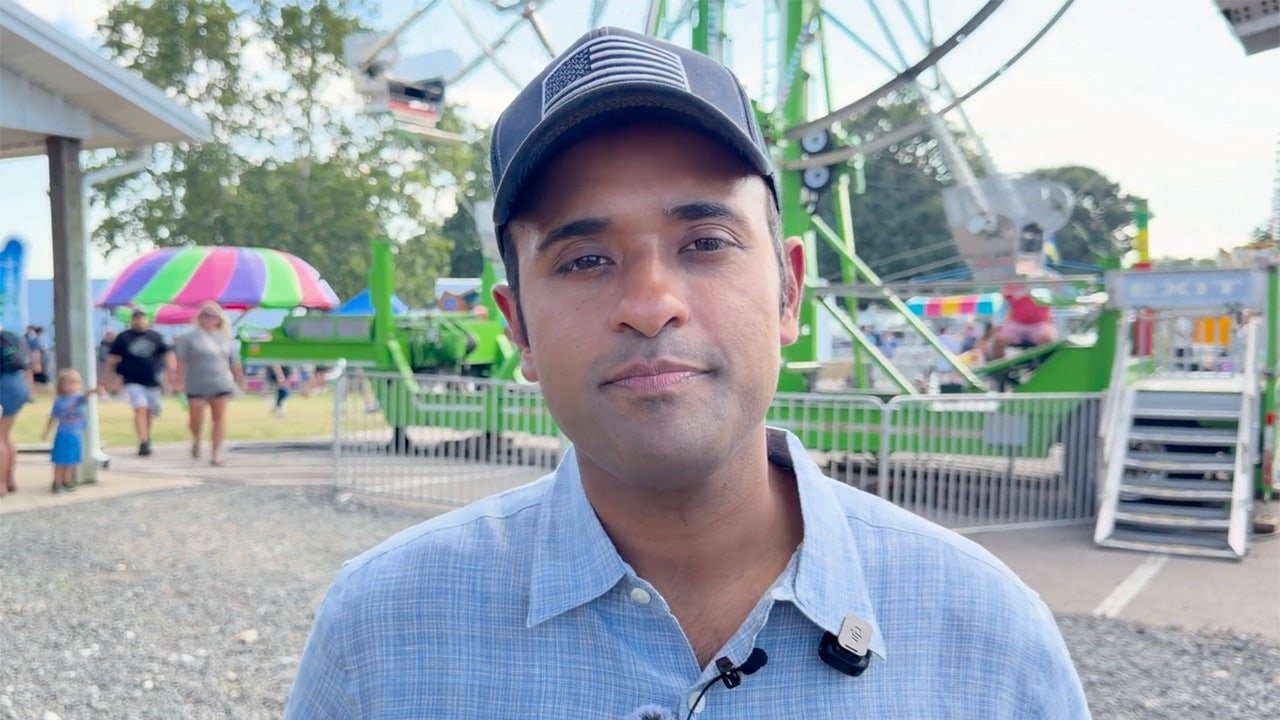
HAMILTON, OHIO — Ohio Republican gubernatorial candidate Vivek Ramaswamy gave Fox News Digital an update on his campaign roughly 100 days from the midterms and said the contrast between him and his opponent was on display at Dr. Anthony Fauci’s controversial Senate hearing this week.
«I think if every person in Ohio votes for the candidate who’s going to bring high-paying jobs most quickly to our state, we’re going to win in a decisive victory,» Ramaswamy said at the Butler County Fair Wednesday after speaking to an enthusiastic crowd of roughly 100 people.
«And my pledge is really simple: lower costs, that’s lower electric bills, lower property taxes and lower healthcare expenses, bigger paychecks, more high-paying jobs in the state and better schools by bringing standards back to public education. And one of the things I’ve seen is that that’s a message that isn’t just limited to Republicans. It’s resonating with voters across the state.»
One of the most talked about issues at the fair, including two attendees who spoke to Fox News Digital, was property taxes and which candidate would best address that growing and often disruptive expense.
MORENO UNLOADS ON FAUCI AFTER SENATE HEARING, CALLS HIM DEMOCRATS’ ‘HERO’ OVER PANDEMIC POLICIES
Republican gubernatorial candidate Vivek Ramaswamy told Fox News Digital about his plans to cut taxes and create jobs while criticizing Democratic rival Amy Acton’s COVID-era leadership. (Fox News Digital/Andrew Mark Miller)
«The top issues that people are struggling with is, No. 1, the property tax burden. It’s gotten way too high,» Ramaswamy said when asked what he’s hearing most from voters in terms of what they are most concerned about.
«We’ve laid out a practical plan to give the biggest property tax relief package Ohio’s ever seen. No. 2 is the electric bills, which have gone up way too quickly. It more than doubled in many parts of the state. Producing more energy and ending load forecasting inflation, those are things that a governor actually can do. And that’s something that I’m gonna lead with.»
Ramaswamy added that the third issue he hears about most from voters is healthcare costs and the overall cost of living.
«The No. 1 way I’m going to be able to address that is by raising take-home pay, both by bringing more high-paying jobs to the state, but also by allowing Ohioans to keep more of what they earn by becoming a zero-income tax state, just like Texas and Florida and Tennessee. Ohio can be that state, and I’m confident I’ll be able to put the state on a path to get there starting next year.»
RAMASWAMY: MEDICAID FRAUD RAISES HEALTHCARE COSTS FOR HARDWORKING OHIOANS
Amy Acton, former director of the Ohio Department of Health and a Democratic gubernatorial candidate, meets with local residents while campaigning at Bottoms Up Coffee in Columbus, Ohio, April 6, 2026. (Stephen Zenner/Bloomberg via Getty Images)
Fauci made headlines this week after invoking the Fifth Amendment over 100 times during a Senate hearing on his handling of the coronavirus, a moment Ramaswamy told the crowd and Fox News Digital that relates to his opponent Dr. Amy Acton’s time as director of the Ohio Department of Health from 2019 to 2020.
Ramaswamy pointed to a comment from Acton, which Fox News Digital reported on earlier this month, claiming the COVID mortality rate was at 50% when in reality it was significantly lower. Acton’s campaign responded by saying she had been referring to death rates in hospitals and that she «worked to keep Ohioans safe.»
«I think people look at that and say, ‘Is that somebody who has the kind of character that has the capacity to deal with data and make objective decisions and lead?’» Ramaswamy explained. «And while those questions are playing out for Anthony Fauci at the national level, I think they’re really resonating right here in Ohio.
«You could walk around, and you could even see some of the signs at this fair that are protesting the decisions she made because she actually wanted Ohio to shut down county fairs while still allowing BLM protests to rage wild on the streets at the same time in the name of science. That’s not objective decision-making.»
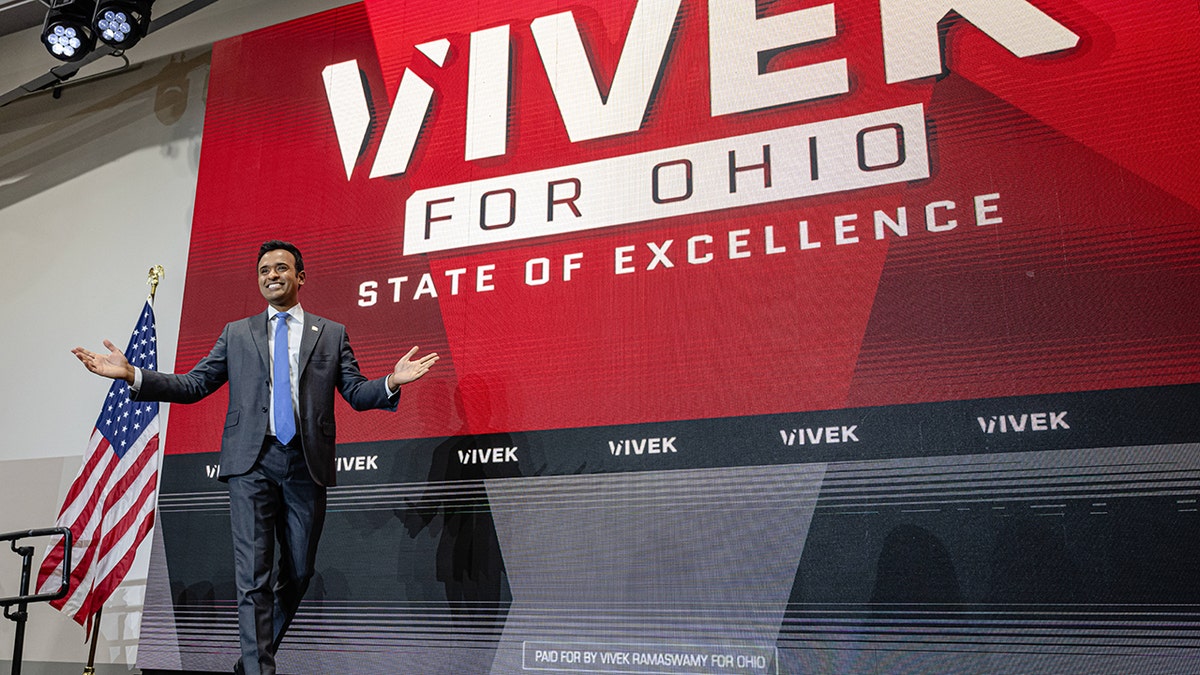
Vivek Ramaswamy steps on stage at CTL Aerospace on Feb. 24, 2025, in Cincinnati, Ohio. Ramaswamy launched his Ohio gubernatorial campaign during the event. (Jon Cherry/Getty Images)
Ramaswamy is making the case that Ohioans are «rejecting that mentality» in favor of «common sense.»
In a statement to Fox News Digital, Acton campaign spokeswoman Addie Bullock labeled Ramaswamy an «out-of-touch billionaire» who is «pushing tax scams that would raise costs on working families.»
«While Dr. Amy Acton is laser-focused on lowering costs for Ohio families, Vivek Ramaswamy has made it clear he doesn’t care about Ohioans; he only cares about himself and enriching his billionaire buddies,» Bullock said.
Polling suggests the race between Ramaswamy and Acton will be a tight one, with the Real Clear Politics’ average of polling showing a dead heat despite President Trump winning Ohio by commanding margins in the past three presidential election cycles, including by 12 points over former Vice President Kamala Harris in 2024.
vivek ramaswamy, gubernatorial, state and local, politics, ohio, midterm elections

Locura por Vozinha en Chile: el video de la multitudinaria bienvenida en el aeropuerto antes de sumarse a su nuevo club

El mensaje de amor de Gimena Accardi a su novio Seven Kayne por sus 27 años: “Feliz cumple, baby”

Solo en Off: Masterchef, la cuarta “opción” de Patricia Bullrich para 2027

Elecciones en Santiago del Estero: con el 66% de los votos, el Frente Cívico de Zamora ganó en todos los municipios

El Partido Liberal de Brasil postuló a la ex primera dama Michelle Bolsonaro como candidata al Senado por el Distrito Federal

Vélez Sarsfield vs Independiente: formaciones, hora y dónde ver por tv

“Vamos a acelerar con todo”: el objetivo del Gobierno por las reformas y la agenda electoral de cara al 2027

Trump admin invokes 30-year dormant terror court as it seeks to deport Afghan woman tied to Election Day plot

“Casta”, “parásito” y “sea democrático”: fuerte respuesta de Victoria Villarruel a Diego Santilli

Reelecciones indefinidas: el oficialismo bonaerense niega que busque ampliar la Legislatura como parte de una reforma política para beneficiar a los intendentes
-
 POLITICA17 horas ago
“Vamos a acelerar con todo”: el objetivo del Gobierno por las reformas y la agenda electoral de cara al 2027
-
 POLITICA2 días ago
“Casta”, “parásito” y “sea democrático”: fuerte respuesta de Victoria Villarruel a Diego Santilli
-
 POLITICA5 horas ago
Reelecciones indefinidas: el oficialismo bonaerense niega que busque ampliar la Legislatura como parte de una reforma política para beneficiar a los intendentes