
INTERNACIONAL
“Yo era un niño cuidando niños”: el presentador salvadoreño Steeven Lara relata cómo asumió el cuidado de sus hermanos tras la muerte de su madre


A los siete años, Steeven Lara aprendió lo que muchos adultos nunca llegan a entender: el peso de cuidar a otros. Su madre, el único pilar de la familia, salía temprano a trabajar y le confiaba cincuenta colones—equivalentes a seis dólares—para que él, siendo un niño, administrara la comida y el día de sus hermanos.
“Mi mamá me decía: ‘Steeven, voy a ir a trabajar. Te dejo acá cincuenta colones para que puedas darle de comer a tus hermanos’”. Mientras los demás jugaban, Steeven cocinaba frijoles y café, barría la casa y vigilaba el reloj esperando a que su madre regresara agotada, pero siempre luchadora.
Así, entre rutinas de supervivencia y la sombra de un padre ausente, creció Steeven. La vida le impuso responsabilidades antes de tiempo. A los catorce años, después de conseguir un permiso especial para trabajar en un restaurante de comida rápida, pensó que al fin podría ayudar a su madre a mejorar la situación en casa.
Sin embargo, tras tres meses de recibir su primer salario, su madre y su padrastro murieron en un accidente. “Nuestra vida ahí se derrumbó. Yo era un niño cuidando niños”, recuerda. De golpe, el adolescente se encontró solo, a cargo de tres hermanos que todavía creían en la magia y los juegos.


La familia extendida, lejos de ser refugio, se convirtió en un escenario de disputas y ausencia. Nadie quiso asumir la tutela ni ofrecer un hogar. Su padre, desde Estados Unidos, mantuvo la distancia y el recuerdo de un abandono que marcó a todos. Una de sus hermanas fue llevada a Estados Unidos siendo aún pequeña y allí vivió años de maltrato antes de lograr independizarse y formar su propia familia.
Con el tiempo contado y los recursos siempre al límite, Steeven organizaba los días como un pequeño adulto. Preparaba desayunos, inventaba meriendas con lo poco que había en la despensa y calculaba cada dólar para que sus hermanos pudieran ir a la escuela en microbús y no les faltara lo esencial.
Si el dinero no alcanzaba, recurría a la tienda del vecino y pedía fiado hasta cien dólares para cubrir la comida o algún antojo de sus hermanos, confiando en que el siguiente pago del restaurante le permitiría saldar la deuda. “Yo hacía horas extras y hasta días que no me tocaba ir a trabajar para sacar más dinero y que me alcanzara para que ellos pudieran estudiar, que no nos faltara la comida”.

El trabajo en el restaurante era exigente, pero también era su salvación. Ciento ochenta dólares quincenales, más lo que lograba reunir en propinas y horas extra, eran el presupuesto familiar. Había días en que las lágrimas le ganaban mientras atendía una mesa o recordaba que ya no podría compartir los triunfos ni las tristezas con su madre. “Yo lloraba y decía: ‘No es justo’. Cuando yo empezaba a trabajar y que iba a ser el apoyo para mi mamá, más lo que mi mamá ganaba íbamos a tener una mejor vida. Y hoy ya no puedo compartir con mi mamá tantas cosas”.
Aun así, nunca dejó de estudiar. Terminó el bachillerato, se formó como periodista y, con esfuerzo, llegó a ser presentador de televisión en El Salvador. Durante años, combinó el trabajo en los medios con el cuidado de sus hermanos y la administración del hogar.


El duelo por la pérdida de sus padres se vio ensombrecido por nuevas batallas: la disputa por la herencia de la casa familiar. Tíos y primos, lejos de ofrecer ayuda, exigieron derechos sobre una vivienda humilde que era lo único seguro para cuatro niños huérfanos. “Siempre hemos sido abusados de parte de la familia de mi mamá, por tíos, primos, hermanos y padres abusivos. Hasta lucharon por querernos quitar la única herencia que mi mamá nos dejó, que era la casa”.
La convivencia fue dura y, a menudo, marcada por el abuso y la incomprensión. Solo algunos tíos se mantuvieron presentes, aunque de forma esporádica. “De los hermanos de mi mamá sí tenemos un tío que es muy bueno, que siempre ha estado pendiente, pero con cositas, porque él también tiene su familia”.
A pesar de la adversidad, Steeven nunca dejó que sus hermanos se sintieran menos. Trabajó jornadas extendidas, organizó los gastos para que no faltara comida ni educación y se aseguró de que todos pudieran terminar sus estudios. “Siempre vivimos solos. Siempre vivimos solos”, afirma. Lo hizo con la convicción de que, aunque el dolor fuera inevitable, la salida siempre era posible si se mantenían unidos y fieles a los valores que su madre les había enseñado. “El esfuerzo y los consejos que mi mamá nos dio en vida, eso traté siempre de replicar”.
La hermana mayor de Steeven fue llevada a Estados Unidos siendo aún una niña. Allí pasó por situaciones difíciles, pero logró independizarse, convertirse en policía y formar su propia familia. Más adelante, la violencia y la inseguridad en Soyapango impulsaron a los dos hermanos menores a buscar un futuro lejos de El Salvador.


La llegada a España fue un salto al vacío: viajaron sin contactos, sin familia ni amigos que los esperaran. Se instalaron en una habitación alquilada y sobrevivieron gracias al apoyo económico que su hermana en Estados Unidos les enviaba cada mes para cubrir lo básico: alquiler, comida y algo de ropa. “Sin ningún contacto, o sea, sin ningún contacto de nada”, recuerda Steeven sobre esa etapa. Para poder trabajar y adaptarse, recurrieron a cursos de formación y a las ayudas de organizaciones para migrantes, aprendiendo a moverse en un país nuevo donde todo era desconocido.
Steeven permaneció en El Salvador unos años más, apoyando a sus hermanos a distancia hasta que finalmente pudo reunirse con ellos en España gracias al arraigo familiar. La hermana menor, que llegó a España siendo adolescente, logró establecerse y ahora dirige un negocio junto a su pareja. El otro hermano también vive en España y trabaja en una empresa privada tras completar varios cursos de formación. Steeven, por su parte, se mantiene cerca de ellos, trabajando en línea para una empresa de comunicaciones y gestionando sus redes sociales mientras espera el permiso de trabajo definitivo.
Steeven reconoce las huellas emocionales que dejó en él la carga de responsabilidades desde tan pequeño. Recibió ayuda psicológica para enfrentar el síndrome del niño abandonado y procesar el duelo, consciente de que la ausencia de sus padres y el tener que convertirse en sostén de la familia influyeron en su carácter y en sus decisiones de vida. Explica que, aunque debió madurar pronto y hacerse cargo de todo lo doméstico y económico, nunca dejó de sentir que también necesitaba el cuidado y la guía de unos padres.
Por decisión propia, nunca quiso tener hijos: dice que ya vivió ese rol desde muy pequeño. “Mi etapa de padre ya la viví con mis hermanos. Nos limitamos de muchas cosas, pero de lo poquito que teníamos, logramos hacer muchas cosas”.


Hoy, su mayor recompensa es ver a sus hermanos convertidos en adultos responsables y trabajadores. Sus metas ahora pasan por homologar su título universitario, crecer profesionalmente y, quizás, mudarse a México para seguir su carrera en los medios. Pero por encima de todo, valora la paz y la unidad familiar que tanto costó construir.
A quienes atraviesan la orfandad o el abandono, Steeven les deja un mensaje: “No pierdan los valores que papá y mamá enseñaron en casa. No se dejen sucumbir en la depresión, porque habrán noches que no podrán dormir, que les angustie el futuro, porque la depresión es el exceso de futuro, de estar pensando, la ansiedad”. Recomienda no dejarse pisotear por familiares abusivos y nunca perder de vista los sueños. “Dolor sí va a haber, una pérdida, un abandono emocional, pero se puede salir adelante y, y, creo que con mis hermanos lo hemos logrado y hoy estamos aquí en Europa comiendo, tomándonos algo, compartiendo, disfrutando de la vida y enfocados, soñando siempre y siendo profesionales”.
corresponsal:Desde San Salvador, El Salvador













NEWYou can now listen to Fox News articles!
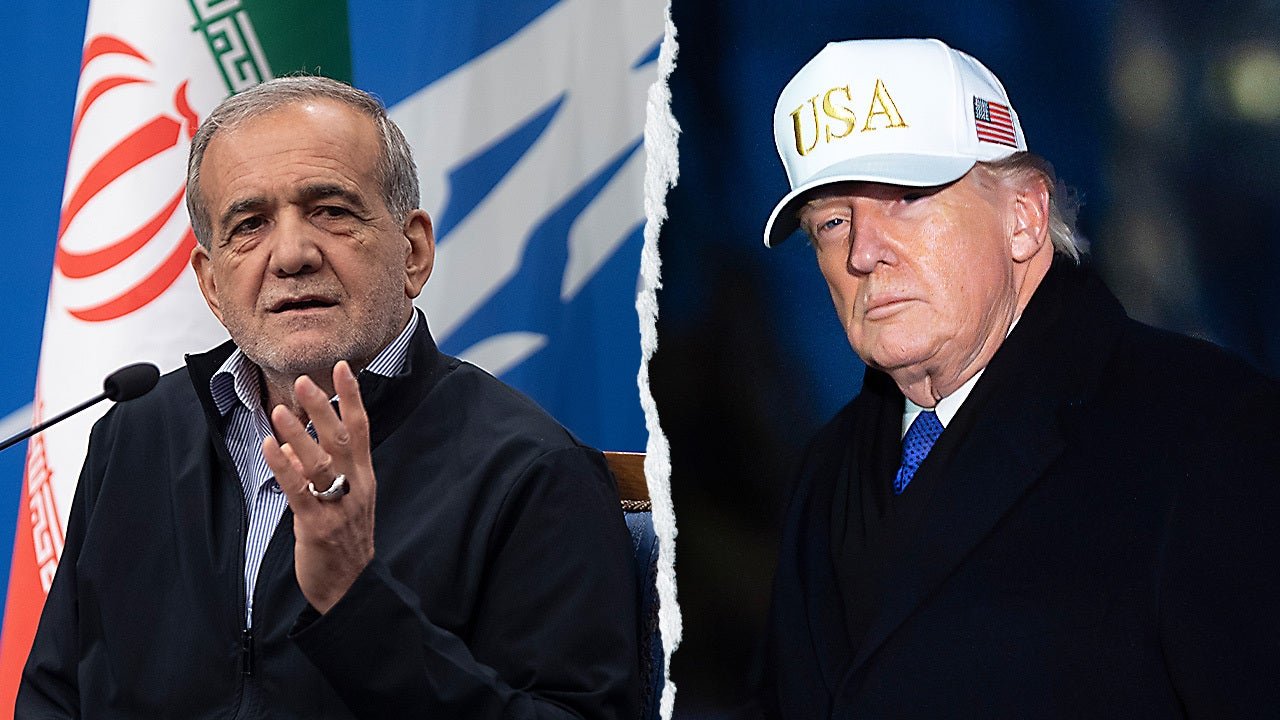
Iranian President Masoud Pezeshkian called Hamas’ newly elected leader to congratulate him and pledge Tehran’s continued support for the group’s cause, Hamas said Monday — as President Donald Trump promotes a landmark agreement intended to strip the terrorist organization of its weapons and power in Gaza.
Pezeshkian congratulated Khalil al-Hayya on his election as head of the group’s political bureau and told him Iran would continue supporting the Palestinian cause, according to a Hamas statement posted in Arabic, and reviewed by Fox News Digital.
«We are with you, and we support you in every action you take, despite the attacks we are facing,» Pezeshkian said, according to Hamas’ account of the call.
Fox News Digital has asked Iran’s mission to the United Nations to confirm that the call took place and provide an official readout.
HAMAS TAPS ‘ULTIMATE INSTITUTIONAL SURVIVOR’ AS TERROR CHIEF, SENDING MESSAGE TO ISRAEL: EXPERT
Analysts say Al-Hayya’s elevation signals that Hamas, after the destruction of Gaza and the losses since Oct. 7, 2023, has prioritized organizational cohesion, armed continuity and the preservation of its Iranian relationship. (Iranian Leader Press Office/Handout/Anadolu via Getty Images)
The reported conversation highlighted a central contradiction confronting Trump’s Gaza initiative: While the White House is presenting the roadmap as a landmark agreement to remove Hamas from power and secure its weapons, Iran — the group’s longtime military and financial patron — was simultaneously reaffirming its support for Hamas and its new leader. Tehran’s backing raises fresh questions about whether Hamas is prepared to surrender the arsenal at the core of its power and how the Board of Peace could enforce disarmament against a group that continues to receive political support from one of Washington’s principal regional adversaries.
Trump in recent days announced what he called a «HISTORIC agreement for the COMPLETE DISARMAMENT of Hamas and all other armed groups,» presenting it as a breakthrough after nearly three years of war. The stakes extend far beyond the wording of the deal: Hamas’ weapons remain the central obstacle to rebuilding Gaza, and the agreement will test whether Trump’s Board of Peace can enforce a postwar transition or whether Hamas will exploit the process to survive, regroup and retain power.
At the center of the effort is Trump’s Board of Peace, the president’s handpicked vehicle for implementing his Gaza policy and potentially extending his approach to other global conflicts. Trump chairs the board, whose executive leadership includes Secretary of State Marco Rubio, special envoy Steve Witkoff, Jared Kushner and former British Prime Minister Tony Blair.
The White House says the board will oversee Gaza’s transition, mobilize reconstruction funding and hold the parties accountable.
But the tensions intensified Monday also on the Israeli side, when Nickolay Mladenov, Board of Peace director-general and high representative for Gaza, and board advisor Aryeh Lightstone met with Israeli Prime Minister Benjamin Netanyahu and urged Israel to halt its attacks in Gaza.
Israel appeared to reject the board’s two central demands shortly afterward.
«Israel will not withdraw from its current line in the Gaza Strip and will continue to thwart any threat to our civilians and soldiers,» an Israeli political official said. The statement amounted to a rejection, at least for now, of demands that Israel return to the «yellow line» and halt targeted strikes in Gaza.
A Board of Peace official declined to discuss the meeting but said the body remained focused on carrying out the roadmap.
«We are focused on implementation,» the official told Fox News Digital. «We have provided a pragmatic path forward to transform Gaza by removing Hamas from power and seeing it hand over its weapons. These steps would undoubtedly allow for the improvement of life in Gaza and enhancement of security in Israel. We remain determined to advance these objectives.»
Meanwhile, the Hamas terrorist group says it has agreed only to a phased and conditional process involving the storage of weapons after Israel stops its attacks, withdraws its forces and allows more aid into Gaza. Hamas has avoided the word «disarmament» in its statements and insists its weapons would remain under Palestinian control rather than being surrendered to Israel or an international force.
HAMAS AGREES TO COMPLETE DISARMAMENT UNDER ‘HISTORIC’ GAZA AGREEMENT: TRUMP
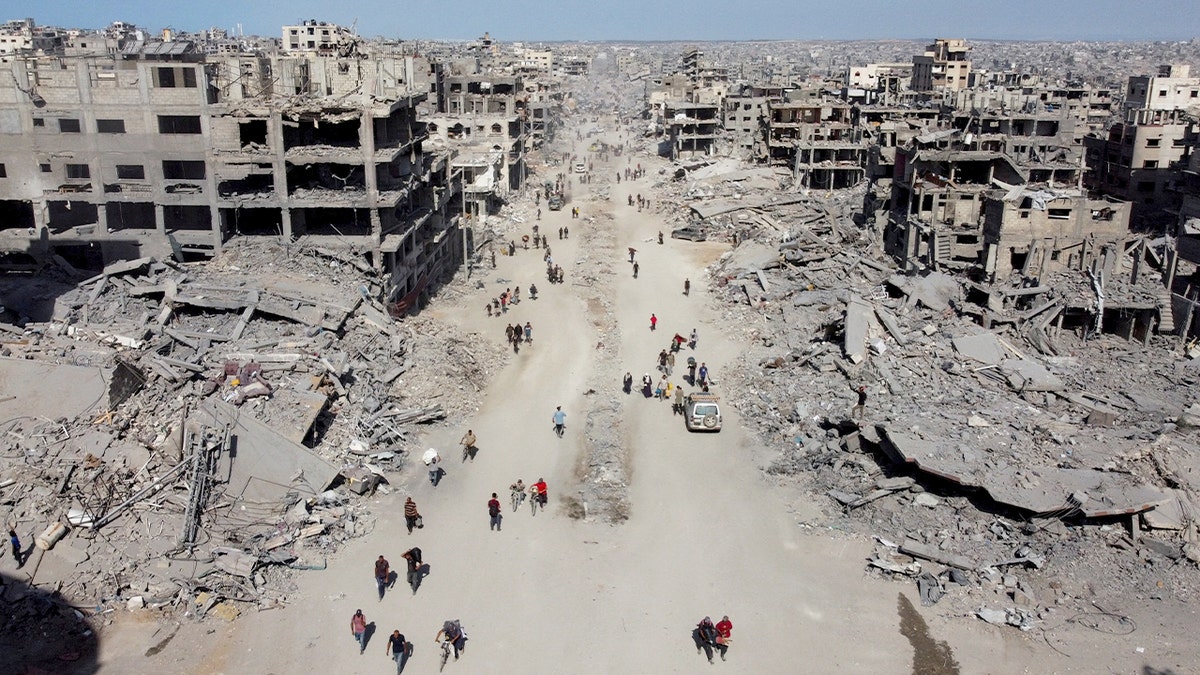
A drone view shows Palestinians walking past the rubble, following Israeli forces’ withdrawal from the area, amid a ceasefire between Israel and Hamas in Gaza, in Gaza City, Oct. 11, 2025. (Dawoud Abu Alkas/File Photo/Reuters)
The board’s 15-point roadmap calls for Hamas to transfer Gaza’s civilian government and security responsibilities to a Palestinian technocratic body known as the National Committee for the Administration of Gaza. Hamas-run police would surrender their weapons to the committee, while heavy weapons, military production sites, weapons depots and tunnels would be addressed later through a phased decommissioning process linked to an Israeli withdrawal.
The intended endpoint is that only the new Palestinian authority would possess or control weapons in Gaza. But the roadmap leaves unresolved who will enforce the process, what constitutes compliance and which side must act first.
Hamas’ disarmament remains a central obstacle to rebuilding Gaza. Trump has tied reconstruction to the group laying down its weapons, while The Associated Press reported that the Board of Peace had secured approximately $7 billion in pledges by February — a fraction of the estimated $70 billion needed to rebuild the devastated territory.
Moumen al-Natour, a Palestinian lawyer from Gaza and co-founder of the anti-Hamas «We Want to Live» movement, said civilians desperately want the agreement to succeed but do not trust Hamas to relinquish power.
«Civilian people inside Gaza Strip… want safety, want to stop this war, want a new government, want to be alive,» al-Natour told Fox News Digital.
But al-Natour, who previously was imprisoned by Hamas, warned that the group would use delays and violations to remain embedded in Gaza.
«I can’t trust Hamas because I know Hamas,» he said, arguing that the group had repeatedly arrested and killed Palestinians who opposed its rule. He said an international force of only a few hundred personnel would be unable to secure Gaza or prevent Hamas from intimidating residents and that a much larger force and a new Palestinian police structure would be required.
Drawing on a grassroots network of thousands of Gazan professionals who reject Hamas’ ideology, the «We Want to Live» movement is promoting its own plan to rebuild Gaza’s civil society and is calling for cooperation with the Board of Peace and the National Committee for the Administration of Gaza, the technocratic body tasked under the U.S.-backed transition plan with governing and rebuilding the enclave.
Al-Natour also proposed allowing civilians who want to escape Hamas-controlled areas to move into protected zones near the «yellow line» — the boundary separating Israeli-held territory from the rest of Gaza — where they could live under a new Palestinian administration backed by an international security force. He said the arrangement could provide Gazans with a safer alternative while a post-Hamas governing structure is established.
HAMAS SAYS IT WILL DISSOLVE GAZA GOVERNMENT, BUT ISRAEL WARNS GROUP STILL SEEKS HEZBOLLAH-STYLE CONTROL

A mourner carries the body of a Palestinian who was killed in Israeli strikes, according to medics, during a funeral, in Gaza City, Aug. 2, 2026. (Dawoud Abu Alkas/Reuters)
Michael Milstein, a former military intelligence officer in Israel and now head of the Palestinian Studies Centre at Tel Aviv University, said the compromise has been developing for months under pressure from Qatar, Turkey and Egypt.
Milstein said Hamas may be prepared to give up control of Gaza’s day-to-day government and accept restrictions on heavy weapons but is unlikely to abandon its armed organization completely.
Under the model Hamas appears to favor, Milstein said, a technocratic government and international forces would assume responsibility for public services and reconstruction while Hamas preserves its personnel, infrastructure and political influence — an arrangement resembling Hezbollah’s longtime position in Lebanon.
«There is a very, very low chance that Hamas will completely disarm,» Milstein told Fox News Digital, describing the roadmap as the kind of «gray area» Hamas has historically used to its advantage.
The Board of Peace also is pressing for an end to actions that could derail the plan. After Israeli strikes killed civilians and reportedly destroyed medical supplies over the weekend, Mladenov, the director-general of the Board of Peace, called for de-escalation but did not identify Israel by name.
«Two days of strikes across Gaza have killed civilians and destroyed medical supplies,» Mladenov wrote on X, adding that he was working with the parties and regional mediators to «create the space for the full implementation of the President’s plan.»
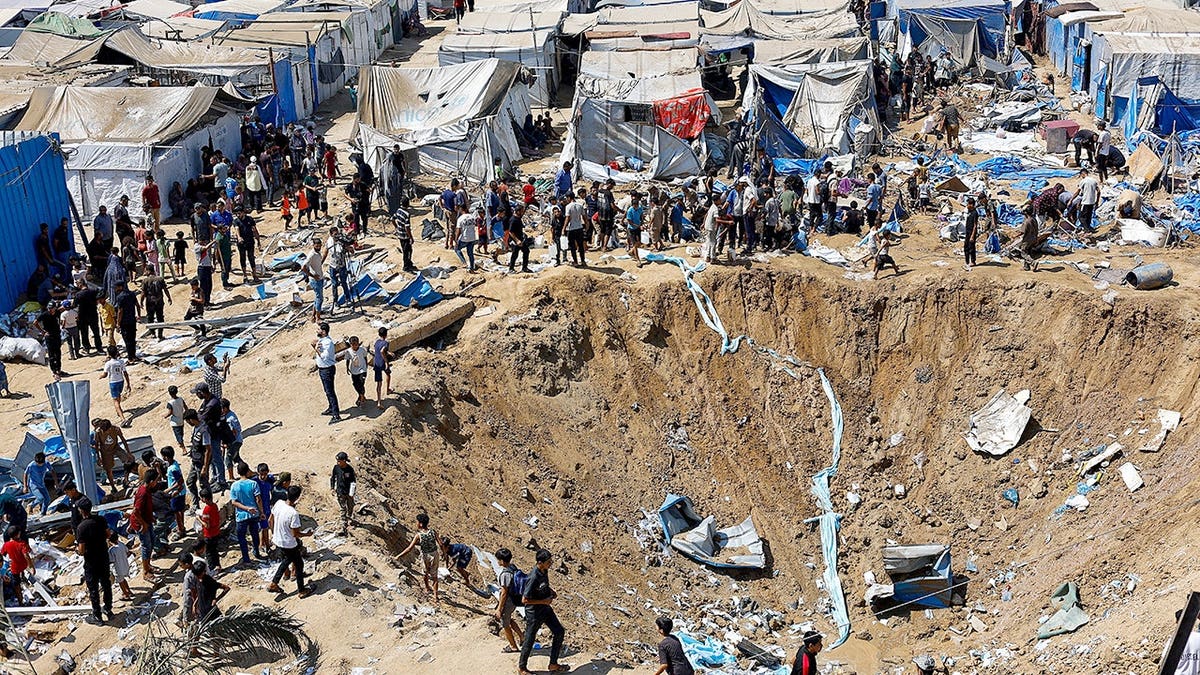
Palestinians inspect the site of an overnight Israeli strike on a medicine warehouse, according to medics, next to tents sheltering displaced Palestinians, in Deir al-Balah, in the central Gaza Strip, Aug. 1, 2026, residents had been pre-warned by the Israeli military to evacuate. (Mahmoud Issa/Reuters)
Israel, meanwhile, says it will not withdraw before Hamas genuinely disarms. Hamas says Israel must withdraw first.
The roadmap also faces resistance inside Israel’s government. Finance Minister Bezalel Smotrich and Settlements Minister Orit Strock urged Netanyahu on Monday to convene the security Cabinet immediately and block the international stabilization force from entering Gaza, according to Israel’s N12 news outlet.
In an urgent letter reported by N12 on Aug. 3, 2026, the ministers called the Board of Peace roadmap «dangerous to Israel» and argued that it contradicts Israel’s stated goals of disarming Hamas and demilitarizing Gaza. They objected that weapons would be placed under the authority of a new Palestinian body rather than removed from Gaza or handed to Israel and that Israeli troops would begin withdrawing while the disarmament process was still underway.
The far-right ministers also argued that the international force would monitor the separation between Israeli troops and the new Palestinian administration rather than directly disarm Hamas. They demanded that Netanyahu prevent implementation until the roadmap is revised to require full demilitarization before an Israeli withdrawal. The letter underscores that the plan’s obstacles extend beyond Hamas: Influential members of Netanyahu’s coalition are also challenging its sequencing, enforcement and security provisions.

Israeli troops are pictured outside the Gaza Strip ahead of a military operation in northern Gaza (Daphne Lemelin/AFP via Getty Images)
That leaves Trump’s proclaimed milestone resting on the same question that has stalled previous Gaza negotiations: whether Hamas is truly preparing to surrender the weapons that underpin its power — or merely buying time to ensure that it remains standing when the rebuilding begins.
hamas, iran, world, donald trump, israel
INTERNACIONAL
Europa y el verano de los récords: Londres sin lluvia, París igual que el Sahara y el Mediterráneo 5 grados más caliente

El verano de los récords
El fenómeno de El Niño y sus efectos
Impacto económico de la crisis climática


Cambios en la agricultura y adaptación urbana
Democratic Party socialist takeover warned by Rep. Josh Gottheimer
Democrat Rep. Josh Gottheimer sounds the alarm on the growing influence of far-left socialist factions within the party. Gottheimer emphasizes the rise of the Democratic Socialists of America during recent high-profile primary elections. He argues that mainstream leaders must actively reject radical progressive policies to maintain voter trust and win competitive congressional elections.
NEWYou can now listen to Fox News articles!
A leading House Democrat went scorched-earth on insurgent socialists rising within his party, repeatedly telling them to start their own party and accusing them of trying to «hijack» the Democratic Party as a «vessel» for their communist, «anti-American,» open-border platform.
House Intelligence Committee member Josh Gottheimer, D-N.J., a leader of the moderate Blue Dog Coalition, told Fox News on Sunday that the Democratic Socialists of America (DSA) is «not Democrats» and rejected the idea that its platform is compatible with the Democratic Party’s.
«Obviously, I’m a very proud, commonsense Democrat, and I don’t think DSA members are Democrats. They’re socialists, right? And I’m all for them having their own party if they want one, but if they’re trying to take over our party, that’s unacceptable to me,» Gottheimer said on «The Big Weekend Show.»
DEM REP HENRY CUELLAR REJECTS DSA AGENDA, SAYS SOCIALISTS ARE TRYING TO ‘USE’ DEMOCRATIC PARTY
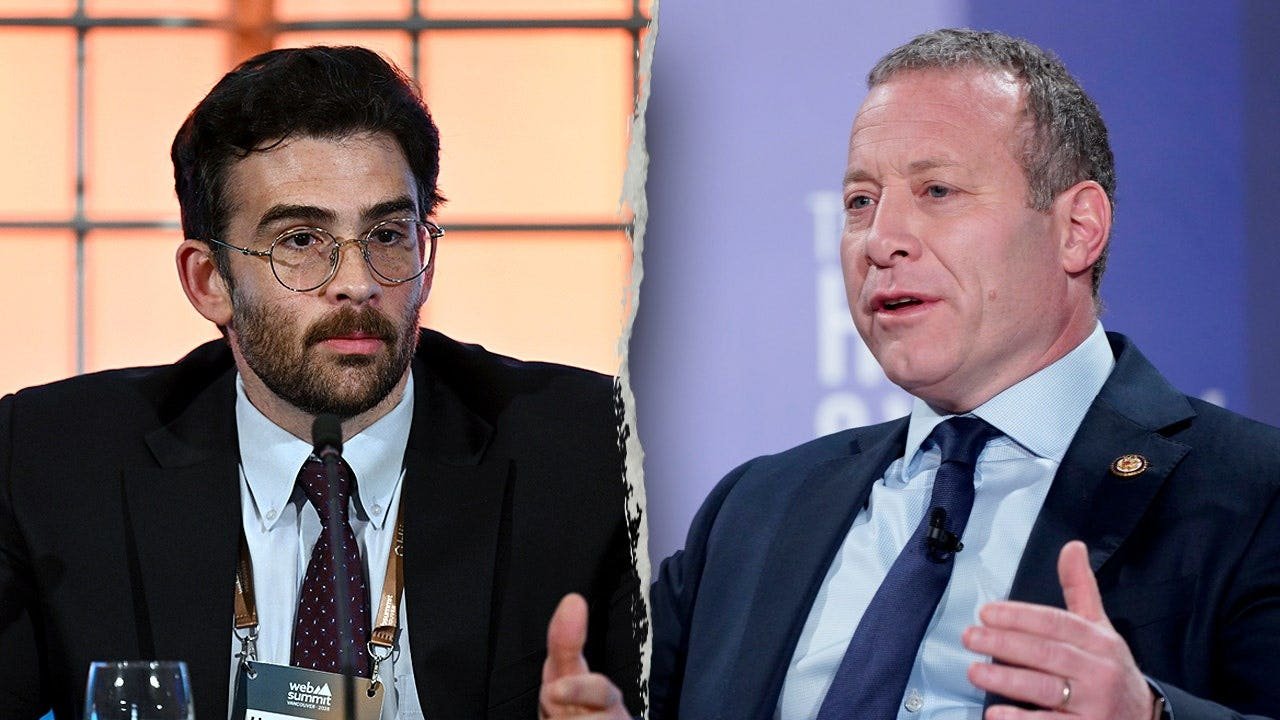
Twitch streamer Hasan Piker is facing renewed scrutiny after viewers spotted a framed newspaper front page from Sept. 12, 2001, in his background. (Sam Barnes/Web Summit via Sportsfile via Getty Images)
«Their values, their ideas are certainly not in line with ours, and they don’t support our leadership. They’re trying to use the Democratic Party as a vessel for their ideas. And as you heard in some of these conventions, literally, they’re supporting the Communist Manifesto and [Leon] Trotsky, they’re anti-American, they are anti-cop, they don’t believe in borders.»
Gottheimer was referring to man-on-the-street clips of DSA members at the group’s Chicago convention. One socialist said they are organizing a front to get «ICE off our campuses,» while a member of the DSA’s National Political Committee said people such as Gottheimer who call them anti-American do not understand that their platform is the «most American thing you can do.»
Another DSA NPC member said socialism is the «same kind of stuff that I am used to [in] growing up in the Christian Church.»
DEMOCRATIC SOCIALISTS OF AMERICA ACTIVISTS SIGNED PLEDGE TO SUPPORT, DEFEND ‘CHINESE SOCIALISM’
Gottheimer said 45 million voters are registered Democrats, compared with 150,000 official DSA members.
«They’re not welcome in the Democratic Party,» he said.
He pushed back against members of his own party who have expressed openness to DSA-aligned candidates such as Maine oysterman Graham Platner.
GRAHAM PLATNER BLAMES NAZI TATTOO ON MILITARY ‘CULTURE,’ DRAWS BACKLASH FROM GOP VETERANS
Rep. Ro Khanna, D-Calif., who represents Silicon Valley, said Democrats should not have «watched wealth pile up on Wall Street and Silicon Valley» at the expense of working-class Americans, adding that «the Democratic Party needs reform.»
Gottheimer countered that fringe coalitions are mounting insurgencies in both parties and «trying to barge in» with incompatible ideas.
He also pointed to longtime Clinton confidant James Carville, who told Fox News that he would disown the Democratic Party if left-wing streamer Hasan Piker were permitted to become one of its leaders.
Former U.S. Marine Corps bomb technician Johnny Joey Jones asked whether Gottheimer would also leave the party over Piker or if Democratic leaders embraced socialists such as Harlem’s Darializa Chevalier.
«Well, [House Minority Leader Hakeem] Jeffries won’t — and let me be very clear that Hasan Piker is not a Democrat – the guy is the ultimate grifter, right? He’s the guy who said that 9/11 is America’s fault… We’ve got to make it clear he’s not welcome in the Democratic Party.»
Gottheimer said the DSA platform shows that the organization is incompatible with the Democratic Party. He added that socialists can «scream and yell and try to …hijack [the party] and shove their ideas in and use it as a vessel.»
«We have to make clear that’s not who we are…»
While Gottheimer reiterated that he does not plan to leave the Democratic Party any time soon, Jones noted that one prominent New Jersey Democrat already has.
Rep. Jeff Van Drew, whose district includes Cape May, switched parties during President Donald Trump’s first term, angering South Jersey Democratic committees as the longtime lawmaker embraced Trump’s platform.
SIGN UP TO GET THE POLITICS NEWSLETTER
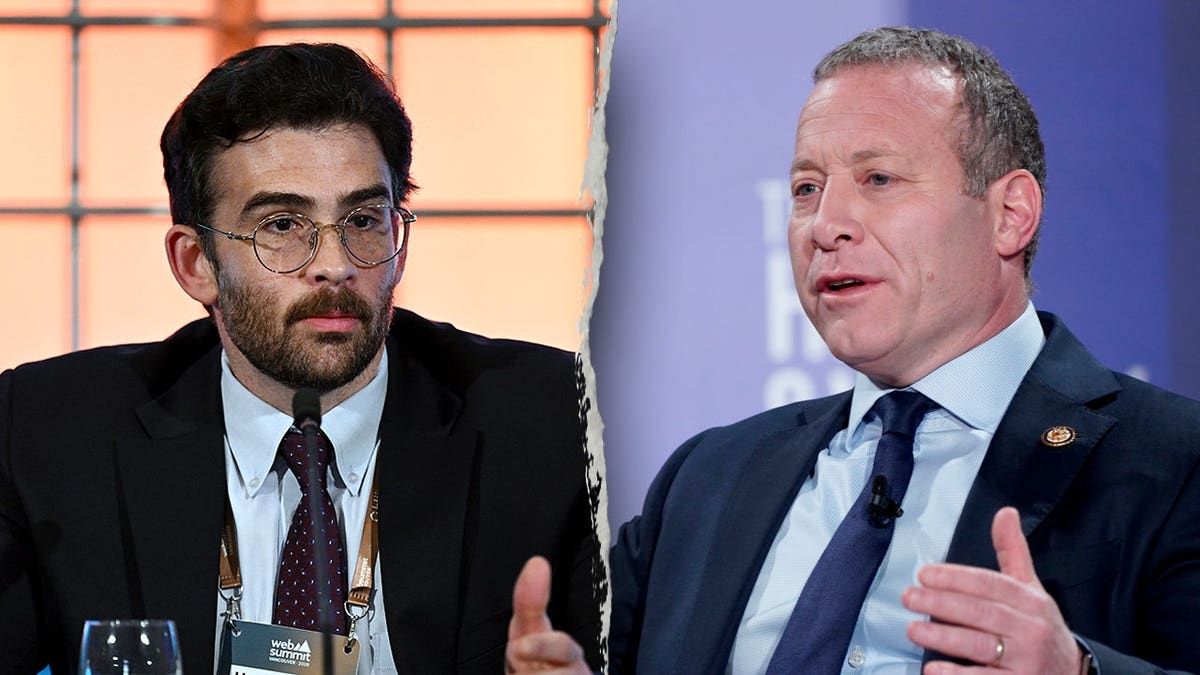
Left-wing podcaster Hasan Piker, left; Rep. Josh Gottheimer, D-N.J., right. (Sam Barnes/Getty Images; Leigh Vogel/Getty Images)
«You wouldn’t be the first New Jersey congressman to find a better party. I’m just saying leave the door open if you want to,» Jones said.
Gottheimer’s district includes liberal New York City suburbs immediately west of the George Washington Bridge and the deep-red, Trump-friendly Skylands near the Delaware Water Gap, making it one of the most politically diverse districts in the state’s congressional delegation.
Fox News Digital reached out to the DSA and Piker for comment.
socialism, hasan piker, democratic party, the squad, graham platner, democrats, elections

Karina Milei se mostró con dos gobernadores aliados mientras el oficialismo busca acuerdos para 2027

Ian Lucas lanzó un nuevo tema, junto a La Joaqui y Fede Vigevani, de su show en Vélez

El W35 de Chacabuco levanta el telón: 13 argentinas ya tienen un lugar asegurado en el cuadro principal

De saltar en paracaídas a una vida de oficina: por qué dejar el Ejército fue el desafío más difícil para dos ex oficiales

Volvió a caer el consumo de los hogares en junio: qué pasó con los autos, la ropa y los servicios

Impulsan un proyecto de ley en Neuquén para que las tierras fiscales solo puedan ser vendidas a argentinos

“Vamos a acelerar con todo”: el objetivo del Gobierno por las reformas y la agenda electoral de cara al 2027

Reelecciones indefinidas: el oficialismo bonaerense niega que busque ampliar la Legislatura como parte de una reforma política para beneficiar a los intendentes

“Casta”, “parásito” y “sea democrático”: fuerte respuesta de Victoria Villarruel a Diego Santilli

Dem senator swipes credit for bill he opposed amid heated reelection bid: ‘Disturbing pattern’
-
 POLITICA1 día ago
“Vamos a acelerar con todo”: el objetivo del Gobierno por las reformas y la agenda electoral de cara al 2027
-
 POLITICA20 horas ago
Reelecciones indefinidas: el oficialismo bonaerense niega que busque ampliar la Legislatura como parte de una reforma política para beneficiar a los intendentes
-
 POLITICA3 días ago
“Casta”, “parásito” y “sea democrático”: fuerte respuesta de Victoria Villarruel a Diego Santilli