INTERNACIONAL
Christmas Vacation and Congress: ‘We’re all in misery’ amid the ongoing DHS shutdown


NEWYou can now listen to Fox News articles!
If you thought the Congressional appropriations process couldn’t get any worse, I present you with 2026. And perhaps beyond.
The Department of Homeland Security remains shut down, running on pocket lint, nickels lost between the couch cushions and faded S&H Green Stamps (look ‘em up, kids). Congress hasn’t funded DHS for two months. House Speaker Mike Johnson, R-La., torqued himself into a political pretzel – opposing, then supporting, then not acting on – a Senate-approved package to fund most of DHS.
As we always say, it’s about the math, and when it comes to DHS money, it appears that lawmakers have locked a box to which they lack the combination. There is apparently no sequence of votes in the House and Senate which can crack the DHS safe as a traditional, standalone appropriations bill.
REPORTER’S NOTEBOOK: WHY TRUMP MAY NOT BE ABLE TO FORCE CONGRESS BACK OVER THE DHS SHUTDOWN
The U.S. capitol building in Washington, D.C., (left); An Immigrations and Customs Enforcement Officer arrives at a scene (right). (Al Drago/Bloomberg via Getty Images (left); Reuters (right))
Now, Congressional Republicans and President Donald Trump are turning to one of the few methods which might work to fund DHS – something called budget reconciliation.
The Congressional budget reconciliation process is not customarily used for appropriations bills – although lawmakers can plug the measure with money to spend on federal programs. However, reconciliation is inoculated from filibusters. Thus, Republicans don’t need 60 votes. They can – ostensibly – pass a DHS bill on its own without help from Democrats if they hold their narrow coalitions together in both the House and Senate.
Congressional Republicans intend to stuff this reconciliation package with only money for ICE and Customs and Border Patrol. Nothing for disaster aid. Nothing for farmers. Nothing about the SAVE America Act. The president agrees. The goal is to finish this by June 1 – months after the latest DHS funding lapse.
But it’s more complicated than that.
GOP INFIGHTING REPLACES CLASH WITH DEMS, DERAILS PATH TO END HISTORIC DHS SHUTDOWN
The House and Senate must take a number of steps to approve a shell of a budget resolution in order to have the filibuster-proof reconciliation tool available to them. Republicans undertook a similar endeavor last winter and spring. It was absolutely harrowing and consumed months before finally approving the One, Big, Beautiful Bill, via reconciliation. Republicans don’t have that kind of time now. Then again, DHS has either been unfunded or held together by interim spending bills since last October.
We haven’t even mentioned how Trump is using a somewhat dubious authority to pay TSA workers and others from other funds – without Congressional approval.

Travelers experienced extensive wait times Sunday, March 22, 2026, at Louis Armstrong New Orleans International Airport (left, middle) and Hartsfield Jackson Atlanta International Airport (right) due to the partial government shutdown. (WVUE)
That leaves some to question why the administration didn’t do this to start with. But the bigger issue is an alarming pattern of Congress ceding its most precious prerogative – the power of the purse – to the executive branch. That’s to say nothing as to whether Trump’s gambit to pay workers is even Constitutional. And, it establishes a precedent which may be hard to ignore during other funding impasses.
However, here’s the bigger problem: the Congressional paralysis to pass appropriations bills on a timely basis. That’s been an issue for years now.
Historically, Congress has missed the Oct. 1 fiscal deadline, relying on «Continuing Resolutions» (CR’s) which simply renew all funding on a temporary basis. Or, lawmakers cobble together a set of the 12 annual spending bills in a «minibus» appropriations package. Lawmakers who might oppose an individual bill are willing to support a group of bills – because there’s something in there which they like or support.
But turning to reconciliation as a way out of the appropriations box canyon is also another precedent which likely agitates Congressional appropriators. Sure. They’ve done that before. And in this instance, it might finally get DHS funded. But what does this mean for the future?
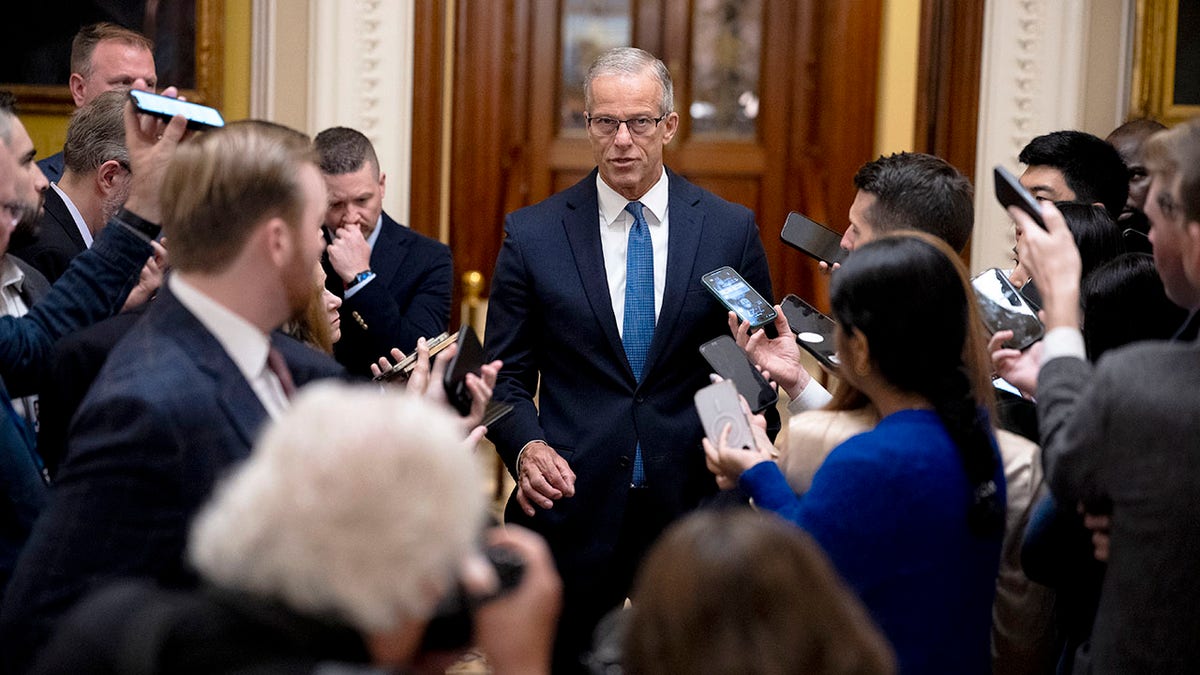
Senate Majority Leader John Thune, R-S.D., said that congressional Democrats got «zero» reforms in the DHS funding deal. (Andrew Harnik/Getty Images)
Which brings us to Oct. 1, 2026. That’s when the federal government pivots from Fiscal Year 2026 to start Fiscal Year 2027.
Congress has struggled to fund the federal government since early 2025, when it began work on appropriations bills for this year. The FY ’26 funding crisis – which spawned the record-breaking, 43-day, government-wide shutdown in the fall, another partial government shutdown last winter and the current DHS stalemate – has been an issue since lawmakers were working on bills for this cycle around this time LAST spring. So how pray tell is Congress going to avoid a shutdown THIS autumn for FY ’27?
In fact, few are even speaking about that possible peril – because no one can wrap their heads around the present appropriations saga. And it’s possible that this fall’s problems could be worse than last fall’s impasse. The reason? The midterm elections hit in November. It’s doubtful that either side will be willing to make much of a deal right before voters head to the polls.
The scenarios are frightening to fathom, so people are just kind of ignoring them.
SEE IT: LAWMAKERS CAUGHT ON VACATION AMID RECORD-BREAKING SHUTDOWN WHILE DHS WORKERS GO UNPAID
We have entered a new period of semi-perpetual funding standoffs – exacerbated by mistrust between the sides, narrow Congressional margins in both the House and Senate, parliamentary mathematical equations which don’t balance and an unwillingness by Trump to broker deals or even negotiate with Democrats.
Yes. They have options to cover DHS into next year, but it’s the other 11 spending bills which could be problematic.
Imagine trying to pass a defense spending bill which has a price tag 44% higher than the one last year? Or tacks a bunch of money on for the war in Iran?
Where’s the vote combination to approve a CR, let alone an individual bill? Will Senate Minority Leader Chuck Schumer, D-N.Y., be willing to help Republicans hit the 60 vote threshold to fund things? Especially if he sees the possibility of emerging again as Majority Leader? Probably not.
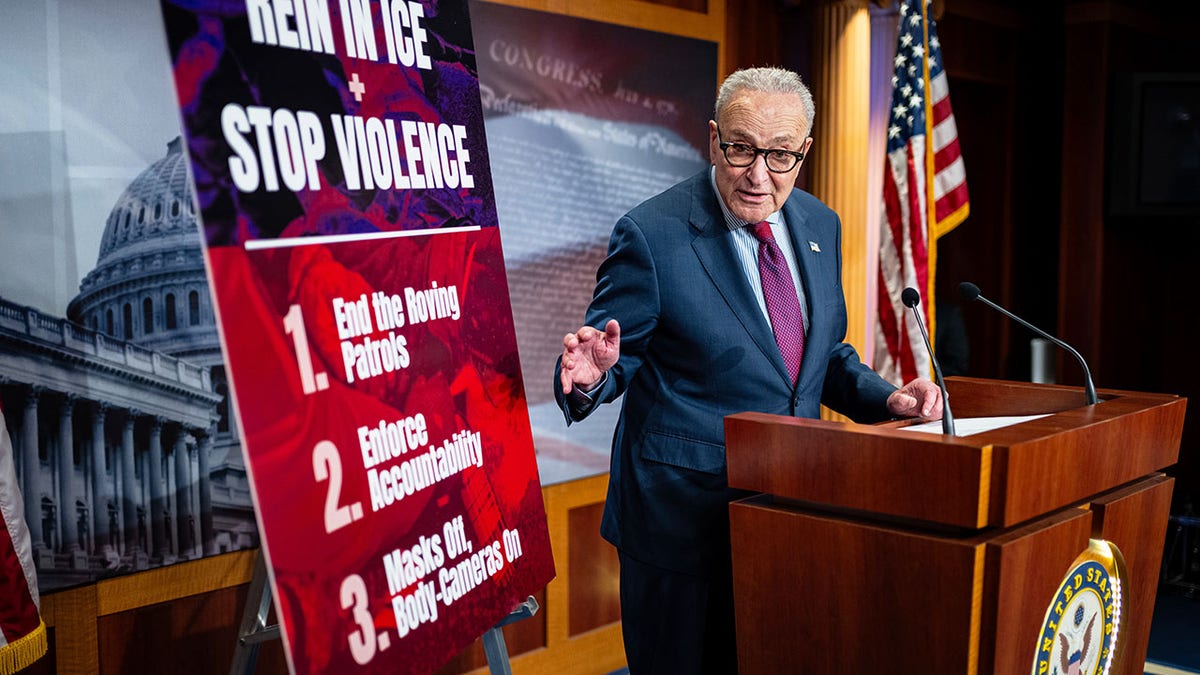
Senate Minority Leader Chuck Schumer, D-N.Y., and Senate Democrats aren’t backing down from their list of DHS demands as the partial government shutdown rages on. (Graeme Sloan/Bloomberg via Getty Images)
And let’s say Democrats win the House, Senate or both in the fall? Do you really think these spending standoffs get better over the final two years of Trump’s term?
CLICK HERE TO DOWNLOAD THE FOX NEWS APP
Back to Chevy Chase and Clark Griswold. There’s a second part to that iconic quotation from Christmas Vacation: «We’re at the threshold of hell!» he declares.
Pretty funny, but not if you’re trying to keep the government open after the adventures of the past year. This is not hilarious to millions of federal workers who suffer from paycheck PTSD. Another round of spending mayhem could only erode further trust between federal workers and their employers. It will damage morale – which is already subterranean. That’s to say nothing of courting people to work for the government.
Yes. Things can get a lot worse. The political schisms are deep and the vote matrices to pass the bills simply don’t exist.
It may be spring, but the Christmas Vacation movie provides insight into where we stand with the Congressional appropriations bills: «It’s Christmas and we’re all in misery,» declares Ellen Griswold, played by Beverly D’Angelo.
Yeah. And wait to see what Congress has in store for THIS Christmas.
Chad Pergram currently serves as Chief Congressional Correspondent for FOX News Channel (FNC). He joined the network in September 2007 and is based out of Washington, D.C.
politics, congress, government shutdown, homeland security















NEWYou can now listen to Fox News articles!
FIRST ON FOX: The Trump administration is changing how some asylum claims move through the immigration system, allowing U.S. Citizenship and Immigration Services (USCIS) to refer certain applications directly to immigration judges without first interviewing applicants in an effort to reduce the nation’s asylum backlog.
The interim final rule, which takes effect immediately, gives USCIS the authority to send some asylum applications to immigration court without conducting an affirmative asylum interview, eliminating what the administration called an unnecessary step in the adjudication process.
The change applies to affirmative asylum claims, which are filed by immigrants who are not in removal proceedings. Defensive asylum claims, in contrast, are raised before an immigration judge after the government has initiated removal proceedings.
TRUMP PUTS ASYLUM LAWYERS ‘ON NOTICE’ WITH NEW FRONT IN WAR ON FRAUD
FILE – USCIS generally interviews affirmative asylum applicants before either granting asylum or conducting a separate review, which DHS said allows immigrants to «get a second chance at asylum.»
Currently, USCIS generally interviews affirmative asylum applicants before either granting asylum or referring the case to an immigration judge for a separate review. The Department of Homeland Security (DHS) told Fox News Digital the process can result in some applications being reviewed twice — first by USCIS and then again by an immigration judge — adding to the agency’s growing backlog.
Under the new rule, USCIS can refer certain asylum applications directly to immigration court without first conducting an interview, a change administration officials said will allow both asylum officers and immigration judges to process cases more efficiently while directing resources toward applicants with legitimate claims of persecution.
The rule is the latest step in the Trump administration’s broader effort to tighten the asylum system and speed up immigration enforcement, with officials arguing the current process has been exploited by immigrants seeking to delay removal proceedings and obtain work authorization.
HOUSE REPUBLICANS MOVE TO MAKE TRUMP’S BORDER POLICIES PERMANENT

FILE – People wait inside a U.S. Citizenship and Immigration Services office. The Trump administration issued a new rule allowing USCIS to refer certain asylum applications directly to immigration judges without first conducting an affirmative asylum interview. (John Moore/Getty Images)
«For far too long, the asylum system has been exploited for purposes of delay and work authorization, not legitimate claims of protection,» USCIS Director Joseph Edlow told Fox News Digital. «America’s asylum system exists to protect individuals who genuinely fear persecution and this rule will help ensure that resources are directed to the timely adjudication of those claims instead of to those seeking to use the system as a loophole.»
DHS General Counsel James Percival said delays within the asylum system have hindered immigration enforcement.
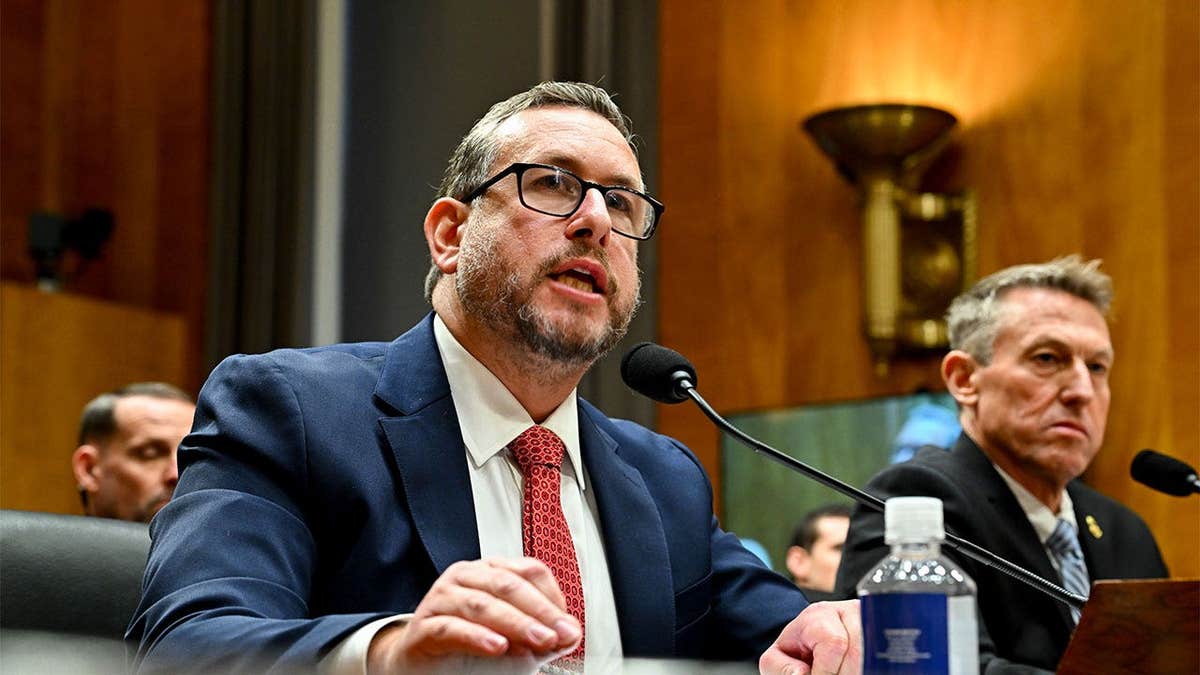
FILE – USCIS Director Joseph Edlow said a new rule allowing certain asylum applications to be referred directly to immigration judges without first conducting an affirmative asylum interview will help reduce the asylum backlog. (Graeme Sloan/Bloomberg via Getty Images)
CLICK HERE TO DOWNLOAD THE FOX NEWS APP
«One of the greatest barriers to effective immigration enforcement is intentional delay by illegal aliens and the open borders attorneys who represent them,» Percival told Fox News Digital. «My office works every day with the immigration components of DHS to improve efficiency and fulfill the president’s mandate. The rule would do just that.»
The rule takes effect immediately, though USCIS said it will continue accepting public comments before issuing a final version, responding to the feedback it receives.
immigration, politics, justice department, homeland security, illegal immigrants
INTERNACIONAL
Mauro Vieira, canciller de Brasil: “Fue una provocación sin precedentes en más de 200 años de relaciones bilaterales”

La Cancillería de Brasil escuchará este lunes a su embajador en Buenos Aires, Julio Glinternick Bitelli quien arribó en horas de la mañana a la capital del país luego de ser llamado a consultas por el ministro de Relaciones Exteriores, Mauro Vieira, tras la crisis diplomática originada en San Pablo el pasado sábado. Allí, el presidente Javier Milei calificó en duros términos a su par brasileño Lula da Silva durante un acto político del candidato presidencial opositor Flávio Bolsonaro.
En un breve intercambio con Infobae, Vieira criticó las palabras del jefe de Estado argentino y consideró que sus conceptos no sólo ofendieron al Poder Ejecutivo y Judicial, sino a todo “el pueblo brasileño”.
“Vino en un viaje privado a Brasil para participar de uu evento partidista y el contenido de sus declaraciones fue agresivo y caracteriza una intromisión en temas internos y una ofensa no solamente al presidente Lula y al Poder Judicial, sino que también a las instituciones democráticas y al pueblo brasileño”, dijo Vieira a Infobae.
Para el jefe de Itamaraty, lo del presidente Milei “fue una provocación sin precedentes en la historia de más de 200 años de relaciones bilaterales, algo totalmente fuera de lugar”. Por último, subrayó: “Pero no nos intimidan los voceros de la extrema derecha, ni los nacionales ni los de afuera. Como dijo el presidente Lula, con mentiras nadie va a ganar a Brasil”.
Pese a que la reunión entre Vieira y Glinternick Bitelli está programada para hoy, no será en las próximas horas que se sabrá qué otras medidas podría tomar la cancillería brasileña respecto a la Argentina. Fuentes de Itamaraty indicaron que se tomarán por lo menos 48 horas antes de decidir nuevos pasos.

La brecha de tiempo no es casual. En las primeras horas de este lunes arribó al país el presidente de Corea del Sur, Lee Jae-myung, quien asumió su cargo en junio de 2025 tras la destitución de Yoon Suk-yeol. “Eso nos tomará todo el día, es muy importante. Y este martes iremos a la asunción de la presidenta Keiko Fujimori en Perú. Hasta el miércoles no habrá novedades”, remarcaron fuentes de la cancillería brasileña.
Este domingo, desde el entorno de Vieira, habían calificado de “irresponsabilidad histórica” a las palabras de Milei de este sábado junto a Flávio Bolsonaro, en un acto al que el presidente argentino se sumó para apoyar al candidato presidencial brasileño, opositor de Lula.
Durante ese mitin político, Milei lanzó duras palabras hacia Lula. El mandatario argentino participó de la Convención Nacional del Partido Liberal (PL) y entre otras palabras calificó a su par brasileño de “ladrón”, “presidiario” y “totalitario”. “Si en Argentina tenemos como factor económico lo que llamábamos el Riesgo Kuka, acá en Brasil hoy tienen el Riesgo Lula”, fue una de las frases del libertario.
Asimismo, el jefe de estado argentino también insultó al juez del Supremo Tribunal Federal, Alexandre de Moraes, a quien definió como “basura calva”, luego de que el organismo le prohibiera visitar a Jair Bolsonaro en su domicilio, donde cumple una pena, en su caso, por intento de golpe de Estado.
Esa referencia judicial de Milei tuvo una respuesta inmediata ese mismo sábado por parte del presidente de ese tribunal, Luiz Edson Fachin: “Al reafirmar la plena autonomía del Poder Judicial brasileño, la Presidencia del STF deplora manifestaciones incompatibles con la civilidad que debe caracterizar las relaciones entre los Estados”.
Las próximas 48 horas serán cruciales para saber si tanto el gobierno de Lula como el de Milei están dispuestos a continuar la escalada diplomática entre los dos socios comerciales más importantes del Mercosur.
X: @TotiPI
International,Relations,Diplomacy / Foreign Policy,South America / Central America

“Declararon inadmisible”: el fallo de la justicia italiana sobre el reclamo de 480 mil euros mensuales de Wanda Nara a Mauro Icardi

José de Mendiguren anticipó que podría denunciar a Milei por haberlo tratado de «ladrón» en La Rural

El descargo de Andrea Pirlo después de que se cayera su llegada a la selección de Italia

Gigante lácteo acumula un freno de 7 meses, medio año sin pagar sueldos y miles de cheques rebotados

De defender a los narcotraficantes colombianos a librarles una guerra

“Dame la plata porque te vuelo la cabeza”: así fue el violento robo a un almacén de Mar del Plata

Senado: Bullrich y Sturzenegger cierran filas para tratar de avanzar con la extranjerización de tierras
Marc Stanley destacó el potencial de Vaca Muerta para “estabilizar la economía” y evitó hablar de política interna

Recuperaron ADN de un tenedor plástico y acusaron a una mujer de haber apuñalado 100 veces a su mejor amiga hace 14 años

Cavalieri reelección del Sindicato de Empleados de Comercio y urgente actualización salarial

 ECONOMIA3 días ago
Polémica por el proyecto que busca desregular los planes de ahorro de autos 0 km: qué podría cambiar
- ECONOMIA3 días ago
Vocero de Milei dijo que un dólar a $1.800 es «posible» y la City alerta por fin de la paz cambiaria
- POLITICA3 días ago
Convivencia pacífica o tensión administrada: el PRO define cómo pararse frente al gobierno de Milei rumbo a 2027