INTERNACIONAL
El posteo de Trump mostrándose como Jesús enfurece a la derecha religiosa en Estados Unidos




INTERNACIONAL
Socialist insurgents force moderate Democrats into high-risk showdown over must-hold races
NEWYou can now listen to Fox News articles!
The Democratic Party’s ideological war is moving from deep-blue congressional districts to statewide contests in Michigan, Wisconsin and Minnesota, where progressive victories could reshape the party and endanger must-hold seats in November.
After far-left and socialist candidates defeated more moderate contenders in deep-blue districts last month, upcoming Senate primaries in Michigan and Minnesota and Wisconsin’s gubernatorial primary will test whether the movement can translate those wins into statewide power.
Progressive champion Sen. Bernie Sanders, the independent from Vermont and two-time Democratic presidential primary runner-up, touted on the campaign trail this past weekend, «Within the last year, we have won mayor’s races in New York City. We’ve won mayor’s races in Seattle. Washington, D.C. We have won congressional elections and Democratic primaries in Arizona, Ohio, Pennsylvania, California, Montana, Colorado, New Jersey and New York.»
After victories by far-left and socialist candidates over more moderate contenders in deep-blue congressional districts in New York City and Colorado last month drew outsized national attention, upcoming primaries in Michigan and Wisconsin are now the latest battleground in the high-stakes showdown.
And the center is pushing back.
MEET THE FAR LEFT INSURGENTS WAGING WAR ON THE DEMOCRATIC PARTY IN THE 2026 MIDTERMS
«Socialism has not worked anywhere on the globe,» former New York Gov. Andrew Cuomo said Monday in an interview on Fox Business’ «Mornings with Maria.» «Promises of free lunch, free buses, free bread, free everything. There’s no such thing as free. Someone always pays. This is a dream. This is nirvana. This is utopia. And they’re selling to young people who are buying it. It’s not going to work.»
The former governor resigned amid multiple scandals five years ago and failed in his political comeback last year, losing New York City’s mayoral election to socialist Zohran Mamdani,
The victories by a trio of far-left congressional candidates in New York City heavily supported by Mamdani, followed a week later by Democratic Socialists of America (DSA)-backed challenger and first-time candidate Melat Kiros’ defeat of 15-term Democratic Rep. Diana DeGette in Colorado, have emboldened progressives as they wage a far-left national pressure campaign against the Democratic Party.
DEMOCRATIC PARTY CIVIL WAR HITS DEBATE STAGE IN CRUCIAL PRIMARY SHOWDOWN
Congressional candidate Claire Valdez, Congressional candidate Brad Lander, Mayor Zohran Mamdani, and Congressional candidate Darializa Avila Chevalier raise their hands during a Get Out the Vote (GOTV) rally at King’s Theater on June 18, 2026, in New York City. (Michael M. Santiago/Getty Images)
«Only socialism can solve decades of capitalist mismanagement in the US. Our newly elected leaders will fight for the working class — not for crumbs,» the DSA proclaimed in a social media post celebrating the string of primary election victories.
That view is far from universal.
«I’m tired of being told that, to be a progressive, I now must swear allegiance to crazy ideas,» Democratic political analyst Van Jones, a veteran of then-President Barack Obama’s administration, lamented in a social media post.
«Supporting Hamas is not progressive. ‘No police, no prisons, no borders’ is not progressive. Celebrating the murder of Israeli civilians is not progressive. These ideas are REGRESSIVE,» Jones wrote.
Jamie Metzl, a technology and healthcare futurist who years ago served in former President Bill Clinton’s administration, said in a Fox News Channel interview that it’s time for Democrats «to stand up» to what he called «the bigots and anti-Americans in our own party.»
Metzl said the DSA and other far-left groups «who are trying to take control of our party and our brand» represent «a fundamental threat to our party and our country.»
VAN JONES WARNS FAR-LEFT AGENDA IS ‘REGRESSIVE’ THREAT TO DEMOCRATIC PARTY
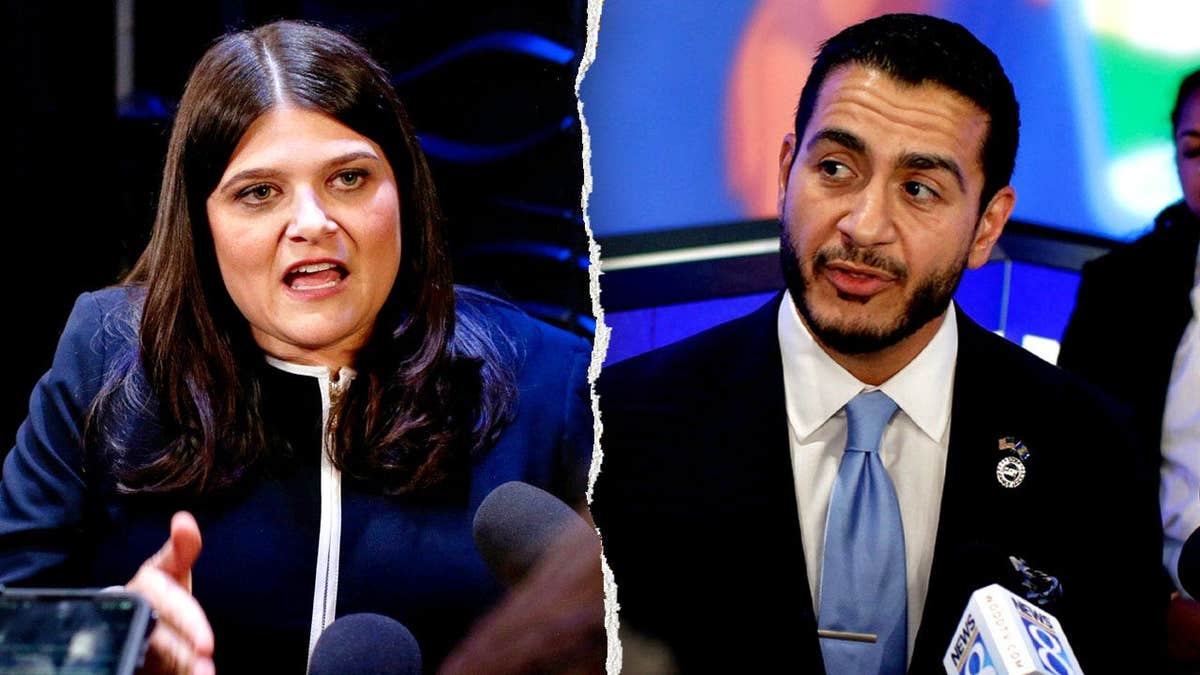
Retiring Sen. Gary Peters, D-Mich., has abandoned his neutrality in Michigan’s high-stakes Democratic Senate primary, backing U.S. Rep. Haley Stevens, pictured left, as party leaders rally to stop progressive rival Abdul El-Sayed, pictured right, from winning the nomination. (AP Photo/Kristen Norman)
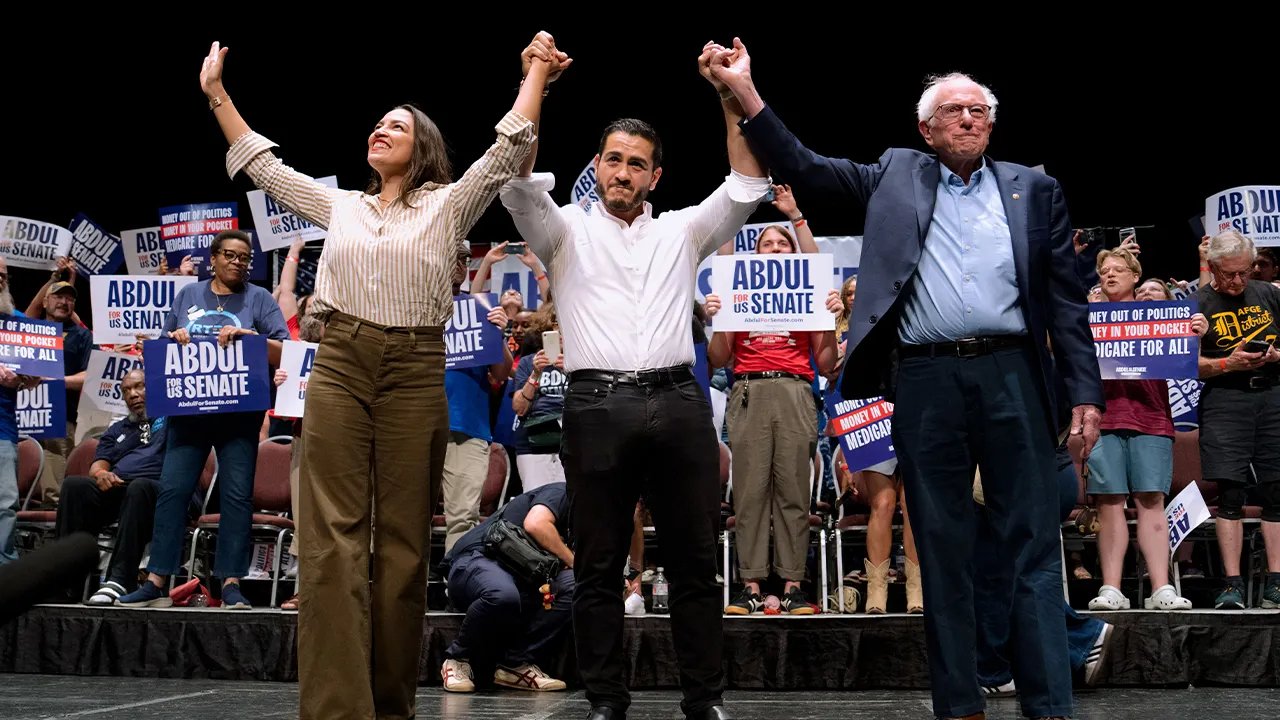
Sanders and Rep. Alexandria Ocasio-Cortez, another progressive rockstar, parachuted into Michigan’s campaign trail this past weekend to boost Abdul El-Sayed, the far-left candidate they’re supporting in a crucial Democratic Senate primary.
El-Sayed, a former Wayne County Health Department director who unsuccessfully ran an insurgent campaign for governor in 2018, is facing off for the party’s nomination in the Great Lakes battleground state against Rep. Haley Stevens, a more moderate lawmaker backed by longtime Senate Democratic Leader Sen. Chuck Schumer and the establishment.
https://www.foxnews.com/category/politics/elections/republicans
The winner of the Aug. 4 Democratic primary will take on former Republican Rep. Mike Rogers, who is on a glide path to the GOP nomination, in the key midterm Senate faceoff to succeed retiring Democratic Sen. Gary Peters.
The rare open Senate seat is a top Republican target in the midterms, as well as a must-hold for the Democrats as they aim to win back the Senate majority from the GOP, which currently controls the chamber with a slim 53-47 margin.
El-Sayed, who, if elected, would make history as the nation’s first Muslim senator, has made support for Medicare for all a major component of his campaign.
DEMOCRACY ’26: STAY UP TO DATE WITH THE FOX NEWS ELECTION HUB
The far-left candidate has also called for abolishing Immigration and Customs Enforcement (ICE), and is a vocal critic of Israel amid its war with Hamas — even characterizing Israel’s actions in Gaza as «genocide» against Palestinians. And El-Sayed, who served as a top surrogate on Sanders’ 2020 presidential campaign, has vowed not to accept PAC donations.
Schumer and the party establishment view Stevens as more electable than El-Sayed, who has sparked controversy with his past comments. They worry that El-Sayed as the party’s nominee would jeopardize the Democrat-controlled Senate seat by pushing the party too far to the left in a state that President Donald Trump carried two years ago by just over one percentage point.
The primary clash is combustible and expensive, with outside groups spending big bucks to flood the campaign trail with ads. The biggest spending, to boost Stevens and attack El-Sayed, is United Democracy Project, a political action committee aligned with the American Israel Public Affairs Committee (AIPAC).
SIGN UP TO GET THE POLITICS NEWSLETTER
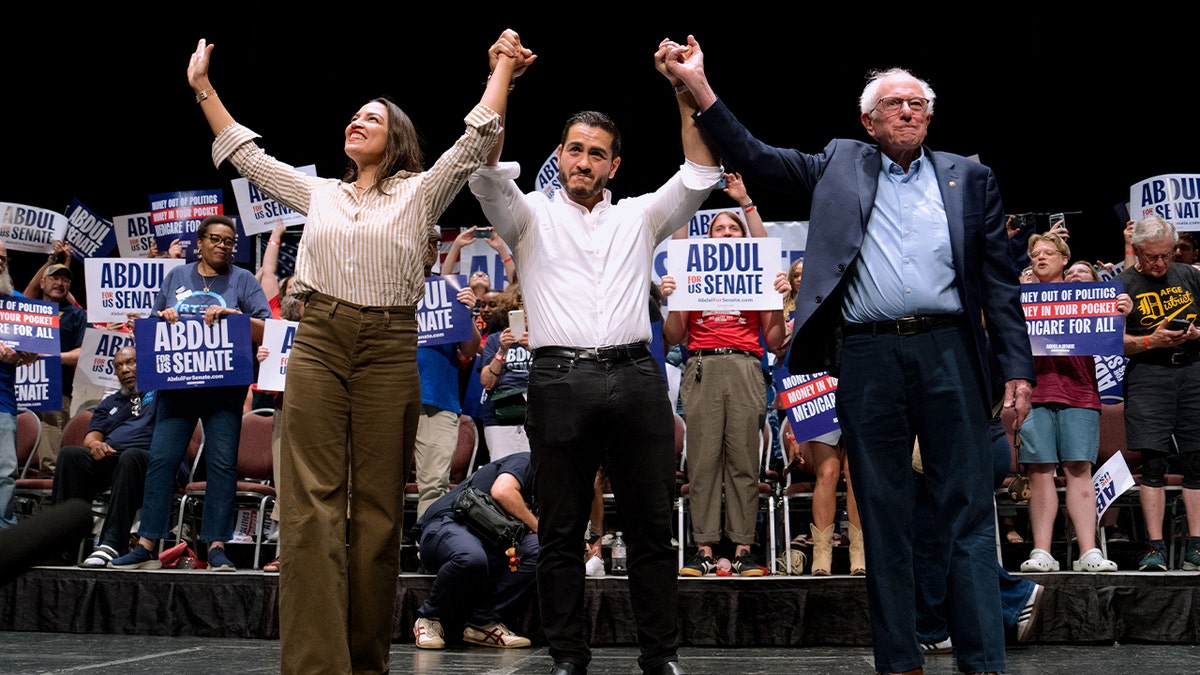
Rep. Alexandria Ocasio-Cortez, D-N.Y., from left, Michigan Senate candidate Abdul El-Sayed and Sen. Bernie Sanders, I-Vt., speak during the «The People v. The Powerful» campaign event at the Detroit Opera House in Detroit on July 18, 2026. (Nic Antaya/Bloomberg via Getty Images)
«I think we’re at an opportunity to show folks where the Democratic Party ought to go. Whether or not there are people who oppose that, that’s for them to decide. But if you’re opposing that on behalf of big corporations, folks like AIPAC, you’re going to find that their power is going to start to slip,» El-Sayed warned in a Fox News interview on Sunday.
Sanders, speaking alongside El-Sayed and Ocasio-Cortez on Saturday, argued, «In all due respect to Haley Stevens, everyone knows that this is not an election between her and Abdul El-Sayed. This is an election between Abdul and the billionaire class.»
Democratic Sen. John Fetterman of Pennsylvania, a vocal critic of the far left and a top Democratic supporter of Israel, fired back in a Fox News Channel interview.
«You know, humble yourself, Bernie. You know, you just pushed an accused rapist and imploded up in Maine and now you’re pushing, you know, essentially a pro-Hamas candidate that’s been anti-American and deeply anti-Israel,» Fetterman said as he pointed to Sanders’ support over the past year for now-ex-Democratic Senate nominee Graham Platner of Maine.
Platner ended his campaign earlier this month, amid calls from top Democrats in Maine and across the country to immediately exit the race following an explosive report containing an allegation of rape from a woman he previously dated. Platner denied the report but stepped aside.
One week after the showdown in Michigan, on Aug. 11, Wisconsin will hold its primary elections. That’s where DSA-backed state Rep. Francesca Hong is on the rise among a crowded field of candidates in the race to succeed retiring Democratic Gov. Tony Evers.
«It’s a great day to be a democratic socialist,» Hong posted on X last month after the progressive victories in New York City, in which two Democratic congressional incumbents lost renomination. «Wisconsin is next!»
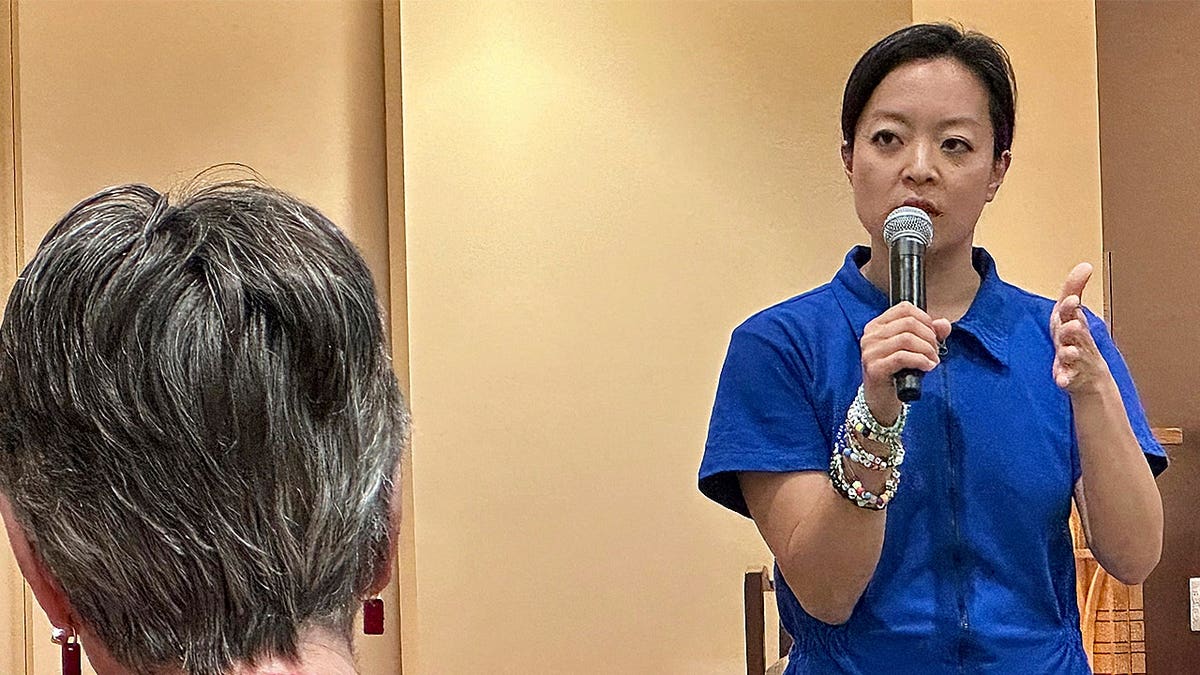
Francesca Hong, a Democratic state lawmaker and socialist candidate for Wisconsin governor, speaks to voters at a retirement home, Tuesday, July 7, 2026, in Madison, Wis. (Scott Bauer/AP Photo)
The same day, another statewide battle will take place as progressive Lt. Gov. Peggy Flanagan of Minnesota and more moderate Democratic Rep. Angie Craig are the leading contenders in the Democratic primary faceoff to succeed retiring Sen. Tina Smith, a fellow Democrat.
CLICK HERE TO DOWNLOAD THE FOX NEWS APP
While the upcoming primary battles will impact the fight for the future of the party, there’s a more immediate concern: this year’s midterm faceoff for congressional majorities.
«What you’re seeing here are the two opposing forces of the Democratic Party,» veteran Democratic strategist Joe Caiazzo told Fox News Digital as he referred to the ballot box showdowns. «The stakes are monumentally high because Democrats have to hold these seats in November.»
andrew cuomo, bernie sanders, alexandria ocasio cortez, democratic party, democrats elections, midterm elections, michigan
INTERNACIONAL
Una modesta propuesta para la disputa por el estrecho: un pacto compartido entre los Estados del Golfo

INTERNACIONAL
Johnson’s strategy to bypass Democrats’ SAVE Act blockade survives key vote, handing GOP big win
President Trump urges lawmakers to pass the SAVE America Act
President Trump used his nationwide address to demand Congress pass the Save America Act, believing it will tighten election security. Chad Pergram, Chief Congressional Correspondent, reports on the legislation’s challenging path forward. While most House Republicans are on board, some GOP Senators remain skeptical, highlighting concerns about its implementation and potential impact on election integrity.
NEWYou can now listen to Fox News articles!
Speaker Mike Johnson’s latest bid to skirt Democrats’ opposition to an election integrity bill backed by President Donald Trump survived a key hurdle on Monday evening.
The Safeguarding American Voter Eligibility (SAVE) America Act has faced significant headwinds in Congress despite having Trump’s full-throated support. While it passed the House, the legislation has struggled in the Senate where at least several Democratic votes are needed to break a filibuster and advance to final passage.
But the new plan by Johnson, R-La., which would allow key parts of the bill to skirt Democrats entirely, is one step closer to getting a House-wide vote sometime this week.
TRUMP INTERVENES AS HOUSE GOP REVOLT PUTS SAVE AMERICA ACT AT CENTER OF SPENDING SHOWDOWN
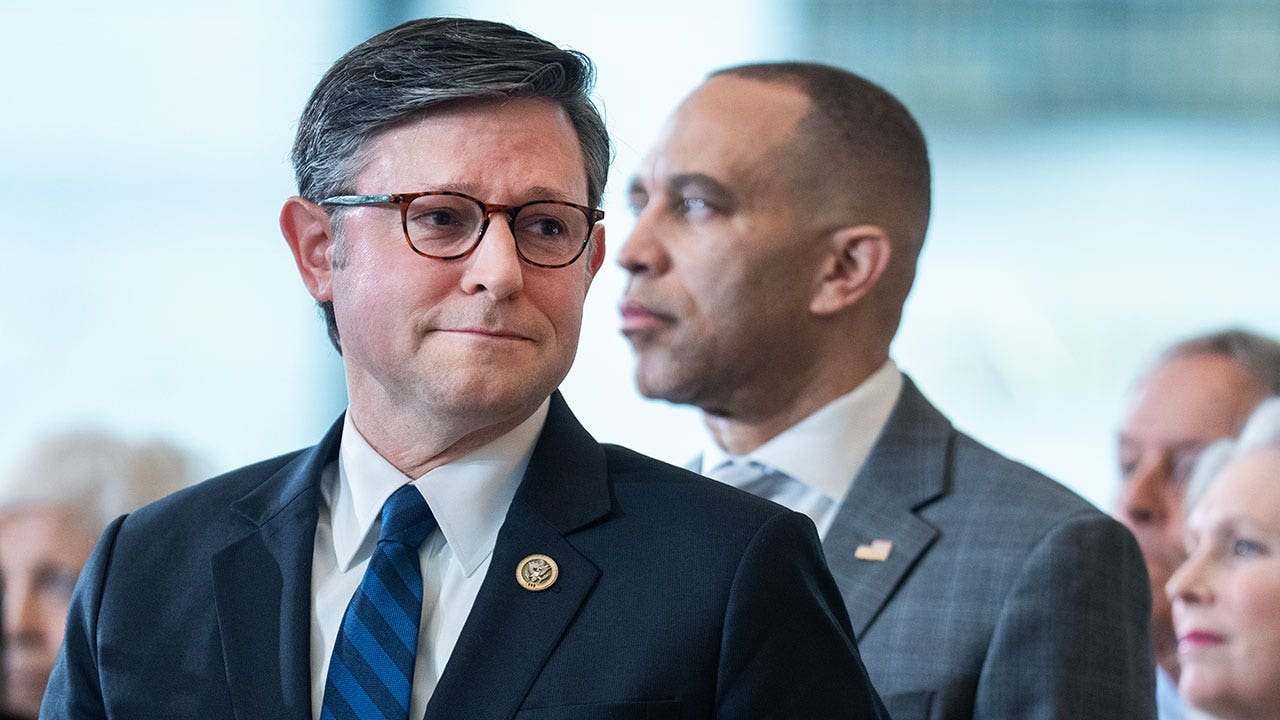
Speaker of the House Mike Johnson, R-La., and House Minority Leader Hakeem Jeffries, D-N.Y., attend the U.S. Holocaust Memorial Museum’s National Commemoration of the Days of Remembrance ceremony in Emancipation Hall on Tuesday, April 14, 2026. (Tom Williams/CQ-Roll Call, Inc. via Getty Images)
Republicans would erase the need for any Democratic buy-in by putting key elements of the SAVE America Act into a larger budget reconciliation bill. The reconciliation process allows the party in power to pass sweeping fiscal policy reforms without input from their opposition by lowering the Senate’s threshold for passage to line up with the House’s simple majority requirement.
But there are strict guidelines for what can be in a reconciliation bill. Such legislation must deal with yearly federal spending and revenues, meaning issues that do not directly affect fiscal policy are generally excluded.
House Republicans are aiming to use this reconciliation bill to fund states’ election integrity efforts, replenish military funding amid the U.S. war with Iran, and dole out aid to American farmers.
GOP’S $95B DEFENSE PACKAGE SURVIVES CRITICAL HURDLE AMID FISCAL HAWK REVOLT
In total, the legislation would set the stage for $95 billion in new federal spending across the next 10 years.
The first chamber-wide step in the reconciliation process is to pass a framework that directs the relevant committees to then craft details dealing with their allocated budgets. Those details are then put back into a single sweeping bill that must pass the House and Senate before getting to Trump’s desk for his signature.
Passing the House Rules Committee means the bill will see a chamber-wide test vote that, if adopted, will set the stage for lawmakers to debate the bill before a final vote.
GOP CIVIL WAR ERUPTS OVER TRUMP’S LATEST AGENDA PUSH AS KEY REPUBLICANS THREATEN TO SINK MEGABILL
That vote is expected to occur Tuesday afternoon, with the final vote taking place the following day at 3:30 p.m., according to a preliminary schedule obtained by Fox News Digital.
Trump urged Republicans to advance the bill earlier Monday, arguing it would «get AS MUCH of THE SAVE AMERICA ACT as possible in a Budget Bill, along with aid to our incredible Farmers, and funding for our Military.»
Democrats, meanwhile, have accused Republicans of trying to unfairly sway elections with their SAVE America Act push.
«This is a phony issue that Donald Trump is creating. What’s amazing to me is that Donald Trump had the nerve to say to the Speaker of the House, who apparently didn’t object, that the most important thing that Republicans should focus on is voter suppression legislation, and that housing doesn’t matter, healthcare doesn’t matter, grocery bills don’t matter,» House Minority Leader Hakeem Jeffries, D-N.Y., said earlier this year.
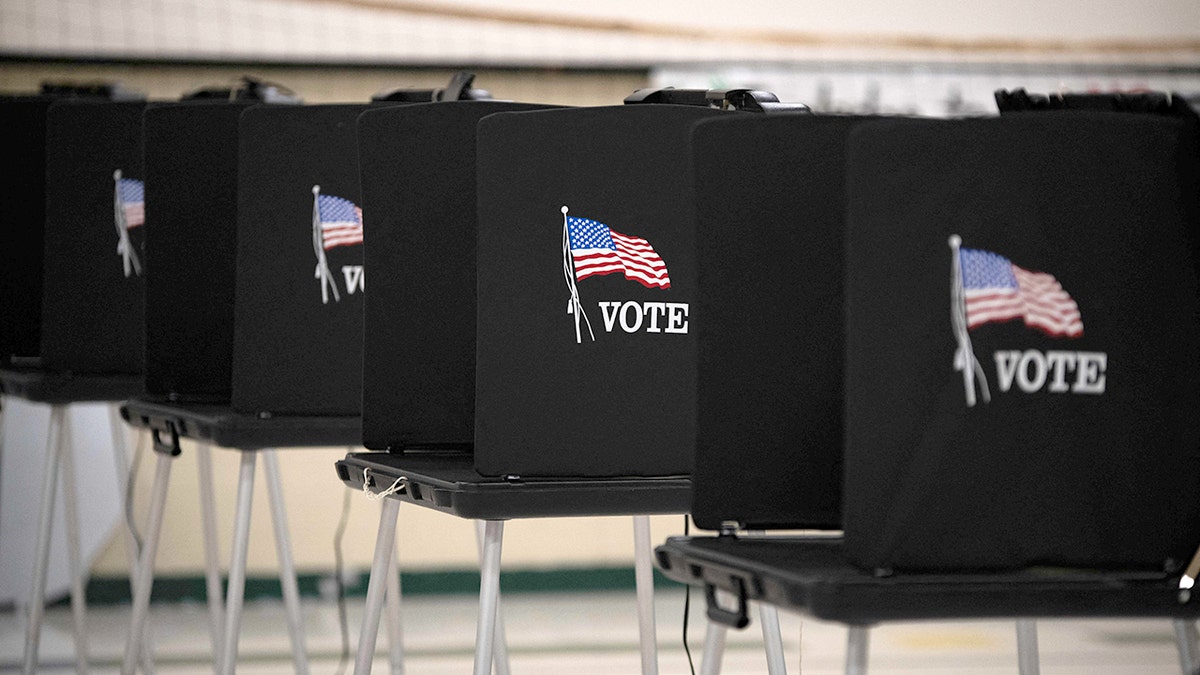
Voting booths are seen at Glass Elementary School’s polling station in Eagle Pass, Texas, on November 8, 2022. (MARK FELIX/AFP via Getty Images)
Senate Minority Leader Chuck Schumer, D-N.Y., has repeatedly referred to the legislation as «Jim Crow 2.0.»
CLICK HERE TO DOWNLOAD THE FOX NEWS APP
«While the specific policies may have changed since the days of the Jim Crow South, the goal of the SAVE Act is the same: disenfranchising American citizens and making it harder for eligible people to vote, particularly low income Americans and people of color,» he said in February.
Republicans argue that the SAVE America Act — which would implement federal voter ID requirements and a proof of citizenship mandate in the voter registration process — would make American elections safer and more secure.
elections, congress, voting, mike johnson, politics

Una sesión en cuarto intermedio y leyes frenadas: la desafiante agenda del Senado hasta fin de año

Cuánto debería rendir un plazo fijo tradicional por mes para no perder plata

Murió Pato Strunz, histórico baterista de Hermética, Malón y figura emblemática del heavy metal argentino

Camada 2030: la lista de futbolistas que asoman para representar a la selección argentina en el próximo Mundial

Socialist insurgents force moderate Democrats into high-risk showdown over must-hold races
La obra pública en los tiempos de Javier Milei: se demora un proyecto clave para mejorar la calidad de vida de 4,5 millones de personas

Rubio’s call to combat global funders of far-left terrorism could put Singham in crosshairs

Sismo de 7.4 sacude a Guatemala: Autoridades declaran alerta anaranjada por daños y descartan tsunami

Canales para ver EN VIVO el San Lorenzo vs. Deportivo Riestra por la Copa Argentina

Rogelio Frigerio presentó un seguro multirriesgo con un fondo de USD 1 millón para el maíz en Entre Ríos

 POLITICA18 horas ago
Sin la Copa y sin Messi en el avión, vuelve Tapia y deberá enfrentar tres frentes de tormenta tras la pausa del Mundial
- INTERNACIONAL3 días ago
Estados Unidos cambia una regla histórica del jugo de naranja vigente desde 1963 y afecta a toda la industria
- CHIMENTOS3 días ago
Es el conductor más querido de la tele y tan argentino como el mate, pero pocos saben que nació en España: ¿a quién alentará en la final?