INTERNACIONAL
California professor accused of killing pro-Israel protester will ‘likely’ avoid lengthy prison sentence

NEWYou can now listen to Fox News articles!
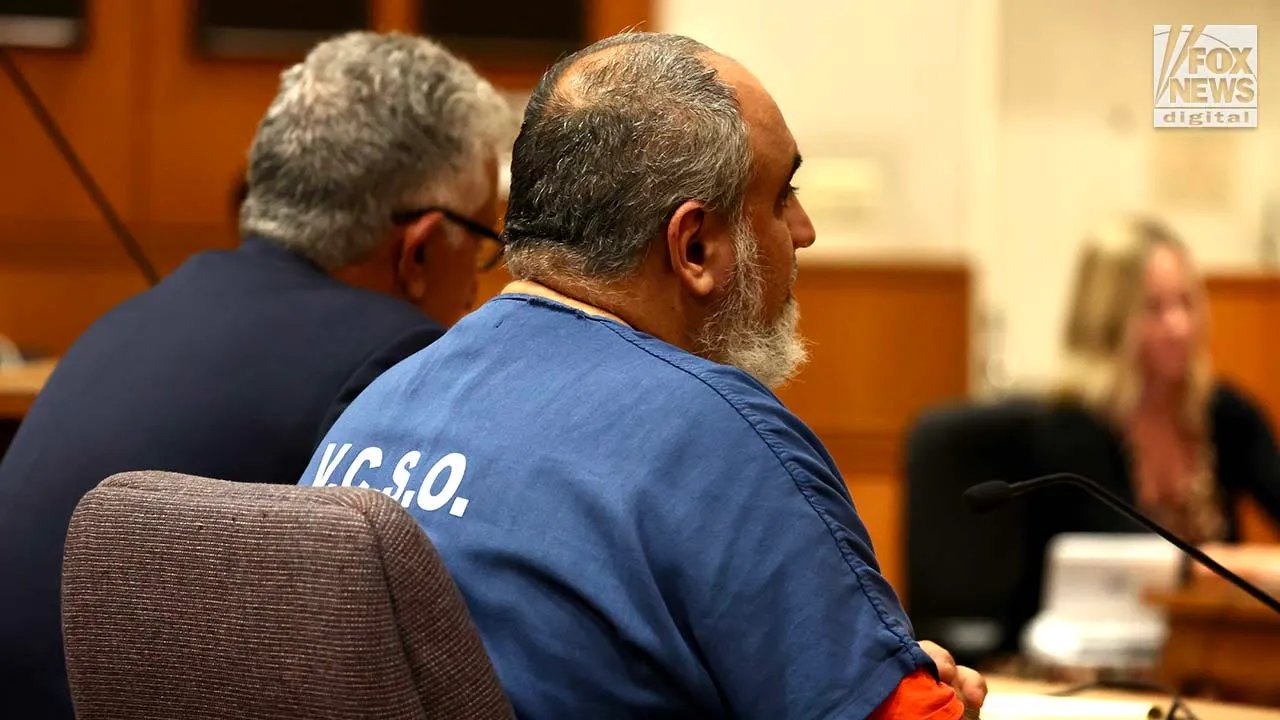
The Jewish community is outraged after a California district attorney’s office signaled that a community college professor could escape a lengthy prison sentence after he struck an elderly pro-Israel protester with a megaphone, which led to him falling backwards onto the ground and later dying at the hospital from blunt force trauma, according to the medical examiner.
Loay Abdel Fattah Alnaji, 53, an anti-Israel community college professor, was initially ordered to stand trial after hitting a pro-Israel protester, Paul Kessler, 69, in the head with a megaphone, who was standing across the street from him during dueling pro-Israel, pro-Palestinian protests in Thousand Oaks, located in Ventura County, California, in 2023. Kessler fell backwards to the ground after being struck by Alnaji striking his head and sending him to the hospital before passing away shortly thereafter from blunt force trauma, according to the medical examiner.
The incident took place against the backdrop of the Israel-Hamas war tensions and concerns about antisemitism rising in the United States and more broadly. Alnaji was initially facing up to four years in prison for the matter as he fought the charges against him, but on Tuesday he reversed course and the court «indicated that it is likely to place Alnaji on formal probation with up to 365 days in jail,» according to the Ventura County District Attorney’s Office, which said it was displeased with the move.
GERMAN OFFICIALS WARN ISLAMIST, FAR-LEFT RHETORIC DRIVING SPIKE IN ANTISEMITIC ATTACKS
Paul Kessler can be seen at the intersection of Westlake and Thousand Oaks Boulevards hours before, authorities say, Alnaji delivered the blow that caused him to hit the ground and sustain fatal injuries, (Provided to Fox News Digital)
Ventura County Superior Court Judge Derek Malan, who offered Alnaji probation if he changed his plea, according to the Ventura County Star, reportedly likened the altercation to if «two old guys had a dispute and an accident happened,» Defense attorney Ron Bamieh said, after noting the offer came after multiple meetings between him and the judge.
A defense source familiar with the case said that the district attorney’s office was also involved in these talks, despite public statements indicating they were unhappy with the outcome. The defense source said the district attorney’s office had to take a harsher stance for political reasons.
«Alnaji should be sentenced to prison for his violent behavior, and our office strongly objects to any lesser sentence,» said District Attorney Erik Nasarenko. «While no amount of punishment will ever fully account for the Kessler family loss, a prison commitment underscores the severity of this crime and will deter others from committing similar acts of violence.»
A prosecutor also said Kessler’s family opposed the sentence and sought the maximum term.
ANTISEMITIC ATTACKER FACED 30-YEAR SENTENCE, GETS LESS THAN 1½ YEARS IN PLEA DEAL
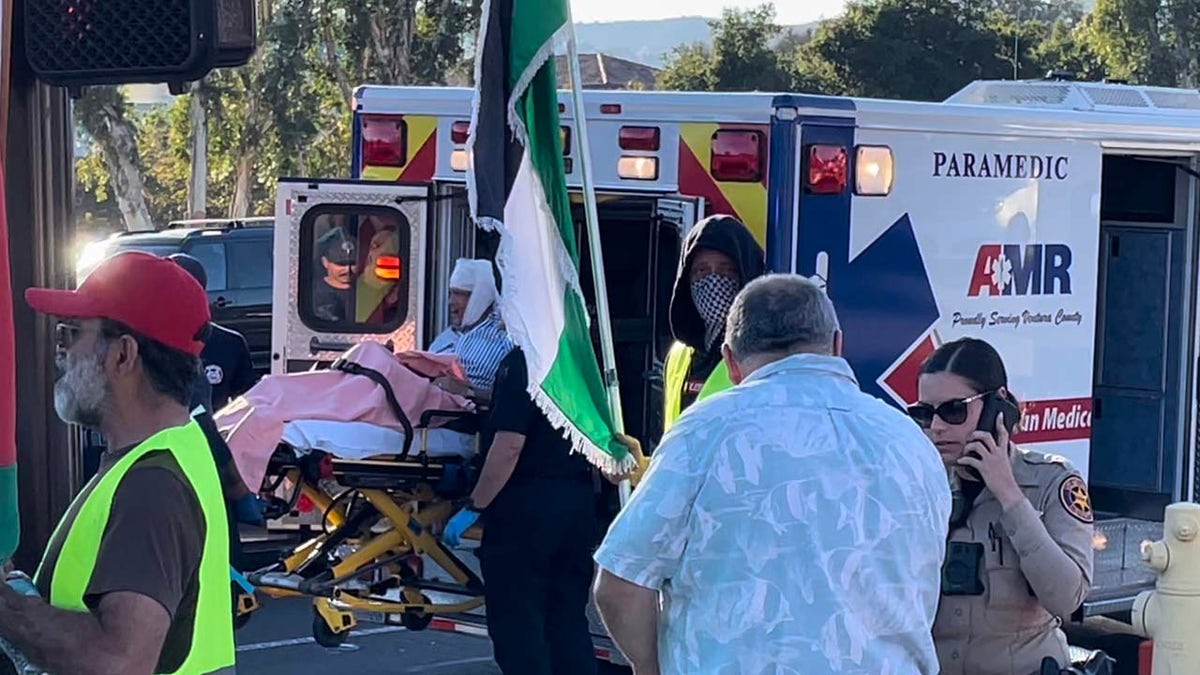
Alnaji can be seen watching an ambulance cart Paul Kessler to a nearby hospital on November 5. (Provided to Fox News Digital)
However, the defense source said that prior to the plea this week, the victim’s family wanted the case over quickly and quietly, without a trial, and did not have a strong opinion about sentencing. The source also contested claims that anyone had actually seen the full incident occur and insisted there were numerous contradictions in the eyewitness accounts provided that alleged Alnaji was the aggressor.
«Mr. Alnaji made a thoughtful decision today, one guided by his family’s well-being and a deep concern for community peace. The tragedy that befell Mr. Kessler, compounded by the geopolitical tensions surrounding Israel and Gaza, led Mr. Alnaji to reconsider pursuing a full trial,» Bamieh said in a statement. «The evidence regarding Mr. Kessler’s aggressive conduct, his history of advocating violence and antagonistic tactics at pro-Palestinian rallies, and most critically, his brain stem condition—all of these facts would likely have shifted the outcome of a trial.»
The defense has argued that a pre-existing brain injury is actually what caused Kessler’s death, not blunt force trauma as was determined by the medical examiner.
ANTI-ISRAEL AGITATORS CLASH WITH NYPD OFFICERS NEAR SYNAGOGUE
«For those who have characterized Mr. Alnaji as a violent man who intentionally struck a helpless victim, I simply say: they are either uninformed about the facts of this case, or they are pursuing an agenda unrelated to justice. The record tells a different story,» Bamieh concluded.
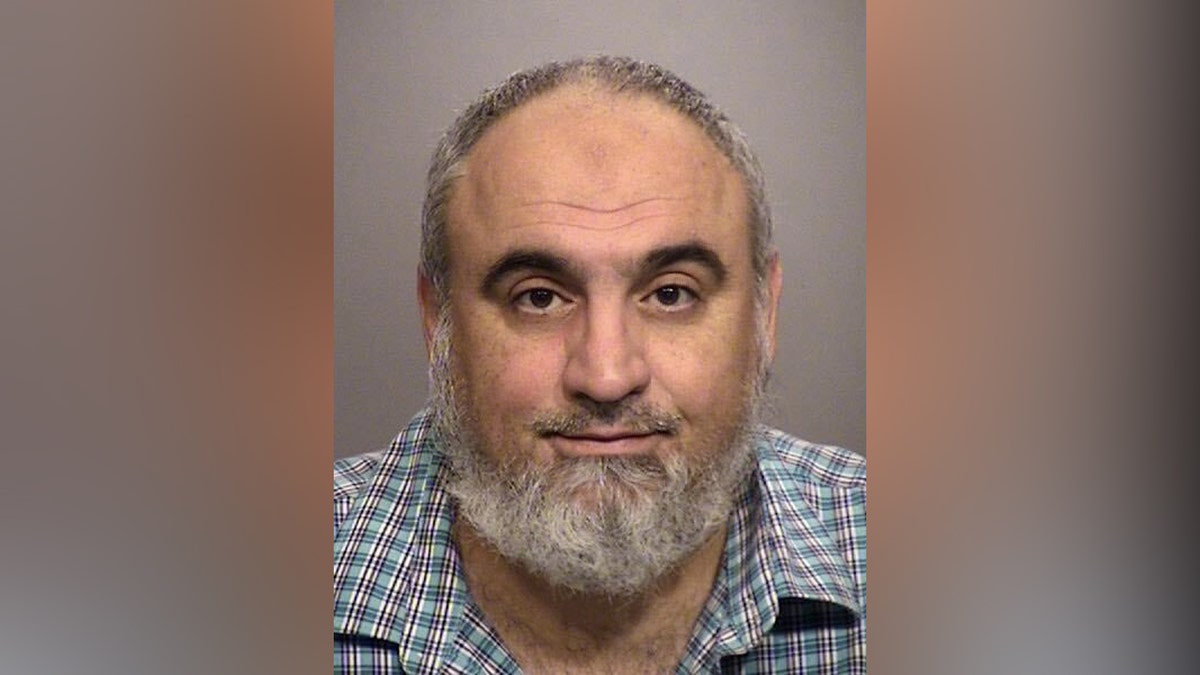
Pictured is a mugshot of Loay Alnaji, arrested at his Moorpark, California home around 7:40 a.m. yesterday. The community college computer science professor faces involuntary manslaughter and battery charges in the death of pro-Israel protester Paul Kessler (Ventura County Sheriff’s Department)
Jonathan Oswaks, a friend of Kessler’s who was at the rally with him when the incident took place, told the Jewish Journal that the sentencing news was «deeply frustrating.»
«I’m not a lawyer, but the way this was handled raises serious questions for me. It sends a troubling message about accountability,» he told the Jewish Journal in an interview.
Oswaks recounted moments from the event in his interview with the outlet, noting how the pro-Palestinian protesters vastly outnumbered them that day. He said after the pair had split up, people began approaching him and stood inches from his face yelling into his ear and using a megaphone.
«When I tell you I had never experienced that level of hate in my life, I hadn’t,» he said. «I told them to get out of my space. They backed off briefly, then started again. I made it clear they needed to stay away, and eventually they did.»
CLICK HERE TO DOWNLOAD THE FOX NEWS APP

A memorial is set up by a gas station in Ventura County, California for Paul Kessler, on November 7, 2023. The 69-year-old died following an altercation with a pro-Palestinian protester days earlier. (The Image Direct for Fox News Digital)
After news of the deal came down, the Anti-Defamation League expressed disfavor with the likely sentencing outcome, arguing it «emboldens others to act in anger against the Jewish community.»
Rabbi Noah Farkas, president and chief executive of the Jewish Federation of Los Angeles, said that «while we would have liked a harsher sentence,» he welcomed «the admission of guilt for this heinous crime,» according to the L.A. Times.
«Our hope is that today’s news helps bring closure to his family and gives our community the ability to demonstrate safely,» Farkas added.
Alnaji’s sentencing is scheduled for June 25, and he remains at home after posting $50,000 bail.
in court, trials, trials, anti semitism, hamas











INTERNACIONAL
Blue state governor’s pardon of convicted felon torpedos a major Supreme Court immigration fight
Judge called out for releasing MS-13 murder suspect in California
DHS general counsel James Percival warns of an ‘epidemic of judicial activism’ after a federal judge in California orders the release of an MS-13 murder suspect. Percival argues that individuals wanted for murder must remain in immigration detention during removal proceedings.
NEWYou can now listen to Fox News articles!
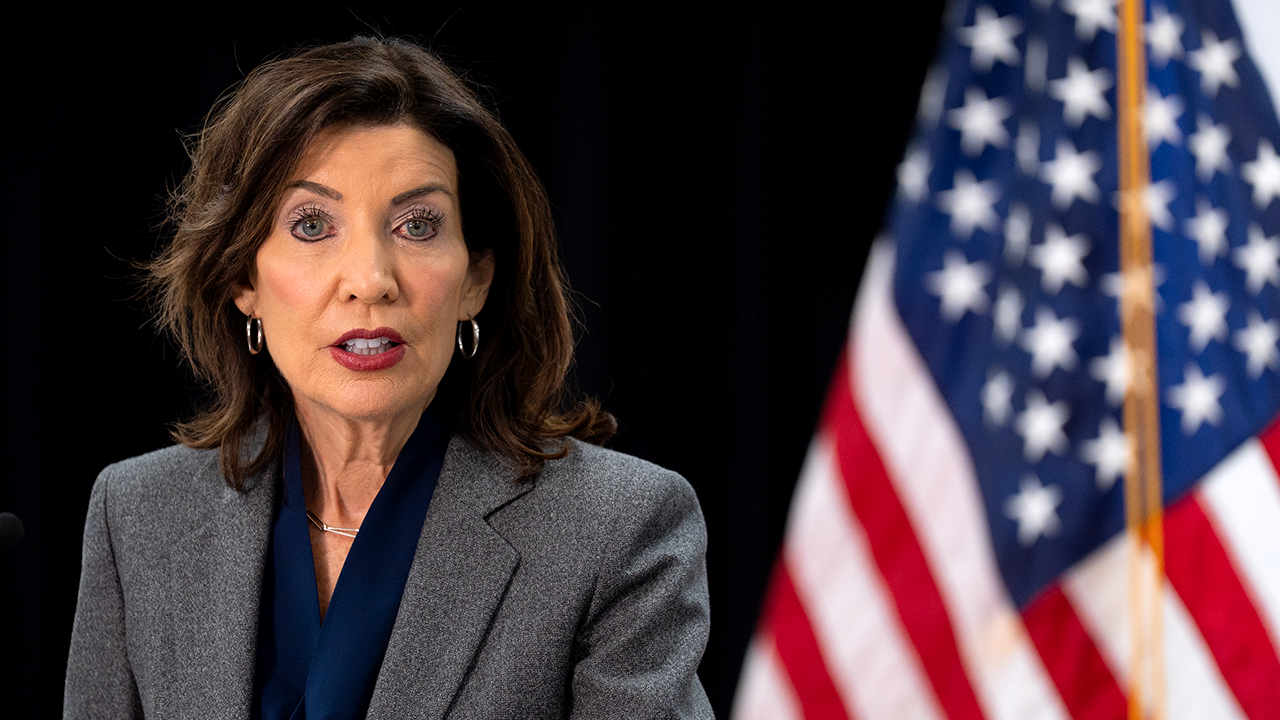
The Supreme Court will no longer hear an oral argument for a case centered on bond rights for noncitizens detained for lengthy periods, ruling the case moot after New York Democratic Gov. Kathy Hochul pardoned a lawfully present Dominican citizen, who pleaded guilty to second-degree assault.
Hochul pardoned Keisy Guerrero Mariano, who is identified in court documents as «Keisy GM,» in late August, effectively killing the Trump administration’s appeal to the Supreme Court arguing that noncitizens, including those with green card status, do not have a legal right to a bond hearing for a prolonged detention if they have committed crimes that are grounds for mandatory deportation.
Hochul, who is staunchly opposed to President Donald Trump’s immigration enforcement crackdown, issued the pardon for Mariano just as the brief was due.
FEDERAL APPEALS COURT COMPARES TRUMP MIGRANT DETENTION POLICY TO JAPANESE AMERICAN INTERNMENT
FILE – New York Democratic Gov. Kathy Hochul pardoned Keisy Guerrero Mariano in late August. (Adam Gray/Bloomberg via Getty Images)
Solicitor General John Sauer agreed Friday that Genalo v. Black is now moot, but said the Trump administration will seek an «alternative vehicle» to challenge the Second Circuit’s 2024 ruling that prolonged immigration detention can trigger a constitutional right to a bond hearing.
Sauer said the administration intends to find another case through which the Supreme Court can resolve the issue during its 2026-27 term.
The lawsuit centered on the challenges of plaintiffs Carol Williams Black, a Jamaican national with lawful standing, and Mariano — both convicted criminals detained by ICE.
APPEALS COURT BLOCKS TRUMP ADMIN FROM HOLDING MIGRANTS WITHOUT BOND FOR OVER 90 DAYS
Mariano was first arrested by Immigration and Customs Enforcement officers in 2020 over a 2015 second-degree assault conviction for which he served time, making him eligible for deportation.
He spent nearly two years in ICE detention, but was released in 2022 due to a nationwide injunction that required the release of detainees because of COVID-19 health risks.
Prior to his release, Judge John P. Cronan of the U.S. District Court for the Southern District of New York denied Mariano’s habeas corpus request in November 2021.

FILE – Mariano was released in 2022 after spending nearly two years in ICE detention. (Getty Images)
But in May 2024, the Second Circuit overruled Cronan’s decision, ruling that the government must grant noncitizens a bond hearing once detention becomes «unreasonably long.» Failure to do so, the court ruled, would violate the Fifth Amendment’s due process clause.
The case was appealed to the Supreme Court, which agreed to hear the case June 15; however, the high court ruled Black’s case moot because he had left the United States and filed a court declaration that he would not be returning to the country.
Black was convicted in New York in 2000 of sexually abusing a minor under the age of 11.
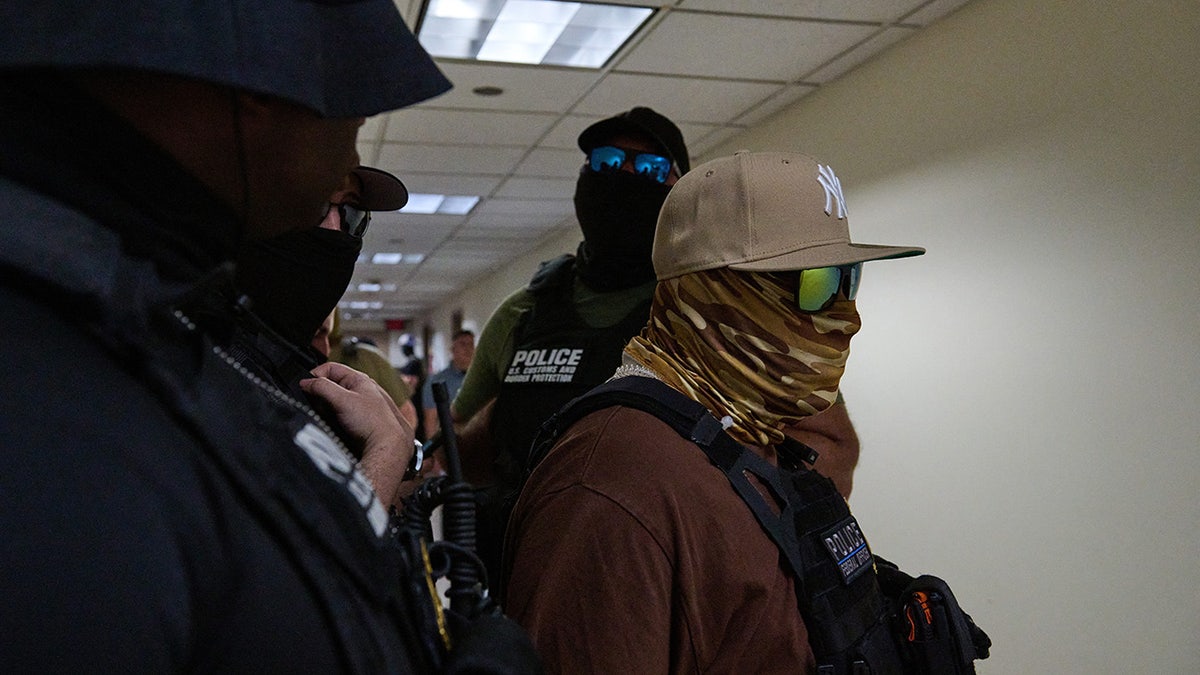
FILE – Following an appeal, the Second Circuit ruled the government must grant noncitizens a bond hearing once detention becomes «unreasonably long.» (Dominic Gwinn/Middle East Images/AFP via Getty Images)
DHS BLASTS MINNESOTA BOARD FOR UNANIMOUSLY PARDONING ILLEGAL IMMIGRANT CONVICTED OF 3 ASSAULTS
Hochul’s decision to issue a pardon to Mariano has garnered fierce criticism from legal experts.
«Pretty wild to fully pardon an aggravated felon to (1) stop the felon from getting deported and (2) stop the Supreme Court from ruling on an issue. (Especially as this litigation has been going on for years),» Eric Wessan, Iowa’s solicitor general, posted on X.
He praised Sauer’s decision to fight back on the Second Circuit’s ruling.
«I wonder how many non-American felons Governors like Hochul will choose to fully pardon and free to avoid them facing consequences for their actions,» Wessan added.
Fox News Digital reached out to Hochul’s office for comment.
kathy hochul, immigrant rights, judiciary, latino, deportation, supreme court
INTERNACIONAL
Abdul El-Sayed touts ‘whole a–’ medical credentials while defending sex changes for children
NEWYou can now listen to Fox News articles!
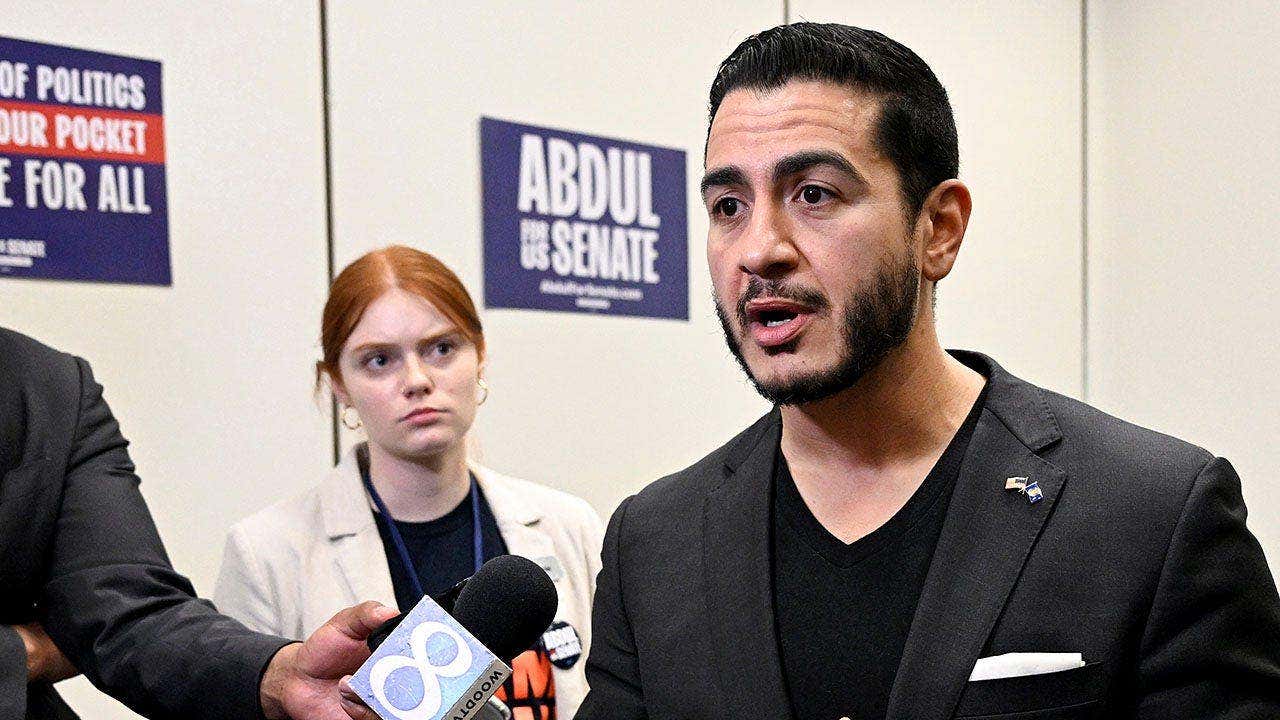
Michigan Democratic U.S. Senate candidate Abdul El-Sayed said the government should not restrict sex changes, arguing that «whole a–» doctors like himself should be allowed to make their own determinations for patients’ treatment plans.
The remarks came during El-Sayed’s Friday rally held at Michigan State University, during which the former Detroit Health Department head responded to a student’s question about protecting sex changes. Since launching his campaign, El-Sayed has flaunted that he is a «physician» and, if elected, he would be the first doctor to serve as a Democratic senator in 50 years. However, Fox News Digital previously reported El-Sayed has never held a medical license in Michigan or New York.
«I went to a whole a– medical school, everybody I graduated with also went to whole a– medical school,» El-Sayed said. «And then… they went to whole a– residency. Right? And some of them went to whole a– fellowship. They took whole a– exams to provide whole a– healthcare.»
DEM SENATE HOPEFUL’S ‘PHYSICIAN’ CAMPAIGN PITCH UNDER FIRE AFTER LICENSE RECORDS REVEAL KEY GAPS
Abdul El-Sayed answers a question during a press conference at the Michigan Democratic Party State Endorsement Convention in Detroit on April 19, 2026. El-Sayed has never held a medical license in Michigan or New York. (Jose Juarez/AP Photo)
«They are the experts that a patient wants to see when they seek care,» El-Sayed continued. «And the decision about what healthcare is necessary ought to be held between a patient — and or their parents if they’re under the age of 18 — and their doctor. That’s it.»
The remarks come as the Trump administration has made major strides in restricting minors’ access to «sex-rejecting» procedures, which include hormone therapy and surgeries.
Earlier this week, the Justice Department announced that Mount Sinai had joined other hospitals, like Texas Children’s Hospital, the Cleveland Clinic Foundation and Connecticut Children’s Hospital, to halt sex change procedures for children after reaching an agreement with the Trump administration.
MEDICAID ENDS FUNDING FOR CHILD SEX-CHANGE PROCEDURES AS TRUMP ADMIN SLAMS ‘EXPERIMENTAL’ TREATMENTS
El-Sayed has made the promise of «Medicare-for-all» — government-run healthcare — as the major selling point of his campaign; he said that even though the government will be covering the bill, it needs to stay out of the doctor’s decisions about a patient’s treatment plan.
«I don’t think the government gets to have a say about what healthcare is provided in what circumstances and why,» El-Sayed said. «And to me, that is the standard on which we decide how we make healthcare decisions.»
THE MEDICARE FOR ALL TRADE-OFFS SOCIALISTS AREN’T TALKING ABOUT, ACCORDING TO EXPERTS
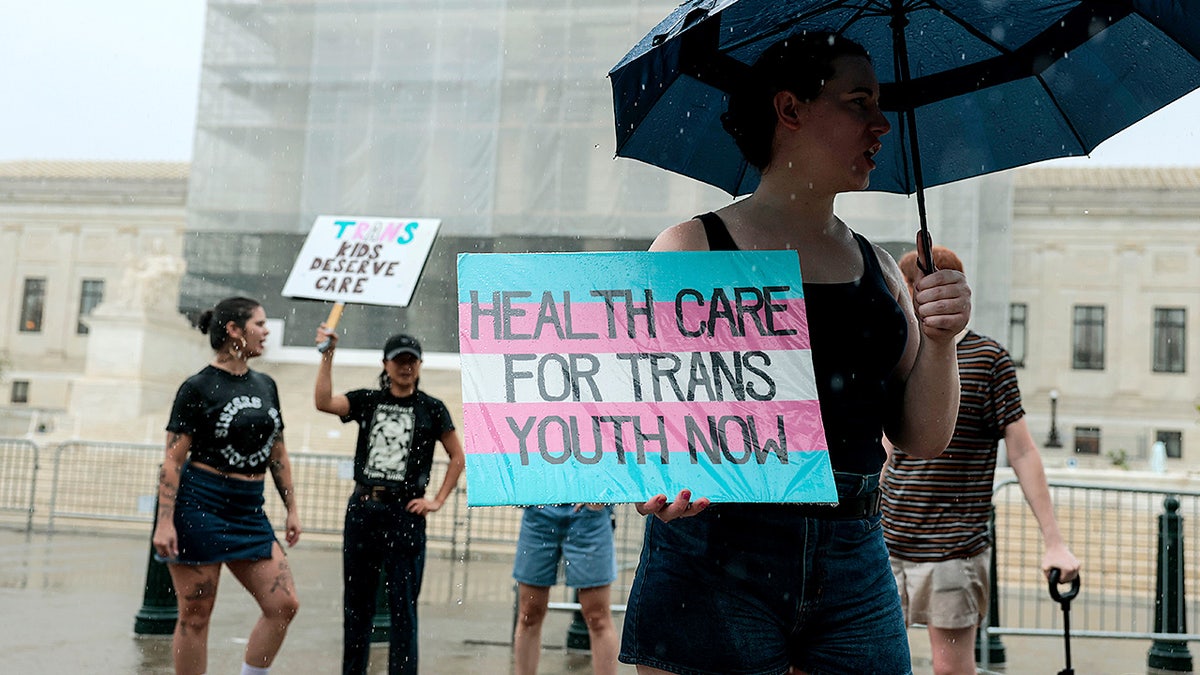
A protester holds a sign in support of sex changes for transgender children outside the U.S. Supreme Court in Washington, D.C., on June 18, 2025. (Anna Moneymaker/Getty Images)
«Not what the government says you can or can’t do, but what a patient and/or their parent, if they’re under 18, and their provider to decide. That’s the most important thing,» El-Sayed continued. «And there’s a lot of disinformation about us, what we’re talking about, when we talk about reproductive rights and when we’re talking about healthcare for the trans folks. But, in the end, the place where the rubber meets the rope is in that clinical room between a patient and a provider, and that to me is the center we should engage on.»
El-Sayed argued that Republicans agree with his belief that treatment decisions should be between a patient and their doctor, pointing to the Right to Try Act, which allows terminally ill patients to try experimental drug treatments that aren’t yet approved by the Food and Drug Administration after they have exhausted all other treatment options.
«Because conservatives fought for a very long time for this legislation called ‘Right to Try’ legislation, which is the idea that the government couldn’t tell you [that] you couldn’t have a certain medication,» El-Sayed said.
TRUMP ADMINISTRATION PROBE COULD UPEND WIDELY USED TRANSGENDER YOUTH TREATMENT GUIDELINES
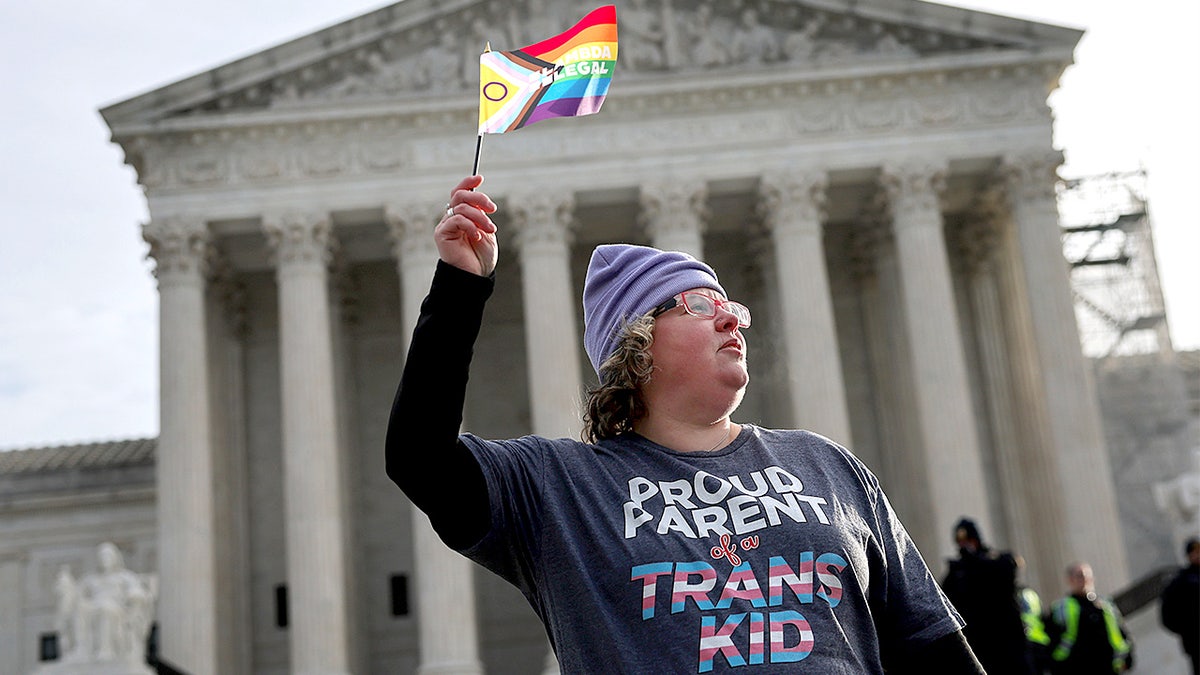
A transgender rights supporter takes part in a rally outside the U.S. Supreme Court as the justices hear arguments in a case on transgender health rights in Washington, D.C., on Dec. 4, 2024. (Kevin Dietsch/Getty Images)
«So they agree that the decision about healthcare ought to be between the person and their provider. That’s it. So let’s use that standard, and keep to that standard, and make sure the government doesn’t have the ability to tell you what you can or cannot do with your own life,» El-Sayed said.
However, the research on the efficacy of treating individuals with gender dysphoria by allowing them to change sexes with «cross-sex» hormones and puberty blockers is limited.
The World Professional Association for Transgender Health, whose guidelines are used by leading medical associations like the American Academy of Peditatrics, is currently facing a lawsuit from the Federal Trade Commission stemming from allegations that its guidelines misled parents about the «medical consensus and medical necessity, as well as the safety and effectiveness» of sex change procedures.
The FTC has accused WPATH of failing to disclose the side effects associated with some procedures, such as patients experiencing incontinence, erectile pain, mood disturbances, pelvic pain and vaginal pain stemming from «cross-sex» hormones.
Meanwhile, countries that have socialized medicine have put restrictions in place for minors seeking sex changes. In England, the National Health Service put a pause on «cross-sex» hormones for 16- and 17-year-olds in March after finding research was «really weak» to support it.
The country already had a ban in place restricting children under 16 years old from taking sex-change hormones.
El-Sayed’s office did not immediately respond to Fox News Digital’s request for comment regarding his medical credentials.
politics, health, health care, abdul el sayed, health care executive
NEWYou can now listen to Fox News articles!
Twenty-five years after a generation promised to «Never Forget,» that pledge now relies on education for the more than 100 million Americans with no memory of 9/11.
The Pentagon is preparing to help address that challenge by breaking ground this weekend on a long-awaited Visitor Education Center at the only one of the three 9/11 attack sites still without a dedicated museum or education center.
The new center is intended to fill the gap that has grown more pronounced with each passing year by helping Americans who never experienced the attacks understand not only what happened on Sept. 11, 2001, but why it continues to matter.
Joseph Kornhoff, executive director of the Pentagon Memorial Fund, told Fox News Digital that nearly one-third of the country was either not alive that day or has no recollection of it and therefore lacks the «personal connection» shared by those who watched the attacks unfold.
NEW 9/11 MUSEUM EXHIBIT AIMS TO CONNECT YOUNGER AMERICANS TO THE ATTACKS THROUGH POWERFUL ARTIFACTS
Members of the military and first responders watch as an American flag is unfurled on the side of the Pentagon to mark the 25th anniversary of the September 11th terrorist attacks on September 11, 2026 in Arlington, Virginia. The United States is marking the 25th anniversary of the terrorist attacks of September 11, 2001, when a group of al-Qaeda hijackers flew airplanes into the World Trade Center, Shanksville, Pennsylvania, and the Pentagon, killing nearly 3,000 people. (Photo by Finn Gomez/Getty Images)
«That’s what we’re trying to provide with the visitor education center experience,» Kornhoff said in an interview with Fox News Digital, explaining that the goal is to give visitors a personal connection that allows them to «start to understand the gravity of that day.»
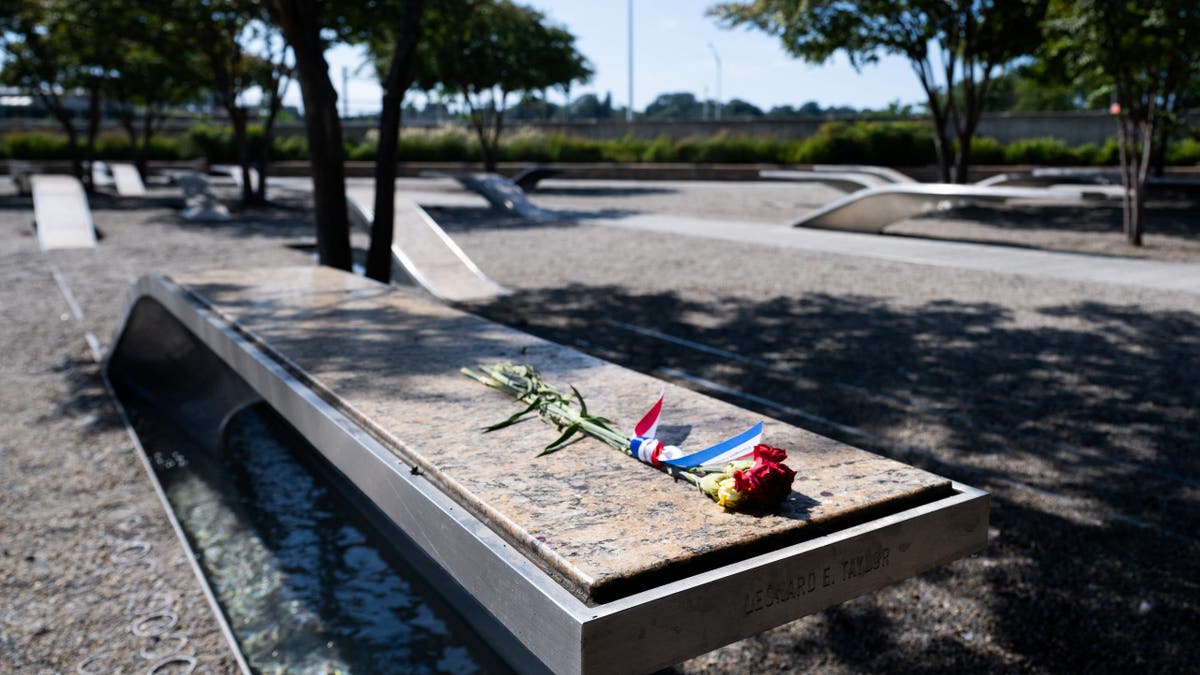
Flowers lay on a bench at the National 9/11 Pentagon Memorial, adjacent to the Pentagon, ahead of the 25th anniversary of the 9/11 attacks, in Washington, DC, on September 9, 2026. (Photo by SAUL LOEB / AFP via Getty Images)
Nearly 230 miles north, the National September 11 Memorial & Museum in New York is confronting the same generational divide.
Beth Hillman, president and CEO of the National September 11 Memorial & Museum, said the passage of time has only made the annual vow to «Never Forget» more important as the number of Americans with firsthand memories of the attacks declines.
«Many in my generation remember exactly where we were on that horrific day,» Hillman said during an Aug. 31 press preview outlining the museum’s plans for the 25th anniversary. «Yet, 100 million Americans were not even born or are too young to remember that day for themselves today.»
BROOKLYN TEACHERS WHO WITNESSED 9/11 AS CHILDREN REVEAL WHAT THEY WANT THE NEXT GENERATION TO REMEMBER
Noah Rauch, the museum’s senior vice president for education and public programs, said he has watched that transition unfold firsthand through the museum’s work with students and teachers. «I’ve seen this line creeping up between memory and history, between those who remembered the attacks and those who didn’t,» Rauch said during the Aug. 31 press event.
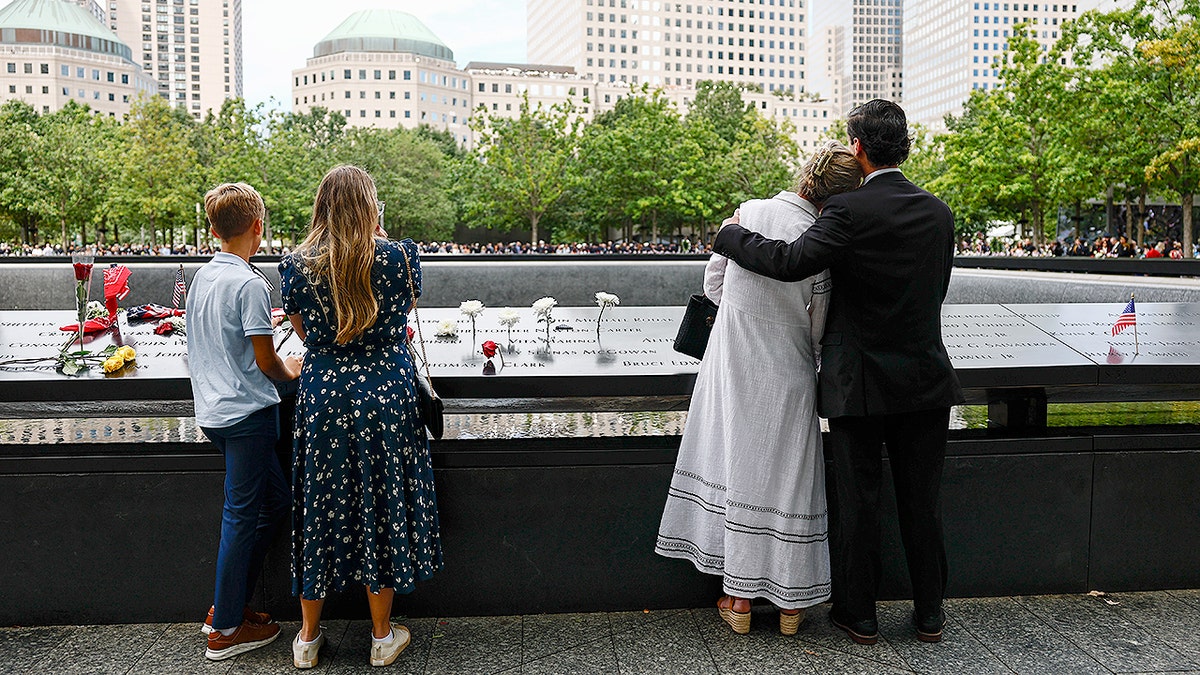
The United States is marking the 25th anniversary of the terrorist attacks of September 11, 2001, when a group of al-Qaeda hijackers flew airplanes into the World Trade Center, Shanksville, Pennsylvania, and the Pentagon, killing nearly 3,000 people. (Jeenah Moon – Pool/Getty Images)
That transition from memory to history also raises a more modern challenge. Americans too young to remember the attacks are increasingly learning about an event they never experienced firsthand, while conspiracy theories and false narratives about 9/11 run rampant online.
Kornhoff said that makes factual education increasingly important, pointing specifically to conspiracy theories surrounding the attack on the Pentagon and narratives suggesting that America «deserved 9/11.»
«That’s the need for the education center,» Kornhoff told Fox News Digital. «As a nation, we need to really take a step back, look at how we’re educating our young children to make sure that we’re providing them with the facts of the situation … and not these conspiracy theories and entertaining wild ideas that just simply are not true.»
REPORTER’S NOTEBOOK: 9/11 IS JUST A HISTORY CHAPTER FOR A NEW GENERATION OF AMERICANS

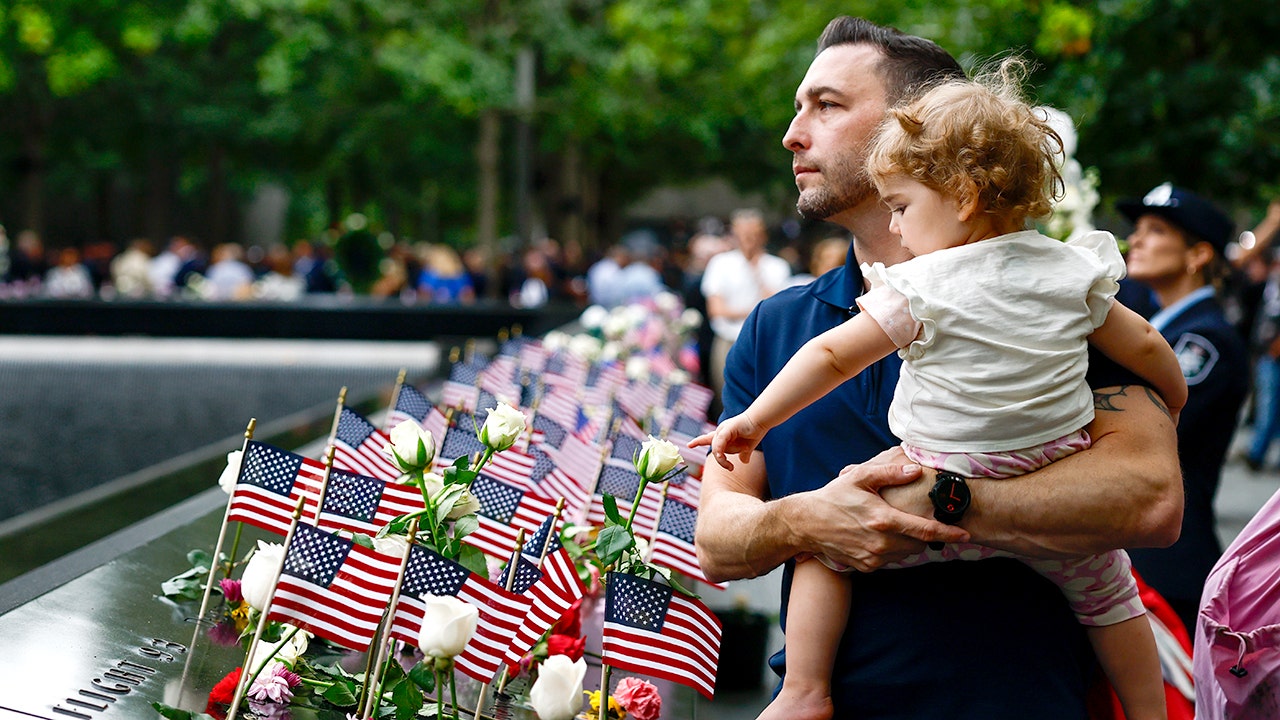
Flowers and American flags rest beside inscribed names at a reflecting pool at the National September 11 Memorial & Museum on Sept. 11, 2026, in New York City, as the nation commemorated the 25th anniversary of the 9/11 terrorist attacks. (Jeenah Moon – Pool/Getty Images)
The Pentagon center will include 10 exhibits telling the human stories of the attack, including the 184 people killed at the Pentagon and aboard American Airlines Flight 77, the first responders who rushed to the scene and the military and civilian personnel who aided the wounded.
«We are going to address the facts of the day,» Kornhoff said. «We are going to address the entire Pentagon story.»
The renewed focus on 9/11 education has also reached Capitol Hill. Reps. Elise Stefanik, R-N.Y., and Josh Gottheimer, D-N.J., introduced bipartisan legislation ahead of the 25-year anniversary, which aims to direct the Department of Education to examine how 9/11 is taught in schools nationwide and identify gaps in instruction.
Kornhoff praised the effort during his interview with Fox News Digital, saying the legislation reflects a growing recognition of the need to educate generations with no firsthand connection to the attacks.

Stainless-steel benches dedicated to victims are seen at the National 9/11 Pentagon Memorial in Washington, DC, on September 10, 2026, ahead of the 25th anniversary of the September 11 attacks. ((Photo by Alex WROBLEWSKI / AFP via Getty Images))
The Pentagon 9/11 Memorial Visitor Education Center is expected to open by the end of 2029 near the existing Pentagon 9/11 Memorial and Arlington National Cemetery in Arlington, Virginia.
The project received $12 million in federal funding this year, along with $1 million from Virginia and additional private donations raised by the Pentagon Memorial Fund. Once completed, the center is expected to include interactive exhibits, historic artifacts and firsthand accounts from survivors and victims’ families while providing visitors with additional context about the attack and its aftermath.
september 11, pentagon, politics, washington dc, historic sites, education

La ola de migración interna que anticipa el Gobierno y el plan de una provincia que podría duplicar su población

Blue state governor’s pardon of convicted felon torpedos a major Supreme Court immigration fight

Un auto que voló contra el alambrado y siete pilotos fuera: el violento accidente en el GP de España de Fórmula 3 que detuvo media hora la carrera

A casi una semana de la primavera, nevó en Córdoba y hubo temperaturas bajo cero en varias provincias

«Tan buena y tan linda»: el audio íntimo entre la China Suárez y su hijo Amancio que emocionó a sus seguidores

El Gobierno sufre reveses en el Congreso y las fisuras con sus aliados complican la agenda de Malvinas y el Presupuesto

El día que Owen Wilson se emocionó por el abrazo que le dio Lionel Messi tras un partido

La desafiante aventura de Carolina Baldini en moto por Europa: desde Edinburgo a Liverpool en dos ruedas

Cuánto cuesta comprar una pick up en la Argentina y cuáles son los modelos más baratos en septiembre

Berni se diferenció de Kicillof en la aplicación de la baja de la edad de imputabilidad

 POLITICA1 día ago
“¿Dónde está Kicillof?”: Patricia Bullrich cruzó al gobernador por la inseguridad en la Provincia
- POLITICA3 días ago
La intendenta de José C. Paz criticó a Kicillof por la inseguridad tras el crimen de un joven de 23 años
- ECONOMIA2 días ago
Así es la primera pickup compacta nacional: diseño, cuándo empezará a venderse y el novedoso sistema híbrido que tendrá