INTERNACIONAL
Cómo reaccionará el chavismo a la crisis humanitaria por el doble terremoto: entre la apertura política y la presión de Trump

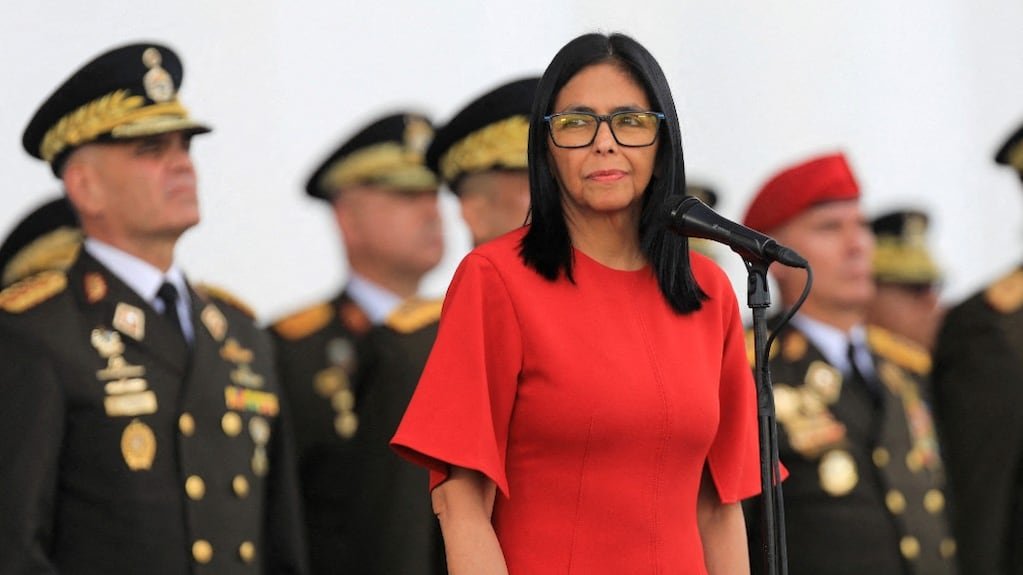
La tragedia humanitaria que golpea a Venezuela, cuyas secuelas sociales y económicas se extenderán durante largo tiempo, dejan al gobierno de Delcy Rodríguez en la disyuntiva de avanzar hacia una apertura política o postergar el inicio de un proceso electoral bajo una ambigüa presión de Donald Trump.
La economía, el principal trofeo del presidente estadounidense, volverá a resentirse justo cuando distintos indicadores mostraban una recuperación incipiente. Washington, con la lógica del presidente devenido en una especie de “virrey” en Caracas, no se mostraba tan apurado en presionar al chavismo en materia política.
Lo que importa es la billetera.
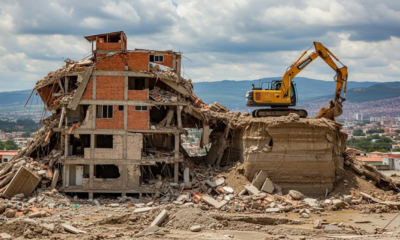
La situación es compleja. Hoy los venezolanos están enfocados en las tareas de rescate y búsqueda de sobrevivientes en medio de una catástrofe causada por dos poderosos terremotos de 7,5 y 7,2 grados que sacudieron el país con una cifra aún no precisada de víctimas.
Pero la oposición, además de sus llamados a la solidaridad, quiere diálogo y mucho más en una situación de emergencia nacional como la que atraviesa el país. La pregunta es ¿qué hará ahora el chavismo en esta terrible coyuntura? y, por supuesto, ¿cómo responderá Trump?
¿Qué hará el chavismo?
El titular de la Asamblea Nacional de Venezuela, Jorge Rodríguez, hermano de la presidenta interina, recibió en los últimos días en su despacho a la opositora Dinorah Figuera, bajo “mediación” (o más bien presión) del Departamento de Estado estadounidense. Fue un tímido primer paso de diálogo político.
Figuera, a quien un sector de la oposición reconoce como presidenta del Parlamento elegido en 2015, es una figura más moderada y “potable” a los ojos del chavismo que la enemiga pública número uno, María Corina Machado. La líder opositora venezolana Maria Corina Machado (Foto: REUTERS/Enea Lebrun)
“Estamos en un juego de suma cero. Machado se sienta a hablar con los (dirigentes) cercanos y el gobierno se sienta con los que le son afines” dentro de Venezuela, dijo a TN el analista venezolano Andrés Cañizalez, investigador de la Universidad Católica Andrés Bello de Caracas.
Trump no presiona a Delcy Rodríguez por una apertura política, pero le marca el territorio. Figuera fue precisamente uno de esos hitos que señalan la frontera entre la política y la billetera. Al presidente republicano le interesan más los negocios que una apertura democrática. El chavismo cumple todos sus “pedidos”, aprueba leyes a la medida de Washington y garantiza su supervivencia. Gana tiempo.
Ahora, más allá de los discursos de unidad ante la emergencia nacional, el chavismo está ante una situación que puede presentarle serios desafíos sociales. La disyuntiva es cerrarse o abrirse.
“El gobierno va a aprovechar esto como una excusa para no hablar del tema elecciones. Le viene como anillo al dedo porque tiene que hacerle frente a la reconstrucción. La cuestión electoral se pateará para adelante, para dentro de un año o año y medio”, afirmó Cañizalez.
Leé también: Venezuela: salió a caminar por la playa 10 minutos antes de los terremotos y vio cómo se caía el edificio en el que vivía
Para el analista, Trump tiene una agenda muy centrada en la economía.
“Esa agenda también sufrirá un quiebre con esta tragedia. Estaban proyectando un crecimiento de nivel alto en la economía. Ahora se van a pausar estas etapas previstas por Washington”, dijo.
Pero la situación social puede ser el gran disparador que ponga en serios aprietos al chavismo.
“Aunque no hay tantas protestas, la catástrofe puede exacerbar el malestar social porque probablemente mucha de la ayuda humanitaria no va a llegar a destino, no va a haber una atención adecuada a las víctimas y la gente se va a quedar largo tiempo sin casa. Esa es la historia de Venezuela, no es la historia del chavismo”, indicó.
Ese malestar es evidente en la calle. Un sondeo reciente de la Universidad Católica Andrés Bello reveló que casi siete de cada diez venezolanos tienen una opinión negativa del gobierno y nueve de cada diez quieren un cambio.
“La crisis social va a aumentar y puede alimentar un caldo muy negativo para quienes gobiernan”, apuntó. Caracas busca a sobrevivientes de los dos terremotos que golpearon la capital (Foto: REUTERS/Leonardo Fernandez Viloria)
La oposición pide diálogo
Desde la oposición en el terreno, el pedido de apertura sigue vigente.
Agustín Berríos, presidente del opositor Partido de la Reconciliación Nacional, dijo a TN que ahora es momento de “mostrar espíritu de unidad” nacional.
“Ahora estamos buscando y rescatando a miles de desaparecidos. Y si actuamos con ese espíritu, cuando pase la emergencia y se retome la normalidad, será el momento del diálogo político. La mesa va a estar servida para que el diálogo de frutos”, aseguró.
Leé también: El Gobierno se suma a las tareas de rescate en Venezuela: envía médicos y perros en un avión Hércules
La excandidata presidencial opositora Corina Yoris dijo a TN que el gobierno debería dejar de lado su posición intransigente y mostrar signos de apertura en medio de la tragedia.
Según afirmó, la mejor muestra de apertura es dejar libres a todos los presos políticos.
“Ellos (los funcionarios del gobierno) son los que tienen que dar el primer paso y abrir el camino para que el pais se encamine a una vida de estado de derecho que es fundamental. Además, es indispensable hablar de la justicia. Eso es imperativo”, concluyó.
Venezuela, Delcy Rodriguez













NEWYou can now listen to Fox News articles!
House Democrats offered sharply different takes Wednesday after a surge in socialism proved victorious in the Democratic Party when three far-left candidates swept the floor in key races in New York’s primary elections.
The new wave of socialist candidates, who were backed by the Democratic Socialists of America, beat out moderate Democrats in Tuesday night’s race has fueled mixed reactions from lawmakers over whether these new ideals will be at the center of the entire Democratic Party.
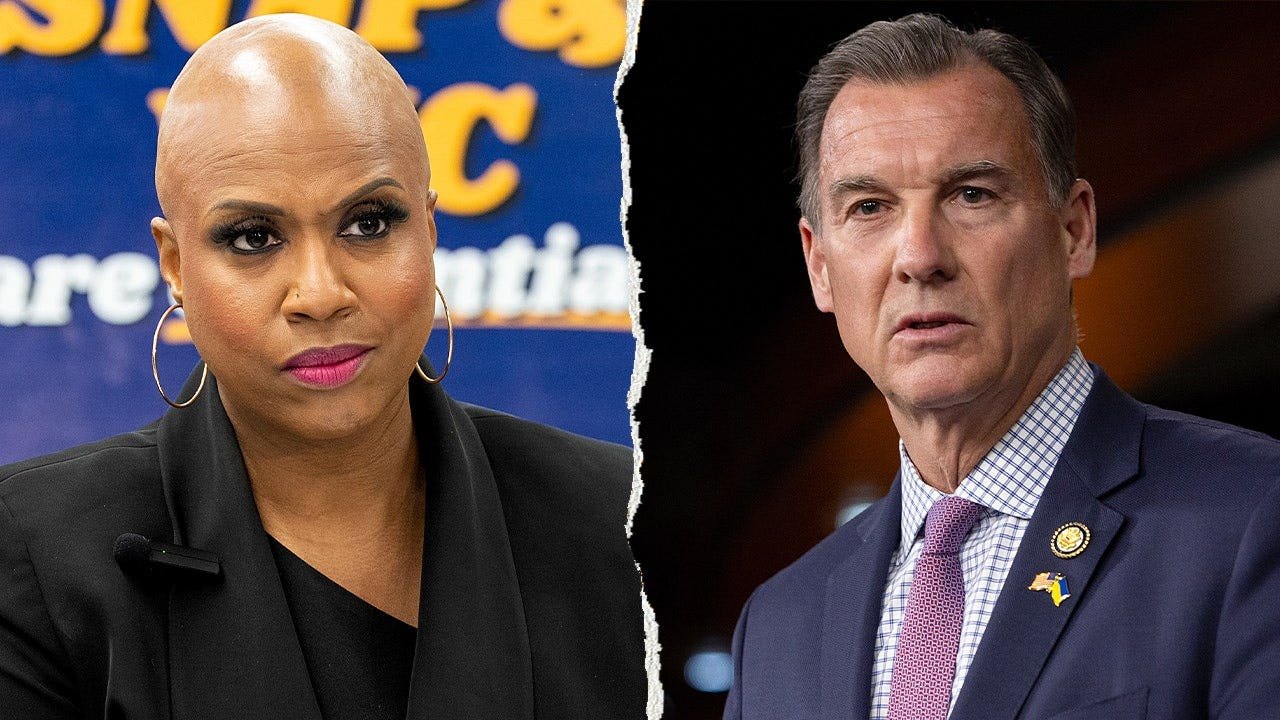
«It’s sort of dismissed as a fluke or an outlier, but whenever more moderate Democrats win, people say that that’s a blueprint for Democrats to continue winning,» Rep. Ayanna Pressley, D-Mass., said when asked about what the streak of progressive wins means for the Democratic Party.
She continued, «So people should take heed.»
RISING SOCIALIST STARS ON TRACK TO CONGRESS: WHO ARE DARIALIZA AVILA CHEVALIER, BRAD LANDER AND CLAIRE VALDEZ?
Rep. Ayanna Pressley listens during a news conference near the U.S. Capitol Building in Washington, D.C., on Sept. 25, 2025. (Anna Moneymaker/Getty Images)
Other Democrats quickly distanced themselves from the far-left movement, or at least the socialist identity.
«I’m a capitalist, not a socialist,» Rep. Thomas Suozzi, D-N.Y., told Fox News Digital. «And I believe in safety, not lawlessness. And I’m proud of America. I’m not ashamed of America.»
Rep. Gregory Meeks, D-N.Y., struck a similar note.
«Now for me, you know, I believe in capitalism, so I’m not a socialist,» Meeks said. «So I don’t know whether that’s an issue or not.»
The debate comes as New York City’s socialist Mayor Zohran Mamdani dominated in the primaries as he endorsed three candidates — Darializa Avila Chevalier, Brad Lander and Claire Valdez — who won their key races by promoting the same socialist agenda Mamdani has in their campaigns.
FAR-LEFT SURGE: MAMDANI-BACKED CANDIDATES OUST DEM ESTABLISHMENT INCUMBENTS
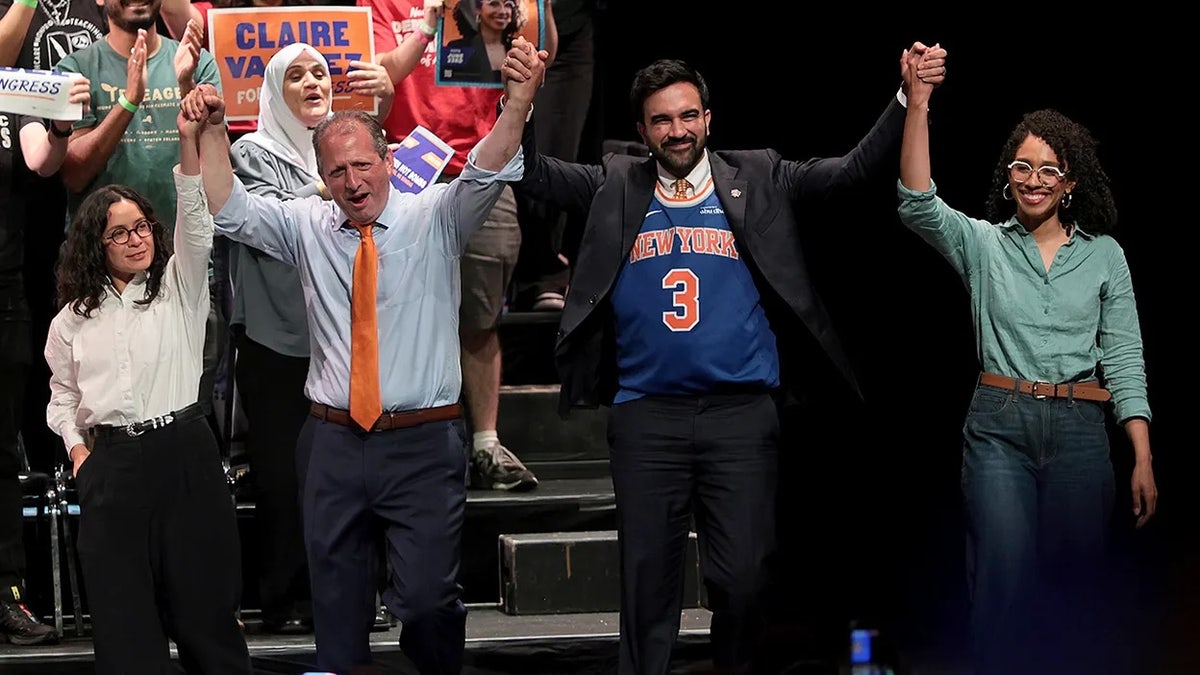
Congressional candidate Claire Valdez, Congressional candidate Brad Lander, Mayor Zohran Mamdani, and Congressional candidate Darializa Avila Chevalier raise their hands during a Get Out the Vote (GOTV) rally at King’s Theater on June 18, 2026 in New York City. Sen. Bernie Sanders (I-VT) joined Mayor Zohran Mamdani ahead of next week’s primary, and the start of early voting on Saturday, as the pair campaigned for Brad Lander, Claire Valdez and Darializa Avila Chevalier, who are challenging incumbents in Democratic primary contests. (Michael M. Santiago/Getty Images)
Some Democrats attribute the trend of far-left progressive voting to only being popular in a place like New York.
«I think what happens in New York City is sort of just what happens in New York City,» Rep. Joseph Morelle, D-N.Y. said. «I don’t think it’s necessarily an indication of anything outside New York City. Their politics is somewhat unique.»
Progressive Democrat Rep. Pramila Jayapal, D-Wash., agreed with Pressley that the election results in New York indicate a larger movement within their party.
«Fabulous energy, momentum, giant repudiation of special interests, including the impact of others,» Jayapal said when asked how she feels about the election results.
She continued, «And real energy for us to continue to turn out young people and make sure that we’re getting everyone voting and committed to a government that actually works for working people.
The divide shows a broader ongoing debate within the Democratic Party over whether far-left ideology will take over as the blueprint for the party, and whether these progressive campaigns can be a legitimate roadmap to national success for the party.
NY DEM SAYS HE ‘DISAGREES’ WITH MAMDANI, MAKES COMPARISON TO TRUMP
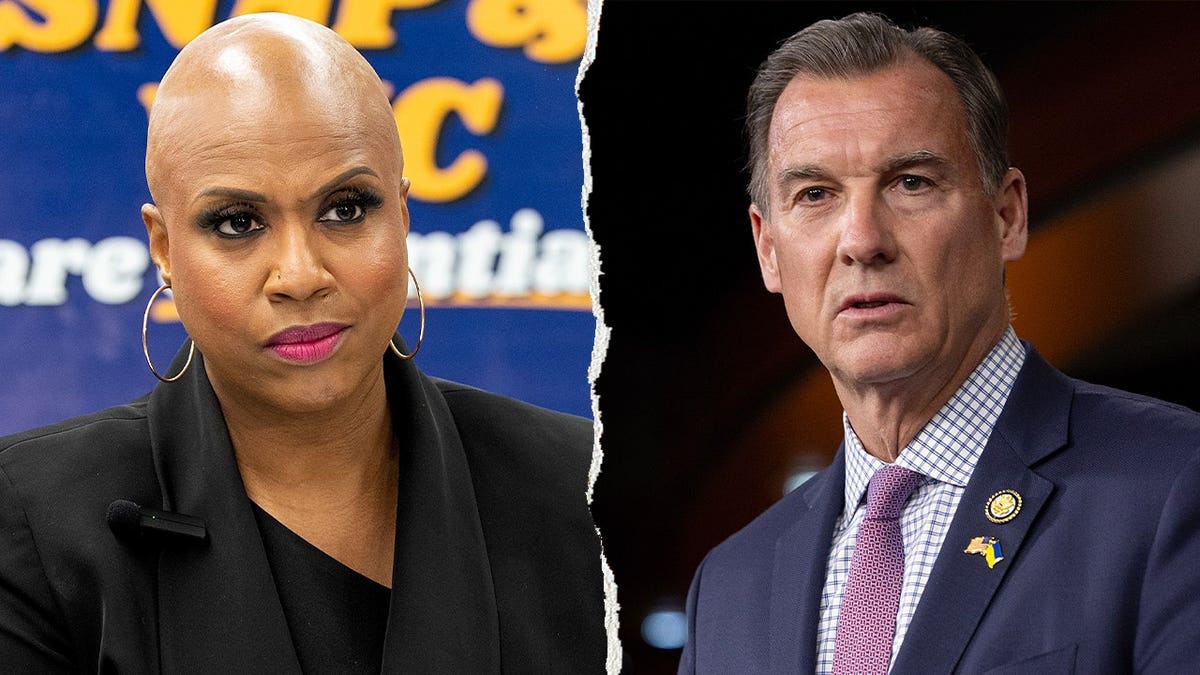
Rep. Ayanna Pressley, D-Mass., and Rep. Thomas Suozzi, D-N.Y., emerged on opposite sides of the debate over whether New York’s progressive primary victories should shape the Democratic Party’s future. (Mel Musto/Bloomberg via Getty Images; Nathan Posner/Anadolu via Getty Images)
Suozzi used economic concerns as an example of needing to find some middle ground between extremes in both parties — calling for people to focus on solutions to better the lives of Americans rather than working to dismantle entire systems.
«They’re saying ‘the whole system sucks, let’s tear it down,’» Suozzi said. «I don’t believe that’s the right answer. I believe that we, those of us that disagree with the DSA and those of us who disagree with MAGA, have to do a better job of saying, ‘Yes, you have reasons to have economic insecurity. We understand that.’»
«We have to do a better job of understanding, saying that we understand what people are going through and proposing solutions that will make their lives better,» he said.
CLICK HERE TO DOWNLOAD THE FOX NEWS APP
Pressley argued Democrats should embrace the momentum she believes the New York results represent, saying voters want leaders willing to aggressively pursue their agenda.
«What the American people want to see right now and going forward is that we know how to be the fighters in the room and that when we have the power, we’re not afraid to use it,» Pressley said.
pramila jayapal, democrats, zohran mamdani, democratic party, socialism
INTERNACIONAL
Reporter’s Notebook: Lawmakers wrestle over whether AI can make the grade in America’s classrooms

AI in the classroom: How AI will impact education moving forward
A recent Fox News poll highlights changing perceptions as 52% of voters now consider Big Tech a greater threat to the U.S. future compared to Big Government’s 47%. A Senate panel also discusses the rise of artificial intelligence in classrooms, debating its impact on student learning, privacy concerns, and potential effects on the American workforce. Lawmakers are working on an AI regulation framework.
NEWYou can now listen to Fox News articles!
Reading. Writing. And AI algorithms.
The Senate is now wrestling with how students — and teachers — might use Artificial Intelligence in the classroom.
It’s inevitable.
«The question is not whether AI is going to impact education. The real question is whether we will shape its use thoughtfully. Responsibly,» said Delaware Secretary of Education Cindy Marten during a recent Senate hearing.
Lawmakers are focusing not just on what AI teaches students. But how.
«What do we know when it comes to long term cognitive impact of the use of this technology?» asked Sen. Tommy Tuberville, R-Ala., at the hearing.
SCHOOLS TURN TO HANDWRITTEN EXAMS AS AI CHEATING SURGES
U.S. Sen. Tommy Tuberville, R-Ala., speaks to reporters as he returns to his office at the U.S. Capitol on Feb. 10, 2026 in Washington, D.C. (Kevin Dietsch/Getty Images)
«We have no causal studies on long term impact on social or cognitive development,» replied Erin Mote, who, as CEO of InnovateEDU and the EDSAFE AI Alliance, works on technological innovation in the classroom.
Pushing students onto screens, iPads and Chromebooks in the classroom was all the rage about 12 years ago. But since that rush to technology, the percentage of high school seniors performing at grade level in math and reading is down four points from 2009, according to the National Assessment of Educational Progress (NEAP), sometimes known as the report card of the nation.
«The students did not learn the content better and their social and emotional health has suffered greatly. We need to ensure as we move forward teaching about and with AI that we do not become overly tech reliant and that critical thinking skills remain imperative» said David Slykhuis of Valdosta State University at a House hearing earlier this year.
That’s why lawmakers are skeptical that AI can boost classroom performance.
«Kids have outsourced critical thinking. Have outsourced friendship. Have even outsourced moral advice to AI,» said Sen. Chris Murphy, D-Conn.
95% OF FACULTY SAY AI MAKING STUDENTS DANGEROUSLY DEPENDENT ON TECHNOLOGY FOR LEARNING: SURVEY
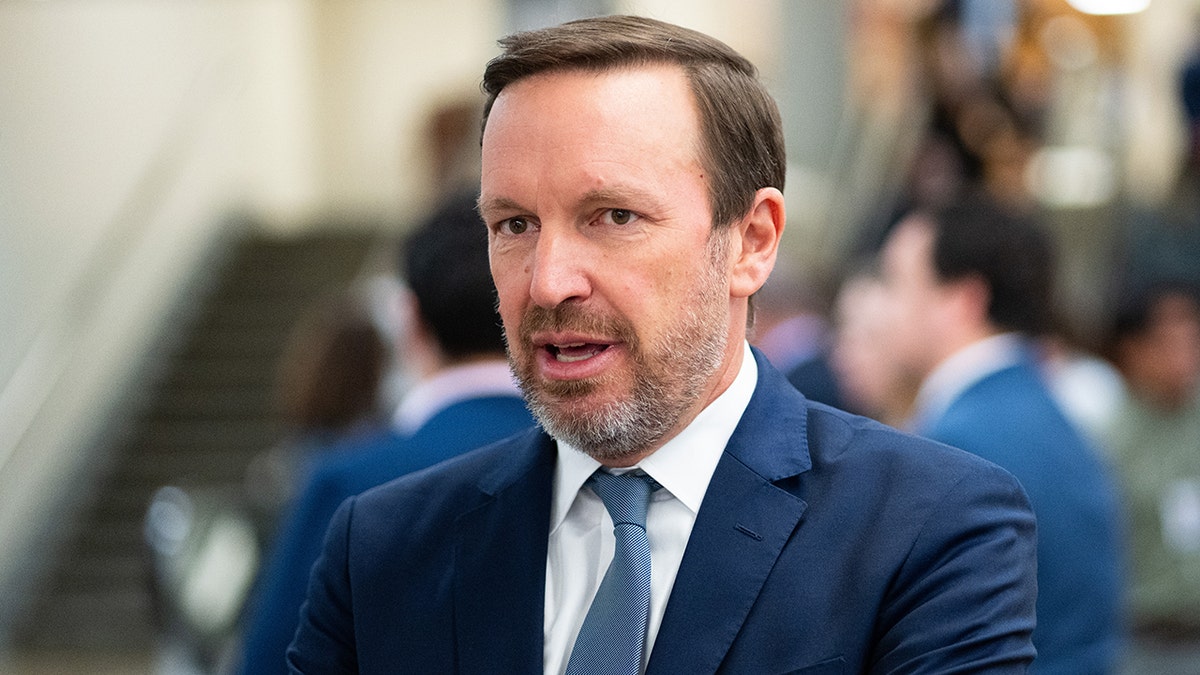
Sen. Chris Murphy, D-Conn., speaks to a reporter after a vote in the U.S. Capitol on July 23, 2025. (Bill Clark/CQ-Roll Call, Inc)
There are also privacy concerns. AI can glean what each student learns and knows.
AI could harvest what lessons they’ve covered. How fast students picked up different concepts. AI or data brokers could then track that for decades as students head to college or even enter the workforce.
«These tools are getting more access to more information about our students that we may not even be aware of,» warned Marten.
Teachers are already leaning on AI to develop lesson plans and grade papers. Elementary teachers can certainly deploy AI to grade simple multiplication tables and spelling. But it could spell trouble if teachers or professors use an AI rubric to grade subjective assignments such as creative writing or a term paper.
«For those that start using AI, there’s a tendency to trust everything that it spits out that can create serious problems,» said Joshua Jones at the Senate hearing. He’s CEO of QuantHub, an education AI literacy firm.
Some lawmakers doubt that AI can do everything. And some aspects of education are hard to copy.
«The foundational relationship between a child and a teacher is not something that AI is going to recreate. It’s not something that I will substitute for,» said Sen. Tim Kaine, D-Va.
WHY A CLASSICAL EDUCATION MAY BE THE KEY TO HUMANITY’S FUTURE IN THE AI ERA
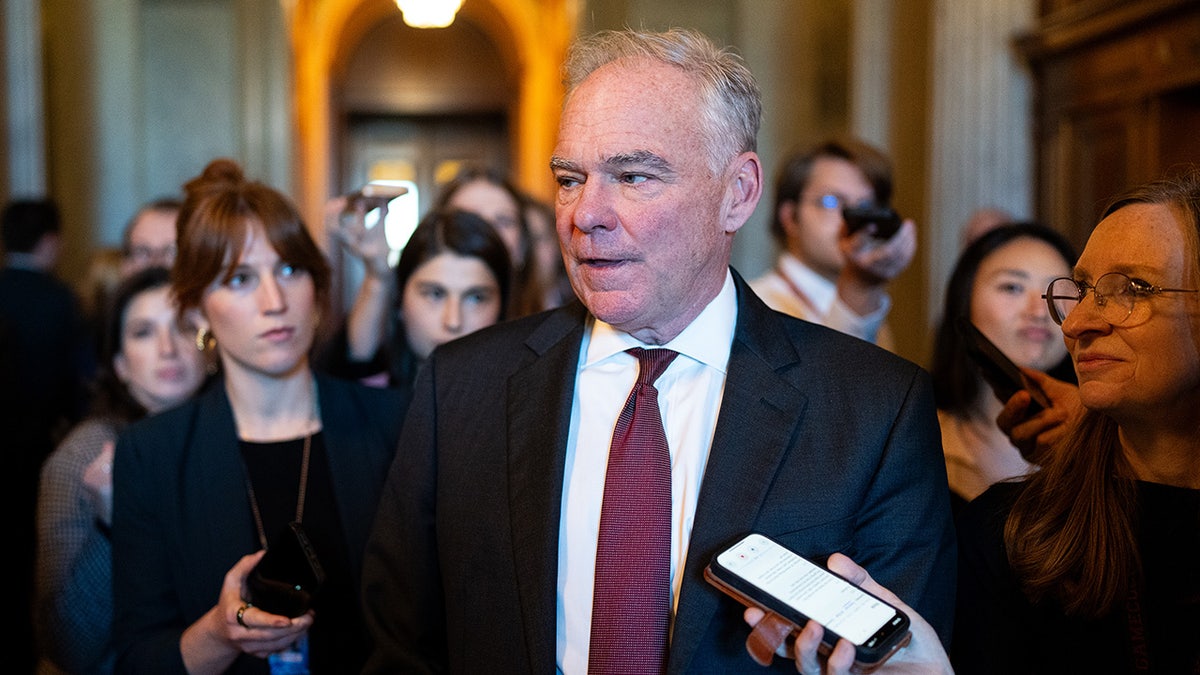
Sen. Tim Kaine, D-Va., speaks to reporters outside the Senate Democrats caucus lunch meeting at the U.S. Capitol on Nov. 6, 2025. (Bill Clark/Getty Images)
Educators want to know how AI may shift their roles. And if the concept of a «teacher» or a «professor,» tomorrow is the same as what we think of today.
«The idea of pulling that away is probably really scary to teachers who think this is what teaching looks like. But we know that it’s not an effective way for teaching or for learning. And so it’s going to require some real ecosystem shifts,» said educator Emily Cherkin, who has written about AI.
Graduating college seniors showered several tech CEOs with a chorus of boos at commencement exercises around the country this spring. The reason? These students may have earned a diploma. But they wonder if that’s sufficient for gainful employment in the age of AI.
OpenAI CEO Sam Altman recently met with a host of bipartisan lawmakers at the Capitol about their hopes and fears about AI.
«I understand that college students have a lot of anxiety about the future,» said Altman. «I think there will be a lot of jobs in the future. I think that the impact on jobs has been less than many people in our field expected. And it doesn’t mean that it will always stay that way in the future.»
Moreover, students may question the value of an education if they can’t get work due to artificial intelligence.
«(High school seniors) were saying that they can’t find jobs. Saying that 30 to 40 percent of them are unemployed and they blame AI for this,» said Sen. Josh Hawley, R-Mo. «We’ve got to make some choices about AI to make sure it actually is good for the American workforce. And I think a lot college grads don’t think it is.»
AI RISKS TO KIDS, WORKERS RISING FASTER THAN REGULATION, NEW GROUP WARNS
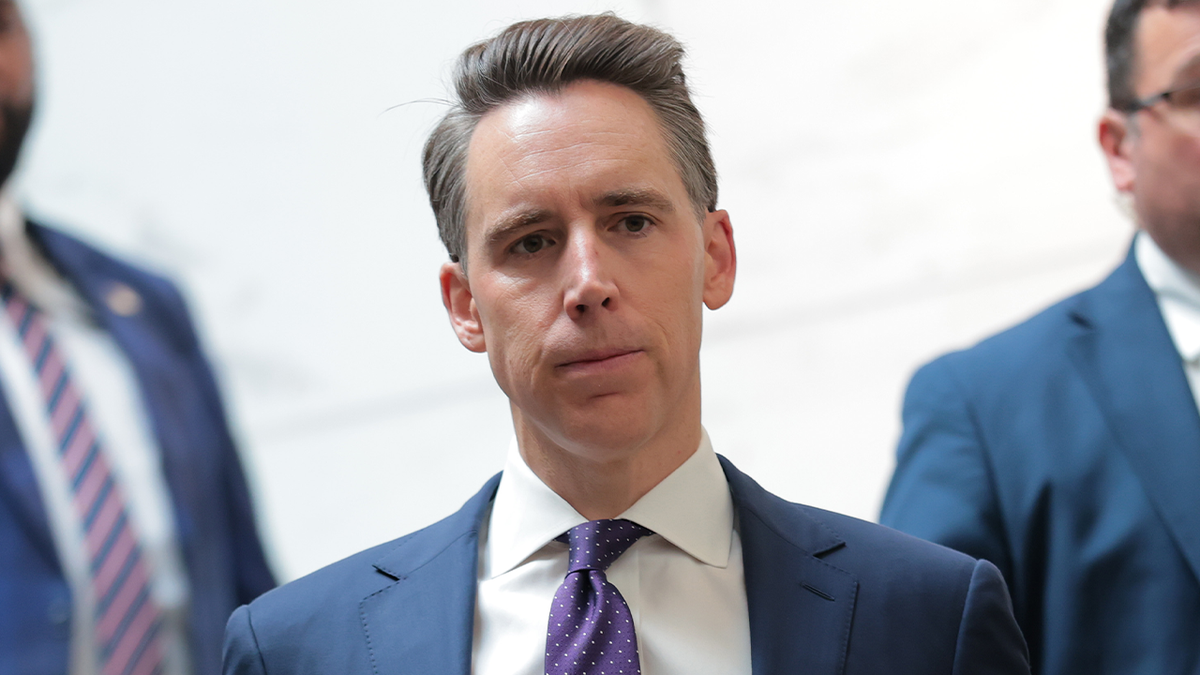
FILE – U.S. Sen. Josh Hawley (R-MO) arrives to a closed door briefing with senators at the U.S. Capitol on January 7, 2026 in Washington, DC. (Anna Moneymaker/Getty Images)
Hawley believes Congress should take action on AI. But not in the ways you might think.
«We ought to pass legislation right now that would require these tech companies to turn over the data on how many jobs they’re creating or how many they’re destroying,» said Hawley.
Rep. Jay Obernolte, R-Calif., is one of the leading voices in Congress on AI. He recently helped draft a bipartisan framework for legislation to regulate AI. Obernolte says he hears what college students are saying.
«It’s an indication that we collectively have done a terrible job at articulating to the American public the optimistic case for AI deployment,» said Obernolte. «AI will probably be the most powerful tool for enhancing human productivity that we have ever invented. And that will not only have positive economic consequences for our country and our world, but could create this rising wave of prosperity that literally lifts all the boats.»
House Speaker Mike Johnson, R-La., wants to pass an AI regulation bill by the end of the year. But the Congressional calendar is especially clogged. The House skipped out of town a day early this week. Even next week’s schedule may be in jeopardy thanks to a dispute over the SAVE America Act. That’s the GOP bill requiring proof of citizenship to vote.
But it’s unclear how a bill may address the specifics of AI in the classroom.
CLICK HERE TO DOWNLOAD THE FOX NEWS APP
That means AI may continue unbridled in primary, secondary and even collegiate education.
And unless lawmakers move fast, AI may school us all.
artificial intelligence, congress, education, senate elections, teachers, politics

Aumenta el subte en la Ciudad de Buenos Aires: cuánto costará el boleto desde el 1° de julio

La respuesta del PRO a Esteban Bullrich: “Resulta injusto interpretar que actuamos por conveniencia”

Uruguay-España, EN VIVO, por el Mundial 2026: hora, TV, formaciones y todo lo que hay que saber

Panorama Internacional: algo más que las urnas polarizadas de las Américas

El efecto mariposa que unió a Lionel Scaloni y Elisa Montero: la impensada historia de amor de dos personas que no estaban destinadas a conocerse

Advierten que ya se perdieron 1.600 puestos de trabajo en el sector asegurador por el plan económico

“El mejor del mundo”: los elogios a Messi y a la selección argentina en el arco político tras el triunfo ante Austria

Violencia, déficit fiscal y crisis sanitaria: los desafíos que enfrentará Abelardo de la Espriella en Colombia

A los 100 años, murió Alan Greenspan, histórico presidente de la Reserva Federal de Estados Unidos

AI-first: los detalles de la estrategia de Inteligencia Artificial del banco Santander

 POLITICA3 días ago
Diputados: con el apoyo de bloques aliados, LLA logró frenar la sesión en la que la oposición buscaba interpelar a Adorni
- ECONOMIA2 días ago
Nuevos controles a las devoluciones de 30% por gastos en el exterior: cómo pedir el reembolso del dólar tarjeta ante ARCA
- ECONOMIA3 días ago
Crisis de abastecimiento en invierno: qué dijo la Cámara de GNC sobre los cortes de gas