INTERNACIONAL
El Instituto Guatemalteco de Migración anuncia nuevas oficinas regionales en cuatro departamentos

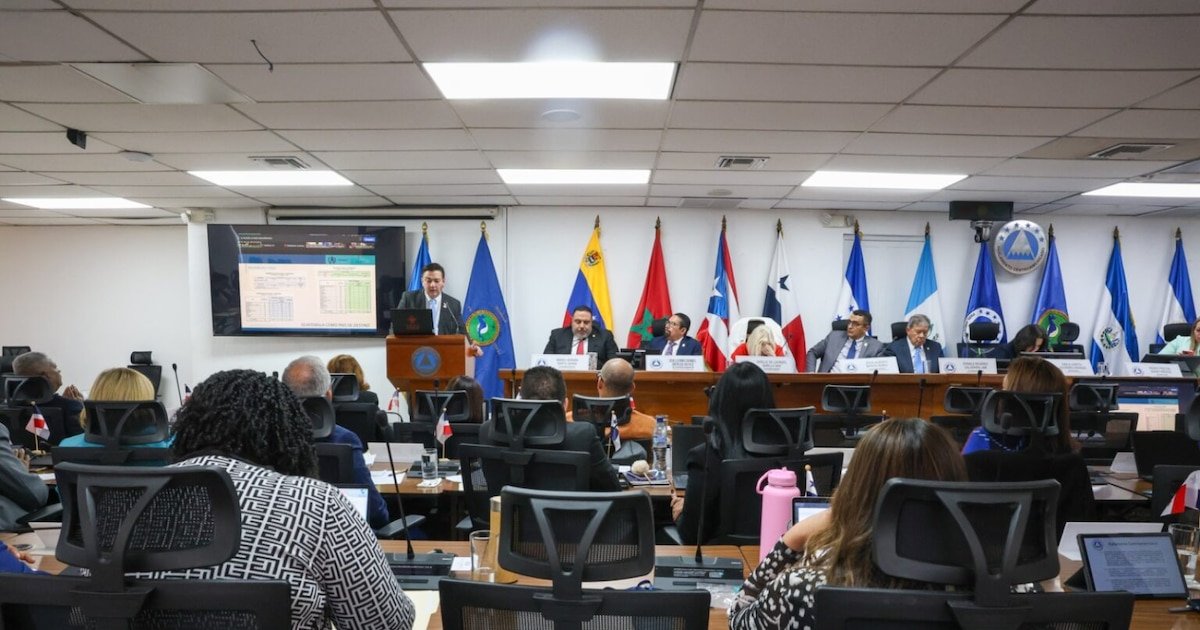
El director del Instituto Guatemalteco de Migración (IGM), Alfredo Danilo Rivera, presentó ante el Parlamento Centroamericano las acciones con las que Guatemala busca reforzar su gestión migratoria, con foco en la atención a personas retornadas, la ampliación territorial de los servicios y la aplicación de la Política Migratoria Nacional bajo un enfoque de derechos.
Entre los anuncios centrales, el funcionario informó que el IGM ya habilitó sedes migratorias regionales en Chiquimula y Zacapa, y que abrirá próximamente nuevas oficinas en Izabal, Cobán, Quetzaltenango y Huehuetenango para acercar los trámites a la población en distintos puntos del país.
La exposición tuvo lugar durante una Cortesía de Sala en la Sesión Plenaria del Parlamento Centroamericano (Parlacén), un espacio protocolario en el que autoridades e invitados especiales presentan asuntos de interés ante los diputados de la región.
Rivera explicó la situación migratoria de Guatemala y sostuvo que el trabajo del IGM se desarrolla con un enfoque humanitario. Según expuso, las personas migrantes son reconocidas como sujetos de derechos de conformidad con la legislación guatemalteca.

El director del instituto detalló que la atención institucional alcanza tanto a las personas guatemaltecas retornadas como a los extranjeros que se encuentran en territorio nacional. También señaló que las medidas en marcha buscan cumplir la Política Migratoria Nacional y promover una migración regular, ordenada y segura.
Dentro de ese esquema, destacó el Plan Retorno al Hogar, una estrategia interinstitucional orientada a garantizar una atención “digna y humana” a los guatemaltecos que regresan desde México y Estados Unidos.
La descentralización de los servicios apareció como uno de los ejes de la presentación. Rivera indicó que la desconcentración administrativa ya avanzó con las oficinas en Chiquimula y Zacapa, y precisó que las próximas aperturas previstas en Izabal, Cobán, Quetzaltenango y Huehuetenango buscan facilitar los trámites migratorios sin concentrarlos en un solo punto del país.
Otro de los puntos expuestos ante el Parlacén fue la reactivación del Consejo Parlamentario Regional sobre las Migraciones (Coprem). Rivera planteó la importancia de retomar ese mecanismo para fortalecer la coordinación y el diálogo entre los países centroamericanos frente a los desafíos de la movilidad humana.
La intervención del titular del IGM ante el organismo regional concentró así tres líneas de acción: la atención integral a personas en movilidad, el despliegue de nuevas sedes migratorias y la articulación regional en materia de migraciones, en coordinación con instituciones nacionales y centroamericanas vinculadas al tema.
El Gobierno de Guatemala atendió a más de 29.000 migrantes retornados en 2026
En paralelo, Guatemala brindó atención integral a 29.153 personas migrantes retornadas entre el 1 de enero y el 14 de junio de 2026, procedentes de Estados Unidos y México, según registros del Instituto Guatemalteco de Migración.
Del total atendido, 28.441 fueron personas adultas y 712 niñas, niños y adolescentes. En este último grupo, 449 retornaron acompañados y 263 no acompañados, quienes recibieron acompañamiento y orientación inmediata al momento del retorno.
El Centro de Recepción de Retornados en la zona 13 de la ciudad de Guatemala opera de forma interinstitucional con el IGM, CONAMIGUA, SOSEP, SBS, RENAP, PNC, MSPAS y PGN, con atención según las competencias de cada entidad.
De acuerdo con el IGM, el centro de recepción vía aérea cuenta con áreas especializadas para niñas, niños, adolescentes y unidades familiares, además de clínicas de atención primaria para personas adultas y pediatría, servicio de llamadas, salas de atención psicosocial, acceso a internet, servicios sanitarios y tasa de cambio para facilitar una recepción “digna, segura y ordenada”.
En el mismo lugar se invita a integrarse al Plan Retorno al Hogar y ser trasladados al Centro de Atención y Registro, donde se ofrecen servicios sin costo con más de 20 instituciones, con acceso a opciones laborales, médicas y asesoría legal, además de telefonía móvil mediante la entrega de un chip con internet y mensajería. Quienes ingresan por vía terrestre pueden solicitar el plan al 2411-2412 o por WhatsApp al 4214 3566.
sesión plenaria,orador,delegados,asamblea,diplomacia,reunión










INTERNACIONAL
Sin Milei, la cumbre del Mercosur oficializó el inicio de negociaciones por un acuerdo de libre comercio con Japón
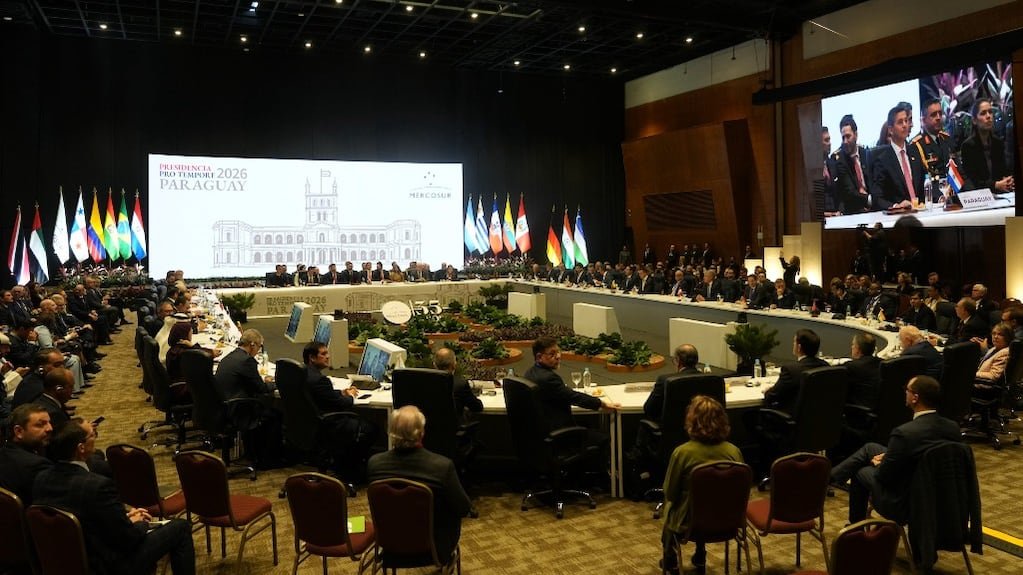
Sin el presidente Javier Milei, la cumbre del Mercosur inició este martes sus deliberaciones con el anunciado comienzo de las negociaciones de un Acuerdo de Asociación Económica (AAE), equivalente a un tratado de libre comercio, entre el bloque regional y Japón.
“Celebro que lanzamos las negociaciones (…) del acuerdo de libre comercio con Japón”, señaló el presidente de Paraguay, Santiago Peña, en la LXVIII Cumbre de Jefes de Estado y de Gobierno del Mercosur.
El mandatario paraguayo calificó el inicio de las negociaciones como “un paso histórico” que abre las puertas “de una de las economías más importantes del mundo” y que fortalece, según dijo, la proyección del Mercosur hacia Asia.
“Los japoneses son buenos amigos y son los mejores aliados que podemos tener en nuestro bloque. Les pido que podamos avanzar con ellos”, añadió Peña al dirigirse a sus homólogo de Brasil, Luiz Inácio Lula da Silva; de Uruguay, Yamandú Orsi; Bolivia, Rodrigo Paz; Ecuador, Daniel Noboa; y Chile, José Antonio Kast, los dos últimos invitados.
Milei es el único presidente del bloque ausente en la reunión, que se celebra en Luque, en las afueras de Asunción. En la cumbre, Paraguay traspasará la presidencia pro-témpore a Uruguay.
El canciller argentino, Pablo Quirno, ocupa el lugar del presidente Milei, que se quedó en Buenos Aires para atender “temas de gestión” en la antesala de la jura este martes de su nuevo jefe de Gabinete, Diego Santilli.
Pablo Quirno llamó a avanzar hacia una mayor apertura comercial
En su discurso, Pablo Quirno llamó al bloque suramericano a abandonar una visión proteccionista frente al escenario internacional y avanzar hacia una mayor apertura comercial.
“Señores presidentes, el Mercosur debe dejar de mirar el mundo como una amenaza y asumir el papel que le corresponde”, afirmó.
El canciller Pablo Quirno (Foto: NA MARIANO SANCHEZ/ARCHIVO)
Además, consideró que el bloque “puede resignarse a administrar una estructura lenta, defensiva y alejada de las necesidades” de sus ciudadanos o “recuperar su vocación original y convertirse en una plataforma de prosperidad, competencia y proyección global”.
“El Mercosur necesita una discusión más profunda sobre su funcionamiento económico. Durante demasiado tiempo, nuestra región padeció una verdadera adicción al proteccionismo”, señaló.
Leé también: Duro revés para Trump: la Corte Suprema de EE.UU. rechazó restringir el derecho a la ciudadanía por nacimiento
Quirno se reunió con el presidente de Bolivia, Rodrigo Paz, y le transmitió su “apoyo incondicional a la democracia boliviana” tras los 50 días de conflicto social y protestas impulsadas por sectores que exigían su renuncia..
“En el marco de la Cumbre del Mercosur, mantuve un encuentro con el presidente del Estado Plurinacional de Bolivia, Rodrigo Paz. Le transmití el claro mensaje del presidente Milei: ‘El apoyo argentino a la democracia boliviana, ha sido, es y será incondicional’“, expresó Quirno a través de la red social X, donde publicó una foto junto a Paz.
La negociaciones con Japón
El Mercosur indicó en un comunicado que con este acuerdo las partes buscarán “ampliar el acceso a los mercados de bienes agrícolas y no agrícolas, la cooperación y las inversiones recíprocas, e integrar las cadenas de valor entre ambas economías”.
Durante los diálogos establecidos desde diciembre pasado, cuando se firmó el acuerdo Asociación Estratégica Mercosur-Japón, ambas partes confirmaron que, “frente a un escenario internacional inestable, cooperarán para garantizar la seguridad económica y alimentaria”, según la nota. Santiago Pena saluda a Lula da Silva a su arribo a la cumbre del Mercosur (Foto: REUTERS/Cesar Olmedo)
Esta cooperación incluye la diversificación de las cadenas de suministro en sectores estratégicos como minerales críticos, energía, tecnología y agronegocios.
El acuerdo, añadió la nota, integrará una zona de libre comercio de aproximadamente 400 millones de personas y un producto interior bruto (PIB) combinado de 7 billones de dólares.
Leé también: Tragedia en Venezuela: un rescatista advirtió que la situación es completamente caótica y que crece la tensión social
Japón es uno de los diez principales socios comerciales del Mercosur, con un intercambio comercial de 13.700 millones de dólares en 2025.
El 20 de diciembre pasado, los presidentes del Mercosur anunciaron, durante una cumbre en Foz de Iguazú (Brasil), el lanzamiento de las negociaciones para alcanzar un acuerdo de preferencias arancelarias con Vietnam.
Poco después, el 17 de enero, el bloque firmó con la Unión Europea (UE) un acuerdo que abrió una de las mayores zonas de libre comercio del mundo, con un mercado de más de 700 millones de consumidores y cerca de una cuarta parte del producto interno bruto (PIB) global.
Además, el Mercosur negocia acuerdos de comercio con Emiratos Árabes Unidos y Canadá, el Reino Unido, Indonesia y Malasia, y negocia una ampliación del acuerdo de preferencias arancelarias con la India.
(Con información de EFE)
MERCOSUR, Javier Milei, Japón, Pablo Quirno

Navy SEAL-turned-investor says Trump is bringing America’s drone dominance back to beat China
Harpoon Ventures founder Larsen Jensen details the crucial need for strengthening U.S. tech leadership in defense. He emphasizes investment in AI, drone warfare, and space capabilities to counter China’s growing dominance. Jensen reveals Harpoon Ventures’ fourth fund and new Black Flag Investor List, aiming to boost industrial resilience and national security against adversaries.
NEWYou can now listen to Fox News articles!
FIRST ON FOX: House Select Committee on the Chinese Communist Party Chairman John Moolenaar is launching an investigation into pharmaceutical giant Eli Lilly’s clinical trial operations in China, demanding records related to research conducted at Chinese military-affiliated hospitals and facilities in Xinjiang.
In a Tuesday letter obtained by Fox News Digital, Moolenaar, R-Mich., demanded that Eli Lilly provide detailed information about its clinical trial operations in China, including how the company ensures ethical standards, protects sensitive biotechnology and intellectual property, and veterans research conducted at hospitals linked to the People’s Liberation Army and in Xinjiang, where the Chinese government has been accused of widespread human rights abuses against Muslim Uyghurs and other ethnic minorities.
The committee says publicly available records indicate Lilly has sponsored or collaborated on more than 220 clinical studies in China since 2003, including at least 11 trials involving hospitals in Xinjiang, China, and at least 16 involving Chinese military medical centers. Several remain active today, the letter says.
The inquiry marks an escalation in congressional scrutiny of U.S. pharmaceutical companies’ growing ties to China as lawmakers warn that clinical research conducted at Chinese military-affiliated hospitals and in Xinjiang, China, could pose national security, intellectual property and human rights risks. The committee is seeking records from Lilly as it expands its investments and research partnerships in China.
A flag flies above the headquarters campus of Eli Lilly and Company on March 17, 2024 in Indianapolis, Indiana. (Flag over Eli lilly)
Moolenaar stressed that the committee has «no evidence that Lilly has engaged in illegal activity or wrongdoing,» but argued that conducting clinical trials in China — particularly in Xinjiang, China, and at military-affiliated hospitals, hospitals affiliated with China’s People’s Liberation Army (PLA), which the committee argues could gain access to valuable biotechnology research and clinical trial data generated through collaborations with U.S. companies.
CHINA’S GRIP ON RARE-EARTH MAGNETS COULD CRUSH US DRONE INDUSTRY BEFORE IT GROWS
«The United States is engaged in a fierce biotechnology competition with the People’s Republic of China,» Moolenaar wrote, arguing that biotechnology has become a strategic arena in U.S.-China competition with implications for national security, economic competitiveness and the protection of Americans’ medical data.
He pointed to China’s latest five-year plan, which identifies biotechnology as a national priority and calls for expanded use of artificial intelligence across the sector.
Moolenaar said China has transformed itself into one of the world’s fastest and least expensive places to conduct early-stage human drug trials through regulatory reforms, state subsidies and rapid patient enrollment. The committee argues that speed has made China increasingly attractive for global drug development while also raising concerns about ethics, data security and intellectual property.

The committee says publicly available records indicate Lilly has sponsored or collaborated on more than 220 clinical studies in China since 2003, including at least 11 trials involving hospitals in Xinjiang and at least 16 involving Chinese military medical centers. (iStock)
GABBARD SAYS DECLASSIFIED BIOLAB RECORDS VALIDATE CONCERNS PREVIOUSLY DISMISSED AS MISINFORMATION
The inquiry comes as Lilly has continued expanding its presence in China.
Earlier in 2026, the company announced a roughly $3 billion investment to expand manufacturing and local supply in the country, bringing its total investment in China to nearly $6 billion.
Lilly also has deepened its research ties with Chinese biotechnology companies, announcing an up to $8.8 billion oncology and immunology collaboration with Innovent Biologics in February and an agreement worth up to about $3 billion with Haisco Pharmaceutical Group earlier ni June. Both partnerships are referenced in Moolenaar’s letter as examples of the company’s expanding relationships with Chinese drugmakers.
The chairman also questioned whether China’s clinical trial system adequately protects participants’ rights. He cited research suggesting many participants misunderstand the experimental nature of drug studies or mistakenly believe treatments have already been proven effective, raising concerns about whether informed consent is being properly obtained.
The letter separately raises concerns about trials conducted in Xinjiang, pointing to reports from the United Nations, the State Department and human rights organizations documenting allegations of forced medical testing, DNA collection and other abuses targeting Uyghurs. Moolenaar argued those conditions warrant heightened scrutiny over whether clinical trial participants in the region are volunteering freely.
The committee also argues that research conducted at hospitals affiliated with the People’s Liberation Army raises questions about whether sensitive biotechnology research and proprietary data developed through clinical trials could ultimately benefit China’s military biotechnology programs.
CLICK HERE TO DOWNLOAD THE FOX NEWS APP
Moolenaar gave Lilly until July 17 to provide documents detailing its due diligence procedures, inspections of clinical trial sites, agreements with Chinese companies, and safeguards for protecting sensitive data and intellectual property.
«Lilly has received the letter from the House Select Committee on China. We are reviewing the letter closely,» a company spokesperson told Fox News Digital.
politics, medical research, health, drugs, china
INTERNACIONAL
Trump admin backs Bolivia state of emergency as leftist ex-leader’s loyalists fracture nation
NEWYou can now listen to Fox News articles!
The conservative, pro-U.S. government of President Rogrigo Paz is being challenged in the streets by radical elements led by a former socialist president recently forcing the new Bolivian government to introduce a state of emergency.
The landlocked mineral-rich nation is facing one of its deepest political crises in decades as economic turmoil, nationwide protests and a battle over the country’s future threaten to reshape the balance of power in South America.
The unrest comes after years of political divisions following the tenure of socialist President Evo Morales, whose Movement Toward Socialism (MAS) dominated Bolivian politics for nearly two decades. Internal fractures, economic decline and public frustration have weakened the movement and opened a new chapter of uncertainty.
US, SHIELD OF THE AMERICAS CONDEMN ‘ONGOING EFFORTS’ TO OVERTHROW BOLIVIA’S ELECTED PRESIDENT AMID UNREST
Bolivia’s President Rodrigo Paz delivers a speech in La Paz on June 3, 2026, after naming Ernesto Justiniano as defense minister following the resignation of Marcelo Salinas amid protests. (Claudia Morales/Reuters)
The Trump administration recently signaled strong backing for the Paz government while condemning efforts to destabilize the country.
Secretary of State Marco Rubio said the United States «Will not allow criminals and drug traffickers to overthrow democratically elected leaders in our hemisphere» and reaffirmed Washington’s commitment to Bolivia’s «stability, security, and a better future for all Bolivians.»
Speaking on background, a State Department spokesperson told Fox News Digital that, «The United States strongly supports President Rodrigo Paz’s decision on June 20 to declare a State of Exception to restore order and ensure the free flow of food, medicine, and essential supplies to the Bolivian people. We are glad that the blockades in Bolivia have ended and the government has restored order.»
Bolivia’s crisis has been driven by Morales and his supporters furious at the Paz reforms. Protests and road blockades have disrupted transportation, caused shortages and increased pressure on the Paz government.
José Luis Lupo, chief of staff and minister of the presidency of Bolivia told Fox News Digital: «After more than 50 days of blockades that severely disrupted the supply of food, fuel, and medicines, paralyzing much of the country’s economic activity and straining its democratic stability, I am convinced that Bolivia now faces a unique opportunity to transform a deep crisis into the starting point for a new phase of national reconstruction.»

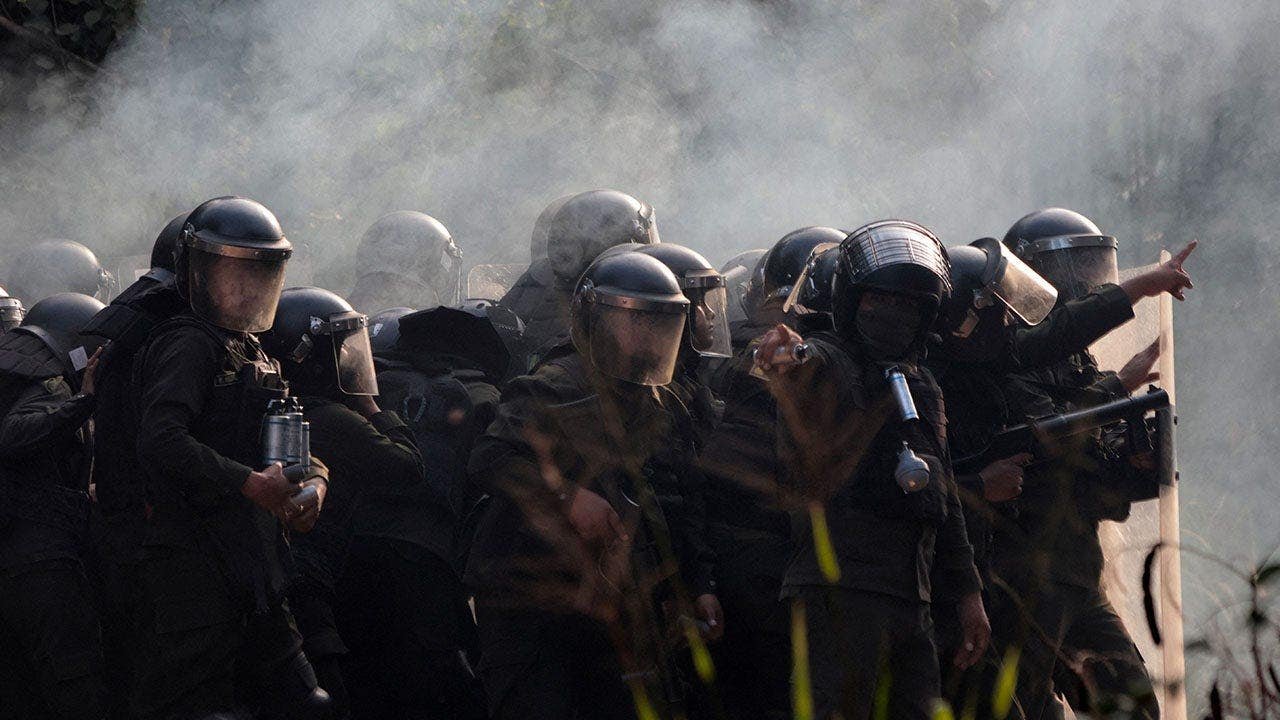
26 June 2024, Bolivia, La Paz: Military police stand amid tear gas fired in front of the presidential palace on Plaza Murillo. (Photo by Radoslaw Czajkowski/picture alliance via Getty Images)
He noted that «for weeks, we sought agreements with various sectors because we believe that, in a democracy, every avenue for mutual understanding must be exhausted before resorting to extraordinary measures.»
He said the state of emergency [state of exception] «was the constitutional last resort to restore freedom of movement, protect critical infrastructure and ensure that Bolivians could once again access essential goods. It was not a measure intended to restrict rights, but rather to protect lives, preserve democracy and restore freedom of movement to millions of citizens.»
PETE HEGSETH WARNS NARCO-TERRORISTS AS US BACKS BOLIVIA’S GOVERNMENT AMID COUP WARNINGS
The turmoil has also had consequences beyond Bolivia’s borders. The country holds some of the world’s largest lithium resources, a key mineral for electric vehicles, batteries and advanced technology supply chains. Competition for influence in resource-rich Latin America has become increasingly important for Washington as China and other global powers expand their presence in the region.
Bolivia’s political crisis reflects a broader trend across Latin America, where voters in the last few election cycles have elected conservatives who challenged the left’s business-as-usual politics and in doing so have taken the continent in a rightward direction.
The socialist Morales remains an influential figure and continues to command support among rural and indigenous groups, keeping Bolivia’s political divisions alive even as the country searches for a path out of the crisis.
Mauricio Ríos García, manager of Crusoe Research and editor of FRACTAL Index in Bolivia, told Fox News Digital, «The 50-day blockades have caused estimated losses of $2.5 billion and the closure of around 13,000 companies. Once the blockades end, a rebound in demand combined with excess liquidity is expected to drive inflation higher.»
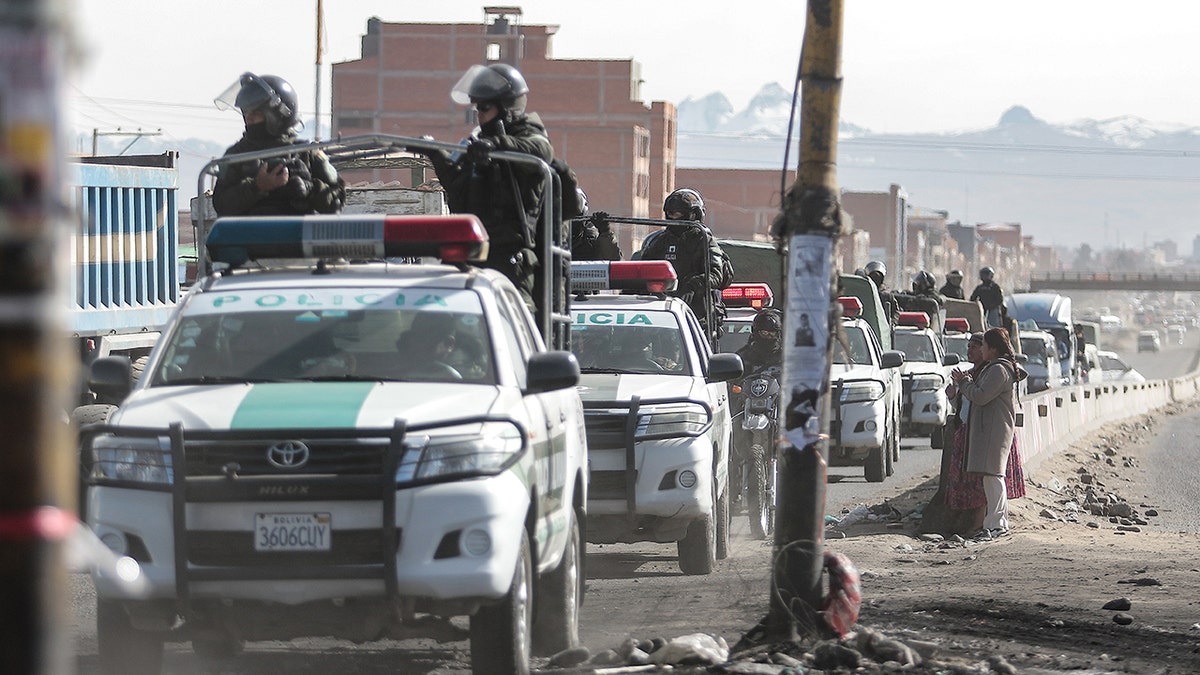
A police convoy clears one of the main highways after Bolivian President Rodrigo Paz declared a state of emergency following 50 days of blockades, in El Alto, Bolivia, on June 20, 2026. (Jorge Mateo Romay Salinas/Anadolu via Getty Images)
Ríos said, «The government is nearing an IMF agreement that would likely include a new devaluation (exchange rate unification) and other adjustments in exchange for financing of around $3.3–5 billion. This marks growing dependence on the IMF and the United States, while the gradualist approach has left the economy with very little room for maneuver and risks further instability.
«Expectations for Bolivia’s economy in the second half of the year have been revised downward. Blockades and deeper structural problems rooted in the government’s gradualist fiscal and monetary policies have worsened the difficult inheritance from the previous administration,» he concluded.
COLOMBIA’S ‘EL TIGRE’ SECURES PRESIDENCY AS LEFTIST RIVAL FINALLY CONCEDES DEFEAT
For Washington, Bolivia’s future represents more than a domestic political dispute. The outcome could influence America’s strategic position in the Western Hemisphere, the future of critical minerals, and whether Latin America’s recent political shift continues moving away from the left-wing movements that dominated parts of the region during the last two decades.
«I am convinced that stability will only endure if it is accompanied by inclusion. There can be no peace where neglect and inequality persist. That is why we are driving a development agenda for historically marginalized regions, particularly the provinces of La Paz, focused on infrastructure, basic services, productive development and the participation of the communities themselves,» Lupo said.
And as the barricades have lessened, Lupo, chief of staff and minister of the presidency of Bolivia, says, «A different phase is now beginning. I believe the country needs a broad political and social agreement involving the government, parliamentary forces, the regions, the productive sector, and civil society. Bolivia needs to pass reforms that provide legal certainty, promote investment, and modernize strategic sectors such as hydrocarbons, mining, lithium, renewable energy and the justice system. Such consensus is essential to restoring confidence, stabilizing the economy and generating sustainable growth.
«I hope to see Bolivia definitively replace confrontation with dialogue, strengthen its institutions, and build a more robust economy characterized by clear rules, democratic stability and greater opportunities for all,» Lupo concluded.
CLICK HERE TO DOWNLOAD THE FOX NEWS APP
The Trump administration had increased emergency humanitarian assistance to help address food and medical shortages caused by weeks of unrest, underscoring U.S. concerns that prolonged instability could have broader implications for regional security and democracy.
latin america, south america, state department, socialism, world protests

Cuadernos: contadores de la exAFIP declararon sobre retiros en efectivo, facturas truchas y giros a medios de comunicación

Sin Milei, la cumbre del Mercosur oficializó el inicio de negociaciones por un acuerdo de libre comercio con Japón

Santilli asume como jefe de Gabinete: la amplia convocatoria y el fastidio de un sector del Gobierno con el PRO

La reacción de Matías Martin y los Ratones Paranoicos al enterarse en vivo de la muerte de Daniel Melingo

Impacto en la NBA por la salida de LeBron James de Los Ángeles Lakers tras ocho temporadas: dónde podría jugar

Lawmakers press Eli Lilly for China drug trials tied to military-linked hospitals

El punto de quiebre que sentó la suerte de Manuel Adorni y los preparativos que hace el Gobierno ante su inminente salida

La bomba de Nico Occhiato tras el escándalo de Florencia Peña con Messi: “Lo más groso que pudimos haber logrado”

Cómo ganar $20 millones con Mercado Pago: el paso a paso para quienes cobran ANSES

Una escena estremecedora: el dato más doloroso de los minutos posteriores a la muerte de Ernestina Pais

 CHIMENTOS3 días ago
La bomba de Nico Occhiato tras el escándalo de Florencia Peña con Messi: “Lo más groso que pudimos haber logrado”
- POLITICA3 días ago
Manuel Adorni renunció después de tres meses de escándalo por su patrimonio
- POLITICA2 días ago
Exigen que Adorni renuncie a su cargo en el directorio de YPF