INTERNACIONAL
Estados Unidos e Irán intercambian nuevos ataques en medio de la tensión por el estrecho de Ormuz

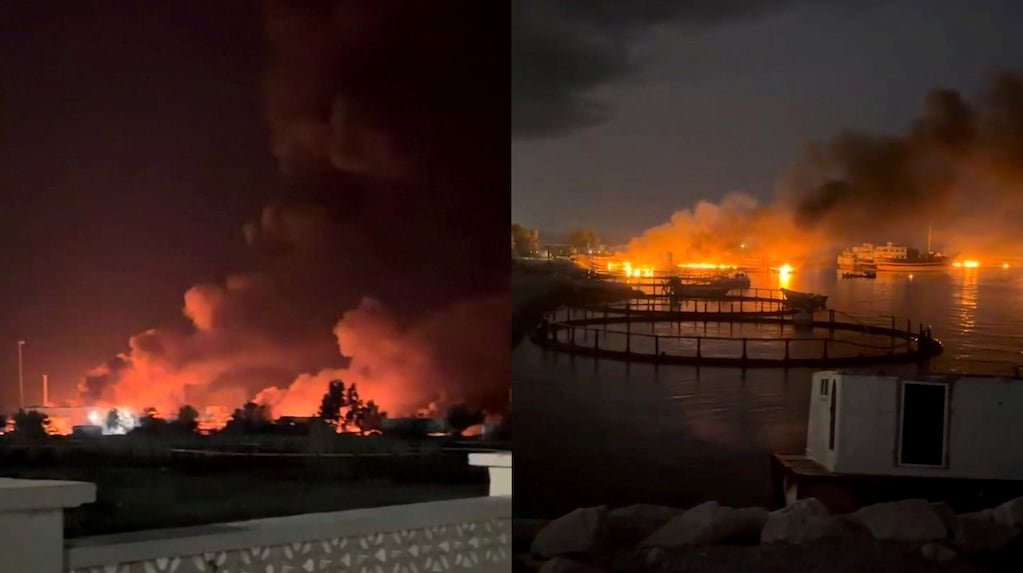
Estados Unidos e Irán volvieron a intercambiar ataques este jueves, por segundo día consecutivo, en medio de la disputa por el control de la navegación en el estrecho de Ormuz.
Washington bombardeó objetivos militares iraníes para defender la libre circulación de buques, mientras que Teherán reivindicó ataques contra bases estadounidenses en el Golfo, informó la agencia AFP,
La escalada amenaza una vía marítima clave por la que, antes de la guerra, transitaba el 20% del petróleo y del gas natural licuado consumidos a nivel mundial.
Estados Unidos bombardeó objetivos iraníes y Trump advirtió que la respuesta puede ser “mucho peor”
Las fuerzas estadounidenses aseguraron que los últimos bombardeos estuvieron dirigidos contra la capacidad de Irán de amenazar la libre navegación en el estrecho de Ormuz, después de los recientes ataques contra buques comerciales en esa zona estratégica.
Según Washington, los ataques alcanzaron unos 90 objetivos militares iraníes, entre ellos sistemas de defensa aérea, depósitos de misiles y drones. La agencia oficial iraní IRNA informó que hubo tres muertos y varios heridos en las afueras de Ahvaz, en el suroeste de Irán.
Donald Trump advirtió que la respuesta de Estados Unidos será “mucho peor” si Irán vuelve a atacar barcos cerca del estrecho de Ormuz. (Foto: REUTERS/Jonathan Ernst).
El presidente Donald Trump dio por terminada la tregua tras el primer intercambio de ataques del miércoles, aunque horas después dejó abierta la posibilidad de continuar las conversaciones. En su plataforma Truth Social, advirtió: “Esto es en represalia por el bombardeo de barcos de ayer por parte de Irán. Si vuelve a ocurrir, será mucho peor”.
Trump también afirmó que la parte iraní lo llamó porque quería alcanzar un acuerdo, aunque no dio detalles de esa comunicación. Luego cuestionó la posibilidad de un entendimiento al sostener que los iraníes están “un poco locos”.

Personas participan del cortejo fúnebre del fallecido líder supremo de Irán, ayatolá Alí Jamenei, durante su entierro en Mashhad, Irán. (Foto: REUTERS/Mohammed Salem).
Irán reivindicó ataques contra bases de EEUU y exige controlar el paso por Ormuz
Los Guardianes de la Revolución, la fuerza de élite iraní, aseguraron haber atacado bases estadounidenses en Baréin y Kuwait como respuesta a las acciones de Washington. El ejército regular iraní también afirmó haber golpeado objetivos en Kuwait, Catar y Baréin, tres aliados de Estados Unidos en el Golfo.
Según medios estatales iraníes, las fuerzas de Teherán alcanzaron un sistema Patriot de interceptación de misiles en Kuwait, un sistema de alerta temprana en Catar y tanques de combustible en Baréin, mediante el uso de drones militares kamikaze.
La prensa iraní reportó además que los bombardeos estadounidenses alcanzaron un puente ferroviario en el noreste del país. De acuerdo con la televisión pública, los ataques obligaron a suspender el servicio ferroviario entre Teherán y Mashhad, donde estaba previsto el entierro del antiguo líder supremo Alí Jamenei, asesinado el 28 de febrero, el primer día de la ofensiva israeloestadounidense.
La tensión crece porque Irán insiste en imponer condiciones para la navegación en Ormuz. El jefe negociador iraní, Mohamad Baqer Qalibaf, afirmó que el estrecho solo abrirá plenamente bajo “disposiciones iraníes”.
Desde el inicio de la guerra, Teherán exige controlar el paso y cobrar un peaje, bajo amenaza de atacar a los barcos que se desvíen de la ruta autorizada. Estados Unidos, en cambio, reclama libre tránsito, sin peajes ni impuestos.
Leé también: EE.UU. lanzó una nueva oleada de ataques contra Irán y crece la tensión en el estrecho de Ormuz
En las últimas horas, el secretario general de la ONU, António Guterres, pidió “tomar medidas inmediatas para desescalar” la situación y reanudar el diálogo. La vía diplomática, sin embargo, sigue bajo presión: Omán, que actuó como mediador entre Washington y Teherán, condenó los ataques contra Baréin, Kuwait y los barcos, aunque evitó responsabilizar directamente a Irán.
Mientras tanto, el impacto comercial ya se siente en la región. Según el jefe de la Organización Marítima Internacional, Arsenio Domínguez, casi 6.000 marinos permanecen varados en la zona.
Estados Unidos, Irán, Medio Oriente, bombardeos













INTERNACIONAL
El vencimiento del TPS podría amenazar el flujo de remesas hacia El Salvador, según Alianza Américas

La incertidumbre por el vencimiento del TPS puede afectar el envío de remesas hacia El Salvador y dejar expuestas a más de 170,000 personas que han vivido durante décadas en Estados Unidos, advirtió Óscar Chacón, asesor de estrategias y cofundador de Alianza Américas.
Durante una entrevista en Frente a Frente, Chacón sostuvo que el fin de la protección obliga a muchas familias a destinar recursos a asesoría legal, trámites migratorios o la posibilidad de perder el empleo.
Esa reorientación de los gastos puede reducir el dinero disponible para los hogares que dependen de los envíos desde Estados Unidos. El asesor afirmó que millones de familias salvadoreñas reciben apoyo por medio de las remesas familiares.
Chacón dijo que tenía conocimiento de una reducción de las remesas durante los meses previos frente al año anterior, aunque aclaró que no había actualizado ese dato antes de la entrevista.
Si los beneficiarios que pierden el TPS ven reducidos sus ingresos o solo encuentran trabajos peor remunerados, tendrán menos capacidad para ayudar económicamente a sus familiares en El Salvador, planteó.
Aportes de los salvadoreños con TPS a Estados Unidos
El posible impacto en las remesas ocurre pese a los aportes que los salvadoreños amparados por TPS han realizado durante décadas en Estados Unidos, según Chacón.

El especialista sostuvo que esa población ha contribuido mediante el pago de impuestos, su presencia en el mercado laboral y la riqueza que su trabajo ha generado para las empresas estadounidenses.
A su juicio, el aporte no puede medirse únicamente en cientos de millones, sino en miles de millones de dólares acumulados a lo largo de 25 años.
Chacón también mencionó una dimensión que, según dijo, suele quedar fuera de la discusión pública: la contribución cultural de los inmigrantes salvadoreños y de la población extranjera en general.
El asesor agregó que la población inmigrante aporta juventud a una sociedad estadounidense que debe financiar jubilaciones y servicios de salud para las personas retiradas.
Los salvadoreños protegidos por TPS, sostuvo, han contribuido a esos sistemas sin tener certeza de que podrán acceder a esos beneficios futuros.
TPS: Óscar Chacón descarta una prórroga automática
La situación actual de los beneficiarios, según Chacón, ocurre pese a los aportes acumulados durante más de dos décadas y media en Estados Unidos.
El TPS para más de 170,000 salvadoreños llegó a su vencimiento el 9 de septiembre de 2026 sin una renovación formal anunciada por el Gobierno de Estados Unidos, afirmó el cofundador de Alianza Américas.
Durante la entrevista, rechazó la versión que circuló en redes sociales sobre una extensión automática de seis meses si las autoridades no emitían un anuncio. “No es cierto”, respondió.
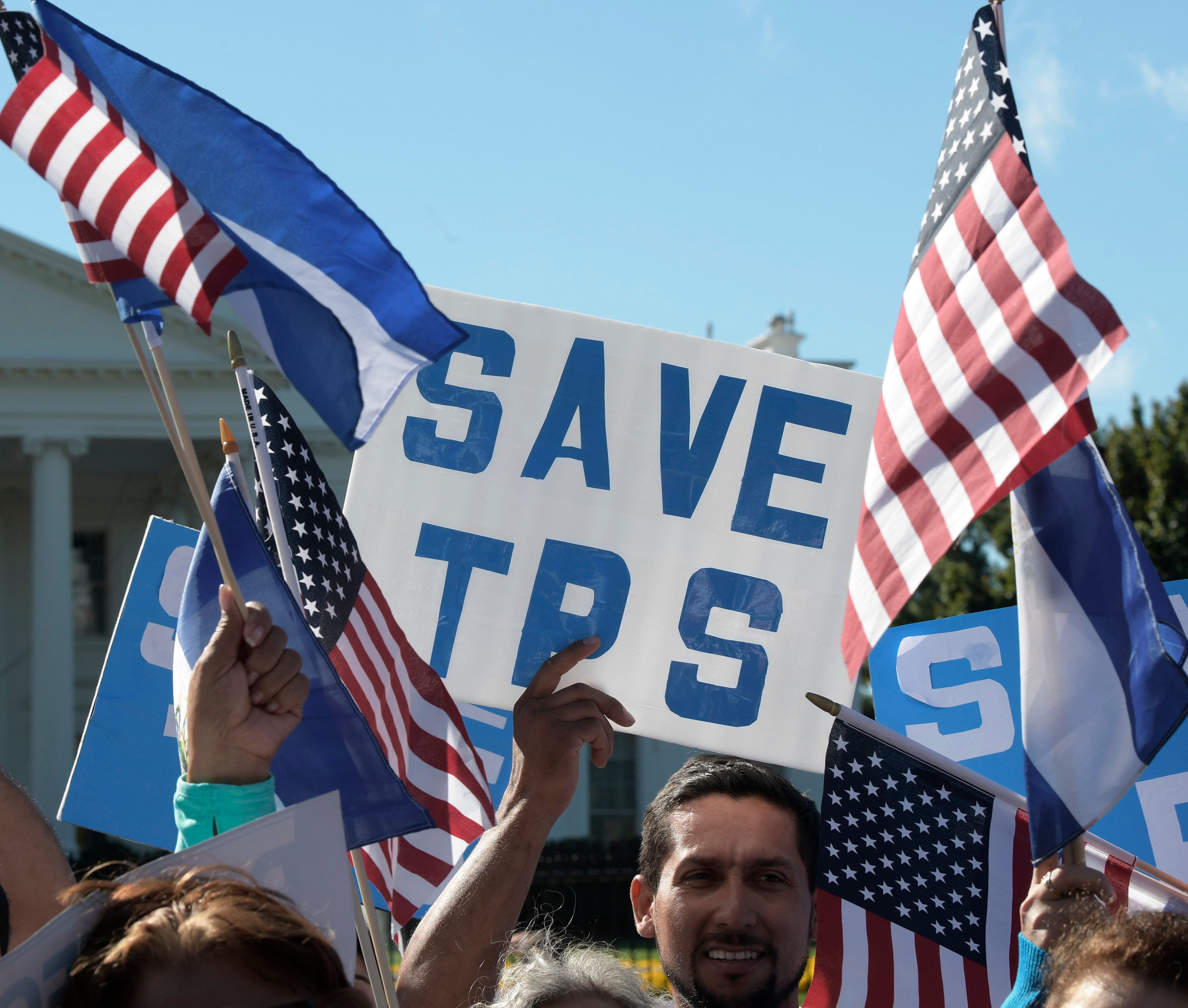
Chacón explicó que el secretario de Seguridad Nacional puede postergar la fecha final del programa. Esa decisión podría alcanzar hasta 18 meses, pero depende de la discreción de esa autoridad y debe estar respaldada por un documento escrito.
El especialista diferenció una postergación de la fecha de finalización de una renovación formal del Estatus de Protección Temporal. Aunque son trámites parecidos, una ampliación del plazo no equivale a mantener vigente la protección migratoria.
A falta de una comunicación oficial, Chacón consideró “prácticamente una imposibilidad” una renovación formal para los salvadoreños. Añadió que el Departamento de Seguridad Nacional todavía podía anunciar un período adicional para que las familias se prepararan.
TPS y 25 años de arraigo salvadoreño
La preocupación por una eventual salida se explica por el tiempo que los beneficiarios han permanecido en Estados Unidos. Chacón recordó que el TPS fue otorgado en 2001 a salvadoreños que ya residían en ese país.
Algunos habían permanecido entre ocho, 10 y 12 años sin autorización migratoria antes de inscribirse en el programa. El TPS les permitió evitar la deportación y obtener autorización para trabajar.
A partir de esa protección, muchas personas formaron familias, tuvieron hijos y nietos, compraron casas, abrieron empresas y reunieron bienes en Estados Unidos.
El cofundador de Alianza Américas sostuvo que la finalización del TPS afecta a una población que construyó durante más de 25 años su vida familiar, laboral y económica fuera de El Salvador.
“Estamos enfrentando el fin de sus vidas”, expresó al describir la situación de personas que, en muchos casos, no conocen otra realidad laboral o familiar distinta a la que tienen en Estados Unidos.
Chacón planteó tres escenarios generales: regresar a El Salvador, salir hacia un tercer país o permanecer en Estados Unidos sin la cobertura migratoria que les otorgaba el TPS.
El efecto del fin del programa, sin embargo, no será igual para todos. Cada persona debe revisar cuál era su condición migratoria previa antes de registrarse en el TPS.
Al concluir la protección, el beneficiario vuelve a la situación que tenía antes de su inscripción original. Si una persona tenía abierto un proceso de deportación cuando solicitó el TPS, podría retornar a esa condición.
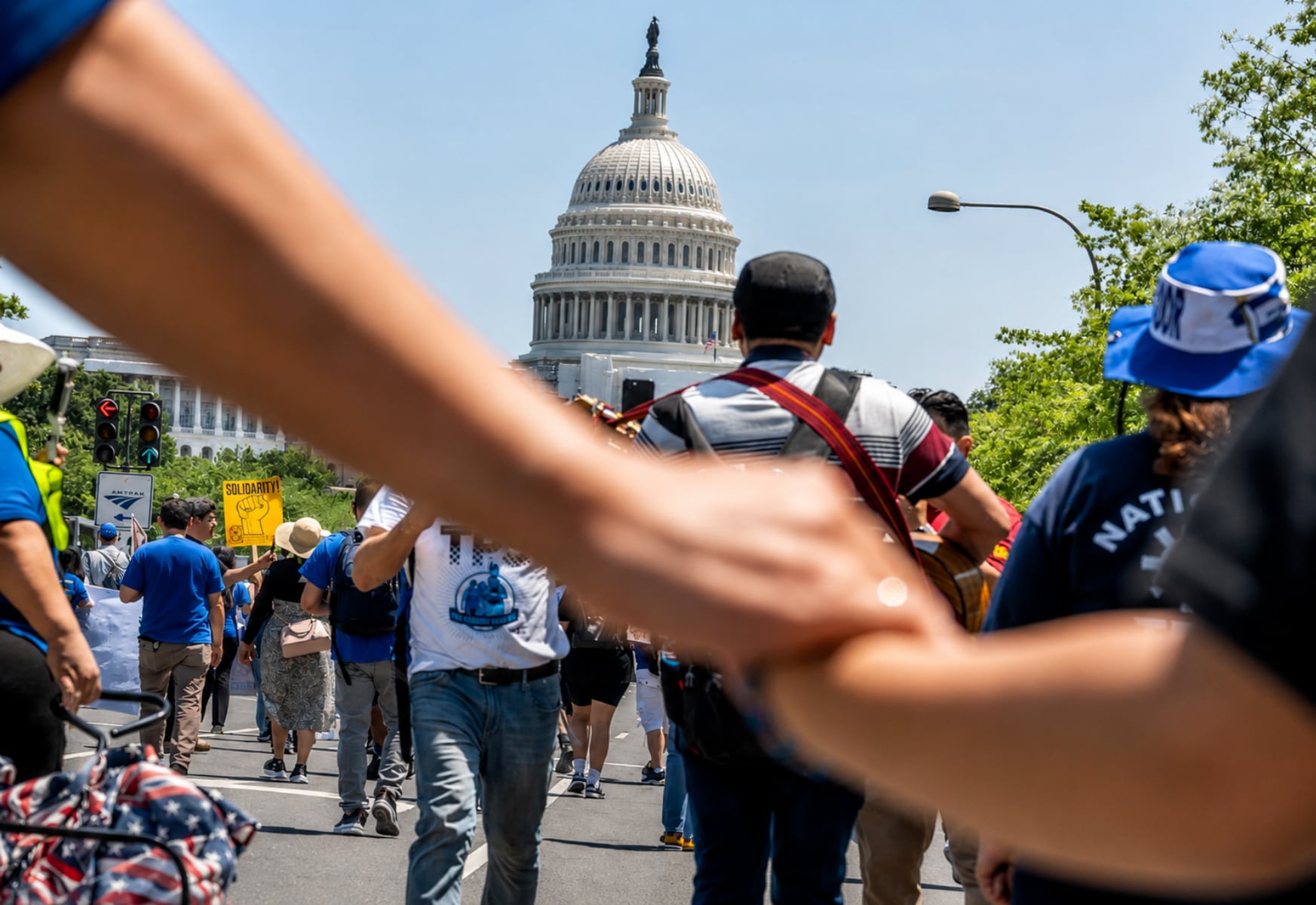
Por esa razón, Chacón señaló que no hay una respuesta uniforme sobre las opciones o los plazos de cada salvadoreño. Cada expediente requiere una evaluación individual.
El asesor lamentó que no exista un acceso sencillo a asesoría jurídica especializada. Dijo que incluso las personas con capacidad para pagar un abogado pueden enfrentar dificultades para encontrar profesionales con experiencia en estos asuntos.
El Salvador y las dificultades de un retorno masivo
Dentro de esas alternativas, el regreso a El Salvador aparece como la opción formal más cercana. Sin embargo, Chacón cuestionó que el país tenga condiciones para recibir y reinsertar a más de 170,000 personas.
El asesor afirmó que buena parte de los beneficiarios tiene más de 50 o 60 años. A su juicio, ese grupo enfrentaría dificultades para obtener empleo por la discriminación laboral relacionada con la edad y por la escasez de plazas formales.
“Si sos mayor de 35, a veces ya no te quieren emplear”, dijo al referirse a las barreras que, según él, existen para las personas mayores en el mercado de trabajo salvadoreño.
Chacón también cuestionó la idea de que todos los retornados puedan abrir pequeños negocios. Señaló que El Salvador mantiene una alta presencia de economía informal, lo que limita esa posibilidad.
El cofundador de Alianza Américas sostuvo que los gobiernos salvadoreños no se prepararon desde 2001 para una posible finalización del TPS. Afirmó que se asumió que el programa se mantendría de forma indefinida.
Más de 850,000 salvadoreños sin papeles
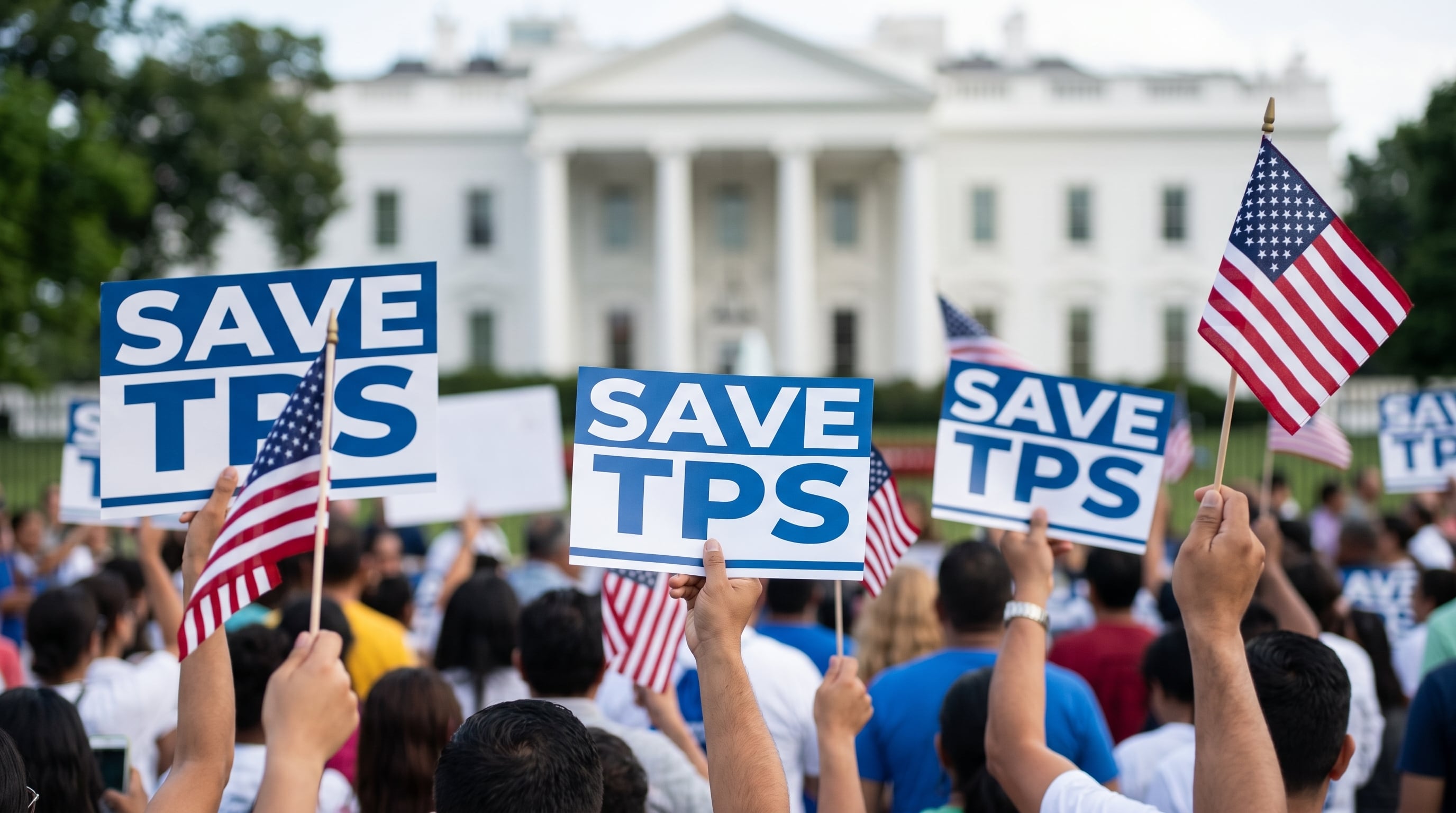
El desafío de un retorno no se limitaría a quienes tuvieron TPS. Chacón estimó que, además de los más de 170,000 beneficiarios del programa, hay más de 850,000 salvadoreños sin papeles en Estados Unidos.
La suma de ambos grupos supera el millón de personas. Para el entrevistado, un retorno masivo de esa dimensión representaría un desafío que El Salvador no está en condiciones de asumir.
Chacón afirmó que el escenario migratorio del Gobierno de Donald Trump apunta a devolver a sus países de origen a quienes no tienen autorización migratoria para permanecer en Estados Unidos.
“No estamos en una condición óptima” para recibir a los salvadoreños que pierden el TPS, manifestó. Añadió que el desafío sería aún mayor si las medidas alcanzan a un número más amplio de compatriotas sin documentos.
Guatemala,Remesas,Crecimiento económico
NEWYou can now listen to Fox News articles!
FIRST ON FOX: A Virginia county is under fire for a new policy providing taxpayer funds in the form of grants to families of illegal immigrants whose breadwinner was detained or deported by ICE.
Arlington County, which sits just across the Potomac River from Washington, D.C., is not new to policies critics say interfere with DHS operations, as it previously caused outrage when the chair of the Arlington County board publicly suggested residents call police to report ICE sightings in January.
«If you look at the alien harboring statute – do you do anything to encourage or induce people to either come illegally or that are illegally here to stay, that could be arguably a violation of the alien harboring statute?» former acting ICE Director Jonathan Fahey told Fox News Digital in a Wednesday interview.
DOJ THREATENS TO CUT BILLIONS IN WELFARE FUNDING FROM STATES FOR FAILING TO REPORT ILLEGAL MIGRANTS
Arlington County Board of Supervisors, from left, Julius D. «JD» Spain Sr., Susan Cunningham, Takis Karantonis, Board Chair Matt de Ferranti and Vice Chair Maureen Coffey. (Arlington County)
«By giving money to people… the reasonable inference is that these people are also illegal, the money enables them to stay in the country illegally, because they lost their breadwinner,» Fahey said.
He said Arlington County Manager Mark Schwartz’s comments to ARLNow that many of the affected families are «unbanked» – or lack access to financial institutions which statutorily require identification to open deposit accounts – is itself a tell.
TAXPAYER-FUNDED HOUSING FOR ILLEGAL IMMIGRANTS IN GOP’S CROSSHAIRS: ‘IT’S GOT TO STOP’
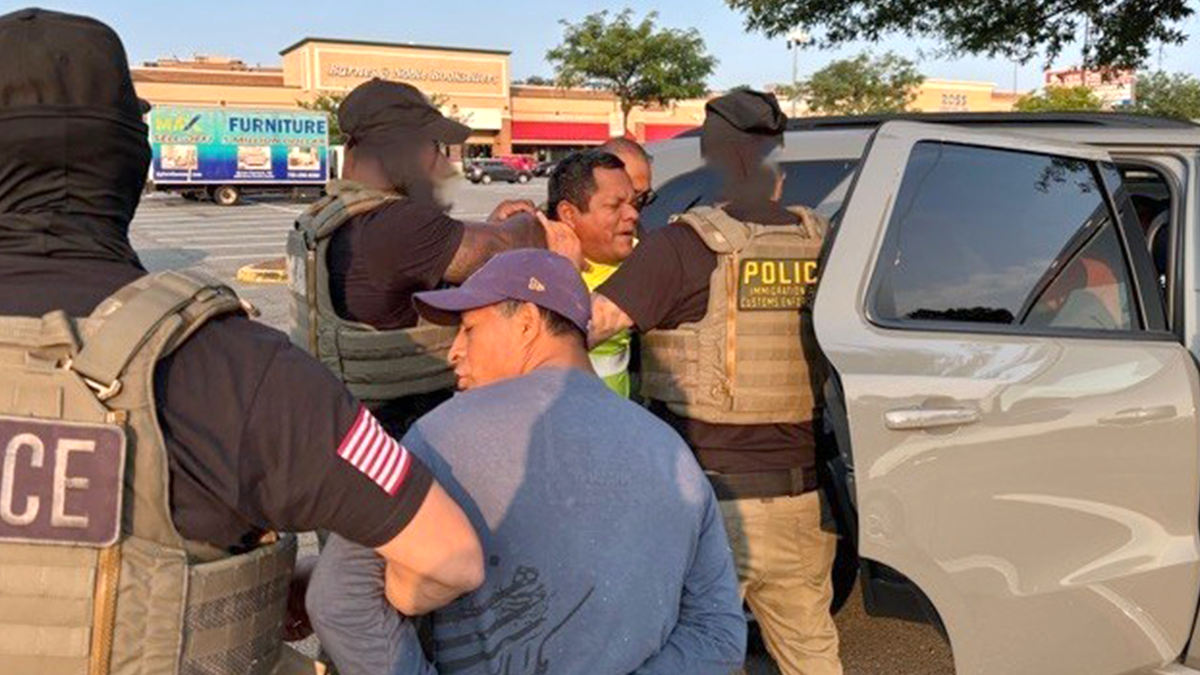
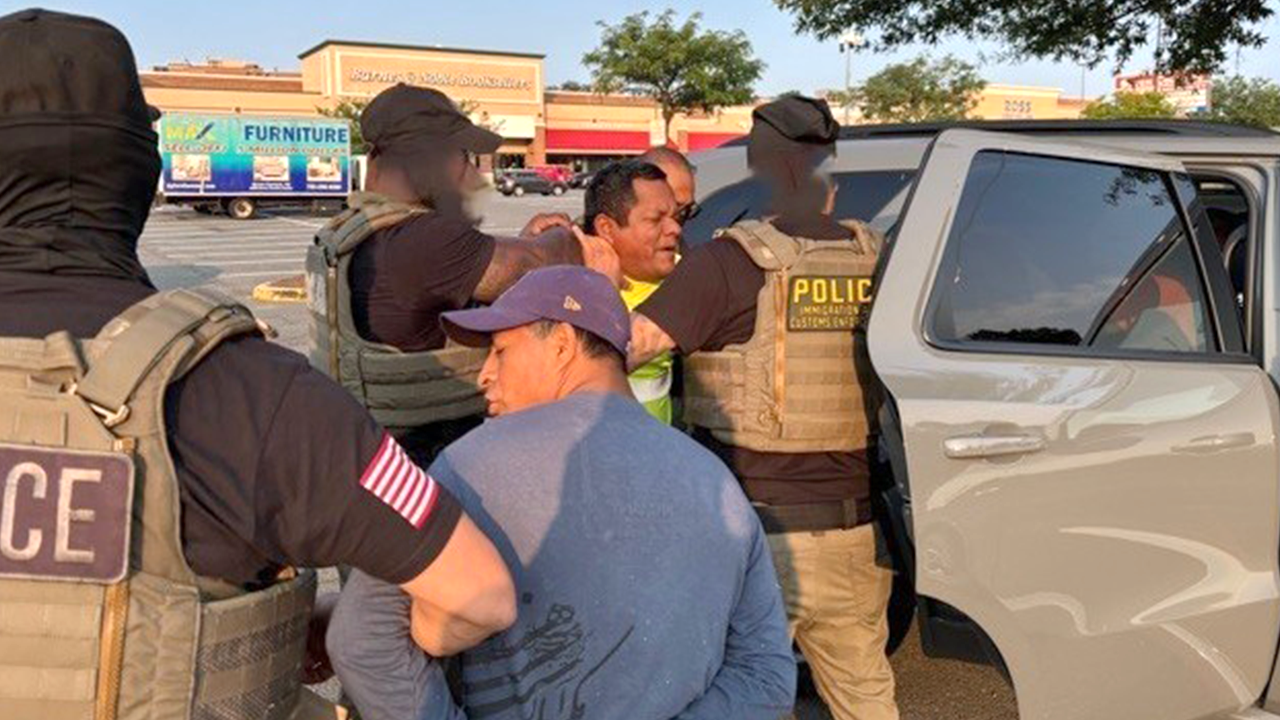
Illegal immigrants are arrested by ICE officers in the D.C. area. (Courtesy of the Department of Homeland Security)
«That shows the county knows the money is going to be going to people that are illegally here and it will help them stay. So that’s where I think the alien harboring statute comes into play,» he said, adding the county shows «reckless disregard» for the fact their policies accommodate people in the country illegally.
Arlington will start by setting aside $50,000 to be distributed through «social safety-net» ministry ArlingtonThrive in increments of up to $2,000 per affected family to cover basic needs and utilities, according to reports.
The plan – which passed 4-0 with one board member absent – reportedly formed after a major ICE operation in Maryland and Virginia netted 1,328 illegal immigrant arrests, including the case of a man who ran from agents when confronted near the U.S. Air Force Memorial.
Five regional federal Democrats sounded off afterward, endorsing an ensuing Arlington County Police investigation into the encounter between ICE and Jose Mejia Hernandez, who was reportedly tased and suffered a brain bleed.
Fox News Digital reached out to Arlington County officials, including Chairman Matt de Ferranti, a Democrat from Rock Spring.
«We are valuing the families of those that have been displaced and removed,» he told local press.
In January, de Ferranti warned Arlingtonians that county law prohibits its «public safety professionals» from «interfering with enforcement of federal immigration law,» but that his suggestion to call 911 to report ICE sightings helps officials know agents are present and pivot to «pursu[ing] Arlington County’s law enforcement mission: preventing violence in our community.»
DOJ ACCUSES MARYLAND OF ‘ACTIVE AND DELIBERATE EFFORT’ TO PREVENT DEPORTATIONS OF ILLEGAL IMMIGRANTS: LAWSUIT
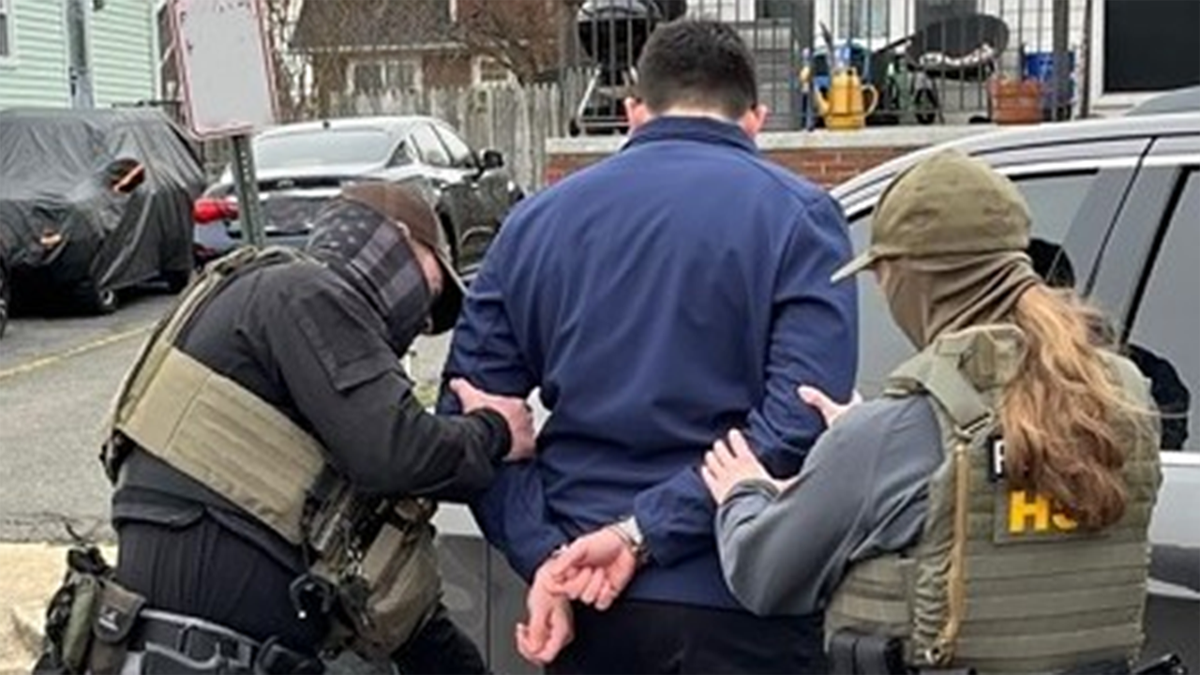
Federal immigration authorities make an arrest in Arlington, Va., in February. (ICE)
Reckless disregard and inducement are both subsections of the law Fahey referenced – 8 U.S.C. 1324.
Leadership at the Department of Homeland Security was similarly critical of Arlington’s move.
«You can’t make this up,» an agency spokesperson told Fox News Digital.
«Sanctuary politicians are taking Americans’ hard-earned tax dollars to reward illegal aliens who break the law. This insanity shows once again who they put first.»
Fahey said counties cannot make their own immigration laws, and with Arlington in particular, their alleged «inducement» doesn’t just affect their county, as creating safe harbor for illegal immigrants can have ripple effects in adjacent areas like the District of Columbia, cities of Falls Church and Alexandria and Fairfax County.
«A person could go on and commit another crime somewhere outside of Arlington… you can’t have localities and states carving out their own immigration laws or saying immigration laws can’t be enforced [here].»
SIGN UP TO GET THE POLITICS NEWSLETTER
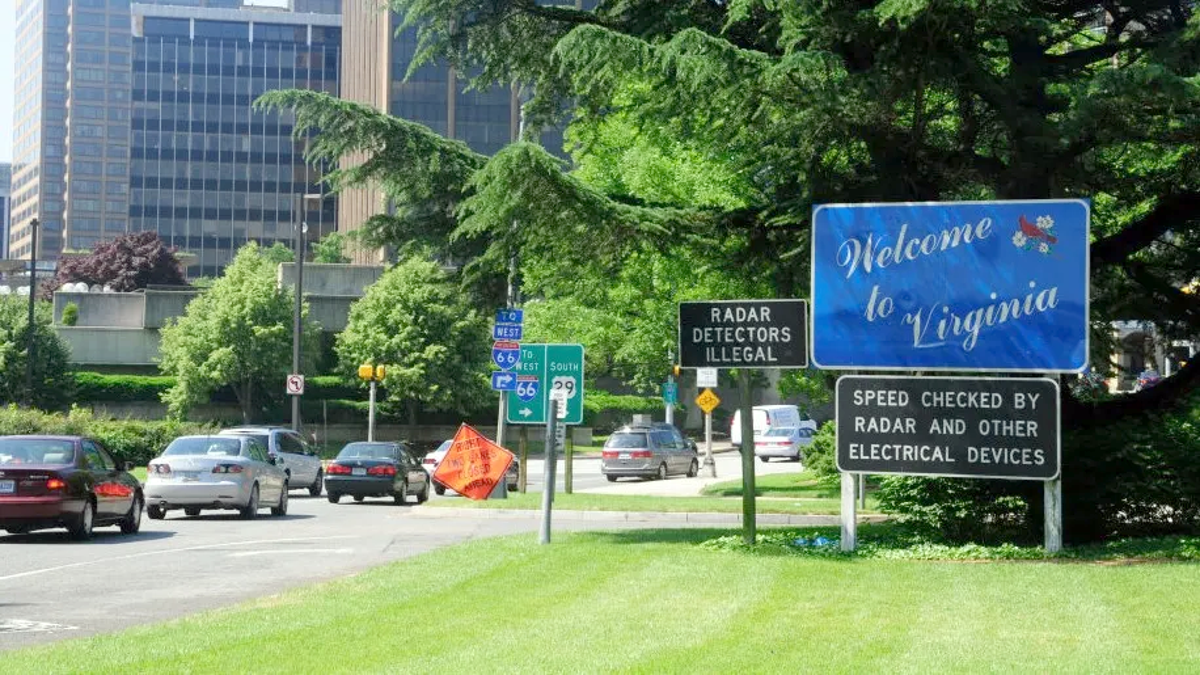
A welcome sign is posted near the Key Bridge in Rosslyn, Arlington County, Virginia. (Universal Images Group/Getty Images)
Arguments against mass deportation on the grounds of family separation are similarly flawed, the former director said, pointing to the fact that when an American citizen is arrested or jailed, they are also physically «separated» from their family.
«Latest dispatch from the People’s Republic of Arlington,» read a critical posting on X.
illegal immigrants, homeland security, immigration, washington dc, politics, sanctuary cities, state and local, virginia, abigail spanberger
INTERNACIONAL
Israel’s E1 plan explained: The Jerusalem-area corridor sparking international backlash

NEWYou can now listen to Fox News articles!
Israel’s move to advance construction in the strategically significant E1 area between Ma’ale Adumim on the West Bank and Jerusalem has triggered growing backlash, with Britain announcing sanctions and 11 other countries threatening or considering trade restrictions on Jewish communities in the disputed area.
The Netanyahu government last month announced tenders for the first 1,400 of roughly 3,400 housing units in E1, a 4.6-square-mile area that would expand the built-up connection between Ma’ale Adumim, a city of about 40,000 people in the Judean Desert, and the Israeli capital.
European governments have strongly opposed the move, with Britain’s left-wing ruling party announcing sanctions on Tuesday.
BRITAIN’S DRAMATIC CRACKDOWN ON ISRAELI SETTLEMENTS SPARKS FIERCE RESPONSE AS US BLOWBACK LOOMS
Israel recently announced new building for land in the area of E1. (The Jerusalem Center for Security and Foreign Affairs.)
The U.K.’s Foreign Secretary, Ed Miliband, announced a ban on products from Judea and Samaria, saying the government in London «believes the unlawfulness of the occupation should be reflected in the economic relationship we choose to have with the occupied territories.»
The foreign ministers of 11 additional countries—Canada, Denmark, Finland, France, Iceland, Ireland, Norway, Poland, Portugal, Spain and Sweden—said Tuesday in a joint statement that they intend to impose or are actively considering trade restrictions on goods from Jewish communities in Judea and Samaria.
Doron Spielman, international spokesman for Prime Minister Benjamin Netanyahu’s Office, told Fox News Digital that the E1 project has been underway for years and is located in Area C of the West Bank, which, according to the Oslo Accords, is under full Israeli security and civilian control.
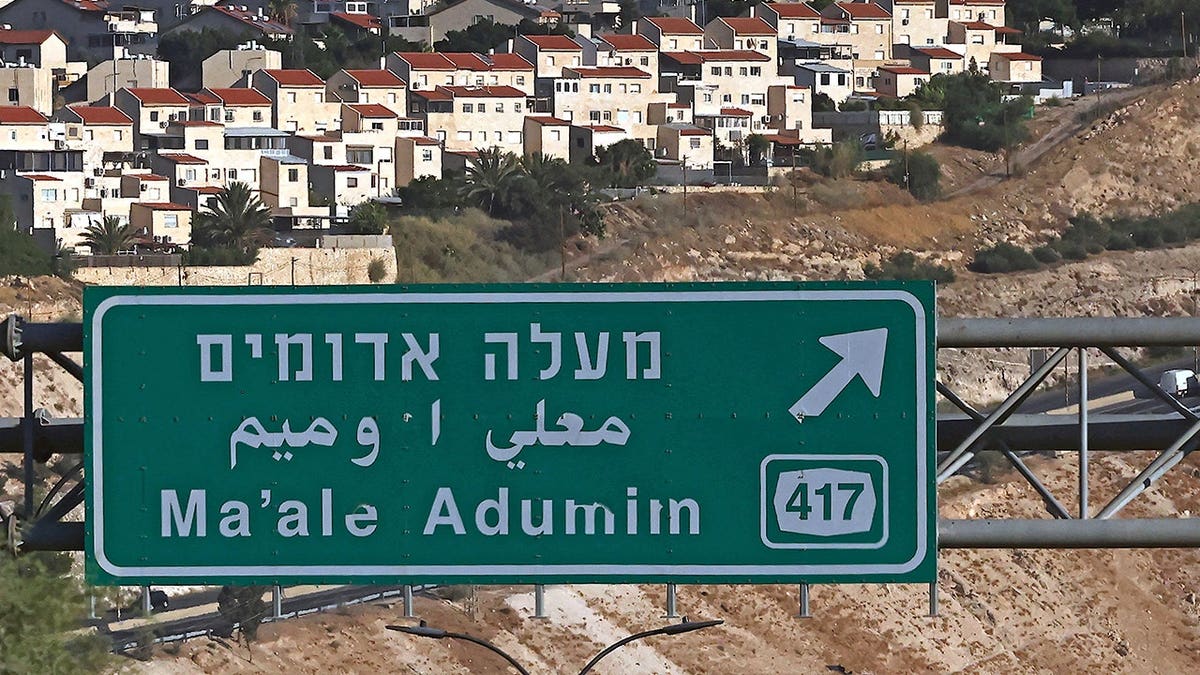
This photograph was taken from the E1 corridor, an area on the West Bank, shows vehicles driving along the highway near the Israeli settlement of Ma’ale Adumim, on September 8, 2026. (Ahmad Gharabli / AFP via Getty Images)
«The Israeli government believes E1 is the natural extension of the area of Ma’ale Adumim, which is an area where Jews live freely within three miles of our biblical capital, Jerusalem. I don’t understand why the world is so focused on a hilltop in the middle of Judea, which is the biblical national homeland of the Jewish people,» he said.
Spielman stressed that «at no point in time, in any agreement that Israel ever made, was E1 ever slated to become part of a Palestinian state.»
«E1 doesn’t affect Palestinian freedom of movement; that’s a myth. … Palestinian propaganda is trying to create an international issue about something that is very basic regarding Jews living in their homeland,» he added.
HOLY LAND BATTLE: SOLOMON’S POOLS BECOME FLASHPOINT IN FIGHT OVER ISRAEL’S BIBLICAL HERITAGE

Old City, Jerusalem view. (Planet One Images/UCG/Universal Images Group via Getty Images)
While not explicitly commenting on E1, a State Department spokesperson told Fox News Digital that, as President Donald Trump has made clear, the United States does not support the annexation of the West Bank.
«Such actions could be counterproductive to the President’s Comprehensive Plan to End the Conflict in Gaza and undermine our broader efforts to achieve regional peace and stability,» the spokesperson said.
Ashraf al-Ajrami, a former Palestinian Authority minister of Prisoners Affairs, told Fox News Digital that there is no scenario in which the Palestinian Authority would agree to construction in E1.
«The whole international community refutes this plan because they understand the objective of it. It’s not a plan that helps settlers to grow; it’s a plan to destroy the hope of having a two-state solution. It is the opposite of the Palestinian national rights of self-determination and statehood,» he said.
«The Israeli government has ignored all the ultimatums from the European Union and even the objections from the American administration up to this point. They will start to build the units merely to divide the Palestinian territories in the West Bank and cut the contiguity between East Jerusalem and our villages in the area,» he added.
Former Israeli Ambassador to the United States Michael Oren told Fox News Digital that the E1 project is controversial because the U.S. and other governments that support a two-state solution believe construction there would divide the West Bank and prevent the creation of a Palestinian state.
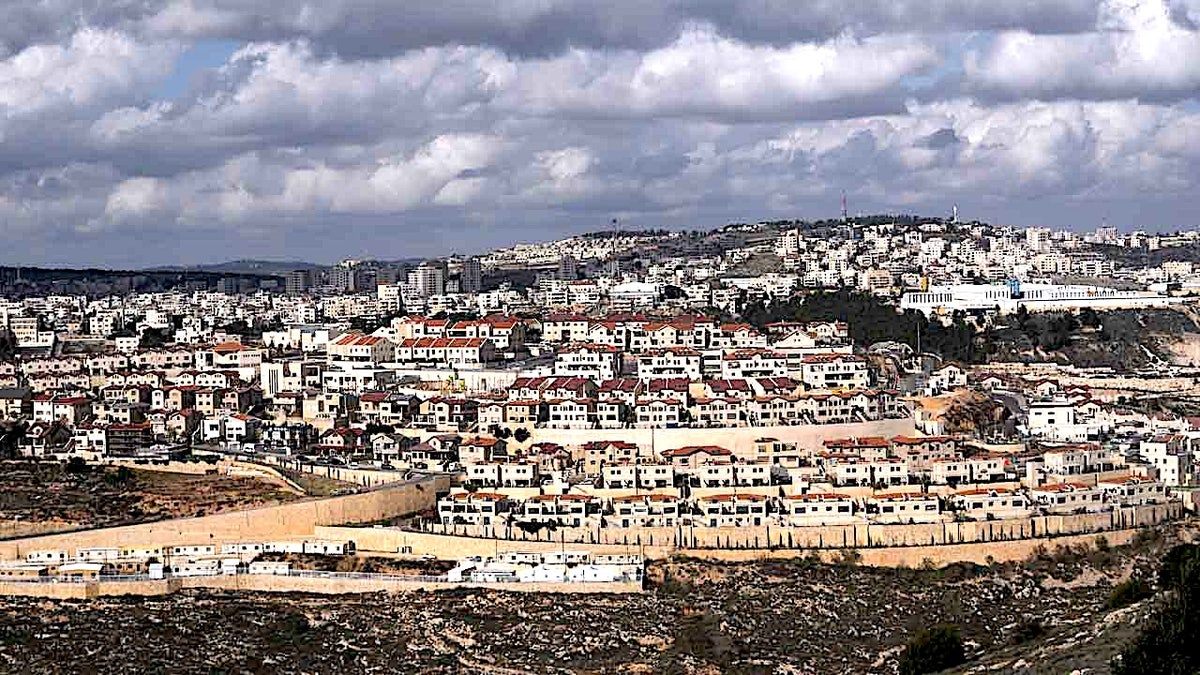
The West Bank, also known as Judea and Samaria is home to some 500,000 Israelis. (Mahmoud Illean/AP)
«The Oslo Accords do not prohibit Israeli settlement construction, nor do they stipulate that the accords’ outcome must be a two-state solution,» he said.
«Therefore, this is not a violation of the Oslo Accords. It may violate the spirit of the accords, but there have been many thousands of violations of their spirit. The Second Intifada was a violation of the spirit of the Oslo Accords,» he added, referring to the Palestinian terror campaign against Israel from 2000 to 2005, which was marked by suicide bombings targeting civilians.
EXCLUSIVE: ISRAEL SEIZES VAST IRAN TERROR AXIS ARSENAL WITH SURPRISING FOREIGN ORIGINS
Naomi Kahn, international director of Regavim, an NGO dedicated to protecting Israel’s national lands, resources and the rule of law, told Fox News Digital that the Palestinian Authority made the plan controversial 30 years ago when it approached the U.S. administration at the time.
«The Rabin government had actually announced plans to develop the Ma’ale Adumim area, and the PA claimed that if Israel built in E1, it would spell the end of any possibility of a Palestinian state,» she said.
While that claim is false in physical terms, Kahn said, it has carried political significance because the PA has made E1 a battleground and involved international actors from the outset.

Israeli soldiers patrol a street as they are deployed during an operation in the village of Qusra, south of Nablus, in the Israeli-occupied West Bank, on Aug. 13, 2026. Israeli forces on August 13 moved against rogue settlers laying siege to Palestinians amid unusually strong US criticism, even as Israel inaugurated an emblematic settlement elsewhere in the West Bank. Settlers at Qusra near Nablus since August 9 have blockaded Palestinian homes, including one owned by a U.S. citizen, with residents saying they have been cut off from food and other supplies. (Zain Jaafar/AFP via Getty Images)
«E1 has been at the heart of efforts to essentially globalize the push to remove the State of Israel from all of Judea and Samaria,» she said.
Kahn noted that some of the countries pushing for sanctions against Israel have spent the past 20 years actively financing and supporting illegal Arab construction in E1, while Palestinian Authority outposts have increasingly mushroomed throughout Judea and Samaria.
She said Regavim first went to court about 16 years ago over the illegal construction of these outposts and has since won six times.
«Still, nothing has happened,» said Kahn, whose organization was recently among four Israeli civil society organizations sanctioned by the European Union over allegations that they support «settler violence» and undermine prospects for a Palestinian state.
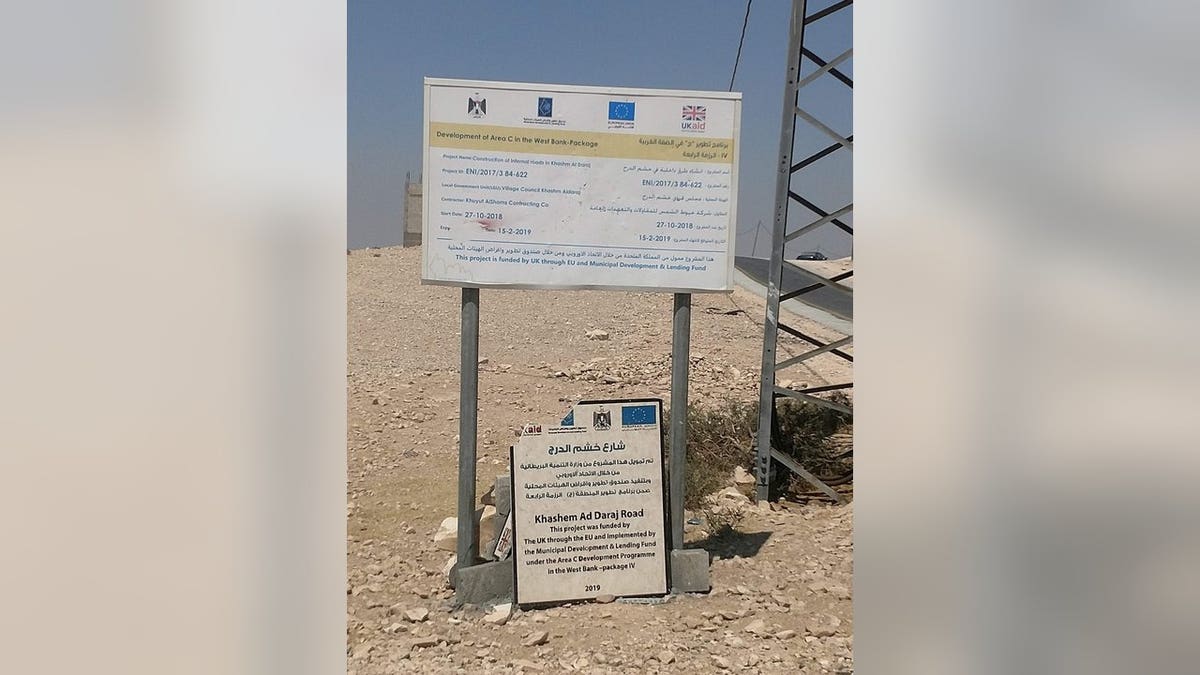
European Union-sponsored structures in Area C on the West Bank, also known as Judea and Samaria. (Regavim.)
Dan Diker, president of the Jerusalem Center for Security and Foreign Affairs, told Fox News Digital that E1 is a critical security corridor that would help protect Jerusalem from Palestinian terrorism and encroachment into areas under Israeli security and administrative control under the Oslo Accords.
Diker said Israel is wary of another invasion following Oct. 7, this time from Palestinian Arab towns, cities and villages across Judea and Samaria.
He claimed, «There are tens of thousands of machine guns, other weapons and ammunition smuggled into Palestinian villages, towns and cities, and there is deep concern that, particularly in communities in the E1 area, they could cut off the road between Jerusalem and Ma’ale Adumim, creating another existential threat,» he said.
For the international community, Diker said, the political disagreement over E1 is rooted in the period when Israel and the Palestinian Authority were expected to negotiate the final status of a peace agreement.
«Since then, we’ve had the terror war of 2000, followed by four terror wars waged by Hamas, culminating in Oct. 7. The geopolitical and security reality has completely shifted, but the international community’s mindset has not. For them, it’s a political issue; for us, it’s an existential one,» he added.
israel, middle east, sanctions, anti semitism, trade

El dólar subió por tercer día, con alza moderada por el alto volumen de la oferta

Malvinas: el Gobierno evalúa incluir la pesca y otras actividades en el proyecto de sanciones que enviará al Congreso

Grabois se hizo eco de las advertencias por el riesgo de la IA y llamó a un “pacto tecnológico mundial”

El vencimiento del TPS podría amenazar el flujo de remesas hacia El Salvador, según Alianza Américas

La terrible muerte que destrozó a Baby Etchecopar a sus 73 años: «Llegaste a mí en mi peor momento, no puedo pensar en no verte»

El presidente del Banco Central reveló qué pasó con el oro que estaba en la bóveda de la entidad

1000 días de Milei: los logros, las crisis que lo marcaron y los déficits de su gestión

Martín Menem dijo que Milei será el primer no peronista en ser reelecto y llamó a invertir más

Franco Colapinto largará en el puesto 7 con su Alpine el Gran Premio de Italia de la Fórmula 1: hora, TV y todo lo que hay que saber

Multas millonarias, arrestos y trabajo comunitario: cómo se prepara una provincia para enfrentar el Súper Niño

 SOCIEDAD2 días ago
Femicidio brutal en Merlo: un jubilado de 64 discutió con su esposa y la asesinó a puñaladas
- DEPORTE2 días ago
El rotundo cambio de Julián Álvarez en una foto presentación del Atlético de Madrid tras quedarse en el club
- POLITICA2 días ago
El gobierno de Kicillof retendrá un 2% en los premios de las apuestas online