INTERNACIONAL
Dems abandon candidate who said MAGA is ‘more destructive’ than Nazis, but she’s stuck on the ballot


A Democrat running for the state legislature in battleground North Carolina remains on the ballot despite her party publicly abandoning her after inflammatory social media posts she made resurfaced.
The North Carolina House Democratic Caucus and a county party group both condemned posts by Shelly Headen in which the legislative candidate called for an attack on U.S. soil targeting red states and compared President Donald Trump to Adolf Hitler.
But Headen remains a candidate because the filing deadline to drop out of the race was Aug. 20, and the general election ballots are finalized and were sent out to voters starting on Sept. 4.
Headen, who is challenging Republican state Rep. John Blust for the House District 62 seat in Greensboro-anchored Guilford County, posted a year ago, «I think our only hope is an attack on US Soil … preferably Alabama, Louisiana … where the stupid people live.»
WATCH: HUGH HEWITT’S TAKE ON THE HEADEN CONTROVERSY
In separate posts, she argued that the damage done by Trump was «getting close to surpassing Hitler» and claimed the «MAGA cult may be more destructive and evil than the Nazis.»
Breitbart reported that a Facebook post by Headen that pictured her at a memorial at the Nazis’ Dachau concentration camp in Germany, where tens of thousands of people were murdered during World War II, with the words, «This is where Trump supporters belong.»
Headen denied last week to the Greensboro News and Record that she posted the concentration camp image and said she believed the image was edited to include the words over a real photo.
Her old comments grabbed new national attention earlier this week when the White House Rapid Response account that supports Trump shared them on X and charged that Democrats «ARE SICK PEOPLE!»
DEMOCRACY ’26: STAY UP TO DATE WITH THE ELECTION HUB
North Carolina Republican U.S. Senate nominee Michael Whatley posted on social media a photo of Headen and former Gov. Roy Cooper, the Democratic Senate nominee, and argued, «Roy Cooper still stands with NC Dem who called for the genocide of Republicans. This is against everything America stands for.»
«These remarks are reprehensible – Roy strongly condemns them and all forms of political violence and he believes it’s up to all of us to speak responsibly,» Cooper’s campaign emphasized in a statement.
Headen, a certified public accountant and small business owner, told WFDD, a public radio station in North Carolina, that she didn’t remember making the posts but apologized to those hurt by them. And she added that she understood the party’s decision to drop support for her.
But in an interview with The Assembly, a digital-first news operation in North Carolina, Headen defended her posts, describing them as «a few angry moments.»
«I’ve sacrificed myself just like Jesus sacrificed Himself on the cross, and Martin Luther King and Abraham Lincoln and all the people that put themselves out there to sacrifice for our country,» Headen also told The Assembly.
«If a few angry moments on social media are the end, then so be it. MAGA will keep winning if we continue with not standing up for what’s right.»
The Assembly’s reporting preceded the move by Democrats to drop support.
SIGN UP TO GET THE POLITICS NEWSLETTER
«Shelly Headen’s posts are unacceptable and do not reflect the values we expect of our candidates,» the North Carolina House Democratic Caucus said in a statement. The caucus added that it «condemns these comments without qualification and will not support Shelly Headen’s candidacy.»
The Guilford County Democratic Party said in a statement, «We unequivocally reject and condemn the social media posts by Shelly Headen. These statements violate everything our party represents. Effective immediately, the county Democratic Party is formally withdrawing all financial, operational and organizational support for Shelley Headen’s campaign.»
Headen earlier this week told Digital she’s received death threats in recent days but declined to give any further responses regarding her posts.
In an article published Thursday in The Rhino Times, Headen reiterated, «I’ve been getting death threats, and now all I want to do is protect myself and my family. My whole world has been collapsing.»
And she acknowledged that she took down her social media pages, saying, «I don’t have access to any of my accounts anymore.»
Republicans have spotlighted the controversy.
North Carolina House Speaker Destin Hall called Headen’s comments «Absolutely disgusting.»
And the North Carolina House Republicans wrote on X, «Democrat Shelly Headen who is «Running to Restore Human Decency» just posted that she wants an attack on US soil. It is unclear whether Shelly would prefer ISIS or China to attack the United States, but it’s clear she wants an attack.»
Meanwhile, the popular conservative X account Libs of TikTok argued that Headen «should drop out immediately. She doesn’t belong anywhere public office.»
The attention over the resurfaced comments comes a week after Headen faced a separate controversy following a move by State House Republicans to release two 2024 Guilford County Sheriff’s Office incident reports involving her and her husband, Gregory Thomas Headen.
The reports, which identify the alleged domestic offense as physical assault, list Headen as the suspect and her husband as the potential victim.
In a statement she released earlier this month, Headen said that during a stressful time in their marriage, she and her husband had «a couple of arguments that escalated.» She said that, during one argument, her husband grabbed her, causing her to fall backward and hit her head. She then called 911.
Headen, in her statement, described herself as having experienced abuse. And she argued that Republicans were using a private family matter for political gain.
politics, north carolina, donald trump, democrats elections, republicans elections, elections












INTERNACIONAL
How CodePink co-founder Medea Benjamin’s family foundation became a major funder of left-wing activist groups

CodePink co-founder Medea Benjamin’s family foundation became a major financial backer of a network of left-wing activist organizations over more than two decades, providing nearly $3.2 million to CodePink while also bankrolling protest groups, legal advocacy organizations and progressive nonprofits, a Digital investigation found.
The foundation, Arc of Justice, is a $54.6 million private foundation formerly known as The Benjamin Fund. A review of its complete IRS filing history found it made nearly 1,500 grants totaling about $24.6 million to organizations involved in anti-war activism, progressive policy, legal advocacy and campaigns involving immigration enforcement, China, Cuba and the Israel-Hamas war.
Among its largest recipients were CodePink, Global Exchange, the Center for Constitutional Rights, Grassroots International and Social Good Fund, alongside grants to dozens of other organizations involved in anti-war activism, progressive policy, legal advocacy and progressive media.
Arc of Justice provided CodePink more than twice the approximately $1.33 million the group received from the funding network linked to Shanghai-based Marxist tech tycoon Neville Roy Singham. A previous five-part Digital investigation found Singham’s network directed at least $278 million into organizations that promoted pro-China messaging.
LAWMAKERS THROW OUT ‘TROJAN HORSE’ ACTIVISTS THEY SAY ARE ENGAGED IN AMERICAN SUBVERSION
Arc of Justice has come under scrutiny after California revoked its charitable registration following years of financial compliance failures, though the foundation has been working to regain its standing with California regulators.
Benjamin, who co-founded CodePink with Singham’s wife Jodie Evans, has remained one of the group’s most visible public faces, frequently leading protests and interrupting congressional hearings. On Tuesday, she was escorted from a House Foreign Affairs subcommittee hearing on alleged foreign malign influence after protesting during the proceedings.
The Digital investigation also found the foundation itself has undergone sweeping changes in recent months, with Benjamin stepping down from the board, new leadership taking over and the organization saying it intends to chart a different course for its charitable giving.
Arc of Justice began funding CodePink in 2009 and provided grants to the organization in 15 tax years through 2024, totaling $3,195,280.
According to the documents, CodePink was Arc of Justice’s largest activist beneficiary. Since 2009, the foundation and its predecessor, The Benjamin Fund, also directed about $2.05 million to Global Exchange, the anti-war and social justice advocacy group Benjamin co-founded with her former husband, Kevin Danaher, which has long campaigned against U.S. military intervention and economic sanctions.
Arc of Justice also provided about $2.24 million to Grassroots International, which funds grassroots social movements around the world; $1.61 million to Social Good Fund, which provides nonprofit infrastructure and fundraising support for charitable projects; about $1.29 million to the Center for Constitutional Rights, a legal advocacy organization; and about $114,000 to Alliance for Global Justice (AFGJ), an activist nonprofit.
AFGJ has drawn scrutiny over its past fiscal sponsorship of Samidoun, a pro-Palestinian activist group later sanctioned by the U.S. Treasury. Benjamin said Arc’s final grant to Alliance for Global Justice was $10,000 in 2022 and that the foundation «was not aware of any specific groups fiscally sponsored by AFGJ» when it made its grants.
Through attorney David Levitt, the foundation said both CodePink and Alliance for Global Justice were recognized by the IRS as tax-exempt public charities and that Arc was entitled to rely on that status when making its grants.
The grantmaking reached across a much broader activist network. Since 2009, IRS filings reviewed by Digital show Arc of Justice and its predecessor gave about $492,000 to World Beyond War, roughly $255,000 to the Institute for Policy Studies and about $124,000 to Jewish Voice for Peace. It also gave $110,000 to Grassroots Global Justice and about $90,000 to the Center for Popular Democracy.
IRS filings also show Arc of Justice and its predecessor provided about $65,500 to Democracy Now! since 2009, where Benjamin has frequently appeared as a guest over the years.
Founded in 2002 with the aim of preventing the Iraq War, CodePink has grown into one of the country’s most visible anti-war protest groups, repeatedly disrupting congressional hearings and protests involving senior U.S. officials, including then-Secretaries of State John Kerry and Mike Pompeo. The group has also participated in nationwide No Kings protests, opposed ICE enforcement actions, organized anti-Israel rallies and campaigned against U.S. policy toward China, Cuba and Iran. Earlier this year, CodePink led a delegation to Cuba that included Twitch political streamer Hasan Piker.
Asked about Arc’s long-term funding of CodePink and other activist organizations, Matthew Johnson, a senior fellow at the Jamestown Foundation, said sustained financial support can have an impact well beyond the dollar amounts involved.
«Small amounts of money can actually go a long way toward impacting the broader media ecosystem… from the perspective of political organization, they may be having an outsized impact on the kind of information that is available to Americans,» Johnson told Digital.
Johnson, who testified before Congress Tuesday about how foreign adversaries may use nonprofits and other organizations to shape U.S. public opinion and policy, told lawmakers that CodePink launched its «China Is Not Our Enemy» campaign in 2020 following meetings in Beijing and has since pursued China-focused advocacy and organized travel. The campaign argued the United States should pursue cooperation with Beijing rather than confrontation. CodePink and Benjamin have denied taking direction from the Chinese government.
WATCH: Heritage Foundation senior fellow confronts CodePink’s Medea Benjamin before House hearing
Benjamin told Digital the grants were intended to support CodePink’s anti-war work.
«The foundation’s donations to CodePink were made to support its anti-war work,» she said in an email response.
At the House hearing on Tuesday, Benjamin also rejected suggestions that she or CodePink took direction from foreign governments. «I’ve been an anti-war activist from the days of Vietnam,» Benjamin said. «I never had a foreign government tell me what to do.»
Singham and the organizations he has funded, identified in the Digital report, have denied taking direction from the Chinese government, and neither Singham, Benjamin nor the organizations have been charged with wrongdoing.
CHINA EXPERT WARNS BEIJING WANTS AMERICANS — NOT THE CCP — TO SPREAD ITS MESSAGE
Arc of Justice was formerly known as The Benjamin Fund, Inc., with California corporate records showing the foundation formally changed its name in November 2019.
Benjamin’s father, Alvin Benjamin, a prominent Long Island real estate developer who founded The Benjamin Companies in the early 1960s, provided some of the foundation’s earliest documented financial backing.
The Benjamin Fund’s initial 2003 IRS return shows he contributed a partnership interest valued at $683,715 to the foundation, with Medea Susan Benjamin serving as president.
Much larger contributions followed. In 2010, the estate of Benjamin’s mother, Rose Benjamin, contributed $10,863,060, according to the foundation’s IRS filing. Five years later, the Estate of Alvin Benjamin contributed another $15 million, followed by another $8,603,450 in 2019.
Medea Benjamin — identified as Susan Benjamin on the filing — personally contributed $1 million to Arc of Justice in 2022, listing a Miami address.
Arc of Justice’s wealth was largely tied to an investment portfolio that continued to grow while the foundation distributed millions of dollars in grants.
Federal tax returns reviewed by Digital show the foundation’s assets grew from $39.63 million at the end of 2020 to $54.64 million in 2024, as it distributed millions of dollars annually in grants.
Arc of Justice generated much of its annual income from its investment portfolio, collecting dividends from stocks and mutual funds, interest on cash holdings and profits from investments that had increased in value.
In 2023, the foundation reported nearly $2 million in revenue, including $1.11 million in dividends and interest from securities, $166,421 in interest on savings and temporary cash investments and $686,919 in net gains from asset sales.
Its investment holdings also produced substantial gains as the portfolio increased in value. In 2020, Arc of Justice reported $12,344,501 in unrealized gains on securities, helping push its year-end assets to nearly $40 million.
Over more than two decades, IRS filings reviewed by Digital repeatedly reported no compensation for the foundation’s officers and no highly paid employees, while the foundation directed millions of dollars to outside organizations.
After California revoked Arc of Justice’s charitable registration, Digital reported that a new Florida nonprofit using the Arc of Justice name was incorporated at the Miami home of Benjamin’s longtime partner, Tighe Barry, raising questions about the future of the foundation and whether its assets or operations were being moved out of California.
The address is a modest turquoise home largely obscured by trees — an unassuming setting for an organization tied to a private foundation with more than $50 million in assets. Benjamin and Barry have frequently appeared together at CodePink demonstrations over the years.
Levitt later told Digital the Florida corporation had been created as a «placeholder» while the foundation considered relocating its operations from California, but the move was never completed. He said the California corporation was never formally dissolved, no assets were transferred and the Florida entity «holds no assets and has conducted no business.»
The foundation has been attempting to get its registration reinstated after recently filing five years of overdue reports covering 2020 through 2024 and paying $1,800 in filing fees and penalties as part of a petition for reinstatement, documents submitted to California regulators show.
$54M CODEPINK-LINKED FOUNDATION SHUT DOWN IN CALIFORNIA POPS UP AT RAMSHACKLE MIAMI HOME
In the reinstatement petition, Levitt attributed the missed filings to what he described as an administrative misunderstanding over whether the foundation had successfully relocated from California to Florida.
He wrote that, during the tenure of the foundation’s «former president,» who served through the end of 2025, foundation leaders believed Arc was no longer subject to California’s charitable registration requirements because it had moved to Florida.
The petition says the foundation later appointed a «new president,» who discovered the compliance problems in 2026 and began the process of bringing the organization back into compliance. The petition also states that the foundation’s directors and officers personally paid the penalty portion of the overdue filing fees.
The filings identify Maya Danaher, Benjamin’s daughter, as president of the California foundation. Danaher previously served as the foundation’s treasurer before becoming president.
«As previously reported, I have resigned from the foundation’s board, and its new management will set its own funding priorities going forward,» Benjamin said.
LAWMAKERS SAY THEY ARE STANDING AT THE GATES AGAINST ‘TROJAN HORSES’ PROMOTING MALIGN FOREIGN INTERESTS
It is unclear why Benjamin resigned from the board, why the proposed move to Florida was ultimately abandoned or why the foundation’s new leadership decided to shift its grantmaking priorities away from the causes it had supported for more than two decades.
Benjamin was not listed as an officer or director of the Florida corporation, where Barry was listed as secretary and registered agent.
Its stated goal is blunt: «WE ARE HERE TO SUPPORT SOCIAL JUSTICE NON PROFITS,» according to the articles of incorporation.
Levitt said the foundation’s new leadership intends to shift its grantmaking away from the causes it historically supported.
«Going forward, the foundation’s new management intends to focus its grant-making on domestic childhood enrichment programs and organizations that support the well-being of children, families and individuals in need throughout the U.S.,» Levitt said.
WATCH: Cuba expert says CodePink acts like a ‘Trojan horse’ for communist interests inside the US
investigations, charity, politics, us protests, china, cuba, immigration
INTERNACIONAL
Estados Unidos prepara el traslado de la mayoría de sus drones Reaper de África a Sudamérica para operaciones antidrogas

Estados Unidos prepara el traslado hacia Sudamérica de la mayoría de los drones MQ-9 Reaper que actualmente se encuentran desplegados en África, en un movimiento que podría ampliar de manera significativa las capacidades de vigilancia, inteligencia y ataque de Washington en el hemisferio.
En una columna en Infobae al Mediodía, Andrei Serbin Pont vinculó la decisión con el nuevo enfoque que Estados Unidos está impulsando para combatir el narcotráfico y a organizaciones que identifica como terroristas.
“Lo que esto termina indicando es que se viene una escalada por parte de los Estados Unidos en América Latina, con un foco probablemente hacia el norte de América del Sur, Centroamérica y el Caribe”, sostuvo.
Para Serbin Pont, el eventual desplazamiento de los Reaper debe leerse junto con una mayor cooperación militar entre Washington y distintos gobiernos de la región. Ecuador es uno de los principales ejemplos: desde marzo, fuerzas estadounidenses y ecuatorianas realizan operaciones conjuntas contra organizaciones designadas como terroristas por Estados Unidos.
Un dron pensado para vigilar y atacar
El MQ-9 Reaper es una plataforma de gran autonomía diseñada principalmente para tareas de inteligencia, vigilancia y reconocimiento, aunque también puede realizar ataques de precisión. El sistema incorpora cámaras, sensores infrarrojos, designadores láser y radar, y puede utilizar misiles AGM-114 Hellfire y distintas bombas guiadas.
Su principal ventaja está en la posibilidad de permanecer durante largos períodos sobre una misma zona. Eso permite seguir movimientos, obtener imágenes, identificar objetivos y transmitir información a los centros de comando sin necesidad de mantener una aeronave tripulada en el lugar.
“Estas aeronaves al fin y al cabo no solo tienen esa capacidad destructiva por medio del empleo de municiones de precisión, pero son sobre todo plataformas de inteligencia, de monitoreo y de reconocimiento”, explicó Serbin Pont.
El analista destacó además el costo operativo frente a otras aeronaves militares. “Es barato comparado con volar un F-16 o un avión de alerta temprana”, señaló.
Esa combinación de autonomía, sensores y armamento convierte al Reaper en una herramienta especialmente útil para operaciones contra organizaciones que utilizan territorios extensos, zonas fronterizas o áreas de difícil acceso.

El antecedente de Colombia
Serbin Pont también se refirió a Colombia, donde Estados Unidos acordó el préstamo de drones MQ-9A Reaper para reforzar las tareas de vigilancia contra organizaciones vinculadas al narcotráfico.
El analista utilizó ese caso para explicar el efecto que puede generar una flota relativamente reducida cuando las aeronaves se distribuyen en turnos.
“Si vos tenés como Colombia cuatro aeronaves de estas en rotación, significa que va a haber áreas del país que van a poder estar casi bajo monitoreo constante”, planteó.
Más allá de la cantidad definitiva de unidades, la importancia está en la posibilidad de sostener una vigilancia aérea persistente. El Reaper puede observar durante períodos prolongados una determinada zona y aportar información que luego puede ser utilizada por las fuerzas de seguridad o militares.
Para Serbin Pont, esa capacidad puede integrarse a una red regional más amplia. El analista mencionó a Ecuador, Puerto Rico, Panamá y otros puntos del Caribe y Sudamérica como posibles nodos desde los cuales Estados Unidos podría ampliar la cobertura de sus operaciones.

El objetivo no sería solamente detectar embarcaciones o movimientos terrestres. También se trata de producir inteligencia que permita identificar rutas, estructuras logísticas y patrones de actividad de las organizaciones criminales.
El nuevo escenario regional
El eventual despliegue de los Reaper se produce en un contexto en el que Washington aumentó su presencia militar en América Latina y reforzó la cooperación con gobiernos que participan de su estrategia contra el narcotráfico.
La denominada Americas Counter Cartel Coalition, impulsada por Estados Unidos, reúne a países de la región para coordinar acciones contra organizaciones criminales transnacionales. Washington también desarrolló operaciones con Ecuador en el Pacífico oriental y el Caribe.
Serbin Pont considera que los drones pueden convertirse en una pieza central de esa estrategia porque permiten combinar información y capacidad ofensiva en una misma plataforma.
Pero justamente esa característica abre el interrogante más sensible de su análisis: qué ocurre cuando un sistema utilizado para vigilar también puede emplearse para atacar.

La discusión por el uso de la fuerza
El analista puso el foco en la utilización del concepto de “narcoterrorismo” para definir a determinadas organizaciones.
“Todo eso que usamos en África para matar terroristas lo vamos a mandar para América Latina, donde hablamos de narcoterroristas”, resumió al explicar el cambio de enfoque que, a su criterio, se está produciendo en Washington.
La cuestión no es únicamente tecnológica. Un dron puede localizar un objetivo, seguirlo durante horas y aportar información precisa. Pero la decisión de atacarlo depende de un marco jurídico y de reglas de empleo de la fuerza que varían según el país y la operación.
“¿Qué marco jurídico en América Latina te va a permitir decir: ‘Ah, esa persona es un narcoterrorista, por ende yo le puedo lanzar un misil’?”, planteó Serbin Pont.
En ese punto aparece una diferencia fundamental entre la cooperación en materia de inteligencia y una intervención militar directa. Que Estados Unidos aporte información o capacidades de vigilancia no significa necesariamente que pueda utilizar armamento en territorio de otro Estado sin autorización.

Para el analista, América Latina presenta además un escenario mucho más heterogéneo que África o Medio Oriente, con distintos marcos legales, capacidades militares y niveles de cooperación con Washington.
“Hay una asimetría de poder y hay una asimetría en términos de los conceptos que se manejan y una asimetría de los marcos legales que habilitan las acciones”, sostuvo.
El eventual traslado de los MQ-9 Reaper, en ese contexto, no representa solamente un cambio de ubicación de una flota de drones. Para Serbin Pont, es una señal de que Washington prepara una mayor presencia de inteligencia, vigilancia y capacidad de ataque en una región donde la lucha contra el narcotráfico empieza a adoptar una dimensión cada vez más militar.
La pregunta que queda abierta, concluyó, es hasta dónde llegará ese nuevo esquema y bajo qué reglas podrán actuar esas aeronaves.
–
Infobae te acompaña cada día en YouTube con entrevistas, análisis y la información más destacada, en un formato cercano y dinámico.
• De 7 a 9: Infobae al Amanecer: Nacho Giron, Luciana Rubinska y Belén Escobar.
• De 9 a 12: Infobae a las Nueve: Gonzalo Sánchez, Tatiana Schapiro, Ramón Indart y Cecilia Boufflet.
• De 12 a 15: Infobae al Mediodia: Maru Duffard, Andrei Serbin Pont, Fede Mayol y Facundo Kablan.
• De 15 a 18: Infobae a la Tarde: Manu Jove, Maia Jastreblansky y Paula Guardia Bourdin; rotan en la semana Marcos Shaw, Lara López Calvo y Tomás Trapé.
• De 18 a 21: Infobae al Regreso: Gonzalo Aziz, Diego Iglesias, Malena de los Ríos y Matías Barbería; rotan en la semana Gustavo Lazzari, Martín Tetaz y Mica Mendelevich
Seguinos en nuestro canal de YouTube @infobae.
Defence,Defense,South America / Central America
INTERNACIONAL
Aprendí a leer entre libros, miedo y cierta promesa de libertad, o de cómo me hice investigadora

La biblioteca fue para mi en un primer momento un lugar imaginario e imaginado. En el marco de lo que se llamaba entonces en la escuela secundaria “Educación cívica”, nuestra profesora nos pidió que escribiéramos una redacción, y nos propuso varios temas, todos los cuales eran totalmente ajenos a mi vida. Uno, sin embargo, despertó mi imaginación: “describir la biblioteca de su barrio”. En verdad, ignoraba si había una, probablemente no en el modesto barrio en que vivíamos en Buenos Aires, y, en cualquier caso, su frecuentación no hubiera formado parte de las costumbres de mi familia. Pero había que entregar un deber, por lo que escribí una redacción en la cual narraba mi errancia entre las estanterías de libros, y mis lecturas, todo imaginado sentada en mi pequeño escritorio, acompañada de mi gata. A la profesora le encantó, pero hasta hoy no sé si entendió que era una ficción.
La biblioteca real era la del liceo francés de Buenos Aires. Muy completa, mucho más allá de las necesidades reales de los alumnos (había por ejemplo libros de Roland Barthes, de Bajtín y muchos otros más), era mi única experiencia de este tipo de instituciones. Estaba dividida en dos: entrando, a la derecha, la parte reservada a los alumnos de primaria; a la izquierda, la de los estudiantes de secundaria. Me había pasado los últimos años de la escuela primaria tratando (sin éxito) de escabullirme a la izquierda (la cultura de libros para chicos no estaba muy desarrollada por entonces, y en casa había suficientes historietas, francesas como Tintin y Astérix, pero también Mafalda y las revistas Skorpio, D’Artagnan y otras).
Uno de mis mejores recuerdos del comienzo de la secundaria es el primer día en que pude ir y sentarme a leer entre los estantes, sin que las clases vinieran a interrumpirme. La felicidad total, teñida de terror: era el 24 de marzo de 1976, día del golpe de estado que inició la última dictadura cívico-militar, la más sangrienta del país, las clases acababan de empezar, y yo estaba en primer año de la secundaria. Mi padre nos dejó en el liceo temprano como todas las mañanas, como si fuera un día cualquiera (tal vez pensó que estaríamos más en seguridad en el liceo, en tanto territorio francés), pero, por supuesto, no había ni profesores ni alumnos; a los pocos que fuimos nos mandaron a la biblioteca, donde nos recibió una bibliotecaria pálida y balbuceante de miedo. Me quedé ahí leyendo, sin comer ni moverme en todo el día, hasta las 16 y algo, cuando papá vino a buscarnos, como si no pasara nada.
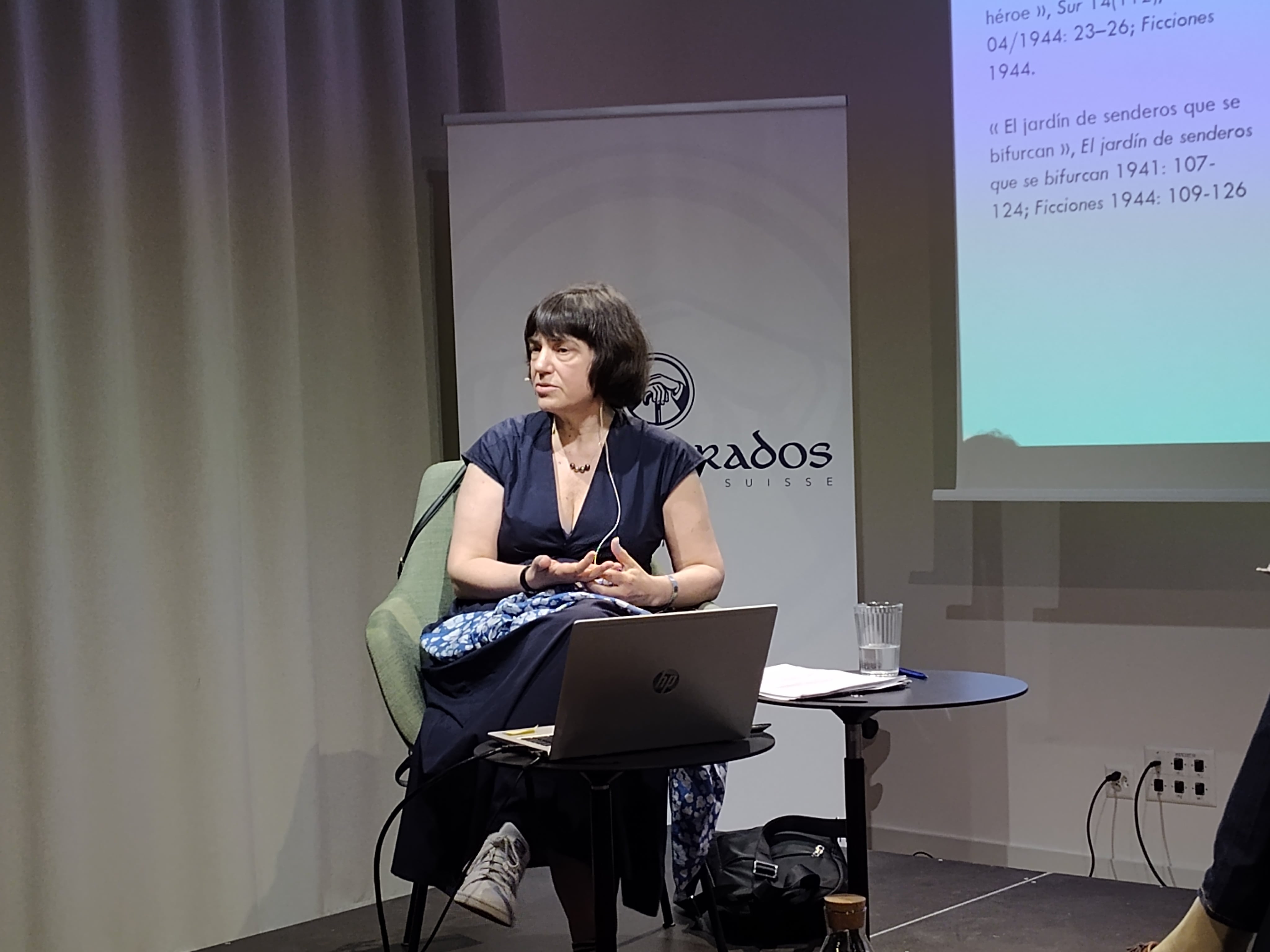
La carrera de Letras de la Universidad de Buenos Aires, el año del retorno de la democracia, no tenía biblioteca sino en teoría. Y esa virtualidad estaba en la otra punta de la ciudad, lo que complicaba las cosas para alguien que trabajaba tiempo completo mientras estudiaba; después, ni siquiera eso, porque empezó la mudanza, y duró varios años. Estaban, claro, los institutos en la calle 25 de Mayo. El de Literatura Argentina lo gestionaba entonces una bibliotecaria de la dictadura, que se negaba a darnos los libros cuyos autores eran, según ella, “terroristas”; y los otros demandaban largas negociaciones y argumentaciones, y a veces lográbamos algo.
Sin medios para comprar los libros que figuraban en los programas de las diferentes materias, me acostumbré a ir ala biblioteca del diario La Prensa, una sala magnífica del fin del siglo XIX, que tenía la ventaja de estar abierta hasta las 22 horas. Dos recuerdos de ese lugar me quedaron: aquel día en que, en una época de gran hostilidad familiar, mi padre vino a traerme un chocolate; el sentimiento de libertad que sentía al salir, porque podía estudiar gracias a esa biblioteca pública (y a una universidad enteramente gratis).
Fue recién cuando llegué a Francia que entendí lo que es una biblioteca. Mi primera visita de la antigua Biblioteca Nacional francesa fue de una gran violencia: no entendía ni siquiera los trámites que había que hacer, todavía menos cómo encontrar los libros, porque no estaban en los estantes, y tenía la impresión de estar cometiendo un delito por el mero hecho de estar ahí. El catálogo era un misterio para mi, y no creo que la persona que me acompañaba en esta primera visita, que había crecido en Europa, comprendiera la angustia que todo eso me causaba, y el sentimiento de ser excluida que me provocaba. Tardé mucho en volver. Incluso hoy siento una brusca ansiedad cuando llego a una biblioteca que no conozco, un momento de ceguera difícil de sobrepasar, hasta que logro comprender su funcionamiento. La biblioteca que había imaginado cuando escribí aquella composición en el colegio no me rechazaba de ese modo. Las imágenes de esa ficción siguen dándome un sentimiento de calma, y se superponen a las de las bibliotecas “domesticadas” que conocí desde entonces – la nueva Biblioteca Nacional de Francia, la Sterling de Yale, la Bodleian y la Taylor en Oxford, la British Library, la biblioteca de Baviera en Munich, la de Würzburg, la nueva Biblioteca Nacional argentina, y muchas otras sin las cuales no me hubiera convertido en investigadora.
Hoy, las bibliotecas se han vuelto (¿también?) un lugar al que la gente va para trabajar y no necesariamente para leer libros. En Europa y otros países occidentales, en todo caso. La primera vez que vi esas mesitas cómodas instaladas en todos los pasillos y espacios comunes, equipadas con enchufes, fue en la British Library, en Londres. Me maravilló e intrigó esa nueva forma de asalto a las bibliotecas, que proponen de este modo un espacio que es a la vez público y privado para trabajar, y que han contribuido a acabar con el mito del deseo de leer y de escribir en la privacidad de nuestras propias casas. Pero no es el único uso cada vez más difundido, puesto que las bibliotecas municipales son lugares habitados, vivos, suspendidos entre la tranquilidad de la lectura y las actividades en comunidad. Hay una cerca de Nation, en una callecita, que encarna ese lugar que había imaginado cuando era adolescente.
¿Qué significan estos espacios hoy para nosotres? Si las redes sociales producen la impresión de entablar un diálogo directo con otros interlocutores individuales, cuando en verdad todo o casi todo es público, creando así una continuidad fluida entre los espacios privados y los públicos, el libro, en cambio, nos compromete en una relación privada y personal. Podemos, es verdad, comunicar con otros acerca de nuestras impresiones de lectura, incluso en una biblioteca, pero no durante el tiempo de la lectura en la sala. Es, tal vez, ese contacto con la materia, el papel, la tinta, la imagen de la tapa, que el espacio de la biblioteca sigue favoreciendo, incluso cuando trabajamos en nuestras computadoras. Una disposición mental, cargada de afectos y de imaginarios, que no estamos dispuestos en ningún caso a abandonar.
Roland Barthes,Mijaíl Bajtín,Mafalda,Tintín,Astérix,biblioteca

How CodePink co-founder Medea Benjamin’s family foundation became a major funder of left-wing activist groups

Clima de Negocios: así será Argentina Week París, el evento con el que Milei buscará atraer inversores y mostrar su gestión en Europa

Estados Unidos prepara el traslado de la mayoría de sus drones Reaper de África a Sudamérica para operaciones antidrogas

Cuando Buenos Aires miraba al Río de La Plata: la obra portuaria que rediseñó la ciudad y la trama detrás de una relación ambivalente

Discapacidad: interna que provoca alarma, recelo creciente de aliados y otra muestra de cerrazón del poder

La información de última hora que se conoció de la internación de Mirtha Legrand: “Tiene una neumonía y está en una sala privada”

La Justicia confirmó las fechas de los juicios contra Cristina y Máximo Kirchner por las causas Los Sauces y Hotesur

Autos eléctricos e híbridos: cuánto cuesta cargarlos en casa, cuánto demora y qué se necesita para instalar el equipo

ANSES: quiénes cobran hoy, martes 15 de septiembre de 2026

"Atendiendo a los kukas mentirosos": el presidente Javier Milei opinó sobre las reservas en el oro del Banco Central

 POLITICA15 horas ago
La Justicia confirmó las fechas de los juicios contra Cristina y Máximo Kirchner por las causas Los Sauces y Hotesur
- ECONOMIA24 horas ago
"Atendiendo a los kukas mentirosos": el presidente Javier Milei opinó sobre las reservas en el oro del Banco Central
- POLITICA3 días ago
Cortocircuito y quiebre entre la Casa Rosada y sus diputados por la ley de discapacidad