INTERNACIONAL
China ‘wiretapped Red Sea’ with spy hub 6 miles from US base: ex Pentagon official warns

NEWYou can now listen to Fox News articles!
Beijing has transformed the Red Sea into a dangerous surveillance hub, a former Pentagon official warned Sunday, after a new report revealed upgrades to China’s military footprint just six miles from a key $66 million-a-year U.S. military base in Djibouti, Africa.
The report by the Washington-based Center for Strategic and International Studies (CSIS) cited new facilities which it said would likely enable the Chinese military to monitor activities of other militaries operating nearby, although it also clarified it was not possible to determine whether China was actively intercepting communications.
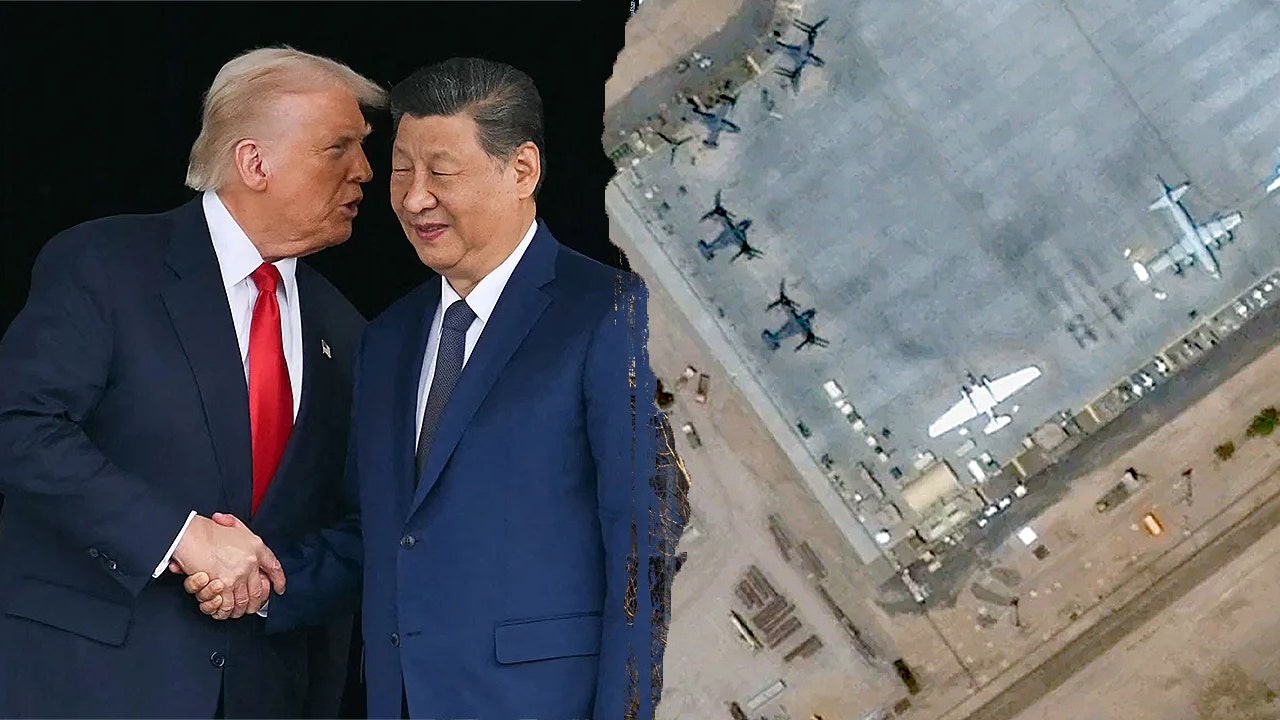
The developments, one defense expert told Fox News Digital, could also inject fresh tension into U.S.-China relations in the run-up to Chinese President Xi Jinping’s visit to the White House on Sept. 24. Beijing’s intelligence-gathering capabilities are already under renewed scrutiny.
«What China is clearly doing is building eavesdropping capabilities. That seems to be their aim,» Morgan Murphy, former Trump White House official and press secretary for Mark Esper when he was secretary of defense during the first Trump administration.
CHINA-LINKED SPY SITE EXPANSION IN CUBA RAISES ALARMS NEAR KEY US MILITARY BASES
Morgan Murphy said it was significant that China has chosen to place its only overseas base six miles from America’s base in Djibouti. ( STR/AFP via Getty Images)
«Beijing has clearly wiretapped the Red Sea. When you build a 30-meter (100-foot-wide) satellite dish and cover it with a dome, so nobody can see where it’s pointing, it’s pretty clear you’re up to no good,» Murphy added while stating of the Washington-based think tank, that «the specificity here reflects the thorough research we expect out of CSIS.»
The report pinpoints a large southeastern facility showing a control building, three 30-meter dipole antennas for high-frequency communications, two smaller antennas for very and «ultra-high frequencies», three mobile satellite dishes, four probable 5G towers and what CSIS said was a «radome» covering an unidentified asset.
CSIS also highlighted two new communications facilities that it says have emerged since 2024 that are likely to form part of a C4ISR command architecture, expanding China’s ability to intercept signals, track naval movements and communicate with Beijing while monitoring foreign militaries in the region.
The facilities would provide China with «a much more robust picture of the operating environment in the region,» the report said.
CHINESE HACKERS TARGET NASA AND KEY US AGENCIES, DOJ ALLEGES
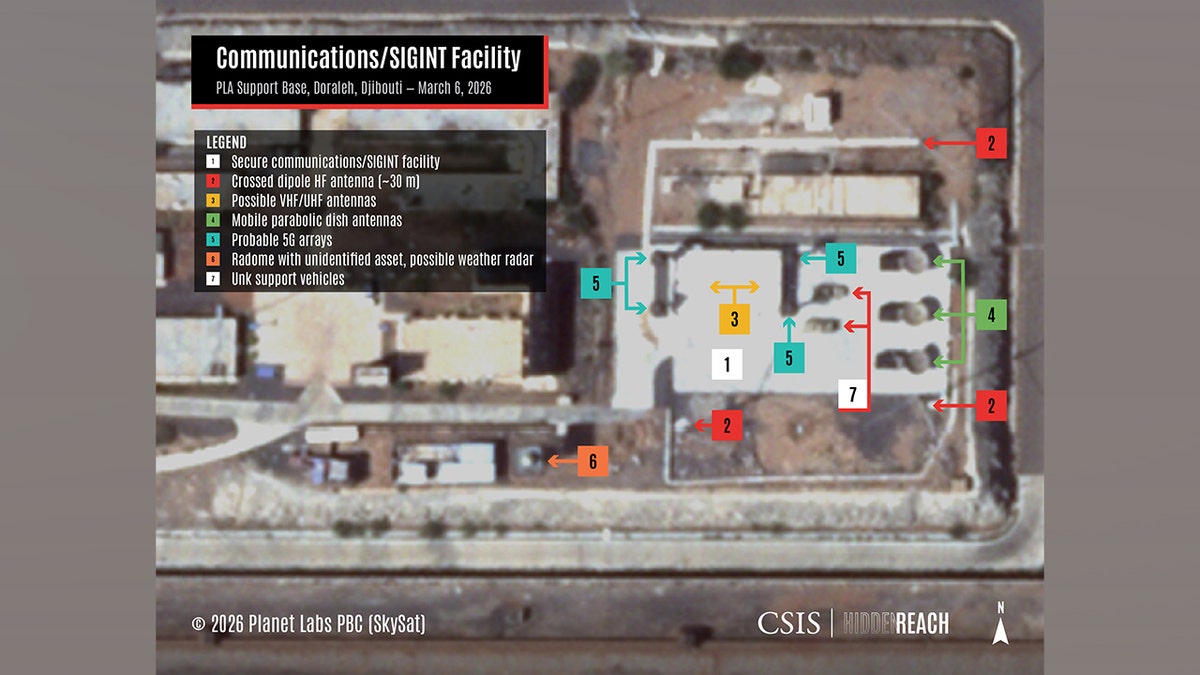
CSIS said commercial satellite imagery revealed that China’s military had installed new antennas, satellite communications equipment and signals intelligence assets at its base in Djibouti — its only formally acknowledged overseas military installation. (Planet Labs / Center for Strategic and International Studies (CSIS))
«This isn’t a supply depot — it’s a 50-yard line seat over America’s power projection and the U.S. Navy,» Murphy said before stating that the USA has «128 bases in more than 51 countries — China has just one.»
«But look at the location — a few miles from Camp Lemonnier, overlooking the chokepoint that moves roughly a sixth of global sea trade. Great powers don’t plant listening posts next to rival fleets for ‘logistics,’» he warned.
«Britain held Gibraltar to see who entered the Med while Japan’s island radios came before the runways. The Soviets’ overseas sites were never just about fuel and Beijing is running that playbook on the Red Sea,» Murphy added.
Although China’s Foreign Ministry spokesperson Guo Jian said China is «unaware of the specific situation» and framed the country as a «builder of international peace,» the new facilities provide Beijing with a picture of regional operations, according to Reuters.
CHINA IS BUILDING A MASSIVE SHIP THAT SHOULD SCARE AMERICANS ABOUT THE FUTURE

Beijing has transformed the Red Sea into a surveillance hub, former Pentagon officials warned after a new report revealed upgrades to China’s military footprint in Djibouti. ( DAPHNE BENOIT/AFP via Getty Images)
«The new report is helpful in framing the conversation, and it comes at an awkward time for China because Xi Jinping is visiting the White House on the 24th of this month,» Murphy said.
«I’d bet a box of donuts this issue comes up. There is going to be public exposure of this, which Chinese leadership isn’t used to. They aren’t used to being asked tough questions by the press,» he said.
President Donald Trump recently addressed Chinese intelligence efforts aboard Air Force One, acknowledging that China «spies on us» just as «we spy on them.»
Trump’s comments followed a report by The Wall Street Journal linking support from a Chinese entity to high-resolution satellite imagery used by Iran prior to a deadly missile attack on U.S. troops in Jordan.
«They basically do what we do,» Trump noted, adding that «Xi has behaved reasonably well, and we behave reasonably well. … You know what they say? That China spies on us. I say you’re right, and we spy on them, too,» he said, according to Reuters.
RUSSIA IS HELPING CHINA CLOSE GAP WITH US FORCES AMID TAIWAN TENSIONS, WARNS LONGTIME MILITARY LEADER
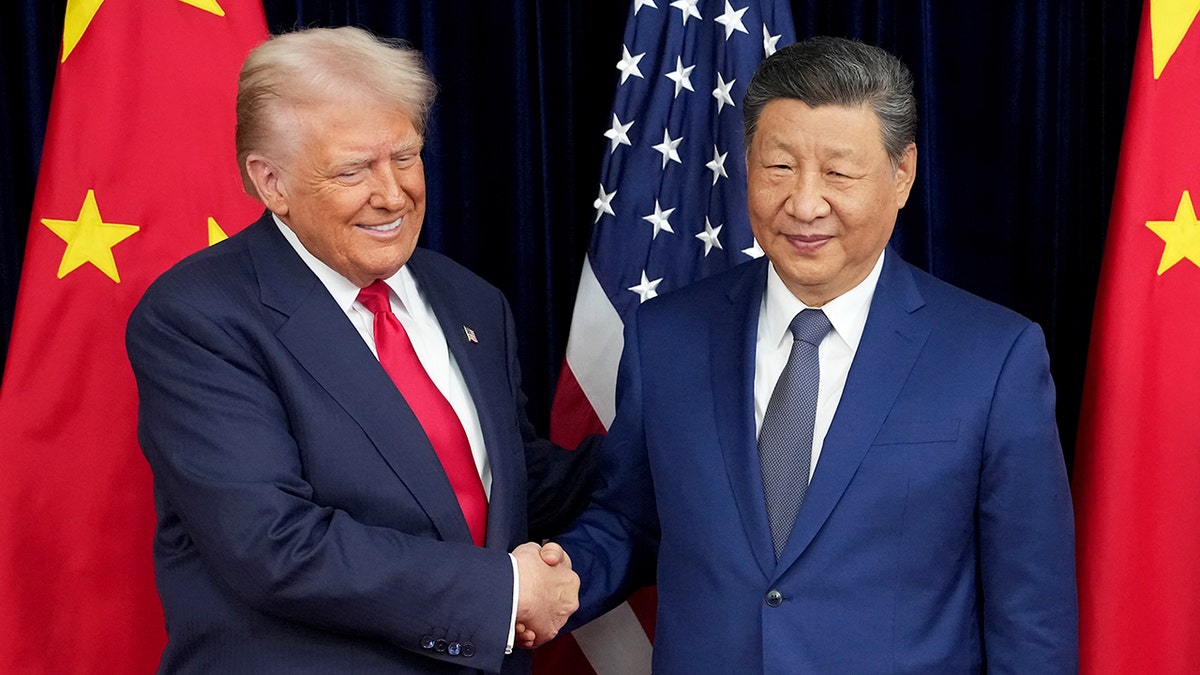
President Donald Trump greets Chinese President Xi Jinping ahead of a bilateral meeting at Gimhae Air Base on Oct. 30, 2025 in Busan, South Korea. Trump said he wants to keep the Strait of Hormuz open in the Middle East for countries, including China. (Andrew Harnik/Getty Images)
Murphy noted, «Nations spy on each other — allies and adversaries alike.»
«It is a very old playbook, and listening posts all over the world are typical of great powers, but where the metal hits the floorboard is when you try to use that information,» he said before adding that China may «keep tabs on us, but they cannot project power like the United States can.»
The proximity of China’s facility to U.S. operations is a core concern. Located less than six miles from Camp Lemonnier — the primary U.S. counterterrorism hub in Africa — and near French, Italian and Japanese installations, the site has a history of friction with U.S. forces.
«We are just right around the corner from China, and yet it’s not a cooperative relationship,» Murphy explained.
«Back in 2018, they lasered two of our C-130 pilots’ eyes who suffered lasting damage from that incident. Beijing denied it, of course, but we know the truth.»
WE SHOULD USE REAGAN AS A GUIDE IN HANDLING OUR MODERN ARMS RACE WITH CHINA

US military aircraft as seen at US Military Base Camp Lemonnier in Djibouti. Camp Lemonnier is the only permanent United States military base in Africa. (Getty Images)
During the 2018 incident, the Pentagon had formally complained to China after military-grade lasers were pointed at American pilots attempting to land at Camp Lemonnier, causing minor injuries.
While Beijing dismissed the allegations as «groundless accusations,» the confrontation underscored the potential for friction between military forces operating from nearby bases.
«China has one overseas base. The United States has more than 128 — by some counts, over 700 installations around the world,» Murphy said.
«So it’s significant that China has chosen to place its only overseas base six miles from ours in Djibouti. It is hugely strategically important, which is why, of course, we’re there.»
IS TRUMP CONSIDERING BOLD AFRICA PLAY TO PUSH BACK ON CHINA, RUSSIA AND ISLAMIC TERRORISTS?
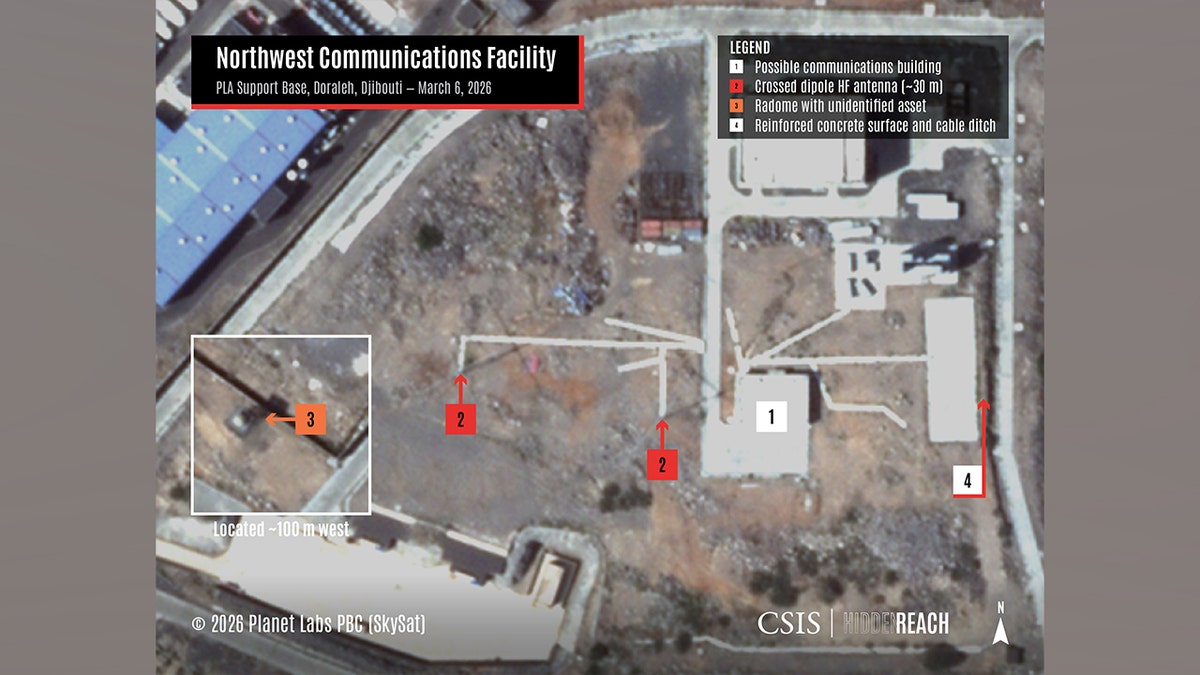
The north-west facility at the Chinese base in Djibouti features a possible communications building and a ‘radome’ with an unidentified asset, images show. (Planet Labs / Center for Strategic and International Studies (CSIS))
«It’s our only base on the continent of Africa,» he said, noting that it shares a «parking lot» with Japanese and Italian bases.
«At $66 million a year, it’s the best money Americans spend on our defense budget, full stop.»
The Bab el-Mandeb Strait is a chokepoint for nearly 16% of global maritime trade and, with significant crude shipments, Houthi attacks and pipeline disruptions have fueled a regional military buildup.
«Interference by China is in their strategic interest. They don’t want to see the United States able to control their oil supply,» Murphy said.
«China is far more reliant on Middle Eastern oil than the United States. China imports a huge portion — around 33% or more — of their daily oil needs and is highly reliant on long sea lines. You are seeing this muscle-flexing because they are far more reliant on Middle Eastern oil than we are.»
TRUMP TO CONFRONT XI AT HIGH-STAKES SUMMIT OVER CHINA BACKING FOR IRAN, RUSSIA
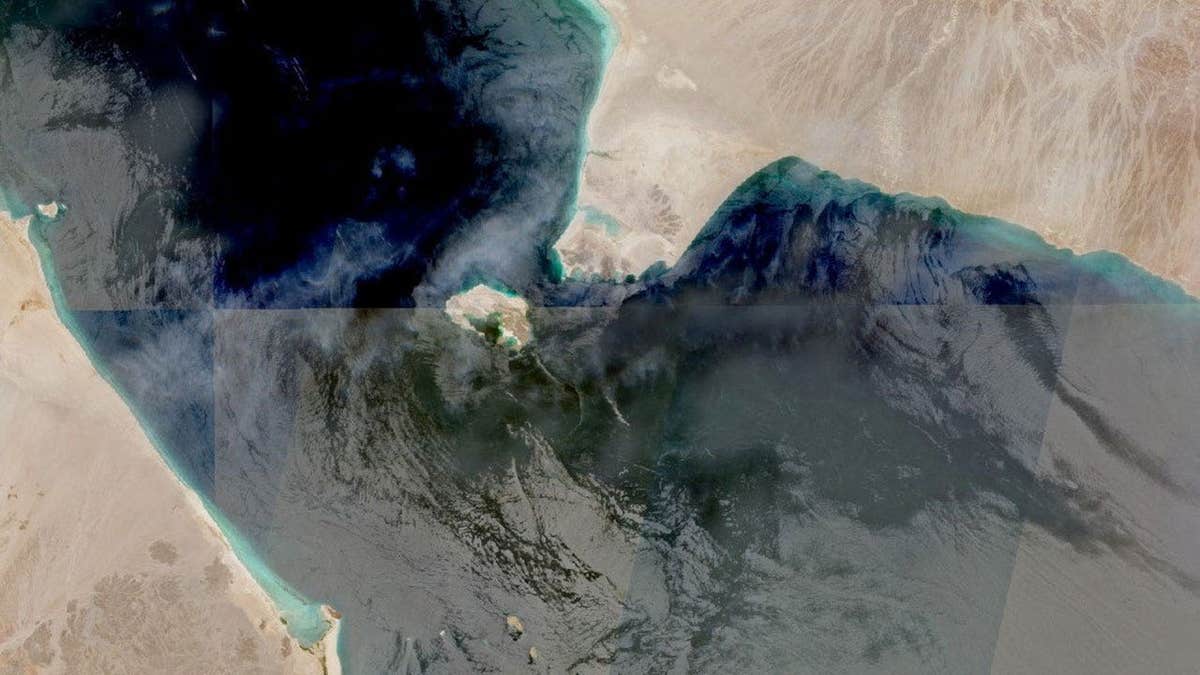
Satellite imagery shows Bab-al-Mandeb Strait, a key shipping waterway and the gateway to the Red Sea, as Iran threatens using Yemen’s Houthi allies to shut the Bab-al-Mandeb gateway to the Red Sea, in this handout picture dated July 12, 2026. (Nasa Worldview/Handout via Reuters)
«Having intelligence is one thing, but you must have the ability to act on it. You need assets in the region,» Murphy said.
«China doesn’t have major combat assets outside their region because they lack a blue-water navy to project power outside the first island chain yet.
«That is coming, and they are working towards it quickly. Americans can take comfort in the fact that they don’t have that capacity today, but we must stay alert because the only thing that subdues a threat is a ready posture,» he concluded.
Fox News Digital has reached out to the Chinese Embassy for comment.
world, china, national security, geopolitics, foreign affairs, military, africa, middle east









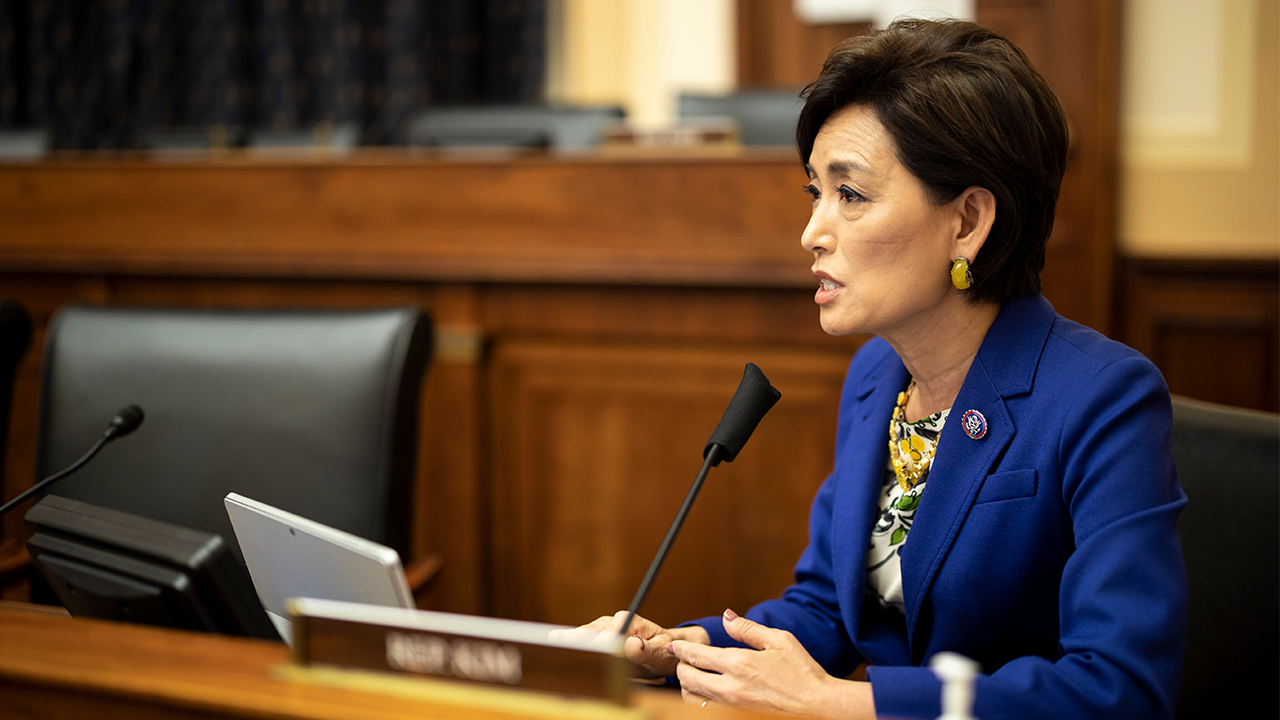
EXCLUSIVE: While the House successfully moved to rein in lawmakers’ stock trading, a California Republican is targeting what she says is another avenue for congressional self-enrichment, citing members whose wealth has multiplied over the years.
Rep. Young Kim’s Stop Congressional Self-Enrichment Resolution comes after a successful GOP-led effort in July that imposed restrictions on stock purchases and requires several days’ notice before stock sales. It also comes as Americans across the political spectrum remain frustrated by many lawmakers’ rapidly growing wealth while in public office.
«It could be earmarking a nonprofit organization where a member’s spouse sits on the board of directors or board of trustees, so it will indirectly benefit the family. Or it could earmark for a park at, let’s say, an apartment building that a member or member’s spouse or member’s children owns,» Kim told Digital.
SENATE QUIETLY BANS LAWMAKERS FROM BETTING ON PREDICTION MARKETS
«And with the federal funds that the member brings and build the park nearby or community center nearby, it could increase the property value and therefore indirectly benefiting the member and their family members. Maybe asking to build a road up to rural land the member owns.»
Her new push would cover all material financial interests — direct or indirect — that benefit people beyond the lawmaker themselves.
UNLIKELY BIPARTISAN SENATE DUO SEEKS TO PERMANENTLY BAN EX-LAWMAKERS FROM LOBBYING
Current House rules require members requesting an earmark to certify that neither they nor their spouses have a financial interest in the recipient. Kim’s bill would extend that requirement to immediate family members and indirect financial interests, such as nearby property values.
«The days of members thinking that ‘I can use the community project funding request or bringing the earmarks for my district and get filthy rich off of it’— those days are numbered.»
WATCH: DEM CANDIDATE GRILLED ON STOCK TRADING AFTER BEING DUPED WITH SELFIE REQUEST
«This is a good time because we see Americans are sick and tired of watching politicians getting filthy rich while average Americans are worrying about making ends meet and stretch every dollar that they earn.»
Citing the «Bridge to Nowhere» project in Alaska’s Inside Passage in the early 2000s as a symbol of concerns over earmarks, Kim said the ensuing decade-long moratorium curbed abuse.
Kim said safeguards put in place after the moratorium have helped, but argued members are still able to provide themselves with indirect benefits. She reiterated that she is not targeting any individuals.
While there are now apps out there like the «Pelosi Stock Tracker» and others that let retail investors see which stocks are being bought or sold by which members, Kim said her effort does not target any one colleague.
‘SQUAD’ DEM DISMISSES FRAUD PROBE SPECULATION AFTER $29M NET-WORTH DROP
«And, this is not in any way discouraging members to fight for their districts and bring in the appropriate taxpayer dollars for projects near their districts,» she said.
«That is so important,» she said, pointing to funding she brought to Orange County to prevent and recover from recent wildfires, among other interests for her constituents.
«That’s what we are sent to do, fight for our district, but not at the expense of, you know, enriching. I mean, not at the expense of hurting our very constituents that we are trying to support while we are lining our pockets, because there are too many career politicians in Washington looking out for no one but themselves.»
Innumerable lawmakers have come under fire over the decades for their earmarking prowess.
In one notable case, then-House Speaker Dennis Hastert, R-Ill., faced criticism in 2006 over a $207 million earmark to build a parkway near property he owned.
Amid the kerfuffle, an attorney for the leader pushed back on what he called a «libelous» allegation from a good-government group about it at the time. The attorney said criticizing Hastert for the project was akin to «complaining about a purchase in Alexandria based on renovations at the Capitol.»
GOP LAWMAKER UNDER HOUSE ETHICS REVIEW BLASTS ‘BASELESS’ INVESTIGATION
In 2023, the Boston Globe reported that earmarks secured by Rep. Stephen Lynch, D-Mass., benefited a health center in Boston where his wife was employed.
Two million dollars went to the South Boston Community Health Center, and another $1 million went to a foundation where Lynch’s wife was an unpaid director. Digital reached out to Lynch for comment.
Sen. Tim Kaine, D-Va., previously secured earmarks totaling $3.5 million for George Mason University, where his wife had served as interim president and later as a professor.
The earmarks «are in no way influenced by Secretary Holton,» a Kaine spokesperson told The Messenger news outlet at the time — referencing former Virginia Education Secretary Anne Holton.
«Secretary Holton has no involvement in the [Congressionally Directed Spending] CDS process, and no involvement in the George Mason CDS requests,» the spokesperson added. «Senator Kaine and Secretary Holton have not discussed the requests.»
SIGN UP TO GET THE POLITICS NEWSLETTER
With the Senate next to take up stock trading prohibitions, Kim’s bill stands as a gap closer, she said, on a practice that has rare emphatic bipartisan support.
Aaron Kliegman contributed to this report.
legislation, republicans elections, domestic policies, congress, politics, banking finance
INTERNACIONAL
Fue a la casa de un cantante que era su ídolo y horas después, la encontraron muerta: el caso que conmocionó a Colombia
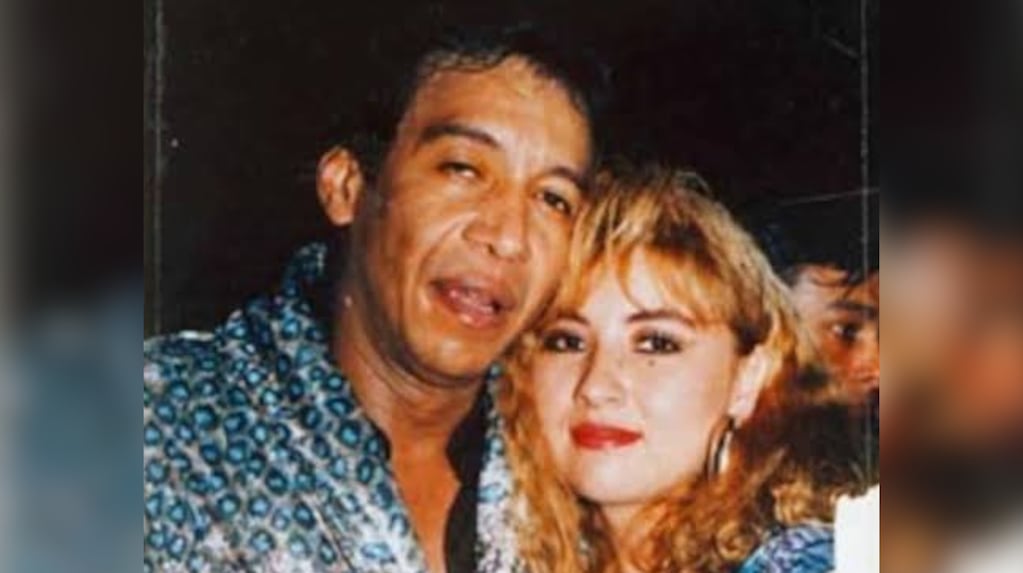
En Colombia, Diomedes Díaz era mucho más que un cantante. Fue una de las máximas figuras del vallenato, un género musical popular de ese país, y durante décadas reunió a miles de seguidores. Sus fanáticos se hacían llamar “diomedistas” y sus canciones formaban parte de la cultura popular local.
En 1997, una de esas admiradoras era Doris Adriana Niño, una joven de 27 años que vivía en Soacha, cerca de la ciudad de Bogotá. Sin embargo, su vínculo con el artista ya había dejado de ser el de una fan con su ídolo: ambos se conocían desde hacía tiempo y habían mantenido una relación.
En la noche del 14 de mayo de ese año, Doris salió de su casa para encontrarse con Diomedes. Según la reconstrucción del caso, los escoltas del cantante fueron a buscarla y la llevaron hasta el departamento del músico, pero ella nunca volvió.
Una muerte misteriosa
El cuerpo de la joven fue encontrado a la mañana siguiente, al costado de una ruta en las afueras de Tunja, en el departamento colombiano de Boyacá. Unos campesinos habían visto cómo un auto se detenía en la zona y un hombre arrojaba desde allí el cuerpo de una mujer.
La víctima todavía no tenía nombre. Al día siguiente, Medicina Legal realizó la autopsia como NN y ordenó que fuera enterrada en una fosa común. En el lugar la registraron con el nombre de “Sandra”, porque un grupo de mujeres de la zona creyó reconocerla como una compañera que había muerto.
Con ayuda de un sacerdote, las mujeres consiguieron retirar el cuerpo y darle sepultura en un cementerio de Bogotá. Mientras tanto, la familia de Doris Adriana continuaba buscándola sin saber qué había ocurrido con ella.
La clave apareció casi un mes después. El 10 de junio, Rodrigo Niño, el hermano de Doris, llevó fotos de la chica al programa de televisión Historias Secretas para pedir ayuda para encontrarla. El sacerdote que había participado del entierro de “Sandra” vio las imágenes y advirtió que podía tratarse de la misma mujer a la que habían sepultado.
Dos días después, el cuerpo fue exhumado y Rodrigo pudo identificarla formalmente: la mujer enterrada como NN era Doris Adriana Niño.
A partir de entonces, la investigación comenzó a reconstruir sus últimas horas y también avanzó sobre la causa de muerte. En agosto, los peritos informaron que la joven había muerto por un paro cardiorrespiratorio provocado por una sobredosis de cocaína. Según el informe, el fallecimiento había ocurrido alrededor de las 3 de la madrugada del 15 de mayo.
Sin embargo, la familia de Doris no creyó esa versión y aseguró que ella no consumía drogas. Además, había una contradicción que los investigadores debían resolver: Diomedes y otras personas habían declarado que Doris había salido viva del departamento del cantante cerca de las 5 de la mañana, mientras que el informe forense ubicaba su muerte unas dos horas antes.
También había que explicar cómo la joven había terminado a más de 100 kilómetros de Bogotá, quién había trasladado su cuerpo y qué había ocurrido durante las horas que pasó en el departamento de Diomedes.
Una nueva investigación
En el año 2000, la causa todavía tendría otro giro: una nueva evaluación forense descartó la sobredosis como causa principal y determinó que Doris había muerto por asfixia mecánica. Ese cambio fue determinante para la investigación que terminó llevando a Diomedes Díaz a la cárcel.
El resultado llevó a los investigadores a reconstruir nuevamente lo ocurrido aquella noche en el departamento de Diomedes. La Justicia determinó que el cantante había ejercido fuerza sobre Doris durante un episodio en el que le tapó la boca y la nariz. Esa acción le provocó la muerte.
Los jueces, sin embargo, concluyeron que no había existido intención de asesinarla. Por ese motivo, Diomedes fue condenado por homicidio preterintencional, una figura aplicada cuando una persona provoca un resultado más grave que el que buscaba causar.
La investigación también alcanzó a otras personas que estaban vinculadas con el cantante. Dos de sus escoltas fueron condenados por su participación en los hechos posteriores a la muerte. Uno de ellos quedó involucrado en el traslado del cuerpo de Doris hasta la zona donde finalmente fue abandonado.
La condena al ídolo
La situación judicial del cantante tuvo otro capítulo cuando se fugó mientras cumplía una medida de detención domiciliaria. Diomedes permaneció más de dos años prófugo. Finalmente, en septiembre de 2002 se presentó ante las autoridades y quedó detenido en una cárcel de Valledupar.
En 2001 había recibido una condena inicial de 12 años y seis meses de prisión. Sin embargo, durante los años siguientes hubo distintas decisiones judiciales que modificaron el tiempo que debía cumplir.
Finalmente, la pena quedó establecida en seis años y seis meses. Diomedes obtuvo la libertad condicional en noviembre de 2004, después de haber pasado alrededor de 32 meses en prisión, con reducciones y beneficios contemplados por la Justicia colombiana.
Femicidio
¿Qué está pasando en América Latina? Yo diría que hay dos fuerzas actuando al mismo tiempo. Por un lado, los votantes están reaccionando a su propia experiencia: años de bajo crecimiento, corrupción, inseguridad y gobiernos que prometieron mayor igualdad, pero que terminaron ofreciendo estancamiento y pobreza. Pero también puede haber un factor externo en juego: el desfinanciamiento de ONG y organizaciones de incidencia que ayudaron a sostener y amplificar agendas progresistas en toda la región ha despejado, en cierta medida, el ambiente y abierto más espacio para una conversación política y económica diferente.
¿Hay una decisión de Estados Unidos que esté cambiando el clima político de América Latina? Creo que sí. Me refiero a la transformación de la asistencia exterior estadounidense. A partir de 2025, la administración Trump emprendió una profunda reestructuración de USAID. El secretario de Estado, Marco Rubio, anunció que aproximadamente el 83 por ciento de los programas de USAID serían eliminados después de una revisión destinada a determinar si contribuían a los intereses nacionales de Estados Unidos.
Esta decisión, y las investigaciones que la siguieron, confirmaron algo que algunos de nosotros ya creíamos: que la política estadounidense de cooperación al desarrollo no era ideológicamente neutral. USAID y otros programas del gobierno de Estados Unidos financiaron explícitamente organizaciones de la sociedad civil e iniciativas asociadas con la agenda política progresista. Durante décadas, una parte de la sociedad civil latinoamericana se desarrolló alrededor de fondos internacionales, conferencias, consultorías, programas de investigación, organizaciones de incidencia y ONG. Esas instituciones ayudaron a determinar qué problemas recibían atención, qué lenguaje dominaba el debate público y qué políticas parecían respetables dentro de determinados círculos de élite.
Cuando ese financiamiento se reduce o casi desaparece, el equilibrio inevitablemente cambia. Esto no significa que USAID haya creado a la izquierda latinoamericana, ni que la eliminación de USAID haya producido el actual giro hacia la derecha. Esa explicación les restaría demasiada capacidad de decisión a los votantes latinoamericanos. Pero la desaparición de grandes cantidades de financiamiento externo puede haber debilitado una parte de la infraestructura intelectual que defendía los argumentos que marcaron buena parte de las últimas dos décadas: que la desigualdad era el principal problema de la región, que el Estado debía asumir un papel más importante para corregirla y que, de alguna manera, el crecimiento económico vendría después.
Déjenme explicarlo un poco más. Venezuela posee las mayores reservas probadas de petróleo del mundo y alguna vez estuvo entre las sociedades más prósperas de América Latina. Después de años de nacionalizaciones, controles de precios, distorsiones cambiarias, destrucción institucional y corrupción, el país entró en uno de los colapsos económicos más severos experimentados por una nación fuera de un contexto de guerra. Cuba ofrece otra versión de la misma lección. El gobierno cubano informó en 2025 que la producción agrícola, ganadera y minera había caído más de un 53 por ciento en cinco años, mientras que la manufactura había disminuido un 23 por ciento. Su población vive con escasez de alimentos, combustible y medicinas, además de apagones que duran muchas horas cada día.
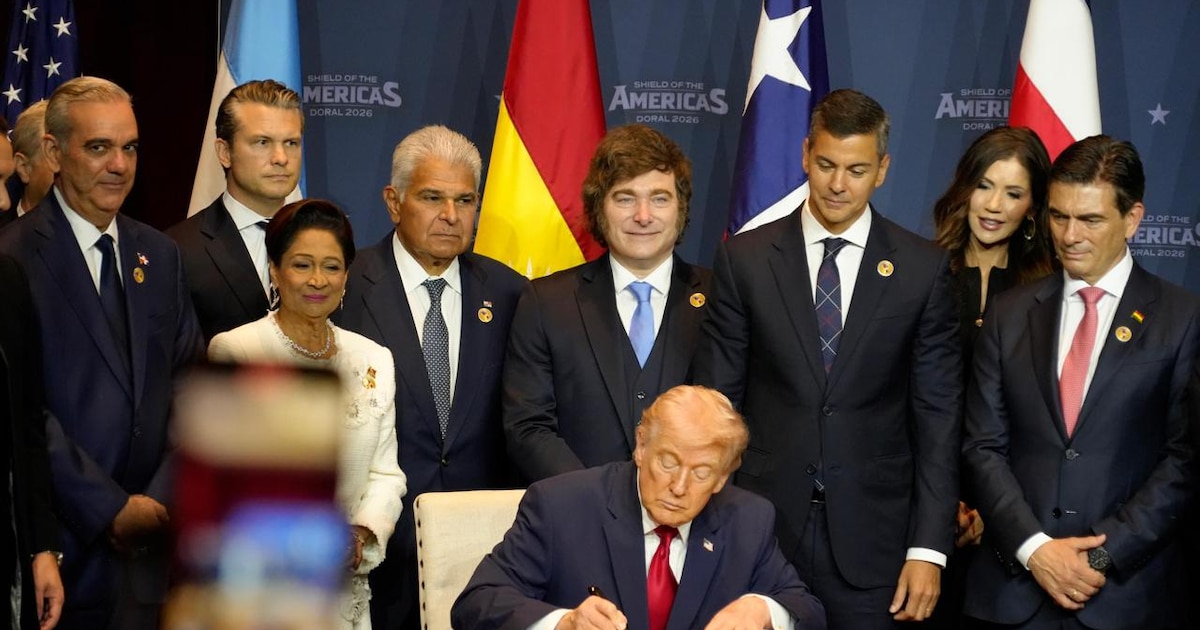
Perú es el ejemplo más reciente y quizá uno de los más claros. Keiko Fujimori asumió el poder el 28 de julio después de hacer campaña sobre seguridad ciudadana, inversión privada, estabilidad económica, derechos de propiedad, desregulación y una respuesta más firme frente al crimen. Pero Perú no es un caso aislado. En toda la región, Argentina, Ecuador, Bolivia, Chile, Honduras y Colombia han avanzado hacia gobiernos de derecha en los últimos años. La elección de Abelardo De La Espriella en Colombia, en junio, reforzó una tendencia que ya era visible en otros lugares. El Financial Times calculó recientemente que candidatos de derecha y centroderecha habían ganado 12 de las 15 elecciones presidenciales anteriores en América Latina.
La lección que está llegando a los votantes de todo el hemisferio es clara: no se puede derrotar la pobreza cuando una economía ha dejado de producir. Esa realidad ha creado una enorme apertura política para líderes dispuestos a hablar sin complejos sobre crecimiento.
Javier Milei entendió esto en Argentina. No hizo campaña prometiendo administrar el estancamiento de una manera más justa. Sostuvo que el estancamiento mismo era el enemigo. José Antonio Kast, en Chile, también ha colocado la inversión, la disciplina fiscal y la expansión económica en el centro de su agenda de gobierno. Bolivia, después de casi dos décadas dominadas por una agenda indigenista de izquierda y antiestadounidense, está considerando ahora reformas orientadas al mercado, diseñadas para atraer capital privado y reducir el control estatal sobre sectores estratégicos.
Perú tiene ahora la oportunidad de sumar otro modelo: un gobierno que demuestre que la estabilidad política, la inversión privada, la infraestructura, el empleo formal y la productividad no son conceptos económicos abstractos. El nuevo gobierno de Colombia enfrenta el mismo desafío en un contexto más estable. Y la próxima prueba llegará con las elecciones de Guatemala y, sobre todo, Brasil, cuyo tamaño e influencia hacen que su rumbo político sea especialmente determinante para la región.
Ganar elecciones frente a gobiernos de izquierda que han fracasado no es el único desafío. Gobernar mejor es mucho más difícil. La tarea, por lo tanto, va más allá de derrotar al socialismo: consiste en demostrar que la libertad económica funciona. Si los gobiernos promercado simplemente reemplazan a una élite política por otra, toleran la corrupción, debilitan las instituciones democráticas o no logran traducir la inversión en empleos y mejores niveles de vida, el péndulo terminará moviéndose de nuevo.
América Latina no necesita otro ciclo ideológico. Necesita crecimiento. Los líderes capaces de conseguirlo y de ofrecer resultados medibles pueden definir la política latinoamericana de la próxima generación.
*El autor es empresario, inversor, filántropo, y miembro de la Junta Directiva de la Universidad Internacional de Florida (FIU)

Tras la visita de Milei, el intendente de Bahía Blanca reclamó a Nación por las obras pendientes: “No llegó un solo centavo”

La plata se termina antes de fin de mes: 6 de cada 10 personas se quedan sin ingresos disponibles antes del día 20

Manuel Adorni presentó la justificación de su patrimonio en la causa por presunto enriquecimiento ilícito

Final Fantasy VII Revelation incluye una opción para saltarse la exploración y el farmeo – Nintenderos

Popstars lanzó su tema debut y el baile cambió el destino de tres concursantes: quiénes quedaron eliminadas

“Bienvenidos todos. Vayan y anuncien”: el lema y el logo de la visita de León XIV a la Argentina

La Justicia confirmó las fechas de los juicios contra Cristina y Máximo Kirchner por las causas Los Sauces y Hotesur

"Atendiendo a los kukas mentirosos": el presidente Javier Milei opinó sobre las reservas en el oro del Banco Central

Tras los cruces por Discapacidad, Javier Milei y Patricia Bullrich se reencuentran en la reunión de Gabinete para delinear la agenda legislativa

Provocativo gesto de Patricia Bullrich: publicó un video con una canción de Lali Espósito tras sus críticas al interior del Gobierno

 POLITICA3 días ago
La Justicia confirmó las fechas de los juicios contra Cristina y Máximo Kirchner por las causas Los Sauces y Hotesur
- POLITICA2 días ago
Tras los cruces por Discapacidad, Javier Milei y Patricia Bullrich se reencuentran en la reunión de Gabinete para delinear la agenda legislativa
- POLITICA3 días ago
Provocativo gesto de Patricia Bullrich: publicó un video con una canción de Lali Espósito tras sus críticas al interior del Gobierno