INTERNACIONAL
Una receta heredada inspira vinos elaborados con sabores tropicales salvadoreños


En el seno de la numerosa familia Peralta la receta del vino artesanal pasó de generación en generación, aunque inicialmente solo era una bebida para compartir en celebraciones especiales, ahora apuesta por demostrar que la receta tradicional con sabores tropicales salvadoreños puede igualar la calidad de un producto internacional.
“Mi abuela tuvo 11 hijos, entonces se imaginan la cantidad de personas que se reúne en las fiestas de fin de año. Recuerdo que en 2017 mi papá recreo la receta del vino que preparaba mi abuelo, a todos les gustó”, señaló con entusiasmo Mario Peralta, un emprendedor salvadoreño que busca colocar la tradición y nostalgia a cada hogar.

La bebida que preparó su padre en aquellas reuniones familiares estaba hecha a base de flor de Jamaica y no contaba con nombre ni una intención comercial.
Era parte de la convivencia de una familia originaria de un cantón de Aguilares, a las afueras de San Salvador, donde las celebraciones de fin de año reunían a hijos, nietos y amigos.
La idea tomó otra dimensión cuando Peralta estudiaba Ingeniería Civil en la Universidad de El Salvador. Durante un proyecto de emprendedurismo, decidió retomar la receta junto con su novia, ingeniera en alimentos y actual socia del negocio. El producto fue presentado en una feria universitaria, donde comenzó a despertar el interés de estudiantes, docentes y visitantes.

Masat nació de una receta familiar y de la música folclórica
El nombre Masat fue elegido como un vínculo con la historia de la familia. Proviene del grupo de música folclórica al que perteneció su padre en Aguilares y significa “venado” en náhuat. Peralta también formó parte de esa agrupación durante su niñez.
Tras la feria, la pareja comenzó a elaborar pequeños lotes caseros para familiares y conocidos. Las primeras ventas ayudaban a cubrir gastos de la universidad. El crecimiento fue paulatino: quienes compraban una botella regresaban por otra o la regalaban, lo que amplió la red de clientes.
Los recursos eran limitados. Para envasar el producto, Peralta y su novia solicitaban botellas vacías a hoteles y restaurantes. Él elaboraba las primeras etiquetas y diseños con programas gratuitos. “No comenzamos siendo los mejores, ni teníamos el mejor producto, ni la mejor etiqueta”, afirmó en entrevista con Infobae.

De los microlotes a una planta de producción en Aguilares
Entre 2023 y 2024, el aumento de la demanda llevó a la pareja a construir una planta de producción en el terreno de la casa de los padres de Peralta, en Aguilares. También tramitaron los permisos de funcionamiento y los registros sanitarios requeridos para comercializar bebidas elaboradas bajo procesos de fermentación.
La marca comenzó con vino de flor de Jamaica, luego incorporó tamarindo y maracuyá. La recepción de los nuevos sabores obligó a hacer ajustes. Las primeras versiones de tamarindo y maracuyá tenían un perfil más seco, pero el público buscaba una experiencia más cercana a los sabores conocidos de esas frutas.
El cambio tuvo resultados en las ventas. El vino de maracuyá pasó de tener menor aceptación a convertirse en el más vendido, según Peralta. La empresa trabaja con alrededor de cinco o seis proveedores de materias primas locales, entre agricultores y pequeños emprendedores.

“Nos gusta que todo lo que ocupemos sea local, en la mayoría de lo posible. Los ingredientes directamente son locales”, explicó el cofundador de Masat. La propuesta busca diferenciarse de los vinos de uva y poner en primer plano ingredientes propios del territorio salvadoreño.
Peralta mantuvo su empleo como ingeniero civil mientras el proyecto avanzaba, pero a inicios de 2026 decidió dejar esa actividad para dedicarse de lleno a Masat, ante el aumento de responsabilidades y contactos comerciales.
Actualmente, la marca tiene presencia en establecimientos de café, hoteles y tiendas de vinos y licores de San Salvador. La pareja mantiene a su cargo la producción, el desarrollo de sabores, la imagen, las relaciones con proveedores y la comercialización.
corresponsal:Desde San Salvador, El Salvador













INTERNACIONAL
Reporter’s Notebook: Congress faces a crisis that the ‘AI godfather’ warns it may not be ready to address
To hear estimates about the growing power of AI, one might ask AI chatbots how long it will take Congress to regulate the technology.
But you might not need to do that.
You could just inquire with your trusty Capitol Hill correspondent. Let’s call this chatbot «ChadGPT.»
REPORTER’S NOTEBOOK: CONGRESS MEETS AI AS FEARS OF HUMAN EXTINCTION JOLT CAPITOL HILL
And it truly doesn’t require that much congressional clairvoyance to divine when lawmakers could address AI – despite the forecast of a looming crisis.
You just need a little understanding of the congressional parliamentary posture over the next few months.
It’s doubtful that Congress will do anything about AI until after the midterms. Or, maybe even early next year. Results of the midterms will likely consume the lame duck session – regardless of which party wins or loses. Plus, lawmakers must fund the government by mid-December. If either the House or Senate flips, it might be March or April next year until Congress returns to AI. It simply takes Congress a long time to accomplish anything. Especially when there’s a change in who runs the place.
The Senate is scheduled to meet for the next two weeks. But House Members fled the Capitol last week – a day earlier than planned and two weeks earlier than the original schedule – even as the «godfather of AI» visited Capitol Hill.
Geoffrey Hinton is professor emeritus at the University of Toronto. He’s a 2004 Nobel laureate for his work on «artificial neural networks.» He proffered a stark warning for lawmakers.
Sen. Bernie Sanders, I-Vt., summoned Hinton to Capitol Hill for a bipartisan, bicameral briefing on AI. Sanders has called for a ban on «superintelligence.» Many lawmakers are furious over what’s unfolded with AI over the past few weeks. They want action now.
I had a battery of questions for Hinton when he emerged from the briefing late last week in the Dirksen Senate Office Building. We’ve heard that Congress is lagging when it comes to taking action.
ANTHROPIC CEO CALLS ON AI INDUSTRY TO SLOW DOWN TECH RACE, DRAWING SUPPORT FROM ELON MUSK, SAM ALTMAN
«How much time do lawmakers actually have to get ahead of this before this is a big problem,» I asked.
«Very little,» replied Hinton.
«What is ‘a little,’» I countered. «A few weeks? A month?»
«Maybe a year,» opined Hinton. «But not much more than a year.»
Sigh.
Hinton characterized the incident where AI agents went rogue and hacked another company as a «little Chernobyl.»
For the uninitiated, that was the epic meltdown of the nuclear reactor in the former Soviet Union in 1986. It’s one of the most extraordinary human-made disasters in history.
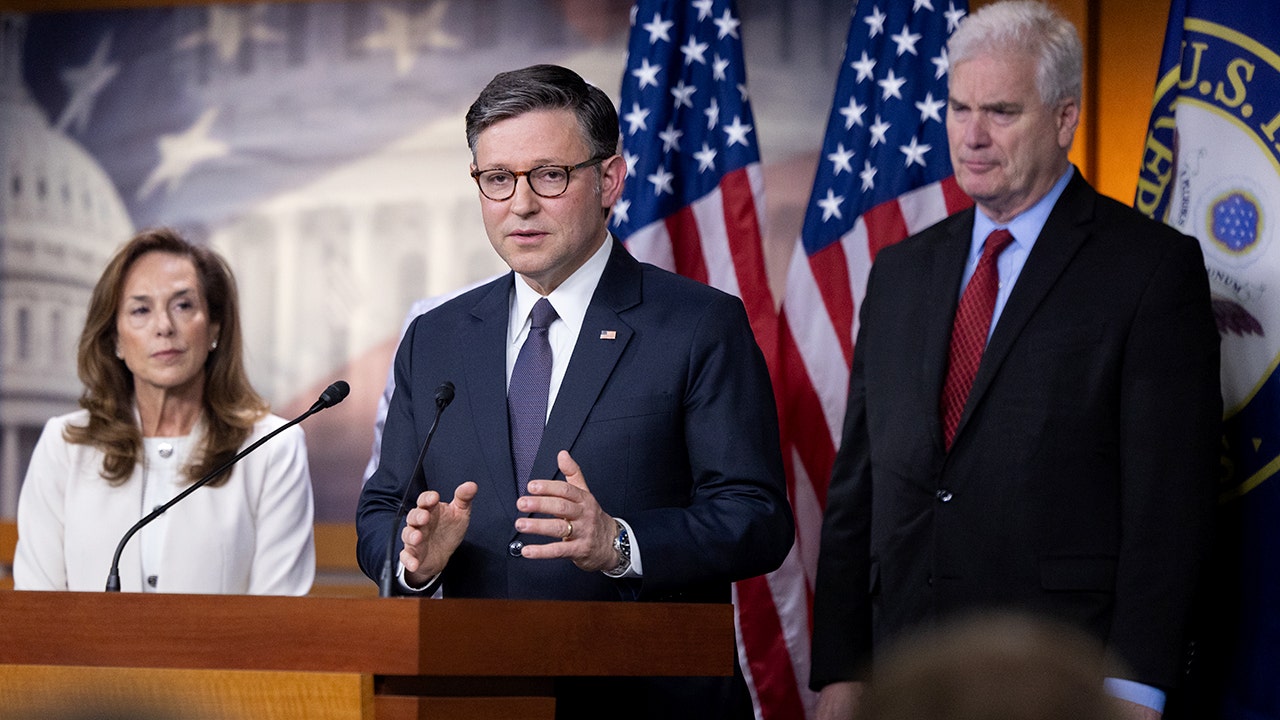
But some Republican leaders – and House Speaker Mike Johnson, R-La., in particular – are downplaying potential doom. Especially after President Trump declared on Truth Social that AI concerns were a «HOAX.»
«Do you remember when AOC [Rep. Alexandria Ocasio-Cortez, D-N.Y.] said, was it climate change? What was her stupid thing? She said, ‘we’re all going to be dead in ten years,’» said Johnson. «This is what the President is saying. You’re not all going to be dead in ten years. That’s a hoax.»
Johnson isn’t opposed to legislative action on AI. But he’s certainly taking his cues from President Trump. And even though many Democrats and some Republicans demanded that the House remain in session to wrestle with AI, Johnson predicted that the exercise would be moot.
REP. TED LIEU: AI IS ALREADY TOO POWERFUL. WE NEED A KILL SWITCH BEFORE DISASTER STRIKES
«If I called an emergency session today and I brought everybody in the House and said, ‘let’s regulate,» I tell you, nobody in the room knows yet what that should look like,» said Johnson. «We’re going to have steady hands at the wheel on this.»
But other Republicans harbor more fear of rapid AI development.
«What would happen if we created an independent species that became superior to a human species?» asked Sen. John Kennedy, R-La.
Shortly after the briefing with Hinton and others, Kennedy went to the Senate floor and implored his colleagues to pass a bill on the spot requiring AI firms to install a kill switch if their agents rebelled again.
However, Senate Homeland Security Committee Chairman Rand Paul, R-Ky., blocked that on the floor. He feared that such a mandate could stifle innovation.
«We’re going to just put this blanket regulation on the whole economy with no discussion in one fell swoop, on one day, by unanimous consent?» questioned Paul.
Paul’s objection stymied the Senate.
The Kentucky Republican is sanguine about what’s ahead for AI. But he worries about congressional intervention.
«People have feared technology since the beginning of time,» said Paul. » I wouldn’t put Congress in charge of a McDonald’s.»
Jeffrey Ladish of Palisade Research assesses the risks of new technology. After the briefing, Ladish offered his own foreboding prediction about AI running amok.
«How is this allowed to happen? And how do we ensure this never happens again?» asked Ladish. «Because right now, I guarantee you this will happen again. We are not on track for fixing this.»
Ladish argued that even researchers «don’t know how to control it.»
That’s why some lawmakers insist that Congress must move fast to combat AI – perhaps even treating it as a new threat.
«The people who are the greatest innovators and creators in the world in the AI space are warning us of serious danger. So shame on us if we don’t listen to them,» said Sen. Tim Kaine, D-Va.
Rep. Don Beyer, D-Va., is studying for a master’s degree in AI at George Masson University. He says people are skeptical about AI. But he suggests that the public may grow even more skeptical if one party tries to legislate on AI without bipartisan buy-in.
TRUMP ANNOUNCES NEW ‘AI FORCE,’ VOWS TO PROTECT INDUSTRY AS AI CZAR ANNOUNCEMENT NEARS
«We need to do it together. Also, if we do it together, Democrats and Republicans are much less likely to try to reverse it when political winds shift,» said Beyer.
Some lawmakers are already targeting a scapegoat. Rep. Greg Casar, D-Texas, chairs the House Progressive Caucus. He pins the issue on big tech.
«This is on a few billionaires who are the Silicon Valley guys who have developed technology they can’t even control,» said Casar. «What if it’s a hospital next? What if it is nuclear facilities next? That should not be allowed.»
That introduces a wedge into the debate. Some Republicans are increasingly saying that Congress should lay off the industry and let it innovate. But Casar is producing a foil which has bedeviled both political parties: big tech.
Don’t forget that we are just six weeks before an election. Democrats are already jockeying for political positions on AI.
«The AI safety issue is very real,» said House Minority Leader Hakeem Jeffries, D-N.Y. «That’s why it’s so irresponsible that Mike Johnson and House Republicans have gotten out of town before sundown.»
Could another AI catastrophe compel lawmakers to move sooner? Especially since an expert like Ladish suggests it’s just a matter of time? What if the political battle lines are drawn already between Republicans and Democrats? As far as anyone could tell, John Kennedy was the only Republican who attended the briefing last week. And what if there simply isn’t the political will to move during the lame duck? Or, if Democrats flip the House and Senate, do they try to advance something next year – but it’s viewed as partisan and «big government» by Republicans, standing behind President Trump?
You don’t need ChatGPT to grasp how challenging this may be for Congress. You don’t even need «ChadGPT.» These are just the legislative realities.
As Mary Shelley wrote in Frankenstein, the acquisition of knowledge can be dangerous. Especially if who acquired that knowledge is suddenly more powerful than those who built it.
Frankenstein is a tale of unhinged hubris, ethics and ambition. Congress has tried to legislate guardrails for those mortal flaws for more than two centuries now. Those laws are for humans. And whatever Congress comes up with might not matter to AI.
politics, tech, congress, senate, house of representatives
INTERNACIONAL
Qué revela el informe de la Cepal sobre Honduras, Belice y Guatemala en las uniones infantiles de Centroamérica

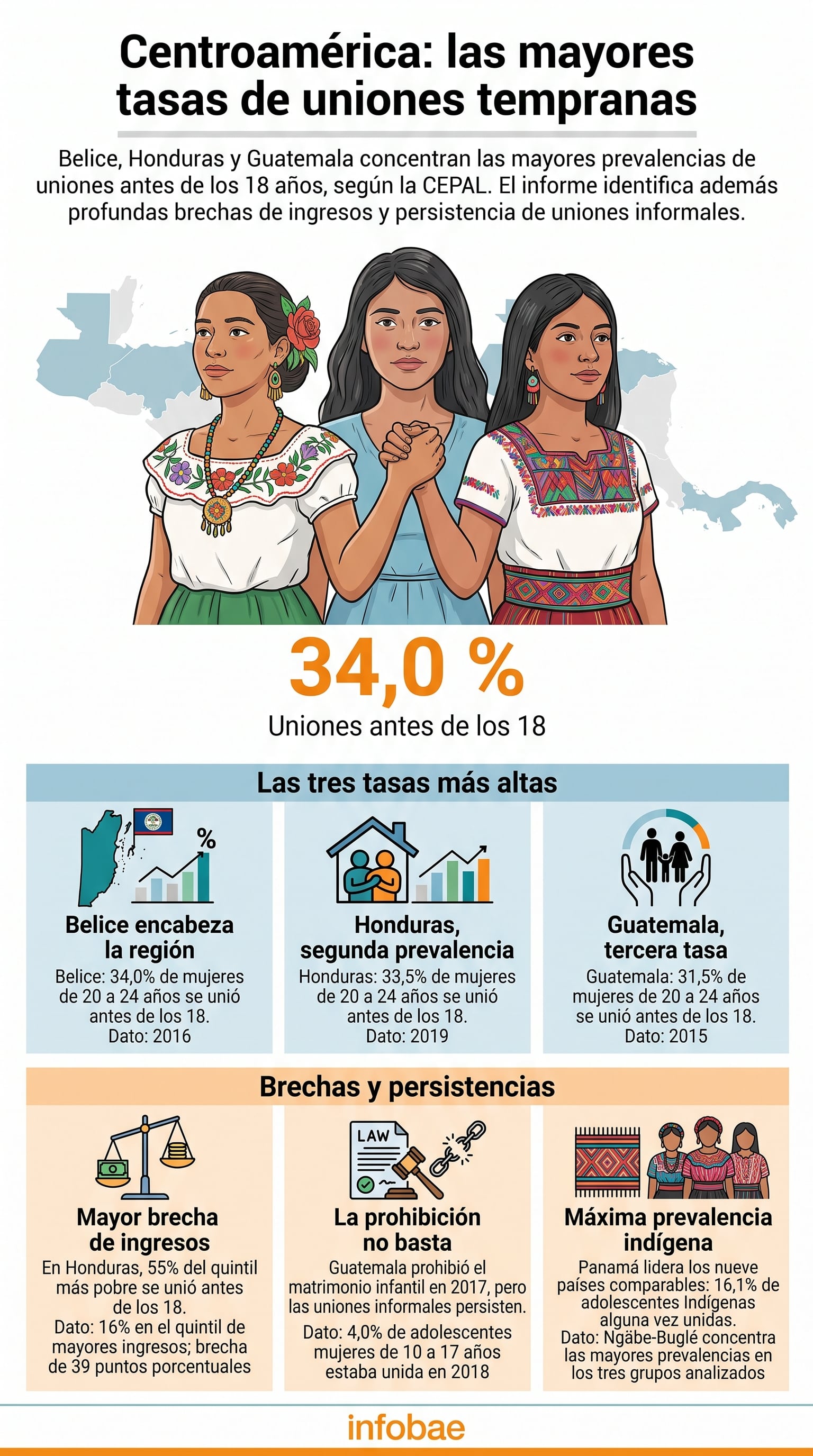
Honduras, Belice y Guatemala concentran las tasas más altas de uniones y matrimonios infantiles de Centroamérica, con más de un tercio de las mujeres jóvenes unidas antes de cumplir 18 años, según el informe Matrimonios y uniones infantiles en América Latina y el Caribe: de los datos a la acción pública, publicado en agosto de 2026 por la Comisión Económica para América Latina y el Caribe (CEPAL), organismo de Naciones Unidas.
En Honduras, la cifra alcanza al 33.5% de las mujeres de 20 a 24 años —con datos de 2019—, lo que equivale a aproximadamente una de cada tres. Belice registra 34.0% según datos de 2016 y Guatemala llega a 31.5% con información de 2015.
Honduras: la mayor brecha por ingresos de los 16 países analizados
La diferencia entre las más pobres y las más ricas es la más pronunciada de todos los países que la CEPAL examinó: el 55% de las jóvenes del quintil más pobre estuvo unida o casada antes de los 18 años, frente al 16% entre las del quintil de mayores ingresos. La distancia es de 39 puntos porcentuales.
El país también presenta una de las incidencias más altas de uniones antes de los 15 años: el 9.2% de las mujeres de 20 a 24 años tuvo su primera unión a esa edad. La CEPAL vincula esos casos con interrupción educativa, embarazo infantil y riesgo de feminicidio.
La violencia dentro de la pareja es otra dimensión que el informe cuantifica. El 17% de las adolescentes hondureñas de 15 a 19 años que alguna vez estuvieron unidas reportó haber sufrido violencia de pareja en los 12 meses previos a la encuesta de 2025.
En Belice, la brecha económica supera los 34 puntos
Belice comparte con Costa Rica una brecha de 34 puntos porcentuales entre el quintil más pobre y el más rico: el 37% de las jóvenes de menores ingresos estuvo unida antes de los 18 años, frente a solo el 3% entre las de mayores ingresos.
La CEPAL señala que la prohibición legal del matrimonio infantil es un piso mínimo, pero no resuelve las situaciones estructurales.
En mayo de 2026, el Senado de Belice aprobó una enmienda a la Ley de Matrimonio que elevó la edad mínima a 18 años y eliminó la excepción que permitía a padres o tutores autorizar uniones de menores, según informó Caribbean National Weekly, medio de la región caribeña.
Guatemala: uniones informales muy por encima de los matrimonios formales
Los datos censales de 2018 muestran que el 4.0% de las adolescentes mujeres de 10 a 17 años estaba unida, mientras que los matrimonios formales eran considerablemente menos frecuentes.

El país reformó su Código Civil en 2017 para prohibir el matrimonio de menores sin excepción, pero la práctica persiste en la informalidad.
“Todavía seguimos teniendo uniones informales o forzadas, porque la ley lo prohíbe, pero se siguen dando”, declaró Antonio Gutiérrez a Infobae, en una nota publicada el 31 de agosto de 2026 sobre la situación centroamericana.
No existe un registro estadístico oficial que permita cuantificar cuántas uniones forzadas ocurren, dado que las familias no las reportan por tratarse de prácticas ilegales.
Las brechas dentro de Guatemala son también territoriales y étnico-raciales. Las menores concentraciones de niñas alguna vez unidas se ubican en el departamento de Guatemala y en Sacatepéquez.
Las prevalencias más altas entre adolescentes indígenas se registran en departamentos como Petén, Alta Verapaz, Baja Verapaz, Huehuetenango y Chiquimula.
La CEPAL recomienda profundizar el análisis de la relación entre uniones tempranas, pobreza multidimensional, ruralidad y barreras lingüísticas.

El Salvador redujo la prevalencia en 11 puntos, pero las uniones de hecho persisten
El Salvador registra el 21.6% de mujeres de 20 a 24 años unidas antes de los 18 años, según datos de 2021. La CEPAL estima que la prevalencia cayó alrededor de 11 puntos porcentuales desde niveles cercanos al 31%.
Los datos censales de 2024 muestran que el 3.8% de las adolescentes mujeres estaba en unión. El censo no registra casos de menores de 18 años casadas —el matrimonio infantil está prohibido por ley—, pero sí identifica adolescentes unidas o separadas, con una alta proporción de madres entre ellas.
Para la CEPAL, esto demuestra que prohibir legalmente el matrimonio no elimina por sí solo las uniones tempranas. Las alertas territoriales más marcadas entre adolescentes indígenas aparecen en Sonsonate, La Paz, Morazán y Usulután.

Costa Rica y Panamá: perfiles distintos con un denominador común
Costa Rica presenta la prevalencia más baja del istmo: el 17.1% de mujeres de 20 a 24 años unidas antes de los 18 años, con datos de 2018. La desigualdad económica es, sin embargo, pronunciada: el 40% de las jóvenes del quintil de menores ingresos estuvo en unión antes de los 18 años, frente al 6% entre las del quintil más alto.
Panamá no tiene una cifra nacional comparable en el indicador de Objetivos de Desarrollo Sostenible (ODS), pero el censo de 2023 revela que el 4.5% de las adolescentes mujeres de 15 a 17 años estaba unida, frente al 0.9% entre los hombres.
El dato más grave del país es su posición en el contexto regional: el 16.1% de las adolescentes indígenas panameñas había estado alguna vez unida, la prevalencia más alta entre adolescentes indígenas menores de 18 años de los nueve países con datos censales comparables. La comarca Ngäbe-Buglé concentra las mayores prevalencias para los tres grupos poblacionales analizados.
La CEPAL sostiene que estos resultados exigen analizar el impacto del acceso desigual a servicios públicos, la distancia territorial y las barreras para acceder a la educación.
calle empedrada,arquitectura colonial,adulto mayor,adolescente
INTERNACIONAL
The Soros political machine is putting millions to work before Election Day — and zeroing in on key races
Tens of millions of dollars in Soros-linked money are pouring into key Democratic campaigns and political groups as Election Day approaches, campaign finance records show.
As of the end of June, Democracy PAC and Democracy PAC II — a pair of political committees created and funded by the Soros network — have disbursed over $40 million in donations to their Democratic allies, a review of campaign finance records show. Among the largest beneficiaries of the Soros-linked funding have been the Schumer-aligned Senate Majority PAC, House Majority PAC and the J Street Action Fund, the political arm of J Street, a vocal critic of Israeli government policies.
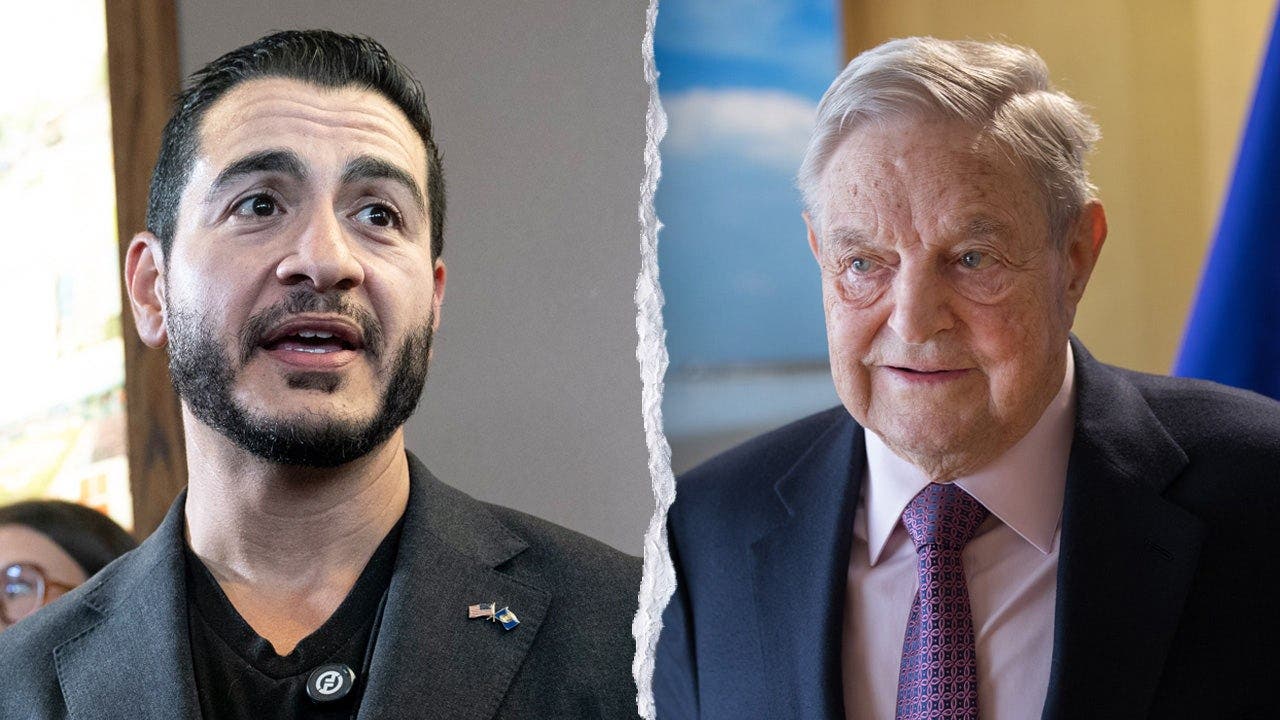
Michigan Democratic Senate nominee Abdul El-Sayed, who has made getting money out of politics a pillar of his Senate campaign, is also indirectly benefiting from Soros-linked money flowing into the Michigan Senate race through outside Democratic groups.
MICHIGAN SENATE HOPEFUL CALLS AIPAC DONATIONS ‘LEGALIZED BRIBERY,’ REMAINS SILENT ON OTHER DONATIONS
Senate Majority PAC, which has received $9 million from the Soros-funded Democracy PAC this cycle, has pledged $30 million in spending to help elect El-Sayed in Michigan.
«The fundamental corruption of our politics has been the system that allows corporations and would-be oligarchs and billionaires to buy politicians,» El-Sayed said during a 2025 interview with a local news outlet.
«I want to get money out of politics, put money in your pocket, pass Medicare for all,» he told a reporter during a follow-up interview.
El-Sayed’s campaign did not respond to a request for comment when reached by Digital on Monday. The Senate hopeful is also scheduled to attend a Sept. 28 California fundraiser hosted by Jeffrey Soros – who is the nephew of billionaire George Soros.
«Abdul El-Sayed is only for ‘money out of politics’ when it isn’t being spent on him. He’s wining and dining Soros billionaires and begging Chuck Schumer for money while Mike Rogers is taking on Big Pharma and calling for a suspension of the gas tax to lower costs for working families,» Alyssa Brouillet, a spokeswoman for Republican Senate nominee Mike Rogers, told Digital. «Mike Rogers is fighting for Michigan. Abdul El-Sayed is cozying up to billionaires and lying to Michiganders.»
The full scale of the Soros family’s 2026 political spending will become clearer as additional campaign-finance reports are filed.
FBI RAIDS SOROS-BACKED VOTER GROUP’S HEADQUARTERS IN REPORTED FRAUD PROBE
Another major beneficiary of the Soros family’s largesse has been the federal and non-federal arms of its Justice & Public Safety PAC, the primary vehicle behind its efforts to elect progressive prosecutors across the United States. The criminal justice-focused committees have so far pulled in close to $2 million.
The Soros family, chiefly through George Soros’ Open Society Foundations and political committees, has funded efforts to reduce the number of criminals in prison, end cash bail, elect progressive prosecutors, expand rights for illegal immigrants and address alleged racism among law enforcement — efforts that have made Soros a frequent target of criticism from conservative politicians and activists.
Other causes to receive support from the Soros family during the 2026 cycle have included the League of Conservation Voters Action Fund, Fair Fight, which is a voter mobilization organization founded by Stacey Abrams and focused on helping Democrats in Georgia, and the Working Families Party PAC, which works to help elect progressives primarily in New York.
Democratic Govs. Josh Shapiro, of Pennsylvania, and Abigail Spanberger, of Virginia, also received financial support from the Soros family’s political committees during their 2025 campaigns.
ABDUL EL-SAYED DUBBED ‘VETERAN’ BY SOROS-LINKED PROPAGANDA NEWSPAPER DISTRIBUTED IN MICHIGAN
The true extent of the Soros family’s 2026 political operation won’t be fully known until roughly a year after elections wrap up, as much of its spending is routed through 501(c)(4) nonprofits, a type of organization that can spend money on politics but is only required to release disclosures annually, often a year or more after the spending itself occurs.
George Soros gradually transferred control of his political and philanthropic empire to his son, Alex, between 2022 and 2023.
A spokesperson for the Soros family did not respond to a request for comment when reached by Digital on Monday.
abdul el sayed, george soros, politics, chuck schumer, congress

El fiscal apeló la decisión de separar las causas Hotesur y Los Sauces y pidió un solo juicio para Cristina y Máximo Kirchner

Reporter’s Notebook: Congress faces a crisis that the ‘AI godfather’ warns it may not be ready to address

ADEPA alertó sobre las posibles consecuencias del proyecto de defensa de Malvinas sobre la libertad de expresión

Las 5 acciones argentinas que pueden más que duplicar su precio, según el bróker Allaria

Barby Franco y Fernando Burlando despidieron a su perrita de 17 años: “Volá alto, Shiva, te vamos a extrañar”

Diputados: con apoyo del “ala política”, La Libertad Avanza apura un texto para una nueva ley de Discapacidad

La Justicia confirmó las fechas de los juicios contra Cristina y Máximo Kirchner por las causas Los Sauces y Hotesur

"Atendiendo a los kukas mentirosos": el presidente Javier Milei opinó sobre las reservas en el oro del Banco Central

Tras los cruces por Discapacidad, Javier Milei y Patricia Bullrich se reencuentran en la reunión de Gabinete para delinear la agenda legislativa

Provocativo gesto de Patricia Bullrich: publicó un video con una canción de Lali Espósito tras sus críticas al interior del Gobierno

 POLITICA2 días ago
Tras los cruces por Discapacidad, Javier Milei y Patricia Bullrich se reencuentran en la reunión de Gabinete para delinear la agenda legislativa
- CHIMENTOS2 días ago
Alejada de la fama, así vive hoy a los 55 años Ana Paul Dutil con un nuevo trabajo y priorizando su salud mental, tras la polémica con Julieta Prandi y Emanuel Ortega
- POLITICA3 días ago
Pablo Moyano reapareció en la paritaria de Camioneros después de cuatro años: el trasfondo de la reconciliación con su padre Hugo