INTERNACIONAL
‘Drug-dealing’ network shielded by blue states targeted in SCOTUS challenge


Louisiana Republican Attorney General Liz Murrill is escalating her fight against abortion pills entering states that ban abortions through two lawsuits — one targeting the providers accused of distributing the drugs and another challenging the blue-state laws shielding them from prosecution.
Murrill, along with Alabama Attorney General Steve Marshall and Arkansas Attorney General Tim Griffin, sued New York, California and Massachusetts at the Supreme Court on Wednesday, alleging their shield laws block cooperation with investigations into abortion-pill providers. The attorneys general also filed a separate lawsuit in Louisiana against more than 30 people and organizations accused of advertising, prescribing, dispensing or shipping abortion pills into their states.
«This is drug dealing and it’s illegal,» Murrill told Digital. «And we’re going to continue to do everything that we can to enforce the laws in our states.»
The two lawsuits, filed Wednesday, are the latest move in a widening state-by-state fight over abortion. That conflict has grown since the Supreme Court’s 2022 ruling in Dobbs v. Jackson Women’s Health Organization, which struck down Roe v. Wade and gave elected officials the power to set abortion policy in their states.
HAWLEY SENDS CRIMINAL REFERRAL OF ‘LEFT-WING DARK-MONEY’ GROUP OVER MAILED ABORTION DRUGS
Murrill said the Supreme Court case targets the blue states’ legal protections that have thwarted Louisiana’s previous efforts to prosecute out-of-state doctors.
«These shield laws are very comprehensive,» Murrill said, arguing that California and New York prohibit officials from assisting other states seeking to enforce judgments stemming from abortion-related conduct.
Louisiana has already indicted New York physician Margaret Carpenter and California physician Remy Coeytaux over allegations that they prescribed abortion drugs that were sent into Louisiana. New York Democratic Gov. Kathy Hochul and California Democratic Gov. Gavin Newsom have refused to extradite the doctors.
The Supreme Court complaint cited Louisiana’s unsuccessful effort to extradite Carpenter, saying Hochul declared there was «no way in hell» she would comply with Louisiana’s request. The filing said New York later strengthened its shield law, including by allowing prescribers of abortion drugs to keep their names off prescription labels.
Newsom similarly rejected Louisiana’s request to extradite Coeytaux in January, saying California would not help other states punish doctors for providing abortion access that is legal in California.
CALIFORNIA ABORTION PILL SUPPLIERS PLOT WORKAROUNDS AHEAD OF SUPREME COURT MIFEPRISTONE DECISION
When Murrill vowed to sue, Newsom responded on X telling her to «Go f— yourself. California will never help you criminalize healthcare.»
«I think that if I sent guns into their states illegally, they would certainly try to come after me,» Murrill told Digital. «I said specifically at the time that we would be coming for them and we are.»
«We are going to take down those laws using every tool that we have at our disposal,» she continued.
The second lawsuit directly targets what Murrill calls the «pill pipeline.»
The 100-page complaint alleges providers used online questionnaires to obtain information from customers before abortion drugs were mailed into states where their distribution is prohibited. The states allege some organizations openly acknowledged that their conduct violated those states’ laws while relying on shield laws to protect themselves from legal consequences.
Murrill said investigators have conducted controlled purchases and received pills packaged in small bags, sometimes in quantities she said exceeded what would ordinarily be prescribed.
«We’ve seen it for ourselves,» Murrill said. «There’s no supervision, there’s no healthcare, there’s no communication whatsoever. It’s all done online.»
Murrill argued that the system can allow people other than pregnant women to obtain the drugs, pointing to cases Louisiana authorities said involved women being pressured or deceived into taking abortion medication.
PRO-LIFE LEADER SOUNDS ALARM AFTER DOCTOR GETS 6 MONTHS FOR FORCING ABORTION PILLS ON GIRLFRIEND
«We have a situation in one town in Louisiana that we’ve documented and investigated where a father did not want his teenage daughter to keep a pregnancy,» Murrill told Digital. «And so he basically put the medication in a smoothie, forced her to drink it. She did ultimately give birth to that baby at 23 weeks and is still in a NICU fighting for its life.»
The attorney general also said Louisiana wants more help from the Trump administration.
«Obviously we think the FDA could be doing more and we’ve asked them to do that,» Murrill said.
Louisiana has separately challenged federal rules that eliminated an in-person dispensing requirement for mifepristone.
Susan B. Anthony Pro-Life America President Marjorie Dannenfelser backed the litigation, accusing blue states of using their laws «to obstruct justice» and urging the Justice Department to settle Louisiana’s separate FDA litigation.
SIGN UP TO GET THE POLITICS NEWSLETTER
«Democrats’ pro-abortion extremism has brought this country to a crisis point. Abortion activists flagrantly sell dangerous drugs across state lines and women and children pay the price, with more and more survivors of ‘death in a pill’ bravely coming forward,» Dannenfelser said in a statement.
Digital reached out to New York, California and Massachusetts’ governors’ offices for comment.
abortion, louisiana, attorney general, states rights, federal courts













INTERNACIONAL
Estados Unidos: cómo la IA podría ayudar a frenar el avance de las pitones birmanas en los Everglades

En los humedales del sur de Florida, dentro del ecosistema de los Everglades, una pitón birmana puede pasar desapercibida durante días, inmóvil y oculta bajo la vegetación. Por eso, encontrarla ya es difícil. Con esto en mente, un equipo de la Universidad de Florida descubrió que no todas las capturas valen lo mismo.
Los programas de remoción medían su éxito por el número de serpientes retiradas, sin distinguir entre una cría con pocas chances de sobrevivir y una hembra adulta capaz de poner docenas de huevos.
Por eso, los investigadores construyeron una herramienta para identificar qué ejemplares tienen mayor peso sobre el crecimiento de la población.
Hasta ahora, el número total de serpientes capturadas podía funcionar como una medida de actividad de los programas de remoción, aunque esa cifra no reflejara las diferencias entre animales jóvenes, adultos, machos o hembras capaces de poner docenas de huevos.

Un estudio publicado en Ecological Applications propone combinar información demográfica con aprendizaje automático para identificar cuándo es más probable encontrar a los individuos cuya extracción podría tener un efecto mayor sobre la población.
El índice distingue las capturas según su capacidad de reproducirse
Las pitones birmanas son depredadores invasores con presencia consolidada en esa región. Su alimentación incluye principalmente mamíferos y aves, entre ellos especies sujetas a medidas de conservación.
Localizarlas supone una tarea compleja porque pueden permanecer inmóviles, ocultas o sumergidas durante largos períodos.
“Eliminar a la hembra más grande es muy diferente de remover una serpiente diminuta que tal vez no sobreviva al año siguiente”, señaló Alex Romer, ecólogo cuantitativo de UF/IFAS y autor principal del estudio, según el comunicado institucional al que tuvo acceso Infobae.

El equipo creó el Índice de Remoción Ponderado, un sistema que asigna una prioridad relativa a las capturas según la probabilidad de que cada pitón sobreviva y se reproduzca.
Así, permite diferenciar la importancia ecológica de los ejemplares retirados, en vez de tratar todas las serpientes halladas como equivalentes.
Romer explicó que una hembra grande podría recibir un valor de 100 puntos ecológicos arbitrarios, mientras que una serpiente pequeña tendría un valor de cinco.
La comparación permite estimar cuántas capturas de ejemplares pequeños harían falta para igualar la prioridad ecológica de remover una hembra con mayor capacidad reproductiva, según informó UF/IFAS.

Enero y febrero ganan relevancia cuando se observa qué pitones fueron removidas
El estudio muestra que el total mensual de pitones capturadas no basta para determinar en qué períodos las tareas de remoción pueden resultar más valiosas. Ese registro permite conocer el volumen de actividad, aunque no distingue las características de los animales retirados.
Los investigadores analizaron datos del Programa de Remoción de Pitones del Distrito de Gestión del Agua del Sur de Florida. A esos registros sumaron información demográfica, una clasificación que considera la edad, el tamaño, el sexo y el potencial reproductivo de los animales capturados.
Enero y febrero ilustraron la diferencia entre ambos criterios. Cuando se observó únicamente el número de pitones retiradas, esos meses no parecían especialmente relevantes porque se capturaba una cantidad relativamente baja de serpientes.

Sin embargo, al evaluar la composición de esas capturas, cobraron mayor importancia por la proporción de machos y hembras sexualmente maduros.
“Si simplemente contamos cuántas pitones capturan los contratistas en un mes, enero y febrero no parecen tan importantes, pues se captura un número relativamente bajo de serpientes”, afirmó Romer, ecólogo cuantitativo del Equipo de Investigación de Fauna Silvestre Croc Docs, de acuerdo con el comunicado.
Al tiempo que agregó: “Al incorporar la ponderación demográfica, de repente esos meses adquieren mucha más importancia”. Esta diferencia puede ser relevante en los programas que recurren a contratistas, donde el número de serpientes capturadas constituye una medida clave del desempeño.
Los investigadores sostienen que el índice podría ayudar a organizar las tareas y los incentivos alrededor de las remociones con mayor potencial para influir en la población, según el comunicado.

Los modelos buscan orientar las búsquedas hacia ejemplares prioritarios
El equipo evaluó tres modelos de aprendizaje automático, una técnica informática que identifica patrones en conjuntos de datos para realizar estimaciones.
Los utilizaron para prever tanto cuándo era más probable encontrar pitones como cuándo podían aparecer ejemplares con mayor capacidad de influir en el crecimiento de la población.
Uno de los modelos mostró los mejores resultados al identificar condiciones asociadas con la remoción de serpientes de mayor relevancia demográfica. Entre ellas figuraron un clima más cálido y húmedo y determinadas fases lunares.

El comunicado no presenta estas condiciones como una garantía de captura, sino como elementos que podrían servir para planificar las búsquedas.
“Comprender qué variables son más relevantes a la hora del manejo de especies invasoras es fundamental, ya que permite utilizar los recursos de manera más consciente”, explicó Sergio Balaguera Reina, coautor del estudio e investigador de fauna silvestre en ese mismo centro, de acuerdo con el comunicado institucional brindado a Infobae.
Y agregó que incorporar la demografía a los modelos predictivos puede cambiar la forma en que se planifican las búsquedas: “Integrar este conocimiento en modelos que nos permitan predecir dónde podrían encontrarse las pitones de mayor impacto, es decir, las hembras reproductoras, puede suponer un punto de inflexión”.

Para el investigador, esa capacidad predictiva es lo que distingue al nuevo enfoque de los métodos de remoción tradicionales: “Marcar una diferencia real en la lucha contra estos invasores”.
“Cada pitón birmana removida representa una victoria para los Everglades”, afirmó Melissa Miller, coautora del estudio y profesora adjunta de ecología de fauna invasora en el mismo centro. La especialista agregó que el criterio puede resultar especialmente útil en nuevos focos de invasión y en el frente de avance de la especie, según informó la universidad.
pitón birmana,huevos,nido,incubación
INTERNACIONAL
Moscow threatens nuclear response over tiny fortress wedged between US allies as clash fears grow
NEWYou can now listen to Fox News articles!
Russia’s warning that it could resort to nuclear weapons if NATO attempts to isolate Kaliningrad is raising new concerns that the heavily militarized Russian exclave could become a flashpoint between Moscow and the alliance, as experts warn the territory is already being used to pressure Europe through hybrid warfare.
Moscow warned NATO in a diplomatic document that it was prepared to use «the entire arsenal of forces and capabilities at its disposal, including nuclear weapons» if alliance members attempted to isolate Kaliningrad from the rest of Russia, Reuters reported Wednesday.
Kaliningrad, a Russian territory geographically separated from the Russian mainland, sits on the Baltic Sea between NATO members Poland and Lithuania and hosts significant Russian military assets, including elements of Moscow’s Baltic Fleet.
RUSSIA THREATENS STRIKES ON UK MILITARY TARGETS, ‘CATASTROPHIC CONSEQUENCES’ OVER UKRAINE
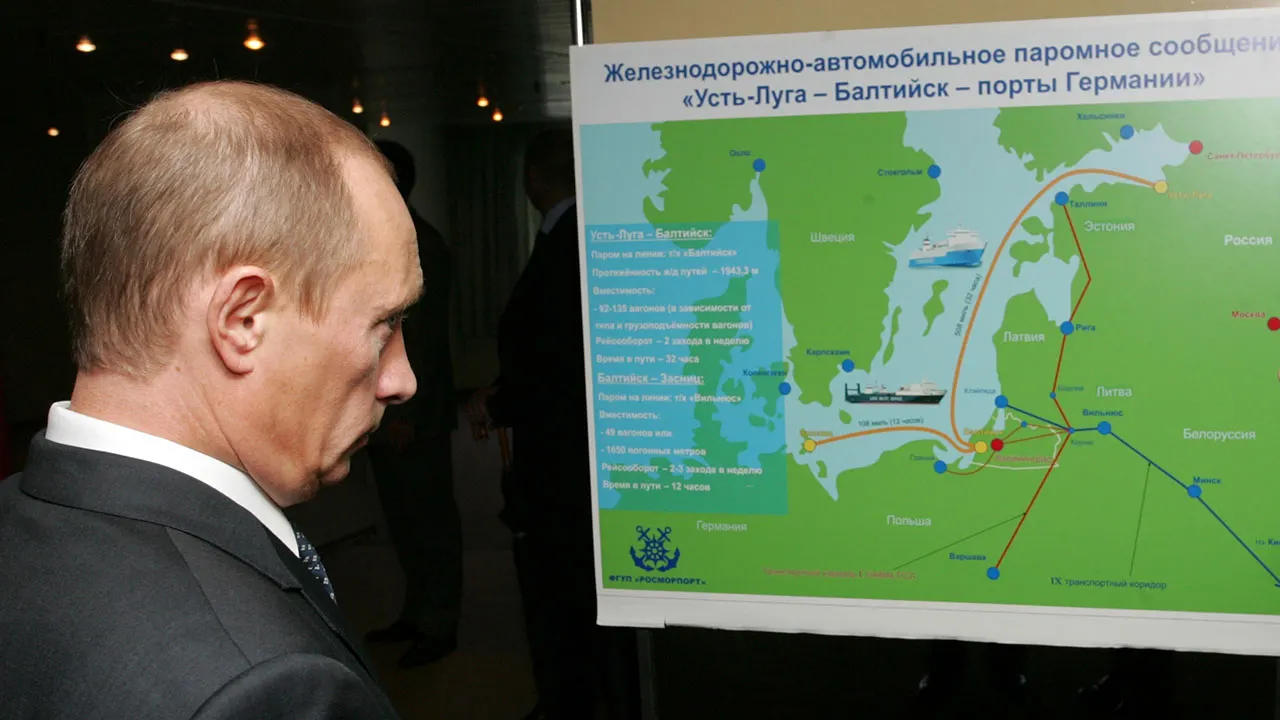
Russian President Vladimir Putin looks on a map showing the Kaliningrad exclave and the rest of Russia, Sept. 10, 2006. (Konstantin Zavrazhin/Gamma-Rapho via Getty Images)
The Russian document also raised the possibility of strikes against «decision-making centers» in NATO member states from the outset of a conflict.
NATO rejected Moscow’s allegations in a response reviewed by Fox News Digital, saying the alliance is defensive and that none of its exercises or activities threaten Russian territory. The alliance also urged Russia to stop its «irresponsible nuclear rhetoric.»
Carrie Filipetti, executive director of the Vandenberg Coalition, a nonpartisan network of foreign policy leaders, told Fox News Digital that Moscow has repeatedly used nuclear threats as a means of trying to deter Western support for Ukraine.
«Russia has threatened to use nuclear weapons in the past, including veiled references to tactical nuclear attacks at the beginning of Putin’s invasion of Ukraine, lowering their formal threshold for launching a nuclear attack in 2024, placing Russia’s nuclear forces on high alert, and restarting nuclear testing,» Filipetti said. «It is very common for Putin to use these threats, because he sees it as a way to deter Europe and the United States from continuing to support Ukraine.»
SHE GREW UP UNDER SOVIET RULE. NOW EU’S TOP DIPLOMAT WARNS EUROPE AGAINST GIVING RUSSIA WHAT IT WANTS

The Blue Ridge-class command and control ship USS Mount Whitney participates in exercise Baltic Operations 2025 as ships sail in formation through the Baltic Sea, June 5, 2025. (U.S. Navy Courtesy Photo)
«The threat about a nuclear attack if Kaliningrad is threatened or isolated comes on the heels of a few developments,» she added, pointing to NATO jets being scrambled over Russian aircraft, U.S. and NATO air drills near Kaliningrad last month, and heightened tensions over the war in Ukraine.
Filipetti, who also served as a deputy assistant secretary at the State Department and as a senior policy advisor for the United States Mission to the United Nations (USUN), argued that the timing also reflects mounting pressure on Moscow as the war continues.
«Putin seems to understand that the tide is turning against him, and he’s resorting to aggressive rhetoric to try to stop European support for Ukraine as he has tried to do in the past,» she said.
Dr. Azeem Ibrahim, a research professor at the Strategic Studies Institute at the U.S. Army War College and chief strategy officer at the New Lines Institute, told Fox News Digital that NATO should take the warning seriously, particularly because of the broader role Kaliningrad is already playing in Moscow’s confrontation with Europe.
BATTLE-TESTED ZELENSKYY SOUNDS CHILLING ALARM ON WHERE PUTIN’S WAR COULD HEAD NEXT
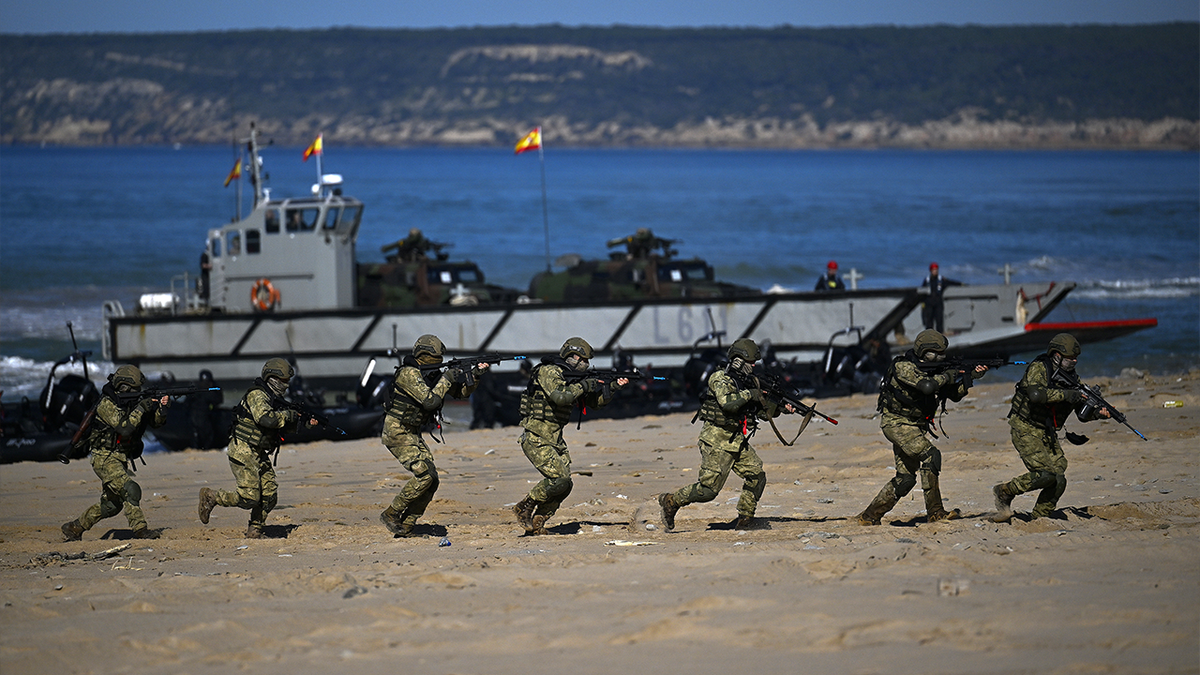
NATO’s largest annual maritime drill, Exercise Dynamic Mariner/Flotex 25, continues in the Gulf of Cadiz off southern Spain on March 28, 2025. (Burak Akbulut/Anadolu via Getty Images)
Ibrahim argued that while NATO has traditionally prepared for conventional military conflict involving «tanks and troops and divisions,» Russia is increasingly using methods designed to disrupt the infrastructure and systems on which civilian societies depend.
«Russia is actually adopting a very different approach,» he said, describing a strategy of hybrid warfare targeting «infrastructure» and «societies in general — what keeps societies functioning.»
Ibrahim described Kaliningrad as the «front line» of that effort.
«It’s essentially become a Russian fortress,» he said. «This is essentially a front-line operation of the Russians in terms of signals intelligence, signals interference and essentially mechanisms by which to carry out this hybrid warfare.»
Such interference, Ibrahim said, could play a role in the broader confrontation by disrupting civilian communications and infrastructure before or alongside a conventional military attack.
«All of that would be preceded by interference operations like this to ensure that societies are not functioning, are not able to respond to emergency services, the news information services, etc.,» Ibrahim said. «So governments lose control over what actually makes societies function.»
RUSSIA’S SHADOW WAR IS PUTTING EUROPE ON EDGE AS GERMANY CONFRONTS A GROWING THREAT
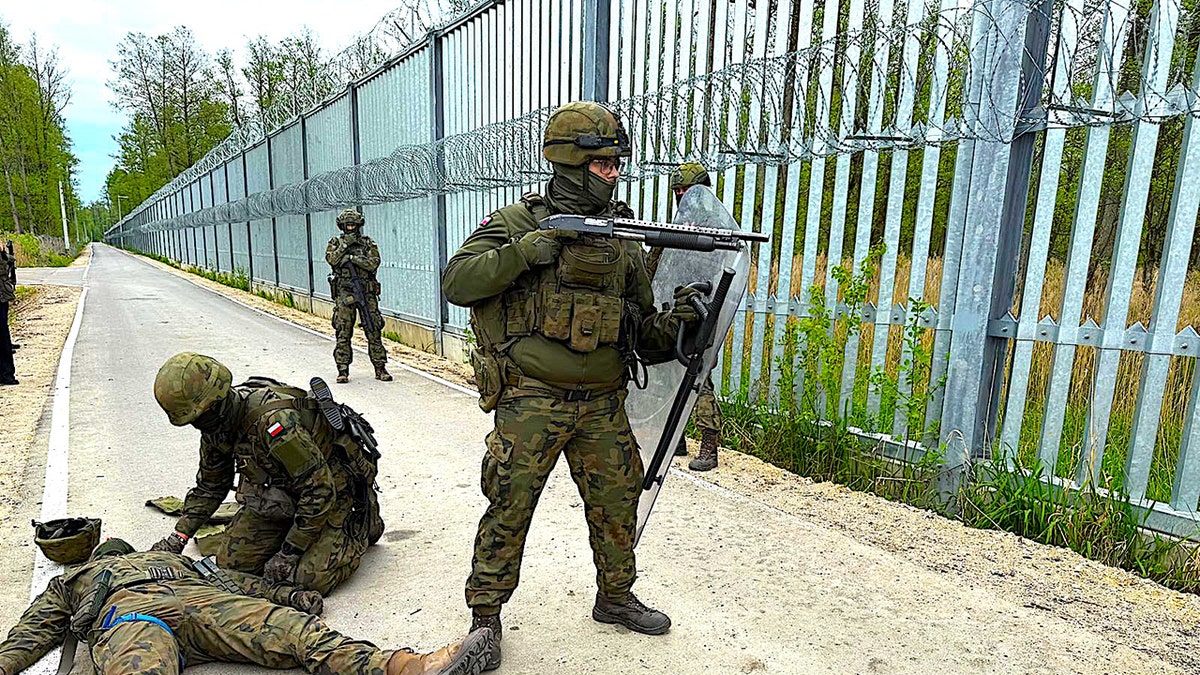
Soldiers from Poland’s 18th Division demonstrate battlefield medical training near the Belarus border after a serviceman from the division was killed in an attack by an illegal migrant. May 16, 2026. (Efrat Lachter/Fox News Digital)
The challenge for NATO, he said, is that such operations can be more difficult to attribute than a conventional assault.
«Many times, you cannot trace exactly where a lot of this interference is actually coming from — attacks on power stations or internet and telecommunications, et cetera,» Ibrahim said. «There’s always some sort of plausible deniability if it’s done by an actor who’s very capable.»
The ambiguity, Ibrahim argued, presents a challenge for an alliance built around collective defense against armed attack.
«NATO really does have to kind of reconfigure its posture to understand that these kinds of attacks are equivalent to essentially any sort of kinetic attack,» he said.
Asked what NATO and neighboring Poland and Lithuania should do following Russia’s warning, Ibrahim called for the alliance to establish clearer consequences for hybrid attacks.
«We now need to start going on the offensive in terms of hybrid warfare and understanding the threat and pushing back and sending a very clear signal to Moscow that such threats will not stand,» he said, arguing that a sufficiently serious hybrid attack should be considered capable of triggering NATO’s Article 5 collective-defense clause.
Lithuania, which directly borders Kaliningrad, rejected Moscow’s warning and accused Russia of trying to undermine NATO unity and Western support for Ukraine.
«Russia’s insinuations and threats have no basis. NATO is a defensive alliance and poses no threat to Russia or any other country,» Lithuania’s Foreign Ministry told Fox News Digital. «Russia’s threatening is intended to fracture transatlantic unity and impede our support to Ukraine. Russia will not achieve its goals.»
The ministry added: «We strongly condemn any threats to use force and irresponsible nuclear rhetoric. Russia must stop its aggression against Ukraine… Lithuania is strengthening its national defense system and capabilities, including air defense,» the ministry said. «We train with our allies and work alongside NATO forces deployed in Lithuania. We are prepared to defend every inch of NATO territory and respond to any threats.»
The ministry said Lithuania would also continue providing «comprehensive support to Ukraine and its fight against the aggressor Russia.»
Retired Air Force Lt. Gen. Richard Newton told Fox News Digital, «In the weeks leading up to February 2022, many officials and commentators (myself included) weren’t sure Putin would actually invade Ukraine, even though there were a number of warnings and indicators he would do so. And then on that Feb. 24, Putin launched the largest land invasion against Ukraine since World War II.»
US ALLIES NEED TO SHOOT DOWN RUSSIAN AIRCRAFT TESTING NATO BOUNDARIES, CZECH PRESIDENT WARNS
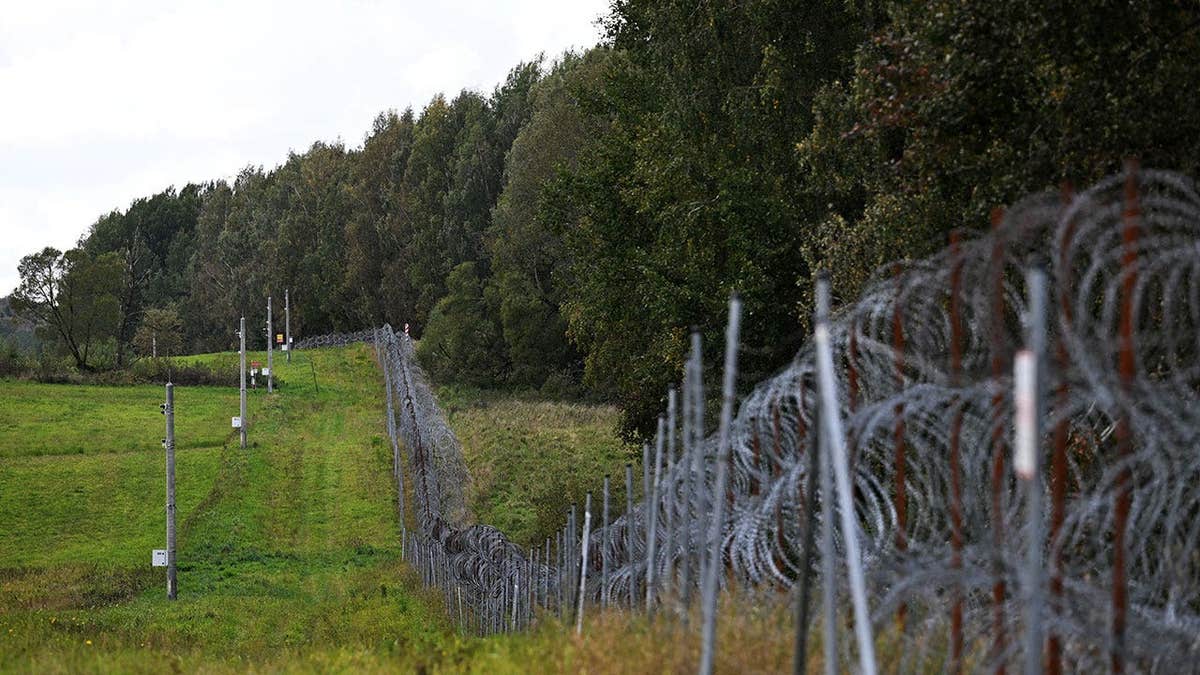
A razor-wire boundary fence along the Polish-Lithuanian border with the Russian exclave of Kaliningrad, near the Suwalki Gap on Sept. 26, 2026. The gap is a 104-kilometre stretch of the Polish-Lithuanian border that forms the only land corridor connecting the Baltic states with the rest of NATO, while separating Belarus from Russia’s Kaliningrad exclave. (Sergei Gapon/AFP via Getty Images)
«NATO should take Russia’s warning seriously that it could resort to employing nuclear weapons against the alliance should Kaliningrad be cut off from Russia. We are in the midst of Russia employing ‘gray zone’ coercive actions against NATO nations, so this pronouncement should not surprise the West,» he added.
Filipetti cautioned that regardless of whether Moscow intends to follow through, nuclear threats themselves carry risks.
«NATO is a defensive organization that is in no way threatening Russia’s position on Kaliningrad,» she said. «That said, any time there is a public threat of nuclear attack it must be taken seriously, especially with someone like Putin.»
«Nuclear bombs are a potentially world-altering technology,» Filipetti added. «It is not only their use, but the threat of their use, that could cause significant miscalculations and escalations.»
Russia has denied Western accusations that it is conducting hybrid warfare against European states and has said it has no intention of attacking NATO countries. Moscow says NATO military activity around Kaliningrad is instead contributing to an increasingly dangerous confrontation.
Kremlin spokesman Dmitry Peskov characterized recent Russian warnings as diplomatic reminders to «hotheads in Europe,» Reuters reported Wednesday.

An office building burns following a Russian drone attack in central Odesa, Ukraine, on Sept. 18, 2026. (Michael Shtekel/AP)
Fox News Digital reached out to the Polish and Russian embassies for comment but did not receive responses in time for publication.
Reuters contributed to this story.
russia, nato, nuclear proliferation, europe, national security, world
INTERNACIONAL
Cambio climático altera la cosecha de café en Costa Rica y eleva los costos de producción

El cambio climático afecta el cultivo de café en Costa Rica por las variaciones en los patrones de lluvia y temperatura que requieren los cafetales. Las plantaciones de menor altitud se encuentran entre las más expuestas, según informó CR Hoy con base en datos del Instituto del Café y estudios del Centro Agronómico Tropical de Investigación y Enseñanza (Catie).
El cafeto necesita una estación seca definida y un período posterior de lluvias para desarrollarse en condiciones adecuadas. Cuando las precipitaciones pierden regularidad y las temperaturas superan los 25 °C, pueden surgir dificultades en la floración, el desarrollo de los granos y el secado del café al sol.
Estas condiciones también pueden modificar los ciclos de cosecha, aumentar los costos de producción y favorecer la presencia de plagas y enfermedades. Las variedades tradicionales Caturra y Catuaí están entre las más susceptibles a problemas como la roya.
Los cafetales bajo los 1,000 metros reciben mayores impactos
Las siete regiones cafetaleras de Costa Rica están expuestas a la variabilidad climática, aunque los cultivos ubicados por debajo de los 1,000 metros sobre el nivel del mar reciben los efectos con mayor intensidad. Las investigaciones del Catie registraron consecuencias negativas en Turrialba, la vertiente Atlántica y Naranjo.

El Instituto del Café también identificó al Valle Central Occidental, situado entre Alajuela y San Ramón, como una de las áreas con mayor vulnerabilidad. La región presenta un clima más seco y las lluvias pueden llegar tarde, incluso durante los años asociados a los fenómenos de El Niño o La Niña.
En Pérez Zeledón y Coto Brus, el cultivo enfrenta un escenario diferente por el exceso de precipitaciones. La región de Los Santos mantiene condiciones de mayor equilibrio climático, aunque también registra cambios en sus patrones habituales, de acuerdo con CR Hoy.
El caficultor Josué Navarro indicó que en Dota las lluvias disminuyeron, aunque se presentan con una intensidad mayor cuando ocurren. Según describió, los períodos de cosecha contaban antes con una delimitación más clara.
Actualmente, las flores y los granos maduros pueden coexistir durante todo el año dentro de una misma plantación. Esta situación dificulta la recolección porque el fruto no alcanza la madurez de manera uniforme.
La irregularidad de las lluvias condiciona la cosecha y el secado
Christian Chinchilla, gerente general de Coopedota, afirmó a CR Hoy que la cooperativa atravesó años con precipitaciones excesivas. Este año, en cambio, la región de Los Santos registró una menor cantidad de lluvia.

El gerente explicó que antes la recolección coincidía con veranos secos. Esa coincidencia se presenta con menor frecuencia, lo que puede complicar las tareas de cosecha y las etapas posteriores de secado.
Las temperaturas elevadas suman otra condición para los productores. Por encima de 25 °C, el calor puede limitar la floración y afectar la formación de los granos, que pueden reducir su tamaño o no completar su desarrollo.
Las variaciones del clima pueden incidir tanto en el volumen como en la calidad de la producción. La respuesta de cada finca depende de factores como la altitud, la cantidad de lluvia, la temperatura y el estado de los suelos.
Costa Rica 95 integra el programa de renovación de los cafetales
El Instituto del Café empezó a distribuir en 2025 semillas de la variedad Costa Rica 95. El programa prevé alcanzar a 5,000 productores en los próximos tres años, aunque las plantas nuevas pueden tardar hasta dos años en generar una producción significativa.
Las variedades desarrolladas por la institución buscan tolerar temperaturas más altas, tener raíces más profundas y recuperarse con mayor rapidez ante condiciones adversas. El objetivo incluye sostener la productividad y la calidad del grano.

El proceso de mejoramiento genético combina cafetos de mayor resistencia e incorpora materiales provenientes de Etiopía, país de origen del café. Costa Rica conserva esos materiales desde hace décadas.
La renovación de las plantaciones será gradual, ya que cada productor deberá reemplazar los cafetos por etapas. Este proceso requiere tiempo antes de que las plantas alcancen una producción plena.
En Coopedota consideran que todavía es temprano para establecer el desempeño de las variedades recientes. La cooperativa estudia otras opciones, mientras Navarro prueba distintos materiales para determinar cuáles se adaptan mejor a las características de su finca.
El manejo del microclima aparece entre las alternativas de adaptación
Elías de Melo, coordinador de la Maestría en Caficultura Sostenible y Regenerativa del Catie, sostuvo que la reestructuración de la actividad puede influir en la continuidad de las explotaciones. “Los productores que están aislados”, advirtió, “están en riesgo altísimo de desaparecer”.
De Melo recomendó controlar la humedad y la temperatura dentro de los cafetales mediante el manejo del microclima. Entre las alternativas mencionó el uso de árboles de sombra durante el verano y una reducción de esa cobertura en la temporada lluviosa.

Las medidas incluyen la poda inteligente, el microrriego, la cobertura del suelo y la recuperación de terrenos agotados o afectados por enfermedades. El especialista sugirió aplicar insumos biológicos en lugar de productos químicos para parte de estas tareas.
La transformación de las fincas requiere inversiones y una aplicación gradual. Algunas propiedades de referencia registraron resultados positivos en estudios de largo plazo que contaron con participación de la Universidad de Costa Rica y la Universidad Earth.
Navarro incorporó sensores con inteligencia artificial en su finca para seguir las condiciones del suelo. Con esos registros, ajusta la fertilización según las necesidades detectadas en las distintas áreas del terreno.

Demoraron a Máximo Kirchner en San Luis por un pedido de secuestro de su auto que estaba sin efecto: le hicieron control de alcoholemia y lo dejaron seguir

Rosario: dos “soldaditos” fueron a buscar a un delincuente que había robado droga de su búnker y mataron a su madre

El Gobierno aprobó un nuevo RIGI por más de USD 1.300 millones para la fabricación de un vehículo eléctrico en el país

Tras el fallo de la Corte, Elisa Carrió reclamó a Diputados que rechace el DNU de extranjerización de tierras

La reacción de Javier Milei al cruce en Diputados entre Juan Grabois y dos legisladores libertarios: “Esto es lo que enfrentamos a diario”

Estados Unidos: cómo la IA podría ayudar a frenar el avance de las pitones birmanas en los Everglades

Cómo deciden las empresas exitosas si endeudarse en moneda local o extranjera

El obispo de San Justo alertó que la asistencia alimentaria volvió a niveles de pandemia

El shock que monitorea el Gobierno, los pronósticos para la economía y la interna libertaria que se profundiza